Salesforce Objects Archives - gettectonic.com - Page 2
Salesforce and MySQL

Salesforce and MySQL

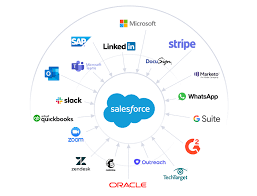
Salesforce CRM houses a wealth of customer data, encompassing interactions, leads, and purchase histories. However, without proper organization, these insights risk being lost in the shuffle. Get a handle on data with Salesforce and MySQL. MySQL, a free, open-source relational database management system (RDBMS) that acts as a digital filing cabinet for structured data, including customer information. Integrating Salesforce CRM with MySQL presents a compelling solution by establishing a seamless bridge between the two systems. This integration enables businesses to efficiently transfer customer data from Salesforce into MySQL, ensuring centralized, accessible, and analyzable data. Imagine having all customer data neatly organized within a single, searchable database, facilitating holistic insights that empower informed decision-making and personalized marketing campaigns. Let’s explore the significant benefits of integrating Salesforce CRM and MySQL, and how this synergy can revolutionize your business operations. Benefits of Integrating Salesforce CRM and MySQL How to Integrate Salesforce CRM and MySQL Integrating Salesforce CRM with MySQL involves leveraging Salesforce APIs for secure data communication and synchronization. Here’s a step-by-step approach: Common Challenges and Solutions Conclusion Integrating Salesforce CRM with MySQL represents a transformative approach to streamline data management and enhance operational efficiency. By combining Salesforce’s robust CRM capabilities with MySQL’s flexible database management, businesses can unlock real-time insights, improve customer engagement, and drive strategic growth initiatives seamlessly. Embrace the power of Salesforce CRM and MySQL integration to stay competitive in today’s data-driven landscape effortlessly. Like Related Posts Who is Salesforce? Who is Salesforce? Here is their story in their own words. From our inception, we’ve proudly embraced the identity of Read more Salesforce Marketing Cloud Transactional Emails Salesforce Marketing Cloud Transactional Emails are immediate, automated, non-promotional messages crucial to business operations and customer satisfaction, such as order Read more Salesforce Unites Einstein Analytics with Financial CRM Salesforce has unveiled a comprehensive analytics solution tailored for wealth managers, home office professionals, and retail bankers, merging its Financial Read more AI-Driven Propensity Scores AI plays a crucial role in propensity score estimation as it can discern underlying patterns between treatments and confounding variables Read more

Read More
Salesforce Summer 24 Industries Release

Salesforce Summer 24 Industries Release

Industries Salesforce Summer 24 Industries Release Industries solutions shape Salesforce to the needs of your business, reducing the need for you to customize things yourself. Consumer Goods Cloud streamlines delivery and distribution processes with Direct Store Delivery and Van Sales. Optimize service operations in the field with Field Service for Industries. Health Cloud integrates with Milliman Care Guidelines (MCG) to bring industry-standard assessments to Integrated Care Management. Loyalty Management gives marketing managers greater flexibility with Global Promotions Management. Manufacturing Cloud helps manufacturers streamline the process of recovering costs on defective parts from suppliers with Warranty Supplier Recovery. Salesforce for Education helps students plan their degrees better with Intelligent Degree Planning. We also have plenty of changes for Automotive Cloud, Salesforce for Nonprofits, Public Sector Solutions, Industries common features, and much more. Salesforce Summer 24 Industries Release Like Related Posts Who is Salesforce? Who is Salesforce? Here is their story in their own words. From our inception, we’ve proudly embraced the identity of Read more Salesforce Marketing Cloud Transactional Emails Salesforce Marketing Cloud Transactional Emails are immediate, automated, non-promotional messages crucial to business operations and customer satisfaction, such as order Read more Salesforce Unites Einstein Analytics with Financial CRM Salesforce has unveiled a comprehensive analytics solution tailored for wealth managers, home office professionals, and retail bankers, merging its Financial Read more AI-Driven Propensity Scores AI plays a crucial role in propensity score estimation as it can discern underlying patterns between treatments and confounding variables Read more

Read More
Personalize Product Catalog Management Items with Custom Fields

Personalize Product Catalog Management Items with Custom Fields

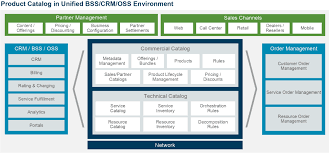
Personalize Product Catalog Management Objects with Custom Fields You can now add custom fields to multiple Product Catalog Management objects and pass the custom fields as additional fields in the Product List API and Bulk Product Details API. These APIs return values of all the custom fields to the requesting run time systems. Personalize Product Catalog Management Items with Custom Fields. Where: This change applies to Lightning Experience in Enterprise, Unlimited, and Developer editions. Why: You can add custom fields to these objects: Product Catalog Management adds standard and custom fields to some standard Salesforce objects. These fields are available only in orgs where Product Catalog Management is enabled. This object is available in API version 60.0 and later. Like Related Posts Who is Salesforce? Who is Salesforce? Here is their story in their own words. From our inception, we’ve proudly embraced the identity of Read more Salesforce Marketing Cloud Transactional Emails Salesforce Marketing Cloud Transactional Emails are immediate, automated, non-promotional messages crucial to business operations and customer satisfaction, such as order Read more Salesforce Unites Einstein Analytics with Financial CRM Salesforce has unveiled a comprehensive analytics solution tailored for wealth managers, home office professionals, and retail bankers, merging its Financial Read more AI-Driven Propensity Scores AI plays a crucial role in propensity score estimation as it can discern underlying patterns between treatments and confounding variables Read more

Read More
Salesforce Industries Summer 24 Release Notes

Salesforce Industries Summer 24 Release Notes

Industries solutions shape Salesforce to the needs of your business, reducing the need for you to customize things yourself. Salesforce Industries summer 24 release notes. Consumer Goods Cloud streamlines delivery and distribution processes with Direct Store Delivery and Van Sales. Optimize service operations in the field with Field Service for Industries. Health Cloud integrates with Milliman Care Guidelines (MCG) to bring industry-standard assessments to Integrated Care Management. Loyalty Management gives marketing managers greater flexibility with Global Promotions Management. Manufacturing Cloud helps manufacturers streamline the process of recovering costs on defective parts from suppliers with Warranty Supplier Recovery. Salesforce for Education helps students plan their degrees better with Intelligent Degree Planning. We also have plenty of changes for Automotive Cloud, Salesforce for Nonprofits, Public Sector Solutions, Industries common features, and much more. Salesforce Industries Summer 24 Release Notes Like Related Posts Who is Salesforce? Who is Salesforce? Here is their story in their own words. From our inception, we’ve proudly embraced the identity of Read more Salesforce Marketing Cloud Transactional Emails Salesforce Marketing Cloud Transactional Emails are immediate, automated, non-promotional messages crucial to business operations and customer satisfaction, such as order Read more Salesforce Unites Einstein Analytics with Financial CRM Salesforce has unveiled a comprehensive analytics solution tailored for wealth managers, home office professionals, and retail bankers, merging its Financial Read more AI-Driven Propensity Scores AI plays a crucial role in propensity score estimation as it can discern underlying patterns between treatments and confounding variables Read more

Read More
Salesforce Einstein Features

Salesforce Einstein Features

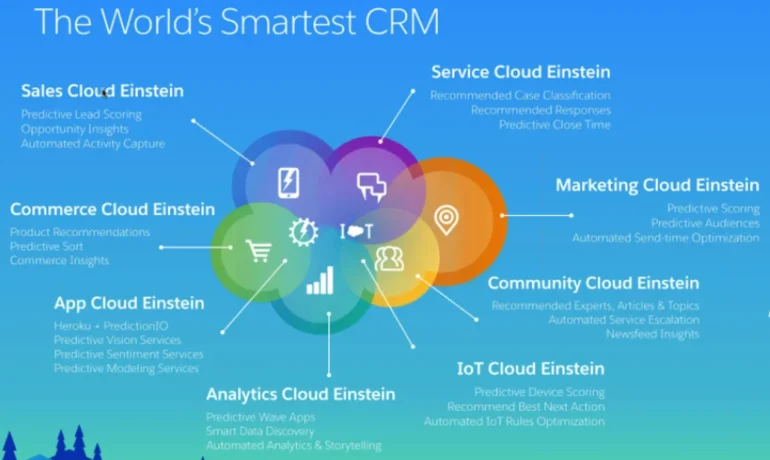
Salesforce Einstein Discover the power of the #1 AI for CRM with Einstein. Built into the Salesforce Platform, Einstein uses powerful machine learning and large language models to personalize customer interactions and make employees more productive. With Einstein powering the Customer 360, teams can accelerate time to value, predict outcomes, and automatically generate content within the flow of work. Einstein is for everyone, empowering business users, Salesforce Admins and Developers to embed AI into every experience with low code. Salesforce Einstein Features. Einstein Copilot Sales Actions: Sell faster with an AI assistant in the flow of work.Call Exploration: Ask Einstein to synthesize important call information in seconds. Ask Einstein to identify important takeaways and customer sentiment, so you have the context you need to move deals forward.

 Sales Summaries: Summarize records to identify likelihood the deal will close, the competitors involved, key activities, and more. Forecast Guidance: Ask Einstein to inform your forecast and help you identify which deals need your attention. Close Plan: Generate a customized action plan personalized to your customer and sales process. Increase conversion rates with step-by-step guidance and milestones grounded in CRM data. Salesforce Einstein Features Sales Generative AI features: ° Knowledge Creation: ° Search Answers for Agents and Customers: Einstein Copilot Service Actions: Streamline service operations by drafting Knowledge articles and surfacing answers, grounded in knowledge, to the most commonly asked questions. Summarize support interactions to save agent time and formalize institutional knowledge. Surface generated answers to agents’ & customers’ questions that are grounded in your trusted Knowledge base directly into your search page. Search Answers for Agents is included in the Einstein for Service Add-on SKU and Search Answers for Customers is included in the Einstein 1 Service Edition.
Empower agents to deliver more personalized service and reach resolutions faster with an AI assistant built into the flow of work. You can leverage out-of-the-box actions like summarize conversations or answer questions with Knowledge or you can build custom actions to fit your unique business needs. Service Salesforce Einstein Features This Release Einstein CopilotSell faster with an AI assistant. No data requirements
Included in Einstein 1 Sales Edition. Einstein Copilot: Sales ActionsSell faster with an AI assistant.No data requirements. 
 Call explorer and meeting follow-up requires Einstein Conversation Insights.
Included in Einstein 1 Sales Edition. Generative AIBoost productivity by automating time-consuming tasks.No data requirements. 
 Call summaries and call explorer requires Einstein Conversation Insights.
Included in Einstein 1 Sales Edition. Einstein will use a global model until enough data is available for a local model. For a local model: ≥1,000 lead records created and ≥120 of those converted in the last 6 monthsEinstein Automated Contacts Automatically add new
contacts & events to your CRM≥ 30 business accounts. If you use Person Accounts, >= 50 percent of accounts must be business accounts Einstein Recommended ConnectionsGet insights about your teams network to see who knows your customers and can help out ona deal ≥ 2 users to be connected to Einstein Activity Capture
and Inbox (5 preferred) Einstein Forecasting Easily predict sales forecasts inside
of Salesforce Collaborative Forecasting enabled; use a standard fiscal year; measure forecasts by opportunity revenue; forecast hierarchy must include at least one forecasting enabled user who reports to a forecast manager; opportunities must be in Salesforce ≥ 24 months;Einstein Email Insights Prioritize your inbox with actionable intelligence Einstein Activity Capture enabledEinstein Activity Metiics (Activity 360) Get insight into the activities you enter
manually and automatically from Einstein
Activity Capture Einstein Activity Capture enabled Sales Analytics Get insights into the most common sales KPIs No data requirements. User specific requirements like browser and device apply Einstein Conveisation Insights Gain actionable insights from your sales calls with conversational intelligenceCall or video recordings from Lightning Dialer, Service Cloud Voice, Zoom and other supported CTI audio and video partners.Buyer Assistant Replace web-to-lead forms with real-time conversations. No data requirements – Sales Cloud UE or Sales Engagement. Einstein Opportunity ScoringEinstein Activity CaptuiePrioritize the opportunities most likely to convertAutomatically capture data & add to your CRMEinstein will use a global model until enough data is available for a local model. For a local model: ≥ 200 closed won and ≥ 200 closed lost opportunities in the last 2 years, each with a lifespan of at least 2 days≥ 30 accounts, contacts, or leads; Requires Gmail, Microsoft Exchange 2019, 2016, or 2013 Einstein Relationship Insights Speed prospecting with AI that researches for you. No data requirements. Einstein Next Best Action Deliver optimal recommendations at the point of maximumimpactNo data requirements. User specific requirements like browser and device apply Sales AIGenerate emails, prioritize leads & opportunities most likely to convert, uncover pipeline trends, predict sales forecasts, automate data capture, and more with Einstein for Sales. Generative AIPrompt BuilderEinstein Lead ScoringEinstein Opportunity ScoringEinstein Activity CaptureEinstein Automated ContactsEinstein Recommended ConnectionsEinstein ForecastingEinstein Email InsightsEinstein Activity Metrics (Activity 360)Sales AnalyticsEinstein Conversation InsightsBuyer Assistant Sales AIGenerative AI: 
Feature Why is it so Great? What do I need? Automate common questions and business processes to solve customer requests fasterBoost productivity by auto-generating service replies, summarizing conversations during escalations andtransfers or closed interactions, drafting knowledge articles, and surfacing relevant answers grounded inknowledge for agents’ and customers’ commonly asked questions. Deliver optimal recommendations at the point of maximum impactEliminate the guesswork with AI-powered recommendations for everyoneDecrease time spent on manual data entry for incoming cases and improve case field accuracy and completionAutomate case triage and solve customer requests fasterDecrease time spent selecting field values needed to close a case with chat conversations and improved field accuracySurface the best articles in real time to solve any customer’s questionEliminate time spent typing responses to the most common customer questionsGet insights into contact center operations, understand customers, and deliver enhanced customerexperiencesChat or Messaging channels, minimum of 20 examples for most languagesNo data requirements. User specific requirements like browser and device apply Make sure that your dataset has the minimum records to build a successful recommendation. Recipient Records need a minimum of 100 records,Recommended Item Records need a minimum of 10 records, andPositive Interaction Examples need a minimum of 400

Read More
salesforce unified knowledge

The Low-Code Revolution

The Low-Code Revolution: How Salesforce is Democratizing CRM Customization Redefining CRM Development Through Visual Innovation Salesforce has pioneered a fundamental shift in customer relationship management by embracing low-code/no-code technology, transforming how organizations customize their CRM platforms. This revolutionary approach enables business users across departments to actively participate in solution development through intuitive visual interfaces rather than complex programming. The low-code movement represents more than just simplified development—it’s a strategic empowerment of business teams to rapidly adapt systems to evolving needs without creating IT bottlenecks. By 2025, Gartner predicts 70% of new applications will use low-code/no-code technologies, with Salesforce positioned at the forefront of this transformation. Understanding the Low-Code/No-Code Paradigm Visual Development for Business Agility Low-code/no-code platforms replace traditional programming with: This approach creates a spectrum of capability: The Strategic Advantages of Salesforce’s Approach 1. Accelerated Digital Transformation 2. Cost-Effective Innovation 3. Cross-Functional Collaboration Salesforce’s Low-Code Ecosystem Core Platform Capabilities Expanding Possibilities Real-World Impact Across Industries Financial Services A regional bank reduced loan processing time by 40% by enabling loan officers to build their own workflow automations using Salesforce Flow. Healthcare A hospital network created a patient intake portal in three days using Lightning App Builder, eliminating a six-month development backlog. Retail A global retailer empowered store managers to build custom inventory apps, improving stock accuracy by 25% without IT involvement. The Future of Enterprise Development Salesforce’s low-code strategy represents more than just simplified tools—it’s redefining the relationship between business needs and technical solutions. Key emerging trends include: Implementing a Successful Low-Code Strategy Organizations maximizing Salesforce’s low-code potential typically: Conclusion: The Democratization of Digital Transformation Salesforce’s low-code/no-code revolution represents a fundamental shift in how businesses approach CRM customization and digital innovation. By empowering business users to become active participants in solution development, organizations can achieve: As the platform continues to evolve, Salesforce is positioned to lead the next wave of enterprise software—where the power to transform business processes resides not just with technical teams, but across the entire organization. This democratization of development capability marks a new era of business agility and competitive advantage. Content updated April 2025. Like Related Posts Who is Salesforce? Who is Salesforce? Here is their story in their own words. From our inception, we’ve proudly embraced the identity of Read more Salesforce Marketing Cloud Transactional Emails Salesforce Marketing Cloud Transactional Emails are immediate, automated, non-promotional messages crucial to business operations and customer satisfaction, such as order Read more Salesforce Unites Einstein Analytics with Financial CRM Salesforce has unveiled a comprehensive analytics solution tailored for wealth managers, home office professionals, and retail bankers, merging its Financial Read more AI-Driven Propensity Scores AI plays a crucial role in propensity score estimation as it can discern underlying patterns between treatments and confounding variables Read more

Read More
Salesforce Success Story

Case Study: Healthcare Health Cloud Marketing Cloud Large Childrens Hospital

Large children’s hospital needs a usable data model and enhanced security to deliver excellent patient outcomes. Healthcare Health Cloud Marketing Cloud Large Childrens Hospital. Industry: Healthcare Client is a large children’s hospital with pediatric healthcare offering acute care. Problem: Implemented : Our solution? Results: In order to improve operations, provide physician-facing services, and move data—including PHI and PII—to the cloud, we have assisted healthcare providers in overcoming these obstacles. Salesforce offers all-inclusive solutions specifically designed to meet the demands of payers (insurance companies) and providers (healthcare organizations). Better health outcomes, more operational effectiveness, and increased patient engagement are the goals of these solutions. Salesforce solutions for the health and life sciences are tailored to the particular requirements of the medical industry. Salesforce offers digital transformation technology for health and life sciences industries. If you are considering a Salesforce healthcare implementation, contact Tectonic today. Like2 Related Posts Who is Salesforce? Who is Salesforce? Here is their story in their own words. From our inception, we’ve proudly embraced the identity of Read more Salesforce Marketing Cloud Transactional Emails Salesforce Marketing Cloud Transactional Emails are immediate, automated, non-promotional messages crucial to business operations and customer satisfaction, such as order Read more Salesforce Unites Einstein Analytics with Financial CRM Salesforce has unveiled a comprehensive analytics solution tailored for wealth managers, home office professionals, and retail bankers, merging its Financial Read more AI-Driven Propensity Scores AI plays a crucial role in propensity score estimation as it can discern underlying patterns between treatments and confounding variables Read more

Read More
Salesforce Flow

Salesforce Flow

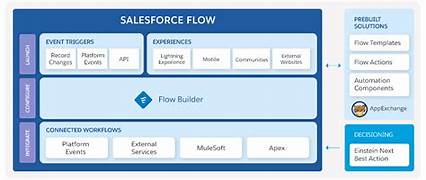
Salesforce Flow is a tool designed to automate complex business processes by collecting and manipulating data. Flow Builder, the declarative interface for creating flows, allows users to construct logic similar to coding without requiring programming expertise. When customers engage with a company—whether purchasing tickets, managing bills, or arranging reservations—they anticipate a seamless, personalized experience. Flow Builder empowers users to automate processes across Salesforce applications, experiences, and portals with intuitive, point-and-click functionality. Types of Flows in Salesforce include: Advantages of Salesforce Flow: Difference between Flow and Workflow in Salesforce: Flow offers more versatility than workflow rules and process builders. While workflows operate in the background, flows can guide users through processes with interactive screens and are not limited to specific objects. Flows have the capability to create, update, and delete records across multiple objects. Here’s a structured approach to effectively leverage Flow Builder: Flow Builder equips users with robust tools for automating Salesforce processes while adhering to best practices. By following these guidelines, users can develop efficient, tailored flows that align with specific business requirements. Like Related Posts Who is Salesforce? Who is Salesforce? Here is their story in their own words. From our inception, we’ve proudly embraced the identity of Read more Salesforce Marketing Cloud Transactional Emails Salesforce Marketing Cloud Transactional Emails are immediate, automated, non-promotional messages crucial to business operations and customer satisfaction, such as order Read more Salesforce Unites Einstein Analytics with Financial CRM Salesforce has unveiled a comprehensive analytics solution tailored for wealth managers, home office professionals, and retail bankers, merging its Financial Read more AI-Driven Propensity Scores AI plays a crucial role in propensity score estimation as it can discern underlying patterns between treatments and confounding variables Read more

Read More
Einstein 1 is Coming

Einstein 1 is Coming

What Does the New Einstein 1 Data Cloud Mean for Your Organization? Einstein 1 is Coming One of the major announcements at Dreamforce was the exciting intro that Einstein 1 is Coming. The Einstein 1 Data Cloud is now natively integrated with the Einstein 1 Platform. This integration allows users to connect any data, create unified customer profiles, and enhance every customer experience with AI, automation, and analytics. This is a giant step for Salesforce-kind. It can revolutionize the ways businesses engage with their customers. While this announcement is exciting, what does it mean for organizations at different stages of their Salesforce journey? In this insight, we explore the announcement details, considerations for using the Einstein 1 Data Cloud in your company, and how Tectonic can assist in navigating this new offering. What’s New with the Platform? The integration of Salesforce Data Cloud and Einstein AI into the Einstein 1 Platform marks a significant enhancement. The platform integration enables companies to securely connect any data, build AI-powered apps with low code, and deliver superior CRM experiences. It unifies data across the enterprise by mapping it to Salesforce’s underlying metadata framework, regardless of how the data is structured in disparate systems. Regardless of how complex it is. What is Einstein 1 Data Cloud? The Key to Unified Data Salesforce Einstein 1 Data Cloud unifies customer data, enterprise content, telemetry data, Slack conversations, and other structured and unstructured data to create a single view of the customer. This integration unlocks otherwise siloed data and scales operations in new ways: Salesforce has announced that Enterprise Edition and above customers can use Data Cloud at no additional cost. However, organizations should consider their position on the Salesforce maturity curve before implementation. Data Cloud’s capabilities, while extensive, might not fully optimize data for organizations further along in their Salesforce journey without a thorough trial. What is the Einstein Conversational Assistant? An AI-Powered Shift Einstein now includes a generative AI-powered conversational assistant featuring Einstein Copilot and Einstein Copilot Studio. These tools operate within the Einstein Trust Layer, a secure AI architecture native to the Einstein 1 Platform that ensures data privacy and security. Why Should Organizations Consider Einstein 1? Customer data is often fragmented and siloed across disparate systems, preventing a unified view necessary for informed business decision-making. Data unification is essential for data-driven decision making and fully getting the full ROI of AI. AI is a major trend in technology, but effective AI requires comprehensive, aligned data. Without a unified data foundation, AI’s potential is limited. Einstein 1 with Data Cloud provides the solution by consolidating data, enabling the training of AI models to make optimal decisions and recommendations. How Can Tectonic Help You Transition? Tectonic brings extensive Salesforce expertise and industry-specific experience in sectors heavily reliant on data, such as healthcare, financial services, and travel and tourism. These industries face strict data regulations and often have siloed data in legacy systems. Einstein 1 helps organizations achieve a 360-degree view of their customers by unifying data. Tectonic can assist in maximizing AI on the Salesforce platform by building a robust data foundation and providing a roadmap for future scalability. While both Einstein 1 and AI Cloud are Salesforce terms that promise AI-driven capabilities, there are differences to consider. Einstein 1 Platform is a comprehensive suite that includes Data Cloud, AI tools, and automation capabilities. In contrast, AI Cloud is more of an overarching term that might encompass Einstein 1 as part of its suite, focusing on the broader application of AI across Salesforce’s entire range of products and services. Understanding these distinctions is critical in identifying which solution aligns with your organizational needs. Like Related Posts Who is Salesforce? Who is Salesforce? Here is their story in their own words. From our inception, we’ve proudly embraced the identity of Read more Salesforce Marketing Cloud Transactional Emails Salesforce Marketing Cloud Transactional Emails are immediate, automated, non-promotional messages crucial to business operations and customer satisfaction, such as order Read more Salesforce Unites Einstein Analytics with Financial CRM Salesforce has unveiled a comprehensive analytics solution tailored for wealth managers, home office professionals, and retail bankers, merging its Financial Read more AI-Driven Propensity Scores AI plays a crucial role in propensity score estimation as it can discern underlying patterns between treatments and confounding variables Read more

Read More
Salesforce Dedicated Data Model for Public Sector

Salesforce Dedicated Data Model for Public Sector

Public Sector Solutions Data Model Overview The Salesforce Dedicated Data Model for Public Sector leverages a suite of standard Salesforce objects to manage and structure data across various domains such as licensing, permitting, inspections, case management, benefit administration, grantmaking, and more. These objects are designed to facilitate efficient application processing, regulatory compliance, and service delivery within government agencies. Key Features Salesforce Dedicated Data Model for Public Sector Public Sector Solutions Standard Objects The data model includes a comprehensive set of objects tailored to support: Getting Started To implement and utilize the Public Sector Solutions data model effectively: Learn More Discover how Public Sector Solutions empowers government agencies in delivering efficient and effective public services. From automating approval workflows to enhancing constituent engagement, explore the capabilities tailored to meet the diverse needs of public sector organizations. Like Related Posts Who is Salesforce? Who is Salesforce? Here is their story in their own words. From our inception, we’ve proudly embraced the identity of Read more Salesforce Marketing Cloud Transactional Emails Salesforce Marketing Cloud Transactional Emails are immediate, automated, non-promotional messages crucial to business operations and customer satisfaction, such as order Read more Salesforce Unites Einstein Analytics with Financial CRM Salesforce has unveiled a comprehensive analytics solution tailored for wealth managers, home office professionals, and retail bankers, merging its Financial Read more AI-Driven Propensity Scores AI plays a crucial role in propensity score estimation as it can discern underlying patterns between treatments and confounding variables Read more

Read More
Google Analytics and Salesforce Integration

Google Analytics and Salesforce Integration

Syncing Google Analytics Data to CRM Analytics To integrate Google Analytics and Salesforce Integration using the Google Analytics connector, follow these steps: Important Note: As of July 1, 2023, the main product Google Analytics has been decommissioned and replaced with the new product Google Analytics 4 (GA4). The Salesforce announcement GA4 Set to Replace Universal Analytics gives an overview on this. Creating a Connection Required Settings: Google Analytics 4 Integration To sync Google Analytics 4 data to Salesforce Data Pipelines: Connector Considerations: Google Analytics Salesforce Sales Cloud Integration User Identification Analytics provides two methods to identify users: Required Salesforce Sales Cloud Objects and Fields: Integration Steps: Testing and Viewing Imported Data: Notes: Google Data Studio and Salesforce Integration Connecting Salesforce with Google Data Studio allows for powerful visualizations that combine sales and marketing data. This integration helps in understanding which channels generate the most leads and income. Google Analytics 4 Connection Setup: Connection Details: Advanced Properties: Considerations: By following these steps, you can seamlessly integrate Google Analytics data into your CRM Analytics and Salesforce Data Pipelines, ensuring robust data analysis and informed decision-making. Decide How to Identify Your Users: Analytics offers two ways to programmatically identify your users: Client ID and User-ID. To support Data Import for Salesforce Sales Cloud, you must implement Client ID. You may optionally choose to also implement User-ID. Client ID pseudonymously identifies a browser instance and is best suited for businesses focused on lead generation and new customer acquisition. User-ID enables the analysis of groups of sessions, across devices, using a unique, persistent, and non-personally identifiable ID string representing a user. This option is best for businesses with high rates of logged-in users. How to Import CRM/ERP Data with Google Analytics 4 Using a CSV File: Transitioning to Google Analytics 4: As of March 2023, Google has automatically created GA4 properties for users unless they opt-out. Until July 1, 2023, you can continue to use and collect new data in your Universal Analytics properties. After this date, you must export your historical reports as Universal Analytics will be phased out. How Does Google Help Salesforce Marketing Cloud Users? Google Analytics provides invaluable insights into user behavior, helping Salesforce Marketing Cloud users optimize campaigns and understand customer journeys. Integration with the Google platform allows businesses to combine offline sales data with digital analytics, optimizing digital marketing strategies and improving campaign effectiveness. Additional Integration: Using datasets from Google Analytics and Google BigQuery, businesses can create interactive Tableau CRM dashboards to visualize campaign activities and performance metrics. By following these guidelines, organizations can leverage Google Analytics data effectively within their Salesforce ecosystem, enhancing decision-making and strategic planning. Content updated July 2024. Like1 Related Posts Who is Salesforce? Who is Salesforce? Here is their story in their own words. From our inception, we’ve proudly embraced the identity of Read more Salesforce Marketing Cloud Transactional Emails Salesforce Marketing Cloud Transactional Emails are immediate, automated, non-promotional messages crucial to business operations and customer satisfaction, such as order Read more Salesforce Unites Einstein Analytics with Financial CRM Salesforce has unveiled a comprehensive analytics solution tailored for wealth managers, home office professionals, and retail bankers, merging its Financial Read more AI-Driven Propensity Scores AI plays a crucial role in propensity score estimation as it can discern underlying patterns between treatments and confounding variables Read more

Read More
Salesforce Data Cloud Explained

Salesforce Data Cloud Explained

Salesforce Data Cloud, previously recognized as Salesforce CDP/Genie, made its debut at Dreamforce 2022, hailed by Salesforce as one of the most significant innovations in the company’s history. A hyperscale data platform built into Salesforce. Activate all your customer data across Salesforce applications with Data Cloud. Data Cloud facilitates the intake and storage of real-time data streams on a massive scale, empowering automated tasks that result in highly personalized experiences. Data can be sourced from diverse Salesforce data outlets, including Mulesoft, Marketing Cloud, and others, along with customers’ proprietary applications and data sources. Subsequently, it can dynamically respond to this real-time data by automating actions across Salesforce CRM, Marketing Cloud, Commerce, and more, inclusive of automating actions through Salesforce Flow. What is the Salesforce data cloud? Data Cloud is the fastest growing organically built product in Salesforce’s history (i.e. Salesforce built it themselves, not via acquisitions). Data Cloud could be described as the ‘Holy Grail of CRM’, meaning that the data problem that’s existed since the infancy of CRM is now finally solvable. Data Cloud is the foundation that speeds up the connectivity between different ‘clouds’ across the platform. However, Data Cloud is also a product that can be purchased. While not all Salesforce customers have licensed Data Cloud, being at the foundation means they are still taking advantage of Data Cloud to a degree – but this all becomes even stronger with Data Cloud as a personalization and data unification platform. What is the history of Data Cloud? Salesforce has gone through several iterations with naming its CDP product: Customer 360 Audiences → Salesforce CDP → Marketing Cloud Customer Data Platform → Salesforce Genie → Salesforce Data Cloud. In some instances, changes were made because the name just didn’t stick – but what’s more important to note, is that some of the name changes were to indicate the significant developments that happened to the product. Salesforce Data Cloud Differentiators Data Cloud, in itself, is impressive. While many organizations would consider it expensive, if you were to flip the argument on its head, by buying your own data warehouse, building the star schema, and paying for ongoing compute storage, you’d be looking to spend 5 to 10 times more than what Salesforce is charging for Data Cloud. Plus, data harmonization works best when your CRM data is front and center. There are other key differentiators that helps Data Cloud to stand out from the crowd: Is data cloud a data lakehouse? That means that Data Cloud is now not just a really good CDP, it’s now a data lake which will be used in sales and service use cases. But it also means that we can start to fundamentally move some of our higher-scale consumer products like Marketing and Commerce onto the platform. Is Snowflake a data Lakehouse? Snowflake offers customers the ability to ingest data to a managed repository, in what’s commonly referred to as a data warehouse architecture, but also gives customers the ability to read and write data in cloud object storage, functioning as a data lake query engine. What is the benefit of Salesforce data cloud? Data Cloud empowers Salesforce Sales Cloud with AI capabilities and automation that quickly closes deals and boosts productivity across every channel. It drives customer data from all the touchpoints and unifies it separately in individual customer profiles. Salesforce Data Cloud is a powerful data warehouse solution that allows companies to effectively manage and analyze their data. What is the difference between Salesforce CDP and data lake? Talking abut Salesforce CDP is a little bit like a history lesson. While a CDP provides a unified, structured view of customer data, a data lake, on the other hand, is more of a raw, unstructured storage repository that holds a vast amount of data (more than just customer data) in its native format until it’s needed. Like1 Related Posts Who is Salesforce? Who is Salesforce? Here is their story in their own words. From our inception, we’ve proudly embraced the identity of Read more Salesforce Marketing Cloud Transactional Emails Salesforce Marketing Cloud Transactional Emails are immediate, automated, non-promotional messages crucial to business operations and customer satisfaction, such as order Read more Salesforce Unites Einstein Analytics with Financial CRM Salesforce has unveiled a comprehensive analytics solution tailored for wealth managers, home office professionals, and retail bankers, merging its Financial Read more AI-Driven Propensity Scores AI plays a crucial role in propensity score estimation as it can discern underlying patterns between treatments and confounding variables Read more

Read More
gettectonic.com