Spark Archives - gettectonic.com
Why AI Won't Kill SaaS

Essential Framework for Enterprise AI Development

LangChain: The Essential Framework for Enterprise AI Development The Challenge: Bridging LLMs with Enterprise Systems Large language models (LLMs) hold immense potential, but their real-world impact is limited without seamless integration into existing software stacks. Developers face three key hurdles: 🔹 Data Access – LLMs struggle to query databases, APIs, and real-time streams.🔹 Workflow Orchestration – Complex AI apps require multi-step reasoning.🔹 Accuracy & Hallucinations – Models need grounding in trusted data sources. Enter LangChain – the open-source framework that standardizes LLM integration, making AI applications scalable, reliable, and production-ready. LangChain Core: Prompts, Tools & Chains 1. Prompts – The Starting Point 2. Tools – Modular Building Blocks LangChain provides pre-built integrations for:✔ Data Search (Tavily, SerpAPI)✔ Code Execution (Python REPL)✔ Math & Logic (Wolfram Alpha)✔ Custom APIs (Connect to internal systems) 3. Chains – Multi-Step Workflows Chain Type Use Case Generic Basic prompt → LLM → output Utility Combine tools (e.g., search → analyze → summarize) Async Parallelize tasks for speed Example: python Copy Download chain = ( fetch_financial_data_from_API → analyze_with_LLM → generate_report → email_results ) Supercharging LangChain with Big Data Apache Spark: High-Scale Data Processing Apache Kafka: Event-Driven AI Enterprise Architecture: text Copy Download Kafka (Real-Time Events) → Spark (Batch Processing) → LangChain (LLM Orchestration) → Business Apps 3 Best Practices for Production 1. Deploy with LangServe 2. Debug with LangSmith 3. Automate Feedback Loops When to Use LangChain vs. Raw Python Scenario LangChain Pure Python Quick Prototyping ✅ Low-code templates ❌ Manual wiring Complex Workflows ✅ Built-in chains ❌ Reinvent the wheel Enterprise Scaling ✅ Spark/Kafka integration ❌ Custom glue code Criticism Addressed: The Future: LangChain as the AI Orchestration Standard With retrieval-augmented generation (RAG) and multi-agent systems gaining traction, LangChain’s role is expanding: 🔮 Autonomous Agents – Chains that self-prompt for complex tasks.🔮 Semantic Caching – Reduce LLM costs by reusing past responses.🔮 No-Code Builders – Business users composing AI workflows visually. Bottom Line: LangChain isn’t just for researchers—it’s the missing middleware for enterprise AI. “LangChain does for LLMs what Kubernetes did for containers—it turns prototypes into production.” Like Related Posts Who is Salesforce? Who is Salesforce? Here is their story in their own words. From our inception, we’ve proudly embraced the identity of Read more Salesforce Unites Einstein Analytics with Financial CRM Salesforce has unveiled a comprehensive analytics solution tailored for wealth managers, home office professionals, and retail bankers, merging its Financial Read more AI-Driven Propensity Scores AI plays a crucial role in propensity score estimation as it can discern underlying patterns between treatments and confounding variables Read more Tectonic’s Successful Salesforce Track Record Salesforce Technology Services Integrator – Tectonic has successfully delivered Salesforce in a variety of industries including Public Sector, Hospitality, Manufacturing, Read more

Read More
unpatched ai

Scrape the Web for Training Data

Do AI Companies Have the Right to Scrape the Web for Training Data? For the past two years, generative AI companies have faced lawsuits—some from high-profile authors and publishers—while simultaneously striking multi-million-dollar data licensing deals. Despite the legal battles, the political tide seems to be shifting in favor of AI firms. Both the European Union and the UK appear to be leaning toward an “opt-out” model, where web scraping is permitted unless content owners explicitly forbid it. But critical questions remain: How exactly does “opting out” work? And do creators and publishers truly have a fair chance to do so? Data as the New Oil The most valuable asset in AI isn’t GPUs or data centers—it’s the training data itself. Without the vast troves of text, images, videos, and artwork produced over decades (or even centuries), there would be no ChatGPT, Gemini, or Claude. Web scraping is nothing new. Search engines like Google have relied on crawlers for decades, indexing the web to deliver search results. But the rules of the game have changed. Old Conventions, New Conflicts Historically, website owners welcomed search engine crawlers to boost visibility while others (especially news publishers) saw them as competitors. The Robots Exclusion Standard (robots.txt) emerged as a gentleman’s agreement—a way for sites to signal which pages could be crawled. While robots.txt isn’t legally binding, reputable search engines like Google and Bing generally respect it. The arrangement was symbiotic: websites got traffic, and search engines got data. But AI crawlers operate differently. They don’t drive traffic—they consume content to generate competing products, often commercializing it via AI services. Will AI companies play fair? Nick Clegg, former UK deputy PM and current Meta executive, bluntly stated that requiring permission from artists would “kill” the AI industry. If unfettered data access is seen as existential, can we expect AI firms to respect opt-outs? Can Websites Really Block AI Crawlers? Theoretically, yes—by blocking AI user agents or monitoring suspicious traffic. But this is a game of whack-a-mole, requiring constant vigilance. And what about offline content? Books, research papers, and proprietary datasets aren’t protected by robots.txt. Some AI companies have allegedly bypassed ethical scraping altogether, sourcing data from shadowy corners of the internet—like torrent sites—as revealed in a recent lawsuit against Meta. The Transparency Problem Even if content owners could opt out, how would they know if their data was already used? Why resist transparency? Only two explanations make sense: Neither is a good look. Beyond Copyright: The Bigger Questions This debate isn’t just about copyright—it’s about: And what happens when Google replaces traditional search with AI summaries? Websites may face an impossible choice: Allow AI training or disappear from search results altogether. The Future of the Open Web If AI companies continue scraping indiscriminately, the open web could shrink further, with more content locked behind paywalls and logins. Ironically, the very ecosystem AI relies on may be destroyed by its own hunger for data. The question isn’t just whether AI firms have the right to scrape the web—but whether the web as we know it will survive their appetite. Footnotes Key Takeaways ✅ AI companies are winning the legal/political battle for web scraping rights.⚠️ Opt-out mechanisms (like robots.txt) may be ignored.🔍 Transparency is lacking—many AI firms won’t disclose training data sources.🌐 Indiscriminate scraping could kill the open web, pushing content behind paywalls. Would love to hear your thoughts—should AI companies have free rein over web data, or do content creators deserve more control? Like Related Posts Who is Salesforce? Who is Salesforce? Here is their story in their own words. From our inception, we’ve proudly embraced the identity of Read more Salesforce Unites Einstein Analytics with Financial CRM Salesforce has unveiled a comprehensive analytics solution tailored for wealth managers, home office professionals, and retail bankers, merging its Financial Read more AI-Driven Propensity Scores AI plays a crucial role in propensity score estimation as it can discern underlying patterns between treatments and confounding variables Read more Tectonic’s Successful Salesforce Track Record Salesforce Technology Services Integrator – Tectonic has successfully delivered Salesforce in a variety of industries including Public Sector, Hospitality, Manufacturing, Read more

Read More
Salesforce Tightens Slack’s API Rules

Salesforce Tightens Slack’s API Rules

Salesforce Tightens Slack’s API Rules, Restricting AI Data Access Salesforce, the parent company of workplace messaging platform Slack, has quietly updated its API terms to block third-party software firms from indexing or storing Slack messages—a move that could significantly impact enterprise AI tools. According to a report from The Information, the changes prevent apps like Glean (a workplace AI search provider) from accessing Slack data for long-term storage or analysis. In a statement to Reuters, Salesforce framed the shift as a data security measure, saying: “As AI raises critical considerations around how customer data is handled, we’re reinforcing safeguards around how data accessed via Slack APIs can be stored, used, and shared.” What Does This Actually Mean? APIs (Application Programming Interfaces) allow different software systems to communicate. Until now, companies could use Slack’s API to: Now, those capabilities are restricted. Third-party apps can still access Slack data in real time, but they can’t retain it—meaning AI models can’t learn from past conversations. Glean reportedly warned customers that the change “hampers your ability to use your data with your chosen enterprise AI platform.” Why Is Salesforce Doing This? Officially, the company says it’s about security and responsible AI. But critics argue it’s a strategic lock-in play: Industry Backlash: “This Is Anti-Innovation” The move has sparked frustration across the tech sector, with critics accusing Salesforce of building a walled garden: The Bigger Picture: AI’s Data Wars This isn’t just about Slack—it’s part of a broader battle over AI training data: Salesforce’s move suggests that enterprise AI will increasingly run on proprietary data silos—meaning companies that control the data control the AI. What Happens Next? One thing’s clear: The age of open data for AI is ending—and the age of data feudalism is here. Like Related Posts Who is Salesforce? Who is Salesforce? Here is their story in their own words. From our inception, we’ve proudly embraced the identity of Read more Salesforce Marketing Cloud Transactional Emails Salesforce Marketing Cloud Transactional Emails are immediate, automated, non-promotional messages crucial to business operations and customer satisfaction, such as order Read more Salesforce Unites Einstein Analytics with Financial CRM Salesforce has unveiled a comprehensive analytics solution tailored for wealth managers, home office professionals, and retail bankers, merging its Financial Read more AI-Driven Propensity Scores AI plays a crucial role in propensity score estimation as it can discern underlying patterns between treatments and confounding variables Read more

Read More

Once Upon a Time in Data Land

Once Upon a Time in Data Land: Building the Artificial Intelligence-Ready Warehouse In the early days of data, businesses simply wanted to know what had already happened in the past. Questions like “How many units shipped?” or “What were last month’s sales?” drove the first major digital settlements—the Digitally Filed Data Warehouse. Looking back this seems like the aluminum carport you can have erected in your driveway. The Meticulously Organized Library (The Digitally Filed Data Warehouse Era) Imagine a grand, meticulously organized library. Data from sales, finance, and inventory wasn’t just dumped inside—it went through ETL (Extract, Transform, Load), where it was cleaned, standardized, and structured into predefined formats. Need quarterly sales figures? They were always in the same place, ready for reliable reporting. But then, the world outside got messy. Suddenly, businesses weren’t just dealing with neat rows and columns—they faced website clicks, customer emails, sensor data, social media streams, images, and videos. The rigid Digitally Filed Data Warehouse struggled to adapt. Trying to force unstructured data through ETL was like trying to shelve a waterfall—slow, expensive, and often impossible. The Everything Shed (The Rise of the AI-Powered Warehouse) Enter the AI-Powered Warehouse—a vast, flexible storage space built for raw, unstructured data. Instead of forcing structure upfront, it embraced “store first, organize later” (schema-on-read). Data scientists could explore everything, from tweets to video transcripts, without constraints. But freedom had a cost. Without governance, many AI-Powered Warehouses became “data swamps”—cluttered, unreliable, and slow. Finding clean, trustworthy data was a treasure hunt, and building reliable AI pipelines was a challenge. Organizing the Shed (The AI-Ready Warehouse Paradigm) The solution? Structure without sacrifice. The AI-Ready Warehouse kept the flexibility of raw storage but added intelligence on top. Technologies like Delta Lake, Apache Iceberg, and Apache Hudi introduced:✔ ACID transactions (no more corrupted data)✔ Data versioning (“time travel” to past states)✔ Schema enforcement (order without rigidity)✔ Performance optimizations (speed at scale) A key innovation was the Medallion Architecture, organizing data by quality: This hybrid approach unified BI dashboards, analytics, and machine learning—all on the same foundation. The AI Factory (The Modern AI-Functioning Warehouse) Just as businesses adapted, AI evolved. Generative AI, autonomous agents, and real-time decision-making demanded more than batch-processed data. The AI-Ready Warehouse transformed into a fully integrated AI factory, built for: 🔹 Real-Time & Streaming Data 🔹 Seamless MLOps Integration 🔹 Vector Databases & Embeddings 🔹 Robust AI Governance Why This Matters for AI Agents Autonomous AI agents don’t just analyze data—they act on it. The AI-Functioning Warehouse gives them:✔ Context: Real-time data + historical insights✔ Consistency: Features match training data✔ Memory: Logged actions for continuous learning The Future: An AI-Native Data Ecosystem The journey from Digitally Filed Data Warehouse to AI-Powered Warehouse to AI-Functioning Warehouse reflects a shift from static reporting to dynamic intelligence. For businesses embracing AI, the question is no longer “Do we need a data strategy?” but “Is our data foundation AI-ready?” The answer will separate the leaders from the laggards in the age of AI. Next Steps: The future belongs to those who build not just for data, but for AI. Like Related Posts Who is Salesforce? Who is Salesforce? Here is their story in their own words. From our inception, we’ve proudly embraced the identity of Read more Salesforce Unites Einstein Analytics with Financial CRM Salesforce has unveiled a comprehensive analytics solution tailored for wealth managers, home office professionals, and retail bankers, merging its Financial Read more AI-Driven Propensity Scores AI plays a crucial role in propensity score estimation as it can discern underlying patterns between treatments and confounding variables Read more Tectonic’s Successful Salesforce Track Record Salesforce Technology Services Integrator – Tectonic has successfully delivered Salesforce in a variety of industries including Public Sector, Hospitality, Manufacturing, Read more

Read More
AI Agents, Tech's Next Big Bet

Embracing “Intelligent Austerity”

Embracing “Intelligent Austerity”: How Scotland Can Lead the Way in Public Sector Innovation As the UK Government enforces a 15% reduction in operating costs across departments, the pressure to streamline workflows through generative AI has never been greater. While these targets have sparked concern in Westminster, Scotland’s legacy of innovation—from tidal energy to healthcare—positions it to redefine what austerity can achieve. Rather than resorting to blunt cuts that undermine services and hurt the most vulnerable constituents, Scotland has a unique opportunity to pioneer intelligent austerity: delivering significant cost savings and productivity gains without sacrificing the quality of essential public services. But how? A Smarter Approach to Public Services At Salesforce, we’re not just driving agentic transformation—we’re challenging governments to rethink efficiency. Our technology is already embedded across the UK public sector and beyond. With Agentforce, our goal isn’t to replace human workers but to empower them by eliminating repetitive, low-value tasks. When I speak with civil servants, I ask a simple question: “What parts of your day drain your productivity?” The answer is almost always the same: tedious administrative work that stifles innovation. The key to unlocking societal progress—whether in fighting child poverty, boosting the economy, or tackling climate change—lies in making small, daily efficiency gains. By automating routine tasks, we free up staff to focus on what they do best: high-impact, human-centric work. Agentforce serves as a practical blueprint for intelligent austerity, delivering lasting efficiencies while preserving—and even enhancing—the human touch in public services. Intelligent Austerity: Efficiency Without Sacrifice Traditional austerity often means deep, painful cuts that erode services and fuel public frustration. Intelligent austerity, by contrast, targets inefficiencies—like costly call centres and outdated administrative processes—while reinvesting savings where they matter most. Instead of lengthy, expensive IT overhauls that tie departments to consultants, we advocate for off-the-shelf AI solutions that deliver value in weeks, not years. These integrate seamlessly with existing systems, improving transparency, agility, and scalability from day one. The result? Departments can exceed cost-saving targets—even surpassing the 15% goal—without the downsides of traditional austerity. Agents in Action: Real-World Success Stories These examples prove that AI-driven transformation can counter fiscal pressures while improving service delivery—a win-win for both budgets and citizens. Scotland’s AI Opportunity Imagine every government department equipped with a 24/7 AI expert—an intelligent assistant capable of answering policy questions, processing documents, or even serving as a strategic advisor. Early AI adoption is like the first SatNav systems: helpful but imperfect. The real breakthrough comes when AI evolves into a collision avoidance system—actively preventing problems and enhancing decision-making. Our AI Agents Handbook outlines how Scotland can harness this potential. By adopting AI strategically, public services can achieve cost savings that are reinvested in key priorities—eradicating child poverty, growing the economy, and addressing the climate crisis. The Future: Smarter, More Agile Public Services AI isn’t about replacing humans—it’s about empowering them. With each small efficiency gain, departments become more agile, better equipped to deliver sustainable, high-quality services. Scotland has the chance to lead this shift, turning fiscal challenges into opportunities for innovation. Interested in learning more? Let’s discuss how AI Agents can transform your organization. Get in touch for a personalized consultation. Like Related Posts Who is Salesforce? Who is Salesforce? Here is their story in their own words. From our inception, we’ve proudly embraced the identity of Read more Salesforce Marketing Cloud Transactional Emails Salesforce Marketing Cloud Transactional Emails are immediate, automated, non-promotional messages crucial to business operations and customer satisfaction, such as order Read more Salesforce Unites Einstein Analytics with Financial CRM Salesforce has unveiled a comprehensive analytics solution tailored for wealth managers, home office professionals, and retail bankers, merging its Financial Read more AI-Driven Propensity Scores AI plays a crucial role in propensity score estimation as it can discern underlying patterns between treatments and confounding variables Read more

Read More
The 5G Letdown

The 5G Letdown

The 5G Letdown: How Hype Outpaced Reality When 5G first arrived, it wasn’t just sold as an upgrade—it was pitched as the backbone of a futuristic society. Telecom giants promised self-driving car networks, remote robotic surgeries, and hyper-connected smart cities. Five years later, most of those visions remain science fiction. So what happened? The Grand Promises vs. The Reality 1. Remote Surgery? Not So Fast Marketing campaigns showed doctors performing precision operations from miles away using 5G’s “ultra-low latency.” But in reality:✔ Wired connections are still more reliable for critical medical procedures.✔ Regulatory and ethical hurdles (like patient consent and sterile environments) were glossed over.✔ Most hospitals never needed 5G for this in the first place. 2. Autonomous Cars Didn’t Need 5G The vision: A seamless 5G-powered traffic grid where cars communicate to prevent accidents. The truth?✔ Self-driving systems rely on onboard sensors and AI, not constant wireless signals.✔ Network dropouts would be deadly—so engineers designed cars to function independently.✔ 5G’s spotty coverage makes it an unreliable backbone for safety-critical systems. 3. Smart Cities? More Like Slow Rollouts While some cities have deployed IoT sensors (like smart streetlights), most “smart city” projects:✔ Use existing 4G or Wi-Fi instead of 5G.✔ Face budget and bureaucracy issues—not tech limitations.✔ Don’t actually require the speed 5G theoretically offers. Why 5G Fell Short 1. Millimeter Wave Limitations 5G’s fastest frequencies (mmWave) can’t penetrate walls and require antennas every few hundred meters. Carriers skipped the expensive infrastructure, relying instead on:✔ “Non-standalone 5G”—a rebranded 4G/5G hybrid that delivers barely noticeable speed boosts.✔ Misleading coverage maps showing 5G in areas where it barely functions. 2. Consumers Didn’t Notice (or Care) Most people’s daily use—streaming, browsing, social media—works fine on 4G. The average user sees little benefit from 5G, especially when:✔ Real-world speeds often match LTE.✔ Battery drain is worse on 5G phones.✔ Rural areas still lack coverage, despite ads claiming nationwide availability. 3. The Real Winners Were Equipment Makers Carriers spent $100B+ on spectrum licenses and infrastructure, but struggled to monetize 5G. Meanwhile:✔ Ericsson, Nokia, and Qualcomm made billions selling hardware.✔ Lobbyists pushed 5G as a “national priority”—even though the benefits were exaggerated. The Conspiracies & Health Panics The rapid deployment of 5G towers sparked baseless fears over radiation, despite studies showing:✔ 5G emissions are well below safety limits.✔ FM radio waves are stronger than 5G signals.✔ Scam products (like “5G-blocking” stickers) exploited public confusion. Was 5G a Scam? Not entirely—but it was the most overhyped tech of the decade. The truth?✔ Some industries (like factories) benefit from private 5G networks.✔ 6G is already being hyped—will we fall for it again?✔ The lesson? Demand proof, not promises. Final Verdict: 5G delivered incremental upgrades, not a revolution. And with 6G looming, we should ask: Will the next “game-changer” actually change anything? Like Related Posts Who is Salesforce? Who is Salesforce? Here is their story in their own words. From our inception, we’ve proudly embraced the identity of Read more Salesforce Marketing Cloud Transactional Emails Salesforce Marketing Cloud Transactional Emails are immediate, automated, non-promotional messages crucial to business operations and customer satisfaction, such as order Read more Salesforce Unites Einstein Analytics with Financial CRM Salesforce has unveiled a comprehensive analytics solution tailored for wealth managers, home office professionals, and retail bankers, merging its Financial Read more AI-Driven Propensity Scores AI plays a crucial role in propensity score estimation as it can discern underlying patterns between treatments and confounding variables Read more

Read More
Databricks Tools

Databricks Launches Lakeflow Connect to Simplify Enterprise Data Ingestion

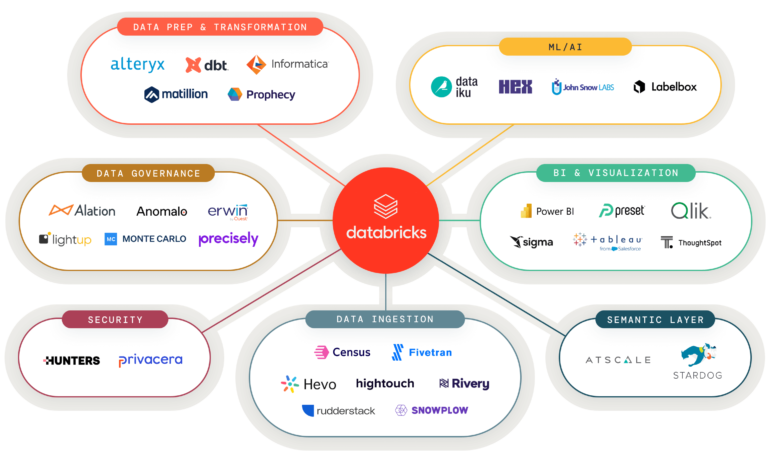
San Francisco, [April 2, 2025] – Databricks has taken a major step toward streamlining enterprise data integration with the general availability of Lakeflow Connect, its new low-code/no-code connector system. The initial release features preconfigured integrations with Salesforce and Workday, with plans to expand support to additional SaaS platforms, databases, and file sources in the coming months. Simplifying the Data Ingestion Challenge Data ingestion—the process of moving data from source systems into analytics environments—has long been a complex, resource-intensive task for enterprises. Traditional approaches require stitching together multiple tools (such as Apache Kafka or CDC solutions) and maintaining custom pipelines, often leading to scalability issues and high operational overhead. Lakeflow Connect aims to eliminate these pain points by providing: “Customers need this data, but before Lakeflow Connect, they were forced to rely on third-party tools that often failed at scale—or build custom solutions,” said Michael Armbrust, Distinguished Software Engineer at Databricks. “Now, ingestion is point-and-click within Databricks.” Why Salesforce and Workday First? The choice of initial connectors reflects the growing demand for real-time, structured data to power AI and generative AI applications. According to Kevin Petrie, Analyst at BARC U.S., more than 90% of AI leaders are experimenting with structured data, and nearly two-thirds use real-time feeds for model training. “Salesforce and Workday provide exactly the type of data needed for real-time ML and GenAI,” Petrie noted. “Databricks is smart to simplify access in this way.” Competitive Differentiation While other vendors offer connector solutions (e.g., Qlik’s Connector Factory), Lakeflow Connect stands out through: “Serverless compute is quietly important,” said Donald Farmer, Principal at TreeHive Strategy. “It’s not just about scalability—rapid startup times are critical for reducing pipeline latency.” The Road Ahead Databricks has already outlined plans to expand Lakeflow Connect with connectors for: Though the company hasn’t committed to a timeline, Armbrust hinted at upcoming announcements at the Data + AI Summit in June. Broader Vision: Democratizing Data Engineering Beyond ingestion, Databricks is focused on unifying the data engineering lifecycle. “Historically, you needed deep Spark or Scala expertise to build production-grade pipelines,” Armbrust said. “Now, we’re enabling SQL users—or even UI-only users—to achieve the same results.” Looking further ahead, Petrie suggested Databricks could enhance cross-team collaboration for agentic AI development, integrating Lakeflow with Mosaic AI and MLflow to bridge data, model, and application lifecycles. The Bottom LineLakeflow Connect marks a strategic move by Databricks to reduce friction in data pipelines—addressing a key bottleneck for enterprises scaling AI initiatives. As the connector ecosystem grows, it could further solidify Databricks’ position as an end-to-end platform for data and AI. For more details, visit Databricks.com. Key Takeaways:✅ Now Available: Salesforce & Workday connectors✅ Serverless, governed, and scalable ingestion✅ Future integrations with Google Analytics, ServiceNow, and more✅ June previews expected at Data + AI Summit Like Related Posts Who is Salesforce? Who is Salesforce? Here is their story in their own words. From our inception, we’ve proudly embraced the identity of Read more Salesforce Marketing Cloud Transactional Emails Salesforce Marketing Cloud Transactional Emails are immediate, automated, non-promotional messages crucial to business operations and customer satisfaction, such as order Read more Salesforce Unites Einstein Analytics with Financial CRM Salesforce has unveiled a comprehensive analytics solution tailored for wealth managers, home office professionals, and retail bankers, merging its Financial Read more AI-Driven Propensity Scores AI plays a crucial role in propensity score estimation as it can discern underlying patterns between treatments and confounding variables Read more

Read More
Agentforce to the Team

Redefining AI-Driven Customer Service

Salesforce’s Agentforce: Redefining AI-Driven Customer Service Salesforce has made major strides in AI-powered customer service with Agentforce, its agentic AI platform. The CRM leader now resolves 85% of customer queries without human intervention—an achievement driven by three key factors: Speaking at the Agentforce World Tour, Salesforce Co-Founder & CTO Parker Harris emphasized the platform’s role in handling vast volumes of customer interactions. The remaining 15% of queries are escalated to human agents for higher-value interactions, ensuring complex issues receive the necessary expertise. “We’re all shocked by the power of these LLMs. AI has truly hit a tipping point over the past two years,” Harris said. Currently, Agentforce manages 30,000 weekly conversations for Salesforce, proving its growing impact. Yet, the journey to adoption wasn’t without its challenges. From Caution to Acceleration: Agentforce’s Evolution Initially, Salesforce approached the Agentforce rollout with caution, concerned about AI hallucinations and accuracy. However, the company ultimately embraced a learn-by-doing approach. “So, we went for it!” Harris recalled. “We put it out there and improved it every hour. Every interaction helped us refine it.” This iterative process led to significant advancements, with Agentforce now seamlessly handling a high volume of inquiries. Expanding Beyond Customer Support Agentforce’s impact extends beyond customer service—it’s also revolutionizing sales operations at Salesforce. The platform acts as a virtual sales coach for 25,000 sales representatives, offering real-time guidance without the social pressures of a human supervisor. “Salespeople aren’t embarrassed to ask an AI coach questions, which makes them more effective,” Harris noted. This AI-driven coaching has enhanced sales efficiency and confidence, allowing teams to perform at a higher level. Real-World Impact and Competitive Edge Salesforce isn’t just promoting Agentforce—it’s using it to prove its value. Harris shared success stories, including reMarkable, which automated 35% of its customer service inquiries, reducing workload by 7,350 queries per month. Salesforce CEO Marc Benioff highlighted this competitive edge during the launch of Agentforce 2.0, pointing out that while many companies talk about AI adoption, few truly implement it at scale. “When you visit their websites, you still find a lot of forms and FAQs—but not a lot of AI agents,” Benioff said. He specifically called out Microsoft, stating: “If you look for Co-Pilot on their website, or how they’re automating support, it’s the same as it was two years ago.” Microsoft pushed back on Benioff’s critique, sparking a war of words between the tech giants. What’s Next for Salesforce? Beyond AI-driven service and sales, Salesforce is making bold moves in IT Service Management (ITSM), positioning itself against competitors like ServiceNow. During a recent Motley Fool podcast, Benioff hinted at Salesforce’s ITSM ambitions, stating: “We’re building new apps, like ITSM.” At the TrailheadDX event, Salesforce teased this new product, signaling its expansion into enterprise IT management—a move that could shake up the ITSM landscape. With AI agents redefining work across industries, Salesforce’s aggressive push into automation and ITSM underscores its vision for the future of enterprise AI. Like Related Posts Who is Salesforce? Who is Salesforce? Here is their story in their own words. From our inception, we’ve proudly embraced the identity of Read more Salesforce Marketing Cloud Transactional Emails Salesforce Marketing Cloud Transactional Emails are immediate, automated, non-promotional messages crucial to business operations and customer satisfaction, such as order Read more Salesforce Unites Einstein Analytics with Financial CRM Salesforce has unveiled a comprehensive analytics solution tailored for wealth managers, home office professionals, and retail bankers, merging its Financial Read more AI-Driven Propensity Scores AI plays a crucial role in propensity score estimation as it can discern underlying patterns between treatments and confounding variables Read more

Read More
AI and Related Tools Boost Holiday Sales

AI and Related Tools Boost Holiday Sales

AI Drives Holiday Sales in 2024: A Record-Breaking Shopping Season with Rising Returns Artificial intelligence (AI) played a transformative role in shaping the 2024 holiday shopping season, with Salesforce reporting that AI-powered tools influenced $229 billion, or 19%, of global online sales. Based on data from 1.5 billion global shoppers and 1.6 trillion page views, AI tools such as product recommendations, targeted promotions, and customer service significantly boosted sales, marking a 6% year-over-year increase in engagement. Generative AI features, including conversational agents, saw a 25% surge in usage during the holiday period compared to earlier months, further highlighting their role in shaping consumer behavior. Mobile commerce amplified AI’s influence, with nearly 70% of global online sales being placed via smartphones. On Christmas Day alone, mobile orders accounted for 79% of transactions, showcasing the shift toward mobile-first shopping. “Retailers who have embraced AI and conversational agents are already reaping the benefits, but these tools will become even more critical in the new year as retailers aim to minimize revenue losses from returns and reengage with shoppers,” said Caila Schwartz, Salesforce’s Director of Consumer Insights. Record-Breaking Sales and Rising Returns Online sales hit .2 trillion globally and 2 billion in the U.S. during the holiday season, but returns surged to $122 billion globally—a 28% increase compared to 2023. Salesforce attributed this spike to evolving shopping habits like bracketing (buying multiple sizes to ensure fit) and try-on hauls (bulk purchasing for social media content), which have become increasingly common. The surge in returns presents a challenge to retailers, potentially eroding profit margins. To address this, many are turning to AI-powered solutions for streamlining returns processes. According to Salesforce, 75% of U.S. shoppers expressed interest in using AI agents for returns, with one-third showing strong enthusiasm for such tools. The Role of AI in Enhancing the Holiday Shopping Experience AI-powered chatbots saw a 42% year-over-year increase in usage during the holiday season, supporting customers with purchases, returns, and product inquiries. These conversational agents, combined with AI-driven loyalty programs and targeted promotions, were instrumental in engaging customers and increasing conversion rates. AI’s influence extended to social commerce, with platforms like TikTok Shop and Instagram driving 20% of global holiday sales. Personalized recommendations and advertisements, powered by AI algorithms, significantly boosted social media referral traffic, which grew by 8% year-over-year. Mobile Commerce and AI Synergy Mobile devices were the dominant force in holiday shopping, generating 2 billion in global online sales and 5 billion in the U.S. Orders placed via smartphones peaked on Christmas Day, with mobile accounting for 79% of all transactions. This mobile-first trend highlights the growing importance of integrating AI into mobile commerce to enhance the shopping experience. AI Integration Expands Across Retail Operations In the UK, retailers are increasingly leveraging AI to optimize operations and improve personalization. A study by IMRG and Scurri revealed that 57% of UK online retailers used generative AI for content creation in 2024, while 31% implemented AI-informed product search tools. By 2025, 75% of UK retailers plan to adopt AI for marketing efforts, and 42% aim to use AI-powered product information management systems to streamline processes. Tesco, for example, uses AI to analyze Clubcard data, enabling tailored product recommendations, healthier purchasing choices, and waste reduction. Meanwhile, Must Have Ideas, a homeware retailer, has launched an AI-driven TV shopping channel powered by proprietary software, Spark, which automates programming schedules based on real-time stock levels and market trends. Looking Ahead The 2024 holiday season underscored the transformative potential of AI in retail. While AI-powered tools drove record sales and engagement, the rise in returns presents a challenge that retailers must address to protect their bottom line. As AI continues to evolve, its role in shaping consumer behavior, streamlining operations, and enhancing customer experiences will become even more integral in the retail landscape. Like Related Posts Who is Salesforce? Who is Salesforce? Here is their story in their own words. From our inception, we’ve proudly embraced the identity of Read more Salesforce Marketing Cloud Transactional Emails Salesforce Marketing Cloud Transactional Emails are immediate, automated, non-promotional messages crucial to business operations and customer satisfaction, such as order Read more Salesforce Unites Einstein Analytics with Financial CRM Salesforce has unveiled a comprehensive analytics solution tailored for wealth managers, home office professionals, and retail bankers, merging its Financial Read more AI-Driven Propensity Scores AI plays a crucial role in propensity score estimation as it can discern underlying patterns between treatments and confounding variables Read more

Read More

Decision Domain Management

Roger’s first week in the office felt like a wilder than 8 second ride on a raging rodeo bull. Armed with top-notch academic achievements, he hoped to breeze through operational routines and impress his new managers. What he didn’t expect was to land in a whirlwind of half-documented processes, half-baked ideas, and near-constant firefighting. While the organization had detailed SOPs for simple, routine tasks—approving invoices, updating customer records, and shipping standard orders—Roger quickly realized that behind the structured facade, there was a deeper level of uncertainty. Every day, he heard colleagues discuss “strategic pivots” or “risky product bets.” There were whispers about AI-based initiatives that promised to automate entire workflows. Yet, when the conversation shifted to major decisions—like selecting the right AI use cases—leaders often seemed to rely more on intuition than any structured methodology. One afternoon, Roger was invited to a cross-functional meeting about the company’s AI roadmap. Expecting an opportunity to showcase his knowledge, he instead found himself in a room filled with brilliant minds pulling in different directions. Some argued that AI should focus on automating repetitive tasks aligned with existing SOPs. Others insisted that AI’s real value lay in predictive modeling—helping forecast new market opportunities. The debate went in circles, with no consensus on where or how to allocate AI resources. After an hour of heated discussion, the group dispersed, each manager still convinced of the merit of their own perspective but no closer to a resolution. That evening, as Roger stood near the coffee machine, he muttered to himself, “We have SOPs for simple tasks, but nothing for big decisions. How do we even begin selecting which AI models or agents to develop first?” His frustration led him to a conversation with a coworker who had been with the company for years. “We’re missing something fundamental here,” Roger said. “We’re rushing to onboard AI agents that can mimic our SOPs—like some large language model trained to follow rote instructions—but that’s not where the real value lies. We don’t even have a framework for weighing one AI initiative against another. Everything feels like guesswork.” His coworker shrugged. “That’s just how it’s always been. The big decisions happen behind closed doors, mostly based on experience and intuition. If you’re waiting for a blueprint, you might be waiting a long time.” That was Roger’s ;ight bulb moment. Despite all his academic training, he realized the organization lacked a structured approach to high-level decision-making. Sure, they had polished SOPs for operational tasks, but when it came to determining which AI initiatives to prioritize, there were no formal criteria, classifications, or scoring mechanisms in place. Frustrated but determined, Roger decided he needed answers. Two days later, he approached a coworker known for their deep understanding of business strategy and technology. After a quick greeting, he outlined his concerns—the disorganized AI roadmap meeting, the disconnect between SOP-driven automation and strategic AI modeling, and his growing suspicion that even senior leaders were making decisions without a clear framework. His coworker listened, then gestured for him to take a seat. “Take a breath,” they said. “You’re not the first to notice this gap. Let me explain what’s really missing.” Why SOPs Aren’t Enough The coworker acknowledged that the organization was strong in SOPs. “We’re great at detailing exactly how to handle repetitive, rules-based tasks—like verifying invoices or updating inventory. In those areas, we can plug in AI agents pretty easily. They follow a well-defined script and execute tasks efficiently. But that’s just the tip of the iceberg.” They leaned forward and continued, “Where we struggle, as you’ve discovered, is in decision-making at deeper levels—strategic decisions like which new product lines to pursue, or tactical decisions like selecting the right vendor partnerships. There’s no documented methodology for these. It’s all in people’s heads.” Roger tilted his head, intrigued. “So how do we fix something as basic but great impact as that?” “That’s where Decision Domain Management comes in,” he explained. In the context of data governance and management, data domains are the high-level blocks that data professionals use to define master data. Simply put, data domains help data teams logically group data that is of interest to their business or stakeholders. “Think of it as the equivalent of SOPs—but for decision-making. Instead of prescribing exact steps for routine tasks, it helps classify decisions, assess their importance, and determine whether AI can support them—and if so, in what capacity.” They broke it down further. The Decision Types “First, we categorize decisions into three broad types: Once we correctly classify a decision, we get a clearer picture of how critical it is and whether it requires an AI agent (good at routine tasks) or an AI model (good at predictive and analytical tasks).” The Cynefin Framework The coworker then introduced the Cynefin Framework, explaining how it helps categorize decision contexts: By combining Decision Types with the Cynefin Framework, organizations can determine exactly where AI projects will be most beneficial. Putting It into Practice Seeing the spark of understanding in Roger’s eyes, the coworker provided some real-world examples: ✅ AI agents are ideal for simple SOP-based tasks like invoice validation or shipping notifications. ✅ AI models can support complicated decisions, like vendor negotiations, by analyzing performance metrics. ✅ Strategic AI modeling can help navigate complex decisions, such as predicting new market trends, but human judgment is still required. “Once we classify decisions,” the coworker continued, “we can score and prioritize AI investments based on impact and feasibility. Instead of throwing AI at random problems, we make informed choices.” The Lightbulb Moment Roger exhaled, visibly relieved. “So the problem isn’t just that we lack a single best AI approach—it’s that we don’t have a shared structure for decision-making in the first place,” he said. “If we build that structure, we’ll know which AI investments matter most, and we won’t keep debating in circles.” The coworker nodded. “Exactly. Decision Domain Management is the missing blueprint. We can’t expect AI to handle what even humans haven’t clearly defined. By categorizing

Read More
deepseek deep dive

Deep Dive into DeepSeek

DeepSeek: The AI Lab Turned Controversial Global Player You know we have to write about anything AI related that is making waves. And DeepSeek is definitely doing that. On April 14, 2023, High-Flyer announced the launch of a dedicated artificial general intelligence (AGI) lab, focused on AI research independent of its financial business. This initiative led to the incorporation of DeepSeek on July 17, 2023, with High-Flyer as its primary investor and backer. DeepSeek’s Breakthrough and the Debate on AI Development DeepSeek quickly gained attention in the AI world, with former India IT Minister Rajeev Chandrasekhar highlighting its impact. He stated that DeepSeek’s success reinforced the idea that better datasets and algorithms—rather than increased compute capacity—are the key to advancing AI capabilities. National Security Concerns: Hidden Risks in DeepSeek’s Code Despite its technological achievements, DeepSeek is now at the center of global controversy. Cybersecurity experts have raised serious concerns about the tool’s potential data-sharing links to the Chinese government. According to a report by ABC News, DeepSeek contains hidden code capable of transmitting user data directly to China. Ivan Tsarynny, CEO of the Ontario-based cybersecurity firm Feroot Security, conducted an analysis of DeepSeek’s code and discovered an embedded function that connects user data to CMPassport.com—the online registry for China Mobile, a state-owned telecommunications company. Key Concerns Raised by Cybersecurity Experts: Global Backlash and Regulatory Actions DeepSeek’s security concerns have sparked international scrutiny. Several governments and organizations have moved swiftly to restrict or ban its use: John Cohen, a former acting Undersecretary for Intelligence and Analysis at the U.S. Department of Homeland Security, described DeepSeek as one of the most blatant cases of suspected Chinese surveillance. He emphasized that it joins a growing list of Chinese tech firms identified as potential national security threats. The Future of DeepSeek DeepSeek’s rapid rise and subsequent scrutiny reflect the broader tensions between AI innovation and national security. As regulators worldwide assess its risks, the company’s future remains uncertain—caught between technological breakthroughs and growing geopolitical concerns. Like1 Related Posts Who is Salesforce? Who is Salesforce? Here is their story in their own words. From our inception, we’ve proudly embraced the identity of Read more Salesforce Unites Einstein Analytics with Financial CRM Salesforce has unveiled a comprehensive analytics solution tailored for wealth managers, home office professionals, and retail bankers, merging its Financial Read more AI-Driven Propensity Scores AI plays a crucial role in propensity score estimation as it can discern underlying patterns between treatments and confounding variables Read more Tectonic’s Successful Salesforce Track Record Salesforce Technology Services Integrator – Tectonic has successfully delivered Salesforce in a variety of industries including Public Sector, Hospitality, Manufacturing, Read more

Read More
gettectonic.com