
Spark Archives - gettectonic.com - Page 4
Data Integration with AWS Glue

Data Integration with AWS Glue

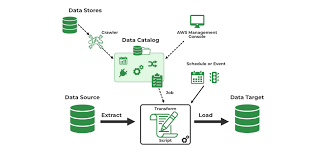
The rapid rise of Software as a Service (SaaS) solutions has led to data silos across different platforms, making it challenging to consolidate insights. Effective data analytics depends on the ability to seamlessly integrate data from various systems by identifying, gathering, cleansing, and combining it into a unified format. AWS Glue, a serverless data integration service, simplifies this process with scalable, efficient, and cost-effective solutions for unifying data from multiple sources. By using AWS Glue, organizations can streamline data integration, minimize silos, and enhance agility in managing data pipelines, unlocking the full potential of their data for analytics, decision-making, and innovation. This insight explores the new Salesforce connector for AWS Glue and demonstrates how to build a modern Extract, Transform, and Load (ETL) pipeline using AWS Glue ETL scripts. Introducing the Salesforce Connector for AWS Glue To meet diverse data integration needs, AWS Glue now supports SaaS connectivity for Salesforce. This enables users to quickly preview, transfer, and query customer relationship management (CRM) data, while dynamically fetching the schema. With the Salesforce connector, users can ingest and transform CRM data and load it into any AWS Glue-supported destination, such as Amazon S3, in preferred formats like Apache Iceberg, Apache Hudi, and Delta Lake. It also supports reverse ETL use cases, enabling data to be written back to Salesforce. Key Benefits: Solution Overview For this use case, we retrieve the full load of a Salesforce account object into a data lake on Amazon S3 and capture incremental changes. The solution also enables updates to certain fields in the data lake and synchronizes them back to Salesforce. The process involves creating two ETL jobs using AWS Glue with the Salesforce connector. The first job ingests the Salesforce account object into an Apache Iceberg-format data lake on Amazon S3. The second job captures updates and pushes them back to Salesforce. Prerequisites: Creating the ETL Pipeline Step 1: Ingest Salesforce Account Object Using the AWS Glue console, create a new job to transfer the Salesforce account object into an Apache Iceberg-format transactional data lake in Amazon S3. The script checks if the account table exists, performs an upsert if it does, or creates a new table if not. Step 2: Push Changes Back to Salesforce Create a second ETL job to update Salesforce with changes made in the data lake. This job writes the updated account records from Amazon S3 back to Salesforce. Example Query sqlCopy codeSELECT id, name, type, active__c, upsellopportunity__c, lastmodifieddate FROM “glue_etl_salesforce_db”.”account”; Additional Considerations You can schedule the ETL jobs using AWS Glue job triggers or integrate them with other AWS services like AWS Lambda and Amazon EventBridge for advanced workflows. Additionally, AWS Glue supports importing deleted Salesforce records by configuring the IMPORT_DELETED_RECORDS option. Clean Up After completing the process, clean up the resources used in AWS Glue, including jobs, connections, Secrets Manager secrets, IAM roles, and the S3 bucket to avoid incurring unnecessary charges. Conclusion The AWS Glue connector for Salesforce simplifies the analytics pipeline, accelerates insights, and supports data-driven decision-making. Its serverless architecture eliminates the need for infrastructure management, offering a cost-effective and agile approach to data integration, empowering organizations to efficiently meet their analytics needs. Like Related Posts Who is Salesforce? Who is Salesforce? Here is their story in their own words. From our inception, we’ve proudly embraced the identity of Read more Salesforce Marketing Cloud Transactional Emails Salesforce Marketing Cloud Transactional Emails are immediate, automated, non-promotional messages crucial to business operations and customer satisfaction, such as order Read more Salesforce Unites Einstein Analytics with Financial CRM Salesforce has unveiled a comprehensive analytics solution tailored for wealth managers, home office professionals, and retail bankers, merging its Financial Read more AI-Driven Propensity Scores AI plays a crucial role in propensity score estimation as it can discern underlying patterns between treatments and confounding variables Read more
Read More
Generative AI Overview

Generative AI Overview

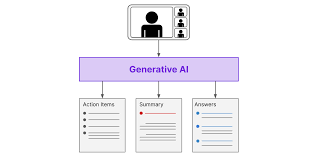
Editor’s Note: AI Cloud, Einstein GPT, and other cloud GPT products are now Einstein. For the latest on Salesforce Einstein The Rise of Generative AI: What It Means for Business and CRM Generative artificial intelligence (AI) made headlines in late 2022, sparking widespread curiosity and questions about its potential impact on various industries. What is Generative AI? Generative AI is a technology that creates new content—such as poetry, emails, images, or music—based on a set of input data. Unlike traditional AI, which focuses on classifying or predicting, generative AI can produce novel content with a human-like understanding of language, as noted by Salesforce Chief Scientist Silvio Savarese. However, successful generative AI depends on the quality of the input data. “AI is only as good as the data you give it, and you must ensure that datasets are representative,” emphasizes Paula Goldman, Salesforce’s Chief Ethical and Humane Use Officer. How Does Generative AI Work? Generative AI can be developed using several deep learning approaches, including: Other methods include Variational Autoencoders (VAEs) and Neural Radiance Fields (NeRFs), which generate new data or create 2D and 3D images based on sample data. Generative AI and Business Generative AI has captured the attention of global business leaders. A recent Salesforce survey found that 67% of IT leaders are focusing on generative AI in the next 18 months, with 33% considering it a top priority. Salesforce has long been exploring generative AI applications. For instance, CodeGen helps transform simple English prompts into executable code, and LAVIS makes language-vision AI accessible to researchers. More recently, Salesforce’s ProGen project demonstrated the creation of novel proteins using AI, potentially advancing medicine and treatment development. Ketan Karkhanis, Salesforce’s Executive VP and GM of Sales Cloud, highlights that generative AI benefits not just large enterprises but also small and medium-sized businesses (SMBs) by automating proposals, customer communications, and predictive sales modeling. Challenges and Ethical Considerations Despite its potential, generative AI poses risks, as noted by Paula Goldman and Kathy Baxter of Salesforce’s Ethical AI practice. They stress the importance of responsible innovation to ensure that generative AI is used safely and ethically. Accuracy in AI recommendations is crucial, and the authoritative tone of models like ChatGPT can sometimes lead to misleading results. Salesforce is committed to building trusted AI with embedded guardrails to prevent misuse. As generative AI evolves, it’s vital to balance its capabilities with ethical considerations, including its environmental impact. Generative AI can increase IT energy use, which 71% of IT leaders acknowledge. Generative AI at Salesforce Salesforce has integrated AI into its platform for years, with Einstein AI providing billions of daily predictions to enhance sales, service, and customer understanding. The recent launch of Einstein GPT, the world’s first generative AI for CRM, aims to transform how businesses interact with customers by automating content creation across various functions. Salesforce Ventures is also expanding its Generative AI Fund to $500 million, supporting AI startups and fostering responsible AI development. This expansion includes investments in companies like Anthropic and Cohere. As Salesforce continues to lead in AI innovation, the focus remains on creating technology that is inclusive, responsible, and sustainable, paving the way for the future of CRM and business. The Future of Business: AI-Powered Leadership and Decision-Making Tomorrow’s business landscape will be transformed by specialized, autonomous AI agents that will significantly change how companies are run. Future leaders will depend on these AI agents to support and enhance their teams, with AI chiefs of staff overseeing these agents and harnessing their capabilities. New AI-powered tools will bring businesses closer to their customers and enable faster, more informed decision-making. This shift is not just a trend—it’s backed by significant evidence. The Slack Workforce Index reveals a sevenfold increase in leaders seeking to integrate AI tools since September 2023. Additionally, Salesforce research shows that nearly 80% of global workers are open to an AI-driven future. While the pace of these changes may vary, it is clear that the future of work will look vastly different from today. According to the Slack Workforce Index, the number of leaders looking to integrate AI tools into their business has skyrocketed 7x since September 2023. Mick Costigan, VP, Salesforce Futures In the [still] early phases of a major technology shift, we tend to over-focus on the application of technology innovations to existing workflows. Such advances are important, but closing the imagination gap about the possible new shapes of work requires us to consider more than just technology. It requires us to think about people, both as the customers who react to new offerings and as the employees who are responsible for delivering them. Some will eagerly adopt new technology. Others will resist and drag their feet. Like1 Related Posts Who is Salesforce? Who is Salesforce? Here is their story in their own words. From our inception, we’ve proudly embraced the identity of Read more Salesforce Marketing Cloud Transactional Emails Salesforce Marketing Cloud Transactional Emails are immediate, automated, non-promotional messages crucial to business operations and customer satisfaction, such as order Read more Salesforce Unites Einstein Analytics with Financial CRM Salesforce has unveiled a comprehensive analytics solution tailored for wealth managers, home office professionals, and retail bankers, merging its Financial Read more AI-Driven Propensity Scores AI plays a crucial role in propensity score estimation as it can discern underlying patterns between treatments and confounding variables Read more

Read More
Salesforce Data Cloud Pioneer

Salesforce Data Cloud Pioneer

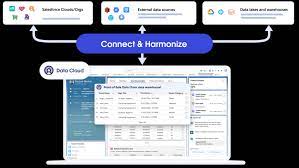
While many organizations are still building their data platforms, Salesforce Data Cloud Pioneer has made a significant leap forward. By seamlessly incorporating metadata integration, Salesforce has transformed the modern data stack into a comprehensive application platform known as the Einstein 1 Platform. Led by Muralidhar Krishnaprasad, executive vice president of engineering at Salesforce, the Einstein 1 Platform is built on the company’s metadata framework. This platform harmonizes metadata and integrates it with AI and automation, marking a new era of data utilization. The Einstein 1 Platform: Innovations and Capabilities Salesforce’s goal with the Einstein 1 Platform is to empower all business users—salespeople, service engineers, marketers, and analysts—to access, use, and act on all their data, regardless of its location, according to Krishnaprasad. The open, extensible platform not only unlocks trapped data but also equips organizations with generative AI functionality, enabling personalized experiences for employees and customers. “Analytics is very important to know how your business is doing, but you also want to make sure all that data and insights are actionable,” Krishnaprasad said. “Our goal is to blend AI, automation, and analytics together, with the metadata layer being the secret sauce.” Salesforce Data Cloud Pioneer In a conversation with George Gilbert, senior analyst at theCUBE Research, Krishnaprasad discussed the platform’s metadata integration, open-API technology, and key features. They explored how its extensibility and interoperability enhance usability across various data formats and sources. Metadata Integration: Accommodating Any IT Environment The Einstein 1 Platform is built on Trino, the federated open-source query engine, and Spark for data processing. It offers a rich set of connectors and an open, extensible environment, enabling organizations to share data between warehouses, lake houses, and other systems. “We use a hyper-engine for sub-second response times in Tableau and other data explorations,” Krishnaprasad explained. “This in-memory overlap engine ensures efficient data processing.” The platform supports various machine learning options and allows users to integrate their own large language models. Whether using Salesforce Einstein, Databricks, Vertex, SageMaker, or other solutions, users can operate without copying data. The platform includes three levels of extensibility, enabling organizations to standardize and extend their customer journey models. Users can start with basic reference models, customize them, and then generate insights, including AI-driven insights. Finally, they can introduce their own functions or triggers to act on these insights. The platform continuously performs unification, allowing users to create different unified graphs based on their needs. “We’re a multimodal system, considering your entire customer journey,” Krishnaprasad said. “We provide flexibility at all levels of the stack to create the right experience for your business.” The Triad of AI, Automation, and Analytics The platform’s foundation ingests, harmonizes, and unifies data, resulting in a standardized metadata model that offers a 360-degree view of customer interactions. This approach unlocks siloed data, much of which is in unstructured forms like conversations, documents, emails, audio, and video. “What we’ve done with this customer 360-degree model is to use unified data to generate insights and make these accessible across application surfaces, enabling reactions to these insights,” Krishnaprasad said. “This unlocks a comprehensive customer journey.” For instance, when a customer views an ad and visits the website, salespeople know what they’re interested in, service personnel understand their concerns, and analysts have the information needed for business insights. These capabilities enhance customer engagement. “Couple this with generative AI, and we enable a lot of self-service,” Krishnaprasad added. “We aim to provide accurate answers, elevating data to create a unified model and powering a unified experience across the entire customer journey.” Like Related Posts Who is Salesforce? Who is Salesforce? Here is their story in their own words. From our inception, we’ve proudly embraced the identity of Read more Salesforce Marketing Cloud Transactional Emails Salesforce Marketing Cloud Transactional Emails are immediate, automated, non-promotional messages crucial to business operations and customer satisfaction, such as order Read more Salesforce Unites Einstein Analytics with Financial CRM Salesforce has unveiled a comprehensive analytics solution tailored for wealth managers, home office professionals, and retail bankers, merging its Financial Read more AI-Driven Propensity Scores AI plays a crucial role in propensity score estimation as it can discern underlying patterns between treatments and confounding variables Read more
Read More
Salesforce Hyperforce

Salesforce Hyperforce in 2025

Salesforce Hyperforce in 2025: The Multi-Cloud Revolution By 2025, 78% of enterprise customers have adopted Salesforce Hyperforce, running multi-cloud deployments across AWS, GCP, and Azure simultaneously. What began as a flexibility advantage has become the non-negotiable backbone of zero-trust security, enabling cross-cloud data residency that was unthinkable just months ago. This insight reveals the five critical security patterns top enterprises are implementing—and the third one is sparking fierce debate among compliance teams. Hyperforce in 2025: Market Dominance & Strategic Impact A. Key Milestones in Hyperforce’s 3-Year Evolution Since its 2022 acceleration, Hyperforce has shattered every single roadmap target: B. How Hyperforce Redefined Enterprise Cloud Strategy Enterprises no longer debate whether to migrate—they strategize which cloud to use for each workload. The result? Faster innovation, reduced vendor lock-in, and unprecedented flexibility. Multi-Cloud Mastery: AWS, GCP & Azure in Action A. Why Multi-Cloud is Now Mandatory B. AWS: Powering Compliance & Serverless Workflows C. GCP: AI & Analytics at Hyperscale D. Azure: Seamless Microsoft 365 Integration E. Performance Benchmarks: Which Cloud Wins? Metric AWS GCP Azure Transaction Speed 15ms 18ms 16ms Data Transfer Cost High Low Medium Global Availability 27 22 25 AI Integration Good Best Very Good AWS leads in speed, GCP dominates cost-efficiency, and Azure excels in enterprise integration. Security Breakthroughs: Zero-Trust & Data Sovereignty Enterprise Migration: How to Deploy at Scale A. Proven Migration Strategies B. Real-World Success Stories What’s Next? Hyperforce’s 2025 Roadmap Conclusion: Hyperforce is the Enterprise Standard Salesforce Hyperforce has redefined cloud infrastructure—delivering multi-cloud agility, ironclad security, and 43% cost savings. For finance, healthcare, and global enterprises, it’s no longer optional. Ready to future-proof your cloud strategy? [Inquire Now] to speak with a Hyperforce specialist. Leverage Tectonic’s Salesforce Development Services—migrate, secure, and scale with Hyperforce today! Like Related Posts Who is Salesforce? Who is Salesforce? Here is their story in their own words. From our inception, we’ve proudly embraced the identity of Read more Salesforce Marketing Cloud Transactional Emails Salesforce Marketing Cloud Transactional Emails are immediate, automated, non-promotional messages crucial to business operations and customer satisfaction, such as order Read more Salesforce Unites Einstein Analytics with Financial CRM Salesforce has unveiled a comprehensive analytics solution tailored for wealth managers, home office professionals, and retail bankers, merging its Financial Read more AI-Driven Propensity Scores AI plays a crucial role in propensity score estimation as it can discern underlying patterns between treatments and confounding variables Read more

Read More
Otter AI S-Docs and Salesforce

Otter AI S-Docs and Salesforce

Numerous vendors in the enterprise software market are currently emphasizing their AI capabilities, envisioning a future where AI can address a wide array of global challenges, from healthcare to climate change. While the realization of these claims remains uncertain, the practical and impactful applications of AI in everyday scenarios often go unnoticed. There exists ample opportunity for leveraging AI tools that are readily available and require minimal setup to enhance efficiency. Otter AI S-Docs and Salesforce. One such example is S-Docs, a document automation vendor integrated natively on the Salesforce platform, which is harnessing Otter.ai, an AI transcription service, to revolutionize its sales process and product development. S-Docs is seamlessly integrating Otter.ai into its digital collaboration tools, enabling automatic transcription during sales calls. This not only aids sales representatives in navigating diverse dialects but also streamlines post-call administrative tasks, prompting quicker action. Moreover, the product development team at S-Docs is leveraging Otter.ai to analyze the transcribed content from sales calls and incorporate insights into its product feedback loop. This integration was sparked by S-Docs’ CTO, Anand Narasimhan, who discovered Otter.ai through a LinkedIn connection and recognized its potential value for the business. Initially used during team calls and sprint reviews, Otter.ai’s high transcription accuracy and insightful summaries impressed Narasimhan and his colleague, Keith Bossier, VP of Sales at S-Docs. Subsequently, Otter.ai was adopted by the sales and customer success teams, offering benefits that surpassed those of their previous provider, Gong. For the sales team, Otter.ai significantly reduces the administrative burden by providing real-time transcriptions, catch-all summaries, and key takeaways from meetings. This facilitates quicker follow-ups and enhances the overall customer experience. Buoyed by the success in sales, S-Docs is exploring avenues to expand the use of Otter.ai across its business. Bossier envisions leveraging transcripts from sales calls for onboarding new representatives, while Narasimhan explores integrating the captured content into the product development cycle. Additionally, they are collaborating with Otter.ai to introduce automated action items directly into the S-Docs platform, further streamlining operations and enhancing efficiency. As S-Docs continues to innovate and optimize its processes with Otter.ai, it exemplifies the tangible benefits of leveraging AI in practical business scenarios. Like Related Posts Who is Salesforce? Who is Salesforce? Here is their story in their own words. From our inception, we’ve proudly embraced the identity of Read more Salesforce Marketing Cloud Transactional Emails Salesforce Marketing Cloud Transactional Emails are immediate, automated, non-promotional messages crucial to business operations and customer satisfaction, such as order Read more Salesforce Unites Einstein Analytics with Financial CRM Salesforce has unveiled a comprehensive analytics solution tailored for wealth managers, home office professionals, and retail bankers, merging its Financial Read more AI-Driven Propensity Scores AI plays a crucial role in propensity score estimation as it can discern underlying patterns between treatments and confounding variables Read more

Read More
Generative AI Prompts with Retrieval Augmented Generation

Generative AI Cheat Sheets

Wanted to utilize this insight to share a link to some incredible AI cheat sheets compiled by Medium. Generative AI Cheat Sheets. Top 8 Cheat Sheets on AI Whether you need assistance building a Powerpoint Presentation, AI for enterprise, machine learning, podcast enhancement tools, large language models, efficient ChatGPT prompts, efficient use of emojis, journeys, or more. This list is pretty inclusive. Tectonic would like to share one additional tool we have been using internally. Fireflies. Firflies helps teams transcribe, summarize, search, and analyze voice conversations. When ChatGPT made its debut in late 2022, it sparked global recognition of the transformative capabilities of artificial intelligence (AI). This groundbreaking chatbot represents one of the most significant advancements in AI history. Unlike traditional AI systems that analyze or categorize existing data, generative AI has the remarkable ability to create entirely new content, spanning text, images, audio, synthetic data, and more. This innovation is poised to revolutionize human creativity and productivity across industries, including business, science, and society as a whole. From ChatGPT to DALL-E, the latest wave of generative AI applications has emerged from foundation models, sophisticated machine learning systems trained on massive datasets encompassing text, images, audio, or a combination of these data types. Recent advancements now enable companies to develop specialized models for image and language generation based on these foundation models, most of which are large language models (LLMs) trained on natural language. The power of these models lies not only in their scale but also in their adaptability to diverse tasks without the need for task-specific training. Techniques like zero-shot learning and in-context learning allow models to make predictions and generate responses even in domains they haven’t been explicitly trained on. As a result, companies can leverage these models to address a wide range of challenges, from customer service automation to product design. The introduction of pre-trained foundation models with unprecedented adaptability is expected to have profound implications. According to Accenture’s 2023 Technology Vision report, 97% of global executives believe that foundation models will revolutionize how and where AI is applied, enabling seamless connections across different data types. To thrive in this evolving landscape, businesses must leverage the full potential of generative AI. To expedite implementation, organizations can readily access foundation models through APIs. However, customization and fine-tuning are necessary to tailor these models to specific use cases and maximize their effectiveness. By harnessing generative AI, companies can enhance efficiency, drive innovation, and gain a competitive edge in the market. As generative AI continues to evolve, its impact will only multiply. Companies will increasingly rely on these technologies to streamline workflows, optimize processes, and unlock new opportunities for growth and innovation. With the global AI market projected to reach nearly trillion by 2030, the future holds immense potential for companies to leverage generative AI in solving complex problems and driving transformative change. Generative AI encompasses various machine learning techniques, including transformer models, generative adversarial networks (GANs), and variational autoencoders (VAEs). These technologies underpin a wide range of applications, from natural language processing to image generation, enabling businesses to approach tasks in innovative ways. While generative AI presents unprecedented opportunities, it also raises ethical and security concerns. It is essential for companies to adopt responsible AI practices and ensure the safe and ethical use of these technologies. By embracing generative AI and investing in the necessary infrastructure and talent, businesses can unlock its full potential and drive sustainable growth in the digital era. Like Related Posts Who is Salesforce? Who is Salesforce? Here is their story in their own words. From our inception, we’ve proudly embraced the identity of Read more Salesforce Marketing Cloud Transactional Emails Salesforce Marketing Cloud Transactional Emails are immediate, automated, non-promotional messages crucial to business operations and customer satisfaction, such as order Read more Salesforce Unites Einstein Analytics with Financial CRM Salesforce has unveiled a comprehensive analytics solution tailored for wealth managers, home office professionals, and retail bankers, merging its Financial Read more AI-Driven Propensity Scores AI plays a crucial role in propensity score estimation as it can discern underlying patterns between treatments and confounding variables Read more

Read More
Unfolding AI Revolution

Unfolding AI Revolution

Ways the AI Revolution is Unfolding The transformative potential of artificial intelligence (AI) is being explored by James Manyika, Senior VP of Research, Technology, and Society at Google, and Michael Spence, Nobel laureate in economics and professor at NYU Stern School of Business, in their recent article, “The Coming AI Economic Revolution: Can Artificial Intelligence Reverse the Productivity Slowdown?” Published in Foreign Affairs, the article outlines the conditions necessary for an AI-powered economy to thrive, including policies that augment human capabilities, promote widespread adoption, and foster organizational innovation. Manyika and Spence highlight AI’s potential to reverse stagnating productivity growth in advanced economies, stating, “By the beginning of the next decade, the shift to AI could become a leading driver of global prosperity.” However, the authors caution that this economic revolution will require robust policy frameworks to prevent harm and unlock AI’s full potential. Here are the key insights from their analysis: 1. The Great Slowdown The rapid advancements in AI arrive at a critical juncture for the global economy. While technological innovations have surged, productivity growth has stagnated. For instance, total factor productivity (TFP), a key contributor to GDP growth, grew by 1.7% in the U.S. between 1997 and 2005 but has since slowed to just 0.4%. This slowdown is exacerbated by aging populations and shrinking labor forces in major economies like China, Japan, and Italy. Without a transformative force like AI, economic growth could remain stifled, characterized by higher inflation, reduced labor supply, and elevated capital costs. 2. A Different Digital Revolution Unlike the rule-based automation of the 1990s digital revolution, AI has shattered previous technological constraints. Advances in AI now enable tasks that were previously unprogrammable, such as pattern recognition and decision-making. AI systems have surpassed human performance in areas like image recognition, cancer detection, and even strategic games like Go. This shift extends the impact of technology to domains previously thought to require exclusively human intuition and creativity. 3. Quick Studies Generative AI, particularly large language models (LLMs), offers exceptional versatility, multimodality, and accessibility, making its economic impact potentially transformative: Applications range from digital assistants drafting documents to ambient intelligence systems that automate homes or generate health records based on patient-clinician interactions. 4. Creative Instruction Despite its promise, AI has drawn criticism for issues like bias, misinformation, and the potential for job displacement. Critics highlight that AI systems may amplify societal inequities or produce unreliable outputs. However, research suggests that AI will primarily augment work rather than eliminate it. While about 10% of jobs may decline, two-thirds of occupations will likely see AI enhancing specific tasks. This shift emphasizes collaboration between humans and intelligent machines, requiring workers to develop new skills. Studies, such as MIT’s Work of the Future task force, reinforce that automation will not lead to a jobless future but rather to evolving roles and opportunities. 5. With Us, Not Against Us The full benefits of AI will not materialize if its deployment is left solely to market forces. Proactive measures are necessary to maximize AI’s positive impact while mitigating risks. This includes fostering widespread adoption of AI in ways that empower workers, enhance productivity, and address societal challenges. Policies should prioritize accessibility and equitable diffusion to ensure AI serves as a force for inclusive economic growth. 6. The Real AI Challenge Generative AI has the potential to spark a productivity renaissance at a time when the global economy urgently needs it. Yet, Manyika and Spence caution that AI could exacerbate existing economic disparities if not guided effectively. They argue that focusing solely on existential threats overlooks the broader risks posed by inequitable AI deployment. Instead, a positive vision is needed—one that prioritizes AI as a tool for global economic progress, equitable growth, and generational prosperity. “Harnessing the power of AI for good will require more than simply focusing on potential damage,” the authors conclude. “It will demand effective measures to turn that vision into reality.” The unfolding AI revolution offers immense opportunities, but realizing its full potential requires thoughtful action. By addressing risks and fostering innovation, AI could reshape the global economy for the better. Like Related Posts Who is Salesforce? Who is Salesforce? Here is their story in their own words. From our inception, we’ve proudly embraced the identity of Read more Salesforce Unites Einstein Analytics with Financial CRM Salesforce has unveiled a comprehensive analytics solution tailored for wealth managers, home office professionals, and retail bankers, merging its Financial Read more AI-Driven Propensity Scores AI plays a crucial role in propensity score estimation as it can discern underlying patterns between treatments and confounding variables Read more Tectonic’s Successful Salesforce Track Record Salesforce Technology Services Integrator – Tectonic has successfully delivered Salesforce in a variety of industries including Public Sector, Hospitality, Manufacturing, Read more
Read More

Layers of the AI Stack

The AI stack refers to the layered architecture of technologies and components that work together to build, deploy, and manage artificial intelligence (AI) systems. Each layer of the stack plays a critical role in enabling AI capabilities, from data collection to model deployment and beyond. Here’s a breakdown of the key layers of the AI stack: 1. Data Layer The foundation of any AI system is data. This layer involves collecting, storing, and managing the data required to train and operate AI models. Key Components: 2. Infrastructure Layer This layer provides the computational power and hardware needed to process data and run AI models. Key Components: 3. Framework and Tools Layer This layer includes the software frameworks and tools used to build, train, and optimize AI models. Key Components: 4. Model Layer This is the core layer where AI models are developed, trained, and fine-tuned. Key Components: 5. Application Layer This layer focuses on deploying AI models into real-world applications and integrating them with existing systems. Key Components: 6. Orchestration and Management Layer This layer ensures that AI systems are scalable, reliable, and efficient in production environments. Key Components: 7. Business Layer This layer focuses on the business value of AI, including use cases, ROI, and ethical considerations. Key Components: 8. Ecosystem Layer This layer includes the external tools, services, and communities that support AI development and deployment. Key Components: How the Layers Work Together Why the AI Stack Matters The AI stack provides a structured approach to building and deploying AI systems. By understanding and optimizing each layer, organizations can: Conclusion The AI stack is a comprehensive framework that enables organizations to harness the power of AI effectively. By mastering each layer—from data collection to business value—you can build robust, scalable, and impactful AI solutions. Whether you’re a startup or an enterprise, understanding the AI stack is key to staying competitive in the age of artificial intelligence. Content updated March 2025. Like Related Posts Who is Salesforce? Who is Salesforce? Here is their story in their own words. From our inception, we’ve proudly embraced the identity of Read more Salesforce Marketing Cloud Transactional Emails Salesforce Marketing Cloud Transactional Emails are immediate, automated, non-promotional messages crucial to business operations and customer satisfaction, such as order Read more Salesforce Unites Einstein Analytics with Financial CRM Salesforce has unveiled a comprehensive analytics solution tailored for wealth managers, home office professionals, and retail bankers, merging its Financial Read more AI-Driven Propensity Scores AI plays a crucial role in propensity score estimation as it can discern underlying patterns between treatments and confounding variables Read more

Read More
Cloud First

Advances in Generative AI

What is generative AI?  Generative AI focuses on creating new and original content, chat responses, designs, synthetic data or even deepfakes.  While predictive AI worked on predefined, human supplied rules, generative AI functions somewhat autonomously. Advances in Generative AI have been groundbreaking. Advances in generative AI represent a significant advancement beyond established technologies like predictive AI, and business leaders are eagerly embracing its potential. A remarkable 91% recognize generative AI as a major advantage, driven by its diverse applications, from content creation to software development. Despite its novelty, generative AI is rapidly progressing, causing over three-quarters of business leaders to express concerns about potentially missing out on its benefits. In particular, marketing leaders are apprehensive about not fully leveraging generative AI in their workflows, with 88% worried that their companies are lagging behind. Insight Generation and Decision-Making: Going beyond traditional data analysis, generative AI excels by not only analyzing existing data but also generating potential scenarios. This predictive modeling empowers businesses to anticipate market shifts, understand consumer preferences, and identify potential risks, fostering proactive strategies over reactive ones. Generative AI’s Global Impact: Generative AI has captivated global attention, with ChatGPT becoming the fastest-growing software program in history, reaching a hundred million users within two months of its public debut. This surge has sparked an arms race among tech giants like Microsoft and Google, and AI chip maker Nvidia has witnessed increased business. Unlike previous AI programs that provided numeric scores, generative AI, including programs like Stability AI’s Stable Diffusion and OpenAI’s DALL-E, reproduces elements of the real world. Amazon announced in 2023 that its voice assistant Alexa now comes with generative AI capabilities. Apple is developing a large array of features that use generative AI, including a new version of Siri expected to launch in 2024. Mixed Modality in AI: The concept of mixed modality or “multi-modality” is taking center stage, enabling programs to fuse text, images, physical space representations, sounds, video, and entire computer functions as smart applications. This approach enhances program capabilities and contributes to continuous learning, potentially advancing the goal of “embodied AI” and robotics. Evolution of Generative AI: Generative AI will continue evolving, contributing to advancements in translation, drug discovery, anomaly detection, and the generation of new content, spanning text, video, fashion design, and music. A generative AI chatbot, for example, is a type of conversational AI system that uses deep learning and natural language processing techniques to generate human-like text responses in real-time. These chatbots can hold text-based conversations with users, understand user input, and generate contextually relevant responses. Transformative Trends in Marketing and Sales Operations: Generative AI is reshaping marketing and sales operations with key trends, including hyper-quick sales and marketing content creation, automation of repetitive tasks (e.g., keyword research, administrative work, content formatting, and data analysis), and the facilitation of sales enablement and custom materials. What is the Main Goal of Generative AI? The answer likely would vary depending on who you ask, but commonly we expect generative AI tools to change the calculus of knowledge work automation. Generative AI isn’t going to eliminate the need for human workers, but it will assist them with the ability to produce human-like writing, images, audio, or video in response to plain-English text prompts. The potential to collaborate with human partners to generate contact that represents practical work is exciting. Curious how generative AI could help your business? Contact Tectonic today to learn more. Like1 Related Posts Who is Salesforce? Who is Salesforce? Here is their story in their own words. From our inception, we’ve proudly embraced the identity of Read more Salesforce Marketing Cloud Transactional Emails Salesforce Marketing Cloud Transactional Emails are immediate, automated, non-promotional messages crucial to business operations and customer satisfaction, such as order Read more Salesforce Unites Einstein Analytics with Financial CRM Salesforce has unveiled a comprehensive analytics solution tailored for wealth managers, home office professionals, and retail bankers, merging its Financial Read more AI-Driven Propensity Scores AI plays a crucial role in propensity score estimation as it can discern underlying patterns between treatments and confounding variables Read more
Read More
gettectonic.com