
Sync Archives - gettectonic.com - Page 4
Financial Services Sector

Future of Financial Services

The Future of Financial Services: AI Agents, Consumer Trust, and Digital Transformation Fewer than half of consumers are fully satisfied with the service they receive from banks, insurance providers, and wealth management advisors. This underscores the urgent need for financial service institutions (FSIs) to prioritize standout customer experiences—both human and digital—leveraging AI agents to enhance personalization, efficiency, and responsiveness. Why Customer Experience is Key Consumer loyalty has long been driven by competitive pricing, fees, and interest rates. However, with declining rates making promotional incentives less feasible, FSIs are refocusing on customer service as a key differentiator. AI-powered digital experiences provide an opportunity to exceed customer expectations, offering speed, convenience, and hyper-personalization at scale. A significant portion of consumers are willing to stay with an institution that offers an exceptional experience, even if it raises its rates or fees. For instance, 46% of consumers—and 55% of high earners in the U.S. (households making over $100,000 per year)—value experience over pricing alone. Digital self-service is a primary component of this enhanced experience, with many consumers preferring to complete tasks online rather than through traditional phone or in-branch interactions. Institutions like Credit Unions are already meeting this demand by deploying self-service tools that provide instant resolutions, 24/7. AI Agents: Transforming the FSI Landscape AI agents represent a major leap forward in customer service, automating interactions and resolving issues without human intervention. However, trust in these AI-driven systems remains a work in progress. Only 41% of wealth management clients report being fully satisfied with their institution’s speed and effectiveness, and satisfaction levels are even lower among banking and insurance customers. Despite some skepticism, AI adoption is accelerating. Half of consumers expect AI to significantly impact their financial relationships, a belief even more pronounced among Millennials and Gen Z. The percentage of customers anticipating AI-driven transaction speed improvements has risen from 46% in 2023 to 65% today. Yet, consumer education on AI’s capabilities remains a challenge. AI agents have the potential to act as financial advisors, enhancing financial literacy, optimizing savings, and even increasing earnings. Salesforce’s Agentforce aims to bridge this gap, offering digital financial assistants that can answer questions like, “Am I saving enough for retirement?” or “Can I afford this vacation?”—delivering expert insights instantly and at scale. Building Trust in AI-Powered Finance Despite AI’s promise, trust issues persist. While 54% of consumers express confidence in AI agents, only 10% fully trust them. This skepticism is fueled by concerns over data privacy, security, and transparency. Many consumers are wary of how FSIs handle their personal information and are seeking greater clarity on AI’s role in financial decision-making. A Salesforce study revealed that 73% of consumers want to know when they’re interacting with AI, highlighting the importance of transparency in AI implementation. “For AI to succeed in financial services, trust and compliance must be built into the foundation,” said Eran Agrios, SVP & GM of Financial Services at Salesforce. “FSIs need to ensure their AI strategies are not only effective but also worthy of customer confidence.” AI in Action: Case Studies in Financial Services Financial institutions leveraging Agentforce are already seeing tangible benefits: Integrating Agentforce with ERP for Maximum Impact To maximize the potential of AI agents, FSIs must integrate them seamlessly into their broader enterprise ecosystems. Best practices for integration include: The Next Two Years: Defining the Future of AI in Finance As AI continues to disrupt the financial sector, FSIs that embrace AI-first strategies will outperform competitors in efficiency, security, and customer experience. Here’s what the future holds: The Takeaway Financial institutions that invest in AI-driven experiences today will define the future of finance. By adopting transparent, compliant, and consumer-centric AI strategies, FSIs can build trust, drive efficiency, and deliver exceptional customer experiences that set them apart in an increasingly AI-powered world. Like1 Related Posts Who is Salesforce? Who is Salesforce? Here is their story in their own words. From our inception, we’ve proudly embraced the identity of Read more Salesforce Marketing Cloud Transactional Emails Salesforce Marketing Cloud Transactional Emails are immediate, automated, non-promotional messages crucial to business operations and customer satisfaction, such as order Read more Salesforce Unites Einstein Analytics with Financial CRM Salesforce has unveiled a comprehensive analytics solution tailored for wealth managers, home office professionals, and retail bankers, merging its Financial Read more AI-Driven Propensity Scores AI plays a crucial role in propensity score estimation as it can discern underlying patterns between treatments and confounding variables Read more


Read More
Salesforce Data Cloud

Maximizing Salesforce Data Cloud

Maximizing Salesforce Data Cloud: Post-Implementation Strategies for Long-Term Success The Fastest-Growing Salesforce Product Salesforce Data Cloud is seeing explosive growth, with a 130% year-over-year increase in paid customers. In just one quarter, it processed an astonishing 2.3 quadrillion records—a 147% jump from the previous year. Businesses leveraging Data Cloud have seen a 165% boost in web engagement, with major brands like The Adecco Group, Aston Martin, and FedEx using it to strengthen customer relationships and drive growth. The Power of Data Cloud: Turning Information into Action What makes Salesforce Data Cloud so impactful is its ability to unify vast amounts of data, creating 360-degree customer profiles and transforming insights into action. But unlocking its full potential doesn’t stop at implementation—it requires ongoing optimization to keep your data clean, your systems efficient, and your AI models accurate. Post-Implementation Best Practices for Salesforce Data Cloud Once your Salesforce Data Cloud is up and running, the next step is ensuring long-term performance and business value. Here’s how to optimize and sustain your Data Cloud investment: 1. Maintain Data Integrity with Ongoing Quality Management 2. Optimize System Performance for Speed and Efficiency 3. Drive User Adoption with Tailored Training 4. Strengthen Data Governance and Compliance 5. Proactively Manage and Optimize Integrations 6. Refine Customer Segmentation for More Personalization 7. Keep AI and Predictive Models Up to Date 8. Measure ROI and Optimize for Business Impact 9. Foster a Data-Driven Culture Through Clear Communication 10. Stay Agile with Continuous Innovation and Community Engagement Conclusion: The Real Value of Data Cloud Begins After Implementation Salesforce Data Cloud is at the heart of next-gen customer engagement, but its true impact lies in how well you maintain and optimize it. Success depends on:✅ Involving key stakeholders in ongoing improvements✅ Enforcing strong data governance for security and accuracy✅ Continuously refining processes to adapt to changing business needs By committing to post-implementation optimization, your organization can stay agile, data-driven, and ahead of the competition—ensuring that Salesforce Data Cloud delivers maximum value now and in the future. Like1 Related Posts Who is Salesforce? Who is Salesforce? Here is their story in their own words. From our inception, we’ve proudly embraced the identity of Read more Salesforce Marketing Cloud Transactional Emails Salesforce Marketing Cloud Transactional Emails are immediate, automated, non-promotional messages crucial to business operations and customer satisfaction, such as order Read more Salesforce Unites Einstein Analytics with Financial CRM Salesforce has unveiled a comprehensive analytics solution tailored for wealth managers, home office professionals, and retail bankers, merging its Financial Read more AI-Driven Propensity Scores AI plays a crucial role in propensity score estimation as it can discern underlying patterns between treatments and confounding variables Read more

Read More

The Top Sales Software Tools to Power Your Team in 2025

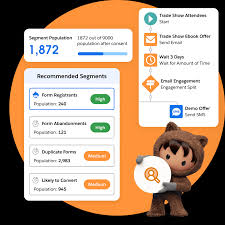
For seasoned sales professionals, hitting ambitious targets is just part of the job. But in today’s hyper-competitive market, raw skill alone isn’t enough—you need the right sales software to maximize productivity, streamline lead management, and strengthen customer relationships. The difference between a good sales year and a record-breaking one often comes down to the tools your team uses. In this guide, we’ll break down the best sales software of 2025, highlighting key features that can transform your daily workflow. What Is Sales Software? Sales software automates and optimizes the sales process, helping businesses reduce costs, accelerate deals, and improve customer outcomes. From CRMs to AI-powered analytics, these tools empower sales leaders to:✔ Track rep performance & identify training gaps✔ Forecast revenue with greater accuracy✔ Manage leads efficiently across the pipeline✔ Automate repetitive tasks so teams focus on selling Core Functions of Sales Software Beyond CRMs, sales software includes conversation intelligence, incentive compensation management, and pipeline optimization platforms—each playing a critical role in a high-performing sales stack. Key Features to Look for in Sales Software Before choosing a solution, assess your team’s needs and budget. Here’s what to prioritize: ✅ Seamless Integrations – Must work with your existing CRM, HR, payroll, and ERP systems.✅ Advanced Analytics – Real-time dashboards and AI-driven insights for smarter decisions.✅ User-Friendly Design – If it’s hard to use, reps won’t adopt it.✅ Workflow Automation – AI-powered tools that cut manual tasks, giving reps 30%+ more selling time.✅ Robust Security – Protects sensitive customer and company data in a remote-work era.✅ Lead Tracking & Scoring – Identifies high-intent prospects to boost conversions. The 9 Best Sales Software Tools in 2025 Based on G2 & Capterra ratings (4+ stars), these platforms lead the pack: 1. Salesforce Sales Cloud Best for: AI-driven sales management✔ Lead prioritization with smart scoring✔ Autonomous AI agents for follow-ups✔ Real-time dashboards for performance tracking 2. Pipedrive Best for: Small businesses scaling fast✔ AI-generated email prompts✔ Pipeline visualization for deal tracking✔ Sales forecasting tools 3. Outreach Best for: Sales execution & engagement✔ AI-powered prospecting workflows✔ Win-loss analytics✔ Multi-channel sync (Email, LinkedIn, CRM) 4. HubSpot Sales Hub Best for: All-in-one CRM & automation✔ Customizable workflows✔ Built-in email tracking✔ User-friendly interface 5. SAP Sales Cloud Best for: Enterprise sales teams✔ Generative AI for forecasting✔ Mobile-friendly for field reps✔ Embedded analytics 6. Monday CRM Best for: Customizable workflows✔ AI auto-categorizes leads✔ Collaboration with marketing teams✔ Visual sales pipeline 7. Freshsales Best for: High-volume lead management✔ AI lead scoring✔ Email engagement tracking✔ Highly customizable 8. Apptivo Best for: SMBs needing flexibility✔ No-code automation✔ Duplicate lead prevention✔ Strong customer support 9. Zendesk Best for: Sales + customer service alignment✔ AI-assisted live chat✔ Omnichannel support✔ Seamless Salesforce integration How to Choose the Right Sales Software Before committing, ask:🔹 Does it integrate with our current stack?🔹 Will reps actually use it? (Ease of adoption is critical.)🔹 Can it scale with our growth?🔹 What’s the customer support like? Pro Tip: Get feedback from your sales team—what features would make their jobs easier? Final Thoughts The right sales software doesn’t just manage leads—it accelerates revenue, boosts rep productivity, and turns data into actionable insights. Whether you’re a startup or an enterprise, investing in the best tools ensures your team closes more deals, faster. Ready to upgrade your sales stack? Contact Tectonic today. Like Related Posts Who is Salesforce? Who is Salesforce? Here is their story in their own words. From our inception, we’ve proudly embraced the identity of Read more Salesforce Marketing Cloud Transactional Emails Salesforce Marketing Cloud Transactional Emails are immediate, automated, non-promotional messages crucial to business operations and customer satisfaction, such as order Read more Salesforce Unites Einstein Analytics with Financial CRM Salesforce has unveiled a comprehensive analytics solution tailored for wealth managers, home office professionals, and retail bankers, merging its Financial Read more AI-Driven Propensity Scores AI plays a crucial role in propensity score estimation as it can discern underlying patterns between treatments and confounding variables Read more
Read More
AI Agents Are the Future of Enterprise

AI Agents Are the Future of Enterprise

AI Agents Are the Future of Enterprise—But They Need the Right Architecture AI agents are poised to revolutionize enterprise operations with autonomous problem-solving, adaptive workflows, and scalability. However, the biggest challenge isn’t improving models—it’s building the infrastructure to support them. Agents require seamless access to data, tools, and the ability to share insights across systems—with outputs usable by multiple services, including other agents. This isn’t just an AI challenge; it’s an infrastructure and data interoperability problem. Traditional approaches—like chaining commands—won’t cut it. Instead, enterprises need an event-driven architecture (EDA) powered by real-time data streams. As HubSpot CTO Dharmesh Shah put it, “Agents are the new apps.” To unlock their potential, businesses must invest in the right design patterns from the start. This insight explores why EDA is critical for scaling AI agents and integrating them into modern enterprise systems. The Evolution of AI: From Predictive Models to Autonomous Agents AI has progressed through three key waves, each overcoming—but also introducing—new limitations. 1. The First Wave: Predictive Models Early AI relied on traditional machine learning (ML) for narrow, domain-specific tasks. These models were rigid, requiring extensive retraining for new use cases. Limitations: 2. The Second Wave: Generative AI Generative AI, powered by large language models (LLMs), introduced general-purpose intelligence. Unlike predictive models, LLMs could handle diverse tasks—from text generation to code synthesis. Limitations: For example, asking an LLM to recommend an insurance policy based on a user’s health history fails—unless the model can dynamically retrieve personal data. 3. The Third Wave: Compound AI & Agentic Systems To overcome these gaps, Compound AI systems combine LLMs with: But even RAG has limits—it relies on fixed workflows, making it inflexible for dynamic tasks. Enter AI agents: autonomous systems that reason, plan, and adapt in real time. Why Agents Are the Next Frontier Salesforce CEO Marc Benioff recently noted that LLMs are hitting their limits, and the future lies in autonomous agents. Unlike static models, agents: Key Agent Design Patterns These patterns enable Agentic RAG, where retrieval isn’t fixed but adaptive—agents decide what data to fetch based on context. The Scaling Challenge: It’s an Infrastructure Problem Agents need real-time data access and seamless interoperability—but connecting them via APIs creates tight coupling, leading to: The Solution: Event-Driven Architecture (EDA) EDA decouples agents using asynchronous event streams (e.g., Kafka, Redpanda). Benefits:✅ Loose coupling – Agents communicate without direct dependencies.✅ Real-time reactivity – Instant responses to changing data.✅ Scalability – New agents join without redesigning the system.✅ Resilience – Failures don’t cascade. Example: An agent analyzing customer data publishes an event—other agents, CRMs, or analytics tools consume it without explicit coordination. Why EDA is the Future for AI Agents Just as microservices replaced monoliths, EDA will replace rigid AI pipelines. Early adopters (like Facebook with scalable infrastructure) outcompeted those that couldn’t scale (like Friendster). The same will happen with AI agents. Enterprises that embrace event-driven agents will: The Bottom Line AI agents are the next evolution of enterprise software—but without EDA, they’ll hit a wall. Companies that invest in event-driven infrastructure today will lead the next wave of AI innovation. The rest? They’ll struggle to keep up. Ready to future-proof your AI strategy? AI Agents Are the Future of Enterprise. The time to build for agents is now. Contact Tectonic today. Like Related Posts Who is Salesforce? Who is Salesforce? Here is their story in their own words. From our inception, we’ve proudly embraced the identity of Read more Salesforce Marketing Cloud Transactional Emails Salesforce Marketing Cloud Transactional Emails are immediate, automated, non-promotional messages crucial to business operations and customer satisfaction, such as order Read more Salesforce Unites Einstein Analytics with Financial CRM Salesforce has unveiled a comprehensive analytics solution tailored for wealth managers, home office professionals, and retail bankers, merging its Financial Read more AI-Driven Propensity Scores AI plays a crucial role in propensity score estimation as it can discern underlying patterns between treatments and confounding variables Read more

Read More
Granular Locking in Salesforce

Granular Locking in Salesforce

Granular Locking in Salesforce: Enhancing Performance & Reducing Contention Granular locking in Salesforce is a powerful feature designed to minimize record lock contention, particularly in high-data-volume environments or those with complex automation processes. By refining traditional locking constraints, this mechanism allows Salesforce to manage simultaneous updates more efficiently, improving system performance and reducing errors. What is Granular Locking? Granular locking is an advanced record-locking mechanism that applies locks at a more detailed level, preventing unnecessary locking of parent or related records. This is especially useful in scenarios where multiple records are updated concurrently, reducing row lock contention in parent-child relationships. Key Features: ✅ Fine-Grained Locks – Prevents excessive locking of parent or related records.✅ Enhanced Concurrency – Allows multiple simultaneous updates to child records without conflicts.✅ Improved Performance – Minimizes errors like “Unable to lock row” by reducing contention. Why is Granular Locking Important? 1️⃣ Concurrent Record Updates 2️⃣ Optimized Automation 3️⃣ Scaling High-Volume Transactions How Granular Locking Works Granular locking ensures that:🔹 Parent records remain unlocked when child records are updated.🔹 Locks apply only to the specific records being modified instead of affecting entire datasets. Example: 🚫 Without Granular Locking: Updating an Opportunity record locks the parent Account and all related child records.✅ With Granular Locking: Only the specific Opportunity record is locked, allowing the Account and other child records to remain accessible. When Does Granular Locking Apply? 🔹 Master-Detail Relationships – Prevents parent records from being unnecessarily locked during child record updates.🔹 Campaign Hierarchies – Ensures that updates to child campaigns don’t lock parent campaigns.🔹 Sharing Recalculations – Reduces locking issues when Salesforce recalculates sharing rules for parent-child data relationships. Benefits of Granular Locking 🚀 Reduced Lock Contention – Minimizes conflicts in multi-user environments.📉 Fewer Errors – Decreases “Unable to obtain exclusive access to this record” errors.⚡ Faster Automation – Improves workflow and trigger execution speed.📊 Better Scalability – Enhances performance in high-transaction environments. Best Practices for Using Granular Locking ✅ Optimize Relationship Design: Avoid complex parent-child structures that could lead to unnecessary locking.✅ Minimize Simultaneous Updates: Reduce concurrent updates on the same parent record.✅ Use Asynchronous Processing: Implement Batch Apex or Queueable Apex for large data operations.✅ Test in High-Volume Scenarios: Simulate real-world data loads in a sandbox environment.✅ Monitor Locking Issues: Use debug logs and Event Monitoring to track and resolve locking conflicts. Common Issues & Solutions ❌ Error: “Unable to Lock Row”🔹 Cause: Simultaneous updates to related records.🔹 Solution: Redesign workflows or use asynchronous processing to reduce contention. ❌ Slow Performance in Campaign Updates🔹 Cause: Hierarchical campaign relationships triggering excessive locks.🔹 Solution: Ensure campaigns are structured to take advantage of granular locking. ❌ Automation Conflicts🔹 Cause: Multiple automation tools acting on the same records.🔹 Solution: Consolidate triggers and workflows to minimize overlaps. How to Enable Granular Locking for Campaign Hierarchies Although granular locking is enabled by default for most Salesforce operations, certain features (like hierarchical campaign locking) require manual activation. 🔹 Steps to Enable Granular Locking in Campaign Hierarchies:1️⃣ Navigate to Setup.2️⃣ Go to Campaign Settings.3️⃣ Check the box for Enable Improved Campaign Management (Granular Locking).4️⃣ Save your changes. Conclusion Granular locking is a vital feature in Salesforce that optimizes record management by reducing contention, minimizing errors, and improving system performance in high-transaction environments. By implementing best practices and leveraging fine-grained locks, organizations can scale efficiently while ensuring smooth automation and record updates. For teams handling complex data relationships, granular locking provides the flexibility, scalability, and reliability needed to maintain a high-performing Salesforce environment. Like Related Posts Who is Salesforce? Who is Salesforce? Here is their story in their own words. From our inception, we’ve proudly embraced the identity of Read more Salesforce Marketing Cloud Transactional Emails Salesforce Marketing Cloud Transactional Emails are immediate, automated, non-promotional messages crucial to business operations and customer satisfaction, such as order Read more Salesforce Unites Einstein Analytics with Financial CRM Salesforce has unveiled a comprehensive analytics solution tailored for wealth managers, home office professionals, and retail bankers, merging its Financial Read more AI-Driven Propensity Scores AI plays a crucial role in propensity score estimation as it can discern underlying patterns between treatments and confounding variables Read more

Read More
salesforce service assistant

Salesforce Service Assistant

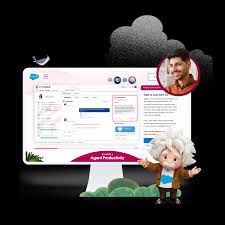
Salesforce Service Assistant is an AI-powered tool that helps service representatives resolve cases faster. It’s available on Service Cloud and is designed to save time for agents. How it works Benefits Helps agents resolve cases faster, Saves time for service representatives, Grounded in the organization’s knowledge base and data, and Adheres to company policies. Additional information Alongside agent guidance, the Service Assistant provides two other notable features. The first enables agents to create conversation summaries with “just a click” after using the solution to complete a case. The second allows agents to request that the assistant auto-crafts a new knowledge article when its guidance proved insufficient, based on how they resolved the query. Thanks to this second feature, the Service Assistant may get better with time, aiding agent proficiency, customer satisfaction, and – ultimately – average handling time (AHT). However, despite this capability, Salesforce has pledged to advance the solution further. Indeed, during a recent webinar, Kevin Qi, Associate Product Manager at Salesforce, teased what will come in June. Pointing to Service Cloud’s Summer ‘25 release wave, Qi said: The next phase of Service Assistant involves actionable plans. So, not only will it help guide the service rep, but it’ll also take actions to automate various steps, so it can look up orders, check eligibilities, and more to help speed up the efficiency of tackling that case. Beyond the summer, Salesforce plans to have the Assistant blend modalities, guiding customer conversations across channels to further streamline the interaction. “The Service Assistant will become even more adaptive, support more channels, including messaging and voice, being able to adapt to changes in case context,” concluded Qi. The Latest AI Solutions on Service Cloud Alongside the Service Assistant, Salesforce has released several other AI and Agentforce capabilities, embedded across Service Cloud. Qi picked out the “Freeform Instructions in Service Email Assistant” feature for special reference. “If the agent doesn’t have a template already made for a particular instance, they can type – in natural language – the sort of email they’d want to generate and have Agentforce create that email in the flow of work,” he said. That capability may prove highly beneficial in helping agents piece their thoughts together when resolving a tricky case. After all, they can note some key points – in natural language – and the feature will create a coherent customer response. Alongside this comes a solution to quickly summarize case activity for wrap-up in beta. Yet, most new features focus on improving the knowledge that feeds into AI solutions, like the Service Assistant. For starters, there’s a flow orchestrator in beta that helps contact center leaders build a process for approving new knowledge articles and updates. Additionally, there’s an “Update Knowledge Content with AI” feature. This ingests prompts and – as it says on the tin – updates the tone, style, and length of particular knowledge articles. Last comes the “Knowledge Sync to Data Cloud” tool that pulls contact center knowledge into the Salesforce customer data platform (CDP). Not only does this democratize service insights, but it also supports contact centers in grounding the Service Assistant and other AI agents. Both of these final knowledge capabilities are now generally available. Like Related Posts Who is Salesforce? Who is Salesforce? Here is their story in their own words. From our inception, we’ve proudly embraced the identity of Read more Salesforce Marketing Cloud Transactional Emails Salesforce Marketing Cloud Transactional Emails are immediate, automated, non-promotional messages crucial to business operations and customer satisfaction, such as order Read more Salesforce Unites Einstein Analytics with Financial CRM Salesforce has unveiled a comprehensive analytics solution tailored for wealth managers, home office professionals, and retail bankers, merging its Financial Read more AI-Driven Propensity Scores AI plays a crucial role in propensity score estimation as it can discern underlying patterns between treatments and confounding variables Read more
Read More
The Event-Driven Paradigm for Next-Generation AI Agents

The Event-Driven Paradigm for Next-Generation AI Agents

The Infrastructure Imperative for AI Evolution The enterprise landscape stands at an inflection point where AI agents promise autonomous decision-making and adaptive workflows at scale. However, the critical barrier to realizing this potential isn’t model sophistication—it’s architectural. True agentic systems require: These requirements fundamentally represent an infrastructure challenge that demands event-driven architecture (EDA) as the foundational framework for agent deployment and scaling. The Three Waves of AI Evolution First Wave: Predictive Models Characterized by: These deterministic systems excelled at specialized tasks but proved rigid and unscalable across business functions. Second Wave: Generative Models Marked by breakthroughs in: However, these models remained constrained by: Third Wave: Agentic Systems Emerging capabilities include: This evolution shifts focus from model architecture to system architecture, where EDA becomes the critical enabler. The Compound AI Advantage Modern agent systems combine multiple architectural components: This compound approach overcomes the limitations of standalone models through: Event-Driven Architecture: The Nervous System for Agents Core EDA Principles for AI Systems Implementation Benefits Architectural Patterns for Agentic Systems 1. Reflective Processing <img src=”reflection-pattern.png” width=”400″ alt=”Reflection design pattern diagram”> Agents employ meta-cognition to: 2. Dynamic Tool Orchestration <img src=”tool-use-pattern.png” width=”400″ alt=”Tool use design pattern diagram”> Capabilities include: 3. Hierarchical Planning <img src=”planning-pattern.png” width=”400″ alt=”Planning design pattern diagram”> Features: 4. Collaborative Multi-Agent Systems <img src=”multi-agent-pattern.png” width=”400″ alt=”Multi-agent collaboration diagram”> Enables: The Enterprise Integration Challenge Critical Success Factors Implementation Roadmap Phase 1: Foundation Phase 2: Capability Expansion Phase 3: Optimization The Competitive Imperative Enterprise readiness data reveals: Early adopters of event-driven agent architectures gain: The transition to agentic operations represents not just technological evolution but fundamental business transformation. Organizations that implement EDA foundations today will dominate the AI-powered enterprise landscape of tomorrow. Those failing to adapt risk joining the legacy systems they currently maintain—as historical footnotes in the annals of digital transformation. Like Related Posts Who is Salesforce? Who is Salesforce? Here is their story in their own words. From our inception, we’ve proudly embraced the identity of Read more Salesforce Unites Einstein Analytics with Financial CRM Salesforce has unveiled a comprehensive analytics solution tailored for wealth managers, home office professionals, and retail bankers, merging its Financial Read more AI-Driven Propensity Scores AI plays a crucial role in propensity score estimation as it can discern underlying patterns between treatments and confounding variables Read more Tectonic’s Successful Salesforce Track Record Salesforce Technology Services Integrator – Tectonic has successfully delivered Salesforce in a variety of industries including Public Sector, Hospitality, Manufacturing, Read more

Read More
Agentforce Unveiled

Scale Your Marketing with Agentforce

Scale Your Marketing with Agentforce: AI-Powered Automation for Modern Campaigns Traditional marketing systems struggle to keep pace with today’s demand for precision, personalization, and scale. With marketing teams managing complex, multi-platform campaigns, repetitive work quickly becomes a challenge—41% of employee time is spent on low-impact tasks, and 65% of desk workers believe AI will help them focus on more strategic work. Enter Agentforce for Marketers, built with the Atlas Reasoning Engine. These AI-powered agents help businesses scale their workforces on demand, analyzing data, making decisions, and taking proactive action on tasks like answering customer inquiries and qualifying leads. If you’re ready to embrace a new level of efficiency, this Tectonic insight explores how Agentforce can revolutionize your marketing efforts. What is Agentforce for Marketing? Introduced at Dreamforce 2024, Agentforce represents Salesforce’s next evolution in AI. Powered by the Atlas Reasoning Engine, it enhances automation with retrieval-augmented generation (RAG) and contextual decision-making. Salesforce CEO Marc Benioff calls Agentforce “the third wave of AI—moving beyond copilots to highly accurate, low-hallucination customer service agents that actively drive success.” For marketers, this means automation that analyzes vast datasets, connects customer interactions across teams, and provides real-time insights—all while optimizing campaigns, streamlining workflows, and generating personalized content. The Core of Agentforce: Agentforce combines Agent Builder, Model Builder, and Prompt Builder, allowing marketers to: These tools enable seamless, personalized experiences while reducing manual effort. Key Autonomous AI Agents in Agentforce Agentforce’s AI-powered agents cover a wide range of marketing and sales functions, including: Core Features of Agentforce for Marketing Agentforce transforms marketing by delivering AI-driven insights, automating workflows, and personalizing customer experiences at scale. 1. AI-Driven Campaign Insights Agentforce integrates Salesforce Data Cloud and Marketing Cloud Intelligence to analyze customer behavior patterns, optimize targeting strategies, and improve campaign performance. 💡 Only 32% of marketers say they effectively use customer data for personalization. Agentforce closes this gap by providing real-time, actionable insights. 2. Real-Time Data Integration By consolidating insights from CRM records, external platforms, and unstructured sources, Agentforce ensures AI-driven recommendations power marketing automation and personalization. ✅ Example: OpenTable used Agentforce’s data-driven insights to boost customer engagement and increase case resolution rates. 3. Automated Campaign Workflows Agentforce eliminates repetitive tasks like email follow-ups, social media posts, and ad placements, allowing teams to focus on strategy. 💡 Marketers can set up automated email sequences that trigger based on customer behavior—without manual intervention. Use Cases: How Marketers Leverage Agentforce 1. Personalized Email Campaigns Agentforce analyzes customer interactions to send hyper-targeted emails based on past purchases, browsing history, and engagement. ✅ Example: An online retailer sends tailored product recommendations based on recent searches, increasing conversion rates. 2. Omnichannel Campaign Management Agentforce synchronizes messaging across email, social media, and ads, ensuring consistency across platforms like Marketing Cloud and Facebook Ads Manager. ✅ Example: A product launch campaign can automatically schedule email announcements, social media posts, and search ads—all aligned in messaging. 3. Advanced Audience Segmentation Using AI-powered behavioral analysis, Agentforce creates refined audience segments to deliver hyper-personalized marketing. ✅ Example: A luxury retailer identifies VIP customers likely to attend exclusive events and sends personalized invitations. 4. Performance Tracking & Optimization Agentforce continuously monitors engagement metrics, offering AI-driven recommendations for campaign improvements. 💡 This allows marketers to adjust strategies in real time, maximizing impact. Challenges & Considerations 1. Adapting to AI-Powered Marketing Many professionals feel unprepared for AI-driven tools. Organizations should invest in training programs to ease adoption and leverage Salesforce’s low-code tools for a smoother transition. 2. Ethical & Sustainable AI Implementation Responsible AI use is critical. Agentforce includes features to:✅ Mitigate bias in AI-driven processes.✅ Reduce environmental impact by optimizing hardware usage.✅ Ensure accuracy with real-time, dynamic data. 💡 Salesforce’s AI Red Teaming and Ethical AI Maturity Model help businesses implement AI responsibly. The Future of Marketing with Agentforce Agentforce is redefining marketing automation, eliminating repetitive tasks, enhancing personalization, and driving smarter decision-making. If you’re ready to scale your marketing with AI-powered efficiency, Agentforce is your next competitive advantage. Like Related Posts Who is Salesforce? Who is Salesforce? Here is their story in their own words. From our inception, we’ve proudly embraced the identity of Read more Salesforce Marketing Cloud Transactional Emails Salesforce Marketing Cloud Transactional Emails are immediate, automated, non-promotional messages crucial to business operations and customer satisfaction, such as order Read more Salesforce Unites Einstein Analytics with Financial CRM Salesforce has unveiled a comprehensive analytics solution tailored for wealth managers, home office professionals, and retail bankers, merging its Financial Read more AI-Driven Propensity Scores AI plays a crucial role in propensity score estimation as it can discern underlying patterns between treatments and confounding variables Read more

Read More
Navigating the New Era of Agentic Customer Engagement

Navigating the New Era of Agentic Customer Engagement

Marketing is undergoing a seismic shift—from the tech-stack heavy approaches of the past decade to AI-driven, agentic customer engagement. No longer bogged down by complex integrations and data wrangling, marketers can now focus on what truly matters: creating meaningful, personalized customer experiences at scale. Welcome to the age of AI marketing agents—intelligent systems that learn from human expertise, then execute strategies autonomously. Unlike traditional customer service bots (which handle 1:1 interactions), marketing agents amplify human-approved content, campaigns, and branding across millions of touchpoints, ensuring consistency and precision at every step. Why Agentic Engagement is the Future The rapid evolution of AI has unlocked unprecedented capabilities: For marketers, this means:✔ Hyper-personalization at scale✔ Faster time-to-market for campaigns✔ Data-driven decision-making with AI-powered insights✔ More time for creativity & strategy (less manual execution) How AI Agents Enhance Marketing Marketing agents don’t replace humans—they augment them. Here’s how: 1. Agentic Content 2. Agentic Campaign Planning 3. Agentic Branding 4. Agentic Creative 5. Agentic Optimization The Human-Agent Partnership The best outcomes happen when human creativity meets AI efficiency: The Agent-to-Agent Ecosystem Imagine: This interconnected system creates a self-optimizing marketing engine. How to Prepare for the Agentic Future 1. Start Small, Scale Smart 2. Upskill Your Team 3. Strengthen Data Infrastructure 4. Establish Governance 5. Keep Humans in the Loop The Bottom Line Agentic engagement isn’t just another tech trend—it’s a fundamental shift in marketing. Companies that embrace it will:🚀 Launch campaigns faster🎯 Deliver hyper-relevant experiences📈 Drive higher ROI with AI-powered optimization The future belongs to marketers who harness AI agents as force multipliers—freeing teams to focus on strategy, storytelling, and innovation. Ready to step into the agentic era? Start experimenting today. Like Related Posts Who is Salesforce? Who is Salesforce? Here is their story in their own words. From our inception, we’ve proudly embraced the identity of Read more Salesforce Marketing Cloud Transactional Emails Salesforce Marketing Cloud Transactional Emails are immediate, automated, non-promotional messages crucial to business operations and customer satisfaction, such as order Read more Salesforce Unites Einstein Analytics with Financial CRM Salesforce has unveiled a comprehensive analytics solution tailored for wealth managers, home office professionals, and retail bankers, merging its Financial Read more AI-Driven Propensity Scores AI plays a crucial role in propensity score estimation as it can discern underlying patterns between treatments and confounding variables Read more

Read More
My Service Journey is Here

Salesforce Service Assistant Now Generally Available

Salesforce Service Assistant Now Generally Available in Service Cloud Salesforce has officially launched Service Assistant in Service Cloud, bringing AI-powered agent guidance to customer service teams. The assistant creates step-by-step action plans to help agents resolve queries efficiently by analyzing intent, case history, and customer context. Previously known as Salesforce Service Planner, the solution entered a pilot phase in October 2024 and is now live just four months later. Enhancing Accuracy with Data Cloud Integration To maximize accuracy, Salesforce recommends integrating Service Assistant with Data Cloud and the contact center knowledge base. This connection enables the assistant to access critical business processes and customer history across service, sales, marketing, and more. Key Features of Service Assistant Beyond real-time agent guidance, Service Assistant introduces two standout capabilities: This continuous learning cycle improves agent proficiency, enhances customer satisfaction, and reduces Average Handling Time (AHT). What’s Next for Service Assistant? Despite these capabilities, Salesforce plans to further enhance Service Assistant. In a recent webinar, Kevin Qi, Associate Product Manager at Salesforce, revealed upcoming enhancements in the Summer ’25 release (June 2025): “The next phase of Service Assistant involves actionable plans. It will not only guide service reps but also automate steps like looking up orders and checking eligibility to speed up case resolution.” Beyond summer, Salesforce aims to make Service Assistant more adaptive, supporting additional channels such as messaging and voice while dynamically adjusting to case context changes. Expanding AI & Agentforce Capabilities in Service Cloud Alongside Service Assistant, Salesforce has introduced several AI and Agentforce capabilities across Service Cloud. Highlighted features include: What’s Coming in the Summer ’25 Release? One of the most anticipated features in June 2025 is Agentforce: Service Actions in Slack. Salesforce already enables case swarming in Slack, allowing agents to collaborate with external teams. Now, this guidance will be automatically recorded in the case summary and converted into knowledge articles for future reference. Other upcoming knowledge management features include: Custom AI with Agentforce Beyond prebuilt AI solutions, Agentforce enables brands to create AI-powered workflows tailored to their needs. Service teams can: By integrating Agentforce with Data Cloud, businesses can connect cross-platform workflows and automate enterprise-wide operations. Content updated March 2025. Like Related Posts Who is Salesforce? Who is Salesforce? Here is their story in their own words. From our inception, we’ve proudly embraced the identity of Read more Salesforce Marketing Cloud Transactional Emails Salesforce Marketing Cloud Transactional Emails are immediate, automated, non-promotional messages crucial to business operations and customer satisfaction, such as order Read more Salesforce Unites Einstein Analytics with Financial CRM Salesforce has unveiled a comprehensive analytics solution tailored for wealth managers, home office professionals, and retail bankers, merging its Financial Read more AI-Driven Propensity Scores AI plays a crucial role in propensity score estimation as it can discern underlying patterns between treatments and confounding variables Read more

Read More
bring your own channel with salesforce

Bring Your Own Channel With Salesforce

Bring Your Own Channel: Seamlessly Connect Your Preferred Communication Tools to Salesforce Unified Customer Engagement on Your Terms Salesforce’s Bring Your Own Channel (BYOC) solutions empower businesses to integrate their preferred messaging and contact center platforms while maintaining a consistent agent experience within Salesforce. This flexible approach lets you leverage best-of-breed communication tools without sacrificing Salesforce’s powerful CRM capabilities. Two Powerful Integration Options 1. Bring Your Own Channel for Messaging (Generally Available) 2. Bring Your Own Channel for CCaaS Key Capabilities & Enhancements For Developers Enhanced Messaging Features Operational Improvements Why Choose Bring Your Own Channel? ✔ Preserve your existing tech investments while gaining Salesforce integration✔ Maintain agent efficiency with consistent Salesforce UI✔ Enhance customer experiences with richer messaging options✔ Future-proof your architecture with flexible API-driven connections “BYOC gives us the best of both worlds – our preferred communication channels with Salesforce’s powerful CRM capabilities.”— Enterprise Contact Center Director Transform your customer engagement with the freedom to choose your channels and the power of Salesforce. Like Related Posts Who is Salesforce? Who is Salesforce? Here is their story in their own words. From our inception, we’ve proudly embraced the identity of Read more Salesforce Marketing Cloud Transactional Emails Salesforce Marketing Cloud Transactional Emails are immediate, automated, non-promotional messages crucial to business operations and customer satisfaction, such as order Read more Salesforce Unites Einstein Analytics with Financial CRM Salesforce has unveiled a comprehensive analytics solution tailored for wealth managers, home office professionals, and retail bankers, merging its Financial Read more AI-Driven Propensity Scores AI plays a crucial role in propensity score estimation as it can discern underlying patterns between treatments and confounding variables Read more

Read More
Healthcare Cloud Computing

Member Experience in Healthcare

Member Experience in Healthcare: Why It Matters for Payers In today’s consumer-driven healthcare market, member experience is no longer a nice-to-have—it’s a competitive necessity for health payers. With rising consumer expectations and fierce competition during open enrollment, payers must prioritize seamless, digital-first interactions to attract, retain, and satisfy members—while also protecting their bottom line. What Is Member Experience for Health Payers? Member experience refers to how health plan beneficiaries interact with their insurers—from finding providers and filing claims to accessing customer support and digital tools. A positive experience means:✔ Ease of use (intuitive portals, quick claims processing)✔ Transparency (clear benefits, no surprise denials)✔ Responsive support (fast resolutions via phone, chat, or AI)✔ Personalized engagement (tailored recommendations, proactive outreach) Poor experiences, on the other hand, lead to frustration, distrust, and member churn. Why Member Experience Matters More Than Ever 1. Consumers Are Voting With Their Wallets 2. Payers Lag Behind Other Industries 3. Better Experience = Better Business Outcomes Investing in member experience drives:✅ Higher retention & acquisition (loyalty = lower marketing costs)✅ Reduced call center volume (AI & self-service cut costs)✅ Fewer claim disputes & appeals (transparency builds trust) What Do Members Actually Want? According to Accenture & Bain, top member demands include:🔹 Easy access to plan information (no digging through PDFs)🔹 Fast, omnichannel support (chat, phone, portal—all synced)🔹 Frictionless digital tools (mobile apps, AI chatbots, e-billing)🔹 Transparent claims & approvals (no surprise denials) Members who rate their plan as “very easy to use” are 2X more likely to stay. How Can Payers Improve Member Experience? 1. Boost Digital Maturity 2. Fix Pain Points First 3. Measure What Matters Key KPIs to track:📊 Net Promoter Score (NPS) – Would members recommend you?📊 First Call Resolution (FCR) – Are issues solved quickly?📊 Claims Processing Time – How fast are claims paid?📊 Retention Rate – Are members renewing? The Bottom Line Health payers can no longer afford slow, confusing, or frustrating member experiences. With consumer expectations rising, the winners will be those who: The future belongs to payers that treat members like valued customers—not just policyholders. “Member experience isn’t just about satisfaction—it’s about loyalty, retention, and growth. Payers that get it right will outperform those stuck in legacy models.”—Bain & Company, 2024 Ready to transform your member experience? Contact Tectonic, your health and life sciences partner. Like Related Posts Who is Salesforce? Who is Salesforce? Here is their story in their own words. From our inception, we’ve proudly embraced the identity of Read more Salesforce Marketing Cloud Transactional Emails Salesforce Marketing Cloud Transactional Emails are immediate, automated, non-promotional messages crucial to business operations and customer satisfaction, such as order Read more Salesforce Unites Einstein Analytics with Financial CRM Salesforce has unveiled a comprehensive analytics solution tailored for wealth managers, home office professionals, and retail bankers, merging its Financial Read more AI-Driven Propensity Scores AI plays a crucial role in propensity score estimation as it can discern underlying patterns between treatments and confounding variables Read more

Read More
gettectonic.com