Testing Archives - gettectonic.com - Page 13
Where Will the Data Scientists Go

Where Will the Data Scientists Go

What Is to Become of the Data Scientist Role? This question frequently arises among executives, particularly as they navigate the changing roles of data teams, such as those at DataRobot. Where Will the Data Scientists Go may not be as relevant as what new places can they go with AI? The short answer? While tools may evolve, the core of data science remains steadfast. As the field of data science continues to expand, the role of the data scientist becomes increasingly vital. The need will grow, even as the role changes. Trust in AI is dependant upon human oversight. Beyond the Hype of Consumer AI The surge in consumer AI products has raised concerns among data scientists about the implications for their careers. However, these technologies are built on data and generate vast amounts of new data, presenting numerous opportunities. The real transformative potential lies in enterprise-scale automation. Enterprise-Scale Automation: The Data Scientist’s Domain Enterprise-scale automation involves creating large-scale, reliable systems. Data scientists are crucial in this effort, as they bring expertise in data exploration and systematic inference. They are uniquely positioned to identify automation opportunities, design testing and monitoring strategies, and collaborate with cross-functional teams to bring AI solutions from concept to implementation. As automation grows, the role of the data scientist is essential in ensuring these systems function effectively and safely, particularly in environments without human oversight. New Skills for Data Scientists: The Guardians of AI Applications Data scientists will need to acquire new skills to manage automation at scale, including securing the systems they build. Generative AI introduces new risks, such as potential vulnerabilities to prompt injections or other security threats. Governance and ensuring positive business impacts will become increasingly important, requiring a data science mindset. Building Great Data Teams in the Age of AI The future of data science will not be about automation replacing data scientists but about the evolution of roles and skills. Data scientists need to focus on the core foundations of their discipline rather than the specific tools they use, as tools will continue to evolve. Teams must be built intentionally, encompassing a range of skills and personalities necessary for successful enterprise automation. Business Leaders: Navigating the AI Landscape Business leaders will need to excel in decision-making, understanding the problems they aim to solve, and selecting the appropriate tools and teams. They will also need to manage evolving regulations, particularly those related to the design and deployment of AI systems. Data Scientists: Precision Thinkers at the Forefront Contrary to the belief that AI could replace coding skills, the essence of data science lies in precise thinking and clear communication. Data scientists excel in translating business needs into data-driven decisions and AI applications, ensuring that solutions are not only technically sound but also aligned with business objectives. This skill set will be crucial in the era of AI, as data scientists will play a key role in optimizing workflows, designing AI safety nets, and protecting their organization’s brand and reputation. The Evolving Role of Data Science The demand for precise, data-literate thinkers will only grow with the rise of enterprise AI systems. Whether they are called data scientists or another name, professionals who delve deeply into data and provide critical insights will remain essential in navigating the complexities of modern technology and business landscapes. Like Related Posts Who is Salesforce? Who is Salesforce? Here is their story in their own words. From our inception, we’ve proudly embraced the identity of Read more Salesforce Marketing Cloud Transactional Emails Salesforce Marketing Cloud Transactional Emails are immediate, automated, non-promotional messages crucial to business operations and customer satisfaction, such as order Read more Salesforce Unites Einstein Analytics with Financial CRM Salesforce has unveiled a comprehensive analytics solution tailored for wealth managers, home office professionals, and retail bankers, merging its Financial Read more AI-Driven Propensity Scores AI plays a crucial role in propensity score estimation as it can discern underlying patterns between treatments and confounding variables Read more

Read More
Salesforce Flow Approval Orchestration

Salesforce Flow Orchestrator: The Ultimate Guide to Enterprise Process Automation

Beyond Basic Automation: The Power of Orchestration While Salesforce Flows excel at automating individual tasks, complex business processes often resemble multi-act plays—requiring seamless coordination between departments, systems, and approval layers. This is where Flow Orchestrator transforms automation from single-note scripts into full symphonies of efficiency. What Makes Flow Orchestrator Different? Feature Standard Flow Flow Orchestrator Scope Single object/process Cross-object, multi-department Triggers Record-based only Record + event + schedule User Handoffs Limited screen flows Guided role-based journeys Data Sharing Within single flow Across all orchestrated flows Visibility Isolated executions End-to-end process tracking Example: A $500K deal approval requiring: When to Use Flow Orchestrator: 5 Game-Changing Scenarios 1. Multi-Tiered Approvals with Dynamic Routing 2. Customer Onboarding Journeys 3. Quote-to-Cash Automation Integrates with: “Manufacturers using orchestrated quote flows see 28% fewer errors” – Salesforce ROI Study 4. Cross-Departmental Case Resolution → All synchronized without manual handoffs 5. Scheduled Batch Processes Technical Deep Dive: How Orchestrator Works Core Components Execution Monitoring Implementation Checklist Real-World Results Global Bank Case Study Getting Started “Flow Orchestrator isn’t just another tool—it’s how enterprises operationalize their competitive advantage.” – Salesforce VP of Automation Next Steps: Need expert guidance? Book an architecture review to design your first orchestration. #Salesforce #FlowOrchestrator #BusinessAutomation #DigitalTransformation Like Related Posts Who is Salesforce? Who is Salesforce? Here is their story in their own words. From our inception, we’ve proudly embraced the identity of Read more Salesforce Marketing Cloud Transactional Emails Salesforce Marketing Cloud Transactional Emails are immediate, automated, non-promotional messages crucial to business operations and customer satisfaction, such as order Read more Salesforce Unites Einstein Analytics with Financial CRM Salesforce has unveiled a comprehensive analytics solution tailored for wealth managers, home office professionals, and retail bankers, merging its Financial Read more AI-Driven Propensity Scores AI plays a crucial role in propensity score estimation as it can discern underlying patterns between treatments and confounding variables Read more

Read More
Generative AI for Tableau

Generative AI for Tableau

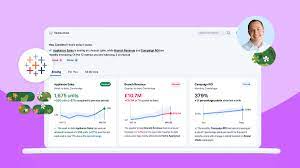
Tableau’s first generative AI assistant is now generally available. Generative AI for Tableau brings data prep to the masses. Earlier this month, Tableau launched its second platform update of 2024, announcing that its first two GenAI assistants would be available by the end of July, with a third set for release in August. The first of these, Einstein Copilot for Tableau Prep, became generally available on July 10. Tableau initially unveiled its plans to develop generative AI capabilities in May 2023 with the introduction of Tableau Pulse and Tableau GPT. Pulse, an insight generator that monitors data for metric changes and uses natural language to alert users, became generally available in February. Tableau GPT, now renamed Einstein Copilot for Tableau, moved into beta testing in April. Following Einstein Copilot for Tableau Prep, Einstein Copilot for Tableau Catalog is expected to be generally available before the end of July. Einstein Copilot for Tableau Web Authoring is set to follow by the end of August. With these launches, Tableau joins other data management and analytics vendors like AWS, Domo, Microsoft, and MicroStrategy, which have already made generative AI assistants generally available. Other companies, such as Qlik, DBT Labs, and Alteryx, have announced similar plans but have not yet moved their products out of preview. Tableau’s generative AI capabilities are comparable to those of its competitors, according to Doug Henschen, an analyst at Constellation Research. In some areas, such as data cataloging, Tableau’s offerings are even more advanced. “Tableau is going GA later than some of its competitors. But capabilities are pretty much in line with or more extensive than what you’re seeing from others,” Henschen said. In addition to the generative AI assistants, Tableau 2024.2 includes features such as embedding Pulse in applications. Based in Seattle and a subsidiary of Salesforce, Tableau has long been a prominent analytics vendor. Its first 2024 platform update highlighted the launch of Pulse, while the final 2023 update introduced new embedded analytics capabilities. Generative AI assistants are proliferating due to their potential to enable non-technical workers to work with data and increase efficiency for data experts. Historically, the complexity of analytics platforms, requiring coding and data literacy, has limited their widespread adoption. Studies indicate that only about one-quarter of employees regularly work with data. Vendors have attempted to overcome this barrier by introducing natural language processing (NLP) and low-code/no-code features. However, NLP features have been limited by small vocabularies requiring specific business phrasing, while low-code/no-code features only support basic tasks. Generative AI has the potential to change this dynamic. Large language models like ChatGPT and Google Gemini offer extensive vocabularies and can interpret user intent, enabling true natural language interactions. This makes data exploration and analysis accessible to non-technical users and reduces coding requirements for data experts. In response to advancements in generative AI, many data management and analytics vendors, including Tableau, have made it a focal point of their product development. Tech giants like AWS, Google, and Microsoft, as well as specialized vendors, have heavily invested in generative AI. Einstein Copilot for Tableau Prep, now generally available, allows users to describe calculations in natural language, which the tool interprets to create formulas for calculated fields in Tableau Prep. Previously, this required expertise in objects, fields, functions, and limitations. Einstein Copilot for Tableau Catalog, set for release later this month, will enable users to add descriptions for data sources, workbooks, and tables with one click. In August, Einstein Copilot for Tableau Web Authoring will allow users to explore data in natural language directly from Tableau Cloud Web Authoring, producing visualizations, formulating calculations, and suggesting follow-up questions. Tableau’s generative AI assistants are designed to enhance efficiency and productivity for both experts and generalists. The assistants streamline complex data modeling and predictive analysis, automate routine data prep tasks, and provide user-friendly interfaces for data visualization and analysis. “Whether for an expert or someone just getting started, the goal of Einstein Copilot is to boost efficiency and productivity,” said Mike Leone, an analyst at TechTarget’s Enterprise Strategy Group. The planned generative AI assistants for different parts of Tableau’s platform offer unique value in various stages of the data and AI lifecycle, according to Leone. Doug Henschen noted that the generative AI assistants for Tableau Web Authoring and Tableau Prep are similar to those being introduced by other vendors. However, the addition of a generative AI assistant for data cataloging represents a unique differentiation for Tableau. “Einstein Copilot for Tableau Catalog is unique to Tableau among analytics and BI vendors,” Henschen said. “But it’s similar to GenAI implementations being done by a few data catalog vendors.” Beyond the generative AI assistants, Tableau’s latest update includes: Among these non-Copilot capabilities, making Pulse embeddable is particularly significant. Extending generative AI capabilities to work applications will make them more effective. “Embedding Pulse insights within day-to-day applications promises to open up new possibilities for making insights actionable for business users,” Henschen said. Multi-fact relationships are also noteworthy, enabling users to relate datasets with shared dimensions and informing applications that require large amounts of high-quality data. “Multi-fact relationships are a fascinating area where Tableau is really just getting started,” Leone said. “Providing ways to improve accuracy, insights, and context goes a long way in building trust in GenAI and reducing hallucinations.” While Tableau has launched its first generative AI assistant and will soon release more, the vendor has not yet disclosed pricing for the Copilots and related features. The generative AI assistants are available through a bundle named Tableau+, a premium Tableau Cloud offering introduced in June. Beyond the generative AI assistants, Tableau+ includes advanced management capabilities, simplified data governance, data discovery features, and integration with Salesforce Data Cloud. Generative AI is compute-intensive and costly, so it’s not surprising that Tableau customers will have to pay extra for these capabilities. Some vendors are offering generative AI capabilities for free to attract new users, but Henschen believes costs will eventually be incurred. “Customers will want to understand the cost implications of adding these new capabilities,”

Read More
Cool AI Tools for Business

Cool AI Tools for Business

This insight is to share the best AI tools to save you time and money. Instead of listing them with zero explanation, we show you how to use these tools and what we’ve created with them. Cool AI Tools for Business. You can then customize it manually or with AI. Although Decktopus is great, it’s not the only AI presentation tool out there. Just submit a video clip of yourself talking in any language. Read the instructions to ensure the AI can learn effectively. If you don’t want to clone yourself, use HeyGen to create presentations by choosing a voice actor and giving it a script. It supports any language, just like your AI clone. One of the coolest things about this tool is a way to create a really nice professional headshot. 4. Murf AI: Text-to-Speech AIMurf AI turns text into realistic voices for ads, voiceovers, translations, and more. Unlike old text-to-speech synthesizers, Murf uses professional voice actors in multiple languages. As a business person, use Murf for voiceovers, sales pitches, and more. You can create similar clips in different languages and voices. ContentShake’s content editor suggests improvements for your posts. This tool can help draft content and draw inspiration. For example, we asked it to create a blogging site about “How to use Artificial Intelligence in business and sales,” and got results in about a minute. You can customize the site by clicking and dragging elements. It’s great for small businesses without professional web designers. 8. Grammarly: AI ProofreaderGrammarly analyzes your text in every window, spotting and highlighting mistakes. We use it every day at Tectonic. Grammarly makes it easy to fix mistakes with suggested corrections. It’s a Chrome extension, so it works in every tab. However, ChatGPT makes silly assumptions and hallucinations. It predicts words but doesn’t know or experience things. As a content writer, you may struggle as you find it can’t write engaging blog posts that attract visitors. Test these Cool AI Tools for Business, as most are free, saving you time and money so you can focus on your business! Like1 Related Posts Who is Salesforce? Who is Salesforce? Here is their story in their own words. From our inception, we’ve proudly embraced the identity of Read more Salesforce Unites Einstein Analytics with Financial CRM Salesforce has unveiled a comprehensive analytics solution tailored for wealth managers, home office professionals, and retail bankers, merging its Financial Read more AI-Driven Propensity Scores AI plays a crucial role in propensity score estimation as it can discern underlying patterns between treatments and confounding variables Read more Tectonic’s Successful Salesforce Track Record Salesforce Technology Services Integrator – Tectonic has successfully delivered Salesforce in a variety of industries including Public Sector, Hospitality, Manufacturing, Read more

Read More
Salesforce Tiny Giant LLM

Salesforce Tiny Giant LLM

‘On-device Agentic AI is Here!’: Salesforce Announces the ‘Tiny Giant’ LLM Salesforce CEO Marc Benioff is excited about the company’s latest innovation in AI, introducing the ‘Tiny Giant’ LLM, which he claims is the world’s top-performing “micro-model” for function-calling. Salesforce’s new slimline “Tiny Giant” LLM reportedly outperforms larger models, marking a significant advancement in on-device AI. According to a paper published on Arxiv by Salesforce’s AI Research department, the xLAM-7B LLM model ranked sixth among 46 models, including those from OpenAI and Google, in a competition testing function-calling (execution of tasks or functions through API calls). The xLAM-7B LLM was trained on just seven billion parameters, a small fraction compared to the 1.7 trillion parameters rumored to be used by GPT-4. However, Salesforce highlights the xLAM-1B, a smaller model, as its true star. Despite being trained on just one billion parameters, the xLAM-1B model finished 24th, surpassing GPT-3.5-Turbo and Claude-3 Haiku in performance. CEO Marc Benioff proudly shared these results on X (formerly Twitter), stating: “Meet Salesforce Einstein ‘Tiny Giant.’ Our 1B parameter model xLAM-1B is now the best micro-model for function-calling, outperforming models 7x its size… On-device agentic AI is here. Congrats Salesforce Research!” Salesforce’s research emphasizes that function-calling agents represent a significant advancement in AI and LLMs. Models like GPT-4, Gemini, and Mistral already execute API calls based on natural language prompts, enabling dynamic interactions with various digital services and applications. While many popular models are large and resource-intensive, requiring cloud data centers and extensive infrastructure, Salesforce’s new models demonstrate that smaller, more efficient models can achieve state-of-the-art performance. To test function-calling LLMs, Salesforce developed APIGen, an “Automated Pipeline for Generating verifiable and diverse function-calling datasets,” to synthesize data for AI training. Salesforce’s findings indicate that models trained on relatively small datasets can outperform those trained on larger datasets. “Models trained with our curated datasets, even with only seven billion parameters, can achieve state-of-the-art performance… outperforming multiple GPT-4 models,” the paper states. The ultimate goal is to create agentic AI models capable of function-calling and task execution on devices, minimizing the need for extensive external infrastructure and enabling self-sufficient operations. Dr. Eli David, Co-Founder of the cybersecurity firm Deep Instinct, commented on X, “Smaller, more efficient models are the way to go for widespread deployment of LLMs.” Like Related Posts Who is Salesforce? Who is Salesforce? Here is their story in their own words. From our inception, we’ve proudly embraced the identity of Read more Salesforce Marketing Cloud Transactional Emails Salesforce Marketing Cloud Transactional Emails are immediate, automated, non-promotional messages crucial to business operations and customer satisfaction, such as order Read more Salesforce Unites Einstein Analytics with Financial CRM Salesforce has unveiled a comprehensive analytics solution tailored for wealth managers, home office professionals, and retail bankers, merging its Financial Read more AI-Driven Propensity Scores AI plays a crucial role in propensity score estimation as it can discern underlying patterns between treatments and confounding variables Read more

Read More
AI Safety and Responsibility

AI Safety and Responsibility

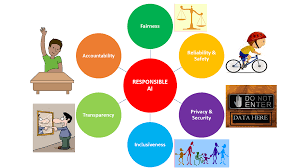
The Future of AI: Balancing Innovation and Trust Authored by Justin Tauber, General Manager, Innovation and AI Culture at Salesforce, ANZ. AI Safety and Responsibility AI holds the promise of transforming business operations and freeing up our most precious resource: time. This is particularly beneficial for small businesses, where customer-facing staff must navigate a complex set of products, policies, and data with limited time and support. AI-assisted customer engagement can lead to more timely, personalized, and intelligent interactions. However, trust is paramount, and businesses must use AI power safely and ethically. The Trust Challenge According to the AI Trust Quotient, 89% of Australian office workers don’t trust AI to operate without human oversight, and 62% fear that humans will lose control of AI. Small businesses must build competence and confidence in using AI responsibly. Companies that successfully combine human and machine intelligence will lead in AI transformation. Building trust and confidence in AI requires focusing on the employee experience of AI. Employees should be integrated early into decision-making, output refinement, and feedback processes. Generative AI outcomes improve when humans are actively involved. Humans need to lead their partnership with AI, ensuring AI works effectively with humans at the helm. Strategies for Building Trust One strategy is to remind employees of AI’s strengths and weaknesses within their workflow. Showing confidence values — how much the model believes its output is correct — helps employees handle AI responses with the appropriate level of care. Lower-scored content can still be valuable, but human reviews provide deeper scrutiny. Prompt templates for staff ensure consistent inputs and predictable outputs. Explainability or citing sources for AI-generated content also addresses trust and accuracy issues. Another strategy focuses on use cases that enhance customer trust. The sweet spot is where productivity and trust-building benefits align. For example, generative AI can reassure customers that a product will arrive on time. AI in fraud detection and prevention is another area where AI can flag suspicious transactions for human review, improving the accuracy and effectiveness of fraud detection systems. Salesforce’s Commitment to Ethical AI Salesforce ensures that its AI solutions keep humans at the helm by respecting ethical guardrails in AI product development. Salesforce goes further by creating capabilities and solutions that lower the cost of responsible AI deployment and use. AI safety products help businesses use AI power without significant risks. Salesforce AI products are built with trust and reliability in mind, embodying Trustworthy AI principles to help customers deploy these products ethically. It’s unrealistic and unfair to expect employees, especially in SMBs, to refine every AI-generated output. Therefore, Salesforce provides businesses with powerful, system-wide controls and intuitive interfaces to make timely and responsible judgments about testing, refining responses, or escalating problems. Salesforce has invested in ethical AI for nearly a decade, focusing on principles, policies, and protections for itself and its customers. New guidelines for responsible generative AI development expand on core Trusted AI principles. Updated Acceptable Use Policy safeguards and the Einstein Trust layer protect customer data from external LLMs. Commitment to a Trusted AI Future While we’re still in the early days of AI, Salesforce is committed to learning and iterating in close collaboration with customers and regulators to make trusted AI a reality for all. Originally published in Smart Company. Like Related Posts Who is Salesforce? Who is Salesforce? Here is their story in their own words. From our inception, we’ve proudly embraced the identity of Read more Salesforce Marketing Cloud Transactional Emails Salesforce Marketing Cloud Transactional Emails are immediate, automated, non-promotional messages crucial to business operations and customer satisfaction, such as order Read more Salesforce Unites Einstein Analytics with Financial CRM Salesforce has unveiled a comprehensive analytics solution tailored for wealth managers, home office professionals, and retail bankers, merging its Financial Read more AI-Driven Propensity Scores AI plays a crucial role in propensity score estimation as it can discern underlying patterns between treatments and confounding variables Read more

Read More
Data Cloud Features and Connectors

Data Cloud Features and Connectors

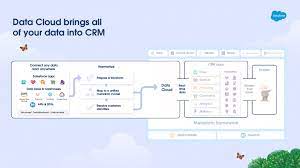
Leveraging New Features and Connectors in Salesforce’s Data Cloud Salesforce’s Data Cloud is rapidly evolving with continuous updates and new functionalities, including AI advancements. Keeping pace with these changes can be challenging. This insight explores the latest features and how to effectively utilize them to enhance your Salesforce environment. Data Cloud Features and Connectors. Are CDP and data Cloud the same? Data Cloud is more than just your traditional CDP. It’s the only data platform native to the world’s #1 AI CRM. This means that marketers can quickly access and easily action on unified data – from across the entire business – to drive growth and increase customer lifetime value. Introducing the Feature Manager The Winter ‘24 update introduced the Feature Manager, a powerful tool that simplifies managing Data Cloud’s features. It allows you to easily enable, disable, and monitor AI and beta features within the platform. Where to Find It You can find the Feature Manager in the navigation pane under the Features section, providing a centralized and intuitive way to manage your Data Cloud capabilities. Enable Data Cloud Features Using the Feature Manager, you can enable Data Cloud features. This screen is visible only when there are one or more features to enable or disable. Advantages of Enabling Beta Features One standout capability of the Feature Manager is its support for enabling beta versions of connectors and AI features. Here’s why you should consider using beta features: Early Access to Innovations Beta features give you early access to the latest tools, allowing you to experiment with new functionalities before their official release. This can provide a competitive edge and enhance your Salesforce environment. Feedback and Influence Using beta features allows you to provide valuable feedback to Salesforce, helping shape the final versions of these tools. This feedback loop ensures that the features are refined to meet user needs. How to Enable Beta Features Enable and Disable Data Cloud AI and Beta Features with Feature Manager Easily enable, disable, and monitor Data Cloud AI and beta features using the new Feature Manager, found in the navigation pane under Features. Where: This change applies to Data Cloud in Developer, Enterprise, Performance, and Unlimited editions. Steps to Enable Beta Features: Real-World Example: Adobe Marketo Connector A prime example of a beta feature available in the Winter ’24 release is the Adobe Marketo connector. This connector is currently in beta, allowing users to enable and test it through the Feature Manager. Steps to Enable the Adobe Marketo Connector By enabling and testing this connector, you can explore its functionalities and see how it integrates with your existing Salesforce setup. Staying Updated with Salesforce Data Cloud Keeping up with the latest features in Salesforce Data Cloud doesn’t have to be overwhelming. With tools like the Feature Manager, you can easily manage, enable, and experiment with new features and connectors, including those currently in beta. This not only keeps you at the forefront of innovation but also allows you to directly influence the development of these tools. Dive in, utilize the new capabilities, and make the most of what Salesforce Data Cloud has to offer. Like Related Posts Who is Salesforce? Who is Salesforce? Here is their story in their own words. From our inception, we’ve proudly embraced the identity of Read more Salesforce Marketing Cloud Transactional Emails Salesforce Marketing Cloud Transactional Emails are immediate, automated, non-promotional messages crucial to business operations and customer satisfaction, such as order Read more Salesforce Unites Einstein Analytics with Financial CRM Salesforce has unveiled a comprehensive analytics solution tailored for wealth managers, home office professionals, and retail bankers, merging its Financial Read more AI-Driven Propensity Scores AI plays a crucial role in propensity score estimation as it can discern underlying patterns between treatments and confounding variables Read more

Read More
Gemma 2 Available

Gemma 2 is now available to researchers and developers

News from Google – Gemma 2 is now available! Introducing Gemma 2: Advanced AI for Everyone Expanding Access to AI AI has the potential to solve some of humanity’s most pressing issues, but this can only happen if everyone has the tools to build with it. Earlier this year, Google introduced Gemma, a family of lightweight, state-of-the-art open models based on the same research and technology used to create the Gemini models. They’ve since expanded the Gemma family with CodeGemma, RecurrentGemma, and PaliGemma, each offering unique capabilities for various AI tasks. These models are easily accessible through integrations with partners like Hugging Face, NVIDIA, and Ollama. Launching Gemma 2 Google is now officially releasing Gemma 2 to researchers and developers worldwide. Available in both 9 billion (9B) and 27 billion (27B) parameter sizes, Gemma 2 offers higher performance and greater efficiency than its predecessor, along with significant safety enhancements. The 27B model provides competitive alternatives to models more than twice its size, achieving performance levels that were only possible with proprietary models as recently as last December. This performance is now achievable on a single NVIDIA H100 Tensor Core GPU or TPU host, significantly reducing deployment costs. Setting a New Standard for Efficiency and Performance Gemma 2 is built on a redesigned architecture, engineered for exceptional performance and inference efficiency. Here’s what sets it apart: Designed for Developers and Researchers Gemma 2 is not only more powerful but also easier to integrate into your workflows: Supporting Responsible AI Development Google is committed to providing resources for responsible AI development, including their Responsible Generative AI Toolkit. The recently open-sourced LLM Comparator helps with in-depth evaluation of language models. You can now use its companion Python library to run comparative evaluations and visualize the results. Additionally, we are working on open-sourcing our text watermarking technology, SynthID, for Gemma models. When training Gemma 2, Google followed rigorous safety processes, filtering pre-training data and performing extensive testing and evaluation to identify and mitigate potential biases and risks. They publish their results on public benchmarks related to safety and representational harms. Projects Built with Gemma The first Gemma launch led to over 10 million downloads and numerous inspiring projects. For instance, Navarasa used Gemma to create a model rooted in India’s linguistic diversity. Looking Ahead Gemma 2 will enable even more ambitious projects, unlocking new levels of performance and potential in AI creations. We will continue to explore new architectures and develop specialized Gemma variants for a broader range of AI tasks and challenges, including an upcoming 2.6B parameter model designed to bridge the gap between lightweight accessibility and powerful performance. Getting Started Gemma 2 is now available in Google AI Studio, allowing you to test its full performance capabilities at 27B without hardware requirements. You can also download Gemma 2’s model weights from Kaggle and Hugging Face Models, with Vertex AI Model Garden coming soon. To support research and development, Gemma 2 is acessable free of charge through Kaggle or a free tier for Colab notebooks. First-time Google Cloud customers may be eligible for $300 in credits. Academic researchers can apply for the Gemma 2 Academic Research Program to receive Google Cloud credits to accelerate their research with Gemma 2. Applications are open now through August 9. Like Related Posts Who is Salesforce? Who is Salesforce? Here is their story in their own words. From our inception, we’ve proudly embraced the identity of Read more Salesforce Unites Einstein Analytics with Financial CRM Salesforce has unveiled a comprehensive analytics solution tailored for wealth managers, home office professionals, and retail bankers, merging its Financial Read more AI-Driven Propensity Scores AI plays a crucial role in propensity score estimation as it can discern underlying patterns between treatments and confounding variables Read more Tectonic’s Successful Salesforce Track Record Salesforce Technology Services Integrator – Tectonic has successfully delivered Salesforce in a variety of industries including Public Sector, Hospitality, Manufacturing, Read more

Read More
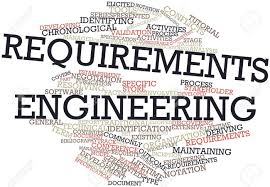
Requirements Engineering

Requirements Engineering

Every project needs clear requirements. No exceptions. Without them, a project turns into a group of people standing around, unsure of what to do, essentially making things up as they go. This scenario may sound familiar to anyone who has been involved in disorganized projects. What are requirements? According to the Association for Project Management (APM), “Requirements are the wants and needs of stakeholders clearly defined with acceptance criteria.” Requirements engineering is the process for managing the entire lifecycle of these needs and involves five key stages: Let’s dive deeper into these stages: 1. Requirements Elicitation Sometimes, the term “requirements capture” is used, as if stakeholders’ needs are floating around, waiting to be caught. However, requirements are not passively waiting; they must be actively elicited. Elicitation Methods: Eliciting requirements involves interpreting genuine needs, not just compiling a wish list of requested features. 2. Requirements Analysis Once you’ve gathered a set of requirements, it’s time for analysis to ensure they are comprehensive, feasible, and aligned with the project’s objectives. This phase is crucial because 80% of project errors occur during the requirements phase, yet it often receives less than 20% of a project’s time. Key steps include: 3. Requirements Documentation After analyzing requirements, document them clearly to communicate with stakeholders and developers. A good requirements document typically includes: One popular method for documenting requirements is through user stories, which frame requirements from the user’s perspective: User stories focus on meeting user needs rather than prescribing technical specifications. 4. Requirements Validation The next step is validating your documented requirements. This ensures they accurately represent what users and stakeholders need. Validation methods include: Validation is essential to ensure requirements are complete, realistic, and verifiable. 5. Requirements Management The final phase involves tracking and managing changes to requirements throughout the project. Key Concepts: Agile frameworks often rely on iterative approaches, where product owners manage changes during sprint reviews and retrospectives. Summary Requirements engineering consists of five interdependent stages: elicitation, analysis, documentation, validation, and management. While these concepts may seem detailed, they offer a structured framework that’s essential for delivering high-quality solutions. By following this approach, even smaller, lower-risk digital projects can benefit from clear and actionable requirements. Like Related Posts Who is Salesforce? Who is Salesforce? Here is their story in their own words. From our inception, we’ve proudly embraced the identity of Read more Salesforce Marketing Cloud Transactional Emails Salesforce Marketing Cloud Transactional Emails are immediate, automated, non-promotional messages crucial to business operations and customer satisfaction, such as order Read more Salesforce Unites Einstein Analytics with Financial CRM Salesforce has unveiled a comprehensive analytics solution tailored for wealth managers, home office professionals, and retail bankers, merging its Financial Read more AI-Driven Propensity Scores AI plays a crucial role in propensity score estimation as it can discern underlying patterns between treatments and confounding variables Read more

Read More
Mamba-2

Mamba-2

Introducing Mamba-2: A New Era in State Space Model Architecture Researchers Tri Dao and Albert Gu have unveiled Mamba-2, the next iteration of their widely popular Mamba-1 model on GitHub. This new model promises significant improvements and innovations in the realm of state space models, particularly for information-dense data like language models. What is Mamba-2? M2 is a state space model architecture designed to outperform older models, including the widely used transformers. It shows remarkable promise in handling data-intensive tasks with greater efficiency and speed. Key Features of Mamba-2 Core Innovation: Structured State Space Duality (SSD) Performance Improvements Architectural Changes Performance Metrics In rigorous testing, M2 demonstrated superior scaling and faster training times compared to M1. Pretrained models, with sizes ranging from 130 million to 2.8 billion parameters, have been trained on extensive datasets like Pile and SlimPajama. Performance remains consistent across various tasks, with only minor variations due to evaluation noise. Specifications Getting Started with Mamba-2 To start using M2, install it via the command !pip install mamba-ssm and integrate it with PyTorch. Pretrained models are available on Hugging Face, facilitating easy deployment for various tasks. Conclusion Mamba-2 marks a significant advancement in state space model architecture, offering enhanced performance and efficiency over its predecessor and other models like transformers. Whether you’re engaged in language modeling or other data-intensive projects, M2 provides a powerful and efficient solution. Like Related Posts Who is Salesforce? Who is Salesforce? Here is their story in their own words. From our inception, we’ve proudly embraced the identity of Read more Salesforce Marketing Cloud Transactional Emails Salesforce Marketing Cloud Transactional Emails are immediate, automated, non-promotional messages crucial to business operations and customer satisfaction, such as order Read more Salesforce Unites Einstein Analytics with Financial CRM Salesforce has unveiled a comprehensive analytics solution tailored for wealth managers, home office professionals, and retail bankers, merging its Financial Read more AI-Driven Propensity Scores AI plays a crucial role in propensity score estimation as it can discern underlying patterns between treatments and confounding variables Read more

Read More
Salesforce Hyperforce

Salesforce Hyperforce in 2025

Salesforce Hyperforce in 2025: The Multi-Cloud Revolution By 2025, 78% of enterprise customers have adopted Salesforce Hyperforce, running multi-cloud deployments across AWS, GCP, and Azure simultaneously. What began as a flexibility advantage has become the non-negotiable backbone of zero-trust security, enabling cross-cloud data residency that was unthinkable just months ago. This insight reveals the five critical security patterns top enterprises are implementing—and the third one is sparking fierce debate among compliance teams. Hyperforce in 2025: Market Dominance & Strategic Impact A. Key Milestones in Hyperforce’s 3-Year Evolution Since its 2022 acceleration, Hyperforce has shattered every single roadmap target: B. How Hyperforce Redefined Enterprise Cloud Strategy Enterprises no longer debate whether to migrate—they strategize which cloud to use for each workload. The result? Faster innovation, reduced vendor lock-in, and unprecedented flexibility. Multi-Cloud Mastery: AWS, GCP & Azure in Action A. Why Multi-Cloud is Now Mandatory B. AWS: Powering Compliance & Serverless Workflows C. GCP: AI & Analytics at Hyperscale D. Azure: Seamless Microsoft 365 Integration E. Performance Benchmarks: Which Cloud Wins? Metric AWS GCP Azure Transaction Speed 15ms 18ms 16ms Data Transfer Cost High Low Medium Global Availability 27 22 25 AI Integration Good Best Very Good AWS leads in speed, GCP dominates cost-efficiency, and Azure excels in enterprise integration. Security Breakthroughs: Zero-Trust & Data Sovereignty Enterprise Migration: How to Deploy at Scale A. Proven Migration Strategies B. Real-World Success Stories What’s Next? Hyperforce’s 2025 Roadmap Conclusion: Hyperforce is the Enterprise Standard Salesforce Hyperforce has redefined cloud infrastructure—delivering multi-cloud agility, ironclad security, and 43% cost savings. For finance, healthcare, and global enterprises, it’s no longer optional. Ready to future-proof your cloud strategy? [Inquire Now] to speak with a Hyperforce specialist. Leverage Tectonic’s Salesforce Development Services—migrate, secure, and scale with Hyperforce today! Like Related Posts Who is Salesforce? Who is Salesforce? Here is their story in their own words. From our inception, we’ve proudly embraced the identity of Read more Salesforce Marketing Cloud Transactional Emails Salesforce Marketing Cloud Transactional Emails are immediate, automated, non-promotional messages crucial to business operations and customer satisfaction, such as order Read more Salesforce Unites Einstein Analytics with Financial CRM Salesforce has unveiled a comprehensive analytics solution tailored for wealth managers, home office professionals, and retail bankers, merging its Financial Read more AI-Driven Propensity Scores AI plays a crucial role in propensity score estimation as it can discern underlying patterns between treatments and confounding variables Read more

Read More
gettectonic.com