
Testing Archives - gettectonic.com - Page 16

Prompt Builder Einstein

Prompt Builder in Salesforce Einstein: Revolutionizing AI-Powered Automation Salesforce Einstein has introduced a groundbreaking feature called Prompt Builder, designed to simplify and enhance the way businesses leverage generative AI for automation and productivity. Prompt Builder empowers users to create, customize, and deploy AI-driven prompts without needing deep technical expertise. This tool is part of Salesforce’s broader vision to make AI accessible and actionable for everyone. Let’s explore what Prompt Builder is, how it works, and why it’s a game-changer for businesses. What is Prompt Builder? Prompt Builder is a no-code/low-code tool within Salesforce Einstein that allows users to create and manage AI prompts for generative AI models. These prompts can be used to automate tasks, generate content, and provide intelligent responses across Salesforce applications. With Prompt Builder, businesses can harness the power of AI to improve efficiency, enhance customer experiences, and drive innovation. Key Features of Prompt Builder How Does Prompt Builder Work? Use Cases for Prompt Builder 1. Customer Service 2. Sales and Marketing 3. Content Creation 4. Internal Productivity Benefits of Prompt Builder How to Get Started with Prompt Builder The Future of Prompt Builder As generative AI continues to evolve, Prompt Builder is expected to become even more powerful. Future developments may include: Conclusion Salesforce Einstein’s Prompt Builder is a transformative tool that democratizes the use of generative AI for businesses. By enabling users to create, customize, and deploy AI-driven prompts with ease, Prompt Builder empowers organizations to automate tasks, enhance customer experiences, and drive innovation. Whether you’re in sales, marketing, customer service, or any other field, Prompt Builder can help you unlock the full potential of AI. Start exploring Prompt Builder today and revolutionize the way you work with AI! Content updated November 2024. Like Related Posts Who is Salesforce? Who is Salesforce? Here is their story in their own words. From our inception, we’ve proudly embraced the identity of Read more Salesforce Marketing Cloud Transactional Emails Salesforce Marketing Cloud Transactional Emails are immediate, automated, non-promotional messages crucial to business operations and customer satisfaction, such as order Read more Salesforce Unites Einstein Analytics with Financial CRM Salesforce has unveiled a comprehensive analytics solution tailored for wealth managers, home office professionals, and retail bankers, merging its Financial Read more AI-Driven Propensity Scores AI plays a crucial role in propensity score estimation as it can discern underlying patterns between treatments and confounding variables Read more


Read More
Marketing Cloud Growth and Advanced Editions

Marketing Cloud Growth and Advanced Editions

While Growth Edition is tailored to small businesses looking to get started with robust marketing automation, Advanced Edition caters to companies that need more sophisticated tools to scale personalization efforts, improve customer engagement, and streamline workflows. It offers additional features, including real-time journey testing, predictive AI for customer scoring, and advanced SMS capabilities, allowing businesses to enhance every touchpoint with their customers.

Read More
The Promise of AI in Health Outcomes

The Promise of AI in Health Outcomes

As President Biden has highlighted, artificial intelligence (AI) holds tremendous promise and potential peril. This is especially true in healthcare. On October 30, the President underscored his commitment by signing a landmark Executive Order aimed at governing AI development and use to improve health outcomes for Americans while safeguarding their security and privacy. The Biden-Harris Administration is leveraging every tool at its disposal to advance responsible AI in healthcare. However, U.S. government action alone cannot achieve the bold vision laid out by the President. By integrating AI into their platform, Salesforce aims to empower public health organizations with actionable insights and predictive analytics. From disease surveillance to population health management, AI-driven solutions have the potential to revolutionize how we approach public health initiatives. Therefore, policy priorities include managing and measuring the environmental impacts of AI by requiring emissions disclosures, adding environmental impact as a risk factor, and establishing efficiency standards for high-risk AI systems. In response to the Administration’s leadership, leading healthcare providers and payers have announced voluntary commitments to the safe, secure, and trustworthy use of AI in healthcare. These commitments build on ongoing efforts by the Department of Health and Human Services (HHS), the AI Executive Order, and earlier commitments from 15 leading AI companies to develop models responsibly. Today, 28 providers and payers have joined these commitments, including Allina Health, Bassett Healthcare Network, Boston Children’s Hospital, Curai Health, CVS Health, Devoted Health, Duke Health, Emory Healthcare, Endeavor Health, Fairview Health Systems, Geisinger, Hackensack Meridian, HealthFirst (Florida), Houston Methodist, John Muir Health, Keck Medicine, Main Line Health, Mass General Brigham, Medical University of South Carolina Health, Oscar, OSF HealthCare, Premera Blue Cross, Rush University System for Health, Sanford Health, Tufts Medicine, UC San Diego Health, UC Davis Health, and WellSpan Health. The commitments align with the “FAVES” principles—Fair, Appropriate, Valid, Effective, and Safe. Under these principles, companies commit to informing users when they receive content that is largely AI-generated and not reviewed by humans. They will adhere to a risk management framework to monitor and address potential harms of AI applications. Additionally, they pledge to develop AI solutions responsibly, advancing health equity, expanding access to care, making care affordable, improving care coordination, reducing clinician burnout, and enhancing patient experiences. Healthcare is an essential service, and quality care can be a matter of life and death. AI-enabled tools used for clinical decisions must undergo appropriate testing, risk mitigations, and human oversight to avoid costly or dangerous errors. AI diagnoses can be biased if not trained on diverse data, and AI’s data-collection capabilities could create privacy risks. Addressing these risks is crucial. Despite these risks, AI holds enormous potential to benefit patients, doctors, and hospital staff. AI can help doctors deliver higher-quality, more empathetic care and cut healthcare costs by hundreds of billions of dollars annually. It can also help patients make more informed health choices by better understanding their conditions and needs. Consider some examples: Each year, hospitals produce 3.6 billion medical images worldwide. AI helps doctors analyze images more quickly and effectively, detecting signs of breast cancer, lung nodules, and other conditions earlier than ever before. AI is also streamlining drug development, matching drug targets with new molecules faster and cheaper, translating to better care for patients. Additionally, new generative AI applications can alleviate clinician burnout by automating data extraction, form population, note recording, and patient communications. The Promise of AI in Health Outcomes To understand AI applications and the necessary risk-mitigation measures, the Biden-Harris Administration has engaged with healthcare providers, payers, academia, civil society, and other stakeholders. These engagements have informed the Administration’s approach, including the President’s October AI Executive Order, which tasks HHS with a wide range of actions to advance safe, secure, and trustworthy AI. These actions include developing frameworks, policies, and potential regulations for responsible AI deployment, documenting AI-related safety incidents, prioritizing grants for innovation in underserved communities, and ensuring compliance with nondiscrimination laws in AI deployment in healthcare. The private-sector commitments announced today are a critical step in our whole-of-society effort to advance AI for the health and well-being of Americans. These 28 providers and payers have stepped up, and we hope more will join these commitments in the coming weeks. The Promise of AI in Health Outcomes has been addressed by governments everywhere. In March 2024, Salesforce strengthened its AI commitment to healthcare. Salesforce’s Einstein 1 Platform powers Einstein Copilot with your healthcare organization’s unique data and metadata from Data Cloud to capture and summarize patient details, quickly update patient and member information, and automate manual processes Assessment Generation digitizes paper assessments and surveys to capture and track patient data Customers like Baptist Health South Florida and HarmonyCares are using Salesforce to personalize patient interactions and create a single, unified view of each patient Today, Salesforce announced AI and data innovations for CRM to help make healthcare operations more efficient and personalized. Einstein Copilot: Health Actions, a conversational AI assistant that will deliver trusted AI responses grounded with your healthcare organization’s own trusted and private data, Assessment Generation, and Data Cloud for Health help automate and streamline clinical summaries, deliver more personalized communication, and help compile tailored patient assessments faster for care teams, all from a single platform. These new innovations are powered by Salesforce’s Einstein 1 Platform, which helps organizations safely unlock their data to create better patient experiences and augment employee productivity. Why it matters: Nearly a quarter of U.S. healthcare spending is wasted on administrative costs, presenting a potential cost savings of up to $320 billion for healthcare organizations, according to McKinsey and Co. AI could be the solution, with recent Forrester data revealing that 82% of healthcare data leaders say AI is a top focus area that will drive operational efficiency.  Content updated April 2024. Like Related Posts Who is Salesforce? Who is Salesforce? Here is their story in their own words. From our inception, we’ve proudly embraced the identity of Read more Salesforce Unites Einstein Analytics with Financial CRM Salesforce has unveiled a comprehensive analytics solution tailored for wealth managers, home

Read More
Improve Customer Experience

Shifting Trends in Customer Experience

Shifting Trends in Customer Experience Technology Amid Economic Challenges The customer experience technology market has expanded significantly over the past decade. However, the current economic climate is causing a slowdown in sales for this previously unstoppable industry. This shift reflects changes in how decision-makers approach purchasing customer experience software today. The Rise and Current State of CCaaS In recent years, there has been a surge in the adoption of CCaaS (Contact Center as a Service) within the customer experience technology stack. CCaaS is a cloud-based customer service solution that allows companies to operate a contact center without maintaining physical infrastructure or extensive on-premises equipment. Many leaders in CCaaS companies describe their current sales cycles as “weird,” indicating that inflation and global economic instability have finally impacted customer experience technology. Challenges in the Sales Process Brian Millham, Salesforce’s Chief Operating Officer, noted that Salesforce is experiencing “elongated deal cycles, deal compression, and high levels of budget scrutiny.” This means that getting a B2B sales prospect to say “yes” takes longer, clients are paying less, and more people are involved in the decision-making process, causing further delays. This results in frustration for software sales teams, uncertainty for marketing budgets, and broader impacts on related industries. Impact on Other SaaS Providers Workday, a SaaS application business, has lowered its revenue forecasts for the year, citing that larger customers are taking longer to finalize deals in a wavering economy. CEO Carl Eschenbach highlighted that although win rates remain strong, there is increased deal scrutiny compared to previous quarters. This sentiment is echoed across vendors selling customer experience or employee experience software. Marketing Budget Constraints Marketing leaders at customer experience software companies have described the current situation as a “tin-can” scenario when looking for marketing budgets. Despite many companies claiming that their customers are their top priority, economic anxiety leads to cuts in customer experience technology investments. Leaders are questioning the critical need for such technology, and many industries are answering with caution, reflecting a shift in technology purchasing decisions. The Role of AI in Customer Experience There were high expectations for new AI additions to software products, but the results have been mixed. Cosimo Spera, founder of Minerva CQ, noted that many companies testing AI solutions to improve customer experience have reported slow adoption by agents, resulting in increased agent handling time and costs without significant improvements in customer satisfaction or net promoter scores. Joe Fernandez, who founded Klout and is now building AllUp, remarked that companies are in a “wait and see” mode regarding AI, preferring to see stable outcomes before investing heavily in new products. Customer Experience Declines A recent WSJ article reported that customer experience in the U.S. has declined for the third year in a row, based on a Forrester report analyzing consumer perceptions. Consumers are skeptical, feeling that higher prices are not yielding better experiences. This global trend impacts various industries, underscoring the interconnected nature of today’s economy. Rethinking Contact Center Strategies Contact center consultant Michele Crocker, who has nearly 30 years of industry experience, advises companies to rethink their contact center operations rather than making sweeping cuts. She suggests optimizing organizational design and staffing, eliminating unnecessary recurring subscriptions, renegotiating vendor prices, auditing IT expenses, and considering more shared services. Crocker emphasizes the need for a leadership talent assessment to ensure the right leaders are in place to implement strategic growth agendas. She also highlights the potential savings in software costs through renegotiations and the importance of closely monitoring software licenses to avoid waste. A Contrarian Approach In times of economic downturn, a contrarian approach might be beneficial. Despite the slowdown in B2B spending, doubling down on customer experience initiatives could yield significant long-term benefits. Superior customer experiences lead to higher retention rates, increased word-of-mouth referrals, and greater customer loyalty. As many companies cut back on customer experience programs, those that maintain or enhance their efforts will be well-positioned to excel once the economy stabilizes. Like Related Posts Who is Salesforce? Who is Salesforce? Here is their story in their own words. From our inception, we’ve proudly embraced the identity of Read more Salesforce Marketing Cloud Transactional Emails Salesforce Marketing Cloud Transactional Emails are immediate, automated, non-promotional messages crucial to business operations and customer satisfaction, such as order Read more Salesforce Unites Einstein Analytics with Financial CRM Salesforce has unveiled a comprehensive analytics solution tailored for wealth managers, home office professionals, and retail bankers, merging its Financial Read more AI-Driven Propensity Scores AI plays a crucial role in propensity score estimation as it can discern underlying patterns between treatments and confounding variables Read more
Read More
Salesforce Flow

Salesforce Flow

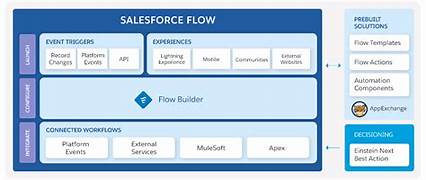
Salesforce Flow is a tool designed to automate complex business processes by collecting and manipulating data. Flow Builder, the declarative interface for creating flows, allows users to construct logic similar to coding without requiring programming expertise. When customers engage with a company—whether purchasing tickets, managing bills, or arranging reservations—they anticipate a seamless, personalized experience. Flow Builder empowers users to automate processes across Salesforce applications, experiences, and portals with intuitive, point-and-click functionality. Types of Flows in Salesforce include: Advantages of Salesforce Flow: Difference between Flow and Workflow in Salesforce: Flow offers more versatility than workflow rules and process builders. While workflows operate in the background, flows can guide users through processes with interactive screens and are not limited to specific objects. Flows have the capability to create, update, and delete records across multiple objects. Here’s a structured approach to effectively leverage Flow Builder: Flow Builder equips users with robust tools for automating Salesforce processes while adhering to best practices. By following these guidelines, users can develop efficient, tailored flows that align with specific business requirements. Like Related Posts Who is Salesforce? Who is Salesforce? Here is their story in their own words. From our inception, we’ve proudly embraced the identity of Read more Salesforce Marketing Cloud Transactional Emails Salesforce Marketing Cloud Transactional Emails are immediate, automated, non-promotional messages crucial to business operations and customer satisfaction, such as order Read more Salesforce Unites Einstein Analytics with Financial CRM Salesforce has unveiled a comprehensive analytics solution tailored for wealth managers, home office professionals, and retail bankers, merging its Financial Read more AI-Driven Propensity Scores AI plays a crucial role in propensity score estimation as it can discern underlying patterns between treatments and confounding variables Read more

Read More
Successful Salesforce Implementation

Successful Salesforce Implementation

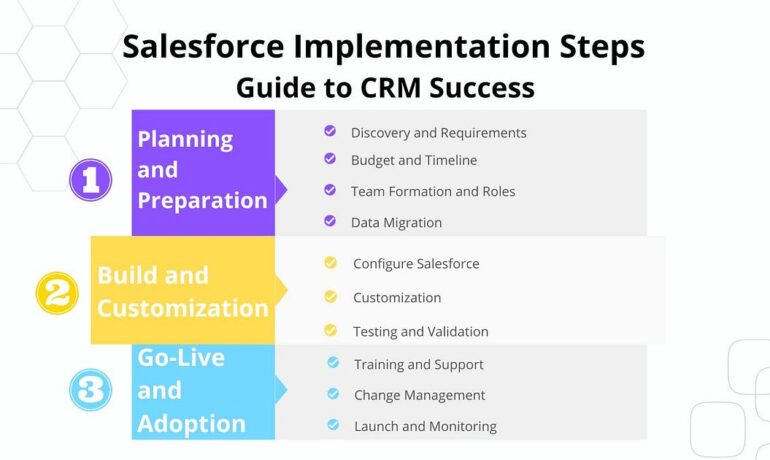
Unlocking the Potential of Salesforce: A Guide to Corporate Success Are you ready to explore the world of Successful Salesforce Implementation? In this Tectonic insight, we’ll explore how to leverage Salesforce to its fullest potential for your corporate success. Whether you’re a small startup or a large corporation, keep reading for practical advice and real-world insights to make Salesforce implementation work for you! What is Salesforce? Salesforce acts as a digital headquarters for organizations, organizing all client information, such as names, purchases, and contact methods. It’s also an Internet application that helps organizations manage customer relationships more effectively by sorting customer details, tracking sales leads, and automating tasks to ease customer interactions. Salesforce is cloudbased, so it is accessible from anywhere. Why Implement Salesforce Now? Implementing Salesforce offers numerous benefits for organizations across various industries: Overall, Salesforce improves how organizations manage customer relationships and utilize data for growth, but effective implementation requires thoughtful planning and customization. Types of Salesforce Implementation Sales Cloud Implementation Sales Cloud is Salesforce’s CRM platform designed to manage sales, leads, and customer interactions. Service Cloud Implementation Service Cloud helps companies provide excellent customer service and support. Marketing Cloud Implementation Marketing Cloud Engagement simplifies marketing efforts, helping businesses connect with customers across various channels. Each type of Salesforce implementation offers unique benefits and challenges, depending on the organization’s needs and goals. CRM Implementation Considerations Implementing a CRM system is a significant move for any business. Here are important things to remember: Step-by-Step Guide to Implement Salesforce Successfully Benefits of a Successful Salesforce Implementation Conclusion Implementing Salesforce is more than adding a powerful CRM system; it’s a journey to greater efficiency, productivity, and customer satisfaction. By thoughtfully planning and customizing Salesforce, organizations can enhance operations, deepen customer relationships, and drive sustainable growth. Embrace the possibilities of Salesforce implementation to chart a course for lasting success and innovation in the modern business landscape. Like Related Posts Who is Salesforce? Who is Salesforce? Here is their story in their own words. From our inception, we’ve proudly embraced the identity of Read more Salesforce Marketing Cloud Transactional Emails Salesforce Marketing Cloud Transactional Emails are immediate, automated, non-promotional messages crucial to business operations and customer satisfaction, such as order Read more Salesforce Unites Einstein Analytics with Financial CRM Salesforce has unveiled a comprehensive analytics solution tailored for wealth managers, home office professionals, and retail bankers, merging its Financial Read more AI-Driven Propensity Scores AI plays a crucial role in propensity score estimation as it can discern underlying patterns between treatments and confounding variables Read more
Read More
Swapping Human Labor for AI

Swapping Human Labor for AI

Key Considerations for Using Generative AI Generative artificial intelligence offers a wide array of capabilities: compiling meeting agendas, drafting emails, transcribing notes, and even generating code. However, a crucial question often arises: should these tasks be performed by AI? Before Swapping Human Labor for AI, read on. John Horton, an MIT Sloan associate professor and leader of the IDE research group, who specializes in AI labor and online marketplaces, notes that effectively working with AI requires more than just knowing its functions. “It’s not a trivial task, learning how to work well with a machine,” Horton said. “There’s still the challenge of figuring out how to ask good questions or make effective requests.” Since the release of ChatGPT last fall, a powerful AI tool for answering questions, engaging in conversation, and generating text, both businesses and consumers have been exploring its potential. The critical question for employers considering replacing human labor with AI is not whether AI can perform a task but whether integrating AI with human capabilities is worthwhile. For a human-AI interaction to be effective, several factors need to align. Humans must pose the right questions and evaluate the AI’s responses promptly. Horton emphasizes, “Is that going to be more efficient than just having the person do the task directly?” During the 2023 IDE Annual Conference, Horton suggested four key questions to consider when determining the suitability of AI for various tasks: Looking ahead, Horton envisions improvements in AI technology, not only in the models themselves but also in user interfaces that simplify prompting and result evaluation. “It’s easy to imagine these tasks becoming more integrated, making the evaluation process simpler and more automated,” Horton said. In the future, AI could potentially enhance both prompting and evaluation tasks. For further insights, the original article was published on MIT Sloan on August 28, 2023. Like Related Posts Who is Salesforce? Who is Salesforce? Here is their story in their own words. From our inception, we’ve proudly embraced the identity of Read more Salesforce Unites Einstein Analytics with Financial CRM Salesforce has unveiled a comprehensive analytics solution tailored for wealth managers, home office professionals, and retail bankers, merging its Financial Read more AI-Driven Propensity Scores AI plays a crucial role in propensity score estimation as it can discern underlying patterns between treatments and confounding variables Read more Tectonic’s Successful Salesforce Track Record Salesforce Technology Services Integrator – Tectonic has successfully delivered Salesforce in a variety of industries including Public Sector, Hospitality, Manufacturing, Read more
Read More
Salesforce Lightning and Hyperforce

Difference Between Salesforce Lightning and Hyperforce

Salesforce Lightning Platform and Hyperforce: An Overview The Lightning Platform forms the core infrastructure of Salesforce, while Hyperforce is a new infrastructure model provided by the CRM platform. Salesforce Lightning Salesforce Lightning elevates customization with its modern and flexible framework. It offers a powerful drag-and-drop interface called the Lightning App Builder, enabling users to design custom homepages, record pages, and dashboards effortlessly. Salesforce Hyperforce Introduced at Dreamforce in December 2020 and recently made generally available, Hyperforce is an architectural enhancement to Salesforce’s platform designed for the public cloud. It offers several benefits, including scalability, global reach, and increased control over data residency. As part of the Salesforce Customer 360 platform, Hyperforce brings enhanced flexibility, scalability, and performance to the cloud. Key Benefits of Hyperforce: Hyperforce Migration Migrating to Hyperforce does not require additional costs. Once migrated, organizations will not experience significant changes, and non-Hyperforce services will continue to run. This code-based offering enhances speed, reliability, and global performance. Reasons to Migrate to Hyperforce: Hyperforce and Public Cloud Platforms Hyperforce can run on public cloud platforms like AWS, GCP, and Azure, representing a shift from traditional Salesforce-hosted data centers. The Data Cloud and Marketing Cloud are also built on Hyperforce, offering businesses a powerful platform for customer interactions and relationship management. Hyperforce vs. Shield Hyperforce provides volume-level encryption by default for data at rest, while Shield Platform Encryption operates in parallel, offering additional encryption features. Hyperforce Migration: Mandatory Upgrade Migrating to Hyperforce is not optional, as Salesforce has declared this architecture as its future. The migration process will occur over time, and organizations will need to prepare for it. If migration timing is not suitable, businesses should contact their Salesforce account agent. Data Residency and Migration Issues: While Hyperforce is expanding, more countries need to support data residency to have a truly international impact. Some migration issues may include Einstein loading problems, bot disruptions, and glitches with the Smartcomm managed package. Basic troubleshooting can resolve minor issues, but technical considerations like manual endpoint management may be time-consuming and costly. Hyperforce Assistant The Hyperforce Assistant provides a step-by-step guide to upgrade from Salesforce-managed physical data centers to Hyperforce, ensuring admins feel confident about the migration process. By adopting Hyperforce, businesses can enhance their customer data management with innovative solutions, ensuring robust security, scalability, and efficiency in their operations. Like Related Posts Who is Salesforce? Who is Salesforce? Here is their story in their own words. From our inception, we’ve proudly embraced the identity of Read more Salesforce Marketing Cloud Transactional Emails Salesforce Marketing Cloud Transactional Emails are immediate, automated, non-promotional messages crucial to business operations and customer satisfaction, such as order Read more Salesforce Unites Einstein Analytics with Financial CRM Salesforce has unveiled a comprehensive analytics solution tailored for wealth managers, home office professionals, and retail bankers, merging its Financial Read more AI-Driven Propensity Scores AI plays a crucial role in propensity score estimation as it can discern underlying patterns between treatments and confounding variables Read more

Read More
Tools to Liberate Salesforce Data

Caring For Utility Customers

Have you ever considered what your utility customers go through when trying to resolve an issue? Imagine being a customer facing a higher-than-expected bill. You navigate the website for answers but find none. Frustrated, you call customer service, enduring the automated phone system and long hold times. Once connected, you must repeat your information and wait while the agent figures out what you couldn’t. Eventually, the agent informs you that your bill is high because you used more energy last month and therefore still owe the billed amount. What you don’t see is the agent scrambling through multiple screens and systems to understand the bill change. Knowing the customer’s past billing history, recent weather conditions, or potential meter issues would help immensely. Lacking the necessary information frustrates customers and flusters agents. However, with artificial intelligence (AI), this experience can be greatly improved. Enter Artificial Intelligence As a utility company, each customer call adds up, and inefficient processes prolong call times and slow resolutions, impacting satisfaction. Utilities leveraging predictive analytics and generative AI are transforming the customer experience. By integrating AI into customer service, you can make the customer experience more intuitive and less frustrating. Internally, AI simplifies operations, reduces costs, and improves satisfaction for both employees and customers. What AI Can Do for Your Utility’s Customer Service AI’s capability to analyze vast amounts of data aligns perfectly with utilities’ needs — from historical usage and weather data to detecting unusual consumption spikes that often trigger customer service calls. AI can proactively send personalized notifications to customers explaining likely reasons for higher consumption before their bill arrives. It can also offer individualized recommendations and links to relevant services, programs, or rate plans, preventing calls and increasing engagement in cost-saving utility programs. Virtual assistants on your website and mobile app can understand customer questions, provide clear explanations, and deliver instant, accurate responses in natural language. AI in Utilities for Customer Service in Action Consider this scenario: as a customer, you call customer service and are greeted by a virtual agent that validates your identity and attempts to troubleshoot your issue. If unsuccessful, it transfers you to a live agent. Before connecting, the live agent sees all your relevant customer details, including what you’ve already tried on the web or mobile app. Generative AI supports the agent with a script and guides them in diagnosing and solving your issue. At the end of the call, AI drafts a call summary, updates relevant knowledge articles, and creates a follow-up email with links to recommended programs or services. Proactive communication with clear, detailed information reduces frustration and confusion, potentially resolving issues without needing a live agent. This AI-driven support enhances customer satisfaction and engagement. For the utility, AI-driven support reduces call volume, improves agent effectiveness, speeds up call resolution, lowers operational costs, and boosts agent satisfaction. Ready to Dip Your Toe into AI? We’re Here for You Embracing AI not only addresses immediate challenges but also sets the stage for a more efficient and customer-centric future in the utilities sector, creating a win-win scenario for both customers and utility companies. With AI-powered tools like Salesforce Energy and Utilities Cloud, you can recommend next best actions, provide knowledge articles to support agents and customers, and deploy chatbots for better online self-service options. These capabilities improve customer service and key performance indicators (KPIs). Implementing AI in customer service might seem daunting. Here are some initial steps to help you get started: Feeling overwhelmed? Don’t worry — we have Professional Services and AI Coaches to guide you every step of the way. Your AI journey will be structured, supported, and geared towards tangible success. Let’s embark on this journey together, enhancing efficiency, customer satisfaction, and sustainable growth in the utilities sector. Content updated August 1014. Like Related Posts Who is Salesforce? Who is Salesforce? Here is their story in their own words. From our inception, we’ve proudly embraced the identity of Read more Salesforce Marketing Cloud Transactional Emails Salesforce Marketing Cloud Transactional Emails are immediate, automated, non-promotional messages crucial to business operations and customer satisfaction, such as order Read more Salesforce Unites Einstein Analytics with Financial CRM Salesforce has unveiled a comprehensive analytics solution tailored for wealth managers, home office professionals, and retail bankers, merging its Financial Read more AI-Driven Propensity Scores AI plays a crucial role in propensity score estimation as it can discern underlying patterns between treatments and confounding variables Read more
Read More
Improving customer experiences with Marketing Cloud Personalization

Attention Maps vs. Heatmaps

Attention Maps vs. Heatmaps: How to Choose the Right Tool for UX Optimization Staring at a heatmap and unsure if you’re interpreting it correctly? Misreading data can lead to misguided changes—fixing what isn’t broken while missing critical issues. This guide cuts through the noise, helping you choose between AI-powered attention maps and traditional heatmaps so you can optimize designs with confidence. Attention Maps vs. Heatmaps: Key Differences Feature Attention Maps Traditional Heatmaps Data Source AI predictions (no real users needed) Real user interactions (clicks, scrolls, hovers) Best For Pre-launch design testing Post-launch behavior analysis Strengths Predicts visual focus, optimizes layouts before going live Tracks actual engagement, identifies usability issues Limitations Not 100% accurate—needs real-world validation Requires sufficient traffic for meaningful insights When to Use Attention Maps What They Do AI-generated attention maps predict where users will look first—highlighting high-impact zones (red/orange) and overlooked areas (blue/green). Best For: ✅ Pre-launch testing (landing pages, ads, UI designs)✅ Optimizing visual hierarchy (headlines, CTAs, key visuals)✅ A/B testing layouts before investing in traffic Top Attention Map Tools When to Use Traditional Heatmaps What They Show Heatmaps visualize real user behavior—click patterns, scroll depth, and hover activity—helping you spot engagement trends and friction points. Best For: ✅ Post-launch analysis (conversion funnels, drop-off points)✅ Identifying usability issues (ignored CTAs, confusing navigation)✅ Improving existing pages based on real interactions Top Heatmap Tools Real-World Use Cases 1. eCommerce (Use Heatmaps) 2. Landing Pages (Use Attention Maps First, Then Heatmaps) 3. SaaS Platforms (Use Heatmaps) 4. Content Sites (Use Heatmaps) Which Should You Use? Pro Tip: Think of attention maps as a movie trailer (predicting engagement) and heatmaps as box office results (showing what actually worked). Like Related Posts Who is Salesforce? Who is Salesforce? Here is their story in their own words. From our inception, we’ve proudly embraced the identity of Read more Salesforce Unites Einstein Analytics with Financial CRM Salesforce has unveiled a comprehensive analytics solution tailored for wealth managers, home office professionals, and retail bankers, merging its Financial Read more AI-Driven Propensity Scores AI plays a crucial role in propensity score estimation as it can discern underlying patterns between treatments and confounding variables Read more Tectonic’s Successful Salesforce Track Record Salesforce Technology Services Integrator – Tectonic has successfully delivered Salesforce in a variety of industries including Public Sector, Hospitality, Manufacturing, Read more

Read More
public sector and tribal government

Subscription Models

In today’s business world, numerous companies are either adopting or considering the implementation of paid subscription models. A subscription model involves providing products or services to customers on a recurring basis, usually monthly or annually, in exchange for a regular and likely reduced fee. This approach helps companies establish predictable revenue streams, foster customer loyalty, and offer flexibility to customers. Successfully refreshing the pricing strategy for your subscription business requires two essential components: a clear picture of what success looks like and a customer-first approach. Recurring revenue serves as a cornerstone for growth and predictability in business operations. By incorporating Subscription Models, companies can initiate each quarter with a baseline revenue, providing a foundation for continued growth. Customers benefit from flexible payment options, such as pay-as-you-go, facilitating easier commitment to purchases. Subscription Models While building recurring revenue through subscriptions is advantageous, success is not guaranteed solely by its implementation. Traditional billing methods may hinder the full potential of subscription selling, necessitating collaboration between sales and finance teams to introduce new processes and technology to capture maximum value. The first step to refreshing your pricing strategy is to identify what’s not currently working. Signals of dysfunction, such as excessive discounts, constant promotions, and static price rates, indicate areas for improvement. A thorough review of these red flags helps identify the goal of your pricing refresh. Have a clear picture of the metric you are trying to move, whether it’s increasing customers in a particular segment or improving the upsell path. Paralysis of Analysis After the initial analysis stage, many companies find themselves in a state of paralysis. We call that paralysis of analysis. It’s crucial to be cautious with existing customers while applying new pricing to new customers. Set a timeline for when your new subscription pricing will be available to new customers and work backward from there. Pilot your new pricing with both new and existing customers, supporting both old and new pricing in your catalog for testing, iteration, and repetition. For new customers, test the right price point and packaging strategy, then roll it out to all new customers after the launch date. For existing customers, identify those who will benefit from the new pricing strategy and start with them. It’s imperative to pilot your new pricing with both new and existing customers, ensuring a smooth transition. Salesforce’s Next Best Action tool will help you automate this process. The adoption of recurring revenue models extends beyond technology companies. Michelin, for instance, successfully transitioned to a recurring revenue model by charging customers based on mileage instead of selling tires outright. This strategic shift increased profits and maintained Michelin’s competitive edge in the tire industry. This example underscores that any company, regardless of industry, can develop a subscription-based model for their existing lines of business. Recurring Revenue In a subscription model, customers are charged on a recurring basis for a product or service. They choose how long and how often they want to receive each offer, with the option to renew or cancel at any time. This approach creates a contract between the business and the customer, providing a steady and predictable revenue stream. It also has been proven to enhance customer loyalty and satisfaction. A subscription business model is one in which customers are charged a recurring fee for access to a product, replacing a one-time expense. This recurring fee is typically paid monthly or yearly, offering customers the flexibility to choose the frequency of their purchases. In some cases customers can even choose the delay period between shipments. Like Related Posts Who is Salesforce? Who is Salesforce? Here is their story in their own words. From our inception, we’ve proudly embraced the identity of Read more Salesforce Marketing Cloud Transactional Emails Salesforce Marketing Cloud Transactional Emails are immediate, automated, non-promotional messages crucial to business operations and customer satisfaction, such as order Read more Salesforce Unites Einstein Analytics with Financial CRM Salesforce has unveiled a comprehensive analytics solution tailored for wealth managers, home office professionals, and retail bankers, merging its Financial Read more AI-Driven Propensity Scores AI plays a crucial role in propensity score estimation as it can discern underlying patterns between treatments and confounding variables Read more

Read More
gettectonic.com