

Zapier Archives - gettectonic.com - Page 2
The Fragmented World of AI Agents and the Path to True Interoperability

Navigating the AI Revolution as a Product Designer

The AI landscape is evolving at a breakneck pace, leaving many designers grappling with both its potential and its disruptions. Anthropic’s CEO warns that AI could displace up to 50% of entry-level white-collar jobs, while Zapier’s CEO emphasizes hiring for AI fluency. Meanwhile, new roles like “model designer” are emerging, and the industry is shifting toward super IC (individual contributor) roles. For product designers, the challenge isn’t just staying relevant—it’s continuing to grow, adapt, and find fulfillment in their craft amid these seismic shifts. Three Pillars for Thriving as an AI-Native Designer To navigate this transformation, designers must focus on three key areas: Combined with strategic thinking and human-centric skills, these pillars form the foundation for the next generation of designers. 1. AI Tools: Speed as the New Standard “Man is a tool-making animal.” — Benjamin Franklin AI represents a quantum leap in tool evolution, shifting from manual execution to intelligent collaboration. Speed is no longer optional—teams like ProcessMaker have gone from shipping twice a year to every two weeks, thanks to AI automation. According to Figma’s State of Design (2025), 68% of design teams now use AI for:✔ Wireframing automation✔ Visual asset generation✔ User feedback analysis Building a Personalized AI Stack There’s no one-size-fits-all approach. A UX researcher’s toolkit differs vastly from that of a conversational AI designer or a visual artist. After experimenting with over 60 AI tools, many designers find that only 4-10 truly enhance their workflow. The key is intentional adoption—not chasing trends, but asking:🔹 Is there a smarter, faster, or more thoughtful way to do this? As design leader Agustín Sánchez notes: “You’re not a great designer because you know the latest tools. You’re great because you know what to do with them.” Prompting as a Core Design Skill Early frustrations with AI outputs often stem from poor prompting, not model limitations. Treating AI as a collaborator—structuring context, tone, and intent—dramatically improves results. John Maeda frames it well: “Prompting is just like getting the AI up to speed—or nudging it in the right direction.” For those looking to sharpen their prompting skills, key resources include: 2. AI Fluency: Designing for Probabilistic Systems AI fluency means confidently navigating intent-driven, layered, and unpredictable systems. Unlike traditional GUI interfaces (click, scroll, menus), agentic AI requires a focus on outcomes over actions. Real-world AI products involve:✔ Orchestration & memory✔ Tool integrations✔ Agentic UX flows Understanding variability, failure modes, and misuse potential is critical for responsible design. Foundational AI Learning Resources Designing AI Interactions 3. Human Advantage: The Unautomatable Edge With GPT-4o and Veo-3 producing high-quality outputs at scale, designers must ask: What remains our uniquely human advantage? Craftsmanship in the Age of AI AI generates averages, not originality. Designer Michal Malewicz describes today’s creative landscape as an “era of meh”—flooded with generic AI outputs. This raises the bar: distinctive perspective, narrative intent, and aesthetic judgment matter more than ever. As Richard Sennett argues in The Craftsman, tools evolve, but mastery remains human. Creative Direction & Agency AI handles execution; humans define vision. Two designers using the same tools can produce radically different work based on values, intent, and creative direction. Julie Zhuo emphasizes: “Even as AI matches our skills, our ability to choose why and where to apply them remains distinctly human.” 4. The AI-Native Designer of 2030 The World Economic Forum predicts that by 2030, the most valuable skills will be:✔ Analytical & creative thinking✔ Technology literacy✔ Resilience & adaptability As Fabricio Teixeira notes, design fundamentals—collaboration, communication, problem-solving—are timeless, outlasting any tool. Meanwhile, “Super IC” roles are redefining seniority—valuing deep expertise over management. In a world where creation is faster and more accessible, a designer’s true moat lies in:🔹 Unique, reliable, and memorable AI experiences🔹 Mastery of storytelling and human-centered design Conclusion: Designing the Future, Not Just Adapting to It AI isn’t replacing designers—it’s redefining their role. The designers who thrive will be those who: The future belongs to those who orchestrate AI, not just use it. Like Related Posts Who is Salesforce? Who is Salesforce? Here is their story in their own words. From our inception, we’ve proudly embraced the identity of Read more Salesforce Unites Einstein Analytics with Financial CRM Salesforce has unveiled a comprehensive analytics solution tailored for wealth managers, home office professionals, and retail bankers, merging its Financial Read more AI-Driven Propensity Scores AI plays a crucial role in propensity score estimation as it can discern underlying patterns between treatments and confounding variables Read more Tectonic’s Successful Salesforce Track Record Salesforce Technology Services Integrator – Tectonic has successfully delivered Salesforce in a variety of industries including Public Sector, Hospitality, Manufacturing, Read more

Read More
Model Context Protocol

Model Context Protocol

The AI Revolution Has Arrived: Meet MCP, the Protocol Changing Everything Imagine an AI that doesn’t just respond—it understands. It reads your emails, analyzes your databases, knows your business inside out, and acts on live data—all through a single universal standard. That future is here, and it’s called MCP (Model Context Protocol). Already adopted by OpenAI, Google, Microsoft, and more, MCP is about to redefine how we work with AI—forever. No More Copy-Paste AI Picture this: You ask your AI assistant about Q3 performance. Instead of scrambling through spreadsheets, Slack threads, and CRM reports, the AI already knows. It pulls real-time sales figures, checks customer feedback, and delivers a polished analysis—in seconds. This isn’t sci-fi. It’s happening today, thanks to MCP. The Problem With Today’s AI: Isolated Intelligence Most AI models are like geniuses locked in a library—brilliant but cut off from the real world. Every time you copy-paste data into ChatGPT or upload files to Claude, you’re working around a fundamental flaw: AI lacks context. For businesses, deploying AI means endless custom integrations: MCP: The Universal Language for AI Introduced by Anthropic in late 2024, MCP is the USB-C of AI—a single standard connecting any AI to any data source. Here’s how it works: Instead of building N×M connections (every AI × every data source), you build N + M—one integration per AI model and one per data source. MCP in Action: The Future of Work Why MCP Changes Everything The MCP Ecosystem is Exploding In less than a year, MCP has been adopted by: Beyond RAG: Real-Time Knowledge Traditional RAG (Retrieval-Augmented Generation) relies on stale vector databases. MCP changes the game: Security & Governance Built In The Next Frontier: AI Agents & Workflow Automation MCP enables AI agents that don’t just follow scripts—they adapt. The Time to Act is Now MCP isn’t just another API—it’s the foundation for true AI integration. The question isn’t if you’ll adopt it, but how fast. Welcome to the era of connected intelligence. Like Related Posts Who is Salesforce? Who is Salesforce? Here is their story in their own words. From our inception, we’ve proudly embraced the identity of Read more Salesforce Marketing Cloud Transactional Emails Salesforce Marketing Cloud Transactional Emails are immediate, automated, non-promotional messages crucial to business operations and customer satisfaction, such as order Read more Salesforce Unites Einstein Analytics with Financial CRM Salesforce has unveiled a comprehensive analytics solution tailored for wealth managers, home office professionals, and retail bankers, merging its Financial Read more AI-Driven Propensity Scores AI plays a crucial role in propensity score estimation as it can discern underlying patterns between treatments and confounding variables Read more

Read More
Salesforce Expands Agentforce to Revolutionize Field Service Operations

Salesforce Expands Agentforce to Revolutionize Field Service Operations

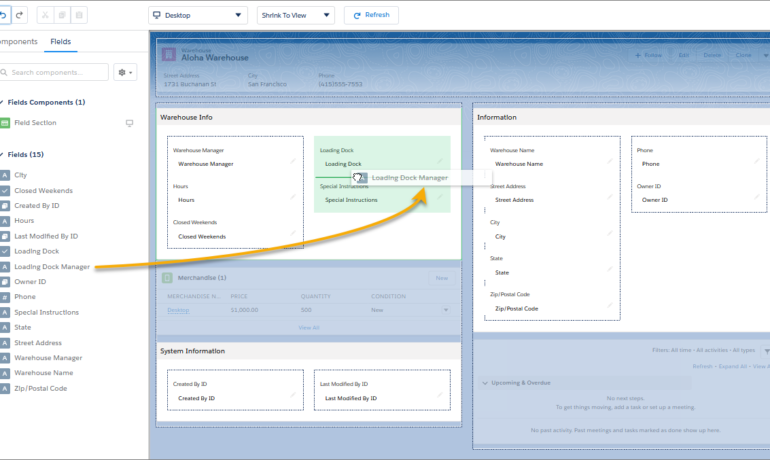
Field service technicians are the latest professionals to benefit from generative AI-powered efficiency. Salesforce has unveiled Agentforce for Field Service, a suite of AI tools designed to streamline scheduling, documentation, and on-site problem-solving—freeing technicians to focus on what they do best: solving customer problems. What’s New in Agentforce for Field Service? The first wave of features includes: Coming Soon (June/July 2024): Real-World Impact: Axis Water Technologies Early adopter Axis Water Technologies (serving Texas residential and commercial water systems) has already seen gains. Previously relying on Zapier and ChatGPT for technician briefings, they’ve now integrated Agentforce directly into Salesforce—saving time and improving security. Key Benefits:✔ Faster dispatches – AI refines pre-visit notes from customer calls, speeding up technician prep.✔ On-time arrivals – “Showing up late means frustrated customers who took time off work,” says CTO A.J. Bagwell.✔ Future integrations – Plans to add Amazon Connect & Service Cloud Voice for even smarter call-to-dispatch workflows. Why GenAI is a Game-Changer for Field Service According to Rebecca Wettemann (Valoir Research), the biggest value lies in:🔹 On-demand problem-solution summaries – AI distills complex diagrams and manuals into quick, actionable insights.🔹 Faster onboarding – New hires skip months of shadowing, accessing knowledge instantly. “Now, I can change the cost structure—no more paying trainees to ride along for months just to learn,” Wettemann notes. Industry-Wide Potential Field service spans telecom, energy, healthcare, retail, and manufacturing—all facing technician shortages. Salesforce has tailored Agentforce for 15 verticals, tackling repetitive tasks like billing and documentation. Taksina Eammano (Salesforce EVP, Field Service) emphasizes: “We’re not replacing technicians—we’re empowering them. They’re burned out on admin work, not using their core skills. AI fixes that.” The Future of Field Service is AI-Empowered With Agentforce, Salesforce is bridging the gap between customer expectations and technician efficiency—ensuring faster, smarter, and more reliable service. Ready to transform your field operations? Agentforce for Field Service is just the beginning. Like Related Posts Who is Salesforce? Who is Salesforce? Here is their story in their own words. From our inception, we’ve proudly embraced the identity of Read more Salesforce Marketing Cloud Transactional Emails Salesforce Marketing Cloud Transactional Emails are immediate, automated, non-promotional messages crucial to business operations and customer satisfaction, such as order Read more Salesforce Unites Einstein Analytics with Financial CRM Salesforce has unveiled a comprehensive analytics solution tailored for wealth managers, home office professionals, and retail bankers, merging its Financial Read more AI-Driven Propensity Scores AI plays a crucial role in propensity score estimation as it can discern underlying patterns between treatments and confounding variables Read more

Read More
agents and copilots

When to Use AI Agents and Copilots

Do Organizations Need AI Agents or Copilots for These Use Cases? Organizations often explore AI solutions for specific operational needs. Three primary AI use cases include: The question arises: Which AI tools best suit these needs? Should an organization invest in a high-end AI subscription, such as ChatGPT Pro with the Operator agent ($200/month), or opt for ChatGPT Plus with the o3-mini reasoning model and copilot features, such as memory and custom GPTs? AI Tool Selection Criteria When evaluating AI agents versus AI copilots, key considerations include: A. The time and effort required to articulate the problem for the AI. B. The level of control preferred in the problem-solving process. C. The importance of achieving the most optimal outcome. Use Case 1: Shopping AI Agents Many existing AI shopping solutions are labeled as agents, but they do not exhibit true autonomy. Instead, they serve as assistants with limited capabilities. For instance, Perplexity’s “Shop Like a Pro” assists with selecting products but depends on vendor integration for completing purchases, rather than executing transactions autonomously. Despite current limitations, some users create their own AI shopping agents by integrating browser-based AI tools with no-code automation platforms like n8n, Zapier, or Make.com. These custom-built agents offer greater autonomy and versatility than off-the-shelf solutions. However, the need for AI agents in shopping remains debatable. The act of shopping often provides a sense of anticipation and engagement, which a fully autonomous AI agent could eliminate. In contrast, AI copilots can enhance the experience by reducing time investment while preserving user involvement. The same applies to vacation planning—while an AI agent could book optimal flights and accommodations, many users prefer a guided approach to maintain a sense of anticipation and control. Moreover, financial transactions should not be fully entrusted to AI agents due to potential risks. AI-powered form-filling can be beneficial, but human oversight remains essential. The decision to use an AI agent for shopping depends on how much involvement users wish to retain in the process. Use Case 2: Executive AI Assistant Many professionals seek AI-driven solutions to handle routine tasks such as scheduling, reminders, and email management. However, current AI assistants lack full autonomy in managing these activities comprehensively. For instance, Google’s Gemini Advanced provides AI-powered features in Google Calendar and Gmail, but its integration remains limited—requiring manual activation and lacking full interconnectivity between tasks. Similarly, Apple Intelligence offers fragmented AI functionalities rather than a seamless assistant experience. Some technically inclined users have developed custom executive assistants using automation tools. However, for the broader market, fully functional, user-friendly AI executive assistants are still in development by major tech companies. When evaluating the necessity of AI agents in routine tasks, the key factors include: Use Case 3: AI Research Deep research AI agents have significantly outperformed traditional search methods in both speed and accuracy, provided sufficient relevant data is available. Advanced AI-driven research tools, such as Perplexity Deep Research and Grok 3 DeepSearch, have demonstrated superior efficiency compared to manual search. Despite their capabilities, these agents often require refinement in their responses. AI-generated reports may focus on irrelevant details without proper guidance. However, many researchers find that leveraging AI significantly enhances the efficiency and breadth of their work. For organizations, the decision to utilize AI agents for research depends on their need for: While AI agents remain imperfect, they are rapidly evolving, particularly in deep research applications. As technology advances, their ability to support decision-making processes will likely continue to expand. Like Related Posts Who is Salesforce? Who is Salesforce? Here is their story in their own words. From our inception, we’ve proudly embraced the identity of Read more Salesforce Unites Einstein Analytics with Financial CRM Salesforce has unveiled a comprehensive analytics solution tailored for wealth managers, home office professionals, and retail bankers, merging its Financial Read more AI-Driven Propensity Scores AI plays a crucial role in propensity score estimation as it can discern underlying patterns between treatments and confounding variables Read more Tectonic’s Successful Salesforce Track Record Salesforce Technology Services Integrator – Tectonic has successfully delivered Salesforce in a variety of industries including Public Sector, Hospitality, Manufacturing, Read more

Read More
Project Management With Asana and Salesforce

Salesforce and Asana Integration Approach

How to Integrate Asana and Salesforce: A Complete Guide Table of Contents Integrating Asana and Salesforce can eliminate workflow silos and accelerate collaboration. Both platforms offer integration capabilities, but their suitability varies based on your needs and resources. This guide will help you navigate the options, evaluate their pros and cons, and choose the one that best suits your organization. Can You Integrate Asana and Salesforce? Yes! Asana and Salesforce integration is possible through three primary methods: Each option comes with unique features, costs, and technical requirements. This guide explores each solution to help you make an informed decision. Why Integrate Asana and Salesforce? Integration can achieve two major goals: Depending on your goals, certain integration methods may be better suited to your needs. Integration Options Overview 1. Asana for Salesforce This official integration is ideal for large organizations with Enterprise-level plans for both Asana and Salesforce. It enables automation of workflows between the two platforms, such as: Pros: Cons: Rating: 2.6/5 on Salesforce AppExchange. 2. Visor Visor offers bi-directional integration with Asana and Salesforce, making it a powerful choice for combining and visualizing data. Key Features: Best For: Setup Steps: Limitations: 3. Zapier Zapier enables custom automation between Asana and Salesforce. It’s perfect for automating simple, repetitive workflows, such as: Pros: Cons: Quick Comparison Table Feature Asana for Salesforce Zapier Visor Automates processes ✔ ✔ ✘ Combines Salesforce & Asana data ✘ ✘ ✔ Gantt charts and project boards ✘ ✘ ✔ Dashboards and timelines ✘ ✘ ✔ Two-way data sync ✘ ✘ ✔ Comparison Table Which Integration Option Is Best for You? The right choice depends on your goals: Get Started with Visor for Free Visor is one integration tool, that helps you bridge the gap between Asana and Salesforce, offering advanced visualization tools and seamless collaboration. Start using Visor for free today: Like Related Posts Who is Salesforce? Who is Salesforce? Here is their story in their own words. From our inception, we’ve proudly embraced the identity of Read more Salesforce Marketing Cloud Transactional Emails Salesforce Marketing Cloud Transactional Emails are immediate, automated, non-promotional messages crucial to business operations and customer satisfaction, such as order Read more Salesforce Unites Einstein Analytics with Financial CRM Salesforce has unveiled a comprehensive analytics solution tailored for wealth managers, home office professionals, and retail bankers, merging its Financial Read more AI-Driven Propensity Scores AI plays a crucial role in propensity score estimation as it can discern underlying patterns between treatments and confounding variables Read more

Read More
Integrate Digital Delivery and Human Connection

Types of Salesforce Integration

Types of Salesforce Integration: A Comprehensive Guide As a leading CRM platform, Salesforce is often required to integrate with other systems to deliver a seamless experience and ensure efficient business operations. Whether it’s syncing data, automating workflows, or enabling real-time communication, Salesforce provides robust integration methods tailored to various needs. In this guide, we’ll explore the different types of Salesforce integrations, their practical applications, and how to choose the right approach for your business. Why Integrate Salesforce? Integrating Salesforce with other systems empowers businesses to: Types of Salesforce Integration 1. Data Integration Ensures data consistency between Salesforce and external systems, enabling seamless synchronization. 2. Process Integration Links workflows across systems, ensuring actions in one system trigger automated processes in another. 3. User Interface (UI) Integration Combines multiple applications into a single interface for a unified user experience. 4. Application Integration Connects Salesforce with external apps for real-time data exchange and functional synchronization. 5. Real-Time Integration Facilitates instant synchronization of data and events between Salesforce and external systems. 6. Batch Integration Processes large data volumes in chunks, typically during off-peak hours. 7. Hybrid Integration Combines multiple integration types, such as real-time and batch, to handle complex requirements. Tools for Salesforce Integration Native Salesforce Tools: Third-Party Tools: Best Practices for Salesforce Integration Conclusion Salesforce integration is essential for streamlining operations and unlocking business potential. With options like data, process, and real-time integration, Salesforce offers the flexibility to meet diverse needs. By adopting the right integration approach and adhering to best practices, businesses can create a unified, efficient ecosystem, enhancing operations and improving customer experience. Whether integrating with ERP systems, marketing tools, or support platforms, Salesforce provides the tools to make integration seamless and impactful. Like Related Posts Who is Salesforce? Who is Salesforce? Here is their story in their own words. From our inception, we’ve proudly embraced the identity of Read more Salesforce Marketing Cloud Transactional Emails Salesforce Marketing Cloud Transactional Emails are immediate, automated, non-promotional messages crucial to business operations and customer satisfaction, such as order Read more Salesforce Unites Einstein Analytics with Financial CRM Salesforce has unveiled a comprehensive analytics solution tailored for wealth managers, home office professionals, and retail bankers, merging its Financial Read more AI-Driven Propensity Scores AI plays a crucial role in propensity score estimation as it can discern underlying patterns between treatments and confounding variables Read more

Read More
Salesforce Validation Rules

Salesforce Validation Rules Explained

When to Use (and Avoid) Salesforce Validation Rules Ensuring quality data in Salesforce is crucial, but finding the right balance between enforcing data integrity and maintaining a smooth user experience can be challenging. Both Flows and validation rules play important roles in this process. The Role of Validation Rules and Flows in Data Management Salesforce administrators must carefully consider the impact of data validation methods. Some approaches prevent records from being saved if certain conditions aren’t met, while others allow the process to continue and address issues later. Sales teams, in particular, may find it frustrating to be slowed down by data entry requirements, but there are situations where enforcing specific data formats or ranges is essential. This is where Salesforce validation rules come into play. For more complex processes, especially those managed by automation, Flows offer a solution that allows records to be corrected without interrupting the workflow. The Purpose of Validation Rules Validation rules in Salesforce are used to enforce specific data requirements by preventing the record from being saved if certain conditions are not met. For instance, a simple validation rule might require a field value to be between 10 and 100: scssCopy codeOR( Your_Field__c < 10, Your_Field__c > 100 ) Validation rules are typically applied to a single field or a combination of fields, and they are especially useful when a user must enter specific information, such as a description for a unique discount type. How Flows Offer Flexibility Salesforce Flows have evolved into a robust alternative to validation rules, providing more flexibility in how data is managed. Flows can be configured to check conditions before or after a record is saved, allowing for automatic corrections without blocking the save. For example, a Flow could assign a default value if the user fails to enter one or perform a lookup to populate a field. Flows also allow records to be saved even if they would otherwise trigger a validation rule. This capability is particularly valuable for automated processes, as it prevents errors from halting updates made by tools like Fivetran, Hightouch, or Zapier. Balancing User Experience with Data Validation Validation rules are designed with the user in mind, serving as reminders to ensure that necessary information is entered. However, if these rules are too restrictive or unclear, they can hinder productivity. One common challenge arises when trying to enforce constraints on date fields, such as ensuring a follow-up task is scheduled within a certain time frame. While a validation rule can prevent a date field from being left blank, Salesforce does not allow a rule to simultaneously enforce non-blankness and a specific date calculation. To address this, a combination of validation rules and Flows can be used: Key Takeaway Balancing the use of validation rules and Flows is essential for effective data management in Salesforce. Validation rules are useful for enforcing critical data entry requirements, while Flows offer the flexibility to correct issues automatically. By focusing on the user experience, administrators can determine the optimal combination of these features to maintain data integrity without disrupting workflow. Like Related Posts Who is Salesforce? Who is Salesforce? Here is their story in their own words. From our inception, we’ve proudly embraced the identity of Read more Salesforce Marketing Cloud Transactional Emails Salesforce Marketing Cloud Transactional Emails are immediate, automated, non-promotional messages crucial to business operations and customer satisfaction, such as order Read more Salesforce Unites Einstein Analytics with Financial CRM Salesforce has unveiled a comprehensive analytics solution tailored for wealth managers, home office professionals, and retail bankers, merging its Financial Read more AI-Driven Propensity Scores AI plays a crucial role in propensity score estimation as it can discern underlying patterns between treatments and confounding variables Read more

Read More
Automated LinkedIn Prospecting

Automated LinkedIn Prospecting

Salesflow, an award-winning LinkedIn outreach automation platform, announces native integrations with a range of popular CRM systems. London, United Kingdom – June 14, 2024 —Automated LinkedIn Prospecting The automated LinkedIn lead generation tool now offers seamless integration with HubSpot, Zapier, Salesforce, and PipeDrive, with further additions expected in the coming months. The firm states that it now takes less than five minutes for clients to begin using LinkedIn automation through their existing CRM platform, allowing them to continue using familiar tools and workflows. More details can be found at https://salesflow.io/automation-software-improve-pipeline/ Salesflow explains that the new CRM integrations have applications for sales teams, small companies, and LinkedIn-as-as-Service agencies. The firm’s award-winning software is designed to automate multiple stages in the LinkedIn lead generation process, allowing teams to focus their energies on the most attractive prospects. According to LinkedIn’s own statistics, over 80% of B2B marketers say that they achieve the greatest results when social selling through the platform, when compared to other social media networks. However, creating an outreach campaign that retains a personal element can be a time-consuming task, which can limit its usefulness for smaller organizations. Salesflow is designed to create highly automated LinkedIn campaigns, while still offering the ability to include unique keywords that make messages more personal. With the new CRM integrations, the firm has progressed the automation several steps further, with the goal of making the process as fast and efficient as possible. “Salesflow is a cloud-based automation tool using static IPs to ensure a secure prospecting outreach while running on autopilot,” a company representative explained. “You can also now set up integrations to get data from LinkedIn sent directly into your CRM system, and you can begin to see new leads filtering through almost immediately.” About Salesflow Peer-to-peer software review site G2 identified Salesflow as a “High Performer” in the lead generation automation category for the spring and summer of this year, and recently upgraded that rating to “Leader” for both the European and US markets. The system is now used by several major organizations, including HubSpot, Verizon, and Visyond. “Salesflow is awesome and is a must-have for B2B social selling,” one company director recently stated. “This brilliant platform saves us a huge amount of time and money on lead generation, it reduces stress, and gets us connected to relevant prospects across our target industries. Best of all, it does all of that really fast.” Interested parties can find more information by visiting https://salesflow.io/automation-software-improve-pipeline/ Like Related Posts Who is Salesforce? Who is Salesforce? Here is their story in their own words. From our inception, we’ve proudly embraced the identity of Read more Salesforce Marketing Cloud Transactional Emails Salesforce Marketing Cloud Transactional Emails are immediate, automated, non-promotional messages crucial to business operations and customer satisfaction, such as order Read more Salesforce Unites Einstein Analytics with Financial CRM Salesforce has unveiled a comprehensive analytics solution tailored for wealth managers, home office professionals, and retail bankers, merging its Financial Read more AI-Driven Propensity Scores AI plays a crucial role in propensity score estimation as it can discern underlying patterns between treatments and confounding variables Read more

Read More
Top AI Tools Shaping Business Success

Top AI Tools Shaping Business Success

Top AI Tools Shaping Business Success in 2024 In the dynamic world of business, staying ahead means embracing the latest technologies. Artificial Intelligence (AI) is no longer just a buzzword—it’s a transformative force that helps businesses operate more efficiently, make smarter decisions, and enhance customer experiences. As we move through 2024, the AI tool ecosystem is rapidly expanding, offering innovative solutions to automate tasks, gain deep insights, and improve customer engagement. Below, we explore the top AI tools that are shaping the future of business. StoryChief is a comprehensive content marketing platform that simplifies the creation and distribution of content through AI. From ideation to optimization, it leverages machine learning to help businesses generate high-quality, engaging content at scale. Key Features: Pricing: Plans start with a free tier, with paid options ranging from $40 to $500 per month. Developed by OpenAI, ChatGPT is a versatile language model capable of generating human-like text. It excels in content creation, customer support, and data analysis. Key Use Cases: Pricing: API access with usage-based pricing. Perplexity AI is an advanced search engine that provides accurate, summarized answers to complex queries using natural language processing (NLP). Key Features: Pricing: Free version available, with Pro version at $20/month offering enhanced features. Zapier connects over 5,000 apps, enabling automation of repetitive tasks across your tech stack with AI-powered tools that simplify complex automations. Key Features: Pricing: Free plan available for up to 100 tasks per month; paid plans start at $19.99/month. Grammarly is an AI-driven writing assistant that enhances the quality of written communication, ensuring clarity, conciseness, and error-free content. Key Features: Pricing: Free version available; Premium plans start at $12/month for individuals and $25/user/month for businesses. Typeframes simplifies video creation with AI, turning scripts or images into professional-quality videos with animations, transitions, and voiceovers. Key Features: Pricing: Plans start at $29/month, with higher-tier options available. Chatbase enables businesses to build intelligent chatbots and virtual assistants that handle a wide range of customer service inquiries. Key Features: Pricing: Free plan available with limited message credits; paid plans start at $19/month. Secta is an AI-powered headshot generator that creates professional-quality headshots from user-submitted photos, ideal for businesses needing polished profile pictures. Key Features: Pricing: Pay-as-you-go at $49 per headshot session. Voicenotes is an AI-driven transcription tool that converts voice memos into concise summaries and action items, perfect for capturing important information efficiently. Key Features: Pricing: Free plan available; paid plans start at $10/month, with lifetime payment options. Notion AI enhances the popular Notion productivity platform with AI-powered writing assistance, content summarization, and database management. Key Features: Pricing: Available as an add-on at $10 per user per month, with discounts for annual plans. Choosing the Right AI Tools for Your Business Selecting the right AI tools involves considering several factors: By evaluating these aspects, you can effectively leverage AI to enhance efficiency, drive growth, and maintain a competitive edge in 2024. Like Related Posts Who is Salesforce? Who is Salesforce? Here is their story in their own words. From our inception, we’ve proudly embraced the identity of Read more Salesforce Marketing Cloud Transactional Emails Salesforce Marketing Cloud Transactional Emails are immediate, automated, non-promotional messages crucial to business operations and customer satisfaction, such as order Read more Salesforce Unites Einstein Analytics with Financial CRM Salesforce has unveiled a comprehensive analytics solution tailored for wealth managers, home office professionals, and retail bankers, merging its Financial Read more AI-Driven Propensity Scores AI plays a crucial role in propensity score estimation as it can discern underlying patterns between treatments and confounding variables Read more

Read More
Zapier for Salesforce

Salesforce and Zapier and Anything You Can Imagine

Zapier enables you to connect Salesforce with thousands of the most popular third-party apps, so you can automate your work and have more time for what matters most—no code required. Providing easy automation for busy Salesforce users. Zapier transfers info between your web apps automatically, so you can focus on your most important work. Zapier is “middleware” that sits between two other services. It allows software services to create Triggers and Actions. Each combination of a Trigger and an Action is called a Zap. Triggers are how your app’s users can start automated workflows whenever an item is added or updated in your app. There are two types of triggers in Zapier: Actions are how your app’s use the data. The action is the effect of the cause (trigger). What is the difference between actions and triggers in Zapier? Every Zap starts with a single trigger that watches for new or updated data, starting the user’s workflow. Action steps then make use of that data. Zapier actions create or update a single item in your app through API calls that include multiple details from user customized input fields. Is Zapier considered an API? Yes, Zapier is an API tool. Zapier is a web-based automation tool that allows you to connect and automate different web services and applications without the need for any coding. It uses APIs (Application Programming Interfaces) to communicate with the different services and applications that it connects to. About AI by Zapier Smart task and text handling powered by a flexible AI. Create text prompts to perform standard tasks like extracting lead (or other) data or answering discrete questions like “where should this message be routed?”. Or, create your own! What coding language does Zapier use? Zapier is a monolithic application built on Python and Django. There’s a lot of momentum with Python and it is very difficult changing course to another programming language while the service is running. Why is Zapier so popular? Zapier is a powerful tool for automating workflows and combining different business applications without requiring any additional coding skills. Is Zapier actually useful? Users have found that Zapier is a versatile automation tool that simplifies complex problems and enhances efficiency in various industries. With its easy-to-use interface, users can create automation workflows and connect different apps and platforms seamlessly. Around the world in 2024, over 9973 companies have started using Zapier as Integration tool. Netflix, Inc. PayPal Holdings, Inc. Trimble, Inc. If you need assistance connecting apps to Salesforce with Zapier, contact Tectonic today. Like Related Posts Who is Salesforce? Who is Salesforce? Here is their story in their own words. From our inception, we’ve proudly embraced the identity of Read more Salesforce Marketing Cloud Transactional Emails Salesforce Marketing Cloud Transactional Emails are immediate, automated, non-promotional messages crucial to business operations and customer satisfaction, such as order Read more Salesforce Unites Einstein Analytics with Financial CRM Salesforce has unveiled a comprehensive analytics solution tailored for wealth managers, home office professionals, and retail bankers, merging its Financial Read more AI-Driven Propensity Scores AI plays a crucial role in propensity score estimation as it can discern underlying patterns between treatments and confounding variables Read more

Read More
Dropbox and Salesforce Integration

Dropbox and Salesforce Integration

Collaborate in Real Time with Salesforce Essentials Dropbox and Salesforce Essentials enable small businesses to effortlessly collaborate on files of any type and size. You can review, edit, and share content both internally and with customers directly within Salesforce, allowing you to focus on growing your business. Does Dropbox Integrate with Salesforce? Yes, the Dropbox for Salesforce integration allows teams to access and share their Dropbox files within Salesforce. To use this integration, you need to be on a Dropbox team account. Third-Party Integrations The following integration services work with both Dropbox and Salesforce. Note that these services are not vetted by us, so please exercise caution when deploying them: Getting Started with Dropbox for Salesforce The Dropbox for Salesforce integration allows teams to access and share their Dropbox files within Salesforce. Here’s how team members can get started after an admin has connected their Dropbox team account to Salesforce. Connecting Dropbox to Salesforce: Notes: Adding Files from Dropbox to Salesforce There are two ways to add files using Dropbox for Salesforce: Viewing or Downloading a File in Salesforce You can view, download, and share files directly from Dropbox for Salesforce: Understanding “All of Dropbox for Object” vs. “Dropbox for Object” “All of Dropbox for Object” and “Dropbox for Object” provide different levels of visibility into a user’s Dropbox account from Salesforce: Example Folder Structures: Can You Drag and Drop Files into Salesforce? Salesforce supports drag and dropping files stored on disk. Save the file to disk first, then drag the saved file to Notes & Attachments within Salesforce. Like Related Posts Who is Salesforce? Who is Salesforce? Here is their story in their own words. From our inception, we’ve proudly embraced the identity of Read more Salesforce Marketing Cloud Transactional Emails Salesforce Marketing Cloud Transactional Emails are immediate, automated, non-promotional messages crucial to business operations and customer satisfaction, such as order Read more Salesforce Unites Einstein Analytics with Financial CRM Salesforce has unveiled a comprehensive analytics solution tailored for wealth managers, home office professionals, and retail bankers, merging its Financial Read more AI-Driven Propensity Scores AI plays a crucial role in propensity score estimation as it can discern underlying patterns between treatments and confounding variables Read more

Read More
Salesforce Experience Cloud

Nonprofit with Salesforce Experience Cloud

Transform Your Nonprofit with Salesforce Experience Cloud: A Digital Storefront for Engagement Think of Salesforce Experience Cloud as your Nonprofit’s digital storefront—always open, always inviting. This powerful Digital Experience Platform (DXP) enables you to create custom portals, communities, and hubs where donors, volunteers, and beneficiaries can seamlessly connect with your organization. Instead of juggling endless emails and spreadsheets, Experience Cloud centralizes interactions, making them self-service, intuitive, and engaging. With nonprofit-specific features, you can build customized, branded experiences without heavy development work. Here’s what makes Experience Cloud a game-changer: ✅ Drag-and-drop site builder for effortless customization✅ Prebuilt templates & Lightning components for quick deployment✅ Mobile Publisher for consistent branding across mobile apps✅ Built-in content management system (CMS)✅ Personalization tools like audience targeting & role-based access✅ Einstein AI-powered chatbots for instant responses✅ Gamification with badges & leaderboards✅ Google Analytics 4 integration for engagement insights✅ Advanced security with Lightning Locker & Clickjack protection …and much more. 🔍 Nonprofit Solutions You Can Build with Salesforce Experience Cloud 1️⃣ Program Applications & Intake Portals Managing program applications can be overwhelming without a structured system. Experience Cloud allows Nonprofits to create a self-service portal where applicants can submit forms, track status updates, and receive automated notifications—eliminating paper-based processes and endless email chains. With Dynamic Forms and Flow Builder, applications stay structured while automation accelerates approvals. Plus, since everything syncs to the Nonprofit Success Pack (NPSP), you’ll always have a real-time view of applicants and program impact. 2️⃣ Volunteer Portals Managing volunteers shouldn’t feel like a full-time job. With a Volunteer Portal, people can sign up, pick shifts, and track their hours—all without back-and-forth emails. Features like automated background checks and approval workflows ensure smooth operations. Meanwhile, Experience Cloud’s Chatter integration fosters engagement, helping you track who’s active, who’s disengaged, and who might need a little encouragement. 3️⃣ Community Partner Portals Nonprofits thrive on partnerships, and a Community Partner Portal keeps corporate sponsors, local businesses, and community groups connected. With this portal, partners can log in, access shared resources, submit funding applications, and track joint projects—all from one secure platform. Role-based access ensures that sensitive data stays protected while collaboration remains seamless. 4️⃣ Membership Portals If your nonprofit has a membership program, Experience Cloud helps you build a Member Portal where users can renew memberships, update information, and access exclusive content. Want to boost engagement? Introduce gamification with badges, leaderboards, and personalized event recommendations. Since everything is integrated with Salesforce CRM, you’ll gain real-time insights into member activity to keep engagement levels high. 5️⃣ Grant Management Portals Grant applications shouldn’t feel like a never-ending email thread. With Experience Cloud, you can create a Grant Management Portal where organizations apply for funding, track application progress, and submit reports—all in one place. Einstein AI can even prioritize applications based on predefined criteria, accelerating the review process. Grantors, in turn, can access real-time funding reports—enhancing transparency and trust. 6️⃣ E-Commerce & Donation Portals Looking to sell nonprofit merchandise or accept donations online? Experience Cloud seamlessly integrates with Salesforce Commerce Cloud, allowing you to build an e-commerce storefront for hassle-free transactions. Supporters can:💳 Make one-time or recurring donations🛍️ Purchase branded merchandise📜 Track donation history & receive personalized thank-you messages For secure transactions and easy donor tracking, you can integrate Stripe, PayPal, or other payment processors directly into your portal. 7️⃣ Voter Registration Portals If your nonprofit promotes civic engagement, Experience Cloud can power a Voter Registration Portal where users can check registration status, sign up to vote, and receive election reminders. With geolocation tools, voters can find polling places instantly, while Marketing Cloud integration allows you to send timely voter updates—ensuring higher participation in the democratic process. Implementing Salesforce Experience Cloud for Nonprofits Which Approach is Right for Your Nonprofit? Your ideal Experience Cloud implementation depends on your current CRM, budget, and long-term strategy. 1️⃣ Standalone Experience Cloud Implementation If your nonprofit already uses Salesforce CRM (but not NPSP), you can still implement Experience Cloud independently to create portals, volunteer hubs, and dashboards while maintaining your existing CRM as the system of record. Considerations:🔹 Custom Configuration – You’ll need to set up nonprofit-specific objects & automation.🔹 Permissions & Access – Well-structured security settings are crucial.🔹 CRM Integration – If using a non-Salesforce CRM, API integrations (e.g., MuleSoft, Zapier) will be required. This option is best for nonprofits that want external-facing engagement tools without fully shifting to the Salesforce Nonprofit ecosystem. 2️⃣ Experience Cloud + Nonprofit Cloud / NPSP For nonprofits already using Salesforce Nonprofit Cloud or NPSP, Experience Cloud becomes an extension of your engagement strategy. 🔹 Real-time donor, volunteer, and grant data sharing🔹 Prebuilt nonprofit features (fundraising, donor management, program tracking)🔹 Automation & AI-powered engagement 3️⃣ Experience Cloud + Third-Party Nonprofit CRMs Already using a third-party nonprofit CRM (like Raiser’s Edge NXT, Neon One, or DonorPerfect)? You can still leverage Experience Cloud, but strong integration is key. 🔹 Experience Cloud powers your donor, volunteer, or program portal🔹 API-based sync required for real-time data exchange🔹 Tools like MuleSoft or Zapier help bridge data gaps This approach is ideal for nonprofits wanting the flexibility of Experience Cloud without migrating their backend to Salesforce. Final Thought: Making Experience Cloud Work for Your Nonprofit No matter your approach, Salesforce Experience Cloud is a powerful tool to drive engagement and efficiency for nonprofits. However, successful implementation requires a well-thought-out strategy. Need expert guidance? A Salesforce implementation partner can help tailor Experience Cloud to fit your unique nonprofit needs, ensuring your digital storefront delivers maximum impact. Like Related Posts Who is Salesforce? Who is Salesforce? Here is their story in their own words. From our inception, we’ve proudly embraced the identity of Read more Salesforce Marketing Cloud Transactional Emails Salesforce Marketing Cloud Transactional Emails are immediate, automated, non-promotional messages crucial to business operations and customer satisfaction, such as order Read more Salesforce Unites Einstein Analytics with Financial CRM Salesforce has unveiled a comprehensive analytics solution tailored for wealth managers, home office professionals, and retail bankers, merging its Financial Read more AI-Driven Propensity Scores AI plays

Read More
Salesforce Managed Services

Automation Tools in Salesforce

What are the types of automation in Salesforce? What are the Automation Tools in Salesforce? The automation capabilities offered by Salesforce are based on two main categories: process automation (workflows) and data operations (data loading and cleansing). There are four main automation tools that Salesforce offers, each tailored to a specific purpose. What is an automation tool in Salesforce? Automation provides the tools necessary to automate repetitive processes and tasks for your business, such as creating a follow-up task, sending a reminder email, or updating a record. Automations can help users save critical time and reduce errors by creating processes to complete repetitive tasks. The Top 8 Best Salesforce Automation Tools What is data automation in Salesforce? Healthy automation enables users to focus on high-value work and reduces time spent on repetitive, manual tasks or complex data entry. Most often, automation means translating business processes from one form to another: from paper-based form to digital form, from an old system to a new one. What is the power of automation in Salesforce? By adopting Salesforce automation, you save time and resources, which can be redirected to more productive tasks. Sales automation can reduce daily administrative time by 14%. Moreover, it significantly enhances deal closure rates by 30% and boosts sales productivity by 14.5%. Why is Salesforce difficult to automate? Here are some of the reasons why Salesforce is difficult to automate from a technical perspective: Frequent system updates: Salesforce regularly update their platform to enhance user experiences or fix underlying issues. Unfortunately, these changes can impact user customizations and even standard uses of the platform. This is one reason many Salesforce customers opt to have a Salesforce Managed Service Provider. Disadvantages of Salesforce Flow Limited Customization and Complexity: While Salesforce Flow is considered user-friendly, it may not offer the customization and complexity required for some advanced automation tasks. Businesses with highly specific needs might find Flow somewhat restrictive. Which three components are used to automate a process in Salesforce? Use Flow Builder to automate most of your organization’s repetitive business processes. More features can provide further automation functionality, including approval processes, Flow Orchestration, Einstein Next Best Action, and Apex. Note: Use Flow Builder instead of Process Builder and workflow rules. Content updated January 2024. Like2 Related Posts Who is Salesforce? Who is Salesforce? Here is their story in their own words. From our inception, we’ve proudly embraced the identity of Read more Salesforce Marketing Cloud Transactional Emails Salesforce Marketing Cloud Transactional Emails are immediate, automated, non-promotional messages crucial to business operations and customer satisfaction, such as order Read more Salesforce Unites Einstein Analytics with Financial CRM Salesforce has unveiled a comprehensive analytics solution tailored for wealth managers, home office professionals, and retail bankers, merging its Financial Read more AI-Driven Propensity Scores AI plays a crucial role in propensity score estimation as it can discern underlying patterns between treatments and confounding variables Read more

Read More
clock

Salesforce Integrations for Sales and Marketing Teams

What do Salesforce integrations entail? Salesforce Integrations for Sales and Marketing Teams. Salesforce integrations involve establishing connections between Salesforce and various third-party applications, ranging from marketing automation tools and customer service software to accounting programs. This seamless exchange of data between platforms serves to enhance Salesforce’s overall functionality. How extensive is Salesforce’s integration ecosystem? Salesforce boasts a robust integration ecosystem, with over 3,000 integrations available on its AppExchange marketplace. Beyond these, users can leverage: Salesforce Integrations for Sales and Marketing Teams While there isn’t a one-size-fits-all list of essential Salesforce integrations for sales and marketing, we’ve curated a selection of widely-used integrations across various categories: These integrations cater to diverse needs within sales and marketing, facilitating efficient data handling, analytics, communication, project management, and more. Like1 Related Posts Who is Salesforce? Who is Salesforce? Here is their story in their own words. From our inception, we’ve proudly embraced the identity of Read more Salesforce Marketing Cloud Transactional Emails Salesforce Marketing Cloud Transactional Emails are immediate, automated, non-promotional messages crucial to business operations and customer satisfaction, such as order Read more Salesforce Unites Einstein Analytics with Financial CRM Salesforce has unveiled a comprehensive analytics solution tailored for wealth managers, home office professionals, and retail bankers, merging its Financial Read more AI-Driven Propensity Scores AI plays a crucial role in propensity score estimation as it can discern underlying patterns between treatments and confounding variables Read more

Read More
salesforce form builde4r

Salesforce Form Builder

Is it possible to create forms within Salesforce? Salesforce provides a web-to-case feature, allowing the creation of basic customer support forms. Once you activate and configure this feature, you can generate your web form as HTML code for embedding on your website. Similar to the web-to-lead feature, this is a straightforward, use-case-specific option. Here are some notable forms that integrate with Salesforce: Is there a native form builder in Salesforce? Yes, Forms for Salesforce is a 100% native Salesforce form builder. What is the recommended form app for Salesforce? Native Forms is an excellent tool for streamlining customer engagement. With its user-friendly drag-and-drop form builder, you can swiftly create custom forms to capture customer data and update Salesforce records. Can Google Forms be integrated with Salesforce? Integrating Google Forms with Salesforce is a popular choice for creating versatile web forms, quizzes, surveys, and more to collect data. If you’re seeking a reliable app for creating web forms, Google Forms is highly recommended. Does Jotform work seamlessly with Salesforce? Jotform seamlessly connects with Salesforce, ensuring your forms automatically sync with the platform, keeping your account up to date with every new submission. Data security is a top priority with Jotform. Another Tool available from the Salesforce AppExhange is Formstack. And the Salesforce Lighting App Builder has added a form building functionality. Content updated January 2024. Like1 Related Posts Who is Salesforce? Who is Salesforce? Here is their story in their own words. From our inception, we’ve proudly embraced the identity of Read more Salesforce Marketing Cloud Transactional Emails Salesforce Marketing Cloud Transactional Emails are immediate, automated, non-promotional messages crucial to business operations and customer satisfaction, such as order Read more Salesforce Unites Einstein Analytics with Financial CRM Salesforce has unveiled a comprehensive analytics solution tailored for wealth managers, home office professionals, and retail bankers, merging its Financial Read more AI-Driven Propensity Scores AI plays a crucial role in propensity score estimation as it can discern underlying patterns between treatments and confounding variables Read more

Read More
Salesforce Slack

Slack Process Automation

Salesforce’s Slack team collaboration tool extends beyond facilitating communication across channels; it empowers users to automate routine processes seamlessly through the Workflow Builder tool. This feature, available in Slack, offers a range of tools to streamline processes both within and outside Slack, all without the need for coding. Slack process automation improves the power and usage of the collaboration tool. The versatility of workflows is vast, accommodating simple to complex processes that can connect with various apps and services, not limited to Slack and Salesforce alone. With over 2,400 apps in the Slack App Directory, integration possibilities are extensive. Should a pre-built app fall short, customization options allow tailoring to specific business needs without the necessity for coding expertise. Building a workflow primarily requires identifying routine business processes suitable for automation, whether through app installation or custom Workflow Builder creation. The absence of coding prerequisites makes this accessible to a broader audience. Workflow Builder considers any series of sequential, repeatable tasks aimed at achieving a specific goal as a viable process for automation. Since Salesforce’s acquisition of Slack in 2021, the platform has become a pivotal collaboration tool within and beyond the Salesforce ecosystem. Its popularity has surged, particularly in remote-based work environments, where integrations with various applications synchronize data into Slack, providing a single, accurate source accessible to all team members. This, coupled with automation features directly accessible from the Slack app, significantly reduces manual task durations. Eight highly recommended Slack automations, facilitated through pre-built templates, cover various aspects, including recruiting, lead management, deal alerts, quote-to-invoice processes, project status tracking, time tracking, support case management, and even creative applications like hue light automation. Tectonic offers expertise in custom Slack integrations with Salesforce projects. Companies can explore how Slack enhances team collaboration and process automation by connecting with us. Slack Workflows Importantly, Slack workflows extend beyond Salesforce integration, working seamlessly with other platforms such as Zapier, Centro, Google Sheets, AttendanceBot, Polly, Datadog, Fellow, Automate.io, BirthdayBot, Jira, Workstreams, ToDoBot, Workast, Simple Poll, and more. The Workflow Builder feature enables the creation of predefined triggers and steps to automate processes directly within the Slack app. Triggers can be manually selected, initiated by emoticon selections, or set to run automatically. Once triggered, the workflow’s steps unfold in the selected order, allowing the seamless execution of various tasks. Process Automation in Slack The possibilities for automation using Workflow Builder in Slack are extensive, ranging from employee onboarding, customer support, content and communication review, to sales lead and marketing campaign management, request approval processes, and beyond. Slack, in conjunction with Tectonic, stands ready to bring these envisioned automations to life for organizations seeking enhanced efficiency and collaboration. Like Related Posts Who is Salesforce? Who is Salesforce? Here is their story in their own words. From our inception, we’ve proudly embraced the identity of Read more Salesforce Marketing Cloud Transactional Emails Salesforce Marketing Cloud Transactional Emails are immediate, automated, non-promotional messages crucial to business operations and customer satisfaction, such as order Read more Salesforce Unites Einstein Analytics with Financial CRM Salesforce has unveiled a comprehensive analytics solution tailored for wealth managers, home office professionals, and retail bankers, merging its Financial Read more AI-Driven Propensity Scores AI plays a crucial role in propensity score estimation as it can discern underlying patterns between treatments and confounding variables Read more

Read More
Salesforce Integration

Salesforce Integrations for Sales and Marketing Teams

First Understand Salesforce Integrations Salesforce integrations involve establishing seamless connections between Salesforce and diverse third-party applications. These applications range from marketing automation tools and customer service software to accounting programs. The purpose is to facilitate a smooth exchange of data, ultimately enhancing Salesforce’s overall functionality. Salesforce integrations for sales and marketing teams brings all the applications needed for the relationship with prospects into one place. Salesforce’s Integration Ecosystem While Salesforce boasts a robust integration ecosystem, featuring over 3,000 integrations available on its AppExchange marketplace. Users can leverage various integration approaches: Salesforce Integrations for Sales and Marketing While there’s no complete universal list of essential Salesforce integrations for sales and marketing, several widely-used integrations cater to diverse needs: No-code Data Automation Integrations: Analytics and Reporting Integrations: Email Marketing Automation Integration: Data Storage Integration: Communications Apps Integrations: Project Management Tools Integration: Account Management Integration: CRM Tools Integration: Helpdesk Integrations: Feedback Tools Integration: These integrations facilitate efficient data handling, analytics, communication, project management, and more within sales and marketing teams. Integrations for Sales and Marketing Tools Salesforce seamlessly integrates with various tools relevant to Sales and Marketing teams, including but not limited to: Salesforce Integration with Teams and Workday The Salesforce AppExchange Salesforce’s Role in Sales and Marketing Salesforce Marketing Cloud Salesforce and ERP Integration Digital Marketing and Salesforce Salesforce’s Role in Marketing Automation Content updated November 2023. Like Related Posts Who is Salesforce? Who is Salesforce? Here is their story in their own words. From our inception, we’ve proudly embraced the identity of Read more Salesforce Marketing Cloud Transactional Emails Salesforce Marketing Cloud Transactional Emails are immediate, automated, non-promotional messages crucial to business operations and customer satisfaction, such as order Read more Salesforce Unites Einstein Analytics with Financial CRM Salesforce has unveiled a comprehensive analytics solution tailored for wealth managers, home office professionals, and retail bankers, merging its Financial Read more AI-Driven Propensity Scores AI plays a crucial role in propensity score estimation as it can discern underlying patterns between treatments and confounding variables Read more

Read More
Salesforce Integration

Salesforce Integrations Explained

Introducing Salesforce Integration – Fundamental Concepts Before diving deep into more the complex aspects, let’s explore the basics of Salesforce Integrations, encompassing three key areas: integration types, integration capabilities, and integration patterns. When we talk about integration, it means to create a connection between a specific Salesforce instance and another database, third party product, or system. The connection can be inbound, outbound, or bi-directional, and you may be connecting to another database, another Salesforce instance, or another cloud-based data source. What is Integration? Salesforce Integration involves bringing together two or more systems to streamline distinct processes, enabling the efficient management of information across various business processes that span multiple systems.  Salesforce Integration is a process of connecting two or more applications. This provides both a sharing of data between systems and end user improved efficiency. Enterprise systems use many applications, many or most of which are not designed to work with one another out of the box. How many integrations does Salesforce have? Salesforce has over 3,000 integrations available on its AppExchange marketplace alone. Apart from those, you can use: low-code and no-code integrations like Coupler.io or Zapier for data automation. Why is Integration Important with Salesforce? In our digital era, enhancing efficiency and customer experience is crucial for competitiveness and user adoption. Integration ensures that systems work seamlessly together by fostering a scalable and faster collaborative environment. How do you make Salesforce even better? Integrate it with the apps you already use. From productivity to marketing to collaboration and beyond, now you can connect your Salesforce to the other tools you need to run your business. MuleSoft is Salesforce’s integration and automation technology and offers connectivity solutions for all of your apps. What is an API? API, or Application Programming Interface, facilitates communication between two applications. It enables the smooth exchange of data, ensuring processes occur without interruptions. Different API types will be covered in the ‘Salesforce Integration Capabilities’ section. Types of Salesforce Integration Architectures Three integration architectures come with both their benefits and drawbacks: Salesforce Integration Capabilities Consider the following aspects for efficient Salesforce integration: Understanding integration involves recognizing its fundamental concepts, including types, architectures, and capabilities.  Like Related Posts Who is Salesforce? Who is Salesforce? Here is their story in their own words. From our inception, we’ve proudly embraced the identity of Read more Salesforce Marketing Cloud Transactional Emails Salesforce Marketing Cloud Transactional Emails are immediate, automated, non-promotional messages crucial to business operations and customer satisfaction, such as order Read more Salesforce Unites Einstein Analytics with Financial CRM Salesforce has unveiled a comprehensive analytics solution tailored for wealth managers, home office professionals, and retail bankers, merging its Financial Read more AI-Driven Propensity Scores AI plays a crucial role in propensity score estimation as it can discern underlying patterns between treatments and confounding variables Read more

Read More
Salesforce and Calendly

Calendly and Salesforce Integration

The Salesforce integration helps you close deals faster than the competition by scheduling high-value leads on the spot. Calendly Routing works with your marketing forms and Salesforce records to qualify, route, and schedule meetings. Integration with Calendly provides extra power to your CRM. Salesforce and Calendly can be integrated using Zapier, Boomi, or other integration tools. When scheduling meetings with new prospects when using Calendly, right inside Salesforce create a new lead, contact or opportunity.  Or update an existing Salesforce record. Your reps will love using the Calendly integration to get back more selling time, and management will love that Salesforce data is always accurate without having to chase down their reps for updates. Instantly schedule leads that come in via marketing forms based on real time Salesforce assignment status, filtering by deal stage, territory, or other fields in Salesforce as needed. To map Calendly data to fields in Salesforce objects What is the purpose of Calendly Scheduling Integration? Calendly is a virtual availability and booking app used to schedule meetings, appointments, and events for individuals and organizations. Calendly takes the work out of updating Salesforce so you can sell more. With this powerful integration you get to marry your Salesforce calendar and tasks with your actual availability providing easier scheduling for your prospects and customers. For teams on Calendly’s Enterprise plan, keep data more manageable in Salesforce by syncing Calendly data for specific groups only, like your Sales group. All other meeting and user information stays in Calendly so you don’t have to worry about non-revenue team data in the CRM. Schedule meetings for your team without leaving your CRM using Calendly, and view your upcoming and past meetings from your activities. Like Related Posts Who is Salesforce? Who is Salesforce? Here is their story in their own words. From our inception, we’ve proudly embraced the identity of Read more Salesforce Marketing Cloud Transactional Emails Salesforce Marketing Cloud Transactional Emails are immediate, automated, non-promotional messages crucial to business operations and customer satisfaction, such as order Read more Salesforce Unites Einstein Analytics with Financial CRM Salesforce has unveiled a comprehensive analytics solution tailored for wealth managers, home office professionals, and retail bankers, merging its Financial Read more AI-Driven Propensity Scores AI plays a crucial role in propensity score estimation as it can discern underlying patterns between treatments and confounding variables Read more

Read More
Salesforce analytics insurance

Cool Ways to Use Surveys With Salesforce

Leveraging survey forms is an effective way to gather real-life insights from individuals crucial to your organization. Salesforce facilitates survey integration either through Salesforce Surveys and Feedback Management (add-on license) or by seamlessly integrating web forms with Salesforce. Storing feedback in your CRM, linked to comprehensive contact information, is an obvious advantage. Salesforce surveys give you real-time feedback.  However, adopting an integrated web form approach offers additional benefits. Here are seven ideas to enhance your survey integration with Salesforce, ensuring valuable customer insights: Integrating survey forms with Salesforce is a strategic move to enhance customer experience and internal processes. Implementing these tips will not only improve the effectiveness of your Salesforce surveys but also align internal practices with best standards. Choose a tip that fits your needs and contributes to the success of your Salesforce surveys. Like Related Posts Who is Salesforce? Who is Salesforce? Here is their story in their own words. From our inception, we’ve proudly embraced the identity of Read more Salesforce Marketing Cloud Transactional Emails Salesforce Marketing Cloud Transactional Emails are immediate, automated, non-promotional messages crucial to business operations and customer satisfaction, such as order Read more Salesforce Unites Einstein Analytics with Financial CRM Salesforce has unveiled a comprehensive analytics solution tailored for wealth managers, home office professionals, and retail bankers, merging its Financial Read more AI-Driven Propensity Scores AI plays a crucial role in propensity score estimation as it can discern underlying patterns between treatments and confounding variables Read more

Read More
gettectonic.com