- gettectonic.com - Page 2
VOIP Salesforce Integration

VOIP Salesforce Integration

Voice Technology and Customer Service: Revolutionizing Customer Experience with VoIP: VOIP Salesforce Integration In the world of customer service, leveraging voice technology is paramount, with VoIP (Voice over Internet Protocol) playing a central role. Voice technology has seamlessly woven into our daily routines, influencing tasks such as hands-free calls in transit, multitasking at home, and online inquiries. Yet, its significance transcends everyday life, impacting the landscape of customer service and transforming service team operations. Exceptional customer service departments embrace voice technology, utilizing VoIP to bolster training, streamline operations, enhance communication, and elevate overall customer engagement. By integrating VoIP with CRM systems and digital channels, agents are empowered to deliver unparalleled service experiences. VOIP Salesforce Integration Understanding VoIP: VoIP, or “voice over IP,” colloquially known as “cloud telephony,” enables businesses to conduct phone calls sans traditional landlines by converting analog audio signals into digital data transmitted over the internet. In essence, VoIP equips service teams connected to the web to seamlessly assist customers from any internet-enabled device. Key Benefits of VoIP for Customer Service: Cost Efficiency and Flexibility: VoIP eliminates the need for cumbersome desk phones, leading to cost savings. Additionally, there are no extra charges for long-distance calls. Its agility surpasses traditional phone systems, enabling any agent with internet access to utilize VoIP. This flexibility facilitates team scalability without requiring additional hardware. Integration with CRM for Enhanced Interactions: When integrated with CRM systems, VoIP revolutionizes how agents engage with customers over the phone, fostering personalized interactions and expediting resolution of complex issues. Global Connectivity for Remote Teams: With the rise of remote work, VoIP ensures connectivity for service professionals worldwide, catering to the growing preference for remote or hybrid work setups. Management Benefits and Quality Assurance: VoIP streamlines training processes, providing management with valuable data and insights to support agents in delivering exceptional service. Analytical insights, live call monitoring, and call recording bolster quality assurance efforts. Efficiency and Personalization: VoIP enhances team efficiency by automating routine tasks, minimizing errors, and optimizing internal workflows. Integrated with CRM, VoIP enables personalized interactions by furnishing agents with comprehensive customer profiles, fostering deeper understanding of customer needs. Improved Customer Satisfaction: Through features like automated call recording, transcription, and reduced wait times via automatic call forwarding, VoIP contributes to faster, more personalized service delivery, ultimately enhancing customer satisfaction scores. Integrating VoIP with CRM systems empowers customer service teams with enhanced capabilities, ensuring streamlined operations, personalized interactions, and heightened customer satisfaction. This voice technology modernizes traditional telephone communication to meet the evolving expectations of 21st-century customers. Like1 Related Posts Who is Salesforce? Who is Salesforce? Here is their story in their own words. From our inception, we’ve proudly embraced the identity of Read more Salesforce Marketing Cloud Transactional Emails Salesforce Marketing Cloud Transactional Emails are immediate, automated, non-promotional messages crucial to business operations and customer satisfaction, such as order Read more Salesforce Unites Einstein Analytics with Financial CRM Salesforce has unveiled a comprehensive analytics solution tailored for wealth managers, home office professionals, and retail bankers, merging its Financial Read more AI-Driven Propensity Scores AI plays a crucial role in propensity score estimation as it can discern underlying patterns between treatments and confounding variables Read more

Read More
Influence vs. Attribution

Influence vs. Attribution

Influence vs. Attribution: Understanding Marketing’s Full Impact Key Distinction: Influence: The Big-Picture View What it measures: Why it matters: Example:A prospect interacts with: Attribution: The Conversion Detective What it measures: Why it matters: Example:Same journey as above: Key Differences Metric Scope Focus Flexibility Influence Entire journey Holistic impact Fixed (total value) Attribution Single source Direct conversion Model-dependent Why Both Matter Bottom line: Use attribution to refine campaigns, but rely on influence to build a seamless buyer journey. (Tip: Combine both in reporting to balance immediate wins with pipeline health.) Content updated March 2025. Like1 Related Posts Who is Salesforce? Who is Salesforce? Here is their story in their own words. From our inception, we’ve proudly embraced the identity of Read more Salesforce Marketing Cloud Transactional Emails Salesforce Marketing Cloud Transactional Emails are immediate, automated, non-promotional messages crucial to business operations and customer satisfaction, such as order Read more Salesforce Unites Einstein Analytics with Financial CRM Salesforce has unveiled a comprehensive analytics solution tailored for wealth managers, home office professionals, and retail bankers, merging its Financial Read more AI-Driven Propensity Scores AI plays a crucial role in propensity score estimation as it can discern underlying patterns between treatments and confounding variables Read more

Read More
Generative AI Regulations

Salesforce, Data Science, and Generative AI

Is Salesforce utilized in the field of data science? Salesforce data science and Generative AI Data Science-as-a-Service (DSaaS) democratizes access to machine learning through the Salesforce Data Management Platform, enabling widespread adoption of data science capabilities. Utilizing Salesforce for Data Science Empowerment: The integration of Salesforce into data science represents a transformative endeavor aimed at democratizing machine learning through Data Science-as-a-Service (DSaaS). By leveraging the Salesforce Data Management Platform, the objective is to empower individuals across various domains with the potential of data science. Democratization of Data Science: DSaaS introduces a versatile workbench that capitalizes on machine learning to refine segmentation, enhance activation strategies, and uncover deeper insights. Through robust analytics tools, users can gain profound insights into individual customer behaviors. Supported by a formidable 20-petabyte analytics environment and a real-time big data infrastructure, data-driven analytics are taken to unprecedented levels. Harnessing Modeling Resources: Data owners enjoy the flexibility to harness their data, algorithms, and models either within the Salesforce Data Management Platform or within their independent environments. Spearheading this initiative is the Salesforce Unified Intelligence Platform (UIP) team, constructing a centralized data intelligence platform aimed at enriching business insights, enhancing user experience, improving product quality, and optimizing operational efficiency, all while upholding the core value of trust embedded in the Salesforce platform. Salesforce Data Science and Generative AI Emphasizing Security and Design: Security stands as a cornerstone of the Salesforce platform, with the UIP’s evolution tracing back to a transition from a colossal Hadoop cluster to UIP in public clouds. The architectural journey prioritized data classification early on, engaging in meticulous reviews with legal and security experts to classify data intended for storage within UIP. Adopting the “zero-trust infrastructure” principle, the architecture is fortified against both internal and external threats, ensuring robust defense mechanisms against potential data breaches. Unlocking Data Science Potential through DSaaS: DSaaS serves as a catalyst in democratizing machine learning through the Salesforce Data Management Platform, spotlighting the pivotal role of data science in fostering generative AI and cultivating trustworthy AI. Data scientists play a critical role in ensuring data quality and organization to steer clear of issues such as biased or irrelevant outcomes. Navigating Data Science Challenges: Despite the transformative potential of data science, businesses encounter various challenges including managing diverse data sources, scarcity of skilled professionals, data privacy and security concerns, data cleansing complexities, and effectively communicating findings to non-technical stakeholders. Proposed Solutions: Addressing these challenges involves leveraging data integration tools, investing in the upskilling and reskilling of data professionals, implementing robust data privacy measures, employing data governance tools for data cleansing, and honing communication skills for reporting findings to non-technical stakeholders. The success of generative AI hinges on well-organized data, and data science is pivotal in achieving this. Whether utilizing AI tools built with the expertise of data scientists or building a data science team, businesses can navigate the evolving landscape of AI and data science with confidence. Content updated March 2024. Like1 Related Posts Who is Salesforce? Who is Salesforce? Here is their story in their own words. From our inception, we’ve proudly embraced the identity of Read more Salesforce Marketing Cloud Transactional Emails Salesforce Marketing Cloud Transactional Emails are immediate, automated, non-promotional messages crucial to business operations and customer satisfaction, such as order Read more Salesforce Unites Einstein Analytics with Financial CRM Salesforce has unveiled a comprehensive analytics solution tailored for wealth managers, home office professionals, and retail bankers, merging its Financial Read more AI-Driven Propensity Scores AI plays a crucial role in propensity score estimation as it can discern underlying patterns between treatments and confounding variables Read more
Read More
Improving customer experiences with Marketing Cloud Personalization

Attention Maps vs. Heatmaps

Attention Maps vs. Heatmaps: How to Choose the Right Tool for UX Optimization Staring at a heatmap and unsure if you’re interpreting it correctly? Misreading data can lead to misguided changes—fixing what isn’t broken while missing critical issues. This guide cuts through the noise, helping you choose between AI-powered attention maps and traditional heatmaps so you can optimize designs with confidence. Attention Maps vs. Heatmaps: Key Differences Feature Attention Maps Traditional Heatmaps Data Source AI predictions (no real users needed) Real user interactions (clicks, scrolls, hovers) Best For Pre-launch design testing Post-launch behavior analysis Strengths Predicts visual focus, optimizes layouts before going live Tracks actual engagement, identifies usability issues Limitations Not 100% accurate—needs real-world validation Requires sufficient traffic for meaningful insights When to Use Attention Maps What They Do AI-generated attention maps predict where users will look first—highlighting high-impact zones (red/orange) and overlooked areas (blue/green). Best For: ✅ Pre-launch testing (landing pages, ads, UI designs)✅ Optimizing visual hierarchy (headlines, CTAs, key visuals)✅ A/B testing layouts before investing in traffic Top Attention Map Tools When to Use Traditional Heatmaps What They Show Heatmaps visualize real user behavior—click patterns, scroll depth, and hover activity—helping you spot engagement trends and friction points. Best For: ✅ Post-launch analysis (conversion funnels, drop-off points)✅ Identifying usability issues (ignored CTAs, confusing navigation)✅ Improving existing pages based on real interactions Top Heatmap Tools Real-World Use Cases 1. eCommerce (Use Heatmaps) 2. Landing Pages (Use Attention Maps First, Then Heatmaps) 3. SaaS Platforms (Use Heatmaps) 4. Content Sites (Use Heatmaps) Which Should You Use? Pro Tip: Think of attention maps as a movie trailer (predicting engagement) and heatmaps as box office results (showing what actually worked). Like Related Posts Who is Salesforce? Who is Salesforce? Here is their story in their own words. From our inception, we’ve proudly embraced the identity of Read more Salesforce Unites Einstein Analytics with Financial CRM Salesforce has unveiled a comprehensive analytics solution tailored for wealth managers, home office professionals, and retail bankers, merging its Financial Read more AI-Driven Propensity Scores AI plays a crucial role in propensity score estimation as it can discern underlying patterns between treatments and confounding variables Read more Tectonic’s Successful Salesforce Track Record Salesforce Technology Services Integrator – Tectonic has successfully delivered Salesforce in a variety of industries including Public Sector, Hospitality, Manufacturing, Read more

Read More
Salesforce AI

Salesforce Einstein and Social Studio

The digital era (sometimes considered the third industrial revolution) has transformed the dynamics of customer-business interactions, demanding a proactive approach to customer engagement across diverse channels. Navigating this ever-evolving world is essential for business success, and Social Studio is a valuable asset in this endeavor. Social Studio, in conjunction with Einstein AI, plays a pivotal role in achieving social media success. Recognizing the significance of social media in shaping brand identity and fostering customer relationships, marketers are tasked with maintaining an active and responsive presence across various social media platforms. This challenge is met by Social Studio, offering a centralized hub for comprehensive social media management. This platform facilitates content planning and publication, team collaboration, content approval, audience engagement, and performance analysis. Equipped with advanced scheduling tools, user-friendly content creation features, and customizable approval rules, Social Studio ensures the safeguarding of your brand’s integrity across multiple platforms and messaging. Notably, Social Studio seamlessly integrates with Salesforce Marketing Cloud, providing an all-encompassing solution for efficient social media management. Its capabilities extend to user role management, image classification through Einstein Vision, and process automation using macros. With Social Studio, users gain access to a unified platform for content creation, scheduling, and monitoring, audience interaction, and performance analysis. Whether collaborating within a team or managing multiple accounts, Social Studio streamlines social media efforts, empowering users to achieve their goals. Embrace the advantages of this robust tool for an enhanced social media experience! Social Studio is a one-stop solution to manage, schedule, create, and monitor posts. You can organize posts by brand, region, or multiple teams and individuals in a unified interface. Social Studio offers powerful real-time publishing and engagement. Social Studio offers powerful real-time publishing and engagement platform for content marketers, plus the comprehensive content performance by social network and time frame. A single interface offers a fully customizable team-based collaboration platform that analyzes channel and content performance. Analyze current trends and recommend new content ideas. With Social Studio you can: Social Studio Components Social Studio is made up of these components: Note: Salesforce will sundown Social Studio on November 18, 2024, but some users will lose access before then if their contract expires sooner.  Salesforce recommends retrieving your Social Studio data at least 90 days before the Order End Date of your Marketing Cloud Social Studio Product(s) or November 18, 2024, whichever is sooner.  The digital, or third industrial revolution is the shift from mechanical and analogue electronic technologies from the Industrial Revolution towards digital electronics which began in the latter half of the 20th century.  This was prompted with the adoption and evolution of digital computers. (source) Like Related Posts Who is Salesforce? Who is Salesforce? Here is their story in their own words. From our inception, we’ve proudly embraced the identity of Read more Salesforce Marketing Cloud Transactional Emails Salesforce Marketing Cloud Transactional Emails are immediate, automated, non-promotional messages crucial to business operations and customer satisfaction, such as order Read more Salesforce Unites Einstein Analytics with Financial CRM Salesforce has unveiled a comprehensive analytics solution tailored for wealth managers, home office professionals, and retail bankers, merging its Financial Read more AI-Driven Propensity Scores AI plays a crucial role in propensity score estimation as it can discern underlying patterns between treatments and confounding variables Read more

Read More
Salesforce Marketing Cloud Journey Builder

Journey Builder Explained

In B2C marketing, the focus on Journey Builder within the Marketing Cloud framework is essential to take customers on journeys with personalized interactions depending on where they are at in the buying cycle. This tool empowers marketers to craft intricate marketing journeys that deliver personalized experiences to customers. Operating within Marketing Cloud, the journey tool orchestrates comprehensive customer journeys, facilitating interactions across multiple platforms such as email, mobile, advertising, and websites. It stands as a foundational element of Marketing Cloud, primarily tailored for B2C initiatives. Salesforce Journey Builder facilitates a deeper understanding of customers by triggering actions based on their unique behaviors and ensuring consistent messaging across channels. As consumers navigate seamlessly between platforms and devices, brands must offer personalized and seamless journeys to maximize customer lifetime value. To achieve this, marketers must address key questions: Answering these questions requires a comprehensive view of the customer journey, with actions aligned to evolving customer expectations. With Salesforce Marketing Cloud Journey Builder, marketers can attain a unified view of all customer interactions, optimizing end-to-end journeys. Journey Builder provides visibility into consumer interactions across marketing channels, including email, mobile, social ads, and more. By connecting these interactions, marketers gain insights for improved message crafting, campaign design, and automation, fostering seamless customer experiences and fostering loyalty. Interactions a customer may have with the brand throughout their journey include clicking on an ad, opening an email, making a purchase, conversing with customer support, and more. Journey Builder, as an event-driven tool, initiates conversations based on customer history, preferences, and real-time behavior, supporting visual mapping of simple or complex journeys. However, Journey Builder operates within Marketing Cloud and utilizes content and audiences from Email Studio, Mobile Studio, Advertising Studio, Content Builder, and Audience Builder. It leverages event-driven triggers to react to customer actions, such as downloading an app or leaving a shopping cart abandoned, thus enabling timely and relevant responses. Key features of Journey Builder include a user-friendly drag-and-drop interface, entry and filter criteria for swift actions, and powerful add-ons for enhanced functionality. Ultimately, Salesforce Journey Builder facilitates a seamless customer experience by guiding journeys, ensuring consistent messaging, adapting to evolving needs, and maintaining brand consistency across channels. Like1 Related Posts Who is Salesforce? Who is Salesforce? Here is their story in their own words. From our inception, we’ve proudly embraced the identity of Read more Salesforce Marketing Cloud Transactional Emails Salesforce Marketing Cloud Transactional Emails are immediate, automated, non-promotional messages crucial to business operations and customer satisfaction, such as order Read more Salesforce Unites Einstein Analytics with Financial CRM Salesforce has unveiled a comprehensive analytics solution tailored for wealth managers, home office professionals, and retail bankers, merging its Financial Read more AI-Driven Propensity Scores AI plays a crucial role in propensity score estimation as it can discern underlying patterns between treatments and confounding variables Read more

Read More
Smart Communications Partners with Salesforce

CME Cloud Salesforce

Salesforce CME: The Industry-Specific Cloud for Communications, Media & Energy Transform Your Business with Tailored Industry Solutions Salesforce Communications, Media & Energy (CME) Cloud is a purpose-built industry solution that empowers organizations in these sectors to digitally transform operations, accelerate revenue, and deliver superior customer experiences. Built on the Salesforce platform, CME combines industry-specific workflows with powerful CRM capabilities to address unique challenges in: ✔ Telecommunications✔ Media & Entertainment✔ Energy & Utilities Key Capabilities of Salesforce CME 1. Configure, Price, Quote (CPQ) for Complex Offerings 2. Enterprise Product Catalog (EPC) 3. Intelligent Order Management 4. Digital Commerce Transformation 5. Contract Lifecycle Management (CLM) 6. Low-Code Customization with OmniStudio Industry-Specific Benefits Communications Providers Media Companies Energy & Utilities Implementation & Administration ✅ Managed package installation✅ Pre-configured industry data models✅ Granular permission controls✅ Detailed Salesforce documentation Typical Implementation Timeline: Why Choose Salesforce CME? “After implementing CME, we reduced service activation time from 5 days to 2 hours while improving NPS by 18 points.”— VP of Operations, Global Telecom Provider Next Steps Accelerate your digital transformation with Salesforce’s #1 industry cloud for Communications, Media & Energy. Like Related Posts Who is Salesforce? Who is Salesforce? Here is their story in their own words. From our inception, we’ve proudly embraced the identity of Read more Salesforce Marketing Cloud Transactional Emails Salesforce Marketing Cloud Transactional Emails are immediate, automated, non-promotional messages crucial to business operations and customer satisfaction, such as order Read more Salesforce Unites Einstein Analytics with Financial CRM Salesforce has unveiled a comprehensive analytics solution tailored for wealth managers, home office professionals, and retail bankers, merging its Financial Read more AI-Driven Propensity Scores AI plays a crucial role in propensity score estimation as it can discern underlying patterns between treatments and confounding variables Read more
Read More
data cloud and marketing cloud personalization

What is the Difference in a Data Lake and a Data Warehouse

Is a Data Lake Necessary? Difference in a Data Lake and a Data Warehouse? Do I need both? Both Data Lakes and Data Warehouses play crucial roles in the data processing and reporting infrastructure. They are complementary approaches rather than substitutes. Relevance of Data Lakes: Data lakes are losing popularity compared to their previous standing. Advanced storage solutions like data warehouses are progressively taking their place. Can Data Lakes Replace Data Warehouses? Data lakes do not directly replace data warehouses; they serve as supplementary technologies catering to different use cases with some overlap. Organizations typically have both a data lake and a data warehouse. Distinguishing Between Data Lakes and Data Warehouses: Data lakes and data warehouses serve as storage systems for big data, utilized by data scientists, data engineers, and business analysts. Despite some similarities, their differences are more significant than their commonalities, and understanding these distinctions is vital for aspiring data professionals. Data Lake vs. Data Warehouse: Key Differences: Data lakes aggregate structured and unstructured data from multiple sources, resembling real lakes with diverse inflows. Data warehouses, on the other hand, are repositories for pre-structured data intended for specific queries and analyses. Exploring Data Lakes: A data lake is a storage repository designed to capture and store large amounts of raw data, whether structured, semi-structured, or unstructured. This data, once in the lake, can be utilized for machine learning or AI algorithms and later transferred to a data warehouse. Data Lake Examples: Data lakes find applications in various sectors, such as marketing, education, and transportation, addressing business problems by collecting and analyzing data from diverse sources. Understanding Data Warehouses: A data warehouse is a centralized repository and information system designed for business intelligence. It processes and organizes data into categories called data marts, allowing for structured data storage from multiple sources. Data Warehouse Examples: Data warehouses support structured systems and technology for diverse industries, including finance, banking, and food and beverage, facilitating secure and accurate report generation. Data Warehouses compared to Data Lakes: Data warehouses contain processed and sanitized structured data, focusing on business intelligence, while data lakes store vast pools of unstructured, raw data, providing flexibility for future analysis. Key Differences Between Warehouses and Lakes: Intended purpose, audience, data structure, access and update cost, access model, and storage and computing are crucial factors distinguishing data warehouses and data lakes. Choosing Between Data Warehouse and Data Lake: The decision depends on organizational needs, value extracted from data analysis, and infrastructure costs. Organizations may opt for agility with a data lake, a data warehouse for larger data quantities, or a combination for maximum flexibility. A data lake stores raw, unstructured data indefinitely, providing cost-effective storage, while a data warehouse contains cleaned, processed, and structured data, optimized for strategic analysis based on predefined business needs. Data Warehouse, Data Lake, and Data Hub Differences: Data warehouses and data lakes primarily support analytic workloads, whereas data hubs focus on data integration, sharing, and governance, serving different purposes in the data landscape. Salesforce Data Cloud is a powerful data warehouse solution that allows companies to effectively manage and analyze their data. It provides users with the ability to stream input data from Salesforce and other sources, making it a comprehensive platform for data integration. Content updated February 2024. Like1 Related Posts Who is Salesforce? Who is Salesforce? Here is their story in their own words. From our inception, we’ve proudly embraced the identity of Read more Salesforce Marketing Cloud Transactional Emails Salesforce Marketing Cloud Transactional Emails are immediate, automated, non-promotional messages crucial to business operations and customer satisfaction, such as order Read more Salesforce Unites Einstein Analytics with Financial CRM Salesforce has unveiled a comprehensive analytics solution tailored for wealth managers, home office professionals, and retail bankers, merging its Financial Read more AI-Driven Propensity Scores AI plays a crucial role in propensity score estimation as it can discern underlying patterns between treatments and confounding variables Read more
Read More
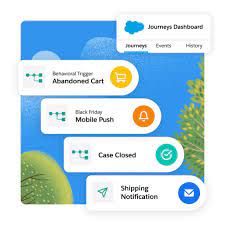
Salesforce Marketing Cloud Personalization

AI and Marketing Personalization

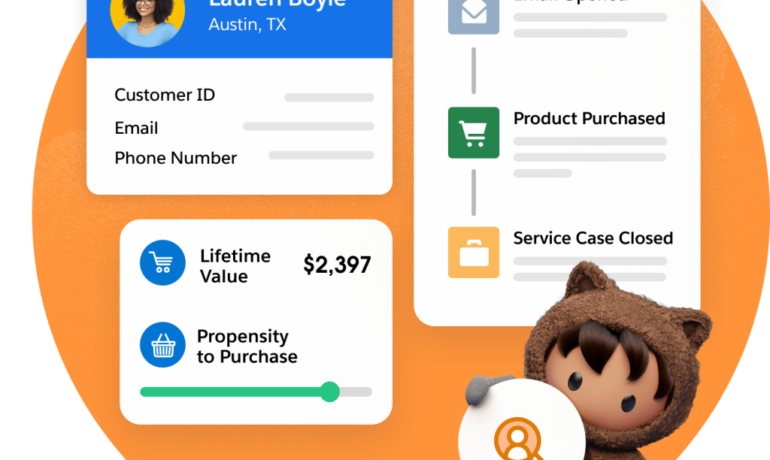
AI Personalization Marketing: The Future of Customized Advertising Artificial intelligence (AI) is revolutionizing advertising by replacing generic mass marketing campaigns with highly targeted and relevant ads personalized through AI technology. Advanced AI and machine learning capabilities enable businesses to tailor and optimize marketing messages at scale. By leveraging extensive data insights, AI empowers businesses to understand customer needs and preferences on a personal level, allowing for customized messages and recommendations throughout the buyer’s journey. 5 Benefits of AI Personalization in Marketing Practical Applications of AI-Based Personalization in Marketing AI significantly enhances marketing effectiveness by analyzing extensive customer data to inform targeted campaigns. According to Babak Hodjat, CTO of Cognizant, integrating AI with business data empowers decision-making and drives key performance indicators. Explore more insights from Babak Hodjat in eWeek’s interview on AI’s transformative impact on marketing. AI-Powered Tools for Enhanced Personalization Challenges and Considerations for AI Personalization Implementation Implementing AI personalization presents challenges such as costs, ethical concerns, and data privacy considerations. Businesses must ensure transparent data practices and compliance with regulations like GDPR and CCPA to mitigate risks associated with data security and bias in AI algorithms. Best Practices for Effective AI Personalization Marketing Successful AI personalization strategies begin with clearly defined goals, ethical data practices, and the strategic use of AI tools to optimize marketing efforts. Regular monitoring and refinement based on data-driven insights ensure continuous improvement in campaign effectiveness and customer engagement. Conclusion AI personalization is reshaping marketing by delivering tailored experiences that drive customer engagement and business growth. Strategic implementation of AI tools enables marketers to unlock new levels of personalization while navigating ethical considerations and regulatory requirements. Embracing AI in marketing empowers brands to connect with customers on a deeper level, fostering loyalty and driving sustainable business success. Like Related Posts Who is Salesforce? Who is Salesforce? Here is their story in their own words. From our inception, we’ve proudly embraced the identity of Read more Salesforce Marketing Cloud Transactional Emails Salesforce Marketing Cloud Transactional Emails are immediate, automated, non-promotional messages crucial to business operations and customer satisfaction, such as order Read more Salesforce Unites Einstein Analytics with Financial CRM Salesforce has unveiled a comprehensive analytics solution tailored for wealth managers, home office professionals, and retail bankers, merging its Financial Read more AI-Driven Propensity Scores AI plays a crucial role in propensity score estimation as it can discern underlying patterns between treatments and confounding variables Read more
Read More
salesforce bulk api

What is Salesforce Bulk API

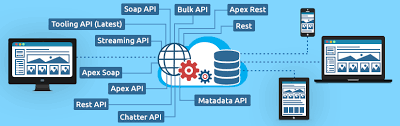
Salesforce Bulk API is a REST-based API designed for processing large volumes of data efficiently, allowing for asynchronous operations like inserting, updating, upserting, and deleting records in bulk. It’s optimized for handling large datasets and is often used with tools like Data Loader to import and export data in Salesforce.  More Details: Key Features and Benefits: How it Works: Bulk API vs. Batch API: While both handle large data volumes, Bulk API is generally used for asynchronous operations, while Batch API is more suitable for synchronous operations where you need to handle errors during the import. Bulk API processes records in batches asynchronously, allowing you to kick off the import and deal with errors later, while Batch API might be more suitable if you need to handle errors immediately during the import process.  Like Related Posts Who is Salesforce? Who is Salesforce? Here is their story in their own words. From our inception, we’ve proudly embraced the identity of Read more Salesforce Marketing Cloud Transactional Emails Salesforce Marketing Cloud Transactional Emails are immediate, automated, non-promotional messages crucial to business operations and customer satisfaction, such as order Read more Salesforce Unites Einstein Analytics with Financial CRM Salesforce has unveiled a comprehensive analytics solution tailored for wealth managers, home office professionals, and retail bankers, merging its Financial Read more AI-Driven Propensity Scores AI plays a crucial role in propensity score estimation as it can discern underlying patterns between treatments and confounding variables Read more
Read More
Salesforce Backup

Get To Know Salesforce Backup

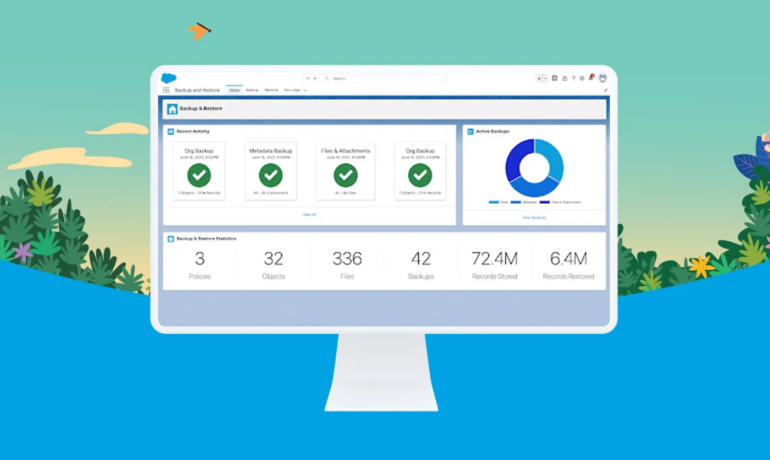
Salesforce Backup constitutes a vital component of the comprehensive Salesforce data management and security portfolio. For organizations that prioritize data integrity and compliance within their Salesforce environment, integrating this app into their org and establishing a backup policy can be accomplished on the same day. This product empowers companies to safeguard their data against user errors, malicious activities, and potential data loss, thereby enhancing overall security measures. Let’s get to know Salesforce Backup Here’s what you can achieve with the Salesforce Backup tool: Identifying and prioritizing the data you intend to back up is a crucial step. Specify the most critical data, users often have specific goals for their backups. Some administrators, focus on security, while others aim to meet compliance requirements for specific data categories, such as health data. Regardless of the goal, understanding which information holds paramount importance for your company’s security and compliance needs is essential. The data backup process involves Salesforce Backup conducting a full “Day 0” backup for an object, followed by daily incremental backups that capture only updated or deleted data. This method ensures a comprehensive and efficient approach to data protection. If you would like to add Salesforce Backup to your org, Contact Tectonic today. Like2 Related Posts Who is Salesforce? Who is Salesforce? Here is their story in their own words. From our inception, we’ve proudly embraced the identity of Read more Salesforce Marketing Cloud Transactional Emails Salesforce Marketing Cloud Transactional Emails are immediate, automated, non-promotional messages crucial to business operations and customer satisfaction, such as order Read more Salesforce Unites Einstein Analytics with Financial CRM Salesforce has unveiled a comprehensive analytics solution tailored for wealth managers, home office professionals, and retail bankers, merging its Financial Read more AI-Driven Propensity Scores AI plays a crucial role in propensity score estimation as it can discern underlying patterns between treatments and confounding variables Read more
Read More
gettectonic.com