- gettectonic.com - Page 4

Bridging the Gap Between Sales and Marketing

Bridging the Gap Between Sales and Marketing with Salesforce Implementation Sales and marketing teams often struggle to align their goals and strategies, leading to inefficiencies and missed revenue opportunities. A powerful way to overcome this challenge is by leveraging Salesforce implementation services, which connect these departments, enhance collaboration, and drive business success. Seamless Communication for Better Collaboration Effective communication is essential for synchronizing sales and marketing efforts. Salesforce serves as a unified platform, allowing teams to share information, access real-time data, and track progress effortlessly. This streamlined communication minimizes confusion, keeps objectives aligned, and boosts overall productivity. By working within a shared system, sales and marketing professionals can co-develop marketing initiatives, promotions, and sales plans, fostering teamwork and eliminating departmental silos. Salesforce’s collaborative tools ensure that teams stay connected and work toward common goals efficiently. Data-Driven Decision-Making In today’s business landscape, data is a critical driver of success. Salesforce equips organizations with advanced analytics tools, providing insights into customer behavior and market trends. These data-driven capabilities empower sales and marketing teams to: With Salesforce, businesses can adopt a proactive approach rather than reacting to market shifts, ensuring sustained growth and competitiveness. Enhancing Customer Experience Delivering a seamless customer journey is key to standing out in a competitive market. When sales and marketing teams align through Salesforce, they can: ✅ Customize marketing campaigns using sales-driven insights, leading to higher engagement.✅ Personalize sales interactions by leveraging marketing data to understand customer needs.✅ Consolidate customer information for a 360-degree view, ensuring consistent, tailored interactions across all touchpoints. This synchronization leads to higher customer satisfaction, improved retention, and increased revenue. Optimizing Lead Management Efficient lead handling is crucial for driving conversions. Salesforce streamlines this process by enabling: With Salesforce’s automation tools, teams can work together strategically to convert prospects into loyal customers. Performance Tracking & Accountability Measuring performance is essential for continuous improvement. Salesforce’s robust reporting tools empower teams to: 📊 Monitor KPIs, such as conversion rates and campaign performance.📊 Access real-time insights via customizable dashboards.📊 Make data-backed decisions to refine sales and marketing strategies. By fostering transparency and accountability, these insights drive teams to optimize performance and meet business objectives effectively. The Power of Salesforce for Business Growth Salesforce implementation is a game-changer for aligning sales and marketing teams, enabling: ✔ Enhanced communication and collaboration✔ Smarter, data-driven decision-making✔ Stronger customer relationships✔ Streamlined lead management✔ Comprehensive performance tracking By leveraging Salesforce’s powerful capabilities, businesses can break down silos, enhance efficiency, and drive sustained growth. Integrating Salesforce isn’t just about technology—it’s about creating a collaborative, high-performing environment that propels organizations toward success. Like Related Posts AI Automated Offers with Marketing Cloud Personalization AI-Powered Offers Elevate the relevance of each customer interaction on your website and app through Einstein Decisions. Driven by a Read more Salesforce OEM AppExchange Expanding its reach beyond CRM, Salesforce.com has launched a new service called AppExchange OEM Edition, aimed at non-CRM service providers. Read more The Salesforce Story In Marc Benioff’s own words How did salesforce.com grow from a start up in a rented apartment into the world’s Read more Salesforce Jigsaw Salesforce.com, a prominent figure in cloud computing, has finalized a deal to acquire Jigsaw, a wiki-style business contact database, for Read more

Read More
Einstein 1 Unveiled

Einstein 1 Unveiled

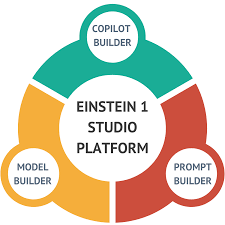
Salesforce Unveils Einstein 1: Enhancing Productivity and Fostering Customer Trust through Data, AI, and CRM-Einstein 1 Unveiled In September, Salesforce introduced the Einstein 1 Platform, a groundbreaking advancement that merges the capabilities of Salesforce Data Cloud with Einstein AI. This innovative platform harnesses a trusted metadata framework, enabling companies to effortlessly connect data and build AI-driven applications with minimal coding, thereby revolutionizing CRM experiences. Why it Matters: With customer data scattered across an average of 1,061 applications and limited integration, Salesforce addresses the challenge of fragmented customer data stacks. The metadata framework bridges this gap by offering a unified view of enterprise data, allowing organizations to customize user experiences across low-code platform services like Einstein for AI predictions, Flow for automation, and Lightning for user interfaces. Data Cloud Integration: The Einstein 1 Platform now seamlessly integrates with Data Cloud, a real-time hyperscale data engine processing 30 trillion transactions per month and harmonizing various data sources to create unified customer profiles. This integration unlocks siloed data, facilitating rich customer profiles and enabling new CRM experiences. Scalability and Automation: The platform supports thousands of metadata-enabled objects per customer and can handle up to 20,000 events per second. It enables the integration of massive data volumes from various sources, triggering flows and interactions with enterprise systems, including legacy ones. Analytics Offerings: Salesforce provides a suite of analytics solutions, including Reports and Dashboards, Tableau, CRM Analytics, and Marketing Cloud Reports. The common metadata schema and access model of the Einstein 1 Platform allow these solutions to operate on the same data, delivering comprehensive insights. Free Access to Data Cloud: Customers with Enterprise Edition or above can now access Data Cloud at no cost, empowering them to ingest, harmonize, and explore their data, thereby accelerating their AI journey. Einstein’s Conversational AI Assistant: The next generation of Einstein introduces Einstein Copilot, an out-of-the-box conversational AI assistant embedded in every Salesforce application. Copilot enhances productivity by responding to natural language queries with secure, proprietary company data from Data Cloud. It also proactively suggests actions and options to users. Einstein Copilot Studio: Companies can develop custom AI-powered apps with Einstein Copilot Studio, which facilitates the creation of AI models for various business tasks, making it adaptable for consumer-facing channels and messaging platforms. Einstein Copilot and Einstein Copilot Studio operate within the secure Einstein Trust Layer, ensuring data privacy and security. Salesforce’s Einstein 1 Platform represents a significant milestone in AI-powered CRM, providing companies with a seamless way to leverage AI, streamline processes, and deliver exceptional customer experiences. By Tectonic Salesforce Marketing Architect, Shannan Hearne Like Related Posts AI Automated Offers with Marketing Cloud Personalization AI-Powered Offers Elevate the relevance of each customer interaction on your website and app through Einstein Decisions. Driven by a Read more Salesforce OEM AppExchange Expanding its reach beyond CRM, Salesforce.com has launched a new service called AppExchange OEM Edition, aimed at non-CRM service providers. Read more The Salesforce Story In Marc Benioff’s own words How did salesforce.com grow from a start up in a rented apartment into the world’s Read more Salesforce Jigsaw Salesforce.com, a prominent figure in cloud computing, has finalized a deal to acquire Jigsaw, a wiki-style business contact database, for Read more

Read More

Salesforce Retiring Inbox

Salesforce Inbox features increase sales reps’ productivity on every email message, whether they’re on the go or at their desk. Inbox integrates your email and calendar in Salesforce so sales reps can manage their work more efficiently.  An Inbox license unlocks Inbox features in the Outlook integration, Gmail integration, and Lightning Experience, and also provides access to the Inbox mobile app. Salesforce has planned to discontinue the Inbox mobile app effective February 1, 2024. Post-retirement, users will be encouraged to utilize the desktop integrations with Outlook and Gmail to access the majority of features previously available in the Salesforce Inbox mobile application. Sell smarter with CRM in your email inbox. Create opportunities and update pipeline data from anywhere. Create context for your entire team with seamless email logging, and make sure deal-critical emails get the right response faster. Time is of the essence when you’re working on the go. Inbox helps you focus on what matters by enabling faster access to key information about prospects or customers. What does this change mean for me? The Salesforce Inbox mobile application will no longer work with the Spring ‘24 release. Users should leverage the functionality in the desktop application or the Salesforce mobile application. What action can I take? Ensure the Salesforce mobile application is installed to access Salesforce records. What happens if I don’t take action? You will lose access to Salesforce records on your mobile device using Salesforce Inbox mobile application. If you have more questions, open a case with support via Salesforce Help. To view all current and past retirements, see Salesforce Product & Feature Retirements. To read about the Salesforce approach to retirements, read our Product & Feature Retirement Philosophy. Like Related Posts AI Automated Offers with Marketing Cloud Personalization AI-Powered Offers Elevate the relevance of each customer interaction on your website and app through Einstein Decisions. Driven by a Read more Salesforce OEM AppExchange Expanding its reach beyond CRM, Salesforce.com has launched a new service called AppExchange OEM Edition, aimed at non-CRM service providers. Read more The Salesforce Story In Marc Benioff’s own words How did salesforce.com grow from a start up in a rented apartment into the world’s Read more Salesforce Jigsaw Salesforce.com, a prominent figure in cloud computing, has finalized a deal to acquire Jigsaw, a wiki-style business contact database, for Read more

Read More
Salesforce

Did Your Salesforce Product Name Change?

In the ever-changing ecosystem of Salesforce and enterprise technology in general, product capabilities continually evolve and adapt. This holds true for Salesforce’s product portfolio, where not only functionalities but also product names undergo transformations. Salesforce Product Name Change happens all the time. The ‘formerly known as’ guide presented here explains the reasons behind these name changes and provides insights into the evolution of specific Salesforce products. The rationale for altering product names often stems from the need to enhance clarity, align with product developments, or signify the introduction of something new or retired. While this creates significant challenges for the sales and marketing teams at Salesforce and its partners and customers, it also impacts things like your search for information on a product or resources for implementation. Salesforce Product Name Change Feel free to bookmark, save, or print this list. Data Cloud: Data Cloud, Salesforce’s Customer Data Platform (CDP), takes the evolutionary spotlight with its frequent name changes, reflecting the rapid evolution of this technology. From Customer 360 Audiences to Salesforce Genie and eventually settling as Data Cloud in 2023, each name adjustment signifies big advancements and adaptability, particularly with generative AI innovations. CRM Analytics: The journey of CRM Analytics, previously known as Edgespring, Wave, and Einstein Analytics, illustrates the consolidation of Salesforce’s analytics offerings. The final nomenclature, CRM Analytics, emerged in April 2022, reflecting a desire for consistency and immediate recognition. Salesforce Industries: The evolution from Vlocity to Salesforce Industries in 2020 demonstrates Salesforce’s recognition of the distinctive nature of industry-specific requirements in the platform. This transition resulted from the acquisition of Vlocity and the integration of its industry-specific CRMs into Salesforce’s family of product offerings. Account Engagement (formerly Pardot): The renaming of Pardot to Account Engagement emphasizes Salesforce’s commitment to consistency and immediate understanding within the expansive Marketing Cloud product suite. The new name aligns with the product’s focus on B2B marketing automation. One can hardly remember when the product was known as Exacttarget. Marketing Cloud Offerings: Several Marketing Cloud products underwent renaming in April 2022. Personalization (formerly Interaction Studio) and Marketing Cloud Intelligence (formerly Datorama) highlight Salesforce’s effort to streamline and provide clarity within its diverse marketing solutions. Quip: Quip, initially acquired in 2017, underwent various phases, from Salesforce Anywhere to Canvas within Slack. Despite a potential interim name as “Live Documents,” the product eventually reverted to the concise and distinct name Quip. One small example of the more things change, the more they become the same. Einstein GPT: The launch of Einstein GPT highlights Salesforce’s innovation in generative Artificial Intelligence tools, emphasizing its broader scope, including the Data Cloud as its foundation. Subsequent changes, such as the introduction of the Einstein 1 Platform and Copilot, indicate the platform’s ongoing evolution. Prompt Builder: The evolution from Prompt Studio to Prompt Builder within Copilot Studio shows Salesforce’s commitment to consistency in naming conventions across different parts of its platform. Salesforce Starter Edition: Originally introduced as Salesforce Easy and later renamed Salesforce Starter, this CRM edition targets small businesses, emphasizing guided onboarding and built-in AI capabilities. The product remains a great entry-level platform for smaller businesses looking to move to the Salesforce ecosystem. Work.com: While not a name change per se, the revival of Work.com for a different purpose reflects Salesforce’s adaptability. The legacy Work.com, focused on social performance management, contrasts with the contemporary Work.com, offering applications, resources, and content for creating resilient workplaces. What’s in a Name? Salesforce’s approach to name changes aims to signify innovation, clarity, and relevance to evolving functionalities. The transparent communication from Salesforce leadership underscores their commitment to keeping users informed about the reasons behind such changes. As the Salesforce ecosystem continues to evolve, names may change, but the intention remains rooted in highlighting what’s new and driving progress. Salesforce Product Name Change is just a part of the evolution of the ecosystem. Like1 Related Posts AI Automated Offers with Marketing Cloud Personalization AI-Powered Offers Elevate the relevance of each customer interaction on your website and app through Einstein Decisions. Driven by a Read more Salesforce OEM AppExchange Expanding its reach beyond CRM, Salesforce.com has launched a new service called AppExchange OEM Edition, aimed at non-CRM service providers. Read more The Salesforce Story In Marc Benioff’s own words How did salesforce.com grow from a start up in a rented apartment into the world’s Read more Salesforce Jigsaw Salesforce.com, a prominent figure in cloud computing, has finalized a deal to acquire Jigsaw, a wiki-style business contact database, for Read more

Read More
Get to Know Ampscript

Get to Know Ampscript Marketing Cloud

AMPscript is Marketing Cloud Engagement’s proprietary scripting language designed for advanced dynamic content in emails, landing pages, SMS, and push messages. While incorporating basic programming concepts, AMPscript is user-friendly and accessible even to non-coders, enabling the creation of highly personalized and dynamic content. Its purpose is to expand Marketing Cloud Engagement functionality to facilitate one-to-one personalized communications, offering marketers a powerful tool to enhance their digital campaigns. AMPscript Functionality: AMPscript serves several functions within Marketing Cloud Engagement, including: Categories and Examples of AMPscript Functionality: Scenarios Where AMPscript is Utilized: Get to Know Ampscript Language Components of AMPscript: AMPscript provides the flexibility to create highly dynamic emails and content by leveraging variables, operators, and conditional logic. The subsequent unit covers basic functions and syntax to aid users in initiating their journey with AMPscript. Like1 Related Posts AI Automated Offers with Marketing Cloud Personalization AI-Powered Offers Elevate the relevance of each customer interaction on your website and app through Einstein Decisions. Driven by a Read more Salesforce Data Studio Data Studio Overview Salesforce Data Studio is Salesforce’s premier solution for audience discovery, data acquisition, and data provisioning, offering access Read more How Travel Companies Are Using Big Data and Analytics In today’s hyper-competitive business world, travel and hospitality consumers have more choices than ever before. With hundreds of hotel chains Read more Integration of Salesforce Sales Cloud to Google Analytics 360 Announced In November 2017, Google unveiled a groundbreaking partnership with Salesforce, outlining their commitment to develop innovative integrations between Google Analytics Read more

Read More
gettectonic.com