

AI agent communication protocols are sets of rules that define how AI agents interact and exchange information within multi-agent systems. They provide a standardized way for agents to collaborate, share knowledge, and coordinate their actions to achieve complex goals. Key examples include Agent Communication Protocol (ACP), Model Context Protocol (MCP), and Agent2Agent (A2A).
Elaboration:
- Purpose: AI agent communication protocols are crucial for enabling agents to work together effectively in multi-agent systems. They address the need for agents to exchange information, coordinate actions, and share knowledge, which is essential for achieving complex tasks that require collaboration.
- Key Features:
- Standardization: Protocols establish a common language and framework for agents to interact, ensuring that they can communicate regardless of their implementation or underlying framework.
- Interoperability: They facilitate communication and collaboration between agents developed by different companies or using different tools and technologies.
- Security: Many protocols prioritize secure information exchange and coordinated actions.
- Scalability: They are designed to handle a large number of agents and complex interactions.
- Examples:
- Agent Communication Protocol (ACP): Focuses on standardizing interactions between agents that process natural language and rely on external models.
- Model Context Protocol (MCP): Provides a standardized way for AI agents to interact with external data sources and tools.
- Agent2Agent (A2A): An open protocol that allows AI agents to communicate with each other, securely exchange information, and coordinate actions on top of various enterprise platforms.
- Benefits: Using AI agent communication protocols can lead to more efficient, collaborative, and powerful AI systems. They can also simplify the development and deployment of multi-agent systems by providing a standardized framework for agent interaction.

Who is Salesforce? Here is their story in their own words. From our inception, we've proudly embraced the identity of Read more

Salesforce has unveiled a comprehensive analytics solution tailored for wealth managers, home office professionals, and retail bankers, merging its Financial Read more
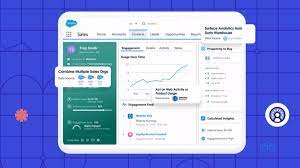
AI plays a crucial role in propensity score estimation as it can discern underlying patterns between treatments and confounding variables Read more

Salesforce Technology Services Integrator - Tectonic has successfully delivered Salesforce in a variety of industries including Public Sector, Hospitality, Manufacturing, Read more


