Einstein Insights Archives - gettectonic.com - Page 4
Einstein Opportunity Scoring Boosts Sales

Einstein Opportunity Scoring Boosts Sales

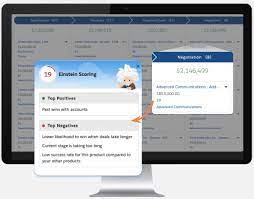
Your business thrives on seizing the right opportunities to drive more deals. Identifying these pivotal sales chances is crucial for prioritizing and capitalizing on prospects to secure successful outcomes. Enter Einstein Opportunity Scoring Boosts Sales. Enter Salesforce’s Einstein Opportunity Scoring system, designed to gauge the likelihood of an opportunity’s success, ranging from scores of 1 to 99, powered by artificial intelligence analysis. These scores offer a clear indication of each opportunity’s potential, empowering you to prioritize effectively and maximize your business’s deal closure rates. So, how does this innovative system function? In today’s digital age, Salesforce’s Einstein Opportunity Scoring leverages AI to analyze past opportunities, scrutinizing both closed-won and closed-lost instances to identify key factors influencing scores. These factors encompass various opportunity details, historical data, and product information, culminating in accurate scoring models refreshed every few hours to ensure precision. Moreover, you have the flexibility to customize your scoring model to align with specific business needs, modifying criteria by adding or removing records or custom fields. This adaptability extends further with regular scoring model updates every 10 days, reflecting the dynamic nature of the business landscape. Accessing this feature is simple—users with a Sales Cloud Einstein license can leverage Einstein Opportunity Scoring. And even if you lack this specific license or the Sales Cloud Einstein product suite, fret not, as this feature gradually rolls out to all customers, irrespective of license status. What advantages does Opportunity Scoring offer your business? Firstly, the opportunity scorecard presents a comprehensive overview of each deal, highlighting positive and negative influencing factors, aiding in focused deal analysis. Additionally, the system offers actionable suggestions for score improvement, ensuring optimal deal management. Furthermore, Opportunity Scoring aids in opportunity tracking, preventing deal slippage, and facilitating informed decision-making. Sales representatives can leverage low opportunity scores to seek guidance from sales managers, ultimately boosting deal conversion rates. To maximize the effectiveness of Einstein Opportunity Scoring, continuous improvement is key. Ensure proper opportunity segregation, timely entry of opportunities, and accurate data updates to enhance scoring accuracy and increase deal success rates. In instances where scores may not appear, reasons could range from initial feature setup time to opportunity closure or admin exclusion. Meeting specific data requirements, including closed-won and closed-lost opportunities, and regular updates, ensures robust scoring outcomes. In conclusion, harness the power of Salesforce’s Einstein Opportunity Scoring to unlock valuable insights and predictive capabilities, driving sales success and propelling your business forward. For further insights into Einstein Opportunity Scoring, explore our blogs section for comprehensive information. Like Related Posts Who is Salesforce? Who is Salesforce? Here is their story in their own words. From our inception, we’ve proudly embraced the identity of Read more Salesforce Marketing Cloud Transactional Emails Salesforce Marketing Cloud Transactional Emails are immediate, automated, non-promotional messages crucial to business operations and customer satisfaction, such as order Read more Salesforce Unites Einstein Analytics with Financial CRM Salesforce has unveiled a comprehensive analytics solution tailored for wealth managers, home office professionals, and retail bankers, merging its Financial Read more AI-Driven Propensity Scores AI plays a crucial role in propensity score estimation as it can discern underlying patterns between treatments and confounding variables Read more


Read More
Salesforce AI

Einstein Opportunity Scoring

Let Salesforce’s artificial intelligence help you and your team focus on the right opportunities so you can close more deals with Einstein Opportunity Scoring. Each opportunity in Salesforce is given a score, from 1 to 99, which is available on opportunity records and list views. Sales reps use these opportunity scores to identify top opportunities. If you use Collaborative Forecasts, opportunity scores are also available on the forecasts page. Plus, use scores with reports, Process Builder, and workflows. Einstein Opportunity Scoring is available to users with or without a Sales Cloud Einstein license. Opportunity scores tell you the likelihood that an opportunity will be closed won. For each opportunity score, Einstein shows the factors that have contributed the most to the score, both positively and negatively. Einstein uses your team’s past closed opportunities, won and lost, to create a predictive scoring model.  This model helps identify which opportunities are most likely to result in a win. Einstein Opportunity Scoring in Lightning In Lightning Experience, the score is shown on the compact layout of opportunity records or on the Details tab. Hover over the score to see a list of factors that contribute to the score. For example, a score could be relatively high because the opportunity is moving quickly through the stages compared to other opportunities. In Salesforce Classic, the score is shown on the record detail of opportunity records. The contributing factors are shown. You can add the Opportunity Score field to any of your opportunity list views. If you don’t see the score on public list views, ask your Salesforce admin to add it. In Lightning Experience, hover over the score in the list view to see the factors that contribute to the score. In Salesforce Classic, the contributing factors aren’t available from the list views. Instead, navigate to the opportunity record detail page. The opportunity score can be calculated using a variety of factors, such as market demand, competitive landscape, the potential ROI, and the resources required to pursue the opportunity. Einstein Opportunity Scoring provides an unbiased, objective prediction on the likelihood of a deal closing, based on data patterns from previously closed deals. Then, take the guesswork out of forecasting. Einstein Forecasting uses AI technology to bring more certainty and visibility to your forecasts. Improve forecasting accuracy, get forecast predictions, and track how sales teams are doing. What is the difference between Einstein Lead Scoring and opportunity scoring? Einstein Opportunity Scoring is part of Sales Cloud Einstein Scoring, which also includes Einstein Lead Scoring. In the hierarchy, Einstein Lead Scoring comes under Salesforce’s Sales Cloud Einstein model. Opportunity scores tell the salesperson the likelihood of an opportunity to be won. Like1 Related Posts Salesforce Marketing Cloud Transactional Emails Salesforce Marketing Cloud Transactional Emails are immediate, automated, non-promotional messages crucial to business operations and customer satisfaction, such as order Read more Salesforce Unites Einstein Analytics with Financial CRM Salesforce has unveiled a comprehensive analytics solution tailored for wealth managers, home office professionals, and retail bankers, merging its Financial Read more AI-Driven Propensity Scores AI plays a crucial role in propensity score estimation as it can discern underlying patterns between treatments and confounding variables Read more Asset Management Salesforce Can Salesforce do asset management? You can manage assets in Consumer Goods (desktop) and in the Consumer Goods offline mobile Read more

Read More

AI in Sales Enablement

automation, and personalization to enhance sales processes, increase customer engagement, and drive revenue growth. Companies are working with AI to improve analysis of all customer contact points to both identify leads and weigh lead quality. That includes ingesting information from web pages, email campaigns, phone calls, and much more.

Read More
Salesforce AI Einstein Next Best Action

Salesforce AI Einstein Next Best Action

Salesforce AI Einstein Next Best Action is a feature designed to identify the most effective actions available to agents and customers in real-time. Operating as a recommendation engine powered by extensive data analysis, it facilitates a dynamic workflow aimed at optimizing the customer pipeline. Tailoring recommendations to specific individuals at opportune moments is made effortless with Einstein Next Best Action. This Salesforce Platform feature enables the configuration of business rules and filters to present the most suitable course of action for any user. It offers a diverse range of recommended actions directly accessible within Salesforce, enhancing decision-making processes. Salesforce AI Einstein Next Best Action for Personalization Personalizing the customer experience: Next Best Action (NBA) empowers organizations to customize their interactions with customers based on individual preferences, behaviors, and historical data. This fosters a more personalized and pertinent experience, ultimately boosting customer satisfaction and fostering loyalty. What is Einstein’s Next Best Action for upselling? NBA continuously evaluates real-time customer data to deliver personalized recommendations for the most effective actions to take, whether it involves cross-selling, upselling, or addressing a customer concern. These recommendations consider various factors such as customer history, product usage, and behavioral patterns. Salesforce AI Einstein Next Best Action Cost Is Einstein Next Best Action free? Einstein Next Best Action operates on a usage-based entitlement model. Every organization receives a monthly allotment of free Next Best Action requests. If usage exceeds this free allowance or any purchased entitlements, Salesforce communicates with the organization to discuss additional options for their contract. Next Best Action is a paid Salesforce product but also offers free usage for up to 5000 requests each month. What is the Next Best Action strategy? Next-best-action marketing, also known as best next action or recommended action, is a customer-centric marketing approach that assesses various actions applicable to a specific customer and determines the most favorable course of action. It’s a subset of next-best-action decision-making focused on optimizing customer interactions. The Salesforce Einstein feature is being renamed Agentforce. Conent editingd June 2025, Shannan Hearne. Like1 Related Posts Who is Salesforce? Who is Salesforce? Here is their story in their own words. From our inception, we’ve proudly embraced the identity of Read more Salesforce Marketing Cloud Transactional Emails Salesforce Marketing Cloud Transactional Emails are immediate, automated, non-promotional messages crucial to business operations and customer satisfaction, such as order Read more Salesforce Unites Einstein Analytics with Financial CRM Salesforce has unveiled a comprehensive analytics solution tailored for wealth managers, home office professionals, and retail bankers, merging its Financial Read more AI-Driven Propensity Scores AI plays a crucial role in propensity score estimation as it can discern underlying patterns between treatments and confounding variables Read more
Read More
Financial Services Sector

Salesforce Unites Einstein Analytics with Financial CRM

Salesforce has unveiled a comprehensive analytics solution tailored for wealth managers, home office professionals, and retail bankers, merging its Financial Services Cloud with Einstein Analytics. This amalgamation, known as Einstein Analytics for Financial Services, harnesses Salesforce’s robust query engine and interpretation layers, fueled by the enterprise data analytics prowess acquired through BeyondCore in 2016. Salesforce Unites Einstein Analytics with Financial CRM This integrated platform – Salesforce Unites Einstein Analytics with Financial CRM – offers two prebuilt analytical models, meticulously designed to gauge client churn (identifying clients at risk of leaving) and the potential for clients to bring additional assets to a firm. These models, while prepackaged, can be tailored to specific needs, providing insights into future scenarios within the firm. Advisors can leverage these models to assess client characteristics against firm-wide benchmarks and receive actionable suggestions to enhance client retention. Home office professionals and data scientists have the option to delve into the underlying mathematical frameworks of these models, allowing for customization if required. While the tool offers enterprise-level benchmarking, firms can incorporate their own industry-specific data to run the models, ensuring tailored insights. This initiative builds upon previous endeavors integrating machine learning into Financial Services Cloud, which aimed to identify crucial life events and offer actionable recommendations. The decision to develop a more holistic solution stemmed from observing customer behavior and the growing trend of custom dashboard creation. By streamlining and prepackaging these insights, Salesforce aims to accelerate adoption and empower users to focus on their core tasks. Although customization remains a key feature, the platform aims to simplify adoption by providing templated solutions. However, the efficacy of insights depends on the quality of the ingested data, emphasizing the importance of data aggregation and normalization. Future updates are expected to introduce additional machine learning models focused on reducing heldaway assets and increasing assets under management. Developed in collaboration with diverse stakeholders, ranging from enterprise financial advisors to firms of varying sizes, the service is priced at $150 per user per month. It’s not a standalone product and requires integration with Financial Services Cloud or Einstein Analytics Plus. Like2 Related Posts Who is Salesforce? Who is Salesforce? Here is their story in their own words. From our inception, we’ve proudly embraced the identity of Read more Salesforce Marketing Cloud Transactional Emails Salesforce Marketing Cloud Transactional Emails are immediate, automated, non-promotional messages crucial to business operations and customer satisfaction, such as order Read more AI-Driven Propensity Scores AI plays a crucial role in propensity score estimation as it can discern underlying patterns between treatments and confounding variables Read more Tectonic’s Successful Salesforce Track Record Salesforce Technology Services Integrator – Tectonic has successfully delivered Salesforce in a variety of industries including Public Sector, Hospitality, Manufacturing, Read more

Read More
gettectonic.com