Salesforce Commerce Cloud Archives - gettectonic.com - Page 2
Unified Omnichannel Retail Platform

Unified Omnichannel Retail Platform

Salesforce has signed a definitive agreement to acquire PredictSpring, a leading unified omnichannel retail platform in the retail POS market. This acquisition aims to enhance Salesforce’s Customer 360 capabilities by integrating PredictSpring’s technology into physical retail environments. Jeff Amann, EVP of Salesforce Industries, emphasized the potential synergies: “Consumers demand a retail experience that seamlessly blends physical and digital shopping. The combined talent, resources, and innovation of Salesforce and PredictSpring will empower brands and retailers to drive frictionless and personalized engagement across all touchpoints.” PredictSpring’s modern POS software offers a fast checkout service centered around customer experience. It advocates for intelligent and user-friendly technology to revolutionize in-store operational efficiency. On its website, PredictSpring details how its unified retail platform enables consistent shopping experiences by incorporating features such as diverse payment options, inventory access, customer data management, and personalized recommendations. This alignment supports Salesforce’s 360-degree customer view, multi-tender payment management, and streamlined customer experiences. PredictSpring also provides Cloud POS solutions, enabling mobile transactions within stores, and includes features like Store Operations, Clienteling, Endless Aisle, and Store Fulfilment to enhance worker efficiency and shopper experience. Its Content Management System (CMS) allows retailers to create customizable experiences matching company branding, promotions, and loyalty programs. Already a Salesforce partner, PredictSpring has integrated Commerce Cloud and Service Cloud. Its customers include Movado, LoveSac, Steve Madden, Suitsupply, Bouclair, and Deceim. Nitin Mangtani, Founder & CEO of PredictSpring, expressed enthusiasm for the partnership: “We are excited about the future of PredictSpring and what this means for the retail industry at large. We’re energized by the opportunity to make an even greater impact on the future of shopping as part of Salesforce.” Why PredictSpring mPOS? Retailers have become acutely aware of the detrimental impact that outdated legacy point of sale systems are having on their brand’s reputation and overall customer satisfaction. The consequence is evident in prolonged queues and an unsatisfactory shopping experience. However, the remedy to this challenge presents itself in the form of a modern solution: the mobile point of sale (mPOS). Forward-looking brands are embracing the concept of prioritizing mobile-first POS systems as the natural progression, and the integration process is surprisingly straightforward – a seamless extension to existing point of sale infrastructure. Facilitate cash payments with a mobile point of sale, streamlining the payment experience. With the Modern POS, store devices are wirelessly connected to a cash drawer so payment can be taken from anywhere in-store, leading to a higher engagement and conversion rate with customers. According to research released by Capterra, “48% of retail workers prefer using mPOS”. PredictSpring True Omnichannel Replace the need for separate technology stacks with a completely unified retail platform. PredictSpring ensures in-store experiences benefit from the same functionality as online ones. This includes the same payment options, company-wide inventory access, customer data management and personalized product recommendations. With these capabilities, stores are empowered by a truly Modern POS that provides seamless cross-channel personalization, inventory management, order management and order fulfilment. Encompassing the power of a full Modern POS, the system offers brands 50+ 00TB modules of integrated technology, including mPOS, clienteling, order fulfilment, order management and inventory management features. The Modern POS platform provides store associates with a 360 view of customers and access to a global inventory, resulting in a fully integrated brand experience at every touchpoint. This way, when a customer visits in-store they can interact with the physical products and receive a high-touch service while also still benefiting from the same access to inventory, reviews and recommendations as an online customer. APIs and Integrations PredictSpring is built for integrations. With the REST API, developers can access and seamlessly integrate PredictSpring functionalities into existing operations as well as other third-party applications. The platform’s API layer allows data to be shared securely across channels while minimizing risk. With this added flexibility comes the ability to create individually personalized and completely seamless experiences both online and in-store. Leverage easy integrations to offer more payment options for global customer bases. PredictSpring supports integrations with third-party payment providers such as Adyen, Elavon and Stripe to simplify the collection of global payments. PredictSpring fully supports omni channel order management. Ensure orders arrive on time while incurring the lowest costs with item-level smart order routing and rules-based configurations. Leverage inventory, location and fulfilment data to ensure order routing is optimized for orders on all channels – whether in-store or eCommerce. Leverage enterprise-wide inventory data and integrate with third-party logistics platforms to maintain a full, real-time picture of inventory. As well as cycle counts and easy inventory adjustments, the platform supports integration with RFID to ensure accurate inventory data. As well as offering BOPIS and curbside pickup solutions, the PredictSpring platform natively supports find in store and ship to store capabilities to maximize fulfilment options. Pick and pack allows fulfilment from any location with orders also able to be routed from store to store. PredictSpring allows the device’s own camera to be used as a barcode scanner, with no additional hardware required, to ensure easy order tracking functions for associates. Salesforce Commerce Cloud With a secure integration with Salesforce Commerce Cloud, PredictSpring offers even more flexibility. Users can choose to utilize features as a combined offering or independently to suit requirements. With this partnership, PredictSpring customers can benefit from the deployment of key Salesforce features including, customer data insights, order management, cart synchronization, product information management and more. AI-Based Voice Assistant Natural Language Based Voice Assistant for Modern POS Retail in the digital era is a story of constantly rising customer expectations. These days, customers demand seamless omnichannel experiences, so they can shop whenever and wherever they want. They expect personalized in-person shopping experiences, instant gratification, and fast, reliable delivery options. The only way to continue to meet these expectations at scale without breaking the bank is to harness the capabilities of AI—which is where the PredictSpring Modern POS comes in. As Modern POS systems have evolved into a complete operating system for stores with functionality ranging from checkout, returns, store fulfillment, clienteling,

Read More
Salesforce in Ecommerce

Salesforce in Ecommerce

In Q2 2024, Salesforce Inc. filed 12 patents in the e-commerce sector, focusing on various innovative technologies. filed a patent for methods, systems, and computer program products that retrieve connection and membership information-these patents include methods for generating engagement recommendations for users in group-based communication platforms, techniques for generating user profile data based on user interactions, systems for recommending next actions based on behavior patterns, a recommendation service to boost historical electronic activity of products, and database systems that automatically generate records in a configurable and customizable manner. GlobalData’s comprehensive report on Salesforce provides an in-depth analysis of the company’s patenting strategy. You can purchase the report here. Despite these filings, Salesforce had no granted patents in e-commerce during Q2 2024. Recent Patent Salesforce in Ecommerce Application: Organizational Collaboration Connection Recommendations (Patent ID: US20240212005A1) Salesforce Inc. has filed a patent for methods, systems, and computer program products that retrieve connection and membership information of users in a group-based communication platform. This information is used to generate a graphical data structure comprising user nodes, communication channel nodes, group nodes, and edges representing the connections and memberships. Based on this data, the system creates engagement recommendations for users in one group to interact with users in another group. The method also includes generating communication connection strength values and group connection strength values to enhance the engagement recommendation process. The patent outlines a method for data processing that involves: The apparatus for data processing includes a processor, memory, and instructions to execute the method steps. Additionally, a non-transitory computer-readable medium is described, storing code for data processing with instructions for retrieving information, generating a graphical data structure, and providing engagement recommendations. The code also includes instructions for calculating communication and group connection strength values to improve engagement recommendations. Like Related Posts Who is Salesforce? Who is Salesforce? Here is their story in their own words. From our inception, we’ve proudly embraced the identity of Read more Salesforce Marketing Cloud Transactional Emails Salesforce Marketing Cloud Transactional Emails are immediate, automated, non-promotional messages crucial to business operations and customer satisfaction, such as order Read more Salesforce Unites Einstein Analytics with Financial CRM Salesforce has unveiled a comprehensive analytics solution tailored for wealth managers, home office professionals, and retail bankers, merging its Financial Read more AI-Driven Propensity Scores AI plays a crucial role in propensity score estimation as it can discern underlying patterns between treatments and confounding variables Read more

Read More
Digital Experience Enhancement Via Commerce and Content

Digital Experience Enhancement Via Commerce and Content

Businesses need robust solutions to enhance their digital experiences and streamline operations. Digital Experience Enhancement Via Commerce and Content can be addressed in multiple ways. When considering different systems, the approach to implementation and integration is crucial, especially with incumbent commerce platforms like Salesforce Commerce Cloud or Shopify Plus. The choice of integration method can significantly impact both customer engagement and operational efficiency. Traditional Monolithic Integration Approaches Traditional commerce systems typically fall into two categories: CMS/DXP-oriented and commerce-oriented platforms. Each has distinct characteristics but faces limitations inherent to a monolithic structure. CMS / DXP-oriented Platforms Platforms like Acquia Drupal, Adobe Experience Manager, and Sitecore, known for their strong digital experience capabilities, have evolved to include integrated and embedded commerce functionalities. Integrated Approach Platforms like Drupal Commerce for Acquia and Sitecore Experience Commerce exemplify an integrated approach where commerce capabilities are built directly into the DXP. This allows for a unified administrative and development experience, enabling business users to manage both content and commerce features seamlessly. While this approach offers benefits, it also presents challenges. The primary issue is adaptability. Commerce capabilities tightly coupled with the CMS can make customizing or scaling specific functionalities complex and restrictive. Additionally, without dedicated investment in the commerce platform as a standalone solution, it may lack many capabilities required for effective enterprise deployments. Performance issues can also arise as the system scales, with content management and commerce functionalities managed through the same monolithic architecture, leading to slower website performance and longer load times under heavy traffic conditions. Commerce Behind Content Some businesses use an embedded approach, integrating standalone or home-grown commerce capabilities, product information, and pricing data through batch or event-based synchronizations. This method allows the CMS’s presentation layer to dynamically display product information and transactions while maintaining core content management functionality. However, this approach also has downsides, impacting system efficiency and customer experience. Batch or event-based synchronizations can lead to data update delays, causing discrepancies between actual inventory and what’s displayed to customers. This can frustrate customers due to order issues like out-of-stock items appearing available. Additionally, the embedded method often requires complex integrations and middleware to sync data between the commerce platform and the CMS, increasing technical issues and complicating troubleshooting. This approach may also limit dynamic handling of commerce data within the CMS, restricting advanced features like real-time personalization and dynamic pricing. Maintaining such a system can require significant developer resources, leading to higher operational costs. Commerce-Oriented Platforms Commerce-centric platforms such as Salesforce Commerce Cloud and Shopify Plus focus on delivering comprehensive commerce solutions. These platforms have adapted to integrate with other technologies like headless CMS and search and product discovery tools to enable brands to deliver improved digital experiences. Content Behind Commerce Even when incorporating a headless CMS for easier content creation and management, commerce-centric platforms often feed this content back into their own presentation layer. This has been a popular approach for Salesforce Commerce Cloud (formerly Demandware) for over a decade. While this setup may improve operational efficiencies, it can limit overall performance and customer experience due to potential bottlenecks at the commerce platform’s presentation layer. Moreover, it does not provide the performance or customer experience benefits of a modern headless commerce frontend. Cartridges, Modules, and Plugins Using cartridges, modules, or plugins for functionalities like search and product discovery can enhance the onsite customer experience. However, these integrations can face limitations in supporting more complex capabilities, such as combining content from a headless CMS, product information from a PIM, and product data from the commerce platform, or managing merchandising that accounts for inventory levels across various distribution centers and store fulfillment locations. These limitations can restrict the ability to fully leverage integrated data to enhance customer interactions and operational insights. Digital Experience Enhancement Via Commerce and Content, as businesses seek to enhance their digital experiences and streamline operations, choosing the right integration approach for their commerce platform is critical. Balancing the benefits and challenges of traditional monolithic and commerce-oriented platforms will be key to optimizing customer engagement and operational efficiency. Like Related Posts Who is Salesforce? Who is Salesforce? Here is their story in their own words. From our inception, we’ve proudly embraced the identity of Read more Tectonic’s Successful Salesforce Track Record Salesforce Technology Services Integrator – Tectonic has successfully delivered Salesforce in a variety of industries including Public Sector, Hospitality, Manufacturing, Read more Asset Management Salesforce Can Salesforce do asset management? You can manage assets in Consumer Goods (desktop) and in the Consumer Goods offline mobile Read more What is Salesforce? Salesforce is cloud-based CRM software. It makes it easier for companies to find more prospects, close more deals, and connect Read more

Read More
Salesforce Commerce Cloud and Einstein Copilot Capabilities

Salesforce Commerce Cloud and Einstein Copilot Capabilities

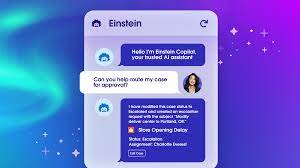
Salesforce Enhances Commerce Cloud and Einstein Copilot Salesforce has announced a double whammy of upgrades to its Commerce Cloud and Einstein Copilot solutions, aiming to supercharge customer service and experience offerings for merchants. And yes, they’re pulling out all the stops – think of it as giving your online store a superhero cape and a sidekick with a PhD in customer satisfaction. Salesforce Commerce Cloud and Einstein Copilot Capabilities. Enhancements to Commerce Cloud Commerce Cloud is getting three major innovations designed to help businesses create more sophisticated commerce sites, boost personalization, and drive revenue growth. Salesforce promises to tackle rising customer expectations by providing a seamless, integrated experience across all channels. In other words, they’re turning your website into a mind-reading wizard, minus the beard and wand. But probably wearing a cool purple cape with stars. According to Michael Affronti, GM and SVP of Commerce Cloud, these new features will enable Salesforce’s customers to deliver superior shopping experiences: “Commerce companies are looking to architect high-caliber ecommerce sites that can swiftly adapt to changing customer expectations and continue to foster strong customer relationships. With the combined power of data, AI, and CRM, Commerce Cloud gives brands the choice of the right tool so they can build superior shopping experiences their way.” New Commerce Cloud Capabilities Einstein Copilot Advancements Salesforce is pulling out the big AI guns, leveraging generative AI (GenAI) to enhance Einstein Copilot with new marketing and merchandising capabilities alongside its traditional sales and service functions. It’s like your old assistant got a brain transplant and now has the IQ of Einstein, the charm of James Bond, and the work ethic of a coffee-fueled startup founder. Ariel Kelman, President and CMO of Salesforce, emphasized the importance of these advancements: “Marketing and commerce leaders need a trusted advisor to help them tap into the promise of generative AI. With the Einstein 1 Platform we’re giving organizations the power to unify all of their data on one trusted platform. This is the key to getting results from generative AI that are actually useful in driving your business forward.” Key Features of Einstein 1 for Marketing and Commerce Expanding Partnerships and Enhancing AI and Data Offerings In addition to these product enhancements, Salesforce has expanded its partnership with IBM to improve AI and data offerings. The collaboration aims to merge IBM’s watsonx.ai platform with Salesforce’s Einstein 1 software, providing customers with the ability to make data-driven decisions and access actions directly within their workflows. It’s like pairing up Batman and Superman to fight the evil forces of inefficiency and bad data. The partnership includes bidirectional data integration, flexible large language models (LLMs), prebuilt CRM solutions, and a focus on responsible AI development. IBM will also join Salesforce’s Zero Copy Partner Network, ensuring that data moves as smoothly as butter on hot toast. Salesforce Commerce Cloud and Einstein Copilot Capabilities These enhancements and partnerships underline Salesforce’s commitment to providing innovative solutions that enhance customer experiences and drive business growth, all while making sure your digital commerce experience is smoother than a jazz saxophone solo. Like1 Related Posts Who is Salesforce? Who is Salesforce? Here is their story in their own words. From our inception, we’ve proudly embraced the identity of Read more Salesforce Marketing Cloud Transactional Emails Salesforce Marketing Cloud Transactional Emails are immediate, automated, non-promotional messages crucial to business operations and customer satisfaction, such as order Read more Salesforce Unites Einstein Analytics with Financial CRM Salesforce has unveiled a comprehensive analytics solution tailored for wealth managers, home office professionals, and retail bankers, merging its Financial Read more AI-Driven Propensity Scores AI plays a crucial role in propensity score estimation as it can discern underlying patterns between treatments and confounding variables Read more

Read More
Salesforce and Loop

Salesforce and Loop

Loop, the premier returns and reverse logistics platform, has extended its acclaimed returns management software to merchants using Salesforce Commerce Cloud, marking a significant expansion beyond Shopify’s realm. This integration offers enterprise merchants on Salesforce Commerce Cloud access to Loop’s renowned returns management solution, effectively easing the complexities associated with customer returns. Merchants leveraging Salesforce Commerce Cloud will now have the advantage of Loop’s user-friendly returns management software, facilitating streamlined reverse logistics processes. This integration aims to bolster profit margins by reducing the costs associated with returns and providing customers with a modern, exchange-centric returns experience. Key benefits for merchants include: Jonathan Poma, CEO of Loop, expressed enthusiasm about extending Loop’s acclaimed returns solution to Salesforce Commerce Cloud merchants, citing the increasing demand from brands outside the Shopify ecosystem. He highlighted Loop’s commitment to delivering a seamless experience characterized by ease of use, operational efficiency, and cost savings. Loop’s integration with Salesforce Commerce Cloud enables merchants to effortlessly manage item exchanges, synchronize order data, automate returns processes, leverage analytics for continuous improvement, and more. Merchants operating on Salesforce Commerce Cloud can explore early adoption opportunities by scheduling a demo with Loop’s team. Loop will also be present at Salesforce Connections 2024 in Chicago, inviting interested parties to schedule meetings to discover how Loop can streamline reverse logistics processes and reduce costs associated with returns. About Loop: Loop is a leading post-purchase platform specializing in returns, exchanges, and reverse logistics for over 3,500 renowned brands worldwide. With innovative features like Workflows, Instant Exchanges, Shop Now, and Bonus Credit, Loop empowers brands to unlock cost savings, enhance customer lifetime value, and retain more revenue. Having processed over 40 million returns to date, Loop continues to redefine post-purchase experiences. Learn more at www.loopreturns.com. Like Related Posts Who is Salesforce? Who is Salesforce? Here is their story in their own words. From our inception, we’ve proudly embraced the identity of Read more Salesforce Marketing Cloud Transactional Emails Salesforce Marketing Cloud Transactional Emails are immediate, automated, non-promotional messages crucial to business operations and customer satisfaction, such as order Read more Salesforce Unites Einstein Analytics with Financial CRM Salesforce has unveiled a comprehensive analytics solution tailored for wealth managers, home office professionals, and retail bankers, merging its Financial Read more AI-Driven Propensity Scores AI plays a crucial role in propensity score estimation as it can discern underlying patterns between treatments and confounding variables Read more

Read More
Salesforce Success Story

Case Study: Manufacturing – Sales/ Service/Revenue/Commerce/Experience Clouds

After doing their initial Sales Cloud implementation and SAP integration over 12 years ago, this company was only leveraging Salesforce in a basic capacity, being a predominantly SAP and Microsoft shop. Fast forward to about a year ago, with a change in leadership, Salesforce became the desired platform to build and expand on. With the need to support multiple lines of business, provide more accurate forecasting and quoting and close the gap between sales and supply chain there was a lot to tackle both immediately and long term.

Read More
Salesforce Integrated Ecommerce Storefronts

Salesforce eCommerce & Commerce Cloud

Salesforce eCommerce & Commerce Cloud: Everything You Need to Know What is Salesforce eCommerce? Salesforce eCommerce, powered by Salesforce Commerce Cloud, is a comprehensive, cloud-based solution that helps businesses scale, create intelligent shopping experiences, and drive revenue growth. A Unified Digital Commerce Platform Salesforce Commerce Cloud encompasses: With Commerce Cloud, businesses can build and manage their entire eCommerce operation—from responsive storefronts to complex logistics like shipping and inventory tracking. Key Features of Salesforce Commerce Cloud Commerce Cloud Digital Create fully responsive, omnichannel eCommerce websites with advanced search capabilities, secure mobile payments, and personalized customer journeys. Storefront Reference Architecture (SFRA) Launch professional eCommerce sites quickly using best-in-class tools, pre-built wireframes, and integrated digital technologies for easy customization and maintenance. Endless Aisle Enhance the shopping experience with pre-ordering, wishlists, back-in-stock alerts, and exclusive online promotions—reducing lost sales and improving inventory management. Commerce Portals Build account portals, loyalty programs, and customer communities to foster long-term engagement and brand loyalty. Order Management Optimize order processing with automated payments, easy returns, real-time order tracking, and a seamless purchasing experience. Intuitive Platform Leverage no-code tools, commerce APIs, and built-in templates to design eCommerce experiences without deep technical expertise. Unified Commerce Deliver a seamless shopping experience across digital and physical channels, ensuring consistency and convenience for customers. How Salesforce eCommerce Benefits Your Business AI-Powered Predictive Intelligence Commerce Cloud integrates Einstein AI, offering:✅ Personalized product recommendations✅ Automated marketing insights✅ Cart abandonment reduction✅ Smart search enhancements Personalized Customer Journeys Tailor every interaction with AI-driven recommendations, customized content, and omnichannel engagement strategies. Seamless Multi-Storefront Management Easily manage multiple brands, international storefronts, and localized experiences with multi-currency, multi-language, and cross-border commerce capabilities. Scalability Without Limits Handle high transaction volumes, traffic spikes, and expansive product catalogs with ease as your business grows. 24/7 Support & Strategic Guidance Benefit from Salesforce’s extensive support ecosystem, including advisory services, webinars, and AI-driven best practices to accelerate success. Salesforce Commerce Cloud + Marketing Cloud: The Perfect Pairing Salesforce eCommerce seamlessly integrates with Salesforce Marketing Cloud, enabling businesses to:🔹 Automate retargeting and abandoned cart recovery campaigns🔹 Personalize customer engagement at scale🔹 Track and analyze customer behaviors in real-time🔹 Enhance product recommendations with AI-powered insights By combining Commerce Cloud and Marketing Cloud, businesses can craft end-to-end, data-driven shopping experiences that drive higher conversion rates and customer satisfaction. Ready to Transform Your eCommerce Strategy? Whether launching a new online store or optimizing an established brand, Salesforce eCommerce offers limitless possibilities. Let’s explore how Commerce Cloud, AI, and automation can elevate your business. Like Related Posts Who is Salesforce? Who is Salesforce? Here is their story in their own words. From our inception, we’ve proudly embraced the identity of Read more Salesforce Marketing Cloud Transactional Emails Salesforce Marketing Cloud Transactional Emails are immediate, automated, non-promotional messages crucial to business operations and customer satisfaction, such as order Read more Salesforce Unites Einstein Analytics with Financial CRM Salesforce has unveiled a comprehensive analytics solution tailored for wealth managers, home office professionals, and retail bankers, merging its Financial Read more AI-Driven Propensity Scores AI plays a crucial role in propensity score estimation as it can discern underlying patterns between treatments and confounding variables Read more

Read More
Salesforce Commerce Cloud Ecommerce Implementation Tasks and Roles

Ecommerce Implementation Tasks and Roles

Ecommerce Implementation Tasks and Roles By Tectonic Salesforce Marketing Consultant, Shannan Hearne To effectively establish, improve, or expand your ecommerce presence, it is crucial to conduct a thorough assessment of the tasks and teams involved in achieving your business objectives. Whether you are embarking on a direct-to-consumer journey or managing an established organization with plans for new initiatives, the fundamental roles and functions of ecommerce remain consistent. In some cases, putting the perfect ecommerce implementation team together requires including a Salesforce partner like Tectonic to fill all the roles. Omnichannel (a term used in ecommerce and retail to describe a strategy aimed at providing seamless shopping experiences across all channels) strategies continue to be among the most compelling for brands, yet turning them into a reality poses challenges. With an estimated 90% of all purchases projected to happen online by 2040, the readiness of your business becomes a crucial question. Tectonic, as your Salesforce implementation partner, can help ensure your ecommerce readiness. As customers increasingly utilize multiple channels for purchases, expecting seamless experiences regardless of engagement location, omnichannel commerce holds more promise than ever. If you hope to promote an online store, the key lies in how you implement your ecommerce platform from the outset. From design to architecture to deployment, each step involves critical decisions impacting long-term success. Tectonic has the ability to help you make those critical decisions as well as a powerful pre-implementation discovery process to keep your ecommerce project moving forward in the right direction. Whether launching a new ecommerce business or migrating to a new ecommerce platform, the actions you take now will shape your future success. This step in digital transformation, a journey where there is no single case study for success among the estimated 26 million ecommerce sites in the world, is critical. Your roadmap will determine your potential for success or failure. Failure often stems from poor upfront planning, lacking a full understanding of the market, customers, and your own organization. Thoughtfulness in ecommerce implementation sets the stage for success. I once worked for a boss who’s mantra was “prior planning prevents poor performance”. In e-commerce implementations this rings true. There is not a guaranteed cookie cutter recipe for success. However, planning and putting into place the proper team is key. Key players in a smooth ecommerce implementation include: Scaling an ecommerce store requires thorough preparation, execution, and optimization. Brands gearing up to boost omnichannel experiences and derive value should establish goals, create a comprehensive plan, and align technology, product initiatives, and marketing strategies. Development teams implement features outlined in the roadmap, while UX and design teams ensure a seamless buyer experience. Marketing and merchandising strategies attract customers and foster loyalty, while development operations optimize backend processes for efficiency. Ecommerce implementation tasks and roles need to be fully staffed for success. Ecommerce Implementation Tasks and Roles Understanding how your ecommerce roadmap influences key activities and roles is crucial to grasp its impact on your commerce operations. Identifying ecommerce features aligned with your business goals and prioritizing them for development is critical. At Tectonic we put a huge effort into identifying your goals and creating a road map for your success. Depending on your development team’s skills and capacity, you may choose a minimum viable product (MVP) approach or a more aggressive strategy that emphasizes innovation and working with a Salesforce partner. Building teams supporting ecommerce success involves essential roles such as marketers, merchandisers, and UX designers. Mapping out necessary tasks and responsibilities within your ecommerce operations helps identify gaps in your team structure. This analysis enables informed decisions on hiring, reskilling, or engaging external experts from Tectonic to fill these gaps effectively. A successful ecommerce strategy requires expertise in user interface design, web development, search engine optimization, marketing, and a modern design understanding. Tectonic can supply manpower and training to upskill your team and organization for success with your ecommerce implementation. Like Related Posts Who is Salesforce? Who is Salesforce? Here is their story in their own words. From our inception, we’ve proudly embraced the identity of Read more Salesforce Marketing Cloud Transactional Emails Salesforce Marketing Cloud Transactional Emails are immediate, automated, non-promotional messages crucial to business operations and customer satisfaction, such as order Read more Salesforce Unites Einstein Analytics with Financial CRM Salesforce has unveiled a comprehensive analytics solution tailored for wealth managers, home office professionals, and retail bankers, merging its Financial Read more AI-Driven Propensity Scores AI plays a crucial role in propensity score estimation as it can discern underlying patterns between treatments and confounding variables Read more

Read More
Salesforce Success Story

Case Study: Google Cloud and Tableau Ecommerce Success

An industry leader in lifesciences research and ecommerce, is tasked with integrating recent acquisitions, standardizing processes, and improving marketing return-on-investment. Ecommerce company moves to the cloud and adopts Google Cloud and Tableau to improve sales and operational efficiency. Google Cloud and Tableau Ecommerce Success to the rescue. Industry: Lifesciences and Biotechnology Research Problem: Leadership requested help driving an improved culture of proactive decision-making, rather than reactive. Implemented : Our solution? Results: Salesforce offers customized solutions for the ecommerce industry, assisting companies in this field to provide outstanding customer experiences, optimize workflows, and spur growth and brand loyalty. Salesforce offers digital transformation technology for life sciences, ecommerce, and biotechnology research industries. If you are considering a Salesforce health and life sciences implementation, contact Tectonic today. Like2 Related Posts Who is Salesforce? Who is Salesforce? Here is their story in their own words. From our inception, we’ve proudly embraced the identity of Read more Salesforce Marketing Cloud Transactional Emails Salesforce Marketing Cloud Transactional Emails are immediate, automated, non-promotional messages crucial to business operations and customer satisfaction, such as order Read more Salesforce Unites Einstein Analytics with Financial CRM Salesforce has unveiled a comprehensive analytics solution tailored for wealth managers, home office professionals, and retail bankers, merging its Financial Read more AI-Driven Propensity Scores AI plays a crucial role in propensity score estimation as it can discern underlying patterns between treatments and confounding variables Read more

Read More
Salesforce Experience Cloud

Nonprofit with Salesforce Experience Cloud

Transform Your Nonprofit with Salesforce Experience Cloud: A Digital Storefront for Engagement Think of Salesforce Experience Cloud as your Nonprofit’s digital storefront—always open, always inviting. This powerful Digital Experience Platform (DXP) enables you to create custom portals, communities, and hubs where donors, volunteers, and beneficiaries can seamlessly connect with your organization. Instead of juggling endless emails and spreadsheets, Experience Cloud centralizes interactions, making them self-service, intuitive, and engaging. With nonprofit-specific features, you can build customized, branded experiences without heavy development work. Here’s what makes Experience Cloud a game-changer: ✅ Drag-and-drop site builder for effortless customization✅ Prebuilt templates & Lightning components for quick deployment✅ Mobile Publisher for consistent branding across mobile apps✅ Built-in content management system (CMS)✅ Personalization tools like audience targeting & role-based access✅ Einstein AI-powered chatbots for instant responses✅ Gamification with badges & leaderboards✅ Google Analytics 4 integration for engagement insights✅ Advanced security with Lightning Locker & Clickjack protection …and much more. 🔍 Nonprofit Solutions You Can Build with Salesforce Experience Cloud 1️⃣ Program Applications & Intake Portals Managing program applications can be overwhelming without a structured system. Experience Cloud allows Nonprofits to create a self-service portal where applicants can submit forms, track status updates, and receive automated notifications—eliminating paper-based processes and endless email chains. With Dynamic Forms and Flow Builder, applications stay structured while automation accelerates approvals. Plus, since everything syncs to the Nonprofit Success Pack (NPSP), you’ll always have a real-time view of applicants and program impact. 2️⃣ Volunteer Portals Managing volunteers shouldn’t feel like a full-time job. With a Volunteer Portal, people can sign up, pick shifts, and track their hours—all without back-and-forth emails. Features like automated background checks and approval workflows ensure smooth operations. Meanwhile, Experience Cloud’s Chatter integration fosters engagement, helping you track who’s active, who’s disengaged, and who might need a little encouragement. 3️⃣ Community Partner Portals Nonprofits thrive on partnerships, and a Community Partner Portal keeps corporate sponsors, local businesses, and community groups connected. With this portal, partners can log in, access shared resources, submit funding applications, and track joint projects—all from one secure platform. Role-based access ensures that sensitive data stays protected while collaboration remains seamless. 4️⃣ Membership Portals If your nonprofit has a membership program, Experience Cloud helps you build a Member Portal where users can renew memberships, update information, and access exclusive content. Want to boost engagement? Introduce gamification with badges, leaderboards, and personalized event recommendations. Since everything is integrated with Salesforce CRM, you’ll gain real-time insights into member activity to keep engagement levels high. 5️⃣ Grant Management Portals Grant applications shouldn’t feel like a never-ending email thread. With Experience Cloud, you can create a Grant Management Portal where organizations apply for funding, track application progress, and submit reports—all in one place. Einstein AI can even prioritize applications based on predefined criteria, accelerating the review process. Grantors, in turn, can access real-time funding reports—enhancing transparency and trust. 6️⃣ E-Commerce & Donation Portals Looking to sell nonprofit merchandise or accept donations online? Experience Cloud seamlessly integrates with Salesforce Commerce Cloud, allowing you to build an e-commerce storefront for hassle-free transactions. Supporters can:💳 Make one-time or recurring donations🛍️ Purchase branded merchandise📜 Track donation history & receive personalized thank-you messages For secure transactions and easy donor tracking, you can integrate Stripe, PayPal, or other payment processors directly into your portal. 7️⃣ Voter Registration Portals If your nonprofit promotes civic engagement, Experience Cloud can power a Voter Registration Portal where users can check registration status, sign up to vote, and receive election reminders. With geolocation tools, voters can find polling places instantly, while Marketing Cloud integration allows you to send timely voter updates—ensuring higher participation in the democratic process. Implementing Salesforce Experience Cloud for Nonprofits Which Approach is Right for Your Nonprofit? Your ideal Experience Cloud implementation depends on your current CRM, budget, and long-term strategy. 1️⃣ Standalone Experience Cloud Implementation If your nonprofit already uses Salesforce CRM (but not NPSP), you can still implement Experience Cloud independently to create portals, volunteer hubs, and dashboards while maintaining your existing CRM as the system of record. Considerations:🔹 Custom Configuration – You’ll need to set up nonprofit-specific objects & automation.🔹 Permissions & Access – Well-structured security settings are crucial.🔹 CRM Integration – If using a non-Salesforce CRM, API integrations (e.g., MuleSoft, Zapier) will be required. This option is best for nonprofits that want external-facing engagement tools without fully shifting to the Salesforce Nonprofit ecosystem. 2️⃣ Experience Cloud + Nonprofit Cloud / NPSP For nonprofits already using Salesforce Nonprofit Cloud or NPSP, Experience Cloud becomes an extension of your engagement strategy. 🔹 Real-time donor, volunteer, and grant data sharing🔹 Prebuilt nonprofit features (fundraising, donor management, program tracking)🔹 Automation & AI-powered engagement 3️⃣ Experience Cloud + Third-Party Nonprofit CRMs Already using a third-party nonprofit CRM (like Raiser’s Edge NXT, Neon One, or DonorPerfect)? You can still leverage Experience Cloud, but strong integration is key. 🔹 Experience Cloud powers your donor, volunteer, or program portal🔹 API-based sync required for real-time data exchange🔹 Tools like MuleSoft or Zapier help bridge data gaps This approach is ideal for nonprofits wanting the flexibility of Experience Cloud without migrating their backend to Salesforce. Final Thought: Making Experience Cloud Work for Your Nonprofit No matter your approach, Salesforce Experience Cloud is a powerful tool to drive engagement and efficiency for nonprofits. However, successful implementation requires a well-thought-out strategy. Need expert guidance? A Salesforce implementation partner can help tailor Experience Cloud to fit your unique nonprofit needs, ensuring your digital storefront delivers maximum impact. Like Related Posts Who is Salesforce? Who is Salesforce? Here is their story in their own words. From our inception, we’ve proudly embraced the identity of Read more Salesforce Marketing Cloud Transactional Emails Salesforce Marketing Cloud Transactional Emails are immediate, automated, non-promotional messages crucial to business operations and customer satisfaction, such as order Read more Salesforce Unites Einstein Analytics with Financial CRM Salesforce has unveiled a comprehensive analytics solution tailored for wealth managers, home office professionals, and retail bankers, merging its Financial Read more AI-Driven Propensity Scores AI plays

Read More
Salesforce Commerce Cloud Ecommerce Implementation Tasks and Roles

Commerce Cloud Explained

What is Salesforce commerce cloud? Salesforce Commerce Cloud is a cloud-based suite of products that enable e-commerce businesses to set up e-commerce sites, drive more automation and provide customers with seamless shopping experiences. Commerce enables retailers to swiftly establish an online presence, leveraging the capabilities of Salesforce CMS. Equipped with numerous out-of-the-box features, it caters to both B2C and B2B retailers, facilitating the creation of exceptional online experiences. Commerce Cloud encompasses standard Salesforce features, exhibiting mobile readiness, seamless integration with Service Cloud, and compatibility with other Salesforce products. Additionally, it incorporates Einstein AI-enabled functionalities. Noteworthy examples of SFDC Commerce Cloud implementation can be observed through prominent Salesforce customers like Puma and Adidas. The platform offers two variants, each catering to distinct customer focuses: Scale commerce with confidence on the most complete platform. Simplify everything from setting up your digital storefront to driving sales on any customer touchpoint with AI and automation powered by the Einstein 1 Platform. Salesforce Commerce capabilities enable you to cover more touchpoints with your customers, deliver personalized services to them, launch in new markets faster, and boost conversions. It helps you make analytics-based decisions to provide truly unforgettable services to your shoppers. Like1 Related Posts Who is Salesforce? Who is Salesforce? Here is their story in their own words. From our inception, we’ve proudly embraced the identity of Read more Salesforce Marketing Cloud Transactional Emails Salesforce Marketing Cloud Transactional Emails are immediate, automated, non-promotional messages crucial to business operations and customer satisfaction, such as order Read more Salesforce Unites Einstein Analytics with Financial CRM Salesforce has unveiled a comprehensive analytics solution tailored for wealth managers, home office professionals, and retail bankers, merging its Financial Read more AI-Driven Propensity Scores AI plays a crucial role in propensity score estimation as it can discern underlying patterns between treatments and confounding variables Read more

Read More
gettectonic.com