Salesforce CPQ Archives - gettectonic.com - Page 2
Salesforce Success Story

Case Study: Higher Education Software Provider-Higher Education Intelligence-Salesforce Sales/Service/Experience Clouds

Salesforce in a Higher Education Intelligence Solutions Company Leveraging Salesforce to Support Acquisition and High Organic Growth Industry: Educational Technology Sales Cloud Service Cloud Experience Cloud salesforce higher ed software provider A Higher Education Software Provider, formed via multiple acquisitions, services more than 1,700 higher education institutions with educational solutions for assessment and accreditation planning, learning outcome, ePortfolios, faculty activity reporting, course evaluation and institutional surveys, and curriculum and catalog management.  Salesforce higher ed software provider. Salesforce Higher Ed Software Provider PROBLEM SOLUTION RESULT Like Related Posts Salesforce Marketing Cloud Transactional Emails Salesforce Marketing Cloud Transactional Emails are immediate, automated, non-promotional messages crucial to business operations and customer satisfaction, such as order Read more Asset Management Salesforce Can Salesforce do asset management? You can manage assets in Consumer Goods (desktop) and in the Consumer Goods offline mobile Read more Lookup Relationship in Salesforce What is Lookup relationship in Salesforce? Salesforce’s lookup relationships is a significant capability that allows users to connect two objects Read more Listview in Salesforce What is a listview in Salesforce? A list view is a filtered list of records where you can view records Read more

Read More
Salesforce Asset Managment

Create an Asset in Salesforce Asset Management

Assets, such as refrigerators or freezers strategically placed at retail stores or customer locations, serve to enhance sales. As the owner of these assets, you bear responsibility for their maintenance, repair, and required services. Efficient asset management not only reduces customer complaints but also elevates your brand value. Active tracking of asset conditions enables better budgeting, minimizes losses, and ensures employee safety. Create an Asset in Salesforce Asset Management. Assets also may be not for sale items like vehicles, MRIs, or computers etc that you use in the company but have to manage like an asset. The serial number of an asset serves as its unique identifier, generated based on the asset template and type. Asset templates outline generic characteristics, including an asset type with specific details. Admins create templates related to products, ensuring alignment between the asset type and product type. For instance, an asset template like “Single Door Fridge” can be created, with an asset type named “Single Door Fridge in Red.” To facilitate asset service requests, a field service team can utilize customer task templates for tasks such as repair, maintenance, retirement, and replacement. Assets are associated with a sales organization, and the sales org of an asset must match the customer’s sales org. Assets can also be linked to an account and its associated Point of Sales (POS), with distinctions outlined between assets and POS. Create an Asset in Salesforce Asset Management Creating an asset record involves defining details like manufacturer and manufacturing year, with the addition of a serial number or tag for easy identification. Assets can be associated with an account and its related point of sale, or linked to a product to enable sales representatives to place orders. To initiate tracking of products sold to customers, customization of asset page layouts and editing object permissions is recommended. Asset types, treated as Product records, can be created for classification purposes. Effective asset lifecycle management, encompassing planning, acquisition, utilization, maintenance, and disposal, is crucial for organizational efficiency. In Salesforce, assets are created through Salesforce CPQ by selecting “Contracted” on an opportunity or order. The asset creation process varies based on the account’s renewal model and the asset conversion field’s value on the product contracted. Salesforce CPQ, or Configure Price Quote software, empowers sales reps to generate quotes with customized product and pricing configurations based on buyer needs. It synchronizes all interactions with a deal’s documents within the Salesforce CRM. Salesforce asset management allows representatives to track customer purchases relevant to their organization’s products. It provides quick responses to recent purchase inquiries by checking ordered items. The customizable asset management tools by Salesforce are applicable across various industries and offer significant ROI. Linking assets together under parent groupings enhances accessibility, optimizing asset management for a competitive edge and maximum team productivity. Like1 Related Posts Tectonic’s Successful Salesforce Track Record Salesforce Technology Services Integrator – Tectonic has successfully delivered Salesforce in a variety of industries including Public Sector, Hospitality, Manufacturing, Read more Asset Management Salesforce Can Salesforce do asset management? You can manage assets in Consumer Goods (desktop) and in the Consumer Goods offline mobile Read more Salesforce Scheduler Salesforce Scheduler provides the objects required for appointment scheduling and an app that makes it easy to set up Scheduler. Read more Salesforce Health Cloud Information Since its inception in 2016, Salesforce Health Cloud has evolved significantly, adapting to the intricacies of the sensitive and dynamic Read more

Read More
revenue cloud

CPQ Revenue Cloud Billing Salesforce

Unleash the Power of Salesforce CPQ for Seamless Product Configuration: CPQ Revenue Cloud Billing Salesforce Maximize the potential of Salesforce CPQ to effortlessly configure all your products. Empower sales representatives with the knowledge to provide accurate quotes through guided product discovery, solution selling, and advanced configuration logic. Boost sales productivity by seamlessly integrating configure, price, and quote capabilities into your CRM system. Quickly generate quotes with guided selling flows, product bundles, and discounting rules while ensuring business risk mitigation through built-in controls, approval workflows, and compliance measures. CPQ Revenue Cloud Billing Salesforce: Elevate your sales operations with Salesforce CPQ and Revenue Cloud, driving growth and efficiency across all sales channels while ensuring seamless customer interactions and comprehensive revenue management. Like1 Related Posts Who is Salesforce? Who is Salesforce? Here is their story in their own words. From our inception, we’ve proudly embraced the identity of Read more Salesforce Marketing Cloud Transactional Emails Salesforce Marketing Cloud Transactional Emails are immediate, automated, non-promotional messages crucial to business operations and customer satisfaction, such as order Read more Salesforce Unites Einstein Analytics with Financial CRM Salesforce has unveiled a comprehensive analytics solution tailored for wealth managers, home office professionals, and retail bankers, merging its Financial Read more AI-Driven Propensity Scores AI plays a crucial role in propensity score estimation as it can discern underlying patterns between treatments and confounding variables Read more


Read More
Improved Quoting Process

Improved Quoting Process

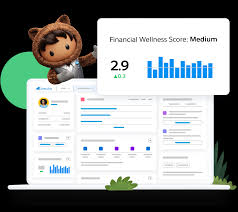
Is Your Quoting Process Suffering from Pricing Errors or Delays? Are pricing errors or inconsistencies slowing down your quoting process and leading to customer dissatisfaction? Is the generation of quotes or proposals hampered by bottlenecks? Are your sales reps finding it challenging to navigate complex pricing structures, discounts, or promotions? Its time for an Improved Quoting Process from Salesforce. For many businesses leveraging Salesforce for sales automation, CPQ (Configure, Price, Quote) software provides solutions to these challenging issues, helping companies scale their pricing and selling strategies more effectively. If your current Salesforce quoting process is fraught with inefficiencies and errors, it may be time to explore Salesforce CPQ software options. Let’s examine the challenges you might be facing and the signs that indicate it’s time to adopt a CPQ solution. What Problem Does Improved Quoting Process Solve? As market demands shift toward self-service, omnichannel support, industry-specific solutions, and intelligent, user-friendly interfaces, businesses need to adapt to stay competitive. This is particularly important in industries such as manufacturing, telecommunications, and software as a service (SaaS). Common hurdles businesses face before implementing Salesforce quoting software include: Who Benefits from Salesforce Quoting Software? Approximately 83% of sales representatives use configure, price, and quote solutions, underscoring their importance. Among Salesforce users, those who benefit most from CPQ software include: Embracing Salesforce CPQ can help streamline your quoting process, improve accuracy, and boost overall efficiency. If these challenges resonate with your current operations, it might be time to consider the benefits of a CPQ solution from Tectonic. Contact us today. Like Related Posts Who is Salesforce? Who is Salesforce? Here is their story in their own words. From our inception, we’ve proudly embraced the identity of Read more Salesforce Marketing Cloud Transactional Emails Salesforce Marketing Cloud Transactional Emails are immediate, automated, non-promotional messages crucial to business operations and customer satisfaction, such as order Read more Salesforce Unites Einstein Analytics with Financial CRM Salesforce has unveiled a comprehensive analytics solution tailored for wealth managers, home office professionals, and retail bankers, merging its Financial Read more AI-Driven Propensity Scores AI plays a crucial role in propensity score estimation as it can discern underlying patterns between treatments and confounding variables Read more
Read More
use of salesforce cpq

Salesforce CPQ

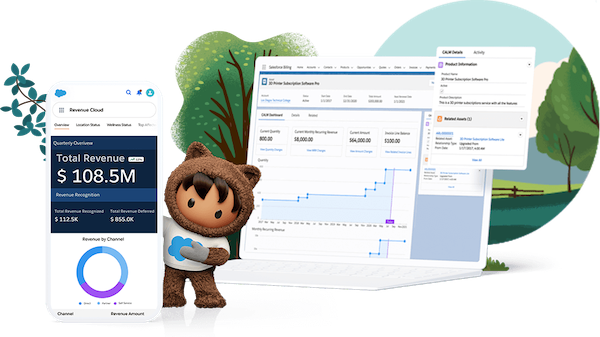
Salesforce CPQ: Streamlining Sales with Automation and Accuracy Salesforce CPQ (Configure, Price, Quote) simplifies and accelerates the sales process by automating quote generation, ensuring accurate pricing, and integrating seamlessly with Salesforce CRM. It empowers businesses to handle complex product configurations, manage renewals, and enhance sales collaboration—all while improving the customer experience. Key Benefits of Salesforce CPQ ✅ Automated Quote GenerationEliminate manual errors and save time with an automated quoting process that ensures consistency and accuracy. ✅ Complex Product ConfigurationEasily manage bundles, options, and customizations to create precise product configurations tailored to customer needs. ✅ Accurate Pricing & DiscountsApply predefined pricing rules, discounts, and approval workflows to maintain consistency and compliance across all quotes. ✅ Streamlined Renewal ManagementAutomate recurring billing and subscription renewals, generating renewal quotes effortlessly. ✅ Enhanced Sales CollaborationEnable sales teams to work more efficiently with a centralized platform for managing quotes, orders, and approvals. ✅ Seamless CRM IntegrationConnect directly with Salesforce Sales Cloud, ensuring a unified view of customer data and sales activities. ✅ Improved Customer ExperienceDeliver accurate, timely quotes that enhance transparency and build customer trust. ✅ Product & Price Rules for ComplianceEnsure all quotes align with company policies by applying automated product and pricing rules. ✅ Contract & Renewal ManagementKeep track of contracts, automate renewals, and maintain a clear, centralized view of agreement details. ✅ Increased Sales Accuracy & EfficiencyReduce manual effort, speed up the sales cycle, and close deals faster with automated quoting. With Salesforce CPQ, businesses can simplify complex sales processes, drive efficiency, and create a seamless experience for both sales teams and customers. Want to optimize your sales process? 🚀 Let’s talk about how Salesforce CPQ can work for you! Like Related Posts Who is Salesforce? Who is Salesforce? Here is their story in their own words. From our inception, we’ve proudly embraced the identity of Read more Salesforce Marketing Cloud Transactional Emails Salesforce Marketing Cloud Transactional Emails are immediate, automated, non-promotional messages crucial to business operations and customer satisfaction, such as order Read more Salesforce Unites Einstein Analytics with Financial CRM Salesforce has unveiled a comprehensive analytics solution tailored for wealth managers, home office professionals, and retail bankers, merging its Financial Read more AI-Driven Propensity Scores AI plays a crucial role in propensity score estimation as it can discern underlying patterns between treatments and confounding variables Read more
Read More
CPQ Tool in Salesforce

CPQ Tool in Salesforce

How long does it take to implement the CPQ tool in Salesforce? Unfortunately, there is no one-size-fits-all answer to this question. Every organization is unique, with ditto requirements and needs. In general, you can deliver an Minimum Viable Product within a few months, which you can then build on. A truly successful CPQ implementation takes time. Contact Tectonic to explore Salesforce CPQ options. Best CPQ Software Reviews Content updated March 2024. Like1 Related Posts Who is Salesforce? Who is Salesforce? Here is their story in their own words. From our inception, we’ve proudly embraced the identity of Read more Salesforce Marketing Cloud Transactional Emails Salesforce Marketing Cloud Transactional Emails are immediate, automated, non-promotional messages crucial to business operations and customer satisfaction, such as order Read more Salesforce Unites Einstein Analytics with Financial CRM Salesforce has unveiled a comprehensive analytics solution tailored for wealth managers, home office professionals, and retail bankers, merging its Financial Read more AI-Driven Propensity Scores AI plays a crucial role in propensity score estimation as it can discern underlying patterns between treatments and confounding variables Read more
Read More
Salesforce Communications Cloud

Introducing Salesforce Communications Cloud

Introducing Communications Cloud from Salesforce: Revolutionize your digital-first journeys and streamline order processes to save time, cut costs, and enhance operational efficiencies.  Build and deploy seamless workflows, integrations, and experiences across multiple channels. Salesforce Industries Communications Cloud builds upon Salesforce’s digital omnichannel capabilities, featuring a robust communications data model. This includes Configure, Price, Quote (Industries CPQ), Enterprise Product Catalog (EPC), order capture, Digital Commerce, Industries Order Management, and Contract Lifecycle Management, along with cloud-specific application suites. The Industries Communications data model is an all-encompassing framework designed for a cloud Business Support System (BSS) across diverse communication markets. (B2B, B2C, B2B2C) and product lines (mobile, broadband, TV, fixed-line services, and other subscription services). Covering elements like product catalog management, pricing, promotions, selling through opportunities, quotes, orders, and contract lifecycle management, the data model seamlessly integrates with the standard Salesforce data model. Compliant with the TM Forum Information Framework (SID), it extends Salesforce’s capabilities. Each Entity-Relationship Diagram (ERD) illustrates key entities, relationships, and the Industries extension to the Salesforce object model. Key ERDs include: We are excited to be introducing Salesforce Communications Cloud The Industries CME Object List provides a comprehensive reference, and the Salesforce Industries Communications, Media, and Energy Party Model define parties involved in customer interactions. The proprietary party model captures relationships beyond the standard Salesforce structures, encompassing various business entities. Like2 Related Posts Who is Salesforce? Who is Salesforce? Here is their story in their own words. From our inception, we’ve proudly embraced the identity of Read more Salesforce Marketing Cloud Transactional Emails Salesforce Marketing Cloud Transactional Emails are immediate, automated, non-promotional messages crucial to business operations and customer satisfaction, such as order Read more Salesforce Unites Einstein Analytics with Financial CRM Salesforce has unveiled a comprehensive analytics solution tailored for wealth managers, home office professionals, and retail bankers, merging its Financial Read more AI-Driven Propensity Scores AI plays a crucial role in propensity score estimation as it can discern underlying patterns between treatments and confounding variables Read more
Read More

Salesforce Sales Acronyms

Here is a helpful glossary of sales terminology you may hear when discussing Salesforce sales. Salesforce Sales Acronyms Acronym Meaning Defintion BANT Budget, Authority, Need, Time A framework that helps sales reps judge how qualified a lead is/their propensity to purchase (how likely they are to purchase). From there, sales reps can focus their attention on the most promising prospects. This is more closely related to sales qualified leads than marketing qualified leads. CQ Calendar Quarter A period of three months that is used by organizations in order to calculate their budgets, profits, losses, and sales quotas. The calendar quarters start in January/April/July/October, whereas the fiscal quarters can start at any month (according to the organization), for example, Salesforce themselves start their fiscal year in February, which means their second fiscal quarter starts in May. Salesforce Admins and users will come across this when filtering date fields in the Salesforce report builder. CY Calendar Year A period of twelve months that is used by organizations in order to calculate their budgets, profits, losses, and sales quotas. The calendar year starts in January, whereas the fiscal year can start at any month (according to the organization). ECC Einstein Call Coaching Einstein Call Coaching gives users insights and trends from sales calls – taking the rich fabric of a conversation and splicing it into key moments. ECC is ‘product within a product’ of High Velocity Sales (HVS). ECI Einstein Conversation Insights Gives users insights and trends from sales calls – taking the rich fabric of a conversation and splicing it into key moments. Never before have sales managers and reps been able to analyze their conversations like this – at scale and at speed – which would be impossible without the help of AI. (Formerly known as Einstein Call Coaching). EEI Einstein Email Insights Einstein will surface contextual sales information while writing emails, so you ultimately send the best response, at the best time.Available with Sales Cloud Einstein, Inbox, High Velocity Sales, or Revenue Intelligence, which come at an additional cost. It’s available (at an extra cost) for Salesforce Enterprise, Performance, and Unlimited editions. FQ Fiscal Quarter A period of three months that is used by organizations in order to calculate their budgets, profits, losses, and sales quotas. Salesforce Admins and users will come across this when filtering date fields in the Salesforce report builder. FY Fiscal Year “A period of twelve months, used by organizations in order to calculate their budgets, profits, and losses.” (and sales quotas)(source).Salesforce Admins and users will come across this when filtering date fields in the Salesforce report builder. HVS High-velocity Sales High-velocity Sales was developed for inside sales/sales development teams that process a high-volume of activities, especially calls. Now called Sales Engagement, the product includes: Sales Cadences, Work Queue, Einstein Lead Score, Salesforce Inbox, Call Scripts and Einstein Call Coaching. YOY Year-on-year Comparing the performance in one period of time with the same time period the previous year. For example, comparing January 2022 to January 2021 to see if trends have increased or decreased. Like Related Posts Who is Salesforce? Who is Salesforce? Here is their story in their own words. From our inception, we’ve proudly embraced the identity of Read more Salesforce Marketing Cloud Transactional Emails Salesforce Marketing Cloud Transactional Emails are immediate, automated, non-promotional messages crucial to business operations and customer satisfaction, such as order Read more Salesforce Unites Einstein Analytics with Financial CRM Salesforce has unveiled a comprehensive analytics solution tailored for wealth managers, home office professionals, and retail bankers, merging its Financial Read more AI-Driven Propensity Scores AI plays a crucial role in propensity score estimation as it can discern underlying patterns between treatments and confounding variables Read more
Read More
Salesforce Revenue Cloud

Salesforce Revenue Cloud

What is Salesforce Revenue Cloud? It’s a comprehensive revenue management solution that seamlessly streamlines your entire revenue lifecycle, all powered by the Salesforce Customer 360 Platform. Revenue Cloud provides you with the CPQ (Configure, Price, Quote) capabilities to facilitate swift deal closing and selling. Easily configure, price, and quote complex solutions with precision. The platform automates billing and cash collection, with Salesforce’s recurring billing engine supporting various charge types, sales orders, and payment schedules. Subscription management is also a breeze, fostering efficient revenue growth. Built on the expansive and scalable Salesforce capabilities, Revenue Cloud allows you to deliver exceptional, personalized end-user experiences. It unifies your revenue processes with 360-degree customer view data, driving automation across the entire product-to-cash journey. Discover how Revenue Cloud empowers customers to buy across channels, adapt to evolving business models, and navigate changes in the business landscape by talking to Tectonic today. At Tectonic, we understand the challenges faced by IT professionals when integrating new tools into their infrastructure. Salesforce Revenue Cloud seamlessly integrates with Sales Cloud and Service Cloud, ensuring compatibility with your existing sales, marketing, finance, HR, and CDP platforms. Partner with Tectonic to implement Salesforce Revenue Cloud seamlessly into your custom Salesforce ecosystem, avoiding technical debt, complex systems, and unnecessary downtime or learning curves. Revenue Cloud puts you in control of revenue growth across every channel. As part of Salesforce Customer 360, it unifies data throughout the entire revenue lifecycle. Connect all your revenue processes on a single platform, launch new revenue streams, optimize efficiency, and transform the B2B buying journey. Tectonic, in collaboration with Salesforce Revenue Cloud, offers a unified product catalog to ensure consistent products and pricing across all channels. Flexibility to move across direct, partner, and digital channels is enhanced, with improved data quality and security for smarter and faster data-driven decisions. The Guided Selling configuration wizard assists reps in finding the right products with the correct configuration rules and bundling for comprehensive and compliant quoting solutions. Accelerating deal execution without compromising margins, Tectonic and Salesforce Revenue Cloud enable your sales reps to model deal scenarios, streamline approvals, and offer pre-agreed upon discounts. Generate quotes aligned with branding, product, and legal guidelines using pre-built templates, product literature libraries, and dynamic terms and conditions. Track orders and quotes seamlessly across multiple fulfillment platforms, with contracts and subscriptions easily traceable. Invoices from CPQ order objects contain fields for both the CPQ and billing modules, supporting amend and renew processes. Customized billing and approvals adapt to exceptions, with stakeholders able to approve via email, mobile, Chatter, or within Salesforce. Integrated revenue management on the number one CRM platform allows you to control revenue complexity and growth effectively. Salesforce Revenue Cloud caters to businesses in need of negotiated sales, self-service orders, controls and compliance, products and pricing, billing and collections, revenue reporting, licensing and permitting, and more. Contact Tectonic today to discover how much power Salesforce Revenue Cloud can add to your custom Salesforce integration. Like2 Related Posts Who is Salesforce? Who is Salesforce? Here is their story in their own words. From our inception, we’ve proudly embraced the identity of Read more Salesforce Marketing Cloud Transactional Emails Salesforce Marketing Cloud Transactional Emails are immediate, automated, non-promotional messages crucial to business operations and customer satisfaction, such as order Read more Salesforce Unites Einstein Analytics with Financial CRM Salesforce has unveiled a comprehensive analytics solution tailored for wealth managers, home office professionals, and retail bankers, merging its Financial Read more AI-Driven Propensity Scores AI plays a crucial role in propensity score estimation as it can discern underlying patterns between treatments and confounding variables Read more

Read More
Salesforce Health Cloud

Salesforce Health Cloud Information

Since its inception in 2016, Salesforce Health Cloud has evolved significantly, adapting to the intricacies of the sensitive and dynamic health industry. The latest addition to its offerings, Customer 360 for Health, represents a strategic move towards more empathetic care, bolstering patient trust and fostering team collaboration.

Read More
salesforce asset management

Asset Management Salesforce

Can Salesforce do asset management? You can manage assets in Consumer Goods (desktop) and in the Consumer Goods offline mobile app in Salesforce. Let’s understand the process in detail. Create Asset Templates and Asset Types: Before you create assets, ensure that admins have created asset templates and asset types. Assets are items, such as refrigerators or freezers, that you place at a customer location (retail store) to increase your sales. Assets are also items you use in your business such as vehicles or computers. As an asset’s owner, you’re responsible for the maintenance, repair, or any other services required for the asset. Managing assets efficiently can help reduce customer complaints and, in turn, increase your brand value. By actively tracking your assets’ conditions, you can budget better, reduce losses, and ensure employee safety. What is the use of asset object in Salesforce? So, Assets are used quite frequently by sales, customer service in your back office. Assets are a standard object. It comes out-of-the-box with Salesforce. And being a standard object we can add custom fields, validation rules, record types, multiple page layouts. How do I create an asset for a product in Salesforce? Create an Asset What is the asset state period in Salesforce? An asset state period represents a time span when an asset has the same quantity, amount, and monthly recurring revenue (MRR). An asset has as many asset state periods as there are changes to it (asset actions) during its lifecycle. The dashboard and related pages show the current asset state period. What is the difference between subscription and asset in Salesforce? Use subscriptions to keep records of subscription products you’ve quoted or sold. Use assets to keep records of stand-alone products you’ve quoted or sold. You can use these records later to manage amendments and renewals to your opportunities and orders. How do I enable assets in Salesforce? Enable Asset Scheduling in Salesforce Scheduler How do I create an asset in Salesforce CPQ? Salesforce CPQ creates assets when you click Contracted on an opportunity or order. The asset creation process varies based on your account’s renewal model and the value of the asset conversion field on the product you’re contracting. How do you renew assets in Salesforce CPQ? Select the assets you want to renew, and then click Renew. Salesforce CPQ creates a renewal quote, associates it with a renewal opportunity, and opens the quote line editor. Edit the quantities of the assets from your original quote as needed. You can also add new products. What is an asset state? Asset State denotes the different states of assets in the organization such as assets in Use, In Store, Expired and so on. Apart from the default asset states, you can create custom ones. You can also enable or disable ownership and scan for custom asset states you create. Note that Salesforce also has a Digital Asset Management (DAM) capability. Where is asset library in Salesforce? To view asset files in Files home, select Libraries and then select Asset Library . To view and edit asset files in Setup, enter Asset Files in the Quick Find box, then select Asset Files. For more information on Salesforce Asset Management, contact Tectonic today. Like1 Related Posts Who is Salesforce? Who is Salesforce? Here is their story in their own words. From our inception, we’ve proudly embraced the identity of Read more Salesforce Marketing Cloud Transactional Emails Salesforce Marketing Cloud Transactional Emails are immediate, automated, non-promotional messages crucial to business operations and customer satisfaction, such as order Read more Salesforce Unites Einstein Analytics with Financial CRM Salesforce has unveiled a comprehensive analytics solution tailored for wealth managers, home office professionals, and retail bankers, merging its Financial Read more AI-Driven Propensity Scores AI plays a crucial role in propensity score estimation as it can discern underlying patterns between treatments and confounding variables Read more

Read More
gettectonic.com