Salesforce Data Cloud Archives - gettectonic.com - Page 8
Data Cloud Features and Connectors

Data Cloud Features and Connectors

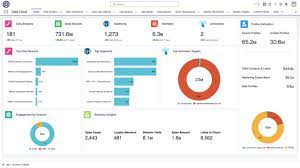
Leveraging New Features and Connectors in Salesforce’s Data Cloud Salesforce’s Data Cloud is rapidly evolving with continuous updates and new functionalities, including AI advancements. Keeping pace with these changes can be challenging. This insight explores the latest features and how to effectively utilize them to enhance your Salesforce environment. Data Cloud Features and Connectors. Are CDP and data Cloud the same? Data Cloud is more than just your traditional CDP. It’s the only data platform native to the world’s #1 AI CRM. This means that marketers can quickly access and easily action on unified data – from across the entire business – to drive growth and increase customer lifetime value. Introducing the Feature Manager The Winter ‘24 update introduced the Feature Manager, a powerful tool that simplifies managing Data Cloud’s features. It allows you to easily enable, disable, and monitor AI and beta features within the platform. Where to Find It You can find the Feature Manager in the navigation pane under the Features section, providing a centralized and intuitive way to manage your Data Cloud capabilities. Enable Data Cloud Features Using the Feature Manager, you can enable Data Cloud features. This screen is visible only when there are one or more features to enable or disable. Advantages of Enabling Beta Features One standout capability of the Feature Manager is its support for enabling beta versions of connectors and AI features. Here’s why you should consider using beta features: Early Access to Innovations Beta features give you early access to the latest tools, allowing you to experiment with new functionalities before their official release. This can provide a competitive edge and enhance your Salesforce environment. Feedback and Influence Using beta features allows you to provide valuable feedback to Salesforce, helping shape the final versions of these tools. This feedback loop ensures that the features are refined to meet user needs. How to Enable Beta Features Enable and Disable Data Cloud AI and Beta Features with Feature Manager Easily enable, disable, and monitor Data Cloud AI and beta features using the new Feature Manager, found in the navigation pane under Features. Where: This change applies to Data Cloud in Developer, Enterprise, Performance, and Unlimited editions. Steps to Enable Beta Features: Real-World Example: Adobe Marketo Connector A prime example of a beta feature available in the Winter ’24 release is the Adobe Marketo connector. This connector is currently in beta, allowing users to enable and test it through the Feature Manager. Steps to Enable the Adobe Marketo Connector By enabling and testing this connector, you can explore its functionalities and see how it integrates with your existing Salesforce setup. Staying Updated with Salesforce Data Cloud Keeping up with the latest features in Salesforce Data Cloud doesn’t have to be overwhelming. With tools like the Feature Manager, you can easily manage, enable, and experiment with new features and connectors, including those currently in beta. This not only keeps you at the forefront of innovation but also allows you to directly influence the development of these tools. Dive in, utilize the new capabilities, and make the most of what Salesforce Data Cloud has to offer. Like Related Posts Who is Salesforce? Who is Salesforce? Here is their story in their own words. From our inception, we’ve proudly embraced the identity of Read more Salesforce Marketing Cloud Transactional Emails Salesforce Marketing Cloud Transactional Emails are immediate, automated, non-promotional messages crucial to business operations and customer satisfaction, such as order Read more Salesforce Unites Einstein Analytics with Financial CRM Salesforce has unveiled a comprehensive analytics solution tailored for wealth managers, home office professionals, and retail bankers, merging its Financial Read more AI-Driven Propensity Scores AI plays a crucial role in propensity score estimation as it can discern underlying patterns between treatments and confounding variables Read more
Read More
Changes in Advertising Changing CRMs

Changes in Advertising Changing CRMs

Oracle announced last week that it is exiting the advertising business and will sunset its adtech by September 30. While the announcement is not surprising given the massive layoffs in 2022 affecting Oracle Advertising teams, the rapidity of Oracle Advertising’s decline is a clear indicator of how swiftly the digital advertising landscape can evolve. This move is likely just the first of many significant Changes in Advertising Changing CRMs. What happened? Oracle Advertising faced challenges beginning in 2018 and never managed to recover. Several forces related to data deprecation adversely impacted the business: Changes in Advertising Changing CRMs Retooling its acquisitions to function in a consent-driven and regulated environment would have required significant investment from Oracle. Given its track record with privacy law compliance, this would have been a daunting task, necessitating both rapid innovation and market trust in its solutions. What does this mean for the advertising ecosystem? Oracle’s exit from adtech marks a significant shift in the advertising ecosystem. The sharp decline in advertising revenue from $2 billion in 2022 to $300 million in 2024 suggests a major miscalculation by Oracle. Without demand- or supply-side platforms (unlike Google, Microsoft, and Amazon) and lacking a large audience base (unlike Meta, Disney, and Netflix), Oracle’s benefits as an adtech partner or acquirer were unclear. The key question now is whether Oracle’s intellectual property will find new ownership and continue in some form. What does this mean for the marketing ecosystem? The broader marketing ecosystem is likely to see more shifts as major players adapt to the new landscape. Leading martech vendors like Adobe and Salesforce have already transitioned from DMPs to CDPs. Adobe Real-Time CDP and Salesforce Data Cloud for Marketing are gaining market share, while Oracle has struggled in the B2C martech space. Oracle’s decision to cut investments in martech and adtech has significantly impaired its B2C market efforts, with products like Responsys failing to gain the traction that Eloqua has in the B2B space. Oracle also announced it will sunset related B2C marketing products like Oracle Maxymiser in the coming months. These changes are just the beginning of a broader transformation in digital advertising, driven by evolving privacy standards, consumer expectations, and technological advancements. This marks the dawn of a new era in which agility and compliance will be key to success in the digital advertising and marketing landscapes. Like Related Posts Who is Salesforce? Who is Salesforce? Here is their story in their own words. From our inception, we’ve proudly embraced the identity of Read more Salesforce Marketing Cloud Transactional Emails Salesforce Marketing Cloud Transactional Emails are immediate, automated, non-promotional messages crucial to business operations and customer satisfaction, such as order Read more Salesforce Unites Einstein Analytics with Financial CRM Salesforce has unveiled a comprehensive analytics solution tailored for wealth managers, home office professionals, and retail bankers, merging its Financial Read more AI-Driven Propensity Scores AI plays a crucial role in propensity score estimation as it can discern underlying patterns between treatments and confounding variables Read more
Read More
Salesforce Focuses on Data Cloud

Salesforce Focuses on Data Cloud

Salesforce’s Focus on Data Cloud Amid Challenging Macro Environment Salesforce is concentrating on its Data Cloud solutions while navigating a challenging macroeconomic landscape after reporting a weaker-than-expected first quarter. Salesforce Focuses on Data Cloud In a recent note, Baird analysts Rob Oliver and Patrick Schulz highlighted Salesforce’s emphasis on its Data Cloud solution: “Salesforce is keenly focused on its Data Cloud solution. The company has cited strength, but overall checks have been mixed. While not material from a revenue perspective, we believe this will remain a top focus area.” Baird’s insights followed a dinner meeting with Salesforce’s investor relations team, where much of the discussion centered on the macroeconomic challenges affecting the company. Salesforce shares fell sharply late last month after the enterprise software giant reported fiscal first-quarter results and guidance that missed estimates. Although the stock has partially recovered, it was down about 2% during late market trading on Wednesday and was removed from BofA’s U.S. 1 List the same day. Salesforce Focuses on Data Cloud Despite the revenue miss in the first quarter of fiscal year 2025, Salesforce reiterated its full-year guidance, citing confidence driven by several tailwinds, including Data Cloud, pricing/packaging, MuleSoft, regional strengths, and industry-specific offerings. These factors are helping to offset ongoing macroeconomic pressures, according to Oliver and Schulz. “Salesforce has not been alone in calling out a more challenging macro environment,” the analysts noted, referencing similar trends cited by companies like Couchbase (BASE), MongoDB (MDB), and Workday (WDAY). “We believe the company will need to report a solid quarter before investor confidence builds.” Baird maintains its Outperform rating on Salesforce with a price target of $295. Like1 Related Posts Who is Salesforce? Who is Salesforce? Here is their story in their own words. From our inception, we’ve proudly embraced the identity of Read more Salesforce Marketing Cloud Transactional Emails Salesforce Marketing Cloud Transactional Emails are immediate, automated, non-promotional messages crucial to business operations and customer satisfaction, such as order Read more Salesforce Unites Einstein Analytics with Financial CRM Salesforce has unveiled a comprehensive analytics solution tailored for wealth managers, home office professionals, and retail bankers, merging its Financial Read more AI-Driven Propensity Scores AI plays a crucial role in propensity score estimation as it can discern underlying patterns between treatments and confounding variables Read more

Read More
Life Sciences Cloud Organizing Clinical Trials and Outreach

Life Sciences Cloud Organizing Clinical Trials and Outreach

Salesforce CRM announced today its expansion into the life sciences sector with the launch of a new cloud platform designed to enhance engagement between medical technology providers, pharmaceutical companies, patients, and healthcare professionals. The Salesforce Life Sciences Cloud platform, now available, integrates advanced artificial intelligence capabilities from the Einstein 1 Platform. These AI capabilities aim to streamline clinical operations and processes by harnessing insights from all aspects of organizational data. Life Sciences Cloud Organizing Clinical Trials and Outreach. One of the primary benefits of the Life Sciences Cloud platform is its ability to optimize clinical trials, particularly in streamlining the recruitment and enrollment of participants. By leveraging AI, the platform can identify and match qualified candidates for clinical trials based on specific prescreening and eligibility criteria, significantly reducing the time traditionally spent on these processes. The platform facilitates the creation of personalized online portals for each clinical trial, making it easier for eligible patients to discover and enroll in trials relevant to them. It also simplifies the enrollment process through customizable e-consent forms. Using Einstein Copilot, an AI assistant, organizations can automate the identification of potential trial participants based on criteria such as proximity to trial sites, drawing data from sources like spreadsheets and electronic health records. This capability enhances efficiency by proactively reaching out to suitable candidates. Life Sciences Cloud Organizing Clinical Trials and Outreach Salesforce emphasizes the platform’s potential to alleviate common challenges in clinical trials, where recruitment delays and participant retention issues often hinder progress. By addressing these inefficiencies, Life Sciences Cloud aims to improve the operational timelines and success rates of clinical trials. Beyond clinical trials, the platform features a pilot patient benefits verification tool that helps organizations swiftly assess pharmaceutical costs and eligibility for financial assistance. Integrated with Einstein Copilot, this tool supports bulk re-verifications, ensuring continuous access to treatments for patients requiring periodic authorizations. Additionally, the platform includes a pilot patient program outcome management module, which automates the evaluation of educational and support programs’ impact on patients. This module aids in enhancing patient engagement and adherence to treatment plans by sending automated reminders and analyzing the effectiveness of engagement strategies. Salesforce’s Life Sciences Cloud also offers robust data analytics capabilities, leveraging Salesforce Data Cloud and MuleSoft for Life Sciences to unify structured and unstructured data sources. This unified data model provides comprehensive profiles for each patient and healthcare provider, enabling personalized interactions and informed decision-making. Frank Defesche, Senior Vice President and General Manager of Life Sciences at Salesforce, highlighted the platform’s role in enabling life sciences organizations to navigate challenges such as rising drug costs and regulatory complexities. He emphasized AI’s transformative potential in optimizing operational processes and prioritizing patient-centric approaches across the industry. Overall, Salesforce’s Life Sciences Cloud represents a significant advancement in leveraging AI-driven technologies to enhance efficiency, engagement, and outcomes within the life sciences sector. Like Related Posts Who is Salesforce? Who is Salesforce? Here is their story in their own words. From our inception, we’ve proudly embraced the identity of Read more Salesforce Marketing Cloud Transactional Emails Salesforce Marketing Cloud Transactional Emails are immediate, automated, non-promotional messages crucial to business operations and customer satisfaction, such as order Read more Salesforce Unites Einstein Analytics with Financial CRM Salesforce has unveiled a comprehensive analytics solution tailored for wealth managers, home office professionals, and retail bankers, merging its Financial Read more AI-Driven Propensity Scores AI plays a crucial role in propensity score estimation as it can discern underlying patterns between treatments and confounding variables Read more

Read More
Salesforce Driving Change

Salesforce Driving Change

Sony Honda Mobility Leverages Salesforce Technology to Enhance Customer Relationships Sony Honda Mobility, a mobility tech startup, is utilizing Salesforce solutions—including Automotive Cloud, Data Cloud, Tableau, and MuleSoft—to deepen its customer relationships through enhanced data and insights. Sony Honda Mobility Inc. is a Japanese joint venture automotive company established by Sony Group Corporation and Honda Motor Company in 2022 to produce battery electric vehicles. The company will market its vehicles under the Afeela brand. Why It Matters: A significant 81% of business leaders report challenges with data fragmentation and silos. This disconnected, disjointed information often leads to immaterial and generic customer interactions, which is problematic as 80% of customers expect superior experiences given the extensive data companies collect. Key Developments: Sony Honda Mobility plans to launch its first electric vehicle in the United States in 2025, followed by Japan in 2026. To scale globally and stand out in the market, the company is empowering its service team with real-time data and insights on customer interactions with its products and services. How Is Salesforce Driving Change Data Cloud: A unified data platform that consolidates application, workflow, and data lake records, making it easier to train AI models, gain business insights, and improve customer relationships. Sony Honda Mobility is leveraging Data Cloud to integrate disparate data seamlessly across applications. MuleSoft API Integration: This integration connects data from Sony Honda Mobility’s vehicle and customer platform to Salesforce, ensuring a cohesive data flow. Automotive Cloud: Inside Automotive Cloud, Sony Honda Mobility now maintains a comprehensive profile of each customer and their vehicle, based on data from Data Cloud. This integration allows for personalized service and experiences at every touchpoint. The platform also streamlines contact center management, query handling, internal FAQ creation, web actions, and ongoing service support for incident and customer information management. Tableau: With Tableau’s visualizations of vehicle operation conditions and service usage status, Sony Honda Mobility can make quicker, more informed decisions about each customer’s needs. Customer Perspective “We aim to elevate our customer service and experiences to new heights. We are confident we can achieve this with Salesforce’s global expertise and proven track record in CRM, trusted AI, and data analytics,” said Yasuhide Mizuno, Chairman and CEO of Sony Honda Mobility. Salesforce Perspective “We are thrilled that Sony Honda Mobility has chosen the scalability, reliability, and expertise of Salesforce technology. By integrating their customer data on a single and trusted platform, we are excited to support Sony Honda Mobility as they scale excellent service to customers worldwide,” said Shinichi Koide, Chairman, President, and Chief Executive Officer of Salesforce Japan. The Result By harnessing Salesforce’s advanced technology, Sony Honda Mobility is poised to revolutionize its customer service and experience, ensuring a more connected, efficient, and personalized interaction for its customers globally. Like Related Posts Who is Salesforce? Who is Salesforce? Here is their story in their own words. From our inception, we’ve proudly embraced the identity of Read more Salesforce Marketing Cloud Transactional Emails Salesforce Marketing Cloud Transactional Emails are immediate, automated, non-promotional messages crucial to business operations and customer satisfaction, such as order Read more Salesforce Unites Einstein Analytics with Financial CRM Salesforce has unveiled a comprehensive analytics solution tailored for wealth managers, home office professionals, and retail bankers, merging its Financial Read more AI-Driven Propensity Scores AI plays a crucial role in propensity score estimation as it can discern underlying patterns between treatments and confounding variables Read more

Read More
Data Cloud Vector Database and Hyperforce

Data Cloud Vector Database and Hyperforce

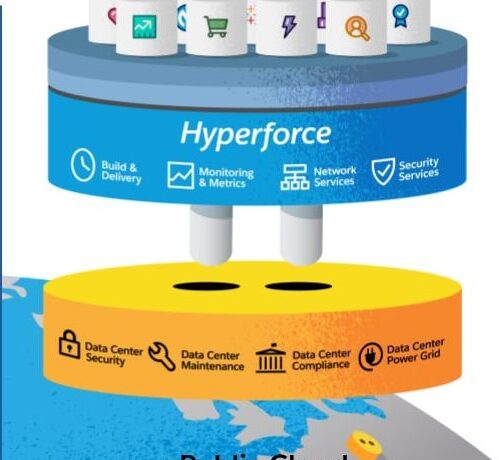
Salesforce World Tour Highlights: Data Cloud Vector Database and Hyperforce At the Salesforce World Tour on June 6, 2024, at the Excel Centre in east London, the focus was on advancements in the Data Cloud and Slack platforms. The event, sponsored by AWS, Cognizant, Deloitte, and PWC, showcased significant innovations, particularly for GenAI enthusiasts. Data Cloud Vector Database and Hyperforce. Vector Database in Data Cloud A key highlight was the announcement of the general availability of a Vector Database capability within the Data Cloud, integrated into the Einstein 1 Platform. This capability enhances Salesforce’s CRM platform, Customer 360, by combining structured and unstructured data about end-users. The Vector Database collects, ingests, and unifies data, allowing enterprises to deploy GenAI across all applications without needing to fine-tune an off-the-shelf large language model (LLM). Addressing Data Fragmentation Salesforce reports that approximately 80% of customer data is dispersed across various corporate departments in an unstructured format, trapped in PDFs, emails, chat conversations, and transcripts. The Vector Database unifies this fragmented data, creating a comprehensive profile of the customer journey. This unified approach not only improves customer engagement but also enhances organizational agility. By consolidating data from all corporate silos, companies can quickly and efficiently address issues such as product recalls and returns. Hyperforce: Enhancing Data Residency and Compliance During the keynote, Salesforce emphasized the importance of personalization in customer engagement and the benefits of deploying GenAI in customer-facing sectors. The event highlighted the need to overcome the fear and mistrust of GenAI and showcased how enterprises can enhance employee productivity through upskilling in GenAI technologies. One notable announcement was the general availability of Hyperforce, a solution designed to address data residency issues by integrating all Salesforce applications under the same compliance, security, privacy, and scalability standards. Built for the public cloud and composed of code rather than hardware, Hyperforce ensures safe delivery of applications worldwide, offering a common layer for deploying all application stacks and handling data compliance in a fragmented technology landscape. Salesforce AI Center The Salesforce AI Center was also introduced at the event. The first of its kind, located in the Blue Fin Building near Blackfriars, London, this center will support AI experts, Salesforce partners, and customers, facilitating training and upskilling programs. Set to open on June 18, 2024, the center aims to upskill 100,000 developers worldwide and is part of Salesforce’s $4 billion investment in the UK and Ireland. Industry Reactions and Future Prospects GlobalData senior analyst Beatriz Valle commented on Salesforce’s continued integration of GenAI across its portfolio, including platforms like Tableau, Einstein for analytics, and Slack for collaboration. According to Salesforce, the Data Cloud tool leverages all metadata in the Einstein 1 Platform, connecting unstructured and structured data, reducing the need for fine-tuning LLMs, and enhancing the accuracy of results delivered by Einstein Copilot, Salesforce’s conversational AI assistant. Vector databases, while not new, have gained prominence due to the GenAI revolution. They power the retrieval-augmented generation (RAG) technique, linking proprietary data with large language models like OpenAI’s GPT-4, enabling enterprises to generate more accurate results. Competitors such as Oracle, Amazon, Microsoft, and Google also offer vector databases, but Salesforce’s early investments in GenAI are proving fruitful with the launch of the Data Cloud Vector Database. Data Cloud Vector Database and Hyperforce Salesforce’s AI-powered integration solutions, highlighted during the World Tour, underscore the company’s commitment to advancing digital transformation. By leveraging GenAI and innovative tools like the Vector Database and Hyperforce, Salesforce is enabling enterprises to overcome the challenges of data fragmentation and compliance, paving the way for a more agile and competitive digital future. Like Related Posts Who is Salesforce? Who is Salesforce? Here is their story in their own words. From our inception, we’ve proudly embraced the identity of Read more Salesforce Marketing Cloud Transactional Emails Salesforce Marketing Cloud Transactional Emails are immediate, automated, non-promotional messages crucial to business operations and customer satisfaction, such as order Read more Salesforce Unites Einstein Analytics with Financial CRM Salesforce has unveiled a comprehensive analytics solution tailored for wealth managers, home office professionals, and retail bankers, merging its Financial Read more AI-Driven Propensity Scores AI plays a crucial role in propensity score estimation as it can discern underlying patterns between treatments and confounding variables Read more
Read More
Consumer Chatbot Technology

Consumer Chatbot Technology

The Reality Behind AI Chatbots and the Path to Autonomous AI In the rush to adopt the latest Consumer Chatbot Technology, it’s easy to overlook a fundamental reality: consumer chatbot technology isn’t ready for enterprise use—and it likely never will be. The reason is simple: AI assistants are only as effective as the data that powers them. Most large language models (LLMs) are trained on data from public websites, which lack the specific business and customer data that enterprises need. This means consumer bots can’t adequately assist employees in selling products, marketing merchandise, or improving productivity, as they lack the necessary personalization and business context. To achieve the vision of AI that goes beyond simple chatbots performing basic tasks—like drafting emails, essays, blogs, or graphics—to a more advanced role where AI acts autonomously and addresses business-critical needs, a different approach is needed. This vision involves AI taking action with minimal human intervention, using digital agents to identify and respond to these needs. At Salesforce, we are pursuing a clear path to AI that not only takes action but also automates routine tasks, all while adhering to established business rules, permissions, and context. Instead of relying solely on LLMs, which primarily focus on generating human-like text, future AI assistants will depend on large action models (LAMs) that integrate decision-making and action-taking capabilities. The Journey Toward AI Autonomy Our journey towards this vision began with the Salesforce Data Cloud, a robust data engine built on the Einstein 1 Platform. This platform integrates data from across the enterprise and third-party repositories, enabling companies to activate their data, automate workflows, personalize customer interactions, and develop smarter AI solutions. Recognizing the shift from generative AI to autonomous AI, Salesforce introduced Einstein Copilot, the industry’s first conversational, enterprise-class AI assistant. Integrated across the Salesforce ecosystem, Einstein Copilot utilizes an organization’s data, whether it’s behind a firewall or in an external data lake, to act as a reasoning engine. It interprets user intents, interacts with the most suitable AI model, solves problems, generates relevant content, and provides decision-making support. Expanding the Role of AI in Business Since its launch in February 2024, Salesforce has been expanding Einstein Copilot’s library of actions to meet specific business needs in sales, service, marketing, data analysis, and industries like ecommerce, financial services, healthcare, and education. These “actions” are akin to LEGO blocks—discrete tasks that can be assembled to achieve desired project outcomes. For example, a sales representative might use Einstein Copilot to generate a personalized close plan, gain insights into why a deal may not close, or review whether pricing was discussed in a recent call. Einstein Copilot then orchestrates these tasks, provides recommendations, and compiles everything into a detailed report. The ultimate goal is for AI not only to gather and organize information but also to take proactive action. Imagine a sales representative instructing their digital agent to set up meetings with top prospects in a specific territory. The AI could not only identify suitable contacts but also suggest meeting times, plan travel schedules, draft emails, and even create talking points—all of which it could execute autonomously with the representative’s approval. Tectonic dreams of the day AI is smart enough to interpret our search engine typos and produce the results for what we were actually looking for! The Future of AI Autonomy The possibilities for semi-autonomous or fully autonomous AI are vast. As we continue to develop and refine these technologies, the potential for AI to transform business processes and decision-making becomes increasingly tangible. At Salesforce, they are committed to leading this charge, ensuring that our AI solutions not only meet but exceed the expectations of enterprises worldwide. Salesforce is in a strong position to deliver on all of them because of the volume and breadth of data housed in Data Cloud, the heavy workflow traffic in our Customer 360 CRM, and the fact we’ve delivered an enterprise-class copilot that is rapidly expanding its library of actions. It will not happen overnight. The technology needs to advance, organizations and people have to be able to trust AI and be trained to use it in the right ways, and more work will need to be done to ensure the right balance between human involvement and AI autonomy. But with our continued investment in CRM, data, and trusted AI, we will achieve that vision before too long. Salesforce is in a strong position to deliver on all of them because of the volume and breadth of data housed in Data Cloud, the heavy workflow traffic in our Customer 360 CRM, and the fact we’ve delivered an enterprise-class copilot that is rapidly expanding its library of actions. Jayesh Govindarajan, Senior Vice President, Salesforce AI Like Related Posts Who is Salesforce? Who is Salesforce? Here is their story in their own words. From our inception, we’ve proudly embraced the identity of Read more Salesforce Marketing Cloud Transactional Emails Salesforce Marketing Cloud Transactional Emails are immediate, automated, non-promotional messages crucial to business operations and customer satisfaction, such as order Read more Salesforce Unites Einstein Analytics with Financial CRM Salesforce has unveiled a comprehensive analytics solution tailored for wealth managers, home office professionals, and retail bankers, merging its Financial Read more AI-Driven Propensity Scores AI plays a crucial role in propensity score estimation as it can discern underlying patterns between treatments and confounding variables Read more

Read More
Salesforce Data Cloud Hits $900M in Revenue

Salesforce Data Cloud CDP

Salesforce Data Cloud: The Ultimate Customer Data Platform (CDP) Guide Transform Customer Data into Actionable Insights Salesforce Data Cloud (formerly Salesforce CDP) revolutionizes how businesses unify and activate customer data across every touchpoint. By consolidating information from websites, mobile apps, CRM systems, and more, it creates 360° customer profiles that power personalized marketing, sales, and service experiences. What is Salesforce Data Cloud? Salesforce Data Cloud is an AI-powered Customer Data Platform (CDP) that: 💡 Key Benefit: Break down data silos to deliver hyper-personalized customer journeys. Data Cloud vs. Traditional CRM: Key Differences Feature Salesforce CRM Salesforce Data Cloud Data Scope Sales/Service records only All customer interactions (web, email, ads, IoT) Real-Time Updates Manual/periodic syncs Instant profile enrichment AI Capabilities Basic analytics Predictive insights + GenAI recommendations Use Cases Pipeline management Omnichannel personalization Core Capabilities 1. Unified Customer Profiles 2. AI-Powered Segmentation 3. Activation Across Channels 4. Privacy & Compliance How Businesses Use Data Cloud 🚀 Boost E-Commerce Sales 📈 Optimize Ad Spend 🤖 Enhance Customer Service Technical Deep Dive Data Integration Options Key Concepts Getting Started 1. Choose Your Edition 2. Implement in 4 Steps 3. Train Your Team The Future of Data Cloud Final Verdict Salesforce Data Cloud is not just a CDP—it’s the central nervous system for customer-centric businesses. By unifying data + AI, it turns insights into personalized experiences at scale. Ready to explore? Contact Tectonic today. 🔥 Pro Tip: Pair with Einstein AI for predictive analytics and Genie for real-time streaming data. Content updated July 2025. Like Related Posts Who is Salesforce? Who is Salesforce? Here is their story in their own words. From our inception, we’ve proudly embraced the identity of Read more Salesforce Marketing Cloud Transactional Emails Salesforce Marketing Cloud Transactional Emails are immediate, automated, non-promotional messages crucial to business operations and customer satisfaction, such as order Read more Salesforce Unites Einstein Analytics with Financial CRM Salesforce has unveiled a comprehensive analytics solution tailored for wealth managers, home office professionals, and retail bankers, merging its Financial Read more AI-Driven Propensity Scores AI plays a crucial role in propensity score estimation as it can discern underlying patterns between treatments and confounding variables Read more

Read More
Einstein Personalization and Copilots

Einstein Personalization and Copilots

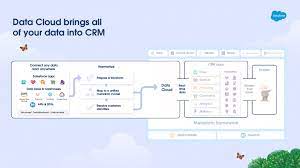
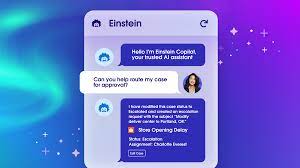
Salesforce launched a suite of new generative AI products at Connections in Chicago, including new Einstein Copilots for marketers and merchants, and Einstein Personalization. Einstein Personalization and Copilots To gain insights into these products and Salesforce’s evolving architecture, Bobby Jania, CMO of Marketing Cloud was interviewed. Salesforce’s Evolving Architecture Salesforce has a knack for introducing new names for its platforms and products, sometimes causing confusion about whether something is entirely new or simply rebranded. Reporters sought clarification on the Einstein 1 platform and its relationship to Salesforce Data Cloud. “Data Cloud is built on the Einstein 1 platform,” Jania explained. “Einstein 1 encompasses the entire Salesforce platform, including products like Sales Cloud and Service Cloud, continuing the original multi-tenant cloud concept.” Data Cloud, developed natively on Einstein 1, was the first product built on Hyperforce, Salesforce’s new cloud infrastructure. “From the start, Data Cloud has been able to connect to and read anything within Sales Cloud, Service Cloud, etc. Additionally, it can now handle both structured and unstructured data.” This marks significant progress from a few years ago when Salesforce’s platform comprised various acquisitions (like ExactTarget) that didn’t seamlessly integrate. Previously, data had to be moved between products, often resulting in duplicates. Now, Data Cloud serves as the central repository, with applications like Tableau, Commerce Cloud, Service Cloud, and Marketing Cloud all accessing the same operational customer profile without duplicating data. Salesforce customers can also import their own datasets into Data Cloud. “We wanted a federated data model,” Jania said. “If you’re using Snowflake, for example, we virtually sit on your data lake, providing value by forming comprehensive operational customer profiles.” Understanding Einstein Copilot “Copilot means having an assistant within the tool you’re using, contextually aware of your tasks and assisting you at every step,” Jania said. For marketers, this could start with a campaign brief created with Copilot’s help, identifying an audience, and developing content. “Einstein Studio is exciting because customers can create actions for Copilot that we hadn’t even envisioned.” Contrary to previous reports, there is only one Copilot, Einstein Copilot, with various use cases like marketing, merchants, and shoppers. “We use these names for clarity, but there’s just one Copilot. You can build your own use cases in addition to the ones we provide.” Marketers will need time to adapt to Copilot. “Adoption takes time,” Jania acknowledged. “This Connections event offers extensive hands-on training to help people use Data Cloud and these tools, beyond just demonstrations.” What’s New with Einstein Personalization Einstein Personalization is a real-time decision engine designed to choose the next best action or offer for customers. “What’s new is that it now runs natively on Data Cloud,” Jania explained. While many decision engines require a separate dataset, Einstein Personalization evaluates a customer holistically and recommends actions directly within Service Cloud, Sales Cloud, or Marketing Cloud. Ensuring Trust Connections presentations emphasized that while public LLMs like ChatGPT can be applied to customer data, none of this data is retained by the LLMs. This isn’t just a matter of agreements; it involves the Einstein Trust Layer. “All data passing through an LLM runs through our gateway. Personally identifiable information, such as credit card numbers or email addresses, is stripped out. The LLMs do not store the output; Salesforce retains it for auditing. Any output that returns through our gateway is logged, checked for toxicity, and only then is PII reinserted into the response. These measures ensure data safety beyond mere handshakes,” Jania said. Like Related Posts Who is Salesforce? Who is Salesforce? Here is their story in their own words. From our inception, we’ve proudly embraced the identity of Read more Salesforce Marketing Cloud Transactional Emails Salesforce Marketing Cloud Transactional Emails are immediate, automated, non-promotional messages crucial to business operations and customer satisfaction, such as order Read more Salesforce Unites Einstein Analytics with Financial CRM Salesforce has unveiled a comprehensive analytics solution tailored for wealth managers, home office professionals, and retail bankers, merging its Financial Read more AI-Driven Propensity Scores AI plays a crucial role in propensity score estimation as it can discern underlying patterns between treatments and confounding variables Read more
Read More
IBM Salesforce AI Partnership

IBM Salesforce AI Partnership

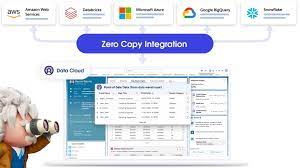
IBM and Salesforce Expand Partnership to Advance Open, Trusted AI and Data Ecosystems PR Newswire-IBM Salesforce AI Partnership ARMONK, N.Y. and SAN FRANCISCO, May 21, 2024 – IBM (NYSE: IBM) and Salesforce (NYSE: CRM) today announced an expanded strategic partnership designed to bring together IBM’s watsonx AI and Data Platform with the Salesforce Einstein 1 Platform. This collaboration aims to provide greater customer choice and flexibility in AI and data deployment, empowering teams to make data-driven decisions seamlessly. Key Highlights of the Expanded Partnership: 1. Enhanced Large Language Models for Generative AI: The IBM watsonx platform and IBM Granite series models will introduce more large language models (LLMs) to support generative AI use cases across the Salesforce Einstein 1 Platform. This integration will provide pre-built actions and prompts, enhancing AI capabilities for CRM solutions. 2. Zero Copy Data Integration: IBM joins the Salesforce Zero Copy Partner Network to enable secure, zero-copy data integration between IBM watsonx and Salesforce Data Cloud. This integration offers customers a cost-effective way to connect and leverage their data without the need to move it, ensuring seamless data access and actionability. 3. Commitment to Responsible AI: Salesforce has joined the AI Alliance, reinforcing its commitment to developing open, safe, and responsible AI. This collaboration aims to foster transparency and ethics in AI development, aligning with the AI Alliance’s mission to advance beneficial AI innovation. Integration Details: Large Language Model Flexibility: Organizations can deploy generative AI for CRM use cases with LLMs tailored to their business needs. Salesforce’s “Bring Your Own Large Language Model” strategy allows customers to integrate their LLMs with the watsonx.ai platform and Salesforce Einstein 1 Studio. This will provide access to IBM’s Granite series AI models and custom LLMs built on watsonx, enhancing AI-driven customer interactions. Industry-Specific Solutions: Together with IBM Consulting, Salesforce will offer industry-specific prompt templates and copilot actions in Einstein 1 Studio, starting with public sector use cases. These templates are designed to optimize both foundation and Granite models for various industries, including automotive, energy, financial services, and public sector. Bidirectional Data Integration: By joining the Salesforce Zero Copy Partner Network, IBM enables bidirectional data integration with Salesforce Data Cloud. This integration allows customers to access IBM data via watsonx.data within Salesforce Data Cloud, maintaining data security and minimizing risks. This approach simplifies data management, maximizing technology investments and ensuring comprehensive data accessibility for analytics and AI. Industry Impact: Ritika Gunnar, General Manager of Product Management, Data and AI at IBM, emphasized the importance of choosing the right foundation models for AI strategies, stating, “IBM and Salesforce are making it easier for clients to navigate the complex generative AI landscape by helping them select the right LLM for their business needs.” Rahul Auradkar, EVP & GM of United Data Services & Einstein at Salesforce, highlighted the benefits of the partnership, saying, “With bidirectional data integration, companies can harmonize all their data faster, fueling actionable insights that empower teams to make data-driven decisions and deliver integrated experiences across all customer touchpoints.” About IBM: IBM is a global leader in hybrid cloud and AI, providing consulting expertise to clients in over 175 countries. IBM’s innovations in AI, quantum computing, and industry-specific cloud solutions support digital transformations with a commitment to trust, transparency, and inclusivity. For more information, visit www.ibm.com. About Salesforce: Salesforce is the #1 AI CRM, helping companies connect with customers through CRM + AI + Data + Trust on one unified platform, Einstein 1. For more information, visit www.salesforce.com. For additional details on IBM Granite and the partnership with Salesforce, visit IBM Granite. Statements regarding IBM’s and Salesforce’s future directions are subject to change and represent goals and objectives only. Like1 Related Posts Who is Salesforce? Who is Salesforce? Here is their story in their own words. From our inception, we’ve proudly embraced the identity of Read more Salesforce Marketing Cloud Transactional Emails Salesforce Marketing Cloud Transactional Emails are immediate, automated, non-promotional messages crucial to business operations and customer satisfaction, such as order Read more Salesforce Unites Einstein Analytics with Financial CRM Salesforce has unveiled a comprehensive analytics solution tailored for wealth managers, home office professionals, and retail bankers, merging its Financial Read more AI-Driven Propensity Scores AI plays a crucial role in propensity score estimation as it can discern underlying patterns between treatments and confounding variables Read more
Read More
Service Cloud Digital Engagement

Service Cloud Digital Engagement

Salesforce Enhances Service Cloud Digital Engagement for Unified Customer Interactions Salesforce has unveiled new enhancements to Service Cloud Digital Engagement, aimed at unifying unstructured conversational data from various digital channels, departments, and devices within a single platform. Built on the Einstein 1 Platform, these enhancements enable service leaders to gain a more holistic view of customers, enhancing the value delivered in every interaction. Importance of Enhancements Detailed Enhancements Service Cloud Digital Engagement is designed to deliver seamless, personalized conversational experiences across channels at scale. By connecting to Salesforce Data Cloud, which unifies structured and unstructured enterprise and customer data, companies can engage in more meaningful conversations. Key enhancements include: With Service Cloud built on the Einstein 1 Platform, companies can integrate sales, service, and marketing data into one platform, facilitating more relevant customer experiences and driving business growth. Salesforce’s Perspective Kishan Chetan, EVP & GM of Service Cloud, commented, “As customers interact with companies across more touch points and channels, they are looking for more personalization and a higher-touch experience. With Service Cloud built on the Einstein 1 Platform, companies can bring in sales, service, and marketing data on one platform to deliver more relevant customer experiences and drive business growth.” Customer Reactions Olivia Boles, Director of Operations Projects at PenFed, said, “Being able to see all the communication — chat transcripts, emails, phone calls — on the member’s profile page has totally transformed the agent and member experiences.” Availability Like1 Related Posts Who is Salesforce? Who is Salesforce? Here is their story in their own words. From our inception, we’ve proudly embraced the identity of Read more Salesforce Marketing Cloud Transactional Emails Salesforce Marketing Cloud Transactional Emails are immediate, automated, non-promotional messages crucial to business operations and customer satisfaction, such as order Read more Salesforce Unites Einstein Analytics with Financial CRM Salesforce has unveiled a comprehensive analytics solution tailored for wealth managers, home office professionals, and retail bankers, merging its Financial Read more AI-Driven Propensity Scores AI plays a crucial role in propensity score estimation as it can discern underlying patterns between treatments and confounding variables Read more

Read More
Generative AI and Service Cloud

Generative AI and Service Cloud

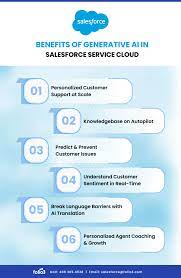
Salesforce Service Cloud users are set to receive more Einstein 1 generative AI tools in June and October. A key development is the expansion of automated customer conversations across more sales and marketing platforms. Generative AI and Service Cloud family of tools is growing. This insight aims to uncover the numerous use cases of generative AI in the modern contact center. We’ll help you understand how generative AI can fast track your contact center’s efficiency, improve data analysis capabilities, streamline QA and coaching processes, and make customers’ experiences better. Today, Salesforce launched Unified Conversations for WhatsApp, which automates bot responses to customer inquiries related to targeted marketing messages on the popular messaging app. Additionally, Salesforce plans to extend support to Line, a messaging app popular in Japan, later this year. These services are built on Salesforce’s Einstein 1 generative AI platform. The platform’s bots aggregate structured and unstructured CRM, product, service, and other data through Salesforce Data Cloud to generate personalized responses. These new features enable conversations to be routed to the digital channels where a Salesforce user’s customers are the most active. And to move omnichannel as customers needs change. Salesforce is also introducing a “bring your own channel” connector to support digital channels not natively covered by the platform. Current examples might include TikTok, Discord, and South Korea’s KakaoTalk, according to Ryan Nichols, Chief Product Officer for Salesforce Service Cloud. Generative AI and Service Cloud “It’s about getting data from all your conversations with customers from Service Cloud into Data Cloud and using that to not just deliver excellent customer service, but also grow your business,” Nichols said. Salesforce Einstein Conversation Mining, a Service Cloud feature currently in beta, aggregates conversations across customer channels to surface insights on the topics customers need help with. This aims to turn inbound customer service from a cost center into a revenue center, a goal long pursued at conferences like Dreamforce and ICMI. This massive change drives more than revenue, it drives ROI. Performance metrics such as time-to-answer and hold-time reduction have traditionally pressured agents to minimize call duration to retain their jobs. Now Salesforce is going to help them. While some skeptics question if generative AI can achieve this ambitious goal, Constellation Research analyst Liz Miller suggests it might be possible. Having previously managed a contact center herself, Miller recognizes the transformative potential of generative AI. With the aid of data, bots, and copilot counterparts assisting humans, agents could save time and access the right information to upsell customers during service engagements. Here are some of the ways Generative AI will change customer service forever. 1. Monitor and Ensure Compliance Maintaining compliance is crucial for fostering customer trust, preserving a positive brand image, and avoiding hefty privacy and compliance fines. In a contact center, compliance mistakes can quickly escalate into costly lawsuits and revenue losses. Generative AI allows your compliance team to proactively manage compliance by quickly identifying trends and addressing issues in real time. Instead of waiting for a compliance issue to escalate, you can fine-tune your AI model to provide compliance insights whenever necessary. For instance, you can ask: This approach offers more comprehensive insights than scorecards, which often lack context and accuracy. Generative AI’s analytical capabilities provide actionable insights to improve compliance across your contact center. 2. Get Insights About Your Call Center Performance at a Glance Generative AI language models make it easier than ever to gain insights into your contact center’s performance. Simply ask the model for the information you need. For example, you can inquire about the real-time average handling time (AHT) by asking, “What is the average handling time today?” But that’s just the beginning. With an advanced language model, you can compare metrics across different quarters or generate ideas for coaching plans by asking for each agent‘s strengths and weaknesses and suggestions for improvement. 3. Automate Post-Call Work Generative AI assistants can act as real-time notetakers, summarizing 100% of calls and freeing agents from manual note-taking. This automation makes after-call work effortless, generating comprehensive and compliant notes with a single click. 4. Capture Coachable Moments Easily Incorporating real-world coachable moments into your sessions is essential for tangible performance improvements. Generative AI can identify areas where agents typically struggle without requiring hours of call listening and note-checking. Traditional methods mean compromising on the specificity of coaching due to time constraints, especially when managing large teams. Generative AI solutions, however, enable call center managers to obtain detailed insights about each agent’s performance quickly. This allows for personalized coaching plans that address individual shortcomings efficiently. You can ask: 5. Improve Decision Making With Efficient Root-Cause Analysis Effective decision-making can transform your contact center. However, many managers struggle to identify the root causes of performance issues. Generative AI algorithms can analyze vast amounts of data and customer interactions, uncovering patterns and trends in customer and agent behavior. These insights help pinpoint the issues most impacting performance and customer satisfaction, allowing you to make informed decisions. The process is nearly fully automated, freeing your team from time-consuming data collection tasks. 6. Reduce Manual Work and Focus on Improvement Improving contact center performance requires extensive data, which is resource-intensive to collect manually. Generative AI simplifies this by analyzing customer interactions and providing actionable insights on demand. This saves time and money, allowing you to focus on improvements that deliver a higher ROI. 7. Scale What Works Discovering and scaling best practices is essential for team-wide success. Generative AI and Natural Language Processing (NLP) models can analyze customer interactions to identify effective strategies and coaching opportunities. For example, if a representative handles challenging situations well, AI can generate tips for other team members based on these successful interactions. Generative AI can identify top-performing agents and analyze their calls to extract best practices, providing a more comprehensive approach than focusing on a single agent. Queries you might use include: 8. Generate Agent Scripts Generative AI enables you to draft and fine-tune agent scripts for various customer interactions. Instead of relying

Read More
gettectonic.com