Salesforce Experience Cloud Archives - gettectonic.com - Page 5
Explore Salesforce Experience Cloud

Explore Salesforce Experience Cloud

Empowering Businesses with Exceptional Salesforce Cloud Solutions Explore the transformative work we have done for our clients with Salesforce Experience Cloud, showcasing some of the exceptional solutions we have implemented. Through our strategic initiatives, we have enabled organizations across various industries to leverage the full potential of Salesforce Clouds to enhance user engagement, streamline operations, and achieve significant business growth. Our success stories reflect the diverse challenges our clients faced and the optimized solutions we provided to address them. For instance, by revamping an recruiting portal for a prominent American government agency, we reduced issues related to recruting, onboarding, and retaining talent. Tectonic’s approach incorporates the latest Salesforce technologies, such as Lightning Web Components, Service Cloud, and Experience Cloud, to deliver high-performing, scalable solutions. From improving partner portals for better partner support to transforming community portals for enhanced user experience, our solutions are designed to meet specific client needs while ensuring long-term adaptability and success. Manufacturing – Experience Cloud Case Study Public Sector – Experience Cloud and Grants Management Case Study Manufacturing – Sales, Service, Marketing, and Partner Community Case Study Manufacturing – Sales, Service, Marketing and Experience Cloud Case Study Branded Solutions Manufacturing – Sales, Service, and Experience Cloud Case Study Nonprofit Hospitality – Service and Experience Cloud Case Study Tribal Government – Health, Marketing, MuleSoft, and Experience Cloud Case Study Restaurant – Sales, Service, and Experience Cloud Case Study Federal Government – Nonprofit Talent Acquisition Experience Cloud Case Study Higher Education Software – Sales, Service and Experience Cloud Case Study Salesforce Partner Portals Built on Salesforce Experience Cloud Explore all Tectonic Salesforce Implementation Solutions Like Related Posts Who is Salesforce? Who is Salesforce? Here is their story in their own words. From our inception, we’ve proudly embraced the identity of Read more Salesforce Marketing Cloud Transactional Emails Salesforce Marketing Cloud Transactional Emails are immediate, automated, non-promotional messages crucial to business operations and customer satisfaction, such as order Read more Salesforce Unites Einstein Analytics with Financial CRM Salesforce has unveiled a comprehensive analytics solution tailored for wealth managers, home office professionals, and retail bankers, merging its Financial Read more AI-Driven Propensity Scores AI plays a crucial role in propensity score estimation as it can discern underlying patterns between treatments and confounding variables Read more

Read More

Improving Customer Experiences with Salesforce

In 2023, sustaining competitiveness demands businesses to prioritize personalization and agility in their customer experience (CX) strategy. Brands need to build customer relationships and provide experiences that exceed expectations. If not, your connected customer will find a competitor who can. Improving Customer Experiences with Salesforce begins with initial implementation. Salesforce plays a critical role in achieving customer success as it serves as a central hub for customer data, streamlines communication, and offers valuable insights for customized customer interactions. It also allows for the tracking of customer behavior and preferences, enabling proactive and personalized support. Salesforce did not invent Customer Success, but the company quickly built what has become the number one customer relationship management platform to help their customers provide great experiences to their customers. Here are strategies to enhance your customer experience program: Enhancing Customer Experience for Brand Loyalty: Advance Personalized Experiences: By concentrating on these core areas, organizations can navigate the evolving CX landscape, delivering exceptional customer experiences. Tectonic is poised to collaborate, customizing Salesforce tools to craft remarkable customer experiences. If a friend ignores a call, text, or email, it probably doesn’t bode well for the relationship. As with friendships, customer relationships bloom when individuals feel understood. Relationships weaken when customers feel that businesses don’t appreciate their personal preferences, whether that’s remembering they enjoy romantic comedies, or that they would rather be contacted by email. Improving Customer Experiences with Salesforce The customer experience is broader and deeper than just the level of service received. Customer experience is the total perception of the company, interaction by interaction, from the first touchpoint to the last. This may include navigating the website, talking to sales reps over the phone, visiting a store, sampling a product or service, and experiencing an onboarding phase after a purchase. CRM may be a modern term, but the importance of nurturing customer relationships is age-old. The role of the customer experience has shifted in recent years, becoming one of the most crucial brand differentiators. Let’s explore how leveraging Salesforce can create customer experiences that surpass expectations and foster long-term relationships. As products become less distinguishable by brand and price, a great customer experience has become essential for companies to differentiate themselves. What are the 4 E’s of customer experience? Then come the 4Es – Economic, Efficient, Emotional, and Empathetic experiences, which focus on making your customers’ journey worthwhile. Every interaction should offer value for money (Economic), be easy for the customer (Efficient), generate positive feelings (Emotional), and show customers you get them (Empathetic). Like2 Related Posts Who is Salesforce? Who is Salesforce? Here is their story in their own words. From our inception, we’ve proudly embraced the identity of Read more Salesforce Marketing Cloud Transactional Emails Salesforce Marketing Cloud Transactional Emails are immediate, automated, non-promotional messages crucial to business operations and customer satisfaction, such as order Read more Salesforce Unites Einstein Analytics with Financial CRM Salesforce has unveiled a comprehensive analytics solution tailored for wealth managers, home office professionals, and retail bankers, merging its Financial Read more AI-Driven Propensity Scores AI plays a crucial role in propensity score estimation as it can discern underlying patterns between treatments and confounding variables Read more

Read More
Salesforce Service Cloud

Differences Between Salesforce Sales Cloud and Salesforce Service Cloud Explained

Salesforce Sales Cloud focuses on the sales process, while Salesforce Service Cloud is dedicated to customer service and support. Sales Cloud is designed for managing leads, opportunities, and sales forecasts, whereas Service Cloud is tailored for handling customer inquiries and cases. Both Sales Cloud and Service Cloud share critical features as they are built on the core Salesforce Platform. If your business primarily emphasizes sales, Sales Cloud is the ideal choice. If your focus is more on customer service, then Service Cloud is the preferred option. For businesses involved in both sales and customer service, both Sales Cloud and Service Cloud may be the best Salesforce solution. Difference Between Sales Cloud and Service Cloud: Sales Cloud streamlines sales and marketing efforts, focusing on lead management and increasing sales. Service Cloud helps support agents provide excellent customer service, resolving issues proactively. Functions Included in Service Cloud but not in Sales Cloud: Service Cloud includes specialized functions for customer support, such as omnichannel case routing, Web-to-Case and Email-to-Case conversion, and configurable assignment rules to streamline support agents’ work. Sales Cloud Features: Service Cloud Features: Agent Productivity (Service Cloud): Call Center Management (Service Cloud): Live Chat (Service Cloud): Customer Portal (Service Cloud): Ticket Management (Service Cloud): Like2 Related Posts Who is Salesforce? Who is Salesforce? Here is their story in their own words. From our inception, we’ve proudly embraced the identity of Read more Salesforce Marketing Cloud Transactional Emails Salesforce Marketing Cloud Transactional Emails are immediate, automated, non-promotional messages crucial to business operations and customer satisfaction, such as order Read more Salesforce Unites Einstein Analytics with Financial CRM Salesforce has unveiled a comprehensive analytics solution tailored for wealth managers, home office professionals, and retail bankers, merging its Financial Read more AI-Driven Propensity Scores AI plays a crucial role in propensity score estimation as it can discern underlying patterns between treatments and confounding variables Read more
Read More
Improving Customer Experiences with Salesforce

Improving Customer Experiences with Salesforce

Sustaining competitiveness continues to demand businesses prioritize personalization and agility in their customer experience strategy in 2023. Improved Customer Experiences with Salesforce are attainable. Read on. “You are caller number 10; please stay on the line.” A few years ago, a phone message like this from a company was a standard part of the customer experience. But today, customers expect more. They expect callback options. They expect to open a chat window on your website, send a text message or a tweet, and get a near-instant reply. They expect that you already know who they are when they call, that you’re aware of their most recent order, and that you understand what they need next. They don’t want to repeat their information. And they definitely don’t want to wait. Improved Customer Experiences with Salesforce Here are ways to enhance your customer experience program: Enhancing Customer Experience for Brand Loyalty: Advance Personalized Experiences: By concentrating on these core areas, organizations can navigate the evolving CX landscape, delivering exceptional customer experiences. Tectonic is poised to collaborate, customizing Salesforce tools to craft remarkable customer experiences. CX-Customer experience, gets thrown around a lot. But how is it defined, and what does it mean? “Customer experience and service have converged, it’s more than call centers and successful responses to problems. It is service opportunities in sales, support, and marketing. Delivering great customer experiences now means providing amazing, almost magical service at every opportunity.” Peter Schwartz, Salesforce senior vice president of strategic planning What Does Customer Experience Mean? Customer experience encompasses every interaction a prospect or customer has with a business, spanning various channels and touchpoints. Here’s how to enhance customer experience with Salesforce: Customers have always wanted a consistently good buying experience and the best value they can get. If they’re not happy buying expensive razor blades, they can sign up for inexpensive monthly delivery. If they’re fed up with mediocre hotel chains that don’t offer value, why not try Airbnb? The Good News The good news? Customers are willing to pay a premium for great experiences, and not just great products and services. This means businesses have an opportunity to increase revenue by delighting their customers in a way that no one else can. What are the 3Rs of customer experience? Science shows that customers are looking for 3 things in every interaction. These can be summarized in the 3 service values: be reliable, be responsive and build relationships. What are the six pillars of customer experience excellence? Developed by KPMG Nunwood of the UK following research involving more than one million customers across three continents, the system spotlights six key principles as the building blocks for customer experience success: personalization, integrity, expectations, resolution, time and effort, and empathy. Like2 Related Posts Who is Salesforce? Who is Salesforce? Here is their story in their own words. From our inception, we’ve proudly embraced the identity of Read more Salesforce Marketing Cloud Transactional Emails Salesforce Marketing Cloud Transactional Emails are immediate, automated, non-promotional messages crucial to business operations and customer satisfaction, such as order Read more Salesforce Unites Einstein Analytics with Financial CRM Salesforce has unveiled a comprehensive analytics solution tailored for wealth managers, home office professionals, and retail bankers, merging its Financial Read more AI-Driven Propensity Scores AI plays a crucial role in propensity score estimation as it can discern underlying patterns between treatments and confounding variables Read more

Read More
Salesforce Partner Portal

Salesforce Partner Portals Built on Salesforce Experience Cloud

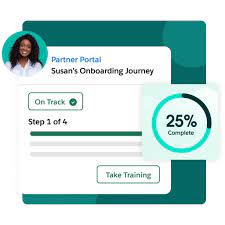
In the pursuit of strengthening partner relationships and expanding market reach, the adoption of a robust partner portal is crucial. Salesforce Experience Cloud presents an optimal solution that empowers organizations to craft customized and collaborative partner portals.  All with the security and flexibility you expect from Salesforce. Salesforce Partner Portals Built on Salesforce Experience Cloud. To realize the full potential of this platform and ensure a seamless implementation, adhering to best practices aligned with specific business objectives is necessary. Let’s explore key strategies and recommendations for a successful Salesforce Experience Cloud partner portal implementation, guiding you on the journey to unlocking the portal’s comprehensive capabilities. Exploring Salesforce Experience Cloud Partner Portals: Within Salesforce Experience Cloud, partner portals, also known as Salesforce PRM portals, play a pivotal role in fostering collaboration and communication between companies and their external partners. These dedicated gateways offer secure access to resources, information, and tools, facilitating seamless data sharing, streamlined processes, and effective management of partner relationships. Utilizing Salesforce PRM Portals: The Salesforce PRM portal facilitates the following functions: Salesforce Partner Portals Built on Salesforce Experience Cloud Key Features and Functionalities: Experience Cloud partner portals incorporate a range of components and functionalities designed to adapt to the evolving partner ecosystem. Essential standard features include: Best Practices for Implementation Success: Define Clear Goals and KPIs: Engage with Your Partners: If you are looking for a partner portal solution for your business, contact Tectonic today. Like1 Related Posts Tectonic’s Successful Salesforce Track Record Salesforce Technology Services Integrator – Tectonic has successfully delivered Salesforce in a variety of industries including Public Sector, Hospitality, Manufacturing, Read more Asset Management Salesforce Can Salesforce do asset management? You can manage assets in Consumer Goods (desktop) and in the Consumer Goods offline mobile Read more Lookup Relationship in Salesforce What is Lookup relationship in Salesforce? Salesforce’s lookup relationships is a significant capability that allows users to connect two objects Read more Demandbase Salesforce Integration The integration of Demandbase with Salesforce creates a seamless connection between Demandbase One and your Salesforce CRM, establishing a bidirectional Read more

Read More
Salesforce Experience Cloud

Is Salesforce Experience Cloud Salesforce Communities?

The Salesforce ecosystem is in a constant state of evolution, and the introduction of the Salesforce Experience Cloud is a significant development aimed at delivering connected digital experiences to consumers rapidly. Is Salesforce Experience Cloud Salesforce Communities? In a recent update, Salesforce announced that the Community Cloud will now be rebranded as the Salesforce Experience Cloud. This renaming reflects the platform’s evolution to meet the diverse needs of consumers and highlights Salesforce’s commitment to creating exceptional digital experiences. The Salesforce Experience Cloud serves as a digital experience platform, enabling organizations to create scalable digital experiences for partners, consumers, and employees. Leveraging features from Salesforce CRM, Experience Builder, and CMS, the platform empowers organizations to swiftly develop websites, portals, and personalized content, all with just a few clicks. So, why did Salesforce decide to rename the Community Cloud to the Experience Cloud? The renaming signifies Salesforce’s dedication to enhancing people’s lives and transforming businesses. By shifting the focus from building communities to creating community experiences, Salesforce aims to underscore the importance of data-powered digital experiences that foster collaboration, automation, and real business value. The transition from Community to Experience Cloud represents a step into the future, where the platform integrates data and content seamlessly to provide meaningful solutions. This evolution brings added flexibility and efficiency to user journeys, enhancing the overall digital experience. But how does the Salesforce Experience differ from the Salesforce Community? With the rebranding, you’ll notice changes and improvements in the tools used to design sites. For instance, the Site built using the Experience Cloud, formerly known as the Community, can now be developed using either Visualforce or Experience Builder. This change in terminology signifies a broader shift in the platform’s capabilities. Moreover, other components within the Digital Experiences menu have been simplified and replaced, emphasizing the evolution from the Community Cloud to the Experience Cloud. Understanding the transition from Community to Experience Cloud is necessary for anyone embarking on the journey as an Experience Cloud Consultant. Whether you’re an existing user or a newcomer, grasping the significant differences between the two platforms is crucial. And to further explore the impact of this transition on your organization, consider joining industry-led courses like those offered by saasguru. Frequently Asked Questions (FAQ): Content updated March 2024. Like1 Related Posts Who is Salesforce? Who is Salesforce? Here is their story in their own words. From our inception, we’ve proudly embraced the identity of Read more Salesforce Marketing Cloud Transactional Emails Salesforce Marketing Cloud Transactional Emails are immediate, automated, non-promotional messages crucial to business operations and customer satisfaction, such as order Read more Salesforce Unites Einstein Analytics with Financial CRM Salesforce has unveiled a comprehensive analytics solution tailored for wealth managers, home office professionals, and retail bankers, merging its Financial Read more AI-Driven Propensity Scores AI plays a crucial role in propensity score estimation as it can discern underlying patterns between treatments and confounding variables Read more
Read More
Experience Salesforce Experience Cloud

Experience Salesforce Experience Cloud

Salesforce Experience Cloud, formerly recognized as Salesforce Community Cloud, offers organizations a platform to construct branded online communities for employees, customers, partners, and other stakeholders, fostering collaboration, engagement, and self-service among community members. Key Features: Customization: Experience Cloud facilitates customization, empowering organizations to tailor their community’s appearance to match their brand through custom themes, templates, and layouts. Member Engagement: Various engagement tools like discussion forums, chats, and groups enable members to interact, share information, and collaborate effectively. Content Management: Easily create, manage, and share content within the community, including articles, documents, videos, and more, organized into topics for streamlined navigation. Access Control: Administrators can regulate community access and permissions, defining different levels of access for diverse user groups. Integration: Seamless integration with other Salesforce products and external systems enables connectivity with CRM, marketing automation, and other business applications. Mobile-Responsiveness: Communities built with Experience Cloud are mobile-responsive, ensuring accessibility from different devices. Data Visibility: Users can access relevant data from Salesforce CRM, such as customer records and support cases, within the community. Self-Service: Community members can find answers, access support resources, and resolve issues themselves, reducing the burden on support teams. Analytics: Experience Cloud offers analytics and reporting tools to track community engagement, member activity, and content performance for informed decision-making. Developer Tools: Advanced customization and integration requirements are met through developer tools, APIs, and documentation provided by Salesforce Experience Cloud. Use Cases: Customer Communities: Partner Portals: Employee Communities: B2B Commerce: Knowledge Sharing: Event Management: Custom Applications: Branding and Theming: Analytics and Reporting: Advantages of Salesforce Experience Cloud: Enhanced Customer Engagement: Build interactive communities for customers to find support and connect with each other. Scalable Collaboration: Create communities for various user groups while maintaining security and access control. Personalization: Deliver personalized content and services to enhance user engagement. Brand Consistency: Customize community appearance to ensure a consistent brand experience. Integration: Seamlessly connect with other Salesforce products and external systems. Mobile-Friendly: Communities are accessible from various devices, improving accessibility. Analytics and Insights: Gain valuable insights into community engagement and user behavior. Automation: Automate processes like customer support workflows to save time and improve efficiency. Security: Protect community data with robust security features. Customer and Partner Enablement: Provide easy access to resources and support for customers and partners. Reduced IT Overhead: Configure and customize communities without extensive coding or IT resources. Community Growth: Scale communities as your organization grows. Comparison with Community Cloud: Experience Cloud offers a broader range of functionalities beyond traditional community building. It focuses on creating seamless digital experiences for customers, partners, and employees. It provides enhanced integration capabilities and AI-driven personalization features. The name change reflects Salesforce’s shift towards delivering comprehensive digital experiences. Examples of What Can Be Achieved: Self-Service Portals: Customer support and FAQs. Partner Portals: Lead management and collaboration. Employee Intranets: Collaboration and HR processes. E-Commerce Storefronts: Product catalogs and shopping carts. Discussion Forums: Community interaction and knowledge sharing. Event and Conference Portals: Event registration and agendas. Patient and Healthcare Portals: Medical records and appointment scheduling. Nonprofit Donor Engagement: Fundraising campaigns and volunteer opportunities. Education Portals: Learning materials and discussion boards. Government Portals: Citizen services and public discussions. Financial Services Client Portals: Account information and communication with advisors. Like Related Posts Who is Salesforce? Who is Salesforce? Here is their story in their own words. From our inception, we’ve proudly embraced the identity of Read more Salesforce Marketing Cloud Transactional Emails Salesforce Marketing Cloud Transactional Emails are immediate, automated, non-promotional messages crucial to business operations and customer satisfaction, such as order Read more Salesforce Unites Einstein Analytics with Financial CRM Salesforce has unveiled a comprehensive analytics solution tailored for wealth managers, home office professionals, and retail bankers, merging its Financial Read more AI-Driven Propensity Scores AI plays a crucial role in propensity score estimation as it can discern underlying patterns between treatments and confounding variables Read more

Read More
Salesforce Partner Platform Experience Cloud

Manage Customer Relationships with Experience Cloud

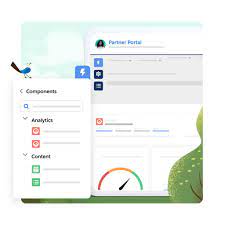
Offer your customers a secure and exclusive platform for managing their account details through the Experience Cloud’s Customer Account Portal solution. Enhance customer relationships with Experience Cloud. Better interactions and reduced service-related expenses by implementing Salesforce Experience Cloud granting customers the ability to view and settle invoices. They canupdate account information and access your knowledge base for answers to common queries. Tailored for effective account management, the Customer Account Portal empowers you to: The Customer Account Portal maintains the flexibility and extensibility you’ve come to expect with other Lightning sites, enabling you to: Salesforce Experience Cloud’s Customer Portal is a perfect solution for the public sector, government, manufacturing industry, and financial services sector. The primary distinction between customer experience and customer relationships lies in their scope. Improved customer relationships with Experience Cloud grow over time. Customer experience encompasses a broader, more comprehensive perspective on individuals’ emotions during interactions with your business. In contrast, customer relationships specifically pertain to your company’s enduring connections with customers. Like1 Related Posts Who is Salesforce? Who is Salesforce? Here is their story in their own words. From our inception, we’ve proudly embraced the identity of Read more Salesforce Marketing Cloud Transactional Emails Salesforce Marketing Cloud Transactional Emails are immediate, automated, non-promotional messages crucial to business operations and customer satisfaction, such as order Read more Salesforce Unites Einstein Analytics with Financial CRM Salesforce has unveiled a comprehensive analytics solution tailored for wealth managers, home office professionals, and retail bankers, merging its Financial Read more AI-Driven Propensity Scores AI plays a crucial role in propensity score estimation as it can discern underlying patterns between treatments and confounding variables Read more
Read More
Chatter Features in Aura Sites

Chatter Features in Aura Sites

Chatter serves as a social network designed for facilitating and preserving discussions within business, customer sites, or other enterprises. Members on the site utilize Chatter to engage with the organization, seek expert advice, and revisit relevant discussions. Chatter provides a direct view into the site, fostering insight, inspiration, and allowing users to stay focused on their business tasks. Within sites, Chatter is commonly referred to as feeds or discussions. While Chatter is available in sites built using Aura and Salesforce Tabs + Visualforce templates, additional features supporting customer and partner sites are exclusive to Aura sites. For instance, threaded discussions enhance feeds by enabling replies to answers and comments. Company verification adds credibility to answers for customer queries. Streams consolidate multiple feeds into a mega-feed, and direct messages facilitate individualized communication with customers or partners. Chatter is automatically enabled in orgs created after June 22, 2010. Users can create streams that combine feeds from discussions, groups, topics, profiles, and various objects like cases, opportunities, and accounts. This eliminates the need to jump from feed to feed to stay informed. Each member can create up to 100 streams. Customizing the Chatter publisher is possible with unique payloads for business processes. Users can add forms to posts, choose branding images, and infuse feeds with inspirational quotes. The Chatter publisher supports custom apps created or acquired from AppExchange, allowing users to add up to five apps. Posts can be pinned to give critical information more exposure. In group and topics feeds, an authorized user can pin up to three posts to the top, and a pinned post remains in place until unpinned. Pinning is exclusive to Aura sites. Chatter Questions promotes engagement by allowing users to ask and answer questions in their Chatter feed, groups, and records. Members in groups and Experience Cloud sites can respond to questions as they would comment on a Chatter post. Attachments to questions are also possible in sites built on the Customer Service template. To set up Chatter Questions, users can add the Question action to the global publisher layout. While Chatter is available in both Aura and Salesforce Tabs + Visualforce templates, specific features supporting customer and partner sites are unique to Aura sites. Chatter is enabled by default in orgs created after June 22, 2010. Key Chatter features include Chatter Groups, which are spaces for project members or teams, Actions and Endorsements for tasks like approving expense reports, updating orders, and creating support cases, Feeds, Polls, and Topics, Files and Knowledge Centers, Profiles and Statuses, and the flexibility to access Chatter from anywhere. Like1 Related Posts Salesforce Scheduler Salesforce Scheduler provides the objects required for appointment scheduling and an app that makes it easy to set up Scheduler. Read more Salesforce Webhooks Elevating Salesforce Integration with Webhooks: A Security-Focused Guide In the current digitally interconnected landscape, efficient business operations demand seamless communication Read more Salesforce for Government and Public Sector Solutions Transform your system of record into a system of engagement to manage mission-critical programs effectively. Achieve superior long-term outcomes by Read more Salesforce Loyalty Management Explained In January 2021, Salesforce unveiled Loyalty Management, aiming to assist businesses in actively engaging and rewarding their customers. Employing a Read more

Read More
Salesforce Service Cloud

Salesforce Service Acronyms

Here is a helpful glossary of terms you will hear when discussing Salesforce and Salesforce Service Cloud. ACW After Call Work Tasks that the agent needs to complete after the customer call has ended. Your job as a Salesforce Admin/Service Cloud Consultant is to make completing these tasks (eg. entering data, call outcome notes), as efficient as possible for the user. AHT Average Handle Time The average amount of time it takes for an agent to resolve a customer call/case. CTI Computer Telephony Integration Telephony (phone communication) can be directly integrated into Salesforce. This is a great win for Service (and Sales) departments who rely heavily on their phone, with features such as click to dial, call recording and screen pop available from 3rd party vendors. FCR First Contact Resolution Measures the % of cases that are solved on the first touchpoint with customer service.READ MORE: Create a Service Metrics Strategy. FSL Field Service (Lightning) An extension (add-on product) of Service Cloud that provides a comprehensive view of workforce management. Field Service involves providing services to customers beyond your office or site – which is referred to as in the “field”. Think about mobile employees, like service technicians, who carry out the service in-person; other people involved are service agents, dispatchers, and service managers. Salesforce dropped the “Lightning” from the product name, but the acronym is still widely used. IVR Interactive Voice Response An automated telephony system that interacts with callers, gathers information and routes calls to the appropriate recipients (source). People often refer to this as speaking to a bot before they get through to a human agent. KCS Knowledge-Centered Support A knowledge base that documents service agents’ experiences when solving cases, curated and made accessible to customers for self-service support should they encounter the same question or problem.Salesforce Experience Cloud is praised for encouraging collaboration and improvement between customers and agents in this way. PBX Private Branch Exchange System that routes calls to different agents. SLA Service-level Agreement A formal or informal contract between an organization and its customers which outlines what service they will receive and how long they will need to wait to receive that service each time. SLAs can be configured into Salesforce to prioritize cases and work orders. Like Related Posts Who is Salesforce? Who is Salesforce? Here is their story in their own words. From our inception, we’ve proudly embraced the identity of Read more Salesforce Marketing Cloud Transactional Emails Salesforce Marketing Cloud Transactional Emails are immediate, automated, non-promotional messages crucial to business operations and customer satisfaction, such as order Read more Salesforce Unites Einstein Analytics with Financial CRM Salesforce has unveiled a comprehensive analytics solution tailored for wealth managers, home office professionals, and retail bankers, merging its Financial Read more AI-Driven Propensity Scores AI plays a crucial role in propensity score estimation as it can discern underlying patterns between treatments and confounding variables Read more
Read More
Salesforce Loyalty Management

Salesforce Loyalty Management Explained

In January 2021, Salesforce unveiled Loyalty Management, aiming to assist businesses in actively engaging and rewarding their customers. Employing a user-friendly interface without the need for coding, the platform empowers businesses to construct scalable loyalty programs. This flexibility extends to the creation of diverse programs, such as tiered memberships or points-per-purchase. Loyalty Management is adaptable, allowing configuration to seamlessly integrate with Experience Cloud for customer sign-ups and Marketing Cloud for content delivery. With Loyalty Management as an end-to-end solution that helps you create intelligent, personalized engagements that increase customer loyalty. Loyalty Management is versatile and can cater to B2B and B2C business needs in any industry. With the Loyalty Management app, create and set up loyalty programs.  Loyalty Management lets you configure programs that fit the exact needs of your business and your customers. “Businesses in every industry are tasked with reimagining their loyalty strategies and Salesforce is equipped to help them with a flexible platform that helps them create unique programs. Loyalty Management, built on the Salesforce platform, helps organizations deliver innovative programs for customer recognition, reward, and retention. Nurture relationships and create lasting loyalty on the world’s #1 CRM. With Loyalty Management, your business can engage with customers in meaningful ways — bringing value to their experience and to your business. Leverage Customer 360 to deliver unique experiences with Salesforce customer loyalty. Generate a single source of truth for members that enables personalization at scale and weaves loyalty throughout the customer experience. Make loyalty a business strategy informed by the power of Salesforce Customer 360 Get a unified view of your program members to engage them with relevant and personalized experiences Make loyalty more than a program and bring it into every touch point in the customer or partner journey Deliver more dynamic and personal loyalty experiences for customers by removing silos and connecting member data across multiple systems. Create a consistent customer reward program experience — rewarding them for their engagement and their loyalty across every interaction and touch point they have with your business. Like1 Related Posts Who is Salesforce? Who is Salesforce? Here is their story in their own words. From our inception, we’ve proudly embraced the identity of Read more Salesforce Marketing Cloud Transactional Emails Salesforce Marketing Cloud Transactional Emails are immediate, automated, non-promotional messages crucial to business operations and customer satisfaction, such as order Read more Salesforce Unites Einstein Analytics with Financial CRM Salesforce has unveiled a comprehensive analytics solution tailored for wealth managers, home office professionals, and retail bankers, merging its Financial Read more AI-Driven Propensity Scores AI plays a crucial role in propensity score estimation as it can discern underlying patterns between treatments and confounding variables Read more
Read More
Salesforce CPQ

Salesforce for Government and Public Sector Solutions

Transform your system of record into a system of engagement to manage mission-critical programs effectively. Achieve superior long-term outcomes by incorporating apps that seamlessly connect EHR data, treatment plans, and patient preferences. Utilize top-tier commercial CRM capabilities while adhering to compliance standards such as FedRAMP, DoD IL2/4, SOC, and more. Ensure stakeholders have secure access to critical information on any device, allowing IT to focus on innovation and employees to engage with collaborative tools.

Read More
Salesforce Logo

Salesforce Webhooks

Elevating Salesforce Integration with Webhooks: A Security-Focused Guide In the current digitally interconnected landscape, efficient business operations demand seamless communication between systems. While custom integrations excel in outbound communications from Salesforce to distributed applications, the need arises for systems to send data back into Salesforce in real-time. Enter webhooks, a solution to this challenge. Understanding Webhooks: Webhooks represent a hands-off communication method, shifting the traditional integration paradigm. Instead of actively fetching data, webhooks enable a system to send a request to a URL based on predefined events, such as record creation or update. In Salesforce, this involves exposing a URL that passively listens for and handles events triggered by external systems. Setting Up a Webhook: Configuring a webhook within Salesforce might seem perplexing initially, as there’s no dedicated area in Setup for this task. However, leveraging Salesforce Sites or Experience Cloud provides a publicly accessible URL to external systems without requiring authentication. Tectonic can assist you. Security Considerations: Setting up a Salesforce Site or using Experience Cloud exposes a URL that requires cautious handling due to potential security risks. Several measures can enhance the security of webhooks: Incorporating these practices strengthens the security of exposed endpoints, mitigating potential risks. However, security is an ongoing process, requiring continuous awareness of potential attack vectors and regular updates to security practices. Summary: Webhooks offer a powerful mechanism for real-time data flow into Salesforce. Prioritizing security during webhook setup, following principles like least privileged access, and constant risk assessment are essential. When managed securely, webhooks unleash the potential of real-time communication, elevating your systems to the next level. Like2 Related Posts Who is Salesforce? Who is Salesforce? Here is their story in their own words. From our inception, we’ve proudly embraced the identity of Read more Salesforce Marketing Cloud Transactional Emails Salesforce Marketing Cloud Transactional Emails are immediate, automated, non-promotional messages crucial to business operations and customer satisfaction, such as order Read more Salesforce Unites Einstein Analytics with Financial CRM Salesforce has unveiled a comprehensive analytics solution tailored for wealth managers, home office professionals, and retail bankers, merging its Financial Read more AI-Driven Propensity Scores AI plays a crucial role in propensity score estimation as it can discern underlying patterns between treatments and confounding variables Read more

Read More
Salesforce Scheduler

Salesforce Scheduler

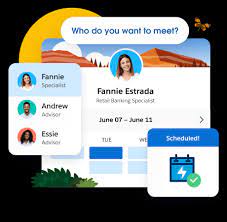
Salesforce Scheduler provides the objects required for appointment scheduling and an app that makes it easy to set up Scheduler. It provides preconfigured, customizable flows and rules that provide appointment booking experience. It also provides business APIs to create appointment booking experiences.

Read More
gettectonic.com