
Salesforce Financial Services Solutions Archives - gettectonic.com - Page 2
Salesforce for Public Loan Management

Salesforce for Public Loan Management

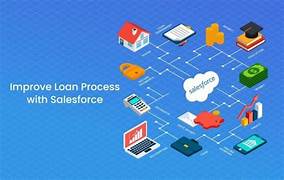
Public Loan Management Solutions: Optimized with Salesforce Technology In the dynamic world of financial services, public loan management has become increasingly important as organizations aim to improve efficiency, transparency, and borrower satisfaction. Leveraging cutting-edge technology is key to achieving these goals, and Salesforce offers a powerful platform for optimizing public loan management. This article explores how Salesforce’s capabilities can streamline and enhance various aspects of public loan management. The Role of Loan Boarding in Public Loan Management Loan boarding is a critical step where approved loans are entered into the system. This process typically includes data entry, document verification, and compliance checks. Salesforce’s customizable objects and automation features simplify this process by automating workflows, ensuring all necessary documents are collected and verified before the loan is boarded. Integrating external systems allows real-time data updates, minimizing errors and reducing manual intervention. Streamlining Handoff and Approval Processes Loan applications often require multiple approvals from stakeholders, which can be time-consuming and prone to delays. Salesforce facilitates efficient communication and collaboration through tools like Chatter, which allows instant messaging and file sharing. This ensures all stakeholders stay informed about application status changes, eliminating the need to switch between different platforms and speeding up the approval process. Disbursement Efficiency Timely fund disbursement is vital for maintaining borrower trust. Salesforce can automate disbursement processes by integrating payment gateways, accelerating fund transfers while providing borrowers with real-time updates on their disbursements. This enhances transparency and improves borrower satisfaction. Effective Management of Amortization Schedules Amortization schedules detail the repayment of loans over time, including both principal and interest. Salesforce’s reporting tools, combined with custom formulas, enable organizations to generate accurate, customized amortization schedules. These schedules can be easily updated if loan terms change, ensuring borrowers and lenders have up-to-date information. Simplifying Repayment Schedules Repayment schedules are essential for managing loan payments. Salesforce’s task management features allow organizations to automate reminders for upcoming payments, while borrowers can access personalized portals to view their schedules, promoting transparency and accountability. Customizable Loan Templates In public lending, creating flexible yet standardized loan templates is essential. Salesforce allows organizations to design customizable templates that meet both organizational policies and borrower needs, reducing onboarding time and improving efficiency. Comprehensive Document Management Managing loan-related documents is often challenging due to regulatory requirements and varying documentation needs. Salesforce’s integrated document management tools, such as Files and Content Libraries, provide secure storage and easy retrieval of documents, ensuring compliance and simplifying audits. Automating Interest Accruals and Invoicing Interest accruals require accurate tracking to ensure transparency for both lenders and borrowers. Salesforce’s invoicing automation ensures that billing cycles align with interest accruals, reducing administrative overhead and improving financial accuracy. Efficient Payment Processing and Waterfall Management Payment processing is essential for collecting repayments and adhering to waterfall structures, which determine how funds are allocated (e.g., to principal vs. interest). Salesforce integrates with NACHA/ACH for seamless payment processing and offers batch import capabilities for external payment records, improving cash flow management. Portfolio Management and Risk Assessment Managing a large portfolio of loans involves monitoring performance and assessing risks. Salesforce’s real-time analytics, reports, and dashboards provide managers with insights into portfolio performance, enabling data-driven decisions regarding portfolio adjustments, repayment patterns, and borrower risk. Enhancing Borrower Communication Consistent, clear communication is vital throughout the loan lifecycle, from initial inquiry to final repayment. Salesforce automates alerts and task assignments to ensure no critical communications are missed, keeping borrowers engaged and informed at every stage. Conclusion Salesforce technology offers a transformative approach to public loan management by enhancing operational efficiency, improving borrower experiences, and streamlining processes. Whether through automating document management, optimizing approval workflows, or managing payment cycles, Salesforce provides public lending organizations with the tools they need to deliver reliable, transparent, and efficient loan services to their constituents. By adopting Salesforce for public loan management, organizations not only improve internal operations but also elevate the borrower experience, ultimately contributing to community development and financial inclusion on a national scale. Like Related Posts Who is Salesforce? Who is Salesforce? Here is their story in their own words. From our inception, we’ve proudly embraced the identity of Read more Salesforce Marketing Cloud Transactional Emails Salesforce Marketing Cloud Transactional Emails are immediate, automated, non-promotional messages crucial to business operations and customer satisfaction, such as order Read more Salesforce Unites Einstein Analytics with Financial CRM Salesforce has unveiled a comprehensive analytics solution tailored for wealth managers, home office professionals, and retail bankers, merging its Financial Read more AI-Driven Propensity Scores AI plays a crucial role in propensity score estimation as it can discern underlying patterns between treatments and confounding variables Read more


Read More
Detecting the Hot Chatbot

Detecting the Hot Chatbot

All the tech giants are eager to prove their chatbot is the hottest in the market. Like wild stallions fighting over the mares, Google, Meta, Microsoft, and OpenAI are competing to show that their AI models have the most momentum. Companies with built-in AI like Salesforce occupy a broader sector. Detecting the Hot Chatbot is the challenge for the consumer. Why Detecting the Hot Chatbot Matters These companies have poured immense resources—both talent and money—into developing their models and adding new features. Now, they’re keen to showcase that these investments are yielding results. What’s Happening In the past few dayss, several major players have released new usage statistics: The Big Picture Generative AI is still in its early stages, and the entire industry faces the challenge of proving that these products deliver real value—whether by capturing market share from the lucrative search industry or by helping companies save money through increased productivity. How are you Detecting the Hot Chatbot. In the short term, however, everyone is eager to show they’re leading the pack. TV commercials for generative AI are now common, with Meta, Google, and Microsoft all airing spots, although the effectiveness of these ads varies. Some companies even boast that their commercials were created using AI—not necessarily the most convincing selling point. Between the Lines The competition isn’t just about consumer popularity; it’s also spilling over into the battle to secure business customers. On Wednesday’s earnings call, Salesforce CEO Marc Benioff made a point of distinguishing Salesforce’s new Agentforce AI sales assistant from Microsoft’s Copilot offerings. “This is not Copilot,” Benioff said. “So many customers are disappointed with what they bought from Microsoft Copilot because they’re not getting the accuracy and response they want. Microsoft has let down many customers with AI.” Microsoft quickly responded in a comment to CNBC. “We are hearing something quite different from our Copilot for Microsoft 365 customers,” said corporate VP Jared Spataro. “When I talk to CIOs directly, and if you look at recent third-party data, organizations are betting on Microsoft for their AI transformation.” The Bottom Line The competition is heating up as tech giants vie to prove they have the upper hand in the AI race and the Hot Chatbot. Customers will ultimately decide. Like Related Posts Who is Salesforce? Who is Salesforce? Here is their story in their own words. From our inception, we’ve proudly embraced the identity of Read more Salesforce Marketing Cloud Transactional Emails Salesforce Marketing Cloud Transactional Emails are immediate, automated, non-promotional messages crucial to business operations and customer satisfaction, such as order Read more Salesforce Unites Einstein Analytics with Financial CRM Salesforce has unveiled a comprehensive analytics solution tailored for wealth managers, home office professionals, and retail bankers, merging its Financial Read more AI-Driven Propensity Scores AI plays a crucial role in propensity score estimation as it can discern underlying patterns between treatments and confounding variables Read more
Read More
Repayment Schedules With Salesforce

Repayment Schedules With Salesforce

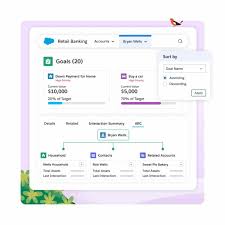
Simplifying Repayment Schedules: Elevating Borrower Experience with Salesforce In the rapidly changing financial services industry, managing loan repayment schedules efficiently is vital for both lenders and borrowers. A well-designed system can significantly enhance the borrower experience, streamline operations, and boost overall efficiency. Salesforce software emerges as a powerful solution that simplifies repayment schedules and fosters better communication between lenders and borrowers. This article explores how Salesforce can revolutionize repayment management with its comprehensive features. Understanding Repayment Schedules Repayment schedules define how a borrower will pay back their loan over time, detailing payment amounts, due dates, interest rates, and the total loan duration. A clear and well-structured repayment schedule not only helps borrowers manage their finances but also ensures that lenders receive timely payments. The complexity of repayment schedules can vary based on factors like loan terms, interest rates, and borrower profiles. Therefore, having an effective system to manage these variables is crucial for maintaining accuracy and transparency throughout the borrowing process. The Role of Salesforce in Loan Management Salesforce offers an extensive suite of tools designed to enhance customer relationship management (CRM) across various industries, including finance. By utilizing Salesforce’s capabilities, lenders can develop customized solutions that address key aspects of loan management, such as: 1. Automated Amortization SchedulesSalesforce enables the automated creation of amortization schedules tailored to individual loans. This feature minimizes manual errors and ensures accurate calculations from the start. Automation allows lenders to provide borrowers with clear payment plans, including details on principal reductions and interest accruals over time. 2. Custom Borrower PortalsOne of Salesforce’s major strengths is the ability to create custom borrower portals. These portals allow clients to access their repayment schedules anytime, view upcoming payments, track their balances in real-time, and even make payments through secure channels. This transparency builds trust between lenders and borrowers, enhancing overall satisfaction. 3. Document ManagementEffective document management is essential for maintaining organized records related to loans and repayments. Salesforce’s document management features enable lenders to securely store important documents—such as contracts, amendments, or communications—within each borrower’s profile. This accessibility simplifies audits and reviews while ensuring compliance with regulatory standards. Streamlined Communication with Automated Alerts A common challenge for borrowers is keeping track of payment deadlines and understanding when payments are due. Salesforce addresses this by offering automated alerts via email or text message, reminding borrowers of upcoming due dates or changes in payment schedules. These notifications help keep borrowers informed about their obligations without overwhelming them, balancing proactive communication with user-friendliness. Enhanced Reporting & Analytics Salesforce provides powerful reporting tools that allow lenders to effectively analyze repayment patterns across different portfolios. By identifying trends related to timely payments, defaults, or late fees, financial institutions can strategically tailor their offerings. Detailed dashboards also present key performance indicators (KPIs) related to collection efficiency, aiding in risk assessment and decision-making processes. Portfolio Management Integration Integrating portfolio management features within Salesforce allows lenders to monitor individual loans and gain insights into overall portfolio health. This includes tracking repayments received versus outstanding balances owed by all clients collectively. This holistic view supports decision-making around refinancing options for struggling clients and identifying growth opportunities based on historical data trends. This integration enhances lender profitability while improving borrower experiences. Conclusion: Transforming the Borrower Experience Integrating Salesforce software into loan repayment scheduling represents a significant advancement in enhancing borrower experiences in the financial services industry. From automating complex amortization calculations to providing personalized customer portals, Salesforce empowers both lenders and borrowers at every stage of the process. By embracing technology like Salesforce, lenders can streamline communication, reduce administrative burdens, and position themselves favorably against competitors. This buildss long-lasting relationships built on trust and reliability, ultimately benefiting all parties involved. Contact Tectonic today to explore lending solutions from Salesforce. Like Related Posts Who is Salesforce? Who is Salesforce? Here is their story in their own words. From our inception, we’ve proudly embraced the identity of Read more Salesforce Marketing Cloud Transactional Emails Salesforce Marketing Cloud Transactional Emails are immediate, automated, non-promotional messages crucial to business operations and customer satisfaction, such as order Read more Salesforce Unites Einstein Analytics with Financial CRM Salesforce has unveiled a comprehensive analytics solution tailored for wealth managers, home office professionals, and retail bankers, merging its Financial Read more AI-Driven Propensity Scores AI plays a crucial role in propensity score estimation as it can discern underlying patterns between treatments and confounding variables Read more
Read More
Why Choose Salesforce as Your Mortgage CRM?

Banking Complaints to Profits

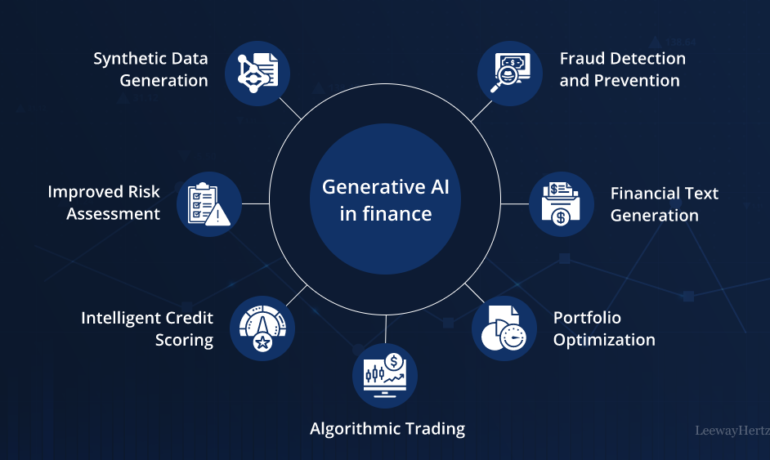
Tectonic: Elevating Complaint Management in Banking with Salesforce Customer satisfaction is key in banking, but complaints are unavoidable. Banking Complaints to Profits is not only learning from complaints but increasing revenue by them. Banking complaints also present a unique opportunity. Handled effectively, complaints can offer valuable insights that drive process improvements and ultimately strengthen customer relationships. Banking Complaints to Profits Banks need a robust, strategic complaint management system to capitalize on this opportunity. Such a system must go beyond simply documenting and resolving grievances. It must enable banks to proactively identify trends, assess root causes, and implement targeted solutions that address individual complaints and prevent future issues. Salesforce offers a comprehensive platform that can transform your complaint management process. Let’s explore how its key features align perfectly with the needs of a strategic approach. Streamlining Complaint Intake Salesforce simplifies and customizes the process of collecting customer complaints, aligning with your specific policies and regulatory needs. Its dynamic intake process ensures a smooth and compliant experience for your customers and your team. Efficient Complaint Lifecycle Management Salesforce streamlines the entire complaint management process, ensuring seamless routing to the right teams and individuals for swift resolution. Automated assignments, milestone tracking, and clear follow-up expectations (including Service Level Agreements) guarantee accountability and efficiency at every stage. Automated escalations expedite resolutions when needed, ensuring regulatory compliance and maximizing customer satisfaction. Securing Your Complaint Data Salesforce prioritizes data security with Shield and Financial Services Cloud’s Compliance Data Sharing Model to ensure the confidentiality of sensitive complaint information through robust access controls and permissions. This guarantees that only authorized personnel can view and interact with sensitive data, maintaining the highest levels of privacy and compliance. Centralizing and Unifying Your Data Beyond security, Salesforce eliminates information silos by centralizing complaint data from across your organization. This creates a single source of truth, providing a comprehensive and unified view of customer feedback. This holistic perspective enables deeper analysis, informed decision-making, and a more proactive and practical approach to complaint management. Harnessing Complaint Data for Continuous Improvement Financial Services Cloud’s Case Management and Data Processing Engines can give you a complete view of customer complaints and their lifecycle. By harnessing this case data within CRM Analytics, you can enhance the customer 360, proactively monitor trends, prioritize areas for improvement, and enhance the customer experience while effectively mitigating risk. The Future of Complaint Management: Salesforce as a Strategic Advantage In an increasingly competitive and regulated landscape, banks must be equipped to address customer complaints efficiently and leverage them for continuous improvement. By combining Salesforce’s power with a strategic, customer-centric approach, banks can turn complaints into a catalyst for growth, ensuring a more resilient and customer-focused future. At Tectonic, we’ve watched firsthand how a well-designed complaint management system can transform customer interactions from points of friction into opportunities for improvement. Our experience in the financial services sector has taught us that technology is only part of the equation. A comprehensive approach, encompassing data-driven insights, staff training, and ongoing process optimization, is essential for maximizing the benefits of any system. Chat with our financial services experts to learn how Salesforce can transform your complaint management process to deliver exceptional service and strengthen trusted customer relationships. Like Related Posts Who is Salesforce? Who is Salesforce? Here is their story in their own words. From our inception, we’ve proudly embraced the identity of Read more Salesforce Marketing Cloud Transactional Emails Salesforce Marketing Cloud Transactional Emails are immediate, automated, non-promotional messages crucial to business operations and customer satisfaction, such as order Read more Salesforce Unites Einstein Analytics with Financial CRM Salesforce has unveiled a comprehensive analytics solution tailored for wealth managers, home office professionals, and retail bankers, merging its Financial Read more AI-Driven Propensity Scores AI plays a crucial role in propensity score estimation as it can discern underlying patterns between treatments and confounding variables Read more
Read More
What is Customer 360 for Banking

What is Customer 360 for Banking

In banking, Customer 360 is a strategy and technology that provides a comprehensive, unified view of each customer’s data from various sources, like core banking systems, CRM, and marketing platforms. This centralized view enables banks to understand customer behavior, predict needs, and deliver personalized experiences, ultimately improving customer relationships and business outcomes.  Key aspects of Customer 360 in banking: Benefits of Customer 360 in banking: Like Related Posts Who is Salesforce? Who is Salesforce? Here is their story in their own words. From our inception, we’ve proudly embraced the identity of Read more Salesforce Marketing Cloud Transactional Emails Salesforce Marketing Cloud Transactional Emails are immediate, automated, non-promotional messages crucial to business operations and customer satisfaction, such as order Read more Salesforce Unites Einstein Analytics with Financial CRM Salesforce has unveiled a comprehensive analytics solution tailored for wealth managers, home office professionals, and retail bankers, merging its Financial Read more AI-Driven Propensity Scores AI plays a crucial role in propensity score estimation as it can discern underlying patterns between treatments and confounding variables Read more

Read More
Understanding and Growing Your Monthly Recurring Revenue

Understanding and Growing Your Monthly Recurring Revenue

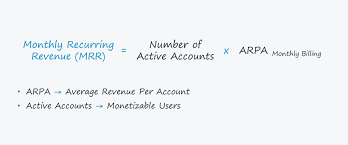
Understanding and Growing Your Monthly Recurring Revenue (MRR) Monthly Recurring Revenue (MRR) is a vital metric for subscription-based and managed services businesses. It indicates whether your business is growing or shrinking and is crucial for making strategic decisions. Understanding and Growing Your Monthly Recurring Revenue is a key to building, monitoring, and exploding your pipeline. What is Monthly Recurring Revenue (MRR)? While revenue represents your company’s total income, MRR is the predicted monthly revenue from active subscriptions. It includes all recurring charges such as subscriptions, service retainers, promos, discounts, and add-ons, but excludes one-time fees. Why is MRR Important? MRR provides insights into financial performance, growth potential, churn, and customer value. It is essential for strategic planning and investor relations. Benefits of Calculating MRR: Types of MRR: How to Calculate MRR: The basic formula for MRR is: MRR=Number of active accounts×Average monthly revenue per accounttext{MRR} = text{Number of active accounts} times text{Average monthly revenue per account}MRR=Number of active accounts×Average monthly revenue per account Steps to Calculate MRR: Example Calculation: MRR=(100×$50)+(50×$100)=$5,000+$5,000=$10,000text{MRR} = (100 times $50) + (50 times $100) = $5,000 + $5,000 = $10,000MRR=(100×$50)+(50×$100)=$5,000+$5,000=$10,000 So, the MRR for that month would be $10,000. Advanced MRR Calculations: Growing Your MRR: MRR is a crucial metric for understanding your customers, finances, and growth potential. By tracking and managing MRR, you can make informed decisions and drive sustainable business growth. As the subscription-based and managed services landscape evolves, prioritizing MRR is essential for improving and innovating revenue streams. Like Related Posts Who is Salesforce? Who is Salesforce? Here is their story in their own words. From our inception, we’ve proudly embraced the identity of Read more Salesforce Marketing Cloud Transactional Emails Salesforce Marketing Cloud Transactional Emails are immediate, automated, non-promotional messages crucial to business operations and customer satisfaction, such as order Read more Salesforce Unites Einstein Analytics with Financial CRM Salesforce has unveiled a comprehensive analytics solution tailored for wealth managers, home office professionals, and retail bankers, merging its Financial Read more AI-Driven Propensity Scores AI plays a crucial role in propensity score estimation as it can discern underlying patterns between treatments and confounding variables Read more

Read More
Salesforce Data Cloud

Tracking Money Flows with Data Cloud

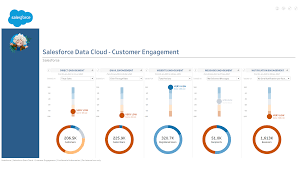
In the digital era, banks face a significant challenge: obtaining a clear, reliable, and accurate understanding of their customers amidst a vast amount of fragmented data spread across different systems. Tracking Money Flows with Data Cloud. Despite the abundance of data, it often fails to provide a complete or accurate narrative. Simple questions like “Did a customer’s funds remain within the bank or exit entirely?” can be surprisingly challenging to answer due to this fragmented data. This disjointed view of customer behavior obstructs banks from leveraging valuable data to make informed decisions and enhance client engagement. Data Cloud and Data Strategy The solution lies not just in the data itself but in developing a robust strategy to consolidate customer data and make it actionable. By breaking down data silos and constructing comprehensive customer profiles, banks can unlock the true potential of their information. This leads to a deeper comprehension of their clients, enabling them to make intelligent decisions that drive engagement, predict customer needs, and manage attrition risks effectively. In today’s intricate economic landscape, this data-driven approach isn’t merely advantageous—it’s essential for banks to stay competitive and achieve sustained success. Tracking Money and Money Flows with Data Cloud Consider the case of William to illustrate the impact of data analytics. William, a sophisticated investor, continuously shifted his funds seeking the best returns. This presented a challenge for his bank, whose legacy systems were ill-equipped to track his dynamic financial activities effectively. The bank’s inability to follow William’s money hindered marketing and attrition management efforts. They needed to understand if funds were truly leaving the institution or just relocating within its ecosystem. The introduction of Data Cloud transformed the bank’s capabilities. By consolidating disparate data sources, they gained real-time insights into William’s financial activities, allowing them to understand his relationship with the bank better and make more reliable attrition predictions. Armed with this knowledge, the bank personalized their approach to William, showcasing tailored offerings aligned with his financial objectives. This personalized engagement transformed their relationship from transactional to collaborative, reducing attrition risk and maximizing mutual benefit. William’s case became a model for the bank, demonstrating the power of unifying data silos to understand customers’ financial behavior comprehensively. In today’s financial environment, overcoming fragmented data is paramount. Data Cloud offers a winning solution: Harnessing the abundance of data is crucial. By leveraging tools like Data Cloud, banks can unravel the mysteries of customer behavior and optimize their operations effectively. Like Related Posts Who is Salesforce? Who is Salesforce? Here is their story in their own words. From our inception, we’ve proudly embraced the identity of Read more Salesforce Marketing Cloud Transactional Emails Salesforce Marketing Cloud Transactional Emails are immediate, automated, non-promotional messages crucial to business operations and customer satisfaction, such as order Read more Salesforce Unites Einstein Analytics with Financial CRM Salesforce has unveiled a comprehensive analytics solution tailored for wealth managers, home office professionals, and retail bankers, merging its Financial Read more AI-Driven Propensity Scores AI plays a crucial role in propensity score estimation as it can discern underlying patterns between treatments and confounding variables Read more
Read More
Which Industries Use Salesforce

Which Industries Use Salesforce?

Salesforce’s comprehensive industry solutions cater to specific needs across a wide array of business sectors, making it a crucial tool for businesses seeking tailored CRM solutions. Its adaptability and industry-focused approach have contributed to its widespread adoption across various domains.

Read More
Salesforce Success Story

Case Study: Reduce the Time and Cost of Provider Onboarding

The primary provider of ancillary insurance services including life, dental, disability, vision and other large provider organizations in eight states. Industry: Insurance Implemented: Salesforce Platform Technologies Replaced: Multiple Systems Tectonic has greatly streamlined the entire provider onboarding process including automation the Practice/Provider credentials verification process. In addition, prospecting and overall affiliate management process was transformed. The Challange The Solution How can Tectonic Reduce the Time and Cost of Provider Onboarding for your organization? Contact us today. Like Related Posts Who is Salesforce? Who is Salesforce? Here is their story in their own words. From our inception, we’ve proudly embraced the identity of Read more Salesforce Marketing Cloud Transactional Emails Salesforce Marketing Cloud Transactional Emails are immediate, automated, non-promotional messages crucial to business operations and customer satisfaction, such as order Read more Salesforce Unites Einstein Analytics with Financial CRM Salesforce has unveiled a comprehensive analytics solution tailored for wealth managers, home office professionals, and retail bankers, merging its Financial Read more AI-Driven Propensity Scores AI plays a crucial role in propensity score estimation as it can discern underlying patterns between treatments and confounding variables Read more

Read More
Salesforce

Spring ’24 Salesforce Enhancements to Health Cloud and the Financial Services Industry

Salesforce Enhancements to Health Cloud and the Financial Services Industry bring about big changes for Health Cloud and financial services solutions. Enhancements Home Health Enhancements Health Cloud Deliver connected health in the home with new slot broadcasting, intelligent medication management, and a self-service patient portal. Provider Relationship and Network Management Enhancements Health Cloud Process referrals faster with automated intake, guided flows, and fax-conversion. Simplify provider searches with filters for conditions, services, and geographic location. Advanced Therapy Management Enhancements Health Cloud Use e-signatures to maintain FDA compliance with a digital trail of custody. Interoperability Enhancements Health Cloud Accelerate healthcare interoperability with clicks, not code. Use real-time APIs for EMRs, embedded analytics, and bulk data ingestion to simplify integration. Personalized Financial Engagement Financial Services Unify terabytes of customer data across legacy and third-party systems into a single view. Ignite your personalization strategy at scale by using out-of-the-box calculated insights to create targeted segments and improve employee efficiency. Automation Templates Enhancements Financial Services Deliver self-service embedded into your digital banking solutions, move faster with an expanded library of prebuilt service process templates, and streamline transaction disputes with a dedicated data model and smart intake capabilities. Transaction Dispute Management Enhancements Financial Services Streamline complex dispute processes to drive faster resolution. Generate personalized email communications drafts using prompts based on relevant customer data. Eliminate the inefficiencies of switching between systems and reduce operational costs. Actionable Segmentation Enhancements Financial Services Build more advanced lists with Data Cloud and AI-driven Propensity Scores. Drive business outcomes with new actions like adding list members to a Sales Cadence. Salesforce Enhancements to Health Cloud and the Financial Services Industry Stay tuned to Tectonic’s Insights for more details and news from Salesforce. Salesforce Enhancements to Health Cloud and the Financial Services Industry Like Related Posts Who is Salesforce? Who is Salesforce? Here is their story in their own words. From our inception, we’ve proudly embraced the identity of Read more Salesforce Marketing Cloud Transactional Emails Salesforce Marketing Cloud Transactional Emails are immediate, automated, non-promotional messages crucial to business operations and customer satisfaction, such as order Read more Salesforce Unites Einstein Analytics with Financial CRM Salesforce has unveiled a comprehensive analytics solution tailored for wealth managers, home office professionals, and retail bankers, merging its Financial Read more AI-Driven Propensity Scores AI plays a crucial role in propensity score estimation as it can discern underlying patterns between treatments and confounding variables Read more

Read More
Customer Satisfaction

Tectonic’s Approach to Ensuring Salesforce Customer Satisfaction

by Tectonic’s Sean McSkimming Scenarios of Assorted Levels of Customer Satisfaction – Ensuring Salesforce Customer Satisfaction Are you having satisfaction issues during or after your Salesforce implementation? Are you not happy with the Salesforce solution or implementation provided to you? Or are you seeing low user adoption after the implementation has gone live? This can be caused by any of the following: At Tectonic we take approaches to avoid the causes and effects above. We understand that every Salesforce implementation and initiative is unique, because every customer is unique. Ensuring Salesforce customer satisfaction is at the heart of everything we do. Tectonic has been involved in multiple points of an implementation project to help customers maximize their Salesforce investment. Even if their initial Salesforce experience was not perfect. We take a simple yet effective approach. Transparency and Trust are at the core of everything we do for every client. Every interaction with our prospects and our customers is filtered through the lens of transparency and trust. Customers in flight, whether the project has started or not are given: Live customers who aren’t happy with their current Salesforce solution due to low user adoption or a Salesforce solution that is not meeting their needs are given: If your are intrigued by Tectonic’s commitment to customer satisfaction, or perhaps not currently enjoying this level of satisfaction, we would love to talk to you today about your Salesforce implementation. Like Related Posts Who is Salesforce? Who is Salesforce? Here is their story in their own words. From our inception, we’ve proudly embraced the identity of Read more Salesforce Marketing Cloud Transactional Emails Salesforce Marketing Cloud Transactional Emails are immediate, automated, non-promotional messages crucial to business operations and customer satisfaction, such as order Read more Salesforce Unites Einstein Analytics with Financial CRM Salesforce has unveiled a comprehensive analytics solution tailored for wealth managers, home office professionals, and retail bankers, merging its Financial Read more AI-Driven Propensity Scores AI plays a crucial role in propensity score estimation as it can discern underlying patterns between treatments and confounding variables Read more

Read More
Salesforce Marketing Cloud Account Engagement

Salesforce Marketing Cloud Engagement for Industries

Customer and stakeholder expectations for communication have reached unprecedented levels in 2024. Every message now demands personalization, targeting, and relevance to foster enduring and meaningful relationships. How can you ensure that you meet these heightened expectations and cultivate lifelong connections with your customers? With Salesforce Marketing Cloud Engagement for Industries. Enter Marketing Cloud Engagement for Industries, a solution crafted by Salesforce to assist companies and organizations of any size in crafting personalized customer and stakeholder experiences through scalable email campaigns and data-driven insights. This robust offering provides a foundational framework for leveraging Marketing Cloud, offering pre-built tools, templates, and assets customized for your specific industry. The result? The ability to engage with your customers and stakeholders swiftly and effectively. This suite of outreach marketing tools helps you communicate with and engage your supporters, customers, contacts, and prospects. With Marketing Cloud Engagement for Industries, you receive a tailored package that includes: Additional tools are at your disposal to expedite the implementation of Marketing Cloud Engagement and minimize setup time. A user-friendly Get Started page walks you through the configuration process, and industry-specific assets—such as sample email templates and journeys—empower you to extract greater value from Marketing Cloud more efficiently. And Tectonic is ready to be your implementation partner. Contact Tectonic today for more information. If you are already using Marketing Cloud you can still add the Get Started page and pre-built assets. Note that to use Marketing Cloud Engagement for Industries does require the implementation of Salesforce Lightning Experience and My Domain for a more specific domain name in your Salesforce org. Connecting Marketing Cloud Engagement with Salesforce can be a complex process. Tectonic can help. Like2 Related Posts Who is Salesforce? Who is Salesforce? Here is their story in their own words. From our inception, we’ve proudly embraced the identity of Read more Salesforce Marketing Cloud Transactional Emails Salesforce Marketing Cloud Transactional Emails are immediate, automated, non-promotional messages crucial to business operations and customer satisfaction, such as order Read more Salesforce Unites Einstein Analytics with Financial CRM Salesforce has unveiled a comprehensive analytics solution tailored for wealth managers, home office professionals, and retail bankers, merging its Financial Read more AI-Driven Propensity Scores AI plays a crucial role in propensity score estimation as it can discern underlying patterns between treatments and confounding variables Read more
Read More
nCino and Salesforce

nCino and Salesforce

Leaders in cloud innovation reinforce alliance to provide best-in-class solutions to the financial services industry by extending successful partnership to 2031. Updated commercial terms are expected to improve nCino’s subscription gross margins. Wilmington, N.C. – December 21, 2023 – nCino, Inc. (NASDAQ: NCNO), a pioneer in cloud banking for the global financial services industry, today announced an expanded partnership with Salesforce to accelerate the delivery of best-in-class cloud solutions to the financial services industry. This builds on nCino and Salesforce’s long-standing collaboration, established in 2011, to empower financial institutions with digital innovations that increase efficiency, transparency, and reduce risks while driving customer growth and loyalty. “Our strategic partnership with Salesforce has enabled nCino to transform the financial services industry by providing industry-specific solutions that drive efficiencies, deliver intelligence, and help institutions modernize for a more agile future,” said Pierre Naudé, Chairman and CEO of nCino. “We’re glad to again be expanding our work with Salesforce and are committed to utilizing each other’s strengths to further benefit financial institutions of all sizes around the globe.” “nCino’s success is a testament to the enormous opportunity in front of ISVs building on Salesforce,” said Brian Landsman, Executive Vice President, Global Technology Partners, at Salesforce. “Salesforce is the world’s #1 AI CRM, trusted by thousands of partners to power purpose-built solutions for highly specialized industries. The expansion of our work with nCino will only accelerate how our customers are reimagining the future of personalized financial services.” As part of the agreement, nCino will deepen its connectivity to Salesforce platform tools including CRM, powered by AI and automation, and Financial Services Cloud. These innovations will empower financial institutions utilizing nCino and Salesforce to further modernize customer experiences like onboarding, loan origination, deposit account opening, and portfolio management. The expanded agreement also includes updated commercial terms which are expected to improve nCino’s subscription gross margins, minimum payment commitments from nCino during the first four fiscal years of the term of the extension, and an extension of the term of the agreement to 2031. About nCinonCino (NASDAQ: NCNO) is the worldwide leader in cloud banking. Through its single software-as-a-service (SaaS) platform, nCino helps financial institutions serving corporate and commercial, small business, consumer, and mortgage customers modernize and more effectively onboard clients, make loans, manage the loan lifecycle, and open accounts. Transforming how financial institutions operate through innovation, reputation and speed, nCino is partnered with more than 1,850 financial services providers globally. For more information, visit www.ncino.com. Salesforce, Financial Services Cloud and others are among the trademarks of Salesforce, Inc. nCino Media ContactsNatalia Moosepress@ncino.com Safe Harbor StatementThis press release contains forward-looking statements within the safe harbor provisions of the Private Securities Litigation Reform Act of 1995. Forward-looking statements generally include actions, events, results, strategies and expectations and are often identifiable by use of the words “believes,” “expects,” “intends,” “anticipates,” “plans,” “seeks,” “estimates,” “projects,” “may,” “will,” “could,” “might,” or “continues” or similar expressions. Any forward-looking statements contained in this press release are based upon nCino’s historical performance and its current plans, estimates, and expectations, and are not a representation that such plans, estimates, or expectations will be achieved. These forward-looking statements represent nCino’s expectations as of the date of this press release. Subsequent events may cause these expectations to change and, except as may be required by law, nCino does not undertake any obligation to update or revise these forward-looking statements. These forward-looking statements are subject to known and unknown risks and uncertainties that may cause actual results to differ materially including, among others, risks and uncertainties relating to the market adoption of our solution and privacy and data security matters. Additional risks and uncertainties that could affect nCino’s business and financial results are included in reports filed by nCino with the U.S. Securities and Exchange Commission (available on our web site at www.ncino.com or the SEC’s web site at www.sec.gov). Further information on potential risks that could affect actual results will be included in other filings nCino makes with the SEC from time to time. Like Related Posts Who is Salesforce? Who is Salesforce? Here is their story in their own words. From our inception, we’ve proudly embraced the identity of Read more Salesforce Marketing Cloud Transactional Emails Salesforce Marketing Cloud Transactional Emails are immediate, automated, non-promotional messages crucial to business operations and customer satisfaction, such as order Read more Salesforce Unites Einstein Analytics with Financial CRM Salesforce has unveiled a comprehensive analytics solution tailored for wealth managers, home office professionals, and retail bankers, merging its Financial Read more AI-Driven Propensity Scores AI plays a crucial role in propensity score estimation as it can discern underlying patterns between treatments and confounding variables Read more
Read More
gettectonic.com