Salesforce Implementation Services Archives - gettectonic.com - Page 5
Boost Payer Patient Education

Boost Payer Patient Education

As a pediatrician with 15 years of experience in the pediatric emergency department, Cathy Moffitt, MD, understands the critical role of patient education. Now, as Senior Vice President and Aetna Chief Medical Officer at CVS Health, she applies that knowledge to the payer space. “Education is empowerment. It’s engagement. It’s crucial for equipping patients to navigate their healthcare journey. Now, overseeing a large payer like Aetna, I still firmly believe in the power of health education,” Moffitt shared on an episode of Healthcare Strategies. At a payer organization like Aetna, patient education begins with data analytics to better understand the member population. According to Moffitt, key insights from data can help payers determine the optimal time to share educational materials with members. “People are most receptive to education when they need help in the moment,” she explained. If educational opportunities are presented when members aren’t focused on their health needs, the information is less likely to resonate. Aetna’s Next Best Action initiative, launched in 2018, embodies this timing-driven approach. In this program, Aetna employees proactively reach out to members with specific conditions to provide personalized guidance on managing their health. This often includes educational resources delivered at the right moment when members are most open to learning. Data also enables payers to tailor educational efforts to a member’s demographics, including race, sexual orientation, gender identity, ethnicity, and location. By factoring in these elements, payers can ensure their communications are relevant and easy to understand. To enhance this personalized approach, Aetna offers translation services and provides customer service training focused on sensitivity to sexual orientation and gender identity. In addition, updating the provider directory to reflect a diverse network helps members feel more comfortable with their care providers, making them more likely to engage with educational resources. “Understanding our members’ backgrounds and needs, whether it’s acute or chronic illness, allows us to engage them more effectively,” Moffitt said. “This is the foundation of our approach to leveraging data for meaningful patient education.” With over two decades in both provider and payer roles, Moffitt has observed key trends in patient education, particularly its success in mental health and preventive care. She highlighted the role of technology in these areas. Efforts to educate patients about mental health have reduced stigma and increased awareness of mental wellness. Telemedicine has significantly improved access to mental healthcare, according to Moffitt. In preventive care, more people are aware of the importance of cancer screenings, vaccines, wellness visits, and other preventive measures. Moffitt pointed to the rising use of home health visits and retail clinics as contributing factors for Aetna members. Looking ahead, Moffitt sees personalized engagement as the future of patient education. Members increasingly want information tailored to their preferences, delivered through their preferred channels—whether by email, text, phone, or other methods. Omnichannel solutions will be essential to meeting this demand, and while healthcare has already made progress, Moffitt expects even more innovation in the years to come. “I can’t predict exactly where we’ll be in 10 years, just as I couldn’t have predicted where we are now a decade ago,” Moffitt said. “But we will continue to evolve and meet the needs of our members with the technological advancements we’re committed to.” Contact Us To discover how Salesforce can advance your patient payer education, contact Tectonic today. Like Related Posts Who is Salesforce? Who is Salesforce? Here is their story in their own words. From our inception, we’ve proudly embraced the identity of Read more Salesforce Marketing Cloud Transactional Emails Salesforce Marketing Cloud Transactional Emails are immediate, automated, non-promotional messages crucial to business operations and customer satisfaction, such as order Read more Salesforce Unites Einstein Analytics with Financial CRM Salesforce has unveiled a comprehensive analytics solution tailored for wealth managers, home office professionals, and retail bankers, merging its Financial Read more AI-Driven Propensity Scores AI plays a crucial role in propensity score estimation as it can discern underlying patterns between treatments and confounding variables Read more
Read More
Salesforce to Boost Productivity and Customer Interaction

Salesforce to Boost Productivity and Customer Interaction

Vonage, a global leader in cloud communications and a part of Ericsson, has announced that Endress+Hauser, a Swiss-based supplier of process and laboratory instrumentation and automation, has selected Vonage Contact Center for Service Cloud Voice to deliver consistent and personalized customer experiences across all channels. Salesforce to Boost Productivity and Customer Interaction With nearly 17,000 employees worldwide, Endress+Hauser sought to revolutionize their customer interactions. Vonage Contact Center for Service Cloud Voice seamlessly integrates with their existing Salesforce CRM, enhancing automation, intelligence, and engagement capabilities on a global scale. Salesforce to Boost Productivity and Customer Interaction Vonage is a trusted partner for Salesforce, offering a platform that enables businesses to manage, deploy, and consolidate multiple communication solutions for increased efficiency. Leveraging Vonage’s AI capabilities, such as real-time transcription and omnichannel routing solutions, Endress+Hauser can create deeper connections with customers and enhance agent experiences with a more informed view of the customer. Rob MacKenzie, Corporate Director of Sales Excellence at Endress+Hauser, expressed the importance of integrating communication channels to improve the customer experience, ensuring seamless interactions and capturing vital insights. Thomas Plack, SVP and Head of Industry at Salesforce Germany, highlighted how Service Cloud Voice empowers agents to handle calls and resolve issues seamlessly, enabling Endress+Hauser to adopt a proactive and personalized approach with their customers. Savinay Berry, Executive Vice President of Product and Engineering at Vonage, emphasized that Vonage solutions are tailored to organizations like Endress+Hauser, aiming to deepen customer engagement and enhance agent satisfaction. With Vonage Contact Center for Service Cloud Voice, integration with Salesforce optimizes efficiency and leverages AI-based capabilities to deliver a consistent and personalized customer experience. Like1 Related Posts Who is Salesforce? Who is Salesforce? Here is their story in their own words. From our inception, we’ve proudly embraced the identity of Read more Salesforce Marketing Cloud Transactional Emails Salesforce Marketing Cloud Transactional Emails are immediate, automated, non-promotional messages crucial to business operations and customer satisfaction, such as order Read more Salesforce Unites Einstein Analytics with Financial CRM Salesforce has unveiled a comprehensive analytics solution tailored for wealth managers, home office professionals, and retail bankers, merging its Financial Read more AI-Driven Propensity Scores AI plays a crucial role in propensity score estimation as it can discern underlying patterns between treatments and confounding variables Read more
Read More
Global Medical Device Sales CRM Software Market

Global Medical Device Sales CRM Software Market

Exploring the Global Medical Device Sales CRM Software Market: A Comprehensive Analysis The primary objective of this market research report turned Tectonic insight is to analyze the market environment and dynamics of the Global Medical Device Sales CRM Software Market. Of course at Tectonic we are partial to Salesforce. Travel into the Global Medical Device Sales CRM Software Market Venturing into the realm of the Global Medical Device Sales CRM Software Market reveals an enriching journey of exploration and discovery. This extensive research initiative explores deep into the nuances of the Medical Device Sales CRM Software industry, offering valuable insights on market trends, growth potentials, competitive dynamics, and the profound and continued influence of COVID-19. Through a detailed examination, the report constructs a structured narrative encompassing essential themes, methodologies applied, services provided, market valuation insights, and compelling reasons to attract investors to this narrative. Insights Enclosed in the Global “Medical Device Sales CRM Software Market” Report Medical Device Sales CRM Software Market Segmentation Methodologies & Tools Employed Market Valuation & CAGR Statistics The report details market value figures and Compound Annual Growth Rates (CAGRs), reflecting specific reports analyzed and varying timeframes reviewed for precise statistical comparisons. Unpacking COVID-19’s Influence The report unveils how pandemic upheavals have impacted facets such as consumer behaviors, supply chain disruptions, and broader shifts in overall marketplace dynamics. Key Players in the Medical Device Sales CRM Software Market Force Manager, Salesforce, Netsuite, Veeva Multichannel CRM, HubSpot, Pipedrive, SPOTIO, LeadSquared, PatientPop, Thryv, Zoho CRM, ChannelTrace, AcuityMD, Solo Fire, Showpad, Penrod, ConnectSx, Zendesk Sell, HashMicro, Insightly, Creatio, MaximizerCRM. Investors’ Potential Benefits In conclusion, this exhaustive exploration into the multifaceted realm of the global Medical Device Sales CRM Software marketplace offers invaluable insights into industry dynamics. It paves an informed path for decision-making processes and strategic planning endeavors for stakeholders, whether from large corporations or small businesses. About Orbis Research Orbis Research (orbisresearch.com) serves as a single point aid for all market research requirements, specializing in delivering customized reports tailored to clients’ needs. With a vast database of reports from leading publishers and authors worldwide, Orbis Research ensures accuracy and specialization in industries and verticals, enabling clients to map their specific market research needs effectively. Like1 Related Posts Who is Salesforce? Who is Salesforce? Here is their story in their own words. From our inception, we’ve proudly embraced the identity of Read more Salesforce Marketing Cloud Transactional Emails Salesforce Marketing Cloud Transactional Emails are immediate, automated, non-promotional messages crucial to business operations and customer satisfaction, such as order Read more Salesforce Unites Einstein Analytics with Financial CRM Salesforce has unveiled a comprehensive analytics solution tailored for wealth managers, home office professionals, and retail bankers, merging its Financial Read more AI-Driven Propensity Scores AI plays a crucial role in propensity score estimation as it can discern underlying patterns between treatments and confounding variables Read more
Read More
Salesforce Validation Rules

Salesforce Validation Rules

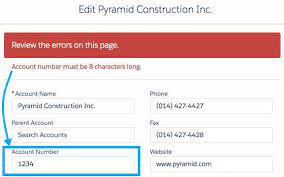
Essential Validation Rules for Salesforce Admins In this post, five essential validation rules that Salesforce admins should implement in their clients’ Salesforce orgs are discussed. Improve the quality of your data using validation rules. Validation rules verify that the data a user enters in a record meets the standards you specify before the user can save the record. Before digging into the specific rules this insight will highlight, let’s briefly review what validation rules are. What are Validation Rules in Salesforce? Validation rules in Salesforce are used to enforce data quality and consistency by validating the data entered by users before it is saved to the database. These rules consist of expressions or formulas that check the data against specified, required criteria. A validation rule can contain a formula or expression that evaluates the data in one or more fields and returns a value of “True” or “False”. Validation rules also include an error message to display to the user when the rule returns a value of “True” due to an invalid value. After you have defined validation rules: You can specify the error message to display when a record fails validation and where to display it. For example, your error message can be “The close date must occur after today’s date.” You can choose to display it near a field or at the top of the page. Like all other error messages, validation rule errors display in red text and begin with the word “Error”. 5 Validation Rules Examples Here are some important validation rules to configure in your Salesforce org: 1. The Account Number Must Be Numeric To ensure that users enter only numeric values in the Account Number field of the Account object, configure the following validation rule: plaintextCopy codeOR( ISBLANK(AccountNumber), NOT(ISNUMBER(AccountNumber)) ) If a text value is entered in the Account Number field, an error message will appear, as shown below: 2. Annual Revenue Range To restrict accounts with an annual revenue greater than a specific number, use the following rule: plaintextCopy codeOR( AnnualRevenue < 0, AnnualRevenue > 1000000 ) If the annual revenue entered exceeds 1 million, an error will be triggered, as illustrated below: 3. Close Date Must Be a Future Date To prevent sales reps from selecting past dates in the Opportunity Close Date field, implement this validation rule: plaintextCopy codeCloseDate < TODAY() Entering a past date in the Opportunity Close Date field will result in the following error: 4. Prevent Open Cases from Being Reset to New To stop service agents from changing the status of open cases to “New,” configure the following validation rule: plaintextCopy codeAND( ISCHANGED(Status), NOT(ISPICKVAL(PRIORVALUE(Status), “New”)), ISPICKVAL(Status, “New”) ) Attempting to reset the status of open cases to “New” will produce this error message: 5. Blank Email or Mobile To ensure that at least one communication detail (email or mobile number) is available on a contact record, use this validation rule: plaintextCopy codeAND( ISBLANK(Email), ISBLANK(MobilePhone) ) Leaving both email and mobile fields empty will generate the following error: Conclusion These validation rules are essential for maintaining data quality in your Salesforce org. If you have additional validation rules in mind, please share them in the comments below so everyone can benefit. Like Related Posts Who is Salesforce? Who is Salesforce? Here is their story in their own words. From our inception, we’ve proudly embraced the identity of Read more Salesforce Marketing Cloud Transactional Emails Salesforce Marketing Cloud Transactional Emails are immediate, automated, non-promotional messages crucial to business operations and customer satisfaction, such as order Read more Salesforce Unites Einstein Analytics with Financial CRM Salesforce has unveiled a comprehensive analytics solution tailored for wealth managers, home office professionals, and retail bankers, merging its Financial Read more AI-Driven Propensity Scores AI plays a crucial role in propensity score estimation as it can discern underlying patterns between treatments and confounding variables Read more
Read More
Recurring Donations in NPSP

Recurring Donations in NPSP

This insight will resonate with those familiar with Salesforce, the Nonprofit Success Pack (NPSP), its various iterations, and other related Salesforce automation features. Recurring Donations in NPSP create a special challenge, Tectonic has found. For those less engaged in these topics, there are still valuable ideas to discuss. For over a decade, there has been an ongoing challenge with handling donations processed through multiple transactions. These Multi-Installment Donation Scenarios (MIDS) include: Tracking donations where the commitment and transaction occur simultaneously is straightforward. For example, credit card donations through online forms require creating a donor record (if it doesn’t already exist) and a gift record. However, when there is a time lag between commitment and transaction, similar processes can be used. The challenge arises when commitments result in multiple checks or credit card transactions over time, breaking standard rules. This has puzzled fundraisers, operations personnel, accountants, and database admins for years, leading to various approaches. Each role may prefer different methods, adding complexity. Even Salesforce has changed its approach to MIDS, resulting in multiple models/modules in circulation. If you feel overwhelmed by MIDS, you’re not alone. MIDS are one of many complex scenarios to record in a donor database. However, other scenarios are not covered in this insight, such as: There are several options for modeling MIDS in Salesforce: Donation With Payments: Commonly used for grants, NPSP automates payment scheduling according to interval rules. This is recommended for organizations using accrual accounting. Legacy Recurring Donations: Allows setting donation schedule rules, with Salesforce automatically creating donations accordingly. Suitable for projection reports and updating each donation when the transaction occurs. Enhanced Recurring Donations: Introduced by Salesforce in 2020, this module solves issues like skipping months or changing future payment amounts by creating one installment ahead. When the installment is paid, the next one is created according to the schedule/rules. Custom “Pledge” Object: Useful for grouping donations according to pledges, without needing automation for scheduling installments. Ideal for tracking multiple data points about each pledge. Our Opinion: Tectonic has a strong preference for Legacy Recurring Donations over Enhanced Recurring Donations, although it’s not a significant issue to use either. Donations with Payments are problematic and should be avoided. Here’s why: Problems with Donations with Payments: The official documentation suggests this model for accrual accounting, but this recommendation is questionable. Many readers lack a foundational understanding of accounting models. Furthermore, dividing a donation into parts (payments) complicates reporting and rollup fields. Recurring Donations Benefits: The Recurring Donations (RD) model is smart and elegant. NPSP’s automations for both Legacy and Enhanced RD modules are strategic and reliable. Using the RD model for more than just traditional recurring donations (like monthly donations) can be beneficial. Rebranding “Recurring Donation” to “Pledge Fulfillment Schedule” can naturally incorporate various MIDS types, such as grants and pledges. Top Tips for Configuring Legacy Recurring Donations: One Odd Thing: In moves management, if a donor switches from a lump sum to installment gifts, create an RD and auto-create installment donations. Delete the first donation in the series and connect the Moves Management donation to the Recurring Donation record. Legacy Recurring Donations are a preferred option for modeling MIDS. This data model is suitable for all scenarios. With proper setup, it can become a powerful tool for a data-driven fundraising department or a streamlined option for tricky use cases. Two principles of good design—“like goes with like” and “measure twice, cut once”—explain why transaction-oriented information should stay on the Donation record, and pledge-oriented information on the Recurring Donation record. Like Related Posts Who is Salesforce? Who is Salesforce? Here is their story in their own words. From our inception, we’ve proudly embraced the identity of Read more Salesforce Marketing Cloud Transactional Emails Salesforce Marketing Cloud Transactional Emails are immediate, automated, non-promotional messages crucial to business operations and customer satisfaction, such as order Read more Salesforce Unites Einstein Analytics with Financial CRM Salesforce has unveiled a comprehensive analytics solution tailored for wealth managers, home office professionals, and retail bankers, merging its Financial Read more AI-Driven Propensity Scores AI plays a crucial role in propensity score estimation as it can discern underlying patterns between treatments and confounding variables Read more
Read More
HCG Providing Patient-Focused Personalized Care With Salesforce

HCG Providing Patient-Focused Personalized Care With Salesforce

HCG Delivers Personalized Patient Care with Salesforce Read more at: CXO Today HCG Providing Patient-Focused Personalized Care With Salesforce Healthcare Global Enterprises Ltd (HCG), a renowned network of 25 hospitals, is elevating patient care through Salesforce. With a 360-degree patient view, HCG connects with patients on a more personal level, delivering proactive support at every step of their journey. HCG’s commitment to value-based, precision medicine is clear, attracting over 200,000 patients annually. Unified Patient View for Personalized Care Previously, HCG faced challenges with siloed patient information and a rudimentary CRM system. “Without a single source of truth on patients, it was difficult for our medical, surgical, and support teams to collaborate,” says Vineesh Ghei, Chief Sales Officer, HCG. Today, Salesforce provides a unified patient view, capturing every case history, treatment plan, and patient preference, enabling teams to personalize patient care effectively. Enhanced Efficiency with Automation Salesforce Sales Cloud captures initial patient interactions, streamlining responses and tracking conversations. “Our response time to patient enquiries has reduced from 45 minutes to 23 minutes,” notes Ghei. Sales productivity has also improved with automated task prioritization and activity tracking. Additionally, partner management processes have been automated, enhancing engagement. Swift Service Query Resolution Patient journeys are orchestrated on Salesforce Service Cloud, integrating outpatient consultations, inpatient processes, and discharge planning. Integration with HCG’s appointment booking and cloud telephony systems ensures patient details are readily available to agents, enabling resolution of over 90% of queries in under five minutes. This comprehensive view allows service agents to provide proactive, personalized support. Contextual Communications for Long-Term Wellness Using Salesforce Marketing Cloud Engagement, HCG segments patients and delivers personalized communications relevant to their treatment stages. “Every patient’s journey is deeply personal,” says Stuti Jain, Head of Brand, Digital, and Communications, HCG. “Our communications are prioritized to add value to their journey.” HCG maintains connection with patients post-visit, supporting them through recovery. Data-Driven Decision Making By integrating data from Health Information Systems, Electronic Medical Records, and other platforms, HCG leverages operational intelligence to enhance decision-making. Insights from dashboards and reports improve patient satisfaction and care quality. Marketing Cloud Intelligence helps optimize campaigns, engagement channels, and team performance. Expanding Digital Transformation HCG plans to unlock additional Salesforce features, such as AI-driven call center operations with Einstein. Further integrations with lab and radiology systems and patient care apps will expand the Patient 360 view. “Our goal is to become an oncology knowledge company, up-to-date on treatment protocols and patient needs,” says Dey. Jain adds, “When people think of cancer care, they should think of HCG.” HCG’s integration of Salesforce is setting a new standard in personalized cancer care, ensuring patients receive the best possible support and treatment throughout their journey. Like Related Posts Who is Salesforce? Who is Salesforce? Here is their story in their own words. From our inception, we’ve proudly embraced the identity of Read more Salesforce Marketing Cloud Transactional Emails Salesforce Marketing Cloud Transactional Emails are immediate, automated, non-promotional messages crucial to business operations and customer satisfaction, such as order Read more Salesforce Unites Einstein Analytics with Financial CRM Salesforce has unveiled a comprehensive analytics solution tailored for wealth managers, home office professionals, and retail bankers, merging its Financial Read more AI-Driven Propensity Scores AI plays a crucial role in propensity score estimation as it can discern underlying patterns between treatments and confounding variables Read more

Read More
Salesforce Driving Change

Salesforce Driving Change

Sony Honda Mobility Leverages Salesforce Technology to Enhance Customer Relationships Sony Honda Mobility, a mobility tech startup, is utilizing Salesforce solutions—including Automotive Cloud, Data Cloud, Tableau, and MuleSoft—to deepen its customer relationships through enhanced data and insights. Sony Honda Mobility Inc. is a Japanese joint venture automotive company established by Sony Group Corporation and Honda Motor Company in 2022 to produce battery electric vehicles. The company will market its vehicles under the Afeela brand. Why It Matters: A significant 81% of business leaders report challenges with data fragmentation and silos. This disconnected, disjointed information often leads to immaterial and generic customer interactions, which is problematic as 80% of customers expect superior experiences given the extensive data companies collect. Key Developments: Sony Honda Mobility plans to launch its first electric vehicle in the United States in 2025, followed by Japan in 2026. To scale globally and stand out in the market, the company is empowering its service team with real-time data and insights on customer interactions with its products and services. How Is Salesforce Driving Change Data Cloud: A unified data platform that consolidates application, workflow, and data lake records, making it easier to train AI models, gain business insights, and improve customer relationships. Sony Honda Mobility is leveraging Data Cloud to integrate disparate data seamlessly across applications. MuleSoft API Integration: This integration connects data from Sony Honda Mobility’s vehicle and customer platform to Salesforce, ensuring a cohesive data flow. Automotive Cloud: Inside Automotive Cloud, Sony Honda Mobility now maintains a comprehensive profile of each customer and their vehicle, based on data from Data Cloud. This integration allows for personalized service and experiences at every touchpoint. The platform also streamlines contact center management, query handling, internal FAQ creation, web actions, and ongoing service support for incident and customer information management. Tableau: With Tableau’s visualizations of vehicle operation conditions and service usage status, Sony Honda Mobility can make quicker, more informed decisions about each customer’s needs. Customer Perspective “We aim to elevate our customer service and experiences to new heights. We are confident we can achieve this with Salesforce’s global expertise and proven track record in CRM, trusted AI, and data analytics,” said Yasuhide Mizuno, Chairman and CEO of Sony Honda Mobility. Salesforce Perspective “We are thrilled that Sony Honda Mobility has chosen the scalability, reliability, and expertise of Salesforce technology. By integrating their customer data on a single and trusted platform, we are excited to support Sony Honda Mobility as they scale excellent service to customers worldwide,” said Shinichi Koide, Chairman, President, and Chief Executive Officer of Salesforce Japan. The Result By harnessing Salesforce’s advanced technology, Sony Honda Mobility is poised to revolutionize its customer service and experience, ensuring a more connected, efficient, and personalized interaction for its customers globally. Like Related Posts Who is Salesforce? Who is Salesforce? Here is their story in their own words. From our inception, we’ve proudly embraced the identity of Read more Salesforce Marketing Cloud Transactional Emails Salesforce Marketing Cloud Transactional Emails are immediate, automated, non-promotional messages crucial to business operations and customer satisfaction, such as order Read more Salesforce Unites Einstein Analytics with Financial CRM Salesforce has unveiled a comprehensive analytics solution tailored for wealth managers, home office professionals, and retail bankers, merging its Financial Read more AI-Driven Propensity Scores AI plays a crucial role in propensity score estimation as it can discern underlying patterns between treatments and confounding variables Read more

Read More
Improve Patient Care and Trust

Improve Patient Care and Trust

A recent survey conducted by Kyruus Health and shared with HealthPayerIntelligence reveals that consumers are demanding more accurate online provider data from payers to enhance access to care. Healthcare solutions from Tectonic and Salesforce improve patient care and trust by improving data accuracy. The survey, fielded by Wakefield Research in April 2024, involved 1,000 healthcare consumers. Nearly three-quarters of respondents (72%) had private health insurance, with Medicare being the second most common form of coverage (18%). The participants represented an even distribution across U.S. regions and age groups, with 57% identifying as women. Payers have historically struggled to maintain up-to-date provider directories, and this survey highlights the significant impact of these challenges. About 30% of consumers reported skipping care due to inaccurate provider information, with 70% of them seeking this data online. Consumers primarily rely on health plan websites or apps for provider information, with 32% naming these platforms as their first resource. Medicaid enrollees were particularly dependent on their plan’s digital resources, with 64% turning to these tools first. Besides health plan websites and apps, consumers also used general internet searches, provider or clinic websites, and healthcare information sites like WebMD. Social media platforms were also popular for care searches, with 77% of users turning to Facebook and 61% to YouTube. The survey also revealed that payers often fail to provide accurate cost predictions. Only 32% of respondents said their health plans offered accurate cost information. Price transparency tools are particularly important to younger generations, with 76% of Millennials and 80% of Gen Z respondents using these tools. However, 40% of Baby Boomers were unsure if their plans even offered such tools. Among those who did use them, 34% found that the tools presented incorrect provider data, with 45% of Gen Z reporting this issue. Inaccurate provider information can lead to significant negative consequences for consumers, including delays in accessing care, difficulties contacting preferred providers, and higher costs. Some consumers even reported accidentally receiving out-of-network care or forgoing care altogether due to these inaccuracies. These experiences not only hinder access to care but also damage consumer trust in their healthcare providers and payers. Overall, 80% of respondents said that inaccurate provider data affected their trust, with 27% losing trust in their health plans and 22% losing trust in their providers. The survey results underscore a clear call to action. Over 60% of consumers, and nearly 75% of Gen Z specifically, want their health plans to provide more accurate data. Tectonic has decades of experience applying Salesforce solutions to health care providers and payers. To address these concerns, the report recommends that health plans take three key steps: First, engage with members through appropriate channels, including social media. Second, unify and validate their provider data to ensure accuracy. Third, introduce self-service capabilities within their digital platforms to empower consumers. Reach out to Tectonic today if your organization needs help applying these three steps. Like Related Posts Who is Salesforce? Who is Salesforce? Here is their story in their own words. From our inception, we’ve proudly embraced the identity of Read more Salesforce Marketing Cloud Transactional Emails Salesforce Marketing Cloud Transactional Emails are immediate, automated, non-promotional messages crucial to business operations and customer satisfaction, such as order Read more Salesforce Unites Einstein Analytics with Financial CRM Salesforce has unveiled a comprehensive analytics solution tailored for wealth managers, home office professionals, and retail bankers, merging its Financial Read more AI-Driven Propensity Scores AI plays a crucial role in propensity score estimation as it can discern underlying patterns between treatments and confounding variables Read more
Read More
Slack for Manufacturing and Automotive

Slack for Manufacturing and Automotive

Slack for Manufacturing and Automotive Enhance productivity, reduce costs, and provide exceptional experiences with a consolidated perspective of your customer data. Streamline diverse systems, teams, and processes effortlessly through automation. Forge connections with external partners to integrate your entire ecosystem seamlessly. As manufacturing, automotive, and energy organizations transition to developing new powertrains and digital products for innovative service and revenue models, Slack offers an efficient platform for innovation. Pioneering Enterprise Security Setting the standard in enterprise security, Slack ensures data encryption in transit and at rest. It boasts comprehensive compliance and assurance programs, along with features such as audit logs, data loss prevention, and single sign-on. As the productivity platform for manufacturing, automotive, and energy, Slack ensures a secure environment. Utilizing Slack AI for Smarter Work Engage with a Slack sales representative or join the waitlist to experience the empowering capabilities of Slack AI throughout your organization. Leverage AI-powered search for swift answers, summarize conversations effortlessly, and rest assured with secure data handling by Slack AI. Explore Slack’s pivotal role in accelerating innovation across manufacturing, automotive, and energy sectors. Empowering Software Developers Discover how Slack empowers teams to introduce novel digital products and services, driving revenue and transforming customer experiences. For software developers, Slack accelerates the delivery of high-quality code, making it a preferred choice for the world’s leading producers of software, hardware, and services. Explore Slack’s webinar to uncover its potential for your team. Revolutionizing Fleet Management with Automile Challenges abound for businesses managing fleets, particularly in integrating solutions seamlessly with existing toolsets for increased productivity. Automile aims to disrupt the billion fleet management market by introducing a mobile-first API-centric solution. With REST-based JSON APIs and SDKs for PHP, Java, and C# .NET, Automile simplifies fleet management, offering web and mobile apps. Slack Integration with Automile Automile is set to release new features in March, including integrations such as Slack. By submitting the app to Slack’s App Directory, Automile aims to provide businesses with a streamlined fleet management experience within Slack. The upcoming Slack App supports Slash Commands, Interactive Messages, and Incoming Webhooks. Security First Approach Automile prioritizes security with the new Slack App, ensuring that authorized Slack team members have access. The app supports Slash Commands, enabling users to achieve specific tasks, such as checking out drivers and locating vehicles. The admin can control user access to these commands for added security. Fleet Management Commands Automile’s Slack App introduces Slash Commands for drivers and vehicles. The Driver command allows fleet managers to search for drivers, check their status, and interact with them directly from Slack. Similarly, the Vehicle command provides information on vehicle location, status, and enables task assignment. Driving Field Service Efficiency with Slack and Salesforce Service Cloud Witness how manufacturers harness the combined capabilities of Slack and Salesforce Service Cloud to empower field employees and enhance customer satisfaction. Slack’s Continued Impact Slack continues to thrive globally, supporting businesses of all sizes in achieving growth and skyrocketing productivity. Acquired by Salesforce in 2021, Slack remains an influential force in the business communication and collaboration landscape. Like1 Related Posts Who is Salesforce? Who is Salesforce? Here is their story in their own words. From our inception, we’ve proudly embraced the identity of Read more Salesforce Marketing Cloud Transactional Emails Salesforce Marketing Cloud Transactional Emails are immediate, automated, non-promotional messages crucial to business operations and customer satisfaction, such as order Read more Salesforce Unites Einstein Analytics with Financial CRM Salesforce has unveiled a comprehensive analytics solution tailored for wealth managers, home office professionals, and retail bankers, merging its Financial Read more AI-Driven Propensity Scores AI plays a crucial role in propensity score estimation as it can discern underlying patterns between treatments and confounding variables Read more

Read More
Salesforce Solutions for Defense

Salesforce Solutions for Defense

Defence Technology Solutions from Salesforce: Enabling Secure, Mission-Critical Operations Salesforce provides defense organizations with powerful technology solutions to deliver on their missions quickly and securely. By increasing IT flexibility, enhancing productivity, and safeguarding sensitive data in a secure, compliant cloud environment, Salesforce empowers defence organizations to achieve mission success with confidence. Salesforce Solutions for Defense. Modernizing Personnel Operations Salesforce streamlines workforce management and accelerates employee operations, providing a unified view of personnel and fast, digital workflows. Public sector organizations can transform hiring, recruiting, HR actions, IT requests, and employee services within a trusted operational hub. How It Works: Salesforce enhances productivity and digitizes government employee tasks throughout their lifecycle, from hire to retirement. Maximizing IT Agility Salesforce enables defence organizations to unlock data from legacy systems, cloud applications, and third-party platforms with an API-led approach, securely bridging on-premises and cloud environments. Rapid application development, consolidation, and system access become seamless with Salesforce’s low-code/no-code tools. How It Works: Salesforce compresses development cycles and increases flexibility, enabling defense organizations to deliver on mission objectives faster. Salesforce Solutions for Defense Delivering Successful Case Outcomes Salesforce supports the full case management lifecycle by integrating critical data points from multiple systems into a single, unified view. Defense organizations can empower caseworkers with purpose-built tools, ensuring successful case outcomes while reducing information silos and providing clients with the necessary support. How It Works: Salesforce creates a single source of truth for case management, enabling defense organizations to streamline workflows and improve service outcomes. By leveraging Salesforce’s defense technology solutions, organizations can modernize operations, maximize agility, and ensure successful case management outcomes, all while maintaining the highest levels of security and compliance. Salesforce Solutions for Defense from Tectonic. Like Related Posts Who is Salesforce? Who is Salesforce? Here is their story in their own words. From our inception, we’ve proudly embraced the identity of Read more Salesforce Marketing Cloud Transactional Emails Salesforce Marketing Cloud Transactional Emails are immediate, automated, non-promotional messages crucial to business operations and customer satisfaction, such as order Read more Salesforce Unites Einstein Analytics with Financial CRM Salesforce has unveiled a comprehensive analytics solution tailored for wealth managers, home office professionals, and retail bankers, merging its Financial Read more AI-Driven Propensity Scores AI plays a crucial role in propensity score estimation as it can discern underlying patterns between treatments and confounding variables Read more

Read More
Salesforce Success Story

Case Study: Salesforce Health Services Modernization

Modernizing Public Health using Salesforce Client is the largest tribally-operated health care system in the United States, with almost 160 full-time providers and over 2,200 health services employees. Committed to improving patient access, this Tribal Nation has invested substantially in technology, building new facilities and expanding existing locations. The primary hospital and nine health centers are dedicated to providing world-class patient care. Salesforce Health Services Modernization “The Gadugi Portal and Salesforce technology is helping us get to our citizens quicker by streamlining the application process, and enabling us to have updated records that are online and easily accessible to our citizens to truly help them recover in their greatest time of need” Client Implemented – Case Study: Salesforce Health Services Modernization The Problem: The Solution: The Results: Ready to explore a Salesforce implementation with Health Cloud, MuleSoft, and Experience Cloud for your government or public sector entity? Contact Tectonic today. Like1 Related Posts Who is Salesforce? Who is Salesforce? Here is their story in their own words. From our inception, we’ve proudly embraced the identity of Read more Salesforce Marketing Cloud Transactional Emails Salesforce Marketing Cloud Transactional Emails are immediate, automated, non-promotional messages crucial to business operations and customer satisfaction, such as order Read more Salesforce Unites Einstein Analytics with Financial CRM Salesforce has unveiled a comprehensive analytics solution tailored for wealth managers, home office professionals, and retail bankers, merging its Financial Read more AI-Driven Propensity Scores AI plays a crucial role in propensity score estimation as it can discern underlying patterns between treatments and confounding variables Read more

Read More
gettectonic.com