

Salesforce Managed Services Archives - gettectonic.com - Page 2
Boost Payer Patient Education

Boost Payer Patient Education

As a pediatrician with 15 years of experience in the pediatric emergency department, Cathy Moffitt, MD, understands the critical role of patient education. Now, as Senior Vice President and Aetna Chief Medical Officer at CVS Health, she applies that knowledge to the payer space. “Education is empowerment. It’s engagement. It’s crucial for equipping patients to navigate their healthcare journey. Now, overseeing a large payer like Aetna, I still firmly believe in the power of health education,” Moffitt shared on an episode of Healthcare Strategies. At a payer organization like Aetna, patient education begins with data analytics to better understand the member population. According to Moffitt, key insights from data can help payers determine the optimal time to share educational materials with members. “People are most receptive to education when they need help in the moment,” she explained. If educational opportunities are presented when members aren’t focused on their health needs, the information is less likely to resonate. Aetna’s Next Best Action initiative, launched in 2018, embodies this timing-driven approach. In this program, Aetna employees proactively reach out to members with specific conditions to provide personalized guidance on managing their health. This often includes educational resources delivered at the right moment when members are most open to learning. Data also enables payers to tailor educational efforts to a member’s demographics, including race, sexual orientation, gender identity, ethnicity, and location. By factoring in these elements, payers can ensure their communications are relevant and easy to understand. To enhance this personalized approach, Aetna offers translation services and provides customer service training focused on sensitivity to sexual orientation and gender identity. In addition, updating the provider directory to reflect a diverse network helps members feel more comfortable with their care providers, making them more likely to engage with educational resources. “Understanding our members’ backgrounds and needs, whether it’s acute or chronic illness, allows us to engage them more effectively,” Moffitt said. “This is the foundation of our approach to leveraging data for meaningful patient education.” With over two decades in both provider and payer roles, Moffitt has observed key trends in patient education, particularly its success in mental health and preventive care. She highlighted the role of technology in these areas. Efforts to educate patients about mental health have reduced stigma and increased awareness of mental wellness. Telemedicine has significantly improved access to mental healthcare, according to Moffitt. In preventive care, more people are aware of the importance of cancer screenings, vaccines, wellness visits, and other preventive measures. Moffitt pointed to the rising use of home health visits and retail clinics as contributing factors for Aetna members. Looking ahead, Moffitt sees personalized engagement as the future of patient education. Members increasingly want information tailored to their preferences, delivered through their preferred channels—whether by email, text, phone, or other methods. Omnichannel solutions will be essential to meeting this demand, and while healthcare has already made progress, Moffitt expects even more innovation in the years to come. “I can’t predict exactly where we’ll be in 10 years, just as I couldn’t have predicted where we are now a decade ago,” Moffitt said. “But we will continue to evolve and meet the needs of our members with the technological advancements we’re committed to.” Contact Us To discover how Salesforce can advance your patient payer education, contact Tectonic today. Like Related Posts Who is Salesforce? Who is Salesforce? Here is their story in their own words. From our inception, we’ve proudly embraced the identity of Read more Salesforce Marketing Cloud Transactional Emails Salesforce Marketing Cloud Transactional Emails are immediate, automated, non-promotional messages crucial to business operations and customer satisfaction, such as order Read more Salesforce Unites Einstein Analytics with Financial CRM Salesforce has unveiled a comprehensive analytics solution tailored for wealth managers, home office professionals, and retail bankers, merging its Financial Read more AI-Driven Propensity Scores AI plays a crucial role in propensity score estimation as it can discern underlying patterns between treatments and confounding variables Read more
Read More
Salesforce Validation Rules

Salesforce Validation Rules

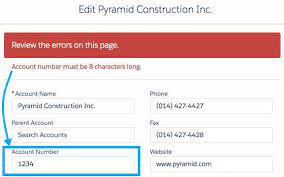
Essential Validation Rules for Salesforce Admins In this post, five essential validation rules that Salesforce admins should implement in their clients’ Salesforce orgs are discussed. Improve the quality of your data using validation rules. Validation rules verify that the data a user enters in a record meets the standards you specify before the user can save the record. Before digging into the specific rules this insight will highlight, let’s briefly review what validation rules are. What are Validation Rules in Salesforce? Validation rules in Salesforce are used to enforce data quality and consistency by validating the data entered by users before it is saved to the database. These rules consist of expressions or formulas that check the data against specified, required criteria. A validation rule can contain a formula or expression that evaluates the data in one or more fields and returns a value of “True” or “False”. Validation rules also include an error message to display to the user when the rule returns a value of “True” due to an invalid value. After you have defined validation rules: You can specify the error message to display when a record fails validation and where to display it. For example, your error message can be “The close date must occur after today’s date.” You can choose to display it near a field or at the top of the page. Like all other error messages, validation rule errors display in red text and begin with the word “Error”. 5 Validation Rules Examples Here are some important validation rules to configure in your Salesforce org: 1. The Account Number Must Be Numeric To ensure that users enter only numeric values in the Account Number field of the Account object, configure the following validation rule: plaintextCopy codeOR( ISBLANK(AccountNumber), NOT(ISNUMBER(AccountNumber)) ) If a text value is entered in the Account Number field, an error message will appear, as shown below: 2. Annual Revenue Range To restrict accounts with an annual revenue greater than a specific number, use the following rule: plaintextCopy codeOR( AnnualRevenue < 0, AnnualRevenue > 1000000 ) If the annual revenue entered exceeds 1 million, an error will be triggered, as illustrated below: 3. Close Date Must Be a Future Date To prevent sales reps from selecting past dates in the Opportunity Close Date field, implement this validation rule: plaintextCopy codeCloseDate < TODAY() Entering a past date in the Opportunity Close Date field will result in the following error: 4. Prevent Open Cases from Being Reset to New To stop service agents from changing the status of open cases to “New,” configure the following validation rule: plaintextCopy codeAND( ISCHANGED(Status), NOT(ISPICKVAL(PRIORVALUE(Status), “New”)), ISPICKVAL(Status, “New”) ) Attempting to reset the status of open cases to “New” will produce this error message: 5. Blank Email or Mobile To ensure that at least one communication detail (email or mobile number) is available on a contact record, use this validation rule: plaintextCopy codeAND( ISBLANK(Email), ISBLANK(MobilePhone) ) Leaving both email and mobile fields empty will generate the following error: Conclusion These validation rules are essential for maintaining data quality in your Salesforce org. If you have additional validation rules in mind, please share them in the comments below so everyone can benefit. Like Related Posts Who is Salesforce? Who is Salesforce? Here is their story in their own words. From our inception, we’ve proudly embraced the identity of Read more Salesforce Marketing Cloud Transactional Emails Salesforce Marketing Cloud Transactional Emails are immediate, automated, non-promotional messages crucial to business operations and customer satisfaction, such as order Read more Salesforce Unites Einstein Analytics with Financial CRM Salesforce has unveiled a comprehensive analytics solution tailored for wealth managers, home office professionals, and retail bankers, merging its Financial Read more AI-Driven Propensity Scores AI plays a crucial role in propensity score estimation as it can discern underlying patterns between treatments and confounding variables Read more

Read More
Cyber Group Targets SaaS Platforms

Cyber Group Targets SaaS Platforms

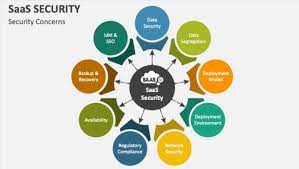
Cyber Group UNC3944 Targets SaaS Platforms like Azure, Salesforce, vSphere, AWS, and Google Cloud UNC3944, also known as “0ktapus” and “Scattered Spider,” has shifted its focus to attacking Software-as-a-Service (SaaS) applications, as reported by Google Cloud’s Mandiant threat intelligence team. This hacking group, previously linked to incidents involving companies such as Snowflake and MGM Entertainment, has evolved its strategies to concentrate on data theft and extortion. Cyber Group Targets SaaS Platforms Attack Techniques UNC3944 exploits legitimate third-party tools for remote access and leverages Okta permissions to expand their intrusion capabilities. One notable aspect of their attacks involves creating new virtual machines in VMware vSphere and Microsoft Azure, using administrative permissions linked through SSO applications for further activities. The group uses commonly available utilities to reconfigure virtual machines (VMs), disable security protocols, and download tools such as Mimikatz and ADRecon, which extract and combine various artifacts from Active Directory (AD) and Microsoft Entra ID environments. Evolving Methods Initially, UNC3944 employed a variety of techniques, but over time, their methods have expanded to include ransomware and data theft extortion. Active since at least May 2022, the group has developed resilience mechanisms against virtualization platforms and improved their ability to move laterally by abusing SaaS permissions. The group also uses SMS phishing to reset passwords and bypass multi-factor authentication (MFA). Once inside, they conduct thorough reconnaissance of Microsoft applications like SharePoint to understand remote connection needs. According to Google Cloud’s Mandiant team, UNC3944’s primary activity is now data theft without using ransomware. They employ expert social engineering tactics, using detailed personal information to bypass identity checks and target employees with high-level access. Social Engineering and Threats Attackers often pose as employees, contacting help desks to request MFA resets for setting up new phones. If help desk staff comply, attackers can easily bypass MFA and reset passwords. If social engineering fails, UNC3944 resorts to threats, including doxxing, physical threats, or releasing compromising material to coerce credentials from victims. Once access is gained, they gather information on tools like VPNs, virtual desktops, and remote work utilities to maintain consistent access. Targeting SaaS and Cloud Platforms UNC3944 targets Okta’s single sign-on (SSO) tools, allowing them to create accounts that facilitate access to multiple systems. Their attacks extend to VMware’s vSphere hybrid cloud management tool and Microsoft Azure, where they create virtual machines for malicious purposes. By operating within a trusted IP address range, they complicate detection. Additional targets include SaaS applications like VMware’s vCenter, CyberArk, Salesforce, CrowdStrike, Amazon Web Services (AWS), and Google Cloud. Office 365 is another focus, with attackers using Microsoft’s Delve tool to identify valuable information. To exfiltrate data, they use synchronization utilities such as Airbyte and Fivetran to transfer information to their own cloud storage. The group also targets Active Directory Federation Services (ADFS) to extract certificates and employ Golden SAML attacks for continued access to cloud applications. They leverage Microsoft 365 capabilities like Office Delve for quick reconnaissance and data mining. Recommendations – Cyber Group Targets SaaS Platforms Mandiant advises deploying host-based certificates with MFA for VPN access, implementing stricter conditional access policies, and enhancing monitoring for SaaS applications. Consolidating logs from crucial SaaS applications and monitoring virtual machine setups can help identify potential breaches. Like1 Related Posts Who is Salesforce? Who is Salesforce? Here is their story in their own words. From our inception, we’ve proudly embraced the identity of Read more Salesforce Marketing Cloud Transactional Emails Salesforce Marketing Cloud Transactional Emails are immediate, automated, non-promotional messages crucial to business operations and customer satisfaction, such as order Read more Salesforce Unites Einstein Analytics with Financial CRM Salesforce has unveiled a comprehensive analytics solution tailored for wealth managers, home office professionals, and retail bankers, merging its Financial Read more AI-Driven Propensity Scores AI plays a crucial role in propensity score estimation as it can discern underlying patterns between treatments and confounding variables Read more

Read More
Improve Patient Care and Trust

Improve Patient Care and Trust

A recent survey conducted by Kyruus Health and shared with HealthPayerIntelligence reveals that consumers are demanding more accurate online provider data from payers to enhance access to care. Healthcare solutions from Tectonic and Salesforce improve patient care and trust by improving data accuracy. The survey, fielded by Wakefield Research in April 2024, involved 1,000 healthcare consumers. Nearly three-quarters of respondents (72%) had private health insurance, with Medicare being the second most common form of coverage (18%). The participants represented an even distribution across U.S. regions and age groups, with 57% identifying as women. Payers have historically struggled to maintain up-to-date provider directories, and this survey highlights the significant impact of these challenges. About 30% of consumers reported skipping care due to inaccurate provider information, with 70% of them seeking this data online. Consumers primarily rely on health plan websites or apps for provider information, with 32% naming these platforms as their first resource. Medicaid enrollees were particularly dependent on their plan’s digital resources, with 64% turning to these tools first. Besides health plan websites and apps, consumers also used general internet searches, provider or clinic websites, and healthcare information sites like WebMD. Social media platforms were also popular for care searches, with 77% of users turning to Facebook and 61% to YouTube. The survey also revealed that payers often fail to provide accurate cost predictions. Only 32% of respondents said their health plans offered accurate cost information. Price transparency tools are particularly important to younger generations, with 76% of Millennials and 80% of Gen Z respondents using these tools. However, 40% of Baby Boomers were unsure if their plans even offered such tools. Among those who did use them, 34% found that the tools presented incorrect provider data, with 45% of Gen Z reporting this issue. Inaccurate provider information can lead to significant negative consequences for consumers, including delays in accessing care, difficulties contacting preferred providers, and higher costs. Some consumers even reported accidentally receiving out-of-network care or forgoing care altogether due to these inaccuracies. These experiences not only hinder access to care but also damage consumer trust in their healthcare providers and payers. Overall, 80% of respondents said that inaccurate provider data affected their trust, with 27% losing trust in their health plans and 22% losing trust in their providers. The survey results underscore a clear call to action. Over 60% of consumers, and nearly 75% of Gen Z specifically, want their health plans to provide more accurate data. Tectonic has decades of experience applying Salesforce solutions to health care providers and payers. To address these concerns, the report recommends that health plans take three key steps: First, engage with members through appropriate channels, including social media. Second, unify and validate their provider data to ensure accuracy. Third, introduce self-service capabilities within their digital platforms to empower consumers. Reach out to Tectonic today if your organization needs help applying these three steps. Like Related Posts Who is Salesforce? Who is Salesforce? Here is their story in their own words. From our inception, we’ve proudly embraced the identity of Read more Salesforce Marketing Cloud Transactional Emails Salesforce Marketing Cloud Transactional Emails are immediate, automated, non-promotional messages crucial to business operations and customer satisfaction, such as order Read more Salesforce Unites Einstein Analytics with Financial CRM Salesforce has unveiled a comprehensive analytics solution tailored for wealth managers, home office professionals, and retail bankers, merging its Financial Read more AI-Driven Propensity Scores AI plays a crucial role in propensity score estimation as it can discern underlying patterns between treatments and confounding variables Read more

Read More
Slack for Manufacturing and Automotive

Slack for Manufacturing and Automotive

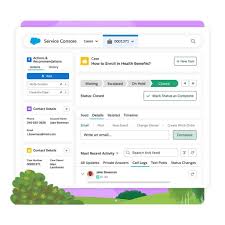
Slack for Manufacturing and Automotive Enhance productivity, reduce costs, and provide exceptional experiences with a consolidated perspective of your customer data. Streamline diverse systems, teams, and processes effortlessly through automation. Forge connections with external partners to integrate your entire ecosystem seamlessly. As manufacturing, automotive, and energy organizations transition to developing new powertrains and digital products for innovative service and revenue models, Slack offers an efficient platform for innovation. Pioneering Enterprise Security Setting the standard in enterprise security, Slack ensures data encryption in transit and at rest. It boasts comprehensive compliance and assurance programs, along with features such as audit logs, data loss prevention, and single sign-on. As the productivity platform for manufacturing, automotive, and energy, Slack ensures a secure environment. Utilizing Slack AI for Smarter Work Engage with a Slack sales representative or join the waitlist to experience the empowering capabilities of Slack AI throughout your organization. Leverage AI-powered search for swift answers, summarize conversations effortlessly, and rest assured with secure data handling by Slack AI. Explore Slack’s pivotal role in accelerating innovation across manufacturing, automotive, and energy sectors. Empowering Software Developers Discover how Slack empowers teams to introduce novel digital products and services, driving revenue and transforming customer experiences. For software developers, Slack accelerates the delivery of high-quality code, making it a preferred choice for the world’s leading producers of software, hardware, and services. Explore Slack’s webinar to uncover its potential for your team. Revolutionizing Fleet Management with Automile Challenges abound for businesses managing fleets, particularly in integrating solutions seamlessly with existing toolsets for increased productivity. Automile aims to disrupt the billion fleet management market by introducing a mobile-first API-centric solution. With REST-based JSON APIs and SDKs for PHP, Java, and C# .NET, Automile simplifies fleet management, offering web and mobile apps. Slack Integration with Automile Automile is set to release new features in March, including integrations such as Slack. By submitting the app to Slack’s App Directory, Automile aims to provide businesses with a streamlined fleet management experience within Slack. The upcoming Slack App supports Slash Commands, Interactive Messages, and Incoming Webhooks. Security First Approach Automile prioritizes security with the new Slack App, ensuring that authorized Slack team members have access. The app supports Slash Commands, enabling users to achieve specific tasks, such as checking out drivers and locating vehicles. The admin can control user access to these commands for added security. Fleet Management Commands Automile’s Slack App introduces Slash Commands for drivers and vehicles. The Driver command allows fleet managers to search for drivers, check their status, and interact with them directly from Slack. Similarly, the Vehicle command provides information on vehicle location, status, and enables task assignment. Driving Field Service Efficiency with Slack and Salesforce Service Cloud Witness how manufacturers harness the combined capabilities of Slack and Salesforce Service Cloud to empower field employees and enhance customer satisfaction. Slack’s Continued Impact Slack continues to thrive globally, supporting businesses of all sizes in achieving growth and skyrocketing productivity. Acquired by Salesforce in 2021, Slack remains an influential force in the business communication and collaboration landscape. Like1 Related Posts Who is Salesforce? Who is Salesforce? Here is their story in their own words. From our inception, we’ve proudly embraced the identity of Read more Salesforce Marketing Cloud Transactional Emails Salesforce Marketing Cloud Transactional Emails are immediate, automated, non-promotional messages crucial to business operations and customer satisfaction, such as order Read more Salesforce Unites Einstein Analytics with Financial CRM Salesforce has unveiled a comprehensive analytics solution tailored for wealth managers, home office professionals, and retail bankers, merging its Financial Read more AI-Driven Propensity Scores AI plays a crucial role in propensity score estimation as it can discern underlying patterns between treatments and confounding variables Read more
Read More
Salesforce Solutions for Defense

Salesforce Solutions for Defense

Defence Technology Solutions from Salesforce: Enabling Secure, Mission-Critical Operations Salesforce provides defense organizations with powerful technology solutions to deliver on their missions quickly and securely. By increasing IT flexibility, enhancing productivity, and safeguarding sensitive data in a secure, compliant cloud environment, Salesforce empowers defence organizations to achieve mission success with confidence. Salesforce Solutions for Defense. Modernizing Personnel Operations Salesforce streamlines workforce management and accelerates employee operations, providing a unified view of personnel and fast, digital workflows. Public sector organizations can transform hiring, recruiting, HR actions, IT requests, and employee services within a trusted operational hub. How It Works: Salesforce enhances productivity and digitizes government employee tasks throughout their lifecycle, from hire to retirement. Maximizing IT Agility Salesforce enables defence organizations to unlock data from legacy systems, cloud applications, and third-party platforms with an API-led approach, securely bridging on-premises and cloud environments. Rapid application development, consolidation, and system access become seamless with Salesforce’s low-code/no-code tools. How It Works: Salesforce compresses development cycles and increases flexibility, enabling defense organizations to deliver on mission objectives faster. Salesforce Solutions for Defense Delivering Successful Case Outcomes Salesforce supports the full case management lifecycle by integrating critical data points from multiple systems into a single, unified view. Defense organizations can empower caseworkers with purpose-built tools, ensuring successful case outcomes while reducing information silos and providing clients with the necessary support. How It Works: Salesforce creates a single source of truth for case management, enabling defense organizations to streamline workflows and improve service outcomes. By leveraging Salesforce’s defense technology solutions, organizations can modernize operations, maximize agility, and ensure successful case management outcomes, all while maintaining the highest levels of security and compliance. Salesforce Solutions for Defense from Tectonic. Like Related Posts Who is Salesforce? Who is Salesforce? Here is their story in their own words. From our inception, we’ve proudly embraced the identity of Read more Salesforce Marketing Cloud Transactional Emails Salesforce Marketing Cloud Transactional Emails are immediate, automated, non-promotional messages crucial to business operations and customer satisfaction, such as order Read more Salesforce Unites Einstein Analytics with Financial CRM Salesforce has unveiled a comprehensive analytics solution tailored for wealth managers, home office professionals, and retail bankers, merging its Financial Read more AI-Driven Propensity Scores AI plays a crucial role in propensity score estimation as it can discern underlying patterns between treatments and confounding variables Read more
Read More
Education Cloud AI Innovations

Education Cloud AI Innovations

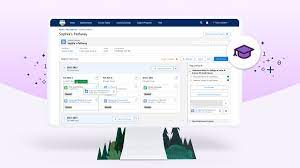
Salesforce AI Innovations: Empowering Student Success and Faculty Efficiency Salesforce is introducing new Education Cloud AI Innovations, AI-powered tools designed to streamline the educational journey, enabling students to chart clear paths to graduation, translate their coursework into resume-ready skills, and connect with mentors who can guide them toward their career goals. Enhancing Faculty and Staff Efficiency with AI New generative AI capabilities are set to automate time-consuming tasks for faculty and staff, allowing them to focus on what matters most—driving student success. Personalizing Student Experiences with AI Institutions like the University of Nevada Las Vegas and Texas Tech are leveraging Salesforce for Education to create personalized student experiences and improve staff efficiency through AI-driven solutions. Salesforce Introduces AI-Powered Student Success Tools for Education Cloud Today, Salesforce unveiled cutting-edge AI tools for Education Cloud, including Intelligent Degree Planning and Skills Generator. These innovations are designed to help institutions craft personalized graduation pathways, translate coursework into tangible skills, and facilitate impactful mentorship programs. Additionally, Salesforce introduced Data Cloud for Education and Einstein Copilot Recruitment & Admissions Actions. These tools will enable institutions to automate routine tasks, enhance recruitment and enrollment processes, and bolster student support. Why It Matters Education professionals face the highest burnout rates across industries, and students are feeling the impact—only 11% of college students believe they are workforce-ready. As the education sector approaches an enrollment cliff, confidence in the value of a college degree is declining, and educators are leaving the profession in significant numbers. Schools must find ways to reduce staff workload while improving student experiences and outcomes. Explore Education Cloud Elevate the educational experience with the #1 AI CRM for learner and institution success. DIVE IN AI Innovation for Lifelong Student Success The new AI capabilities for Education Cloud, built on Salesforce’s Einstein 1 Platform, will help higher education and K-12 institutions unlock the power of their data to deliver trusted AI solutions. These innovations are designed to improve staff efficiency while enhancing student experiences and learning outcomes. Key features include: AI in Action for Faculty and Staff Salesforce is delivering new AI and data tools to automate tasks related to recruitment, enrollment, and student experience management. New features include: With these industry-specific AI and data tools, Education Cloud is poised to help K-12 and higher education institutions offer more individualized support to every student while increasing operational efficiency and reducing staff burnout. The Salesforce Perspective “Every institution wants to provide the best possible experiences for their students and staff. With industry-specific AI and data tools, Education Cloud will help K-12 and higher ed institutions offer more personalized support to every student while increasing efficiency and helping to reduce staff burnout. This will free educators and staff to focus on improving student outcomes, such as career readiness, well-being, and graduation rates.”— Bala Subramanian, VP & GM of Education Like Related Posts Who is Salesforce? Who is Salesforce? Here is their story in their own words. From our inception, we’ve proudly embraced the identity of Read more Salesforce Marketing Cloud Transactional Emails Salesforce Marketing Cloud Transactional Emails are immediate, automated, non-promotional messages crucial to business operations and customer satisfaction, such as order Read more Salesforce Unites Einstein Analytics with Financial CRM Salesforce has unveiled a comprehensive analytics solution tailored for wealth managers, home office professionals, and retail bankers, merging its Financial Read more AI-Driven Propensity Scores AI plays a crucial role in propensity score estimation as it can discern underlying patterns between treatments and confounding variables Read more
Read More
Technical Debt

Salesforce Technical Debt

Technical debt represents the additional effort required for subsequent rework due to opting for a quick solution over a more comprehensive approach during development. It aligns with the concept of “Shift Left,” emphasizing the cost-effectiveness of addressing issues early in the process. In the realm of Salesforce, technical debt is an inevitable aspect, akin to a necessary evil. Repaying this debt is crucial to prevent the accrual of “interest” that could impede agility in the long run. Traditionally associated with developers taking code shortcuts, the rise of low-code platforms like Salesforce has expanded the sources of technical debt to include configurations made through “clicks” in addition to code. This guide recognizes that Salesforce technical debt often becomes substantial enough to involve architects, shedding light on how it has evolved into a collective concern. Understanding Salesforce Technical Debt: Technical debt arises from choosing expedient solutions (quickly built without a thorough understanding of business requirements) instead of more time-consuming, superior alternatives. It can also result from solutions initially designed to function in a specific way but require adjustments due to evolving business needs. A comprehensive view of technical debt encompasses both code and declarative customizations, addressing instances where standard functionality was impractical or unavailable. Considering everything as technical debt, the concept is labeled as such because it necessitates repayment. Levels of “interest” paid on this debt can be categorized: Excessive technical debt might compel a business to discard the entire Salesforce org and commence anew, resulting in the loss of years of investment. Causes of Technical Debt: Multiple factors contribute to the accumulation of technical debt in organizations: Managing technical debt entails navigating the trade-off between “delayed gratification” and anticipating future costs. Like2 Related Posts Who is Salesforce? Who is Salesforce? Here is their story in their own words. From our inception, we’ve proudly embraced the identity of Read more Salesforce Marketing Cloud Transactional Emails Salesforce Marketing Cloud Transactional Emails are immediate, automated, non-promotional messages crucial to business operations and customer satisfaction, such as order Read more Salesforce Unites Einstein Analytics with Financial CRM Salesforce has unveiled a comprehensive analytics solution tailored for wealth managers, home office professionals, and retail bankers, merging its Financial Read more AI-Driven Propensity Scores AI plays a crucial role in propensity score estimation as it can discern underlying patterns between treatments and confounding variables Read more
Read More
Customer Experience

Improving Customer Experiences (CX)

In 2024, maintaining competitiveness requires businesses to prioritize personalization and agility within their customer experience (CX) strategy. Here are strategies for improving customer experiences with programs from Tectonic: By focusing on these key areas, organizations can navigate the continually evolving CX landscape and deliver exceptional customer experiences. Tectonic is ready to collaborate, customizing your Salesforce tools to create remarkable customer experiences. You might want to learn more about Salesforce Marketing Cloud Personalization. This Salesforce tool improves customer experiences using data and automation. Like1 Related Posts Tectonic’s Successful Salesforce Track Record Salesforce Technology Services Integrator – Tectonic has successfully delivered Salesforce in a variety of industries including Public Sector, Hospitality, Manufacturing, Read more Step By Step Guide to a Salesforce Quickstart Salesforce Implementation with a Tectonic Quickstart: Step-by-Step Salesforce Quickstart Guide. Step 1: Define Your Business Requirements Identify specific business processes Read more Generating Documents in Salesforce Salesforce document generation poses a challenge for businesses, given the intricacies of integration involved. Fortunately, a variety of tools are Read more Cool Ways to Use Surveys With Salesforce Leveraging survey forms is an effective way to gather real-life insights from individuals crucial to your organization. Salesforce facilitates survey Read more

Read More
Salesforce Data Cloud

Salesforce Data Cloud License Offer

At Dreamforce 2023, Salesforce announced that Data Cloud free licenses are now included for all Enterprise Edition or above customers so they can become familiar with the new capabilities and develop use case ideas for Salesforce Data Cloud. Salesforce Data Cloud License Offer! Are you taking advantage of Salesforce Data Cloud’s customer 360 capabilities when it comes to intuitive, fast, efficient customer service? Today is the day! With the Salesforce Data Cloud Offer you can take advantage now! Data Cloud is the fastest growing organically built product in Salesforce’s history (Salesforce built it themselves, not via acquisitions). Data Cloud could be described as the ‘Holy Grail of CRM’, meaning that the data problem that’s existed since the earliest days of CRM is now finally solved. This is truly a 360 degree customer view. Why is Data Cloud important? A data cloud gives you an infrastructure for efficient data management across multiple systems at any scale. You can ensure data is available to anyone who needs it without compromising data integrity or security. There’s never been a better time to partner with Tectonic to explore Salesforce Data Cloud for your data and your business. Take advantage of the Data Cloud License Offer today. Like1 Related Posts Who is Salesforce? Who is Salesforce? Here is their story in their own words. From our inception, we’ve proudly embraced the identity of Read more Salesforce Marketing Cloud Transactional Emails Salesforce Marketing Cloud Transactional Emails are immediate, automated, non-promotional messages crucial to business operations and customer satisfaction, such as order Read more Salesforce Unites Einstein Analytics with Financial CRM Salesforce has unveiled a comprehensive analytics solution tailored for wealth managers, home office professionals, and retail bankers, merging its Financial Read more AI-Driven Propensity Scores AI plays a crucial role in propensity score estimation as it can discern underlying patterns between treatments and confounding variables Read more

Read More
Customer Satisfaction

Tectonic’s Approach to Ensuring Salesforce Customer Satisfaction

by Tectonic’s Sean McSkimming Scenarios of Assorted Levels of Customer Satisfaction – Ensuring Salesforce Customer Satisfaction Are you having satisfaction issues during or after your Salesforce implementation? Are you not happy with the Salesforce solution or implementation provided to you? Or are you seeing low user adoption after the implementation has gone live? This can be caused by any of the following: At Tectonic we take approaches to avoid the causes and effects above. We understand that every Salesforce implementation and initiative is unique, because every customer is unique. Ensuring Salesforce customer satisfaction is at the heart of everything we do. Tectonic has been involved in multiple points of an implementation project to help customers maximize their Salesforce investment. Even if their initial Salesforce experience was not perfect. We take a simple yet effective approach. Transparency and Trust are at the core of everything we do for every client. Every interaction with our prospects and our customers is filtered through the lens of transparency and trust. Customers in flight, whether the project has started or not are given: Live customers who aren’t happy with their current Salesforce solution due to low user adoption or a Salesforce solution that is not meeting their needs are given: If your are intrigued by Tectonic’s commitment to customer satisfaction, or perhaps not currently enjoying this level of satisfaction, we would love to talk to you today about your Salesforce implementation. Like Related Posts Who is Salesforce? Who is Salesforce? Here is their story in their own words. From our inception, we’ve proudly embraced the identity of Read more Salesforce Marketing Cloud Transactional Emails Salesforce Marketing Cloud Transactional Emails are immediate, automated, non-promotional messages crucial to business operations and customer satisfaction, such as order Read more Salesforce Unites Einstein Analytics with Financial CRM Salesforce has unveiled a comprehensive analytics solution tailored for wealth managers, home office professionals, and retail bankers, merging its Financial Read more AI-Driven Propensity Scores AI plays a crucial role in propensity score estimation as it can discern underlying patterns between treatments and confounding variables Read more

Read More
Care Plans in Public Sector Solutions

Care Plans in Public Sector Solutions

Customized Care Plans for Public Sector Solutions and Constituent Support Creating customized care plans for public sector solutions is essential to supporting constituents and promoting their self-sufficiency. Many individuals struggle to find the help they need during health, housing, personal safety, and other crises, which government agencies can address. Public Sector Solutions offers care plans that enable caseworkers to assist constituents in crisis and resolve community issues effectively. How Care Plans Work Care plans are designed with specific goals to help constituents achieve milestones or outcomes, along with benefits to aid in reaching these goals. For example: Common Issues Addressed by Care Plans Caseworkers can use care plans to assist constituents facing various challenges, such as: Initiating Care Plans Often, a need for a care plan is identified when a third party contacts a government agency. For instance, a concerned neighbor reports an elderly person driving erratically. In such cases, Public Sector Solutions allows for the creation of care plans linked to these reports, stored as public complaint records. Creating and Using Care Plan Templates As a Public Sector Solutions administrator or a case manager with assigned permissions, you can create care plan templates tailored to different assistance scenarios. Here’s how the process works: Care plan templates should include specific goals and benefits for various scenarios, ensuring that each plan is tailored to the unique needs of the constituent. Documentation Focus This documentation explains how to set up and use care plan templates with cases created from public complaints. It details the steps from intake to assessment, ensuring that care plans are effectively implemented to support constituents in need. By utilizing these structured care plans, caseworkers can provide targeted assistance, helping constituents navigate crises and work towards self-sufficiency. Like Related Posts Who is Salesforce? Who is Salesforce? Here is their story in their own words. From our inception, we’ve proudly embraced the identity of Read more Salesforce Marketing Cloud Transactional Emails Salesforce Marketing Cloud Transactional Emails are immediate, automated, non-promotional messages crucial to business operations and customer satisfaction, such as order Read more Salesforce Unites Einstein Analytics with Financial CRM Salesforce has unveiled a comprehensive analytics solution tailored for wealth managers, home office professionals, and retail bankers, merging its Financial Read more AI-Driven Propensity Scores AI plays a crucial role in propensity score estimation as it can discern underlying patterns between treatments and confounding variables Read more

Read More
Salesforce Flow

Einstein Flow and Generative AI

By Shannan Hearne, Tectonic Marketing Consultant Based on Nov 2023 Salesforce post from Cesar Castro As part of the ongoing evolution of Salesforce’s Einstein AI, Salesforce provided an update on how Einstein is impacting one of your favorite tools in your Salesforce admin toolkit: Salesforce Flow. Flow, with its numerous powerful capabilities, has been instrumental in helping Salesforce Admins streamline and automate their work, delivering value to all end users in their organizations.  Often without the need for any additional Salesforce development assistance! Einstein Flow and Generative AI are powering a whole new brand of Salesforce actions. Salesforce Flow is a blanket term for everything in the Salesforce ecosystem that allows you to create, manage, and run automation with clicks not code.  Those of you who are using Flow on the regular?  You are known as Flownatics! Working With Einstein Flow and Generative AI In preparation for Einstein for Flow, content was collaborated on with Ajaay Ravi, Einstein for Flow Product Manager, Cesar Castro, Product Manager for Einstein Flow, and Vera Vetter, Director of Product Management, AI Research. Together, as product managers, they are actively working on enhancing Einstein for Flow. As Tectonic’s Salesforce Marketing Consultant I am very excited to share the news with you! Generative AI Einstein for Flow is a generative artificial intelligence (AI) tool that utilizes large language models (LLMs). To drive process automation across multiple Salesforce products. Whether you are a new Flow user or an experienced admin, Einstein for Flow aims to assist in learning and adopting this capability. By aiding in the creation of more complex flows and time saving automations.  Many of Salesforce Flow’s capabilities allow you to do what used to require Apex developers. The powerhouse behind Einstein for Flow is CodeGen, Salesforce’s in-house LLM released by Salesforce AI Research in 2022 to transform software development. CodeGen is the driving force behind the tailored AI solution for the needs of Salesforce users. So, how does Einstein for Flow operate? It’s as straightforward as describing your flow requirement in plain language through a natural language prompt. Einstein then invokes code to interpret and generate the natural flow data. To handle intricate flows, a concept called a “chain of thought” is introduced. By breaking down the flow into manageable steps, sequentially creating each part, and merging them to produce the final flow. In tis way Einstein is ensuring accuracy in meeting your business automation needs. Looking ahead, Salesforce’s roadmap for Einstein for Flow includes exciting features. One notable feature is the ability to use Einstein to edit an existing flow. This is irrespective of whether Einstein created it. Salesforce’s goal is to make flow building more accessible by enabling editing of both new and existing flows. In upcoming releases, an Einstein assistive interface will be integrated. Thereby allowing you to open and edit flows by conversing with Einstein in natural language. For all you Star Trek fans out there, the age of the Enterprise doing your verbal bidding is upon us! Einstein Suggestions Einstein will suggest changes and present a list of interconnected updates resulting from the proposed modifications. Designed to be user-friendly yet advanced, you can inspect recommended changes. Then review step by step, and view individual modifications. Additionally, a history of all changes suggested and made by Einstein will be available for those interested in maintaining an audit trail of AI-driven alterations. This is just the beginning for Einstein for Flow. As Salesforce launched a pilot program with diverse customers, they plan to go general availability (GA) in Spring ’24, with capabilities to generate flows for both standard and custom objects. Customer feedback will play a crucial role in shaping their future roadmap as they continue to explore more use cases and capabilities for Einstein for Flow. Flows are such a powerful tool, they are like visual coding created with clicks. Unlike code requiring only an understanding of programming concepts and logic. Examples of Flow Automation Use Cases: Stay tuned for updates as we ride the Einstein for Flow wave. It’s a game-changer! Tectonic will be watching and implementing with Einstein Flow and look forward to helping you do the same. Like2 Related Posts Salesforce Unites Einstein Analytics with Financial CRM Salesforce has unveiled a comprehensive analytics solution tailored for wealth managers, home office professionals, and retail bankers, merging its Financial Read more AI-Driven Propensity Scores AI plays a crucial role in propensity score estimation as it can discern underlying patterns between treatments and confounding variables Read more Step By Step Guide to a Salesforce Quickstart Salesforce Implementation with a Tectonic Quickstart: Step-by-Step Salesforce Quickstart Guide. Step 1: Define Your Business Requirements Identify specific business processes Read more Salesforce AI Einstein Next Best Action Salesforce AI Einstein Next Best Action is a feature designed to identify the most effective actions available to agents and Read more
Read More
gettectonic.com