Salesforce Sales Cloud Archives - gettectonic.com - Page 12
Salesforce Sales Cloud

Salesforce Sales Cloud Process Flow

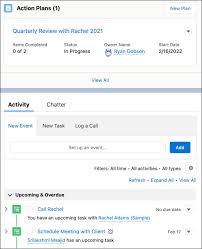
Salesforce Sales Cloud, a fully adaptable CRM solution, consolidates customer information into an integrated platform that encompasses marketing, lead generation, sales, customer service, and business analytics. Salesforce Sales Cloud Process Flow saves time. Additionally, it offers access to a myriad of applications through the AppExchange. Here’s a guide on how to set up a Salesforce Sales Cloud process flow: Understanding the Salesforce standard object architecture is necessary when setting up a sales process: Mapping your selling path involves: Establishing an activity tracking process: Building a Salesforce sales process requires time and effort but provides a robust framework for sustained growth. Organizations that can define and map their unique selling path, have clear sales stages, and ensure strong adoption being more efficient in reaching revenue goals. Need help? Contact Tectonic today. Like Related Posts Who is Salesforce? Who is Salesforce? Here is their story in their own words. From our inception, we’ve proudly embraced the identity of Read more Salesforce Marketing Cloud Transactional Emails Salesforce Marketing Cloud Transactional Emails are immediate, automated, non-promotional messages crucial to business operations and customer satisfaction, such as order Read more Salesforce Unites Einstein Analytics with Financial CRM Salesforce has unveiled a comprehensive analytics solution tailored for wealth managers, home office professionals, and retail bankers, merging its Financial Read more AI-Driven Propensity Scores AI plays a crucial role in propensity score estimation as it can discern underlying patterns between treatments and confounding variables Read more

Read More

Salesforce Sales Acronyms

Here is a helpful glossary of sales terminology you may hear when discussing Salesforce sales. Salesforce Sales Acronyms Acronym Meaning Defintion BANT Budget, Authority, Need, Time A framework that helps sales reps judge how qualified a lead is/their propensity to purchase (how likely they are to purchase). From there, sales reps can focus their attention on the most promising prospects. This is more closely related to sales qualified leads than marketing qualified leads. CQ Calendar Quarter A period of three months that is used by organizations in order to calculate their budgets, profits, losses, and sales quotas. The calendar quarters start in January/April/July/October, whereas the fiscal quarters can start at any month (according to the organization), for example, Salesforce themselves start their fiscal year in February, which means their second fiscal quarter starts in May. Salesforce Admins and users will come across this when filtering date fields in the Salesforce report builder. CY Calendar Year A period of twelve months that is used by organizations in order to calculate their budgets, profits, losses, and sales quotas. The calendar year starts in January, whereas the fiscal year can start at any month (according to the organization). ECC Einstein Call Coaching Einstein Call Coaching gives users insights and trends from sales calls – taking the rich fabric of a conversation and splicing it into key moments. ECC is ‘product within a product’ of High Velocity Sales (HVS). ECI Einstein Conversation Insights Gives users insights and trends from sales calls – taking the rich fabric of a conversation and splicing it into key moments. Never before have sales managers and reps been able to analyze their conversations like this – at scale and at speed – which would be impossible without the help of AI. (Formerly known as Einstein Call Coaching). EEI Einstein Email Insights Einstein will surface contextual sales information while writing emails, so you ultimately send the best response, at the best time.Available with Sales Cloud Einstein, Inbox, High Velocity Sales, or Revenue Intelligence, which come at an additional cost. It’s available (at an extra cost) for Salesforce Enterprise, Performance, and Unlimited editions. FQ Fiscal Quarter A period of three months that is used by organizations in order to calculate their budgets, profits, losses, and sales quotas. Salesforce Admins and users will come across this when filtering date fields in the Salesforce report builder. FY Fiscal Year “A period of twelve months, used by organizations in order to calculate their budgets, profits, and losses.” (and sales quotas)(source).Salesforce Admins and users will come across this when filtering date fields in the Salesforce report builder. HVS High-velocity Sales High-velocity Sales was developed for inside sales/sales development teams that process a high-volume of activities, especially calls. Now called Sales Engagement, the product includes: Sales Cadences, Work Queue, Einstein Lead Score, Salesforce Inbox, Call Scripts and Einstein Call Coaching. YOY Year-on-year Comparing the performance in one period of time with the same time period the previous year. For example, comparing January 2022 to January 2021 to see if trends have increased or decreased. Like Related Posts Who is Salesforce? Who is Salesforce? Here is their story in their own words. From our inception, we’ve proudly embraced the identity of Read more Salesforce Marketing Cloud Transactional Emails Salesforce Marketing Cloud Transactional Emails are immediate, automated, non-promotional messages crucial to business operations and customer satisfaction, such as order Read more Salesforce Unites Einstein Analytics with Financial CRM Salesforce has unveiled a comprehensive analytics solution tailored for wealth managers, home office professionals, and retail bankers, merging its Financial Read more AI-Driven Propensity Scores AI plays a crucial role in propensity score estimation as it can discern underlying patterns between treatments and confounding variables Read more

Read More
Salesforce Sales Cloud

Merging Duplicate Sales Cloud Leads in Salesforce Classic

This is the process for merging duplicate Sales Cloud leads in Salesforce Classic How do I make a field non editable in Salesforce? Add field level security to the service territory object because this profile should not be able to edit any fields on it. Only should be able to add and remove the related object. The readonly attribute makes a form control non-editable (or “read only”). A read-only field can’t be modified, but, unlike disabled , you can tab into it, highlight it, and copy its contents. Setting the value to null does not remove the effects of the attribute. Instead use removeAttribute(‘readonly’) . Why can’t I edit permission sets in Salesforce? In Group and Professional Edition organizations, you can’t create or edit custom permissions, but you can install them as part of a managed package. From Setup, enter Custom Permissions in the Quick Find box, then select Custom Permissions. Like1 Related Posts Who is Salesforce? Who is Salesforce? Here is their story in their own words. From our inception, we’ve proudly embraced the identity of Read more Salesforce Marketing Cloud Transactional Emails Salesforce Marketing Cloud Transactional Emails are immediate, automated, non-promotional messages crucial to business operations and customer satisfaction, such as order Read more Salesforce Unites Einstein Analytics with Financial CRM Salesforce has unveiled a comprehensive analytics solution tailored for wealth managers, home office professionals, and retail bankers, merging its Financial Read more AI-Driven Propensity Scores AI plays a crucial role in propensity score estimation as it can discern underlying patterns between treatments and confounding variables Read more

Read More
Salesforce Sales Cloud

Salesforce for the Inside Sales Team

Inside sales serves as the cornerstone of a thriving sales organization. The efficient model using Salesforce for the inside sales team enables the delivery of personalized human interactions. Salesforce facilitates rapid scalability. Inside sales involves sales representatives engaging with and selling to customers via phone or digital channels rather than face-to-face interactions. This approach not only streamlines business operations but also fosters organizational and personal growth. Modern technology enhances the productivity and effectiveness of inside sales teams by providing valuable data and insights. Whether your team is making or receiving calls, employing the inside sales methodology, business development, or a similar approach yields results. This strategy, known as Sales Engagement, focuses on promptly connecting with customers through their preferred channels. In today’s fast-paced environment, buyers expect personalized engagement and that it aligns with their needs. Inside sales teams, often responsible for initial contact and research, play a crucial role in setting the stage for a successful sales process. Salesforce for the inside sales team provides that personalized engagement,. This example is actually how Salesforce itself handles inside sales. Inside sales teams can be structured as generalized, specialized, or segmented entities, catering to diverse business needs. Salesforce, following a Quantity and Quality approach, emphasizes multiple touches to nurture leads effectively. Leveraging advanced tools and strategic timing, Salesforce maximizes sales touches, ensuring engagement during opportune moments. The organization has mastered the art of striking while the iron is hot, reaching out to potential leads promptly after engagement. Salesforce combines quantity with quality, recognizing that 64% of customers expect personalized engagement based on past interactions and interests. Salesforce representatives meticulously research target companies to tailor personalized sales communications. Sales Engagement Of particular interest are the tools employed by Salesforce for inside sales. Sales Engagement, a solution automating record-keeping and streamlining the selling process, is accessible to all Salesforce customers as an add-on to Sales Cloud. With features like email integration, automated activity logging, Sales Dialer, and AI-driven tools like Einstein Lead Scoring and Einstein Conversation Insights, Salesforce empowers its inside sales teams. They work smarter, not harder. High Velocity Sales Salesforce’s Sales Engagement tool, formerly known as High Velocity Sales, enhances inside sales reps’ ability to engage buyers more efficiently, effectively, and with greater agility. With the right tools at their disposal, inside sales teams can provide a seamless experience, essential for winning and retaining new business. Tectonic recognizes the pivotal role of inside sales and supports our clients in optimizing their processes with Salesforce’s Sales Engagement tool, ensuring a more streamlined and productive approach to closing deals. Contact Tectonic today to discuss how Salesforce Sales Engagement can empower your inside sales team. Like Related Posts Who is Salesforce? Who is Salesforce? Here is their story in their own words. From our inception, we’ve proudly embraced the identity of Read more Salesforce Marketing Cloud Transactional Emails Salesforce Marketing Cloud Transactional Emails are immediate, automated, non-promotional messages crucial to business operations and customer satisfaction, such as order Read more Salesforce Unites Einstein Analytics with Financial CRM Salesforce has unveiled a comprehensive analytics solution tailored for wealth managers, home office professionals, and retail bankers, merging its Financial Read more AI-Driven Propensity Scores AI plays a crucial role in propensity score estimation as it can discern underlying patterns between treatments and confounding variables Read more
Read More
Business Card Scanner App for Salesforce

Business Card Scanner App for Salesforce

Can I Scan a Business Card into Salesforce? Yes, you can scan a business card into Salesforce if your scanning system can create a CSV file or import data into Excel, which can then be saved as a .csv file. This resulting file can be uploaded to Salesforce. And there are several Business Card Scanner App for Salesforce solutions. Business Card Scanner App for Salesforce Does Salesforce Have a Business Card Scanner? Yes, Salesforce can utilize CamCard for Salesforce, a top OCR software that allows you to batch scan and digitize multiple business cards with unrivaled accuracy. Does CamCard Sync with Salesforce? Yes, CamCard perfectly integrates with customized Salesforce fields, making lead and contact management easier and more efficient on mobile. With a standard subscription, you can save unlimited cards to your Salesforce account. Is the CamCard App Free? CamCard offers many features, such as dating when you received a card, grouping cards received at one location, writing notes on each card, and searching by keywords, locations, or dates. The app is free, which is an added benefit. Is Scan to Salesforce Free? Yes, Scan to Salesforce allows you to instantly and accurately scan business cards and upload data to Salesforce for free. You can keep contacts in the iOS/Android app or sync them to your phone. How Do I Install Scan to Salesforce? Other Business Card Scanning Solutions: Using Outlook for Business Card Scanning: If you prefer more tools, consider those that import to Outlook and then use Salesforce’s Outlook integration tool to sync with Salesforce. This adds an extra step but offers more flexibility in choosing business card scanning software. Direct Integration with Salesforce: These options provide a variety of ways to seamlessly integrate business card data into Salesforce, ensuring efficient and accurate data management. Content updated March 2025. Like1 Related Posts Who is Salesforce? Who is Salesforce? Here is their story in their own words. From our inception, we’ve proudly embraced the identity of Read more Salesforce Marketing Cloud Transactional Emails Salesforce Marketing Cloud Transactional Emails are immediate, automated, non-promotional messages crucial to business operations and customer satisfaction, such as order Read more Salesforce Unites Einstein Analytics with Financial CRM Salesforce has unveiled a comprehensive analytics solution tailored for wealth managers, home office professionals, and retail bankers, merging its Financial Read more AI-Driven Propensity Scores AI plays a crucial role in propensity score estimation as it can discern underlying patterns between treatments and confounding variables Read more
Read More
Salesforce AI

Einstein Opportunity Scoring

Let Salesforce’s artificial intelligence help you and your team focus on the right opportunities so you can close more deals with Einstein Opportunity Scoring. Each opportunity in Salesforce is given a score, from 1 to 99, which is available on opportunity records and list views. Sales reps use these opportunity scores to identify top opportunities. If you use Collaborative Forecasts, opportunity scores are also available on the forecasts page. Plus, use scores with reports, Process Builder, and workflows. Einstein Opportunity Scoring is available to users with or without a Sales Cloud Einstein license. Opportunity scores tell you the likelihood that an opportunity will be closed won. For each opportunity score, Einstein shows the factors that have contributed the most to the score, both positively and negatively. Einstein uses your team’s past closed opportunities, won and lost, to create a predictive scoring model.  This model helps identify which opportunities are most likely to result in a win. Einstein Opportunity Scoring in Lightning In Lightning Experience, the score is shown on the compact layout of opportunity records or on the Details tab. Hover over the score to see a list of factors that contribute to the score. For example, a score could be relatively high because the opportunity is moving quickly through the stages compared to other opportunities. In Salesforce Classic, the score is shown on the record detail of opportunity records. The contributing factors are shown. You can add the Opportunity Score field to any of your opportunity list views. If you don’t see the score on public list views, ask your Salesforce admin to add it. In Lightning Experience, hover over the score in the list view to see the factors that contribute to the score. In Salesforce Classic, the contributing factors aren’t available from the list views. Instead, navigate to the opportunity record detail page. The opportunity score can be calculated using a variety of factors, such as market demand, competitive landscape, the potential ROI, and the resources required to pursue the opportunity. Einstein Opportunity Scoring provides an unbiased, objective prediction on the likelihood of a deal closing, based on data patterns from previously closed deals. Then, take the guesswork out of forecasting. Einstein Forecasting uses AI technology to bring more certainty and visibility to your forecasts. Improve forecasting accuracy, get forecast predictions, and track how sales teams are doing. What is the difference between Einstein Lead Scoring and opportunity scoring? Einstein Opportunity Scoring is part of Sales Cloud Einstein Scoring, which also includes Einstein Lead Scoring. In the hierarchy, Einstein Lead Scoring comes under Salesforce’s Sales Cloud Einstein model. Opportunity scores tell the salesperson the likelihood of an opportunity to be won. Like1 Related Posts Salesforce Marketing Cloud Transactional Emails Salesforce Marketing Cloud Transactional Emails are immediate, automated, non-promotional messages crucial to business operations and customer satisfaction, such as order Read more Salesforce Unites Einstein Analytics with Financial CRM Salesforce has unveiled a comprehensive analytics solution tailored for wealth managers, home office professionals, and retail bankers, merging its Financial Read more AI-Driven Propensity Scores AI plays a crucial role in propensity score estimation as it can discern underlying patterns between treatments and confounding variables Read more Asset Management Salesforce Can Salesforce do asset management? You can manage assets in Consumer Goods (desktop) and in the Consumer Goods offline mobile Read more

Read More
Cloud Computing for NGOs

Cloud Computing for NGOs

As cloud computing becomes more prevalent and accessible, nonprofits are increasingly leveraging its benefits to enhance operations, boost fundraising efforts, and adapt to changing circumstances. Cloud Computing for NGOs. Despite this transition trend, some organizations remain hesitant to adopt cloud technology due to perceived costs, technical expertise gaps, and concerns about security. However, the advantages of cloud computing are pplentiful and can significantly impact nonprofit efficiency and effectiveness. Cloud Computing for NGOs For nonprofits, especially those impacted by the ongoing pandemic, cloud computing offers transformative advantages. It allows organizations to conserve resources by freeing up in-house IT teams or reducing their reliance on them altogether. Furthermore, cloud technology enables nonprofits to enhance digital experiences for donors and volunteers, particularly for those accustomed to in-person fundraising events. Beyond these benefits, cloud computing drives digital transformation within nonprofits, revitalizing processes and enhancing marketing efforts. Here are some specific advantages of cloud computing for nonprofits: Process Advantages: Marketing Advantages: For nonprofit organizations striving to create awareness, raise funds, recruit volunteers, and advocate for change, cloud computing offers a cost-effective solution to enhance operational efficiency, improve marketing strategies, and ensure compliance and security. By embracing cloud technology, nonprofits can thrive in today’s digital landscape while focusing on their core mission of serving communities and effecting positive change. Like Related Posts Who is Salesforce? Who is Salesforce? Here is their story in their own words. From our inception, we’ve proudly embraced the identity of Read more Salesforce Marketing Cloud Transactional Emails Salesforce Marketing Cloud Transactional Emails are immediate, automated, non-promotional messages crucial to business operations and customer satisfaction, such as order Read more Salesforce Unites Einstein Analytics with Financial CRM Salesforce has unveiled a comprehensive analytics solution tailored for wealth managers, home office professionals, and retail bankers, merging its Financial Read more AI-Driven Propensity Scores AI plays a crucial role in propensity score estimation as it can discern underlying patterns between treatments and confounding variables Read more

Read More
Salesforce Einstein and Einstein Automate

Salesforce Analytics in the Insurance Industry

In the insurance sector, data analytics are an indispensable tool for making informed decisions and achieving measurable, positive business outcomes. Salesforce analytics in insurance, and data can make all the difference. The current landscape poses heightened and more frequent risks, presenting substantial threats to carriers, reinsurers, and brokers across various business lines. Salesforce Analytics in Insurance Key benefits of data analytics for Property and Casualty (P&C) companies include: Life and annuity companies leverage these capabilities to connect with customers seamlessly, while group benefits providers streamline operations and enhance scalability throughout the benefits lifecycle. The digital, data, and cloud technology innovations offer robust solutions to support and elevate portfolios, streamline operations, and deliver superior customer experiences. The transformative force of data and analytics in the insurance industry has been further accelerated by the challenges posed by the COVID-19 pandemic and the changes in the way companies do business in a far more digital landscape. The property and casualty insurance sector, in particular, grapples with fundamental challenges, such as increased price competition and the need to demonstrate value comprehensively. The market’s competitiveness and fast-paced nature underscore the urgency for insurers to operate at the speed of light and sound. The future of underwriting hinges on artificial intelligence, automated workflows, machine learning, and an agile development approach. Salesforce’s cloud-based solutions not only reduce operational costs but also facilitate faster innovation through purpose-built insurance solutions. Tectonic specializes in implementing these solutions without the need for additional IT staff or extended operational downtime. Salesforce Analytics in Insurance Capabilities: In Europe and North America, data and analytics capabilities are becoming standard in the P&C sector. Leading performers distinguish themselves by building advanced data and analytics underwriting capabilities that deliver substantial value. These capabilities result in improvements such as decreased loss ratios, increased new business premiums, and enhanced retention in profitable segments. Salesforce analytics in insurance play a crucial role in fraud detection, expediting the process and improving accuracy. Insurers need to stay ahead by utilizing preventive, data-driven parametric models. Data in the insurance industry empowers carriers to collect, process, and utilize information across various stages of the insurance product lifecycle. Leading insurance carriers leverage data and advanced analytics to reimagine risk evaluation, enhance customer experience, and improve efficiency throughout the underwriting process. These insights also contribute to loss prevention. Insurers utilizing big data technology can efficiently work on a customer’s profile, from checking history to automating claims processing. The development of sophisticated tech stacks by insurance carriers has proven essential for efficient model development and continual revisions, resulting in rapid and profitable growth. Risk Segmentation Risk segmentation models, powered by machine learning, consider regulatory landscapes and identify risk characteristics to enhance pricing and reduce losses. Actuaries benefit from risk analysis software. By applying statistical and mathematical models to demographic data, and combining with external sources, to calculate the likelihood of various events. Salesforce Analytics in Insurance Best-in-class performers invest in cross-functional agile teams, emphasize adoption and scale, build skills and capabilities, practice continuous improvement, and partner with technology consulting firms. Tectonic supports P&C insurance carriers in harnessing the power of data and analytics to transform their underwriting and pricing efforts, providing substantial benefits and a competitive edge. Salesforce’s suite of tools, including a 360-degree customer data view, enables reps, agents, agencies, and companies to deliver outstanding customer service. The cloud infrastructure seamlessly integrates with various insurance solutions, enhancing data accessibility and overall business performance. For a demonstration of these capabilities, reach out to Tectonic for a free demo today. Like Related Posts Who is Salesforce? Who is Salesforce? Here is their story in their own words. From our inception, we’ve proudly embraced the identity of Read more Salesforce Marketing Cloud Transactional Emails Salesforce Marketing Cloud Transactional Emails are immediate, automated, non-promotional messages crucial to business operations and customer satisfaction, such as order Read more Salesforce Unites Einstein Analytics with Financial CRM Salesforce has unveiled a comprehensive analytics solution tailored for wealth managers, home office professionals, and retail bankers, merging its Financial Read more AI-Driven Propensity Scores AI plays a crucial role in propensity score estimation as it can discern underlying patterns between treatments and confounding variables Read more
Read More

Digital BSS for Telecom Profits

Digital Business Support Systems (BSS) play a critical role in managing essential functions such as billing, rating and charging, customer experience, CRM, fulfillment, and revenue management within communications service providers (CSPs). However, the scope of a comprehensive digital BSS stack extends beyond these core functionalities to enable, monetize, and manage new digital services and partnerships. This transformation is particularly crucial for CSPs transitioning into digital service providers (DSPs), especially in anticipation of the 5G era. Let’s delve into how a robust digital BSS transformation solution can drive profitability. Anticipating Customer Churn Telecom companies can leverage advanced analytics across BSS, OSS, CRM, and other systems to extract actionable insights from customer usage, transactions, complaints, billing, and social media data. Predictive modeling identifies potential churners, enabling targeted offers, promotions, and services aimed at retaining and nurturing loyal customers. Personalizing Customer Experiences Today’s digital consumers expect personalized interactions. Implementing a digital BSS stack empowers telecom companies to capture and utilize interaction data for tailored customer engagements. Whether resolving network issues, rewarding loyalty, or suggesting relevant offers, AI and deep learning algorithms ensure real-time responses that enhance customer satisfaction and increase ARPU (Average Revenue Per User). Innovating Service Offerings Cloud-based services are increasingly popular among consumers and businesses. A robust BSS solution allows operators to seamlessly integrate these services with traditional offerings, fostering innovation and boosting ARPU. Driving Agility and Efficiency A cloud-based BSS solution enhances business agility to support emerging technologies such as IoT and M2M systems. It streamlines partnership management and product launches in complex market landscapes, enabling providers to swiftly seize new opportunities. Retaining Profitable Customers Customer acquisition costs highlight the importance of retaining profitable customers. Integrated BSS and OSS applications provide telecom companies with comprehensive insights into customer behavior, facilitating convergent billing, tiered pricing models, and targeted incentives that enhance customer loyalty and lifetime value. Boosting Average Revenue Per User (ARPU) Telecom companies strive to increase ARPU by introducing compelling new services. Integration of customer-facing BSS systems with service delivery mechanisms accelerates provisioning and enables the launch of innovative offerings that drive revenue growth. In conclusion, a modernized and robust BSS infrastructure is indispensable for telecom companies looking to differentiate their services, elevate customer experiences, and capitalize on evolving market dynamics. By harnessing advanced analytics, embracing cloud-based solutions, and integrating diverse systems, telcos can unlock growth opportunities and enhance profitability in a competitive marketplace. Like Related Posts Who is Salesforce? Who is Salesforce? Here is their story in their own words. From our inception, we’ve proudly embraced the identity of Read more Salesforce Marketing Cloud Transactional Emails Salesforce Marketing Cloud Transactional Emails are immediate, automated, non-promotional messages crucial to business operations and customer satisfaction, such as order Read more Salesforce Unites Einstein Analytics with Financial CRM Salesforce has unveiled a comprehensive analytics solution tailored for wealth managers, home office professionals, and retail bankers, merging its Financial Read more AI-Driven Propensity Scores AI plays a crucial role in propensity score estimation as it can discern underlying patterns between treatments and confounding variables Read more

Read More
gettectonic.com