
AI Tools Archives - gettectonic.com - Page 22
Salesforce AI Introduces SFR-Judge

Steps to AI Implementation

“You don’t have to sell people on the potential. What you do have to sell people on is how do we go about it.”— Deep Srivastav, Data Leadership Collaborative Developing an Effective AI Strategy: A Seven-Step Framework A well-defined AI strategy is the foundation for success. It provides clarity on vision, purpose, and goals while ensuring teams understand the steps needed to get there. By adopting a data-driven approach with measurable objectives and key performance indicators (KPIs), businesses can foster seamless collaboration and maximize AI’s impact. Key Steps to Building a Successful AI Strategy 1. Define Clear Business Objectives Start by aligning AI initiatives with overarching business goals. Clearly outline what success looks like and identify areas where AI can drive the most value. 2. Assess Your Data Readiness Evaluate the quality, quantity, and accessibility of your data. Identify gaps that could impact AI performance and ensure you have a strong data foundation for accurate insights. 3. Identify and Prioritize AI Use Cases Determine which business processes can benefit from AI, balancing short-term wins with long-term strategic projects. Focus on use cases that align with your objectives and offer the highest return on investment. 4. Build a Multidisciplinary Team AI success requires expertise across multiple domains. Assemble a team that includes data scientists, business strategists, engineers, and ethics specialists to guide AI development and deployment. 5. Choose the Right AI Technologies Select AI tools and platforms that match your business needs. Consider scalability, security, integration capabilities, and ease of deployment when evaluating your technology stack. 6. Pilot with Proof-of-Concept Projects Start small by running controlled pilot projects to test feasibility, validate assumptions, and refine your approach. This minimizes risk while providing valuable insights before scaling AI across the organization. 7. Monitor, Evaluate, and Improve AI is not a one-time implementation—it requires continuous monitoring and refinement. Track performance, gather stakeholder feedback, and iterate based on data-driven insights to optimize outcomes. Key Considerations for AI Implementation ✅ Ethical AI & Bias MitigationEstablish guidelines to ensure AI operates fairly, transparently, and responsibly, addressing potential biases and privacy concerns. ✅ Change Management & Stakeholder Buy-inEffectively communicate AI’s role within the organization, ensuring employees understand its benefits and adapt to new workflows. ✅ Security & ComplianceImplement robust security measures to safeguard data and adhere to industry regulations, ensuring responsible AI adoption. By following these steps, organizations can create an AI strategy that not only drives innovation but also delivers measurable business impact while mitigating risks. The key to AI success isn’t just recognizing its potential—it’s about executing it the right way. Like Related Posts Who is Salesforce? Who is Salesforce? Here is their story in their own words. From our inception, we’ve proudly embraced the identity of Read more Salesforce Unites Einstein Analytics with Financial CRM Salesforce has unveiled a comprehensive analytics solution tailored for wealth managers, home office professionals, and retail bankers, merging its Financial Read more AI-Driven Propensity Scores AI plays a crucial role in propensity score estimation as it can discern underlying patterns between treatments and confounding variables Read more Tectonic’s Successful Salesforce Track Record Salesforce Technology Services Integrator – Tectonic has successfully delivered Salesforce in a variety of industries including Public Sector, Hospitality, Manufacturing, Read more
Read More
Einstein 1 Unveiled

Salesforce Einstein 1 Platform

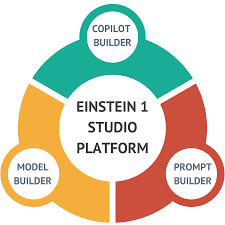
Welcome to the dawn of a bold new era in enterprise Artificial Intelligence, where the world demands a platform unlike any other. Enter Salesforce Einstein 1, the pinnacle of innovation, designed to navigate terabytes of disparate data seamlessly, offer freedom in AI model selection, and integrate directly into your workflow—all while upholding customer trust. Einstein 1 Platform serves as the nexus of your data, AI, CRM, development, and security needs, consolidating them into a singular, robust framework. This empowers IT, administrators, and developers alike with an adaptable AI platform, facilitating rapid development of transformative applications and automation. Within Einstein 1 lies an array of artificial intelligence tools, reflecting the modular architecture of the core Salesforce platform. From standardized to custom solutions, Einstein 1 caters to diverse needs. Examples include out-of-the-box AI features like sales email generation in Sales Cloud and service replies in Service Cloud. Since its unveiling as Genie, now Data Cloud, at Dreamforce ‘22, Salesforce has propelled this product to the forefront of its mission. The conversation has shifted from Customer 360 to encompass AI + CRM + Data—a strategic pivot poised for success in 2024 and beyond. But what does this transformation entail? Data Cloud has been a focal point of Salesforce’s narrative, hailed as a groundbreaking CDP innovation. The recent Q4 earnings call unveiled remarkable achievements: Gartner’s endorsement further solidifies Salesforce’s position, elevating it as a leader in the Magic Quadrant, surpassing rivals like Twilio and Adobe. This achievement is remarkable given Salesforce’s relatively recent CDP certification from the CDP Institute. However, understanding the significance of Data Cloud amidst a sea of CRM solutions may elude many. Yet, the resurgence of data underscores its importance. CRMs, while pivotal for sales, support, and marketing functions, fall short in managing the breadth of modern data collection, storage, and dissemination. Enter the CDP—a dedicated platform for aggregating customer data across every touchpoint throughout the customer lifecycle. Unlike CRMs, which traditionally served as the single source of truth, CDPs offer a comprehensive view, ingesting data from myriad sources. Two key attributes distinguish CDPs and Data Cloud: Yet, amidst this data revolution, the role of artificial intelligence cannot be understated. Einstein 1, formerly known as Salesforce Customer 360, epitomizes this synergy between AI, CRM, and Data. Einstein 1 boasts a diverse array of AI tools, from pre-built features to customizable solutions housed within the Einstein 1 Studio. This enables users to craft tailored AI functionality, seamlessly integrated with Salesforce’s ecosystem. Moreover, Salesforce’s agnostic approach to LLMs empowers users to harness the full potential of AI. Whether leveraging Salesforce’s proprietary LLM or integrating third-party or proprietary models, Einstein 1 ensures flexibility and innovation. As AI continues to permeate every facet of business and personal life, Salesforce’s strategic focus on Data Cloud and Einstein could propel the company to unprecedented growth. In the ever-evolving landscape of enterprise AI, Salesforce remains at the forefront, poised to redefine the future of customer engagement and business intelligence. Like Related Posts Who is Salesforce? Who is Salesforce? Here is their story in their own words. From our inception, we’ve proudly embraced the identity of Read more Salesforce Marketing Cloud Transactional Emails Salesforce Marketing Cloud Transactional Emails are immediate, automated, non-promotional messages crucial to business operations and customer satisfaction, such as order Read more Salesforce Unites Einstein Analytics with Financial CRM Salesforce has unveiled a comprehensive analytics solution tailored for wealth managers, home office professionals, and retail bankers, merging its Financial Read more AI-Driven Propensity Scores AI plays a crucial role in propensity score estimation as it can discern underlying patterns between treatments and confounding variables Read more

Read More
Unfolding AI Revolution

Unfolding AI Revolution

Ways the AI Revolution is Unfolding The transformative potential of artificial intelligence (AI) is being explored by James Manyika, Senior VP of Research, Technology, and Society at Google, and Michael Spence, Nobel laureate in economics and professor at NYU Stern School of Business, in their recent article, “The Coming AI Economic Revolution: Can Artificial Intelligence Reverse the Productivity Slowdown?” Published in Foreign Affairs, the article outlines the conditions necessary for an AI-powered economy to thrive, including policies that augment human capabilities, promote widespread adoption, and foster organizational innovation. Manyika and Spence highlight AI’s potential to reverse stagnating productivity growth in advanced economies, stating, “By the beginning of the next decade, the shift to AI could become a leading driver of global prosperity.” However, the authors caution that this economic revolution will require robust policy frameworks to prevent harm and unlock AI’s full potential. Here are the key insights from their analysis: 1. The Great Slowdown The rapid advancements in AI arrive at a critical juncture for the global economy. While technological innovations have surged, productivity growth has stagnated. For instance, total factor productivity (TFP), a key contributor to GDP growth, grew by 1.7% in the U.S. between 1997 and 2005 but has since slowed to just 0.4%. This slowdown is exacerbated by aging populations and shrinking labor forces in major economies like China, Japan, and Italy. Without a transformative force like AI, economic growth could remain stifled, characterized by higher inflation, reduced labor supply, and elevated capital costs. 2. A Different Digital Revolution Unlike the rule-based automation of the 1990s digital revolution, AI has shattered previous technological constraints. Advances in AI now enable tasks that were previously unprogrammable, such as pattern recognition and decision-making. AI systems have surpassed human performance in areas like image recognition, cancer detection, and even strategic games like Go. This shift extends the impact of technology to domains previously thought to require exclusively human intuition and creativity. 3. Quick Studies Generative AI, particularly large language models (LLMs), offers exceptional versatility, multimodality, and accessibility, making its economic impact potentially transformative: Applications range from digital assistants drafting documents to ambient intelligence systems that automate homes or generate health records based on patient-clinician interactions. 4. Creative Instruction Despite its promise, AI has drawn criticism for issues like bias, misinformation, and the potential for job displacement. Critics highlight that AI systems may amplify societal inequities or produce unreliable outputs. However, research suggests that AI will primarily augment work rather than eliminate it. While about 10% of jobs may decline, two-thirds of occupations will likely see AI enhancing specific tasks. This shift emphasizes collaboration between humans and intelligent machines, requiring workers to develop new skills. Studies, such as MIT’s Work of the Future task force, reinforce that automation will not lead to a jobless future but rather to evolving roles and opportunities. 5. With Us, Not Against Us The full benefits of AI will not materialize if its deployment is left solely to market forces. Proactive measures are necessary to maximize AI’s positive impact while mitigating risks. This includes fostering widespread adoption of AI in ways that empower workers, enhance productivity, and address societal challenges. Policies should prioritize accessibility and equitable diffusion to ensure AI serves as a force for inclusive economic growth. 6. The Real AI Challenge Generative AI has the potential to spark a productivity renaissance at a time when the global economy urgently needs it. Yet, Manyika and Spence caution that AI could exacerbate existing economic disparities if not guided effectively. They argue that focusing solely on existential threats overlooks the broader risks posed by inequitable AI deployment. Instead, a positive vision is needed—one that prioritizes AI as a tool for global economic progress, equitable growth, and generational prosperity. “Harnessing the power of AI for good will require more than simply focusing on potential damage,” the authors conclude. “It will demand effective measures to turn that vision into reality.” The unfolding AI revolution offers immense opportunities, but realizing its full potential requires thoughtful action. By addressing risks and fostering innovation, AI could reshape the global economy for the better. Like Related Posts Who is Salesforce? Who is Salesforce? Here is their story in their own words. From our inception, we’ve proudly embraced the identity of Read more Salesforce Unites Einstein Analytics with Financial CRM Salesforce has unveiled a comprehensive analytics solution tailored for wealth managers, home office professionals, and retail bankers, merging its Financial Read more AI-Driven Propensity Scores AI plays a crucial role in propensity score estimation as it can discern underlying patterns between treatments and confounding variables Read more Tectonic’s Successful Salesforce Track Record Salesforce Technology Services Integrator – Tectonic has successfully delivered Salesforce in a variety of industries including Public Sector, Hospitality, Manufacturing, Read more

Read More
How to Implement AI for Business Transformation

How to Implement AI for Business Transformation

Harnessing the Power of AI for Business Transformation The age of artificial intelligence (AI) is here. How to Implement AI for Business Transformation? Once a niche technology confined to research labs and the realm of science fiction, AI has now become a mainstream force. Today, an estimated 35% of businesses are leveraging AI to enhance products, boost efficiency, and gain a competitive edge. However, for companies yet to begin their AI journey, the path to implementation can seem daunting. So how can organizations navigate the complexities of AI and unlock its potential to drive success? This comprehensive guide is designed to empower businesses to confidently adopt AI. We’ll break down what AI is, assess your organization’s readiness, help you develop a robust AI strategy, and explore how to implement and integrate AI across operations. Ultimately, this insight will show you how to embrace AI for continuous innovation, helping automate tasks, uncover insights, and future-proof your business. AI Era Demands an Intelligent Data Infrastructure AI consulting services and digital transformation partners like Tectonic underscore the technology’s immense value, helping organizations evaluate, implement, and scale AI initiatives. However, knowing where to start and who to trust can be challenging. This guide will provide best practices for planning and executing AI projects, helping you make informed decisions when selecting solutions and partners. By the end, your organization will be equipped with the knowledge and confidence needed to make AI a powerful competitive advantage. Understanding the AI Landscape Before diving into AI implementation, it’s important to understand what artificial intelligence is and the wide array of applications it offers. What is Artificial Intelligence? Artificial intelligence (AI) refers to software and machines designed to perform tasks that typically require human intelligence—such as visual perception, speech recognition, decision-making, and language translation. AI is already deeply integrated into many everyday products and services, including: Machine Learning Basics At the core of most AI systems is machine learning (ML), which involves training algorithms on vast datasets, enabling them to learn from examples without being explicitly programmed for every scenario. There are three main types of machine learning: Beyond ML, fields like natural language processing (NLP) focus on understanding human language, while computer vision analyzes visual content such as images and video. Real-World AI Applications Understanding the fundamentals of AI helps organizations align their needs with its capabilities. Common business use cases for AI include: Armed with this knowledge, businesses can better evaluate how AI fits into their goals and operations. Developing a Comprehensive AI Strategy Once you understand the AI landscape, the next step is developing a strategic plan to guide implementation. Establishing an AI Vision and Objectives AI adoption must align with clear financial and operational goals. Leadership teams should identify: Aligning stakeholders and executive leaders around specific use cases will drive urgency, investment, and commitment. AI Ethics and Governance AI adoption also requires guidelines for ethical usage, transparency, and accountability. Organizations should consider: Establishing these frameworks early ensures responsible and transparent AI usage. Resourcing an AI Program AI implementation requires the right talent and resources. Budget considerations should include: A Phased AI Adoption Roadmap Rather than attempting to scale AI all at once, organizations should adopt a phased approach: This roadmap balances short-term impact with long-term scalability. Choosing the Right AI Implementation Approach With your strategy in place, the next decision is how to implement AI. Three primary approaches are: The choice depends on your organization’s internal capabilities, desired level of customization, and timeline. Integrating AI into Your Operations Successful AI implementation requires careful planning and integration with existing operations. Develop an Integration Plan Consider how AI will interact with existing systems and workflows: Address Security and Privacy Ensure that AI systems comply with data privacy regulations and security protocols, especially when handling sensitive information. Drive Adoption Through Training Help staff understand how AI will augment their roles by providing training on how the algorithms work and how to interact with AI systems effectively. Monitor for Model Decay Implement processes to monitor and retrain models as needed to ensure continued performance and reliability. Embracing AI for Continuous Improvement AI should be viewed as an ongoing investment, driving continuous improvement across the organization. Encourage a Data-Driven Culture Empower teams to identify new AI use cases and experiment with AI-driven solutions. Provide the tools and frameworks to facilitate this culture of innovation. Foster Responsible AI Ensure that AI systems are transparent, accountable, and designed to augment human decision-making responsibly. Commit to Reskilling As AI capabilities evolve, continually upskill employees to ensure your workforce remains at the forefront of technological advancements. Unlocking the Future of AI The potential of AI to revolutionize businesses is clear. However, achieving success requires more than just technical capabilities. It demands thoughtful planning, strategic alignment, and a commitment to continuous improvement. By following this guide, your organization can confidently implement AI to unlock powerful data-driven insights, automate tasks, and achieve lasting competitive advantage. The future of AI is full of possibilities—are you ready to seize them? Tectonic is ready to help. How to Implement AI for Business Transformation Like Related Posts Who is Salesforce? Who is Salesforce? Here is their story in their own words. From our inception, we’ve proudly embraced the identity of Read more Salesforce Unites Einstein Analytics with Financial CRM Salesforce has unveiled a comprehensive analytics solution tailored for wealth managers, home office professionals, and retail bankers, merging its Financial Read more AI-Driven Propensity Scores AI plays a crucial role in propensity score estimation as it can discern underlying patterns between treatments and confounding variables Read more Tectonic’s Successful Salesforce Track Record Salesforce Technology Services Integrator – Tectonic has successfully delivered Salesforce in a variety of industries including Public Sector, Hospitality, Manufacturing, Read more

Read More
AI's Impact on the Workforce

AI’s Impact on the Workforce

According to McKinsey, generative AI has the potential to contribute between $2.6 trillion and $4.4 trillion in value to the global economy across various industries, spanning banking, retail, high tech, healthcare, and life sciences. Its impact is expected to reach diverse professions, including customer operations, marketing and sales, software engineering, and research and development. The influence of AI on the workforce is significant. A report by Goldman Sachs suggests that AI could replace the equivalent of 300 million full-time jobs, affecting a quarter of work tasks in the US and Europe. However, it also brings forth new job opportunities and a productivity boom. Despite concerns about job displacement, AI is anticipated to generate numerous new opportunities. Roles like prompt engineer and AI product manager are emerging, with a Salesforce-sponsored IDC white paper predicting a surge in demand for positions such as data architects, AI ethicists, and AI solutions architects over the next 12 months. The report also forecasts the creation of 11.6 million new jobs within the Salesforce ecosystem alone over the next six years. Recent advancements in generative AI, exemplified by products like ChatGPT with 100 million monthly active users in two months, have reignited discussions about automation’s impact on jobs. While the extent of disruption remains unknown, developers, users, and policymakers should consider its effects on workers. To address challenges and opportunities, Majority Leader Chuck Schumer has launched a SAFE Innovation Framework, emphasizing worker security. The Biden administration is developing a National AI Strategy to address economic and job impacts. For individuals in the workforce, there’s an opportunity to cultivate existing skills and acquire new ones through platforms like Salesforce’s Trailhead, Coursera, and LinkedIn. AI’s impact on jobs involves eliminating repetitive tasks, allowing individuals to focus on more strategic and creative aspects of their roles. In fields like sales, customer service, marketing, healthcare, finance, and graphic design, AI will transform roles and create new opportunities. Chris Poole, AI Technical Consulting Lead in Salesforce’s global AI practice, envisions AI becoming ingrained in every aspect of our lives, contributing to fascinating evolution across various fields. The scale of AI adoption’s impact on workers, especially with generative AI tools, remains uncertain. Potential effects include replacing, complementing, or freeing workers for more productive tasks, or creating new jobs. A Goldman Sachs estimate suggests that about two-thirds of current jobs are exposed to some degree of AI automation, with generative AI potentially substituting up to one-fourth of current work. McKinsey Global Institute estimates that 29.5 percent of all hours worked could be automated by 2030. Regarding job impact, professional occupations associated with clerical work in finance, law, and business management are most exposed to AI. However, AI is also concurrently creating many new jobs. Like Related Posts Who is Salesforce? Who is Salesforce? Here is their story in their own words. From our inception, we’ve proudly embraced the identity of Read more Salesforce Marketing Cloud Transactional Emails Salesforce Marketing Cloud Transactional Emails are immediate, automated, non-promotional messages crucial to business operations and customer satisfaction, such as order Read more Salesforce Unites Einstein Analytics with Financial CRM Salesforce has unveiled a comprehensive analytics solution tailored for wealth managers, home office professionals, and retail bankers, merging its Financial Read more AI-Driven Propensity Scores AI plays a crucial role in propensity score estimation as it can discern underlying patterns between treatments and confounding variables Read more

Read More
Salesforce Einstein Copilot

Introducing Salesforce Einstein Copilot

Einstein Copilot introduces a cutting-edge generative A. Powered by a conversational assistant seamlessly embedded within every Salesforce application. Its strategically enhancing workflow and yielding substantial gains in productivity. Announced at Dreamforce 2023, in case you missed it, read on. The newly integrated Einstein 1 Data Cloud, part of the Einstein 1 Platform, allows customers to establish a unified customer profile. By connecting any data source. This integration infuses AI, automation, and analytics into every customer experience, fostering a comprehensive approach. Salesforce Einstein Copilot Studio Einstein Copilot Studio provides organizations with the flexibility to tailor Einstein Copilot. A Salesforce tool used according to specific business requirements. It incorporates the Einstein Trust Layer, ensuring the protection of sensitive data while leveraging trusted information to enhance generative AI responses. Unlike other generative AI copilot solutions, Einstein Copilot is natively integrated into the world’s leading AI CRM – Salesforce. Seamlessly tapping into data from various Salesforce applications. This integration ensures more accurate AI-powered recommendations and content generation. Data Cloud The Data Cloud serves as the foundation for Einstein Copilot. Data Cloud offers real-time, consolidated views of customers or entities. With Data Cloud, creating a data graph is simplified, enabling the generation of AI-powered apps with a single click, eliminating the need for manual data queries or joins. Einstein Trust Layer The Einstein Trust Layer, an integral part of the Einstein 1 Platform, ensures the secure retrieval of relevant data from Data Cloud. Before sending it to the Language Model (LLM), proprietary, sensitive, or confidential information is masked, maintaining a high level of data security and compliance. Copilot for Sales aligns with existing CRM access controls and user permissions. Salesforce requires ensuring administrators and users have the necessary permissions for customization and data management within Copilot for Sales. Salesforce Copilot service functions similarly to other generative AI tools in the customer experience landscape, responding to customer queries automatically with personalized answers grounded in company data. Einstein Copilot & Search, anticipated for availability from February 2024, is set to leverage Data Cloud unstructured support. It will be ushering in a new era where Generative AI-based apps redefine the user interface. Thereby allowing seamless interactions and conversations with applications. This transformative shift signifies a significant milestone in Enterprise Software, with Salesforce actively participating in this evolving landscape. Copilot for Sales How is Copilot for Sales different from Copilot for Microsoft 365? Microsoft Copilot for Sales is an AI assistant designed for sellers that brings together the capabilities of Copilot for Microsoft 365 with seller-specific insights and workflows. What Salesforce just did is drop the GPT name and go with Copilot, By endorsing the Microsoft branding it announced earlier this year with Microsoft Copilot for Microsoft 365 and CoPilot for Dynamics 365. Like Related Posts Who is Salesforce? Who is Salesforce? Here is their story in their own words. From our inception, we’ve proudly embraced the identity of Read more Salesforce Marketing Cloud Transactional Emails Salesforce Marketing Cloud Transactional Emails are immediate, automated, non-promotional messages crucial to business operations and customer satisfaction, such as order Read more Salesforce Unites Einstein Analytics with Financial CRM Salesforce has unveiled a comprehensive analytics solution tailored for wealth managers, home office professionals, and retail bankers, merging its Financial Read more AI-Driven Propensity Scores AI plays a crucial role in propensity score estimation as it can discern underlying patterns between treatments and confounding variables Read more

Read More
AI-Powered Data Management

AI-Powered Data Management

AI-Powered Data Management: Transforming Data into Strategic Assets What is AI Data Management? AI data management integrates artificial intelligence (AI) and machine learning (ML) to optimize data processes—automating workflows, improving accuracy, and unlocking deeper insights. By leveraging AI, organizations can enhance data quality, security, compliance, and analytics, making data more actionable for AI-driven applications. Key Capabilities of AI in Data Management 1. Intelligent Automation 2. Enhanced Data Quality 3. Advanced Security & Compliance 4. Smart Data Discovery & Classification 5. Predictive & Prescriptive Analytics Real-World Applications ✅ Automated Data Cleansing – AI validates and corrects data in real time, ensuring accuracy.✅ Intelligent Data Cataloging – AI scans and classifies data for easy retrieval and governance.✅ Predictive Modeling – Analyzes historical data to forecast trends (e.g., customer behavior, operational risks).✅ AI-Driven Cybersecurity – Monitors network activity to detect and block threats before they escalate. Business Benefits of AI Data Management 🔹 Higher Data Accuracy – Fewer errors, more reliable insights.🔹 Faster Decision-Making – AI extracts insights in seconds, not weeks.🔹 Cost Efficiency – Reduces manual labor and storage waste.🔹 Regulatory Readiness – Automates compliance reporting.🔹 Competitive Edge – Turns data into a strategic differentiator. The Future of AI in Data Management As AI evolves, expect: Conclusion AI-powered data management isn’t just an upgrade—it’s a paradigm shift. By integrating AI, organizations can automate workflows, enhance security, and extract unprecedented value from their data, positioning themselves ahead in the data-driven economy. Is your business ready to harness AI for smarter data management? Like Related Posts Who is Salesforce? Who is Salesforce? Here is their story in their own words. From our inception, we’ve proudly embraced the identity of Read more Salesforce Unites Einstein Analytics with Financial CRM Salesforce has unveiled a comprehensive analytics solution tailored for wealth managers, home office professionals, and retail bankers, merging its Financial Read more AI-Driven Propensity Scores AI plays a crucial role in propensity score estimation as it can discern underlying patterns between treatments and confounding variables Read more Tectonic’s Successful Salesforce Track Record Salesforce Technology Services Integrator – Tectonic has successfully delivered Salesforce in a variety of industries including Public Sector, Hospitality, Manufacturing, Read more

Read More
How Good is Our Data

How Data Cloud and Salesforce Success Depend on Data Quality

Optimizing AI’s Impact on Your Business: The Crucial Role of Data Quality in Salesforce In the ever-evolving digital landscape, the convergence of data quality and artificial intelligence (AI) is a linchpin for organizational success. Success depends on data quality within the Salesforce ecosystem. The synergy between Einstein, an advanced AI system, and Data Cloud underscores the pivotal role of high-quality, comprehensive, and real-time data. Thereby unleashing the full potential of AI-driven insights and interactions with customers and prospects. Let’s explore how data quality profoundly influences these two emerging features. This insight will be shedding light on the repercussions of poor data quality and how Einstein and Data Cloud can elevate your organization to greater levels of sales success. Understanding Data Value Depends on Data Quality: Quality data extends beyond merely addressing duplicate records or inaccurate phone numbers It isn’t just about ensuring the area code field doesn’t contain zip codes. It is more than aligning contacts to accounts. It encompasses factors such as completeness, accuracy, and timeliness in your CRM: Consequences of Bad Data: Poor-quality data leads to inefficiencies and wasted time. Oftentimes causing flawed decision-making and strains on organizational resources. More critically, these poor business decisions often lead to tangible financial losses. Transforming bad data into quality data is imperative. Quality is key for relying on it to enhance company performance, requiring ongoing strategies rather than a one-stop solution. The Financial Impact of Accurate Data: Accurate data holds immense value. With data volumes projected to exceed 180 zettabytes by 2025, organizations must harness the power of their data. Proactive handling of data quality not only ensures higher data quality but also mitigates the financial impact of poor data quality. The sooner a plan is implemented to enhance and sustain data quality, the fewer negative repercussions organizations face in leveraging their data for growth. Your next decision is based on your last data. Is it going to help you or hurt you? Salesforce Einstein and the GIGO Principle: Salesforce Einstein, positioned as Artificial Intelligence for everyone, underscores trust as a core value. The system’s ability to create relevant and timely content and interactions is contingent on the quality of the data it operates on. Similar to the historical concept of “Garbage In, Garbage Out” (GIGO), AI results are only as reliable and valuable as the completeness and accuracy of the input data. No surprise, right? Introduction to Salesforce Data Cloud: Enter Salesforce Data Cloud, a platform allowing the organization and segmentation of customer data from any source. This open, extensible platform enables data enrichment from various sources, creating an optimal customer record. This enriched record empowers Sales, Service, and Marketing teams to perform intelligently and swiftly, ultimately driving enhanced results for the company. The WIIFM Factor: Amidst discussions about AI and Data Cloud, addressing the “What’s in it for me?” (WIIFM) question is crucial for organization adoption. Individual organizations must evaluate the reliability and accuracy of their data and determine forward-looking strategies for maintaining quality data, regardless of the source. The common theme remains: for data to yield valuable insights, it must be complete, timely, relevant, and accurate. Ultimately, success depends on data quality. Like3 Related Posts Who is Salesforce? Who is Salesforce? Here is their story in their own words. From our inception, we’ve proudly embraced the identity of Read more Salesforce Marketing Cloud Transactional Emails Salesforce Marketing Cloud Transactional Emails are immediate, automated, non-promotional messages crucial to business operations and customer satisfaction, such as order Read more Salesforce Unites Einstein Analytics with Financial CRM Salesforce has unveiled a comprehensive analytics solution tailored for wealth managers, home office professionals, and retail bankers, merging its Financial Read more AI-Driven Propensity Scores AI plays a crucial role in propensity score estimation as it can discern underlying patterns between treatments and confounding variables Read more

Read More

Reshaping the Automotive Industry With Salesforce

Changing customer expectations are reshaping the automotive industry, compelling dealerships to reevaluate their approach to business. With only 1% of buyers fully satisfied with their vehicle purchase experience, dealerships face a significant barrier to fostering loyalty. This dissatisfaction jeopardizes long-term profitability, as customers may turn elsewhere for future service or vehicle needs. Delivering exceptional customer experiences has become more critical than ever. However, rising operational costs present the challenge of achieving more with fewer resources — and doing so quickly. To drive sustainable growth, dealerships must prioritize relationship-building alongside achieving sales goals. Central to this effort is creating personalized digital touchpoints, especially for millennial and Gen Z shoppers, who now dominate the market. These younger consumers seek seamless, consistent experiences — from online browsing to in-person showroom visits. Turning them into lifelong customers requires a unified view of customer data, encompassing their digital shopping habits, service requests, and communications across all platforms. Fortunately, new tools can help dealerships meet these changing demands while reducing costs and improving productivity. To succeed, however, dealerships must adopt a mindset shift, moving beyond transactional practices to focus on customer-centric strategies. Digital Storefronts Are Falling Short Research reveals that fewer than 20% of original equipment manufacturers (OEMs) and retailers consider their digital storefronts engaging and mobile-friendly. For more insights into the industry’s challenges and opportunities, check out the “Trends in Automotive” report, based on feedback from 500 industry leaders. Beyond 30-Day Sales Goals: Building Lasting Relationships Dealerships have long operated in 30-day cycles, dictated by monthly sales goals from OEMs. However, successful dealerships now balance these targets with efforts to nurture long-term relationships. This involves more than sporadic emails about promotions or tune-ups. Instead, it’s about providing consistent, valuable interactions that address customer needs year-round. For example, keeping customers informed with personalized communications—such as alerts about service offers or recommendations for vehicle upgrades—can enhance their overall experience and build trust. Four Steps to Build Customer Loyalty The Path to Loyalty: A 360-Degree Customer View Sustaining long-term profitability hinges on extending customer loyalty beyond individual car sales. With Americans now keeping vehicles for an average of 12 years, dealerships must create enduring relationships across the vehicle’s lifecycle. Salesforce Automotive Cloud empowers dealerships with a 360-degree view of customer data, enabling teams to deliver personalized, seamless experiences. This unified approach helps sales teams close deals faster and service teams provide tailored consultations, ultimately fostering loyalty. Salesforce Sales and Service Cloud provide the same 360-degree view with powerful sales and service tools, including automated agents. The goal? To ensure customers think of your dealership first—whether for service, upgrades, or their next vehicle purchase. By placing the customer at the center of your business and leveraging advanced technology, dealerships can adapt to the evolving landscape and thrive in the future. Like Related Posts Who is Salesforce? Who is Salesforce? Here is their story in their own words. From our inception, we’ve proudly embraced the identity of Read more Salesforce Marketing Cloud Transactional Emails Salesforce Marketing Cloud Transactional Emails are immediate, automated, non-promotional messages crucial to business operations and customer satisfaction, such as order Read more Salesforce Unites Einstein Analytics with Financial CRM Salesforce has unveiled a comprehensive analytics solution tailored for wealth managers, home office professionals, and retail bankers, merging its Financial Read more AI-Driven Propensity Scores AI plays a crucial role in propensity score estimation as it can discern underlying patterns between treatments and confounding variables Read more

Read More
einstein discovery dictionary

Einstein Discovery Dictionary

Familiarize yourself with terminology that is commonly associated with Einstein Discovery. Actionable VariableAn actionable variable is an explanatory variable that people can control, such as deciding which marketing campaign to use for a particular customer. Contrast these variables with explanatory variables that can’t be controlled, such as a customer’s street address or a person’s age. If a variable is designated as actionable, the model uses prescriptive analytics to suggest actions (improvements) the user can take to improve the predicted outcome. Actual OutcomeAn actual outcome is the real-world value of an observation’s outcome variable after the outcome has occurred. Einstein Discovery calculates model performance by comparing how closely predicted outcomes come to actual outcomes. An actual outcome is sometimes called an observed outcome. AlgorithmSee modeling algorithm. Analytics DatasetAn Analytics dataset is a collection of related data that is stored in a denormalized, yet highly compressed, form. The data is optimized for analysis and interactive exploration. AttributeSee variable. AverageIn Einstein Discovery, the average represents the statistical mean for a variable. BiasIf Einstein Discovery detects bias in your data, it means that variables are being treated unequally in your model. Removing bias from your model can produce more ethical and accountable models and, therefore, predictions. See disparate impact. Binary Classification Use CaseThe binary classification use case applies to business outcomes that are binary: categorical (text) fields with only two possible values, such as win-lose, pass-fail, public-private, retain-churn, and so on. These outcomes separate your data into two distinct groups. For analysis purposes, Einstein Discovery converts the two values into Boolean true and false. Einstein Discovery uses logistic regression to analyze binary outcomes. Binary classification is one of the main use cases that Einstein Discovery supports. Compare with multiclass classification. CardinalityCardinality is the number of distinct values in a category. Variables with high cardinality (too many distinct values) can result in complex visualizations that are difficult to read and interpret. Einstein Discovery supports up to 100 categories per variable. You can optionally consolidate the remaining categories (categories with fewer than 25 observations) into a category called Other. Null values are put into a category called Unspecified. Categorical VariableA categorical variable is a type of variable that represents qualitative values (categories). A model that represents a binary or multiclass classification use case has a categorical variable as its outcome. See category. CategoryA category is a qualitative value that usually contains categorical (text) data, such as Product Category, Lead Status, and Case Subject. Categories are handy for grouping and filtering your data. Unlike measures, you can’t perform math on categories. In Salesforce Help for Analytics datasets, categories are referred to as dimensions. CausationCausation describes a cause-and-effect relationship between things. In Einstein Discovery, causality refers to the degree to which variables influence each other (or not), such as between explanatory variables and an outcome variable. Some variables can have an obvious, direct effect on each other (for example, how price and discount affect the sales margin). Other variables can have a weaker, less obvious effect (for example, how weather can affect on-time delivery). Many variables have no effect on each other: they are independent and mutually exclusive (for example, win-loss records of soccer teams and currency exchange rates). It’s important to remember that you can’t presume a causal relationship between variables based simply on a statistical correlation between them. In fact, correlation provides you with a hint that indicates further investigation into the association between those variables. Only with more exploration can you determine whether a causal link between them really exists and, if so, how significant that effect is .CoefficientA coefficient is a numeric value that represents the impact that an explanatory variable (or a pair of explanatory variables) has on the outcome variable. The coefficient quantifies the change in the mean of the outcome variable when there’s a one-unit shift in the explanatory variable, assuming all other variables in the model remain constant. Comparative InsightComparative insights are insights derived from a model. Comparative insights reveal information about the relationships between explanatory variables and the outcome variable in your story. With comparative insights, you isolate factors (categories or buckets) and compare their impact with other factors or with global averages. Einstein Discovery shows waterfall charts to help you visualize these comparisons. CorrelationA correlation is simply the association—or “co-relationship”—between two or more things. In Einstein Discovery, correlation describes the statistical association between variables, typically between explanatory variables and an outcome variable. The strength of the correlation is quantified as a percentage. The higher the percentage, the stronger the correlation. However, keep in mind that correlation is not causation. Correlation merely describes the strength of association between variables, not whether they causally affect each other. CountA count is the number of observations (rows) associated with an analysis. The count can represent all observations in the dataset, or the subset of observations that meet associated filter criteria.DatasetSee Analytics dataset. Date VariableA date variable is a type of variable that contains date/time (temporal) data.Dependent VariableSee outcome variable. Deployment WizardThe Deployment Wizard is the Einstein Discovery tool used to deploy models into your Salesforce org. Descriptive InsightsDescriptive insights are insights derived from historical data using descriptive analytics. Descriptive insights show what happened in your data. For example, Einstein Discovery in Reports produces descriptive insights for reports. Diagnostic InsightsDiagnostic insights are insights derived from a model. Whereas descriptive insights show what happened in your data, diagnostic insights show why it happened. Diagnostic insights drill deeper into correlations to help you understand which variables most significantly impacted the business outcome you’re analyzing. The term why refers to a high statistical correlation, not necessarily a causal relationship. Disparate ImpactIf Einstein Discovery detects disparate impact in your data, it means that the data reflects discriminatory practices toward a particular demographic. For example, your data can reveal gender disparities in starting salaries. Removing disparate impact from your model can produce more accountable and ethical insights and, therefore, predictions that are fair and equitable. Dominant ValuesIf Einstein Discovery detects dominant values in a variable, it means that the data is unbalanced. Most values are in the same category, which can limit the value of the analysis. DriftOver time, a deployed model’s performance can drift, becoming less accurate in predicting outcomes. Drift can occur due to changing factors in the data or in your business environment. Drift also results from now-obsolete assumptions built into the story

Read More
multi-channel campaigns

Multi-Channel Campaigns

Leveraging Salesforce for Multi-Channel Campaign Management with Tectonic In today’s dynamic marketing landscape, businesses need to connect with their audience across multiple channels—email, social media, web, and beyond. Managing these campaigns effectively can feel like juggling too many balls at once, especially when aiming to maintain consistent messaging, track performance, and maximize ROI. That’s where Salesforce, paired with expertise from Tectonic, makes all the difference. Salesforce simplifies multi-channel campaign management, helping businesses stay organized, boost engagement, and achieve measurable results. Let’s dive into how this powerful platform, supported by Tectonic’s expertise, takes campaign management to the next level. The Challenge Marketing teams often face obstacles like: The Solution: Streamlined Multi-Channel Campaign Management Salesforce, with Tectonic as your trusted partner, transforms the complexity of multi-channel campaigns into a streamlined and effective process. By integrating channels, automating workflows, and delivering real-time insights, businesses can engage their audience and achieve exceptional results. 1. Centralized Campaign Planning Salesforce Marketing Cloud provides a centralized platform for planning and managing campaigns across channels—email, SMS, social media, and paid ads—all from one dashboard. This unified view ensures messaging and branding stay consistent while fostering seamless collaboration across teams. Tectonic enhances this process by ensuring your Salesforce environment is optimized for your specific needs. 2. Personalized Messaging at Scale Salesforce’s AI-powered tools, such as Einstein AI, analyze customer data to craft personalized content for every audience segment. These tools allow businesses to create tailored emails, ads, and social media posts that resonate with specific groups. With Tectonic’s guidance, you can implement personalization strategies that drive engagement and conversions to new heights. 3. Real-Time Performance Tracking Salesforce consolidates campaign performance data into a single platform, providing real-time metrics like open rates, click-through rates, social engagement, and conversions. Customizable dashboards allow your team to monitor results at a glance, enabling quick adjustments for maximum impact. Tectonic can help design these dashboards for clarity and actionable insights. 4. Automation for Efficiency Managing multi-channel campaigns involves countless tasks, but Salesforce automates processes such as scheduling, triggering emails, and personalizing messaging based on user behavior. By streamlining these repetitive tasks, your team can focus on creativity and strategy. Tectonic’s expertise ensures these automations are tailored to fit your business workflows perfectly. 5. Seamless Integration Across Channels Salesforce integrates with platforms like Google Ads, Facebook, LinkedIn, and Instagram, consolidating data into one ecosystem. This eliminates the need for manual data collection, saving time and improving accuracy. Tectonic ensures these integrations are set up seamlessly, so you can focus on running impactful campaigns. Strategies for Success with Salesforce Why Tectonic + Salesforce? Tectonic combines deep Salesforce expertise with a keen understanding of marketing challenges to help you fully unlock the platform’s potential. Together, Salesforce and Tectonic empower businesses to achieve more efficient, impactful, and ROI-driven campaigns. Ready to revolutionize your multi-channel marketing strategy? Let Tectonic guide you to Salesforce success. Content updated December 2024. Like Related Posts Who is Salesforce? Who is Salesforce? Here is their story in their own words. From our inception, we’ve proudly embraced the identity of Read more Salesforce Marketing Cloud Transactional Emails Salesforce Marketing Cloud Transactional Emails are immediate, automated, non-promotional messages crucial to business operations and customer satisfaction, such as order Read more Salesforce Unites Einstein Analytics with Financial CRM Salesforce has unveiled a comprehensive analytics solution tailored for wealth managers, home office professionals, and retail bankers, merging its Financial Read more AI-Driven Propensity Scores AI plays a crucial role in propensity score estimation as it can discern underlying patterns between treatments and confounding variables Read more

Read More
Salesforce Einstein and Einstein Automate

Einstein Trust

Generative AI, Salesforce, and the Commitment to Trust The excitement surrounding generative AI is palpable as it unlocks new dimensions of creativity for individuals and promises significant productivity gains for businesses. Engaging with generative AI can be a great experience, whether creating superhero versions of your pets with Midjourney or crafting pirate-themed poems using ChatGPT. According to Salesforce research, employees anticipate saving an average of 5 hours per week through the adoption of generative AI, translating to a substantial monthly time gain for full-time workers. Whether designing content for sales and marketing or creating a cute version of a beloved story, generative AI is a tool that helps users create content faster. However, amidst the enthusiasm, questions arise, including concerns about the security and privacy of data. Users ponder how to leverage generative AI tools while safeguarding their own and their customers’ data. Questions also revolve around the transparency of data collection practices by different generative AI providers and ensuring that personal or company data is not inadvertently used to train AI models. Additionally, there’s a need for assurance regarding the accuracy, impartiality, and reliability of AI-generated responses. Salesforce has been at the forefront of addressing these concerns, having embraced artificial intelligence for nearly a decade. The Einstein platform, introduced in 2016, marked Salesforce’s foray into predictive AI, followed by investments in large language models (LLMs) in 2018. The company has diligently worked on generative AI solutions to enhance data utilization and productivity for their customers. The Einstein Trust Layer is designed with private, zero-retention architecture. Emphasizing the value of Trust, Salesforce aims to deliver not just technological capabilities but also a responsible, accountable, transparent, empowering, and inclusive approach. The Einstein Trust Layer represents a pivotal development in ensuring the security of generative AI within Salesforce’s offerings. The Einstein Trust Layer is designed to enhance the security of generative AI by seamlessly integrating data and privacy controls into the end-user experience. These controls, forming gateways and retrieval mechanisms, enable the delivery of AI securely grounded in customer and company data, mitigating potential security risks. The Trust Layer incorporates features such as secure data retrieval, dynamic grounding, data masking, zero data retention, toxic language detection, and an audit trail, all aimed at protecting data and ensuring the appropriateness and accuracy of AI-generated content. Salesforce proactively provided the ability for any admin to control how prompt inputs and outputs are generated, including reassurance over data privacy and reducing toxicity. This innovative approach allows customers to leverage the benefits of generative AI without compromising data security and privacy controls. The Trust Layer acts as a safeguard, facilitating secure access to various LLMs, both within and outside Salesforce, for diverse business use cases, including sales emails, work summaries, and service replies in contact centers. Through these measures, Salesforce underscores its commitment to building the most secure generative AI in the industry. Generating content within Salesforce can be achieved through three methods: CRM Solutions: Einstein Copilot Studio: Einstein LLM Generations API: An overarching feature of these AI capabilities is that every Language Model (LLM) generation is meticulously crafted through the Trust Layer, ensuring reliability and security. At Tectonic, we look forward to helping you embrace and utilize generative AI with Einstein save time. Like1 Related Posts Who is Salesforce? Who is Salesforce? Here is their story in their own words. From our inception, we’ve proudly embraced the identity of Read more Salesforce Marketing Cloud Transactional Emails Salesforce Marketing Cloud Transactional Emails are immediate, automated, non-promotional messages crucial to business operations and customer satisfaction, such as order Read more Salesforce Unites Einstein Analytics with Financial CRM Salesforce has unveiled a comprehensive analytics solution tailored for wealth managers, home office professionals, and retail bankers, merging its Financial Read more AI-Driven Propensity Scores AI plays a crucial role in propensity score estimation as it can discern underlying patterns between treatments and confounding variables Read more

Read More
Tools to Liberate Salesforce Data

Caring For Utility Customers

Have you ever considered what your utility customers go through when trying to resolve an issue? Imagine being a customer facing a higher-than-expected bill. You navigate the website for answers but find none. Frustrated, you call customer service, enduring the automated phone system and long hold times. Once connected, you must repeat your information and wait while the agent figures out what you couldn’t. Eventually, the agent informs you that your bill is high because you used more energy last month and therefore still owe the billed amount. What you don’t see is the agent scrambling through multiple screens and systems to understand the bill change. Knowing the customer’s past billing history, recent weather conditions, or potential meter issues would help immensely. Lacking the necessary information frustrates customers and flusters agents. However, with artificial intelligence (AI), this experience can be greatly improved. Enter Artificial Intelligence As a utility company, each customer call adds up, and inefficient processes prolong call times and slow resolutions, impacting satisfaction. Utilities leveraging predictive analytics and generative AI are transforming the customer experience. By integrating AI into customer service, you can make the customer experience more intuitive and less frustrating. Internally, AI simplifies operations, reduces costs, and improves satisfaction for both employees and customers. What AI Can Do for Your Utility’s Customer Service AI’s capability to analyze vast amounts of data aligns perfectly with utilities’ needs — from historical usage and weather data to detecting unusual consumption spikes that often trigger customer service calls. AI can proactively send personalized notifications to customers explaining likely reasons for higher consumption before their bill arrives. It can also offer individualized recommendations and links to relevant services, programs, or rate plans, preventing calls and increasing engagement in cost-saving utility programs. Virtual assistants on your website and mobile app can understand customer questions, provide clear explanations, and deliver instant, accurate responses in natural language. AI in Utilities for Customer Service in Action Consider this scenario: as a customer, you call customer service and are greeted by a virtual agent that validates your identity and attempts to troubleshoot your issue. If unsuccessful, it transfers you to a live agent. Before connecting, the live agent sees all your relevant customer details, including what you’ve already tried on the web or mobile app. Generative AI supports the agent with a script and guides them in diagnosing and solving your issue. At the end of the call, AI drafts a call summary, updates relevant knowledge articles, and creates a follow-up email with links to recommended programs or services. Proactive communication with clear, detailed information reduces frustration and confusion, potentially resolving issues without needing a live agent. This AI-driven support enhances customer satisfaction and engagement. For the utility, AI-driven support reduces call volume, improves agent effectiveness, speeds up call resolution, lowers operational costs, and boosts agent satisfaction. Ready to Dip Your Toe into AI? We’re Here for You Embracing AI not only addresses immediate challenges but also sets the stage for a more efficient and customer-centric future in the utilities sector, creating a win-win scenario for both customers and utility companies. With AI-powered tools like Salesforce Energy and Utilities Cloud, you can recommend next best actions, provide knowledge articles to support agents and customers, and deploy chatbots for better online self-service options. These capabilities improve customer service and key performance indicators (KPIs). Implementing AI in customer service might seem daunting. Here are some initial steps to help you get started: Feeling overwhelmed? Don’t worry — we have Professional Services and AI Coaches to guide you every step of the way. Your AI journey will be structured, supported, and geared towards tangible success. Let’s embark on this journey together, enhancing efficiency, customer satisfaction, and sustainable growth in the utilities sector. Content updated August 1014. Like Related Posts Who is Salesforce? Who is Salesforce? Here is their story in their own words. From our inception, we’ve proudly embraced the identity of Read more Salesforce Marketing Cloud Transactional Emails Salesforce Marketing Cloud Transactional Emails are immediate, automated, non-promotional messages crucial to business operations and customer satisfaction, such as order Read more Salesforce Unites Einstein Analytics with Financial CRM Salesforce has unveiled a comprehensive analytics solution tailored for wealth managers, home office professionals, and retail bankers, merging its Financial Read more AI-Driven Propensity Scores AI plays a crucial role in propensity score estimation as it can discern underlying patterns between treatments and confounding variables Read more

Read More
Generative AI Regulations

Salesforce, Data Science, and Generative AI

Is Salesforce utilized in the field of data science? Salesforce data science and Generative AI Data Science-as-a-Service (DSaaS) democratizes access to machine learning through the Salesforce Data Management Platform, enabling widespread adoption of data science capabilities. Utilizing Salesforce for Data Science Empowerment: The integration of Salesforce into data science represents a transformative endeavor aimed at democratizing machine learning through Data Science-as-a-Service (DSaaS). By leveraging the Salesforce Data Management Platform, the objective is to empower individuals across various domains with the potential of data science. Democratization of Data Science: DSaaS introduces a versatile workbench that capitalizes on machine learning to refine segmentation, enhance activation strategies, and uncover deeper insights. Through robust analytics tools, users can gain profound insights into individual customer behaviors. Supported by a formidable 20-petabyte analytics environment and a real-time big data infrastructure, data-driven analytics are taken to unprecedented levels. Harnessing Modeling Resources: Data owners enjoy the flexibility to harness their data, algorithms, and models either within the Salesforce Data Management Platform or within their independent environments. Spearheading this initiative is the Salesforce Unified Intelligence Platform (UIP) team, constructing a centralized data intelligence platform aimed at enriching business insights, enhancing user experience, improving product quality, and optimizing operational efficiency, all while upholding the core value of trust embedded in the Salesforce platform. Salesforce Data Science and Generative AI Emphasizing Security and Design: Security stands as a cornerstone of the Salesforce platform, with the UIP’s evolution tracing back to a transition from a colossal Hadoop cluster to UIP in public clouds. The architectural journey prioritized data classification early on, engaging in meticulous reviews with legal and security experts to classify data intended for storage within UIP. Adopting the “zero-trust infrastructure” principle, the architecture is fortified against both internal and external threats, ensuring robust defense mechanisms against potential data breaches. Unlocking Data Science Potential through DSaaS: DSaaS serves as a catalyst in democratizing machine learning through the Salesforce Data Management Platform, spotlighting the pivotal role of data science in fostering generative AI and cultivating trustworthy AI. Data scientists play a critical role in ensuring data quality and organization to steer clear of issues such as biased or irrelevant outcomes. Navigating Data Science Challenges: Despite the transformative potential of data science, businesses encounter various challenges including managing diverse data sources, scarcity of skilled professionals, data privacy and security concerns, data cleansing complexities, and effectively communicating findings to non-technical stakeholders. Proposed Solutions: Addressing these challenges involves leveraging data integration tools, investing in the upskilling and reskilling of data professionals, implementing robust data privacy measures, employing data governance tools for data cleansing, and honing communication skills for reporting findings to non-technical stakeholders. The success of generative AI hinges on well-organized data, and data science is pivotal in achieving this. Whether utilizing AI tools built with the expertise of data scientists or building a data science team, businesses can navigate the evolving landscape of AI and data science with confidence. Content updated March 2024. Like1 Related Posts Who is Salesforce? Who is Salesforce? Here is their story in their own words. From our inception, we’ve proudly embraced the identity of Read more Salesforce Marketing Cloud Transactional Emails Salesforce Marketing Cloud Transactional Emails are immediate, automated, non-promotional messages crucial to business operations and customer satisfaction, such as order Read more Salesforce Unites Einstein Analytics with Financial CRM Salesforce has unveiled a comprehensive analytics solution tailored for wealth managers, home office professionals, and retail bankers, merging its Financial Read more AI-Driven Propensity Scores AI plays a crucial role in propensity score estimation as it can discern underlying patterns between treatments and confounding variables Read more

Read More
gettectonic.com