
AI Tools Archives - gettectonic.com - Page 19
Is Agentforce Different?

Is Agentforce Different?

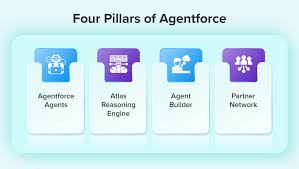
The Salesforce hype machine is in full swing, with product announcements like Chatter, Einstein GPT, and Data Cloud, all positioned as revolutionary tools that promise to transform how we work. Is Agentforce Different? However, it’s often difficult to separate fact from fiction in the world of Salesforce. The cloud giant thrives on staying ahead of technological advancements, which means reinventing itself every year with new releases and updates. You could even say three times per year with the major releases. Why Enterprises Need Multiple Salesforce Orgs Over the past decade, Salesforce product launches have been hit or miss—primarily miss. Offerings like IoT Cloud, Work.com, and NFT Cloud have faded into obscurity. This contrasts sharply with Salesforce’s earlier successes, such as Service Cloud, the AppExchange, Force.com, Salesforce Lightning, and Chatter, which defined its first decade in business. One notable exception is Data Cloud. This product has seen significant success and now serves as the cornerstone of Salesforce’s future AI and data strategy. With Salesforce’s growth slowing quarter over quarter, the company must find new avenues to generate substantial revenue. Artificial Intelligence seems to be their best shot at reclaiming a leadership position in the next technological wave. Is Agentforce Different? While Salesforce has been an AI leader for over a decade, the hype surrounding last year’s Dreamforce announcements didn’t deliver the growth the company was hoping for. The Einstein Copilot Studio—comprising Copilot, Prompt Builder, and Model Builder—hasn’t fully lived up to expectations. This can be attributed to a lack of AI readiness among enterprises, the relatively basic capabilities of large language models (LLMs), and the absence of fully developed use cases. In Salesforce’s keynote, it was revealed that over 82 billion flows are launched weekly, compared to just 122,000 prompts executed. While Flow has been around for years, this stat highlights that the use of AI-powered prompts is still far from mainstream—less than one prompt per Salesforce customer per week, on average. When ChatGPT launched at the end of 2022, many predicted the dawn of a new AI era, expecting a swift and dramatic transformation of the workplace. Two years later, it’s clear that AI’s impact has yet to fully materialize, especially when it comes to influencing global productivity and GDP. However, Salesforce’s latest release feels different. While AI Agents may seem new to many, this concept has been discussed in AI circles for decades. Marc Benioff’s recent statements during Dreamforce reflect a shift in strategy, including a direct critique of Microsoft’s Copilot product, signaling the intensifying AI competition. This year’s marketing strategy around Agentforce feels like it could be the transformative shift we’ve been waiting for. While tools like Salesforce Copilot will continue to evolve, agents capable of handling service cases, answering customer questions, and booking sales meetings instantly promise immediate ROI for organizations. Is the Future of Salesforce in the Hands of Agents? Despite the excitement, many questions remain. Are Salesforce customers ready for agents? Can organizations implement this technology effectively? Is Agentforce a real breakthrough or just another overhyped concept? Agentforce may not be vaporware. Reports suggest that its development was influenced by Salesforce’s acquisition of Airkit.AI, a platform that claims to resolve 90% of customer queries. Salesforce has even set up dedicated launchpads at Dreamforce to help customers start building their own agents. Yet concerns remain, especially regarding Salesforce’s complexity, technical debt, and platform sprawl. These issues, highlighted in this year’s Salesforce developer report, cannot be overlooked. Still, it’s hard to ignore Salesforce’s strategic genius. The platform has matured to the point where it offers nearly every functionality an organization could need, though at times the components feel a bit disconnected. For instance: Salesforce is even hinting at usage-based pricing, with a potential $2 charge per conversation—an innovation that could reshape their pricing model. Will Agents Be Salesforce’s Key to Future Growth? With so many unknowns, only time will tell if agents will be the breakthrough Salesforce needs to regain the momentum of its first two decades. Regardless, agents appear to be central to the future of AI. Leading organizations like Copado are also launching their own agents, signaling that this trend will define the next phase of AI innovation. In today’s macroeconomic environment, where companies are overstretched and workforce demands are high, AI’s ability to streamline operations and improve customer service has never been more critical. Whoever cracks customer service AI first could lead the charge in the inevitable AI spending boom. We’re all waiting to see if Salesforce has truly cracked the AI code. But one thing is certain: the race to dominate AI in customer service has begun. And Salsesforce may be at the forefront. Like Related Posts Who is Salesforce? Who is Salesforce? Here is their story in their own words. From our inception, we’ve proudly embraced the identity of Read more Salesforce Marketing Cloud Transactional Emails Salesforce Marketing Cloud Transactional Emails are immediate, automated, non-promotional messages crucial to business operations and customer satisfaction, such as order Read more Salesforce Unites Einstein Analytics with Financial CRM Salesforce has unveiled a comprehensive analytics solution tailored for wealth managers, home office professionals, and retail bankers, merging its Financial Read more AI-Driven Propensity Scores AI plays a crucial role in propensity score estimation as it can discern underlying patterns between treatments and confounding variables Read more

Read More
Salesforce Certified AI Associate

Salesforce Certified AI Associate

The Salesforce Certified AI Associate certification is a professional credential that demonstrates your knowledge of artificial intelligence (AI) and its application within Salesforce platforms. This certification is perfect for individuals aiming to enhance their ability to use AI to drive business outcomes. Key topics covered in the certification include: Trailblazer Trailhead for Salesforce Certified AI Associate Like Related Posts Who is Salesforce? Who is Salesforce? Here is their story in their own words. From our inception, we’ve proudly embraced the identity of Read more Salesforce Marketing Cloud Transactional Emails Salesforce Marketing Cloud Transactional Emails are immediate, automated, non-promotional messages crucial to business operations and customer satisfaction, such as order Read more Salesforce Unites Einstein Analytics with Financial CRM Salesforce has unveiled a comprehensive analytics solution tailored for wealth managers, home office professionals, and retail bankers, merging its Financial Read more AI-Driven Propensity Scores AI plays a crucial role in propensity score estimation as it can discern underlying patterns between treatments and confounding variables Read more

Read More
Training and Testing Data

Training and Testing Data

Data plays a pivotal role in machine learning (ML) and artificial intelligence (AI). Tasks such as recognition, decision-making, and prediction rely on knowledge acquired through training. Much like a parent teaches their child to distinguish between a cat and a bird, or an executive learns to identify business risks hidden within detailed quarterly reports, ML models require structured training using high-quality, relevant data. As AI continues to reshape the modern business landscape, the significance of training data becomes increasingly crucial. What is Training Data? The two primary strengths of ML and AI lie in their ability to identify patterns in data and make informed decisions based on that data. To execute these tasks effectively, models need a reference framework. Training data provides this framework by establishing a baseline against which models can assess new data. For instance, consider the example of image recognition for distinguishing cats from birds. ML models cannot inherently differentiate between objects; they must be taught to do so. In this scenario, training data would consist of thousands of labeled images of cats and birds, highlighting relevant features—such as a cat’s fur, pointed ears, and four legs versus a bird’s feathers, absence of ears, and two feet. Training data is generally extensive and diverse. For the image recognition case, the dataset might include numerous examples of various cats and birds in different poses, lighting conditions, and settings. The data must be consistent enough to capture common traits while being varied enough to represent natural differences, such as cats of different fur colors in various postures like crouching, sitting, standing, and jumping. In business analytics, an ML model first needs to learn the operational patterns of a business by analyzing historical financial and operational data before it can identify problems or recognize opportunities. Once trained, the model can detect unusual patterns, like abnormally low sales for a specific item, or suggest new opportunities, such as a more cost-effective shipping option. After ML models are trained, tested, and validated, they can be applied to real-world data. For the cat versus bird example, a trained model could be integrated into an AI platform that uses real-time camera feeds to identify animals as they appear. How is Training Data Selected? The adage “garbage in, garbage out” resonates particularly well in the context of ML training data; the performance of ML models is directly tied to the quality of their training data. This underscores the importance of data sources, relevance, diversity, and quality for ML and AI developers. Data SourcesTraining data is seldom available off-the-shelf, although this is evolving. Sourcing raw data can be a complex task—imagine locating and obtaining thousands of images of cats and birds for the relatively straightforward model described earlier. Moreover, raw data alone is insufficient for supervised learning; it must be meticulously labeled to emphasize key features that the ML model should focus on. Proper labeling is crucial, as messy or inaccurately labeled data can provide little to no training value. In-house teams can collect and annotate data, but this process can be costly and time-consuming. Alternatively, businesses might acquire data from government databases, open datasets, or crowdsourced efforts, though these sources also necessitate careful attention to data quality criteria. In essence, training data must deliver a complete, diverse, and accurate representation for the intended use case. Data RelevanceTraining data should be timely, meaningful, and pertinent to the subject at hand. For example, a dataset containing thousands of animal images without any cat pictures would be useless for training an ML model to recognize cats. Furthermore, training data must relate directly to the model‘s intended application. For instance, business financial and operational data might be historically accurate and complete, but if it reflects outdated workflows and policies, any ML decisions based on it today would be irrelevant. Data Diversity and BiasA sufficiently diverse training dataset is essential for constructing an effective ML model. If a model’s goal is to identify cats in various poses, its training data should encompass images of cats in multiple positions. Conversely, if the dataset solely contains images of black cats, the model’s ability to identify white, calico, or gray cats may be severely limited. This issue, known as bias, can lead to incomplete or inaccurate predictions and diminish model performance. Data QualityTraining data must be of high quality. Problems such as inaccuracies, missing data, or poor resolution can significantly undermine a model’s effectiveness. For instance, a business’s training data may contain customer names, addresses, and other information. However, if any of these details are incorrect or missing, the ML model is unlikely to produce the expected results. Similarly, low-quality images of cats and birds that are distant, blurry, or poorly lit detract from their usefulness as training data. How is Training Data Utilized in AI and Machine Learning? Training data is input into an ML model, where algorithms analyze it to detect patterns. This process enables the ML model to make more accurate predictions or classifications on future, similar data. There are three primary training techniques: Where Does Reinforcement Learning Fit In? Unlike supervised and unsupervised learning, which rely on predefined training datasets, reinforcement learning adopts a trial-and-error approach, where an agent interacts with its environment. Feedback in the form of rewards or penalties guides the agent’s strategy improvement over time. Whereas supervised learning depends on labeled data and unsupervised learning identifies patterns in raw data, reinforcement learning emphasizes dynamic decision-making, prioritizing ongoing experience over static training data. This approach is particularly effective in fields like robotics, gaming, and other real-time applications. The Role of Humans in Supervised Training The supervised training process typically begins with raw data since comprehensive and appropriately pre-labeled datasets are rare. This data can be sourced from various locations or even generated in-house. Training Data vs. Testing Data Post-training, ML models undergo validation through testing, akin to how teachers assess students after lessons. Test data ensures that the model has been adequately trained and can deliver results within acceptable accuracy and performance ranges. In supervised learning,

Read More
Thoughts on Workday With Illuminate

Thoughts on Workday With Illuminate

Workday Expands AI Across HR and Finance Platforms with ‘Illuminate’ Workday is significantly enhancing its AI capabilities within its HR and finance platforms through a new set of updates called Illuminate. These updates aim to improve automation and increase productivity by embedding AI more broadly across various HR processes. From routine tasks like content generation to complex problem-solving, Workday’s AI now identifies inefficiencies in HR workflows and offers recommendations for improvement. Thoughts on Workday With Illuminate follow. A key feature of Illuminate is a series of AI agents designed to assist in areas such as succession planning. These agents can suggest internal candidates that HR teams might overlook, helping organizations identify potential leaders within their workforce. During a press briefing ahead of the Workday Rising conference, TechTarget asked if the AI agent used in succession planning could fully capture the intricacies of the employee experience and assess leadership potential. David Somers, Chief Product Officer at Workday, acknowledged the sensitivity of succession planning but emphasized that AI is used to augment—not replace—human decision-making. The agents provide recommendations, while the final hiring decisions still involve talent acquisition professionals and interview panels. Workday’s updates include tools for a wide range of tasks, from content summarization to more advanced capabilities such as detecting bottlenecks in onboarding processes and suggesting optimizations. “These AI agents will streamline common business workflows, boosting productivity and freeing up users to focus on strategic, meaningful work,” Somers explained. While AI has long been part of Workday’s offerings, generative AI is now driving rapid transformation in HR practices. Workday’s Illuminate platform combines data with contextual insights, offering features like compensation data tailored to a company’s specific information. Users can access these AI capabilities through Workday Assistant, a generative AI chatbot that integrates with Microsoft Teams and Slack. This tool will be generally available early next year, making it easier for teams to interact with Workday’s AI-powered systems. HR industry expert Josh Bersin sees Workday’s Illuminate as part of a broader trend of AI agents in the HR space, similar to SAP’s Joule. He believes Workday’s new AI agents will be a major focus for the company, though building out all the necessary Workday transactions into these tools will take time. Bersin does not foresee trust issues among Workday users regarding Illuminate, noting that the platform isn’t open to non-Workday data, which limits concerns around data security. Bersin’s own AI assistant, Galileo, is also expected to integrate with Workday’s platform in the future, further enhancing its capabilities. rativAccording to recent Gartner surveys from March and June, the majority of HR leaders are adopting AI in their organizations. Only 15% of respondents indicated they had no plans to incorporate generative AI into their HR processes, signaling widespread acceptance of AI tools like those Workday is rolling out with Illuminate. Like Related Posts Who is Salesforce? Who is Salesforce? Here is their story in their own words. From our inception, we’ve proudly embraced the identity of Read more Salesforce Unites Einstein Analytics with Financial CRM Salesforce has unveiled a comprehensive analytics solution tailored for wealth managers, home office professionals, and retail bankers, merging its Financial Read more AI-Driven Propensity Scores AI plays a crucial role in propensity score estimation as it can discern underlying patterns between treatments and confounding variables Read more Tectonic’s Successful Salesforce Track Record Salesforce Technology Services Integrator – Tectonic has successfully delivered Salesforce in a variety of industries including Public Sector, Hospitality, Manufacturing, Read more
Read More
Agentforce Advances Copilot and Prompt Builder

Agentforce Advances Copilot and Prompt Builder

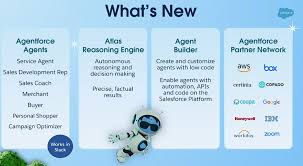
Agentforce was the highlight of the week in San Francisco during Salesforce’s annual Dreamforce conference—and for good reason! Agentforce Advances Copilot and Prompt Builder and that is truly exciting. Agentforce represents a groundbreaking solution that promises to transform how individuals and organizations interact with their CRM. However, as with any major product announcement, it raises many questions. This was evident during Dreamforce, where admins and developers, eager to dive into Agentforce, had numerous queries. Here’s an in-depth look at what Agentforce is, how it operates, and how organizations can leverage it to automate processes and drive value today. Agentforce Advances Copilot and Prompt Builder Many Dreamforce attendees who anticipated hearing more about Einstein Copilot were surprised by the introduction of Agents just before the event. However, understanding the distinctions between the legacy Einstein Copilot and the new Agentforce is crucial. Agentforce Advances Copilot and Prompt Builder. Agentforce Agents are essentially a rebranding of Copilot Agents but with an essential enhancement: they expand the functionality of Copilot to create autonomous agents capable of tasks such as summarizing or generating content and taking specific actions. Here are some key changes in terminology: Just like Einstein Copilot, Agents use user input—an “utterance”—entered into the Agentforce chat interface. The agent translates this utterance into a series of actions based on configurable instructions, and then executes the plan, providing a response. Understanding Agents: Topics A key difference between Einstein Copilot and Agentforce is the addition of “Topics.” Topics allow for greater flexibility and support a broader range of actions. They organize tasks by business function, helping Agents first determine the appropriate topic and then identify the necessary actions. This topic layer reduces confusion and ensures the correct action is taken. With this structure, Agentforce can support many more custom actions compared to Copilot’s 15-20, significantly expanding capabilities. Understanding Agents: Actions Actions in Agentforce function similarly to those in Einstein Copilot. These are the tasks an agent executes once it has identified the right plan. Out-of-the-box actions are available right away, providing a quick win for organizations looking to implement standard actions like opportunity summarization or sales emails. For more customized use cases, organizations can create bespoke actions using Apex, Flows, Prompts, or Service Catalog items (currently in beta). Understanding Agents: Prompts Whenever an LLM is used, prompts are necessary to provide the right input. Thoughtfully engineered prompts are essential for getting accurate, useful responses from LLMs. This is a key part of leveraging Agent Actions effectively, ensuring better results, reducing errors, and driving productive agent behavior. Prompt Builder plays a crucial role, allowing users to build, test, and refine prompts for Agent Actions, creating a seamless experience between generative AI and Salesforce workflows. How Generative AI and Agentforce Enhance CRM GenAI tools like Agentforce offer exciting enhancements to Salesforce organizations in several ways: However, these benefits are realized only when CRM users adopt and adapt to AI-assisted workflows. Organizations must prioritize change management and training, as most users will need to adjust to this new AI-powered way of working. If your company has already embraced AI, then you are halfway there. If AI hasn’t been introduced to the workforce you need to get started yesterday. Getting Started with Agentforce With all the buzz around Dreamforce, it’s no surprise that many organizations are eager to start using Agentforce. Fortunately, there are immediate opportunities to leverage these tools. The recommended approach is to begin with standard Agent actions, testing out-of-the-box features like opportunity summarization or creating close plans. From there, organizations can make incremental tweaks to customize actions for their specific needs. We have all come to expect that just as quickly as we include agentic ai into our processes and flows, Salesforce will add additional features and capabilities. As teams become more familiar with developing and deploying Agent actions, more complex use cases will become manageable, transforming the traditional point-and-click Salesforce experience into a more intelligent, agent-driven platform. Already I find myself asking, “is this an agent person or an ai-agent”? The day is coming, no doubt, when the question will be reversed. Tectonic’s AI Experts Can Help Interested in learning more about Agentforce or need guidance on getting started? Tectonic specializes in AI and analytics solutions within CRM, helping organizations unlock significant productivity gains through AI-based tools that optimize business processes. We are excited to enable you to enable Agentforce to Advance Copilot and Prompt Builder By Tectonic’s Solutions Architect, Shannan Hearne Like1 Related Posts Who is Salesforce? Who is Salesforce? Here is their story in their own words. From our inception, we’ve proudly embraced the identity of Read more Salesforce Marketing Cloud Transactional Emails Salesforce Marketing Cloud Transactional Emails are immediate, automated, non-promotional messages crucial to business operations and customer satisfaction, such as order Read more Salesforce Unites Einstein Analytics with Financial CRM Salesforce has unveiled a comprehensive analytics solution tailored for wealth managers, home office professionals, and retail bankers, merging its Financial Read more AI-Driven Propensity Scores AI plays a crucial role in propensity score estimation as it can discern underlying patterns between treatments and confounding variables Read more

Read More
Chatbot-less AI-ifying

Chatbot-less AI-ifying

AI-ify Your Product Without Adding a Chatbot: Inspiration from Top AI Use Cases Artificial intelligence doesn’t always need to look like a chatbot. Some of the most innovative implementations of AI have created intuitive user experiences (UX) without relying on traditional conversational interfaces. Here are seven standout patterns from leading companies and startups that demonstrate how AI can elevate your product in ways that feel natural and empowering for users. These are just a preview of the 24 trending AI-UX patterns featured in the “Trending AI-UX Patterns” ebook by AIverse—perfect for borrowing (or expensing to your company). Pattern 1: Linear Back-and-Forth (Classic Chat) While chat interfaces revolutionized access to AI, this pattern is just the beginning. Think of ChatGPT—its conversational simplicity opened the door to powerful LLMs for non-tech audiences. But beyond basic chat, consider integrating generative UI commands or API-based functionality into your product to transform linear data access into something seamless and engaging. Pattern 2: Non-Linear Conversations Inspired by Subform, this pattern mirrors how humans think—connecting ideas in a web, not a straight line. Non-linear exploration allows users to navigate through information like dots on a map, offering a flexible, intuitive flow. For example, imagine an AI that surfaces related ideas or actions based on user input—ideal for creative tools or brainstorming apps. Pattern 3: Context Bundling Why stop at simple text input when you can bundle context visually? Figma’s dual-tone matrix simplifies tone adjustments for text by letting users drag across a 2D grid. It eliminates the need for complex prompts while maintaining control over customization. Think of ways to integrate pre-bundled prompts directly into your UI to create an intuitive, visually driven experience. Pattern 4: Living Documents Tools like Elicit bring AI into familiar interfaces like spreadsheets by enhancing workflows without disrupting them. Elicit’s bulk data extraction uses subtle animations and transparency—highlighting “low confidence” answers for clarity. This hybrid approach integrates AI in a way that feels natural and predictable, making it a great choice for data-heavy tools or reporting systems. Pattern 5: Work With Me One of the most human-centered AI patterns comes from Granola, which uses meeting summaries based on your rough notes. Instead of overwhelming users with full transcriptions, it creates concise, actionable insights, perfectly blending human oversight with AI-powered efficiency. This pattern exemplifies the “human-in-the-loop” trend, ensuring collaboration between the user and AI. Pattern 6: Highlight and Curate Take inspiration from Lex’s “@lex” comment feature, which allows users to highlight and comment directly in the flow of their work—no app switching or disruption required. By building on familiar text-interaction patterns, this approach integrates AI subtly, offering suggestions or enhancements without breaking the user’s autonomy. Pattern 7: Invisible AI (Agentive UX) AI can work quietly in the background until needed, as demonstrated by Ford’s lane assist. This feature seamlessly takes control during critical moments (e.g., steering) and hands it back to the user effortlessly. Visual, auditory, and haptic feedback make the transition intuitive and reassuring. This “agentive” pattern is perfect for products where AI acts as a silent partner, ready to assist only when necessary. Tectonic Conclusions These patterns prove that AI can elevate your product without resorting to a chatbot. Whether through non-linear exploration, visual bundling, or seamless agentive experiences, the key is to integrate AI in a way that feels intuitive, empowering, and aligned with user needs. Like Related Posts Who is Salesforce? Who is Salesforce? Here is their story in their own words. From our inception, we’ve proudly embraced the identity of Read more Salesforce Unites Einstein Analytics with Financial CRM Salesforce has unveiled a comprehensive analytics solution tailored for wealth managers, home office professionals, and retail bankers, merging its Financial Read more AI-Driven Propensity Scores AI plays a crucial role in propensity score estimation as it can discern underlying patterns between treatments and confounding variables Read more Tectonic’s Successful Salesforce Track Record Salesforce Technology Services Integrator – Tectonic has successfully delivered Salesforce in a variety of industries including Public Sector, Hospitality, Manufacturing, Read more

Read More
Salesforce Free AI Training

Salesforce Free AI Training

Salesforce Expands Access to Free AI Training to Address Global Skills Gap SAN FRANCISCO — September 18, 2024 – Salesforce (NYSE: CRM), the #1 AI-powered CRM, has announced a significant expansion of its AI skilling initiatives. Starting today, Salesforce will offer its premium AI courses and certifications free of charge to anyone via its online learning platform, Trailhead, through the end of 2025. This initiative aims to help bridge the growing AI skills gap by providing accessible education for individuals across industries. To further support these efforts, Salesforce will open new physical training spaces at its San Francisco headquarters, including a pop-up AI Center offering in-person community courses and a dedicated AI skilling floor for employees. This investment, valued at over $50 million, is designed to empower the workforce with essential AI skills as the demand for AI talent surges globally. Research from Slack highlights a growing urgency among executives to integrate AI into business operations, with interest increasing sevenfold in the last six months. However, more than two-thirds of workers have yet to engage with AI tools, and only 15% feel they possess the necessary training to use them effectively. “The advent of AI and agents represents the biggest technological shift of our generation and will radically change how people work,” said Brian Millham, President and Chief Operating Officer at Salesforce. “We need to ensure everyone has the skills to succeed in this new AI-driven world.” Expanding AI Training Opportunities Salesforce has already helped thousands of professionals acquire technical skills through premium, instructor-led training and certifications. With these new offerings, the company aims to reach an additional 100,000 learners, empowering every Trailblazer to become an “Agentblazer” in this evolving AI landscape. You don’t need to spend thousands of dollars in AI education for yourself or your workforce. Salesforce has it at your fingertips for free. Trailhead now offers a wide range of AI-specific courses, covering topics like AI fundamentals, ethical AI use, and prompt engineering. Since June 2023, learners have earned over 2.6 million AI and data badges, helping unlock critical skills for the future of work. Creating Spaces for Hands-on AI Learning In addition to expanding its online offerings, Salesforce is building AI training spaces around the globe. After launching its first AI Center in London, the company will open a pop-up AI Center at its San Francisco headquarters in 2025, with plans for additional locations in Chicago, Tokyo, and Sydney. These centers will host in-person Trailhead courses and bring together experts, partners, and customers to advance AI innovation. Introducing Agentforce — A Groundbreaking AI Suite As part of its ongoing AI revolution, Salesforce is also upskilling its 72,000-strong workforce through quarterly AI learning days and immersive experiences at the newly created AI Knowledge Center in San Francisco. The centerpiece of this initiative is Agentforce, an innovative suite of AI agents designed to enhance productivity in service, sales, marketing, and commerce. By automating repetitive tasks, these agents allow employees to focus on higher-value work. Since the launch of Slack AI in February, Salesforce employees have saved nearly 3 million work hours through AI-driven tools that summarize information, find answers, and generate new ideas. Nearly 40% of the AI and data badges earned on Trailhead belong to Salesforce employees, demonstrating the company’s commitment to internal skilling and innovation. “AI will transform the workforce, creating new roles and opportunities. It’s our responsibility as employers to provide training that prepares workers for the future,” said Nathalie Scardino, President and Chief People Officer at Salesforce. “Grounded in our values, we’re leveraging Salesforce’s full power to help everyone succeed in this AI-driven era.” Related Resources For more information about Salesforce, visit www.salesforce.com or call 1-800-NO-SOFTWARE. About SalesforceSalesforce is the world’s leading AI-powered CRM, helping organizations of all sizes reimagine their business for the AI age. Powered by its trusted platform, Agentforce, Salesforce brings humans and AI agents together to drive customer success through data-driven insights and actions. Salesforce is headquartered in San Francisco, with offices globally, and trades on the NYSE under the ticker symbol “CRM.” Like Related Posts Who is Salesforce? Who is Salesforce? Here is their story in their own words. From our inception, we’ve proudly embraced the identity of Read more Salesforce Marketing Cloud Transactional Emails Salesforce Marketing Cloud Transactional Emails are immediate, automated, non-promotional messages crucial to business operations and customer satisfaction, such as order Read more Salesforce Unites Einstein Analytics with Financial CRM Salesforce has unveiled a comprehensive analytics solution tailored for wealth managers, home office professionals, and retail bankers, merging its Financial Read more AI-Driven Propensity Scores AI plays a crucial role in propensity score estimation as it can discern underlying patterns between treatments and confounding variables Read more

Read More
More Cool AI Tools

More Cool AI Tools

In today’s fast-paced digital world, AI is no longer a luxury but a necessity for maximizing work efficiency. With the right AI tools, businesses and individuals can automate tasks, enhance creativity, improve customer engagement, and streamline operations. Here’s a breakdown of the Top 21 AI tools you should explore to elevate your productivity and stay ahead of the curve! 1️⃣ Video CreationSynthesiaWebsite: SynthesiaAn AI video creation tool that lets you generate high-quality videos from text. Ideal for creating marketing, training, and explainer videos quickly and professionally. VeedWebsite: VeedVeed helps you create, edit, and share professional videos with ease, incorporating AI to streamline the process of adding captions, effects, and edits. SubmagicWebsite: SubmagicSubmagic uses AI to automatically generate subtitles for videos, improving accessibility and viewer engagement. 2️⃣ Customer Relationship Management (CRM)HubSpotWebsite: HubSpotHubSpot’s AI-powered CRM system streamlines customer interactions, helping businesses improve customer satisfaction, sales, and retention. FreshworksWebsite: FreshworksThis tool offers AI-driven solutions for customer service, sales, and marketing, helping companies improve relationships and resolve issues faster. HighLevelWebsite: HighLevelHighLevel integrates AI to improve customer management processes, including lead nurturing and campaign tracking. 3️⃣ Website Design and BrandingWizard AIWebsite: Wizard AIA design tool that helps you create stunning visuals and branding for your website using AI. Whether you’re looking to revamp your website or create a logo, Wizard AI makes it simple. LookaWebsite: LookaLooka offers AI-powered logo creation, making it easy for businesses and startups to design professional logos in just minutes. TurbologoWebsite: TurbologoTurbologo is another intuitive logo maker that uses AI to generate custom logo designs based on your business type and preferences. 4️⃣ Project Management and CollaborationMondayWebsite: MondayAn all-in-one project management platform that uses AI to automate workflows, track progress, and enhance team collaboration. ClickUpWebsite: ClickUpClickUp leverages AI to provide real-time project insights, task automation, and comprehensive team collaboration tools for businesses of all sizes. Golf AIWebsite: Golf AIGolf AI helps golfers refine their game with AI insights, but its technology can also be applied in the professional world, improving focus, strategy, and decision-making in various projects. 5️⃣ Marketing and Lead GenerationPipedriveWebsite: PipedriveA popular tool that helps businesses track leads and automate marketing workflows, making lead generation more efficient and scalable. Apollo AIWebsite: Apollo AIApollo enables businesses to automate sales and lead generation by using AI to find and reach potential customers, helping you connect with decision-makers faster. EnvizWebsite: EnvizThis platform uses AI to provide intelligent data analysis and insights, allowing businesses to fine-tune their marketing strategies. 6️⃣ AI for Audio and VoiceMurf AIWebsite: Murf AIAn AI voice generator that converts text into lifelike voiceovers. Ideal for creators, marketers, and educators who want to generate high-quality audio content. SpeechifyWebsite: SpeechifySpeechify turns written text into audio, helping users consume content faster. It’s perfect for multitaskers and individuals with reading disabilities. ElevenLabsWebsite: ElevenLabsElevenLabs offers state-of-the-art AI technology to generate and clone natural-sounding voices, ideal for podcasts, audiobooks, and interactive audio experiences. 🌐 Explore More AI-Powered ToolsUnlock your productivity potential with these top AI tools. Whether you’re managing projects, creating content, or building customer relationships, AI is your key to efficiency. Like Related Posts Who is Salesforce? Who is Salesforce? Here is their story in their own words. From our inception, we’ve proudly embraced the identity of Read more Salesforce Marketing Cloud Transactional Emails Salesforce Marketing Cloud Transactional Emails are immediate, automated, non-promotional messages crucial to business operations and customer satisfaction, such as order Read more Salesforce Unites Einstein Analytics with Financial CRM Salesforce has unveiled a comprehensive analytics solution tailored for wealth managers, home office professionals, and retail bankers, merging its Financial Read more AI-Driven Propensity Scores AI plays a crucial role in propensity score estimation as it can discern underlying patterns between treatments and confounding variables Read more

Read More
AI-Driven Chatbots in Education

AI-Driven Chatbots in Education

As AI-driven chatbots enter college courses, the potential to offer students 24/7 support is game-changing. However, there’s a critical caveat: when we customize chatbots by uploading documents, we don’t just add knowledge — we introduce biases. The documents we choose influence chatbot responses, subtly shaping how students interact with course material and, ultimately, how they think. So, how can we ensure that AI chatbots promote critical thinking rather than merely serving to reinforce our own viewpoints? How Course Chatbots Differ from Administrative Chatbots Chatbot teaching assistants have been around for some time in education, but low-cost access to large language models (LLMs) and accessible tools now make it easy for instructors to create customized course chatbots. Unlike chatbots used in administrative settings that rely on a defined “ground truth” (e.g., policy), educational chatbots often cover nuanced and debated topics. While instructors typically bring specific theories or perspectives to the table, a chatbot trained with tailored content can either reinforce a single view or introduce a range of academic perspectives. With tools like ChatGPT, Claude, Gemini, or Copilot, instructors can upload specific documents to fine-tune chatbot responses. This customization allows a chatbot to provide nuanced responses, often aligned with course-specific materials. But, unlike administrative chatbots that reference well-defined facts, course chatbots require ethical responsibility due to the subjective nature of academic content. Curating Content for Classroom Chatbots Having a 24/7 teaching assistant can be a powerful resource, and today’s tools make it easy to upload course documents and adapt LLMs to specific curricula. Options like OpenAI’s GPT Assistant, IBL’s AI Mentor, and Druid’s Conversational AI allow instructors to shape the knowledge base of course-specific chatbots. However, curating documents goes beyond technical ease — the content chosen affects not only what students learn but also how they think. The documents you select will significantly shape, though not dictate, chatbot responses. Combined with the LLM’s base model, chatbot instructions, and the conversation context, the curated content influences chatbot output — for better or worse — depending on your instructional goals. Curating for Critical Thinking vs. Reinforcing Bias A key educational principle is teaching students “how to think, not what to think.” However, some educators may, even inadvertently, lean toward dictating specific viewpoints when curating content. It’s critical to recognize the potential for biases that could influence students’ engagement with the material. Here are some common biases to be mindful of when curating chatbot content: While this list isn’t exhaustive, it highlights the complexities of curating content for educational chatbots. It’s important to recognize that adding data shifts — not erases — inherent biases in the LLM’s responses. Few academic disciplines offer a single, undisputed “truth.” AI-Driven Chatbots in Education. Tips for Ethical and Thoughtful Chatbot Curation Here are some practical tips to help you create an ethically balanced course chatbot: This approach helps prevent a chatbot from merely reflecting a single perspective, instead guiding students toward a broader understanding of the material. Ethical Obligations As educators, our ethical obligations extend to ensuring transparency about curated materials and explaining our selection choices. If some documents represent what you consider “ground truth” (e.g., on climate change), it’s still crucial to include alternative views and equip students to evaluate the chatbot’s outputs critically. Equity Customizing chatbots for educational use is powerful but requires deliberate consideration of potential biases. By curating diverse perspectives, being transparent in choices, and refining chatbot content, instructors can foster critical thinking and more meaningful student engagement. AI-Driven Chatbots in Education AI-powered chatbots are interactive tools that can help educational institutions streamline communication and improve the learning experience. They can be used for a variety of purposes, including: Some examples of AI chatbots in education include: While AI chatbots can be a strategic move for educational institutions, it’s important to balance innovation with the privacy and security of student data.  Like Related Posts Who is Salesforce? Who is Salesforce? Here is their story in their own words. From our inception, we’ve proudly embraced the identity of Read more Salesforce Unites Einstein Analytics with Financial CRM Salesforce has unveiled a comprehensive analytics solution tailored for wealth managers, home office professionals, and retail bankers, merging its Financial Read more AI-Driven Propensity Scores AI plays a crucial role in propensity score estimation as it can discern underlying patterns between treatments and confounding variables Read more Tectonic’s Successful Salesforce Track Record Salesforce Technology Services Integrator – Tectonic has successfully delivered Salesforce in a variety of industries including Public Sector, Hospitality, Manufacturing, Read more
Read More

Linus Torvalds Insights

Linus Torvalds Shares Insights on the Future of Programming with AI Linus Torvalds, the mastermind behind Linux and Git—two cornerstones of modern software development—recently shared his perspective on how artificial intelligence (AI) is reshaping the world of programming. His candid insights offer a balanced view of AI’s capabilities and limitations, coming from one of the industry’s most influential voices. If you prefer a quick breakdown over watching a full interview, here are the key takeaways from Torvalds’ conversation. AI in Programming: Evolution, Not Revolution Torvalds describes AI, particularly large language models (LLMs), as “autocorrect on steroids.” These tools excel at predicting the next word or line of code based on established patterns but aren’t “intelligent” in the human sense. Rather than a seismic shift, AI represents the next step in a long history of automation in coding. From the days of machine language to today’s high-level languages like Python and Rust, tools have continuously evolved to make developers’ lives easier. AI is just another link in this chain—helping write, refine, and debug code while boosting productivity. AI as a Developer’s Supercharged Assistant Far from being a replacement for human programmers, Torvalds sees AI as a powerful assistant. Tools like GitHub Copilot are already enhancing the coding process by suggesting fixes, spotting bugs, and speeding up routine tasks. The vision? A future where programmers can abstract tasks even further, possibly instructing AI in plain English. Imagine simply saying, “Build me a tool to manage my expenses,” and watching it happen. However, for now, AI is an incremental improvement, not a groundbreaking leap. The Shift Toward AI-Generated Code One of Torvalds’ more intriguing predictions is that AI may eventually write code in ways incomprehensible to human programmers. Since AI doesn’t require human-readable syntax, it could optimize code in ways that only it understands. In this scenario, developers might transition from writing code to managing AI systems that generate and refine it—shifting from hands-on creators to overseers of automated processes. AI in Code Review: Smarter Intern or Future Partner? When it comes to code review, AI’s potential is clear. Torvalds notes that AI could efficiently catch simple errors—like typos or syntax mistakes—freeing up human reviewers to focus on more complex logic and functionality. While AI might streamline tedious tasks, it’s far from perfect. Issues like “hallucinations,” where AI confidently produces incorrect results, highlight the need for human oversight. AI can assist, but it still requires developers to verify its output. A Balanced Take on AI and Jobs Torvalds dismisses fears of AI taking over programming jobs, pointing out that technological advancements historically create new opportunities rather than eliminate roles. AI, in his view, is less about replacing humans and more about augmenting their abilities. It’s a tool to make developers more efficient—not a harbinger of obsolescence. Final Thoughts: Embrace AI, But Stay Grounded Linus Torvalds envisions AI as a valuable, evolving tool for programmers, not a threat to their livelihood. While it’s set to change how we code, the shift will be gradual rather than revolutionary. Whether you’re a seasoned developer or a newcomer, now is the time to explore AI-powered tools, embrace their potential, and adapt to this new era of programming. Instead of fearing change, we can use AI to push the boundaries of what’s possible. Like Related Posts Who is Salesforce? Who is Salesforce? Here is their story in their own words. From our inception, we’ve proudly embraced the identity of Read more Salesforce Unites Einstein Analytics with Financial CRM Salesforce has unveiled a comprehensive analytics solution tailored for wealth managers, home office professionals, and retail bankers, merging its Financial Read more AI-Driven Propensity Scores AI plays a crucial role in propensity score estimation as it can discern underlying patterns between treatments and confounding variables Read more Tectonic’s Successful Salesforce Track Record Salesforce Technology Services Integrator – Tectonic has successfully delivered Salesforce in a variety of industries including Public Sector, Hospitality, Manufacturing, Read more

Read More
ai analytics

AI Analytics Explained

While both AI analytics and predictive AI leverage data analysis, AI analytics is a broader field encompassing various AI techniques for data processing and analysis, while predictive AI specifically focuses on forecasting future outcomes based on historical data patterns. Here’s a more detailed breakdown: AI Analytics (Broad) Predictive AI (Specific) What is AI Analytics? AI analytics leverages machine learning (ML) and artificial intelligence (AI) to automate the analysis of vast amounts of data, uncovering insights faster and more accurately than traditional methods. By continuously monitoring data streams, AI analytics identifies patterns, anomalies, and trends—tasks that would typically require extensive manual effort from data analysts. Business Analytics in the AI Era AI is transforming industries, and business analytics is no exception. While traditional analytics relies on statistical models developed over centuries, AI-powered analytics introduces unprecedented speed, scalability, and precision, enabling businesses to make real-time, data-driven decisions. This article explores: What is Analytics? Analytics is the process of extracting meaningful insights from raw data to answer business questions, predict trends, and guide decision-making. It involves various techniques, including: The Four Stages of Analytics (Gartner’s Analytic Ascendancy Model) AI, Machine Learning, and AI Analytics Artificial Intelligence (AI) AI refers to machines performing tasks that typically require human intelligence, such as: Machine Learning (ML) A subset of AI, ML uses algorithms trained on data to make predictions without explicit programming. Key approaches include: AI Analytics AI analytics automates data analysis by: Unlike traditional analytics, which relies on manual hypothesis testing, AI analytics continuously scans data, delivering faster, more objective insights. AI Analytics vs. Traditional Analytics Feature Traditional Analytics AI Analytics Speed Slow (weeks to months) Real-time processing Scale Limited by human capacity Handles billions of data points Granularity Broad trends Micro-level insights (e.g., per-user) Bias Human assumptions influence results Data-driven, unbiased analysis Automation Manual hypothesis testing Self-learning algorithms Advantages of AI Analytics ✅ Faster detection – Identifies issues in hours, not weeks.✅ Higher accuracy – Reduces errors by 30-50% (McKinsey).✅ Unbiased insights – Tests millions of hypotheses objectively. Real-World Applications of AI Analytics 1. Demand Forecasting (Predictive Analytics) 2. Predictive Maintenance 3. Business Monitoring (Diagnostic Analytics) 4. Cloud Cost Optimization Conclusion: AI Analytics is the Future AI analytics supercharges business intelligence by:🚀 Automating tedious analysis – Freeing analysts for strategic work.🔍 Uncovering hidden insights – Detecting patterns humans miss.⏱ Delivering real-time decisions – Keeping businesses agile. As AI continues to evolve, companies that adopt AI-powered analytics will gain a competitive edge—transforming raw data into actionable intelligence at unprecedented speed. Ready to integrate AI analytics into your business? Explore how AI can revolutionize your data strategy today. Contact Tectonic. Like Related Posts Who is Salesforce? Who is Salesforce? Here is their story in their own words. From our inception, we’ve proudly embraced the identity of Read more Salesforce Marketing Cloud Transactional Emails Salesforce Marketing Cloud Transactional Emails are immediate, automated, non-promotional messages crucial to business operations and customer satisfaction, such as order Read more Salesforce Unites Einstein Analytics with Financial CRM Salesforce has unveiled a comprehensive analytics solution tailored for wealth managers, home office professionals, and retail bankers, merging its Financial Read more AI-Driven Propensity Scores AI plays a crucial role in propensity score estimation as it can discern underlying patterns between treatments and confounding variables Read more
Read More
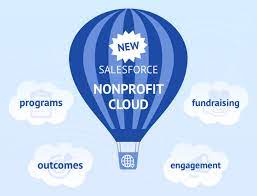
Introducing the New Nonprofit Cloud

Salesforce Transforming Nonprofit Operations with AI

Salesforce Enhances Nonprofit Cloud with Generative AI Capabilities On August 6, 2024, Salesforce announced that its Nonprofit Cloud is now equipped with generative AI capabilities powered by the Einstein 1 Platform. This integration represents the first time Salesforce’s Industry Cloud portfolio has incorporated the Einstein 1 Platform, signaling a broader commitment to embedding AI tools across its product offerings. The update aims to revolutionize nonprofit operations by providing AI-powered tools for personalized donor engagement, operational efficiency, and funding discovery. Key features include AI-generated fundraising proposals and program summaries, which provide concise insights into grant details, donor histories, and program outcomes. Transforming Nonprofit Operations with AI The integration of generative AI into Nonprofit Cloud aligns with Salesforce’s strategy to empower nonprofits to navigate challenges such as donor fatigue, increased operational costs, and rising service demands. Notable enhancements include: Additionally, Salesforce launched Data Cloud for Nonprofits, enabling a unified, real-time view of donor, volunteer, and program data. This innovation breaks down data silos, empowering nonprofits to create tailored outreach strategies and assess program performance effectively. Four Pillars of AI Success Salesforce’s enhancements to Nonprofit Cloud embody its “four-pillar” approach to enterprise AI success: Key Innovations in Nonprofit Cloud Salesforce introduced three groundbreaking innovations to address nonprofit-specific challenges: These features, coupled with Nonprofit Cloud Einstein 1 Edition (which bundles Nonprofit Cloud, Data Cloud, Einstein, Experience Cloud, and Slack), provide nonprofits with comprehensive tools to drive impact. Nonprofit Adoption and Impact Nonprofits are already experiencing the transformative potential of AI. According to Salesforce’s Nonprofit Trends Report, organizations leveraging these AI tools have seen: Julie Fleshman, CEO of the Pancreatic Cancer Action Network, shared her organization’s success with Nonprofit Cloud: “Salesforce has been instrumental in helping us connect patients with specialized healthcare providers and clinical trials, advancing our mission and saving valuable time.” Nonprofit Cloud vs. NPSP While Nonprofit Cloud offers a unified, scalable platform with AI-driven insights and advanced donor management tools, the Nonprofit Success Pack (NPSP) serves as a free, open-source solution for smaller organizations. Here’s a quick comparison: Feature Nonprofit Cloud NPSP Functionality Comprehensive CRM with advanced tools Free app with basic CRM functionality Integration Seamless with other Salesforce products Requires additional configuration Ease of Use User-friendly and designed for nonprofits May require technical expertise Cost Subscription-based Free with optional paid add-ons Scalability Built for growing organizations Requires customization for growth Ideal Users Large and mid-sized nonprofits Small nonprofits Maximizing Fundraising with Nonprofit Cloud Nonprofit Cloud offers nonprofits flexibility and efficiency in managing their fundraising efforts, helping them overcome challenges like donor fatigue and retention. Its advanced features include: By leveraging these tools, nonprofits can improve engagement, strengthen donor relationships, and make data-driven decisions, ultimately amplifying their impact. The Tectonic Role Tectonic has been instrumental in implementing Salesforce Nonprofit Cloud for multiple organizations, ensuring they harness its full potential to optimize operations, engage donors, and achieve their missions. With Salesforce’s AI-driven enhancements and Tectonic’s expertise, nonprofits are poised to navigate challenges, unlock new opportunities, and amplify their societal impact. Like Related Posts Who is Salesforce? Who is Salesforce? Here is their story in their own words. From our inception, we’ve proudly embraced the identity of Read more Salesforce Marketing Cloud Transactional Emails Salesforce Marketing Cloud Transactional Emails are immediate, automated, non-promotional messages crucial to business operations and customer satisfaction, such as order Read more Salesforce Unites Einstein Analytics with Financial CRM Salesforce has unveiled a comprehensive analytics solution tailored for wealth managers, home office professionals, and retail bankers, merging its Financial Read more AI-Driven Propensity Scores AI plays a crucial role in propensity score estimation as it can discern underlying patterns between treatments and confounding variables Read more

Read More
AI Services and Models Security Shortcomings

AI Services and Models Security Shortcomings

Orca Report: AI Services and Models Show Security Shortcomings Recent research by Orca Security reveals significant security vulnerabilities in AI services and models deployed in the cloud. The “2024 State of AI Security Report,” released in 2024, underscores the urgent need for improved security practices as AI technologies advance rapidly. AI Services and Models Security Shortcomings. AI usage is exploding. Gartner predicts that the AI software market will grow19.1% annually, reaching 8 billion by 2027. In many ways, AI is now inthe stage reminiscent of where cloud computing was over a decade ago. Orca’s analysis of cloud assets across major platforms—AWS, Azure, Google Cloud, Oracle Cloud, and Alibaba Cloud—has highlighted troubling risks associated with AI tools and models. Despite the surge in AI adoption, many organizations are neglecting fundamental security measures, potentially exposing themselves to significant threats. The report indicates that while 56% of organizations use their own AI models for various purposes, a substantial portion of these deployments contain at least one known vulnerability. Orca’s findings suggest that although most vulnerabilities are currently classified as low to medium risk, they still pose a serious threat. Notably, 62% of organizations have implemented AI packages with vulnerabilities, which have an average CVSS score of 6.9. Only 0.2% of these vulnerabilities have known public exploits, compared to the industry average of 2.5%. Insecure Configurations and Controls Orca’s research reveals concerning security practices among widely used AI services. For instance, Azure OpenAI, a popular choice for building custom applications, was found to be improperly configured in 27% of cases. This lapse could allow attackers to access or manipulate data transmitted between cloud resources and AI services. The report also criticizes default settings in Amazon SageMaker, a prominent machine learning service. It highlights that 45% of SageMaker buckets use non-randomized default names, and 98% of organizations have not disabled default root access for SageMaker notebook instances. These defaults create vulnerabilities that attackers could exploit to gain unauthorized access and perform actions on the assets. Additionally, the report points out a lack of self-managed encryption keys and encryption protection. For instance, 98% of organizations using Google Vertex have not enabled encryption at rest for their self-managed keys, potentially exposing sensitive data to unauthorized access or alteration. Exposed Access Keys and Platform Risks Security issues extend to popular AI platforms like OpenAI and Hugging Face. Orca’s report found that 20% of organizations using OpenAI and 35% using Hugging Face have exposed access keys, heightening the risk of unauthorized access. This follows recent research by Wiz, which demonstrated vulnerabilities in Hugging Face during Black Hat USA 2024, where sensitive data was compromised. Addressing the Security Challenge Orca co-founder and CEO Gil Geron emphasizes the need for clear roles and responsibilities in managing AI security. He stresses that security practitioners must recognize and address these risks by setting policies and boundaries. According to Geron, while the challenges are not new, the rapid development of AI tools makes it crucial to address security from both engineering and practitioner perspectives. Geron also highlights the importance of reviewing and adjusting default settings to enhance security, advocating for rigorous permission management and network hygiene. As AI technology continues to evolve, organizations must remain vigilant and proactive in safeguarding their systems and data. In conclusion, the Orca report serves as a critical reminder of the security risks associated with AI services and models. Organizations must take concerted action to secure their AI deployments and protect against potential vulnerabilities. Balance Innovation and Security in AI Tectonic notes Salesforce was not included in the sampling. Content updated September 2024. Like Related Posts Who is Salesforce? Who is Salesforce? Here is their story in their own words. From our inception, we’ve proudly embraced the identity of Read more Salesforce Unites Einstein Analytics with Financial CRM Salesforce has unveiled a comprehensive analytics solution tailored for wealth managers, home office professionals, and retail bankers, merging its Financial Read more AI-Driven Propensity Scores AI plays a crucial role in propensity score estimation as it can discern underlying patterns between treatments and confounding variables Read more Tectonic’s Successful Salesforce Track Record Salesforce Technology Services Integrator – Tectonic has successfully delivered Salesforce in a variety of industries including Public Sector, Hospitality, Manufacturing, Read more
Read More
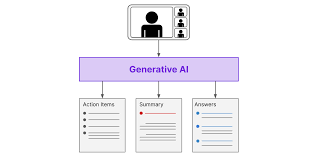
Generative AI Overview

Generative AI Overview

Editor’s Note: AI Cloud, Einstein GPT, and other cloud GPT products are now Einstein. For the latest on Salesforce Einstein The Rise of Generative AI: What It Means for Business and CRM Generative artificial intelligence (AI) made headlines in late 2022, sparking widespread curiosity and questions about its potential impact on various industries. What is Generative AI? Generative AI is a technology that creates new content—such as poetry, emails, images, or music—based on a set of input data. Unlike traditional AI, which focuses on classifying or predicting, generative AI can produce novel content with a human-like understanding of language, as noted by Salesforce Chief Scientist Silvio Savarese. However, successful generative AI depends on the quality of the input data. “AI is only as good as the data you give it, and you must ensure that datasets are representative,” emphasizes Paula Goldman, Salesforce’s Chief Ethical and Humane Use Officer. How Does Generative AI Work? Generative AI can be developed using several deep learning approaches, including: Other methods include Variational Autoencoders (VAEs) and Neural Radiance Fields (NeRFs), which generate new data or create 2D and 3D images based on sample data. Generative AI and Business Generative AI has captured the attention of global business leaders. A recent Salesforce survey found that 67% of IT leaders are focusing on generative AI in the next 18 months, with 33% considering it a top priority. Salesforce has long been exploring generative AI applications. For instance, CodeGen helps transform simple English prompts into executable code, and LAVIS makes language-vision AI accessible to researchers. More recently, Salesforce’s ProGen project demonstrated the creation of novel proteins using AI, potentially advancing medicine and treatment development. Ketan Karkhanis, Salesforce’s Executive VP and GM of Sales Cloud, highlights that generative AI benefits not just large enterprises but also small and medium-sized businesses (SMBs) by automating proposals, customer communications, and predictive sales modeling. Challenges and Ethical Considerations Despite its potential, generative AI poses risks, as noted by Paula Goldman and Kathy Baxter of Salesforce’s Ethical AI practice. They stress the importance of responsible innovation to ensure that generative AI is used safely and ethically. Accuracy in AI recommendations is crucial, and the authoritative tone of models like ChatGPT can sometimes lead to misleading results. Salesforce is committed to building trusted AI with embedded guardrails to prevent misuse. As generative AI evolves, it’s vital to balance its capabilities with ethical considerations, including its environmental impact. Generative AI can increase IT energy use, which 71% of IT leaders acknowledge. Generative AI at Salesforce Salesforce has integrated AI into its platform for years, with Einstein AI providing billions of daily predictions to enhance sales, service, and customer understanding. The recent launch of Einstein GPT, the world’s first generative AI for CRM, aims to transform how businesses interact with customers by automating content creation across various functions. Salesforce Ventures is also expanding its Generative AI Fund to $500 million, supporting AI startups and fostering responsible AI development. This expansion includes investments in companies like Anthropic and Cohere. As Salesforce continues to lead in AI innovation, the focus remains on creating technology that is inclusive, responsible, and sustainable, paving the way for the future of CRM and business. The Future of Business: AI-Powered Leadership and Decision-Making Tomorrow’s business landscape will be transformed by specialized, autonomous AI agents that will significantly change how companies are run. Future leaders will depend on these AI agents to support and enhance their teams, with AI chiefs of staff overseeing these agents and harnessing their capabilities. New AI-powered tools will bring businesses closer to their customers and enable faster, more informed decision-making. This shift is not just a trend—it’s backed by significant evidence. The Slack Workforce Index reveals a sevenfold increase in leaders seeking to integrate AI tools since September 2023. Additionally, Salesforce research shows that nearly 80% of global workers are open to an AI-driven future. While the pace of these changes may vary, it is clear that the future of work will look vastly different from today. According to the Slack Workforce Index, the number of leaders looking to integrate AI tools into their business has skyrocketed 7x since September 2023. Mick Costigan, VP, Salesforce Futures In the [still] early phases of a major technology shift, we tend to over-focus on the application of technology innovations to existing workflows. Such advances are important, but closing the imagination gap about the possible new shapes of work requires us to consider more than just technology. It requires us to think about people, both as the customers who react to new offerings and as the employees who are responsible for delivering them. Some will eagerly adopt new technology. Others will resist and drag their feet. Like1 Related Posts Who is Salesforce? Who is Salesforce? Here is their story in their own words. From our inception, we’ve proudly embraced the identity of Read more Salesforce Marketing Cloud Transactional Emails Salesforce Marketing Cloud Transactional Emails are immediate, automated, non-promotional messages crucial to business operations and customer satisfaction, such as order Read more Salesforce Unites Einstein Analytics with Financial CRM Salesforce has unveiled a comprehensive analytics solution tailored for wealth managers, home office professionals, and retail bankers, merging its Financial Read more AI-Driven Propensity Scores AI plays a crucial role in propensity score estimation as it can discern underlying patterns between treatments and confounding variables Read more

Read More
gettectonic.com