AI Tools Archives - gettectonic.com - Page 21
Customized Conversational AI Assistant

Conversational AI Explained

Conversational AI is a type of artificial intelligence that focuses on simulating human conversations, enabling machines to understand and respond to natural language input in a way that feels natural and engaging.  Conversational AI: Like Related Posts Who is Salesforce? Who is Salesforce? Here is their story in their own words. From our inception, we’ve proudly embraced the identity of Read more Salesforce Unites Einstein Analytics with Financial CRM Salesforce has unveiled a comprehensive analytics solution tailored for wealth managers, home office professionals, and retail bankers, merging its Financial Read more AI-Driven Propensity Scores AI plays a crucial role in propensity score estimation as it can discern underlying patterns between treatments and confounding variables Read more Tectonic’s Successful Salesforce Track Record Salesforce Technology Services Integrator – Tectonic has successfully delivered Salesforce in a variety of industries including Public Sector, Hospitality, Manufacturing, Read more

Read More
Why Domain-Specific AI Models Are Outperforming Generic LLMs in Enterprise Applications

Mastering AI Agents: From Basics to Multi-Agent Systems

AI agents represent one of the most transformative trends in artificial intelligence, potentially surpassing the impact of next-generation foundation models. As Andrew Ng highlighted: “AI agent workflows will drive massive progress this year—perhaps even more than new foundation models. This is a critical trend for anyone in AI to watch.” What Are AI Agents? AI agents are autonomous entities powered by large language models (LLMs) that can: They represent a shift from passive AI (providing information) to active AI (executing tasks). For example: Why AI Agents Matter Key Components of an AI Agent Building a Multi-Agent System Multi-agent architectures outperform single-agent approaches by distributing tasks. Example workflow: Performance Boost: Challenges & Future Directions Conclusion AI agents are redefining automation, offering unprecedented efficiency and problem-solving capabilities. While challenges remain, their potential to revolutionize industries—from finance to healthcare—is undeniable. Ready to explore AI agents? Start building today. Like Related Posts Who is Salesforce? Who is Salesforce? Here is their story in their own words. From our inception, we’ve proudly embraced the identity of Read more Salesforce Unites Einstein Analytics with Financial CRM Salesforce has unveiled a comprehensive analytics solution tailored for wealth managers, home office professionals, and retail bankers, merging its Financial Read more AI-Driven Propensity Scores AI plays a crucial role in propensity score estimation as it can discern underlying patterns between treatments and confounding variables Read more Tectonic’s Successful Salesforce Track Record Salesforce Technology Services Integrator – Tectonic has successfully delivered Salesforce in a variety of industries including Public Sector, Hospitality, Manufacturing, Read more

Read More
ai voice agent

Voice Agents

A voice agent, also known as a voice AI agent, is a system that uses artificial intelligence (AI) to understand, interpret, and respond to human speech, enabling natural, conversational interactions for tasks like answering questions, providing information, or completing actions. Functionality:Voice agents use technologies like natural language processing (NLP) and machine learning to engage in conversations, answer queries, and perform tasks, much like a customer service representative would. Voice AI agents represent a transformative leap in how humans interact with technology. These sophisticated systems combine speech recognition, natural language understanding, and human-like speech synthesis to enable fluid, real-time conversations. Unlike traditional AI tools, voice AI agents can autonomously reason, make decisions, and execute tasks—revolutionizing industries from customer service to healthcare. What Are Voice AI Agents? Voice AI agents are autonomous software systems that:✔ Understand spoken language (speech recognition).✔ Reason like humans (powered by large language models).✔ Respond with natural-sounding speech (text-to-speech synthesis).✔ Perform tasks with minimal human intervention (agentic workflows). They excel in 24/7 interactive services, such as customer support, personal assistants, and accessibility tools, offering human-like interactions at scale. How Voice AI Agents Work Voice AI agents integrate multiple AI disciplines: 1. Speech Recognition (ASR) 2. Natural Language Understanding (NLU) 3. Decision-Making & Task Execution 4. Speech Synthesis (TTS) Key Advancements Over Traditional Assistants Feature Virtual Assistants (Siri, Alexa) Modern Voice AI Agents Reasoning Limited, scripted responses Dynamic, LLM-powered decisions Task Complexity Single-step commands Multi-step workflows Adaptability Static knowledge Learns from interactions Personalization Basic user profiles Context-aware responses Architecture of a Voice AI Agent A typical client-server setup includes: Client-Side Server-Side Communication Protocols: Challenges & Limitations Despite rapid progress, voice AI agents still face hurdles: 🔹 Accents & Dialects – Performance drops with underrepresented languages.🔹 Speech Disorders – Struggles with stuttering or atypical speech patterns.🔹 Continuous Learning – Requires frequent retraining to stay current.🔹 Privacy Concerns – Handling sensitive voice data securely. How to Build a Voice AI Agent Real-World Applications ✅ Customer Service – Automated call centers (Vapi, Skit.ai).✅ Healthcare – Voice assistants for patients & diagnostics.✅ Education – Personalized tutoring & language learning.✅ Accessibility – Assistive tech for visually impaired (Be My AI).✅ Smart Homes – Voice-controlled IoT devices (Alexa, Google Home). The Future of Voice AI Agents As LLMs, speech synthesis, and agentic frameworks improve, voice AI will: However, ethical AI development remains critical to address biases, privacy, and security. Final Thoughts Voice AI agents are reshaping human-computer interaction, moving beyond rigid chatbots to true conversational partners. Businesses adopting this tech early will gain a competitive edge—while those lagging risk obsolescence. The era of talking machines is here. Are you ready? Like Related Posts Who is Salesforce? Who is Salesforce? Here is their story in their own words. From our inception, we’ve proudly embraced the identity of Read more Salesforce Unites Einstein Analytics with Financial CRM Salesforce has unveiled a comprehensive analytics solution tailored for wealth managers, home office professionals, and retail bankers, merging its Financial Read more AI-Driven Propensity Scores AI plays a crucial role in propensity score estimation as it can discern underlying patterns between treatments and confounding variables Read more Tectonic’s Successful Salesforce Track Record Salesforce Technology Services Integrator – Tectonic has successfully delivered Salesforce in a variety of industries including Public Sector, Hospitality, Manufacturing, Read more

Read More
Ethical and Responsible AI

Ethical and Responsible AI

Responsible AI and ethical AI are closely connected, with each offering complementary yet distinct principles for the development and use of AI systems. Organizations that aim for success must integrate both frameworks, as they are mutually reinforcing. Responsible AI emphasizes accountability, transparency, and adherence to regulations. Ethical AI—sometimes called AI ethics—focuses on broader moral values like fairness, privacy, and societal impact. In recent discussions, the significance of both has come to the forefront, encouraging organizations to explore the unique advantages of integrating these frameworks. While Responsible AI provides the practical tools for implementation, ethical AI offers the guiding principles. Without clear ethical grounding, responsible AI initiatives can lack purpose, while ethical aspirations cannot be realized without concrete actions. Moreover, ethical AI concerns often shape the regulatory frameworks responsible AI must comply with, showing how deeply interwoven they are. By combining ethical and responsible AI, organizations can build systems that are not only compliant with legal requirements but also aligned with human values, minimizing potential harm. The Need for Ethical AI Ethical AI is about ensuring that AI systems adhere to values and moral expectations. These principles evolve over time and can vary by culture or region. Nonetheless, core principles—like fairness, transparency, and harm reduction—remain consistent across geographies. Many organizations have recognized the importance of ethical AI and have taken initial steps to create ethical frameworks. This is essential, as AI technologies have the potential to disrupt societal norms, potentially necessitating an updated social contract—the implicit understanding of how society functions. Ethical AI helps drive discussions about this evolving social contract, establishing boundaries for acceptable AI use. In fact, many ethical AI frameworks have influenced regulatory efforts, though some regulations are being developed alongside or ahead of these ethical standards. Shaping this landscape requires collaboration among diverse stakeholders: consumers, activists, researchers, lawmakers, and technologists. Power dynamics also play a role, with certain groups exerting more influence over how ethical AI takes shape. Ethical AI vs. Responsible AI Ethical AI is aspirational, considering AI’s long-term impact on society. Many ethical issues have emerged, especially with the rise of generative AI. For instance, machine learning bias—when AI outputs are skewed due to flawed or biased training data—can perpetuate inequalities in high-stakes areas like loan approvals or law enforcement. Other concerns, like AI hallucinations and deepfakes, further underscore the potential risks to human values like safety and equality. Responsible AI, on the other hand, bridges ethical concerns with business realities. It addresses issues like data security, transparency, and regulatory compliance. Responsible AI offers practical methods to embed ethical aspirations into each phase of the AI lifecycle—from development to deployment and beyond. The relationship between the two is akin to a company’s vision versus its operational strategy. Ethical AI defines the high-level values, while responsible AI offers the actionable steps needed to implement those values. Challenges in Practice For modern organizations, efficiency and consistency are key, and standardized processes are the norm. This applies to AI development as well. Ethical AI, while often discussed in the context of broader societal impacts, must be integrated into existing business processes through responsible AI frameworks. These frameworks often include user-friendly checklists, evaluation guides, and templates to help operationalize ethical principles across the organization. Implementing Responsible AI To fully embed ethical AI within responsible AI frameworks, organizations should focus on the following areas: By effectively combining ethical and responsible AI, organizations can create AI systems that are not only technically and legally sound but also morally aligned and socially responsible. Content edited October 2024. Like Related Posts Who is Salesforce? Who is Salesforce? Here is their story in their own words. From our inception, we’ve proudly embraced the identity of Read more Salesforce Marketing Cloud Transactional Emails Salesforce Marketing Cloud Transactional Emails are immediate, automated, non-promotional messages crucial to business operations and customer satisfaction, such as order Read more Salesforce Unites Einstein Analytics with Financial CRM Salesforce has unveiled a comprehensive analytics solution tailored for wealth managers, home office professionals, and retail bankers, merging its Financial Read more AI-Driven Propensity Scores AI plays a crucial role in propensity score estimation as it can discern underlying patterns between treatments and confounding variables Read more

Read More
AI Then and Now

AI Then and Now

AI: Transforming User Interactions and Experiences Have you ever been greeted by a waitress who already knows your breakfast order? It’s a relief not to detail every aspect — temperature, how do you want your eggs, what kind of juice, bacon or sausage, etc. This example encapsulates the journey we’re navigating with AI today. AI Then and Now. This article isn’t about ordering breakfast; it’s about the evolution of user interactions, particularly how generative AI might evolve based on past trends in graphical user interfaces (GUIs) and emerging trends in AI interactions. We’ll explore the significance of context bundling, user curation, trust, and ecosystems as key trends in AI user experience in this Tectonic insight. From Commands to Conversations Let’s rewind to the early days of computing when users had to type precise commands in a Command-Line Interface (CLI). Imagine the challenge of remembering the exact command to open a file or copy data. This complexity meant that only a few people could use computers effectively. To reach a broader audience, a shift was necessary. You might think Apple’s creation of the mouse and drop down menues was the pinnacle of success, but truly the evolution predates Apple. Enter ELIZA in 1964, an early natural language processing program that engaged users in basic conversations through keyword recognition and scripted responses. Although groundbreaking, ELIZA’s interactions were far from flexible or scalable. Around the same time, Xerox PARC was developing the Graphical User Interface (GUI), later popularized by Apple in 1984 and Microsoft shortly thereafter. GUIs transformed computing by replacing complex commands with icons, menus, and windows navigable by a mouse. This innovation made computers accessible and intuitive for everyday tasks, laying the groundwork for technology’s universal role in our lives. Not only did it make computing accessible to the masses but it layed the foundation upon which every household would soon have one or more computers! The Evolution of AI Interfaces Just as early computing transitioned from the complexity of CLI to the simplicity of GUIs, we’re witnessing a parallel evolution in generative AI. User prompts are essentially mini-programs crafted in natural language, with the quality of outcomes depending on our prompt engineering skills. We are moving towards bundling complex inputs into simpler, more user-friendly interfaces with the complexity hidden in the background. Context Bundling Context bundling simplifies interactions by combining related information into a single command. This addresses the challenge of conveying complex instructions to achieve desired outcomes, enhancing efficiency and output quality by aligning user intent and machine understanding in one go. We’ve seen context bundling emerge across generative AI tools. For instance, sample prompts in Edge, Google Chrome’s tab manager, and trigger-words in Stable Diffusion fine-tune AI outputs. Context bundling isn’t always about conversation; it’s about achieving user goals efficiently without lengthy interactions. Context bundling is the difference in ordering the eggs versus telling the cook how to crack and prepare it. User Curation Despite advancements, there remains a spectrum of needs where users must refine outputs to achieve specific goals. This is especially true for tasks like researching, brainstorming, creating content, refining images, or editing. As context windows and multi-modal capabilities expand, guiding users through complexity becomes even more crucial. Humans constantly curate their experiences, whether by highlighting text in a book or picking out keywords in a conversation. Similarly, users interacting with ChatGPT often highlight relevant information to guide their next steps. By making it easier for users to curate and refine their outputs, AI tools can offer higher-quality results and enrich user experiences. User creation takes ordering breakfast from a manual conversational process to the click of a button on a vending-like system. Designing for Trust Trust is a significant barrier to the widespread adoption of generative AI. To build trust, we need to consider factors such as previous experiences, risk tolerance, interaction consistency, and social context. Without trust, in AI or your breakfast order, it becomes easier just to do it yourself. Trust is broken if the waitress brings you the wrong items, or if the artificial intelligence fails to meet your reasonable expectations. Context Ecosystems Generative AI has revolutionized productivity by lowering the barrier for users to start tasks, mirroring the benefits and journey of the GUI. However, modern UX has evolved beyond simple interfaces. The future of generative AI lies in creating ecosystems where AI tools collaborate with users in a seamless workflow. We see emergent examples like Edge, Chrome, and Pixel Assistant integrating AI functionality into their software. This integration goes beyond conversational windows, making AI aware of the software context and enhancing productivity. The Future of AI Interaction Generative AI will likely evolve to become a collaborator in our daily tasks. Tools like Grammarly and Github Copilot already show how AI can assist users in creating and refining content. As our comfort with AI grows, we may see generative AI managing both digital and physical aspects of our lives, augmenting reality and redefining productivity. The evolution of generative AI interactions is repeating the history of human-computer interaction. By creating better experiences that bundle context into simpler interactions, empower user curation, and augment known ecosystems, we can make generative AI more trustworthy, accessible, usable, and beneficial for everyone. Like Related Posts Who is Salesforce? Who is Salesforce? Here is their story in their own words. From our inception, we’ve proudly embraced the identity of Read more Salesforce Marketing Cloud Transactional Emails Salesforce Marketing Cloud Transactional Emails are immediate, automated, non-promotional messages crucial to business operations and customer satisfaction, such as order Read more Salesforce Unites Einstein Analytics with Financial CRM Salesforce has unveiled a comprehensive analytics solution tailored for wealth managers, home office professionals, and retail bankers, merging its Financial Read more AI-Driven Propensity Scores AI plays a crucial role in propensity score estimation as it can discern underlying patterns between treatments and confounding variables Read more

Read More
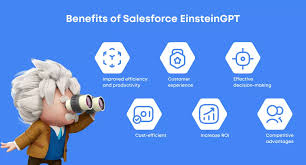
What is Einstein Used for in Salesforce?

What is Einstein Used for in Salesforce?

Salesforce Einstein is an AI-powered platform that can be used in various ways to enhance customer experiences and streamline business operations: SalesSalesforce Einstein can help sales teams better understand customers, improve conversion rates, and close deals more quickly. For instance, it can generate sales call summaries, draft emails using customer data, and provide real-time predictions. Customer ServiceEinstein helps customer service agents resolve cases faster and provide customers with relevant information during interactions. MarketingSalesforce Einstein enables marketers to create personalized experiences and send the right content to the right customer at the right time. ITSalesforce empowers IT teams to embed intelligence across the business and create smarter apps for customers and employees. CommerceSalesforce assists retailers by recommending the best products to each customer. Salesforce also includes features to protect data privacy and security, such as the Tectonic GPT Trust Layer, which provides AI bias detection, data security, and regulatory compliance. Salesforce Einstein is the first all-inclusive AI for CRM. It’s an integrated set of AI technologies that makes the Customer Success Platform smarter and brings AI to Salesforce users everywhere. Salesforce is the only comprehensive AI for CRM. It is: Tectonic and Salesforce allow businesses to become AI-first, providing the ability to anticipate customer needs, improve service efficiency, and enable smarter, data-driven decision-making. Sales teams can anticipate next opportunities and exceed customer needs,Service teams can proactively resolve issues before they occur,Marketing teams can create predictive journeys and personalize experiences like never before,IT teams can embed intelligence everywhere and create smarter apps. AI that works for your business.Drive business productivity and personalization with predictive AI, generative AI, and agents across the Customer 360 platform. Create and deploy assistive AI experiences natively in Salesforce, allowing your customers and employees to converse directly with Agentforce to solve issues faster and work smarter. Empower service reps, agents, marketers, and others with AI tools safely grounded in your customer data to make every customer experience more impactful. What is Salesforce Einstein?As of 2024, this groundbreaking AI-based product remains a leader in the CRM industry since its release in 2016. It combines a range of AI technologies, including advanced machine learning, natural language processing (NLP), predictive analytics, and image recognition, enabling businesses to improve productivity and sustain growth. Salesforce AI BenefitsThe most significant benefits of AI are the time and efficiency gains it offers to business processes. By automating tasks, employees can focus on more strategic work. Additionally, automating repetitive tasks reduces errors and enhances operational efficiency. Saleesforce provides robust reporting features that generate valuable insights to support decision-making, helping businesses understand customer needs and identify opportunities. From a customer perspective, Salesforce ensures more meaningful and personalized experiences through advanced NLP capabilities and machine learning to better understand customer behavior. Salesforce AI FeaturesSalesforce is a feature-rich platform that leverages AI’s capabilities in Natural Language Processing, Machine Learning, and image processing. Some of the key features include: Salesforce PricingCosts depend on the required features and the size of the business. Pricing starts at $50 per user per month, with potential increases based on the specific capabilities needed. Salesforce Tectonic ChallengesAlthough Salesforce Tectonic offers numerous benefits, companies may face challenges during integration, such as aligning it with existing systems and ensuring proper training for employees to maximize its use. How to Prepare for Salesforce Tectonic IntegrationUsing an implementation partner like Tectonic can help ensure seamless integration. A partner will assess your current Salesforce setup, recommend the right features, and guide you through the integration process. ConclusionSalesforce is a cutting-edge platform that empowers businesses to transform operations with comprehensive AI capabilities. It provides tailored solutions for sales, service, marketing, and commerce teams, enabling better customer interactions, data-driven decision-making, and increased productivity. With the right implementation partner like Tectonic, businesses can seamlessly integrate and leverage Tectonic to stay ahead in a competitive landscape. Content updated November 2024. Like1 Related Posts Who is Salesforce? Who is Salesforce? Here is their story in their own words. From our inception, we’ve proudly embraced the identity of Read more Salesforce Marketing Cloud Transactional Emails Salesforce Marketing Cloud Transactional Emails are immediate, automated, non-promotional messages crucial to business operations and customer satisfaction, such as order Read more Salesforce Unites Einstein Analytics with Financial CRM Salesforce has unveiled a comprehensive analytics solution tailored for wealth managers, home office professionals, and retail bankers, merging its Financial Read more AI-Driven Propensity Scores AI plays a crucial role in propensity score estimation as it can discern underlying patterns between treatments and confounding variables Read more

Read More
ai and sustainability

AI and Sustainability

Climate Change: A Global Crisis Demanding Urgent Action Climate change is one of the most critical challenges of our time, accelerating at an unprecedented pace. Rising global temperatures, melting polar ice, surging sea levels, and intensifying extreme weather events are destabilizing ecosystems, endangering biodiversity, and jeopardizing human communities worldwide. The future of our planet and the well-being of generations to come depend on decisive action—reducing greenhouse gas emissions, shifting to renewable energy, and embracing sustainable practices. Artificial intelligence (AI) is emerging as a vital tool in this fight, offering innovative technological solutions to advance sustainability efforts. AI for a Sustainable Future Sustainability is about meeting society’s environmental, social, and economic needs without compromising future generations’ ability to do the same. With mounting pressure on Earth’s resources and growing recognition of the need for responsible practices, sustainability has never been more crucial. The United Nations’ 17 Sustainable Development Goals (SDGs) provide a global framework for fostering sustainable progress. AI stands at the forefront of this movement, enabling smarter resource management, waste reduction, and more efficient systems—while also demanding careful consideration of its own environmental impact. Key Areas Where AI Drives Sustainability Beyond these areas, AI aids sustainability across industries—streamlining manufacturing processes, designing energy-efficient buildings, and advancing green technologies. The Hidden Cost: AI’s Carbon Footprint Despite its benefits, AI has a significant environmental downside. Data centers, which power AI systems, consume vast amounts of energy—accounting for roughly 1% of global electricity use—and this demand is rising. Much of this energy comes from non-renewable sources, contributing to carbon emissions. Additionally, hardware production involves resource-intensive processes, from mining rare metals to managing electronic waste. It is not totally unimaginable that the “tree huggers” and “nuclear power haters” are dusting off their signs to protest the surging power demands of AI. To maximize AI’s sustainability potential, we must address its environmental impact. This includes: By balancing AI’s advantages with its ecological costs, we can harness its power to build a greener future—without undermining the very goals it seeks to achieve. Like Related Posts Who is Salesforce? Who is Salesforce? Here is their story in their own words. From our inception, we’ve proudly embraced the identity of Read more Salesforce Unites Einstein Analytics with Financial CRM Salesforce has unveiled a comprehensive analytics solution tailored for wealth managers, home office professionals, and retail bankers, merging its Financial Read more AI-Driven Propensity Scores AI plays a crucial role in propensity score estimation as it can discern underlying patterns between treatments and confounding variables Read more Tectonic’s Successful Salesforce Track Record Salesforce Technology Services Integrator – Tectonic has successfully delivered Salesforce in a variety of industries including Public Sector, Hospitality, Manufacturing, Read more

Read More
Tectonic at a Glance

AI Product Management Tools

Embracing AI in Product Management: Your New Best Friend, Not a Replacement-Original published by https://zedaio.medium.com/ Amid the lively debates about AI taking over product management roles, let’s set the record straight: AI is here as an ally, not a replacement. It’s about leveraging AI to amplify our capabilities, streamline mundane tasks, and make room for the creative and strategic aspects of product management. AI Product Management Tools. Here are seven AI tools that will automate your daily routines, offering support that transforms the way you manage products. Ready to upgrade your product management game with AI by your side? Let’s dive in! 1. Zeda.io Zeda.io is one of the best AI tools for product managers. It offers a complete suite of features that help you in feedback management, strategic planning, and closing the loop. It is a perfect tool if you are striving to balance your customer needs and business goals. With integrations like Slack, Gong, Teams, Salesforce, and more, you can gather and manage customer feedback effortlessly. Its unique AI technology generates valuable, actionable insights by categorizing all the feedback, helping you uncover pressing customer issues and decide what to build next. Key Features: 2. ChatGPT An obvious choice, ChatGPT can automate many of your tasks. It helps make sense of vague product user feedback, create PRDs, release notes, and other documents. The key is to use the right prompts and GPT plugins tailored for product managers. Key Features: 3. Notion AI Notion is a cloud-based productivity and collaboration tool that provides various organizational tools, including task management, project tracking, to-do lists, bookmarking, and more. Notion’s AI can assist product managers in several ways. Key Features: 4. Uizard Uizard is a user interface design tool that uses AI to quickly and efficiently create wireframes, mockups, and prototypes in minutes. The tool’s advanced deep-learning algorithms analyze images provided by product teams and managers to create design themes. Key Features: 5. ClickUp ClickUp is a cloud-based tool that helps teams manage their work effectively, offering features like task management, time tracking, file sharing, and communication tools. ClickUp is highly customizable and offers multiple AI tools that integrate seamlessly into workflows. Key Features: 6. Delibr Delibr is an excellent tool for AI product teams to collaborate effectively during the feature refinement process. It helps capture, synthesize, and organize feedback from diverse sources, enabling informed decision-making and creating high-quality documentation. Key Features: 7. Fireflies.ai Fireflies.ai enhances meeting productivity by transcribing, summarizing, and analyzing voice conversations. It integrates with major video-conferencing platforms and offers various ways to capture meetings, including a Chrome extension and direct uploads. Key Features: AI Product Management Tools Embracing AI in product management doesn’t mean diminishing the value of human insight; it’s about enhancing our capabilities and efficiency. The seven AI tools outlined here offer a glimpse into a future where technology and creativity intersect, empowering product managers to achieve more in less time. By integrating suitable tools into your workflow, you can focus on innovation and strategy, ensuring your products not only meet but exceed user expectations. Let AI be your ally to achieve greater heights and product success. Like Related Posts Who is Salesforce? Who is Salesforce? Here is their story in their own words. From our inception, we’ve proudly embraced the identity of Read more Salesforce Marketing Cloud Transactional Emails Salesforce Marketing Cloud Transactional Emails are immediate, automated, non-promotional messages crucial to business operations and customer satisfaction, such as order Read more Salesforce Unites Einstein Analytics with Financial CRM Salesforce has unveiled a comprehensive analytics solution tailored for wealth managers, home office professionals, and retail bankers, merging its Financial Read more AI-Driven Propensity Scores AI plays a crucial role in propensity score estimation as it can discern underlying patterns between treatments and confounding variables Read more

Read More
AI Training Options

AI Training Options

As AI adoption accelerates, AI certifications and courses have proliferated, providing deeper knowledge of this rapidly evolving technology. AI Training Options. Numerous AI certifications cover the basics, so we’ve narrowed the field to 10 of the most diverse and comprehensive programs. AI Training Options Artificial intelligence is poised to become the key technology that drives business transformation and gives companies a competitive edge. According to a recent forecast by the International Data Corporation, global spending on AI—including AI-enabled applications, infrastructure, and related services—will more than double to $632 billion by 2028, growing at a compound annual rate of 29% between 2024 and 2028. AI helps businesses boost productivity by automating processes such as robotics and autonomous vehicles, while also supporting existing workforces with technologies like assisted and augmented intelligence. Companies are integrating AI across various sectors, including finance, healthcare, retail, smart home devices, fraud detection, and security surveillance. Why AI certifications are important: 10 of the best AI certifications and courses: Each certification offers unique benefits, whether you’re a beginner or an experienced professional aiming to stay ahead in AI-driven industries. Content updated September 2024. Like Related Posts Who is Salesforce? Who is Salesforce? Here is their story in their own words. From our inception, we’ve proudly embraced the identity of Read more Salesforce Unites Einstein Analytics with Financial CRM Salesforce has unveiled a comprehensive analytics solution tailored for wealth managers, home office professionals, and retail bankers, merging its Financial Read more AI-Driven Propensity Scores AI plays a crucial role in propensity score estimation as it can discern underlying patterns between treatments and confounding variables Read more Tectonic’s Successful Salesforce Track Record Salesforce Technology Services Integrator – Tectonic has successfully delivered Salesforce in a variety of industries including Public Sector, Hospitality, Manufacturing, Read more

Read More
Personalization With Customized AI-Driven Journeys

Personalization With Customized AI-Driven Journeys

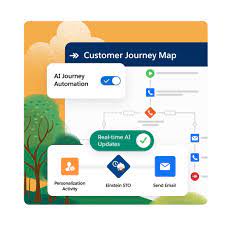
AI-Enabled Triggers for Guiding Customer Journeys – Personalization With Customized AI-Driven Journeys Initiate timely and relevant customer experiences that seamlessly lead individuals through their purchasing journey. Employ AI-powered decision-making to identify the most suitable next steps for customers, offering personalized suggestions based on real-time behavior, historical data, and business-specific datasets such as pricing and inventory. Deliver predefined experiences, such as browsing or cart abandonment journeys, while utilizing real-time interactions to determine the optimal content, channel, or offer for each customer. Efficiently extract insights by harnessing behavioral data and advanced analytics to visualize cross-channel customer journeys for both individuals and segments, identifying and resolving key friction points. Elevate customer acquisition, loyalty, and lifetime value by crafting personalized, omni-channel journeys that align with both customer desires and business objectives. Enable trigger-based customer journeys that facilitate immediate responses to customer actions, whether in the physical realm, such as entering a store and connecting to Wi-Fi, or in the virtual space, like visiting a shopping website. The Role of AI in Elevating the Customer Journey AI significantly contributes to heightened customer satisfaction, ultimately leading to improved retention. Address customer pain points in their preferred language and provide solutions tailored to their needs based on purchasing history and previous interactions with customer service. AI’s Influence Across Customer Journey Stages At each stage of the customer journey, AI transforms experiences by delivering personalized interactions from awareness to post-purchase. This transformation is made possible through automation, predictive analytics, and intelligent virtual agents. Transformative Impact of Generative AI on Customer Journeys Generative AI, exemplified by advanced language models like GPT-4, has the potential to revolutionize customer journeys. These models automate communication and content creation, dynamically adjusting tone and style to match customer preferences. For instance, Grammarly’s tone detector adapts communication based on the recipient’s profile and interaction history. Continuous Iteration and AI in Customer Journey Mapping In the era of digitization, AI-driven personalization surpasses traditional customer journey mapping based on a few personas. Organizations must harness AI and machine learning to create personalized journeys that enhance user experiences. The iterative improvement process involves collecting comprehensive data, utilizing AI for analysis and insights, implementing changes, and evaluating results through key performance indicators. Netflix: An AI Success Story Netflix serves as a prime example of AI success, continuously analyzing user behavior and preferences to refine content recommendation algorithms. This approach enhances personalization, leading to increased customer engagement and satisfaction. Integrating Generative AI into Existing Systems To fully capitalize on generative AI, integration into existing systems and processes is crucial. This may entail developing APIs to connect AI tools with customer relationship management (CRM) systems and content management systems. Testing and Continuous Enhancement Implementing AI-driven personalization necessitates a robust testing and evaluation process. Clearly defined key performance indicators and analytics capabilities are essential for measuring effectiveness and making continuous improvements. Like2 Related Posts Who is Salesforce? Who is Salesforce? Here is their story in their own words. From our inception, we’ve proudly embraced the identity of Read more Salesforce Marketing Cloud Transactional Emails Salesforce Marketing Cloud Transactional Emails are immediate, automated, non-promotional messages crucial to business operations and customer satisfaction, such as order Read more Salesforce Unites Einstein Analytics with Financial CRM Salesforce has unveiled a comprehensive analytics solution tailored for wealth managers, home office professionals, and retail bankers, merging its Financial Read more AI-Driven Propensity Scores AI plays a crucial role in propensity score estimation as it can discern underlying patterns between treatments and confounding variables Read more

Read More
ai powered insights

AI Powered Insights

AI-Powered Marketing Insights: Transform Data Into Action Unlock the Full Potential of Your Data with AI In today’s fast-paced marketing world, raw data alone isn’t enough—you need AI-driven insights to uncover hidden opportunities, predict customer behavior, and optimize campaigns in real time. Why AI-Powered Insights Matter ✔ Predictive Analytics – Anticipate customer actions before they happen.✔ Real-Time Optimization – Adjust strategies on the fly for maximum impact.✔ Deeper Personalization – Tailor messaging based on AI-detected patterns. Key AI Tools in Salesforce Marketing Cloud 1. Einstein Marketing Insights (EMI) 🔍 Monitor KPIs with AI-Powered Bots 2. Einstein Copy Insights ✉ Optimize Email Subject Lines with NLP 3. Einstein Lead Scoring 🎯 Prioritize High-Value Leads 4. Einstein Messaging Insights ⚠ Detect Anomalies in Real Time How to Leverage AI for Smarter Marketing Step 1: Set Clear KPIs Step 2: Test & Optimize Continuously Step 3: Act on Real-Time Alerts Step 4: Align Sales & Marketing with AI Insights The Future of Marketing is AI-Driven Companies using AI-powered insights see:📈 Higher email open rates (up to 35% improvement)🎯 Better lead prioritization (2x more conversions)⏱ Faster decision-making (real-time adjustments vs. guesswork) Ready to supercharge your marketing? Start integrating Einstein AI today and turn data into your competitive edge. 🚀 Need help setting up AI-driven insights? Contact us today. Content updated August 2024. Like Related Posts Who is Salesforce? Who is Salesforce? Here is their story in their own words. From our inception, we’ve proudly embraced the identity of Read more Salesforce Marketing Cloud Transactional Emails Salesforce Marketing Cloud Transactional Emails are immediate, automated, non-promotional messages crucial to business operations and customer satisfaction, such as order Read more Salesforce Unites Einstein Analytics with Financial CRM Salesforce has unveiled a comprehensive analytics solution tailored for wealth managers, home office professionals, and retail bankers, merging its Financial Read more AI-Driven Propensity Scores AI plays a crucial role in propensity score estimation as it can discern underlying patterns between treatments and confounding variables Read more

Read More
Salesforce Pro Suite

Salesforce Pro Suite

Revolutionizing CRM: Introducing Salesforce Pro Suite In today’s dynamic business technology landscape, Salesforce has established itself as a leader in customer relationship management (CRM) solutions. The launch of Salesforce Pro Suite marks a significant milestone in their mission to empower businesses with cutting-edge tools designed to optimize operations, enhance customer engagement, and drive growth. This article explores the features, benefits, and potential of Salesforce Pro Suite, showcasing why it stands out as a transformative solution for businesses of all sizes. What is Salesforce Pro Suite? Salesforce Pro Suite is a comprehensive collection of integrated tools and services designed to augment the capabilities of Salesforce’s CRM platform. Tailored for modern businesses—from startups to large enterprises—it incorporates advanced functionalities such as artificial intelligence (AI), automation, and data analytics to boost productivity, foster collaboration, and facilitate informed decision-making. Unlock growth and deepen customer relationships with Pro Suite—the all-in-one CRM suite with marketing, sales, service, and commerce tools that scale with your business. Get the flexibility to automate tasks and customize your CRM to fit your specific needs with Pro Suite. Key Features of Salesforce Pro Suite Benefits of Salesforce Pro Suite Use Cases of Salesforce Pro Suite What Can You Do with Pro Suite? Conclusion Salesforce Pro Suite represents a significant advancement in CRM technology, offering a comprehensive suite of tools that cater to the diverse needs of modern businesses. By harnessing AI, automation, and advanced analytics, Pro Suite empowers organizations to optimize operations, enhance customer engagement, and make informed, data-driven decisions. Whether you’re a small startup or a large enterprise, Salesforce Pro Suite provides the scalability, flexibility, and security required to thrive in today’s competitive landscape. Like Related Posts Who is Salesforce? Who is Salesforce? Here is their story in their own words. From our inception, we’ve proudly embraced the identity of Read more Salesforce Marketing Cloud Transactional Emails Salesforce Marketing Cloud Transactional Emails are immediate, automated, non-promotional messages crucial to business operations and customer satisfaction, such as order Read more Salesforce Unites Einstein Analytics with Financial CRM Salesforce has unveiled a comprehensive analytics solution tailored for wealth managers, home office professionals, and retail bankers, merging its Financial Read more AI-Driven Propensity Scores AI plays a crucial role in propensity score estimation as it can discern underlying patterns between treatments and confounding variables Read more

Read More

Salesforce Unveils Einstein Copilot

Salesforce Unveils Einstein Copilot: A New Era in AI-Powered CRM Salesforce, the world’s leading customer relationship management (CRM) platform, has introduced Einstein Copilot, an advanced AI-powered assistant designed to revolutionize business interactions with CRM systems. Seamlessly integrated within Salesforce’s ecosystem, including Data Cloud, Einstein Copilot automates complex workflows, enhances operational efficiency, and delivers highly personalized customer insights. By leveraging AI, it empowers sales, marketing, and customer service teams while ensuring compliance with data privacy and governance standards. The Challenge: Enhancing CRM Efficiency with AI As customer relationships became more intricate, businesses sought a CRM solution that could: Salesforce responded by integrating cutting-edge AI capabilities into its CRM platform, ensuring a seamless, secure, and intelligent customer experience. The Einstein Copilot Solution Salesforce has embedded Einstein Copilot across its CRM applications, transforming customer relationships through AI-driven automation. By harnessing Data Cloud, Einstein Copilot accesses unified, reliable data to generate real-time insights, helping businesses make smarter decisions and enhance customer interactions. With customization tools like Copilot Builder, Prompt Builder, Skill Builder, and Model Builder, businesses can tailor Einstein Copilot to meet their unique needs. Integration with Salesforce extensions and external APIs further optimizes workflows, automating tasks and streamlining operations. Key Features of Einstein Copilot Results: Transforming CRM with AI Since its launch, Einstein Copilot has significantly improved customer satisfaction and operational productivity by: Challenges & Considerations Despite its success, deploying Einstein Copilot presented some challenges, including: The Future of Einstein Copilot Salesforce is committed to expanding Einstein Copilot’s capabilities, focusing on: Salesforce envisions Einstein Copilot setting a new benchmark in AI-driven CRM, enabling businesses to foster stronger customer relationships, drive growth, and streamline operations. About Salesforce Salesforce is the world’s leading CRM platform, empowering businesses with innovative solutions that blend cloud computing, artificial intelligence, and big data analytics. Since its founding in 1999, Salesforce has been at the forefront of digital transformation, helping organizations optimize operations and elevate customer engagement. Conclusion Einstein Copilot marks a transformative shift in CRM, leveraging AI to enhance efficiency, automate workflows, and deliver superior customer experiences. With AI-driven automation and intelligent decision-making, businesses can now focus on building long-lasting customer relationships that drive loyalty and success. Einstein Copilot is now Agentforce. Content updated January 2025. Like Related Posts Who is Salesforce? Who is Salesforce? Here is their story in their own words. From our inception, we’ve proudly embraced the identity of Read more Salesforce Marketing Cloud Transactional Emails Salesforce Marketing Cloud Transactional Emails are immediate, automated, non-promotional messages crucial to business operations and customer satisfaction, such as order Read more Salesforce Unites Einstein Analytics with Financial CRM Salesforce has unveiled a comprehensive analytics solution tailored for wealth managers, home office professionals, and retail bankers, merging its Financial Read more AI-Driven Propensity Scores AI plays a crucial role in propensity score estimation as it can discern underlying patterns between treatments and confounding variables Read more

Read More
what is ai opportunity scoring

What is AI Opportunity Scoring

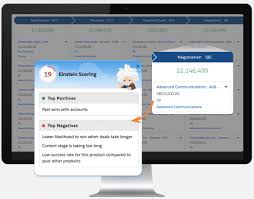
AI opportunity scoring uses artificial intelligence and machine learning to analyze historical data and predict the likelihood of a sales opportunity closing. This score, typically on a scale of 1 to 100 or 1 to 99, helps prioritize opportunities, allocate resources effectively, and improve sales forecasting.  Here’s a more detailed explanation: Einstein Opportunity Scoring uses data science and machine learning to score your opportunities so that you can prioritize them. By using machine learning, Einstein Opportunity Scoring provides a simpler, faster, and more accurate solution than traditional rule-based scoring approaches. Like Related Posts Who is Salesforce? Who is Salesforce? Here is their story in their own words. From our inception, we’ve proudly embraced the identity of Read more Salesforce Unites Einstein Analytics with Financial CRM Salesforce has unveiled a comprehensive analytics solution tailored for wealth managers, home office professionals, and retail bankers, merging its Financial Read more AI-Driven Propensity Scores AI plays a crucial role in propensity score estimation as it can discern underlying patterns between treatments and confounding variables Read more Tectonic’s Successful Salesforce Track Record Salesforce Technology Services Integrator – Tectonic has successfully delivered Salesforce in a variety of industries including Public Sector, Hospitality, Manufacturing, Read more

Read More
gettectonic.com