AI Tools Archives - gettectonic.com - Page 20
AI Strategy and Tectonic

AI Strategy and Tectonic

AI Strategy and Tectonic Recent advancements in artificial intelligence (AI) have showcased the immense potential of this technology to transform both business and society. However, as organizations scale AI systems, they must ensure these systems are structured and governed responsibly to prevent bias and errors. The widespread use of AI can have significant implications, and without proper safeguards, businesses risk costly outcomes. As your organization leverages diverse datasets to apply machine learning and automate workflows, it’s critical to implement strong guardrails to maintain data quality, ensure compliance, and promote transparency within AI systems. Tectonic is here to help you implement AI responsibly, focusing on areas where it can quickly and ethically deliver real business benefits. Our comprehensive portfolio of enterprise-grade AI products and analytics solutions is designed to minimize the challenges of AI adoption, establish a solid data foundation, and optimize for positive outcomes while ensuring responsible AI use. Global enterprises turn to Tectonic as a trusted partner in their AI transformation journeys. As a leading AI consulting firm, we enhance the value of AI and cloud technologies in driving business transformation. By working with our own advanced AI technologies and an open ecosystem of partners, we deliver AI models on any cloud, all guided by the principles of ethics and trust. Like Related Posts Who is Salesforce? Who is Salesforce? Here is their story in their own words. From our inception, we’ve proudly embraced the identity of Read more Salesforce Unites Einstein Analytics with Financial CRM Salesforce has unveiled a comprehensive analytics solution tailored for wealth managers, home office professionals, and retail bankers, merging its Financial Read more AI-Driven Propensity Scores AI plays a crucial role in propensity score estimation as it can discern underlying patterns between treatments and confounding variables Read more Tectonic’s Successful Salesforce Track Record Salesforce Technology Services Integrator – Tectonic has successfully delivered Salesforce in a variety of industries including Public Sector, Hospitality, Manufacturing, Read more

Read More
AI All Grown Up

Generative AI Tools

One of the most significant use cases for generative AI in business is customer service and support. Most of us have likely experienced the frustration of dealing with traditional automated systems. However, today’s advanced AI, powered by large language models and natural language chatbots, is rapidly improving these interactions. While many still prefer human agents for complex or sensitive issues, AI is proving highly capable of handling routine inquiries efficiently. Here’s an overview of some of the top AI-powered tools for automating customer service. Although the human element will always be essential in customer experience, these tools free up human agents from repetitive tasks, allowing them to focus on more complex challenges requiring empathy and creativity. Cognigy Cognigy is an AI platform designed to automate customer service voice and chat channels. It goes beyond simply reading FAQ responses by delivering personalized, context-sensitive answers in multiple languages. Cognigy’s AI Copilot feature enhances human contact center workers by offering real-time AI assistance during interactions, making both fully automated and human-augmented support possible. IBM WatsonX Assistant IBM’s WatsonX Assistant helps businesses create AI-powered personal assistants to streamline tasks, including customer support. With its drag-and-drop configuration, companies can set up seamless self-service experiences. The platform uses retrieval-augmented generation (RAG) to ensure that responses are accurate and up-to-date, continuously improving as it learns from customer interactions. Salesforce Einstein Service Cloud Einstein Service Cloud, part of the Salesforce platform, automates routine and complex customer service tasks. Its AI-powered Agentforce bots manage “low-touch” interactions, while “high-touch” cases are overseen by human agents supported by AI. Fully customizable, Einstein ensures that responses align with your brand’s tone and voice, all while leveraging enterprise data securely. Zendesk AI Zendesk, a leader in customer support, integrates generative AI to boost its service offerings. By using machine learning and natural language processing, Zendesk understands customer sentiment and intent, generates personalized responses, and automatically routes inquiries to the most suitable agent—be it human or machine. It also provides human agents with real-time guidance on resolving issues efficiently. Ada Ada is a conversational AI platform built for large-scale customer service automation. Its no-code interface allows businesses to create custom bots, reducing the cost of handling inquiries by up to 78% per ticket. By integrating domain-specific data, Ada helps improve both support efficiency and customer experience across omnichannel support environments. More AI Tools for Customer Service There are numerous other AI tools designed to enhance automated customer support: While AI tools are transforming customer service, the key lies in using them to complement human agents, allowing for a balance of efficiency and personalized care. Like Related Posts Who is Salesforce? Who is Salesforce? Here is their story in their own words. From our inception, we’ve proudly embraced the identity of Read more Salesforce Marketing Cloud Transactional Emails Salesforce Marketing Cloud Transactional Emails are immediate, automated, non-promotional messages crucial to business operations and customer satisfaction, such as order Read more Salesforce Unites Einstein Analytics with Financial CRM Salesforce has unveiled a comprehensive analytics solution tailored for wealth managers, home office professionals, and retail bankers, merging its Financial Read more AI-Driven Propensity Scores AI plays a crucial role in propensity score estimation as it can discern underlying patterns between treatments and confounding variables Read more


Read More
Understanding AI Agents

Understanding AI Agents

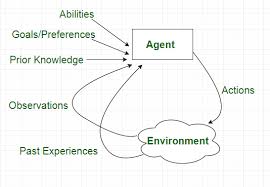
Understanding AI Agents: A Comprehensive Guide Artificial Intelligence (AI) has come a long way, offering systems that automate tasks and provide intelligent, responsive solutions. One key concept within AI is the AI agent—an autonomous system capable of perceiving its environment and taking actions to achieve specific goals. This guide explores AI agents, their types, working mechanisms, and how to build them using platforms like Microsoft Autogen and Google Vertex AI Agent Builder. It also highlights how companies like LeewayHertz and Markovate can assist in the development of AI agents. What is an AI Agent? AI agents are systems designed to interact with their environment autonomously. They process inputs, make decisions, and execute actions based on predefined rules or learned experiences. These agents range from simple rule-based systems to complex machine learning models that adapt over time. Types of AI Agents AI agents can be classified based on complexity and functionality: How AI Agents Work The working mechanism of an AI agent involves four key components: Architectural Blocks of an Autonomous AI Agent An autonomous AI agent typically includes: Building an AI Agent: The Basics Building an AI agent involves several essential steps: Microsoft Autogen: A Platform Overview Microsoft Autogen is a powerful tool for building AI agents, offering a range of features that simplify the development, training, and deployment process. Its user-friendly interface allows developers to create custom agents quickly. Key Steps to Building AI Agents with Autogen: Benefits of Autogen: Vertex AI Agent Builder: Enabling No-Code AI Development Google’s Vertex AI Agent Builder simplifies AI agent development through a no-code platform, making it accessible to users without extensive programming experience. Its drag-and-drop functionality allows for quick and efficient AI agent creation. Key Features of Vertex AI Agent Builder: Conclusion AI agents play a critical role in automating decision-making and performing tasks independently. Platforms like Microsoft Autogen and Google Vertex AI Agent Builder make the development of these agents more accessible, providing powerful tools for both novice and experienced developers. By leveraging these technologies and partnering with companies like LeewayHertz and Markovate, businesses can build custom AI agents that enhance automation, decision-making, and operational efficiency. Whether you’re starting from scratch or looking to integrate AI capabilities into your existing systems, the right tools can make the process seamless and effective. How do you think these tools stack up next to Salesforce AI Agents? Comment below. Content updated October 2024. Like Related Posts Who is Salesforce? Who is Salesforce? Here is their story in their own words. From our inception, we’ve proudly embraced the identity of Read more Salesforce Unites Einstein Analytics with Financial CRM Salesforce has unveiled a comprehensive analytics solution tailored for wealth managers, home office professionals, and retail bankers, merging its Financial Read more AI-Driven Propensity Scores AI plays a crucial role in propensity score estimation as it can discern underlying patterns between treatments and confounding variables Read more Tectonic’s Successful Salesforce Track Record Salesforce Technology Services Integrator – Tectonic has successfully delivered Salesforce in a variety of industries including Public Sector, Hospitality, Manufacturing, Read more

Read More
Building Trust in AI-Powered CRM

Embracing AI in 2024

Embracing AI in 2024: A Strategic Approach to Building AI Software Artificial Intelligence (AI) has become the cornerstone of innovation in the IT industry, captivating big tech, corporations, and investors alike. Participation in AI isn’t just beneficial—it’s imperative. While the specter of an ‘AI Bubble’ looms in public discourse, with fears of job displacement, the reality is more nuanced. AI-driven tools are indeed transforming industries, yet they also present opportunities for innovation and efficiency. Key Considerations for Harnessing AI Power Integration into Digital Services The future of AI lies in embedding it seamlessly within digital services rather than creating standalone products. This approach leverages AI’s capabilities effectively, particularly in generative AI applications. Positioning AI: Core Product vs. Business Solution When incorporating AI into your business strategy, clarity is crucial. Determine whether AI serves as the core product, enhances existing features, or solves specific business challenges. Avoid falling into commodity categories or gimmicky features that lack substantial user value. Assessing Feasibility and Readiness Evaluate your team’s AI competencies, familiarity with tools, budget constraints, and current revenue streams. Understanding these factors helps gauge the feasibility of AI development and integration within your organization. Leveraging Existing Solutions Explore AI solutions offered by major cloud providers and companies. Opt for tools that offer higher abstraction levels, simplifying integration and maintenance. Practical Steps to AI Software Development Navigating AI Use Cases Identify unique use cases where AI can solve real business problems effectively. Avoid pursuing solutions solely for novelty or investor appeal. Building Capability Assess your capability to develop AI systems. Whether you have in-house expertise or need to recruit talent, align your team with the skills required for successful implementation. Data: The Foundation of AI Success Establish robust data acquisition, processing, and storage capabilities. High-quality data is fundamental for AI performance and reliability. Designing Scalable Architecture Develop a scalable AI system architecture that supports seamless data flow, model training, deployment, and user interaction. Keep simplicity and functionality at the forefront. Continuous Improvement Monitor and refine your AI system continuously based on user feedback and industry advancements. Embrace a culture of ongoing learning and adaptation to stay ahead. Conclusion: Navigating the AI Landscape In 2024, building AI software demands a blend of innovation and pragmatism. Clear use cases, robust data management, and practical implementation are key to success. Whether adopting existing AI tools or developing proprietary solutions, prioritize delivering tangible value to users. Stay agile, continuously refine your approach, and embrace the transformative potential of AI in driving business growth and innovation. Like Related Posts Who is Salesforce? Who is Salesforce? Here is their story in their own words. From our inception, we’ve proudly embraced the identity of Read more Salesforce Unites Einstein Analytics with Financial CRM Salesforce has unveiled a comprehensive analytics solution tailored for wealth managers, home office professionals, and retail bankers, merging its Financial Read more AI-Driven Propensity Scores AI plays a crucial role in propensity score estimation as it can discern underlying patterns between treatments and confounding variables Read more Tectonic’s Successful Salesforce Track Record Salesforce Technology Services Integrator – Tectonic has successfully delivered Salesforce in a variety of industries including Public Sector, Hospitality, Manufacturing, Read more
Read More
More Cool AI Tools

Demystifying AI: Separating Fact from Fiction

1. The Consciousness Conundrum Myth: AI possesses human-like intelligence and consciousnessReality: Today’s AI, including advanced generative models, operates through pattern recognition—not genuine understanding. These systems process language statistically, without consciousness or emotional experience. Key Insight: AI can write poetry but doesn’t feel inspiration; it analyzes medical images without comprehending suffering. 2. The Future of Work Myth: AI will make human workers obsoleteReality: While AI automates 40-50% of repetitive tasks (McKinsey), it’s creating more jobs than it eliminates. The World Economic Forum predicts AI will generate 97 million new roles by 2025 focused on AI management, training, and ethical oversight. 3. The Bias Blind Spot Myth: AI delivers perfectly objective decisionsReality: A 2023 Stanford study found commercial AI systems exhibit demographic biases at alarming rates. For example: Solution: Regular bias audits and diverse training datasets are essential. 4. Emotional Intelligence Limits Myth: AI experiences human emotionsReality: While sentiment analysis achieves 85-90% accuracy in detecting emotions from text (MIT Tech Review), these systems simulate empathy without experiencing it—like a sophisticated mood ring. 5. The AGI Mirage Myth: Superintelligent AI is imminentReality: Current narrow AI excels at specific tasks but lacks the generalized reasoning of a five-year-old. OpenAI’s GPT-4 scores ~158 on IQ tests (human average: 100), yet fails at basic physical reasoning that toddlers master. 6. Transparency Spectrum Myth: All AI decisions are unexplainableReality: Tools like LIME and SHAP now visualize how models weigh factors in: Emerging Standard: The EU AI Act mandates explainability for high-risk applications. 7. Cost Realities Myth: AI implementation requires massive investmentReality: Cloud-based AI services now offer: 8. The Creativity Gap Myth: AI can replace human ingenuityReality: While AI generates plausible ideas, humans dominate in: 9. The Human-AI Partnership Myth: AI systems are autonomousReality: Every successful AI implementation requires: 10. ROI Realities Myth: AI guarantees business successReality: A 2024 Gartner survey found only 53% of AI projects move past pilot stage. Success factors include: Moving Forward Wisely Understanding these realities helps organizations: “The greatest danger of artificial intelligence isn’t that it will rebel against us, but that we’ll attribute superhuman capabilities to what is ultimately sophisticated pattern matching.”—Adapted from Pedro Domingos, “The Master Algorithm” Like Related Posts Who is Salesforce? Who is Salesforce? Here is their story in their own words. From our inception, we’ve proudly embraced the identity of Read more Salesforce Unites Einstein Analytics with Financial CRM Salesforce has unveiled a comprehensive analytics solution tailored for wealth managers, home office professionals, and retail bankers, merging its Financial Read more AI-Driven Propensity Scores AI plays a crucial role in propensity score estimation as it can discern underlying patterns between treatments and confounding variables Read more Tectonic’s Successful Salesforce Track Record Salesforce Technology Services Integrator – Tectonic has successfully delivered Salesforce in a variety of industries including Public Sector, Hospitality, Manufacturing, Read more

Read More
Conversational Commerce Explained

Conversational Commerce Explained

Conversational Commerce is a modern approach to customer engagement and sales that leverages chat-based interfaces (like messaging apps, chatbots, and voice assistants) to facilitate seamless, personalized, and real-time interactions between businesses and customers. It combines the power of conversational AI with e-commerce to create a more natural and interactive shopping experience. 1. What is Conversational Commerce? Conversational commerce allows customers to interact with brands through text or voice conversations instead of traditional methods like browsing websites or using apps. It enables businesses to engage with customers in a more personalized, immediate, and convenient way, often using tools like: 2. How Does Conversational Commerce Work? Conversational commerce uses Artificial Intelligence (AI), Natural Language Processing (NLP), and machine learning to understand and respond to customer queries. Here’s how it typically works: 3. Key Features of Conversational Commerce a) Personalization b) Real-Time Interaction c) Omnichannel Support d) Automation e) Seamless Transactions 4. Benefits of Conversational Commerce a) Improved Customer Experience b) Higher Engagement c) Increased Sales d) Cost Efficiency e) 24/7 Availability 5. Examples of Conversational Commerce a) Chatbots b) Voice Assistants c) Social Media Messaging d) In-App Messaging 6. Technologies Powering Conversational Commerce a) Artificial Intelligence (AI) b) Natural Language Processing (NLP) c) Machine Learning d) APIs and Integrations 7. The Future of Conversational Commerce 8. Challenges of Conversational Commerce In summary, conversational commerce is transforming the way businesses interact with customers by making shopping more conversational, personalized, and convenient. It’s a key trend in the future of e-commerce and customer engagement! Content updated February 2025. Like Related Posts Who is Salesforce? Who is Salesforce? Here is their story in their own words. From our inception, we’ve proudly embraced the identity of Read more Salesforce Marketing Cloud Transactional Emails Salesforce Marketing Cloud Transactional Emails are immediate, automated, non-promotional messages crucial to business operations and customer satisfaction, such as order Read more Salesforce Unites Einstein Analytics with Financial CRM Salesforce has unveiled a comprehensive analytics solution tailored for wealth managers, home office professionals, and retail bankers, merging its Financial Read more AI-Driven Propensity Scores AI plays a crucial role in propensity score estimation as it can discern underlying patterns between treatments and confounding variables Read more

Read More

AI in Radiology

The Transformative Role of Artificial Intelligence in Radiology Artificial intelligence (AI) has revolutionized industries across the globe, and healthcare is no exception. In radiology, AI is playing an increasingly vital role, enhancing everything from workflow efficiency to data analysis and predictive analytics. By leveraging AI, radiology is evolving into a more precise, efficient, and patient-focused field. The Role of AI in Radiology Radiology relies on medical imaging techniques such as X-rays, ultrasounds, computed tomography (CT) scans, and magnetic resonance imaging (MRI) to diagnose and monitor diseases. AI is being extensively researched and implemented to optimize these imaging processes, offering tools that assist radiologists in analyzing complex data and improving diagnostic accuracy. According to Siemens Healthineers, “Artificial intelligence holds significant promise for radiology and is already starting to revolutionize healthcare in many ways. From bridging the gap between the demands of ever-increasing, extremely complex data and the number of radiologists to simplifying data interpretation through sophisticated AI algorithms, AI is a valuable tool that, when combined with the human expertise of radiologists and clinicians, offers vast potential to the healthcare industry.” Applications of AI in Radiology Challenges of AI in Radiology While AI offers significant benefits, its integration into radiology comes with challenges: The Future of AI in Radiology The integration of AI into radiology represents a significant step forward in healthcare. By combining AI’s analytical power with the expertise of radiologists, the field can achieve greater accuracy, efficiency, and patient outcomes. However, addressing challenges related to data quality, regulation, and oversight will require collaboration among AI developers, radiologists, healthcare leaders, and regulators. As AI continues to advance, its role in radiology will expand, offering new opportunities to enhance diagnostic capabilities, streamline workflows, and improve patient care. The future of radiology lies in the synergy between human expertise and AI-driven innovation. Like Related Posts Who is Salesforce? Who is Salesforce? Here is their story in their own words. From our inception, we’ve proudly embraced the identity of Read more Salesforce Unites Einstein Analytics with Financial CRM Salesforce has unveiled a comprehensive analytics solution tailored for wealth managers, home office professionals, and retail bankers, merging its Financial Read more AI-Driven Propensity Scores AI plays a crucial role in propensity score estimation as it can discern underlying patterns between treatments and confounding variables Read more Tectonic’s Successful Salesforce Track Record Salesforce Technology Services Integrator – Tectonic has successfully delivered Salesforce in a variety of industries including Public Sector, Hospitality, Manufacturing, Read more

Read More

Zendesk Agent Copilot for Voice

Zendesk Agent Copilot for Voice is an AI-powered tool designed to enhance the efficiency and effectiveness of customer service agents during voice interactions. It leverages artificial intelligence to provide real-time assistance, enabling agents to deliver faster, more accurate, and personalised support to customers over phone calls. Here’s an overview of its key features and benefits: Key Features of Zendesk Agent Copilot for Voice Benefits of Zendesk Agent Copilot for Voice Use Cases for Zendesk Agent Copilot for Voice How It Works Zendesk Agent Copilot for Voice integrates with your existing voice infrastructure and uses advanced natural language processing (NLP) and machine learning (ML) to analyse conversations in real time. It pulls data from Zendesk’s knowledge base, CRM, and other integrated systems to provide agents with the most relevant information and recommendations. Why It Matters In today’s competitive landscape, delivering exceptional customer service is critical. Zendesk Agent Copilot for Voice empowers agents to handle calls more effectively, reduces operational inefficiencies, and ensures a seamless, personalised experience for customers. By combining human expertise with AI-driven insights, it sets a new standard for voice-based customer support. If you’re considering implementing Zendesk Agent Copilot for Voice, it’s worth exploring how it aligns with your specific customer service goals and workflows. The tool is particularly valuable for businesses with high call volumes or those looking to enhance their voice support capabilities with AI-driven innovation. Like Related Posts Who is Salesforce? Who is Salesforce? Here is their story in their own words. From our inception, we’ve proudly embraced the identity of Read more Salesforce Unites Einstein Analytics with Financial CRM Salesforce has unveiled a comprehensive analytics solution tailored for wealth managers, home office professionals, and retail bankers, merging its Financial Read more AI-Driven Propensity Scores AI plays a crucial role in propensity score estimation as it can discern underlying patterns between treatments and confounding variables Read more Tectonic’s Successful Salesforce Track Record Salesforce Technology Services Integrator – Tectonic has successfully delivered Salesforce in a variety of industries including Public Sector, Hospitality, Manufacturing, Read more

Read More
Sales CRM - Do You Need It

Sales CRM – Do You Need It

Every sale is a story of connecting needs with solutions and questions with answers. A sales customer relationship management (CRM) system is essential for facilitating these connections. It helps track customer interactions and creates meaningful engagements that drive business forward. However, many sales organizations are not fully utilizing this powerful, game changing tool. According to the latest State of Sales report, two-thirds of sales professionals feel overwhelmed by too many sales applications, and only 37% believe their organizations fully leverage their CRM systems. Let’s explore how a sales CRM can improve productivity and streamline operations to enhance every customer interaction. What is a Sales CRM? A sales CRM is software designed to help sales teams manage their interactions with customers and streamline pipeline management. It securely stores customer data, leverages the power of artificial intelligence (AI) to automate key tasks and generate content, and optimizes sales processes to increase efficiency and revenue. Why is a Sales CRM Important? The State of Sales report indicates that 69% of sales professionals need efficient tools to manage job complexity. A sales CRM helps teams stay organized by storing customer details in one place, making it easier to track past interactions, follow up on leads, and close deals. This reduces time spent on administrative tasks, allowing salespeople to focus more on connecting with customers and closing sales. Today’s CRMs are more than just databases. With AI capabilities, sales teams can access and analyze customer information and automate tasks such as drafting sales emails and prioritizing tasks, transforming them into a highly efficient revenue-generating unit. How Does a CRM Help Increase Sales? A CRM assists sales representatives in suggesting products or services that meet customer needs, following up on leads, and reconnecting at the right time. For example, if a customer has expressed interest in a product, the CRM records this interaction. When that product becomes available at a discount, the salesperson can reach out with a personalized offer. CRMs can also automate follow-up reminders, encouraging customers toward a purchase. Here’s how a CRM can be applied at each stage of the sales cycle: 5 CRM Best Practices A CRM system is most effective when it supports a well-defined sales strategy. Here are some tips to enhance CRM use: Does Your Company Need a Sales CRM? To determine the need for a sales CRM, evaluate current sales processes and future goals. A CRM is particularly beneficial for business if: Tips for Choosing the Best CRM Selecting the right CRM involves considering your unique business needs. What will you gain? What will it cost? How will you implement it? How will you train sales teams to use it? Key factors include: Use Your CRM to Tell More Sales Success Stories A sales CRM serves as a comprehensive record with 360 degree views of customer interactions, helping improve productivity, foster meaningful customer engagement, and craft better success stories for your business. Like Related Posts Who is Salesforce? Who is Salesforce? Here is their story in their own words. From our inception, we’ve proudly embraced the identity of Read more Salesforce Marketing Cloud Transactional Emails Salesforce Marketing Cloud Transactional Emails are immediate, automated, non-promotional messages crucial to business operations and customer satisfaction, such as order Read more Salesforce Unites Einstein Analytics with Financial CRM Salesforce has unveiled a comprehensive analytics solution tailored for wealth managers, home office professionals, and retail bankers, merging its Financial Read more AI-Driven Propensity Scores AI plays a crucial role in propensity score estimation as it can discern underlying patterns between treatments and confounding variables Read more

Read More
Agentic AI is Here

Agentic AI is Here

Embracing the Era of Agentic AI: Redefining Autonomous Systems A new paradigm in artificial intelligence, known as “Agentic Artificial Intelligence,” is poised to revolutionize the capabilities of the known autonomous universe. This cutting-edge technology represents a significant leap forward in AI-driven decision-making and action, promising transformative impacts across various industries including healthcare, manufacturing, IT, finance, marketing, and HR. Agents are the way to go! There is no two ways about this. Looking into the progression of the Large Language Model based applications since last year, its not hard to see that the Agentic Process (agents as reusable, specific and dedicated single unit of work) — would be the way to build Gen AI applications. What is Agentic AI? Agentic Artificial Intelligence marks a departure from traditional AI models that primarily focus on passive observation and analysis. Unlike its predecessors, which often require human intervention to execute tasks, Agentic AI systems possess the autonomy to initiate actions independently based on their assessments. This allows them to navigate much more complex environments and undertake tasks with a level of initiative and adaptability previously unseen. At least outside of sci-fy movies. Real-World Applications of Agentic Artificial Intelligence Healthcare In healthcare, Agentic AI systems are transforming patient care. These systems autonomously monitor vital signs, administer medication, and assist in surgical procedures with unparalleled precision. By augmenting healthcare professionals’ capabilities, these AI-driven agents enhance patient outcomes and streamline care processes. Augmenting is the key word, here. Manufacturing and Logistics In manufacturing and logistics, Agentic AI optimizes operations and boosts efficiency. Intelligent agents handle predictive maintenance of machinery, autonomous inventory management, and robotic assembly. Leveraging advanced algorithms and sensor technologies, these systems anticipate issues, coordinate complex workflows, and adapt to real-time production demands, driving a shift towards fully autonomous production environments. Customer Service Within enterprises, AI agents are revolutionizing business operations across various departments. In customer service, AI-powered chatbots with Agentic Artificial Intelligence capabilities engage with customers in natural language, providing personalized assistance and resolving queries efficiently. This enhances customer satisfaction and allows human agents to focus on more complex tasks. Marketing and Sales Agentic Artificial Intelligence empowers marketing and sales teams to analyze vast datasets, identify trends, and personalize campaigns with unprecedented precision. By understanding customer behavior and preferences at a granular level, AI agents optimize advertising strategies, maximize conversion rates, and drive revenue growth. Finance and Accounting In finance and accounting, Agentic AI streamlines processes like invoice processing, fraud detection, and risk management. These AI-driven agents analyze financial data in real time, flag anomalies, and provide insights that enable faster, more informed decision-making, thereby improving operational efficiency. Ethical Considerations of Agentic Artificial Intelligence The rise of Agentic AI also brings significant ethical and societal challenges. Concerns about data privacy, algorithmic bias, and job displacement necessitate robust regulation and ethical frameworks to ensure responsible and equitable deployment of AI technologies. Navigating the Future with Agentic AI The advent of Agentic AI ushers in a new era of autonomy and innovation in artificial intelligence. As these intelligent agents permeate various facets of our lives and enterprises, they present both challenges and opportunities. To navigate this new world, we must approach it with foresight, responsibility, and a commitment to harnessing technology for the betterment of humanity. Like1 Related Posts Who is Salesforce? Who is Salesforce? Here is their story in their own words. From our inception, we’ve proudly embraced the identity of Read more Salesforce Marketing Cloud Transactional Emails Salesforce Marketing Cloud Transactional Emails are immediate, automated, non-promotional messages crucial to business operations and customer satisfaction, such as order Read more Salesforce Unites Einstein Analytics with Financial CRM Salesforce has unveiled a comprehensive analytics solution tailored for wealth managers, home office professionals, and retail bankers, merging its Financial Read more AI-Driven Propensity Scores AI plays a crucial role in propensity score estimation as it can discern underlying patterns between treatments and confounding variables Read more
Read More

Salesforce Marketing Cloud Gamechanger

Why Choose Salesforce Marketing Cloud for Your Business? Before diving into the features, let’s explore what makes Salesforce Marketing Cloud (SFMC) a game-changer for businesses. At its core, SFMC streamlines marketing automation, handling tasks like email outreach and audience segmentation with ease. This efficiency allows you to focus on strategy instead of repetitive tasks. As marketing shifts toward personalization, understanding your customers is more important than ever. SFMC helps businesses analyze customer behaviors, purchasing patterns, and engagement trends, making it easier to deliver highly targeted campaigns. Now, let’s dive into the top five features that set Salesforce Marketing Cloud apart. 1. Journey Builder – Create Personalized Customer Journeys Every customer follows a unique path, and Journey Builder lets you design tailored experiences across multiple channels. It helps map out customer interactions, ensuring they receive the right message at the right time. For example, if you run an e-commerce store, Journey Builder can automatically trigger: Marketing Value: ✔ Enhances personalization, leading to higher engagement.✔ Automates follow-ups so no opportunity is missed. Use Case: A customer browses sneakers on your website but doesn’t purchase. With Journey Builder, you can set up an automated sequence: 2. Email Studio – Simplify Your Email Marketing Email remains one of the most effective marketing channels. With Email Studio, you can craft high-impact email campaigns using a drag-and-drop interface—no coding required. From newsletters to transactional emails, SFMC ensures your message reaches the right audience. You can also A/B test subject lines and layouts to optimize performance. Marketing Value: ✔ Personalized emails generate 6x more transactions than generic ones.✔ Built-in analytics help refine email strategies. Use Case: Instead of blasting the same email to all customers, SFMC lets you segment audiences: This targeted approach drives better results and improves ROI. 3. Audience Studio – Harness the Power of Data Keeping track of customer data across platforms can be overwhelming. Audience Studio centralizes data from multiple sources—your website, social media, and emails—into a unified customer profile. It then segments customers based on behaviors and preferences, making it easier to deliver hyper-targeted campaigns. Marketing Value: ✔ Better audience insights lead to more effective marketing.✔ Integrates data from different platforms into one dashboard. Use Case: Launching a new product? Audience Studio – now known as Data Cloud – can identify your most interested customers based on their browsing history and past purchases. This ensures your ad spend is focused on high-intent buyers instead of a general, broad, uninterested audience. 4. Mobile Studio – Reach Customers on Their Phones With over 50% of emails opened on mobile, a strong mobile strategy is crucial. Mobile Studio enables businesses to connect with customers via SMS, push notifications, and in-app messaging. Even better, messages can be personalized based on user behavior, ensuring relevance. Marketing Value: ✔ Engage customers on their most-used device.✔ Mobile marketing sees higher open and conversion rates than email. Use Case: With most users glued to their phones, Mobile Studio ensures your brand stays top of mind. 5. Analytics Builder – Measure Your Success Running campaigns is one thing, but knowing what’s working is what truly drives growth. Analytics Builder tracks campaign performance in real time, providing insights on open rates, clicks, and conversions. Its user-friendly dashboards allow businesses to quickly identify top-performing campaigns and optimize underperforming ones. Marketing Value: ✔ Data-driven decisions outperform guesswork.✔ Helps fine-tune campaigns for maximum ROI. Use Case: If email engagement is low, Analytics Builder may reveal that your CTA is too subtle. By refining the email design, click-through rates can improve almost instantly. Unlock the Full Potential of Salesforce Marketing Cloud Salesforce Marketing Cloud offers a powerful, data-driven marketing suite that elevates customer engagement and drives conversions. It is as important in B2B marketing as it is to B2C and creates amazing customer experiences. By leveraging tools like Journey Builder, Email Studio, and Audience Studio (now known as Salesforce Data Cloud), businesses can create personalized, automated campaigns that resonate with their customers. Want to maximize engagement and ROI? Salesforce Marketing Cloud is a gamechanger. Start exploring Salesforce Marketing Cloud today—because the future of marketing is all about smarter, more connected and data-driven experiences. Content updated February 2025. Like1 Related Posts Who is Salesforce? Who is Salesforce? Here is their story in their own words. From our inception, we’ve proudly embraced the identity of Read more Salesforce Marketing Cloud Transactional Emails Salesforce Marketing Cloud Transactional Emails are immediate, automated, non-promotional messages crucial to business operations and customer satisfaction, such as order Read more Salesforce Unites Einstein Analytics with Financial CRM Salesforce has unveiled a comprehensive analytics solution tailored for wealth managers, home office professionals, and retail bankers, merging its Financial Read more AI-Driven Propensity Scores AI plays a crucial role in propensity score estimation as it can discern underlying patterns between treatments and confounding variables Read more
Read More
Building Trust in AI-Powered CRM

Building Trust in AI-Powered CRM

Building Trust in AI-Powered CRM: The Key to Successful Adoption Why Education and Trust Matter in AI-Driven CRM To maximize the benefits of AI-powered CRM systems, organizations must focus on two critical pillars: Despite growing AI adoption, Forrester’s research reveals significant gaps: 1. The AI Knowledge Gap 2. Trust Barriers in Generative AI Top concerns delaying genAI adoption:🔒 Security risks – Fear of leaking customer PII or confidential data⚖️ Compliance risks – Potential violations of GDPR, CCPA, or copyright laws✍️ Output reliability – AI-generated content may be misleading or inaccurate “Deploying unchecked AI responses can damage brand credibility. Human oversight remains essential.” 3. AI-Powered CRM: Security as a Competitive Advantage Businesses prioritize vendors who proactively address: How to Build AI Confidence in Your Organization For Employees ✔ Role-based AI training – Tailor education to sales, service, and marketing teams✔ Hands-on sandbox environments – Let teams test AI tools risk-free✔ Clear guidelines – Define approved vs. restricted AI use cases For Customers ✔ Transparent data policies – Explain how AI improves their experience✔ Opt-in controls – Let users manage data-sharing preferences✔ Human-AI collaboration – Ensure sensitive interactions always have human review The Path Forward While AI-powered CRM adoption continues rising, trust remains the differentiator. Companies that:✅ Invest in AI education✅ Prioritize responsible data practices✅ Choose vendors with robust security …will gain a competitive edge—turning AI skepticism into customer and employee confidence. Ready to implement AI-powered CRM the right way? Let Tectonic lead the way! Like Related Posts Who is Salesforce? Who is Salesforce? Here is their story in their own words. From our inception, we’ve proudly embraced the identity of Read more Salesforce Marketing Cloud Transactional Emails Salesforce Marketing Cloud Transactional Emails are immediate, automated, non-promotional messages crucial to business operations and customer satisfaction, such as order Read more Salesforce Unites Einstein Analytics with Financial CRM Salesforce has unveiled a comprehensive analytics solution tailored for wealth managers, home office professionals, and retail bankers, merging its Financial Read more AI-Driven Propensity Scores AI plays a crucial role in propensity score estimation as it can discern underlying patterns between treatments and confounding variables Read more

Read More
Machine-Augmented World

How Can AI Help Sales Enablement

Artificial intelligence (AI) plays a crucial role in enhancing sales enablement across various dimensions: Content Management: AI-powered sales enablement tools integrate seamlessly with CRM systems and marketing platforms, providing sales reps with instant access to relevant content. AI can assist in creating sales scripts, emails, and summaries, while also enabling efficient content search and retrieval. Coaching and Skill Development: AI analyzes sales activities to pinpoint areas where reps need coaching, offering real-time feedback after sales calls. It enables reps to record practice sessions for AI-driven assessment and scoring, fostering continuous improvement in sales techniques. Impact Analysis of Sales Content: AI evaluates the effectiveness of sales content, assessing its impact on advancing deals. This insight helps sales teams refine their content strategies to better align with customer needs and preferences. Performance Tracking: AI-driven platforms track key performance metrics such as conversion rates, win rates, and sales cycle duration. This data-driven approach enables sales leaders to evaluate the effectiveness of sales strategies and make informed decisions. Enhanced Customer Interactions: AI analyzes customer data to provide predictive insights, optimize lead scoring, and enhance engagement strategies. By identifying high-conversion leads and personalizing interactions, AI empowers sales teams to tailor their approach and improve sales outcomes. Automation of Tasks: Generative AI automates repetitive tasks like lead generation, content creation, and sales forecasting. This automation not only enhances efficiency but also allows sales reps to focus more on strategic initiatives and customer relationship building. While AI significantly enhances sales enablement by automating routine tasks and providing valuable insights, it complements rather than replaces human intuition and expertise in customer interactions and strategic decision-making. Sales organizations leveraging AI are poised to achieve greater efficiency, effectiveness, and profitability in the dynamic business landscape. As AI continues to evolve, its integration into sales processes is expected to grow, driving substantial economic benefits and transforming the way sales teams operate globally. Like Related Posts Who is Salesforce? Who is Salesforce? Here is their story in their own words. From our inception, we’ve proudly embraced the identity of Read more Salesforce Marketing Cloud Transactional Emails Salesforce Marketing Cloud Transactional Emails are immediate, automated, non-promotional messages crucial to business operations and customer satisfaction, such as order Read more Salesforce Unites Einstein Analytics with Financial CRM Salesforce has unveiled a comprehensive analytics solution tailored for wealth managers, home office professionals, and retail bankers, merging its Financial Read more AI-Driven Propensity Scores AI plays a crucial role in propensity score estimation as it can discern underlying patterns between treatments and confounding variables Read more

Read More
gettectonic.com