AI Tools Archives - gettectonic.com - Page 2
Artificial Intelligence of Things

Artificial Intelligence of Things

AIoT, or the Artificial Intelligence of Things, refers to the integration of Artificial Intelligence (AI) with the Internet of Things (IoT). Welcome to New Word Wednesday. This combination leverages the data-collecting capabilities of IoT devices and the analytical power of AI to create intelligent systems that can make autonomous decisions and improve efficiency in various applications.  What is AIoT? Key Benefits of AIoT: Examples of AIoT in Action: AIoT represents a significant advancement in how we interact with technology, moving from simple data collection to intelligent systems that can learn, adapt, and make decisions on their own.  Like Related Posts Who is Salesforce? Who is Salesforce? Here is their story in their own words. From our inception, we’ve proudly embraced the identity of Read more Salesforce Unites Einstein Analytics with Financial CRM Salesforce has unveiled a comprehensive analytics solution tailored for wealth managers, home office professionals, and retail bankers, merging its Financial Read more AI-Driven Propensity Scores AI plays a crucial role in propensity score estimation as it can discern underlying patterns between treatments and confounding variables Read more Tectonic’s Successful Salesforce Track Record Salesforce Technology Services Integrator – Tectonic has successfully delivered Salesforce in a variety of industries including Public Sector, Hospitality, Manufacturing, Read more


Read More
AI Agents Are the Future of Enterprise

Persona-Centric Intelligence at Scale

The CIO’s Playbook for AI Success: Persona-Centric Intelligence at Scale The New Imperative: AI That Works the Way Your Teams Do In today’s digital-first economy, AI isn’t just a tool—it’s the operating system of modern business. But too many enterprises treat AI as a one-size-fits-all solution, leading to low adoption, wasted investment, and fragmented value. The winning strategy? Persona-based AI—designing intelligence that adapts to how different roles actually work. From Siloed to Strategic: The Evolution of Enterprise AI The Problem With Platform-Locked AI Most organizations deploy AI in disconnected pockets—Salesforce for sales, Workday for HR, SAP for finance. This creates:🔴 Duplicated efforts (multiple AI models doing similar tasks)🔴 Inconsistent insights (CRM AI says one thing, ERP AI another)🔴 Vendor lock-in (intelligence trapped in specific systems) The Solution: System-Agnostic Intelligence Forward-thinking CIOs are shifting to centralized AI “as a service”—decoupling intelligence from individual platforms to power seamless, cross-functional workflows. Example: 4 Pillars of a Persona-Based AI Strategy 1. Role-Specific Intelligence AI should augment, not disrupt existing workflows:🔹 Sales Reps: Real-time deal coaching, automated lead scoring🔹 Customer Support: AI-generated case summaries, sentiment-triggered escalations🔹 HR Teams: Smart resume screening, personalized onboarding bots Real-World Impact: *”Salesforce’s Agentforce cuts rep ramp time by 40% with AI role-plays tailored to each rep’s deal pipeline.”* 2. Generative AI That Works Behind the Scenes GenAI isn’t just for drafting emails—it’s automating high-value workflows:✔ Marketing: Dynamically localizing campaign creatives✔ Legal: Auto-redlining contracts against playbooks✔ IT: Converting trouble tickets into executable scripts Key Consideration: Guardrails matter—implement strict controls for data privacy and IP protection. 3. Edge AI for Real-Time Action Smart Cities Example:📍 Problem: Mumbai’s traffic gridlock costs $22B/year in lost productivity📍 AI Solution: Edge-powered cameras + sensors dynamically reroute vehicles without cloud latency📍 Outcome: 30% faster emergency response times Enterprise Use Cases: 4. Intelligent Automation: The Silent Productivity Engine Combining RPA + AI automates complex processes end-to-end:🔸 Finance: Invoice matching → fraud detection → payment approvals🔸 Supply Chain: Demand forecasting → autonomous PO generation🔸 IT: Self-healing network alerts → auto-remediation The CIO Action Plan 1. Audit Existing AI Deployments 2. Build a Central AI Layer 3. Start With High-Impact Personas Prioritize roles where AI drives measurable ROI:🎯 Field Service Techs: AR-guided repairs + parts forecasting🎯 Account Managers: Churn risk alerts + upsell scripts 4. Measure What Matters Track persona-specific metrics: The Future Is Adaptive The next frontier? “Living Intelligence”—AI that evolves with user behavior: *”By 2026, persona-driven AI will boost enterprise productivity by 35%.”*—Gartner “The best AI doesn’t feel like AI—it feels like a smarter way to work.” Like Related Posts Who is Salesforce? Who is Salesforce? Here is their story in their own words. From our inception, we’ve proudly embraced the identity of Read more Salesforce Marketing Cloud Transactional Emails Salesforce Marketing Cloud Transactional Emails are immediate, automated, non-promotional messages crucial to business operations and customer satisfaction, such as order Read more Salesforce Unites Einstein Analytics with Financial CRM Salesforce has unveiled a comprehensive analytics solution tailored for wealth managers, home office professionals, and retail bankers, merging its Financial Read more AI-Driven Propensity Scores AI plays a crucial role in propensity score estimation as it can discern underlying patterns between treatments and confounding variables Read more

Read More
The Fragmented World of AI Agents and the Path to True Interoperability

Navigating the AI Revolution as a Product Designer

The AI landscape is evolving at a breakneck pace, leaving many designers grappling with both its potential and its disruptions. Anthropic’s CEO warns that AI could displace up to 50% of entry-level white-collar jobs, while Zapier’s CEO emphasizes hiring for AI fluency. Meanwhile, new roles like “model designer” are emerging, and the industry is shifting toward super IC (individual contributor) roles. For product designers, the challenge isn’t just staying relevant—it’s continuing to grow, adapt, and find fulfillment in their craft amid these seismic shifts. Three Pillars for Thriving as an AI-Native Designer To navigate this transformation, designers must focus on three key areas: Combined with strategic thinking and human-centric skills, these pillars form the foundation for the next generation of designers. 1. AI Tools: Speed as the New Standard “Man is a tool-making animal.” — Benjamin Franklin AI represents a quantum leap in tool evolution, shifting from manual execution to intelligent collaboration. Speed is no longer optional—teams like ProcessMaker have gone from shipping twice a year to every two weeks, thanks to AI automation. According to Figma’s State of Design (2025), 68% of design teams now use AI for:✔ Wireframing automation✔ Visual asset generation✔ User feedback analysis Building a Personalized AI Stack There’s no one-size-fits-all approach. A UX researcher’s toolkit differs vastly from that of a conversational AI designer or a visual artist. After experimenting with over 60 AI tools, many designers find that only 4-10 truly enhance their workflow. The key is intentional adoption—not chasing trends, but asking:🔹 Is there a smarter, faster, or more thoughtful way to do this? As design leader Agustín Sánchez notes: “You’re not a great designer because you know the latest tools. You’re great because you know what to do with them.” Prompting as a Core Design Skill Early frustrations with AI outputs often stem from poor prompting, not model limitations. Treating AI as a collaborator—structuring context, tone, and intent—dramatically improves results. John Maeda frames it well: “Prompting is just like getting the AI up to speed—or nudging it in the right direction.” For those looking to sharpen their prompting skills, key resources include: 2. AI Fluency: Designing for Probabilistic Systems AI fluency means confidently navigating intent-driven, layered, and unpredictable systems. Unlike traditional GUI interfaces (click, scroll, menus), agentic AI requires a focus on outcomes over actions. Real-world AI products involve:✔ Orchestration & memory✔ Tool integrations✔ Agentic UX flows Understanding variability, failure modes, and misuse potential is critical for responsible design. Foundational AI Learning Resources Designing AI Interactions 3. Human Advantage: The Unautomatable Edge With GPT-4o and Veo-3 producing high-quality outputs at scale, designers must ask: What remains our uniquely human advantage? Craftsmanship in the Age of AI AI generates averages, not originality. Designer Michal Malewicz describes today’s creative landscape as an “era of meh”—flooded with generic AI outputs. This raises the bar: distinctive perspective, narrative intent, and aesthetic judgment matter more than ever. As Richard Sennett argues in The Craftsman, tools evolve, but mastery remains human. Creative Direction & Agency AI handles execution; humans define vision. Two designers using the same tools can produce radically different work based on values, intent, and creative direction. Julie Zhuo emphasizes: “Even as AI matches our skills, our ability to choose why and where to apply them remains distinctly human.” 4. The AI-Native Designer of 2030 The World Economic Forum predicts that by 2030, the most valuable skills will be:✔ Analytical & creative thinking✔ Technology literacy✔ Resilience & adaptability As Fabricio Teixeira notes, design fundamentals—collaboration, communication, problem-solving—are timeless, outlasting any tool. Meanwhile, “Super IC” roles are redefining seniority—valuing deep expertise over management. In a world where creation is faster and more accessible, a designer’s true moat lies in:🔹 Unique, reliable, and memorable AI experiences🔹 Mastery of storytelling and human-centered design Conclusion: Designing the Future, Not Just Adapting to It AI isn’t replacing designers—it’s redefining their role. The designers who thrive will be those who: The future belongs to those who orchestrate AI, not just use it. Like Related Posts Who is Salesforce? Who is Salesforce? Here is their story in their own words. From our inception, we’ve proudly embraced the identity of Read more Salesforce Unites Einstein Analytics with Financial CRM Salesforce has unveiled a comprehensive analytics solution tailored for wealth managers, home office professionals, and retail bankers, merging its Financial Read more AI-Driven Propensity Scores AI plays a crucial role in propensity score estimation as it can discern underlying patterns between treatments and confounding variables Read more Tectonic’s Successful Salesforce Track Record Salesforce Technology Services Integrator – Tectonic has successfully delivered Salesforce in a variety of industries including Public Sector, Hospitality, Manufacturing, Read more

Read More
ai agent communication protocols

AI Agent Communication Protocols

AI agent communication protocols are sets of rules that define how AI agents interact and exchange information within multi-agent systems. They provide a standardized way for agents to collaborate, share knowledge, and coordinate their actions to achieve complex goals. Key examples include Agent Communication Protocol (ACP), Model Context Protocol (MCP), and Agent2Agent (A2A).  Elaboration: Like Related Posts Who is Salesforce? Who is Salesforce? Here is their story in their own words. From our inception, we’ve proudly embraced the identity of Read more Salesforce Unites Einstein Analytics with Financial CRM Salesforce has unveiled a comprehensive analytics solution tailored for wealth managers, home office professionals, and retail bankers, merging its Financial Read more AI-Driven Propensity Scores AI plays a crucial role in propensity score estimation as it can discern underlying patterns between treatments and confounding variables Read more Tectonic’s Successful Salesforce Track Record Salesforce Technology Services Integrator – Tectonic has successfully delivered Salesforce in a variety of industries including Public Sector, Hospitality, Manufacturing, Read more
Read More
ai agents

Pacers Sports & Entertainment Teams Up With Salesforce to Revolutionize Fan Experience Through AI

Partnership Leverages Salesforce’s Agentforce AI Platform to Capitalize on Indiana Fever’s Record Growth INDIANAPOLIS – Pacers Sports & Entertainment (PS&E), parent organization of the Indiana Fever and Indiana Pacers, has entered a transformative partnership with Salesforce to redefine fan engagement through cutting-edge AI technology. The collaboration comes as the Indiana Fever franchise rides an extraordinary wave of popularity, boasting: The AI-Powered Fan Engagement Revolution PS&E is deploying Salesforce’s new Agentforce AI platform alongside Marketing Cloud and Data Cloud to create: Strategic Impact “This partnership establishes the technological foundation for what we believe will become one of professional sports’ most valuable fan engagement ecosystems,” said a PS&E executive. The integration allows: The Fever Effect The timing coincides with the Indiana Fever’s meteoric rise, fueled by star power and surging WNBA popularity. Salesforce’s AI capabilities will help PS&E: Industry Implications As sports organizations compete for fan attention in the digital age, PS&E’s AI implementation represents a new playbook for: The partnership signals a new era where every fan interaction—from ticket purchase to concession stand visit—becomes part of a continuous, intelligent conversation powered by artificial intelligence. About the Partners Like Related Posts Who is Salesforce? Who is Salesforce? Here is their story in their own words. From our inception, we’ve proudly embraced the identity of Read more Salesforce Marketing Cloud Transactional Emails Salesforce Marketing Cloud Transactional Emails are immediate, automated, non-promotional messages crucial to business operations and customer satisfaction, such as order Read more Salesforce Unites Einstein Analytics with Financial CRM Salesforce has unveiled a comprehensive analytics solution tailored for wealth managers, home office professionals, and retail bankers, merging its Financial Read more AI-Driven Propensity Scores AI plays a crucial role in propensity score estimation as it can discern underlying patterns between treatments and confounding variables Read more

Read More
AI Interface Paradox

AI Interface Paradox

The AI Interface Paradox: Why the Search Box is Failing Generative AI The Google Legacy: How Search Conditioned Our Digital Behavior Google’s revolutionary insight wasn’t algorithmic—it was psychological. By stripping away all complexity from search interfaces (remember AltaVista’s cluttered filters?), they created what became the most ingrained digital behavior pattern of the internet age: This elegant simplicity made Google the gateway to the internet. But it also created an unshakable mental model that now hampers AI adoption. The Cognitive Dissonance of AI Interfaces Today’s AI tools present users with a cruel irony: The exact same empty text box that promised effortless answers now demands programming-like precision. The Fundamental Mismatch Google Search Generative AI Works with fragments (“weather paris”) Requires structured prompts (“Act as a meteorologist…”) Delivers finished results Needs iterative refinement Single interaction Requires multi-turn conversations Predictable outcomes Wildly variable quality This explains why: Why the Search Metaphor Fails AI 1. The Blank Canvas Problem The same empty box is asked to handle: Without interface cues, users experience choice paralysis—like being handed a single blank sheet of paper when you need both a spreadsheet and a paintbrush. 2. The Conversation Illusion Elizabeth Laraki’s Madrid itinerary struggle reveals the flaw: human collaboration isn’t linear. We: Current chat UIs force all interaction through a sequential text tunnel, losing the richness of real collaboration. 3. The Hidden Grammar Requirement Effective prompting requires skills most users lack: This creates a participation gap where only power users benefit. Blueprint for the Post-Search Interface Emerging solutions point to five key principles for next-gen AI interfaces: 1. Context-Aware Launchpads Instead of blank slates, interfaces should offer: Example: Notion AI’s “/” command menu that suggests context-appropriate actions. 2. Adaptive Input Modalities Task Type Optimal Input Visual design Image upload + text Data analysis File import + natural language Creative writing Voice dictation Programming Code snippet + comments 3. Collaborative Workspaces Moving beyond chat streams to: Example: Vercel’s v0 design mode that blends generation with direct manipulation. 4. Guided Co-Creation Instead of silent processing, interfaces should: 5. Specialized Agents Ecosystem A shift from monolithic AI to: The Coming Interface Revolution The companies that crack this will do for AI what Google did for search—not by improving what exists, but by reimagining interaction from first principles. Early signs suggest: As NN/g’s research confirms, the future belongs to outcome-oriented interfaces that adapt to goals rather than forcing users through static workflows. What This Means for Adoption Until interfaces evolve, we’ll remain in the “early adopter phase” where: The breakthrough will come when AI interfaces stop pretending to be search boxes and start embracing their true nature—dynamic collaboration spaces. When that happens, we’ll see the real AI revolution begin. Like Related Posts Who is Salesforce? Who is Salesforce? Here is their story in their own words. From our inception, we’ve proudly embraced the identity of Read more Salesforce Unites Einstein Analytics with Financial CRM Salesforce has unveiled a comprehensive analytics solution tailored for wealth managers, home office professionals, and retail bankers, merging its Financial Read more AI-Driven Propensity Scores AI plays a crucial role in propensity score estimation as it can discern underlying patterns between treatments and confounding variables Read more Tectonic’s Successful Salesforce Track Record Salesforce Technology Services Integrator – Tectonic has successfully delivered Salesforce in a variety of industries including Public Sector, Hospitality, Manufacturing, Read more

Read More
Salesforce Tightens Slack’s API Rules

Salesforce Tightens Slack’s API Rules

Salesforce Tightens Slack’s API Rules, Restricting AI Data Access Salesforce, the parent company of workplace messaging platform Slack, has quietly updated its API terms to block third-party software firms from indexing or storing Slack messages—a move that could significantly impact enterprise AI tools. According to a report from The Information, the changes prevent apps like Glean (a workplace AI search provider) from accessing Slack data for long-term storage or analysis. In a statement to Reuters, Salesforce framed the shift as a data security measure, saying: “As AI raises critical considerations around how customer data is handled, we’re reinforcing safeguards around how data accessed via Slack APIs can be stored, used, and shared.” What Does This Actually Mean? APIs (Application Programming Interfaces) allow different software systems to communicate. Until now, companies could use Slack’s API to: Now, those capabilities are restricted. Third-party apps can still access Slack data in real time, but they can’t retain it—meaning AI models can’t learn from past conversations. Glean reportedly warned customers that the change “hampers your ability to use your data with your chosen enterprise AI platform.” Why Is Salesforce Doing This? Officially, the company says it’s about security and responsible AI. But critics argue it’s a strategic lock-in play: Industry Backlash: “This Is Anti-Innovation” The move has sparked frustration across the tech sector, with critics accusing Salesforce of building a walled garden: The Bigger Picture: AI’s Data Wars This isn’t just about Slack—it’s part of a broader battle over AI training data: Salesforce’s move suggests that enterprise AI will increasingly run on proprietary data silos—meaning companies that control the data control the AI. What Happens Next? One thing’s clear: The age of open data for AI is ending—and the age of data feudalism is here. Like Related Posts Who is Salesforce? Who is Salesforce? Here is their story in their own words. From our inception, we’ve proudly embraced the identity of Read more Salesforce Marketing Cloud Transactional Emails Salesforce Marketing Cloud Transactional Emails are immediate, automated, non-promotional messages crucial to business operations and customer satisfaction, such as order Read more Salesforce Unites Einstein Analytics with Financial CRM Salesforce has unveiled a comprehensive analytics solution tailored for wealth managers, home office professionals, and retail bankers, merging its Financial Read more AI-Driven Propensity Scores AI plays a crucial role in propensity score estimation as it can discern underlying patterns between treatments and confounding variables Read more

Read More

AdventHealth Pioneers AI-Powered Denials Prevention Strategy

Transforming Denials Management from Reactive to Proactive While many health systems struggle with claim denial rates as high as 20%, AdventHealth is taking an innovative approach—using artificial intelligence to prevent denials before they occur. The Florida-based health system has implemented AI-driven tools that analyze medical documentation for potential issues prior to claim submission, creating a more efficient revenue cycle and better patient experience. “By identifying documentation gaps early, we’re able to address them before they become claim denials,” said Dr. Christopher Riccard, Vice President of Hospital Medicine and Clinical Documentation Integrity at AdventHealth. “This proactive approach helps us reduce delays and confusion for patients while protecting our revenue stream.” The High Cost of Claim Denials Claim denials represent more than just an administrative headache: “Denials don’t just hurt hospitals—they impact patients directly,” Riccard emphasized. “Our goal is to ensure accurate, timely billing so patients understand their financial responsibility without unnecessary delays.” How AI Prevents Denials Before They Happen AdventHealth’s partnership with Iodine Software has yielded a cutting-edge solution: Key results include: Building an Intelligent Revenue Cycle Ecosystem AdventHealth views AI-powered denials prevention as just the beginning. The health system is exploring broader applications of AI across the revenue cycle: Emerging Technologies in Action Human-Centered Implementation Riccard stresses that technology alone isn’t the solution: “Success requires thoughtful integration into existing workflows. We worked closely with our clinical teams to ensure these tools actually solve real problems rather than create new ones.” The Future of Revenue Cycle Management AdventHealth’s strategy represents a paradigm shift in healthcare finance: As Riccard notes: “Our ultimate goal is creating a self-correcting revenue cycle that supports both financial health and patient experience—where potential issues are identified and resolved almost before they emerge.” The health system’s approach demonstrates how AI, when implemented strategically, can transform one of healthcare’s most persistent challenges into an opportunity for improvement across clinical, financial, and patient experience domains. Like Related Posts Who is Salesforce? Who is Salesforce? Here is their story in their own words. From our inception, we’ve proudly embraced the identity of Read more Salesforce Unites Einstein Analytics with Financial CRM Salesforce has unveiled a comprehensive analytics solution tailored for wealth managers, home office professionals, and retail bankers, merging its Financial Read more AI-Driven Propensity Scores AI plays a crucial role in propensity score estimation as it can discern underlying patterns between treatments and confounding variables Read more Tectonic’s Successful Salesforce Track Record Salesforce Technology Services Integrator – Tectonic has successfully delivered Salesforce in a variety of industries including Public Sector, Hospitality, Manufacturing, Read more

Read More
They're Here - Agentic AI Agents

The Untapped Potential of AI for Frontline Workers

While much of the AI conversation focuses on knowledge workers, a quiet revolution is brewing for skilled labor and frontline professions—electricians, nurses, educators, and construction workers who keep society running. These roles face critical staffing shortages, yet they’re often overlooked in tech innovation. At Microsoft, we believe AI shouldn’t just disrupt—it should empower and uplift. That means designing AI tools that enhance, not replace, human expertise while creating new pathways for economic mobility. Why Frontline Workers Need AI Now More Than Ever 1. Solving the Skilled Labor Shortage Crisis The U.S. faces a paradox: demand for electricians, pipefitters, and ironworkers is soaring (especially with AI’s infrastructure needs), yet fewer people are entering these fields. AI can help by:✔ Simplifying apprenticeship pathways—streamlining forms, certifications, and training.✔ Making skilled trades more accessible—guiding new workers through complex processes. Imagine an AI assistant that helps an apprentice electrician navigate licensing requirements or instantly answers job-site questions—like a mentor in their pocket. 2. AI as a Safety Net, Not Just a Productivity Tool Frontline jobs are physically demanding and often dangerous. In the U.S. alone: AI can prevent accidents by:🔹 Real-time hazard detection (e.g., alerting construction workers to unstable structures).🔹 On-demand guidance (e.g., helping a nurse quickly reference best practices during emergencies). This isn’t about replacing human judgment—it’s about augmenting it to save lives. 3. Restoring Trust in Workplace Tech Many frontline workers are rightfully skeptical of new tech. Nurses, for example, were promised that Electronic Medical Records (EMRs) would help them—but instead, they got more admin work and less patient time. To avoid repeating this mistake, AI must be:✅ Co-designed with workers—not imposed top-down.✅ Focused on real needs—not just corporate efficiency.✅ Transparent and supportive—not another burden. How AI Can Transform Frontline Work 1. Rethinking “Jobs to Be Done” Traditional design focuses on tasks (e.g., “fill out a form”). But for frontline workers, AI should address deeper needs: 2. Multimodal AI for Real-World Scenarios While office workers might use AI for note-taking, frontline workers need:🎤 Voice-first interfaces—for hands-free operation (e.g., nurses dictating notes).👁 Visual recognition—to identify equipment faults or safety hazards.📲 Context-aware alerts—like warning a driver of black ice ahead. 3. End-to-End Career Pathways AI shouldn’t just assist with daily tasks—it should open doors to better jobs. Platforms like LinkedIn could:🔹 Highlight in-demand skilled trades.🔹 Map apprenticeship-to-career journeys.🔹 Connect workers with mentors and certifications. Microsoft’s Commitment: AI for Everyone Through Microsoft Elevate and the AI Economy Institute, we’re investing in: The Bottom Line The future of AI isn’t just about making office work easier—it’s about reinventing essential jobs to be safer, more fulfilling, and more accessible. By designing with—not for—frontline workers, we can ensure AI serves all of society, not just the privileged few. The next wave of AI innovation won’t happen in boardrooms. It’ll happen on construction sites, in hospitals, and in classrooms—where it’s needed most.  Like Related Posts Who is Salesforce? Who is Salesforce? Here is their story in their own words. From our inception, we’ve proudly embraced the identity of Read more Salesforce Marketing Cloud Transactional Emails Salesforce Marketing Cloud Transactional Emails are immediate, automated, non-promotional messages crucial to business operations and customer satisfaction, such as order Read more Salesforce Unites Einstein Analytics with Financial CRM Salesforce has unveiled a comprehensive analytics solution tailored for wealth managers, home office professionals, and retail bankers, merging its Financial Read more AI-Driven Propensity Scores AI plays a crucial role in propensity score estimation as it can discern underlying patterns between treatments and confounding variables Read more

Read More
Future of Hyper-Personalization

Future of Hyper-Personalization

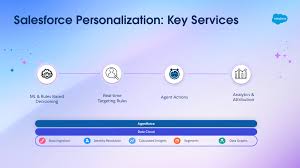
The Future of Hyper-Personalization: Salesforce’s AI-Powered Revolution From Static Campaigns to Real-Time Individualization In today’s digital interaction world, 73% of customers expect companies to understand their unique needs (based on Salesforce Research). Salesforce is answering this demand with a transformative approach to personalization, blending AI, real-time data, and cross-channel orchestration into a seamless system. The Future of Hyper-Personalization is here! The Evolution of Salesforce Personalization From Evergage to AI-Native: A Timeline Key Limitations of Legacy Solutions Introducing Salesforce Personalization: AI at the Core 3 Breakthrough Capabilities How It Works: The Technical Magic Core Components Head-to-Head: Legacy vs. Next-Gen Feature Marketing Cloud Personalization Salesforce Personalization AI Foundation Rules-based Generative + Predictive Data Source Primarily 1st-party Unified (1st/2nd/3rd-party) Channel Coverage Web-centric Omnichannel Setup Complexity High (IT-dependent) Low-code Optimization Manual A/B testing Autonomous AI Proven Impact: Early Results Implementation Roadmap For New Adopters For Existing Marketing Cloud Personalization Users The Future Vision Salesforce is advancing toward: “We’re moving from ‘right message, right time’ to ‘right message before they ask’”— Salesforce CPO Your Next Steps “The last decade was about collecting customer data. This decade is about activating it with intelligence.” Like Related Posts Who is Salesforce? Who is Salesforce? Here is their story in their own words. From our inception, we’ve proudly embraced the identity of Read more Salesforce Marketing Cloud Transactional Emails Salesforce Marketing Cloud Transactional Emails are immediate, automated, non-promotional messages crucial to business operations and customer satisfaction, such as order Read more Salesforce Unites Einstein Analytics with Financial CRM Salesforce has unveiled a comprehensive analytics solution tailored for wealth managers, home office professionals, and retail bankers, merging its Financial Read more AI-Driven Propensity Scores AI plays a crucial role in propensity score estimation as it can discern underlying patterns between treatments and confounding variables Read more

Read More
Whoever cracks reliable, scalable atomic power first could gain an insurmountable edge in the AI arms race.

The Nuclear Power Revival

The Nuclear Power Revival: How Big Tech is Fueling AI with Small Modular Reactors From Meltdowns to Megawatts: Nuclear’s Second Act Following two catastrophic nuclear accidents—Three Mile Island (1979) and Chernobyl (1986)—public trust in atomic energy plummeted. But today, an unlikely force is driving its resurgence: artificial intelligence. As generative AI explodes in demand, tech giants face an unprecedented energy crisis. Data centers, already consuming 2-3% of U.S. electricity, could devour 9% by 2030 (Electric Power Research Institute). With aging power grids struggling to keep up, cloud providers are taking matters into their own hands—by turning to small modular reactors (SMRs). Why AI Needs Nuclear Power The Energy Crisis No One Saw Coming Enter Small Modular Reactors (SMRs) The global SMR market for data centers is projected to hit 8M by 2033, growing at 48.72% annually (Research and Markets). The Big Four Tech Players Going Nuclear 1. Microsoft: Reviving Three Mile Island 2. Google: Betting on Next-Gen SMRs 3. Amazon: Three-Pronged Nuclear Push 4. Oracle: Plans Under Wraps The Startups Building Tomorrow’s Nuclear Tech Company Backer/Notable Feature Innovation Oklo Sam Altman (OpenAI) Rural SMRs targeting 2027 launch TerraPower Bill Gates Sodium-cooled fast reactors NuScale First U.S.-approved SMR design Factory-built, modular light-water reactors Last Energy 80+ microreactors planned in Europe/Texas 20MW units for data centers Deep Atomic Swiss startup MK60 reactor with dedicated cooling power Valar Atomics “Gigasite” assembly lines On-site SMR production Newcleo Lead-cooled fast reactors Higher safety via liquid metal cooling Challenges Ahead The Bottom Line As AI’s hunger for power grows exponentially, Big Tech is bypassing traditional utilities to build its own nuclear future. While risks remain, SMRs offer a scalable, clean solution—potentially rewriting energy economics in the AI era. The race is on: Whoever cracks reliable, scalable atomic power first could gain an insurmountable edge in the AI arms race. Like Related Posts Who is Salesforce? Who is Salesforce? Here is their story in their own words. From our inception, we’ve proudly embraced the identity of Read more Salesforce Unites Einstein Analytics with Financial CRM Salesforce has unveiled a comprehensive analytics solution tailored for wealth managers, home office professionals, and retail bankers, merging its Financial Read more AI-Driven Propensity Scores AI plays a crucial role in propensity score estimation as it can discern underlying patterns between treatments and confounding variables Read more Tectonic’s Successful Salesforce Track Record Salesforce Technology Services Integrator – Tectonic has successfully delivered Salesforce in a variety of industries including Public Sector, Hospitality, Manufacturing, Read more

Read More
Salesforce Einstein SDR and Sales Coach Agents

Four Consumer Personas Driving Demand for AI Agents

Salesforce Research: Four Consumer Personas Driving Demand for AI Agents AI agents are transforming not just workplaces but everyday life—and consumers are eager to embrace them. According to a new Salesforce survey of 2,552 U.S. adults, four distinct personality types are shaping demand for agentic AI: “Consumer expectations for AI are as diverse as the people using it,” said Vala Afshar, Chief Digital Evangelist at Salesforce. “Brands that align AI agents with these personas will unlock powerful new ways to engage customers.” Why It Matters With 88% of consumers saying experience is as crucial as product quality, AI agents are set to raise the bar—delivering proactive, personalized, and conversational interactions. Businesses must adapt or risk falling behind. Meet the Four AI Agent Personas 1. The Smarty Pants (43%) – The Informed Decision-Maker 2. The Minimalist (22%) – The Simplicity Seeker 3. The Life-Hacker (16%) – The Efficiency Expert 4. The Tastemaker (15%) – The Curated Connoisseur The Business Imperative AI agents aren’t just a tech trend—they’re becoming a customer expectation. Companies that tailor AI experiences to these personas will win loyalty in an increasingly competitive landscape. “The future of AI isn’t one-size-fits-all,” said Afshar. “Brands need to map their AI strategies to real consumer needs—whether that’s efficiency, simplicity, personalization, or informed choices.” Methodology: Salesforce, in partnership with YouGov, surveyed 2,552 U.S. adults (18+) from April 3-7, 2025. Like Related Posts Who is Salesforce? Who is Salesforce? Here is their story in their own words. From our inception, we’ve proudly embraced the identity of Read more Salesforce Marketing Cloud Transactional Emails Salesforce Marketing Cloud Transactional Emails are immediate, automated, non-promotional messages crucial to business operations and customer satisfaction, such as order Read more Salesforce Unites Einstein Analytics with Financial CRM Salesforce has unveiled a comprehensive analytics solution tailored for wealth managers, home office professionals, and retail bankers, merging its Financial Read more AI-Driven Propensity Scores AI plays a crucial role in propensity score estimation as it can discern underlying patterns between treatments and confounding variables Read more

Read More
Salesforce’s AI Evolution

AI-Powered Sales Enablement

AI-Powered Sales Enablement: The Future of High-Performance Selling The AI Revolution in Sales Artificial intelligence is fundamentally transforming sales organizations, with adoption rates skyrocketing 76% since 2018. Top-performing sales teams are 2.8X more likely to leverage AI than underperformers, and for good reason – AI-powered enablement delivers measurable results: 5 Game-Changing AI Applications for Sales Teams 1. Intelligent Content Delivery The Problem: 73% of sales content goes unused because reps can’t find it during critical moments. AI Solution: Context-aware AI agents surface battlecards, case studies and competitive intelligence in real-time during calls based on: Impact: Deere & Company reduced sales cycles by 22% after implementing AI-powered content recommendations. 2. Conversational Intelligence The Problem: 68% of deals stall due to poor discovery and misaligned follow-ups. AI Solution: NLP-powered tools that: Impact: SAP saw 31% more deals progressing to next stages after implementation. 3. Predictive Deal Guidance The Problem: Complex B2B deals often veer off course without visibility. AI Solution: AI that: Impact: A Fortune 500 tech firm increased win rates by 19% using predictive deal scoring. 4. Automated Coaching The Problem: Only 26% of sales training is applied on the job. AI Solution: Personalized coaching platforms that: Impact: Cisco reduced new hire ramp time by 40% with AI coaching. 5. Marketing-Sales Feedback Loop The Problem: 82% of marketing content misses the mark for sales teams. AI Solution: AI that: Impact: A SaaS company improved content ROI by 300% with AI-driven insights. Implementing AI for Maximum Impact Getting Started Critical Success Factors The Future of AI in Sales As generative AI matures, we’ll see: “The sales organizations that will dominate this decade aren’t those with the most reps, but those that best leverage AI to amplify human potential.” – Gartner Sales Practice Ready to transform your sales enablement? Contact Tectonic today! Like Related Posts Who is Salesforce? Who is Salesforce? Here is their story in their own words. From our inception, we’ve proudly embraced the identity of Read more Salesforce Marketing Cloud Transactional Emails Salesforce Marketing Cloud Transactional Emails are immediate, automated, non-promotional messages crucial to business operations and customer satisfaction, such as order Read more Salesforce Unites Einstein Analytics with Financial CRM Salesforce has unveiled a comprehensive analytics solution tailored for wealth managers, home office professionals, and retail bankers, merging its Financial Read more AI-Driven Propensity Scores AI plays a crucial role in propensity score estimation as it can discern underlying patterns between treatments and confounding variables Read more

Read More
gettectonic.com