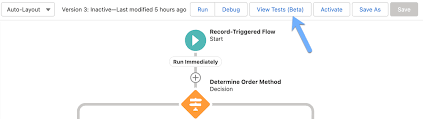
Deploying Salesforce Flow tests is not just about hitting “go” and hoping for the best. It requires more than simply moving automations from a Sandbox environment to production. Successful deployment demands thoughtful planning and attention to detail. In this post, we’ll dive deeper into deploying Flow tests effectively, covering key factors like independent testing and ensuring environment consistency. Building on our ongoing series, we’ll provide practical insights to help you achieve smooth deployments and reliable test execution.
Key Considerations for Deploying Flow Tests
- Independent Testing: Flow tests don’t run automatically after deployment; they must be executed manually. Plan time to run these tests post-deployment to ensure everything functions as expected.
- Separate Deployment: Flow tests must be deployed independently from the Flows themselves. Ensure both are included in your deployment process.
- Environment Consistency: Verify that all related data, custom fields, objects, and necessary settings are present in the target environment to avoid issues during test execution.
- Versioning: If a Flow is updated, its tests may need to be reviewed and adjusted to match the new version, ensuring alignment and proper functionality.
- Post-Deployment Checks: After deployment, thoroughly check that the Flow operates correctly in the new environment. This includes manually running Flow tests and reviewing any issues in execution.
Steps to Deploy Flow Tests Using Change Sets
- Prepare Your Flow and Flow Tests:
- Before deployment, thoroughly test your Flow and associated Flow tests in your development or sandbox environment. Test as many scenarios as possible to ensure robust coverage.
- Create a Change Set:
- In Salesforce Setup, navigate to Outbound Change Sets under deployment settings.
- Create a new change set and add your Flow. You can find Flows under the component type ‘Flow Definition.’
- Add the corresponding Flow tests listed under the component type ‘Flow Test.’
- Include any related Apex tests to ensure they pass successfully in your development environment.
- Upload the Change Set:
- After adding the Flow and Flow tests, upload the change set to your target environment, whether it’s production or another sandbox.
- Validate and Deploy the Change Set:
- In the target environment, navigate to Inbound Change Sets, select the change set, and validate it to check for deployment errors.
- If validation is successful, proceed with deploying the change set.
- Open Flow Builder and run the Flow tests manually to ensure everything works as expected.
Final Thoughts
Deploying Flow tests effectively is critical for maintaining the integrity of your automations across environments. Skipping the testing phase is like driving with a blindfold—one mistake could disrupt your workflows and cause chaos in critical processes. By following these guidelines, particularly focusing on independent testing and post-deployment checks, you can help ensure your Salesforce Flows continue to operate smoothly.
Stay tuned for future insights for Flownatics where we’ll dive into more advanced aspects of Flow tests, helping you further optimize your Salesforce automation processes.
Need more advice on testing your automations in Salesforce? Let’s chat!

Who is Salesforce? Here is their story in their own words. From our inception, we've proudly embraced the identity of Read more

Salesforce Marketing Cloud Transactional Emails are immediate, automated, non-promotional messages crucial to business operations and customer satisfaction, such as order Read more

Salesforce has unveiled a comprehensive analytics solution tailored for wealth managers, home office professionals, and retail bankers, merging its Financial Read more
AI plays a crucial role in propensity score estimation as it can discern underlying patterns between treatments and confounding variables Read more