Artificial Intelligence Archives - gettectonic.com - Page 9

Where Does AI Fit in Healthcare?

AI in Healthcare: Weighing the Promise Against the Pitfalls The rise of artificial intelligence in healthcare has been meteoric—sparking both enthusiasm and apprehension. From diagnosing diseases faster than human clinicians to parsing mountains of unstructured EHR data, AI’s potential seems limitless. But as adoption accelerates, so do concerns about privacy, ethics, and the risk of over-reliance on machines. Here’s a balanced look at the key benefits and challenges shaping AI’s role in modern medicine. The Case for AI: Efficiency, Insight, and Support 1. Reducing Clinician Burnout 2. Enhancing Diagnostics and Population Health 3. Restoring the Human Touch The Risks: Job Disruption, Bias, and Privacy Threats 1. Workforce Anxiety 2. Data Privacy and Security 3. Ethical Quagmires Navigating the Future: Collaboration Over Conflict The path forward demands guardrails, not gridlock: As National Academy of Medicine warns: “Unanswered questions aren’t a reason to stall—they’re a call to innovate responsibly.” The Bottom Line AI won’t replace doctors, but it will redefine their workflows. The stakes? Better care versus broken trust. Success hinges on balancing three imperatives: “The best healthcare AI doesn’t act alone—it empowers the people who heal.” Key Stats to Watch: Where do you stand? Is AI healthcare’s savior—or its next crisis? Content updated March 2025. Like Related Posts Who is Salesforce? Who is Salesforce? Here is their story in their own words. From our inception, we’ve proudly embraced the identity of Read more Salesforce Unites Einstein Analytics with Financial CRM Salesforce has unveiled a comprehensive analytics solution tailored for wealth managers, home office professionals, and retail bankers, merging its Financial Read more AI-Driven Propensity Scores AI plays a crucial role in propensity score estimation as it can discern underlying patterns between treatments and confounding variables Read more Tectonic’s Successful Salesforce Track Record Salesforce Technology Services Integrator – Tectonic has successfully delivered Salesforce in a variety of industries including Public Sector, Hospitality, Manufacturing, Read more

Read More

Enterprise AI

Enterprise AI: Revolutionizing Business Operations for a Competitive Edge Enterprise AI refers to the suite of advanced artificial intelligence technologies—such as machine learning, natural language processing (NLP), robotics, and computer vision—that organizations use to transform operations, enhance efficiency, and gain a competitive advantage. These technologies demand high-quality data, skilled expertise, and adaptability to rapid advancements. Businesses increasingly adopt enterprise AI because of its ability to automate critical processes, reduce costs, optimize operations, and enable data-driven decision-making. According to McKinsey’s 2024 report, 72% of organizations now integrate AI into their operations, a significant increase from 50% just six years ago. However, implementing AI presents challenges, such as employee mistrust, data biases, lack of explainability, and managing AI’s fast evolution. Successful adoption requires aligning AI initiatives with organizational goals, fostering data trust, and building internal expertise. This guide provides a strategic roadmap for embracing enterprise AI, covering foundational concepts, advanced use cases, and ways to navigate common pitfalls. Why AI Matters in the Enterprise Enterprise AI is a transformative force, similar to how the internet revolutionized global businesses. By integrating AI into their operations, organizations can achieve: AI-driven applications are reshaping industries by enabling hyper-personalized customer experiences, optimizing supply chains, and automating repetitive tasks to free employees for higher-value contributions. The rapid pace of AI innovation requires leaders to consistently re-evaluate its alignment with their strategies while maintaining effective data management and staying informed on evolving tools and regulations. AI’s Transformational Impact on Business AI’s potential is as groundbreaking as electrification in the 20th century. Its immediate influence lies in automating tasks and augmenting human workflows. For example: Generative AI tools like ChatGPT and Copilot further accelerate adoption by automating creative and intellectual tasks. Key Benefits of Enterprise AI Challenges of Enterprise AI Despite its benefits, AI adoption comes with hurdles: Ethical concerns, such as workforce displacement and societal impacts, also demand proactive strategies. AI and Big Data: A Symbiotic Relationship AI thrives on large, high-quality datasets, while big data analytics leverage AI to extract deeper insights. The rise of cloud computing amplifies this synergy, enabling scalable, cost-effective AI deployments. Evolving AI Use Cases AI continues to redefine industries, turning complex tasks into routine operations: Future AI Trends to Watch Building the Future with Responsible AI As AI advances, organizations must prioritize responsible AI practices, balancing innovation with ethical considerations. Developing robust frameworks for transparency and governance is essential to maintaining trust and fostering sustainable growth. AI’s future offers vast opportunities for businesses willing to adapt and innovate. By aligning AI initiatives with strategic goals and investing in robust ecosystems, enterprises can unlock new efficiencies, drive innovation, and lead in their industries. Like Related Posts Who is Salesforce? Who is Salesforce? Here is their story in their own words. From our inception, we’ve proudly embraced the identity of Read more Salesforce Marketing Cloud Transactional Emails Salesforce Marketing Cloud Transactional Emails are immediate, automated, non-promotional messages crucial to business operations and customer satisfaction, such as order Read more Salesforce Unites Einstein Analytics with Financial CRM Salesforce has unveiled a comprehensive analytics solution tailored for wealth managers, home office professionals, and retail bankers, merging its Financial Read more AI-Driven Propensity Scores AI plays a crucial role in propensity score estimation as it can discern underlying patterns between treatments and confounding variables Read more


Read More
Natural Language Processing Explained

Natural Language Processing Explained

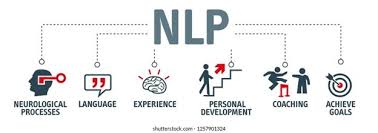
What is Natural Language Processing (NLP)? Natural Language Processing (NLP) is a branch of artificial intelligence (AI) that enables computers to interpret, analyze, and generate human language. By leveraging machine learning, computational linguistics, and deep learning, NLP helps machines understand written and spoken words, making communication between humans and computers more seamless. I apologize folks. I am feeling like the unicorn who missed the Ark. Tectonic has been providing you with tons of great material on artificial intelligence, but we left out a basic building block. Without further ado, Natural Language Processing Explained. Like a lot of components of AI, we often are using it without knowing we are using it. NLP is widely used in everyday applications such as: How Does NLP Work? Natural Language Processing combines several techniques, including computational linguistics, machine learning, and deep learning. It works by breaking down language into smaller components, analyzing these components, and then drawing conclusions based on patterns. If you have ever read a first grader’s reading primer it is the same thing. Learn a little three letter word. Recognize the meaning of the word. Understand it in the greater context of the sentence. Key NLP preprocessing steps include: Why Is NLP Important? NLP plays a vital role in automating and improving human-computer interactions by enabling systems to interpret, process, and respond to vast amounts of textual and spoken data. By automating tasks like sentiment analysis, content classification, and question answering, NLP boosts efficiency and accuracy across industries. For example: Key Use Cases of NLP in Business NLP Tasks NLP enables machines to handle various language tasks, including: Approaches to NLP Future of NLP NLP is becoming more integral in daily life as technology improves. From customer service chatbots to medical record summarization, NLP continues to evolve, but challenges remain, including improving coherence and reducing biases in machine-generated text. Essentially, NLP transforms the way machines and humans interact, making technology more intuitive and accessible across a range of industries. By Tectonic Solutions Architect – Shannan Hearne Like1 Related Posts Who is Salesforce? Who is Salesforce? Here is their story in their own words. From our inception, we’ve proudly embraced the identity of Read more Salesforce Unites Einstein Analytics with Financial CRM Salesforce has unveiled a comprehensive analytics solution tailored for wealth managers, home office professionals, and retail bankers, merging its Financial Read more AI-Driven Propensity Scores AI plays a crucial role in propensity score estimation as it can discern underlying patterns between treatments and confounding variables Read more Tectonic’s Successful Salesforce Track Record Salesforce Technology Services Integrator – Tectonic has successfully delivered Salesforce in a variety of industries including Public Sector, Hospitality, Manufacturing, Read more
Read More
Ethical AI Implementation

Ethical AI Implementation

AI technologies are rapidly evolving, becoming a practical solution to support essential business operations. However, creating true business value from AI requires a well-balanced approach that considers people, processes, and technology. Ethical AI Implementation. AI encompasses various forms, including machine learning, deep learning, predictive analytics, natural language processing, computer vision, and automation. To leverage AI’s competitive advantages, companies need a strong foundation and a realistic strategy aligned with their business goals. “Artificial intelligence is multifaceted,” said John Carey, managing director at AArete, a business management consultancy. “There’s often hype and, at times, exaggeration about how ‘intelligent’ AI truly is.” Business Advantages of AI Adoption Recent advancements in generative AI, such as ChatGPT and Dall-E, have showcased AI’s significant impact on businesses. According to a McKinsey Global Survey, global AI adoption surged from around 50% over the past six years to 72% in 2024. Some key benefits of adopting AI include: Prerequisites for AI Implementation Successfully implementing AI can be complex. A detailed understanding of the following prerequisites is crucial for achieving positive results: 13 Steps for Successful AI Implementation Common AI Implementation Mistakes Organizations often stumble by: Key Challenges in Ethical AI Implementation Human-related challenges often present the biggest hurdles. To overcome them, organizations must foster data literacy and build trust among stakeholders. Additionally, challenges around data management, model governance, system integration, and intellectual property need to be addressed. Ensuring Ethical AI Implementation To ensure responsible AI use, companies should: Ethical AI implementation requires a continuous commitment to transparency, fairness, and inclusivity across all levels of the organization. Like Related Posts Who is Salesforce? Who is Salesforce? Here is their story in their own words. From our inception, we’ve proudly embraced the identity of Read more Salesforce Marketing Cloud Transactional Emails Salesforce Marketing Cloud Transactional Emails are immediate, automated, non-promotional messages crucial to business operations and customer satisfaction, such as order Read more Salesforce Unites Einstein Analytics with Financial CRM Salesforce has unveiled a comprehensive analytics solution tailored for wealth managers, home office professionals, and retail bankers, merging its Financial Read more AI-Driven Propensity Scores AI plays a crucial role in propensity score estimation as it can discern underlying patterns between treatments and confounding variables Read more

Read More
AI Revolution in Government

AI Revolution in Government

The AI Revolution in Government: Unlocking Efficiency and Public Trust As the AI boom accelerates, it’s essential to explore how artificial intelligence can streamline operations for government and public sector organizations. From enhancing data processing to bolstering cybersecurity and improving public planning, AI has the potential to make government services more efficient and effective for both agencies and constituents. AI Revolution in Government. The Role of AI in Public Sector Efficiency AI presents significant opportunities for government agencies to optimize their operations. By integrating AI-driven tools, public agencies can improve service delivery, boost efficiency, and foster greater trust between the public and private sectors. However, with these advancements comes the challenge of bridging the AI skills gap — a pressing concern as organizations ramp up investments in AI without enough trained professionals to support its deployment. According to a survey by SAS, 63% of decision-makers across various sectors, including government, believe they lack the AI and machine learning resources necessary to keep pace with the growing demand. This skills gap, combined with rapid AI adoption, has many workers concerned about the future of their jobs. Predictions from Goldman Sachs suggest that AI could replace 300 million full-time jobs globally, affecting nearly one-fifth of the workforce, particularly in fields traditionally considered automation-proof, such as administrative and legal professions. Despite concerns about job displacement, AI is also expected to create new roles. The World Economic Forum’s Future of Jobs Report estimates that 75% of companies plan to adopt AI, with 50% anticipating job growth. This presents a crucial opportunity for government organizations to upskill their workforce and ensure they are prepared for the changes AI will bring. Preparing for an AI-Driven Future in Government To fully harness the benefits of AI, public sector organizations must first modernize their data infrastructure. Data modernization is a key step in setting up a future-ready organization, allowing AI to operate effectively by leveraging accurate, connected, and real-time data. As AI automates lower-level tasks, government workers need to transition into more strategic roles, making it essential to invest in AI training and upskilling programs. AI Applications in GovernmentAI is already transforming various government functions, improving operations, and meeting the needs of citizens more effectively. The possibilities are vast: While AI holds immense potential, its successful adoption depends on having a digital-ready workforce capable of managing these applications. Yet, many government employees lack the data science and AI expertise needed to manage large citizen data sets and develop AI models that can improve service delivery. Upskilling the Government Workforce for AI Investing in AI education is critical to ensuring that government employees can meet the demands of the future. Countries like Finland and Singapore have already launched national AI training programs to prepare their populations for the AI-driven economy. For example, Finland’s “Elements of AI” program introduced AI basics to the public and has been completed by over a million people worldwide. Similarly, AI Singapore’s “AI for Everyone” initiative equips individuals and organizations with AI skills for social good. In the U.S., legislation is being considered to create an AI training program for federal supervisors and management officials, helping government leaders navigate the risks and benefits of AI in alignment with agency missions. The Importance of Trust and Data Security As public sector organizations embrace AI, trust is a critical factor. AI tools are only as effective as the data they rely on, and ensuring data integrity, security, and ethical use is paramount. The rise of the Chief Data Officer highlights the growing importance of managing and protecting government data. These roles not only oversee data management but also ensure that AI technologies are used responsibly, maintaining public trust and safeguarding privacy. By modernizing data systems and equipping employees with AI skills, government organizations can unlock the full potential of AI and automation. This transformation will help agencies better serve their communities, enhance efficiency, and build lasting trust with the people they serve. The Future of AI in Government The future of AI in government is bright, but organizations must take proactive steps to prepare for it. By unifying and securing their data, investing in AI training, and focusing on ethical AI deployment, public sector agencies can harness AI’s power to drive meaningful change. Ultimately, this is an opportunity for the public sector to improve service delivery, support their workforce, and build stronger connections with citizens. Like Related Posts Who is Salesforce? Who is Salesforce? Here is their story in their own words. From our inception, we’ve proudly embraced the identity of Read more Salesforce Unites Einstein Analytics with Financial CRM Salesforce has unveiled a comprehensive analytics solution tailored for wealth managers, home office professionals, and retail bankers, merging its Financial Read more AI-Driven Propensity Scores AI plays a crucial role in propensity score estimation as it can discern underlying patterns between treatments and confounding variables Read more Tectonic’s Successful Salesforce Track Record Salesforce Technology Services Integrator – Tectonic has successfully delivered Salesforce in a variety of industries including Public Sector, Hospitality, Manufacturing, Read more

Read More
Generative AI for Match Commentary

Generative AI for Match Commentary

SAN FRANCISCO (KGO) — Companies are exploring the use of artificial intelligence for sports commentary, showcasing one of the many innovative applications of this technology in the sports arena. ABC7 reporter J.R. Stone recently got a firsthand look at IBM’s integration of Generative AI to analyze and enhance playing abilities during a demonstration at Dreamforce 2024 in San Francisco. This same technology has also been implemented at prestigious events like Wimbledon and the US Open. “This year marks the introduction of Generative AI for match commentary, which utilizes data collected during the games to create real-time analysis and match summaries,” explained Nick Otto from IBM. In a related segment, Salesforce CEO Marc Benioff revealed a new AI system called “Agent Force,” while Senator Scott Wiener introduced a bill focused on AI safety. The AI tracks various metrics, including average ball and swing speeds, as well as performance on forehand and backhand shots. To put the technology to the test, Stone faced off against Otto in a ping-pong match, where Otto emerged victorious with a score of 11-7. After the match, the AI generated an entertaining summary: “Nick’s arm must have felt like a whirlwind, spinning the ball at an average speed of 8.45 mph. J.R. tried to keep up, but his 30 forehand shots and 5.56 mph swing speed were no match.” While the advancements in AI are exciting, UCLA Professor Ramesh Srinivasan emphasizes the need for caution. “This technology is both incredible and concerning because it raises questions about the future of human journalists and commentators,” he noted. Like Related Posts Who is Salesforce? Who is Salesforce? Here is their story in their own words. From our inception, we’ve proudly embraced the identity of Read more Salesforce Marketing Cloud Transactional Emails Salesforce Marketing Cloud Transactional Emails are immediate, automated, non-promotional messages crucial to business operations and customer satisfaction, such as order Read more Salesforce Unites Einstein Analytics with Financial CRM Salesforce has unveiled a comprehensive analytics solution tailored for wealth managers, home office professionals, and retail bankers, merging its Financial Read more AI-Driven Propensity Scores AI plays a crucial role in propensity score estimation as it can discern underlying patterns between treatments and confounding variables Read more

Read More
Marketing Cloud and Generative AI

Marketing Cloud and Generative AI

Generative AI and Salesforce: Revolutionizing Digital Marketing with Einstein AI Generative AI is a form of Artificial Intelligence that learns from existing content to generate new, creative outputs. Salesforce has long been at the forefront of AI innovation, primarily through its Einstein assistant, which has evolved to offer increasingly sophisticated solutions over time. Artificial Intelligence: Key Concepts Before diving into Salesforce’s AI capabilities, let’s clarify some foundational concepts. Artificial Intelligence (AI) refers to the creation of intelligent systems that can learn and reason autonomously. Within AI, Machine Learning (ML) plays a crucial role by enabling computers to learn from data and improve over time without explicit programming. ML models fall into two broad categories: Deep Learning and Neural Networks A more advanced subset of ML is Deep Learning, which uses neural networks to process large amounts of data and make autonomous decisions. Deep Learning powers technologies like voice assistants (e.g., Alexa or Siri), which can recognize speech and execute tasks. A specific application within Deep Learning is Generative AI, capable of autonomously creating new content based on learned patterns from vast datasets. Another critical AI system is the Foundational Model, which is trained on enormous amounts of unstructured data from across the web, including text, images, and videos. These models offer a wide range of capabilities, such as generating text, answering questions, creating designs, or solving complex problems. Salesforce Marketing Cloud and AI Salesforce has utilizeded AI through its Einstein platform, which has evolved over time to offer a variety of data-driven tools. For example, Sent Time Optimization uses customer data to determine the best time to send emails to maximize engagement. AI Tools in Salesforce Marketing Cloud Salesforce offers several AI-powered tools for Marketing Cloud to help businesses leverage data for personalization and efficiency: The Einstein Trust Layer: AI in Salesforce CRM Einstein is the first generative AI model integrated into a CRM, and Salesforce refers to its AI process as the Einstein Trust Layer. Here’s how it works: Marketing Applications of Salesforce AI Tools Salesforce’s AI tools can be applied across omnichannel marketing campaigns to hyper-personalize communication, increasing conversion rates and customer engagement. Predictive analytics also allow businesses to optimize cross-selling and upselling, offering tailored product recommendations based on customer behavior. Chatbots powered by AI further enhance productivity by interacting in natural language, collecting leads, suggesting products, and resolving customer inquiries. Salesforce’s Commitment to AI in Digital Marketing Salesforce has been a pioneer in AI, continually expanding its capabilities through Einstein. With the latest AI tools for Marketing Cloud, businesses can now interact with customers more precisely, boost engagement, and optimize purchase predictions—paving the way for a new era in digital marketing. Like Related Posts Who is Salesforce? Who is Salesforce? Here is their story in their own words. From our inception, we’ve proudly embraced the identity of Read more Salesforce Marketing Cloud Transactional Emails Salesforce Marketing Cloud Transactional Emails are immediate, automated, non-promotional messages crucial to business operations and customer satisfaction, such as order Read more Salesforce Unites Einstein Analytics with Financial CRM Salesforce has unveiled a comprehensive analytics solution tailored for wealth managers, home office professionals, and retail bankers, merging its Financial Read more AI-Driven Propensity Scores AI plays a crucial role in propensity score estimation as it can discern underlying patterns between treatments and confounding variables Read more
Read More
Dreamforce 2024 Recap

Dreamforce 2024 Recap

Dreamforce 2024: How John Mulaney, Robot Dogs, and Relevant Programming Took Center StageWhile comedian John Mulaney made headlines at Dreamforce 2024 for playfully roasting Salesforce’s “Trailblazers,” the event was packed with moments that event organizers could learn from. Mulaney’s quips about the “imminently replaceable” workforce in “fleece vests” and his jab that the crowd seemed like “a group that looked at CVS self-checkout and thought, ‘This is the future,’” went viral, but the three-day conference was full of more than just comic relief. Key Takeaways for Event OrganizersDreamforce 2024 delivered a wealth of insights and strategies for anyone in event planning. Here are three lessons that stood out: 1. Stay Relevant with Programming and Attendee Preferences Dreamforce 2024 attracted 45,000 in-person attendees, filling San Francisco’s Moscone Center, thanks in large part to programming that resonated with business leaders’ current priorities—artificial intelligence. Salesforce packed the agenda with AI-focused content, featuring industry experts like Kevin Roose from The New York Times and Casey Newton from The Verge. A standout was the Agentforce Launch Zone, showcasing Salesforce’s new autonomous customer and employee support system. Instead of traditional demos, attendees were invited to create their own AI-powered robots, with 10,000 unique prototypes built on-site—each tailored to the specific needs of participants’ businesses. According to Salesforce, the process took only minutes, showcasing how AI can be embedded deeply into the customer journey. Personalization also took center stage this year, with Personalized Trail Maps allowing attendees to craft their own agendas based on their roles and interests. Dreamforce even introduced reserved seating for “deep learning sessions” and offered first-come, first-served options for larger sessions, like one featuring Matthew McConaughey and Jane Goodall discussing leadership and legacy. 2. Measure Economic Impact Dreamforce is not just a tech conference—it’s a major economic engine for San Francisco. Some key figures from this year’s event include: Tracking these numbers showcases the broader impact of Dreamforce, providing both an economic boost and environmental stewardship. 3. Simplify Where It Matters Even though Dreamforce is a massive event, organizers focused on making it feel approachable. Salesforce maintained its inclusive messaging, emphasizing that everyone—from new users to seasoned pros—was welcome. The “campground” theme for the trade show floor reinforced this, creating a casual, community-oriented environment. Aspirational elements, like a performance from Elton John and AI-driven robot dogs roaming the event, added a futuristic edge. These robot dogs, capable of search-and-rescue missions using infrared sensors, demonstrated the practical applications of AI in real-world scenarios. Yet, despite the high-tech flourishes, simple touchpoints like the Idea Wall—a physical bulletin board where attendees could post handwritten notes—showed that even large-scale events can include low-tech, engaging ways to foster conversation and creativity. Dreamforce also made sure the event reached a global audience through Salesforce+, its streaming platform Over 400 episodes are available online. While this year’s viewership numbers are still pending, millions of virtual attendees tuned in to previous Dreamforce events, and this year likely continued that trend, making the conference accessible to a global audience. For event planners, Dreamforce 2024 proved that staying relevant, tracking impact, and balancing high-tech with human touchpoints are the keys to creating a memorable and effective event. Like Related Posts Who is Salesforce? Who is Salesforce? Here is their story in their own words. From our inception, we’ve proudly embraced the identity of Read more Salesforce Marketing Cloud Transactional Emails Salesforce Marketing Cloud Transactional Emails are immediate, automated, non-promotional messages crucial to business operations and customer satisfaction, such as order Read more Salesforce Unites Einstein Analytics with Financial CRM Salesforce has unveiled a comprehensive analytics solution tailored for wealth managers, home office professionals, and retail bankers, merging its Financial Read more AI-Driven Propensity Scores AI plays a crucial role in propensity score estimation as it can discern underlying patterns between treatments and confounding variables Read more
Read More
Salesforce and Microsoft

Salesforce and Microsoft

Or is it Salesforce versus Microsoft? The Salesforce and Microsoft relationship is evolving. Or is it devolving? Earlier this year, Salesforce rebranded its Einstein Copilot to Agentforce. Following this change, co-founder and CEO Marc Benioff criticized Microsoft Copilot, comparing it to the outdated rules-based assistant “Clippy” from Microsoft Office in the 1990s and 2000s. Benioff’s critiques began on August 28 during the company’s latest quarterly earnings call, where he asserted that Microsoft customers have not seen value from their Copilot investments, referring to it as a “science project.” He reiterated his stance in his Dreamforce keynote, stating that Microsoft Copilot suffers from “a lack of context, skills, and adaptability.” This raises questions about Salesforce’s relationship with Microsoft. When directly asked, Benioff’s response was tinged with sarcasm: “Very good. I love them. They’re great. An impressive company.” He then recounted several of Microsoft’s historical competitive missteps, even referencing the U.S. government’s antitrust case against the company stemming from its battle with Netscape. Microsoft chose not to comment on this story. However, in response to Benioff’s criticisms following the late-August earnings call, Jared Spataro, Microsoft’s corporate vice president for artificial intelligence at work, highlighted that both internal and third-party metrics show a doubling of Copilot daily users in the previous quarter, along with a 60% increase in sales, indicating that Copilot adds value in the workplace. Salesforce reportedly serves about 150,000 customers, while Microsoft boasts an approximately 85% market penetration for productivity applications. This theoretically means that around 127,500 customers could integrate Microsoft 365 with Salesforce for email, calendar, tasks, and contact management. Salesforce claimed more than 25 million end users in 2022, suggesting that approximately 21.5 million users depend on collaboration between Salesforce and Microsoft for their systems to function effectively. “There’s always noise in the system,” said Ian Kahn, a principal at PwC and leader of the firm’s Salesforce practice. “Frankly speaking, I don’t think our clients care about it. You tune out the noise.” Rebecca Wettemann, founder of the research and advisory firm Valoir, noted that while she agrees with some of Benioff’s points—such as the underperformance of Copilots and limited customer deployment—many Salesforce customers are hosted on Microsoft’s Azure cloud. “You’ve got to play both sides,” Wettemann remarked. “You have to be on Azure because it’s one of the biggest public clouds, and people want to be there. But you also have to take potshots at Microsoft. That’s just how it works.” Salesforce’s AI tools are designed specifically for sales, service, marketing, and e-commerce, integrated within the company’s applications. Users can create agents in Slack, and there are many industry-specific tools tailored for different sectors. In contrast, Microsoft’s Copilots are more generalized and are embedded in various applications, featuring a no-code “wizard” interface to pull in data from multiple sources, including Salesforce. Microsoft recently added Copilot agents, AI assistants that automate and execute business processes. While there are similarities between Salesforce’s Agentforce and Microsoft’s Copilot, Benioff’s comparisons may not be entirely fair. Salesforce’s AI is more focused on service, sales, and marketing, whereas Microsoft targets productivity for office workers. That said, this kind of competitive banter is par for the course in the tech industry. As Wettemann pointed out, “If they didn’t make aggressive marketing claims, it wouldn’t be Dreamforce.” Like Related Posts Who is Salesforce? Who is Salesforce? Here is their story in their own words. From our inception, we’ve proudly embraced the identity of Read more Salesforce Marketing Cloud Transactional Emails Salesforce Marketing Cloud Transactional Emails are immediate, automated, non-promotional messages crucial to business operations and customer satisfaction, such as order Read more Salesforce Unites Einstein Analytics with Financial CRM Salesforce has unveiled a comprehensive analytics solution tailored for wealth managers, home office professionals, and retail bankers, merging its Financial Read more AI-Driven Propensity Scores AI plays a crucial role in propensity score estimation as it can discern underlying patterns between treatments and confounding variables Read more

Read More
Benefits of AI in Banking

Benefits of AI in Banking

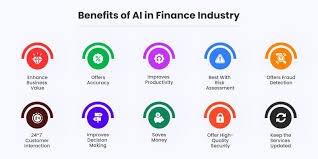
Artificial intelligence (AI) is rapidly gaining traction in the banking and finance sector, with generative AI (GenAI) emerging as a transformative force. Financial institutions are increasingly adopting AI technologies to automate processes, cut operational costs, and boost overall productivity, according to Sameer Gupta, North America Financial Services Organization Advanced Analytics Leader at EY. While traditional machine learning (ML) techniques are commonly used for fraud detection, loan approvals, and personalized marketing, banks are now advancing to incorporate more sophisticated technologies, including ML, natural language processing (NLP), and GenAI. Gupta notes that EY is observing a growing trend of banks using ML to enhance credit approvals, improve fraud detection, and refine marketing strategies, leading to greater efficiency and better decision-making. A recent survey by Gartner’s Jasleen Kaur Sindhu reveals that 58% of banking CIOs have either deployed or plan to deploy AI initiatives in 2024, with this number expected to rise to 77% by 2025. “This indicates not only the growing importance of AI but also its fundamental role in shaping how banks operate and deliver value to their customers,” Sindhu said. “AI is becoming essential to the success of banking institutions.” Here are five key benefits of AI applications in banking: Despite the benefits, concerns about AI in banking persist, particularly regarding data privacy, bias, and ethics. AI can inadvertently extract personal information and raise privacy issues. Regulatory challenges and the potential for AI systems to perpetuate biases are also major concerns. As AI technology evolves, banks are investing in robust governance frameworks, continuous monitoring, and adherence to ethical standards to address these risks. Looking ahead, AI is expected to revolutionize banking by delivering personalized services, enhancing customer interactions, and driving productivity. Deloitte forecasts that GenAI could boost productivity by up to 35% in the top 14 global investment banks, generating significant additional revenue per employee by 2026. Like Related Posts Who is Salesforce? Who is Salesforce? Here is their story in their own words. From our inception, we’ve proudly embraced the identity of Read more Salesforce Marketing Cloud Transactional Emails Salesforce Marketing Cloud Transactional Emails are immediate, automated, non-promotional messages crucial to business operations and customer satisfaction, such as order Read more Salesforce Unites Einstein Analytics with Financial CRM Salesforce has unveiled a comprehensive analytics solution tailored for wealth managers, home office professionals, and retail bankers, merging its Financial Read more AI-Driven Propensity Scores AI plays a crucial role in propensity score estimation as it can discern underlying patterns between treatments and confounding variables Read more

Read More
New Technology Risks

New Technology Risks

Organizations have always needed to manage the risks that come with adopting new technologies, and implementing artificial intelligence (AI) is no different. Many of the risks associated with AI are similar to those encountered with any new technology: poor alignment with business goals, insufficient skills to support the initiatives, and a lack of organizational buy-in. To address these challenges, executives should rely on best practices that have guided the successful adoption of other technologies, according to management consultants and AI experts. When it comes to AI, this includes: However, AI presents unique risks that executives must recognize and address proactively. Below are 15 areas of risk that organizations may encounter as they implement and use AI technologies: Managing AI Risks While the risks associated with AI cannot be entirely eliminated, they can be managed. Organizations must first recognize and understand these risks and then implement policies to mitigate them. This includes ensuring high-quality data for AI training, testing for biases, and continuous monitoring of AI systems to catch unintended consequences. Ethical frameworks are also crucial to ensure AI systems produce fair, transparent, and unbiased results. Involving the board and C-suite in AI governance is essential, as managing AI risk is not just an IT issue but a broader organizational challenge. Like Related Posts Who is Salesforce? Who is Salesforce? Here is their story in their own words. From our inception, we’ve proudly embraced the identity of Read more Salesforce Marketing Cloud Transactional Emails Salesforce Marketing Cloud Transactional Emails are immediate, automated, non-promotional messages crucial to business operations and customer satisfaction, such as order Read more Salesforce Unites Einstein Analytics with Financial CRM Salesforce has unveiled a comprehensive analytics solution tailored for wealth managers, home office professionals, and retail bankers, merging its Financial Read more AI-Driven Propensity Scores AI plays a crucial role in propensity score estimation as it can discern underlying patterns between treatments and confounding variables Read more
Read More
Agentic AI is Here

AI Agent Myths

Myths About AI Agents Agents will transform how we work, but separating fact from fiction is essential. AI agents are revolutionizing business operations, yet misconceptions persist about their capabilities and value. Understanding these myths—and the truth behind them—can help your organization unlock their potential. Myth #1: AI Agents Are Just Glorified Chatbots While chatbots and AI agents both use artificial intelligence, their functionality and complexity differ significantly. For instance, a chatbot might provide an overview of your sales metrics, but an AI agent can analyze those metrics, forecast demand, adjust inventory levels, update marketing strategies, and even notify suppliers—all proactively and autonomously. This leap in capability allows agents to optimize workflows, make strategic recommendations, and dynamically respond to changing conditions. They’re not just answering questions—they’re driving outcomes. Myth #2: They’re unpredictable and uncontrollablePopular culture often paints AI as rogue systems—think 2001: A Space Odyssey or The Terminator—but in reality, modern AI agents are designed with safety, trust, and precision at their core. The most effective agents today use advanced techniques to prevent errors and ensure their actions stay within strict boundaries. At the heart of this is a reasoning engine. This engine doesn’t just execute tasks—it creates action plans based on the user’s goals, evaluates those plans, and refines them by pulling data from customer relationship management (CRM) systems and other platforms. It then determines the correct processes to execute and iterates until the task is completed successfully, improving with each interaction. When tasks fall outside an organization’s predefined guardrails—like user permissions or compliance rules—the reasoning engine automatically flags the task and escalates it for human oversight. “Helping an agent perform accurately while understanding what it is not allowed to do is a complex task,” says Krishna Gandikota, Manager of Solution Engineering at Salesforce. “The reasoning engine plans and evaluates the AI’s approach before it takes any action. It also assesses whether it has the necessary skills and information to proceed.” This process is further enhanced by continuous learning, enabling agents to refine their decision-making and actions over time. Grounded in DataThe best agents are contextually aware, leveraging relevant, up-to-date information to perform tasks accurately. Techniques like retrieval-augmented generation (RAG) help by sourcing the most relevant data, while semantic search ensures that agents retrieve the latest and most accurate information. Salesforce’s Agentforce employs these methods using Data Cloud, which enables agents to access real-time data without physically copying or modifying it—thanks to zero-copy architecture. This ensures speed, accuracy, and compliance across all agent-driven actions. Myth #3: They’re complicated, time-consuming, and expensive to set upIt’s easy to assume that deploying AI agents would require months of integration work and millions of dollars, but that’s no longer the case. Advances in generative AI and large language models (LLMs) have drastically simplified the process. Agents can now be deployed in minutes with prebuilt topics—specific areas of focus—and actions for common tasks in customer service, sales, and commerce. For more tailored needs, low-code tools make it easy to create custom agents. Using natural language processing (NLP), you simply describe what the agent needs to do, and the system builds it for you. For instance, Agent Builder automatically suggests guardrails and resources based on the task description. By scanning an app’s metadata, it identifies semantically similar processes, creating a smarter, context-aware agent that aligns with your business operations. “All the sophistication is already built into the platform,” Gandikota explains. “The Einstein Trust Layer, reasoning engine, and vector database for RAG and semantic search work seamlessly. With this foundation, you can build a team of agents quickly and confidently.” Myth #4: They’re always fully autonomousAI agents don’t need to operate completely autonomously to deliver value. Their autonomy depends on the complexity of their tasks and the industry they serve. “Agents don’t always need to take actions autonomously,” Gandikota explains. “They’re designed to understand requests, assess whether they can proceed independently, and involve humans when necessary.” Myth #5: They won’t deliver real business valueSome businesses using generic AI tools haven’t seen the ROI they expected. That’s because generic AI isn’t tailored to specific business needs. AI agents, on the other hand, are purpose-built to perform specialized tasks with precision. Whether it’s nurturing sales leads, brainstorming marketing campaigns, or resolving service tickets, targeted AI agents excel at solving specific problems. Unlike generic AI, they don’t just provide insights—they take action, driving measurable outcomes. For example, educational publisher Wiley improved support case resolution by over 40% after adopting AI agents. By handling routine tasks, the agents freed up Wiley’s service teams to focus on more complex cases. Similarly, early adopters like OpenTable and ADP have reported significant improvements in customer satisfaction and efficiency. According to MarketsandMarkets, AI agents are driving demand for automation by enhancing decision-making, scalability, and efficiency. The global market for AI agents is expected to grow from .1 billion in 2024 to billion by 2030. The Bottom LineUnderstanding the myths—and realities—of AI agents is critical for business leaders. Misconceptions can lead to missed opportunities, while clarity around their capabilities can help organizations work smarter, faster, and more efficiently. With trusted, adaptable, and purpose-built agents, the future of business automation is already here. Like Related Posts Who is Salesforce? Who is Salesforce? Here is their story in their own words. From our inception, we’ve proudly embraced the identity of Read more Salesforce Marketing Cloud Transactional Emails Salesforce Marketing Cloud Transactional Emails are immediate, automated, non-promotional messages crucial to business operations and customer satisfaction, such as order Read more Salesforce Unites Einstein Analytics with Financial CRM Salesforce has unveiled a comprehensive analytics solution tailored for wealth managers, home office professionals, and retail bankers, merging its Financial Read more AI-Driven Propensity Scores AI plays a crucial role in propensity score estimation as it can discern underlying patterns between treatments and confounding variables Read more

Read More
AI Leader Salesforce

AI Leader Salesforce

Salesforce Is a Wild Mustang in the AI Race In the bustling world of artificial intelligence, Salesforce Inc. has emerged as an unsurpassed and true leader. “Salesforce?” one might wonder. The company known for its customer relationship management software? How can it be an AI leader if it is only focused on each department or division (or horse) is only focused on its own survival? AI Leader Salesforce. Herds of horses have structure, unique and important roles they each play. While they survival depends greatly on each members’ independece they must remain steadfast in the roles and responsibilities they carry to the entire herd. The lead stallion must be the protector. The lead mare must organize all the mothers and foals into obedient members of the herd. But they must all collaborate. AI Leader Salesforce To stay strong and competetive Salesforce is making bold strides in AI as well. Recently, the company became the first major tech firm to introduce a new class of generative AI tools known as “agents,” which have long been discussed by others but never fully realized. Unlike its competitors, Salesforce is upfront about how these innovative tools might impact employment. This audacious approach could be the key to propelling the company ahead in the AI race, particularly as newer players like OpenAI and Anthropic make their moves. Marc Benioff, Salesforce’s dynamic CEO, is driving this change. Known for his unconventional strategies that helped propel Salesforce to the forefront of the software-as-a-service (SaaS) revolution, Benioff has secured a client base that includes 90% of Fortune 500 companies, such as Walt Disney Co. and Ford Motor Co. Salesforce profits from subscriptions to applications like Sales Cloud and Service Cloud, which help businesses manage their sales and customer service processes. At the recent Dreamforce conference, Salesforce unveiled Agentforce, a new service that enables customers to deploy autonomous AI-powered agents. If Benioff himself is the alpha herd leader, Agentforce may well be the lead mare. Salesforce distinguishes itself by replacing traditional chatbots with these new agents. While chatbots, powered by technologies from companies like OpenAI, Google, and Anthropic, typically handle customer inquiries, agents can perform actions such as filing complaints, booking appointments, or updating shipping addresses. The notion of AI “taking action” might seem risky, given that generative models can sometimes produce erroneous results. Imagine an AI mishandling a booking. However, Salesforce is confident that this won’t be an issue. “Hallucinations go down to zero because [Agentforce] is only allowed to generate content from the sources you’ve trained it on,” says Bill Patterson, corporate strategy director at Salesforce. This approach is touted as more reliable than models that scrape the broader internet, which can include inaccurate information. Salesforce’s willingness to confront a typically sensitive issue — the potential job displacement caused by AI — is also noteworthy. Unlike other AI companies that avoid discussing the impact of cost-cutting on employment, Salesforce openly addresses it. For instance, education publisher John Wiley & Sons Inc. reported that using Agentforce reduced the time spent answering customer inquiries by nearly 50% over three months. This efficiency meant Wiley did not need to hire additional staff for the back-to-school season. In the herd, the leader must acknowledge some of his own offspring will have to join other herds, there is a genetic survival of the fittest factor. I would suspect Benioff will re-train and re-purpose as many of the Salesforce family as he can, rather than seeing them leave the herd. Benioff highlighted this in his keynote, asking, “What if you could surge your service organization and your sales organization without hiring more people?” That’s the promise of Agentforce. And what if? Imagine the herd leader having to be always the alpha, always on guard, always in protective mode. When does he slngeep, eat, rest, and recuperate? Definitely not by bringing in another herd leader. The two inevitably come to arms each excerting their dominance until one is run off by the other, to survive on his own. The herd leader needs to clone himself, create additional herd, or corporate, assets to help him do his job better. Enter the power behind Salesforce’s long history with Artificial Intelligence. The effectiveness of Salesforce’s tools in delivering a return on investment remains to be seen, especially as many businesses struggle to evaluate the success of generative AI. Nonetheless, Salesforce poses a significant challenge to newer firms like OpenAI and Anthropic, which have privately acknowledged their use of Salesforce’s CRM software. For many chief innovation officers, it’s easier to continue leveraging Salesforce’s existing platform rather than adopt new technologies. Like the healthiest of the band of Mustangs, the most skilled and aggressive will thrive and survive. Salesforce’s established presence and broad distribution put it in a strong position at a time when large companies are often hesitant to embrace new tech. Its fearless approach to job displacement suggests the company is poised to profit significantly from its AI venture. As a result, Salesforce may well become a formidable competitor in the AI world. Furthermore taking its own investment in AI education to new heights, one can believe that Salesforce has an eye on people and not just profits. Much like the lead stallion in a wild herd, Salesforce is protecting itself and its biggest asset, its people! By Tectonic’s Salesforce Solutions Architect, Shannan Hearne Like Related Posts Who is Salesforce? Who is Salesforce? Here is their story in their own words. From our inception, we’ve proudly embraced the identity of Read more Salesforce Marketing Cloud Transactional Emails Salesforce Marketing Cloud Transactional Emails are immediate, automated, non-promotional messages crucial to business operations and customer satisfaction, such as order Read more Salesforce Unites Einstein Analytics with Financial CRM Salesforce has unveiled a comprehensive analytics solution tailored for wealth managers, home office professionals, and retail bankers, merging its Financial Read more AI-Driven Propensity Scores AI plays a crucial role in propensity score estimation as it can discern underlying patterns between treatments and confounding variables Read more

Read More
gettectonic.com