
Commerce Archives - gettectonic.com - Page 15
Salesforce Data Cloud Explained

Salesforce Data Cloud Explained

Salesforce Data Cloud, previously recognized as Salesforce CDP/Genie, made its debut at Dreamforce 2022, hailed by Salesforce as one of the most significant innovations in the company’s history. A hyperscale data platform built into Salesforce. Activate all your customer data across Salesforce applications with Data Cloud. Data Cloud facilitates the intake and storage of real-time data streams on a massive scale, empowering automated tasks that result in highly personalized experiences. Data can be sourced from diverse Salesforce data outlets, including Mulesoft, Marketing Cloud, and others, along with customers’ proprietary applications and data sources. Subsequently, it can dynamically respond to this real-time data by automating actions across Salesforce CRM, Marketing Cloud, Commerce, and more, inclusive of automating actions through Salesforce Flow. What is the Salesforce data cloud? Data Cloud is the fastest growing organically built product in Salesforce’s history (i.e. Salesforce built it themselves, not via acquisitions). Data Cloud could be described as the ‘Holy Grail of CRM’, meaning that the data problem that’s existed since the infancy of CRM is now finally solvable. Data Cloud is the foundation that speeds up the connectivity between different ‘clouds’ across the platform. However, Data Cloud is also a product that can be purchased. While not all Salesforce customers have licensed Data Cloud, being at the foundation means they are still taking advantage of Data Cloud to a degree – but this all becomes even stronger with Data Cloud as a personalization and data unification platform. What is the history of Data Cloud? Salesforce has gone through several iterations with naming its CDP product: Customer 360 Audiences → Salesforce CDP → Marketing Cloud Customer Data Platform → Salesforce Genie → Salesforce Data Cloud. In some instances, changes were made because the name just didn’t stick – but what’s more important to note, is that some of the name changes were to indicate the significant developments that happened to the product. Salesforce Data Cloud Differentiators Data Cloud, in itself, is impressive. While many organizations would consider it expensive, if you were to flip the argument on its head, by buying your own data warehouse, building the star schema, and paying for ongoing compute storage, you’d be looking to spend 5 to 10 times more than what Salesforce is charging for Data Cloud. Plus, data harmonization works best when your CRM data is front and center. There are other key differentiators that helps Data Cloud to stand out from the crowd: Is data cloud a data lakehouse? That means that Data Cloud is now not just a really good CDP, it’s now a data lake which will be used in sales and service use cases. But it also means that we can start to fundamentally move some of our higher-scale consumer products like Marketing and Commerce onto the platform. Is Snowflake a data Lakehouse? Snowflake offers customers the ability to ingest data to a managed repository, in what’s commonly referred to as a data warehouse architecture, but also gives customers the ability to read and write data in cloud object storage, functioning as a data lake query engine. What is the benefit of Salesforce data cloud? Data Cloud empowers Salesforce Sales Cloud with AI capabilities and automation that quickly closes deals and boosts productivity across every channel. It drives customer data from all the touchpoints and unifies it separately in individual customer profiles. Salesforce Data Cloud is a powerful data warehouse solution that allows companies to effectively manage and analyze their data. What is the difference between Salesforce CDP and data lake? Talking abut Salesforce CDP is a little bit like a history lesson. While a CDP provides a unified, structured view of customer data, a data lake, on the other hand, is more of a raw, unstructured storage repository that holds a vast amount of data (more than just customer data) in its native format until it’s needed. Like1 Related Posts Who is Salesforce? Who is Salesforce? Here is their story in their own words. From our inception, we’ve proudly embraced the identity of Read more Salesforce Marketing Cloud Transactional Emails Salesforce Marketing Cloud Transactional Emails are immediate, automated, non-promotional messages crucial to business operations and customer satisfaction, such as order Read more Salesforce Unites Einstein Analytics with Financial CRM Salesforce has unveiled a comprehensive analytics solution tailored for wealth managers, home office professionals, and retail bankers, merging its Financial Read more AI-Driven Propensity Scores AI plays a crucial role in propensity score estimation as it can discern underlying patterns between treatments and confounding variables Read more

Read More
Salesforce Experience Cloud

Nonprofit with Salesforce Experience Cloud

Transform Your Nonprofit with Salesforce Experience Cloud: A Digital Storefront for Engagement Think of Salesforce Experience Cloud as your Nonprofit’s digital storefront—always open, always inviting. This powerful Digital Experience Platform (DXP) enables you to create custom portals, communities, and hubs where donors, volunteers, and beneficiaries can seamlessly connect with your organization. Instead of juggling endless emails and spreadsheets, Experience Cloud centralizes interactions, making them self-service, intuitive, and engaging. With nonprofit-specific features, you can build customized, branded experiences without heavy development work. Here’s what makes Experience Cloud a game-changer: ✅ Drag-and-drop site builder for effortless customization✅ Prebuilt templates & Lightning components for quick deployment✅ Mobile Publisher for consistent branding across mobile apps✅ Built-in content management system (CMS)✅ Personalization tools like audience targeting & role-based access✅ Einstein AI-powered chatbots for instant responses✅ Gamification with badges & leaderboards✅ Google Analytics 4 integration for engagement insights✅ Advanced security with Lightning Locker & Clickjack protection …and much more. 🔍 Nonprofit Solutions You Can Build with Salesforce Experience Cloud 1️⃣ Program Applications & Intake Portals Managing program applications can be overwhelming without a structured system. Experience Cloud allows Nonprofits to create a self-service portal where applicants can submit forms, track status updates, and receive automated notifications—eliminating paper-based processes and endless email chains. With Dynamic Forms and Flow Builder, applications stay structured while automation accelerates approvals. Plus, since everything syncs to the Nonprofit Success Pack (NPSP), you’ll always have a real-time view of applicants and program impact. 2️⃣ Volunteer Portals Managing volunteers shouldn’t feel like a full-time job. With a Volunteer Portal, people can sign up, pick shifts, and track their hours—all without back-and-forth emails. Features like automated background checks and approval workflows ensure smooth operations. Meanwhile, Experience Cloud’s Chatter integration fosters engagement, helping you track who’s active, who’s disengaged, and who might need a little encouragement. 3️⃣ Community Partner Portals Nonprofits thrive on partnerships, and a Community Partner Portal keeps corporate sponsors, local businesses, and community groups connected. With this portal, partners can log in, access shared resources, submit funding applications, and track joint projects—all from one secure platform. Role-based access ensures that sensitive data stays protected while collaboration remains seamless. 4️⃣ Membership Portals If your nonprofit has a membership program, Experience Cloud helps you build a Member Portal where users can renew memberships, update information, and access exclusive content. Want to boost engagement? Introduce gamification with badges, leaderboards, and personalized event recommendations. Since everything is integrated with Salesforce CRM, you’ll gain real-time insights into member activity to keep engagement levels high. 5️⃣ Grant Management Portals Grant applications shouldn’t feel like a never-ending email thread. With Experience Cloud, you can create a Grant Management Portal where organizations apply for funding, track application progress, and submit reports—all in one place. Einstein AI can even prioritize applications based on predefined criteria, accelerating the review process. Grantors, in turn, can access real-time funding reports—enhancing transparency and trust. 6️⃣ E-Commerce & Donation Portals Looking to sell nonprofit merchandise or accept donations online? Experience Cloud seamlessly integrates with Salesforce Commerce Cloud, allowing you to build an e-commerce storefront for hassle-free transactions. Supporters can:💳 Make one-time or recurring donations🛍️ Purchase branded merchandise📜 Track donation history & receive personalized thank-you messages For secure transactions and easy donor tracking, you can integrate Stripe, PayPal, or other payment processors directly into your portal. 7️⃣ Voter Registration Portals If your nonprofit promotes civic engagement, Experience Cloud can power a Voter Registration Portal where users can check registration status, sign up to vote, and receive election reminders. With geolocation tools, voters can find polling places instantly, while Marketing Cloud integration allows you to send timely voter updates—ensuring higher participation in the democratic process. Implementing Salesforce Experience Cloud for Nonprofits Which Approach is Right for Your Nonprofit? Your ideal Experience Cloud implementation depends on your current CRM, budget, and long-term strategy. 1️⃣ Standalone Experience Cloud Implementation If your nonprofit already uses Salesforce CRM (but not NPSP), you can still implement Experience Cloud independently to create portals, volunteer hubs, and dashboards while maintaining your existing CRM as the system of record. Considerations:🔹 Custom Configuration – You’ll need to set up nonprofit-specific objects & automation.🔹 Permissions & Access – Well-structured security settings are crucial.🔹 CRM Integration – If using a non-Salesforce CRM, API integrations (e.g., MuleSoft, Zapier) will be required. This option is best for nonprofits that want external-facing engagement tools without fully shifting to the Salesforce Nonprofit ecosystem. 2️⃣ Experience Cloud + Nonprofit Cloud / NPSP For nonprofits already using Salesforce Nonprofit Cloud or NPSP, Experience Cloud becomes an extension of your engagement strategy. 🔹 Real-time donor, volunteer, and grant data sharing🔹 Prebuilt nonprofit features (fundraising, donor management, program tracking)🔹 Automation & AI-powered engagement 3️⃣ Experience Cloud + Third-Party Nonprofit CRMs Already using a third-party nonprofit CRM (like Raiser’s Edge NXT, Neon One, or DonorPerfect)? You can still leverage Experience Cloud, but strong integration is key. 🔹 Experience Cloud powers your donor, volunteer, or program portal🔹 API-based sync required for real-time data exchange🔹 Tools like MuleSoft or Zapier help bridge data gaps This approach is ideal for nonprofits wanting the flexibility of Experience Cloud without migrating their backend to Salesforce. Final Thought: Making Experience Cloud Work for Your Nonprofit No matter your approach, Salesforce Experience Cloud is a powerful tool to drive engagement and efficiency for nonprofits. However, successful implementation requires a well-thought-out strategy. Need expert guidance? A Salesforce implementation partner can help tailor Experience Cloud to fit your unique nonprofit needs, ensuring your digital storefront delivers maximum impact. Like Related Posts Who is Salesforce? Who is Salesforce? Here is their story in their own words. From our inception, we’ve proudly embraced the identity of Read more Salesforce Marketing Cloud Transactional Emails Salesforce Marketing Cloud Transactional Emails are immediate, automated, non-promotional messages crucial to business operations and customer satisfaction, such as order Read more Salesforce Unites Einstein Analytics with Financial CRM Salesforce has unveiled a comprehensive analytics solution tailored for wealth managers, home office professionals, and retail bankers, merging its Financial Read more AI-Driven Propensity Scores AI plays

Read More
Salesforce Flow

Einstein GPT Integration with Flow and Data Cloud Now Available

Salesforce has recently unveiled exciting new capabilities for Flow, Einstein GPT Integration with Flow and Data Cloud. Introducing Einstein GPT and Data Cloud features to its growing family of automation tools. This development empowers everyday administrators, eliminating the need for extensive engineering teams to harness large datasets for automation purposes. The groundbreaking aspect lies in the ability to achieve this in real-time, using a user-friendly interface without the need for coding. Introduction to Einstein GPT: Einstein GPT builds upon ChatGPT technology, combining public and private AI models with CRM data within Salesforce. This allows users to pose natural-language prompts directly within Salesforce CRM, receiving AI-generated content that adapts continuously to changing customer information and needs. The learning capability of Einstein GPT ensures ongoing improvement based on user input, aligning with best practices. Einstein GPT for Flow: When integrated with Salesforce Flow, Einstein GPT enables users to create and modify automations through a conversational interface, simplifying the flow creation process significantly. This fusion lowers barriers for non-technical users, enhancing the overall experience with Flow Builder and ensuring adherence to best practices. Key benefits of Einstein GPT for Flow include: Pricing details for Einstein GPT products are pending confirmation, and Salesforce will soon announce pilot program dates to broaden accessibility. Data Cloud for Flow: Introduced at Dreamforce 2022, Salesforce Data Cloud, formerly Genie, facilitates highly personalized customer experiences in real-time. Serving as a command center for customer data, Data Cloud integrates real-time data streams with Salesforce data, powering Flow with actionable insights. By combining Data Cloud with Flow, users can automate complex workflows and trigger actions based on real-time changes without the need for extensive IT involvement. This approach streamlines the process of designing, building, and testing custom integrations, reducing the burden on IT teams. Key advantages of Data Cloud for Flow include: These announcements bring forth transformative capabilities, making data utilization more accessible and streamlining the automation process within Salesforce. The combination of Einstein GPT and Data Cloud for Flow opens up possibilities for creating personalized and interconnected customer experiences across different sectors. Like1 Related Posts Who is Salesforce? Who is Salesforce? Here is their story in their own words. From our inception, we’ve proudly embraced the identity of Read more Salesforce Marketing Cloud Transactional Emails Salesforce Marketing Cloud Transactional Emails are immediate, automated, non-promotional messages crucial to business operations and customer satisfaction, such as order Read more Salesforce Unites Einstein Analytics with Financial CRM Salesforce has unveiled a comprehensive analytics solution tailored for wealth managers, home office professionals, and retail bankers, merging its Financial Read more AI-Driven Propensity Scores AI plays a crucial role in propensity score estimation as it can discern underlying patterns between treatments and confounding variables Read more
Read More
Salesforce Marketing Cloud Journey Builder

A Trip with Salesforce Journey Builder

A trip with Salesforce Journey Builder is a multi-step customer journey that guides customers through interactions with a brand. Journeys can be created visually, with each stage containing multiple touchpoints.  How it works Benefits Creating a journey  Journey Builder is part of Salesforce Marketing Cloud.  Content updated February 2025. Like Related Posts Who is Salesforce? Who is Salesforce? Here is their story in their own words. From our inception, we’ve proudly embraced the identity of Read more Salesforce Marketing Cloud Transactional Emails Salesforce Marketing Cloud Transactional Emails are immediate, automated, non-promotional messages crucial to business operations and customer satisfaction, such as order Read more Salesforce Unites Einstein Analytics with Financial CRM Salesforce has unveiled a comprehensive analytics solution tailored for wealth managers, home office professionals, and retail bankers, merging its Financial Read more AI-Driven Propensity Scores AI plays a crucial role in propensity score estimation as it can discern underlying patterns between treatments and confounding variables Read more
Read More
Sales Cloud Einstein

Salesforce Einstein Explained

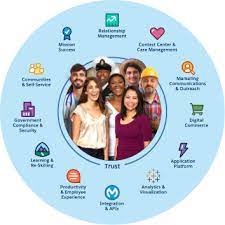
Einstein serves as Salesforce’s integrated AI layer, intricately woven into nearly every Salesforce Cloud. Salesforce Einstein Explained. While certain features, like Opportunity Scoring in Salesforce, are now offered at no cost, many Einstein functionalities are premium add-ons for essential Salesforce products like Sales, Service, Commerce, and Marketing Cloud. A notable development came in March 2023 when Salesforce introduced Einstein GPT, an extension of the Einstein product. This groundbreaking application leverages the ChatGPT platform from OpenAI, renowned for its widespread popularity, and is anticipated to be released later this year. Thereby incorporating generative AI into many Salesforce cloud features. Salesforce AI delivers trusted, extensible AI grounded in the fabric of our Platform. Utilize our AI in your customer data to create customizable, predictive, and generative AI experiences to fit all your business needs safely. Bring conversational AI to any workflow, user, department, and industry with Einstein. Salesforce Einstein is the only comprehensive Artificial Intelligence for CRM. It is data ready to work in your Salesforce org and clouds. Einstein is an integrated set of AI technologies that make the Customer Success Platform smarter. Einstein is the only comprehensive AI for CRM. It is: Einstein enables you to become an AI-first company so you can get smarter and more predictive about your customers. What can you do with Einstein? Drive productivity and personalization with predictive and generative AI across the Customer 360 with Salesforce Einstein. Create and deploy assistive AI experiences natively in Salesforce, allowing your customers and employees to converse directly with Einstein to solve issues faster and work smarter. Empower sellers, agents, marketers, and more with AI tools safely grounded in your customer data to make every customer experience more impactful. Build and customize a conversational AI assistant for CRM. Einstein Copilot is a trusted, generative-AI powered assistant built into the user experience of every Salesforce application. Whether employee-facing or customer-facing, Einstein Copilot can automatically reason through tasks based on pre-built skills. Use prompts, APIs, apex, and more to customize your own AI assistant. Like2 Related Posts Who is Salesforce? Who is Salesforce? Here is their story in their own words. From our inception, we’ve proudly embraced the identity of Read more Salesforce Marketing Cloud Transactional Emails Salesforce Marketing Cloud Transactional Emails are immediate, automated, non-promotional messages crucial to business operations and customer satisfaction, such as order Read more Salesforce Unites Einstein Analytics with Financial CRM Salesforce has unveiled a comprehensive analytics solution tailored for wealth managers, home office professionals, and retail bankers, merging its Financial Read more AI-Driven Propensity Scores AI plays a crucial role in propensity score estimation as it can discern underlying patterns between treatments and confounding variables Read more

Read More
Salesforce for Manufacturing, Automotive, and Energy

Improve Manufacturing Sales by Improving Partner Engagement

Did you know that half of all B2B revenue is generated through channel partner sales? A recent 2022 survey revealed that 80% of B2B executives find their partner programs ineffective, potentially slowing or even blocking product sales. The obstacles to improvements with manufacturing partners include siloed systems and data, fragmented processes, inconsistent programs, and outdated communication channels. You can improve manufacturing partner engagement. Learn more. To overcome these challenges and enhance manufacturing partner relationships. For increased sales, consider focusing on three key areas: By prioritizing transparency, investing in technology, and streamlining processes, manufacturers can strengthen partner relationships, leading to increased sales and improved customer satisfaction. Focus on making it easier for partners to do business with you, build trust, and create a unified, shared view of data to achieve mutually beneficial relationships. Is it time to explore how Tectonic and Salesforce can improve your partner engagement? Contact us today. Like1 Related Posts Who is Salesforce? Who is Salesforce? Here is their story in their own words. From our inception, we’ve proudly embraced the identity of Read more Salesforce Marketing Cloud Transactional Emails Salesforce Marketing Cloud Transactional Emails are immediate, automated, non-promotional messages crucial to business operations and customer satisfaction, such as order Read more Salesforce Unites Einstein Analytics with Financial CRM Salesforce has unveiled a comprehensive analytics solution tailored for wealth managers, home office professionals, and retail bankers, merging its Financial Read more AI-Driven Propensity Scores AI plays a crucial role in propensity score estimation as it can discern underlying patterns between treatments and confounding variables Read more

Read More
Salesforce Loyalty Management

Salesforce Loyalty Program Explained

Loyalty Management enables you to customize programs that precisely align with the unique needs of your business and customer base. Salesforce, equipped with a flexible platform, aids businesses in reimagining their loyalty strategies. The Salesforce Loyalty Cloud empowers businesses across various industries to effortlessly build intelligent loyalty programs without the need for coding. These programs incentivize customers to engage more with the brand, fostering repeat business. Salesforce Loyalty Program Explained. Unleash the full potential of your Customer Loyalty platform through impactful features: The centralized program management feature allows you to configure loyalty programs tailored to your needs, activate segments across channels quickly, and iterate based on results. Improved customer engagement uses behavior analysis to optimize experiences across web and mobile, tailoring them to individual users. Cross-industry partnerships provide customers with more options, and fast time-to-market for referral promotions is facilitated through a guided setup wizard. Identifying brand advocates and implementing AI-powered referral programs with predictive dashboards enhance program impact. Personalizing promotions based on member data and utilizing predictive performance insights maximize engagement and ROI. A single customer view connects loyalty across the customer experience, triggering marketing journeys and providing insights for enhanced interactions. Elevate your loyalty initiatives, engage customers effectively, and drive business growth with the robust capabilities of the Customer Loyalty platform and the expert guidance from Tectonic. Like1 Related Posts Who is Salesforce? Who is Salesforce? Here is their story in their own words. From our inception, we’ve proudly embraced the identity of Read more Salesforce Marketing Cloud Transactional Emails Salesforce Marketing Cloud Transactional Emails are immediate, automated, non-promotional messages crucial to business operations and customer satisfaction, such as order Read more Salesforce Unites Einstein Analytics with Financial CRM Salesforce has unveiled a comprehensive analytics solution tailored for wealth managers, home office professionals, and retail bankers, merging its Financial Read more AI-Driven Propensity Scores AI plays a crucial role in propensity score estimation as it can discern underlying patterns between treatments and confounding variables Read more

Read More
Salesforce Success Story

Case Study: Salesforce Innovation for Hospitality

Major hospitality management firm, moves to the cloud and adopts Google Cloud and Salesforce to improve operational insights and decision-making. Tectonic assisted them to move to the cloud and obtatin quicker, actionable insights with business intelligence. Salesforce Innovation for Hospitality.

Read More
Sales Cloud Einstein

Einstein GPT from Salesforce

Salesforce, the leading global CRM provider, has unveiled Einstein GPT, the world’s first generative AI CRM technology. Engineered to craft personalized content across sales, service, marketing, commerce, and IT interactions, Einstein GPT aims to enhance employee productivity and elevate customer experiences. While Salesforce had previously integrated AI into its ecosystem with Einstein AI, the introduction of Einstein GPT represents a notable advancement. Leaning on OpenAI’s capabilities, Einstein GPT is an empowered iteration of existing technology, aligning with Salesforce’s commitment to artificial intelligence technology adoption. Einstein GPT from Salesforce Einstein GPT operates as an open and extensible platform, leveraging trusted, real-time data for training. It facilitates public and private AI models tailored for CRM, integrating seamlessly with OpenAI to offer generative AI capabilities. This enables users to connect data to OpenAI’s advanced models or choose external models, employing natural-language prompts within Salesforce CRM for content generation that dynamically adapts to evolving customer information and needs. The technology infusion of Einstein GPT involves combining Salesforce’s proprietary AI models with generative AI tech from an ecosystem of partners and real-time data from the Salesforce Data Cloud. This combination allows the generation of personalized content, including emails for sales, responses for customer service, targeted content for marketers, and auto-generated code for developers. The collaboration with OpenAI extends Salesforce’s capabilities by merging OpenAI’s enterprise-grade ChatGPT with Salesforce’s private AI models. Additionally, Salesforce Ventures announced the Generative AI Fund. This is a 0 million investment initiative supporting startups to foster responsible, trusted, and generative AI development. Einstein GPT introduces various applications, such as Einstein GPT for Sales, Service, Marketing, and Developers. These applications empower users to auto-generate things they used to have to write. Sales tasks, enhanced customer service interactions, dynamically created personalized content, and improved developer productivity through an AI chat assistant. To further enhance collaboration, Salesforce and OpenAI introduced the ChatGPT for Slack app. Thus offering AI-powered conversation summaries. The research tools and writing assistance within the Slack platform are aided by Einstein.. Prominent organizations like HPE, L’Oréal, RBC US Wealth Management, and S&P Global Ratings have acknowledged the value of generative AI. They are all improving customer engagement. Like1 Related Posts Who is Salesforce? Who is Salesforce? Here is their story in their own words. From our inception, we’ve proudly embraced the identity of Read more Salesforce Marketing Cloud Transactional Emails Salesforce Marketing Cloud Transactional Emails are immediate, automated, non-promotional messages crucial to business operations and customer satisfaction, such as order Read more Salesforce Unites Einstein Analytics with Financial CRM Salesforce has unveiled a comprehensive analytics solution tailored for wealth managers, home office professionals, and retail bankers, merging its Financial Read more AI-Driven Propensity Scores AI plays a crucial role in propensity score estimation as it can discern underlying patterns between treatments and confounding variables Read more
Read More
AI All Grown Up

Understanding Generative AI and Predictive AI

Understanding Generative AI and Predictive AI: A Synergistic Approach Artificial Intelligence (AI) is broadly categorized into two key branches: Generative AI and Predictive AI. Both play a crucial role across various industries, from healthcare and fintech to logistics and education. Their impact is undeniable, driving efficiency, accuracy, and innovation. However, this is not a debate about Generative AI versus Predictive AI. Instead, it is an exploration of both branches and how they contribute to technological advancement. Let’s dive in. Generative AI vs. Predictive AI: An Overview Generative AI has been around for decades, with early iterations like Generative Adversarial Networks (GANs) and Variational Autoencoders (VAEs). While these earlier models saw limited enterprise adoption, the success of ChatGPT demonstrated the vast potential of Generative AI in producing articulate, human-like content. Conversely, Predictive AI is widely used across industries to correlate data and support decision-making. It is particularly prevalent in applications like cybersecurity, inventory management, and digital twin technology. Businesses increasingly recognize the benefits of both AI branches. From automating processes to creating digital replicas for scenario testing, AI applications continue to evolve. The goal now is not to compare Generative AI and Predictive AI, but to understand their mechanisms and potential for seamless integration. Are you fully leveraging AI in your enterprise? If not, or if you have questions, feel free to reach out. Now, let’s delve into how these AI branches work. What is Generative AI? Generative AI is transforming industries by producing text, code, music, and even videos. Companies use it to analyze vast datasets and generate content instantaneously. Key Applications of Generative AI: By 2026, over 80% of businesses are expected to incorporate Generative AI into their workflows. While implementation can be complex, expert guidance can help streamline the process. How Does Generative AI Work? Generative AI leverages machine learning (ML) and big data to analyze input forms—such as text, images, or sound—and learn their structures. Once trained, it generates new content without merely replicating existing data, making it a powerful tool for innovation. Generative AI in Action: If you’re uncertain about how to implement Generative AI in your business, consulting with experts can provide clarity. What is Predictive AI? Predictive AI, or predictive analytics, forecasts future outcomes based on historical data. It empowers businesses to make informed decisions by identifying patterns and trends. Key Applications of Predictive AI: Predictive AI improves decision-making capabilities by analyzing large datasets and refining machine learning algorithms. Integrating it with other analytics tools enhances its effectiveness and mitigates implementation challenges. Predictive AI in Action: Predictive AI’s ability to anticipate market trends and consumer behavior makes it a valuable tool for businesses looking to stay ahead. Generative AI vs. Predictive AI: Key Differences While Generative AI focuses on creating new content based on learned data patterns, Predictive AI forecasts future outcomes using historical data. These two models are not competing forces; rather, they complement each other in building comprehensive business strategies. Both models require a strong foundation in data governance and cybersecurity to ensure ethical and effective AI implementation. The Future of AI: Generative vs. Predictive According to McKinsey, the combined impact of Generative and Predictive AI could contribute up to $4.4 trillion annually to the global economy. What’s Next for AI? Generative AI: Predictive AI: Both Generative and Predictive AI are poised to shape the future of AI-driven industries. Businesses that embrace both models will gain a competitive edge in innovation and strategic decision-making. Conclusion Generative and Predictive AI are not opposing technologies; they are complementary forces that drive efficiency, accuracy, and creativity. Their applications span numerous industries, proving their immense value in today’s tech-driven world. Navigating AI implementation can be complex, but expert guidance can simplify the process. If you have questions about integrating AI into your business, consulting with professionals can help you harness its full potential. The future of business is deeply intertwined with AI—taking the right steps today will ensure success in the years ahead. Let Tectonic take you to the AI world. Like Related Posts Who is Salesforce? Who is Salesforce? Here is their story in their own words. From our inception, we’ve proudly embraced the identity of Read more Salesforce Marketing Cloud Transactional Emails Salesforce Marketing Cloud Transactional Emails are immediate, automated, non-promotional messages crucial to business operations and customer satisfaction, such as order Read more Salesforce Unites Einstein Analytics with Financial CRM Salesforce has unveiled a comprehensive analytics solution tailored for wealth managers, home office professionals, and retail bankers, merging its Financial Read more AI-Driven Propensity Scores AI plays a crucial role in propensity score estimation as it can discern underlying patterns between treatments and confounding variables Read more

Read More
Explore Salesforce Experience Cloud

Explore Salesforce Experience Cloud

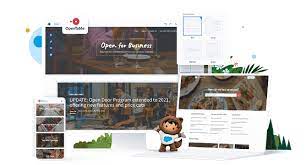
Empowering Businesses with Exceptional Salesforce Cloud Solutions Explore the transformative work we have done for our clients with Salesforce Experience Cloud, showcasing some of the exceptional solutions we have implemented. Through our strategic initiatives, we have enabled organizations across various industries to leverage the full potential of Salesforce Clouds to enhance user engagement, streamline operations, and achieve significant business growth. Our success stories reflect the diverse challenges our clients faced and the optimized solutions we provided to address them. For instance, by revamping an recruiting portal for a prominent American government agency, we reduced issues related to recruting, onboarding, and retaining talent. Tectonic’s approach incorporates the latest Salesforce technologies, such as Lightning Web Components, Service Cloud, and Experience Cloud, to deliver high-performing, scalable solutions. From improving partner portals for better partner support to transforming community portals for enhanced user experience, our solutions are designed to meet specific client needs while ensuring long-term adaptability and success. Manufacturing – Experience Cloud Case Study Public Sector – Experience Cloud and Grants Management Case Study Manufacturing – Sales, Service, Marketing, and Partner Community Case Study Manufacturing – Sales, Service, Marketing and Experience Cloud Case Study Branded Solutions Manufacturing – Sales, Service, and Experience Cloud Case Study Nonprofit Hospitality – Service and Experience Cloud Case Study Tribal Government – Health, Marketing, MuleSoft, and Experience Cloud Case Study Restaurant – Sales, Service, and Experience Cloud Case Study Federal Government – Nonprofit Talent Acquisition Experience Cloud Case Study Higher Education Software – Sales, Service and Experience Cloud Case Study Salesforce Partner Portals Built on Salesforce Experience Cloud Explore all Tectonic Salesforce Implementation Solutions Like Related Posts Who is Salesforce? Who is Salesforce? Here is their story in their own words. From our inception, we’ve proudly embraced the identity of Read more Salesforce Marketing Cloud Transactional Emails Salesforce Marketing Cloud Transactional Emails are immediate, automated, non-promotional messages crucial to business operations and customer satisfaction, such as order Read more Salesforce Unites Einstein Analytics with Financial CRM Salesforce has unveiled a comprehensive analytics solution tailored for wealth managers, home office professionals, and retail bankers, merging its Financial Read more AI-Driven Propensity Scores AI plays a crucial role in propensity score estimation as it can discern underlying patterns between treatments and confounding variables Read more
Read More
Salesforce for Retail

Salesforce for Retail

Salesforce for retail is widely utilized, offering a tailored CRM solution that empowers users to efficiently manage inventory, orders, and deliveries from a customized platform. With insights into customer purchase patterns and history, businesses can craft personalized shopping experiences, fostering loyalty and satisfaction. The platform facilitates the integration of diverse revenue streams, enabling the creation of a seamless omnichannel experience that harmonizes with all facets of the business. Mobile support ensures that employees can assist customers from anywhere, fostering accessibility and responsiveness. Additionally, Salesforce keeps the entire team aligned on the sales process, promoting collaboration and maximizing results. In the retail industry, Salesforce is indispensable for maintaining inventory visibility across different levels, minimizing leaks, and ensuring timely order tracking and delivery management. Its smart targeting capabilities drive awareness and acquisition, making marketing efforts more effective. Leveraging the commerce cloud, Salesforce transforms shoppers into buyers faster, delivering a seamless experience across web, social media, mobile, and physical stores. By automating manual tasks, Salesforce boosts the productivity of sales teams, allowing them to access crucial information via mobile devices even amidst busy schedules. Companies utilizing Salesforce CRM in retail harness the platform to understand and prioritize customer needs, develop targeted marketing strategies, and deliver timely and relevant messages. For businesses seeking to leverage Salesforce CRM effectively, a Salesforce CRM users list provides case studies from leading companies in the retail sector, such as Pepe Jeans and Loreal. Like Related Posts Who is Salesforce? Who is Salesforce? Here is their story in their own words. From our inception, we’ve proudly embraced the identity of Read more Salesforce Marketing Cloud Transactional Emails Salesforce Marketing Cloud Transactional Emails are immediate, automated, non-promotional messages crucial to business operations and customer satisfaction, such as order Read more Salesforce Unites Einstein Analytics with Financial CRM Salesforce has unveiled a comprehensive analytics solution tailored for wealth managers, home office professionals, and retail bankers, merging its Financial Read more AI-Driven Propensity Scores AI plays a crucial role in propensity score estimation as it can discern underlying patterns between treatments and confounding variables Read more
Read More
ChatGPT and Einstein GPT

ChatGPT and Einstein GPT

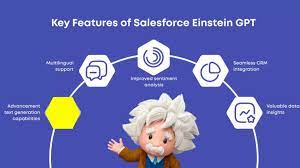
Artificial intelligence (AI) has been rapidly advancing globally, with breakthroughs captivating professionals across various sectors. One milestone that has gained significant attention is the emergence of ChatGPT, a cutting-edge language model revolutionizing the tech landscape. This development has profoundly impacted businesses relying on Salesforce for their customer relationship management (CRM) needs. In March 2023, Salesforce unveiled its latest AI innovation, Einstein GPT, promising to transform how companies engage with their clientele. In this article, we explore what Salesforce Einstein GPT entails and how it can benefit teams across diverse industries. When OpenAI introduced ChatGPT in November 2022, they didn’t expect the overwhelming response it received. Initially positioned as a “research preview,” this AI chatbot aimed to refine existing technology while soliciting feedback from users. However, ChatGPT quickly became a viral sensation, surpassing OpenAI’s expectations and prompting them to adapt to its newfound popularity. Developed on the foundation of the GPT-3.5 language model, ChatGPT was specifically tailored to facilitate engaging and accessible conversations, distinguishing it from its predecessors. Its launch attracted a diverse user base keen to explore its capabilities, prompting OpenAI to prioritize addressing potential misuse and enhancing its safety features. As ChatGPT gained traction, it caught the attention of Salesforce, a leading CRM provider. In March 2023, Salesforce unveiled Einstein GPT, its own AI innovation, poised to transform customer engagement. Built on the GPT-3 architecture and seamlessly integrated into Salesforce Clouds, Einstein GPT promised to revolutionize how businesses interact with their clientele. Einstein GPT boasts a range of features designed to personalize customer experiences and streamline workflows. From generating natural language responses to crafting personalized content and automating tasks, Einstein GPT offers versatility and value across industries. By leveraging both Einstein AI and GPT technology, businesses can unlock unprecedented efficiency and deliver superior customer experiences. Despite its success, OpenAI acknowledges the need for ongoing refinement and vigilance, emphasizing the importance of responsible deployment and transparency in the development of AI technology. Exploring Einstein GPT Salesforce presents Einstein GPT as the premier generative AI tool for CRM worldwide. Utilizing the advanced GPT-3 architecture, Einstein GPT seamlessly integrates into all Salesforce Clouds, including Tableau, MuleSoft, and Slack. This groundbreaking technology empowers users to generate natural language responses to customer inquiries, craft personalized content, and compose entire email messages on behalf of sales personnel. With its high degree of customization, Einstein GPT can be finely tuned to meet the specific needs of various industries, use cases, and customer requirements, delivering significant value to businesses of all sizes and sectors. Objectives of Salesforce AI Einstein GPT Salesforce AI Einstein GPT is designed to achieve several key objectives: Distinguishing Einstein GPT from Einstein AI Einstein GPT represents the latest evolution of Salesforce’s Einstein artificial intelligence technology. Unlike its predecessors, Einstein GPT integrates proprietary Einstein AI models with ChatGPT and other leading large language models. This integration enables users to interact with CRM data using natural language prompts, resulting in highly personalized, AI-generated content and triggering powerful automations that enhance workflows and productivity. By leveraging both Einstein AI and GPT technology, businesses can achieve unparalleled efficiency and deliver exceptional customer experiences. Features of Einstein GPT in Salesforce CRM Key features and capabilities of Salesforce Einstein chatbot GPT include: Utilizing Einstein GPT for Business Improvement Einstein GPT can be leveraged across various domains to enhance business operations: Integration with Salesforce Data Cloud Salesforce Data Cloud, a cloud-based data management system, enables real-time data aggregation from diverse sources. Einstein GPT utilizes unified customer data profiles from the Salesforce Data Cloud to personalize interactions throughout the customer journey. OpenAI on ChatGPT Methods We trained this model using Reinforcement Learning from Human Feedback (RLHF), using the same methods as InstructGPT, but with slight differences in the data collection setup. We trained an initial model using supervised fine-tuning: human AI trainers provided conversations in which they played both sides—the user and an AI assistant. We gave the trainers access to model-written suggestions to help them compose their responses. We mixed this new dialogue dataset with the InstructGPT dataset, which we transformed into a dialogue format. To create a reward model for reinforcement learning, we needed to collect comparison data, which consisted of two or more model responses ranked by quality. To collect this data, we took conversations that AI trainers had with the chatbot. We randomly selected a model-written message, sampled several alternative completions, and had AI trainers rank them. Using these reward models, we can fine-tune the model using Proximal Policy Optimization. We performed several iterations of this process. ChatGPT is fine-tuned from a model in the GPT-3.5 series, which finished training in early 2022. You can learn more about the 3.5 series here. ChatGPT and GPT-3.5 were trained on an Azure AI supercomputing infrastructure. Limitations ChatGPT and Einstein GPT Salesforce Einstein GPT signifies a significant advancement in AI technology, empowering businesses to deliver tailored customer experiences and streamline operations. With its integration into Salesforce CRM and other platforms, Einstein GPT offers unprecedented capabilities for personalized engagement and automated insights, ensuring organizations remain competitive in today’s dynamic market landscape. When OpenAI quietly launched ChatGPT in late November 2022, the San Francisco-based AI company didn’t anticipate the viral sensation it would become. Initially viewed as a “research preview,” it was meant to showcase a refined version of existing technology while gathering feedback from the public to address its flaws. However, the overwhelming success of ChatGPT caught OpenAI off guard, leading to a scramble to capitalize on its newfound popularity. ChatGPT, based on the GPT-3.5 language model, was fine-tuned to be more conversational and accessible, setting it apart from previous iterations. Its release marked a significant milestone, attracting millions of users eager to test its capabilities. OpenAI quickly realized the need to address potential misuse and improve the model’s safety features. Since its launch, ChatGPT has undergone several updates, including the implementation of adversarial training to prevent users from exploiting it (known as “jailbreaking”). This technique involves pitting multiple chatbots against each other to identify and neutralize malicious behavior. Additionally,

Read More
Salesforce Lightning

Why Migrate From Salesforce Classic to Salesforce Lightning?

Why Switch from Salesforce Classic to Lightning? Salesforce is actively advancing the Lightning interface, and the reasons are compelling. The Lightning platform offers numerous advantages, including an improved user interface, quicker development times, and extensive customization options. With user-friendly features like drag-and-drop functionality, Lightning enhances the overall user experience (UX). Many companies are opting to migrate from Salesforce Classic to Salesforce Lightning to leverage these benefits and more. Salesforce Classic Salesforce Classic served as the primary interface until 2016, but today, it is considered outdated. Investing in Lightning Experience is driven by the desire to deliver a superior user experience, adopt features solving business challenges, enhance processes, and gain access to Lightning innovation and rapid app development technology. Given that Salesforce Lightning is faster, provides advanced customization features, and boasts easier navigation compared to Classic, transitioning to Lightning in 2023 can be a strategic decision for your business. Lightning also integrates Salesforce Einstein, offering reporting, analytics, and generative AI capabilities. Salesforce Lightning In contrast to Classic, the Lightning development platform enables non-technical users to effortlessly create customized apps without programming knowledge. Due to its sleek UI, faster performance, regular feature releases, and comprehensive usability, Salesforce Lightning has become the preferred CRM for businesses. Migration However, migrating from Salesforce Classic to Lightning, or any other CRM to Lightning, presents challenges, including high implementation time. Opting for a phased rollout is an effective approach to overcome these challenges. While challenges may arise, a strategic plan executed by experienced Salesforce Lightning Support can ensure a seamless and timely migration. If you’re ready to migrate to Salesforce Lightning, especially if your Salesforce is highly customized, it’s crucial to document all changes made in Classic and identify corresponding solutions in Lightning. If handling the complexities of Classic seems daunting, consider engaging a Salesforce Migration partner like Tectonic to conduct a full Salesforce audit before migrating to Salesforce Lightning, ensuring a smooth transition. Content updated December 2023. Like2 Related Posts Who is Salesforce? Who is Salesforce? Here is their story in their own words. From our inception, we’ve proudly embraced the identity of Read more Salesforce Marketing Cloud Transactional Emails Salesforce Marketing Cloud Transactional Emails are immediate, automated, non-promotional messages crucial to business operations and customer satisfaction, such as order Read more Salesforce Unites Einstein Analytics with Financial CRM Salesforce has unveiled a comprehensive analytics solution tailored for wealth managers, home office professionals, and retail bankers, merging its Financial Read more AI-Driven Propensity Scores AI plays a crucial role in propensity score estimation as it can discern underlying patterns between treatments and confounding variables Read more
Read More
gettectonic.com