

Commerce Archives - gettectonic.com - Page 16
Salesforce Genie

Genie Salesforce

Salesforce Genie is a real-time platform that synthesizes customer data, enabling organizations to meet their customer requirements and expectations as and when they change. What is the difference between Salesforce Genie and CDP? Data activation protocols are followed by the Salesforce Customer Data Platform. This helps in order to segment the audience and activate the data. With Genie, you are able to unify your data and resolve customer identity issues. What is the Genie platform? Genie is an online sales platform that allows you to leverage the strengths of traditional marketing. With online marketing and direct mail into successful multi-channel campaigns. Combine data, marketing and tracking in one place. Always with a team of data marketing experts only a phone call away for support. It makes it easier for businesses to decode and make sense of all their data from all systems, channels, or data streams. It also integrates data from each step in the customer’s experience into a unified customer profile record. Therefore helping create one single view of the customer. Have you ever called a support line and spent unnecessary time talking the agent through your purchase history to get the right level of support? Or when an ecommerce site states the shirts that you have been eyeing for are finally in stock, but they’re still out of stock when you get to the store? These are familiar scenarios for most of us. We expect every experience to be connected and updated in real time. When they aren’t, we’re disappointed. Salesforce Genie was first announced by Salesforce at Dreamforce ‘22. Like1 Related Posts Who is Salesforce? Who is Salesforce? Here is their story in their own words. From our inception, we’ve proudly embraced the identity of Read more Salesforce Marketing Cloud Transactional Emails Salesforce Marketing Cloud Transactional Emails are immediate, automated, non-promotional messages crucial to business operations and customer satisfaction, such as order Read more Salesforce Unites Einstein Analytics with Financial CRM Salesforce has unveiled a comprehensive analytics solution tailored for wealth managers, home office professionals, and retail bankers, merging its Financial Read more AI-Driven Propensity Scores AI plays a crucial role in propensity score estimation as it can discern underlying patterns between treatments and confounding variables Read more

Read More
Tectonic Salesforce Managed Services

Salesforce Customer 360

Salesforce Customer 360 is a family of Salesforce products and services that help businesses manage and connect with their customers across all touchpoints. With Customer 360, businesses can access a comprehensive view of their customers, including all their interactions and data, in one unified platform. This centralized data model allows businesses to deliver personalized and connected experiences to their customers across all channels and platforms. Customer 360 fully integrates marketing, sales, commerce, service, IT, and analytics into one unified platform, enabling businesses to streamline processes, improve decision-making, automate workflows, and enhance communication and collaboration. With the help of Salesforce solutions partners like Tectonic, businesses can customize Customer 360 to fit their specific needs and business model. Customer 360 is a framework that consolidates all existing customer insights from various tables and models within your data warehouse. In addition, Customer 360 provides real-time insights and metrics through customizable dashboards and reports, helping businesses track key performance indicators and make data-driven decisions. Salesforce Customer 360 can help businesses drive innovation, increase efficiency, and deliver a better customer experience, enabling them to digitally transform their operations. 85% of customers expect consistent interactions across all departments. With Salesforce’s Customer 360, important customer data from every step of their journey is captured and stored in one place. Adding more than one app to your Customer 360 solution has measurable benefits: Salesforce and Tectonic will kickstart your business’s digital transformation in 2023. Like1 Related Posts Who is Salesforce? Who is Salesforce? Here is their story in their own words. From our inception, we’ve proudly embraced the identity of Read more Salesforce Marketing Cloud Transactional Emails Salesforce Marketing Cloud Transactional Emails are immediate, automated, non-promotional messages crucial to business operations and customer satisfaction, such as order Read more Salesforce Unites Einstein Analytics with Financial CRM Salesforce has unveiled a comprehensive analytics solution tailored for wealth managers, home office professionals, and retail bankers, merging its Financial Read more AI-Driven Propensity Scores AI plays a crucial role in propensity score estimation as it can discern underlying patterns between treatments and confounding variables Read more
Read More
Marketing Cloud Admins

Marketing Cloud Admins

Salesforce Marketing Cloud Administrators play a key role in ensuring the success of an organization’s marketing efforts. Their responsibilities span system configuration, data management, campaign development, and execution. These professionals need a blend of technical expertise, strategic thinking, and keen attention to detail to effectively manage and optimize the Marketing Cloud environment. System Configuration and AdministrationMarketing Cloud Admins are responsible for setting up and configuring user accounts, defining roles and permissions, and customizing the system to meet specific organizational needs. They stay current on Salesforce updates, conducting system audits to maintain security and performance. Admins also oversee platform customization, aligning it with business goals. Data Management and SegmentationEffective data management is crucial for personalized marketing. Admins manage data imports, exports, and integration with other systems, ensuring data cleanliness and compliance with privacy regulations. They create audience segments based on specific criteria to enable targeted campaigns. Campaign Development and ExecutionAdmins work closely with marketing teams to develop and execute email, SMS, and social media campaigns. They set up customer journeys, implement automation, and ensure campaigns are delivered as planned. Monitoring performance and analyzing metrics allows admins to optimize campaigns and provide insights for future strategies. Integration and AutomationAdmins integrate Marketing Cloud with CRM systems, e-commerce platforms, and third-party apps. They streamline workflows by automating processes through tools like Journey Builder and Automation Studio, ensuring data consistency and efficiency. Troubleshooting and SupportAdmins provide technical support and troubleshoot issues related to system errors, data synchronization, and campaign delivery. They collaborate with Salesforce support to resolve complex problems, ensuring smooth operations and minimal downtime. Training and DocumentationTraining users on Marketing Cloud tools and developing comprehensive documentation are also key responsibilities. Admins ensure users are well-versed in the platform’s features and best practices, helping maintain consistent performance across teams. Monitoring and ReportingAdmins track key performance indicators (KPIs) and generate reports to analyze campaign success. By using tools like Analytics Builder, they offer data-driven insights that help improve marketing strategies and align them with business objectives. Skills Required for Salesforce Marketing Cloud AdminsAdmins must have strong technical aptitude, familiarity with Salesforce tools like Email Studio and Journey Builder, and proficiency in SQL, HTML, and APIs for system integration. Problem-solving skills are critical for diagnosing and resolving issues, and data management expertise is essential for organizing and analyzing marketing data. FAQs: If you are in need of Marketing Cloud assistance, contact Tectonic today. Content updated September 2024. Like Related Posts Who is Salesforce? Who is Salesforce? Here is their story in their own words. From our inception, we’ve proudly embraced the identity of Read more Salesforce Marketing Cloud Transactional Emails Salesforce Marketing Cloud Transactional Emails are immediate, automated, non-promotional messages crucial to business operations and customer satisfaction, such as order Read more Salesforce Unites Einstein Analytics with Financial CRM Salesforce has unveiled a comprehensive analytics solution tailored for wealth managers, home office professionals, and retail bankers, merging its Financial Read more AI-Driven Propensity Scores AI plays a crucial role in propensity score estimation as it can discern underlying patterns between treatments and confounding variables Read more
Read More
Revenue Cloud

Revenue Cloud

Salesforce Revenue Cloud serves as an all-encompassing platform meticulously crafted to enhance and simplify the entire revenue management process for businesses. This cloud-based solution provides a centralized system, facilitating effective management of pricing, quoting, and billing operations. The platform, introduced as part of the Salesforce Customer 360 Platform, integrates Configure, Price and Quote (CPQ), Billing, Partner Relationship Management, and B2B Commerce functionalities. Contrary to an out-of-the-box solution, Salesforce Revenue Cloud does not replace enterprise resource planning (ERP) systems but strives to bridge the gap between critical functional departments like sales, partners, operations, and finance. Its introduction at the end of 2020 aimed to assist businesses in better managing revenue streams, enhancing forecasting capabilities, improving efficiencies, and accelerating growth across all sales channels. Salesforce Revenue Cloud, often referred to as CPQ, enables organizations to unify direct sales, partner sales, and eCommerce, package product bundles, handle complex order configurations, produce invoices across multiple channels, collect payments, and manage dunning. The platform’s benefits include streamlined revenue management, improved business agility, real-time access to mobile inventory and data, and the generation of new revenue streams. In addition to these advantages, Salesforce Revenue Cloud offers better insight into customers, maximizes revenue efficiency, builds a superior buyer experience, and reduces missed opportunities by delivering the right product at the right time to the right place. The platform eliminates manual operations, integrates with existing systems and new applications, and expedites the quote-to-cash process. However, it’s essential to consider certain aspects when opting for Salesforce Revenue Cloud, such as its limitations in handling complex billing needs. While Salesforce provides substantial capabilities for recurring revenue and subscription models, it may face challenges with more intricate pricing models, such as dynamic pricing for one-time charges, usage, tiered, subscription, overages, minimum commitments, or others. In conclusion, the collaboration between CRM and marketing departments, fueled by Salesforce Revenue Cloud, propels an increase in sales and enables a comprehensive view of the customer. As businesses demand a 360-degree perspective, the product-specific gap is expected to narrow further, emphasizing the importance of a unified approach across all company departments. Like Related Posts Who is Salesforce? Who is Salesforce? Here is their story in their own words. From our inception, we’ve proudly embraced the identity of Read more Salesforce Marketing Cloud Transactional Emails Salesforce Marketing Cloud Transactional Emails are immediate, automated, non-promotional messages crucial to business operations and customer satisfaction, such as order Read more Salesforce Unites Einstein Analytics with Financial CRM Salesforce has unveiled a comprehensive analytics solution tailored for wealth managers, home office professionals, and retail bankers, merging its Financial Read more AI-Driven Propensity Scores AI plays a crucial role in propensity score estimation as it can discern underlying patterns between treatments and confounding variables Read more
Read More
Salesforce Service Cloud

Salesforce Service Cloud Explained

Service Cloud by Salesforce serves as a customer relationship management (CRM) tool designed to support a business’s customer service team. It facilitates customer-company communication through channels such as email support, live chat, or phone, assisting customer agents in locating and resolving customer issues. Salesforce Service Cloud Details Consider your recent interactions with a business using live chat or creating a support ticket – chances are, they were utilizing a system like Service Cloud. Service Cloud is a powerful customer service platform designed to streamline and enhance customer support processes. Customer service holds the key to uplifting brand value in today’s fast-paced business world. Supplementary Products: Digital Engagement, Service Cloud Einstein, Service Cloud Voice, Customer Lifecycle Analytics, Salesforce Surveys Response Pack. SFDC Service Cloud is built to make the delivery of service easier for your agents. It is one of the most popular customer service solutions devised by Salesforce. The tools of the Service Cloud offer businesses a 360-degree view of their customers and allow them to deliver faster, smarter, and more customized experiences. They can build a connected knowledge base and manage case interactions. And enable live agent chat- all from the comfort of one platform. Depending on the previous activity data of the customers, you can have personalized interactions with them. And also upsell your services or products. Salesforce Clouds Salesforce provides six major types of clouds: Sales Cloud, Marketing Cloud, Commerce Cloud, Service, Experience Cloud, and Analytics Cloud. There are nine other types of clouds in Salesforce for specific applications and industries, including a new Vaccine Cloud for managing COVID tests and vaccines. The ever-evolving Salesforce ecosystem is growing to meet all your business needs. Tectonic is please to announce Salesforce Service Cloud Implementation Solutions. Like1 Related Posts Who is Salesforce? Who is Salesforce? Here is their story in their own words. From our inception, we’ve proudly embraced the identity of Read more Salesforce Marketing Cloud Transactional Emails Salesforce Marketing Cloud Transactional Emails are immediate, automated, non-promotional messages crucial to business operations and customer satisfaction, such as order Read more Salesforce Unites Einstein Analytics with Financial CRM Salesforce has unveiled a comprehensive analytics solution tailored for wealth managers, home office professionals, and retail bankers, merging its Financial Read more AI-Driven Propensity Scores AI plays a crucial role in propensity score estimation as it can discern underlying patterns between treatments and confounding variables Read more
Read More
Order Management Enhancements Commerce Cloud

Order Management Enhancements Commerce Cloud

Salesforce Order Management Enhancements stands out for its scalability, catering to both small startups and large enterprises by offering customization to meet specific needs. Its adaptability facilitates seamless integration with other systems, presenting a comprehensive solution for e-commerce requirements. Explore the latest features in Salesforce Order Management and Lightning B2B Commerce, including process exception management, return merchandise authorizations, and various enhancements. Salesforce Order Management now provides tools to identify and address process exceptions during order processing interruptions. The addition of a new return order data model aids in managing return merchandise authorizations. Further updates include improved order summary flows, customization of payment methods, and the creation of order summaries with custom numbers and statuses. Enhancements to Lightning B2B Commerce introduce new components for deliveries and order summaries, improved searchability, an integration dashboard, and the Price Book Workspace. The integration dashboard consolidates management of integrations, providing a centralized overview. Order Management serves as the central hub for handling the entire order lifecycle, covering order capture, fulfillment, shipping, payment processing, and service. Customers can submit orders through any commerce channel, and merchants can efficiently manage fulfillment, shipping, invoicing, and service using integrated and customizable workflows. Salesforce Mobile App allows easy access to data on the go, although certain console features are not available. Order Management offers various resources, including preconfigured permission sets, Salesforce Payments integration for seamless payment processing, and extensive documentation for setup, administration, and extension. Salesforce Order Management utilizes Einstein Generative AI to enhance the overall experience, providing smarter service to customers. High-scale orders are supported on Hyperforce, offering increased capacity for order processing. For post-implementation monitoring and optimization, tracking key performance indicators (KPIs) such as order processing time, customer satisfaction, and inventory levels is crucial. Salesforce analytics aid in making data-driven improvements, and troubleshooting tools are available for resolving common issues like order discrepancies and payment failures. The Salesforce Order Management Implementation Guide outlines steps from initial setup and data migration to workflow customization, payment, and shipping integrations. Real-world case studies demonstrate successful implementations, showcasing the platform’s benefits, scalability, and advanced features. The retirement of Commerce Cloud Order Management is announced, with Salesforce Order Management positioned as the new product built within the Salesforce core platform. For further details or assistance, users are advised to contact their account manager or refer to Salesforce Order Management Help documentation. Like Related Posts Who is Salesforce? Who is Salesforce? Here is their story in their own words. From our inception, we’ve proudly embraced the identity of Read more Salesforce Marketing Cloud Transactional Emails Salesforce Marketing Cloud Transactional Emails are immediate, automated, non-promotional messages crucial to business operations and customer satisfaction, such as order Read more Salesforce Unites Einstein Analytics with Financial CRM Salesforce has unveiled a comprehensive analytics solution tailored for wealth managers, home office professionals, and retail bankers, merging its Financial Read more AI-Driven Propensity Scores AI plays a crucial role in propensity score estimation as it can discern underlying patterns between treatments and confounding variables Read more
Read More
Salesforce Logo

What is Salesforce and Why is it so Popular?

What is Salesforce and Why is it so Popular? Salesforce, a software company specializing in Customer Relationship Management (CRM), has emerged as a dominant force in business technology since its establishment in 1999. It encompasses both a software package and a complete ecosystem designed to enhance and modernize various business processes. The widespread popularity of Salesforce can be attributed to its all-encompassing CRM solutions, user-friendly interface, cloud-based platform, scalability, and the robust ecosystem it has fostered. Offering comprehensive tools for managing customer data, automating processes, analyzing data and insights, and creating personalized customer experiences, Salesforce extends its reach to various solutions such as customer service, marketing automation, commerce, app development, and more. What sets Salesforce apart is its highly customizable platform, allowing users to tailor CRM according to specific requirements. Renowned for its flexibility, Salesforce offers a plethora of customizable features and functionalities, making it stand out in the business technology landscape. Many companies opt for Salesforce due to its role as a customer relationship management solution, effectively bringing together companies and customers. Positioned as an integrated CRM platform, Salesforce provides all departments, including marketing, sales, commerce, and services, with a unified view of each customer. This capability to foster collaboration and coherence across diverse business functions contributes to the widespread adoption of Salesforce by numerous companies. Like Related Posts Who is Salesforce? Who is Salesforce? Here is their story in their own words. From our inception, we’ve proudly embraced the identity of Read more Salesforce Marketing Cloud Transactional Emails Salesforce Marketing Cloud Transactional Emails are immediate, automated, non-promotional messages crucial to business operations and customer satisfaction, such as order Read more Salesforce Unites Einstein Analytics with Financial CRM Salesforce has unveiled a comprehensive analytics solution tailored for wealth managers, home office professionals, and retail bankers, merging its Financial Read more AI-Driven Propensity Scores AI plays a crucial role in propensity score estimation as it can discern underlying patterns between treatments and confounding variables Read more
Read More
Marketing Cloud Intelligence

Salesforce Marketing Cloud Intelligence Explained

What is Marketing Cloud Intelligence? Salesforce’s Marketing Cloud Intelligence, formerly known as Datorama, is an analytics tool designed to integrate and visualize marketing performance data across various platforms. It caters to analytically driven marketers and seasoned analysts, providing an easy-to-use interface while offering connections to traditional BI tools like Tableau. Marketing efforts generate extensive data across multiple platforms, and Marketing Cloud Intelligence consolidates all these marketing tools into a centralized source. It serves as a comprehensive solution for reporting, measurement, and optimization. Market intelligence involves gathering real-time data from the market to understand customers, trends, behaviors, and more, enabling a company to stay competitive and meet market demands. By leveraging out-of-the-box connections, Marketing Cloud Intelligence seamlessly links platforms like Google, YouTube, Instagram, and others without the need for complex coding. The tool, now known as Marketing Cloud Intelligence, reveals trends, tracks progress against goals, and quantifies the ROI of marketing initiatives once connected. The system features a connected library of over 170 connectors for acquiring data from major advertising, commerce, CRM, and database vendors. The unique universal connector, powered by AI, allows effortless connection of any data stream within minutes, even from sources lacking an API connection. Marketing Cloud Intelligence addresses the challenge of data consistency by providing an out-of-the-box marketing data model. It helps organize data into a clear and consistent taxonomy, enriching it with naming conventions, data classification, and automated maintenance alerts for trustworthy decision-making. Beyond reporting and dashboards, Marketing Cloud Intelligence, with the assistance of Einstein, provides actionable insights. Marketers can select a KPI to improve and create a perpetual pipeline of AI insights, addressing overarching questions or specific areas like reducing spend or analyzing creative impacts. What can marketers do with Marketing Cloud Intelligence? Marketers can efficiently compile multiple sources of data in Marketing Cloud using various KPIs, creating at-a-glance and visually appealing dashboards and reports. Marketing Cloud Intelligence, powered by Datorama, facilitates the organization and analysis of diverse data within Marketing Cloud. What does Marketing Cloud Intelligence do? Marketing Cloud Intelligence integrates data from marketing and advertising platforms, web analytics, CRM, e-commerce, and more. It offers a unified view for optimizing campaign performance and real-time insights. The tool optimizes marketing spend and customer engagement with unified performance data, automated reporting, and AI-driven insights. Why is marketing intelligence important in Salesforce? Marketing intelligence tools help businesses gather and analyze market data. CRM and CDP tools, such as Salesforce Marketing Cloud Intelligence, unite data from disparate sources to provide a fuller picture of their customers and the marketplace. Like Related Posts Who is Salesforce? Who is Salesforce? Here is their story in their own words. From our inception, we’ve proudly embraced the identity of Read more Salesforce Marketing Cloud Transactional Emails Salesforce Marketing Cloud Transactional Emails are immediate, automated, non-promotional messages crucial to business operations and customer satisfaction, such as order Read more Salesforce Unites Einstein Analytics with Financial CRM Salesforce has unveiled a comprehensive analytics solution tailored for wealth managers, home office professionals, and retail bankers, merging its Financial Read more AI-Driven Propensity Scores AI plays a crucial role in propensity score estimation as it can discern underlying patterns between treatments and confounding variables Read more

Read More
Salesforce Experience Cloud

Is Salesforce Experience Cloud Salesforce Communities?

The Salesforce ecosystem is in a constant state of evolution, and the introduction of the Salesforce Experience Cloud is a significant development aimed at delivering connected digital experiences to consumers rapidly. Is Salesforce Experience Cloud Salesforce Communities? In a recent update, Salesforce announced that the Community Cloud will now be rebranded as the Salesforce Experience Cloud. This renaming reflects the platform’s evolution to meet the diverse needs of consumers and highlights Salesforce’s commitment to creating exceptional digital experiences. The Salesforce Experience Cloud serves as a digital experience platform, enabling organizations to create scalable digital experiences for partners, consumers, and employees. Leveraging features from Salesforce CRM, Experience Builder, and CMS, the platform empowers organizations to swiftly develop websites, portals, and personalized content, all with just a few clicks. So, why did Salesforce decide to rename the Community Cloud to the Experience Cloud? The renaming signifies Salesforce’s dedication to enhancing people’s lives and transforming businesses. By shifting the focus from building communities to creating community experiences, Salesforce aims to underscore the importance of data-powered digital experiences that foster collaboration, automation, and real business value. The transition from Community to Experience Cloud represents a step into the future, where the platform integrates data and content seamlessly to provide meaningful solutions. This evolution brings added flexibility and efficiency to user journeys, enhancing the overall digital experience. But how does the Salesforce Experience differ from the Salesforce Community? With the rebranding, you’ll notice changes and improvements in the tools used to design sites. For instance, the Site built using the Experience Cloud, formerly known as the Community, can now be developed using either Visualforce or Experience Builder. This change in terminology signifies a broader shift in the platform’s capabilities. Moreover, other components within the Digital Experiences menu have been simplified and replaced, emphasizing the evolution from the Community Cloud to the Experience Cloud. Understanding the transition from Community to Experience Cloud is necessary for anyone embarking on the journey as an Experience Cloud Consultant. Whether you’re an existing user or a newcomer, grasping the significant differences between the two platforms is crucial. And to further explore the impact of this transition on your organization, consider joining industry-led courses like those offered by saasguru. Frequently Asked Questions (FAQ): Content updated March 2024. Like1 Related Posts Who is Salesforce? Who is Salesforce? Here is their story in their own words. From our inception, we’ve proudly embraced the identity of Read more Salesforce Marketing Cloud Transactional Emails Salesforce Marketing Cloud Transactional Emails are immediate, automated, non-promotional messages crucial to business operations and customer satisfaction, such as order Read more Salesforce Unites Einstein Analytics with Financial CRM Salesforce has unveiled a comprehensive analytics solution tailored for wealth managers, home office professionals, and retail bankers, merging its Financial Read more AI-Driven Propensity Scores AI plays a crucial role in propensity score estimation as it can discern underlying patterns between treatments and confounding variables Read more
Read More
Salesforce Manufacturing Cloud

Salesforce for Manufacturing and Salesforce Manufacturing Cloud

What is Salesforce for Manufacturing? Salesforce Manufacturing Cloud is a tailored CRM solution designed specifically for enterprise-level manufacturing companies. It offers out-of-the-box functionality with key features including demand and production forecasting, along with sales agreements. The platform aims to transform customer operations in manufacturing through the integration of Data, AI, CRM, and Trust. How Manufacturers Use Salesforce Manufacturing companies utilizing the Salesforce platform typically leverage it for managing various aspects directly from the platform. These include sales, customer service, partner and channel portals, marketing, and e-commerce. In some cases, certain applications may also integrate with third-party systems. What’s Included With Salesforce Manufacturing Cloud? Manufacturing Cloud encompasses various components to manage the complete business cycle, from customer inquiry to order visibility and demand forecasting accuracy. Key components include Rebate Management, Revenue Cloud, B2B Commerce, CRM Analytics, Slack, and MuleSoft Anypoint Platform. Salesforce Service Capabilities for Manufacturing Salesforce Field Service Expand Salesforce Field Service service offerings with warranty management, aftermarket parts programs, and predictive maintenance services. Channel Partner Visibility and Engagement Connecting Sales and Operations with Manufacturing Cloud Manufacturing Cloud helps connect sales and operations, driving forecast accuracy and visibility across the ecosystem. It includes components such as Experience Cloud, CRM Analytics, Rebate Management, Loyalty Management, Revenue Cloud, B2B Commerce, Marketing Cloud, Slack, and MuleSoft Anypoint Platform. Like1 Related Posts Who is Salesforce? Who is Salesforce? Here is their story in their own words. From our inception, we’ve proudly embraced the identity of Read more Salesforce Marketing Cloud Transactional Emails Salesforce Marketing Cloud Transactional Emails are immediate, automated, non-promotional messages crucial to business operations and customer satisfaction, such as order Read more Salesforce Unites Einstein Analytics with Financial CRM Salesforce has unveiled a comprehensive analytics solution tailored for wealth managers, home office professionals, and retail bankers, merging its Financial Read more AI-Driven Propensity Scores AI plays a crucial role in propensity score estimation as it can discern underlying patterns between treatments and confounding variables Read more

Read More
Salesforce Content Management System

Salesforce Content Management System

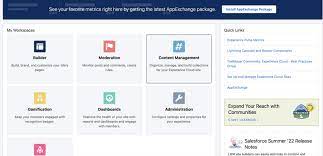
Salesforce CMS: A Comprehensive Overview Salesforce Content Management System empowers organizations to build sites, portals, and forums effortlessly through a user-friendly, declarative builder, offered at a subscription rate of $10,000 per org/month. Users leverage its capabilities to publish and manage various content types such as blogs and banners across multiple channels like emails, websites, mobile apps, and portals. Key Features of Salesforce CMS Benefits of Salesforce CMS Salesforce CMS functions as a hybrid content management system, facilitating seamless content creation and delivery for teams of all skill levels. It integrates deeply with customer data, enabling personalized and efficient content distribution. Real-World Application Andy Jones from NOW, a streaming service by Sky in the U.K., praises Salesforce CMS for accelerating content creation. According to Jones, content creators transition swiftly from novice to mastery without relying on IT or design teams, resulting in visually appealing content. Integration of CRM with CMS enhances customer experiences significantly. Features and Flexibility Tools for Building Experiences Delivering Content to Third-Party Platforms Utilize Salesforce headless APIs to seamlessly deliver content to third-party sites, experiences, or mobile apps. Personalization and Customer-Centric Content Salesforce CMS enhances content personalization by leveraging customer data, enabling teams to craft content that effectively addresses customer pain points, needs, questions, and desires. Turning Data into Content Transform CRM records into visually compelling content such as banners, tile menus, or engaging promotional CTAs, empowering every team member to contribute to enhanced customer experiences. Salesforce CMS stands as a robust, adaptable, and user-friendly solution for organizations aiming to deliver personalized, data-driven content across all customer touchpoints. Like Related Posts Who is Salesforce? Who is Salesforce? Here is their story in their own words. From our inception, we’ve proudly embraced the identity of Read more Salesforce Marketing Cloud Transactional Emails Salesforce Marketing Cloud Transactional Emails are immediate, automated, non-promotional messages crucial to business operations and customer satisfaction, such as order Read more Salesforce Unites Einstein Analytics with Financial CRM Salesforce has unveiled a comprehensive analytics solution tailored for wealth managers, home office professionals, and retail bankers, merging its Financial Read more AI-Driven Propensity Scores AI plays a crucial role in propensity score estimation as it can discern underlying patterns between treatments and confounding variables Read more

Read More
Experience Salesforce Experience Cloud

Experience Salesforce Experience Cloud

Salesforce Experience Cloud, formerly recognized as Salesforce Community Cloud, offers organizations a platform to construct branded online communities for employees, customers, partners, and other stakeholders, fostering collaboration, engagement, and self-service among community members. Key Features: Customization: Experience Cloud facilitates customization, empowering organizations to tailor their community’s appearance to match their brand through custom themes, templates, and layouts. Member Engagement: Various engagement tools like discussion forums, chats, and groups enable members to interact, share information, and collaborate effectively. Content Management: Easily create, manage, and share content within the community, including articles, documents, videos, and more, organized into topics for streamlined navigation. Access Control: Administrators can regulate community access and permissions, defining different levels of access for diverse user groups. Integration: Seamless integration with other Salesforce products and external systems enables connectivity with CRM, marketing automation, and other business applications. Mobile-Responsiveness: Communities built with Experience Cloud are mobile-responsive, ensuring accessibility from different devices. Data Visibility: Users can access relevant data from Salesforce CRM, such as customer records and support cases, within the community. Self-Service: Community members can find answers, access support resources, and resolve issues themselves, reducing the burden on support teams. Analytics: Experience Cloud offers analytics and reporting tools to track community engagement, member activity, and content performance for informed decision-making. Developer Tools: Advanced customization and integration requirements are met through developer tools, APIs, and documentation provided by Salesforce Experience Cloud. Use Cases: Customer Communities: Partner Portals: Employee Communities: B2B Commerce: Knowledge Sharing: Event Management: Custom Applications: Branding and Theming: Analytics and Reporting: Advantages of Salesforce Experience Cloud: Enhanced Customer Engagement: Build interactive communities for customers to find support and connect with each other. Scalable Collaboration: Create communities for various user groups while maintaining security and access control. Personalization: Deliver personalized content and services to enhance user engagement. Brand Consistency: Customize community appearance to ensure a consistent brand experience. Integration: Seamlessly connect with other Salesforce products and external systems. Mobile-Friendly: Communities are accessible from various devices, improving accessibility. Analytics and Insights: Gain valuable insights into community engagement and user behavior. Automation: Automate processes like customer support workflows to save time and improve efficiency. Security: Protect community data with robust security features. Customer and Partner Enablement: Provide easy access to resources and support for customers and partners. Reduced IT Overhead: Configure and customize communities without extensive coding or IT resources. Community Growth: Scale communities as your organization grows. Comparison with Community Cloud: Experience Cloud offers a broader range of functionalities beyond traditional community building. It focuses on creating seamless digital experiences for customers, partners, and employees. It provides enhanced integration capabilities and AI-driven personalization features. The name change reflects Salesforce’s shift towards delivering comprehensive digital experiences. Examples of What Can Be Achieved: Self-Service Portals: Customer support and FAQs. Partner Portals: Lead management and collaboration. Employee Intranets: Collaboration and HR processes. E-Commerce Storefronts: Product catalogs and shopping carts. Discussion Forums: Community interaction and knowledge sharing. Event and Conference Portals: Event registration and agendas. Patient and Healthcare Portals: Medical records and appointment scheduling. Nonprofit Donor Engagement: Fundraising campaigns and volunteer opportunities. Education Portals: Learning materials and discussion boards. Government Portals: Citizen services and public discussions. Financial Services Client Portals: Account information and communication with advisors. Like Related Posts Who is Salesforce? Who is Salesforce? Here is their story in their own words. From our inception, we’ve proudly embraced the identity of Read more Salesforce Marketing Cloud Transactional Emails Salesforce Marketing Cloud Transactional Emails are immediate, automated, non-promotional messages crucial to business operations and customer satisfaction, such as order Read more Salesforce Unites Einstein Analytics with Financial CRM Salesforce has unveiled a comprehensive analytics solution tailored for wealth managers, home office professionals, and retail bankers, merging its Financial Read more AI-Driven Propensity Scores AI plays a crucial role in propensity score estimation as it can discern underlying patterns between treatments and confounding variables Read more

Read More
Salesforce Integration

Salesforce Integrations for Sales and Marketing Teams

First Understand Salesforce Integrations Salesforce integrations involve establishing seamless connections between Salesforce and diverse third-party applications. These applications range from marketing automation tools and customer service software to accounting programs. The purpose is to facilitate a smooth exchange of data, ultimately enhancing Salesforce’s overall functionality. Salesforce integrations for sales and marketing teams brings all the applications needed for the relationship with prospects into one place. Salesforce’s Integration Ecosystem While Salesforce boasts a robust integration ecosystem, featuring over 3,000 integrations available on its AppExchange marketplace. Users can leverage various integration approaches: Salesforce Integrations for Sales and Marketing While there’s no complete universal list of essential Salesforce integrations for sales and marketing, several widely-used integrations cater to diverse needs: No-code Data Automation Integrations: Analytics and Reporting Integrations: Email Marketing Automation Integration: Data Storage Integration: Communications Apps Integrations: Project Management Tools Integration: Account Management Integration: CRM Tools Integration: Helpdesk Integrations: Feedback Tools Integration: These integrations facilitate efficient data handling, analytics, communication, project management, and more within sales and marketing teams. Integrations for Sales and Marketing Tools Salesforce seamlessly integrates with various tools relevant to Sales and Marketing teams, including but not limited to: Salesforce Integration with Teams and Workday The Salesforce AppExchange Salesforce’s Role in Sales and Marketing Salesforce Marketing Cloud Salesforce and ERP Integration Digital Marketing and Salesforce Salesforce’s Role in Marketing Automation Content updated November 2023. Like Related Posts Who is Salesforce? Who is Salesforce? Here is their story in their own words. From our inception, we’ve proudly embraced the identity of Read more Salesforce Marketing Cloud Transactional Emails Salesforce Marketing Cloud Transactional Emails are immediate, automated, non-promotional messages crucial to business operations and customer satisfaction, such as order Read more Salesforce Unites Einstein Analytics with Financial CRM Salesforce has unveiled a comprehensive analytics solution tailored for wealth managers, home office professionals, and retail bankers, merging its Financial Read more AI-Driven Propensity Scores AI plays a crucial role in propensity score estimation as it can discern underlying patterns between treatments and confounding variables Read more

Read More
Salesforce Success Story

Case Study: Automated CRM for Fundraising Development and Grants

The largest integrated, not-for-profit group practice in the world. Physicians and scientists from every medical specialty work in collaborative teams to advance discovery and translational research on behalf of patients. Client is a single institution located at three main campuses and over 70 smaller hospitals, laboratories and other facilities. Client’s unique, team-based approach to science is supported by world class resources, core facilities, and computing and other infrastructure. Automated CRM for Fundraising Development and Grants.

Read More
gettectonic.com