

Corporate Archives - gettectonic.com - Page 11
Revolutionizing Public Sector Efficiency

Revolutionizing Public Sector Efficiency

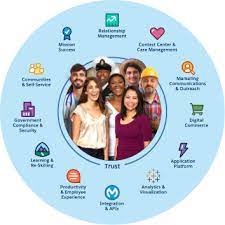
Salesforce: Transforming and Revolutionizing Public Sector Efficiency Salesforce, known worldwide as the premier CRM solution, continues to innovate with its adaptable features tailored to diverse audiences. It excels in delivering cutting-edge solutions, addressing unique needs across various industries and sectors. Particularly, the public sector stands to gain substantial benefits from Salesforce’s capabilities, offering a suite of solutions poised to optimize operations within any public office setting. Understanding the Role of Salesforce in the Public Sector The public sector encompasses the administrative segment responsible for managing essential citizen concerns at state, local, federal, and governmental agency levels. While carrying out critical tasks, these entities can significantly enhance efficiency with the right tools. Salesforce is dedicated to optimizing and streamlining processes within the public sector, recognizing its vital importance. Government offices face similar expectations to private enterprises, with citizens anticipating service quality on par with commercial experiences. Therefore, public entities must deliver efficiency, agility, and direct engagement to demonstrate proximity to the populace. In response to these expectations, Salesforce has developed a range of solutions tailored to the specific demands of the public sector. Revolutionizing Public Sector Efficiency Salesforce’s offerings for the public sector include meticulously crafted applications designed to meet its unique requirements. These flexible and secure e-government tools aim to revolutionize the sector’s experience, providing a comprehensive view of citizens and enhancing the efficacy of public employees. By simplifying processes and fostering innovation, these solutions drive efficiency at both organizational and individual levels, facilitating smoother operations. Integrated into Public Sector Solutions, these offerings leverage Salesforce’s standard functionalities and Service Cloud capabilities. Additionally, they enable the creation of an Experience Cloud site, allowing citizens seamless access to government services. Known as a Citizen Portal. Some of the available solutions cater to general tasks managed by public sector agencies, including: Thanks to these solutions, citizens can effortlessly navigate various processes, such as applying for licenses or permits. Through an online portal accessible at all times, individuals can interact seamlessly with public service agencies. Intelligent forms dynamically adjust based on user input, simplifying the submission process. From an employee standpoint, work processes are streamlined, with all citizen requests conveniently consolidated in one location. The system offers recommendations to guide employees, simplifies task delegation, and ensures seamless collaboration across departments. Key Advantages of Salesforce Solutions for the Public Sector Salesforce solutions offer numerous advantages to the public sector, aligning with citizens’ and employees’ current demands. These include: Salesforce emerges as an invaluable ally in the public sector’s modernization journey, transforming processes to be more agile and efficient. For organizations seeking to implement Salesforce solutions tailored for the public sector, the Tectonic team stands ready to assist. In the ever-evolving landscape of public administration and government services, the need for advanced, secure, and user-friendly technology solutions has never been more crucial. Enter Salesforce Public Sector Cloud—a dynamic platform designed to transform how government agencies engage with citizens, deliver services, and drive efficiency in their operations. Overview of Salesforce Public Sector Cloud: Salesforce Public Sector Cloud is a specialized offering tailored to meet the unique needs of government entities at all levels. Whether it’s federal, state, or local government agencies, the platform is engineered to enhance collaboration, streamline processes, and ultimately improve the delivery of public services. Key Features and Capabilities: Real-World Impact: Several government agencies have already embraced Salesforce Public Sector Cloud, realizing tangible benefits in their day-to-day operations. From improved citizen satisfaction to streamlined internal processes, the impact of this cloud solution is evident across various use cases. Challenges and Considerations: While Salesforce Public Sector Cloud offers numerous advantages, it’s essential to consider potential challenges. These may include customization complexities, data migration issues, and the need for comprehensive training for government personnel. A thoughtful and well-executed implementation strategy is crucial to overcoming these challenges. Salesforce Introduces Public Sector Einstein 1 for Service: Salesforce today announced Public Sector Einstein 1 for Service, including CRM, trusted AI, and data capabilities. What’s new in compliance: Salesforce also now offers several Federal Risk and Authorization Management Program (FedRAMP) compliant tools to help government agencies drive efficiency and productivity while meeting regulatory requirements. These tools include:  Content updated April 2024. Like Related Posts Who is Salesforce? Who is Salesforce? Here is their story in their own words. From our inception, we’ve proudly embraced the identity of Read more Salesforce Marketing Cloud Transactional Emails Salesforce Marketing Cloud Transactional Emails are immediate, automated, non-promotional messages crucial to business operations and customer satisfaction, such as order Read more Salesforce Unites Einstein Analytics with Financial CRM Salesforce has unveiled a comprehensive analytics solution tailored for wealth managers, home office professionals, and retail bankers, merging its Financial Read more AI-Driven Propensity Scores AI plays a crucial role in propensity score estimation as it can discern underlying patterns between treatments and confounding variables Read more

Read More

Keys to Writing Meaningful Email Content

By Tectonic’s Salesforce Marketing Consultant, Shannan Hearne Email marketing remains a powerful tool for businesses to engage with their prospects and customers. Writing meaningful email content takes time and practice. It’s essential to recognize that your recipients and subscribers face a constant barrage of emails. The challenge becomes making your email stand out in the inbox, prompt subscribers to open, read, and respond to your desired Call to Action.  Here are proven methods to enhance the interest, effectiveness, and credibility of your emails: Stay Relevant: Set a Content Hierarchy: Tell a Story: Keep it Simple: Trim it Back and Clean it Up: Grab Their Attention: Include a Preheader: Save Time with AI: Drive Results with a Strong CTA: Test. Test. Test Again: By adhering to these email content tips, you can create emails that are engaging, effective, and eagerly anticipated by your readers. Whether focusing on relevance, storytelling, simplicity, or testing, these strategies will highlight the interest, effectiveness, and trustworthiness of your brand. Start crafting those emails and monitor their success. If you are struggling with the challenge of writing meaningful email content, Tectonic consultants can help. Contact us today. Like Related Posts Who is Salesforce? Who is Salesforce? Here is their story in their own words. From our inception, we’ve proudly embraced the identity of Read more Salesforce Marketing Cloud Transactional Emails Salesforce Marketing Cloud Transactional Emails are immediate, automated, non-promotional messages crucial to business operations and customer satisfaction, such as order Read more Salesforce Unites Einstein Analytics with Financial CRM Salesforce has unveiled a comprehensive analytics solution tailored for wealth managers, home office professionals, and retail bankers, merging its Financial Read more AI-Driven Propensity Scores AI plays a crucial role in propensity score estimation as it can discern underlying patterns between treatments and confounding variables Read more
Read More
Salesforce Shield Data Monitoring and Encryption

Salesforce Shield

Salesforce Shield is tailored for companies with heightened security and compliance considerations. Comprising four products that layer onto existing Salesforce products, it provides additional protection.  Shields are used to intercept specific attacks.  Shield is no different. Salesforce Shield is a trio of security tools that helps you build extra levels of trust, compliance, and governance right into your business-critical app. These components include: Is Salesforce Shield necessary? In this sense, Shield gives you a helping hand through tools like event monitoring and field audit trails. Not only do these features practically help you maintain the security of your Salesforce environment, but they’re also proof of your compliance. How do I use shield in Salesforce? What are the benefits of Salesforce Shield? Shield can help you protect your apps. Salesforce Shield is basically a set of security solutions that allows you to incorporate additional layers of trust, compliance, and governance into your mission-critical apps. Shield Platform Encryption, Event Monitoring, and Field Audit Trail are all included. Does Shield work with marketing cloud? You can use Salesforce Shield and Field-Level Encryption with Sales and Service Clouds. The Marketing Cloud does not offer Audit Trail or Event Monitoring via the Marketing Cloud app. However, Field-Level Encryption does encrypt data at rest and can support Platform Encryption users. Like Related Posts Who is Salesforce? Who is Salesforce? Here is their story in their own words. From our inception, we’ve proudly embraced the identity of Read more Salesforce Marketing Cloud Transactional Emails Salesforce Marketing Cloud Transactional Emails are immediate, automated, non-promotional messages crucial to business operations and customer satisfaction, such as order Read more Salesforce Unites Einstein Analytics with Financial CRM Salesforce has unveiled a comprehensive analytics solution tailored for wealth managers, home office professionals, and retail bankers, merging its Financial Read more AI-Driven Propensity Scores AI plays a crucial role in propensity score estimation as it can discern underlying patterns between treatments and confounding variables Read more
Read More
AI Drives Insights

AI Drives Insights

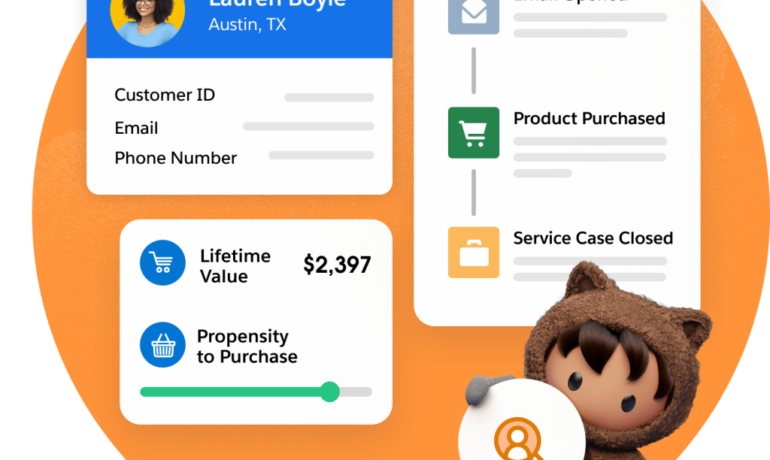
Innovations from Salesforce, HubSpot, and One AI are driving deeper insights and streamlining processes. Key Takeaways: AI is transforming the way businesses operate, and customer relationship management (CRM) is no exception. AI has been influencing the CRM space for years, but its impact is now reaching new heights. By harnessing AI algorithms, modern CRM systems offer predictive analytics and deeper insights, enabling brands to understand their customers on an unprecedented level. Advanced AI-enabled CRMs even incorporate sentiment analysis to gauge customer perceptions and provide automation tools to free marketers from mundane tasks. The global AI market, currently valued at 2.3 billion, continues to expand rapidly. From 2020 to 2022, annual corporate investments in AI startups increased by $5 billion, reflecting the growing demand for AI-driven innovations. As CRM vendors introduce more AI capabilities, it’s important to understand the unique approaches each one takes to differentiate themselves and deliver specific benefits. Salesforce and Einstein GPT: A New Era with OpenAI’s ChatGPT On March 7, 2023, Salesforce introduced Einstein GPT, a generative AI technology integrated into its CRM platform. Combining real-time data from Salesforce’s Data Cloud with OpenAI’s ChatGPT, Einstein GPT allows users to input natural-language prompts to streamline tasks and decision-making. Salesforce has long invested in AI. In 2017, it launched its Einstein AI as part of Service Cloud. By 2019, Salesforce had partnered with OpenAI to explore AI research and integrate advanced models into its ecosystem. The acquisition of Slack in 2020 further strengthened its AI capabilities by incorporating advanced messaging and communication tools into the CRM environment. Marc Benioff, CEO of Salesforce, highlighted the significance of AI’s growth: “The world is experiencing one of the most profound technological shifts with real-time technologies and generative AI. This comes at a pivotal moment as every company is focused on connecting with their customers in more intelligent, automated, and personalized ways.” Einstein GPT is set to transform customer engagement, with applications across Salesforce’s various platforms, including Tableau, MuleSoft, and Slack. HubSpot CRM: AI-Powered Content Assistant A day before Salesforce’s AI announcement, HubSpot revealed its own AI-powered features: the Content Assistant and ChatSpot.ai. These tools aim to enhance CRM users’ productivity while creating stronger connections with customers. HubSpot’s Content Assistant helps marketing and sales teams ideate, create, and share content through generative AI capabilities. It can suggest blog titles, create content outlines, and assist with crafting content for blogs, emails, landing pages, and websites. ChatSpot.ai, on the other hand, offers a natural-language chat experience to simplify CRM tasks for HubSpot users. HubSpot has also invested in AI for other functions, including conversation intelligence, data enrichment, predictive analytics, and content optimization, solidifying its position in the AI-driven CRM landscape. With AI advancements from companies like Salesforce, HubSpot, and One AI, the future of CRM is poised for enhanced efficiency, automation, and personalized customer interactions. Like Related Posts Who is Salesforce? Who is Salesforce? Here is their story in their own words. From our inception, we’ve proudly embraced the identity of Read more Salesforce Marketing Cloud Transactional Emails Salesforce Marketing Cloud Transactional Emails are immediate, automated, non-promotional messages crucial to business operations and customer satisfaction, such as order Read more Salesforce Unites Einstein Analytics with Financial CRM Salesforce has unveiled a comprehensive analytics solution tailored for wealth managers, home office professionals, and retail bankers, merging its Financial Read more AI-Driven Propensity Scores AI plays a crucial role in propensity score estimation as it can discern underlying patterns between treatments and confounding variables Read more
Read More
data cloud and marketing cloud personalization

Data Cloud and Marketing Cloud Personalization

Choosing the correct Customer Data Platform (CDP) for your organization is crucial for adapting to challenges and capitalizing on opportunities in the evolving marketing technology landscape. While AI, behavioral patterns, and infrastructure play pivotal roles in this decision-making process, it’s essential to understand the landscape. However, the same factors, including AI, behavioral habits, and infrastructure, can influence this decision. Data Cloud and Marketing Cloud Personalization together capture and utilize customer data. Selecting the right tools makes it easier to know and cater to your prospects and customers. Without them, you are firing into the darkness. You must understand the necessary infrastructure for a marketing technology team to meet challenges and leverage new opportunities. It integrates four essential AdTech (Advertising Technology) principles applicable to MarTech in the evolving landscape. The external market poses challenges, notably the discontinuation of third-party cookies by major browsers like Google. This shift impacts prospecting and underscores the significance of first-party data. The rise of AI, exemplified by technologies like ChatGPT and integrated into platforms like Salesforce’s Einstein, further complicates the landscape. The AI era raises concerns about data usage and collection, employment risks, and the ethical consideratins. Organizations rush to incorporate AI, with Salesforce introducing Einstein GPT shortly after the emergence of ChatGPT. In this dynamic environment, organizations grapple with managing diverse data sources, implementing AI/ML, and ensuring privacy. AdTech principles become imperative in MarTech for effective targeting, personalization, and measurement. The focus shifts to the role of a Customer Data Platform (CDP) within the MarTech stack. Distinguishing between Data Management Platforms (DMPs), CDPs, Data Warehouses, and Data Lakes sets the stage. The article explores three CDP types: Enterprise, Event-Based, and Real-Time Personalization. The significance of a Customer Data Platform (CDP) like Salesforce’s Data Cloud cannot be stressed enough. Bear in mind there are differences between DMPs, CDPs, Data Warehouses, and Data Lakes, each with their own use cases. And for your situation a DMP, Data Warehouse, or Data Lake might be required. Salesforce’s CDP platform undergoes scrutiny, aligning its features with AdTech principles. Read more about Tectonic’s thoughts on Data Cloud here. The CDP’s contribution to targeting, personalization, and both deterministic and probabilistic measurement is detailed. Salesforce’s Data Cloud and Marketing Cloud Personalization (Interaction Studio) emerge as solutions catering to distinct needs. In conclusion we must underscore the criticality of choosing the right CDP for organizational resilience, superior customer experiences, and addressing privacy concerns. A robust infrastructure facilitates efficient data management, collaboration, and scalability, empowering organizations to make informed decisions with AI/ML and business intelligence. #data-cloud-and-marketing-cloud-personalization Like2 Related Posts Who is Salesforce? Who is Salesforce? Here is their story in their own words. From our inception, we’ve proudly embraced the identity of Read more Salesforce Marketing Cloud Transactional Emails Salesforce Marketing Cloud Transactional Emails are immediate, automated, non-promotional messages crucial to business operations and customer satisfaction, such as order Read more Salesforce Unites Einstein Analytics with Financial CRM Salesforce has unveiled a comprehensive analytics solution tailored for wealth managers, home office professionals, and retail bankers, merging its Financial Read more AI-Driven Propensity Scores AI plays a crucial role in propensity score estimation as it can discern underlying patterns between treatments and confounding variables Read more

Read More
Salesforce Document Generation

Generative AI

Artificial Intelligence in Focus Generative Artificial Intelligence is a type of artificial intelligence technology that can produce various types of content, including text, imagery, audio and synthetic data. What is the difference between generative AI and general AI? Traditional AI focuses on analyzing historical data and making future numeric predictions, while generative AI allows computers to produce brand-new outputs that are often indistinguishable from human-generated content. Recently, there has been a surge in discussions about artificial intelligence (AI), and the spotlight on this technology seems more intense than ever. Despite AI not being a novel concept, as many businesses and institutions have incorporated it in various capacities over the years, the heightened interest can be attributed to a specific AI-powered chatbot called ChatGPT. ChatGPT stands out by being able to respond to plain-language questions or requests in a manner that closely resembles human-written responses. Its public release allowed people to engage in conversations with a computer, creating a surprising, eerie, and evocative experience that captured widespread attention. This ability of an AI to engage in natural, human-like conversations represents a notable departure from previous AI capabilities. The Artificial Intelligence Fundamentals badge on the Salesforce Trailhead delves into the various specific tasks that AI models are trained to execute, highlighting the remarkable potential of generative AI, particularly in its ability to create diverse forms of text, images, and sounds, leading to transformative impacts both in and outside the workplace. Let’s explore the tasks that generative AI models are trained to perform, the underlying technology, and how businesses are specializing within the generative AI ecosystem. It also delves into concerns that businesses may harbor regarding generative Artificial Intelligence. Exploring the Capabilities of Language Models While generative AI may appear as a recent phenomenon, researchers have been developing and training generative AI models for decades. Some notable instances made headlines, such as Nvidia unveiling an AI model in 2018 capable of generating photorealistic images of human faces. These instances marked the gradual entry of generative AI into public awareness. While some researchers focused on AI’s capabilities generating specific types of images, others concentrated on language-related AI. This involved training AI models to perform various tasks related to interpreting text, a field known as natural language processing (NLP). Large language models (LLMs), trained on extensive datasets of real-world text, emerged as a key component of NLP, capturing intricate language rules that humans take years to learn. Summarization, translation, error correction, question answering, guided image generation, and text-to-speech are among the impressive tasks accomplished by LLMs. They provide a tool that significantly enhances language-related tasks in real-world scenarios. Predictive Nature of Generative AI Despite the remarkable predictions generated by generative AI in the form of text, images, and sounds, it’s crucial to clarify that these outputs represent a form of prediction rather than a manifestation of “thinking” by the computer. Generative Artificial Intelligence doesn’t possess opinions, intentions, or desires; it excels at predicting sequences of words based on patterns learned during training. Understanding this predictive nature is key. The AI’s ability to predict responses aligns with expectations rather than reflecting any inherent understanding or preference. Recognizing the predictive character of generative AI underscores its role as a powerful tool, bridging gaps in language-related tasks for both professional and recreational purposes. Like Related Posts Who is Salesforce? Who is Salesforce? Here is their story in their own words. From our inception, we’ve proudly embraced the identity of Read more Salesforce Marketing Cloud Transactional Emails Salesforce Marketing Cloud Transactional Emails are immediate, automated, non-promotional messages crucial to business operations and customer satisfaction, such as order Read more Salesforce Unites Einstein Analytics with Financial CRM Salesforce has unveiled a comprehensive analytics solution tailored for wealth managers, home office professionals, and retail bankers, merging its Financial Read more AI-Driven Propensity Scores AI plays a crucial role in propensity score estimation as it can discern underlying patterns between treatments and confounding variables Read more
Read More
Salesforce Service Cloud Einstein

Salesforce Service Cloud Einstein

Einstein for Service is a robust suite of time-saving Artificial Intelligence features designed to empower agents in delivering exceptional customer service experiences. Salesforce Service Cloud Einstein-learn more. Customer service has evolved from being a cost center to a growth driver, and leading companies are prioritizing customer service to increase brand loyalty. In Service Cloud Einstein, various AI technologies, such as Machine Learning (ML), deep learning, predictive analytics, Natural Language Processing (NLP), and smart data discovery, work collaboratively to enhance customer support, providing faster and better service. Salesforce Einstein, recognized as the world’s first “generative AI” built for CRM, seamlessly integrates into multiple Salesforce products, including Marketing Cloud, Sales Cloud, and Service Cloud. Sales Cloud incorporates Einstein in the form of eight essential tools: Salesforce Einstein, since its inception in 2016, has been at the forefront of CRM AI technology, delivering personalized and predictive experiences for enhanced professionalism. Salesforce Service Cloud is a CRM platform focused on providing service and support to business customers. It is an extension of the Sales Cloud product tailored for sales professionals. Service Cloud Einstein is utilized by notable companies like Thomson Reuters, Southern Glazer’s Wine and Spirits, Cisco, and Skillsoft. Service Cloud Einstein benefits businesses by providing efficient customer service, with Einstein GPT responding promptly to inquiries, offering precise responses, enhancing customer satisfaction, and reducing resolution time. Studies show that in the same time 3 customers could be serviced before Service Cloud Einstein, now ten can be taken care of. The difference between Einstein GPT and ChatGPT lies in their design, with Einstein GPT specifically tailored for Salesforce users and clouds, while ChatGPT is a more versatile model for general use. Einstein is available for free with Salesforce’s Developer Edition, providing access to most platform features for building and testing custom applications and integrations using Einstein. Salesforce Sales Cloud and Service Cloud differ in their focus, with Sales Cloud concentrating on sales processes, while Service Cloud centers around customer service and support. Einstein remains the overarching AI brand for Salesforce, present across the portfolio, including within Tableau. Einstein Discovery is available as part of Tableau CRM Plus or through Einstein Predictions. Are you ready to explore the power of Einstein in your Salesforce Service Cloud implementation? Contact Tectonic today. Tectonic is please to announce Salesforce Service Cloud Implementation Solutions. Content updated January 2024. Like1 Related Posts Who is Salesforce? Who is Salesforce? Here is their story in their own words. From our inception, we’ve proudly embraced the identity of Read more Salesforce Marketing Cloud Transactional Emails Salesforce Marketing Cloud Transactional Emails are immediate, automated, non-promotional messages crucial to business operations and customer satisfaction, such as order Read more Salesforce Unites Einstein Analytics with Financial CRM Salesforce has unveiled a comprehensive analytics solution tailored for wealth managers, home office professionals, and retail bankers, merging its Financial Read more AI-Driven Propensity Scores AI plays a crucial role in propensity score estimation as it can discern underlying patterns between treatments and confounding variables Read more
Read More

Tectonic at a Glance

Tectonic delivered over 500 successful implementations. Tectonic at a Glance 4.9 Customer Satisfaction Rating Salesforce partner delivering innovative business results through Sales, Service, Marketing, & Experience Clouds. Tectonic at a Glance We help our customers transform their organizations to be more data-driven through: Contact Tectonic today. ​ Like Related Posts Who is Salesforce? Who is Salesforce? Here is their story in their own words. From our inception, we’ve proudly embraced the identity of Read more Salesforce Marketing Cloud Transactional Emails Salesforce Marketing Cloud Transactional Emails are immediate, automated, non-promotional messages crucial to business operations and customer satisfaction, such as order Read more Salesforce Unites Einstein Analytics with Financial CRM Salesforce has unveiled a comprehensive analytics solution tailored for wealth managers, home office professionals, and retail bankers, merging its Financial Read more AI-Driven Propensity Scores AI plays a crucial role in propensity score estimation as it can discern underlying patterns between treatments and confounding variables Read more
Read More
Personalization in Marketing Cloud

Personalization in Marketing Cloud

Salesforce Marketing Cloud offers various methods to personalize and dynamically adjust your email content. With Personalization in Marketing Cloud, however, distinguishing between AMPscript, Personalization Strings, and Dynamic Content can be challenging for those unfamiliar with the platform. Let’s break down these three tools and explore when each one is best suited for use. AMPscript AMPscript is like the “Iron Chef America” of email personalization. This programming language enables you to incorporate dynamic content into your emails, creating intricate logic and personalization, including conditional statements and loops. AMPscript empowers you to craft highly personalized and targeted emails, making recipients feel uniquely valued. However, AMPscript demands some technical proficiency and may be more intricate to utilize compared to other tools. If coding isn’t your forte, it’s advisable to defer to experienced professionals at Tectonic. Building relationships with developers can be invaluable—trust mes, it’s worth it! Personalization Strings On the flip side, Personalization Strings are like the “Easy-Bake Oven” of email personalization. They’re user-friendly and don’t necessitate technical expertise. Personalization Strings act as placeholders inserted into your email content, later substituted with data from a subscriber’s record. For instance, you can employ Personalization Strings to inject a subscriber’s name or location into your email. They offer a straightforward means to introduce basic personalization into your emails without needing technical know-how. However, don’t expect them to handle complex personalization tasks. Dynamic Content Dynamic Content operates akin to the “Pick-A-Meal Machine” at a fast-food joint. It enables you to craft various versions of the same email and exhibit distinct versions to different subscribers based on specific criteria. For instance, you can tailor one email version for male subscribers and another for female subscribers. Dynamic Content proves invaluable for creating highly targeted and personalized emails without necessitating complex logic or technical expertise. But, it’s more limited compared to AMPscript in terms of customization depth. Summary In conclusion, Salesforce Marketing Cloud furnishes multiple avenues for personalizing and dynamically altering your email content. With the right knowledge, you can select the appropriate tool for the task, crafting effective campaigns to engage your audience. Remember, AMPscript is for the adept or those fluent in developer-speak, Personalization Strings cater to the fundamentals, and Dynamic Content caters to the discerning tastes of the email world! Like Related Posts Who is Salesforce? Who is Salesforce? Here is their story in their own words. From our inception, we’ve proudly embraced the identity of Read more Salesforce Marketing Cloud Transactional Emails Salesforce Marketing Cloud Transactional Emails are immediate, automated, non-promotional messages crucial to business operations and customer satisfaction, such as order Read more Salesforce Unites Einstein Analytics with Financial CRM Salesforce has unveiled a comprehensive analytics solution tailored for wealth managers, home office professionals, and retail bankers, merging its Financial Read more AI-Driven Propensity Scores AI plays a crucial role in propensity score estimation as it can discern underlying patterns between treatments and confounding variables Read more

Read More
AI All Grown Up

Understanding Generative AI and Predictive AI

Understanding Generative AI and Predictive AI: A Synergistic Approach Artificial Intelligence (AI) is broadly categorized into two key branches: Generative AI and Predictive AI. Both play a crucial role across various industries, from healthcare and fintech to logistics and education. Their impact is undeniable, driving efficiency, accuracy, and innovation. However, this is not a debate about Generative AI versus Predictive AI. Instead, it is an exploration of both branches and how they contribute to technological advancement. Let’s dive in. Generative AI vs. Predictive AI: An Overview Generative AI has been around for decades, with early iterations like Generative Adversarial Networks (GANs) and Variational Autoencoders (VAEs). While these earlier models saw limited enterprise adoption, the success of ChatGPT demonstrated the vast potential of Generative AI in producing articulate, human-like content. Conversely, Predictive AI is widely used across industries to correlate data and support decision-making. It is particularly prevalent in applications like cybersecurity, inventory management, and digital twin technology. Businesses increasingly recognize the benefits of both AI branches. From automating processes to creating digital replicas for scenario testing, AI applications continue to evolve. The goal now is not to compare Generative AI and Predictive AI, but to understand their mechanisms and potential for seamless integration. Are you fully leveraging AI in your enterprise? If not, or if you have questions, feel free to reach out. Now, let’s delve into how these AI branches work. What is Generative AI? Generative AI is transforming industries by producing text, code, music, and even videos. Companies use it to analyze vast datasets and generate content instantaneously. Key Applications of Generative AI: By 2026, over 80% of businesses are expected to incorporate Generative AI into their workflows. While implementation can be complex, expert guidance can help streamline the process. How Does Generative AI Work? Generative AI leverages machine learning (ML) and big data to analyze input forms—such as text, images, or sound—and learn their structures. Once trained, it generates new content without merely replicating existing data, making it a powerful tool for innovation. Generative AI in Action: If you’re uncertain about how to implement Generative AI in your business, consulting with experts can provide clarity. What is Predictive AI? Predictive AI, or predictive analytics, forecasts future outcomes based on historical data. It empowers businesses to make informed decisions by identifying patterns and trends. Key Applications of Predictive AI: Predictive AI improves decision-making capabilities by analyzing large datasets and refining machine learning algorithms. Integrating it with other analytics tools enhances its effectiveness and mitigates implementation challenges. Predictive AI in Action: Predictive AI’s ability to anticipate market trends and consumer behavior makes it a valuable tool for businesses looking to stay ahead. Generative AI vs. Predictive AI: Key Differences While Generative AI focuses on creating new content based on learned data patterns, Predictive AI forecasts future outcomes using historical data. These two models are not competing forces; rather, they complement each other in building comprehensive business strategies. Both models require a strong foundation in data governance and cybersecurity to ensure ethical and effective AI implementation. The Future of AI: Generative vs. Predictive According to McKinsey, the combined impact of Generative and Predictive AI could contribute up to $4.4 trillion annually to the global economy. What’s Next for AI? Generative AI: Predictive AI: Both Generative and Predictive AI are poised to shape the future of AI-driven industries. Businesses that embrace both models will gain a competitive edge in innovation and strategic decision-making. Conclusion Generative and Predictive AI are not opposing technologies; they are complementary forces that drive efficiency, accuracy, and creativity. Their applications span numerous industries, proving their immense value in today’s tech-driven world. Navigating AI implementation can be complex, but expert guidance can simplify the process. If you have questions about integrating AI into your business, consulting with professionals can help you harness its full potential. The future of business is deeply intertwined with AI—taking the right steps today will ensure success in the years ahead. Let Tectonic take you to the AI world. Like Related Posts Who is Salesforce? Who is Salesforce? Here is their story in their own words. From our inception, we’ve proudly embraced the identity of Read more Salesforce Marketing Cloud Transactional Emails Salesforce Marketing Cloud Transactional Emails are immediate, automated, non-promotional messages crucial to business operations and customer satisfaction, such as order Read more Salesforce Unites Einstein Analytics with Financial CRM Salesforce has unveiled a comprehensive analytics solution tailored for wealth managers, home office professionals, and retail bankers, merging its Financial Read more AI-Driven Propensity Scores AI plays a crucial role in propensity score estimation as it can discern underlying patterns between treatments and confounding variables Read more
Read More
Explore Salesforce Experience Cloud

Explore Salesforce Experience Cloud

Empowering Businesses with Exceptional Salesforce Cloud Solutions Explore the transformative work we have done for our clients with Salesforce Experience Cloud, showcasing some of the exceptional solutions we have implemented. Through our strategic initiatives, we have enabled organizations across various industries to leverage the full potential of Salesforce Clouds to enhance user engagement, streamline operations, and achieve significant business growth. Our success stories reflect the diverse challenges our clients faced and the optimized solutions we provided to address them. For instance, by revamping an recruiting portal for a prominent American government agency, we reduced issues related to recruting, onboarding, and retaining talent. Tectonic’s approach incorporates the latest Salesforce technologies, such as Lightning Web Components, Service Cloud, and Experience Cloud, to deliver high-performing, scalable solutions. From improving partner portals for better partner support to transforming community portals for enhanced user experience, our solutions are designed to meet specific client needs while ensuring long-term adaptability and success. Manufacturing – Experience Cloud Case Study Public Sector – Experience Cloud and Grants Management Case Study Manufacturing – Sales, Service, Marketing, and Partner Community Case Study Manufacturing – Sales, Service, Marketing and Experience Cloud Case Study Branded Solutions Manufacturing – Sales, Service, and Experience Cloud Case Study Nonprofit Hospitality – Service and Experience Cloud Case Study Tribal Government – Health, Marketing, MuleSoft, and Experience Cloud Case Study Restaurant – Sales, Service, and Experience Cloud Case Study Federal Government – Nonprofit Talent Acquisition Experience Cloud Case Study Higher Education Software – Sales, Service and Experience Cloud Case Study Salesforce Partner Portals Built on Salesforce Experience Cloud Explore all Tectonic Salesforce Implementation Solutions Like Related Posts Who is Salesforce? Who is Salesforce? Here is their story in their own words. From our inception, we’ve proudly embraced the identity of Read more Salesforce Marketing Cloud Transactional Emails Salesforce Marketing Cloud Transactional Emails are immediate, automated, non-promotional messages crucial to business operations and customer satisfaction, such as order Read more Salesforce Unites Einstein Analytics with Financial CRM Salesforce has unveiled a comprehensive analytics solution tailored for wealth managers, home office professionals, and retail bankers, merging its Financial Read more AI-Driven Propensity Scores AI plays a crucial role in propensity score estimation as it can discern underlying patterns between treatments and confounding variables Read more
Read More
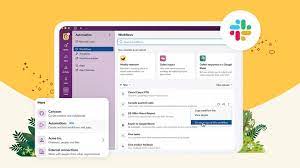
Slack's Next Gen Platform Released

Slack’s Next Gen Platform Released

The Salesforce Slack platform lets you extend, expand, and automate your workspaces all while collaborating. Slacks Next Gen Platform Released. Slacks Next Gen Platform Released Slack’s advanced platform, initially in the beta phase for developers, is now progressively rolling out to all teams. Following nearly three years of community-driven experimentation, development, and testing, Slack is excited for you to explore the possibilities it unlocks for your teams: Modular Architecture: Introduce yourself to a new modular architecture rooted in building blocks like functions, triggers, and workflows. These elements are remixable, reusable, and seamlessly connect to the data flow within Slack. Enhanced Developer Experience: Enjoy a faster, more intuitive developer interface with new tools such as the Slack CLI and TypeScript SDK. These tools simplify and clarify the often tedious aspects of building atop the Slack platform. Secure Infrastructure: Benefit from secure deployment, data storage, and authentication powered by Slack-managed serverless infrastructure. The fast Deno-based TypeScript runtime keeps your focus on coding and user experience. Flexible User Experience: Experience a flexible user interface that facilitates easy sharing of your creations within Slack. Introduce a link trigger to make your workflow portable—share it in messages, add it to bookmarks, incorporate it into a canvas, and more. Slack Seeks Feedback Acknowledging the importance of feedback from developers, admins, and users, Slack understands the challenges encountered while building custom integrations. From ensuring enterprise readiness to keeping integrations up-to-date with new Slack features, your input has guided every decision, leading them to this point. The platform’s distinction lies in its extensive options and robust support, offering a fluid and expansive development experience. This approach has allowed Salesforce and Slack to explore innovative ways to integrate support structures directly within Slack, as echoed by Tyler Beckett, SaaS Operations Engineer at Workiva. Slacks Next Gen Platform Released to Include More Automation Slack’s platform is also designed to make workflows automatically extensible to the Slack surfaces of today and tomorrow. Focus on business logic, and Slack will ensure your functions and workflows seamlessly work in any new experience introduced in Slack. For example, the canvas is a new persistent surface where teams can create, curate, and share essential information like text, files, link unfurls, and more in a single view. From day one, you can embed workflows too, making it easy to discover and use them in a relevant context, such as adding an IT request workflow to an onboarding canvas. Talk to Tectonic today about adding Salesforce Slack to your Salesforce ecosystem. Like Related Posts Who is Salesforce? Who is Salesforce? Here is their story in their own words. From our inception, we’ve proudly embraced the identity of Read more Salesforce Marketing Cloud Transactional Emails Salesforce Marketing Cloud Transactional Emails are immediate, automated, non-promotional messages crucial to business operations and customer satisfaction, such as order Read more Salesforce Unites Einstein Analytics with Financial CRM Salesforce has unveiled a comprehensive analytics solution tailored for wealth managers, home office professionals, and retail bankers, merging its Financial Read more AI-Driven Propensity Scores AI plays a crucial role in propensity score estimation as it can discern underlying patterns between treatments and confounding variables Read more

Read More
tectonic logo

AI Large Language Models

What Exactly Constitutes a Large Language Model? Picture having an exceptionally intelligent digital assistant that extensively combs through text, encompassing books, articles, websites, and various written content up to the year 2021. Yet, unlike a library that houses entire books, this digital assistant processes patterns from the textual data it undergoes. This digital assistant, akin to a large language model (LLM), represents an advanced computer model tailored to comprehend and generate text with humanlike qualities. Its training involves exposure to vast amounts of text data, allowing it to discern patterns, language structures, and relationships between words and sentences. How Do These Large Language Models Operate? Fundamentally, large language models, exemplified by GPT-3, undertake predictions on a token-by-token basis, sequentially building a coherent sequence. Given a request, they strive to predict the subsequent token, utilizing their acquired knowledge of patterns during training. These models showcase remarkable pattern recognition, generating contextually relevant content across diverse topics. The “large” aspect of these models refers to their extensive size and complexity, necessitating substantial computational resources like powerful servers equipped with multiple processors and ample memory. This capability enables the model to manage and process vast datasets, enhancing its proficiency in comprehending and generating high-quality text. While the sizes of LLMs may vary, they typically house billions of parameters—variables learned during the training process, embodying the knowledge extracted from the data. The greater the number of parameters, the more adept the model becomes at capturing intricate patterns. For instance, GPT-3 boasts around 175 billion parameters, marking a significant advancement in language processing capabilities, while GPT-4 is purported to exceed 1 trillion parameters. While these numerical feats are impressive, the challenges associated with these mammoth models include resource-intensive training, environmental implications, potential biases, and more. Large language models serve as virtual assistants with profound knowledge, aiding in a spectrum of language-related tasks. They contribute to writing, offer information, provide creative suggestions, and engage in conversations, aiming to make human-technology interactions more natural. However, users should be cognizant of their limitations and regard them as tools rather than infallible sources of truth. What Constitutes the Training of Large Language Models? Training a large language model is analogous to instructing a robot in comprehending and utilizing human language. The process involves: Fine-Tuning: A Closer Look Fine-tuning involves further training a pre-trained model on a more specific and compact dataset than the original. It is akin to training a robot proficient in various cuisines to specialize in Italian dishes using a dedicated cookbook. The significance of fine-tuning lies in: Versioning and Progression Large language models evolve through versions, with changes in size, training data, or parameters. Each iteration aims to address weaknesses, handle a broader task spectrum, or minimize biases and errors. The progression is simplified as follows: In essence, large language model versions emulate successive editions of a book series, each release striving for refinement, expansiveness, and captivating capabilities. Like1 Related Posts Who is Salesforce? Who is Salesforce? Here is their story in their own words. From our inception, we’ve proudly embraced the identity of Read more Salesforce Marketing Cloud Transactional Emails Salesforce Marketing Cloud Transactional Emails are immediate, automated, non-promotional messages crucial to business operations and customer satisfaction, such as order Read more Salesforce Unites Einstein Analytics with Financial CRM Salesforce has unveiled a comprehensive analytics solution tailored for wealth managers, home office professionals, and retail bankers, merging its Financial Read more AI-Driven Propensity Scores AI plays a crucial role in propensity score estimation as it can discern underlying patterns between treatments and confounding variables Read more

Read More
Tectonic-Ensuring Salesforce Customer Satisfaction

Tectonic Acquires Sakonet

7 Mile Advisors Acts As The Exclusive Sell-Side Advisor To Sakonent In Their Acquisition By Tectonic-Tectonic Acquires Sakonet Sakonent, a Chicago-based premier CRM consultancy and provider of integrated approach to automating big data, analytics, marketing automation tools in the cloud, was acquired by Tectonic, a Denver-based technology services company. Terms of the transaction were not disclosed. Tectonic’s more than 150 employees around the world are experts in creating scalable big data, analytics, marketing automation and CRM solutions on platforms such as Salesforce.com, Oracle, Microsoft, Teradata, Hadoop, Hbase, Python, Blackbaud and others, anchored by powerful off-shore delivery centers. The company will be headquartered in Denver, Colorado with offices in Chicago, Illinois and around the world. Sakonent’s CEO, Darius Vaskelis, and COO, Akif Rahman, join Tectonic in key leadership roles. “For the last five years, Sakonent has emphasized that business process and user adoption come first, technology second,” said Vaskelis. “We could not be more thrilled to join Tectonic and take insight to action automation to the cloud.” About Sakonent Sakonent is a next gen CRM consultancy founded in 2009 headquartered in Chicago. They’re proud to have been on the most recent Inc 5000 fastest growing companies list, and to have been profiled in Gartner’s report on Salesforce.com CRM service providers alongside the largest world-class global systems integrators. Additionally, in partnership with Blackbaud, Microsoft, Oracle and other CRM technology providers, the firm implements, integrates and manages sales, marketing and customer service systems for joint clients across the globe. Visit www.sakonent.com About Tectonic Tectonic is a leading technology and business services company serving mid-sized business to enterprise customers with a focus on Insight to Action automation in the cloud. Insight to Action is the intersection of big data, analytics, marketing automation and CRM that provides an integrated approach to automating customer interaction. Headquartered in Denver, the company prides itself on working with innovators in informed customer interaction. Visit www.gettectonic.com About 7 Mile Advisors: 7 Mile Advisors is a boutique investment bank which enables clients to increase and unlock enterprise value. 7 Mile serves clients worldwide by addressing the transactional and strategic opportunities faced by middle-market companies, boards, and financial sponsors. The firm provides customized mergers & acquisitions, private placement and restructuring services. All securities transactions are executed by 7M Securities, LLC, member FINRA / SIPC. Tectonic Acquires Sakonet Like Related Posts Who is Salesforce? Who is Salesforce? Here is their story in their own words. From our inception, we’ve proudly embraced the identity of Read more Salesforce Marketing Cloud Transactional Emails Salesforce Marketing Cloud Transactional Emails are immediate, automated, non-promotional messages crucial to business operations and customer satisfaction, such as order Read more Salesforce Unites Einstein Analytics with Financial CRM Salesforce has unveiled a comprehensive analytics solution tailored for wealth managers, home office professionals, and retail bankers, merging its Financial Read more AI-Driven Propensity Scores AI plays a crucial role in propensity score estimation as it can discern underlying patterns between treatments and confounding variables Read more

Read More
gettectonic.com