Corporate Archives - gettectonic.com - Page 10
Einstein Trust Layer explained

Einstein Trust Layer Explained

The Einstein Trust Layer, seamlessly integrated into the Salesforce Platform, serves as a secure AI architecture designed to meet enterprise security standards. This foundational layer prioritizes stringent security measures, allowing teams to harness the power of generative AI without compromising customer data. Simultaneously, it empowers companies to make the most of their trusted data, thereby enhancing the precision of generative AI responses. Key features of the Einstein Trust Layer include: Integrated and Grounded: An inherent component of every Einstein Copilot, the Trust Layer ensures that generative prompts are firmly rooted and enriched in trusted company data. Its integration with Salesforce Data Cloud establishes a seamless connection, reinforcing the reliability and relevance of generative responses. Zero-Data Retention and PII Protection: Companies can trust that their data will never be retained by third-party Large Language Model (LLM) providers. The Trust Layer incorporates masking techniques for personally identifiable information (PII), ensuring an added layer of data privacy. Toxicity Awareness and Compliance-Ready AI Monitoring: A dedicated safety-detector LLM within the Trust Layer acts as a guard against toxicity, assessing risks to brand reputation by scoring AI generations. This scoring mechanism instills confidence in the safety of responses. Moreover, each AI interaction is meticulously recorded in a secure, monitored audit trail, providing companies with visibility and control over how their data is utilized and ensuring compliance readiness. In alignment with Microsoft’s introduction of Copilot solutions powered by generative AI, Salesforce is leveraging the capabilities of Large Language Models (LLMs) to empower professionals in sales, marketing, and customer service. Building on Salesforce’s existing suite of Einstein AI features, the company unveiled “Einstein 1” this year—a next-generation suite of tools empowering users to seamlessly integrate AI into their everyday workflows. At the core of this advancement is the Einstein Copilot solution, complemented by the new Copilot studio and the Einstein Trust Layer. Like2 Related Posts Who is Salesforce? Who is Salesforce? Here is their story in their own words. From our inception, we’ve proudly embraced the identity of Read more Salesforce Marketing Cloud Transactional Emails Salesforce Marketing Cloud Transactional Emails are immediate, automated, non-promotional messages crucial to business operations and customer satisfaction, such as order Read more Salesforce Unites Einstein Analytics with Financial CRM Salesforce has unveiled a comprehensive analytics solution tailored for wealth managers, home office professionals, and retail bankers, merging its Financial Read more AI-Driven Propensity Scores AI plays a crucial role in propensity score estimation as it can discern underlying patterns between treatments and confounding variables Read more

Read More
Salesforce Pro Suite

Salesforce Pro Suite

Revolutionizing CRM: Introducing Salesforce Pro Suite In today’s dynamic business technology landscape, Salesforce has established itself as a leader in customer relationship management (CRM) solutions. The launch of Salesforce Pro Suite marks a significant milestone in their mission to empower businesses with cutting-edge tools designed to optimize operations, enhance customer engagement, and drive growth. This article explores the features, benefits, and potential of Salesforce Pro Suite, showcasing why it stands out as a transformative solution for businesses of all sizes. What is Salesforce Pro Suite? Salesforce Pro Suite is a comprehensive collection of integrated tools and services designed to augment the capabilities of Salesforce’s CRM platform. Tailored for modern businesses—from startups to large enterprises—it incorporates advanced functionalities such as artificial intelligence (AI), automation, and data analytics to boost productivity, foster collaboration, and facilitate informed decision-making. Unlock growth and deepen customer relationships with Pro Suite—the all-in-one CRM suite with marketing, sales, service, and commerce tools that scale with your business. Get the flexibility to automate tasks and customize your CRM to fit your specific needs with Pro Suite. Key Features of Salesforce Pro Suite Benefits of Salesforce Pro Suite Use Cases of Salesforce Pro Suite What Can You Do with Pro Suite? Conclusion Salesforce Pro Suite represents a significant advancement in CRM technology, offering a comprehensive suite of tools that cater to the diverse needs of modern businesses. By harnessing AI, automation, and advanced analytics, Pro Suite empowers organizations to optimize operations, enhance customer engagement, and make informed, data-driven decisions. Whether you’re a small startup or a large enterprise, Salesforce Pro Suite provides the scalability, flexibility, and security required to thrive in today’s competitive landscape. Like Related Posts Who is Salesforce? Who is Salesforce? Here is their story in their own words. From our inception, we’ve proudly embraced the identity of Read more Salesforce Marketing Cloud Transactional Emails Salesforce Marketing Cloud Transactional Emails are immediate, automated, non-promotional messages crucial to business operations and customer satisfaction, such as order Read more Salesforce Unites Einstein Analytics with Financial CRM Salesforce has unveiled a comprehensive analytics solution tailored for wealth managers, home office professionals, and retail bankers, merging its Financial Read more AI-Driven Propensity Scores AI plays a crucial role in propensity score estimation as it can discern underlying patterns between treatments and confounding variables Read more

Read More
steps to embrace ai

Steps to Embrace AI

The world is evolving rapidly, with AI playing a transformative role. Despite concerns about AI’s impact on jobs, it has the potential to empower and simplify our lives. Rather than replacing humans, AI can automate routine tasks, allowing individuals to focus on more creative and value-added work. The future lies in human-AI collaboration, requiring us to prepare for a shift in roles and responsibilities.

Read More
SWOT Templates

SWOT Templates

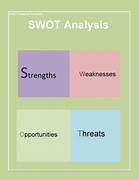
Top SWOT Analysis Templates for Any Business Strategic planning is crucial for businesses aiming to grow. Whether launching a new product, tackling competition, or enhancing existing offerings, a SWOT analysis can help you understand your current position and develop a confident path forward. When engaging in strategic brainstorming, avoid getting bogged down by documentation. Focus on expansive thinking and creative problem-solving instead. To aid in this process, we’ve compiled some of the best SWOT analysis templates available online. These templates handle the layout and design so you can concentrate on deep thinking. Read on to discover the value of SWOT analyses and our top template picks. What is a SWOT Analysis? A SWOT analysis is a framework for evaluating your company’s market position by examining internal and external factors. It helps identify your strengths, weaknesses, opportunities, and threats. The strengths and weaknesses sections focus on internal factors, such as products, value propositions, teams, and resources. Opportunities and threats examine external factors, including customers, competitors, industry trends, and broader market forces. Why Conduct a SWOT Analysis? A SWOT analysis provides a clear visualization of your business’s current standing. By understanding your strengths, areas for improvement, and external influences, you can formulate effective strategies for progress. Periodic SWOT analyses are beneficial for continuous improvement and essential during significant initiatives or changes, such as: SWOT analyses can also be applied to individual team members, useful for performance reviews or team reorganizations. Top SWOT Analysis Templates for Any Business Here are seven excellent SWOT analysis templates suitable for any business: For SWOT analyses that will be part of larger presentations, Canva’s drag-and-drop design tool offers dozens of templates. Customize with your brand colors and insert into your strategy deck or PDF. Miro’s virtual whiteboard template goes beyond traditional SWOT frameworks by adding sections for potential actions. Explore how to leverage strengths and opportunities or mitigate weaknesses using opportunities. Smartsheet provides templates for both Google Docs and Microsoft Word. Whether evaluating a business goal or personal performance, these templates are versatile and easy to use. TemplateLAB offers SWOT analysis templates in multiple formats, including Word Doc, PowerPoint, PDF, and Photoshop. Choose from a range of styles for both internal brainstorming and formal presentations. Airtable combines the structure of Excel with better organization for written content. Its SWOT analysis template is perfect for those who prefer spreadsheet-style work with enhanced labeling and filtering capabilities. SCORE’s simple Word Doc template provides all the necessary elements for a SWOT analysis without any extra distractions. SCORE also offers free resources, including mentorship and educational opportunities. For those looking to incorporate AI, Notion offers a template that leverages ChatGPT. Input your business information, and ChatGPT generates a SWOT analysis, offering insights you might not have considered. Bonus: WordStream Free SWOT Analysis Template For a comprehensive solution, try the WordStream template in Google Sheets. It’s an excellent tool for SWOT analysis brainstorming sessions. Use a SWOT Analysis Template Today for Business Growth Tomorrow When choosing a template, prioritize strategic work over perfect design. Select one and dive into the brainstorming process with your team to gain valuable insights for your business. If you need assistance with your marketing strategy, explore our solutions to maximize strengths and minimize weaknesses for long-term success. Like Related Posts Who is Salesforce? Who is Salesforce? Here is their story in their own words. From our inception, we’ve proudly embraced the identity of Read more Salesforce Marketing Cloud Transactional Emails Salesforce Marketing Cloud Transactional Emails are immediate, automated, non-promotional messages crucial to business operations and customer satisfaction, such as order Read more Salesforce Unites Einstein Analytics with Financial CRM Salesforce has unveiled a comprehensive analytics solution tailored for wealth managers, home office professionals, and retail bankers, merging its Financial Read more AI-Driven Propensity Scores AI plays a crucial role in propensity score estimation as it can discern underlying patterns between treatments and confounding variables Read more

Read More
Customer Satisfaction

Tectonic’s Approach to Ensuring Salesforce Customer Satisfaction

by Tectonic’s Sean McSkimming Scenarios of Assorted Levels of Customer Satisfaction – Ensuring Salesforce Customer Satisfaction Are you having satisfaction issues during or after your Salesforce implementation? Are you not happy with the Salesforce solution or implementation provided to you? Or are you seeing low user adoption after the implementation has gone live? This can be caused by any of the following: At Tectonic we take approaches to avoid the causes and effects above. We understand that every Salesforce implementation and initiative is unique, because every customer is unique. Ensuring Salesforce customer satisfaction is at the heart of everything we do. Tectonic has been involved in multiple points of an implementation project to help customers maximize their Salesforce investment. Even if their initial Salesforce experience was not perfect. We take a simple yet effective approach. Transparency and Trust are at the core of everything we do for every client. Every interaction with our prospects and our customers is filtered through the lens of transparency and trust. Customers in flight, whether the project has started or not are given: Live customers who aren’t happy with their current Salesforce solution due to low user adoption or a Salesforce solution that is not meeting their needs are given: If your are intrigued by Tectonic’s commitment to customer satisfaction, or perhaps not currently enjoying this level of satisfaction, we would love to talk to you today about your Salesforce implementation. Like Related Posts Who is Salesforce? Who is Salesforce? Here is their story in their own words. From our inception, we’ve proudly embraced the identity of Read more Salesforce Marketing Cloud Transactional Emails Salesforce Marketing Cloud Transactional Emails are immediate, automated, non-promotional messages crucial to business operations and customer satisfaction, such as order Read more Salesforce Unites Einstein Analytics with Financial CRM Salesforce has unveiled a comprehensive analytics solution tailored for wealth managers, home office professionals, and retail bankers, merging its Financial Read more AI-Driven Propensity Scores AI plays a crucial role in propensity score estimation as it can discern underlying patterns between treatments and confounding variables Read more

Read More
nCino and Salesforce

nCino and Salesforce

Leaders in cloud innovation reinforce alliance to provide best-in-class solutions to the financial services industry by extending successful partnership to 2031. Updated commercial terms are expected to improve nCino’s subscription gross margins. Wilmington, N.C. – December 21, 2023 – nCino, Inc. (NASDAQ: NCNO), a pioneer in cloud banking for the global financial services industry, today announced an expanded partnership with Salesforce to accelerate the delivery of best-in-class cloud solutions to the financial services industry. This builds on nCino and Salesforce’s long-standing collaboration, established in 2011, to empower financial institutions with digital innovations that increase efficiency, transparency, and reduce risks while driving customer growth and loyalty. “Our strategic partnership with Salesforce has enabled nCino to transform the financial services industry by providing industry-specific solutions that drive efficiencies, deliver intelligence, and help institutions modernize for a more agile future,” said Pierre Naudé, Chairman and CEO of nCino. “We’re glad to again be expanding our work with Salesforce and are committed to utilizing each other’s strengths to further benefit financial institutions of all sizes around the globe.” “nCino’s success is a testament to the enormous opportunity in front of ISVs building on Salesforce,” said Brian Landsman, Executive Vice President, Global Technology Partners, at Salesforce. “Salesforce is the world’s #1 AI CRM, trusted by thousands of partners to power purpose-built solutions for highly specialized industries. The expansion of our work with nCino will only accelerate how our customers are reimagining the future of personalized financial services.” As part of the agreement, nCino will deepen its connectivity to Salesforce platform tools including CRM, powered by AI and automation, and Financial Services Cloud. These innovations will empower financial institutions utilizing nCino and Salesforce to further modernize customer experiences like onboarding, loan origination, deposit account opening, and portfolio management. The expanded agreement also includes updated commercial terms which are expected to improve nCino’s subscription gross margins, minimum payment commitments from nCino during the first four fiscal years of the term of the extension, and an extension of the term of the agreement to 2031. About nCinonCino (NASDAQ: NCNO) is the worldwide leader in cloud banking. Through its single software-as-a-service (SaaS) platform, nCino helps financial institutions serving corporate and commercial, small business, consumer, and mortgage customers modernize and more effectively onboard clients, make loans, manage the loan lifecycle, and open accounts. Transforming how financial institutions operate through innovation, reputation and speed, nCino is partnered with more than 1,850 financial services providers globally. For more information, visit www.ncino.com. Salesforce, Financial Services Cloud and others are among the trademarks of Salesforce, Inc. nCino Media ContactsNatalia Moosepress@ncino.com Safe Harbor StatementThis press release contains forward-looking statements within the safe harbor provisions of the Private Securities Litigation Reform Act of 1995. Forward-looking statements generally include actions, events, results, strategies and expectations and are often identifiable by use of the words “believes,” “expects,” “intends,” “anticipates,” “plans,” “seeks,” “estimates,” “projects,” “may,” “will,” “could,” “might,” or “continues” or similar expressions. Any forward-looking statements contained in this press release are based upon nCino’s historical performance and its current plans, estimates, and expectations, and are not a representation that such plans, estimates, or expectations will be achieved. These forward-looking statements represent nCino’s expectations as of the date of this press release. Subsequent events may cause these expectations to change and, except as may be required by law, nCino does not undertake any obligation to update or revise these forward-looking statements. These forward-looking statements are subject to known and unknown risks and uncertainties that may cause actual results to differ materially including, among others, risks and uncertainties relating to the market adoption of our solution and privacy and data security matters. Additional risks and uncertainties that could affect nCino’s business and financial results are included in reports filed by nCino with the U.S. Securities and Exchange Commission (available on our web site at www.ncino.com or the SEC’s web site at www.sec.gov). Further information on potential risks that could affect actual results will be included in other filings nCino makes with the SEC from time to time. Like Related Posts Who is Salesforce? Who is Salesforce? Here is their story in their own words. From our inception, we’ve proudly embraced the identity of Read more Salesforce Marketing Cloud Transactional Emails Salesforce Marketing Cloud Transactional Emails are immediate, automated, non-promotional messages crucial to business operations and customer satisfaction, such as order Read more Salesforce Unites Einstein Analytics with Financial CRM Salesforce has unveiled a comprehensive analytics solution tailored for wealth managers, home office professionals, and retail bankers, merging its Financial Read more AI-Driven Propensity Scores AI plays a crucial role in propensity score estimation as it can discern underlying patterns between treatments and confounding variables Read more

Read More
Salesforce Einstein Copilot

Introducing Salesforce Einstein Copilot

Einstein Copilot introduces a cutting-edge generative A. Powered by a conversational assistant seamlessly embedded within every Salesforce application. Its strategically enhancing workflow and yielding substantial gains in productivity. Announced at Dreamforce 2023, in case you missed it, read on. The newly integrated Einstein 1 Data Cloud, part of the Einstein 1 Platform, allows customers to establish a unified customer profile. By connecting any data source. This integration infuses AI, automation, and analytics into every customer experience, fostering a comprehensive approach. Salesforce Einstein Copilot Studio Einstein Copilot Studio provides organizations with the flexibility to tailor Einstein Copilot. A Salesforce tool used according to specific business requirements. It incorporates the Einstein Trust Layer, ensuring the protection of sensitive data while leveraging trusted information to enhance generative AI responses. Unlike other generative AI copilot solutions, Einstein Copilot is natively integrated into the world’s leading AI CRM – Salesforce. Seamlessly tapping into data from various Salesforce applications. This integration ensures more accurate AI-powered recommendations and content generation. Data Cloud The Data Cloud serves as the foundation for Einstein Copilot. Data Cloud offers real-time, consolidated views of customers or entities. With Data Cloud, creating a data graph is simplified, enabling the generation of AI-powered apps with a single click, eliminating the need for manual data queries or joins. Einstein Trust Layer The Einstein Trust Layer, an integral part of the Einstein 1 Platform, ensures the secure retrieval of relevant data from Data Cloud. Before sending it to the Language Model (LLM), proprietary, sensitive, or confidential information is masked, maintaining a high level of data security and compliance. Copilot for Sales aligns with existing CRM access controls and user permissions. Salesforce requires ensuring administrators and users have the necessary permissions for customization and data management within Copilot for Sales. Salesforce Copilot service functions similarly to other generative AI tools in the customer experience landscape, responding to customer queries automatically with personalized answers grounded in company data. Einstein Copilot & Search, anticipated for availability from February 2024, is set to leverage Data Cloud unstructured support. It will be ushering in a new era where Generative AI-based apps redefine the user interface. Thereby allowing seamless interactions and conversations with applications. This transformative shift signifies a significant milestone in Enterprise Software, with Salesforce actively participating in this evolving landscape. Copilot for Sales How is Copilot for Sales different from Copilot for Microsoft 365? Microsoft Copilot for Sales is an AI assistant designed for sellers that brings together the capabilities of Copilot for Microsoft 365 with seller-specific insights and workflows. What Salesforce just did is drop the GPT name and go with Copilot, By endorsing the Microsoft branding it announced earlier this year with Microsoft Copilot for Microsoft 365 and CoPilot for Dynamics 365. Like Related Posts Who is Salesforce? Who is Salesforce? Here is their story in their own words. From our inception, we’ve proudly embraced the identity of Read more Salesforce Marketing Cloud Transactional Emails Salesforce Marketing Cloud Transactional Emails are immediate, automated, non-promotional messages crucial to business operations and customer satisfaction, such as order Read more Salesforce Unites Einstein Analytics with Financial CRM Salesforce has unveiled a comprehensive analytics solution tailored for wealth managers, home office professionals, and retail bankers, merging its Financial Read more AI-Driven Propensity Scores AI plays a crucial role in propensity score estimation as it can discern underlying patterns between treatments and confounding variables Read more

Read More
Salesforce Sales Enablement

Sales Enablement from Salesforce

Sales enablement from Salesforce encompasses the utilization of content, coaching, training, and technology. By bringing it all together to facilitate the onboarding of sales representatives, enhance their skills, and optimize their selling capabilities.  The responsibility is on sales leaders to establish impactful enablement strategies that directly contribute to revenue goals and to demonstrate their effectiveness. In a business world where sales is increasingly complex, sales enablement proves indispensable in assisting sellers in overcoming key challenges inherent in their roles, such as the need to be subject matter experts, adapting to virtual selling in a hybrid environment, and navigating economic uncertainties. For effective sales enablement, companies must initiate the process by pinpointing a specific and measurable revenue goal, subsequently crafting custom training programs that propel sales reps towards achievement. The journey involves meticulous monitoring of progress as sellers modify their behavior, necessitating adaptability and continuous learning to streamline their path toward efficient growth. This demands the selection of a well-defined enablement goal, articulating the requisite behavioral changes, molding the desired behavior through targeted training initiatives, and vigilantly monitoring advancements. Ultimately, sales enablement must adopt a personalized approach, focusing on empowering sellers with the skills and tools essential for transforming them into adept closers. Before you get started with Sales Enablement from Salesforce, make sure that you understand the responsibilities required to build Enablement programs in Salesforce. Identify colleagues who can take on the responsibilities of managing, assigning, and analyzing Enablement programs. Doing so also helps your Salesforce admin assign permissions so that the appropriate team members can access necessary features. Discover more about Salesforce’s sales enablement tools by reaching out to Tectonic. Contact us today. Like1 Related Posts Who is Salesforce? Who is Salesforce? Here is their story in their own words. From our inception, we’ve proudly embraced the identity of Read more Salesforce Marketing Cloud Transactional Emails Salesforce Marketing Cloud Transactional Emails are immediate, automated, non-promotional messages crucial to business operations and customer satisfaction, such as order Read more Salesforce Unites Einstein Analytics with Financial CRM Salesforce has unveiled a comprehensive analytics solution tailored for wealth managers, home office professionals, and retail bankers, merging its Financial Read more AI-Driven Propensity Scores AI plays a crucial role in propensity score estimation as it can discern underlying patterns between treatments and confounding variables Read more

Read More
Salesforce

Salesforce Integrations for Sales Users

Salesforce integration offers compatibility with a wide array of business tools, and this insight article from Tectonic zeroes in on the most advantageous integrations tailored for your sales teams. Salesforce Integrations for Sales Users encompass various areas from contract management tools to lead enrichment and marketing automation platforms, the focus is on enhancing the efficiency of your sales operations. Understanding Salesforce Integrations A Salesforce integration is a mechanism linking the CRM with one or more business tools, facilitating seamless data transfer and automation of repetitive administrative tasks. With over 2,500 integrations, Salesforce is one of the most connected and flexible CRMs on the market. Let’s dive into the top Salesforce integrations for sales teams in 2024. Best Salesforce Integrations for Sales Teams 1. Slack – Streamlined Internal Communication Owned by Salesforce, Slack integration ensures smooth communication by facilitating easy sharing and querying of records between the two platforms. This integration promotes real-time updates, fostering improved collaboration, quicker decision-making, and enhanced productivity. Slack and Salesforce integrations are easy to set up and Tectonic can help. User Reviews: 2. Salesloft – Elevating Sales Engagement Salesloft complements Salesforce by focusing on customer engagement. This integration allows the import of contacts from Salesforce into Salesloft, enabling seamless communication with prospects. Recorded communication details are then synchronized back into Salesforce, offering visibility into deal progression and prospect engagement. User Reviews: 3. Chili Piper – Simplified Scheduling Chili Piper’s integration with Salesforce streamlines appointment scheduling by enabling one-click meeting scheduling within Salesforce. Every booked meeting is automatically logged and tracked as an event in Salesforce, contributing to improved data accuracy and efficient scheduling. All interactions with leads are added to engagement activity in their Salesforce record. User Reviews: 4. Juro – Accelerating Contract Management Juro’s all-in-one contract management platform integrates seamlessly with Salesforce, enabling sales reps to generate sales agreements effortlessly. The integration facilitates real-time syncing of data between the two platforms, allowing for swift contract drafting, negotiation, and management. Key Benefit: 5. LinkedIn Sales Solutions – Incorporate LinkedIn profiles to Salesforce records LinkedIn Sales Solutions embeds LinkedIn profiles with the CRM providing timely insights on buyers and companies. Data Validation flags out-of-date contacts. Key Benefit: 6. Lead Capture in Sales Cloud – Collect leads from Facebook and Google directly into Sales Cloud This application enables marketers to collect lead data from two primary external platform ad forms and share them with sales teams. Key Benefit: Salesforce Integrations for Sales Users These Salesforce integrations are tailored to augment the capabilities of sales teams, ranging from internal communication to contract management, ultimately fostering efficiency and productivity. If you are looking at tools to integrate with Salesforce for your teams, contact Tectonic for Salesforce implementation assistance. Like1 Related Posts Who is Salesforce? Who is Salesforce? Here is their story in their own words. From our inception, we’ve proudly embraced the identity of Read more Salesforce Marketing Cloud Transactional Emails Salesforce Marketing Cloud Transactional Emails are immediate, automated, non-promotional messages crucial to business operations and customer satisfaction, such as order Read more Salesforce Unites Einstein Analytics with Financial CRM Salesforce has unveiled a comprehensive analytics solution tailored for wealth managers, home office professionals, and retail bankers, merging its Financial Read more AI-Driven Propensity Scores AI plays a crucial role in propensity score estimation as it can discern underlying patterns between treatments and confounding variables Read more

Read More
Data Cloud Free Licenses

Data Cloud Free Licenses

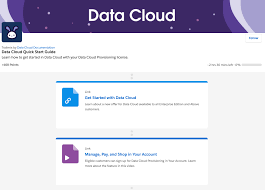
Salesforce Announces Data Cloud Free Licenses at Dreamforce 2023 At Dreamforce 2023, Salesforce announced that free Data Cloud licenses are now included for all Enterprise Edition or above customers to help them familiarize themselves with new capabilities and develop use case ideas. Starting September 19th, 2023, Enterprise Edition and above customers can get started with Data Cloud Provisioning at no cost by signing up under Your Account. Data Cloud Provisioning includes: Unlimited Plus Edition customers will get access to 2,500,000 Data Service credits. Two Tableau Creator licenses are a separate line item and can be quoted by your Salesforce Account Executive. Salesforce has been focusing on large data and AI tools for several years, acquiring Tableau, accelerating their Einstein AI tools, and significantly extending the Data Cloud product. Data Cloud allows you to easily harmonize data, analyze it in Tableau, and make it actionable across marketing, sales, and service. What Can I Do with Data Cloud? Data Cloud enables customers to start with one of three use cases: Across these use cases, customers can ingest data from multiple sources, unify data with identity resolution, calculate insights, visualize data in Tableau (with the provisioning of the Tableau Cloud – Creator for Data Cloud SKU), and view consolidated data on the contact record. Differences Between Data Cloud and Data Cloud Provisioning Functionality: Data Cloud Provisioning includes all the features of the existing Data Cloud offerings, except Segmentation and Activation. Credits for Segmentation and Activation can be purchased as add-ons through Marketing Cloud account teams. Capacity: Both include 1 TB of data storage, 1 Data Cloud admin, 100 internal Data Cloud identity users, 1,000 Data Cloud PSL, and 5 integration users. Entitlement: Data Cloud Provisioning entitlement is the same for all Enterprise Edition and above customers. Additional Information Sandbox Availability: Data Cloud is not available in Sandbox orgs; it can only be provisioned to an existing production org. Professional Edition Access: Data Cloud Provisioning is not available to Professional Edition customers. Existing Data Cloud or CDP Customers: Those with an existing Data Cloud or CDP tenant cannot sign up for Data Cloud Provisioning. Unlimited Edition Plus Bundle Customers: Data Cloud Provisioning is not available, as the bundle includes a Data Cloud tenant. Edition Information: Check your Salesforce org’s edition in Setup > Company Information > Organization Edition. Government Cloud: Data Cloud Provisioning is not available. Non-Profit Customers: Data Cloud Provisioning is available. Industry Cloud Customers: Industry Cloud customers with Enterprise Edition and above are eligible. ISV Partners: Data Cloud Provisioning is not accessible via Your Account in ISV Enterprise Edition orgs. ISV Partners need to create a support case with the Partner Ops team to request provisioning. Existing Tableau Customers: Tableau Cloud – Creator for Data Cloud is intended to provision a new Tableau tenant (aka site). Multiple Instances: Only one Data Cloud Provisioning instance is allowed per account/tenant. Access to Tableau Cloud – Creator for Data Cloud: To get access, you must have or include on the same quote any of the following: Like Related Posts Who is Salesforce? Who is Salesforce? Here is their story in their own words. From our inception, we’ve proudly embraced the identity of Read more Salesforce Marketing Cloud Transactional Emails Salesforce Marketing Cloud Transactional Emails are immediate, automated, non-promotional messages crucial to business operations and customer satisfaction, such as order Read more Salesforce Unites Einstein Analytics with Financial CRM Salesforce has unveiled a comprehensive analytics solution tailored for wealth managers, home office professionals, and retail bankers, merging its Financial Read more AI-Driven Propensity Scores AI plays a crucial role in propensity score estimation as it can discern underlying patterns between treatments and confounding variables Read more

Read More
Cloud Based Business Solutions

AI Fundamental Role in the Future of Business

AI is not a novel concept, but its pivotal role in shaping the future of business is rapidly emerging. Particularly, generative AI stands out as a transformative advancement with far-reaching implications for our lives and enterprises. However, merely investing in the technical capabilities of AI is insufficient. For AI Fundamental Role in the Future of Business to come to fruition, skills have to be learned. Road maps must be developed. Organizations need to prioritize building a comprehensive and reliable data foundation to guide decision-making and strategy development.  Training or employing new talent to work in this field is already competitive. Generative AI and large language models (LLMs) are poised to redefine how we live, work, and conduct business. Experts from Snowflake share insights into navigating the opportunities and uncertainties associated with these technologies, including their impact on various aspects: Engaging Partners: Transforming the Enterprise: AI Impact on Various Aspects: AI Fundamental Role in the Future of Business Furthermore, the report emphasizes the crucial role of a robust data strategy, the importance of cybersecurity in the generative AI era, and the potential for AI to significantly impact global GDP. Goldman Sachs Research predicts that breakthroughs in generative AI could boost global GDP by 7% and increase productivity growth by 1.5 percentage points over a decade. Investors are advised to focus on industries such as semiconductor manufacturing, digitalization, and healthcare, given the growing influence of AI. However, discernment is crucial, and the report highlights the need for efficient implementation, identifying specific use cases for AI, and leveraging new AI techniques for informed investment decisions. AI, with its capacity to process vast amounts of information quickly and accurately, is anticipated to play a pivotal role in supporting investors in making more informed decisions and extracting valuable insights from data. Like Related Posts Salesforce Unites Einstein Analytics with Financial CRM Salesforce has unveiled a comprehensive analytics solution tailored for wealth managers, home office professionals, and retail bankers, merging its Financial Read more AI-Driven Propensity Scores AI plays a crucial role in propensity score estimation as it can discern underlying patterns between treatments and confounding variables Read more What is Salesforce? Salesforce is cloud-based CRM software. It makes it easier for companies to find more prospects, close more deals, and connect Read more Generating Documents in Salesforce Salesforce document generation poses a challenge for businesses, given the intricacies of integration involved. Fortunately, a variety of tools are Read more

Read More
Knowledge Management for Agents

Knowledge Management for Agents

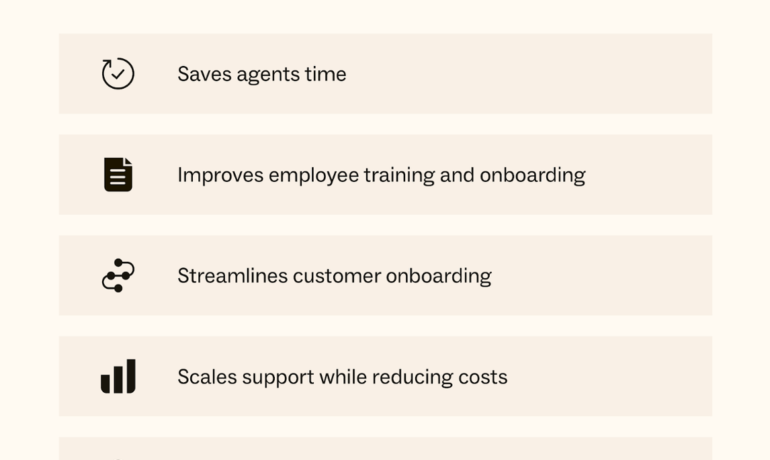
Consider the invaluable contributions of your most seasoned and high-performing agents and field service technicians to your organization. They possess an in-depth understanding of your product or service, efficiently tackle common customer issues, and can transform challenging interactions into positive ones. These experienced professionals also serve as mentors to junior staff and become indispensable sources of information when your knowledge management for agents system lacks organization. Now, contemplate the potential repercussions if these individuals were to leave your company. The departure of their knowledge and expertise puts customer satisfaction in jeopardy. The recruitment of replacement talent requires substantial time, money, and resources. Moreover, the onboarding process for new hires entails a significant time investment. The stakes for your business are high. Imagine if you could capture and preserve the expertise of your employees, making it easily accessible to you and others. The good news is that, to a large extent, you can achieve this through strategic knowledge management. Let’s dig into the details. What is knowledge management? Knowledge management involves capturing, organizing, and distributing critical information for customer support. Ideally, this knowledge resides in a centralized digital library accessible to agents, field service technicians, and customers from any location, ensuring prompt and high-quality service. However, in many companies, frequently asked questions (FAQs) and knowledge base articles guide contact center agents and field service technicians. Yet, the challenge lies in the timely update of this information, potential duplications, and undocumented topics. Much of the knowledge essential for effective customer support is often stored solely in employees’ minds or dispersed across multiple systems and devices. Leveraging technology and artificial intelligence (AI) allows you to swiftly capture and share this knowledge across your team. Generative AI can draft knowledge articles, subject to your company’s review and approval process, streamlining the process and keeping pace with the ever-evolving landscape of knowledge needed for quality customer support. Additionally, the resources created can be shared in your self-service portal, enabling customers to find answers independently and contributing to cost savings. Bonus features like Einstein Search Answers utilize knowledge-grounded generative AI to surface relevant responses in your self-service portal or agent console. Types of knowledge to capture Before documenting institutional knowledge, consider the various types employed by agents and field service workers: Benefits of knowledge management Documenting, centralizing, and consistently updating institutional knowledge yields numerous benefits, including: Knowledge management use cases and examples While your organization likely employs some form of knowledge management, there’s room for improvement. Examples of knowledge management applications include: How to get started with knowledge management Embark on your knowledge management journey with these steps: In conclusion, knowledge management is foundational for successful customer support operations and plays a crucial role in maximizing the benefits of AI. It offers a structured approach to handling information and proves to be a worthwhile investment, enhancing team capabilities, customer satisfaction, operational efficiency, and employee knowledge retention. Like Related Posts Who is Salesforce? Who is Salesforce? Here is their story in their own words. From our inception, we’ve proudly embraced the identity of Read more Salesforce Marketing Cloud Transactional Emails Salesforce Marketing Cloud Transactional Emails are immediate, automated, non-promotional messages crucial to business operations and customer satisfaction, such as order Read more Salesforce Unites Einstein Analytics with Financial CRM Salesforce has unveiled a comprehensive analytics solution tailored for wealth managers, home office professionals, and retail bankers, merging its Financial Read more AI-Driven Propensity Scores AI plays a crucial role in propensity score estimation as it can discern underlying patterns between treatments and confounding variables Read more

Read More
Salesforce Einstein and Einstein Automate

Einstein Trust

Generative AI, Salesforce, and the Commitment to Trust The excitement surrounding generative AI is palpable as it unlocks new dimensions of creativity for individuals and promises significant productivity gains for businesses. Engaging with generative AI can be a great experience, whether creating superhero versions of your pets with Midjourney or crafting pirate-themed poems using ChatGPT. According to Salesforce research, employees anticipate saving an average of 5 hours per week through the adoption of generative AI, translating to a substantial monthly time gain for full-time workers. Whether designing content for sales and marketing or creating a cute version of a beloved story, generative AI is a tool that helps users create content faster. However, amidst the enthusiasm, questions arise, including concerns about the security and privacy of data. Users ponder how to leverage generative AI tools while safeguarding their own and their customers’ data. Questions also revolve around the transparency of data collection practices by different generative AI providers and ensuring that personal or company data is not inadvertently used to train AI models. Additionally, there’s a need for assurance regarding the accuracy, impartiality, and reliability of AI-generated responses. Salesforce has been at the forefront of addressing these concerns, having embraced artificial intelligence for nearly a decade. The Einstein platform, introduced in 2016, marked Salesforce’s foray into predictive AI, followed by investments in large language models (LLMs) in 2018. The company has diligently worked on generative AI solutions to enhance data utilization and productivity for their customers. The Einstein Trust Layer is designed with private, zero-retention architecture. Emphasizing the value of Trust, Salesforce aims to deliver not just technological capabilities but also a responsible, accountable, transparent, empowering, and inclusive approach. The Einstein Trust Layer represents a pivotal development in ensuring the security of generative AI within Salesforce’s offerings. The Einstein Trust Layer is designed to enhance the security of generative AI by seamlessly integrating data and privacy controls into the end-user experience. These controls, forming gateways and retrieval mechanisms, enable the delivery of AI securely grounded in customer and company data, mitigating potential security risks. The Trust Layer incorporates features such as secure data retrieval, dynamic grounding, data masking, zero data retention, toxic language detection, and an audit trail, all aimed at protecting data and ensuring the appropriateness and accuracy of AI-generated content. Salesforce proactively provided the ability for any admin to control how prompt inputs and outputs are generated, including reassurance over data privacy and reducing toxicity. This innovative approach allows customers to leverage the benefits of generative AI without compromising data security and privacy controls. The Trust Layer acts as a safeguard, facilitating secure access to various LLMs, both within and outside Salesforce, for diverse business use cases, including sales emails, work summaries, and service replies in contact centers. Through these measures, Salesforce underscores its commitment to building the most secure generative AI in the industry. Generating content within Salesforce can be achieved through three methods: CRM Solutions: Einstein Copilot Studio: Einstein LLM Generations API: An overarching feature of these AI capabilities is that every Language Model (LLM) generation is meticulously crafted through the Trust Layer, ensuring reliability and security. At Tectonic, we look forward to helping you embrace and utilize generative AI with Einstein save time. Like1 Related Posts Who is Salesforce? Who is Salesforce? Here is their story in their own words. From our inception, we’ve proudly embraced the identity of Read more Salesforce Marketing Cloud Transactional Emails Salesforce Marketing Cloud Transactional Emails are immediate, automated, non-promotional messages crucial to business operations and customer satisfaction, such as order Read more Salesforce Unites Einstein Analytics with Financial CRM Salesforce has unveiled a comprehensive analytics solution tailored for wealth managers, home office professionals, and retail bankers, merging its Financial Read more AI-Driven Propensity Scores AI plays a crucial role in propensity score estimation as it can discern underlying patterns between treatments and confounding variables Read more

Read More
Sales Cloud Innovation Driven by UX Design Principles

Enhance UX With Keyboard Accessibility

Enhancing User Experience (UX) with Keyboard Accessibility Keyboard accessibility plays a crucial role in creating more inclusive and scalable products. While many individuals can navigate a computer using a mouse, there are those with mobility- or dexterity-related accessibility needs who rely on alternative devices like head wands or switch controls. The foundation of these alternative interactions is keyboard access. Enhance UX With Keyboard Accessibility for greater user experiences. In a world where approximately 16% of the population has at least one disability, prioritizing keyboard accessibility becomes paramount. Salesforce, a company committed to equality, incorporates this principle into its product design, ensuring that every user, regardless of their abilities, can effectively engage with their products. Enhance UX With Keyboard Accessibility But what does keyboard accessibility entail? Essentially, it means that any action achievable with a mouse should also be accomplishable with a keyboard. This foundational principle accommodates various user needs, such as screen readers for the blind or voice commands. The consistent factor across these diverse modes of interaction is the reliance on keyboard access. Let’s explore an alternative interaction pattern called “click to create” that serves as a keyboard-accessible substitute for drag-and-drop functionalities, addressing accessibility issues in the Email Builder of Marketing Cloud. This pattern allows users, including those with mobility challenges, to add content through keyboard strokes. By incorporating “click to create” into a new keyboard-accessible version of the Email Builder, Salesforce ensures compliance with keyboard accessibility standards and facilitates content creation for all users. To elevate keyboard accessibility during the product design process, consider these five key moments: By integrating keyboard accessibility considerations at each of these key moments, designers, product managers, and engineers can collaboratively contribute to creating products that are accessible to all users. The mantra “Can I do it with a keyboard?” serves as a constant reminder to prioritize inclusivity throughout the product development cycle, making accessibility a shared responsibility among all contributors. Like1 Related Posts Who is Salesforce? Who is Salesforce? Here is their story in their own words. From our inception, we’ve proudly embraced the identity of Read more Salesforce Marketing Cloud Transactional Emails Salesforce Marketing Cloud Transactional Emails are immediate, automated, non-promotional messages crucial to business operations and customer satisfaction, such as order Read more Salesforce Unites Einstein Analytics with Financial CRM Salesforce has unveiled a comprehensive analytics solution tailored for wealth managers, home office professionals, and retail bankers, merging its Financial Read more AI-Driven Propensity Scores AI plays a crucial role in propensity score estimation as it can discern underlying patterns between treatments and confounding variables Read more

Read More
Salesforce Experience Cloud

Nonprofit with Salesforce Experience Cloud

Transform Your Nonprofit with Salesforce Experience Cloud: A Digital Storefront for Engagement Think of Salesforce Experience Cloud as your Nonprofit’s digital storefront—always open, always inviting. This powerful Digital Experience Platform (DXP) enables you to create custom portals, communities, and hubs where donors, volunteers, and beneficiaries can seamlessly connect with your organization. Instead of juggling endless emails and spreadsheets, Experience Cloud centralizes interactions, making them self-service, intuitive, and engaging. With nonprofit-specific features, you can build customized, branded experiences without heavy development work. Here’s what makes Experience Cloud a game-changer: ✅ Drag-and-drop site builder for effortless customization✅ Prebuilt templates & Lightning components for quick deployment✅ Mobile Publisher for consistent branding across mobile apps✅ Built-in content management system (CMS)✅ Personalization tools like audience targeting & role-based access✅ Einstein AI-powered chatbots for instant responses✅ Gamification with badges & leaderboards✅ Google Analytics 4 integration for engagement insights✅ Advanced security with Lightning Locker & Clickjack protection …and much more. 🔍 Nonprofit Solutions You Can Build with Salesforce Experience Cloud 1️⃣ Program Applications & Intake Portals Managing program applications can be overwhelming without a structured system. Experience Cloud allows Nonprofits to create a self-service portal where applicants can submit forms, track status updates, and receive automated notifications—eliminating paper-based processes and endless email chains. With Dynamic Forms and Flow Builder, applications stay structured while automation accelerates approvals. Plus, since everything syncs to the Nonprofit Success Pack (NPSP), you’ll always have a real-time view of applicants and program impact. 2️⃣ Volunteer Portals Managing volunteers shouldn’t feel like a full-time job. With a Volunteer Portal, people can sign up, pick shifts, and track their hours—all without back-and-forth emails. Features like automated background checks and approval workflows ensure smooth operations. Meanwhile, Experience Cloud’s Chatter integration fosters engagement, helping you track who’s active, who’s disengaged, and who might need a little encouragement. 3️⃣ Community Partner Portals Nonprofits thrive on partnerships, and a Community Partner Portal keeps corporate sponsors, local businesses, and community groups connected. With this portal, partners can log in, access shared resources, submit funding applications, and track joint projects—all from one secure platform. Role-based access ensures that sensitive data stays protected while collaboration remains seamless. 4️⃣ Membership Portals If your nonprofit has a membership program, Experience Cloud helps you build a Member Portal where users can renew memberships, update information, and access exclusive content. Want to boost engagement? Introduce gamification with badges, leaderboards, and personalized event recommendations. Since everything is integrated with Salesforce CRM, you’ll gain real-time insights into member activity to keep engagement levels high. 5️⃣ Grant Management Portals Grant applications shouldn’t feel like a never-ending email thread. With Experience Cloud, you can create a Grant Management Portal where organizations apply for funding, track application progress, and submit reports—all in one place. Einstein AI can even prioritize applications based on predefined criteria, accelerating the review process. Grantors, in turn, can access real-time funding reports—enhancing transparency and trust. 6️⃣ E-Commerce & Donation Portals Looking to sell nonprofit merchandise or accept donations online? Experience Cloud seamlessly integrates with Salesforce Commerce Cloud, allowing you to build an e-commerce storefront for hassle-free transactions. Supporters can:💳 Make one-time or recurring donations🛍️ Purchase branded merchandise📜 Track donation history & receive personalized thank-you messages For secure transactions and easy donor tracking, you can integrate Stripe, PayPal, or other payment processors directly into your portal. 7️⃣ Voter Registration Portals If your nonprofit promotes civic engagement, Experience Cloud can power a Voter Registration Portal where users can check registration status, sign up to vote, and receive election reminders. With geolocation tools, voters can find polling places instantly, while Marketing Cloud integration allows you to send timely voter updates—ensuring higher participation in the democratic process. Implementing Salesforce Experience Cloud for Nonprofits Which Approach is Right for Your Nonprofit? Your ideal Experience Cloud implementation depends on your current CRM, budget, and long-term strategy. 1️⃣ Standalone Experience Cloud Implementation If your nonprofit already uses Salesforce CRM (but not NPSP), you can still implement Experience Cloud independently to create portals, volunteer hubs, and dashboards while maintaining your existing CRM as the system of record. Considerations:🔹 Custom Configuration – You’ll need to set up nonprofit-specific objects & automation.🔹 Permissions & Access – Well-structured security settings are crucial.🔹 CRM Integration – If using a non-Salesforce CRM, API integrations (e.g., MuleSoft, Zapier) will be required. This option is best for nonprofits that want external-facing engagement tools without fully shifting to the Salesforce Nonprofit ecosystem. 2️⃣ Experience Cloud + Nonprofit Cloud / NPSP For nonprofits already using Salesforce Nonprofit Cloud or NPSP, Experience Cloud becomes an extension of your engagement strategy. 🔹 Real-time donor, volunteer, and grant data sharing🔹 Prebuilt nonprofit features (fundraising, donor management, program tracking)🔹 Automation & AI-powered engagement 3️⃣ Experience Cloud + Third-Party Nonprofit CRMs Already using a third-party nonprofit CRM (like Raiser’s Edge NXT, Neon One, or DonorPerfect)? You can still leverage Experience Cloud, but strong integration is key. 🔹 Experience Cloud powers your donor, volunteer, or program portal🔹 API-based sync required for real-time data exchange🔹 Tools like MuleSoft or Zapier help bridge data gaps This approach is ideal for nonprofits wanting the flexibility of Experience Cloud without migrating their backend to Salesforce. Final Thought: Making Experience Cloud Work for Your Nonprofit No matter your approach, Salesforce Experience Cloud is a powerful tool to drive engagement and efficiency for nonprofits. However, successful implementation requires a well-thought-out strategy. Need expert guidance? A Salesforce implementation partner can help tailor Experience Cloud to fit your unique nonprofit needs, ensuring your digital storefront delivers maximum impact. Like Related Posts Who is Salesforce? Who is Salesforce? Here is their story in their own words. From our inception, we’ve proudly embraced the identity of Read more Salesforce Marketing Cloud Transactional Emails Salesforce Marketing Cloud Transactional Emails are immediate, automated, non-promotional messages crucial to business operations and customer satisfaction, such as order Read more Salesforce Unites Einstein Analytics with Financial CRM Salesforce has unveiled a comprehensive analytics solution tailored for wealth managers, home office professionals, and retail bankers, merging its Financial Read more AI-Driven Propensity Scores AI plays

Read More
gettectonic.com