Data Analysis Archives - gettectonic.com
10 AI-Powered Strategies for Smarter Salesforce Lead Management with Agentforce

Salesforce’s AI Transformation

Salesforce’s AI Transformation: 30-50% of Work Now Automated, Says Benioff AI Reshaping the Workforce at Salesforce Salesforce CEO Marc Benioff has revealed that artificial intelligence now handles 30-50% of work across key company functions, marking a significant milestone in enterprise AI adoption. In an interview on The Circuit with Emily Chang, Benioff highlighted how AI is fundamentally changing operations in: The New AI Productivity Standard Benioff’s disclosure reflects an industry-wide shift: Salesforce’s AI-First Strategy The CRM leader is doubling down on AI with:✔ Autonomous customer service tools requiring minimal human oversight✔ Einstein AI platform integrations across sales, service, and marketing clouds✔ “Higher-value work” transition for human employees Historical Context Meets Future Vision Having revolutionized cloud software in the 2000s, Salesforce now positions itself as an AI platform company: The Bigger Picture Benioff’s comments underscore three critical trends: “We’re entering an era where AI handles the predictable so humans can focus on the exceptional,” Benioff noted, framing the change as augmentation rather than replacement. As Salesforce continues weaving AI throughout its platform, the company demonstrates how rapidly emerging technologies are reshaping business operations at scale. Like Related Posts Who is Salesforce? Who is Salesforce? Here is their story in their own words. From our inception, we’ve proudly embraced the identity of Read more Salesforce Marketing Cloud Transactional Emails Salesforce Marketing Cloud Transactional Emails are immediate, automated, non-promotional messages crucial to business operations and customer satisfaction, such as order Read more Salesforce Unites Einstein Analytics with Financial CRM Salesforce has unveiled a comprehensive analytics solution tailored for wealth managers, home office professionals, and retail bankers, merging its Financial Read more AI-Driven Propensity Scores AI plays a crucial role in propensity score estimation as it can discern underlying patterns between treatments and confounding variables Read more

Read More
Artificial Intelligence of Things

Artificial Intelligence of Things

AIoT, or the Artificial Intelligence of Things, refers to the integration of Artificial Intelligence (AI) with the Internet of Things (IoT). Welcome to New Word Wednesday. This combination leverages the data-collecting capabilities of IoT devices and the analytical power of AI to create intelligent systems that can make autonomous decisions and improve efficiency in various applications.  What is AIoT? Key Benefits of AIoT: Examples of AIoT in Action: AIoT represents a significant advancement in how we interact with technology, moving from simple data collection to intelligent systems that can learn, adapt, and make decisions on their own.  Like Related Posts Who is Salesforce? Who is Salesforce? Here is their story in their own words. From our inception, we’ve proudly embraced the identity of Read more Salesforce Unites Einstein Analytics with Financial CRM Salesforce has unveiled a comprehensive analytics solution tailored for wealth managers, home office professionals, and retail bankers, merging its Financial Read more AI-Driven Propensity Scores AI plays a crucial role in propensity score estimation as it can discern underlying patterns between treatments and confounding variables Read more Tectonic’s Successful Salesforce Track Record Salesforce Technology Services Integrator – Tectonic has successfully delivered Salesforce in a variety of industries including Public Sector, Hospitality, Manufacturing, Read more


Read More
AI Interface Paradox

AI Interface Paradox

The AI Interface Paradox: Why the Search Box is Failing Generative AI The Google Legacy: How Search Conditioned Our Digital Behavior Google’s revolutionary insight wasn’t algorithmic—it was psychological. By stripping away all complexity from search interfaces (remember AltaVista’s cluttered filters?), they created what became the most ingrained digital behavior pattern of the internet age: This elegant simplicity made Google the gateway to the internet. But it also created an unshakable mental model that now hampers AI adoption. The Cognitive Dissonance of AI Interfaces Today’s AI tools present users with a cruel irony: The exact same empty text box that promised effortless answers now demands programming-like precision. The Fundamental Mismatch Google Search Generative AI Works with fragments (“weather paris”) Requires structured prompts (“Act as a meteorologist…”) Delivers finished results Needs iterative refinement Single interaction Requires multi-turn conversations Predictable outcomes Wildly variable quality This explains why: Why the Search Metaphor Fails AI 1. The Blank Canvas Problem The same empty box is asked to handle: Without interface cues, users experience choice paralysis—like being handed a single blank sheet of paper when you need both a spreadsheet and a paintbrush. 2. The Conversation Illusion Elizabeth Laraki’s Madrid itinerary struggle reveals the flaw: human collaboration isn’t linear. We: Current chat UIs force all interaction through a sequential text tunnel, losing the richness of real collaboration. 3. The Hidden Grammar Requirement Effective prompting requires skills most users lack: This creates a participation gap where only power users benefit. Blueprint for the Post-Search Interface Emerging solutions point to five key principles for next-gen AI interfaces: 1. Context-Aware Launchpads Instead of blank slates, interfaces should offer: Example: Notion AI’s “/” command menu that suggests context-appropriate actions. 2. Adaptive Input Modalities Task Type Optimal Input Visual design Image upload + text Data analysis File import + natural language Creative writing Voice dictation Programming Code snippet + comments 3. Collaborative Workspaces Moving beyond chat streams to: Example: Vercel’s v0 design mode that blends generation with direct manipulation. 4. Guided Co-Creation Instead of silent processing, interfaces should: 5. Specialized Agents Ecosystem A shift from monolithic AI to: The Coming Interface Revolution The companies that crack this will do for AI what Google did for search—not by improving what exists, but by reimagining interaction from first principles. Early signs suggest: As NN/g’s research confirms, the future belongs to outcome-oriented interfaces that adapt to goals rather than forcing users through static workflows. What This Means for Adoption Until interfaces evolve, we’ll remain in the “early adopter phase” where: The breakthrough will come when AI interfaces stop pretending to be search boxes and start embracing their true nature—dynamic collaboration spaces. When that happens, we’ll see the real AI revolution begin. Like Related Posts Who is Salesforce? Who is Salesforce? Here is their story in their own words. From our inception, we’ve proudly embraced the identity of Read more Salesforce Unites Einstein Analytics with Financial CRM Salesforce has unveiled a comprehensive analytics solution tailored for wealth managers, home office professionals, and retail bankers, merging its Financial Read more AI-Driven Propensity Scores AI plays a crucial role in propensity score estimation as it can discern underlying patterns between treatments and confounding variables Read more Tectonic’s Successful Salesforce Track Record Salesforce Technology Services Integrator – Tectonic has successfully delivered Salesforce in a variety of industries including Public Sector, Hospitality, Manufacturing, Read more

Read More

Salesforce Reports Explained

Salesforce Reports: A Complete Guide to Data Analysis & Insights What Are Salesforce Reports? Salesforce Reports empower users to access, analyze, and share critical business data stored in Salesforce. They transform raw data into actionable insights, helping teams track performance, identify trends, and make data-driven decisions. Reports can be customized, visualized in dashboards, and shared across teams for better collaboration. Key Types of Salesforce Reports Salesforce offers four main report types, each suited for different analytical needs: 1. Tabular Reports 2. Summary Reports 3. Matrix Reports 4. Joined Reports How to Create & Customize Reports Step 1: Navigate to the Reports Tab Step 2: Customize Your Report Step 3: Save & Share Advanced Analysis with Salesforce Reports Einstein Analytics Dynamic Filters Scheduled Reports Best Practices for Effective Reporting ✅ Define a Clear Purpose – What decision will this report drive?✅ Keep It User-Friendly – Use charts, summaries, and clear labels.✅ Ensure Data Accuracy – Regularly review filters & formulas.✅ Share Strategically – Grant access only to relevant stakeholders.✅ Automate Where Possible – Schedule reports to save time. Conclusion: Unlock the Power of Salesforce Reports Salesforce Reports turn raw data into strategic insights, helping businesses track performance, optimize processes, and drive growth. By mastering report types, customization, and sharing, teams can make faster, smarter decisions. Need help? Explore Salesforce’s Report Builder or check out Trailhead for hands-on training! Like Related Posts Who is Salesforce? Who is Salesforce? Here is their story in their own words. From our inception, we’ve proudly embraced the identity of Read more Salesforce Marketing Cloud Transactional Emails Salesforce Marketing Cloud Transactional Emails are immediate, automated, non-promotional messages crucial to business operations and customer satisfaction, such as order Read more Salesforce Unites Einstein Analytics with Financial CRM Salesforce has unveiled a comprehensive analytics solution tailored for wealth managers, home office professionals, and retail bankers, merging its Financial Read more AI-Driven Propensity Scores AI plays a crucial role in propensity score estimation as it can discern underlying patterns between treatments and confounding variables Read more

Read More
Salesforce AI Einstein Next Best Action

Salesforce AI Einstein Next Best Action

Salesforce AI Einstein Next Best Action is a feature designed to identify the most effective actions available to agents and customers in real-time. Operating as a recommendation engine powered by extensive data analysis, it facilitates a dynamic workflow aimed at optimizing the customer pipeline. Tailoring recommendations to specific individuals at opportune moments is made effortless with Einstein Next Best Action. This Salesforce Platform feature enables the configuration of business rules and filters to present the most suitable course of action for any user. It offers a diverse range of recommended actions directly accessible within Salesforce, enhancing decision-making processes. Salesforce AI Einstein Next Best Action for Personalization Personalizing the customer experience: Next Best Action (NBA) empowers organizations to customize their interactions with customers based on individual preferences, behaviors, and historical data. This fosters a more personalized and pertinent experience, ultimately boosting customer satisfaction and fostering loyalty. What is Einstein’s Next Best Action for upselling? NBA continuously evaluates real-time customer data to deliver personalized recommendations for the most effective actions to take, whether it involves cross-selling, upselling, or addressing a customer concern. These recommendations consider various factors such as customer history, product usage, and behavioral patterns. Salesforce AI Einstein Next Best Action Cost Is Einstein Next Best Action free? Einstein Next Best Action operates on a usage-based entitlement model. Every organization receives a monthly allotment of free Next Best Action requests. If usage exceeds this free allowance or any purchased entitlements, Salesforce communicates with the organization to discuss additional options for their contract. Next Best Action is a paid Salesforce product but also offers free usage for up to 5000 requests each month. What is the Next Best Action strategy? Next-best-action marketing, also known as best next action or recommended action, is a customer-centric marketing approach that assesses various actions applicable to a specific customer and determines the most favorable course of action. It’s a subset of next-best-action decision-making focused on optimizing customer interactions. The Salesforce Einstein feature is being renamed Agentforce. Conent editingd June 2025, Shannan Hearne. Like1 Related Posts Who is Salesforce? Who is Salesforce? Here is their story in their own words. From our inception, we’ve proudly embraced the identity of Read more Salesforce Marketing Cloud Transactional Emails Salesforce Marketing Cloud Transactional Emails are immediate, automated, non-promotional messages crucial to business operations and customer satisfaction, such as order Read more Salesforce Unites Einstein Analytics with Financial CRM Salesforce has unveiled a comprehensive analytics solution tailored for wealth managers, home office professionals, and retail bankers, merging its Financial Read more AI-Driven Propensity Scores AI plays a crucial role in propensity score estimation as it can discern underlying patterns between treatments and confounding variables Read more

Read More
AI-driven propensity scores

AI-Driven Propensity Scores

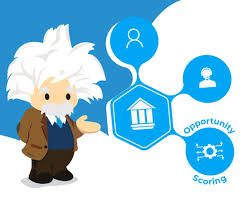
AI plays a crucial role in propensity score estimation as it can discern underlying patterns between treatments and confounding variables through machine learning, without explicit programming. This insight has gone through numerous updates as the information and use of AI-driven propensity scores evolved. In many cases, writers give a brief overview of the what of a tool. Today, we are going way beyond “what the sausage tastes like” to “how the sausage is made” Tectonic hopes you will enjoy learning how propensity models and AI driven propensity scores improve your data. Propensity Model in Artificial Intelligence: Propensity modeling generates a propensity score, representing the probability that a visitor, lead, or customer will take a specific action. For instance, a propensity model, using data science or machine learning, can help predict the likelihood of a lead converting to a customer. AI-driven propensity scores take an existing data model and improve its predictions, speed, and analysis with AI. Propensity Score in CRM: In CRM, a propensity score is the model’s probabilistic estimate of a customer performing a specific action. Grouping customers by score ranges allows for effective comparison and analysis within each bucket. Enhancing Propensity Modeling with AI: Traditional statistical propensity models might lack accuracy, but integrating machine learning technologies, as demonstrated by Alphonso, can significantly optimize ad spend and increase prediction accuracy from 8% to 80%. That’s a whopping 72% improvement. Propensity Modeling Overview: Propensity modeling involves predictive models analyzing past behaviors to forecast the future actions of a target audience. It identifies the likelihood of specific actions, aiding in personalized marketing. Role of Machine Learning in Propensity Models: Propensity models rely on machine learning algorithms, acting as binary classifiers predicting whether a certain event or behavior will occur. Logistic regression and Classification and Regression Tree Analysis are common methods for calculating propensity scores. Characteristics of Effective Propensity Models: For robust predictions, propensity models should be dynamic, scalable, and adaptive. Dynamic models adapt to trends, scalable for diverse predictions, and adaptive with regular data updates. Propensity Modeling Applications: Propensity models find applications in predicting customer behavior, such as purchasing, converting, churning, or engaging. Real-time predictions, data analysis, and AI integration contribute to successful implementations. AI-driven propensity scores are extremely useful in that they can be coupled with many other models to give additional insights to your data. Types of Propensity Score Models: Various models include propensity to purchase/convert, customer lifetime value (CLV), propensity to churn, and propensity to engage. Combining models can enhance the effectiveness of marketing campaigns. When to Use Propensity Scores: Propensity scores are beneficial when random assignment of treatments is impractical. They help estimate treatment effects in observational studies, providing an alternative to traditional model-building methods. Limitations of Propensity Score Methods: While propensity scores help achieve exchangeability between exposed and unexposed groups, they do not claim to eliminate confounding due to unmeasured covariates. Findings from observational studies must be interpreted cautiously due to potential residual confounding. Content updated October 2021. Content updated February 2025. Like3 Related Posts Who is Salesforce? Who is Salesforce? Here is their story in their own words. From our inception, we’ve proudly embraced the identity of Read more Salesforce Marketing Cloud Transactional Emails Salesforce Marketing Cloud Transactional Emails are immediate, automated, non-promotional messages crucial to business operations and customer satisfaction, such as order Read more Salesforce Unites Einstein Analytics with Financial CRM Salesforce has unveiled a comprehensive analytics solution tailored for wealth managers, home office professionals, and retail bankers, merging its Financial Read more Tectonic’s Successful Salesforce Track Record Salesforce Technology Services Integrator – Tectonic has successfully delivered Salesforce in a variety of industries including Public Sector, Hospitality, Manufacturing, Read more

Read More
gettectonic.com