Data Streams Archives - gettectonic.com - Page 2
Third Wave of AI at Salesforce

Third Wave of AI at Salesforce

The Third Wave of AI at Salesforce: How Agentforce is Transforming the Landscape At Dreamforce 2024, Salesforce unveiled several exciting innovations, with Agentforce taking center stage. This insight explores the key changes and enhancements designed to improve efficiency and elevate customer interactions. Introducing Agentforce Agentforce is a customizable AI agent builder that empowers organizations to create and manage autonomous agents for various business tasks. But what exactly is an agent? An agent is akin to a chatbot but goes beyond traditional capabilities. While typical chatbots are restricted to scripted responses and predefined questions, Agentforce agents leverage large language models (LLMs) and generative AI to comprehend customer inquiries contextually. This enables them to make independent decisions, whether processing requests or resolving issues using real-time data from your company’s customer relationship management (CRM) system. The Role of Atlas At the heart of Agentforce’s functionality lies the Atlas reasoning engine, which acts as the operational brain. Unlike standard assistive tools, Atlas is an agentic system with the autonomy to act on behalf of the user. Atlas formulates a plan based on necessary actions and can adjust that plan based on evaluations or new information. When it’s time to engage, Atlas knows which business processes to activate and connects with customers or employees via their preferred channels. This sophisticated approach allows Agentforce to significantly enhance operational efficiency. By automating routine inquiries, it frees up your team to focus on more complex tasks, delivering a smoother experience for both staff and customers. Speed to Value One of Agentforce’s standout features is its emphasis on rapid implementation. Many AI projects can be resource-intensive and take months or even years to launch. However, Agentforce enables quick deployment by leveraging existing Salesforce infrastructure, allowing organizations to implement solutions rapidly and with greater control. Salesforce also offers pre-built Agentforce agents tailored to specific business needs—such as Service Agent, Sales Development Representative Agent, Sales Coach, Personal Shopper Agent, and Campaign Agent—all customizable with the Agent Builder. Agentforce for Service and Sales will be generally available starting October 25, 2024, with certain elements of the Atlas Reasoning Engine rolling out in February 2025. Pricing begins at $2 per conversation, with volume discounts available. Transforming Customer Insights with Data Cloud and Marketing Cloud Dreamforce also highlighted enhancements to Data Cloud, Salesforce’s backbone for all cloud products. The platform now supports processing unstructured data, which constitutes up to 90% of company data often overlooked by traditional reporting systems. With new capabilities for analyzing various unstructured formats—like video, audio, sales demos, customer service calls, and voicemails—businesses can derive valuable insights and make informed decisions across Customer 360. Furthermore, Data Cloud One enables organizations to connect siloed Salesforce instances effortlessly, promoting seamless data sharing through a no-code, point-and-click setup. The newly announced Marketing Cloud Advanced edition serves as the “big sister” to Marketing Cloud Growth, equipping larger marketing teams with enhanced features like Path Experiment, which tests different content strategies across channels, and Einstein Engagement Scoring for deeper insights into customer behavior. Together, these enhancements empower companies to engage customers more meaningfully and measurably across all touchpoints. Empowering the Workforce Through Education Salesforce is committed to making AI accessible for all. They recently announced free instructor-led courses and AI certifications available through 2025, aimed at equipping the Salesforce community with essential AI and data management skills. To support this initiative, Salesforce is establishing AI centers in major cities, starting with London, to provide hands-on training and resources, fostering AI expertise. They also launched a global Agentforce World Tour to promote understanding and adoption of the new capabilities introduced at Dreamforce, featuring repackaged sessions from the conference and opportunities for specialists to answer questions. The Bottom Line What does this mean for businesses? With the rollout of Agentforce, along with enhancements to Data Cloud and Marketing Cloud, organizations can operate more efficiently and connect with customers in more meaningful ways. Coupled with a focus on education through free courses and global outreach, getting on board has never been easier. If you’d like to discuss how we can help your business maximize its potential with Salesforce through data and AI, connect with us and schedule a meeting with our team. Legacy systems can create significant gaps between operations and employee needs, slowing lead processes and resulting in siloed, out-of-sync data that hampers business efficiency. Responding to inquiries within five minutes offers a 75% chance of converting leads into customers, emphasizing the need for rapid, effective marketing responses. Salesforce aims to help customers strengthen relationships, enhance productivity, and boost margins through its premier AI CRM for sales, service, marketing, and commerce, while also achieving these goals internally. Recognizing the complexity of its decade-old processes, including lead assignment across three systems and 2 million lines of custom code, Salesforce took on the role of “customer zero,” leveraging Data Cloud to create a unified view of customers known as the “Customer 360 Truth Profile.” This consolidation of disparate data laid the groundwork for enterprise-wide AI and automation, improving marketing automation and reducing lead time by 98%. As Michael Andrew, SVP of Marketing Decision Science at Salesforce, noted, this initiative enabled the company to provide high-quality leads to its sales team with enriched data and AI scoring while accelerating time to market and enhancing data quality. Embracing Customer Zero “Almost exactly a year ago, we set out with a beginner’s mind to transform our lead automation process with a solution that would send the best leads to the right sales teams within minutes of capturing their data and support us for the next decade,” said Andrew. The initial success metric was “speed to lead,” aiming to reduce the handoff time from 20 minutes to less than one minute. The focus was also on integrating customer and lead data to develop a more comprehensive 360-degree profile for each prospect, enhancing lead assignment and sales rep productivity. Another objective was to boost business agility by cutting the average time to implement assignment changes from four weeks to mere days. Accelerating Success with


Read More
Salesforce LlamaRank

Salesforce LlamaRank

Document ranking remains a critical challenge in information retrieval and natural language processing. Effective document retrieval and ranking are crucial for enhancing the performance of search engines, question-answering systems, and Retrieval-Augmented Generation (RAG) systems. Traditional ranking models often struggle to balance result precision with computational efficiency, especially when dealing with large datasets and diverse query types. This challenge underscores the growing need for advanced models that can provide accurate, contextually relevant results in real-time from continuous data streams and increasingly complex queries. Salesforce AI Research has introduced a cutting-edge reranker named LlamaRank, designed to significantly enhance document ranking and code search tasks across various datasets. Built on the Llama3-8B-Instruct architecture, LlamaRank integrates advanced linear and calibrated scoring mechanisms, achieving both speed and interpretability. The Salesforce AI Research team developed LlamaRank as a specialized tool for document relevancy ranking. Enhanced by iterative feedback from their dedicated RLHF data annotation team, LlamaRank outperforms many leading APIs in general document ranking and sets a new standard for code search performance. The model’s training data includes high-quality synthesized data from Llama3-70B and Llama3-405B, along with human-labeled annotations, covering a broad range of domains from topic-based search and document QA to code QA. In RAG systems, LlamaRank plays a crucial role. Initially, a query is processed using a less precise but cost-effective method, such as semantic search with embeddings, to generate a list of potential documents. The reranker then refines this list to identify the most relevant documents, ensuring that the language model is fine-tuned with only the most pertinent information, thereby improving accuracy and coherence in the output responses. LlamaRank’s architecture, based on Llama3-8B-Instruct, leverages a diverse training corpus of synthetic and human-labeled data. This extensive dataset enables LlamaRank to excel in various tasks, from general document retrieval to specialized code searches. The model underwent multiple feedback cycles from Salesforce’s data annotation team to achieve optimal accuracy and relevance in its scoring predictions. During inference, LlamaRank predicts token probabilities and calculates a numeric relevance score, facilitating efficient reranking. Demonstrated on several public datasets, LlamaRank has shown impressive performance. For instance, on the SQuAD dataset for question answering, LlamaRank achieved a hit rate of 99.3%. It posted a hit rate of 92.0% on the TriviaQA dataset. In code search benchmarks, LlamaRank recorded a hit rate of 81.8% on the Neural Code Search dataset and 98.6% on the TrailheadQA dataset. These results highlight LlamaRank’s versatility and efficiency across various document types and query scenarios. LlamaRank’s technical specifications further emphasize its advantages. Supporting up to 8,000 tokens per document, it significantly outperforms competitors like Cohere’s reranker. It delivers low-latency performance, ranking 64 documents in under 200 ms with a single H100 GPU, compared to approximately 3.13 seconds on Cohere’s serverless API. Additionally, LlamaRank features linear scoring calibration, offering clear and interpretable relevance scores. While LlamaRank’s size of 8 billion parameters contributes to its high performance, it is approaching the upper limits of reranking model size. Future research may focus on optimizing model size to balance quality and efficiency. Overall, LlamaRank from Salesforce AI Research marks a significant advancement in reranking technology, promising to greatly enhance RAG systems’ effectiveness across a wide range of applications. With its powerful performance, efficiency, and clear scoring, LlamaRank represents a major step forward in document retrieval and search accuracy. The community eagerly anticipates its broader adoption and further development. Like Related Posts Who is Salesforce? Who is Salesforce? Here is their story in their own words. From our inception, we’ve proudly embraced the identity of Read more Salesforce Marketing Cloud Transactional Emails Salesforce Marketing Cloud Transactional Emails are immediate, automated, non-promotional messages crucial to business operations and customer satisfaction, such as order Read more Salesforce Unites Einstein Analytics with Financial CRM Salesforce has unveiled a comprehensive analytics solution tailored for wealth managers, home office professionals, and retail bankers, merging its Financial Read more AI-Driven Propensity Scores AI plays a crucial role in propensity score estimation as it can discern underlying patterns between treatments and confounding variables Read more

Read More

Agentforce Autonomous Agents

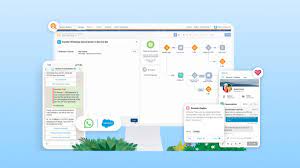
Agentforce: Transforming Business Operations with Autonomous Agents Agentforce empowers organizations to create and manage autonomous agents that streamline tasks across various business departments. These include Sales Agents, Service Agents, Marketing Agents, Commerce Agents, and Platform Agents—truly delivering on the vision of “an Agentforce in every app.” But how does Agentforce work, and what are the building blocks for configuring these agents? Salesforce emphasizes that Agentforce is built with clicks, not code, making it highly accessible to users. This claim was validated by many attendees at the ‘Agentforce Launchpad’ during Dreamforce, who noted that the tool is as declarative and user-friendly as Salesforce promised. The Building Blocks of Agentforce 1. Agent Builder The journey begins with the Agent Builder within Agentforce Studio. This configuration tool allows users to define their agent’s attributes, such as the avatar, name, and description, using natural language inputs—essentially describing the agent in conversational terms. Salesforce describes it as: “If you can dream it, Agentforce can do it.” The Agent Builder interface comprises: Salesforce also provides out-of-the-box agents, such as Sales Agents, which can be enabled via guided setup. 2. Agent Topics Topics are the foundational building blocks that determine an agent’s scope of work. For example, a topic like “Order Management” grants the agent access to data such as order histories and product specifications. In the Dreamforce keynote, Saks’ service agent demonstrated the importance of topics by resolving customer queries tied to its assigned topics. However, queries outside the defined topics were flagged as “guardrails,” ensuring the agent stayed within its designated scope. 3. Topic Actions Actions, tied to topics, define what an agent can do. These actions are often flows, such as querying a CRM database or triggering automated processes. Users can assign existing actions or create new ones by referencing Apex, Flow, prompts, or MuleSoft APIs. For example, integrating external data sources requires defining a new Agentforce action tied to a MuleSoft API. This allows the agent to query data just as human users would. Testing Agents with the Atlas Reasoning Engine Agentforce’s Atlas Reasoning Engine powers agents with advanced capabilities. Users can test agents within the Agent Builder interface, following the reasoning process step-by-step: Once configured, agents are ready to operate across their assigned communication channels (e.g., email, WhatsApp, voice). Omni Supervisor: Real-Time Agent Monitoring Omni Supervisor, originally a Service Cloud feature, now extends to monitoring agents. It provides insights into overall trends, allows real-time oversight of interactions, and even enables listening to recent conversations. The Role of Data Cloud in Agentforce Data powers Agentforce, enabling agents to provide highly contextual responses. The Data Cloud processes both structured data (e.g., Salesforce records) and unstructured data (e.g., emails, voice memos) using its Vector Database for advanced processing. 1. Retrieval Augmented Generation (RAG) Salesforce employs RAG to enhance the accuracy of agent responses. RAG integrates the Atlas Reasoning Engine with Data Cloud, creating a feedback loop. Data Cloud enriches user prompts by retrieving relevant data, making agent responses more contextual and informed. 2. New Data Streams To enhance Agentforce capabilities, data can be ingested into the platform in three ways: For instance, connecting an order management system like Snowflake is streamlined via Salesforce’s prebuilt connectors. 3. Data Graphs Data Graphs visualize relationships between Data Model Objects (DMOs), enabling users to ensure all necessary data is available for optimal agent performance. Real-time Data Graphs enhance identity resolution, segmentation, and action execution for seamless data flow. Inside Prompt Builder Prompt Builder allows users to create or refine prompts that power Agentforce actions. Low-code tools guide users through the process, offering features such as previewing results and assessing feedback toxicity ratings. Search Index in RAG The Search Index is a critical component of RAG. It retrieves relevant data from Data Cloud to enhance agent reasoning. Search parameters can be configured in three ways: Tectonic’s Thoughts Agentforce, powered by Data Cloud and advanced AI tools like the Atlas Reasoning Engine, represents a new era of automation and efficiency for businesses. Whether through Sales, Service, or Marketing Agents, organizations can leverage this technology to streamline operations, personalize customer experiences, and achieve better outcomes. With over 5,200 customers implementing Agentforce in their sandboxes within the first two days of Dreamforce, the platform is already proving its transformative potential. By 2025 over a billion agents had been created! Agentforce isn’t just about improving efficiency; it’s about redefining what’s possible for business operations. Content updated January 2025. Like Related Posts Who is Salesforce? Who is Salesforce? Here is their story in their own words. From our inception, we’ve proudly embraced the identity of Read more Salesforce Marketing Cloud Transactional Emails Salesforce Marketing Cloud Transactional Emails are immediate, automated, non-promotional messages crucial to business operations and customer satisfaction, such as order Read more Salesforce Unites Einstein Analytics with Financial CRM Salesforce has unveiled a comprehensive analytics solution tailored for wealth managers, home office professionals, and retail bankers, merging its Financial Read more AI-Driven Propensity Scores AI plays a crucial role in propensity score estimation as it can discern underlying patterns between treatments and confounding variables Read more

Read More
What Makes a True AI Agent

What Makes a True AI Agent

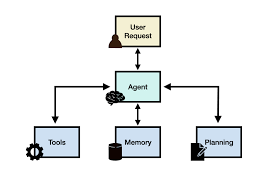
What Makes a True AI Agent? Rethinking the Pursuit of Autonomy Unpacking the Core Traits of AI Agents — And Why Foundations Matter More Than Buzzwords The tech industry is enamored with AI agents. From sales bots to autonomous systems, companies like Salesforce and HubSpot claim to offer groundbreaking AI agents. Yet, I’ve yet to encounter a truly autonomous, agentic experience built from LLMs. The market is awash with what I call “botshit,” and if the best Salesforce can do is improve slightly over a mediocre chatbot, that’s underwhelming. What Makes a True AI Agent? But here’s the critical question everyone is missing: even if we could build fully autonomous AI agents, how often would they be the best solution for users? To explore this, let’s consider travel planning through the lens of agents and assistants. This use case helps clarify what each trait of agentic behavior brings to the table and offers a framework for evaluating AI products beyond the hype. By the end of this piece, you’ll be able to decide whether AI autonomy is a worthwhile investment or a costly distraction. The Spectrum of Agentic Behavior: A Practical Framework There’s no consensus on what truly defines an AI “agent.” Instead of relying on a binary classification, I suggest adopting a spectrum framework with six key attributes from AI research. This approach is more useful in today’s landscape because: Using the example of a travel “agent,” we’ll explore how different implementations fall on this spectrum. Most real-world applications land somewhere between “basic” and “advanced” tiers across the six traits. This framework will help you make informed decisions about AI integration and communicate more effectively with both technical teams and end users. By the end, you’ll be equipped to: What Makes a True AI Agent The Building Blocks of Agentic Behavior 1. Perception The ability to sense and interpret its environment or relevant data streams. An agent with advanced perception could, for instance, notice your preference for destinations with excellent public transit and factor that into future recommendations. 2. Interactivity The ability to engage with its environment, users, and external systems. LLMs like ChatGPT have set a high bar for interactivity. However, most customer support bots struggle because they need to integrate company-specific data and backend systems, prioritizing accuracy over creativity. 3. Persistence The ability to store, maintain, and update long-term memories about users and interactions. True persistence requires systems that not only store data but also evolve with each interaction, much like how a human travel agent remembers your favorite seat on a plane. 4. Reactivity The ability to respond to changes in its environment in real time. For example, a reactive system could suggest alternative travel dates if hotel prices surge due to a local event. 5. Proactivity The ability to anticipate needs and offer relevant suggestions unprompted. True proactivity requires robust perception, persistence, and reactivity to offer timely, context-aware suggestions. 6. Autonomy The ability to operate independently and make decisions within defined parameters. Autonomy varies by the level of resource control, impact scope, and operational boundaries. For example: The more complex the task and the greater the impact of a mistake, the more safeguards and precision the system needs. Proactive Autonomy: A Future Frontier The next step is proactive autonomy — the ability to modify goals or parameters to achieve overarching objectives. While theoretically possible, this introduces new risks and complexities, bringing us closer to the scenarios seen in sci-fi, where AI systems operate beyond human control. Most companies are nowhere near this level, and prioritizing foundation work like perception and persistence is far more practical for today’s needs. Agents vs. Assistants: A Useful Distinction An AI agent demonstrates at least five of the six attributes and exhibits autonomy within its domain. An AI assistant excels in perception, interactivity, and persistence but lacks autonomy or proactivity. It primarily responds to human requests and relies on human oversight for decisions. While many AI systems today are labeled “agents,” most function more like assistants. A Roomba, for example, is closer to an agent, autonomously navigating and adapting within a predefined space. On the other hand, tools like GitHub Copilot serve as powerful assistants, enhancing user capabilities without making independent decisions. Foundations Before Flash: The Role of Data Despite all the AI buzz, few companies today have the data foundations to support meaningful agentic behavior. For instance, most customer interactions rely on nuanced, unwritten information that is hard to automate. Missing perception foundations and inadequate testing lead to the “botshit” plaguing the industry. The key is to focus on building strong foundations in perception, interactivity, and persistence before tackling full autonomy. Start with the Problem: Why User-Centric AI Wins Before chasing the dream of autonomous agents, companies should start by asking what users actually need. Many organizations would benefit more from developing reliable assistants rather than fully autonomous systems. Real user problems, like those solved by Waymo and Roomba, offer clear paths to valuable AI solutions. The Path Forward: Align Data, Systems, and User Needs When deciding where to invest in AI: By focusing on foundational pillars, companies can build AI systems that solve immediate problems, laying the groundwork for more advanced capabilities in the future. Whether you’re developing agents, assistants, or indispensable tools, aligning solutions with real user needs is the key to meaningful progress. Contact Tectonic for assistance answering the question What Makes a True AI Agent work for my business? Like Related Posts Who is Salesforce? Who is Salesforce? Here is their story in their own words. From our inception, we’ve proudly embraced the identity of Read more Salesforce Marketing Cloud Transactional Emails Salesforce Marketing Cloud Transactional Emails are immediate, automated, non-promotional messages crucial to business operations and customer satisfaction, such as order Read more Salesforce Unites Einstein Analytics with Financial CRM Salesforce has unveiled a comprehensive analytics solution tailored for wealth managers, home office professionals, and retail bankers, merging its Financial Read more AI-Driven Propensity Scores AI plays a crucial role in propensity score

Read More
Cross Cloud Zero-Copy Data

Cross Cloud Zero-Copy Data

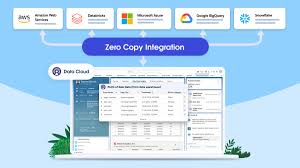
Simplifying Secure Data Access Across Clouds In today’s data-driven world, secure and prompt access to information is crucial. However, with critical analytics data spread across various cloud vendors, achieving this expediency can be challenging. Cross-cloud zero-copy data sharing doesn’t have to be complex. By leveraging your Autonomous Database, you can swiftly establish secure data sharing with your Salesforce CRM Data Stream in just seconds. This guide will walk you through the straightforward process of connecting your Salesforce CRM data to your Autonomous Database using the Salesforce CRM data connector type. Requirements for Salesforce Integration To connect Salesforce CRM data with your Autonomous Database, you’ll need the following: 1. Confirm Data Stream Configuration On the Data Streams Dashboard, verify the Data Stream Name, Data Connector Type, and Data Stream Status. 2. Set Up Your Autonomous Database Create Your Credentials: sqlCopy codeBEGIN DBMS_CLOUD.CREATE_CREDENTIAL( credential_name => ‘<your credential name>’, username => ‘<your salesforce log-in id>’, password => ‘<your salesforce password>’); END; / Create Your Database Link: sqlCopy codeBEGIN DBMS_CLOUD_ADMIN.CREATE_DATABASE_LINK( db_link_name => ‘<your database link name>’, hostname => ‘<your host>.my.salesforce.com’, port => ‘19937’, service_name => ‘salesforce’, ssl_server_cert_dn => NULL, credential_name => ‘<your credential name>’, gateway_params => JSON_OBJECT( ‘db_type’ value ‘salesforce’, ‘security_token’ value ‘<your security token>’)); END; / 3. Check Connectivity Details The HETEROGENEOUS_CONNECTIVITY_INFO view provides information on credential and database link requirements for external databases. For example: sqlCopy codeSELECT database_type, required_port, sample_usage FROM heterogeneous_connectivity_info WHERE database_type = ‘salesforce’; 4. Demonstration: Connecting to Salesforce Data Follow these steps to connect to your Salesforce CRM organization using the Salesforce Data Cloud Sales synthetic data in the Account_Home Data Stream: 5. Set Up Connectivity Using DBMS_CLOUD.CREATE_CREDENTIAL, create the necessary credentials to connect to Salesforce. Then, use DBMS_CLOUD_ADMIN.CREATE_DATABASE_LINK to establish the database link. Once configured, execute the SELECT statement against the ACCOUNT data to verify successful connection. 6. Utilize Zero-Copy Data Sharing With zero-copy data access to the Salesforce CRM Data Lake ACCOUNT object, you can: Conclusion As demonstrated, secure and efficient cross-cloud zero-copy data access can be straightforward. By following these simple steps, you can bypass cumbersome ETL operations and gain immediate, secure access to your Salesforce CRM data. This approach eliminates the overhead of complex data pipelines and provides you with real-time access to critical business data. Like Related Posts Who is Salesforce? Who is Salesforce? Here is their story in their own words. From our inception, we’ve proudly embraced the identity of Read more Salesforce Marketing Cloud Transactional Emails Salesforce Marketing Cloud Transactional Emails are immediate, automated, non-promotional messages crucial to business operations and customer satisfaction, such as order Read more Salesforce Unites Einstein Analytics with Financial CRM Salesforce has unveiled a comprehensive analytics solution tailored for wealth managers, home office professionals, and retail bankers, merging its Financial Read more AI-Driven Propensity Scores AI plays a crucial role in propensity score estimation as it can discern underlying patterns between treatments and confounding variables Read more

Read More
ai analytics

AI Analytics Explained

While both AI analytics and predictive AI leverage data analysis, AI analytics is a broader field encompassing various AI techniques for data processing and analysis, while predictive AI specifically focuses on forecasting future outcomes based on historical data patterns. Here’s a more detailed breakdown: AI Analytics (Broad) Predictive AI (Specific) What is AI Analytics? AI analytics leverages machine learning (ML) and artificial intelligence (AI) to automate the analysis of vast amounts of data, uncovering insights faster and more accurately than traditional methods. By continuously monitoring data streams, AI analytics identifies patterns, anomalies, and trends—tasks that would typically require extensive manual effort from data analysts. Business Analytics in the AI Era AI is transforming industries, and business analytics is no exception. While traditional analytics relies on statistical models developed over centuries, AI-powered analytics introduces unprecedented speed, scalability, and precision, enabling businesses to make real-time, data-driven decisions. This article explores: What is Analytics? Analytics is the process of extracting meaningful insights from raw data to answer business questions, predict trends, and guide decision-making. It involves various techniques, including: The Four Stages of Analytics (Gartner’s Analytic Ascendancy Model) AI, Machine Learning, and AI Analytics Artificial Intelligence (AI) AI refers to machines performing tasks that typically require human intelligence, such as: Machine Learning (ML) A subset of AI, ML uses algorithms trained on data to make predictions without explicit programming. Key approaches include: AI Analytics AI analytics automates data analysis by: Unlike traditional analytics, which relies on manual hypothesis testing, AI analytics continuously scans data, delivering faster, more objective insights. AI Analytics vs. Traditional Analytics Feature Traditional Analytics AI Analytics Speed Slow (weeks to months) Real-time processing Scale Limited by human capacity Handles billions of data points Granularity Broad trends Micro-level insights (e.g., per-user) Bias Human assumptions influence results Data-driven, unbiased analysis Automation Manual hypothesis testing Self-learning algorithms Advantages of AI Analytics ✅ Faster detection – Identifies issues in hours, not weeks.✅ Higher accuracy – Reduces errors by 30-50% (McKinsey).✅ Unbiased insights – Tests millions of hypotheses objectively. Real-World Applications of AI Analytics 1. Demand Forecasting (Predictive Analytics) 2. Predictive Maintenance 3. Business Monitoring (Diagnostic Analytics) 4. Cloud Cost Optimization Conclusion: AI Analytics is the Future AI analytics supercharges business intelligence by:🚀 Automating tedious analysis – Freeing analysts for strategic work.🔍 Uncovering hidden insights – Detecting patterns humans miss.⏱ Delivering real-time decisions – Keeping businesses agile. As AI continues to evolve, companies that adopt AI-powered analytics will gain a competitive edge—transforming raw data into actionable intelligence at unprecedented speed. Ready to integrate AI analytics into your business? Explore how AI can revolutionize your data strategy today. Contact Tectonic. Like Related Posts Who is Salesforce? Who is Salesforce? Here is their story in their own words. From our inception, we’ve proudly embraced the identity of Read more Salesforce Marketing Cloud Transactional Emails Salesforce Marketing Cloud Transactional Emails are immediate, automated, non-promotional messages crucial to business operations and customer satisfaction, such as order Read more Salesforce Unites Einstein Analytics with Financial CRM Salesforce has unveiled a comprehensive analytics solution tailored for wealth managers, home office professionals, and retail bankers, merging its Financial Read more AI-Driven Propensity Scores AI plays a crucial role in propensity score estimation as it can discern underlying patterns between treatments and confounding variables Read more

Read More
Better Sales and Services with Salesforce Unlimited Edition

Granular Data Center Overview

Granular Data Center Overview in Marketing Cloud Intelligence The Granular Data Center is an advanced feature tailored for ingesting detailed, raw data into the system. This data can reach a scale of hundreds of millions or even billions of rows due to its granularity. Unlike other data stream types, usage and pricing are based on terabytes of storage rather than row count. Ideal data types for Granular Data Center streams include keyword-level data, event-level data, logs, and precise geodata. Granular Data Center streams generate corresponding tables of data specific to a workspace. All data stored in the Granular Data Center fully complies with GDPR regulations and requirements. The Granular Data Center is a premium feature. For inquiries about purchasing, please contact a Marketing Cloud Intelligence representative at Salesforce. Deprovisioning the Granular Data Center add-on from an account triggers the following actions: Note: System admins and higher can still access the Granular Data Center for 90 days after unchecking the checkbox. Access will be unavailable after this period. Note: System admins and higher can continue running SQL queries and exports for 90 days. After this period, all Granular Data Center data streams are automatically deleted, along with the data. When retrieving data from the Granular Data Center, be mindful of these timeout limits: Enabling the Granular Data Center in a Workspace Purchasing the Granular Data Center automatically activates it in the account, but an admin must enable it in the workspace to make the Granular Data Center tab visible. Viewing Granular Data Center Data The Granular Data Center landing page provides an overview of all created data streams in that workspace. Users can manage ingested data, aggregations, extracted data, share data streams, create queries, and more from this centralized location. Creating Granular Data Center Data Streams Generate a Granular Data Center data stream to ingest detailed data, such as event-level or keyword-level data. Mapping Granular Data Center Data Upon file upload or usage of a technical vendor, users are directed to a mapping preview screen where they can verify data identification, modify mapping, add mapping formulas, and more. Each uploaded dataset creates a dynamic table tailored to the loaded data type, impacting data load options and behavior. Querying Granular Data Centers Access and extract data from Granular Data Centers within your workspace. Users can also query Granular Data Centers in other workspaces via data sharing. Queries can be manually crafted using an SQL editor or created effortlessly with the Query Builder. Visualizing Granular Data Center Data The Entity-Relationship Diagram (ERD) visually represents tables and connections between specific dimensions. Each block symbolizes a table containing available fields, with lines denoting connections between tables based on specific dimensions. Sharing Granular Data Centers Relevant Granular Data Centers can be shared across workspaces within the same account. Deleting Data from a Granular Data Center To align with data protection regulations, users have the option to delete data from a Granular Data Center. Like1 Related Posts Who is Salesforce? Who is Salesforce? Here is their story in their own words. From our inception, we’ve proudly embraced the identity of Read more Salesforce Marketing Cloud Transactional Emails Salesforce Marketing Cloud Transactional Emails are immediate, automated, non-promotional messages crucial to business operations and customer satisfaction, such as order Read more Salesforce Unites Einstein Analytics with Financial CRM Salesforce has unveiled a comprehensive analytics solution tailored for wealth managers, home office professionals, and retail bankers, merging its Financial Read more AI-Driven Propensity Scores AI plays a crucial role in propensity score estimation as it can discern underlying patterns between treatments and confounding variables Read more

Read More
Salesforce Data Cloud Explained

Salesforce Data Cloud Explained

Salesforce Data Cloud, previously recognized as Salesforce CDP/Genie, made its debut at Dreamforce 2022, hailed by Salesforce as one of the most significant innovations in the company’s history. A hyperscale data platform built into Salesforce. Activate all your customer data across Salesforce applications with Data Cloud. Data Cloud facilitates the intake and storage of real-time data streams on a massive scale, empowering automated tasks that result in highly personalized experiences. Data can be sourced from diverse Salesforce data outlets, including Mulesoft, Marketing Cloud, and others, along with customers’ proprietary applications and data sources. Subsequently, it can dynamically respond to this real-time data by automating actions across Salesforce CRM, Marketing Cloud, Commerce, and more, inclusive of automating actions through Salesforce Flow. What is the Salesforce data cloud? Data Cloud is the fastest growing organically built product in Salesforce’s history (i.e. Salesforce built it themselves, not via acquisitions). Data Cloud could be described as the ‘Holy Grail of CRM’, meaning that the data problem that’s existed since the infancy of CRM is now finally solvable. Data Cloud is the foundation that speeds up the connectivity between different ‘clouds’ across the platform. However, Data Cloud is also a product that can be purchased. While not all Salesforce customers have licensed Data Cloud, being at the foundation means they are still taking advantage of Data Cloud to a degree – but this all becomes even stronger with Data Cloud as a personalization and data unification platform. What is the history of Data Cloud? Salesforce has gone through several iterations with naming its CDP product: Customer 360 Audiences → Salesforce CDP → Marketing Cloud Customer Data Platform → Salesforce Genie → Salesforce Data Cloud. In some instances, changes were made because the name just didn’t stick – but what’s more important to note, is that some of the name changes were to indicate the significant developments that happened to the product. Salesforce Data Cloud Differentiators Data Cloud, in itself, is impressive. While many organizations would consider it expensive, if you were to flip the argument on its head, by buying your own data warehouse, building the star schema, and paying for ongoing compute storage, you’d be looking to spend 5 to 10 times more than what Salesforce is charging for Data Cloud. Plus, data harmonization works best when your CRM data is front and center. There are other key differentiators that helps Data Cloud to stand out from the crowd: Is data cloud a data lakehouse? That means that Data Cloud is now not just a really good CDP, it’s now a data lake which will be used in sales and service use cases. But it also means that we can start to fundamentally move some of our higher-scale consumer products like Marketing and Commerce onto the platform. Is Snowflake a data Lakehouse? Snowflake offers customers the ability to ingest data to a managed repository, in what’s commonly referred to as a data warehouse architecture, but also gives customers the ability to read and write data in cloud object storage, functioning as a data lake query engine. What is the benefit of Salesforce data cloud? Data Cloud empowers Salesforce Sales Cloud with AI capabilities and automation that quickly closes deals and boosts productivity across every channel. It drives customer data from all the touchpoints and unifies it separately in individual customer profiles. Salesforce Data Cloud is a powerful data warehouse solution that allows companies to effectively manage and analyze their data. What is the difference between Salesforce CDP and data lake? Talking abut Salesforce CDP is a little bit like a history lesson. While a CDP provides a unified, structured view of customer data, a data lake, on the other hand, is more of a raw, unstructured storage repository that holds a vast amount of data (more than just customer data) in its native format until it’s needed. Like1 Related Posts Who is Salesforce? Who is Salesforce? Here is their story in their own words. From our inception, we’ve proudly embraced the identity of Read more Salesforce Marketing Cloud Transactional Emails Salesforce Marketing Cloud Transactional Emails are immediate, automated, non-promotional messages crucial to business operations and customer satisfaction, such as order Read more Salesforce Unites Einstein Analytics with Financial CRM Salesforce has unveiled a comprehensive analytics solution tailored for wealth managers, home office professionals, and retail bankers, merging its Financial Read more AI-Driven Propensity Scores AI plays a crucial role in propensity score estimation as it can discern underlying patterns between treatments and confounding variables Read more

Read More
Salesforce Flow

Einstein GPT Integration with Flow and Data Cloud Now Available

Salesforce has recently unveiled exciting new capabilities for Flow, Einstein GPT Integration with Flow and Data Cloud. Introducing Einstein GPT and Data Cloud features to its growing family of automation tools. This development empowers everyday administrators, eliminating the need for extensive engineering teams to harness large datasets for automation purposes. The groundbreaking aspect lies in the ability to achieve this in real-time, using a user-friendly interface without the need for coding. Introduction to Einstein GPT: Einstein GPT builds upon ChatGPT technology, combining public and private AI models with CRM data within Salesforce. This allows users to pose natural-language prompts directly within Salesforce CRM, receiving AI-generated content that adapts continuously to changing customer information and needs. The learning capability of Einstein GPT ensures ongoing improvement based on user input, aligning with best practices. Einstein GPT for Flow: When integrated with Salesforce Flow, Einstein GPT enables users to create and modify automations through a conversational interface, simplifying the flow creation process significantly. This fusion lowers barriers for non-technical users, enhancing the overall experience with Flow Builder and ensuring adherence to best practices. Key benefits of Einstein GPT for Flow include: Pricing details for Einstein GPT products are pending confirmation, and Salesforce will soon announce pilot program dates to broaden accessibility. Data Cloud for Flow: Introduced at Dreamforce 2022, Salesforce Data Cloud, formerly Genie, facilitates highly personalized customer experiences in real-time. Serving as a command center for customer data, Data Cloud integrates real-time data streams with Salesforce data, powering Flow with actionable insights. By combining Data Cloud with Flow, users can automate complex workflows and trigger actions based on real-time changes without the need for extensive IT involvement. This approach streamlines the process of designing, building, and testing custom integrations, reducing the burden on IT teams. Key advantages of Data Cloud for Flow include: These announcements bring forth transformative capabilities, making data utilization more accessible and streamlining the automation process within Salesforce. The combination of Einstein GPT and Data Cloud for Flow opens up possibilities for creating personalized and interconnected customer experiences across different sectors. Like1 Related Posts Who is Salesforce? Who is Salesforce? Here is their story in their own words. From our inception, we’ve proudly embraced the identity of Read more Salesforce Marketing Cloud Transactional Emails Salesforce Marketing Cloud Transactional Emails are immediate, automated, non-promotional messages crucial to business operations and customer satisfaction, such as order Read more Salesforce Unites Einstein Analytics with Financial CRM Salesforce has unveiled a comprehensive analytics solution tailored for wealth managers, home office professionals, and retail bankers, merging its Financial Read more AI-Driven Propensity Scores AI plays a crucial role in propensity score estimation as it can discern underlying patterns between treatments and confounding variables Read more

Read More
Salesforce Data Cloud

Salesforce Data Cloud – The Ultimate Guide to Unified Customer Intelligence

Why Salesforce Data Cloud is Transforming Business Operations In today’s digital-first economy, customer data is your most valuable asset—if you can harness it effectively. Salesforce Data Cloud revolutionizes how enterprises unify, analyze, and activate customer data across every touchpoint. 5 Key Business Transformations The Data Cloud Advantage: Beyond Traditional CDPs Unlike legacy customer data platforms, Salesforce Data Cloud delivers: Feature Traditional Solutions Salesforce Data Cloud Data Integration Manual ETL processes Real-time harmonization AI Capabilities Basic segmentation Predictive insights & recommendations Activation Limited channel support Native Salesforce app integration Scalability Fixed data models Elastic cloud infrastructure Total Cost Hidden implementation fees Transparent consumption model Proven Results Across Industries Financial Services Healthcare Retail Implementation Roadmap Phase 1: Foundation (Weeks 1-4) Phase 2: Activation (Weeks 5-8) Phase 3: Scaling (Ongoing) Overcoming Common Challenges “Our data is too messy”→ Automated data quality tools clean and standardize information during ingestion “We can’t afford another platform”→ Consumption-based pricing starts at $25K/year with proven 3-5X ROI “Our team isn’t technical enough”→ No-code tools like Flow Builder enable business user configuration The Future of Data-Driven Business As AI reshapes customer expectations, Salesforce Data Cloud provides the essential infrastructure to: Leading organizations are already achieving: Next Steps for Your Data Transformation “Companies using Data Cloud see 47% faster decision-making and 32% higher customer satisfaction scores within 6 months.” – Forrester Consulting Study Unlock your data’s full potential. Contact our specialists today to begin your assessment. Like Related Posts Who is Salesforce? Who is Salesforce? Here is their story in their own words. From our inception, we’ve proudly embraced the identity of Read more Salesforce Marketing Cloud Transactional Emails Salesforce Marketing Cloud Transactional Emails are immediate, automated, non-promotional messages crucial to business operations and customer satisfaction, such as order Read more Salesforce Unites Einstein Analytics with Financial CRM Salesforce has unveiled a comprehensive analytics solution tailored for wealth managers, home office professionals, and retail bankers, merging its Financial Read more AI-Driven Propensity Scores AI plays a crucial role in propensity score estimation as it can discern underlying patterns between treatments and confounding variables Read more

Read More
Salesforce Genie

Genie Salesforce

Salesforce Genie is a real-time platform that synthesizes customer data, enabling organizations to meet their customer requirements and expectations as and when they change. What is the difference between Salesforce Genie and CDP? Data activation protocols are followed by the Salesforce Customer Data Platform. This helps in order to segment the audience and activate the data. With Genie, you are able to unify your data and resolve customer identity issues. What is the Genie platform? Genie is an online sales platform that allows you to leverage the strengths of traditional marketing. With online marketing and direct mail into successful multi-channel campaigns. Combine data, marketing and tracking in one place. Always with a team of data marketing experts only a phone call away for support. It makes it easier for businesses to decode and make sense of all their data from all systems, channels, or data streams. It also integrates data from each step in the customer’s experience into a unified customer profile record. Therefore helping create one single view of the customer. Have you ever called a support line and spent unnecessary time talking the agent through your purchase history to get the right level of support? Or when an ecommerce site states the shirts that you have been eyeing for are finally in stock, but they’re still out of stock when you get to the store? These are familiar scenarios for most of us. We expect every experience to be connected and updated in real time. When they aren’t, we’re disappointed. Salesforce Genie was first announced by Salesforce at Dreamforce ‘22. Like1 Related Posts Who is Salesforce? Who is Salesforce? Here is their story in their own words. From our inception, we’ve proudly embraced the identity of Read more Salesforce Marketing Cloud Transactional Emails Salesforce Marketing Cloud Transactional Emails are immediate, automated, non-promotional messages crucial to business operations and customer satisfaction, such as order Read more Salesforce Unites Einstein Analytics with Financial CRM Salesforce has unveiled a comprehensive analytics solution tailored for wealth managers, home office professionals, and retail bankers, merging its Financial Read more AI-Driven Propensity Scores AI plays a crucial role in propensity score estimation as it can discern underlying patterns between treatments and confounding variables Read more

Read More
Salesforce Manufacturing Cloud

Salesforce for Manufacturing and Salesforce Manufacturing Cloud

What is Salesforce for Manufacturing? Salesforce Manufacturing Cloud is a tailored CRM solution designed specifically for enterprise-level manufacturing companies. It offers out-of-the-box functionality with key features including demand and production forecasting, along with sales agreements. The platform aims to transform customer operations in manufacturing through the integration of Data, AI, CRM, and Trust. How Manufacturers Use Salesforce Manufacturing companies utilizing the Salesforce platform typically leverage it for managing various aspects directly from the platform. These include sales, customer service, partner and channel portals, marketing, and e-commerce. In some cases, certain applications may also integrate with third-party systems. What’s Included With Salesforce Manufacturing Cloud? Manufacturing Cloud encompasses various components to manage the complete business cycle, from customer inquiry to order visibility and demand forecasting accuracy. Key components include Rebate Management, Revenue Cloud, B2B Commerce, CRM Analytics, Slack, and MuleSoft Anypoint Platform. Salesforce Service Capabilities for Manufacturing Salesforce Field Service Expand Salesforce Field Service service offerings with warranty management, aftermarket parts programs, and predictive maintenance services. Channel Partner Visibility and Engagement Connecting Sales and Operations with Manufacturing Cloud Manufacturing Cloud helps connect sales and operations, driving forecast accuracy and visibility across the ecosystem. It includes components such as Experience Cloud, CRM Analytics, Rebate Management, Loyalty Management, Revenue Cloud, B2B Commerce, Marketing Cloud, Slack, and MuleSoft Anypoint Platform. Like1 Related Posts Who is Salesforce? Who is Salesforce? Here is their story in their own words. From our inception, we’ve proudly embraced the identity of Read more Salesforce Marketing Cloud Transactional Emails Salesforce Marketing Cloud Transactional Emails are immediate, automated, non-promotional messages crucial to business operations and customer satisfaction, such as order Read more Salesforce Unites Einstein Analytics with Financial CRM Salesforce has unveiled a comprehensive analytics solution tailored for wealth managers, home office professionals, and retail bankers, merging its Financial Read more AI-Driven Propensity Scores AI plays a crucial role in propensity score estimation as it can discern underlying patterns between treatments and confounding variables Read more

Read More
gettectonic.com