HELM Archives - gettectonic.com
AI and UX Design

The AI Frontier Code: Laws for Taming the Wild West of UX

The digital frontier is lawless. Interfaces without intelligence. Intelligence without empathy. Designers building for yesterday while AI reshapes tomorrow. Teams drowning in possibility, paralyzed by complexity, lost in the noise of a thousand AI snake oil salesmen peddling confusion. The old rulebooks are ashes. The familiar trails have vanished. We stand at the edge of a new territory, watching the very nature of human-machine interaction transform before our eyes. But from chaos comes order. Just as the Code of the West brought structure to the untamed frontier, the AI era demands new ironclad laws—unyielding principles to guide us through this uncharted land. These aren’t suggestions. These aren’t guidelines. These are the Laws of the AI Frontier—the difference between those who’ll shape the future and those who’ll be left in the dust. As trailblazer Rob Chappell observes: “The future ain’t about guiding users from point A to B. It’s about forging bonds between people and thinking machines.” These laws are your survival guide for that journey. Branded in silicon, etched in circuits, sworn by the pioneers who’ll build tomorrow. I. The Interface IS the Intelligence The First Law: In AI territory, your UI is your brain Forget pretty wrappers around dumb tools. In this new land, every pixel shapes how the AI thinks. Every interaction teaches it how to behave. Every design choice forges its character. When you craft a notification, you’re not picking colors—you’re setting when the AI interrupts. When you design a conversation, you’re not writing words—you’re teaching metal minds how to speak human. As scout Rachel Kobetz warns: “Intelligence ain’t hidden behind the interface no more—it IS the interface. When systems learn and adapt, experience ain’t downstream from strategy. It IS the strategy.” How to stay lawful: The punishment for lawbreakers: Interfaces that feel fake, AI that seems alien, and users who’ll never trust your metal partner enough to ride together. II. Scout Tomorrow’s Trails Today The Second Law: Pioneers blaze trails—settlers just follow ruts While greenhorns debate whether AI changes design, you should be building that change. The future belongs to those who see past the horizon, who bridge to lands that don’t exist yet, who turn raw possibility into working reality. Don’t wait for briefs—write ’em. Don’t wait for strategy—create it. Don’t wait for permission—plant your flag. How to stay lawful: The punishment for lawbreakers: Eternal catch-up, always reacting instead of leading, watching others claim the future you could’ve owned. III. Show Your Hand The Third Law: Trust is the only currency that matters Users need to know more than what happened—they need confidence in what’ll happen next. In a land of black-box algorithms, transparency is the bridge between human doubt and digital trust. But clarity beats raw disclosure. Your duty is to reveal AI’s workings in ways that enlighten, not overwhelm. Think control maps—not journey maps. Don’t just chart what users do. Show who’s holding the reins—human, AI, or both—and when that changes. As Chappell notes: “The question ain’t ‘What’s the user doing?’ It’s ‘Who’s calling the shots right now, and how does that change?’” How to stay lawful: The punishment for lawbreakers: Users who never fully trust your AI, limiting its potential, dooming it to be just another broken promise in this wild land. IV. Ride Together The Fourth Law: The future’s human AND AI—not human OR AI Your job ain’t to protect humans from machines or replace cowboys with automatons. Your mission is to choreograph the dance between human gut and machine logic—partnerships that bring out the best in both. Design for the “autonomy slider”—a fluid scale where control flows between: This ain’t an on-off switch—it’s a continuous flow, creating what the wise call “co-agency.” How to stay lawful: The punishment for lawbreakers: AI that feels threatening instead of helpful, users who fight your “improvements,” and missing the magic of true partnership. The Oath: Living by the Code These laws ain’t gentle suggestions—they’re the bedrock of tomorrow’s AI UX. Every designer who’ll matter in the intelligence era lives by them. Every product that truly transforms human potential reflects them. To follow this code is to: To ignore them is to: The choice is yours, pioneer. Every designer today faces a decision that’ll define not just their career, but how humans and machines will work together for generations. You can cling to the old ways—the comfortable rules of pre-AI UX, the safety of known patterns, the ease of reactive design. Or you can swear by this new code, strap on your tools, and help write the next chapter of human-digital history. The laws are carved. The trail awaits. Like Related Posts Who is Salesforce? Who is Salesforce? Here is their story in their own words. From our inception, we’ve proudly embraced the identity of Read more Salesforce Unites Einstein Analytics with Financial CRM Salesforce has unveiled a comprehensive analytics solution tailored for wealth managers, home office professionals, and retail bankers, merging its Financial Read more AI-Driven Propensity Scores AI plays a crucial role in propensity score estimation as it can discern underlying patterns between treatments and confounding variables Read more Tectonic’s Successful Salesforce Track Record Salesforce Technology Services Integrator – Tectonic has successfully delivered Salesforce in a variety of industries including Public Sector, Hospitality, Manufacturing, Read more


Read More

The Rise of AI Agents

The Rise of AI Agents: How Autonomous AI is Reshaping Business As artificial intelligence advances, so does the terminology around it. The term “AI agent” is gaining traction as generative AI becomes deeply embedded in business operations. Unlike traditional AI tools that follow rigid scripts, AI agents are autonomous programs capable of learning, adapting, and executing tasks with minimal human intervention. Why AI Agents Are Booming The rapid expansion of large language models (LLMs) has slashed the cost of developing AI agents, fueling a surge in startups specializing in industry-specific AI solutions. According to Stripe’s 2024 research, AI startups achieved record revenue growth last year, signaling a shift from generic AI tools (like ChatGPT) to verticalized AI agents tailored for specific sectors. In their annual letter, Stripe co-founders Patrick and John Collison noted: “Just as SaaS evolved from horizontal platforms (Salesforce) to vertical solutions (Toast), AI is following the same path. Industry-specific AI agents ensure businesses fully harness LLMs by integrating contextual data and workflows.” AI Agents in Action: Industry Success Stories From manufacturing to finance, AI agents are already delivering tangible benefits: David Lodge, VP of Engineering at IBS Software, explains: “Fragmented systems limit AI’s potential. Unifying CRM, PMS, and loyalty data into a single platform is critical for AI to drive real transformation.” Hospitality’s AI Revolution: Breaking Down Data Silos Hotels like Wyndham and IHG have partnered with Salesforce to consolidate millions of guest records, enabling AI agents to deliver hyper-personalized service. In February 2025, Apaleo launched an AI Agent Marketplace for hospitality, allowing hotels to integrate AI solutions without costly system overhauls. Case Study: mk Hotels The Future: Autonomous Agents Redefining Workflows In September 2024, Salesforce introduced Agentforce, a platform for building secure, data-grounded AI agents that automate complex workflows. Jan Erik Aase, Partner at ISG, predicts: “The shift to agent-driven enterprises isn’t just technological—it’s cultural. As AI agents grow smarter, they’ll redefine customer interactions and decision-making.” Key Takeaways The AI agent revolution is here—and businesses that embrace it will lead the next wave of productivity and innovation. Like Related Posts Who is Salesforce? Who is Salesforce? Here is their story in their own words. From our inception, we’ve proudly embraced the identity of Read more Salesforce Marketing Cloud Transactional Emails Salesforce Marketing Cloud Transactional Emails are immediate, automated, non-promotional messages crucial to business operations and customer satisfaction, such as order Read more Salesforce Unites Einstein Analytics with Financial CRM Salesforce has unveiled a comprehensive analytics solution tailored for wealth managers, home office professionals, and retail bankers, merging its Financial Read more AI-Driven Propensity Scores AI plays a crucial role in propensity score estimation as it can discern underlying patterns between treatments and confounding variables Read more

Read More
salesforce agentforce rapid deployment

Indeed Partners with Salesforce to Revolutionize Employer Support with AI-Powered Agentforce

Streamlining Employer Onboarding Through Intelligent Automation Salesforce has announced that Indeed — the world’s #1 job site with 610 million job seeker profiles and 3.3 million active employers — is implementing Agentforce to transform its employer support operations. By deploying AI-powered digital labor, Indeed aims to automate routine onboarding tasks, reduce response times, and free up human teams to focus on high-value employer relationships that accelerate hiring. The Challenge: Scaling Employer Support Efficiently The Solution: AI Agents That Work Alongside Human Teams Indeed is leveraging Salesforce Agentforce to:✔ Autonomously resolve routine employer inquiries✔ Guide users in real time through account verification & job posting fixes✔ Reduce manual workloads for support staff by ~20-30% Example Use Case:When an employer’s job post gets flagged (e.g., for a too-short description), they can simply ask the AI agent—in plain language—why it was rejected. The agent instantly explains the issue and provides step-by-step resolution guidance. The Technology Stack Powering Indeed’s AI Transformation The Impact: From Administrative Burden to Strategic Relationships “By automating repetitive tasks with Agentforce, we’re empowering our teams to do what humans do best—build trust and solve meaningful problems,” said an Indeed spokesperson. “This isn’t about replacing people; it’s about augmenting them with AI superpowers.” The Future of AI in HR Tech Indeed’s deployment showcases how autonomous AI agents are transforming talent acquisition by: As more enterprises adopt digital labor platforms like Agentforce, expect to see similar AI-driven efficiencies across:✓ Candidate screening✓ Interview scheduling✓ Compliance verification Industry Outlook:*With 72% of HR leaders planning to increase AI adoption in 2024 (Gartner), Indeed’s move positions it as a frontrunner in the AI-powered recruitment revolution.* Ready to explore AI agents for your HR operations?  Contact Tectonic. Like Related Posts Who is Salesforce? Who is Salesforce? Here is their story in their own words. From our inception, we’ve proudly embraced the identity of Read more Salesforce Marketing Cloud Transactional Emails Salesforce Marketing Cloud Transactional Emails are immediate, automated, non-promotional messages crucial to business operations and customer satisfaction, such as order Read more Salesforce Unites Einstein Analytics with Financial CRM Salesforce has unveiled a comprehensive analytics solution tailored for wealth managers, home office professionals, and retail bankers, merging its Financial Read more AI-Driven Propensity Scores AI plays a crucial role in propensity score estimation as it can discern underlying patterns between treatments and confounding variables Read more

Read More
Salesforce analytics insurance

4 Steps to Unlock the Right Marketing Insights

Overwhelmed by Dashboard Data? 4 Steps to Unlock the Right Marketing Insights An effective dashboard should present marketing data clearly and concisely, enabling teams to quickly extract insights and make confident decisions. 4 Steps to Unlock the Right Marketing Insights Turning Data into Action with Trusted Insights Imagine walking into a restaurant with an overwhelming menu—dozens of dishes spanning multiple cuisines, making it difficult to choose. While the food may be good, the sheer volume of options leads to decision fatigue, causing diners to default to familiar choices rather than exploring new possibilities. The same challenge applies to marketing dashboards. When cluttered with excessive metrics, they become difficult to navigate, obscuring key insights rather than revealing them. A well-designed dashboard, like a well-curated menu, should guide users to the most valuable information—helping them act quickly and strategically. The Difference Between Reporting and Insights Many dashboards fall into the trap of displaying every possible metric, but true value comes from actionable insights, not just raw data. Example: A live campaign shows that email conversions outperform social ads. Instead of just noting the discrepancy, an insights-driven dashboard helps marketers diagnose why—perhaps stronger subject lines or better landing page alignment—and adjust social strategies in real time for immediate improvement. 4 Steps to Build Dashboards That Drive Decisions To transform dashboards from data overload into insight engines, follow this structured approach: 1. Define the User Persona Dashboards should cater to specific roles, not broad audiences. Different stakeholders need different insights: A one-size-fits-all dashboard drowns users in irrelevant data. Instead, tailor views to each persona’s core needs. 2. Align with Daily Tasks Collaborate with users to understand how they apply data in their workflows. A well-designed dashboard should: 3. Answer Key Business Questions Every dashboard should directly address the user’s most critical questions, such as: Prioritize KPIs that drive action, like:✔ Impressions (Reach)✔ Click-through rate (CTR) (Engagement)✔ Conversion rate (CVR) (Effectiveness)✔ Revenue per sale (ROI) Supplement these with supporting metrics (e.g., time on site, repeat visits) to uncover deeper trends. 4. Design for Clarity and Impact A great dashboard balances simplicity with depth: Example for Executives: A high-level dashboard showing revenue, CAC, and CLTV by region helps identify growth opportunities. If one region shows strong CLTV, leadership might invest further in similar markets. The Result? Faster, Smarter Decisions By focusing on personas, tasks, key questions, and clarity, marketers can move beyond data overload and unlock real business value. The best dashboards don’t just report numbers—they illuminate the path forward. Ready to streamline your insights? Start by having Tectonic refine one dashboard using these steps—and watch decision-making improve. Like Related Posts Who is Salesforce? Who is Salesforce? Here is their story in their own words. From our inception, we’ve proudly embraced the identity of Read more Salesforce Marketing Cloud Transactional Emails Salesforce Marketing Cloud Transactional Emails are immediate, automated, non-promotional messages crucial to business operations and customer satisfaction, such as order Read more Salesforce Unites Einstein Analytics with Financial CRM Salesforce has unveiled a comprehensive analytics solution tailored for wealth managers, home office professionals, and retail bankers, merging its Financial Read more AI-Driven Propensity Scores AI plays a crucial role in propensity score estimation as it can discern underlying patterns between treatments and confounding variables Read more

Read More
Salesforce Advanced Routing

Salesforce Advanced Routing

Salesforce Advanced Routing is a feature within the Salesforce Service Cloud that helps organizations efficiently route cases, leads, and other work items to the most appropriate agents or teams. This ensures that customer inquiries and issues are handled by the right person at the right time, improving response times, customer satisfaction, and overall operational efficiency. Key Features of Salesforce Advanced Routing: Benefits of Salesforce Advanced Routing: Use Cases: Implementation Considerations: In summary, Salesforce Advanced Routing is a powerful tool that helps organizations efficiently manage and route work items to the most appropriate agents or teams. By leveraging features like omni-channel routing, skill-based routing, and real-time routing, businesses can improve customer experience, increase agent efficiency, and optimize their overall operations. Like Related Posts Who is Salesforce? Who is Salesforce? Here is their story in their own words. From our inception, we’ve proudly embraced the identity of Read more Salesforce Marketing Cloud Transactional Emails Salesforce Marketing Cloud Transactional Emails are immediate, automated, non-promotional messages crucial to business operations and customer satisfaction, such as order Read more Salesforce Unites Einstein Analytics with Financial CRM Salesforce has unveiled a comprehensive analytics solution tailored for wealth managers, home office professionals, and retail bankers, merging its Financial Read more AI-Driven Propensity Scores AI plays a crucial role in propensity score estimation as it can discern underlying patterns between treatments and confounding variables Read more

Read More
Salesforce Nonprofit Cloud

Salesforce Connects Donors and Nonprofits

Your foundation is connecting donors, nonprofits, and local leaders to create meaningful change. But keeping track of those relationships, managing funds, and ensuring every dollar is accounted for can be overwhelming without the right tools. That’s where Salesforce comes in. With Salesforce, your foundation can bring everything together in one place, giving you a clear view of your donors, grants, and community impact—all while making daily operations easier for your team. Get the Full Picture with a 360° View Every interaction with a donor, nonprofit, grant applicant, board member, or volunteer is part of your foundation’s story. Salesforce acts as a central hub, giving you a complete picture of the people and organizations you work with. Imagine this: Imagine you’re preparing for a meeting with a longtime donor. Instead of scrambling through spreadsheets or multiple systems, you pull up Salesforce and see everything in one place: their total giving history, past conversations, and even which nonprofits they’ve supported the most. You also notice they served on a committee and attended an event a few years ago, which gives you a natural way to reconnect. No more hunting for details. Now everything you need is at your fingertips, making every interaction more meaningful. Keep Fundraising and Grant Tracking on the Same Page Fundraising fuels your mission, and keeping up with donors and grant funding requires a system that keeps everyone on the same page. Imagine this: A foundation’s fundraising team is working on a major gift proposal. In Salesforce, they track every interaction, from the first conversation to the moment the gift agreement is signed. Meanwhile, across the office, another team is preparing a grant application. Since Salesforce also keeps track of the foundation’s outgoing grants, they can easily pull reports, track deadlines, and ensure every requirement is met before submission. No loose files. No forgotten follow-ups. Just one system that keeps everything moving forward. Awarding Grants and Supporting Your Community Whether funded by donor-advised contributions or your foundation’s own initiatives, grants make a lasting difference in the communities you serve. Managing these funds should be simple, not stressful. Imagine this: A small nonprofit is looking for funding to expand its after-school program. On the foundation’s website, they find an open grant opportunity and apply directly through the portal. They can see exactly where their application stands—submitted, under review, or approved—without needing to follow up with foundation staff. Once awarded, Salesforce reminds them when reports are due, ensuring compliance is easy and stress-free for both the nonprofit and the foundation. Draft and Share Fund Agreements Without the Hassle Manually digging through old emails, updating Word docs, and waiting on signatures can slow down the handling of fund agreements, donor pledges, and grant documents. Imagine this: A donor is excited to establish a new scholarship fund at your foundation. In the past, your team would draft the agreement in a Word document, email it back and forth for revisions, print it for signatures, and then scan it back into the system—hoping nothing got lost along the way. With Salesforce, that entire process is now streamlined. The agreement is generated directly from the donor’s record, reviewed within the system, and sent electronically via a third-party app for signature. The signed document is automatically saved, ready to access whenever needed. This same process applies to grant agreements. Instead of juggling multiple versions and manually tracking who has signed what, foundation staff can send, e-sign, and store documents without extra steps. No more delays. No more misplaced paperwork. Just a faster, easier way to keep things moving. (Note: eSignature services are available through a third-party app, like DocuSign) Let Salesforce Handle the Follow-Ups Instead of manually tracking deadlines and reminders, let Salesforce do the work for you. Imagine this: Before Salesforce, foundation staff spent hours tracking reporting deadlines, manually sending reminders, and drafting thank-you emails. With automation, those tasks happen behind the scenes. Now, grant recipients receive timely reminders before their reports are due. Small donations automatically trigger thank-you emails, making sure every donor feels appreciated. And when staff enter new information, custom-built screens make it quick and intuitive. What used to take hours now happens in minutes—allowing staff to focus on bigger priorities. Give Donors and Nonprofits Easy Access to Their Information Donors and grantees shouldn’t have to call your team for every update. With Experience Cloud, they can log in and find the information they need on their own. Fund Holders can check their giving history and see how much they have available to grant. Grant Applicants can apply for funding, track their application status, and submit reports—all in one place. This saves time for both your staff and the people who depend on your foundation. Connect Salesforce with the Tools You Already Use Salesforce doesn’t replace your existing systems—it works with them. By integrating Salesforce with tools your foundation already relies on, you can reduce duplicate work and keep your data connected. Email (Outlook & Gmail): Save important conversations directly to donor and grant records. Marketing (Marketing Cloud or Other Platforms): Track who subscribes to your newsletters and see which emails get the most engagement. Accounting Software: Sync financial data so staff can see fund balances, pledges, and spending updates without switching systems. Wealth Screening Tools: Give gift officers a better understanding of donor capacity before making an ask. Electronic Signatures: Integrate Salesforce and DocuSign for automatic routing of signatures and uploading of signed documents. Online Giving Apps: Donations made on your website can be recorded in Salesforce instantly—no manual entry needed! With everything connected, your team can work more efficiently and spend less time on data entry. Salesforce Grows with Your Foundation No two foundations are the same, and that’s the best part—Salesforce can be adapted to fit the way your team works. Whether you need to track event attendees, manage volunteers, or run custom reports, Salesforce can be configured to support your unique needs. We’d love to learn more about how your foundation operates and explore ways to make

Read More
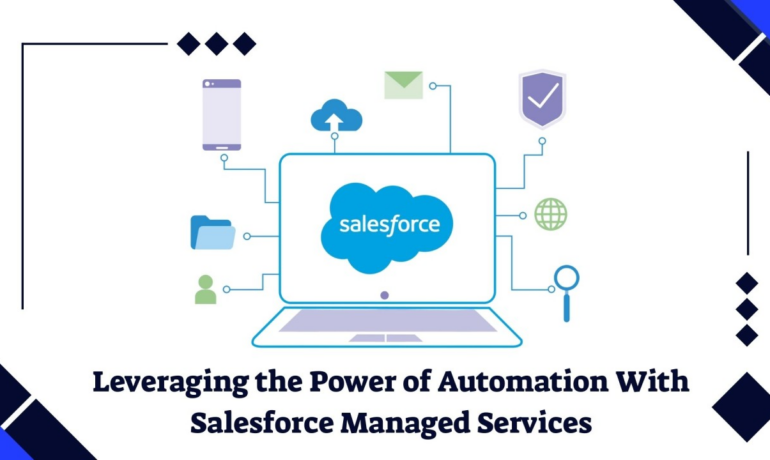
Salesforce Managed Services

Key Signs Your Business Needs a Salesforce Support & Maintenance Partner

Salesforce is a powerful CRM platform, but simply implementing it doesn’t guarantee success. To maximize ROI, businesses need continuous optimization, expert guidance, and proactive maintenance—something an in-house team may struggle to provide alone. Discover the key signs your business needs a Salesforce support and maintenance partner. Many companies invest in Salesforce expecting high returns but end up facing: These challenges turn Salesforce into a cost center rather than a revenue-driving platform. If you’re noticing these issues, it’s time to consider a Salesforce support and maintenance partner. This insight explores the critical warning signs and how a managed services provider can help. What Is a Salesforce Support & Maintenance Partner? A Salesforce support and maintenance partner is a specialized provider that manages, optimizes, and secures your Salesforce org. They provide you: ✔ Proactive Monitoring – 24/7 performance checks to prevent downtime, security breaches, and data decay.✔ Expert Guidance – Certified professionals resolve feature stagnation (unused automation/AI tools) and boost user adoption.✔ Strategic Roadmaps – Align Salesforce with business goals for long-term success.✔ Elimination of Technical Debt – Reduce technology noise slowing down your org. Why Are They Crucial? ✅ Cost Efficiency – Avoid hiring full-time specialists.✅ Risk Mitigation – Ensure compliance, security, and data integrity.✅ ROI Maximization – Unlock advanced features and improve team efficiency. A trusted partner like Tectonic identifies warning signs early, preventing short- and long-term inefficiencies. 9 Key Signs You Need a Salesforce Support & Maintenance Partner 1. Declining User Adoption The Problem: Employees avoid Salesforce due to poor training, complex workflows, or inefficient processes.Why It Matters: Low adoption wastes your CRM investment. (Only 36% of agents upsell due to lack of training—Salesforce State of Service Report.)The Solution: 2. Security & Compliance Risks The Problem: Unclear GDPR/HIPAA compliance, outdated security settings, or unauthorized access attempts.Why It Matters: Data breaches lead to fines, legal risks, and lost trust. (Non-compliance costs $14.8M on average—Globalscape.)The Solution: 3. Rising Ticket Backlogs The Problem: IT teams are overwhelmed with unresolved requests, slowing operations.Why It Matters: Delays hurt sales cycles, employee morale, and customer satisfaction.The Solution: 4. Underutilized Salesforce Features The Problem: Only basic functions (leads/contacts) are used—AI, automation, and analytics are ignored.Why It Matters: Manual processes slow growth. (Only 49% of service orgs use AI—Salesforce.)The Solution: 5. Poor Data Quality & Duplicates The Problem: Duplicate leads, missing fields, and inaccurate reports lead to bad decisions.Why It Matters: Poor data costs .9M annually (Gartner).The Solution: 6. Increasing Downtime The Problem: Frequent crashes, slow reports, or integration failures.Why It Matters: Downtime = lost sales & productivity. (Meta lost $100M in 2 hours in 2024.)The Solution: 7. Lack of Strategic Roadmap The Problem: No clear upgrade plan, leading to disorganized workflows.Why It Matters: 30-70% of CRM projects fail due to poor planning.The Solution: 8. Unstable Customizations The Problem: Apex triggers, Flows, or Lightning components break after updates.Why It Matters: Patchwork fixes increase technical debt & admin workload.The Solution: 9. Slow Salesforce Performance The Problem: Reports load slowly, or users face “Service Unavailable” errors.Why It Matters: A 100ms delay can hurt conversions by 7% (Akamai).The Solution: Conclusion If you’re experiencing any of these issues, your Salesforce org needs expert care. A managed services partner like Tectonic helps:✔ Reduce downtime✔ Improve performance✔ Boost user adoption✔ Enhance security & compliance With 24/7 proactive support, strategic roadmaps, and advanced feature utilization, Tectonic ensures your Salesforce investment drives revenue—not costs. Need help optimizing Salesforce? Contact Tectonic today for a free assessment. Like1 Related Posts Who is Salesforce? Who is Salesforce? Here is their story in their own words. From our inception, we’ve proudly embraced the identity of Read more Salesforce Marketing Cloud Transactional Emails Salesforce Marketing Cloud Transactional Emails are immediate, automated, non-promotional messages crucial to business operations and customer satisfaction, such as order Read more Salesforce Unites Einstein Analytics with Financial CRM Salesforce has unveiled a comprehensive analytics solution tailored for wealth managers, home office professionals, and retail bankers, merging its Financial Read more AI-Driven Propensity Scores AI plays a crucial role in propensity score estimation as it can discern underlying patterns between treatments and confounding variables Read more

Read More
Salesforce Essentials and Salesforce Professional

Benefits of Salesforce Essentials for Small Businesses

Salesforce Essentials: A Game-Changer for Small Businesses Salesforce is a leading force in the Customer Relationship Management (CRM) industry, offering scalable solutions tailored to businesses of all sizes. While global enterprises like Amazon, Accenture, Adidas, and American Express leverage its capabilities, Salesforce also caters to small businesses with Salesforce Essentials. Launched in 2017, this cloud-based CRM simplifies customer relationship management for small teams without the complexity and cost of enterprise-level solutions. What Is Salesforce Essentials? Salesforce Essentials is a streamlined CRM designed for small businesses with fewer than 10 users. It provides core features such as lead management, sales tracking, customer support, and business analytics. With an intuitive interface and cost-effective pricing, Essentials enables small businesses to leverage Salesforce’s powerful CRM tools without being overwhelmed by extensive configurations. With a cloud-first approach, Salesforce Essentials centralizes customer data on a single platform, enhancing efficiency, boosting productivity, and improving customer interactions. Who Should Use Salesforce Essentials? Salesforce Essentials is ideal for small businesses seeking a straightforward, affordable CRM to manage customer relationships, track sales, and provide support—without the complexities of traditional CRM systems. If your business currently relies on spreadsheets or disparate tools to manage customer data, Essentials offers a more organized and integrated solution. Designed for teams of up to 10 users, it is an excellent starting point for small businesses looking to scale their CRM capabilities as they grow. Key Features of Salesforce Essentials 1. Comprehensive CRM Capabilities Salesforce Essentials consolidates sales tracking, customer inquiries, and support into a single interface. This holistic approach ensures small businesses can manage customer data efficiently as they expand. 2. AI-Driven Automation Essentials includes Einstein Activity Capture, which automatically records emails, meetings, and calendar events. This eliminates manual data entry and allows teams to focus on strategic tasks. AI-driven insights further enhance customer relationship management and sales forecasting. 3. User-Friendly Interface The platform features an intuitive dashboard that provides real-time updates, task lists, and customizable views. The drag-and-drop interface simplifies navigation, reducing the learning curve for small business teams. 4. Personalized Setup Salesforce Essentials offers guided setup tailored to business needs, whether managing contacts, streamlining sales cycles, or improving customer support. 5. Third-Party Integrations While not all Salesforce AppExchange apps are compatible, Essentials supports key third-party integrations, enabling small businesses to sync data across multiple platforms seamlessly. Benefits of Salesforce Essentials for Small Businesses 1. Data Synchronization Salesforce Essentials allows businesses to import and sync data from spreadsheets, emails, and other sources. Einstein Activity Capture automates data collection, ensuring accurate and up-to-date records. 2. Affordability Priced at per user per month, Salesforce Essentials is a cost-effective CRM solution with essential features typically found in more expensive systems. 3. Scalability Though initially designed for small teams, Essentials facilitates a smooth transition to more advanced Salesforce solutions as business needs evolve. 4. Mobile Accessibility With a mobile app, Salesforce Essentials enables small businesses to manage customer relationships anytime, anywhere. 5. Training and Support Salesforce offers extensive learning resources through Trailhead, in-app tutorials, and an installation assistant, helping small businesses maximize their CRM investment. Pricing and Getting Started Salesforce Essentials starts at $25 per user per month, making it an accessible upgrade from spreadsheets or less sophisticated CRM tools. For businesses requiring advanced features, Salesforce provides higher-tier plans such as Sales Professional and Service Professional, both starting at $75 per user per month. To get started, businesses can explore a pre-built demo with dummy data before importing their own customer information. Integration with Google or Outlook ensures seamless email and calendar synchronization. With mobile access and a scalable framework, Salesforce Essentials is a strategic investment for small businesses aiming for growth. Conclusion Salesforce Essentials is a powerful yet affordable CRM tailored for small businesses. It offers an intuitive interface, automation tools, and seamless scalability to support growing teams. By adopting Salesforce Essentials, small businesses can enhance efficiency, strengthen customer relationships, and position themselves for long-term success. Like1 Related Posts Who is Salesforce? Who is Salesforce? Here is their story in their own words. From our inception, we’ve proudly embraced the identity of Read more Salesforce Marketing Cloud Transactional Emails Salesforce Marketing Cloud Transactional Emails are immediate, automated, non-promotional messages crucial to business operations and customer satisfaction, such as order Read more Salesforce Unites Einstein Analytics with Financial CRM Salesforce has unveiled a comprehensive analytics solution tailored for wealth managers, home office professionals, and retail bankers, merging its Financial Read more AI-Driven Propensity Scores AI plays a crucial role in propensity score estimation as it can discern underlying patterns between treatments and confounding variables Read more

Read More
The AI SDR Revolution

The AI SDR Revolution

The AI SDR Revolution: How AI is Transforming Sales Development The Problem: Sales Teams Are Drowning in Leads Your marketing team is crushing it—inbound leads are pouring in. But your Sales Development Representatives (SDRs) are overwhelmed, spending over two-thirds of their time on non-selling tasks like data entry, follow-ups, and lead qualification. The result? Missed opportunities, slower response times, and fewer deals closed. Enter the AI SDR—a game-changing solution that automates top-of-funnel sales tasks, letting human reps focus on what they do best: closing deals. What is an AI SDR? An AI-powered Sales Development Representative (SDR) automates repetitive sales tasks like:✅ Lead qualification (identifying high-intent prospects)✅ Automated outreach (personalized emails, follow-ups)✅ Meeting scheduling (booking demos directly into reps’ calendars)✅ CRM updates (logging interactions automatically) Unlike human SDRs, AI SDRs work 24/7, ensuring no lead slips through the cracks. How AI SDRs Work Human SDRs juggle: AI SDRs handle the same tasks—but autonomously—using:🔹 Machine Learning (ML) to analyze lead intent🔹 Natural Language Processing (NLP) to engage in human-like conversations🔹 Automation to execute tasks end-to-end Example: Agentforce AI SDRs Powered by Salesforce’s Customer 360, Data Cloud, and Einstein AI, these AI agents: AI SDR vs. Human SDR: Who Wins? Capability AI SDR Human SDR Response Time Instant Hours/Days Availability 24/7 Business hours Personalization Data-driven Relationship-driven Scalability Thousands of leads at once Limited by bandwidth Emotional IQ Rule-based High empathy The Best Approach? AI + Human Collaboration Salesforce data shows reps using AI see higher win rates and more closed deals. 5 Key Benefits of AI SDRs AI SDRs in Action: Real-World Results Case Study: VTT Technical Research Centre (Finland) The Future of AI SDRs 🚀 Greater Autonomy – Handling prospecting & research🎯 Hyper-Personalization – Leveraging Data Cloud for tailored messaging📞 Multimodal Engagement – Voice, video, and chat interactions 84% of sales leaders believe AI will dominate lead gen in the next 2 years. How to Implement AI SDRs Successfully Final Verdict: AI SDRs Are a Sales Superpower AI won’t replace SDRs—it will make them unstoppable. By automating grunt work, AI SDRs help teams:✔ Respond faster✔ Qualify smarter✔ Close more deals The question isn’t if you should adopt AI SDRs—it’s how soon can you start? Ready to supercharge your sales team? Explore AI SDR solutions today. Like Related Posts Who is Salesforce? Who is Salesforce? Here is their story in their own words. From our inception, we’ve proudly embraced the identity of Read more Salesforce Marketing Cloud Transactional Emails Salesforce Marketing Cloud Transactional Emails are immediate, automated, non-promotional messages crucial to business operations and customer satisfaction, such as order Read more Salesforce Unites Einstein Analytics with Financial CRM Salesforce has unveiled a comprehensive analytics solution tailored for wealth managers, home office professionals, and retail bankers, merging its Financial Read more AI-Driven Propensity Scores AI plays a crucial role in propensity score estimation as it can discern underlying patterns between treatments and confounding variables Read more

Read More
How AI is Transforming Self-Appraisals

How AI is Transforming Self-Appraisals

How AI is Transforming Self-Appraisals—Making Them Easier and Fairer for Employees and Managers Performance reviews are often dreaded—evaluating a year’s worth of your hard work can feel overwhelming, and many struggle to articulate their achievements objectively. But AI is changing that, making self-assessments more efficient, balanced, and even empowering—especially for groups like women, who often face biases in traditional reviews. The Rise of AI in Performance Reviews AI-powered tools are increasingly being used to streamline self-appraisals, helping employees structure their evaluations and align them with company goals. According to Microsoft’s 2024 Work Trend Index, 75% of knowledge workers—including engineers, scientists, and lawyers—already use AI in some capacity. The demand is clear: When Oracle introduced an AI-driven performance review system in 2023, 89% of employees said they were willing to be early adopters. “That shows how much people believe in this technology and how much they need it,” said Triparna de Vreede, a professor at the University of South Florida who studies AI and workplace well-being. Why Traditional Reviews Fall Short Conventional performance evaluations are often subjective, influenced by recency bias (where recent mistakes overshadow past successes) and workplace power dynamics. Employees may not always understand how their work contributes to broader business goals, while managers can struggle to provide unbiased feedback. “If you did great things all year but made one mistake last month, that can overshadow everything,” de Vreede explained. “AI helps standardize feedback so employees don’t feel like favoritism is at play.” How AI Improves the Process The Gender Gap in Self-Assessments Women frequently face challenges in performance reviews. A Textio study found that 38% of feedback for high-performing women contained exaggerated or clichéd language, and 75% were called “emotional”—compared to just 11% of men. Additionally, women tend to undersell their achievements. A 2022 National Bureau of Economic Research study found that women rated their performance at 46 out of 100, while men gave themselves 61. “AI can help women confidently showcase their impact without imposter syndrome getting in the way,” said de Vreede. The Human Touch Still Matters Despite AI’s benefits, human oversight remains crucial. Privacy concerns, transparency about data usage, and ensuring softer skills (like communication and teamwork) are evaluated fairly all require human judgment. “AI can’t fully understand human nuances, but it can prompt employees to reflect on them,” de Vreede noted. “The best reviews come from a collaboration between AI and the employee—not just AI doing all the work.” The Future of AI in Performance Reviews Companies like Oracle and Textio (used by 25% of Fortune 500 firms) are already refining AI-powered evaluations. However, de Vreede cautions against over-reliance: employees must still self-refect rather than letting AI do all the thinking. “AI can draft your review, but you need to refine it,” she said. “Otherwise, the evaluation loses its meaning.” As AI continues to evolve, it promises to make performance reviews less stressful, more accurate, and fairer for everyone—finally turning a dreaded process into one that actually helps employees grow. Salesforce AI can significantly enhance performance reviews by automating tasks, analyzing data, and providing actionable insights. AI tools can help streamline the review process, generate clearer and more unbiased feedback, and even predict future performance trends. Salesforce Einstein, for example, can analyze vast amounts of employee data to identify patterns and generate insights that inform performance reviews.  Here’s how Salesforce AI can be used in performance reviews: 1. Automating and Streamlining the Process: 2. Enhancing Accuracy and Objectivity: 3. Providing Actionable Insights: Examples of Salesforce AI Tools for Performance Reviews: Like Related Posts Who is Salesforce? Who is Salesforce? Here is their story in their own words. From our inception, we’ve proudly embraced the identity of Read more Salesforce Marketing Cloud Transactional Emails Salesforce Marketing Cloud Transactional Emails are immediate, automated, non-promotional messages crucial to business operations and customer satisfaction, such as order Read more Salesforce Unites Einstein Analytics with Financial CRM Salesforce has unveiled a comprehensive analytics solution tailored for wealth managers, home office professionals, and retail bankers, merging its Financial Read more AI-Driven Propensity Scores AI plays a crucial role in propensity score estimation as it can discern underlying patterns between treatments and confounding variables Read more

Read More
Is the Future Agentic for ERP?

Enterprise Tech Buyers Face a Flood of Agentic AI Options

Enterprise tech buyers feeling overwhelmed by the surge of autonomous AI platforms aren’t alone—soon, they may need AI agents just to evaluate the growing array of options. At last week’s Adobe Summit, the company unveiled its own AI agents, deeply integrated with the Adobe Experience Platform. Adobe now joins a crowded field of major players—including AWS, Microsoft, Salesforce, Oracle, OpenAI, Qualtrics, and Deloitte—all offering agentic AI solutions. Adobe CEO Shantanu Narayen emphasized in his keynote that the company’s approach to AI is about enhancing human creativity, not replacing it. “AI has the power to assist and amplify human ingenuity to enhance productivity,” he said. One early adopter, Coca-Cola, has leveraged Adobe’s agentic AI for Project Vision, ensuring brand consistency across 200+ international markets—adapting packaging designs for different sizes, shapes, and languages while still allowing local designers creative flexibility. “We needed an AI system that doesn’t just replicate designs but truly understands what makes Coca-Cola feel like Coca-Cola,” said Rapha Abreu, Global VP of Design at Coca-Cola. “This isn’t about replacing designers—it’s about empowering them.” Navigating the Agentic AI Maze With so many platforms emerging, buyers face a critical challenge: Which agents fit their tech stack, and which platform delivers the best results? Even experts are still figuring it out. Lou Reinemann, an IDC analyst, noted that companies will need different AI agents depending on their size, industry, and product maturity. “Early on, customer experience can be a differentiator. As brands grow, AI must reinforce their core identity.” Ross Monaghan, Adobe Principal at consultancy Perficient, observed that vendors are refining AI use cases—Salesforce focuses on CRM data, while Adobe leans into marketing applications. For now, these agents operate within their own ecosystems, though cross-platform communication may evolve. Data Strategy: The Key to AI Success According to Liz Miller, analyst at Constellation Research, most enterprises will end up using multiple AI platforms—making a unified data schema essential. “The real challenge is ensuring all AI agents pull from a single, curated data source,” she said. CDP tools like Salesforce’s Data Cloud will be important resources for a unified data schema. Jamie Dimon, CEO of JPMorgan Chase, stressed in a conversation with Narayen that business leaders—not just IT—must drive AI adoption. The bank uses AI for customer prospecting, fraud detection, ad buying, and document automation, with a dedicated team prioritizing use cases. “AI should be part of your company’s DNA,” Dimon said. “You don’t need to know how it works—just what it can do for your business.” The Bottom Line Agentic AI is transforming enterprise operations, but buyers must navigate a fragmented landscape. The winners will be those who align AI with business goals, maintain clean data pipelines, and choose platforms that enhance—not replace—human expertise. Like Related Posts Who is Salesforce? Who is Salesforce? Here is their story in their own words. From our inception, we’ve proudly embraced the identity of Read more Salesforce Marketing Cloud Transactional Emails Salesforce Marketing Cloud Transactional Emails are immediate, automated, non-promotional messages crucial to business operations and customer satisfaction, such as order Read more Salesforce Unites Einstein Analytics with Financial CRM Salesforce has unveiled a comprehensive analytics solution tailored for wealth managers, home office professionals, and retail bankers, merging its Financial Read more AI-Driven Propensity Scores AI plays a crucial role in propensity score estimation as it can discern underlying patterns between treatments and confounding variables Read more

Read More
AI Agent Revolution

AI Agent Revolution

The AI Agent Revolution: How AWS, Salesforce, and Oracle See the Future of Work Executives from AWS, Salesforce, and Oracle believe artificial intelligence (AI) agents are set to redefine work in ways many may not expect. These AI-driven systems promise to streamline operations, enhance productivity, and transform the way businesses interact with technology. The Future of AI Agents in Action Imagine a world where: Swami Sivasubramanian, AWS’s vice president of agentic AI, describes this shift as a fundamental leap forward. Unlike earlier AI models, these agents don’t just generate content—they reason, plan, and execute tasks. They can research, pay bills, manage enterprise applications, and break down high-level objectives into actionable steps. Sivasubramanian envisions a “fully AI world” where agents autonomously make decisions, automate workflows, and coordinate with minimal human oversight. But, as he points out, this isn’t a distant future—it’s happening now. Companies like Genentech are using AI agents to accelerate drug research, cutting timelines by nearly five years. Moody’s has reduced its credit risk reporting process from a week to under an hour. These breakthroughs illustrate the vast potential of AI-driven automation. Salesforce’s ‘Limitless Labor’ Approach Salesforce is also at the forefront of AI agent adoption with Agentforce, a platform that has seen overwhelming demand since its launch. More than 5,000 customers signed up in its first full quarter, signaling a strong appetite for AI-driven automation. Adam Evans, EVP and GM of Salesforce AI, describes AI agents as creating a “limitless labor” pool. These agents are already supporting Salesforce’s own customers, resolving 97% of inquiries without human intervention. The next evolution, according to Evans, involves AI agents acting as brand ambassadors—not just answering questions, but understanding customer needs, driving sales, and providing personalized support. Salesforce categorizes AI agents into three types: Early adopters like Wiley Publishing have reported a 40% increase in customer satisfaction due to AI-driven customer service, while Pfizer is leveraging AI agents in life sciences. To support this transformation, Salesforce has introduced flexible pricing models, allowing companies to transition from traditional seat-based pricing to AI consumption-based structures. AI Agents as the New Enterprise Interface Oracle sees AI agents as the future interface for enterprise software, eliminating the need for users to adapt to complex systems. “Let’s stop adapting ourselves to computers and make them adapt to us,” said Miranda Nash, group vice president at Oracle AI. In this vision, users no longer navigate Oracle’s software through menus—they simply ask questions, and AI agents handle the rest through sophisticated, multi-agent workflows. Oracle is embedding AI agents across key business functions, including: As AI transforms work, Nash, Evans, and Sivasubramanian acknowledge concerns about job displacement. However, they emphasize that AI agents augment human roles rather than replace them. At Salesforce, employees previously assigned to repetitive support tasks are now moving into higher-value roles like customer success and sales. Meanwhile, AWS’s AI deployment has saved Amazon 4,500 developer years’ worth of work and over $250 million in capital expenses. “The only option now is to get in the cloud, embrace AI agents, and meet the future of work,” Nash concluded. Like Related Posts Who is Salesforce? Who is Salesforce? Here is their story in their own words. From our inception, we’ve proudly embraced the identity of Read more Salesforce Marketing Cloud Transactional Emails Salesforce Marketing Cloud Transactional Emails are immediate, automated, non-promotional messages crucial to business operations and customer satisfaction, such as order Read more Salesforce Unites Einstein Analytics with Financial CRM Salesforce has unveiled a comprehensive analytics solution tailored for wealth managers, home office professionals, and retail bankers, merging its Financial Read more AI-Driven Propensity Scores AI plays a crucial role in propensity score estimation as it can discern underlying patterns between treatments and confounding variables Read more

Read More

Salesforce Development Services

Salesforce has become one of the leading platforms to change the business-to-customer relationships and experience. Salesforce development services don’t just offer Salesforce solutions and software implementation; they help you adopt a customized functionality that enriches delivery and profit. Salesforce, by definition, is a powerful platform that enables a business to adopt CRM-driven leads and expansion in the industry. At Tectonic, we believe that a decision to opt for Salesforce services is just the beginning of a battle to beat the competition. This is where Tectonic comes in with custom coding and the finest Salesforce development services; we help you figure out everything from configurations and complications to legacy data systems and more. We are made up of a team of Salesforce experts, development professionals, and years of experience in strategic consulting, planning, integration, implementation, deployment, and delivery of business-changing and success-driven services. Why choose Tectonic’s Salesforce Development services? Tectonic, with its years of expertise and experience in technical services and strategic consulting, has the most efficient and organized set of professionals to help your business understand and embed everything-Salesforce. Tectonic understands innovation and change can be overwhelming and sound too complex, and it is our business to handle that for you while delivering a profitable and growing system that expands your reach in the industry. And remains scalable over time. The industry has moved from traditional on-premises CRM to cloud-based CRM to address scalability, change management, and time-to-market needs of businesses. For companies looking for SaaS offerings on the cloud, Salesforce is an undisputed leader. Also, companies looking to build customized business applications can capitalize on Force.com as a platform as a service (PaaS). Implement innovative Salesforce solutions that streamline your operations, boost your productivity, and drive sustainable growth. Work with our team of certified Salesforce developers who bring extensive experience and in-depth knowledge to every project. At Tectonic we focus on industries where we have expertise to help you get the most impactful Salesforce development. Get customized Salesforce development services from Tectonic designed to meet your unique business needs, ensuring seamless integration and enhanced functionality. Build and deploy scalable Salesforce platforms that adapt as your business grows and evolves, keeping you ahead of the competition. Collaborate with Tectonic to unlock the full potential of Salesforce, where development is turning challenges into opportunities for success. Like1 Related Posts Who is Salesforce? Who is Salesforce? Here is their story in their own words. From our inception, we’ve proudly embraced the identity of Read more Salesforce Marketing Cloud Transactional Emails Salesforce Marketing Cloud Transactional Emails are immediate, automated, non-promotional messages crucial to business operations and customer satisfaction, such as order Read more Salesforce Unites Einstein Analytics with Financial CRM Salesforce has unveiled a comprehensive analytics solution tailored for wealth managers, home office professionals, and retail bankers, merging its Financial Read more AI-Driven Propensity Scores AI plays a crucial role in propensity score estimation as it can discern underlying patterns between treatments and confounding variables Read more

Read More
gettectonic.com