
Enterprise tech buyers feeling overwhelmed by the surge of autonomous AI platforms aren’t alone—soon, they may need AI agents just to evaluate the growing array of options.
At last week’s Adobe Summit, the company unveiled its own AI agents, deeply integrated with the Adobe Experience Platform. Adobe now joins a crowded field of major players—including AWS, Microsoft, Salesforce, Oracle, OpenAI, Qualtrics, and Deloitte—all offering agentic AI solutions.
Adobe CEO Shantanu Narayen emphasized in his keynote that the company’s approach to AI is about enhancing human creativity, not replacing it. “AI has the power to assist and amplify human ingenuity to enhance productivity,” he said.
One early adopter, Coca-Cola, has leveraged Adobe’s agentic AI for Project Vision, ensuring brand consistency across 200+ international markets—adapting packaging designs for different sizes, shapes, and languages while still allowing local designers creative flexibility.
“We needed an AI system that doesn’t just replicate designs but truly understands what makes Coca-Cola feel like Coca-Cola,” said Rapha Abreu, Global VP of Design at Coca-Cola. “This isn’t about replacing designers—it’s about empowering them.”
Navigating the Agentic AI Maze
With so many platforms emerging, buyers face a critical challenge: Which agents fit their tech stack, and which platform delivers the best results? Even experts are still figuring it out.
Lou Reinemann, an IDC analyst, noted that companies will need different AI agents depending on their size, industry, and product maturity. “Early on, customer experience can be a differentiator. As brands grow, AI must reinforce their core identity.”
Ross Monaghan, Adobe Principal at consultancy Perficient, observed that vendors are refining AI use cases—Salesforce focuses on CRM data, while Adobe leans into marketing applications. For now, these agents operate within their own ecosystems, though cross-platform communication may evolve.
Data Strategy: The Key to AI Success
According to Liz Miller, analyst at Constellation Research, most enterprises will end up using multiple AI platforms—making a unified data schema essential. “The real challenge is ensuring all AI agents pull from a single, curated data source,” she said.
CDP tools like Salesforce’s Data Cloud will be important resources for a unified data schema.
Jamie Dimon, CEO of JPMorgan Chase, stressed in a conversation with Narayen that business leaders—not just IT—must drive AI adoption. The bank uses AI for customer prospecting, fraud detection, ad buying, and document automation, with a dedicated team prioritizing use cases.
“AI should be part of your company’s DNA,” Dimon said. “You don’t need to know how it works—just what it can do for your business.”
The Bottom Line
Agentic AI is transforming enterprise operations, but buyers must navigate a fragmented landscape. The winners will be those who align AI with business goals, maintain clean data pipelines, and choose platforms that enhance—not replace—human expertise.
🔔🔔 Follow us on LinkedIn 🔔🔔
Who is Salesforce? Here is their story in their own words. From our inception, we've proudly embraced the identity of Read more
Salesforce Marketing Cloud Transactional Emails are immediate, automated, non-promotional messages crucial to business operations and customer satisfaction, such as order Read more

Salesforce has unveiled a comprehensive analytics solution tailored for wealth managers, home office professionals, and retail bankers, merging its Financial Read more
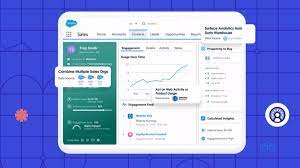
AI plays a crucial role in propensity score estimation as it can discern underlying patterns between treatments and confounding variables Read more