

Mulesoft Archives - gettectonic.com - Page 5
AI Data Cloud and Integration

AI Data Cloud and Integration

The enterprise has transitioned from merely speculating about artificial intelligence to actively implementing it. In doing so, companies must determine the optimal combination of ancillary technologies that, when strategically paired with AI, can drive relevant use cases and business outcomes. With AI Data Cloud and Integration, your data-driven decisions happen in real-time. Salesforce Inc. is leveraging a powerful trio — its Data Cloud, automation, and AI — to deliver what it considers transformative outcomes for organizations. “AI has such wonderful capability today from predictive to generative, [but] it’s not new to Salesforce,” said Param Kahlon, executive vice president and general manager at Salesforce. “Salesforce has been doing predictive AI for almost 10 years now. But what is great is that generative AI now gives the ability to process these large language models on large amounts of unstructured, semi-structured content to generate great content that can be used by salespeople to send relevant emails and marketing people to create personalized landing pages.” Kahlon spoke with theCUBE Research Senior Analyst George Gilbert during a recent “The Road to Intelligent Data Apps” podcast series. They discussed how Salesforce is revolutionizing business operations in the digital age by harnessing AI-driven insights, contextualizing data with the company’s Data Cloud, and enabling real-time actions. Gen AI and Data Cloud for Contextualization In today’s business environment, intelligence is the cornerstone of success. Salesforce’s AI platform empowers companies with predictive and generative AI capabilities, enabling them to make insightful decisions and craft personalized experiences for their customers. Businesses can now process vast amounts of unstructured data and generate compelling content. “For this AI to be meaningful and for companies to harness the full value of AI, you want to make sure that you’re grounding the data that’s being used to generate those predictions with some things that are relevant to the current business process, to the current transaction, to the current context of interaction you’re happening with the customer,” Kahlon said. Salesforce’s Data Cloud acts as the AI foundation, enriching existing data models with relevant contextual data tailored to the specific needs of each business and their interactions with customers. “When we talk to our large Salesforce customers, they all tell us that AI is really important for them,” Kahlon said. “That is something that they want to drive, but they’re also saying that the data for them is spread out across the enterprise. Some of them tell us that they have more than 900 different business systems in which data is stored, and they want the ability to bring that data together in a seamless way so it can be processed by AI through Data Cloud.” Automation and Integration for Real-Time Action The combination of AI and Data Cloud generates actionable insights, but these insights alone aren’t enough. Businesses need to act swiftly on these predictions, driving real-time actions to capitalize on opportunities. This is where integration and automation come into play, according to Kahlon. “[Customers are] essentially telling us that data is spread across the enterprise and they want the data in real time to be available to customers,” he said. “With MuleSoft and Salesforce integration capabilities, we’ve focused on the real-time nature of making sure that you can take real-time business transactions in the context of the process that is happening, and that’s what’s differentiated in our approach to making sure that we can collect the data in real time and make actions happen in real time.” Integration is the glue that brings together data from various sources, allowing AI to derive meaningful insights. Salesforce’s integration capabilities, powered by MuleSoft, focus on real-time data processing, ensuring that businesses can act on insights as they occur. This low-latency approach enables not only Salesforce applications but also other third-party applications to contribute to the data ecosystem, Kahlon explained. “We’ve got a very large North American airline that has built their entire customer experience, from booking an airline ticket to checking into your flight and ordering special meals for your flight, all of that on an API-based platform — and we’re able to process that scale of transactions,” he said. “As you get into AI, all of that becomes extremely relevant to drive that real-time throughput, and that’s where our customers are finding value in our technology.” When the customer experience is the driver, the experience is always stellar. Like Related Posts Who is Salesforce? Who is Salesforce? Here is their story in their own words. From our inception, we’ve proudly embraced the identity of Read more Salesforce Marketing Cloud Transactional Emails Salesforce Marketing Cloud Transactional Emails are immediate, automated, non-promotional messages crucial to business operations and customer satisfaction, such as order Read more Salesforce Unites Einstein Analytics with Financial CRM Salesforce has unveiled a comprehensive analytics solution tailored for wealth managers, home office professionals, and retail bankers, merging its Financial Read more AI-Driven Propensity Scores AI plays a crucial role in propensity score estimation as it can discern underlying patterns between treatments and confounding variables Read more
Read More
Required Startup Mentality

Required Startup Mentality

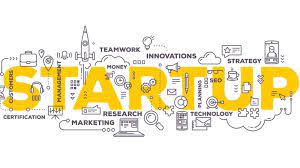
Pivoting an established company’s business model is one of the most daunting challenges a CEO can face. When the new CEO of Zilliant took the company’s helm in 2022, the mandate was to accelerate growth and increase market share. It quickly became evident that success lay not in product updates or tech investments but in rethinking the organizational mindset. Required Startup Mentality. With a master’s degree in organizational behavior studies from the University of Illinois and extensive experience in organizational transformations, the CEO understood the process typically follows one of two paths: changing an existing culture or building one from scratch. High-profile examples provide inspiration for both approaches. Satya Nadella, upon becoming CEO of Microsoft in 2014, transformed the company from a “know-it-all” to a “learn-it-all” culture, fostering a growth mindset. Conversely, Marc Benioff of Salesforce instilled the “ohana” culture of family spirit, trust, and equality from the company’s inception. The CEO, having been immersed in Salesforce culture for over a decade, learned the importance of a robust support system for employees and customers. Upon joining Zilliant, the CEO brought lessons from Salesforce to the new role. Zilliant, a company with 23 years of history and a long-standing CEO, Greg Peters, had thrived in price optimization. However, to evolve further, the company needed to adopt a startup mentality. This approach included scrutinizing every budget line item, incorporating a new marketing playbook, and, crucially, leveraging existing talent in new ways. Identifying influencers within the company and placing them in positions of broader influence proved to be an effective strategy. Required Startup Mentality of leaders. This group of long-time employees, respected and experienced, became the “change champions.” Their elevated profile across the organization facilitated listening and acting on peer feedback, making the traditionally challenging task of cultural transformation more manageable. Initially, there was a struggle to clearly articulate the future vision. The transitional period was marked by confusion rather than resistance. This experience underscored the importance of vision and constant communication during transformation. The CEO discovered that merely communicating new company values wasn’t sufficient. Creating a unified vision with full conviction from the executive team was essential. Significant time was spent defining this vision in granular detail, learning from the successes and failures of other companies. Once the leadership team was aligned, this conviction was cascaded through the ranks. Instead of dictating change, employees were invited into the process through feedback sessions and pilot programs, giving them a stake in redefining cultural norms. Celebrating small wins, even if they’re a “loss,” was emphasized to support learning from missteps. Modeling desired behaviors, systematically updating policies, incentives, and processes reinforced the new mindsets and actions. It was an arduous journey, but staying intentional and bringing people along was crucial for evolving into the envisioned culture. Through the transformation, one principle remained constant: customers must see Zilliant as a partner rather than a vendor. This required individuals in every department—marketing, sales, customer success, product, and engineering—to proactively address and solve customer problems. Transitioning to a new business model and rethinking organizational mindset is a long-term effort requiring vision and commitment from all levels. The payoff, however, can be immense. Already, Zilliant has delivered two consecutive quarters of 60%-plus growth in year-over-year bookings and is positioned for continued record growth through the end of the year. Like Related Posts Who is Salesforce? Who is Salesforce? Here is their story in their own words. From our inception, we’ve proudly embraced the identity of Read more Salesforce Marketing Cloud Transactional Emails Salesforce Marketing Cloud Transactional Emails are immediate, automated, non-promotional messages crucial to business operations and customer satisfaction, such as order Read more Salesforce Unites Einstein Analytics with Financial CRM Salesforce has unveiled a comprehensive analytics solution tailored for wealth managers, home office professionals, and retail bankers, merging its Financial Read more AI-Driven Propensity Scores AI plays a crucial role in propensity score estimation as it can discern underlying patterns between treatments and confounding variables Read more

Read More
What is Salesforce Health Cloud

Explore Salesforce Health Cloud

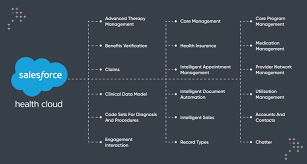
Empower Your Healthcare Team with Salesforce Health Cloud Equip your healthcare team with comprehensive 360-degree views that help connect and engage every patient, member, employee, and partner. Explore Salesforce Health Cloud Explore Health Cloud Understanding the capabilities of this platform is the first step to transforming your organization’s patient management. Let’s explore what Health Cloud offers to various types of healthcare organizations. Introducing Salesforce Health Cloud: A CRM Solution for Patient Management Over 600 companies, including industry leaders like Lilly, Pacific Clinics, United Healthcare, Progyny, Stanley Healthcare, and Humana, trust Salesforce Health Cloud for their patient management needs. As the healthcare industry rapidly evolves, effective patient information management is essential. This insight looks into Salesforce Health Cloud’s capabilities, features, integration options, and benefits, including its security architecture. What is Health Cloud? Salesforce Health Cloud is a cloud-based technology designed specifically for the healthcare industry. It centralizes patient information, giving healthcare professionals a complete view of patient records, enabling more effective treatments and better patient care. Key Capabilities of Salesforce Health Cloud Salesforce Health Cloud is a robust platform offering key capabilities such as: Salesforce in the Healthcare Industry Salesforce is increasingly popular among healthcare organizations for several reasons: Salesforce Health Platform Features Salesforce Health Cloud offers three main sets of features: Salesforce Health Cloud Architecture The architecture of Salesforce Health Cloud includes: Salesforce Health Cloud Security Salesforce Health Cloud is designed to securely manage healthcare data, featuring: Revolutionizing Healthcare Delivery with Salesforce Health Cloud Salesforce Health Cloud is designed for healthcare organizations to automate processes and provide personalized patient care. Since its launch in 2016, Health Cloud has evolved to address the complexities of the healthcare industry, including the introduction of Customer 360 for Health, an AI-driven healthcare solution. Why Choose Salesforce Health Cloud? Salesforce Health Cloud connects healthcare teams to ensure that patients receive the right care, supported by multi-layered security to protect sensitive patient data. It integrates clinical and non-clinical patient data, streamlining workflows and enhancing patient satisfaction. Top Features of Salesforce Health Cloud Key features include Patient 360, Care Plans, Care Coordination, Health Timeline, and Einstein Analytics for Healthcare, among others. Salesforce has also introduced AI-powered innovations under the Patient 360 for Health initiative, enhancing patient care and operational efficiency. Integration with MuleSoft Salesforce Health Cloud’s integration with MuleSoft allows organizations to connect with existing healthcare systems, ensuring accurate and up-to-date patient information, unlocking the full potential of their data, and improving decision-making. Conclusion Salesforce Health Cloud is more than just a platform—it’s a comprehensive solution for managing doctor-patient interactions, recordkeeping, and delivering personalized care. By leveraging Health Cloud, healthcare organizations can transform patient experiences, streamline processes, and ensure data security and compliance, positioning themselves for a brighter future in healthcare. Like Related Posts Who is Salesforce? Who is Salesforce? Here is their story in their own words. From our inception, we’ve proudly embraced the identity of Read more Salesforce Marketing Cloud Transactional Emails Salesforce Marketing Cloud Transactional Emails are immediate, automated, non-promotional messages crucial to business operations and customer satisfaction, such as order Read more Salesforce Unites Einstein Analytics with Financial CRM Salesforce has unveiled a comprehensive analytics solution tailored for wealth managers, home office professionals, and retail bankers, merging its Financial Read more AI-Driven Propensity Scores AI plays a crucial role in propensity score estimation as it can discern underlying patterns between treatments and confounding variables Read more

Read More
Autodesk Enhancements with Einstein 1

Autodesk Enhancements with Einstein 1

Autodesk Enhances Customer Service and Agent Productivity with Salesforce AI Integration Autodesk, a leader in 3D design, engineering, and entertainment software, has strengthened its partnership with Salesforce by incorporating Salesforce AI technology into its service agent workflow. This integration aims to boost agent productivity and enhance customer satisfaction. Autodesk Enhancements with Einstein 1. Impact of Salesforce Integration By leveraging Salesforce’s CRM, trusted AI, and data solutions, Autodesk has unified data access and developed an AI-powered self-service application. This initiative aims to foster deeper customer relationships and enhance employee productivity. The integration with Salesforce is transforming Autodesk’s customer engagement and agent workflow efficiency. Key Benefits for Autodesk Accelerating Self-Service: Autodesk uses the Einstein 1 Platform, which employs AI to create actionable data and streamline processes. This has enabled the development of a comprehensive, intuitive service cloud application for Autodesk’s team. At the conclusion of customer-agent interactions, Einstein for Service generates AI-powered case summaries, reducing the time agents spend summarizing chats by 63%. Creating Frictionless Experiences: MuleSoft has been pivotal in advancing Autodesk’s automation strategy by providing integrated and unified data access across cloud solutions. This has allowed Autodesk to modernize, simplify, and connect existing SaaS applications, resulting in smoother operations. Minimizing Disruption: Salesforce Professional Services provides real-time, 24/7 monitoring, equipping Autodesk with tools to identify and resolve potential performance issues before they affect customers. Salesforce also enhances data access monitoring, leading to a 30% reduction in ongoing maintenance. Customer Perspective Prakash Kota, SVP and CIO of Autodesk, expressed enthusiasm for the partnership: “We are thrilled to partner with Salesforce as Autodesk continues to innovate, grow, and scale with the customer at the center of our business. Our teams are excited to put generative AI to work across the enterprise, enhancing the productivity of our service agents. Saving time on tasks enables our employees to focus on higher-value work.” This partnership underscores Autodesk’s commitment to customer-centric innovation and operational efficiency, leveraging Salesforce’s advanced technologies to drive continued growth and customer satisfaction. Like Related Posts Who is Salesforce? Who is Salesforce? Here is their story in their own words. From our inception, we’ve proudly embraced the identity of Read more Salesforce Marketing Cloud Transactional Emails Salesforce Marketing Cloud Transactional Emails are immediate, automated, non-promotional messages crucial to business operations and customer satisfaction, such as order Read more Salesforce Unites Einstein Analytics with Financial CRM Salesforce has unveiled a comprehensive analytics solution tailored for wealth managers, home office professionals, and retail bankers, merging its Financial Read more AI-Driven Propensity Scores AI plays a crucial role in propensity score estimation as it can discern underlying patterns between treatments and confounding variables Read more

Read More
Salesforce Agentforce Platform

Salesforce Agentforce Platform

Salesforce CEO Marc Benioff has hinted at the upcoming launch of a new AI and automation platform geared towards customer support. Salesforce Agentforce Platform. In anticipation of September’s Dreamforce event, Benioff used X, formerly Twitter, to offer a sneak peek into the platform, specifically highlighting its customer-facing “Einstein Service Agent.” In his post, Benioff underscores the essential features of the virtual agent, emphasizing how it will seamlessly blend digital and human-assisted support to expedite case resolutions. This blended experience appears to build upon the technology integrated into Salesforce following its acquisition of Airkit.ai in 2023. Airkit.ai provides a low- to no-code bot-building platform that empowers businesses to orchestrate AI-driven conversational experiences. Primarily used for service automation, Airkit enables firms to design and automate complex cross-platform workflows, enhancing automated customer interactions across Salesforce applications. The Einstein Service Agent, positioned within Salesforce’s broader Einstein 1 vision, leverages Data Cloud to create a unified, cross-functional data ecosystem. Benioff hints at the agent’s capability to span service, sales, marketing, and commerce functionalities, underscoring its pivotal role within the Salesforce ecosystem. Expanding on Airkit.ai’s foundational capabilities, Salesforce has integrated Mulesoft to enable insights triggering cross-platform automations, alongside real-time data harmonization within Data Cloud. Moreover, the platform now incorporates generative AI (GenAI), enhancing its ability to interpret text, images, and audio/video for diverse customer engagement scenarios. Despite these advancements, Benioff acknowledges that no virtual agent, even with GenAI augmentation, can resolve every customer query alone. Salesforce ensures omnichannel transfers and human handoffs to address more complex issues effectively. In an era where many vendors offer similar conversational AI capabilities, Salesforce distinguishes itself through ecosystem integration and orchestration. Benioff emphasizes the value of low- to no-code workflow orchestration, democratizing AI technology for non-programmers and fostering an inclusive AI revolution. Expect Benioff to elaborate further on these themes and unveil more details about the Agentforce Platform during his keynote at the 2024 Dreamforce event. Like Related Posts Who is Salesforce? Who is Salesforce? Here is their story in their own words. From our inception, we’ve proudly embraced the identity of Read more Salesforce Marketing Cloud Transactional Emails Salesforce Marketing Cloud Transactional Emails are immediate, automated, non-promotional messages crucial to business operations and customer satisfaction, such as order Read more Salesforce Unites Einstein Analytics with Financial CRM Salesforce has unveiled a comprehensive analytics solution tailored for wealth managers, home office professionals, and retail bankers, merging its Financial Read more AI-Driven Propensity Scores AI plays a crucial role in propensity score estimation as it can discern underlying patterns between treatments and confounding variables Read more

Read More
Data Cloud - Facts and Fiction

Data Cloud – Facts and Fiction

Salesforce Data Cloud: Debunking Myths and Unveiling Facts If you’ve been active on LinkedIn, attending recent Salesforce events, or even watching a myriad of sporting events, you’ve likely noticed that Salesforce has evolved beyond just CRM. It’s now CRM + DATA + AI. Although Salesforce has always incorporated these elements, with Einstein AI and data being integral to CRM, the latest innovation lies in the Data Cloud. Data Cloud – Facts and Fiction Data Cloud, formerly known as Salesforce Genie, represents Salesforce’s latest evolution, focusing on enabling organizations to scale and grow in an era where data is the new currency. It is the fastest-growing product in Salesforce’s history, pushing new boundaries of innovation by providing better access to data and actionable insights. As Data Cloud rapidly develops, potential clients often have questions about its function and how it can address their challenges. Here are some common myths about Data Cloud and the facts that debunk them. Myth: Data Cloud Requires MuleSoft Fact: While MuleSoft Anypoint Platform can accelerate connecting commonly used data sources, it is not required for Data Cloud. Data Cloud can ingest data from multiple systems and platforms using several out-of-the-box (OOTB) connectors, including SFTPs, Snowflake, AWS, and more. Salesforce designs its solutions to work seamlessly together, but Data Cloud also offers connector options for non-Salesforce products, ensuring flexibility and integration capabilities beyond the Salesforce ecosystem. Myth: Data Cloud Will De-Duplicate Your Data Fact: Harmonizing data in Data Cloud means standardizing your data model rather than de-duplicating it. Data Cloud maps fields to a common data model and performs “Identity Resolution,” using rules to match individuals based on attributes like email, address, device ID, or phone number. This process creates a Unified Individual ID without automatically de-duplicating Salesforce records. Salesforce intentionally does not function as a Master Data Management (MDM) system. Myth: Data Cloud Will Create a Golden Record Fact: Data Cloud does not create a single, updated record synchronized across all systems (a “golden record”). Instead, it retains original source information, identifies matches across systems, and uses this data to facilitate engagements, known as the Data Cloud Key Ring. For instance, it can recognize an individual across different systems and provide personalized experiences without overwriting original data. Myth: You Can’t Ingest Custom Objects from Salesforce Fact: During the data ingestion process, you can select which objects to ingest from your Salesforce CRM Org, including custom objects. The system identifies the API names of the objects and fields from the data source. Ensuring the Data Cloud integration user has access to the necessary information (similar to assigning Permission Sets) allows you to ingest and map custom objects accordingly. Myth: Data Cloud Requires a Data Scientist and Takes a Long Time to Implement Fact: While implementing Data Cloud involves ingesting, mapping data, running identity resolution, and generating insights, it does not necessarily require a data scientist. Skilled Salesforce Admins can often manage data integration from third-party applications. Effective Data Cloud implementation requires thorough planning and preparation, akin to prepping a room before painting. Identifying use cases and understanding data sources in advance can streamline the implementation process. Myth: Data Cloud is Expensive Fact: Data Cloud operates on a consumption-based pricing model. Engaging in strategic conversations with Salesforce Account Executives can help understand the financial implications. Emphasizing the value of a comprehensive data strategy and considering the five V’s of Big Data—Volume, Variety, Veracity, Value, and Velocity—ensures that your data supports meaningful business outcomes and KPIs. In Summary Salesforce Data Cloud represents a significant evolution in managing and leveraging data within your organization. It helps break down data silos, providing actionable insights to drive organizational goals. Despite initial misconceptions, implementing Data Cloud does not require extensive coding skills or a data scientist. Instead, thorough planning and preparation can streamline the process and maximize efficiency. Understanding the value of a comprehensive data strategy is crucial, as data becomes the new currency. Addressing the five V’s of Big Data ensures that your data supports meaningful business outcomes and KPIs. At Tectonic, our team of certified professionals is ready to assist you on this journey. We offer a Salesforce Implementation Solution package to help you get hands-on with the tool and explore its capabilities. Whether you need help understanding your data sources or defining use cases, our data practice can provide the expertise you need. Talk to Tectonic about Data Cloud and discover how our tailored solutions can help you harness the full potential of your data. Like Related Posts Who is Salesforce? Who is Salesforce? Here is their story in their own words. From our inception, we’ve proudly embraced the identity of Read more Salesforce Marketing Cloud Transactional Emails Salesforce Marketing Cloud Transactional Emails are immediate, automated, non-promotional messages crucial to business operations and customer satisfaction, such as order Read more Salesforce Unites Einstein Analytics with Financial CRM Salesforce has unveiled a comprehensive analytics solution tailored for wealth managers, home office professionals, and retail bankers, merging its Financial Read more AI-Driven Propensity Scores AI plays a crucial role in propensity score estimation as it can discern underlying patterns between treatments and confounding variables Read more
Read More
MuleSoft Compostability

MuleSoft Composability

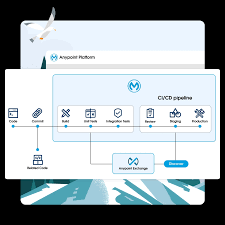
MuleSoft: Enabling AI Integration with Composability Solutions – MuleSoft Composability MuleSoft, a subsidiary of Salesforce, is enhancing its portfolio with new capabilities to help organizations build AI services that serve as the building blocks for more complex applications. The company announced a new AI-powered composability solution designed to assist organizations in constructing discrete AI services to form sophisticated systems and applications. The Power of APIs in AI“We believe the world of AI is really the world of APIs,” said Param Kahlon, Salesforce EVP and GM of Automation and Integration. “Accessing AI in the enterprise fundamentally involves the ability to call a model.” This applies whether the AI model is an internal large language model (LLM) or a foundational model built by a third party. “Using an LLM within the company or federating requests across multiple LLMs through LangChain involves API calls,” Kahlon added. “These API calls need to be managed and governed.” AI Integration with MuleSoftMuleSoft’s goal is to provide a platform that integrates AI, especially generative AI, with business processes. For instance, MuleSoft aims to manage API calls to external LLMs using its API management tools and enable APIs to act as actions for copilot conversational agents in the enterprise. This allows agents to execute backend actions using natural language, such as granting customer credit or escalating orders. The MuleSoft solution enables you to connect data, automate workflows, and build an AI-ready foundation in a single unified platform. The pulse of innovation never stops, and neither does the pressure to cater to employees and customers. In fact, 84% of IT leaders share the need for IT to step up its game and better address shifting customer expectations.  The MuleSoft Composability Solution The MuleSoft composability solution comprises three main pillars: Anypoint Platform: Used to define, design, build, and deploy APIs.API Management: Manages the deployment of APIs throughout their lifecycle, whether built with Anypoint or other technologies.Automation: Includes MuleSoft RPA and MuleSoft Intelligent Document Processing (IDP).While these components are part of MuleSoft’s existing portfolio, the company introduced new features, such as support for AsyncAPI, to facilitate the adoption of event-driven architectures (EDAs). AsyncAPI Support and Real-Time CommunicationCurrently in open beta, AsyncAPI support will be generally available later this year. It will enable systems to add real-time communication for processes with fluctuating data sets, like predictive maintenance, dynamic pricing, or fraud detection. For example, a bank could use AI models for fraud detection by analyzing transactional data and user behavior. This model can be transformed into a service callable by various applications. Enhancing Security and GovernanceSecurity and governance are crucial components of the composability solution. When applications make API calls to LLMs and other external models, it’s vital to ensure that valuable data is encrypted and/or masked. MuleSoft’s API gateways, Anypoint Flex Gateway, and Mule Gateway can act as LLM gateways with custom policies to secure and manage APIs. For example, a financial institution could use an API gateway to implement a custom policy checking for sensitive customer information before sharing data with a third-party LLM. To increase internal collaboration and efficiency, IT leaders are leaning into automation and AI – but these initiatives are not here to replace the human touch, rather to liberate human potential. These technologies free up IT experts to dive into the more “human” aspects of their roles, think innovation, communication, and collaboration. Picture it as IT superheroes, if you will, donning capes of automation. MuleSoft is at the forefront of enabling AI integration and innovation in enterprise environments. By breaking down data silos and fostering interoperability, MuleSoft’s composability solution enhances the efficiency and effectiveness of AI applications, ensuring secure and seamless integration across business processes. MuleSoft has a goal to empower everyone with AI. Salesforce announced AI-powered enhancements to its MuleSoft automation, integration, and API management solutions that help business users and developers improve productivity, simplify workflows, and accelerate time to value.  MuleSoft’s Intelligent Document Processing (IDP) helps teams quickly extract and organize data from diverse document formats including PDFs and images. Unlike other automation solutions, MuleSoft’s IDP is natively integrated into Salesforce Flow, which provides customers with an end-to-end automation experience. Additionally, to speed up project delivery, MuleSoft has embedded Einstein, Salesforce’s predictive and generative AI assistant, in its pro-code and low-code tools. This empowers users to build integrations and automations using natural language prompts directly in IDP, Flow Builder, and Anypoint Code Builder.  Like Related Posts Who is Salesforce? Who is Salesforce? Here is their story in their own words. From our inception, we’ve proudly embraced the identity of Read more Salesforce Marketing Cloud Transactional Emails Salesforce Marketing Cloud Transactional Emails are immediate, automated, non-promotional messages crucial to business operations and customer satisfaction, such as order Read more Salesforce Unites Einstein Analytics with Financial CRM Salesforce has unveiled a comprehensive analytics solution tailored for wealth managers, home office professionals, and retail bankers, merging its Financial Read more AI-Driven Propensity Scores AI plays a crucial role in propensity score estimation as it can discern underlying patterns between treatments and confounding variables Read more
Read More
Salesforce Instance Refresh Maintenance

Salesforce Instance Refresh Maintenance

Preparing for Instance Refresh in Your Organization To support your organization’s ongoing growth, Salesforce occasionally performs an instance refresh, which involves upgrading the infrastructure in their data centers. After this maintenance, your instance will transition to a new data center, and its name will change. This process ensures we continue to deliver the high performance you’ve come to expect from Salesforce. Salesforce Instance Refresh Maintenance. Following these best practices will make this maintenance seamless. Below are answers to some frequently asked questions about instance refresh maintenance. Note: This document is for informational purposes only and does not constitute a legal or binding agreement. Salesforce may modify its policies and practices at its sole discretion. Frequently Asked Questions Salesforce Instance Refresh Maintenance Conclusion Staying informed and prepared for instance refreshes ensures a smooth transition and continued high performance of Salesforce. Follow best practices, adjust configurations as needed, and utilize the provided resources for a seamless experience. Like Related Posts Who is Salesforce? Who is Salesforce? Here is their story in their own words. From our inception, we’ve proudly embraced the identity of Read more Salesforce Marketing Cloud Transactional Emails Salesforce Marketing Cloud Transactional Emails are immediate, automated, non-promotional messages crucial to business operations and customer satisfaction, such as order Read more Salesforce Unites Einstein Analytics with Financial CRM Salesforce has unveiled a comprehensive analytics solution tailored for wealth managers, home office professionals, and retail bankers, merging its Financial Read more AI-Driven Propensity Scores AI plays a crucial role in propensity score estimation as it can discern underlying patterns between treatments and confounding variables Read more
Read More
Salesforce MuleSoft Innovations

Salesforce MuleSoft Innovations

Salesforce Introduces Innovations for MuleSoft At its MuleSoft Connect event today, Salesforce unveiled two significant innovations aimed at enhancing end-to-end artificial intelligence integration and ensuring AI experiences are future-proof. Salesforce MuleSoft Innovations. Key Innovations These advancements are designed to empower businesses to harness the full potential of AI, driving better outcomes and more dynamic customer interactions. Project requests are piling up for the majority of IT teams. Requests for these teams increased by an estimated 39% in the past year alone, which made it challenging for developers to meet the deadlines for work that was essential to the business. Thankfully, many operations can now be automated thanks to generative AI, which is one of the main reasons 86% of IT executives think the technology will eventually be heavily utilized in their companies. Like Related Posts Who is Salesforce? Who is Salesforce? Here is their story in their own words. From our inception, we’ve proudly embraced the identity of Read more Salesforce Marketing Cloud Transactional Emails Salesforce Marketing Cloud Transactional Emails are immediate, automated, non-promotional messages crucial to business operations and customer satisfaction, such as order Read more Salesforce Unites Einstein Analytics with Financial CRM Salesforce has unveiled a comprehensive analytics solution tailored for wealth managers, home office professionals, and retail bankers, merging its Financial Read more AI-Driven Propensity Scores AI plays a crucial role in propensity score estimation as it can discern underlying patterns between treatments and confounding variables Read more

Read More
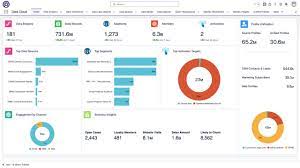
Salesforce Focuses on Data Cloud

Salesforce Focuses on Data Cloud

Salesforce’s Focus on Data Cloud Amid Challenging Macro Environment Salesforce is concentrating on its Data Cloud solutions while navigating a challenging macroeconomic landscape after reporting a weaker-than-expected first quarter. Salesforce Focuses on Data Cloud In a recent note, Baird analysts Rob Oliver and Patrick Schulz highlighted Salesforce’s emphasis on its Data Cloud solution: “Salesforce is keenly focused on its Data Cloud solution. The company has cited strength, but overall checks have been mixed. While not material from a revenue perspective, we believe this will remain a top focus area.” Baird’s insights followed a dinner meeting with Salesforce’s investor relations team, where much of the discussion centered on the macroeconomic challenges affecting the company. Salesforce shares fell sharply late last month after the enterprise software giant reported fiscal first-quarter results and guidance that missed estimates. Although the stock has partially recovered, it was down about 2% during late market trading on Wednesday and was removed from BofA’s U.S. 1 List the same day. Salesforce Focuses on Data Cloud Despite the revenue miss in the first quarter of fiscal year 2025, Salesforce reiterated its full-year guidance, citing confidence driven by several tailwinds, including Data Cloud, pricing/packaging, MuleSoft, regional strengths, and industry-specific offerings. These factors are helping to offset ongoing macroeconomic pressures, according to Oliver and Schulz. “Salesforce has not been alone in calling out a more challenging macro environment,” the analysts noted, referencing similar trends cited by companies like Couchbase (BASE), MongoDB (MDB), and Workday (WDAY). “We believe the company will need to report a solid quarter before investor confidence builds.” Baird maintains its Outperform rating on Salesforce with a price target of $295. Like1 Related Posts Who is Salesforce? Who is Salesforce? Here is their story in their own words. From our inception, we’ve proudly embraced the identity of Read more Salesforce Marketing Cloud Transactional Emails Salesforce Marketing Cloud Transactional Emails are immediate, automated, non-promotional messages crucial to business operations and customer satisfaction, such as order Read more Salesforce Unites Einstein Analytics with Financial CRM Salesforce has unveiled a comprehensive analytics solution tailored for wealth managers, home office professionals, and retail bankers, merging its Financial Read more AI-Driven Propensity Scores AI plays a crucial role in propensity score estimation as it can discern underlying patterns between treatments and confounding variables Read more
Read More
DPD Salesforce AI Enhancements

DPD Salesforce AI Enhancements

DPD’s AI Integration: Enhancing Customer and Employee Experience DPD has ambitious plans to integrate AI throughout its Salesforce platform, aiming to automate tasks and significantly enhance the experiences of both customers and employees. DPD Salesforce AI Enhancements. Adam Hooper, Head of Central Platforms at DPD, explains that with over 400 million parcels delivered annually, maintaining robust customer relationships is crucial. To this end, DPD leverages a range of Salesforce technologies, including Service Cloud, Sales Cloud, Marketing Cloud, and Mulesoft. AI-Powered Customer Service In Salesforce’s latest update on DPD: Financial and Operational Efficiency Targeted Marketing Spreadsheets to Salesforce At the Salesforce World Tour event in London, Ben Pyne, Salesforce Platform Manager at DPD, elaborated on their current usage and future AI plans. Pyne’s team acts as internal consultants to optimize organizational workflows. As he explains: “My role is essentially to get people off spreadsheets and onto Salesforce!” He noted that about 40 departments and teams within DPD use Salesforce, far beyond the typical Sales and CRM applications. Custom applications within Salesforce personalize and enhance user experiences by focusing on relevant information. Using tools like Prompt Builder, Pyne’s team recently developed a project management app within Salesforce, streamlining tasks like writing acceptance criteria and user stories. Pyne emphasized: “I want our guys to focus on designing and building, less on the admin.” AI Use Cases When considering AI and generative AI, DPD sees significant potential to reduce operational tasks. Pyne highlighted case summarization as an obvious application, given the millions of customer service cases created each year. Rolling Out Generative AI DPD adopts a cautious approach to rolling out new technologies like generative AI. Pyne explained: “It’s starting small, finding the right teams to be able to do it. But fundamentally, starting somewhere and making slow progressions into it to ensure we don’t scare everybody away.” Ensuring Security and Trust Security and trust are paramount for DPD. Pyne noted their robust IT security team scrutinizes every implementation. Fortunately, Salesforce’s security measures, such as data anonymization and preventing LLMs (Large Language Models) from learning from their data, provide peace of mind. Pyne concluded: “We can focus on what we’re good at and not worry about the rest because Salesforce has thought of everything for us.” Like Related Posts Who is Salesforce? Who is Salesforce? Here is their story in their own words. From our inception, we’ve proudly embraced the identity of Read more Salesforce Marketing Cloud Transactional Emails Salesforce Marketing Cloud Transactional Emails are immediate, automated, non-promotional messages crucial to business operations and customer satisfaction, such as order Read more Salesforce Unites Einstein Analytics with Financial CRM Salesforce has unveiled a comprehensive analytics solution tailored for wealth managers, home office professionals, and retail bankers, merging its Financial Read more AI-Driven Propensity Scores AI plays a crucial role in propensity score estimation as it can discern underlying patterns between treatments and confounding variables Read more
Read More
Life Sciences Cloud Organizing Clinical Trials and Outreach

Life Sciences Cloud Organizing Clinical Trials and Outreach

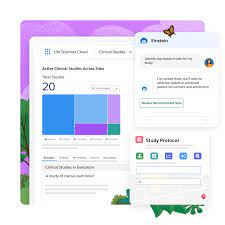
Salesforce CRM announced today its expansion into the life sciences sector with the launch of a new cloud platform designed to enhance engagement between medical technology providers, pharmaceutical companies, patients, and healthcare professionals. The Salesforce Life Sciences Cloud platform, now available, integrates advanced artificial intelligence capabilities from the Einstein 1 Platform. These AI capabilities aim to streamline clinical operations and processes by harnessing insights from all aspects of organizational data. Life Sciences Cloud Organizing Clinical Trials and Outreach. One of the primary benefits of the Life Sciences Cloud platform is its ability to optimize clinical trials, particularly in streamlining the recruitment and enrollment of participants. By leveraging AI, the platform can identify and match qualified candidates for clinical trials based on specific prescreening and eligibility criteria, significantly reducing the time traditionally spent on these processes. The platform facilitates the creation of personalized online portals for each clinical trial, making it easier for eligible patients to discover and enroll in trials relevant to them. It also simplifies the enrollment process through customizable e-consent forms. Using Einstein Copilot, an AI assistant, organizations can automate the identification of potential trial participants based on criteria such as proximity to trial sites, drawing data from sources like spreadsheets and electronic health records. This capability enhances efficiency by proactively reaching out to suitable candidates. Life Sciences Cloud Organizing Clinical Trials and Outreach Salesforce emphasizes the platform’s potential to alleviate common challenges in clinical trials, where recruitment delays and participant retention issues often hinder progress. By addressing these inefficiencies, Life Sciences Cloud aims to improve the operational timelines and success rates of clinical trials. Beyond clinical trials, the platform features a pilot patient benefits verification tool that helps organizations swiftly assess pharmaceutical costs and eligibility for financial assistance. Integrated with Einstein Copilot, this tool supports bulk re-verifications, ensuring continuous access to treatments for patients requiring periodic authorizations. Additionally, the platform includes a pilot patient program outcome management module, which automates the evaluation of educational and support programs’ impact on patients. This module aids in enhancing patient engagement and adherence to treatment plans by sending automated reminders and analyzing the effectiveness of engagement strategies. Salesforce’s Life Sciences Cloud also offers robust data analytics capabilities, leveraging Salesforce Data Cloud and MuleSoft for Life Sciences to unify structured and unstructured data sources. This unified data model provides comprehensive profiles for each patient and healthcare provider, enabling personalized interactions and informed decision-making. Frank Defesche, Senior Vice President and General Manager of Life Sciences at Salesforce, highlighted the platform’s role in enabling life sciences organizations to navigate challenges such as rising drug costs and regulatory complexities. He emphasized AI’s transformative potential in optimizing operational processes and prioritizing patient-centric approaches across the industry. Overall, Salesforce’s Life Sciences Cloud represents a significant advancement in leveraging AI-driven technologies to enhance efficiency, engagement, and outcomes within the life sciences sector. Like Related Posts Who is Salesforce? Who is Salesforce? Here is their story in their own words. From our inception, we’ve proudly embraced the identity of Read more Salesforce Marketing Cloud Transactional Emails Salesforce Marketing Cloud Transactional Emails are immediate, automated, non-promotional messages crucial to business operations and customer satisfaction, such as order Read more Salesforce Unites Einstein Analytics with Financial CRM Salesforce has unveiled a comprehensive analytics solution tailored for wealth managers, home office professionals, and retail bankers, merging its Financial Read more AI-Driven Propensity Scores AI plays a crucial role in propensity score estimation as it can discern underlying patterns between treatments and confounding variables Read more

Read More
Salesforce Feeding Post-Pandemic AI-Powered Digital Transformation

Salesforce Feeding Post-Pandemic AI-Powered Digital Transformation

The Digital Transformation Imperative: Salesforce’s AI Solutions The COVID-19 pandemic didn’t just accelerate digital transformation; it cemented it as an existential imperative for businesses across all industries. The sudden shift to remote work, digital customer engagement, and e-commerce highlighted the stark contrast between organizations that had prioritized digitization and those that hadn’t. In the post-pandemic era, digital agility has become synonymous with resilience and competitiveness. Salesforce Feeding Post-Pandemic AI-Powered Digital Transformation with unparalled innovation. However, the path to digital transformation remains challenging for many companies. Legacy systems, data silos, and manual processes continue to hinder adaptation and innovation at the pace demanded by today’s market and consumer. This has led to a certain weariness and skepticism around transformation initiatives, often perceived as an ever-receding target. Salesforce’s AI-Powered Integration Solutions Salesforce’s AI-powered integration solutions aim to revitalize the digital transformation journey. With tools like Einstein for Flow, Intelligent Document Processing (IDP), and Einstein for MuleSoft, Salesforce is embedding AI across its automation and integration portfolio to address some of the most difficult challenges in digitization. Anypoint Partner Manager: Harnessing AI for B2B Integration Salesforce’s latest MuleSoft offering, Anypoint Partner Manager, exemplifies this AI-centric approach. The cloud-native B2B integration solution leverages IDP to streamline partner onboarding and manage API and EDI-based transactions, addressing a key pain point for companies in complex supply chain ecosystems. “EDI has historically been that code-driven solution. You must really know the EDI spec,” noted Andrew Comstock, VP of Product Management at Salesforce. “Partner Manager actually brings the partner definition into a form, and you can just define that, save it, and you’re off and done. We can deploy all the applications that you need for you.” By using AI to extract and structure data from unstructured documents like invoices and purchase orders, Anypoint Partner Manager democratizes B2B integration, making it accessible to businesses beyond the traditional technology sector. The solution is now generally available. MuleSoft Accelerator for Salesforce Order Management: Bridging B2B and B2C Salesforce also introduced the MuleSoft Accelerator for Salesforce Order Management. This tool provides pre-built APIs, connectors, and templates to unify B2B and B2C orders from a centralized hub. By connecting Salesforce OMS with ERP systems in real-time, the accelerator enables end-to-end visibility across channels, a critical capability in today’s omnichannel environment. “For many companies, [order management] is super critical and vital,” emphasized Comstock. “The more that they can standardize and centralize that, the better visibility, controls, and governance they have.” The MuleSoft Accelerator for Salesforce OMS is now generally available. The AI Imperative in Digital Transformation Salesforce’s AI-powered integration solutions come at a time when businesses are grappling with the realities of the post-pandemic digital imperative. Automating complex B2B processes, unifying data flows across ecosystems, and extracting insights from unstructured data is no longer a luxury but a necessity for survival in the digital economy. Salesforce Feeding Post-Pandemic AI-Powered Digital Transformation “A lot of our successes are happening at companies that are not traditional technology companies. Using solutions like MuleSoft and Salesforce allows them to build those technologies better,” noted Comstock. In this context, AI is emerging as a key enabler of digital transformation at scale. By abstracting complexity and automating manual tasks, AI-powered integration tools like those from Salesforce are helping businesses overcome the hurdles that have long stymied digitization efforts. For companies still wrestling with the challenges of digital transformation, Salesforce’s AI-powered integration portfolio offers a glimmer of hope. By harnessing the power of large language models and other AI technologies to streamline integration and automation, Salesforce is providing a new path forward for organizations looking to thrive in the post-pandemic digital landscape. Salesforce Feeding Post-Pandemic AI-Powered Digital Transformation with Einstein, Mulesoft, Flow, and more. Like Related Posts Who is Salesforce? Who is Salesforce? Here is their story in their own words. From our inception, we’ve proudly embraced the identity of Read more Salesforce Marketing Cloud Transactional Emails Salesforce Marketing Cloud Transactional Emails are immediate, automated, non-promotional messages crucial to business operations and customer satisfaction, such as order Read more Salesforce Unites Einstein Analytics with Financial CRM Salesforce has unveiled a comprehensive analytics solution tailored for wealth managers, home office professionals, and retail bankers, merging its Financial Read more AI-Driven Propensity Scores AI plays a crucial role in propensity score estimation as it can discern underlying patterns between treatments and confounding variables Read more

Read More
Salesforce Driving Change

Salesforce Driving Change

Sony Honda Mobility Leverages Salesforce Technology to Enhance Customer Relationships Sony Honda Mobility, a mobility tech startup, is utilizing Salesforce solutions—including Automotive Cloud, Data Cloud, Tableau, and MuleSoft—to deepen its customer relationships through enhanced data and insights. Sony Honda Mobility Inc. is a Japanese joint venture automotive company established by Sony Group Corporation and Honda Motor Company in 2022 to produce battery electric vehicles. The company will market its vehicles under the Afeela brand. Why It Matters: A significant 81% of business leaders report challenges with data fragmentation and silos. This disconnected, disjointed information often leads to immaterial and generic customer interactions, which is problematic as 80% of customers expect superior experiences given the extensive data companies collect. Key Developments: Sony Honda Mobility plans to launch its first electric vehicle in the United States in 2025, followed by Japan in 2026. To scale globally and stand out in the market, the company is empowering its service team with real-time data and insights on customer interactions with its products and services. How Is Salesforce Driving Change Data Cloud: A unified data platform that consolidates application, workflow, and data lake records, making it easier to train AI models, gain business insights, and improve customer relationships. Sony Honda Mobility is leveraging Data Cloud to integrate disparate data seamlessly across applications. MuleSoft API Integration: This integration connects data from Sony Honda Mobility’s vehicle and customer platform to Salesforce, ensuring a cohesive data flow. Automotive Cloud: Inside Automotive Cloud, Sony Honda Mobility now maintains a comprehensive profile of each customer and their vehicle, based on data from Data Cloud. This integration allows for personalized service and experiences at every touchpoint. The platform also streamlines contact center management, query handling, internal FAQ creation, web actions, and ongoing service support for incident and customer information management. Tableau: With Tableau’s visualizations of vehicle operation conditions and service usage status, Sony Honda Mobility can make quicker, more informed decisions about each customer’s needs. Customer Perspective “We aim to elevate our customer service and experiences to new heights. We are confident we can achieve this with Salesforce’s global expertise and proven track record in CRM, trusted AI, and data analytics,” said Yasuhide Mizuno, Chairman and CEO of Sony Honda Mobility. Salesforce Perspective “We are thrilled that Sony Honda Mobility has chosen the scalability, reliability, and expertise of Salesforce technology. By integrating their customer data on a single and trusted platform, we are excited to support Sony Honda Mobility as they scale excellent service to customers worldwide,” said Shinichi Koide, Chairman, President, and Chief Executive Officer of Salesforce Japan. The Result By harnessing Salesforce’s advanced technology, Sony Honda Mobility is poised to revolutionize its customer service and experience, ensuring a more connected, efficient, and personalized interaction for its customers globally. Like Related Posts Who is Salesforce? Who is Salesforce? Here is their story in their own words. From our inception, we’ve proudly embraced the identity of Read more Salesforce Marketing Cloud Transactional Emails Salesforce Marketing Cloud Transactional Emails are immediate, automated, non-promotional messages crucial to business operations and customer satisfaction, such as order Read more Salesforce Unites Einstein Analytics with Financial CRM Salesforce has unveiled a comprehensive analytics solution tailored for wealth managers, home office professionals, and retail bankers, merging its Financial Read more AI-Driven Propensity Scores AI plays a crucial role in propensity score estimation as it can discern underlying patterns between treatments and confounding variables Read more

Read More
Improve Patient Care and Trust

Improve Patient Care and Trust

A recent survey conducted by Kyruus Health and shared with HealthPayerIntelligence reveals that consumers are demanding more accurate online provider data from payers to enhance access to care. Healthcare solutions from Tectonic and Salesforce improve patient care and trust by improving data accuracy. The survey, fielded by Wakefield Research in April 2024, involved 1,000 healthcare consumers. Nearly three-quarters of respondents (72%) had private health insurance, with Medicare being the second most common form of coverage (18%). The participants represented an even distribution across U.S. regions and age groups, with 57% identifying as women. Payers have historically struggled to maintain up-to-date provider directories, and this survey highlights the significant impact of these challenges. About 30% of consumers reported skipping care due to inaccurate provider information, with 70% of them seeking this data online. Consumers primarily rely on health plan websites or apps for provider information, with 32% naming these platforms as their first resource. Medicaid enrollees were particularly dependent on their plan’s digital resources, with 64% turning to these tools first. Besides health plan websites and apps, consumers also used general internet searches, provider or clinic websites, and healthcare information sites like WebMD. Social media platforms were also popular for care searches, with 77% of users turning to Facebook and 61% to YouTube. The survey also revealed that payers often fail to provide accurate cost predictions. Only 32% of respondents said their health plans offered accurate cost information. Price transparency tools are particularly important to younger generations, with 76% of Millennials and 80% of Gen Z respondents using these tools. However, 40% of Baby Boomers were unsure if their plans even offered such tools. Among those who did use them, 34% found that the tools presented incorrect provider data, with 45% of Gen Z reporting this issue. Inaccurate provider information can lead to significant negative consequences for consumers, including delays in accessing care, difficulties contacting preferred providers, and higher costs. Some consumers even reported accidentally receiving out-of-network care or forgoing care altogether due to these inaccuracies. These experiences not only hinder access to care but also damage consumer trust in their healthcare providers and payers. Overall, 80% of respondents said that inaccurate provider data affected their trust, with 27% losing trust in their health plans and 22% losing trust in their providers. The survey results underscore a clear call to action. Over 60% of consumers, and nearly 75% of Gen Z specifically, want their health plans to provide more accurate data. Tectonic has decades of experience applying Salesforce solutions to health care providers and payers. To address these concerns, the report recommends that health plans take three key steps: First, engage with members through appropriate channels, including social media. Second, unify and validate their provider data to ensure accuracy. Third, introduce self-service capabilities within their digital platforms to empower consumers. Reach out to Tectonic today if your organization needs help applying these three steps. Like Related Posts Who is Salesforce? Who is Salesforce? Here is their story in their own words. From our inception, we’ve proudly embraced the identity of Read more Salesforce Marketing Cloud Transactional Emails Salesforce Marketing Cloud Transactional Emails are immediate, automated, non-promotional messages crucial to business operations and customer satisfaction, such as order Read more Salesforce Unites Einstein Analytics with Financial CRM Salesforce has unveiled a comprehensive analytics solution tailored for wealth managers, home office professionals, and retail bankers, merging its Financial Read more AI-Driven Propensity Scores AI plays a crucial role in propensity score estimation as it can discern underlying patterns between treatments and confounding variables Read more

Read More
gettectonic.com