Mulesoft Archives - gettectonic.com - Page 8
AI Drives Insights

AI Drives Insights

Innovations from Salesforce, HubSpot, and One AI are driving deeper insights and streamlining processes. Key Takeaways: AI is transforming the way businesses operate, and customer relationship management (CRM) is no exception. AI has been influencing the CRM space for years, but its impact is now reaching new heights. By harnessing AI algorithms, modern CRM systems offer predictive analytics and deeper insights, enabling brands to understand their customers on an unprecedented level. Advanced AI-enabled CRMs even incorporate sentiment analysis to gauge customer perceptions and provide automation tools to free marketers from mundane tasks. The global AI market, currently valued at 2.3 billion, continues to expand rapidly. From 2020 to 2022, annual corporate investments in AI startups increased by $5 billion, reflecting the growing demand for AI-driven innovations. As CRM vendors introduce more AI capabilities, it’s important to understand the unique approaches each one takes to differentiate themselves and deliver specific benefits. Salesforce and Einstein GPT: A New Era with OpenAI’s ChatGPT On March 7, 2023, Salesforce introduced Einstein GPT, a generative AI technology integrated into its CRM platform. Combining real-time data from Salesforce’s Data Cloud with OpenAI’s ChatGPT, Einstein GPT allows users to input natural-language prompts to streamline tasks and decision-making. Salesforce has long invested in AI. In 2017, it launched its Einstein AI as part of Service Cloud. By 2019, Salesforce had partnered with OpenAI to explore AI research and integrate advanced models into its ecosystem. The acquisition of Slack in 2020 further strengthened its AI capabilities by incorporating advanced messaging and communication tools into the CRM environment. Marc Benioff, CEO of Salesforce, highlighted the significance of AI’s growth: “The world is experiencing one of the most profound technological shifts with real-time technologies and generative AI. This comes at a pivotal moment as every company is focused on connecting with their customers in more intelligent, automated, and personalized ways.” Einstein GPT is set to transform customer engagement, with applications across Salesforce’s various platforms, including Tableau, MuleSoft, and Slack. HubSpot CRM: AI-Powered Content Assistant A day before Salesforce’s AI announcement, HubSpot revealed its own AI-powered features: the Content Assistant and ChatSpot.ai. These tools aim to enhance CRM users’ productivity while creating stronger connections with customers. HubSpot’s Content Assistant helps marketing and sales teams ideate, create, and share content through generative AI capabilities. It can suggest blog titles, create content outlines, and assist with crafting content for blogs, emails, landing pages, and websites. ChatSpot.ai, on the other hand, offers a natural-language chat experience to simplify CRM tasks for HubSpot users. HubSpot has also invested in AI for other functions, including conversation intelligence, data enrichment, predictive analytics, and content optimization, solidifying its position in the AI-driven CRM landscape. With AI advancements from companies like Salesforce, HubSpot, and One AI, the future of CRM is poised for enhanced efficiency, automation, and personalized customer interactions. Like Related Posts Who is Salesforce? Who is Salesforce? Here is their story in their own words. From our inception, we’ve proudly embraced the identity of Read more Salesforce Marketing Cloud Transactional Emails Salesforce Marketing Cloud Transactional Emails are immediate, automated, non-promotional messages crucial to business operations and customer satisfaction, such as order Read more Salesforce Unites Einstein Analytics with Financial CRM Salesforce has unveiled a comprehensive analytics solution tailored for wealth managers, home office professionals, and retail bankers, merging its Financial Read more AI-Driven Propensity Scores AI plays a crucial role in propensity score estimation as it can discern underlying patterns between treatments and confounding variables Read more


Read More
MuleSoft Robotic Process Automation

MuleSoft Robotic Process Automation

MuleSoft Robotic Process Automation (RPA) MuleSoft Robotic Process Automation (RPA) empowers organizations to automate business processes and tasks using bots, streamlining operations and minimizing human errors. Fully integrated with Salesforce Clouds, MuleSoft RPA enables admins, business teams, and developers to leverage robotic process automation technology, facilitating end-to-end workflow automation. Key Features and Capabilities Benefits of MuleSoft RPA Common Use Cases MuleSoft RPA Development Lifecycle Comprehensive Applications for Managing the Development Lifecycle Installation and Comparison Enhanced Efficiency and Productivity By automating data extraction and entry, reducing errors, and improving productivity, MuleSoft RPA significantly enhances operational efficiency. This allows human operators to focus on more complex and strategic tasks, driving overall organizational success. Like1 Related Posts Who is Salesforce? Who is Salesforce? Here is their story in their own words. From our inception, we’ve proudly embraced the identity of Read more Salesforce Marketing Cloud Transactional Emails Salesforce Marketing Cloud Transactional Emails are immediate, automated, non-promotional messages crucial to business operations and customer satisfaction, such as order Read more Salesforce Unites Einstein Analytics with Financial CRM Salesforce has unveiled a comprehensive analytics solution tailored for wealth managers, home office professionals, and retail bankers, merging its Financial Read more AI-Driven Propensity Scores AI plays a crucial role in propensity score estimation as it can discern underlying patterns between treatments and confounding variables Read more
Read More
Explore Salesforce Experience Cloud

Explore Salesforce Experience Cloud

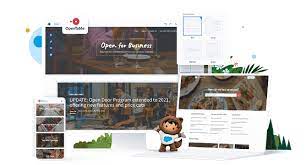
Empowering Businesses with Exceptional Salesforce Cloud Solutions Explore the transformative work we have done for our clients with Salesforce Experience Cloud, showcasing some of the exceptional solutions we have implemented. Through our strategic initiatives, we have enabled organizations across various industries to leverage the full potential of Salesforce Clouds to enhance user engagement, streamline operations, and achieve significant business growth. Our success stories reflect the diverse challenges our clients faced and the optimized solutions we provided to address them. For instance, by revamping an recruiting portal for a prominent American government agency, we reduced issues related to recruting, onboarding, and retaining talent. Tectonic’s approach incorporates the latest Salesforce technologies, such as Lightning Web Components, Service Cloud, and Experience Cloud, to deliver high-performing, scalable solutions. From improving partner portals for better partner support to transforming community portals for enhanced user experience, our solutions are designed to meet specific client needs while ensuring long-term adaptability and success. Manufacturing – Experience Cloud Case Study Public Sector – Experience Cloud and Grants Management Case Study Manufacturing – Sales, Service, Marketing, and Partner Community Case Study Manufacturing – Sales, Service, Marketing and Experience Cloud Case Study Branded Solutions Manufacturing – Sales, Service, and Experience Cloud Case Study Nonprofit Hospitality – Service and Experience Cloud Case Study Tribal Government – Health, Marketing, MuleSoft, and Experience Cloud Case Study Restaurant – Sales, Service, and Experience Cloud Case Study Federal Government – Nonprofit Talent Acquisition Experience Cloud Case Study Higher Education Software – Sales, Service and Experience Cloud Case Study Salesforce Partner Portals Built on Salesforce Experience Cloud Explore all Tectonic Salesforce Implementation Solutions Like Related Posts Who is Salesforce? Who is Salesforce? Here is their story in their own words. From our inception, we’ve proudly embraced the identity of Read more Salesforce Marketing Cloud Transactional Emails Salesforce Marketing Cloud Transactional Emails are immediate, automated, non-promotional messages crucial to business operations and customer satisfaction, such as order Read more Salesforce Unites Einstein Analytics with Financial CRM Salesforce has unveiled a comprehensive analytics solution tailored for wealth managers, home office professionals, and retail bankers, merging its Financial Read more AI-Driven Propensity Scores AI plays a crucial role in propensity score estimation as it can discern underlying patterns between treatments and confounding variables Read more
Read More
Salesforce Slack

Windows for Slack

With the Slack app your team is never farther than a click away.  Slack is now available for Android and iOS mobile devices. Slack takes up where email left off, working for today’s demands more than ever before.  And now Slack, and Slack for Windows, offers a whole fresh approach to productivity. With the new Slack you can sign in to multiple workspaces, get desktop notifications, and stay in touch with your team on the go. How do I download Slack app on Windows? If you want to download Slack, there are various options. For Windows, visit Slack.com/downloads. You’ll find the option to download Slack for Windows 7 or above. Click download then launch the Slack setup.exe file. How do I start Slack on Windows? To join us all on Slack: The Slack application is a proprietary business communication that is used by many multi-national corporations so that the team members in a team could talk to each about the needs and the responsibilities of the project in a organization. It was developed by Slack Technologies which is now acquired by Salesforce Inc. It is the most popular business communication application that facilitates the communication of thought process and idea flow of various tasks and processes while completing a project by the various members in team. Like1 Related Posts Who is Salesforce? Who is Salesforce? Here is their story in their own words. From our inception, we’ve proudly embraced the identity of Read more Salesforce Marketing Cloud Transactional Emails Salesforce Marketing Cloud Transactional Emails are immediate, automated, non-promotional messages crucial to business operations and customer satisfaction, such as order Read more Salesforce Unites Einstein Analytics with Financial CRM Salesforce has unveiled a comprehensive analytics solution tailored for wealth managers, home office professionals, and retail bankers, merging its Financial Read more AI-Driven Propensity Scores AI plays a crucial role in propensity score estimation as it can discern underlying patterns between treatments and confounding variables Read more
Read More
ChatGPT and Einstein GPT

ChatGPT and Einstein GPT

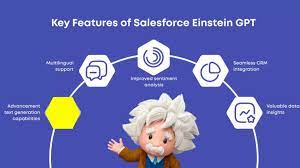
Artificial intelligence (AI) has been rapidly advancing globally, with breakthroughs captivating professionals across various sectors. One milestone that has gained significant attention is the emergence of ChatGPT, a cutting-edge language model revolutionizing the tech landscape. This development has profoundly impacted businesses relying on Salesforce for their customer relationship management (CRM) needs. In March 2023, Salesforce unveiled its latest AI innovation, Einstein GPT, promising to transform how companies engage with their clientele. In this article, we explore what Salesforce Einstein GPT entails and how it can benefit teams across diverse industries. When OpenAI introduced ChatGPT in November 2022, they didn’t expect the overwhelming response it received. Initially positioned as a “research preview,” this AI chatbot aimed to refine existing technology while soliciting feedback from users. However, ChatGPT quickly became a viral sensation, surpassing OpenAI’s expectations and prompting them to adapt to its newfound popularity. Developed on the foundation of the GPT-3.5 language model, ChatGPT was specifically tailored to facilitate engaging and accessible conversations, distinguishing it from its predecessors. Its launch attracted a diverse user base keen to explore its capabilities, prompting OpenAI to prioritize addressing potential misuse and enhancing its safety features. As ChatGPT gained traction, it caught the attention of Salesforce, a leading CRM provider. In March 2023, Salesforce unveiled Einstein GPT, its own AI innovation, poised to transform customer engagement. Built on the GPT-3 architecture and seamlessly integrated into Salesforce Clouds, Einstein GPT promised to revolutionize how businesses interact with their clientele. Einstein GPT boasts a range of features designed to personalize customer experiences and streamline workflows. From generating natural language responses to crafting personalized content and automating tasks, Einstein GPT offers versatility and value across industries. By leveraging both Einstein AI and GPT technology, businesses can unlock unprecedented efficiency and deliver superior customer experiences. Despite its success, OpenAI acknowledges the need for ongoing refinement and vigilance, emphasizing the importance of responsible deployment and transparency in the development of AI technology. Exploring Einstein GPT Salesforce presents Einstein GPT as the premier generative AI tool for CRM worldwide. Utilizing the advanced GPT-3 architecture, Einstein GPT seamlessly integrates into all Salesforce Clouds, including Tableau, MuleSoft, and Slack. This groundbreaking technology empowers users to generate natural language responses to customer inquiries, craft personalized content, and compose entire email messages on behalf of sales personnel. With its high degree of customization, Einstein GPT can be finely tuned to meet the specific needs of various industries, use cases, and customer requirements, delivering significant value to businesses of all sizes and sectors. Objectives of Salesforce AI Einstein GPT Salesforce AI Einstein GPT is designed to achieve several key objectives: Distinguishing Einstein GPT from Einstein AI Einstein GPT represents the latest evolution of Salesforce’s Einstein artificial intelligence technology. Unlike its predecessors, Einstein GPT integrates proprietary Einstein AI models with ChatGPT and other leading large language models. This integration enables users to interact with CRM data using natural language prompts, resulting in highly personalized, AI-generated content and triggering powerful automations that enhance workflows and productivity. By leveraging both Einstein AI and GPT technology, businesses can achieve unparalleled efficiency and deliver exceptional customer experiences. Features of Einstein GPT in Salesforce CRM Key features and capabilities of Salesforce Einstein chatbot GPT include: Utilizing Einstein GPT for Business Improvement Einstein GPT can be leveraged across various domains to enhance business operations: Integration with Salesforce Data Cloud Salesforce Data Cloud, a cloud-based data management system, enables real-time data aggregation from diverse sources. Einstein GPT utilizes unified customer data profiles from the Salesforce Data Cloud to personalize interactions throughout the customer journey. OpenAI on ChatGPT Methods We trained this model using Reinforcement Learning from Human Feedback (RLHF), using the same methods as InstructGPT, but with slight differences in the data collection setup. We trained an initial model using supervised fine-tuning: human AI trainers provided conversations in which they played both sides—the user and an AI assistant. We gave the trainers access to model-written suggestions to help them compose their responses. We mixed this new dialogue dataset with the InstructGPT dataset, which we transformed into a dialogue format. To create a reward model for reinforcement learning, we needed to collect comparison data, which consisted of two or more model responses ranked by quality. To collect this data, we took conversations that AI trainers had with the chatbot. We randomly selected a model-written message, sampled several alternative completions, and had AI trainers rank them. Using these reward models, we can fine-tune the model using Proximal Policy Optimization. We performed several iterations of this process. ChatGPT is fine-tuned from a model in the GPT-3.5 series, which finished training in early 2022. You can learn more about the 3.5 series here. ChatGPT and GPT-3.5 were trained on an Azure AI supercomputing infrastructure. Limitations ChatGPT and Einstein GPT Salesforce Einstein GPT signifies a significant advancement in AI technology, empowering businesses to deliver tailored customer experiences and streamline operations. With its integration into Salesforce CRM and other platforms, Einstein GPT offers unprecedented capabilities for personalized engagement and automated insights, ensuring organizations remain competitive in today’s dynamic market landscape. When OpenAI quietly launched ChatGPT in late November 2022, the San Francisco-based AI company didn’t anticipate the viral sensation it would become. Initially viewed as a “research preview,” it was meant to showcase a refined version of existing technology while gathering feedback from the public to address its flaws. However, the overwhelming success of ChatGPT caught OpenAI off guard, leading to a scramble to capitalize on its newfound popularity. ChatGPT, based on the GPT-3.5 language model, was fine-tuned to be more conversational and accessible, setting it apart from previous iterations. Its release marked a significant milestone, attracting millions of users eager to test its capabilities. OpenAI quickly realized the need to address potential misuse and improve the model’s safety features. Since its launch, ChatGPT has undergone several updates, including the implementation of adversarial training to prevent users from exploiting it (known as “jailbreaking”). This technique involves pitting multiple chatbots against each other to identify and neutralize malicious behavior. Additionally,

Read More
Salesforce Genie Announced

Salesforce Genie Announced

Salesforce Genie announced this year is an innovative data platform recently unveiled at Dreamforce 2022, heralding the world’s first real-time CRM. Genie is the driving force behind Salesforce’s entire Customer 360 platform, delivering hyper-scale, real-time data capabilities. With Genie, any business can harness the power of data to create magical customer experiences, offering seamless, personalized interactions across sales, service, marketing, and commerce. It adapts effortlessly to evolving customer needs. Consider scenarios we encounter daily: the frustration of lengthy customer support calls navigating purchase history, or the challenge of locating specific items on cluttered e-commerce websites. These situations underscore the demand for real-time updates in every customer interaction, a demand that Genie aims to fulfill. In the last 12 hours alone, the volume of stored customer data worldwide has doubled, explaining the delays in customer support. However, with Salesforce Genie, businesses can make sense of their data regardless of source, system, or channel. This unified data drives unprecedented levels of personalization, akin to magic. Salesforce Genie’s Key Features: Genie is pivotal for various industries leveraging Salesforce, like banks managing vast customer records and administrative tasks. Salesforce aims to enhance data utilization without altering existing approaches. Comparison with Salesforce CDP: Genie transcends traditional Customer Data Platforms (CDPs) by: How Genie Works: Genie ingests and stores real-time data streams at scale, integrating them seamlessly with Salesforce data. It consolidates data from diverse channels, legacy systems via MuleSoft, and proprietary data lakes through connectors. Core Pillars of Salesforce Genie: Salesforce Genie’s Extensibility: Genie partners with leading data providers such as Snowflake and Amazon SageMaker, enabling seamless integration and real-time data sharing without data movement. Unified Customer 360 Use Cases: Genie unifies data across Salesforce’s Customer 360 products for various departments: In essence, Salesforce Genie revolutionizes data integration and utilization, enabling businesses to deliver unparalleled customer experiences across all touchpoints. Like1 Related Posts Who is Salesforce? Who is Salesforce? Here is their story in their own words. From our inception, we’ve proudly embraced the identity of Read more Salesforce Marketing Cloud Transactional Emails Salesforce Marketing Cloud Transactional Emails are immediate, automated, non-promotional messages crucial to business operations and customer satisfaction, such as order Read more Salesforce Unites Einstein Analytics with Financial CRM Salesforce has unveiled a comprehensive analytics solution tailored for wealth managers, home office professionals, and retail bankers, merging its Financial Read more AI-Driven Propensity Scores AI plays a crucial role in propensity score estimation as it can discern underlying patterns between treatments and confounding variables Read more

Read More
MuleSoft Direct for Industry Cloud

Announcing MuleSoft Direct for Salesforce Industry Clouds

MuleSoft provides the easy-to-use tools you need to automate your way to higher productivity and lower costs.  Announcing MuleSoft Direct for Salesforce Industry Clouds! Salesforce and MuleSoft have introduced a groundbreaking connectivity solution, MuleSoft Direct for Industry Clouds, designed to expedite project delivery and foster innovation within specific industries. This solution empowers both business and IT professionals to swiftly implement industry-standard integration use cases, enhancing critical business operations. The initial rollout of MuleSoft is now accessible for Salesforce Communications Cloud and Energy & Utilities Cloud. Key Significance: In the post-pandemic landscape, the demand for quicker and more efficient project delivery is paramount. Industries face increased pressure to adopt interoperability standards such as Fast Healthcare Interoperability Resources (FHIR), Banking Industry Architecture Network (BIAN), and TeleManagement Forum (TM Forum). MuleSoft Direct for Industry Clouds addresses these demands by delivering turnkey connectivity solutions tailored for specific industries, streamlining the integration of systems and data. Leverage pre-built solutions in industry standard for business critical operations to accelerate time to value. Innovation Highlights: With MuleSoft Direct, industry-leading connectivity is accelerated in the following ways: MuleSoft Direct for Salesforce Industry Clouds MuleSoft Direct simplifies connectivity by offering pre-built industry-specific use cases that cater to unique and complex business requirements. Use cases for Communications and Energy & Utilities include validating addresses and services during quoting and ordering, submitting new orders to order management systems, and streamlining billing processes. Future Steps: MuleSoft Direct solutions are set to expand to Health Cloud and Financial Services Cloud in the coming year, addressing integration needs related to Prior Authorization and fee reversals. There are plans to onboard additional industries in the future. Perspective from Salesforce and MuleSoft: “MuleSoft helps you automate any system and connect to any data, anywhere,” emphasizing the embedding of modern, industry-compliant connectivity and automation into industry clouds. Liam Doyle, SVP, Product Management, Mulesoft Jujhar Singh, EVP & GTM, Salesforce Industries, emphasized the significance of MuleSoft Direct in accelerating the implementation of industry cloud solutions, pre-building and packaging critical connectivity use cases to hasten customers’ time to value. Connectivity made easy for… Health Cloud Speed up Prior Authorization and power patient 360 initiatives with FHIR integrations directly in Health Cloud. Financial Services Cloud Modernize legacy systems to deliver digital-first experiences with BIAN integrations directly in Financial Services Cloud. Communications Cloud Streamline service and order operations with TM Forum integrations directly in Communications Cloud. Energy & Utilities Cloud Expedite key service processes with packaged billing and pricing integrations directly in Energy & Utilities Cloud. Consumer Goods Cloud Implement key initiatives like trade promotion management faster with pre-built integrations directly in Consumer Goods Cloud. Media Cloud Enhance key media & entertainment operations with pre-built integrations directly in Media Cloud. If you’re a beginner in data integration tools, this could be a reason why Mulesoft may not be right for you. It has a vast number of integrations and capabilities that can make it difficult for beginners to use. Contact Tectonic today for assistance. Content updated January 2024. Like1 Related Posts Who is Salesforce? Who is Salesforce? Here is their story in their own words. From our inception, we’ve proudly embraced the identity of Read more Salesforce Unites Einstein Analytics with Financial CRM Salesforce has unveiled a comprehensive analytics solution tailored for wealth managers, home office professionals, and retail bankers, merging its Financial Read more Tectonic’s Successful Salesforce Track Record Salesforce Technology Services Integrator – Tectonic has successfully delivered Salesforce in a variety of industries including Public Sector, Hospitality, Manufacturing, Read more Asset Management Salesforce Can Salesforce do asset management? You can manage assets in Consumer Goods (desktop) and in the Consumer Goods offline mobile Read more

Read More
Salesforce Genie

Salesforce Announces Genie

San Francisco – September 20, 2022 – Salesforce (NYSE: CRM), the global leader in CRM, today unveiled Salesforce Genie, a hyperscale real-time data platform that powers the entire Salesforce Customer 360 platform. With Genie, every company can turn data into customer magic, delivering seamless, highly personalized experiences across sales, service, marketing, and commerce that continuously adapt to changing customer information and needs in real time. Today, 71% of customers expect every interaction with a business to be personalized. However, data remains siloed and duplicative across most companies. Companies on average have 976 separate applications to run their business — that’s potentially 976 versions of a single customer, leading to disconnected digital experiences. Responding to customer needs in real time is more critical than ever, but is becoming more challenging as the amount of data created, captured, replicated, and consumed each year is expected to more than double by 2026. Companies must seamlessly connect digital and real-world customer interactions in order to provide the most relevant, personalized, and compelling experiences, in every moment. A sales rep can no longer rely on in-person communication to close a large deal — reps need real-time insights about every customer, based on real-time and historical data, to act on the most relevant information in the moment, every time. A service agent runs the risk of losing a valuable customer if they lack a complete, real-time view across every touchpoint — every agent needs a source of real-time customer truth. With real-time patient data, healthcare providers can deliver proactive guidance and care recommendations.  “Genie makes every part of Customer 360 more automated, intelligent, and real time.” DAVID SCHMAIER, PRESIDENT AND CHIEF PRODUCT OFFICER, SALESFORCE “Every business leader wants to take advantage of real-time data to create compelling, personalized customer experiences — milliseconds matter in this new digital-first world,” said David Schmaier, President and Chief Product Officer, Salesforce. “That’s why we built Genie, our most significant innovation ever on the Salesforce Platform. Genie makes every part of Customer 360 more automated, intelligent, and real time.” Salesforce Genie: Unify data to build a real-time customer graph and single source of truth As the heart of real-time Customer 360, Salesforce Genie ingests and stores real-time data streams at massive scale and combines it with Salesforce transactional data. Genie includes built-in connectors that bring in data from every channel (mobile, web, APIs), legacy data through MuleSoft, and historical data from proprietary data lakes. Like Related Posts Who is Salesforce? Who is Salesforce? Here is their story in their own words. From our inception, we’ve proudly embraced the identity of Read more Salesforce Marketing Cloud Transactional Emails Salesforce Marketing Cloud Transactional Emails are immediate, automated, non-promotional messages crucial to business operations and customer satisfaction, such as order Read more Salesforce Unites Einstein Analytics with Financial CRM Salesforce has unveiled a comprehensive analytics solution tailored for wealth managers, home office professionals, and retail bankers, merging its Financial Read more AI-Driven Propensity Scores AI plays a crucial role in propensity score estimation as it can discern underlying patterns between treatments and confounding variables Read more

Read More
Industry Cloud

Tectonic’s Salesforce Industry Experience

Tectonic’s Salesforce Industry Experience spans 16+ years of work focused on certain industry areas. Tectonic has worked in all of the following industries implementing and customizing Salesforce: Put Tectonic’s Industry Experience to work for your organization. Our industry and Salesforce expertise will have you up and running in no time. Casino Case Study Government Case Study Healthcare Payer Case Study Tectonic’s Salesforce Industry Experience Implementing Salesforce can be complex. Getting it wrong can be costly. From 5 to 5000 users, across Sales, Service and Marketing clouds, Tectonic has the process and patterns to help you plan, design and implement your solution right the first time. Whether this is your first Salesforce implementation or expansion of users or additional clouds, we can guide you from inception to delivery. Misalignment of your business needs and your system configuration create low adoption and usage rates that erode your Salesforce ROI. Tectonic’s technology professionals use our proven industry expertise and collaborate with business partners to deliver business value. From minor tweaks and retraining to reimplementation, we assess your situation and execute a customized solution to meet your needs. Like Related Posts Who is Salesforce? Who is Salesforce? Here is their story in their own words. From our inception, we’ve proudly embraced the identity of Read more Salesforce Marketing Cloud Transactional Emails Salesforce Marketing Cloud Transactional Emails are immediate, automated, non-promotional messages crucial to business operations and customer satisfaction, such as order Read more Salesforce Unites Einstein Analytics with Financial CRM Salesforce has unveiled a comprehensive analytics solution tailored for wealth managers, home office professionals, and retail bankers, merging its Financial Read more AI-Driven Propensity Scores AI plays a crucial role in propensity score estimation as it can discern underlying patterns between treatments and confounding variables Read more

Read More
Mulesoft

Salesforce Mulesoft Explained

The pivotal acquisition of MuleSoft in 2018 marked a significant achievement for Salesforce, introducing a seamless approach to connecting with any system through an extensive array of pre-built connectors. The Anypoint platform, part of MuleSoft, offers a centralized cloud-based system for managing API connections, executing integrations, and overseeing monitoring and reporting. MuleSoft with its Anypoint platform, is equipped with a broad library of connectors that facilitate integration with Mainframes, ERP systems, and SaaS applications through well-established and templated solutions. Salesforce has recently unveiled Salesforce MuleSoft Composer, a user-friendly and lightweight version designed for administrators that seamlessly integrates within Salesforce. MuleSoft provides a diverse set of tools to build automations and integrations tailored to various enterprise use cases. Its API-led connectivity approach includes three categories of APIs: MuleSoft’s integration platform enables businesses to connect applications, data, and devices, while Salesforce, a cloud-based customer relationship management (CRM) platform, focuses on enhancing customer relationships. In the integration process, MuleSoft fetches data from a third-party system, transforms x, y, z data elements, converts the data to JSON, and inserts/upserts it into Salesforce objects. Salesforce then automates further data processing on the saved data, showcasing the synergy between the two platforms in streamlining and optimizing data workflows. Mulesoft will likely be a part of your Salesforce implementation if you are using any legacy or third-party products. Contact Tectonic today to explore Mulesoft for your Salesforce org. Like Related Posts Who is Salesforce? Who is Salesforce? Here is their story in their own words. From our inception, we’ve proudly embraced the identity of Read more Salesforce Marketing Cloud Transactional Emails Salesforce Marketing Cloud Transactional Emails are immediate, automated, non-promotional messages crucial to business operations and customer satisfaction, such as order Read more Salesforce Unites Einstein Analytics with Financial CRM Salesforce has unveiled a comprehensive analytics solution tailored for wealth managers, home office professionals, and retail bankers, merging its Financial Read more AI-Driven Propensity Scores AI plays a crucial role in propensity score estimation as it can discern underlying patterns between treatments and confounding variables Read more

Read More
analytics 360 and journey builder

Google Analytics 360 and Salesforce Marketing Cloud

Customers seek to engage with brands that understand and value them, offering personalized interactions. Google Analytics 360 and Marketing Cloud provide a full understanding of your customers. 67 percent express a willingness to pay more for an enhanced brand experience. However, 51 percent of consumers feel that brands are currently falling short in delivering this desired level of customer experience. Various challenges contribute to this, including disconnected data, outdated systems, disparate channels, and siloed departments. The solution to overcoming these obstacles lies in integration. Integration of Google Analytics 360 and Marketing Cloud is the fix! While the answer seems straightforward, the task of untangling data from multiple fragmented systems to create a unified and actionable view of the consumer is more complex. Salesforce and Google recognize this challenge and have joined forces to facilitate the seamless integration of cross-channel insights for marketers within the Salesforce Marketing Cloud and Google Marketing Platform. Empowering Marketers This integration offers several capabilities, empowering marketers to be more productive, analyze rich data in one place and create personalized messages. The ability to make informed marketing decisions is key for many. Key features include simplified setup, cross-channel analytics, content performance analysis, website optimization, marketing attribution, and audience activation. The simplified setup allows users to view Analytics 360 reports in one Marketing Cloud dashboard. The cross-channel analytics feature provides a comprehensive understanding of customer engagement metrics, integrating data from various sources, including web and advertising. Content performance analysis goes beyond open and click rates, offering insights into customer behavior after interacting with marketing content. Website optimization leverages Marketing Cloud engagement data to enhance web optimization tests and personalize the site experience based on a broader, cross-channel view of the consumer. Marketing attribution enriches attribution reports with Marketing Cloud engagement data for a more complete view of the channels and tactics leading to optimal results. Integration of Google Analytics 360 and Marketing Cloud Provides Simplification The integration also simplifies the process of providing additional marketing and channel engagement data to Google Marketing Platform for measurement and activation through auto-tagging of journeys. Additionally, for the first time, marketers can create audiences in Analytics 360 based on users’ web and app browsing behavior and directly share and activate them through additional Marketing Cloud channels like email, SMS, or push notifications. This coordination ensures a consistent and personalized customer journey across various channels. Like1 Related Posts Who is Salesforce? Who is Salesforce? Here is their story in their own words. From our inception, we’ve proudly embraced the identity of Read more Salesforce Marketing Cloud Transactional Emails Salesforce Marketing Cloud Transactional Emails are immediate, automated, non-promotional messages crucial to business operations and customer satisfaction, such as order Read more Salesforce Unites Einstein Analytics with Financial CRM Salesforce has unveiled a comprehensive analytics solution tailored for wealth managers, home office professionals, and retail bankers, merging its Financial Read more AI-Driven Propensity Scores AI plays a crucial role in propensity score estimation as it can discern underlying patterns between treatments and confounding variables Read more
Read More
clock

Salesforce Integrations for Sales and Marketing Teams

What do Salesforce integrations entail? Salesforce Integrations for Sales and Marketing Teams. Salesforce integrations involve establishing connections between Salesforce and various third-party applications, ranging from marketing automation tools and customer service software to accounting programs. This seamless exchange of data between platforms serves to enhance Salesforce’s overall functionality. How extensive is Salesforce’s integration ecosystem? Salesforce boasts a robust integration ecosystem, with over 3,000 integrations available on its AppExchange marketplace. Beyond these, users can leverage: Salesforce Integrations for Sales and Marketing Teams While there isn’t a one-size-fits-all list of essential Salesforce integrations for sales and marketing, we’ve curated a selection of widely-used integrations across various categories: These integrations cater to diverse needs within sales and marketing, facilitating efficient data handling, analytics, communication, project management, and more. Like1 Related Posts Who is Salesforce? Who is Salesforce? Here is their story in their own words. From our inception, we’ve proudly embraced the identity of Read more Salesforce Marketing Cloud Transactional Emails Salesforce Marketing Cloud Transactional Emails are immediate, automated, non-promotional messages crucial to business operations and customer satisfaction, such as order Read more Salesforce Unites Einstein Analytics with Financial CRM Salesforce has unveiled a comprehensive analytics solution tailored for wealth managers, home office professionals, and retail bankers, merging its Financial Read more AI-Driven Propensity Scores AI plays a crucial role in propensity score estimation as it can discern underlying patterns between treatments and confounding variables Read more

Read More
Crucial Role of Data and Integration in AI at Dreamforce

Salesforce Data Integration

Salesforce Data Integration: A Comprehensive Guide Introduction Salesforce offers numerous tools to access, synchronize, and share data with external systems. However, selecting the right tool for your project is critical. This guide explores Salesforce’s data integration landscape, providing recommendations based on specific use cases—along with guidance on which tools to avoid. Scope of This Guide This decision guide focuses on data-level integrations involving Salesforce, covering: While these are just a subset of integration challenges faced by Salesforce Architects, future guides will address: Note: Many tools discussed here can also solve enterprise-wide integration challenges, but those use cases are beyond this guide’s scope. Key Takeaways Common Considerations for Choosing Data Integration Tools Before selecting a tool, evaluate these key factors: Area to Consider Key Questions Existing Tools & Landscape Is an ESB/ETL solution already in place? Are there compliance requirements? Are systems cloud or on-premise? Data Flow Does data need to move synchronously, asynchronously, or in batches? Should data be replicated? Which system is the source of truth? Implementation What’s the effort for non-Salesforce systems? Which teams will deliver integrations? What tools do they prefer? Maintainability Who will maintain the integration? What skills do they have (or need)? What’s the total cost of ownership? Data Volume Is it a large data volume (LDV) scenario? How frequent are bulk changes? What’s the impact of singleton updates? Limits Are complex transformations needed? Will data be combined from multiple sources? How often will integrations run per user? Overview of Data Integration Tools Tool Salesforce → External External → Salesforce Execution License Required? Apex Actions ✅ Yes ✅ Yes Server-side ❌ No Change Data Capture ✅ Yes ❌ No Server-side ❌ No* Custom Apex (REST/SOAP) ✅ Yes ✅ Yes Server-side ❌ No External Services ✅ Yes ❌ No Server-side ❌ No Generic Events (Legacy) ✅ Yes ❌ No Server-side ❌ No** Heroku Connect ✅ Yes ✅ Yes Server-side ✅ Yes MuleSoft Anypoint ✅ Yes ✅ Yes Server-side ✅ Yes MuleSoft Composer ✅ Yes ✅ Yes Server-side ✅ Yes Native Salesforce APIs ❌ No ✅ Yes Server-side ❌ No OmniScript ✅ Yes ✅ Yes Client-side**** ✅ Yes OmniStudio Integration ✅ Yes ✅ Yes Server-side ✅ Yes Outbound Messaging ⚠️ Not Ideal ❌ No Server-side ❌ No Platform Events ✅ Yes ✅ Yes Server-side ❌ No*** PushTopic (Legacy) ⚠️ Not Ideal ❌ No Server-side ❌ No** Salesforce Connect ✅ Yes ✅ Yes Server-side ✅ Yes ✅ = Recommended | ⚠️ = Possible but consider alternatives | ❌ = Not supported Notes: Other Tools (Not Primary Integration Solutions) While these tools support aspects of data movement, they should not be the foundation of an integration strategy: Final Recommendations By aligning the right tool with your use case, you can optimize performance, reduce technical debt, and ensure scalable integrations. Content updated April 2025. Like Related Posts Who is Salesforce? Who is Salesforce? Here is their story in their own words. From our inception, we’ve proudly embraced the identity of Read more Salesforce Marketing Cloud Transactional Emails Salesforce Marketing Cloud Transactional Emails are immediate, automated, non-promotional messages crucial to business operations and customer satisfaction, such as order Read more Salesforce Unites Einstein Analytics with Financial CRM Salesforce has unveiled a comprehensive analytics solution tailored for wealth managers, home office professionals, and retail bankers, merging its Financial Read more AI-Driven Propensity Scores AI plays a crucial role in propensity score estimation as it can discern underlying patterns between treatments and confounding variables Read more

Read More
Salesforce Slack Integration

Workflows for Salesforce Slack

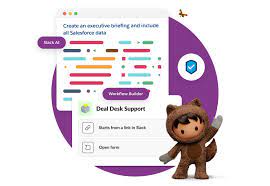
We all rely on processes to keep our teams organized and propel work forward. However, manual processes can be cumbersome, with work often getting lost in the chaos of Slack DMs or crowded team channels. Imagine if there were a way to structure processes into forms within Slack, allowing people to fill them out and automatically route requests to the appropriate individuals for follow-up. This is where Slack workflows come into play. What are Workflows for Salesforce Slack? A workflow is a multi-step process within your company, representing the sequence of tasks undertaken to achieve a business objective. Examples of Workflows for Salesforce Slack include: Workflows have a sequence of steps: Each workflow consists of multiple stages that typically occur in a specific order. Workflow Automation: Workflow automation is the use of software to streamline multi-step, multi-team workflows, ensuring the correct steps are followed, and tasks are completed efficiently. Types of Workflow Automation: Benefits of Workflow Automation in Slack: By incorporating workflow automation into Slack, teams can enhance efficiency, maintain structure, and reduce the risk of tasks getting lost or delayed. Contact Tectonic to learn more about Slack integration. Like1 Related Posts Who is Salesforce? Who is Salesforce? Here is their story in their own words. From our inception, we’ve proudly embraced the identity of Read more Salesforce Marketing Cloud Transactional Emails Salesforce Marketing Cloud Transactional Emails are immediate, automated, non-promotional messages crucial to business operations and customer satisfaction, such as order Read more Salesforce Unites Einstein Analytics with Financial CRM Salesforce has unveiled a comprehensive analytics solution tailored for wealth managers, home office professionals, and retail bankers, merging its Financial Read more AI-Driven Propensity Scores AI plays a crucial role in propensity score estimation as it can discern underlying patterns between treatments and confounding variables Read more

Read More
gettectonic.com