Mulesoft Archives - gettectonic.com - Page 6
Salesforce Summer 24 Flow Release

Salesforce Summer 24 Flow Release

Salesforce Flow Salesforce Summer 24 Flow Release. Compose intelligent workflows with Flow Builder and Flow Orchestration. Integrate across any system with Flow Integration. Like Related Posts Who is Salesforce? Who is Salesforce? Here is their story in their own words. From our inception, we’ve proudly embraced the identity of Read more Salesforce Marketing Cloud Transactional Emails Salesforce Marketing Cloud Transactional Emails are immediate, automated, non-promotional messages crucial to business operations and customer satisfaction, such as order Read more Salesforce Unites Einstein Analytics with Financial CRM Salesforce has unveiled a comprehensive analytics solution tailored for wealth managers, home office professionals, and retail bankers, merging its Financial Read more AI-Driven Propensity Scores AI plays a crucial role in propensity score estimation as it can discern underlying patterns between treatments and confounding variables Read more

Read More
Salesforce Informatica Almost

Salesforce Informatica Almost

The Deal That Never Was: Salesforce and Informatica In one of the biggest technology news stories of the year, it was reported in April that Salesforce was on the verge of acquiring cloud data management provider Informatica. Salesforce Informatica Almost. Both Bloomberg and The Wall Street Journal confirmed the story, with Bloomberg predicting that the deal could be finalized within days. Salesforce appeared poised to leverage Informatica’s data integration and management platform to enhance its Data Cloud and Einstein 1 solutions. However, by the following week, reports surfaced that the deal had fallen through due to an inability to agree on terms, with an unnamed Bloomberg source citing a disagreement over price. Neither company has disclosed specific reasons for the failed negotiations, but market reactions were notable, with both companies experiencing share price drops after the news broke. Salesforce has since somewhat recovered from its initial 7% decrease, but Informatica’s stock has continued to decline, now at its lowest point since mid-February. Criticism also emerged within the technology sector. Gaurav Dhillon, Co-Founder of Informatica and current CEO of SnapLogic, was particularly vocal, describing the proposed acquisition as a “real step backward” for Salesforce and expressing concerns about the merger’s impact on Informatica’s users. Dhillon predicted a “rocky road ahead” due to significant overlaps in integration products, specifically highlighting the challenge of merging Informatica’s technology with MuleSoft, an integration platform Salesforce acquired for $6.5 billion in 2018. Dhillon warned that integrating these disparate platforms would be a complex, time-consuming project likely to take more than five years to complete. Industry Analysts Weigh In The topic was recently revisited by leading CX analysts during a CX Today Big CX News discussion. Despite the initial market and industry criticism, many analysts agreed that the acquisition made strategic sense for Salesforce. Martin Schneider, Head of Research at Annuitas Research, emphasized that data quality is a longstanding issue in the CRM sector and described Informatica’s data capabilities as the missing “puzzle piece” for Salesforce’s end-to-end, AI-driven strategy. He stated, “One thing that Informatica does incredibly well is data quality. Having a CDP is one thing, but unless you actually have the data set right, you can’t create a free-flowing customer data value chain.” Michael Fauscette, Founder, CEO & Chief Analyst at Arion Research, echoed this sentiment, highlighting the enhancements Informatica could have brought to the backend of Data Cloud as a missed opportunity. “If you think about what Salesforce has done over the last couple of years with Data Cloud, it really completes that story from the backend,” he said. “The part of how do I get the data prep and make sure the quality is there.” While acknowledging that the price may have been a sticking point, particularly given the overlap with Salesforce’s existing solutions, Zeus Kerravala, Principal Analyst at ZK Research, expressed surprise that Salesforce walked away from the deal. He asserted, “If an acquisition is a good acquisition, you can never pay too much for it.” Kerravala further explained that data quality issues are a significant hindrance to Salesforce’s AI capabilities. “Salesforce customers are notorious for putting bad data into Salesforce, and bad data leads to bad output. If there’s one thing they needed, it was a company like Informatica to help with that.” Conclusion Despite the week-long will-they-won’t-they drama, the potential acquisition of Informatica by Salesforce remains a ‘what if.’ While initial market reactions and industry criticisms suggested that the failed deal might have been for the best, many CX analysts believe it represented a missed opportunity for Salesforce to enhance its data management and AI capabilities. As the dust settles, the implications of this near-acquisition will continue to be a topic of discussion in the CX community. Like Related Posts Who is Salesforce? Who is Salesforce? Here is their story in their own words. From our inception, we’ve proudly embraced the identity of Read more Salesforce Marketing Cloud Transactional Emails Salesforce Marketing Cloud Transactional Emails are immediate, automated, non-promotional messages crucial to business operations and customer satisfaction, such as order Read more Salesforce Unites Einstein Analytics with Financial CRM Salesforce has unveiled a comprehensive analytics solution tailored for wealth managers, home office professionals, and retail bankers, merging its Financial Read more AI-Driven Propensity Scores AI plays a crucial role in propensity score estimation as it can discern underlying patterns between treatments and confounding variables Read more

Read More
Salesforce Success Story

Case Study: Salesforce Health Services Modernization

Modernizing Public Health using Salesforce Client is the largest tribally-operated health care system in the United States, with almost 160 full-time providers and over 2,200 health services employees. Committed to improving patient access, this Tribal Nation has invested substantially in technology, building new facilities and expanding existing locations. The primary hospital and nine health centers are dedicated to providing world-class patient care. Salesforce Health Services Modernization “The Gadugi Portal and Salesforce technology is helping us get to our citizens quicker by streamlining the application process, and enabling us to have updated records that are online and easily accessible to our citizens to truly help them recover in their greatest time of need” Client Implemented – Case Study: Salesforce Health Services Modernization The Problem: The Solution: The Results: Ready to explore a Salesforce implementation with Health Cloud, MuleSoft, and Experience Cloud for your government or public sector entity? Contact Tectonic today. Like1 Related Posts Who is Salesforce? Who is Salesforce? Here is their story in their own words. From our inception, we’ve proudly embraced the identity of Read more Salesforce Marketing Cloud Transactional Emails Salesforce Marketing Cloud Transactional Emails are immediate, automated, non-promotional messages crucial to business operations and customer satisfaction, such as order Read more Salesforce Unites Einstein Analytics with Financial CRM Salesforce has unveiled a comprehensive analytics solution tailored for wealth managers, home office professionals, and retail bankers, merging its Financial Read more AI-Driven Propensity Scores AI plays a crucial role in propensity score estimation as it can discern underlying patterns between treatments and confounding variables Read more

Read More
MuleSoft B2B and B2C With AI

MuleSoft B2B and B2C With AI

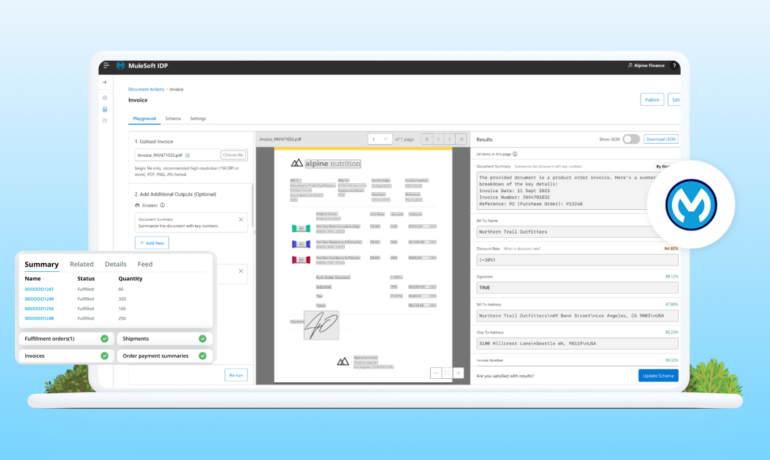
Salesforce yesterday announced new solutions to help streamline and accelerate end-to-end order lifecycle management: MuleSoft’s Anypoint Partner Manager with Intelligent Document Processing (IDP) and MuleSoft Accelerator for Salesforce Order Management. MuleSoft B2B and B2C With AI. Together, these business-to-business (B2B) and business-to-consumer (B2C) integration solutions make it easier to connect essential data across third-party applications, Salesforce OMS, and partner ecosystems – all within MuleSoft. Enhanced with AI, these new solutions help IT teams unify data from multiple data and system sources to achieve end-to-end order visibility, improved efficiency, and customer satisfaction. Why it matters: IT teams are inundated with requests to integrate disparate systems and adopt different technologies. And IT teams in retail, consumer goods, manufacturing, logistics, and healthcare must manage the thousands of daily transactions between suppliers and buyers across the supply chain ecosystem. To add to the complexity, 75% of B2B digital sales occur via standardized Electronic Data Interchange (EDI) and specialized solutions are needed to handle these transactions. Go deeper: Anypoint Partner Manager with IDP is a cloud-native B2B integration solution that accelerates partner onboarding and operational management of both API and EDI-based transactions through the commerce and supply chain lifecycle. It provides visibility tools to accurately monitor the health of partner transactions along with key business and operational insights like overall order frequency and volume, shipment statuses, and more. By utilizing IDP, developers can leverage AI to extract, read, and store unstructured data from documents such as invoice and purchase order PDFs, surfacing it in systems of record and order management systems like Salesforce OMS. IT and business teams can rapidly develop integrations and APIs, monitor and manage their performance, and secure them in compliance with partner requirements, all through a single pane of glass. New capabilities of MuleSoft B2B and B2C With AI include: MuleSoft Accelerator for Salesforce OMS makes it easier and faster to achieve end-to-end order visibility across channels from a centralized hub. The accelerator includes pre-built APIs, connectors, implementation templates, and other technical assets for Anypoint Platform to unify B2B orders with Salesforce OMS and connect all B2B and B2C orders to enterprise resource planning (ERP) systems. By leveraging the available out-of-the-box integration assets, customers can significantly reduce the development time required for integrating systems and accelerate time to market. MuleSoft B2B and B2C With AI. New capabilities of this offering include: Industry Use Cases: Customer perspective: “We were struggling with disjointed technology that was causing order and shipping delays while hampering our ability to innovate across our ecosystem,” said Jeff Blank, VP, Finance & Infrastructure at Jillamy. “MuleSoft’s Anypoint Partner Manager helped accelerate our partner onboarding processes with seamless B2B integration and more efficient management of our EDI transactions.” Salesforce perspective: “B2B and B2C integrations are critical to the success of supply chain management. From getting berries out of the farm or medical devices to hospitals, organizations across the globe are looking for a unified solution to manage and securely monitor their business partner transactions. With Anypoint Partner Manager and MuleSoft Accelerator for OMS, our customers can use our technology to build a composable business ecosystem that meets business partner compliance standards and drives end-to-end supply chain and commerce processes with efficiency, visibility, and speed.” – Andrew Comstock, VP, Product Management With Anypoint Partner Manager and MuleSoft Accelerator for OMS, our customers can use our technology to build a composable business ecosystem that meets business partner compliance standards and drives end-to-end supply chain and commerce processes with efficiency, visibility, and speed. Andrew Comstock, VP, Product Management Like Related Posts Who is Salesforce? Who is Salesforce? Here is their story in their own words. From our inception, we’ve proudly embraced the identity of Read more Salesforce Marketing Cloud Transactional Emails Salesforce Marketing Cloud Transactional Emails are immediate, automated, non-promotional messages crucial to business operations and customer satisfaction, such as order Read more Salesforce Unites Einstein Analytics with Financial CRM Salesforce has unveiled a comprehensive analytics solution tailored for wealth managers, home office professionals, and retail bankers, merging its Financial Read more AI-Driven Propensity Scores AI plays a crucial role in propensity score estimation as it can discern underlying patterns between treatments and confounding variables Read more

Read More
mulesoft and healthcare

MuleSoft and Healthcare

Driving Innovation in Healthcare Through Data Interoperability Healthcare organizations are navigating an unprecedented surge in patient data, which is critical for communication, research, and management. This data plays a pivotal role in modernizing healthcare and improving outcomes, particularly with the shift toward a Value-Based Care Model. However, 81% of IT leaders report that much of this data remains trapped in silos, hindering innovation and negatively impacting patient satisfaction. The Importance of Interoperability in Healthcare Improving Patient Outcomes and Managing RiskLeading healthcare organizations understand that achieving interoperability—seamless data exchange across clinical and non-clinical systems—is vital. Beyond supporting Value-Based Care, interoperability drives patient satisfaction, loyalty, and cost-efficiency. By enabling accurate data sharing, healthcare providers can: Interoperability also supports proactive preventative care, reducing long-term healthcare costs and boosting life expectancy. Regulatory Mandates: The Interoperability and Patient Access Final RuleSince May 1, 2020, the Centers for Medicare & Medicaid Services (CMS) have mandated interoperability through the Interoperability and Patient Access Final Rule. This legislation holds U.S. healthcare providers accountable for: Non-compliance can result in significant fines and public reporting of violations, further emphasizing the criticality of achieving interoperability. The Challenge of ImplementationDespite its clear benefits—improved patient outcomes, compliance, and cost savings—achieving interoperability poses challenges. Technological complexities and siloed data structures hinder seamless integration. This is where MuleSoft, a Salesforce company, provides a powerful solution. How MuleSoft Enables Interoperability in Healthcare Breaking Down Silos with API-Led IntegrationMuleSoft is a trusted partner for leading healthcare organizations, offering secure, scalable solutions to eliminate data silos. Recognized as a Leader in Gartner’s Magic Quadrant for iPaaS, MuleSoft empowers providers with its HIPAA-compliant Anypoint Platform, facilitating interoperability through API-led integration. Key Features and Benefits Transforming Healthcare with MuleSoft The digital transformation of healthcare is accelerating, driven by evolving regulations, patient expectations, and a dynamic global environment. MuleSoft stands at the forefront of this shift, empowering healthcare organizations to: By partnering with MuleSoft, healthcare organizations can embrace innovation and build healthier connections—one integration at a time. Contact Tectonic today to get started. Like Related Posts Who is Salesforce? Who is Salesforce? Here is their story in their own words. From our inception, we’ve proudly embraced the identity of Read more Salesforce Marketing Cloud Transactional Emails Salesforce Marketing Cloud Transactional Emails are immediate, automated, non-promotional messages crucial to business operations and customer satisfaction, such as order Read more Salesforce Unites Einstein Analytics with Financial CRM Salesforce has unveiled a comprehensive analytics solution tailored for wealth managers, home office professionals, and retail bankers, merging its Financial Read more AI-Driven Propensity Scores AI plays a crucial role in propensity score estimation as it can discern underlying patterns between treatments and confounding variables Read more

Read More
MuleSoft Certifications Now Unified with Salesforce Certifications

MuleSoft Certifications Now Unified with Salesforce Certifications

MuleSoft Certifications Now Unified with Salesforce Certifications As of May 6, 2024, MuleSoft certifications have been officially integrated into the Salesforce Certification program, with management now handled through Webassessor. This move simplifies the certification process, enabling professionals to manage both their Salesforce and MuleSoft credentials within a single platform, streamlining maintenance and tracking. This article delves into the merging of MuleSoft certifications with Salesforce’s Trailhead platform, highlighting what this means for professionals in both ecosystems. The update offers a significant improvement in managing certifications, particularly for those working across both platforms, as Salesforce has owned MuleSoft since 2018. We’ll cover what this change entails for current certification holders, key dates in the transition, and the new opportunities this unified platform brings—including new certifications. What is MuleSoft? MuleSoft is a leading integration platform that enables businesses to connect applications, data, and devices seamlessly. As an Integration Platform as a Service (iPaaS), MuleSoft facilitates the integration of cloud-based and on-premise applications, ensuring smooth workflows across various systems. Acquired by Salesforce in 2018, MuleSoft powers the integration layer of the Salesforce ecosystem, playing a crucial role in enabling businesses to unify their systems and create connected experiences. With the increasing demand for digital transformation and connected systems, MuleSoft expertise is becoming ever more valuable in the job market. MuleSoft Certifications and Training MuleSoft certifications validate expertise in designing, building, and managing integrations using the Anypoint Platform. Prior to this transition, MuleSoft certifications were handled through the MuleSoft Training portal, which was separate from Salesforce’s broader certification system. While this independent platform was functional, it required separate accounts and processes, making exam registration and certification management more cumbersome. By integrating MuleSoft certifications into Trailhead, Salesforce has simplified this process, offering a unified, more user-friendly experience for managing certifications. Transition Timeline The following key dates marked the transition: What This Means for Current MuleSoft Certification Holders For those already certified through MuleSoft, the migration to Salesforce’s certification system should have occurred automatically. MuleSoft credentials were transferred to their Trailblazer profiles for anyone with existing Webassessor accounts. A confirmation email was sent to ensure that the transition was successful. For those without a Webassessor account, one was created on their behalf, with login details provided via email by April 2024. Certification Maintenance MuleSoft certification holders with maintenance pending as of January 1, 2024, are not required to complete additional tasks through the old system. The expectation is that certification holders will have ample time to familiarize themselves with the new Trailhead process before maintenance requirements are introduced in 2025. New Certifications on Trailhead With the migration, certifications such as the MuleSoft Certified Catalyst Specialist and MuleSoft Certified Hyperautomation Specialist have also been integrated into Trailhead. Though not entirely new, these certifications were part of the legacy MuleSoft program, originally launched in late 2022 and early 2023. Summary The integration of MuleSoft certifications into Salesforce’s Trailhead platform marks a significant step towards a unified, more efficient credentialing process. This transition simplifies certification management, making it easier for professionals to stay current across both platforms. By merging these certifications, Salesforce is empowering professionals to fully leverage the combined capabilities of Salesforce and MuleSoft, further enhancing their skill sets in an increasingly interconnected digital landscape. Content updated September 2024. Like Related Posts Who is Salesforce? Who is Salesforce? Here is their story in their own words. From our inception, we’ve proudly embraced the identity of Read more Salesforce Marketing Cloud Transactional Emails Salesforce Marketing Cloud Transactional Emails are immediate, automated, non-promotional messages crucial to business operations and customer satisfaction, such as order Read more Salesforce Unites Einstein Analytics with Financial CRM Salesforce has unveiled a comprehensive analytics solution tailored for wealth managers, home office professionals, and retail bankers, merging its Financial Read more AI-Driven Propensity Scores AI plays a crucial role in propensity score estimation as it can discern underlying patterns between treatments and confounding variables Read more

Read More
Unified Knowledge for Service Agents

Unified Knowledge for Service Agents

Salesforce has introduced a new intelligence source for service agents called Unified Knowledge. This solution aggregates information from third-party sources and integrates it into Salesforce, enhancing the customer data available in Data Cloud. Unified Knowledge Overview Enhanced Service with Unified Knowledge Unified Knowledge aggregates data from sources like SharePoint, Confluence, Google Drive, and brand websites, making it accessible within Salesforce Service Cloud. While Service Cloud has primarily utilized data from Data Cloud via Einstein for Service to assist service agents, Unified Knowledge expands this by including additional third-party information. Broader Integration Across Salesforce Although Service Cloud is a primary focus, Unified Knowledge will also integrate with Salesforce Field Service, Sales Cloud, Health Cloud, and Financial Services Cloud. This solution was developed in partnership with Zoomin Software. Technical Approach and Future Plans The initial version of Unified Knowledge does not utilize Data Cloud. Instead, it stores third-party knowledge in the KnowledgeArticle object on Core and uses Zoomin for integration. Salesforce plans to eventually transition this solution to Data Cloud for both storage and integration. This transition involves multiple dependencies and significant refactoring of the Knowledge product. For now, the current approach allows for quicker market entry. Once moved to Data Cloud, customers will need Data Cloud credits to use Unified Knowledge. Response by email from Salesforce: “The beta version of Unified Knowledge does not leverage Data Cloud. The third-party Knowledge is stored on Core in the KnowledgeArticle object, and Salesforce uses ZoomIn to integrate with third-party systems. Salesforce’s long-term vision is to move to Data Cloud — initially for the storage of third-party knowledge, and eventually for the connector/integration piece as well. This involves multiple dependencies on Data Cloud however and significant refactoring of the Knowledge product, so in order to get this solution to market more quickly, this initial version is built on Core. Once we move Unified Knowledge to Data Cloud, customers will have to purchase Data Cloud credits to use the product.” Benefits and Features of Unified Knowledge Unified Knowledge enhances the information available to service agents, potentially leading to better service experiences. Its generative AI capabilities include: By expanding the data available to service agents, Unified Knowledge aims to improve service quality and efficiency. Like Related Posts Who is Salesforce? Who is Salesforce? Here is their story in their own words. From our inception, we’ve proudly embraced the identity of Read more Salesforce Marketing Cloud Transactional Emails Salesforce Marketing Cloud Transactional Emails are immediate, automated, non-promotional messages crucial to business operations and customer satisfaction, such as order Read more Salesforce Unites Einstein Analytics with Financial CRM Salesforce has unveiled a comprehensive analytics solution tailored for wealth managers, home office professionals, and retail bankers, merging its Financial Read more AI-Driven Propensity Scores AI plays a crucial role in propensity score estimation as it can discern underlying patterns between treatments and confounding variables Read more

Read More
Salesforce role hierarchy

If Not Informatica, Then Who?

What Lies Ahead for Salesforce’s Acquisition Strategy? If Not Informatica Then Who? The Breakdown: The proposed Salesforce-Informatica acquisition, which promised significant advancements in data integration, quality control, and customer insights, ultimately fell through due to disagreements over the deal’s terms. Impact on Salesforce’s Strategy: The acquisition was positioned as a strategic move for Salesforce, building on its largest acquisition of Slack in 2020, aimed at fortifying its data ecosystem and bolstering its position in data analytics and management through enhanced AI capabilities and data management solutions. Future Acquisition Prospects: With the Informatica deal off the table, attention turns to potential targets like HubSpot. This shift underscores Salesforce’s commitment to maintaining a competitive edge in CRM and marketing automation amidst increasing competition and past acquisitions such as ExactTarget and Pardot. The Details: The anticipated mega-deal, which could have significantly expanded Salesforce’s data capabilities and represented one of its largest acquisitions to date, dissolved due to an inability to reach consensus on deal terms, as reported by multiple sources. Informatica, valued at over billion, specializes in data management software, while Salesforce, the world’s leading CRM software company valued at 1.71 billion, has historically expanded its customer data capabilities through strategic acquisitions. Notably, Salesforce completed its largest acquisition with the $27.7 billion purchase of Slack Technologies in 2020. If Not Informatica, Then Who Boosting Salesforce’s Data Ecosystem: The proposed acquisition of Informatica, first reported by the Wall Street Journal on April 12, aimed to elevate Salesforce’s data capabilities, particularly in areas like data integration, quality control, and customer insights. This strategic move reflected a broader trend in the software industry towards mergers and acquisitions to strengthen capabilities in data analytics and management. By integrating Informatica into Salesforce’s data ecosystem, the company was poised to enhance its AI systems and leverage the Mulesoft infrastructure for improved data cataloging, as well as sophisticated solutions like master data management and data governance. Implications for Marketing and Customer Experience (CX) Professionals: The potential acquisition could have accelerated innovation in customer experience management, empowering CMOs and CX professionals with robust data tools for faster, more informed decision-making. This could have translated into enhanced customer interactions, driving revenue growth and enhancing Salesforce’s competitive position in the market. Like Related Posts Who is Salesforce? Who is Salesforce? Here is their story in their own words. From our inception, we’ve proudly embraced the identity of Read more Salesforce Marketing Cloud Transactional Emails Salesforce Marketing Cloud Transactional Emails are immediate, automated, non-promotional messages crucial to business operations and customer satisfaction, such as order Read more Salesforce Unites Einstein Analytics with Financial CRM Salesforce has unveiled a comprehensive analytics solution tailored for wealth managers, home office professionals, and retail bankers, merging its Financial Read more AI-Driven Propensity Scores AI plays a crucial role in propensity score estimation as it can discern underlying patterns between treatments and confounding variables Read more

Read More
Salesforce in a Mega-Data Deal with Informatica

Salesforce in a Mega-Data Deal with Informatica

Since Salesforce announced its acquisition of Slack for $27.7B in late 2020, the cloud software mega-giant has paused its acquisition strategy due to factors like rising interest rates, declining revenues, and a laser focus on profitability. However, recent leaks from The Wall Street Journal and other news publications suggest that Salesforce in a Mega-Data Deal with Informatica, is in advanced talks to acquire Informatica in a deal worth over $11B. Informatica is a significant player in enterprise data management, boasting revenues of over $1.51B and a workforce of over 5,000 employees. They specialize in AI-powered cloud data management, assisting companies in processing and managing large volumes of data from various sources to derive actionable and real-time insights. Salesforce in a Mega-Data Deal with Informatica The synergies between Informatica and Salesforce are many, with both companies focusing on consolidating data from multiple sources to provide comprehensive business insights. This aligns well with Salesforce’s strategic shift towards AI-driven data processing and analysis, aiming to enhance generative and predictive capabilities. While Salesforce’s previous acquisition of MuleSoft in 2018 for $6.5B has proven successful in facilitating API connectivity for real-time integrations, Informatica brings expertise in ETL (Extract-Transform-Load), data quality, and data movement to and from platforms like Snowflake and Databricks. This potential mega-data deal underscores the growing importance of data in the tech industry, especially with the emergence of generative AI and large language models (LLMs) that enable deeper analysis of vast datasets. Salesforce’s recent rebranding of its platform to “Einstein 1” underscores the convergence of AI and data within its product suite. The company’s emphasis on “AI + Data + CRM” reflects its commitment to leveraging data analytics for CRM enhancement, exemplified by the growth of its Data Cloud product. Partnering with industry leaders like Snowflake, Databricks, AWS, and Google, Salesforce aims to offer comprehensive data solutions that integrate seamlessly with existing systems. Informatica’s capabilities in ETL and Master Data Management (MDM) align with this vision, particularly in streamlining data integration and ensuring data quality across disparate systems. In final thoughts, while the Informatica acquisition is still pending finalization, it represents a strategic move by Salesforce to strengthen its position in the AI and data-driven CRM market. As Salesforce continues to evolve its product ecosystem, this acquisition signals its commitment to innovation and leadership in the era of AI-powered data analytics. Like Related Posts Who is Salesforce? Who is Salesforce? Here is their story in their own words. From our inception, we’ve proudly embraced the identity of Read more Salesforce Marketing Cloud Transactional Emails Salesforce Marketing Cloud Transactional Emails are immediate, automated, non-promotional messages crucial to business operations and customer satisfaction, such as order Read more Salesforce Unites Einstein Analytics with Financial CRM Salesforce has unveiled a comprehensive analytics solution tailored for wealth managers, home office professionals, and retail bankers, merging its Financial Read more AI-Driven Propensity Scores AI plays a crucial role in propensity score estimation as it can discern underlying patterns between treatments and confounding variables Read more

Read More
Government CRM System

Government CRM System

Explore How Governments Can Modernize Services for Citizens with Government CRM System What is CRM in Government? CRM (Customer Relationship Management) systems in government streamline administrative tasks, allowing public servants to concentrate on enhancing citizens’ daily lives. Does the US Government Use Salesforce? Salesforce is valuable to the US federal government due to its highly customizable nature, catering to diverse agency needs and projects. Understanding AI in Government: Reshaping Public Sector Services Enhancing Workforce Skills for Better Constituent Experiences and Efficient Agency Operations The AI revolution presents opportunities for governments to enhance efficiency and service delivery. AI technologies can significantly improve data processing, cybersecurity, public planning, and other critical areas. Government agencies must raise awareness about the benefits of AI and upskill employees to bridge the AI skills gap. This transformation enables workers to better serve the public and foster trust between sectors. However, the rapid adoption of AI also raises concerns about a potential skills crisis, as highlighted by a survey revealing insufficient high-quality AI and machine learning resources. While AI promises to create new jobs, it may also displace certain roles. Organizations must prepare employees for this shift, ensuring they transition to higher-value work and acquire the necessary AI skills. Data Modernization: Paving the Way for an AI-Optimized Future Modernizing data infrastructure is essential for leveraging AI effectively. Employees can upskill in data science and AI, facilitating this transition from traditional workflows to AI-driven processes. Applications of AI in Government AI offers transformative potential across various government functions, such as traffic management, healthcare delivery, and administrative tasks like paperwork processing. Government agencies can enhance operations through AI-driven insights, improving efficiency, and service delivery for citizens. Challenges and Opportunities in AI Adoption Despite the promise of AI, many public agencies lack sufficient AI and data management capabilities among their workforce. Effective Education and Training for AI Implementation Organizations must prioritize AI education and responsible usage to better serve the public while upholding stringent security standards. Understanding Government Cloud Salesforce Salesforce Government Cloud and Government Cloud Plus provide dedicated instances of Salesforce’s Customer 360 suite, tailored to meet government requirements. Enhancing Government Efficiency with Modern CRM Solutions Explore How CRM Software Can Revolutionize Citizen Engagement and Government Operations CRM systems empower local governments to establish meaningful connections with citizens, improving service delivery and operational efficiency. Key Features of Local Government CRM Software Discover essential CRM features for local government agencies, including workflow automations, communication tools, data security, citizen contact management, real-time analytics, and business intelligence reporting. Evaluating CRM Data-Quality Solutions Evaluate CRM solutions based on security, flexibility, scalability, interoperability, ease of use, and customization capabilities to enhance government operations effectively. Strategies for Implementing CRM Workflows in Government Implement CRM systems strategically to improve service delivery and constituent engagement, focusing on data integration and minimizing the need for complex coding during deployment. By embracing modern CRM technologies and AI solutions, governments can enhance efficiency, transparency, and citizen satisfaction, ushering in a new era of effective public service delivery. Government CRM System. Like1 Related Posts Who is Salesforce? Who is Salesforce? Here is their story in their own words. From our inception, we’ve proudly embraced the identity of Read more Salesforce Marketing Cloud Transactional Emails Salesforce Marketing Cloud Transactional Emails are immediate, automated, non-promotional messages crucial to business operations and customer satisfaction, such as order Read more Salesforce Unites Einstein Analytics with Financial CRM Salesforce has unveiled a comprehensive analytics solution tailored for wealth managers, home office professionals, and retail bankers, merging its Financial Read more AI-Driven Propensity Scores AI plays a crucial role in propensity score estimation as it can discern underlying patterns between treatments and confounding variables Read more

Read More
salesforce unified knowledge

The Low-Code Revolution

The Low-Code Revolution: How Salesforce is Democratizing CRM Customization Redefining CRM Development Through Visual Innovation Salesforce has pioneered a fundamental shift in customer relationship management by embracing low-code/no-code technology, transforming how organizations customize their CRM platforms. This revolutionary approach enables business users across departments to actively participate in solution development through intuitive visual interfaces rather than complex programming. The low-code movement represents more than just simplified development—it’s a strategic empowerment of business teams to rapidly adapt systems to evolving needs without creating IT bottlenecks. By 2025, Gartner predicts 70% of new applications will use low-code/no-code technologies, with Salesforce positioned at the forefront of this transformation. Understanding the Low-Code/No-Code Paradigm Visual Development for Business Agility Low-code/no-code platforms replace traditional programming with: This approach creates a spectrum of capability: The Strategic Advantages of Salesforce’s Approach 1. Accelerated Digital Transformation 2. Cost-Effective Innovation 3. Cross-Functional Collaboration Salesforce’s Low-Code Ecosystem Core Platform Capabilities Expanding Possibilities Real-World Impact Across Industries Financial Services A regional bank reduced loan processing time by 40% by enabling loan officers to build their own workflow automations using Salesforce Flow. Healthcare A hospital network created a patient intake portal in three days using Lightning App Builder, eliminating a six-month development backlog. Retail A global retailer empowered store managers to build custom inventory apps, improving stock accuracy by 25% without IT involvement. The Future of Enterprise Development Salesforce’s low-code strategy represents more than just simplified tools—it’s redefining the relationship between business needs and technical solutions. Key emerging trends include: Implementing a Successful Low-Code Strategy Organizations maximizing Salesforce’s low-code potential typically: Conclusion: The Democratization of Digital Transformation Salesforce’s low-code/no-code revolution represents a fundamental shift in how businesses approach CRM customization and digital innovation. By empowering business users to become active participants in solution development, organizations can achieve: As the platform continues to evolve, Salesforce is positioned to lead the next wave of enterprise software—where the power to transform business processes resides not just with technical teams, but across the entire organization. This democratization of development capability marks a new era of business agility and competitive advantage. Content updated April 2025. Like Related Posts Who is Salesforce? Who is Salesforce? Here is their story in their own words. From our inception, we’ve proudly embraced the identity of Read more Salesforce Marketing Cloud Transactional Emails Salesforce Marketing Cloud Transactional Emails are immediate, automated, non-promotional messages crucial to business operations and customer satisfaction, such as order Read more Salesforce Unites Einstein Analytics with Financial CRM Salesforce has unveiled a comprehensive analytics solution tailored for wealth managers, home office professionals, and retail bankers, merging its Financial Read more AI-Driven Propensity Scores AI plays a crucial role in propensity score estimation as it can discern underlying patterns between treatments and confounding variables Read more

Read More
Custom Copilot Actions

Custom Copilot Actions

How to Create a Custom Copilot Action Custom Copilot Actions allow you to extend Copilot’s functionality within Salesforce, enabling users to perform tasks specific to your business needs. By utilizing invocable Apex classes, autolaunched flows, and prompt templates, you can build custom actions tailored to your organization’s requirements. Extend your unified copilot with custom actions. Before You Begin: Steps to Create a Custom Copilot Action: Testing and Deployment: Understanding Einstein Copilot Einstein Copilot is Salesforce’s AI assistant designed to enhance productivity and user experience across various applications and departments. Admins can configure and deploy Copilots to empower users with AI capabilities, streamlining workflows and increasing efficiency. Out-of-the-Box Actions: In the Spring ’24 release, Einstein Copilot offers several out-of-the-box actions, including: Customization and Future Development: Admins can create custom actions to tailor Copilot’s capabilities to their organization’s specific requirements. Custom actions enable tasks such as updating records and integrating with external systems, enhancing productivity and efficiency. When you create a custom action, you build it on top of platform functionality you want to make available in Einstein Copilot, such as invocable Apex classes, autolaunched flows, or prompt templates. Adding custom actions lets you customize your copilot and get more mileage out of your current Salesforce platform capabilities. Access to a custom copilot action depends on the type of Salesforce action it references. For example, if a custom action was built using a flow, the custom action adheres to the permissions, field-level security, and sharing settings configured in the flow. Use Cases and Considerations: Typical Use Cases: Considerations: Building Custom Copilot Actions: Power of Custom Actions: Custom actions extend Copilot’s capabilities, offering a wide range of use cases and functionalities. Actions can be built using flows, prompts, or Apex, providing flexibility and customization options. Descriptive Instructions: Accurate descriptions of actions, inputs, and outputs are essential for Copilot’s understanding and execution. Clear instructions provide context and improve response accuracy. Best Practices: Einstein Copilot, coupled with custom actions, empowers organizations to optimize workflows and drive efficiency. By following best practices and leveraging the full potential of Copilot, Salesforce admins can enhance user experiences and unlock new levels of productivity. Explore these features within your organization to realize the benefits of Salesforce Einstein Copilot Custom Actions. Assign an action to your copilot from the Copilot Actions page, the record page for an action, or the Copilot Action Library tab of the actions panel in the Copilot Builder. Your copilot must be deactivated. To test your action and preview how the output appears in a copilot conversation, open the copilot in the Copilot Builder and start a preview conversation. Enter utterances that you expect to trigger your action, and then make adjustments to the copilot action instructions based on your results. What powers Einstein Copilot custom actions? By facilitating the flow of work through smart, AI-driven actions, Einstein Copilot enhances efficiency and decision-making. Here’s how organizations can harness its power through the design of custom actions, ensuring their operations are as streamlined and effective as possible. Like1 Related Posts Who is Salesforce? Who is Salesforce? Here is their story in their own words. From our inception, we’ve proudly embraced the identity of Read more Salesforce Marketing Cloud Transactional Emails Salesforce Marketing Cloud Transactional Emails are immediate, automated, non-promotional messages crucial to business operations and customer satisfaction, such as order Read more Salesforce Unites Einstein Analytics with Financial CRM Salesforce has unveiled a comprehensive analytics solution tailored for wealth managers, home office professionals, and retail bankers, merging its Financial Read more AI-Driven Propensity Scores AI plays a crucial role in propensity score estimation as it can discern underlying patterns between treatments and confounding variables Read more

Read More
Customized Conversational AI Assistant

Customized Conversational AI Assistant

Create and Customize a Conversational AI Assistant for CRM Einstein Copilot is your all-in-one CRM AI assistant, seamlessly integrated into every Salesforce application. It empowers teams to accelerate tasks with intelligent actions, deploy conversational AI with built-in trust, and easily scale a unified copilot across your organization. Customized Conversational AI Assistant. Einstein 1 Studio Customize and Enhance AI for CRM:Einstein 1 Studio allows you to tailor Einstein Copilot to your specific business needs. Configure actions, prompts, and models to create a personalized AI experience. Users can interact with the AI using natural language, making task execution more intuitive and efficient. Copilot Builder Expand Einstein Copilot with Advanced Features:Enhance Einstein Copilot by integrating actions with familiar Salesforce platform features like Flows, Apex code, and Mulesoft APIs. Convert workflows into copilot actions and test these interactions within a user-friendly interface, enabling you to monitor and refine your copilot’s performance. Prompt Builder Accelerate Employee Task Completion:Design prompt templates that quickly summarize and generate content, helping employees complete tasks faster. Create prompts that draw from CRM data, Data Cloud, and external sources to make every business task more relevant. Develop prompts once and deploy them across Einstein Copilot, Lightning pages, and flows. Model Builder Integrate and Manage AI Models:Incorporate your predictive AI models and large language models (LLMs) within Salesforce through the Einstein Trust Layer. Utilize no-code ML models in Data Cloud, and manage all your AI models from a centralized control platform, ensuring seamless operation and integration. Deploy Trustworthy AI Leverage Generative AI with Built-In Safeguards:Einstein Copilot is designed to ensure the privacy and security of your data, while improving result accuracy and promoting responsible AI use across your organization. Built directly into the Salesforce Platform, the Einstein Trust Layer offers top-tier features and safeguards to ensure your AI deployments are trustworthy. “The combination of AI, data, and CRM allows us to help busy parents solve the ‘what’s for dinner’ dilemma with personalized recipe recommendations their family will love.”— Heather Conneran, Director, Brand Experience Platforms, General Mills Like1 Related Posts Who is Salesforce? Who is Salesforce? Here is their story in their own words. From our inception, we’ve proudly embraced the identity of Read more Salesforce Marketing Cloud Transactional Emails Salesforce Marketing Cloud Transactional Emails are immediate, automated, non-promotional messages crucial to business operations and customer satisfaction, such as order Read more Salesforce Unites Einstein Analytics with Financial CRM Salesforce has unveiled a comprehensive analytics solution tailored for wealth managers, home office professionals, and retail bankers, merging its Financial Read more AI-Driven Propensity Scores AI plays a crucial role in propensity score estimation as it can discern underlying patterns between treatments and confounding variables Read more

Read More
Advances in Public Sector Solutions

Salesforce Announces Advances in Public Sector Solutions

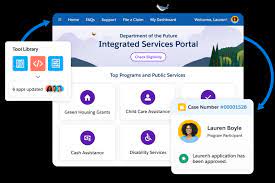
Explore the diverse new ways in which advances in Public Sector Solutions revolutionize the provision of public services. Establish interactive application forms and deploy them on an Experience Cloud site accessible to constituents. Develop automated approval processes for efficient application review. Employ dynamic assessments for evaluating applications, and generate care plans and referrals to assist constituents in need. Utilize a trial Salesforce PSS org to explore the product and prepare for implementation. Discover the synergy between the Salesforce platform, a dedicated data model, and a suite of common components that facilitate the implementation of a solution tailored to your agency’s needs. Whether implementing Public Sector Solutions for a municipality, state, province, or at the federal or national level, each public agency has distinct requirements for serving constituents through digital tools and workflows. Public Sector Solutions avoids a one-size-fits-all approach, allowing you to combine various components and tools to create a customized solution for you and your constituents. Salesforce Platform: The cloud-based Salesforce platform, encompassing Sales Cloud, Service Cloud, and Experience Cloud, forms the foundation of Public Sector Solutions and is inclusive with the product. Offering relationship management, case management, collaboration, integration, and data insight capabilities, the platform provides a 360-degree view of constituents for more effective service, management, and interaction. Adhering to stringent data security regulations, the platform allows quick deployment and scalability, with flexibility for expansion. Data Model: The Public Sector Solutions data model is tailored for government agencies, encompassing objects for defining regulatory agencies, authorization types, codes, constituents as business or person accounts, visits, complaints, violations, and more. Whether managing licenses and permits, conducting inspections, or overseeing social services programs, the data model accommodates diverse governmental tasks. Industry Common Layer: A suite of no-code and low-code components and tools, including OmniStudio, Action Plans, Document Tracking and Approvals, OmniStudio Document Generation, Business Rules Engine, and more, enables automation of traditionally paper-based processes. Common layer components facilitate the creation of dynamic forms, application reviews, complex policy decisions, and more. Prebuilt Apps: These elements culminate in several prebuilt applications, each addressing specific needs: Contact Tectonic today to explore Salesforce public sector solutions. Like1 Related Posts Who is Salesforce? Who is Salesforce? Here is their story in their own words. From our inception, we’ve proudly embraced the identity of Read more Salesforce Marketing Cloud Transactional Emails Salesforce Marketing Cloud Transactional Emails are immediate, automated, non-promotional messages crucial to business operations and customer satisfaction, such as order Read more Salesforce Unites Einstein Analytics with Financial CRM Salesforce has unveiled a comprehensive analytics solution tailored for wealth managers, home office professionals, and retail bankers, merging its Financial Read more AI-Driven Propensity Scores AI plays a crucial role in propensity score estimation as it can discern underlying patterns between treatments and confounding variables Read more

Read More
gettectonic.com