

PHAs Archives - gettectonic.com - Page 27
Salesforce Integration

Salesforce Implementation Services

As certified experts, Tectonic offers comprehensive Salesforce implementation, management, and support services. Seek professional guidance from a trusted Salesforce Partner. Tectonic’s Salesforce implementation services encompass consulting, configuration, customization, migration, integration, support, and more. With over a decade of experience in CRM development, Tectonic assists companies in implementing robust Salesforce solutions that empower their sales, customer service, and marketing processes. Who participates in Salesforce implementation? The implementation team should include sales agents, customer service representatives, IT experts, marketers, general users, and business administrators. And of course, your Salesforce implementation partner. As an experienced Salesforce Partner, we follow a proven six-phase approach to ensure project success: Kickoff, Discovery, Build, Test, Deploy, and Service. Is it possible to implement Salesforce independently? Yes, but, we strongly discourage attempting a solo Salesforce implementation, especially if you are new to the platform. While Salesforce provides an admin-friendly interface, the risk of creating a non-scalable solution is high without expert guidance. Do you need a Salesforce implementation partner? In cases involving large-scale projects requiring a team of 10+ Consultants, engaging a Certified Implementation Partner is recommended. What are the critical success factors for Salesforce implementation? A well-defined strategy aligned with business goals, user training, effective data migration, proper customization, ongoing support, user adoption, clear communication, and commitment to continuous improvement are crucial elements. How long does Salesforce implementation take? On average, implementation for core products like Sales Cloud takes 5 to 12 weeks. The timeline may extend for a few months with add-ons or highly customized projects. How challenging is Salesforce implementation? Implementing Salesforce can be challenging and overwhelming, with up to 70% of CRM platform implementations facing difficulties. Salesforce itself recommends working with a Salesforce Implementation partner. One of the biggest challenges with the Salesforce platform is that it is highly customizable, this is not software you install and run with. Being highly customizable, however, is also why Salesforce is the number one CRM solution in the world. Why do Salesforce implementations fail? Failures in Salesforce implementations can result from fundamental data problems such as incomplete, inaccurate, or duplicative data, leading to issues like poor customer experience and incorrect budget forecasting. The lifecycle of Salesforce development involves planning, design, development, testing, deployment, and maintenance phases. The development process includes analyzing requirements, designing a solution, building and testing, and deploying it to end users. Is it time to explore bringing in a Salesforce implementation partner? Contact Tectonic today. Like1 Related Posts Who is Salesforce? Who is Salesforce? Here is their story in their own words. From our inception, we’ve proudly embraced the identity of Read more Salesforce Marketing Cloud Transactional Emails Salesforce Marketing Cloud Transactional Emails are immediate, automated, non-promotional messages crucial to business operations and customer satisfaction, such as order Read more Salesforce Unites Einstein Analytics with Financial CRM Salesforce has unveiled a comprehensive analytics solution tailored for wealth managers, home office professionals, and retail bankers, merging its Financial Read more AI-Driven Propensity Scores AI plays a crucial role in propensity score estimation as it can discern underlying patterns between treatments and confounding variables Read more

Read More
ChatGPT and Einstein GPT

ChatGPT and Einstein GPT

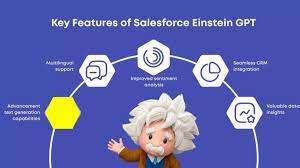
Artificial intelligence (AI) has been rapidly advancing globally, with breakthroughs captivating professionals across various sectors. One milestone that has gained significant attention is the emergence of ChatGPT, a cutting-edge language model revolutionizing the tech landscape. This development has profoundly impacted businesses relying on Salesforce for their customer relationship management (CRM) needs. In March 2023, Salesforce unveiled its latest AI innovation, Einstein GPT, promising to transform how companies engage with their clientele. In this article, we explore what Salesforce Einstein GPT entails and how it can benefit teams across diverse industries. When OpenAI introduced ChatGPT in November 2022, they didn’t expect the overwhelming response it received. Initially positioned as a “research preview,” this AI chatbot aimed to refine existing technology while soliciting feedback from users. However, ChatGPT quickly became a viral sensation, surpassing OpenAI’s expectations and prompting them to adapt to its newfound popularity. Developed on the foundation of the GPT-3.5 language model, ChatGPT was specifically tailored to facilitate engaging and accessible conversations, distinguishing it from its predecessors. Its launch attracted a diverse user base keen to explore its capabilities, prompting OpenAI to prioritize addressing potential misuse and enhancing its safety features. As ChatGPT gained traction, it caught the attention of Salesforce, a leading CRM provider. In March 2023, Salesforce unveiled Einstein GPT, its own AI innovation, poised to transform customer engagement. Built on the GPT-3 architecture and seamlessly integrated into Salesforce Clouds, Einstein GPT promised to revolutionize how businesses interact with their clientele. Einstein GPT boasts a range of features designed to personalize customer experiences and streamline workflows. From generating natural language responses to crafting personalized content and automating tasks, Einstein GPT offers versatility and value across industries. By leveraging both Einstein AI and GPT technology, businesses can unlock unprecedented efficiency and deliver superior customer experiences. Despite its success, OpenAI acknowledges the need for ongoing refinement and vigilance, emphasizing the importance of responsible deployment and transparency in the development of AI technology. Exploring Einstein GPT Salesforce presents Einstein GPT as the premier generative AI tool for CRM worldwide. Utilizing the advanced GPT-3 architecture, Einstein GPT seamlessly integrates into all Salesforce Clouds, including Tableau, MuleSoft, and Slack. This groundbreaking technology empowers users to generate natural language responses to customer inquiries, craft personalized content, and compose entire email messages on behalf of sales personnel. With its high degree of customization, Einstein GPT can be finely tuned to meet the specific needs of various industries, use cases, and customer requirements, delivering significant value to businesses of all sizes and sectors. Objectives of Salesforce AI Einstein GPT Salesforce AI Einstein GPT is designed to achieve several key objectives: Distinguishing Einstein GPT from Einstein AI Einstein GPT represents the latest evolution of Salesforce’s Einstein artificial intelligence technology. Unlike its predecessors, Einstein GPT integrates proprietary Einstein AI models with ChatGPT and other leading large language models. This integration enables users to interact with CRM data using natural language prompts, resulting in highly personalized, AI-generated content and triggering powerful automations that enhance workflows and productivity. By leveraging both Einstein AI and GPT technology, businesses can achieve unparalleled efficiency and deliver exceptional customer experiences. Features of Einstein GPT in Salesforce CRM Key features and capabilities of Salesforce Einstein chatbot GPT include: Utilizing Einstein GPT for Business Improvement Einstein GPT can be leveraged across various domains to enhance business operations: Integration with Salesforce Data Cloud Salesforce Data Cloud, a cloud-based data management system, enables real-time data aggregation from diverse sources. Einstein GPT utilizes unified customer data profiles from the Salesforce Data Cloud to personalize interactions throughout the customer journey. OpenAI on ChatGPT Methods We trained this model using Reinforcement Learning from Human Feedback (RLHF), using the same methods as InstructGPT, but with slight differences in the data collection setup. We trained an initial model using supervised fine-tuning: human AI trainers provided conversations in which they played both sides—the user and an AI assistant. We gave the trainers access to model-written suggestions to help them compose their responses. We mixed this new dialogue dataset with the InstructGPT dataset, which we transformed into a dialogue format. To create a reward model for reinforcement learning, we needed to collect comparison data, which consisted of two or more model responses ranked by quality. To collect this data, we took conversations that AI trainers had with the chatbot. We randomly selected a model-written message, sampled several alternative completions, and had AI trainers rank them. Using these reward models, we can fine-tune the model using Proximal Policy Optimization. We performed several iterations of this process. ChatGPT is fine-tuned from a model in the GPT-3.5 series, which finished training in early 2022. You can learn more about the 3.5 series here. ChatGPT and GPT-3.5 were trained on an Azure AI supercomputing infrastructure. Limitations ChatGPT and Einstein GPT Salesforce Einstein GPT signifies a significant advancement in AI technology, empowering businesses to deliver tailored customer experiences and streamline operations. With its integration into Salesforce CRM and other platforms, Einstein GPT offers unprecedented capabilities for personalized engagement and automated insights, ensuring organizations remain competitive in today’s dynamic market landscape. When OpenAI quietly launched ChatGPT in late November 2022, the San Francisco-based AI company didn’t anticipate the viral sensation it would become. Initially viewed as a “research preview,” it was meant to showcase a refined version of existing technology while gathering feedback from the public to address its flaws. However, the overwhelming success of ChatGPT caught OpenAI off guard, leading to a scramble to capitalize on its newfound popularity. ChatGPT, based on the GPT-3.5 language model, was fine-tuned to be more conversational and accessible, setting it apart from previous iterations. Its release marked a significant milestone, attracting millions of users eager to test its capabilities. OpenAI quickly realized the need to address potential misuse and improve the model’s safety features. Since its launch, ChatGPT has undergone several updates, including the implementation of adversarial training to prevent users from exploiting it (known as “jailbreaking”). This technique involves pitting multiple chatbots against each other to identify and neutralize malicious behavior. Additionally,

Read More
Salesforce Lightning

Why Migrate From Salesforce Classic to Salesforce Lightning?

Why Switch from Salesforce Classic to Lightning? Salesforce is actively advancing the Lightning interface, and the reasons are compelling. The Lightning platform offers numerous advantages, including an improved user interface, quicker development times, and extensive customization options. With user-friendly features like drag-and-drop functionality, Lightning enhances the overall user experience (UX). Many companies are opting to migrate from Salesforce Classic to Salesforce Lightning to leverage these benefits and more. Salesforce Classic Salesforce Classic served as the primary interface until 2016, but today, it is considered outdated. Investing in Lightning Experience is driven by the desire to deliver a superior user experience, adopt features solving business challenges, enhance processes, and gain access to Lightning innovation and rapid app development technology. Given that Salesforce Lightning is faster, provides advanced customization features, and boasts easier navigation compared to Classic, transitioning to Lightning in 2023 can be a strategic decision for your business. Lightning also integrates Salesforce Einstein, offering reporting, analytics, and generative AI capabilities. Salesforce Lightning In contrast to Classic, the Lightning development platform enables non-technical users to effortlessly create customized apps without programming knowledge. Due to its sleek UI, faster performance, regular feature releases, and comprehensive usability, Salesforce Lightning has become the preferred CRM for businesses. Migration However, migrating from Salesforce Classic to Lightning, or any other CRM to Lightning, presents challenges, including high implementation time. Opting for a phased rollout is an effective approach to overcome these challenges. While challenges may arise, a strategic plan executed by experienced Salesforce Lightning Support can ensure a seamless and timely migration. If you’re ready to migrate to Salesforce Lightning, especially if your Salesforce is highly customized, it’s crucial to document all changes made in Classic and identify corresponding solutions in Lightning. If handling the complexities of Classic seems daunting, consider engaging a Salesforce Migration partner like Tectonic to conduct a full Salesforce audit before migrating to Salesforce Lightning, ensuring a smooth transition. Content updated December 2023. Like2 Related Posts Who is Salesforce? Who is Salesforce? Here is their story in their own words. From our inception, we’ve proudly embraced the identity of Read more Salesforce Marketing Cloud Transactional Emails Salesforce Marketing Cloud Transactional Emails are immediate, automated, non-promotional messages crucial to business operations and customer satisfaction, such as order Read more Salesforce Unites Einstein Analytics with Financial CRM Salesforce has unveiled a comprehensive analytics solution tailored for wealth managers, home office professionals, and retail bankers, merging its Financial Read more AI-Driven Propensity Scores AI plays a crucial role in propensity score estimation as it can discern underlying patterns between treatments and confounding variables Read more

Read More
Salesforce Page Design

Compact Page Layouts in Salesforce

Compact page layouts in Salesforce serve to showcase the essential fields of a record when minimal details are required. They dictate which fields appear in the highlights panel at the top of a record. A compact layout displays a record’s key fields at a glance in the Salesforce mobile app, Lightning Experience, and in the Outlook and Gmail integrations. Lightning Pages For users employing Lightning Pages, ensure that the Highlights Panel Component is included on your page to ensure visibility. Navigate to the Object Manager, select the Object, go to Compact Layouts, and create a new layout. After naming the Compact Layout, add the desired fields for viewing. Note that a compact layout can only include fields from its object or fields that may be utilizing a formula as a cross-object reference to another object. Salesforce fields not present in SOAP API cannot be added to compact layouts in the Salesforce mobile app. Compact Page Layouts in Salesforce Compact layouts also influence how records are displayed in the Salesforce mobile app, helping users quickly recognize pertinent information on mobile screens. These layouts enable a tailored view of records, emphasizing the information users need at a glance. While compact layouts support all field types, it’s worth noting that they exclude text area, long text area, rich text area, and multi-select picklist fields. Like Related Posts Who is Salesforce? Who is Salesforce? Here is their story in their own words. From our inception, we’ve proudly embraced the identity of Read more Salesforce Marketing Cloud Transactional Emails Salesforce Marketing Cloud Transactional Emails are immediate, automated, non-promotional messages crucial to business operations and customer satisfaction, such as order Read more Salesforce Unites Einstein Analytics with Financial CRM Salesforce has unveiled a comprehensive analytics solution tailored for wealth managers, home office professionals, and retail bankers, merging its Financial Read more AI-Driven Propensity Scores AI plays a crucial role in propensity score estimation as it can discern underlying patterns between treatments and confounding variables Read more

Read More

GDPR Compliance Checklist for US Companies

The GDPR is a comprehensive data privacy law from the EU, designed to enhance data protection and give individuals greater control over their personal information. Non-compliance with the GDPR can result in substantial fines, reaching up to 4% of global revenue or €20 million, depending on the severity of the violation.

Read More
Revenue Cloud

Revenue Cloud

Salesforce Revenue Cloud serves as an all-encompassing platform meticulously crafted to enhance and simplify the entire revenue management process for businesses. This cloud-based solution provides a centralized system, facilitating effective management of pricing, quoting, and billing operations. The platform, introduced as part of the Salesforce Customer 360 Platform, integrates Configure, Price and Quote (CPQ), Billing, Partner Relationship Management, and B2B Commerce functionalities. Contrary to an out-of-the-box solution, Salesforce Revenue Cloud does not replace enterprise resource planning (ERP) systems but strives to bridge the gap between critical functional departments like sales, partners, operations, and finance. Its introduction at the end of 2020 aimed to assist businesses in better managing revenue streams, enhancing forecasting capabilities, improving efficiencies, and accelerating growth across all sales channels. Salesforce Revenue Cloud, often referred to as CPQ, enables organizations to unify direct sales, partner sales, and eCommerce, package product bundles, handle complex order configurations, produce invoices across multiple channels, collect payments, and manage dunning. The platform’s benefits include streamlined revenue management, improved business agility, real-time access to mobile inventory and data, and the generation of new revenue streams. In addition to these advantages, Salesforce Revenue Cloud offers better insight into customers, maximizes revenue efficiency, builds a superior buyer experience, and reduces missed opportunities by delivering the right product at the right time to the right place. The platform eliminates manual operations, integrates with existing systems and new applications, and expedites the quote-to-cash process. However, it’s essential to consider certain aspects when opting for Salesforce Revenue Cloud, such as its limitations in handling complex billing needs. While Salesforce provides substantial capabilities for recurring revenue and subscription models, it may face challenges with more intricate pricing models, such as dynamic pricing for one-time charges, usage, tiered, subscription, overages, minimum commitments, or others. In conclusion, the collaboration between CRM and marketing departments, fueled by Salesforce Revenue Cloud, propels an increase in sales and enables a comprehensive view of the customer. As businesses demand a 360-degree perspective, the product-specific gap is expected to narrow further, emphasizing the importance of a unified approach across all company departments. Like Related Posts Who is Salesforce? Who is Salesforce? Here is their story in their own words. From our inception, we’ve proudly embraced the identity of Read more Salesforce Marketing Cloud Transactional Emails Salesforce Marketing Cloud Transactional Emails are immediate, automated, non-promotional messages crucial to business operations and customer satisfaction, such as order Read more Salesforce Unites Einstein Analytics with Financial CRM Salesforce has unveiled a comprehensive analytics solution tailored for wealth managers, home office professionals, and retail bankers, merging its Financial Read more AI-Driven Propensity Scores AI plays a crucial role in propensity score estimation as it can discern underlying patterns between treatments and confounding variables Read more

Read More
Always Be Curious

Always Be Curious

“Always Be Curious”: A Modern Approach to Sales The classic sales mantra “A-B-C: Always Be Closing” has become emblematic of an outdated, aggressive approach to sales that prioritized closing deals at all costs. However, as the sales landscape evolves, so does the mindset of successful sales professionals. In today’s market, an approach centered around curiosity—”Always Be Curious”—is emerging as a more effective strategy. Here’s a look at why this shift matters and how it can transform your sales approach. Is “Always Be Closing” Still Relevant? The old-school sales tactic of relentless deal-closing often sacrificed customer relationships and long-term satisfaction. However, today’s customers are more informed and connected, expecting sales reps to act as trusted advisors rather than pushy sellers. According to Salesforce’s latest State of Sales report, 87% of business buyers expect this advisory role from sales reps. In my experience, the “Always Be Closing” mindset is less effective today. Customers seek to be understood, not just sold to. They want solutions to their problems, and they value genuine relationships over a quick transaction. Thus, sales strategies must evolve to focus on understanding customer needs, building trust, and delivering value. Alternative Sales Strategies Modern sales strategies prioritize understanding customer needs and building lasting relationships over the urgency of closing a deal. Here are three approaches that align with an “Always Be Curious” mindset: From “Always Be Closing” to “Always Be Curious” Transitioning from “Always Be Closing” to “Always Be Curious” is more than a change in slogan; it’s a strategic shift that transforms how deals are won. Here are some key elements of this approach: How a CRM Can Help A Customer Relationship Management (CRM) system can be invaluable for adopting an “Always Be Curious” approach. Here’s how: Embrace Curiosity in Sales In the modern sales environment, success hinges on building relationships and truly understanding customer needs. By adopting a curious, customer-centric approach, you can create lasting partnerships that benefit both parties. Embrace this shift, and let curiosity lead you to deeper connections and more successful closes. Like Related Posts Who is Salesforce? Who is Salesforce? Here is their story in their own words. From our inception, we’ve proudly embraced the identity of Read more Salesforce Marketing Cloud Transactional Emails Salesforce Marketing Cloud Transactional Emails are immediate, automated, non-promotional messages crucial to business operations and customer satisfaction, such as order Read more Salesforce Unites Einstein Analytics with Financial CRM Salesforce has unveiled a comprehensive analytics solution tailored for wealth managers, home office professionals, and retail bankers, merging its Financial Read more AI-Driven Propensity Scores AI plays a crucial role in propensity score estimation as it can discern underlying patterns between treatments and confounding variables Read more

Read More
Digital Transformation for Life Sciences

Digital Transformation for Life Sciences

In hindsight, one remarkable aspect of the COVID crisis was the speed with which vaccines passed through regulatory approval processes to address the pandemic emergency. Approvals that would typically take years were expedited to mere months, a pace not usually seen in the life sciences industry. It was an extraordinary situation, as Paul Shawah, Senior Vice President of Commercial Strategy at Veeva Systems, notes: “There were things that were unnaturally fast during COVID. There was a shifting of priorities, a shifting of focus. In some cases, you had the emergency approvals or the expedited approvals of the vaccines that you saw in the early days, so there was faster growth. Everything was kind of different in the COVID environment.” Today, the industry is not operating at that same rapid pace, but the impact of this acceleration remains significant: “What it did do is it challenged companies to think about why can’t we operate faster at a steady state? There was an old steady state, then there was COVID speed. The industry is trying to get to a new steady state. It won’t be as fast as during COVID because of unique circumstances, but expectations are now much higher. This drives a need to modernize systems, embrace the cloud, become more digital, and improve efficiency.” Companies like Veeva, alongside enterprise giants such as Salesforce, SAP, and Oracle, specialize in this market and play crucial roles in life sciences digitization. According to a McKinsey study, about 45% of tech spending in life sciences goes to three key technologies: applied Artificial Intelligence, industrialized Machine Learning, and Cloud Computing. Over 80% of the top 20 global pharma and medtech companies are operating in the cloud to some extent. However, a study by Accenture found that life sciences firms are among the lowest in achieving benefits from cloud investments, with only 43% satisfied with their results and less than a quarter confident that cloud migration initiatives will deliver the promised value within expected time frames. This presents both a challenge and an opportunity. Frank Defesche, SVP & GM of Life Sciences at Salesforce, sees it as the latter, stating: “The life sciences industry faces increased competition, evolving patient expectations, and ongoing pressure to bring devices and drugs to market faster. With rising drug costs, frustrated doctors, and varying regulatory scrutiny, life sciences organizations must find ways to do more with less.” The industry also contends with an unprecedented influx of data and disparate systems, making it difficult to move quickly. Addressing changes one by one is too slow and costly. Defesche believes that a systemic solution, fueled by connected data and Artificial Intelligence (AI), is key to overcoming these challenges. Paul Shawah of Veeva emphasizes the unique challenges of the life sciences sector: “Life sciences firms primarily do two things: discover and develop medicines, and commercialize them by educating doctors and getting the right drugs to patients. The drug development cycle includes clinical trials, managing everything related to drug safety, the manufacturing process, and ensuring quality. They also manage regulatory registrations. On the commercial side, it’s about reaching out to doctors and healthcare professionals.” Veeva’s Vault platform is designed for life sciences, with customers like Merck, Eli Lilly, and Boehringer Ingelheim. Shawah acknowledges it’s “still relatively early days” for cloud computing adoption but notes successes in areas like CRM, where Veeva achieved over 80% market share by standardizing processes and reducing technical debt. Other areas, like parts of the clinical trials process, remain largely untapped by cloud computing. Shawah sees opportunities to improve patient experiences and make the process more efficient. AI represents a significant area of opportunity. Shawah explains Veeva’s approach: “I’ll break AI into two categories: traditional AI, Machine Learning, and data science, which we’ve been doing for a long time, and generative AI, which is new. We’re focusing on finding use cases that create sustainable, repeatable value. We’re building capabilities into our Vault platform to support AI.” Joe Ferraro, VP of Product, Life Sciences at Salesforce, emphasizes AI’s critical role: “We are born out of the data and AI era, and we’re taking that philosophy into everything we do from a product standpoint. We aim to move from creating a system of record to a system of insight, using data and AI to transform how users interact with software.” Ferraro highlights the need for change: “Organizations told us, ‘Please don’t build the same thing we have now. We are mired in fragmented experiences. Our sales and marketing teams aren’t talking, and our medical and commercial teams don’t understand each other.’ Life Sciences Cloud aims to move the industry from these fragmented experiences to an end-to-end, AI-powered experience engine.” The COVID crisis highlighted the critical role of the life sciences industry. There’s a massive opportunity for digital transformation, whether through specialists like Veeva or enterprise players like Salesforce, Oracle, and SAP. Data must be the foundation of any solution, especially amidst the current AI hype cycle. Ensuring this data is well-managed is a crucial starting point for industry-wide change. Like Related Posts Who is Salesforce? Who is Salesforce? Here is their story in their own words. From our inception, we’ve proudly embraced the identity of Read more Salesforce Marketing Cloud Transactional Emails Salesforce Marketing Cloud Transactional Emails are immediate, automated, non-promotional messages crucial to business operations and customer satisfaction, such as order Read more Salesforce Unites Einstein Analytics with Financial CRM Salesforce has unveiled a comprehensive analytics solution tailored for wealth managers, home office professionals, and retail bankers, merging its Financial Read more AI-Driven Propensity Scores AI plays a crucial role in propensity score estimation as it can discern underlying patterns between treatments and confounding variables Read more
Read More

Digital Marketing Roadmap

Digital transformation is becoming a mantra in business, but how do you embark on this journey? What is the goal? What does it look like? Begin with a digital marketing roadmap. What is the roadmap for digital marketing? A digital marketing roadmap lays out your major areas of focus and ensures iterations stay grounded in that strategy. As you build your digital marketing roadmap, remember the goal is to facilitate: Alignment: A strategy-driven roadmap rallies the team around the work that needs to be done. What are the four phases of digital marketing? Awareness – Content focused on educating your audience. Evaluation – Customers determine whether they need your product. Conversion – Reasons to buy your product. Delight – Keeping your audience engaged. The initial draft is likely straightforward, conceived by visionaries in your organization, outlining the roadmap’s initial steps: This initial draft is a good start but needs refinement before presentation to management for buy-in. The key is to make metrics SMART, following the framework proposed by management theorist Peter F. Drucker: Now, let’s transform the draft into a presentation-worthy strategic roadmap: Strategic Plan Vision Statement: Provide a seamless omnichannel customer experience to become the number 1 seller of our industry. This refined roadmap is more achievable, being both measurable and time-bound. For added effectiveness, consider SMARTER goals, where “E” stands for engagement evaluator and “R” stands for reward. Have an evaluator determine goal achievement and showcase how it impacts the organization in the long run. What are the 5 key elements of digital marketing? The five most important elements of a digital campaign consist of mobile considerations, organic search, social media marketing, content marketing and lead nurturing. All of these elements combined make up a cohesive digital marketing strategy. What is 4Ps vs the 4Cs of digital marketing? 4Ps is Product, Price, Place, and Promotion. On other hand 4Cs is Customer Value, Cost, Conveniece, and Communication. 4Ps is more company centered in other hand 4Cs is more customer focused. Note: For expert assistance with your assessment and strategic roadmap, contact your account executive at Tectonic to explore how our Salesforce team can assist with your planning. Once completed, revisit and tweak your roadmap to ensure customer experience is at its core and goals are SMARTER. Like Related Posts Who is Salesforce? Who is Salesforce? Here is their story in their own words. From our inception, we’ve proudly embraced the identity of Read more Salesforce Marketing Cloud Transactional Emails Salesforce Marketing Cloud Transactional Emails are immediate, automated, non-promotional messages crucial to business operations and customer satisfaction, such as order Read more Salesforce Unites Einstein Analytics with Financial CRM Salesforce has unveiled a comprehensive analytics solution tailored for wealth managers, home office professionals, and retail bankers, merging its Financial Read more AI-Driven Propensity Scores AI plays a crucial role in propensity score estimation as it can discern underlying patterns between treatments and confounding variables Read more
Read More
Tableau vs Datorama

What is the Difference Between Datorama and Tableau?

In the current business environment, customer and prospect data serve as the driving force in most everything we do, emphasizing the importance of analyzing, understanding, and acting on accurate data for informed decision-making. Business Intelligence (BI) tools like Datorama and Tableau play an important role in facilitating these processes. This insight conducts a comparative analysis of Datorama vs. Tableau, covering features, capabilities, pricing, support, and training options. Tectonic’s goal is to assist businesses in making informed decisions aligned with their specific needs. If you are choosing between these two tools, contact Tectonic for assistance. Overview of Datorama: Datorama, a cloud-based BI platform, specializes in providing insights into data across a variety of marketing channels. Offering real-time analytics and pre-built connectors for various marketing platforms, Datorama serves as a comprehensive tool for marketing analytics. Its dashboard provides a centralized view of marketing data, automates real-time processing, and incorporates AI-powered insights generated by Salesforce Einstein. Overview of Tableau: Tableau, a widely used BI platform, facilitates easy data connection and visualization. With a user-friendly interface, it allows users to build interactive dashboards and visualizations without coding expertise. Tableau’s adaptability enables it to connect to various data sources, create interactive visualizations, offer data blending, and include forecasting capabilities. Key Features of Datorama and Tableau: Datorama Features: Tableau Features: Pricing Models: Datorama: Custom plans with varying costs based on specific business needs, starting at $3,000 USD per month. Tableau: Tiered plans with pricing ranging from $12 to $70 per user per month. Support and Training: Datorama: Knowledge base, community forums, training courses, and a certification program. Tableau: 24/7 support, online courses, and live training sessions. Choosing the Right BI Solution: Datorama: Suited for businesses with complex data integration needs, ideal for multi-channel marketing analytics and forecasting, offers advanced AI-powered insights. Tableau: Suited for businesses with data visualization and reporting needs, ideal for ad-hoc data analysis and dashboarding, offers powerful visualization capabilities. Benefits of Integration: Final Thoughts: Both Datorama and Tableau excel as BI tools, offering unique strengths. Datorama is tailored for marketing analytics with real-time insights, while Tableau provides versatility in connecting and visualizing data from various sources. Choosing the right solution depends on specific business needs, goals, and budget considerations. Contact Tectonic today for assistance. Like2 Related Posts Who is Salesforce? Who is Salesforce? Here is their story in their own words. From our inception, we’ve proudly embraced the identity of Read more Salesforce Marketing Cloud Transactional Emails Salesforce Marketing Cloud Transactional Emails are immediate, automated, non-promotional messages crucial to business operations and customer satisfaction, such as order Read more Salesforce Unites Einstein Analytics with Financial CRM Salesforce has unveiled a comprehensive analytics solution tailored for wealth managers, home office professionals, and retail bankers, merging its Financial Read more AI-Driven Propensity Scores AI plays a crucial role in propensity score estimation as it can discern underlying patterns between treatments and confounding variables Read more
Read More
Why BANT Isn’t Always Enough

BANT

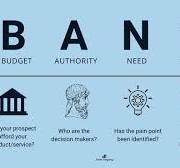
Why BANT Isn’t Always Enough: Rethinking Lead Qualification for Modern Sales In the world of sales, the BANT framework (Budget, Authority, Need, Timing) has long been a go-to method for qualifying leads. For companies selling familiar or low-complexity products where price is the primary differentiator, BANT can be an effective tool for identifying prospects ready for aggressive sales pursuit. However, in today’s rapidly evolving business landscape—particularly for B2B tech companies offering innovative or paradigm-shifting solutions—relying solely on BANT can actually do more harm than good. In this article, we’ll explore the limitations of the BANT framework, why it falls short in certain scenarios, and how you can adapt your lead qualification process to better align with modern sales challenges. What is BANT, and Why is it Popular? BANT, a framework popularized by companies like IBM, is designed to help sales teams quickly assess whether a prospect is worth pursuing. The acronym stands for: For straightforward sales scenarios, BANT works well. It helps sales teams prioritize leads that are most likely to convert, saving time and resources. However, as sales environments become more complex—especially in B2B tech—the limitations of BANT become increasingly apparent. The Limitations of BANT in Modern Sales While BANT is a useful starting point, it has several inherent limitations that can hinder your sales efforts, particularly when selling innovative or high-complexity solutions. Here’s why: When BANT Falls Short: Real-World Scenarios Let’s look at a few scenarios where BANT might not be the best fit: How to Overcome BANT’s Limitations The good news is that you don’t have to abandon BANT entirely. Instead, you can augment it with additional strategies to create a more holistic lead qualification process. Here’s how: Conclusion: Evolving Beyond BANT While BANT remains a useful tool for certain sales scenarios, it’s not a one-size-fits-all solution. For B2B tech companies selling innovative or high-complexity offerings, a more nuanced approach to lead qualification is essential. By addressing the limitations of BANT and incorporating strategies like value-based selling, stakeholder mapping, and relationship building, you can better align your sales process with the realities of modern B2B buying. In a world where customer needs and decision-making processes are constantly evolving, the ability to adapt and think beyond traditional frameworks like BANT will set you apart from the competition. So, the next time you’re qualifying leads, ask yourself: Is BANT enough, or is it time to rethink your approach? Like Related Posts Who is Salesforce? Who is Salesforce? Here is their story in their own words. From our inception, we’ve proudly embraced the identity of Read more Salesforce Unites Einstein Analytics with Financial CRM Salesforce has unveiled a comprehensive analytics solution tailored for wealth managers, home office professionals, and retail bankers, merging its Financial Read more AI-Driven Propensity Scores AI plays a crucial role in propensity score estimation as it can discern underlying patterns between treatments and confounding variables Read more Tectonic’s Successful Salesforce Track Record Salesforce Technology Services Integrator – Tectonic has successfully delivered Salesforce in a variety of industries including Public Sector, Hospitality, Manufacturing, Read more

Read More
Salesforce Experience Cloud

Is Salesforce Experience Cloud Salesforce Communities?

The Salesforce ecosystem is in a constant state of evolution, and the introduction of the Salesforce Experience Cloud is a significant development aimed at delivering connected digital experiences to consumers rapidly. Is Salesforce Experience Cloud Salesforce Communities? In a recent update, Salesforce announced that the Community Cloud will now be rebranded as the Salesforce Experience Cloud. This renaming reflects the platform’s evolution to meet the diverse needs of consumers and highlights Salesforce’s commitment to creating exceptional digital experiences. The Salesforce Experience Cloud serves as a digital experience platform, enabling organizations to create scalable digital experiences for partners, consumers, and employees. Leveraging features from Salesforce CRM, Experience Builder, and CMS, the platform empowers organizations to swiftly develop websites, portals, and personalized content, all with just a few clicks. So, why did Salesforce decide to rename the Community Cloud to the Experience Cloud? The renaming signifies Salesforce’s dedication to enhancing people’s lives and transforming businesses. By shifting the focus from building communities to creating community experiences, Salesforce aims to underscore the importance of data-powered digital experiences that foster collaboration, automation, and real business value. The transition from Community to Experience Cloud represents a step into the future, where the platform integrates data and content seamlessly to provide meaningful solutions. This evolution brings added flexibility and efficiency to user journeys, enhancing the overall digital experience. But how does the Salesforce Experience differ from the Salesforce Community? With the rebranding, you’ll notice changes and improvements in the tools used to design sites. For instance, the Site built using the Experience Cloud, formerly known as the Community, can now be developed using either Visualforce or Experience Builder. This change in terminology signifies a broader shift in the platform’s capabilities. Moreover, other components within the Digital Experiences menu have been simplified and replaced, emphasizing the evolution from the Community Cloud to the Experience Cloud. Understanding the transition from Community to Experience Cloud is necessary for anyone embarking on the journey as an Experience Cloud Consultant. Whether you’re an existing user or a newcomer, grasping the significant differences between the two platforms is crucial. And to further explore the impact of this transition on your organization, consider joining industry-led courses like those offered by saasguru. Frequently Asked Questions (FAQ): Content updated March 2024. Like1 Related Posts Who is Salesforce? Who is Salesforce? Here is their story in their own words. From our inception, we’ve proudly embraced the identity of Read more Salesforce Marketing Cloud Transactional Emails Salesforce Marketing Cloud Transactional Emails are immediate, automated, non-promotional messages crucial to business operations and customer satisfaction, such as order Read more Salesforce Unites Einstein Analytics with Financial CRM Salesforce has unveiled a comprehensive analytics solution tailored for wealth managers, home office professionals, and retail bankers, merging its Financial Read more AI-Driven Propensity Scores AI plays a crucial role in propensity score estimation as it can discern underlying patterns between treatments and confounding variables Read more
Read More
Salesforce Quickstart

Advantages and Disadvantages of a Salesforce Quickstart

What is Quickstart in Salesforce? Quickstarts packages are great for individual departments or small sales & customer services teams who want to get the most out of their Salesforce experience from day one. Who is it for? Small to medium-sized businesses who are looking for quick deployment and want to get started with Salesforce as soon as possible. The Quickstart Advantage: Fast, Affordable, and Proven Salesforce Quickstart packages provide a streamlined path to CRM adoption, ideal for businesses that need rapid deployment without extensive customization. Key Benefits ✔ Weeks, Not Months – Pre-configured setups reduce implementation time by 60-70%✔ Cost Savings – Up to 50% lower than custom builds (initial TCO)✔ Built-in Best Practices – Leverages Salesforce’s 2M+ deployments of proven configurations✔ Faster User Adoption – Includes role-specific training for immediate productivity✔ Scalable Foundation – Designed to grow with modular add-ons When Quickstart Makes Sense Ideal Use Cases Industries Well-Suited for Quickstart Critical Limitations to Consider 1. Customization Constraints 2. Hidden Cost Drivers Potential Add-on Costs Typical Price Range Data migration services $5k-$25k Third-party integrations $10k-$50k Advanced reporting $3k-$15k 3. Scalability Challenges Strategic Decision Framework Choose Quickstart if:✅ You need core CRM functionality fast✅ Your processes align with standard Salesforce models✅ Budget is constrained (<$50k implementation) Opt for Custom if:❌ You require deep industry-specific workflows❌ You anticipate complex integrations (ERP, legacy systems)❌ You expect >50% customization of standard objects Implementation Best Practices *”Quickstart gets you 80% of the way there at 50% of the cost—but that last 20% determines long-term success.”*— Implementation Playbook The Bottom Line Salesforce Quickstart delivers speed-to-value for standardized deployments, but growing enterprises should plan for eventual re-platforming. Companies that: Achieve 3x faster breakeven compared to custom builds while maintaining flexibility for future scaling. Like Related Posts Who is Salesforce? Who is Salesforce? Here is their story in their own words. From our inception, we’ve proudly embraced the identity of Read more Salesforce Marketing Cloud Transactional Emails Salesforce Marketing Cloud Transactional Emails are immediate, automated, non-promotional messages crucial to business operations and customer satisfaction, such as order Read more Salesforce Unites Einstein Analytics with Financial CRM Salesforce has unveiled a comprehensive analytics solution tailored for wealth managers, home office professionals, and retail bankers, merging its Financial Read more AI-Driven Propensity Scores AI plays a crucial role in propensity score estimation as it can discern underlying patterns between treatments and confounding variables Read more

Read More
Salesforce Slack

Swarming with Slack

Enhance case resolution and field service efficiency by promoting instant collaboration through Salesforce Slack “swarming”. Facilitate quick access to the right experts using Expert Finder, initiating a swarm channel directly from a case or incident. The seamless integration ensures that agents can participate in a Slack swarm without leaving the console, maintaining access to crucial Salesforce CRM data. Your service team comprises individuals working to resolve customer issues. Using a swarm from a Slack channel to engage the appropriate experts and document activities in Salesforce. To start a swarm using the Service Cloud for Slack app, go to the About tab and select the Start command for /service-swarm-start. Alternatively, invoke a swarm from the Attachments and shortcuts search or with the slash command. Press the return key to activate the command. Choose your preferred swarming method and select Next. Swarm in a New Channel: Create a swarm in a new Slack channel directly from Slack. Enter swarm information in the prompted window fields and click Create. Visit the new swarm channel to collaborate with other agents. To update the record in Salesforce, click Finish Swarming or use the slash command /service-swarm-close. Select members to add to the swarm, view the record, or finish swarming. Note that swarm member records are generated when new members join the swarming Slack channel. To reopen a swarm, click Reopen Swarm. Swarm in an Existing Channel: Create a swarm in an existing Slack channel. Enter swarm details in the prompted window fields and click Create. The Service Cloud for Slack app sends a pinned notification to the selected channel, announcing the new swarm request. Use buttons on the request to view information or close the swarm when the issue is resolved. Select members, view the record, or finish swarming. When complete, the swarm is marked Closed, and the case is linked in the first unpinned post. Only open swarms remain pinned for easy access in channels with multiple swarms. In response to recent challenges, a series featuring insights from customer service leaders and experts explores industry trends and tactics for success. The first post includes discussions with Jim Roth, EVP of Customer Support at Salesforce, and Kevin Albers, VP of Customer Experience at Slack, addressing digital solutions, agent burnout, and collaborative swarming models. In a digital-first world, customer expectations have risen. Companies are adapting with tools like live agent chat and digital support. Jim Roth emphasizes the need to meet customers where they are, leveraging digital innovations to enhance customer experiences. Growing expectations have increased call volume and case complexity, leading to agent burnout. Kevin Albers suggests addressing this with proper tooling, reducing cognitive overload, and empowering agents to be part of the solution through experimentation. Transitioning to a Swarming Model Transitioning from a tiered model to a swarming model, where a single agent owns a case from start to finish, has shown impressive results. Jim Roth highlights the benefits of a tierless model, including reduced wait times, retained context, and increased agent satisfaction. The swarming model benefits agents by providing rewarding challenges, training opportunities, and expanded experiences. Kevin Albers emphasizes that empowering agents leads to higher engagement and better solutions. Successful Swarming with Slack Tips for successful swarming in Slack include creating workflows, utilizing emoji reactions for status updates, and leveraging Slack’s public API for advanced analysis. The aim is to deliver an easy and expert experience to customers through faster resolution and collective wisdom. Like Related Posts Who is Salesforce? Who is Salesforce? Here is their story in their own words. From our inception, we’ve proudly embraced the identity of Read more Salesforce Marketing Cloud Transactional Emails Salesforce Marketing Cloud Transactional Emails are immediate, automated, non-promotional messages crucial to business operations and customer satisfaction, such as order Read more Salesforce Unites Einstein Analytics with Financial CRM Salesforce has unveiled a comprehensive analytics solution tailored for wealth managers, home office professionals, and retail bankers, merging its Financial Read more AI-Driven Propensity Scores AI plays a crucial role in propensity score estimation as it can discern underlying patterns between treatments and confounding variables Read more

Read More
gettectonic.com