Relationships Archives - gettectonic.com - Page 21
Salesforce CPQ

Choosing a New Salesforce for Outlook Solution

6 Tips for Choosing a New Salesforce for Outlook Solution as an Email Tool: As you gear up for the transition, consider the following insights when selecting a replacement for Salesforce for Outlook: As you evaluate New Salesforce for Outlook Solutions, reach out to Tectonic for assistance in selecting the right solution for your organization. Like Related Posts Who is Salesforce? Who is Salesforce? Here is their story in their own words. From our inception, we’ve proudly embraced the identity of Read more Salesforce Marketing Cloud Transactional Emails Salesforce Marketing Cloud Transactional Emails are immediate, automated, non-promotional messages crucial to business operations and customer satisfaction, such as order Read more Salesforce Unites Einstein Analytics with Financial CRM Salesforce has unveiled a comprehensive analytics solution tailored for wealth managers, home office professionals, and retail bankers, merging its Financial Read more AI-Driven Propensity Scores AI plays a crucial role in propensity score estimation as it can discern underlying patterns between treatments and confounding variables Read more


Read More

Bridging the Gap Between Sales and Marketing

Bridging the Gap Between Sales and Marketing with Salesforce Implementation Sales and marketing teams often struggle to align their goals and strategies, leading to inefficiencies and missed revenue opportunities. A powerful way to overcome this challenge is by leveraging Salesforce implementation services, which connect these departments, enhance collaboration, and drive business success. Seamless Communication for Better Collaboration Effective communication is essential for synchronizing sales and marketing efforts. Salesforce serves as a unified platform, allowing teams to share information, access real-time data, and track progress effortlessly. This streamlined communication minimizes confusion, keeps objectives aligned, and boosts overall productivity. By working within a shared system, sales and marketing professionals can co-develop marketing initiatives, promotions, and sales plans, fostering teamwork and eliminating departmental silos. Salesforce’s collaborative tools ensure that teams stay connected and work toward common goals efficiently. Data-Driven Decision-Making In today’s business landscape, data is a critical driver of success. Salesforce equips organizations with advanced analytics tools, providing insights into customer behavior and market trends. These data-driven capabilities empower sales and marketing teams to: With Salesforce, businesses can adopt a proactive approach rather than reacting to market shifts, ensuring sustained growth and competitiveness. Enhancing Customer Experience Delivering a seamless customer journey is key to standing out in a competitive market. When sales and marketing teams align through Salesforce, they can: ✅ Customize marketing campaigns using sales-driven insights, leading to higher engagement.✅ Personalize sales interactions by leveraging marketing data to understand customer needs.✅ Consolidate customer information for a 360-degree view, ensuring consistent, tailored interactions across all touchpoints. This synchronization leads to higher customer satisfaction, improved retention, and increased revenue. Optimizing Lead Management Efficient lead handling is crucial for driving conversions. Salesforce streamlines this process by enabling: With Salesforce’s automation tools, teams can work together strategically to convert prospects into loyal customers. Performance Tracking & Accountability Measuring performance is essential for continuous improvement. Salesforce’s robust reporting tools empower teams to: 📊 Monitor KPIs, such as conversion rates and campaign performance.📊 Access real-time insights via customizable dashboards.📊 Make data-backed decisions to refine sales and marketing strategies. By fostering transparency and accountability, these insights drive teams to optimize performance and meet business objectives effectively. The Power of Salesforce for Business Growth Salesforce implementation is a game-changer for aligning sales and marketing teams, enabling: ✔ Enhanced communication and collaboration✔ Smarter, data-driven decision-making✔ Stronger customer relationships✔ Streamlined lead management✔ Comprehensive performance tracking By leveraging Salesforce’s powerful capabilities, businesses can break down silos, enhance efficiency, and drive sustained growth. Integrating Salesforce isn’t just about technology—it’s about creating a collaborative, high-performing environment that propels organizations toward success. Like Related Posts Who is Salesforce? Who is Salesforce? Here is their story in their own words. From our inception, we’ve proudly embraced the identity of Read more Salesforce Marketing Cloud Transactional Emails Salesforce Marketing Cloud Transactional Emails are immediate, automated, non-promotional messages crucial to business operations and customer satisfaction, such as order Read more Salesforce Unites Einstein Analytics with Financial CRM Salesforce has unveiled a comprehensive analytics solution tailored for wealth managers, home office professionals, and retail bankers, merging its Financial Read more AI-Driven Propensity Scores AI plays a crucial role in propensity score estimation as it can discern underlying patterns between treatments and confounding variables Read more

Read More

Reshaping the Automotive Industry With Salesforce

Changing customer expectations are reshaping the automotive industry, compelling dealerships to reevaluate their approach to business. With only 1% of buyers fully satisfied with their vehicle purchase experience, dealerships face a significant barrier to fostering loyalty. This dissatisfaction jeopardizes long-term profitability, as customers may turn elsewhere for future service or vehicle needs. Delivering exceptional customer experiences has become more critical than ever. However, rising operational costs present the challenge of achieving more with fewer resources — and doing so quickly. To drive sustainable growth, dealerships must prioritize relationship-building alongside achieving sales goals. Central to this effort is creating personalized digital touchpoints, especially for millennial and Gen Z shoppers, who now dominate the market. These younger consumers seek seamless, consistent experiences — from online browsing to in-person showroom visits. Turning them into lifelong customers requires a unified view of customer data, encompassing their digital shopping habits, service requests, and communications across all platforms. Fortunately, new tools can help dealerships meet these changing demands while reducing costs and improving productivity. To succeed, however, dealerships must adopt a mindset shift, moving beyond transactional practices to focus on customer-centric strategies. Digital Storefronts Are Falling Short Research reveals that fewer than 20% of original equipment manufacturers (OEMs) and retailers consider their digital storefronts engaging and mobile-friendly. For more insights into the industry’s challenges and opportunities, check out the “Trends in Automotive” report, based on feedback from 500 industry leaders. Beyond 30-Day Sales Goals: Building Lasting Relationships Dealerships have long operated in 30-day cycles, dictated by monthly sales goals from OEMs. However, successful dealerships now balance these targets with efforts to nurture long-term relationships. This involves more than sporadic emails about promotions or tune-ups. Instead, it’s about providing consistent, valuable interactions that address customer needs year-round. For example, keeping customers informed with personalized communications—such as alerts about service offers or recommendations for vehicle upgrades—can enhance their overall experience and build trust. Four Steps to Build Customer Loyalty The Path to Loyalty: A 360-Degree Customer View Sustaining long-term profitability hinges on extending customer loyalty beyond individual car sales. With Americans now keeping vehicles for an average of 12 years, dealerships must create enduring relationships across the vehicle’s lifecycle. Salesforce Automotive Cloud empowers dealerships with a 360-degree view of customer data, enabling teams to deliver personalized, seamless experiences. This unified approach helps sales teams close deals faster and service teams provide tailored consultations, ultimately fostering loyalty. Salesforce Sales and Service Cloud provide the same 360-degree view with powerful sales and service tools, including automated agents. The goal? To ensure customers think of your dealership first—whether for service, upgrades, or their next vehicle purchase. By placing the customer at the center of your business and leveraging advanced technology, dealerships can adapt to the evolving landscape and thrive in the future. Like Related Posts Who is Salesforce? Who is Salesforce? Here is their story in their own words. From our inception, we’ve proudly embraced the identity of Read more Salesforce Marketing Cloud Transactional Emails Salesforce Marketing Cloud Transactional Emails are immediate, automated, non-promotional messages crucial to business operations and customer satisfaction, such as order Read more Salesforce Unites Einstein Analytics with Financial CRM Salesforce has unveiled a comprehensive analytics solution tailored for wealth managers, home office professionals, and retail bankers, merging its Financial Read more AI-Driven Propensity Scores AI plays a crucial role in propensity score estimation as it can discern underlying patterns between treatments and confounding variables Read more
Read More
Successful Salesforce Implementation

Successful Salesforce Implementation

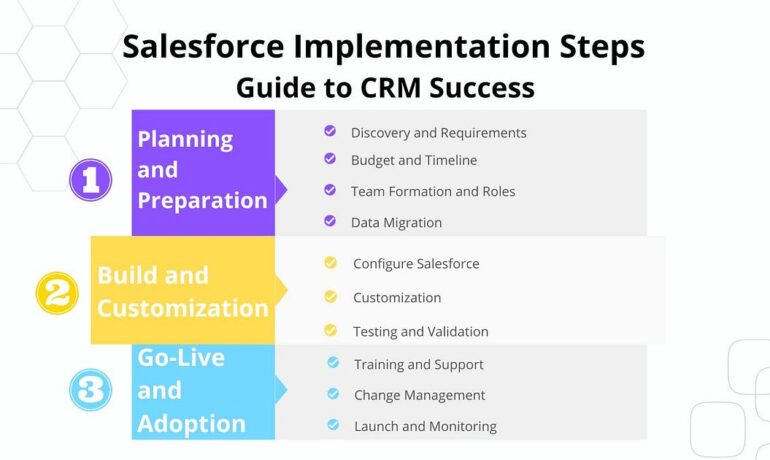
Unlocking the Potential of Salesforce: A Guide to Corporate Success Are you ready to explore the world of Successful Salesforce Implementation? In this Tectonic insight, we’ll explore how to leverage Salesforce to its fullest potential for your corporate success. Whether you’re a small startup or a large corporation, keep reading for practical advice and real-world insights to make Salesforce implementation work for you! What is Salesforce? Salesforce acts as a digital headquarters for organizations, organizing all client information, such as names, purchases, and contact methods. It’s also an Internet application that helps organizations manage customer relationships more effectively by sorting customer details, tracking sales leads, and automating tasks to ease customer interactions. Salesforce is cloudbased, so it is accessible from anywhere. Why Implement Salesforce Now? Implementing Salesforce offers numerous benefits for organizations across various industries: Overall, Salesforce improves how organizations manage customer relationships and utilize data for growth, but effective implementation requires thoughtful planning and customization. Types of Salesforce Implementation Sales Cloud Implementation Sales Cloud is Salesforce’s CRM platform designed to manage sales, leads, and customer interactions. Service Cloud Implementation Service Cloud helps companies provide excellent customer service and support. Marketing Cloud Implementation Marketing Cloud Engagement simplifies marketing efforts, helping businesses connect with customers across various channels. Each type of Salesforce implementation offers unique benefits and challenges, depending on the organization’s needs and goals. CRM Implementation Considerations Implementing a CRM system is a significant move for any business. Here are important things to remember: Step-by-Step Guide to Implement Salesforce Successfully Benefits of a Successful Salesforce Implementation Conclusion Implementing Salesforce is more than adding a powerful CRM system; it’s a journey to greater efficiency, productivity, and customer satisfaction. By thoughtfully planning and customizing Salesforce, organizations can enhance operations, deepen customer relationships, and drive sustainable growth. Embrace the possibilities of Salesforce implementation to chart a course for lasting success and innovation in the modern business landscape. Like Related Posts Who is Salesforce? Who is Salesforce? Here is their story in their own words. From our inception, we’ve proudly embraced the identity of Read more Salesforce Marketing Cloud Transactional Emails Salesforce Marketing Cloud Transactional Emails are immediate, automated, non-promotional messages crucial to business operations and customer satisfaction, such as order Read more Salesforce Unites Einstein Analytics with Financial CRM Salesforce has unveiled a comprehensive analytics solution tailored for wealth managers, home office professionals, and retail bankers, merging its Financial Read more AI-Driven Propensity Scores AI plays a crucial role in propensity score estimation as it can discern underlying patterns between treatments and confounding variables Read more
Read More
Salesforce Dedicated Data Model for Public Sector

Salesforce Dedicated Data Model for Public Sector

Public Sector Solutions Data Model Overview The Salesforce Dedicated Data Model for Public Sector leverages a suite of standard Salesforce objects to manage and structure data across various domains such as licensing, permitting, inspections, case management, benefit administration, grantmaking, and more. These objects are designed to facilitate efficient application processing, regulatory compliance, and service delivery within government agencies. Key Features Salesforce Dedicated Data Model for Public Sector Public Sector Solutions Standard Objects The data model includes a comprehensive set of objects tailored to support: Getting Started To implement and utilize the Public Sector Solutions data model effectively: Learn More Discover how Public Sector Solutions empowers government agencies in delivering efficient and effective public services. From automating approval workflows to enhancing constituent engagement, explore the capabilities tailored to meet the diverse needs of public sector organizations. Like Related Posts Who is Salesforce? Who is Salesforce? Here is their story in their own words. From our inception, we’ve proudly embraced the identity of Read more Salesforce Marketing Cloud Transactional Emails Salesforce Marketing Cloud Transactional Emails are immediate, automated, non-promotional messages crucial to business operations and customer satisfaction, such as order Read more Salesforce Unites Einstein Analytics with Financial CRM Salesforce has unveiled a comprehensive analytics solution tailored for wealth managers, home office professionals, and retail bankers, merging its Financial Read more AI-Driven Propensity Scores AI plays a crucial role in propensity score estimation as it can discern underlying patterns between treatments and confounding variables Read more

Read More
SaaS Data Protection from Own

Reporting With Own

In any Salesforce organization, vast amounts of data are generated constantly from sales activities, customer interactions, marketing campaigns, and more. Summarizing and digesting this information quickly is crucial, especially when presenting the big picture to leadership. This is where Salesforce reports come into play. The Salesforce Reports feature enables organizations to analyze, visualize, and summarize data in real time. By pulling data from across your Salesforce environment, reports help consolidate information into easily digestible formats, such as charts, tables, and graphs. Salesforce reports are essential for: How Historical Data Can Improve Reporting in Salesforce While real-time reports are valuable, incorporating historical data can significantly enhance reporting by offering deeper insights into your organization’s long-term performance. Here’s how: Challenges of Reporting with Historical Data in Salesforce While incorporating historical data is smart, Salesforce’s native reporting capabilities impose certain limitations: Don’t Let Salesforce Reporting Limitations Hold You Back With Own Discover, customers can effortlessly generate time-series datasets from any objects and fields over any time period in just a few clicks. These datasets can be accessed using standard query and reporting tools without requiring a data warehouse or the need to enrich existing data warehouses, overcoming Salesforce’s native limitations. Like Related Posts Who is Salesforce? Who is Salesforce? Here is their story in their own words. From our inception, we’ve proudly embraced the identity of Read more Salesforce Marketing Cloud Transactional Emails Salesforce Marketing Cloud Transactional Emails are immediate, automated, non-promotional messages crucial to business operations and customer satisfaction, such as order Read more Salesforce Unites Einstein Analytics with Financial CRM Salesforce has unveiled a comprehensive analytics solution tailored for wealth managers, home office professionals, and retail bankers, merging its Financial Read more AI-Driven Propensity Scores AI plays a crucial role in propensity score estimation as it can discern underlying patterns between treatments and confounding variables Read more

Read More
einstein discovery dictionary

Einstein Discovery Dictionary

Familiarize yourself with terminology that is commonly associated with Einstein Discovery. Actionable VariableAn actionable variable is an explanatory variable that people can control, such as deciding which marketing campaign to use for a particular customer. Contrast these variables with explanatory variables that can’t be controlled, such as a customer’s street address or a person’s age. If a variable is designated as actionable, the model uses prescriptive analytics to suggest actions (improvements) the user can take to improve the predicted outcome. Actual OutcomeAn actual outcome is the real-world value of an observation’s outcome variable after the outcome has occurred. Einstein Discovery calculates model performance by comparing how closely predicted outcomes come to actual outcomes. An actual outcome is sometimes called an observed outcome. AlgorithmSee modeling algorithm. Analytics DatasetAn Analytics dataset is a collection of related data that is stored in a denormalized, yet highly compressed, form. The data is optimized for analysis and interactive exploration. AttributeSee variable. AverageIn Einstein Discovery, the average represents the statistical mean for a variable. BiasIf Einstein Discovery detects bias in your data, it means that variables are being treated unequally in your model. Removing bias from your model can produce more ethical and accountable models and, therefore, predictions. See disparate impact. Binary Classification Use CaseThe binary classification use case applies to business outcomes that are binary: categorical (text) fields with only two possible values, such as win-lose, pass-fail, public-private, retain-churn, and so on. These outcomes separate your data into two distinct groups. For analysis purposes, Einstein Discovery converts the two values into Boolean true and false. Einstein Discovery uses logistic regression to analyze binary outcomes. Binary classification is one of the main use cases that Einstein Discovery supports. Compare with multiclass classification. CardinalityCardinality is the number of distinct values in a category. Variables with high cardinality (too many distinct values) can result in complex visualizations that are difficult to read and interpret. Einstein Discovery supports up to 100 categories per variable. You can optionally consolidate the remaining categories (categories with fewer than 25 observations) into a category called Other. Null values are put into a category called Unspecified. Categorical VariableA categorical variable is a type of variable that represents qualitative values (categories). A model that represents a binary or multiclass classification use case has a categorical variable as its outcome. See category. CategoryA category is a qualitative value that usually contains categorical (text) data, such as Product Category, Lead Status, and Case Subject. Categories are handy for grouping and filtering your data. Unlike measures, you can’t perform math on categories. In Salesforce Help for Analytics datasets, categories are referred to as dimensions. CausationCausation describes a cause-and-effect relationship between things. In Einstein Discovery, causality refers to the degree to which variables influence each other (or not), such as between explanatory variables and an outcome variable. Some variables can have an obvious, direct effect on each other (for example, how price and discount affect the sales margin). Other variables can have a weaker, less obvious effect (for example, how weather can affect on-time delivery). Many variables have no effect on each other: they are independent and mutually exclusive (for example, win-loss records of soccer teams and currency exchange rates). It’s important to remember that you can’t presume a causal relationship between variables based simply on a statistical correlation between them. In fact, correlation provides you with a hint that indicates further investigation into the association between those variables. Only with more exploration can you determine whether a causal link between them really exists and, if so, how significant that effect is .CoefficientA coefficient is a numeric value that represents the impact that an explanatory variable (or a pair of explanatory variables) has on the outcome variable. The coefficient quantifies the change in the mean of the outcome variable when there’s a one-unit shift in the explanatory variable, assuming all other variables in the model remain constant. Comparative InsightComparative insights are insights derived from a model. Comparative insights reveal information about the relationships between explanatory variables and the outcome variable in your story. With comparative insights, you isolate factors (categories or buckets) and compare their impact with other factors or with global averages. Einstein Discovery shows waterfall charts to help you visualize these comparisons. CorrelationA correlation is simply the association—or “co-relationship”—between two or more things. In Einstein Discovery, correlation describes the statistical association between variables, typically between explanatory variables and an outcome variable. The strength of the correlation is quantified as a percentage. The higher the percentage, the stronger the correlation. However, keep in mind that correlation is not causation. Correlation merely describes the strength of association between variables, not whether they causally affect each other. CountA count is the number of observations (rows) associated with an analysis. The count can represent all observations in the dataset, or the subset of observations that meet associated filter criteria.DatasetSee Analytics dataset. Date VariableA date variable is a type of variable that contains date/time (temporal) data.Dependent VariableSee outcome variable. Deployment WizardThe Deployment Wizard is the Einstein Discovery tool used to deploy models into your Salesforce org. Descriptive InsightsDescriptive insights are insights derived from historical data using descriptive analytics. Descriptive insights show what happened in your data. For example, Einstein Discovery in Reports produces descriptive insights for reports. Diagnostic InsightsDiagnostic insights are insights derived from a model. Whereas descriptive insights show what happened in your data, diagnostic insights show why it happened. Diagnostic insights drill deeper into correlations to help you understand which variables most significantly impacted the business outcome you’re analyzing. The term why refers to a high statistical correlation, not necessarily a causal relationship. Disparate ImpactIf Einstein Discovery detects disparate impact in your data, it means that the data reflects discriminatory practices toward a particular demographic. For example, your data can reveal gender disparities in starting salaries. Removing disparate impact from your model can produce more accountable and ethical insights and, therefore, predictions that are fair and equitable. Dominant ValuesIf Einstein Discovery detects dominant values in a variable, it means that the data is unbalanced. Most values are in the same category, which can limit the value of the analysis. DriftOver time, a deployed model’s performance can drift, becoming less accurate in predicting outcomes. Drift can occur due to changing factors in the data or in your business environment. Drift also results from now-obsolete assumptions built into the story

Read More
Einstein in Salesforce

Einstein in Salesforce

Salesforce AI and CRM Evolution Salesforce has long been a leader in customer relationship management (CRM) by pioneering cloud technologies. Recently, the platform has significantly advanced with the integration of generative artificial intelligence (AI) and AI-powered features, thanks to its Einstein technology. Einstein in Salesforce is like a super smart computer overseeing and analyzing the data in your CRM. This guide explores Salesforce’s AI strategy, exploring its specific products and features to help business teams understand and benefit from this technology. Exploring Salesforce’s Advanced AI Features Einstein, Salesforce’s AI technology, powers various advanced features within the platform. This guide will cover these capabilities, provide real-life adoption examples, and discuss their benefits. Additionally, it offers best practices, solutions, and services to facilitate your Einstein implementation. Salesforce’s Comprehensive CRM Solution Salesforce remains a number one in the CRM software world, offering robust solutions for managing relationships across various departments. Specific clouds within Salesforce enable teams to handle marketing, sales, customer service, e-commerce, and more. The platform focuses on customer experience and provides robust data analytics to support decision-making. Enhancements Through Generative AI Salesforce’s generative AI has rapidly enhanced the platform’s automation, workflow management, data analytics, and assistive capabilities for customer management. A prime example is Salesforce Copilot, which aids internal users with outreach and analysis tasks while improving the external user experience. What is Salesforce Einstein? Salesforce Einstein is the first comprehensive AI for CRM, integrating AI technologies to enhance the Customer Success Platform and bring AI to users everywhere. It is seamlessly integrated into many Salesforce products, offering generative AI built specifically for CRM. Key Features of Salesforce Einstein Comprehensive AI Capabilities of Salesforce Einstein Einstein extends its capabilities across the Salesforce CRM platform under the Customer 360 umbrella, enhancing intelligence and providing personalized customer experiences. Key Benefits of Salesforce Einstein Salesforce Einstein helps close deals faster, personalize customer service, understand customer behaviors, target audience segments better, and create personalized shopping experiences. It ensures data protection and privacy through the Einstein Trust Layer, maintaining strong data governance controls. Responsible AI Principles Salesforce is committed to responsible AI principles, ensuring Einstein is trustworthy and safe for every organization. Organizations can select from various principles to ensure ethical AI use in their operations. Implementation of Salesforce Einstein Salesforce Einstein is a powerful AI solution transforming how businesses interact with customers. By leveraging machine learning and data analysis, it personalizes experiences, predicts customer behavior, and automates tasks, boosting sales, enhancing service, and driving growth. As AI evolves, its impact on CRM will continue to grow, making it an indispensable tool for businesses aiming to stay competitive in today’s data-driven landscape. Top 4 Benefits of Salesforce Einstein in an Organization Einstein Essentials Salesforce Einstein and GPT (Generative Pretrained Transformer) technologies represent significant advancements in AI, particularly in CRM and natural language processing. Here’s a brief overview of their relevance and potential intersection: Data Handling and Ethics in Salesforce Salesforce manages a vast amount of customer data, and the ethical handling of this data is crucial. Key considerations include data privacy, secure storage, access controls, compliance with regulations like GDPR and CCPA, and the ethical use of AI and machine learning. It’s important to maintain transparency, avoid biases, and ensure AI models are making ethical decisions. Newest Einstein Features for 2024 In the rapidly evolving ecosystem of Salesforce, AI offers a suite of tools to spark innovation, streamline operations, and provide richer business insights. Explore these potentials and let Einstein AI reshape your work in 2024. Content updated June 2024. Like1 Related Posts Who is Salesforce? Who is Salesforce? Here is their story in their own words. From our inception, we’ve proudly embraced the identity of Read more Salesforce Marketing Cloud Transactional Emails Salesforce Marketing Cloud Transactional Emails are immediate, automated, non-promotional messages crucial to business operations and customer satisfaction, such as order Read more Salesforce Unites Einstein Analytics with Financial CRM Salesforce has unveiled a comprehensive analytics solution tailored for wealth managers, home office professionals, and retail bankers, merging its Financial Read more AI-Driven Propensity Scores AI plays a crucial role in propensity score estimation as it can discern underlying patterns between treatments and confounding variables Read more

Read More
Big Data and Data Visualization

Big Data and Data Visualization Explained

Data Visualization: Turning Complex Data into Clear Insights Data visualization is the practice of converting information into visual formats, such as maps or graphs, to make data more accessible and understandable. The primary purpose of data visualization is to highlight patterns, trends, and outliers within large data sets, allowing users to quickly glean insights. The term is often used interchangeably with information graphics, information visualization, and statistical graphics. The Role of Data Visualization in Data Science Data visualization is a crucial step in the data science process. After data is collected, processed, and modeled, it must be visualized to draw meaningful conclusions. It’s also a key component of data presentation architecture, a discipline focused on efficiently identifying, manipulating, formatting, and delivering data. Importance Across Professions Data visualization is essential across various fields. Teachers use it to display student performance, computer scientists to explore AI advancements, and executives to communicate information to stakeholders. In big data projects, visualization tools are vital for quickly summarizing large datasets, helping businesses make informed decisions. In advanced analytics, visualization is equally important. Data scientists use it to monitor and ensure the accuracy of predictive models and machine learning algorithms. Visual representations of complex algorithms are often easier to interpret than numerical outputs. Historical Context of Data Visualization Data visualization has evolved significantly over the centuries, long before the advent of modern technology. Today, its importance is more pronounced, as it enables quick and effective communication of information in a universally understandable manner. Why Data Visualization Matters Data visualization provides a straightforward way to communicate information, regardless of the viewer’s expertise. This universality makes it easier for employees to make decisions based on visual insights. Visualization offers numerous benefits for businesses, including: Advantages of Data Visualization Key benefits include: Challenges and Disadvantages Despite its advantages, data visualization has some challenges: Data Visualization in the Era of Big Data With the rise of big data, visualization has become more critical. Companies leverage machine learning to analyze vast amounts of data, and visualization tools help present this data in a comprehensible way. Big data visualization often employs advanced techniques, such as heat maps and fever charts, beyond the standard pie charts and graphs. However, challenges remain, including: Examples of Data Visualization Techniques Early computer-based data visualizations often relied on Microsoft Excel to create tables, bar charts, or pie charts. Today, more advanced techniques include: Common Use Cases for Data Visualization Data visualization is widely used across various industries, including: The Science Behind Data Visualization The effectiveness of data visualization is rooted in how humans process information. Daniel Kahneman and Amos Tversky’s research identified two methods of information processing: Visualization Tools and Vendors Data visualization tools are widely used for business intelligence reporting. These tools generate interactive dashboards that track performance across key metrics. Users can manipulate these visualizations to explore data in greater depth, and indicators alert them to data updates or important events. Businesses might use visualization of data software to monitor marketing campaigns or track KPIs. As tools evolve, they increasingly serve as front ends for sophisticated big data environments, assisting data engineers and scientists in exploratory analysis. Popular data visualization tools include Domo, Klipfolio, Looker, Microsoft Power BI, Qlik Sense, Tableau, and Zoho Analytics. While Microsoft Excel remains widely used, newer tools offer more advanced capabilities. Data visualization is a vital subset of the broader field of data analytics, offering powerful tools for understanding and leveraging business data across all sectors. Like Related Posts Who is Salesforce? Who is Salesforce? Here is their story in their own words. From our inception, we’ve proudly embraced the identity of Read more Salesforce Marketing Cloud Transactional Emails Salesforce Marketing Cloud Transactional Emails are immediate, automated, non-promotional messages crucial to business operations and customer satisfaction, such as order Read more Salesforce Unites Einstein Analytics with Financial CRM Salesforce has unveiled a comprehensive analytics solution tailored for wealth managers, home office professionals, and retail bankers, merging its Financial Read more AI-Driven Propensity Scores AI plays a crucial role in propensity score estimation as it can discern underlying patterns between treatments and confounding variables Read more

Read More
Salesforce Education Cloud Explained

Salesforce Education Cloud Explained

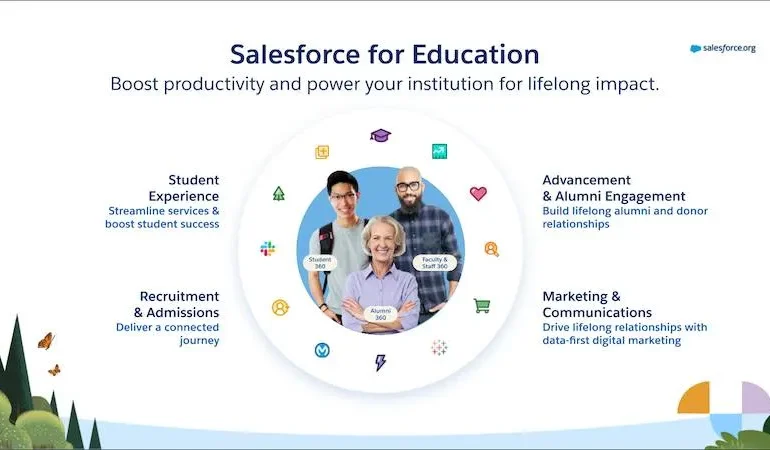
It’s back to school time. And there is no better time to discuss Salesforce Education Cloud! Powering the Learner Lifecycle with Pre-Built Apps Boost productivity with ready-to-use, customizable apps tailored for every stage of the learner journey. Instant Analytics and Intelligence Gain real-time insights to deliver personalized support for prospects, students, and alumni, right at your fingertips. Learner-Centric Data Foundation Accelerate your start with education-specific objects, logic, and automation built on the world’s leading CRM platform. Core Capabilities for Your Entire Institution Enhance the impact of faculty and staff with versatile features like scheduling and case management, adaptable across any department. Education Cloud: The AI-Driven CRM for Education Transform the educational experience with the #1 AI-powered CRM designed for learner and institutional success. Discover the key features of Education Cloud, which accelerates time to value for institutions of all sizes, making it easier to create personalized experiences for every lifelong learner. The Impact of Education Cloud Source: Forrester Total Economic Impact Report How Education Cloud Works Education Cloud offers comprehensive tools for various institutional needs, from managing households and relationships to scheduling appointments and supporting academic operations. Core Capabilities of Education Cloud Education Cloud is designed with flexibility to meet the evolving needs of your institution. Built on a learner-centric data foundation, it scales with your growth and provides each department with essential capabilities to maximize impact across the entire institution. Featured Capabilities Like Related Posts Who is Salesforce? Who is Salesforce? Here is their story in their own words. From our inception, we’ve proudly embraced the identity of Read more Salesforce Marketing Cloud Transactional Emails Salesforce Marketing Cloud Transactional Emails are immediate, automated, non-promotional messages crucial to business operations and customer satisfaction, such as order Read more Salesforce Unites Einstein Analytics with Financial CRM Salesforce has unveiled a comprehensive analytics solution tailored for wealth managers, home office professionals, and retail bankers, merging its Financial Read more AI-Driven Propensity Scores AI plays a crucial role in propensity score estimation as it can discern underlying patterns between treatments and confounding variables Read more

Read More
Get to know CPQ

The Impact of CPQ on Sales Performance Metrics

In today’s fast-paced and competitive business environment, companies are continually searching for ways to optimize their sales processes and achieve their revenue targets. Configure, Price, Quote (CPQ) tools have emerged as a game-changing solution, enabling businesses to streamline operations, enhance customer satisfaction, and drive significant revenue growth. By automating manual tasks such as quote generation, pricing calculations, and customer data management, CPQ tools have a profound impact on key sales performance metrics. How CPQ Tools Transform Sales Performance Key Sales Metrics Positively Impacted by CPQ While CPQ tools influence a wide range of sales performance metrics, the following are particularly positively affected: Conclusion CPQ tools are indispensable for businesses looking to enhance their sales performance and achieve their revenue goals. By automating manual processes, providing actionable insights, and delivering a seamless customer experience, CPQ tools significantly improve key sales metrics such as quote turnaround time, accuracy, win rates, average deal size, and team productivity. As the sales landscape continues to evolve, CPQ tools will play an increasingly critical role in driving revenue growth and ensuring long-term success. Businesses that invest in CPQ solutions position themselves to outperform competitors, deliver exceptional customer experiences, and achieve sustainable growth. Like Related Posts Who is Salesforce? Who is Salesforce? Here is their story in their own words. From our inception, we’ve proudly embraced the identity of Read more Salesforce Unites Einstein Analytics with Financial CRM Salesforce has unveiled a comprehensive analytics solution tailored for wealth managers, home office professionals, and retail bankers, merging its Financial Read more AI-Driven Propensity Scores AI plays a crucial role in propensity score estimation as it can discern underlying patterns between treatments and confounding variables Read more Tectonic’s Successful Salesforce Track Record Salesforce Technology Services Integrator – Tectonic has successfully delivered Salesforce in a variety of industries including Public Sector, Hospitality, Manufacturing, Read more
Read More
Salesforce AI

Salesforce Einstein and Social Studio

The digital era (sometimes considered the third industrial revolution) has transformed the dynamics of customer-business interactions, demanding a proactive approach to customer engagement across diverse channels. Navigating this ever-evolving world is essential for business success, and Social Studio is a valuable asset in this endeavor. Social Studio, in conjunction with Einstein AI, plays a pivotal role in achieving social media success. Recognizing the significance of social media in shaping brand identity and fostering customer relationships, marketers are tasked with maintaining an active and responsive presence across various social media platforms. This challenge is met by Social Studio, offering a centralized hub for comprehensive social media management. This platform facilitates content planning and publication, team collaboration, content approval, audience engagement, and performance analysis. Equipped with advanced scheduling tools, user-friendly content creation features, and customizable approval rules, Social Studio ensures the safeguarding of your brand’s integrity across multiple platforms and messaging. Notably, Social Studio seamlessly integrates with Salesforce Marketing Cloud, providing an all-encompassing solution for efficient social media management. Its capabilities extend to user role management, image classification through Einstein Vision, and process automation using macros. With Social Studio, users gain access to a unified platform for content creation, scheduling, and monitoring, audience interaction, and performance analysis. Whether collaborating within a team or managing multiple accounts, Social Studio streamlines social media efforts, empowering users to achieve their goals. Embrace the advantages of this robust tool for an enhanced social media experience! Social Studio is a one-stop solution to manage, schedule, create, and monitor posts. You can organize posts by brand, region, or multiple teams and individuals in a unified interface. Social Studio offers powerful real-time publishing and engagement. Social Studio offers powerful real-time publishing and engagement platform for content marketers, plus the comprehensive content performance by social network and time frame. A single interface offers a fully customizable team-based collaboration platform that analyzes channel and content performance. Analyze current trends and recommend new content ideas. With Social Studio you can: Social Studio Components Social Studio is made up of these components: Note: Salesforce will sundown Social Studio on November 18, 2024, but some users will lose access before then if their contract expires sooner.  Salesforce recommends retrieving your Social Studio data at least 90 days before the Order End Date of your Marketing Cloud Social Studio Product(s) or November 18, 2024, whichever is sooner.  The digital, or third industrial revolution is the shift from mechanical and analogue electronic technologies from the Industrial Revolution towards digital electronics which began in the latter half of the 20th century.  This was prompted with the adoption and evolution of digital computers. (source) Like Related Posts Who is Salesforce? Who is Salesforce? Here is their story in their own words. From our inception, we’ve proudly embraced the identity of Read more Salesforce Marketing Cloud Transactional Emails Salesforce Marketing Cloud Transactional Emails are immediate, automated, non-promotional messages crucial to business operations and customer satisfaction, such as order Read more Salesforce Unites Einstein Analytics with Financial CRM Salesforce has unveiled a comprehensive analytics solution tailored for wealth managers, home office professionals, and retail bankers, merging its Financial Read more AI-Driven Propensity Scores AI plays a crucial role in propensity score estimation as it can discern underlying patterns between treatments and confounding variables Read more

Read More
gettectonic.com