

Relationships Archives - gettectonic.com - Page 18
Salesforce Driving Change

Salesforce Driving Change

Sony Honda Mobility Leverages Salesforce Technology to Enhance Customer Relationships Sony Honda Mobility, a mobility tech startup, is utilizing Salesforce solutions—including Automotive Cloud, Data Cloud, Tableau, and MuleSoft—to deepen its customer relationships through enhanced data and insights. Sony Honda Mobility Inc. is a Japanese joint venture automotive company established by Sony Group Corporation and Honda Motor Company in 2022 to produce battery electric vehicles. The company will market its vehicles under the Afeela brand. Why It Matters: A significant 81% of business leaders report challenges with data fragmentation and silos. This disconnected, disjointed information often leads to immaterial and generic customer interactions, which is problematic as 80% of customers expect superior experiences given the extensive data companies collect. Key Developments: Sony Honda Mobility plans to launch its first electric vehicle in the United States in 2025, followed by Japan in 2026. To scale globally and stand out in the market, the company is empowering its service team with real-time data and insights on customer interactions with its products and services. How Is Salesforce Driving Change Data Cloud: A unified data platform that consolidates application, workflow, and data lake records, making it easier to train AI models, gain business insights, and improve customer relationships. Sony Honda Mobility is leveraging Data Cloud to integrate disparate data seamlessly across applications. MuleSoft API Integration: This integration connects data from Sony Honda Mobility’s vehicle and customer platform to Salesforce, ensuring a cohesive data flow. Automotive Cloud: Inside Automotive Cloud, Sony Honda Mobility now maintains a comprehensive profile of each customer and their vehicle, based on data from Data Cloud. This integration allows for personalized service and experiences at every touchpoint. The platform also streamlines contact center management, query handling, internal FAQ creation, web actions, and ongoing service support for incident and customer information management. Tableau: With Tableau’s visualizations of vehicle operation conditions and service usage status, Sony Honda Mobility can make quicker, more informed decisions about each customer’s needs. Customer Perspective “We aim to elevate our customer service and experiences to new heights. We are confident we can achieve this with Salesforce’s global expertise and proven track record in CRM, trusted AI, and data analytics,” said Yasuhide Mizuno, Chairman and CEO of Sony Honda Mobility. Salesforce Perspective “We are thrilled that Sony Honda Mobility has chosen the scalability, reliability, and expertise of Salesforce technology. By integrating their customer data on a single and trusted platform, we are excited to support Sony Honda Mobility as they scale excellent service to customers worldwide,” said Shinichi Koide, Chairman, President, and Chief Executive Officer of Salesforce Japan. The Result By harnessing Salesforce’s advanced technology, Sony Honda Mobility is poised to revolutionize its customer service and experience, ensuring a more connected, efficient, and personalized interaction for its customers globally. Like Related Posts Who is Salesforce? Who is Salesforce? Here is their story in their own words. From our inception, we’ve proudly embraced the identity of Read more Salesforce Marketing Cloud Transactional Emails Salesforce Marketing Cloud Transactional Emails are immediate, automated, non-promotional messages crucial to business operations and customer satisfaction, such as order Read more Salesforce Unites Einstein Analytics with Financial CRM Salesforce has unveiled a comprehensive analytics solution tailored for wealth managers, home office professionals, and retail bankers, merging its Financial Read more AI-Driven Propensity Scores AI plays a crucial role in propensity score estimation as it can discern underlying patterns between treatments and confounding variables Read more

Read More
AI-Powered Smarter Media

AI-Powered Smarter Media

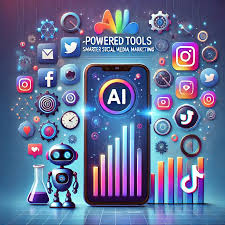
Transforming Retail Media: Personalization and Faster Monetization with Smarter Media Dentsu, a leading growth and transformation partner, has announced a strategic collaboration with Salesforce, the world’s #1 AI-powered CRM, to launch Smarter Media—an innovative solution designed to accelerate retail media monetization through personalized buying experiences powered by AI. Why Smarter Media Matters With shifting consumer priorities, personalized retail experiences are more critical than ever. Salesforce research highlights that: Smarter Media addresses this growing demand by enabling retailers to quickly adapt, offering tailored buying experiences that strengthen customer loyalty while driving revenue. What is Smarter Media? Smarter Media combines the power of Salesforce’s ecosystem—including Media Cloud, Sales Cloud, and Marketing Cloud Engagement—to deliver an end-to-end retail media solution. The platform assesses a brand’s retail media maturity, identifies gaps, and creates a roadmap to optimize media, technology, and skills. The solution simplifies access to advanced media technology, empowering brands to connect with customers 24/7, expand their customer base, and nurture long-term relationships. Key Features and Benefits 1. Comprehensive Assessment 2. AI-Powered Personalization 3. Built for Retail Media Success 4. Quick and Easy Adoption How Smarter Media Works Smarter Media combines Salesforce Sales Cloud’s leading sales and pipeline management tools with Media Cloud’s Advertising Sales Management application. The result is a solution that seamlessly supports both simple and complex retailer models: Real-World Value Across Retail By addressing challenges like fragmented media strategies and inaccessible technology, Smarter Media delivers transformative value for retailers: Driving Innovation Together Paul Lynch, Integrated Solutions Lead for Commerce and Retail at Dentsu UK&I, shared: “Smarter Media will democratize cutting-edge technology for brands by providing a one-stop solution to create personalized buying experiences. In today’s experience economy, maintaining compelling customer relationships has never been more vital.” Christopher Dean, SVP and GM for Communications, Media & Entertainment at Salesforce, added: “By combining Salesforce Media Cloud’s industry-specific solutions with Dentsu’s creative retail media expertise, we’re making advanced media technology accessible for retailers, helping them thrive in a competitive market.” The Future of Retail Media Smarter Media from Dentsu and Salesforce offers a transformative approach to retail media, empowering brands to deliver personalized experiences, improve customer loyalty, and accelerate revenue growth—all while leveraging cutting-edge AI and automation. With its ability to deliver value in just six months, Smarter Media is the ultimate solution for retailers looking to succeed in today’s fast-paced, customer-centric market. Like Related Posts Who is Salesforce? Who is Salesforce? Here is their story in their own words. From our inception, we’ve proudly embraced the identity of Read more Salesforce Marketing Cloud Transactional Emails Salesforce Marketing Cloud Transactional Emails are immediate, automated, non-promotional messages crucial to business operations and customer satisfaction, such as order Read more Salesforce Unites Einstein Analytics with Financial CRM Salesforce has unveiled a comprehensive analytics solution tailored for wealth managers, home office professionals, and retail bankers, merging its Financial Read more AI-Driven Propensity Scores AI plays a crucial role in propensity score estimation as it can discern underlying patterns between treatments and confounding variables Read more

Read More
Dynamic Content Powered Email

Dynamic Content Powered Email

Elevating Email Marketing with Dynamic Content Customers don’t want to feel like just another number to your brand. Relying on a generic “batch and blast” email marketing strategy is likely to land you in the customer’s spam filters—or worse, prompt them to unsubscribe. However, with Dynamic Content Powered Email, you can create a relevant and timely experience they’ll remember for all the right reasons. The Power of Personalization In an era where privacy and security dominate the headlines, it’s surprising that 83% of consumers are willing to share personal data for more personalized experiences. This isn’t just an interesting tidbit—it’s proof that people expect and value personalized experiences from brands. This tradeoff—data for personalization—presents a significant opportunity for marketers who can uphold their end of the bargain. Nowhere is this more evident than in the inbox. Dynamic email content allows for the creation of personalized messages that update when the email is opened, meeting readers’ expectations for tailored communication. The Importance of Dynamic Email Content Modern email marketing must prioritize engaging and relevant content to avoid poor performance and potential relegation to spam folders. Recent developments, such as the loss of third-party cookies, make it increasingly challenging to acquire the right data for personalization. Let’s explore some tactics and resources to achieve quick email marketing wins without the heavy lifting, by automating impactful experiences in the inbox. Understanding Dynamic Email Content Dynamic email content, often called live email content, refers to messages that change based on the subscriber’s personal preferences or history with your website. Unlike static ads, dynamic content offers a tailored shopping experience, increasing engagement and fostering brand loyalty. For example, using dynamic elements such as live polls or customized product recommendations can make subscribers feel valued and understood. Interactive emails enhance the overall experience and encourage deeper engagement. Case Studies in Dynamic Email Success Dynamic content engages audiences and prompts action, crucial for both business success and email program health. Email engagement metrics influence whether your emails are delivered to the inbox or spam folder, making engaging content essential for ISP trust. Not just customer trust. Leveraging First- and Zero-Party Data First-party data is now more important than ever. Email provides a direct line to subscribers, enabling the collection of valuable insights into their preferences and behaviors. This data can fuel further personalization efforts. For example, UK hospitality brand icelolly.com used dynamic email content to display searched and abandoned deals, resulting in a 35% higher open rate, a 201% increase in click-through rate, and a 45% increase in conversion rate. Popular Types of Dynamic Email Content Implementing Dynamic Email Content Simply Personalization with dynamic email content doesn’t have to be resource-intensive. No-code solutions or templates can streamline the process, allowing ongoing implementation with minimal effort. For instance, PrettyLittleThing used automation in birthday emails to show the correct star sign content based on the opening date, driving a 38% increase in click-through rates. Dynamic Content Powered Email has emerged as a powerful tool for marketers aiming to meet and exceed consumer expectations. By incorporating dynamic elements—such as live polls, countdown timers, and personalized images—marketers can create engaging, memorable experiences that build stronger customer relationships and drive brand loyalty. Like Related Posts Who is Salesforce? Who is Salesforce? Here is their story in their own words. From our inception, we’ve proudly embraced the identity of Read more Salesforce Marketing Cloud Transactional Emails Salesforce Marketing Cloud Transactional Emails are immediate, automated, non-promotional messages crucial to business operations and customer satisfaction, such as order Read more Salesforce Unites Einstein Analytics with Financial CRM Salesforce has unveiled a comprehensive analytics solution tailored for wealth managers, home office professionals, and retail bankers, merging its Financial Read more AI-Driven Propensity Scores AI plays a crucial role in propensity score estimation as it can discern underlying patterns between treatments and confounding variables Read more
Read More
Salesforce Data Cloud Hits $900M in Revenue

Salesforce Data Cloud CDP

Salesforce Data Cloud: The Ultimate Customer Data Platform (CDP) Guide Transform Customer Data into Actionable Insights Salesforce Data Cloud (formerly Salesforce CDP) revolutionizes how businesses unify and activate customer data across every touchpoint. By consolidating information from websites, mobile apps, CRM systems, and more, it creates 360° customer profiles that power personalized marketing, sales, and service experiences. What is Salesforce Data Cloud? Salesforce Data Cloud is an AI-powered Customer Data Platform (CDP) that: 💡 Key Benefit: Break down data silos to deliver hyper-personalized customer journeys. Data Cloud vs. Traditional CRM: Key Differences Feature Salesforce CRM Salesforce Data Cloud Data Scope Sales/Service records only All customer interactions (web, email, ads, IoT) Real-Time Updates Manual/periodic syncs Instant profile enrichment AI Capabilities Basic analytics Predictive insights + GenAI recommendations Use Cases Pipeline management Omnichannel personalization Core Capabilities 1. Unified Customer Profiles 2. AI-Powered Segmentation 3. Activation Across Channels 4. Privacy & Compliance How Businesses Use Data Cloud 🚀 Boost E-Commerce Sales 📈 Optimize Ad Spend 🤖 Enhance Customer Service Technical Deep Dive Data Integration Options Key Concepts Getting Started 1. Choose Your Edition 2. Implement in 4 Steps 3. Train Your Team The Future of Data Cloud Final Verdict Salesforce Data Cloud is not just a CDP—it’s the central nervous system for customer-centric businesses. By unifying data + AI, it turns insights into personalized experiences at scale. Ready to explore? Contact Tectonic today. 🔥 Pro Tip: Pair with Einstein AI for predictive analytics and Genie for real-time streaming data. Content updated July 2025. Like Related Posts Who is Salesforce? Who is Salesforce? Here is their story in their own words. From our inception, we’ve proudly embraced the identity of Read more Salesforce Marketing Cloud Transactional Emails Salesforce Marketing Cloud Transactional Emails are immediate, automated, non-promotional messages crucial to business operations and customer satisfaction, such as order Read more Salesforce Unites Einstein Analytics with Financial CRM Salesforce has unveiled a comprehensive analytics solution tailored for wealth managers, home office professionals, and retail bankers, merging its Financial Read more AI-Driven Propensity Scores AI plays a crucial role in propensity score estimation as it can discern underlying patterns between treatments and confounding variables Read more
Read More
Salesforce Revenue Lifecycle

Salesforce Revenue Lifecycle

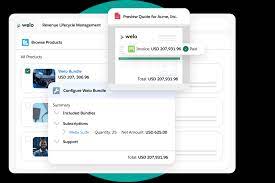
Revenue Lifecycle Management (RLM) with Revenue Cloud empowers businesses to drive profitable growth by automating the entire product-to-cash process. From managing product catalogs and pricing to order fulfillment and billing, RLM streamlines operations and accelerates revenue generation. Salesforce Revenue Lifecycle. Here’s how businesses can leverage RLM for efficient revenue lifecycle management: Additionally, RLM is available in Lightning Experience and requires a Revenue Lifecycle Management license in Sales Cloud and Service Cloud for Enterprise, Unlimited, and Developer editions. Key features of RLM include: As businesses navigate the subscription economy, RLM offers a scalable, flexible, and efficient omni-channel platform for transacting revenue. By addressing growth, churn reduction, and profitability gains, RLM empowers organizations to scale and grow, leveraging modular components and APIs to support various sales motions and use cases. With ongoing innovation and industry expertise, Salesforce and partners like Tectonic are committed to helping subscription companies achieve profitable and efficient growth with Revenue Cloud and Revenue Lifecycle Management. Like Related Posts Who is Salesforce? Who is Salesforce? Here is their story in their own words. From our inception, we’ve proudly embraced the identity of Read more Salesforce Marketing Cloud Transactional Emails Salesforce Marketing Cloud Transactional Emails are immediate, automated, non-promotional messages crucial to business operations and customer satisfaction, such as order Read more Salesforce Unites Einstein Analytics with Financial CRM Salesforce has unveiled a comprehensive analytics solution tailored for wealth managers, home office professionals, and retail bankers, merging its Financial Read more AI-Driven Propensity Scores AI plays a crucial role in propensity score estimation as it can discern underlying patterns between treatments and confounding variables Read more

Read More
Salesforce for Manufacturing Operational Efficiency

Salesforce for Manufacturing Operational Efficiency

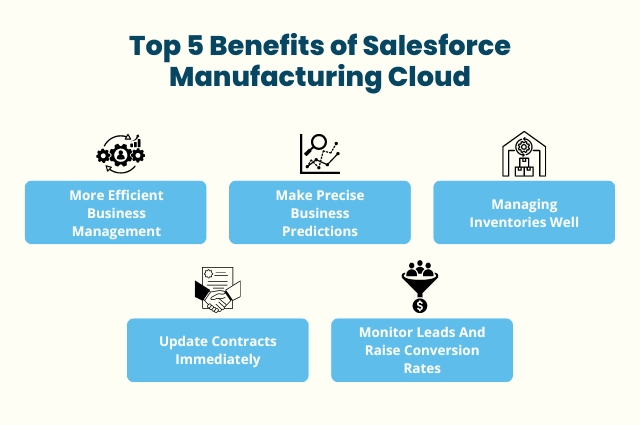
Shopping with distributors offers a distinct advantage in the form of personalized guidance throughout the purchasing journey, nurturing enduring relationships and encouraging repeat business. While distributors excel in delivering tailored service, digital-native rivals such as Amazon leverage operational efficiency to vie in today’s marketplace. As B2B preferences veer towards remote transactions and omnichannel experiences, distributors lagging in digitalization encounter hurdles. Salesforce for Manufacturing Operational Efficiency Manufacturing operational efficiency, while vital, cannot overshadow the significance of personalized service for customers. Traditional distributors hold a formidable competitive edge in this aspect. However, their reliance on antiquated, non-digitalized processes impedes effective competition. Distributors must confront these inefficiencies and embrace innovative technology to flourish. Conventional distributors often rely on disparate systems like spreadsheets and sticky notes, resulting in disjointed customer experiences. Siloed data leads to quote disparities, communication breakdowns, and a dearth of omnichannel capabilities. To retain competitiveness, distributors must transition to digital platforms that centralize data and streamline operations. Digital transformation in manufacturing is possible with Salesforce Manufacturing Cloud. Salesforce for Manufacturing Operational Efficiency with Manufacutring Cloud Salesforce Manufacturing Cloud emerges as a solution to these challenges. By consolidating all information within a centralized system, Salesforce empowers distributors to deliver seamless customer experiences across various channels. This eradicates confusion, ensures consistent communication, and elevates service quality. With Salesforce, distributors can provide exemplary service, nurturing customer loyalty and outpacing the competition. Like1 Related Posts Who is Salesforce? Who is Salesforce? Here is their story in their own words. From our inception, we’ve proudly embraced the identity of Read more Salesforce Marketing Cloud Transactional Emails Salesforce Marketing Cloud Transactional Emails are immediate, automated, non-promotional messages crucial to business operations and customer satisfaction, such as order Read more Salesforce Unites Einstein Analytics with Financial CRM Salesforce has unveiled a comprehensive analytics solution tailored for wealth managers, home office professionals, and retail bankers, merging its Financial Read more AI-Driven Propensity Scores AI plays a crucial role in propensity score estimation as it can discern underlying patterns between treatments and confounding variables Read more

Read More
Education Cloud Academic Operations Explained

Education Cloud Academic Operations Explained

Education Cloud Academic Operations Academic Operations serves as the central hub for creating and managing your institution’s learning-related objects and the relationships between them. With this powerful tool, staff can: The entities you set up in Academic Operations—such as learning courses, programs, and schedules—lay the groundwork for the Recruitment & Admissions and Student Success apps. For instance, curricula and program data form the basis of your course catalog, while plans created in Program Plan Builder flow into Intelligent Degree Planning, guiding the Learner Progress View. Configuring Academic Operations To configure Academic Operations for your institution: Integration Capabilities Salesforce’s education data model seamlessly integrates with various Salesforce tools, including Data Cloud, Marketing Cloud, Salesforce Scheduler, and Einstein AI, as well as custom components like a comments feature and outcome management tools. This integration ensures a comprehensive solution for managing and enhancing the entire learning experience. Like Related Posts Who is Salesforce? Who is Salesforce? Here is their story in their own words. From our inception, we’ve proudly embraced the identity of Read more Salesforce Marketing Cloud Transactional Emails Salesforce Marketing Cloud Transactional Emails are immediate, automated, non-promotional messages crucial to business operations and customer satisfaction, such as order Read more Salesforce Unites Einstein Analytics with Financial CRM Salesforce has unveiled a comprehensive analytics solution tailored for wealth managers, home office professionals, and retail bankers, merging its Financial Read more AI-Driven Propensity Scores AI plays a crucial role in propensity score estimation as it can discern underlying patterns between treatments and confounding variables Read more

Read More
Connections and State of AI

Connections and State of AI

Salesforce Unveils Latest State of Marketing Study Ahead of Annual Connections Conference CHICAGO, May 21, 2024 – As Salesforce gears up for its annual Connections marketing and commerce conference, the company has released the ninth edition of its State of Marketing study. This year’s conference, themed around AI, marketing, and commerce, sets the stage for a deep dive into the future of these interconnected fields. AI Takes Center Stage: The study, drawing insights from over 4,800 marketers across 29 countries, reveals that AI is both the top implementation priority and the biggest challenge for marketers in the coming year. An impressive 63% of marketers currently use generative AI, with an additional 35% planning to adopt the technology within the next 18 months. Key AI applications identified include automating customer interactions, generating content, analyzing performance, automating data integration, and driving real-time best offers. Regional Variations: While AI is a global priority, regional differences are notable. In the US, AI implementation ranks second to improving ROI/attribution, whereas in the UK, it doesn’t even make the top five priorities. Despite these differences, both US and UK marketers cite AI implementation as their third greatest challenge. Countries prioritizing AI include South Korea, UAE, Argentina, Germany, Italy, Japan, Poland, Portugal, and Spain. Interestingly, AI does not feature in the top five priorities for India and Singapore. Challenges in AI Implementation: Across the board, data exposure and leakage are the top concerns related to generative AI, followed by a lack of necessary data, unclear strategy or use cases, fear of inaccurate outputs, and concerns about copyright/IP issues. These challenges vary by industry. For instance, government and media/entertainment sectors worry about AI job displacement, while other sectors focus on biases, brand adherence, and general distrust of AI. Data Integration Struggles: Marketers use an average of nine different tactics to capture customer data, including customer service interactions (88%), transaction data (82%), mobile apps (82%), web registrations (82%), and loyalty programs (80%). However, integrating this data into a unified system remains a significant challenge. Only 31% of marketers are fully satisfied with their ability to unify customer data, and many still rely on IT support for basic marketing tasks. The Personalization Paradox: Despite technological advances, fewer than six in 10 marketers can fully personalize familiar channels like email and mobile messaging. This gap highlights the ongoing struggle to meet rising customer expectations for personalized experiences. Steve Hammond, EVP and GM of Marketing Cloud at Salesforce, emphasizes the importance of personalization at scale: “Customers want to feel like they’re more than just a number. They want relevant experiences that create relationships. But personalization is still a challenge, especially at massive scale.” Looking Ahead: The findings from the State of Marketing study will undoubtedly fuel discussions at Connections. While the potential of AI is exciting, the need for a solid data foundation is critical for realizing its benefits. As the conference unfolds, diginomica’s Jon Reed will be on the ground in Chicago, providing updates on key insights and discussions. About Salesforce: Salesforce is the leading AI CRM, empowering companies to connect with their customers through a unified platform that combines CRM, AI, data, and trust. For more information, visit www.salesforce.com. Like Related Posts Who is Salesforce? Who is Salesforce? Here is their story in their own words. From our inception, we’ve proudly embraced the identity of Read more Salesforce Marketing Cloud Transactional Emails Salesforce Marketing Cloud Transactional Emails are immediate, automated, non-promotional messages crucial to business operations and customer satisfaction, such as order Read more Salesforce Unites Einstein Analytics with Financial CRM Salesforce has unveiled a comprehensive analytics solution tailored for wealth managers, home office professionals, and retail bankers, merging its Financial Read more AI-Driven Propensity Scores AI plays a crucial role in propensity score estimation as it can discern underlying patterns between treatments and confounding variables Read more
Read More
Salesforce and Live Chat Integration

Salesforce and Live Chat Integration

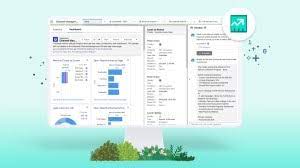
The Salesforce and Live Chat integration lets you create leads and contacts from chats and offline messages. Salesforce Sales Cloud is a platform for managing a sales team and customer relationships. With Salesforce, you have a complete view of your customers including contact information, quotes, notes, and interactions. Salesforce helps you boost productivity by using workflows, which automate your business process. For example, you can automatically assign leads with deals over a certain size to a specific salesperson. Use Salesforce to make data driven decisions. Social Intents. They offer a live chat application that integrates natively with Microsoft Teams, Zoom, Slack and Webex so you can talk to website visitors, offer great customer service, and sell more right from the tools you already use at your company. Provide Incredible Customer Support Provide real-time customer support directly through Slack, Microsoft Teams, or our web-based chat console. No need to learn additional software to support customers. Close More Online Sales Engage potential customers when they need your help, close more deals, and increase online revenue. Have More Engaging Conversations with Leads and Customers Bring all customer communications into Slack or MS Teams. Respond to inquiries quickly without having to switch between apps, increase customer satisfaction, and build strong customer relationships. Social Intents powered our COVID-19 Success Story. Our college was given less than a week’s notice that we needed to close our campuses due to the COVID-19 Pandemic. The live chat technology is so easy to learn, that within a week, we had more than 110 staff trained and answering hundreds of student’s questions every day Joshua S. – Education Management What is Social Intents? Social Intents is a hub of solutions for you and your business. Our easy-to-use, effective services help you to acquire customers, engage visitors on your website – reducing bounce rates and increasing conversions, and kickstart your growth by providing you with private, unbiased feedback. Here at Social Intents, we strive to push you and your business forward. Our customizable tools can be tailored to you and your needs, our number one goal being your success. The apps and widgets we offer include: a Live Chat that fully integrates with Slack, an Email list builder, a Conversion Popup app, and a Feedback app. Not a developer? No problem! Free of complicated code and confusing tools, our solutions are easy to use and configure, and whenever you get stuck, we’re here to help. Like Related Posts Who is Salesforce? Who is Salesforce? Here is their story in their own words. From our inception, we’ve proudly embraced the identity of Read more Salesforce Marketing Cloud Transactional Emails Salesforce Marketing Cloud Transactional Emails are immediate, automated, non-promotional messages crucial to business operations and customer satisfaction, such as order Read more Salesforce Unites Einstein Analytics with Financial CRM Salesforce has unveiled a comprehensive analytics solution tailored for wealth managers, home office professionals, and retail bankers, merging its Financial Read more AI-Driven Propensity Scores AI plays a crucial role in propensity score estimation as it can discern underlying patterns between treatments and confounding variables Read more
Read More
Sales Prospecting Tools

Sales Prospecting Tools

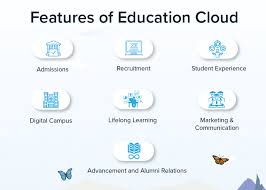
The Complete Guide to Sales Prospecting Tools Sales prospecting tools: Two men examining a touchscreen displaying dashboards and charts. With the right tools, you can spend more time building relationships that convert prospects into loyal customers. Learn how technology can help you identify and engage the right prospects more efficiently. Selling has become more challenging, with 69% of sales professionals agreeing that their jobs are harder now. That’s why sales prospecting tools are crucial—they streamline the process, making it faster and more accurate. When equipped with the right tools, you can focus more on nurturing customer relationships, turning prospects into long-term clients. In this guide, we’ll explore what sales prospecting tools are, key features to look for, and the biggest benefits they provide. What Are Sales Prospecting Tools? Sales prospecting tools are software solutions designed to help sales teams identify, engage, and convert potential customers. These tools enhance the sales prospecting process, enabling sales reps to quickly and effectively reach new buyers. They often integrate with existing platforms, such as Customer Relationship Management (CRM) software and email marketing systems, to optimize outreach and engagement. Typically, prospecting tools focus on outbound marketing, helping sales reps connect with potential customers who may not yet be familiar with the company or product. Types of Sales Prospecting Tools Selecting the right sales prospecting tool depends on your current prospecting methods and future goals. Below are the most common categories of prospecting tools: Lead Generation Tools Lead generation tools help sales teams identify prospects who are ready to purchase. These tools streamline workflows, enhance productivity, and flag potential buyers based on their online activity. For example, they might alert a rep when a prospect searches for solutions related to your product or service. Some lead generation tools also enable mass outreach, such as power dialers that allow sales reps to call multiple prospects simultaneously. Choosing the right lead generation tool depends on how your target customers prefer to engage. For instance, if you have better results from social media interactions than phone calls, a power dialer may not be the best fit. Evaluate your analytics and future goals to determine which tool will maximize your success. CRM Software CRM software manages all customer and prospect interactions across sales, service, marketing, and more. Acting as a single source of truth, CRM platforms centralize all sales activity in one location, allowing leaders to assign prospects and track progress more effectively. With AI-powered features, CRM tools can guide reps on the next best steps and personalize workflows, improving conversion rates. CRMs also provide critical insights for targeting prospects more likely to convert. Social Media Prospecting Tools Social media has become a powerful channel for sales prospecting. Specialized tools scrape social platforms for data to help sales reps identify prospects ready for outreach. For instance, they can track user activity related to the business problem your product solves and notify reps when users engage with relevant content. The integration of AI in social media prospecting tools has further boosted their effectiveness. As AI continues to evolve, expect more sophisticated features in this space. Why Are Sales Prospecting Tools Important? In today’s competitive market, your prospects are also being contacted by your competitors—most of whom are using advanced sales prospecting tools. If you’re not using similar tools, you risk falling behind. Sales prospecting tools help level the playing field by streamlining research and outreach, allowing reps to connect with the right prospects at the right time. However, these tools must be used strategically. Simply contacting more people won’t guarantee more sales. Personalization and targeting remain key. Using the insights provided by these tools, sales reps can tailor their messages and approaches, making each outreach effort more effective. Benefits of Using Sales Prospecting Tools When fully integrated into your sales processes, prospecting tools can deliver substantial benefits, including: Key Features to Look for in Sales Prospecting Tools To ensure your sales prospecting tool adds value to your business, consider the following features: Compliance Keeping up with constantly changing rules around prospecting—especially across different channels—can be daunting. A good prospecting tool automates compliance, ensuring your emails, calls, and social media outreach meet best practices and regulations. Ease of Use Your prospecting tool should simplify your workflow, not complicate it. Look for intuitive interfaces and tools that can automate repetitive tasks, such as dialing multiple numbers or sending emails in bulk. AI-Powered Analytics Tools with AI capabilities can generate valuable insights, such as identifying the best time to call a prospect or suggesting which channel is most likely to yield a response. System Integration Your prospecting tool should seamlessly integrate with existing systems, such as CRMs and marketing automation platforms, to ensure data flows smoothly and insights are actionable across your entire workflow. Customizable and Scalable Your sales process is unique to your business. Opt for customizable and scalable tools that can adapt as your needs change, ensuring you get maximum ROI from your investment. Make Prospecting Work for Your Business Without the right tools, your team is at a disadvantage compared to competitors using advanced sales prospecting technologies. Finding a tool with the right features and customizing it for your specific needs—such as pricing structures and campaign strategies—can empower your team to prospect more efficiently, yielding better results in less time. Content updated October 2024. Like Related Posts Who is Salesforce? Who is Salesforce? Here is their story in their own words. From our inception, we’ve proudly embraced the identity of Read more Salesforce Marketing Cloud Transactional Emails Salesforce Marketing Cloud Transactional Emails are immediate, automated, non-promotional messages crucial to business operations and customer satisfaction, such as order Read more Salesforce Unites Einstein Analytics with Financial CRM Salesforce has unveiled a comprehensive analytics solution tailored for wealth managers, home office professionals, and retail bankers, merging its Financial Read more AI-Driven Propensity Scores AI plays a crucial role in propensity score estimation as it can discern underlying patterns between treatments and confounding variables Read more
Read More
Generative AI for Channel Sales Teams

Generative AI for Channel Sales Teams

Salesforce unveiled new AI, CRM, and Slack sales enhancements tailored for its Partner Relationship Management (PRM) solution. Generative AI for Channel Sales Teams. The latest generative and predictive AI is now accessible to channel managers, third-party resellers, brokers, and various indirect sellers. Generative AI introduces advanced capabilities to streamline channel management and expedite partner sales. Moreover, the AI seamlessly integrated into the CRM aids channel managers and partners in maintaining focus and alignment on top-priority opportunities. This announcement expands Einstein for Sales directly into the workflows of channel managers and their partners. Einstein Copilot streamlines operations and enables channel managers to focus on scalability by automating administrative tasks and sharing proactive insights on promising leads and opportunities. Furthermore, the integration of Slack AI and PRM for Slack facilitates swift collaboration and data sharing among internal and external partners. Why it’s significant: What’s new: Salesforce perspective: “New generative AI, data, and automation capabilities in a Slack-first PRM will offer channel sales teams practical tools to enhance partner and internal processes. This will help Salesforce partners and sellers increase collaboration, improve seller productivity on both sides, deepen relationships, and enable growth.” – Ryan Nunez, VP, Industry Solutions Customer perspective: “Thanks to Partner Relationship Management, our team can help our partners get up and running faster, and they can automate a lot of what they used to do previously. We’re also excited to see how the AI insights – such as lead scoring – will give our partners clear guidance on what to focus on much faster.” – Hooman Shahidi, Chief Executive Officer and Co-Founder, EVPassport Availability: Disclaimer: Any unreleased services or features referenced here are not currently available and may not be delivered on time or at all. Customers should make their purchase decisions based upon features that are currently available. Like Related Posts Who is Salesforce? Who is Salesforce? Here is their story in their own words. From our inception, we’ve proudly embraced the identity of Read more Salesforce Marketing Cloud Transactional Emails Salesforce Marketing Cloud Transactional Emails are immediate, automated, non-promotional messages crucial to business operations and customer satisfaction, such as order Read more Salesforce Unites Einstein Analytics with Financial CRM Salesforce has unveiled a comprehensive analytics solution tailored for wealth managers, home office professionals, and retail bankers, merging its Financial Read more AI-Driven Propensity Scores AI plays a crucial role in propensity score estimation as it can discern underlying patterns between treatments and confounding variables Read more

Read More
Why Education Cloud

Why Education Cloud

Salesforce Education Cloud is a comprehensive solution designed for higher education institutions, offering powerful tools to manage every aspect of the student lifecycle—from recruitment and admissions to student success and alumni engagement. However, to fully maximize the benefits of Salesforce Education Cloud, institutions need a partner that understands the unique challenges and needs of higher education. Our team specializes in implementing Salesforce Education Cloud, ensuring that your institution has the right tools to drive success at every stage of the student journey. Student 360 Customization We can help tailor Salesforce’s Student 360 to fit your institution’s specific needs, providing a unified, comprehensive view of each student. By integrating all your data sources seamlessly, we empower your staff with actionable insights that enhance student success and support. Customized Solutions for Your Institution Our Tectonic team focuses on delivering custom configurations aligned with your institution’s unique processes and goals. This tailored approach ensures you have the precise tools needed to support and optimize every stage of the student lifecycle. Continuous Optimization As your institution evolves, so should your Salesforce Education Cloud solution. We’re committed to helping your system grow with you, optimizing it to meet changing demands and driving ongoing success and improvement. AI and Automation to Streamline Processes From automating admissions workflows to using predictive analytics for student retention, Salesforce’s AI and automation features keep your institution ahead of the curve. We collaborate closely with your team to streamline repetitive tasks, set up AI-driven insights, and ensure your staff can leverage these tools to improve efficiency and make data-informed decisions. Alumni Engagement and Fundraising Salesforce Education Cloud offers advanced tools to foster alumni relationships and manage donor relations. We help you customize these tools to segment alumni databases, execute targeted outreach campaigns, and strengthen fundraising efforts, ensuring lasting engagement with graduates. By partnering with Tectonic, your institution will harness the full potential of Salesforce Education Cloud, driving student success and strengthening alumni connections for the long term. Content updated August 2024. Like Related Posts Who is Salesforce? Who is Salesforce? Here is their story in their own words. From our inception, we’ve proudly embraced the identity of Read more Salesforce Marketing Cloud Transactional Emails Salesforce Marketing Cloud Transactional Emails are immediate, automated, non-promotional messages crucial to business operations and customer satisfaction, such as order Read more Salesforce Unites Einstein Analytics with Financial CRM Salesforce has unveiled a comprehensive analytics solution tailored for wealth managers, home office professionals, and retail bankers, merging its Financial Read more AI-Driven Propensity Scores AI plays a crucial role in propensity score estimation as it can discern underlying patterns between treatments and confounding variables Read more

Read More
Generative AI for Insurance and Financial Services

Generative AI for Insurance and Financial Services

According to CBInsights, based upon research conducted by analyzing earnings calls, business relationships, and investment activities to assess the AI initiatives of some of the world’s largest companies across various sectors. Generative AI for Insurance and Financial Services is growing rapidly. The latest research report from the CBInsights team highlights the undeniable significance of AI for many of these global giants. Salesforce CEO Marc Benioff, for instance, referred to AI as “the single most important moment in the history of the technology industry” during the company’s recent earnings call. JPMorgan CEO Jamie Dimon echoed this sentiment in his April 2024 letter, expressing strong conviction about the extraordinary consequences of AI. Several companies are strategically focusing on AI to drive efficiencies and innovation. For instance, major pharmaceutical firms are collaborating on AI-powered drug discovery projects to expedite drug development timelines, while payments giants are deploying AI to combat fraud effectively. Despite the hype surrounding recent advancements, the translation of AI innovations into revenue has been limited so far. However, companies remain optimistic about future opportunities, recognizing the imperative of taking proactive steps to reshape industries. Generative AI for Insurance and Financial Services CBInsights’ comprehensive report digs into the AI strategies of various companies across sectors such as financial services, insurance, enterprise tech, pharmaceuticals, and industrials. By leveraging the CB Insights technology intelligence platform, they have analyzed signals like investment, partnerships, executive discussions in earnings transcripts, and patents to gain insights into these efforts. AI and machine learning algorithms are increasingly being utilized to enhance digital identity and regulatory technology (Regtech) services, as well as to improve customer experience through AI chatbots. In the financial services sector, advancements in AI technology are making services more accessible and frictionless, empowering investment platforms to automate tasks and focus on critical product development endeavors. While AI is still evolving, it is expected to play a pivotal role in driving the digital economy forward in the near future. Like Related Posts Who is Salesforce? Who is Salesforce? Here is their story in their own words. From our inception, we’ve proudly embraced the identity of Read more Salesforce Marketing Cloud Transactional Emails Salesforce Marketing Cloud Transactional Emails are immediate, automated, non-promotional messages crucial to business operations and customer satisfaction, such as order Read more Salesforce Unites Einstein Analytics with Financial CRM Salesforce has unveiled a comprehensive analytics solution tailored for wealth managers, home office professionals, and retail bankers, merging its Financial Read more AI-Driven Propensity Scores AI plays a crucial role in propensity score estimation as it can discern underlying patterns between treatments and confounding variables Read more
Read More
Gen AI Role in Healthcare

Gen AI Role in Healthcare

Generative AI’s Growing Role in Healthcare: Potential and Challenges The rapid advancements in large language models (LLMs) have introduced generative AI tools into nearly every business sector, including healthcare. As defined by the Government Accountability Office, generative AI is “a technology that can create content, including text, images, audio, or video, when prompted by a user.” These systems learn patterns and relationships from vast datasets, enabling them to generate new content that resembles but is not identical to the original training data. This capability is powered by machine learning algorithms and statistical models. In healthcare, generative AI is being utilized for various applications, including clinical documentation, patient communication, and clinical text summarization. Streamlining Clinical Documentation Excessive documentation is a leading cause of clinician burnout, as highlighted by a 2022 athenahealth survey conducted by the Harris Poll. Generative AI shows promise in easing these documentation burdens, potentially improving clinician satisfaction and reducing burnout. A 2024 study published in NEJM Catalyst explored the use of ambient AI scribes within The Permanente Medical Group (TPMG). This technology employs smartphone microphones and generative AI to transcribe patient encounters in real-time, providing clinicians with draft documentation for review. In October 2023, TPMG deployed this ambient AI technology across various settings, benefiting 10,000 physicians and staff. Physicians who used the ambient AI scribe reported positive outcomes, including more personal and meaningful patient interactions and reduced after-hours electronic health record (EHR) documentation. Early patient feedback was also favorable, with improved provider interactions noted. Additionally, ambient AI produced high-quality clinical documentation for clinician review. However, a 2023 study in the Journal of the American Medical Informatics Association (JAMIA) cautioned that ambient AI might struggle with non-lexical conversational sounds (NLCSes), such as “mm-hm” or “uh-uh,” which can convey clinically relevant information. The study found that while the ambient AI tools had a word error rate of about 12% for all words, the error rate for NLCSes was significantly higher, reaching up to 98.7% for those conveying critical information. Misinterpretation of these sounds could lead to inaccuracies in clinical documentation and potential patient safety issues. Enhancing Patient Communication With the digital transformation in healthcare, patient portal messages have surged. A 2021 study in JAMIA reported a 157% increase in patient portal inbox messages since 2020. In response, some healthcare organizations are exploring the use of generative AI to draft replies to these messages. A 2024 study published in JAMA Network Open evaluated the adoption of AI-generated draft replies to patient messages at an academic medical center. After five weeks, clinicians used the AI-generated drafts 20% of the time, a notable rate considering the LLMs were not fine-tuned for patient communication. Clinicians reported reduced task load and emotional exhaustion, suggesting that AI-generated replies could help alleviate burnout. However, the study found no significant changes in reply time, read time, or write time between the pre-pilot and pilot periods. Despite this, clinicians expressed optimism about time savings, indicating that the cognitive ease of editing drafts rather than writing from scratch might not be fully captured by time metrics. Summarizing Clinical Data Summarizing information within patient records is a time-consuming task for clinicians, and errors in this process can negatively impact clinical decision support. Generative AI has shown potential in this area, with a 2023 study finding that LLM-generated summaries could outperform human expert summaries in terms of conciseness, completeness, and correctness. However, using generative AI for clinical data summarization presents risks. A viewpoint in JAMA argued that LLMs performing summarization tasks might not fall under FDA medical device oversight, as they provide language-based outputs rather than disease predictions or numerical estimates. Without statutory changes, the FDA’s authority to regulate these LLMs remains unclear. The authors also noted that differences in summary length, organization, and tone could influence clinician interpretations and subsequent decision-making. Furthermore, LLMs might exhibit biases, such as sycophancy, where responses are tailored to user expectations. To address these concerns, the authors called for comprehensive standards for LLM-generated summaries, including testing for biases and errors, as well as clinical trials to quantify potential harms and benefits. The Path Forward Generative AI holds significant promise for transforming healthcare and reducing clinician burnout, but realizing this potential requires comprehensive standards and regulatory clarity. A 2024 study published in npj Digital Medicine emphasized the need for defined leadership, adoption incentives, and ongoing regulation to deliver on the promise of generative AI in healthcare. Leadership should focus on establishing guidelines for LLM performance and identifying optimal clinical settings for AI tool trials. The study suggested that a subcommittee within the FDA, comprising physicians, healthcare administrators, developers, and investors, could effectively lead this effort. Additionally, widespread deployment of generative AI will likely require payer incentives, as most providers view these tools as capital expenses. With the right leadership, incentives, and regulatory framework, generative AI can be effectively implemented across the healthcare continuum to streamline clinical workflows and improve patient care. Like Related Posts Who is Salesforce? Who is Salesforce? Here is their story in their own words. From our inception, we’ve proudly embraced the identity of Read more Salesforce Unites Einstein Analytics with Financial CRM Salesforce has unveiled a comprehensive analytics solution tailored for wealth managers, home office professionals, and retail bankers, merging its Financial Read more AI-Driven Propensity Scores AI plays a crucial role in propensity score estimation as it can discern underlying patterns between treatments and confounding variables Read more Tectonic’s Successful Salesforce Track Record Salesforce Technology Services Integrator – Tectonic has successfully delivered Salesforce in a variety of industries including Public Sector, Hospitality, Manufacturing, Read more

Read More
Net Promoter Score Explained

Net Promoter Score Explained

When a friend or colleague takes the time to tell you about a product or service, you probably pay attention. Your friend is more reliable than a Yelp review, right? Word of mouth is the most common way people hear about brands. But how can you tell if your existing customers like your company enough to recommend it to their friends? One way is by tracking your Net Promoter Score (NPS). Is NPS really the best way to measure customer loyalty? Some service leaders aren’t convinced. We wanted to explore the pros and cons of this popular (and sometimes controversial) metric by reviewing what it is, why it’s important, and why some Service Trailblazers choose to measure loyalty in other ways. What is a Net Promoter Score? The Net Promoter Score is a customer experience metric that captures how likely a customer is to recommend your products, services, or brand. Created by Fred Reichheld in 2003, NPS has since been widely adopted. To find NPS, businesses ask customers: “On a scale from 0 to 10, how likely would you be to recommend our company to a friend or colleague?” Typically, companies follow up with an open-ended question to understand why a customer chose their score. Customers are categorized as promoters, passives, or detractors based on their scores: By understanding these categories, businesses can gain insights into customer loyalty and take action to improve customer experiences and foster stronger relationships. How to Calculate Net Promoter Score A company’s NPS is calculated by subtracting the percentage of detractors from the percentage of promoters. For instance, if you have responses from 100 customers, with 30 promoters and 18 detractors, your NPS would be 12. Why is the Net Promoter Score Important? Companies use NPS to gain insights into individual customer experiences and understand the overall perception of their products, services, and brand. NPS feedback helps address individual issues, enhance product offerings, and apply customer service principles effectively. An improving NPS indicates positive changes that matter to customers, while a sudden drop signals potential issues that need attention. What is a Good Net Promoter Score? NPS can range from -100 to +100. While anything above 0 indicates more promoters than detractors, industry-specific benchmarks provide a more nuanced view. For example, the average NPS in the insurance industry is 74, whereas in healthcare, it’s only 45. According to Bain & Company, the creators of NPS, a score above 0 is considered good. Scores over 20 are favorable, over 50 are excellent, and above 80 are world-class. Comparing your NPS to industry benchmarks helps gauge your customer experience relative to competitors, though it’s important to consider the context, such as company size and market scope. What is a Bad Net Promoter Score? Any NPS below zero is considered bad, as it means more customers are dissatisfied than satisfied. A significantly lower NPS compared to competitors may indicate the need to re-evaluate your customer service experience and address gaps that cause dissatisfaction. What Can You Measure Using NPS? NPS provides insights into: Bain & Company’s data shows that companies with long-term profitable growth have an NPS twice as high as the average company. How to Run Surveys and Collect Feedback Running an NPS survey involves asking a single question, collecting responses, and calculating your NPS. Surveys can be distributed via email, text, in-store, or online at checkout, using a survey builder or NPS app for automation. When to Run NPS Surveys The timing of NPS surveys varies: Staggering surveys over time can provide a more organic picture of customer satisfaction. How to Collect NPS Feedback Following up with an open-ended question like, “What’s the primary reason for your score?” helps gather actionable insights. This feedback can highlight areas for improvement and strengths to build on. How to Improve Your Net Promoter Score Improving NPS requires both individual and broad strategies: Implementing Net Promoter Score Invest in NPS survey software that integrates with your CRM platform. Automate survey distribution and workflows to manage responses efficiently. Designate responsibilities for customer follow-ups and NPS analysis. Measuring Your NPS is Just the Beginning Your NPS provides valuable insights into customer loyalty and satisfaction. However, the follow-through on these insights is crucial for engaging customers and delivering better experiences. Measuring your NPS is the first step towards enhancing your overall customer experience. Like Related Posts Who is Salesforce? Who is Salesforce? Here is their story in their own words. From our inception, we’ve proudly embraced the identity of Read more Salesforce Marketing Cloud Transactional Emails Salesforce Marketing Cloud Transactional Emails are immediate, automated, non-promotional messages crucial to business operations and customer satisfaction, such as order Read more Salesforce Unites Einstein Analytics with Financial CRM Salesforce has unveiled a comprehensive analytics solution tailored for wealth managers, home office professionals, and retail bankers, merging its Financial Read more AI-Driven Propensity Scores AI plays a crucial role in propensity score estimation as it can discern underlying patterns between treatments and confounding variables Read more

Read More
gettectonic.com