RIG Archives - gettectonic.com - Page 43
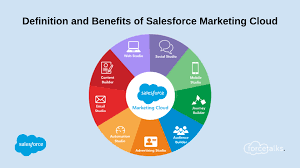
Salesforce Marketing Cloud Advertising Studio

What is the Difference Between a CRM and a DMP?

A DMP uses first-, second-, and third-party data, stored temporarily, creating an audience profile. Data is obtained from various online and offline sources, and mobile sources. A CRM system is typically managed by a sales team, with limited data integration. Is CRM a DMP? While a DMP uses anonymous, third-party data, a CRM and a CDP use first-, second-, and third-party data. Goal. DMPs are built for prospecting, CRMs are built to manage and nurture customers, and CDPs help engage and personalize all phases of the customer experience. Is Salesforce a DMP? Salesforce DMP, called Audience Studio, is a platform that collects, stores, organizes, and centralizes data from different sources, own or external. It works in real time, unifying user data collected from multiple sources into a single profile for each customer. Salesforce proper, the database, is a CRM, not a DMP. Who uses DMP? Marketers who are getting started with audience segmentation for digital advertising can get the most utility out of a DMP. A DMP organizes all the data collected about a prospect or customer. Do you need a DMP? Use a DMP if you want to build marketing campaigns for audiences that are unfamiliar with your business. DMPs are best for this because of their use of third-party data. They can give you access to audiences that you don’t know. Why is CDP better than DMP? DMPs are effective for digital channels and audience segmentation. CDPs, on the other hand, are beneficial for social media websites, offline interactions, and insights into customer needs and purchase behavior. Like Related Posts Who is Salesforce? Who is Salesforce? Here is their story in their own words. From our inception, we’ve proudly embraced the identity of Read more Salesforce Marketing Cloud Transactional Emails Salesforce Marketing Cloud Transactional Emails are immediate, automated, non-promotional messages crucial to business operations and customer satisfaction, such as order Read more Salesforce Unites Einstein Analytics with Financial CRM Salesforce has unveiled a comprehensive analytics solution tailored for wealth managers, home office professionals, and retail bankers, merging its Financial Read more AI-Driven Propensity Scores AI plays a crucial role in propensity score estimation as it can discern underlying patterns between treatments and confounding variables Read more

Read More
Salesforce Stakeholders

Who Are Your Salesforce Stakeholders?

Understanding the intricacies of Salesforce and using it effectively to support business processes is crucial for admins and developers. However, the significance of communication skills is often overlooked in technical training. Beyond technical expertise, vital non-technical skills, such as active listening and extracting relevant information from business stakeholders, play a pivotal role in addressing Salesforce users’ true needs. Here is an approach that enables working more efficiently in a proactive mode rather than reactive. Once you identify your key salesforce stakeholders, here are some great ways to keep the doorways of communication open. Start by putting yourself in your stakeholders’ shoes, be it business users, customers, or consulting clients. Transitioning into Salesforce there is a need to gather information, empathize, and build a compelling case for change. Following are insights and strategies for effectively collaborating with stakeholders to understand business requirements, pain points, and objectives. If you’re keen on enhancing these skills, read on! Importance of Stakeholders As a Salesforce Administrator, collecting information from diverse stakeholders with varying knowledge levels is inevitable. It’s essential to recognize that the required information may not be thoroughly documented or held by a single individual. Engaging with individuals beyond primary users, such as those in supply chain and training, broadens the understanding of business processes. Maximizing the value of every interaction is crucial, considering the time constraints of both yourself and stakeholders. Determining Stakeholder Numbers The number of stakeholders to engage with depends on the project’s scope. Successful benchmarks have demonstrated varying needs: Identifying Stakeholder Groups Consider speaking with stakeholders in four directions: upwards, downwards, inside, and outside. Each group includes: The 3 Types of Stakeholders to Involve Locating Stakeholders Establishing a network within the organization is beneficial. For newcomers or consultants, navigating the terrain may be challenging. Start with the project sponsor for direction and inquire about additional contacts after each conversation. Preparation and Respecting Stakeholders’ Time Request meetings based on stakeholders’ availability, typically ranging from 15 to 45 minutes. Allocate an hour in your calendar to accommodate potential extensions. Prepare thoroughly, understanding whom you’re speaking to and having insights into the discussed system or process. Leaving the Door Open: Saying Thank You Upon closing a meeting, express gratitude and leave the door open for future conversations. Encourage stakeholders to contact you if they have further thoughts, and reciprocate by offering to send a quick note if additional insights emerge. Send a follow-up email expressing thanks and summarizing key takeaways. Incorporating these practices ensures effective communication with stakeholders, facilitating a more successful and collaborative Salesforce implementation. Like Related Posts Who is Salesforce? Who is Salesforce? Here is their story in their own words. From our inception, we’ve proudly embraced the identity of Read more Salesforce Marketing Cloud Transactional Emails Salesforce Marketing Cloud Transactional Emails are immediate, automated, non-promotional messages crucial to business operations and customer satisfaction, such as order Read more Salesforce Unites Einstein Analytics with Financial CRM Salesforce has unveiled a comprehensive analytics solution tailored for wealth managers, home office professionals, and retail bankers, merging its Financial Read more AI-Driven Propensity Scores AI plays a crucial role in propensity score estimation as it can discern underlying patterns between treatments and confounding variables Read more

Read More
Improving customer experiences with Marketing Cloud Personalization

Understanding Marketing Cloud List

Understanding Marketing Cloud Lists: A Guide for Email Studio Users If you use Salesforce Marketing Cloud (SFMC) Email Studio, you may wonder: This guide explains lists, their types, and best practices for managing subscriber data. What Is a Marketing Cloud List? Lists are the default way to store subscriber data in Email Studio. They help: Key Considerations for Lists ✔ Best for small datasets (under 500,000 subscribers).✔ Not ideal for complex data (use Data Extensions instead).✔ Use cases: Preference centers, opt-outs, basic segmentation. Types of Email Studio Lists Marketing Cloud has two main list types: 1. Publication Lists 📍 Where to find them:Email Studio » Subscribers » Lists 2. Suppression Lists 📍 How to manage: When to Use Lists vs. Data Extensions Feature Lists Data Extensions Max Records 500,000 Unlimited Data Complexity Simple (subscriber status, preferences) Complex (transactional, relational data) Use Case Opt-outs, basic segmentation Advanced segmentation, dynamic content Performance Slower for large datasets Optimized for scalability 💡 Best Practice: How Admins Can Improve Data Quality Final Thoughts Marketing Cloud lists are great for basic subscriber management, but Data Extensions offer more flexibility for advanced use cases. By understanding the differences, you can optimize your email strategy for better deliverability and segmentation. 🚀 Next Steps: Need help? Check Salesforce’s official documentation or consult a Tectonic Marketing Cloud expert. Like Related Posts Who is Salesforce? Who is Salesforce? Here is their story in their own words. From our inception, we’ve proudly embraced the identity of Read more Salesforce Marketing Cloud Transactional Emails Salesforce Marketing Cloud Transactional Emails are immediate, automated, non-promotional messages crucial to business operations and customer satisfaction, such as order Read more Salesforce Unites Einstein Analytics with Financial CRM Salesforce has unveiled a comprehensive analytics solution tailored for wealth managers, home office professionals, and retail bankers, merging its Financial Read more AI-Driven Propensity Scores AI plays a crucial role in propensity score estimation as it can discern underlying patterns between treatments and confounding variables Read more

Read More
public sector and tribal governent

What is BI in Salesforce?

Salesforce BI helps to create fast, digestible reports to help you make informed decisions at the right time. Salesforce Einstein is a leading business intelligence software solution that will help streamline your operations. Read on in this insight to learn how Salesforce BI capabilities including Tableau rank in the Gartner Magic Quadrant. Make the right decision every time using analytics that go beyond business intelligence software. See why Gartner named Salesforce (Tableau) a Leader in the Gartner® Magic Quadrant™ for Analytics and Business Intelligence Platforms for the 11th consecutive year. Data and analytics leaders must use analytics and BI platforms to support the needs of IT, analysts, consumers and data scientists. While integration with cloud ecosystems and business applications is a key selection requirement, buyers also need platforms to support openness and interoperability. Analytics and business intelligence (ABI) platforms enable less technical users, including business people, to model, analyze, explore, share and manage data, and collaborate and share findings, enabled by IT and augmented by artificial intelligence (AI). For several years, the Magic Quadrant for Analytic and Business Intelligence Platforms has emphasized visual self-service for end users augmented by AI to deliver automated insights. While this remains a significant use case, the ABI platform market will increasingly need to focus on the needs of the analytic content consumer and business decision makers. To achieve this, automated insights must be relevant in context of a user’s goals, actions and workflow. Many platforms are adding capabilities for users to easily compose low-code or no-code automation workflows and applications. This blend of capabilities is helping to expand the vision for analytics beyond simply delivering datasets and presenting dashboards. Today’s ABI platforms can deliver enriched contextualized insights, refocus attention on decision-making processes and ultimately take actions that will deliver business value. In addition to the increasing consumer design focus trend, we see other key market trends, including the need for improved governance of analytic content creation and dissemination, and the demand for a headless, open architecture. For example, a headless ABI platform would decouple the metrics store from the front-end presentation layer, enabling more interoperability with competitive products. ABI platform functionality includes the following 12 critical capabilities, which have been updated to reflect areas of market change, differentiation and customer demand: Gartner added three new critical capabilities as part of our metrics store evaluation criteria this year:  ABI platforms have always been about measurement. For decades, the slicing and dicing of measures by their dimensional attributes was synonymous with the act of performing business intelligence. However, over the last decade, the focus on metrics and measurement was overshadowed by data visualization. As data visualization became the most conspicuous capability, some business executives began to conflate ABI platforms with data visualization — as if ABI platforms are glorified chart wizards. This misconception minimizes much of the work performed and the business value delivered by ABI platforms. Establishing metrics stores as a critical capability to execute makes it clear that defining and communicating performance measures throughout an organization is one of the key purposes of an ABI platform. Analytics collaboration is a combination of many features (such as Slack/Teams integration, action frameworks) that collectively improve an organization’s ability to make decisions with consensus. Data science integration reflects the increasing likelihood that a business analyst may want to use data science to test certain hypotheses, and that data scientists will need to leverage features such as data prep and data visualization. In addition, Gartner is changing “catalogs” to “analytic catalogs” to emphasize a set of requirements that are not being met by ABI platform vendors today. Most large enterprises have thousands of reports built across multiple ABI platforms, but consumers in these organizations have no easy way to access these reports. The name change to analytic catalogs reflects the need for ABI platform vendors to deliver analytic content with the consumer in mind. Three critical capabilities were removed from our evaluation criteria: security, natural language generation (NLG; rolled into data storytelling) and cloud analytics (which will no longer be considered a platform capability, but instead a go-to-market strategy covered in the Magic Quadrant). And one of the security sub-criteria, about the granularity of authorization (e.g., row-based security) has been moved to the enterprise reporting capability. Salesforce (Tableau) Tableau, a Salesforce company, is a Leader in this Magic Quadrant. Its products are mainly focused on visual-based exploration that enables business users to access, prepare, analyze and present findings in their data. CRM Analytics, formerly Tableau CRM, provides augmented analytics capabilities for analysts and citizen data scientists. Tableau has global operations and serves clients of all sizes. In 2022, Tableau reinforced its augmented consumer vision to provide contextualized insights with deeper integration with Salesforce Data Cloud. IT also improved decision intelligence by bringing domain-aware insights into action with Revenue Intelligence and other Salesforce-native apps. The extensible design and x-platform integrations (Salesforce Flow, MuleSoft, UiPath and Looker) further enable composable analytics to bring insights into workflow with agility. Strengths Cautions Like Related Posts Who is Salesforce? Who is Salesforce? Here is their story in their own words. From our inception, we’ve proudly embraced the identity of Read more Salesforce Marketing Cloud Transactional Emails Salesforce Marketing Cloud Transactional Emails are immediate, automated, non-promotional messages crucial to business operations and customer satisfaction, such as order Read more Salesforce Unites Einstein Analytics with Financial CRM Salesforce has unveiled a comprehensive analytics solution tailored for wealth managers, home office professionals, and retail bankers, merging its Financial Read more AI-Driven Propensity Scores AI plays a crucial role in propensity score estimation as it can discern underlying patterns between treatments and confounding variables Read more
Read More
Customer Satisfaction

10 Essential Customer Service Skills & How to Master Them

At Tectonic, we focus heavily on Salesforce tools—but technology alone isn’t enough. Exceptional customer service hinges on the right mix of human skills and smart automation. Ever called customer support only to be met with indifference or incompetence? Poor service doesn’t just frustrate—it erodes trust and drives customers away. In today’s competitive market, outstanding service is a differentiator. It boosts satisfaction, retention, and revenue while building brand loyalty. Whether you’re a leader refining your team or an agent honing your craft, mastering both hard and soft skills is key. What Is Customer Service? Customer service is the support businesses provide before, during, and after a purchase. It includes:✔ Resolving issues✔ Answering questions✔ Offering guidance✔ Ensuring satisfaction The goal? Stronger relationships, happier customers, and business growth. Why Do Customer Service Skills Matter? It’s not just about fixing problems—it’s about listening, empathizing, and exceeding expectations. Top Customer Service Skills 1. Continuity 2. Omnichannel Support 3. Automation How to Improve Customer Service Skills For Teams: For Agents: Hard Skills Every Agent Needs 🔹 Product Knowledge – Know features, fixes, and FAQs inside out.🔹 Technical Expertise – Navigate service consoles & CRMs with ease.🔹 AI Proficiency – Leverage chatbots and automation smartly.🔹 Omnichannel Etiquette – Adjust tone for email, chat, and phone.🔹 Multilingual Ability – Serve diverse customers better. Soft Skills That Build Trust 🔸 Effective Communication – Be clear, concise, and customer-focused.🔸 Active Listening – Hear the real issue behind complaints.🔸 Empathy – Show genuine care (e.g., “I understand how frustrating this must be.”).🔸 Adaptability – Stay calm under pressure and pivot when needed.🔸 Time Management – Balance speed and quality. Mastering Customer Service in the AI Era Customer service is evolving fast. The best teams combine:✅ Human touch (empathy, problem-solving)✅ Smart tech (AI, automation, CRM insights) For leaders: Use this checklist when hiring and training.For agents: Sharpen these skills to deliver standout experiences—and grow your career. Pro Tip: Pair skills with the right tools. Salesforce’s My Service Journey helps align service with business goals. Final Thought Great service isn’t just about solving issues—it’s about making customers feel valued. Invest in these skills, and your team (and bottom line) will thrive. 🚀 Like Related Posts Who is Salesforce? Who is Salesforce? Here is their story in their own words. From our inception, we’ve proudly embraced the identity of Read more Salesforce Marketing Cloud Transactional Emails Salesforce Marketing Cloud Transactional Emails are immediate, automated, non-promotional messages crucial to business operations and customer satisfaction, such as order Read more Salesforce Unites Einstein Analytics with Financial CRM Salesforce has unveiled a comprehensive analytics solution tailored for wealth managers, home office professionals, and retail bankers, merging its Financial Read more AI-Driven Propensity Scores AI plays a crucial role in propensity score estimation as it can discern underlying patterns between treatments and confounding variables Read more

Read More
Salesforce CDP Explained

Salesforce CDP Explained

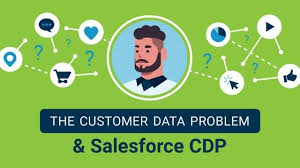
What is a Customer Data Platform (CDP)? A Customer Data Platform (CDP) is one of the most transformative tools in modern marketing. Salesforce CDP Explained. If you’re exploring whether your business needs a CDP and how to begin using one, this guide will walk you through the essentials. CDPs have quickly become a go-to solution in marketing, popping up in reports and strategies everywhere. According to the 2020 State of Marketing Report, 86% of marketers who use CDPs are maintaining or increasing their usage, making many companies wonder: Do we need a CDP too? This insight serves as your step-by-step guide to help you determine whether your business should invest in a CDP, and how to successfully implement one for smarter marketing. What is a CDP? A Customer Data Platform (CDP) is a sophisticated piece of marketing technology designed to collect and organize customer data from various sources into centralized profiles. It helps businesses manage and draw actionable insights from data in real time, making it easier to personalize customer interactions. A typical CDP includes tools for customer data management, marketing automation, multichannel campaign execution, and real-time interaction management. It’s particularly useful when businesses need a database of user-level data to understand customer behaviors across touchpoints. Why Does Your Business Need a CDP? Salesforce CDP Explained CDPs excel in four core tasks: collecting, unifying, activating, and analyzing data. Introducing Salesforce’s CDP: Data Cloud Salesforce’s Data Cloud is a powerful CDP that integrates with Customer 360 to provide real-time customer profiles. It collects and unifies customer data in real time, ensuring businesses can deliver personalized customer experiences and foster stronger relationships. Data Cloud is scalable and designed for businesses of all sizes, with built-in security, compliance, and privacy features through Hyperforce. Benefits of a CDP Beyond basic segmentation, CDPs offer three major benefits: CDPs vs. CRM vs. DMP It’s important to understand the distinction between different data tools. While CRMs focus on managing customer relationships and interactions, and Data Management Platforms (DMPs) handle anonymous data for targeted advertising, CDPs are designed to unify and activate first-party data for personalized marketing. How to Choose a CDP When selecting a CDP, focus on two key areas: insights and engagement. Some CDPs specialize in integrating and analyzing customer data (insights), while others focus on delivering real-time personalized experiences (engagement). Salesforce’s Data Cloud combines both capabilities, offering real-time insights and activation to power personalized experiences across channels. To choose the right CDP for your business, ask these questions: Success Stories with CDPs CDPs have transformed the way businesses engage with their customers. One example involves a regional food and convenience store chain that implemented a CDP to enhance personalized digital experiences. By using customer data to tailor marketing emails and online interactions, the business saw a 16% increase in conversion rates on one of its key products. Getting Started with a CDP CDPs are essential tools for businesses looking to unify customer data, personalize marketing, and drive smarter marketing strategies. To get started, consider building a business case for CDP adoption, assembling a cross-functional team, and researching the right CDP to fit your organization’s needs. The journey to smarter, data-driven marketing begins with the right CDP. Make sure to explore Salesforce’s Data Cloud and other leading platforms to find the best fit for your organization’s growth and success. Content updated April 2023. Like Related Posts Who is Salesforce? Who is Salesforce? Here is their story in their own words. From our inception, we’ve proudly embraced the identity of Read more Salesforce Marketing Cloud Transactional Emails Salesforce Marketing Cloud Transactional Emails are immediate, automated, non-promotional messages crucial to business operations and customer satisfaction, such as order Read more Salesforce Unites Einstein Analytics with Financial CRM Salesforce has unveiled a comprehensive analytics solution tailored for wealth managers, home office professionals, and retail bankers, merging its Financial Read more AI-Driven Propensity Scores AI plays a crucial role in propensity score estimation as it can discern underlying patterns between treatments and confounding variables Read more
Read More
Salesforce Sales Cloud

Salesforce for the Inside Sales Team

Inside sales serves as the cornerstone of a thriving sales organization. The efficient model using Salesforce for the inside sales team enables the delivery of personalized human interactions. Salesforce facilitates rapid scalability. Inside sales involves sales representatives engaging with and selling to customers via phone or digital channels rather than face-to-face interactions. This approach not only streamlines business operations but also fosters organizational and personal growth. Modern technology enhances the productivity and effectiveness of inside sales teams by providing valuable data and insights. Whether your team is making or receiving calls, employing the inside sales methodology, business development, or a similar approach yields results. This strategy, known as Sales Engagement, focuses on promptly connecting with customers through their preferred channels. In today’s fast-paced environment, buyers expect personalized engagement and that it aligns with their needs. Inside sales teams, often responsible for initial contact and research, play a crucial role in setting the stage for a successful sales process. Salesforce for the inside sales team provides that personalized engagement,. This example is actually how Salesforce itself handles inside sales. Inside sales teams can be structured as generalized, specialized, or segmented entities, catering to diverse business needs. Salesforce, following a Quantity and Quality approach, emphasizes multiple touches to nurture leads effectively. Leveraging advanced tools and strategic timing, Salesforce maximizes sales touches, ensuring engagement during opportune moments. The organization has mastered the art of striking while the iron is hot, reaching out to potential leads promptly after engagement. Salesforce combines quantity with quality, recognizing that 64% of customers expect personalized engagement based on past interactions and interests. Salesforce representatives meticulously research target companies to tailor personalized sales communications. Sales Engagement Of particular interest are the tools employed by Salesforce for inside sales. Sales Engagement, a solution automating record-keeping and streamlining the selling process, is accessible to all Salesforce customers as an add-on to Sales Cloud. With features like email integration, automated activity logging, Sales Dialer, and AI-driven tools like Einstein Lead Scoring and Einstein Conversation Insights, Salesforce empowers its inside sales teams. They work smarter, not harder. High Velocity Sales Salesforce’s Sales Engagement tool, formerly known as High Velocity Sales, enhances inside sales reps’ ability to engage buyers more efficiently, effectively, and with greater agility. With the right tools at their disposal, inside sales teams can provide a seamless experience, essential for winning and retaining new business. Tectonic recognizes the pivotal role of inside sales and supports our clients in optimizing their processes with Salesforce’s Sales Engagement tool, ensuring a more streamlined and productive approach to closing deals. Contact Tectonic today to discuss how Salesforce Sales Engagement can empower your inside sales team. Like Related Posts Who is Salesforce? Who is Salesforce? Here is their story in their own words. From our inception, we’ve proudly embraced the identity of Read more Salesforce Marketing Cloud Transactional Emails Salesforce Marketing Cloud Transactional Emails are immediate, automated, non-promotional messages crucial to business operations and customer satisfaction, such as order Read more Salesforce Unites Einstein Analytics with Financial CRM Salesforce has unveiled a comprehensive analytics solution tailored for wealth managers, home office professionals, and retail bankers, merging its Financial Read more AI-Driven Propensity Scores AI plays a crucial role in propensity score estimation as it can discern underlying patterns between treatments and confounding variables Read more
Read More
Salesforce Marketing Cloud Email Studio

What is Email Studio in Marketing Cloud?

Enhance your account branding through the Sender Authentication Package (SAP), a tool provided by Marketing Cloud. SAP features include custom account branding, a private domain for email sending, a custom domain for CloudPages, a dedicated IP address, and reply mail management. Upon purchasing SAP, you will receive an email from mc-deliverability@mcld.salesforce.com 1–2 days after your contract activation. This email includes the SAP Quick Start Guide and a personalized form to set up your SAP.

Read More
gettectonic.com