Salesforce Customer Data Cloud Archives - gettectonic.com - Page 2
Salesforce Data Cloud

Key Components of Salesforce Data Cloud

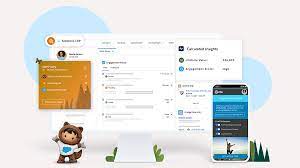
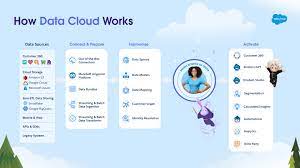
Salesforce Data Cloud organizes and unifies data across Salesforce and other external data sources.  After ingestion, it can drive personalization and engagement. Components of Salesforce Data Cloud to explore. Data Cloud expands Salesforce capabilities by using the best pieces of the developer-friendly Salesforce Platform and adding a highly scalable infrastructure. Data Cloud is an evolution of Customer Data Platform—which was originally designed for marketers but now caters to broader use cases beyond marketing.  The magic of Data Cloud is in creating experiences that wow customers. Key features and components of Salesforce Data Cloud include: Like Related Posts Who is Salesforce? Who is Salesforce? Here is their story in their own words. From our inception, we’ve proudly embraced the identity of Read more Salesforce Marketing Cloud Transactional Emails Salesforce Marketing Cloud Transactional Emails are immediate, automated, non-promotional messages crucial to business operations and customer satisfaction, such as order Read more Salesforce Unites Einstein Analytics with Financial CRM Salesforce has unveiled a comprehensive analytics solution tailored for wealth managers, home office professionals, and retail bankers, merging its Financial Read more AI-Driven Propensity Scores AI plays a crucial role in propensity score estimation as it can discern underlying patterns between treatments and confounding variables Read more

Read More
Salesforce Sales Cloud

Preparing Salesforce Sales Cloud Data for Salesforce Einstein

Data quality holds significant importance in your CRM, even in the absence of AI, as it aids sales representatives in enhancing efficiency, fostering customer trust, and utilizing Salesforce more effectively. preparing Sales Cloud Data for Salesforce Einstein When AI is integrated, the significance of data quality is further heightened. The predictive models underlying Sales Cloud Einstein rely on your Salesforce data; hence, having complete and accurate data is crucial for Einstein to provide optimal predictions, recommendations, and insights. However, data quality isn’t the sole factor in the AI equation—data quantity is equally vital. Sales Cloud Einstein leverages machine learning to identify patterns in vast data sets, and these patterns yield reliable intelligence. To facilitate pattern identification, Sales Cloud Einstein requires a substantial amount of historical data. Einstein Readiness Assessor The Einstein Readiness Assessor is a tool that evaluates whether you meet the prerequisites for specific Sales Cloud Einstein features. This tool analyzes your Salesforce implementation, generating a personalized report indicating which Einstein features you can use immediately and which ones need further preparation. When analyzing your data, your Salesforce administrator should focus on identifying missing records, duplicate records, data standardization issues, incomplete records, and stale data. Dimensions such as age, completeness, accuracy, consistency, duplication, and usage can be used to assess data quality. To address data quality issues, the Salesforce AppExchange offers various packages and tools that provide access to reports and dashboards with just a few clicks. Once you’ve assessed the health of your data, you can develop and implement a data management plan. A typical plan establishes standards for creating, processing, and maintaining data, including naming conventions, formatting for dates and money, and standardizing field data with picklists. Workflows and Automations Workflows and automations should be implemented around processes for record creation, reviewing, updating, and archiving to maintain data integrity. Company-wide standards for data quality, ownership, responsibility for changes, and notifications for data changes should be established. Appropriate privacy levels for data, considering regulatory, legal, and contractual requirements, along with roles and permission sets for users, should be determined and set up. Monitoring, with an outlined process for quality control of data, is essential to ensure that your Salesforce data remains Sales Cloud Einstein ready. This includes determining the frequency, scope, owners, and checks for updating data, preventing duplicates, merging records, adding records, and archiving records. Preparing Sales Cloud Data for Salesforce Einstein Salesforce’s flexibility allows customization to support your company’s data management plan. Ensure all required fields for your business are mandatory in Salesforce, and use validation rules and data governance to enforce correct entries for numeric fields. Workflow rules can automate standard internal procedures and processes, saving time and preventing human error. Modify page layouts to display only relevant data to users, and use data enrichment tools available through Data Apps on the AppExchange to append data accurately. Duplicate management tools built into Salesforce help prevent the creation of new duplicates, contributing to accurate and healthy data. Data integrity, encompassing security, accuracy, and overall data quality, is crucial for every measurable success metric in your business, whether you use Salesforce as a standalone tool or in conjunction with add-ons like Sales Cloud Einstein. If the task of getting your Salesforce data Sales Cloud Einstein ready is overwhelming, the Tectonic team offers assistance. For those starting to implement Salesforce, Tectonic’s Salesforce Quickstarts are worth exploring. Like1 Related Posts Who is Salesforce? Who is Salesforce? Here is their story in their own words. From our inception, we’ve proudly embraced the identity of Read more Salesforce Marketing Cloud Transactional Emails Salesforce Marketing Cloud Transactional Emails are immediate, automated, non-promotional messages crucial to business operations and customer satisfaction, such as order Read more Salesforce Unites Einstein Analytics with Financial CRM Salesforce has unveiled a comprehensive analytics solution tailored for wealth managers, home office professionals, and retail bankers, merging its Financial Read more AI-Driven Propensity Scores AI plays a crucial role in propensity score estimation as it can discern underlying patterns between treatments and confounding variables Read more

Read More
Salesforce CDP

CDP Salesforce

What is a CDP in Salesforce? A customer data platform (CDP) is an application that gathers, organizes and enriches data from multiple sources, while being marketer-centric, versus sales/service-centric like a CRM. It is a key enabler to organizations that want to maximize return on all the data they have collected and own around their customers. The CDP combines all the data from all the sources in real time so you can make hyper-personalized offers and experiences that feel like magic. This means connecting all the customer data back to email engines, demand-side platforms, and content management systems. What is the difference between Salesforce Genie and CDP? SFDC CDP follows the audience segmentation + data activation protocols. Salesforce Genie allows for data unification and identity resolution. Is CDP same as data cloud? Data Cloud shares the same purpose and benefits that CDPs deliver – however Data Cloud is not the same as the technology that was formerly Salesforce CDP. Data Cloud takes CDP’s capabilities, and extends the benefits right across the “Customer 360” (i.e. Salesforce’s product portfolio). What can a Customer Data Platform do for your brand? CDPs connect customer data so every team has insight into how a customer interacts with you on every platform. Like Related Posts Who is Salesforce? Who is Salesforce? Here is their story in their own words. From our inception, we’ve proudly embraced the identity of Read more Salesforce Marketing Cloud Transactional Emails Salesforce Marketing Cloud Transactional Emails are immediate, automated, non-promotional messages crucial to business operations and customer satisfaction, such as order Read more Salesforce Unites Einstein Analytics with Financial CRM Salesforce has unveiled a comprehensive analytics solution tailored for wealth managers, home office professionals, and retail bankers, merging its Financial Read more AI-Driven Propensity Scores AI plays a crucial role in propensity score estimation as it can discern underlying patterns between treatments and confounding variables Read more

Read More
Salesforce Genie

Genie Salesforce

Salesforce Genie is a real-time platform that synthesizes customer data, enabling organizations to meet their customer requirements and expectations as and when they change. What is the difference between Salesforce Genie and CDP? Data activation protocols are followed by the Salesforce Customer Data Platform. This helps in order to segment the audience and activate the data. With Genie, you are able to unify your data and resolve customer identity issues. What is the Genie platform? Genie is an online sales platform that allows you to leverage the strengths of traditional marketing. With online marketing and direct mail into successful multi-channel campaigns. Combine data, marketing and tracking in one place. Always with a team of data marketing experts only a phone call away for support. It makes it easier for businesses to decode and make sense of all their data from all systems, channels, or data streams. It also integrates data from each step in the customer’s experience into a unified customer profile record. Therefore helping create one single view of the customer. Have you ever called a support line and spent unnecessary time talking the agent through your purchase history to get the right level of support? Or when an ecommerce site states the shirts that you have been eyeing for are finally in stock, but they’re still out of stock when you get to the store? These are familiar scenarios for most of us. We expect every experience to be connected and updated in real time. When they aren’t, we’re disappointed. Salesforce Genie was first announced by Salesforce at Dreamforce ‘22. Like1 Related Posts Who is Salesforce? Who is Salesforce? Here is their story in their own words. From our inception, we’ve proudly embraced the identity of Read more Salesforce Marketing Cloud Transactional Emails Salesforce Marketing Cloud Transactional Emails are immediate, automated, non-promotional messages crucial to business operations and customer satisfaction, such as order Read more Salesforce Unites Einstein Analytics with Financial CRM Salesforce has unveiled a comprehensive analytics solution tailored for wealth managers, home office professionals, and retail bankers, merging its Financial Read more AI-Driven Propensity Scores AI plays a crucial role in propensity score estimation as it can discern underlying patterns between treatments and confounding variables Read more

Read More
Salesforce Data Cloud

What Does Salesforce Data Cloud Do?

Salesforce Data Cloud, formerly known as Salesforce CDP, has rapidly become Salesforce’s fastest-growing, organically-developed product. To understand the vision for Data Cloud, it’s essential to understand the foundational capabilities of CDPs. Salesforce CDP, now part of Data Cloud, has been delivering the following: Customer Disparate Data Consider the typical customer, leaving a robust data trail encompassing engagement data (interactions with marketing journeys, ads, mobile apps) and insight data derived from engagement (won revenue, purchase intent, privacy management). Data Cloud is the foundation that speeds up the connectivity between different ‘clouds’ across the platform. Data Cloud uses all this data normalized for understanding to power your Salesforce ecosystem. Use Data Cloud to create personalized, real-time experiences across Salesforce and beyond. Connect your data sources and define their relationship in Data Cloud. Learn the benefits of using data spaces in Data Cloud. A data space is a logical partition to organize your data for profile unification, insights, and marketing data. A data cloud gives you an infrastructure for efficient data management across multiple systems at any scale. You can ensure data is available to anyone who needs it without compromising data integrity or security. By providing a 360-degree view of the customer lifecycle, Salesforce Data Cloud enables businesses to understand their customers like never before. This comprehensive view is the key to unlocking personalized experiences that resonate with customers on a deeper level, fostering loyalty and driving business growth. Data Cloud shares the purpose and benefits that CDPs deliver – but goes beyond the traditional definition of CDP: Beyond marketing use cases: CDPs are typically targeted at marketers. Data Cloud unifies data for use across all Customer 360 products, and therefore, the myriad of use cases every department will have. Like1 Related Posts Demandbase Salesforce Integration The integration of Demandbase with Salesforce creates a seamless connection between Demandbase One and your Salesforce CRM, establishing a bidirectional Read more Box and Salesforce Integration What is Box and Salesforce integration? Together, Box and Salesforce integration bring you seamless solutions that make it easy for Read more Salesforce Integrations How do you make Salesforce even better? Integrate it with all the third party apps you already use. From productivity Read more Salesforce Health Cloud Information Since its inception in 2016, Salesforce Health Cloud has evolved significantly, adapting to the intricacies of the sensitive and dynamic Read more

Read More
Salesforce Data Cloud

Data Spaces and Unified Profiles in Salesforce Data Cloud

Efficiently manage and safeguard your data by categorizing it based on brand, department, and region, enabling distinct business processes. Elevate customer interactions through personalized engagement. Facilitated by a comprehensive, unified customer view accessible to your team. Unified Profiles in Salesforce Data Cloud. In the realm of Data Cloud (formerly Salesforce Genie), a data space serves as a logical partition for organizing data. By fostering profile unification, insights, and targeted marketing. A Cloud Profile encompasses pertinent settings for the underlying cloud, including regions, Security Groups, and subnets. Multiple clusters can be deployed to a Cloud Profile over time. Thereby ensuring scalability and adaptability. Identity resolution, a core function of Customer Data Platforms (CDP), involves matching and consolidating disparate data sets. This enables you to pinpoint and link the same individual across various sources and devices. Unified data, represented by a unified data layer, signifies a company’s ability to amalgamate fragmented data sources. Turning them into a singular, central view. This view can manifest as a unified enterprise data lake or a virtual federation of distinct physical data stores. Salesforce distinguishes between CDP and DMP, recommending CDP for organized utilization of first-party data for diverse purposes and DMP for leveraging third-party audiences in digital advertising campaigns. Key considerations for Salesforce CDP implementations involve identifying required data, preparing it for ingestion, and establishing keys for seamless data organization. CDPs are versatile, allowing the combination of structured, unstructured, and semi-structured data. Data can come from various sources like email, social media, loyalty programs, ERP, CRM, and DMPs, facilitating the creation of a unified customer view. Unified Profiles in Salesforce Data Cloud A unified data model (UDM) offers benefits such as standardized storage of records from different vendors, simplified rule implementation, and vendor-agnostic rule application. Unified data is pivotal as it provides a singular source of truth for business operations. The result enabling informed decision-making. This is exemplified in a retail setting, where a unified data store analyzes sales, inventory, and customer data for enhanced product and service strategies. Create Unified Data Key steps to create a unified data model involve identifying data sources. Next is understanding data requirements, defining a standard schema, mapping and transforming data,. Then establishing data integration processes, implementing data governance, documenting the data model, and testing and iterating for continuous improvement. Data Cloud Data Cloud makes it easy for every business to make sense of all their data from any system, channel, or data stream. It integrates data from every step in the customer experience into a unified customer profile record. And that real-time customer profile can be used to instantly create an unprecedented level of personalization, which feels like magic. Everything in this unified customer profile record is visible and actionable across Salesforce’s entire suite of products, including all industry solutions. You can also build custom apps that take advantage of Data Cloud, allowing you to meet customer expectations for apps that reflect their behavior in real time. Like1 Related Posts Who is Salesforce? Who is Salesforce? Here is their story in their own words. From our inception, we’ve proudly embraced the identity of Read more Salesforce Marketing Cloud Transactional Emails Salesforce Marketing Cloud Transactional Emails are immediate, automated, non-promotional messages crucial to business operations and customer satisfaction, such as order Read more Salesforce Unites Einstein Analytics with Financial CRM Salesforce has unveiled a comprehensive analytics solution tailored for wealth managers, home office professionals, and retail bankers, merging its Financial Read more AI-Driven Propensity Scores AI plays a crucial role in propensity score estimation as it can discern underlying patterns between treatments and confounding variables Read more

Read More
Salesforce Genie

CDP Genie

Unlocking the Potential of Salesforce Genie (formerly known as Marketing Cloud Customer Data Platform or Salesforce CDP) The significance of data in today’s business world cannot be overstated. From tailoring information to catering to a user’s specific interests to suggesting products/services based on recent purchases, data has transformed industries across diverse sectors. Yet, the challenge lies in collecting pertinent data, and even if achieved, consolidating data sources for a unified view of a customer is paramount. Enter Salesforce Genie (CDP Genie), a tool designed to store real-time data across channels, systems, and streams at a massive scale, seamlessly integrating it into both internal and external product portfolios. Regarded as a groundbreaking innovation among Salesforce products, Salesforce Genie merges and purges user information from various applications into a unified source. It seamlessly integrates with Salesforce Customer 360 platform products, empowering organizations to deliver cohesive customer experiences across channels. Understanding Salesforce Customer Data Platform (CDP): Before delving into Salesforce Genie, it’s crucial to understand its foundation, Salesforce Customer Data Platform (CDP). Salesforce Genie has evolved from Salesforce CDP, which is still actively used. Both platforms are distinct, and the subsequent sections will elaborate on their differences. Salesforce Genie: Formerly known as Salesforce Marketing Cloud Customer Data Platform (CDP), this tool experienced rapid organic growth. Similar to other Customer Data Platforms (CDPs), Salesforce Customer Data Platform creates a single source of truth for a user’s profile across various touchpoints. The key attributes shared by Salesforce Genie and CDP include: Key Features of Salesforce Customer Data Platform: Salesforce Genie was introduced at Dreamforce 2022 to address the siloed environment of data resulting from Salesforce’s many product acquisitions. Serving as a common layer between tools, especially CRM, marketing, and services, Genie delivers a unified customer view across Salesforce Customer 360 platforms at great speed and scale. It surpasses the capabilities of a simple customer data platform: Salesforce Genie vs Salesforce CDP: Key Differences: The Science Behind Salesforce Genie: When integrated into Salesforce Customer 360, Genie facilitates real-time data storage and processing across all connected systems. Utilizing Salesforce Flow, Einstein AI, Genie Hyperscale Data Platform, and Hyperforce, Genie enables seamless data access, automation, analytics, and data security. Getting Started with Salesforce Genie or Salesforce CDP Data Model: Organizations can leverage either Salesforce Genie or Salesforce CDP based on their unique business needs. As a certified Salesforce Partner, Tectonic can offer expertise in evaluating and implementing these platforms. Reach out to our Salesforce Genie consultants for in-depth discussions on the tool and its implementation. Like2 Related Posts Who is Salesforce? Who is Salesforce? Here is their story in their own words. From our inception, we’ve proudly embraced the identity of Read more Salesforce Marketing Cloud Transactional Emails Salesforce Marketing Cloud Transactional Emails are immediate, automated, non-promotional messages crucial to business operations and customer satisfaction, such as order Read more Salesforce Unites Einstein Analytics with Financial CRM Salesforce has unveiled a comprehensive analytics solution tailored for wealth managers, home office professionals, and retail bankers, merging its Financial Read more AI-Driven Propensity Scores AI plays a crucial role in propensity score estimation as it can discern underlying patterns between treatments and confounding variables Read more

Read More
Salesforce Data Cloud

Data Cloud from Salesforce

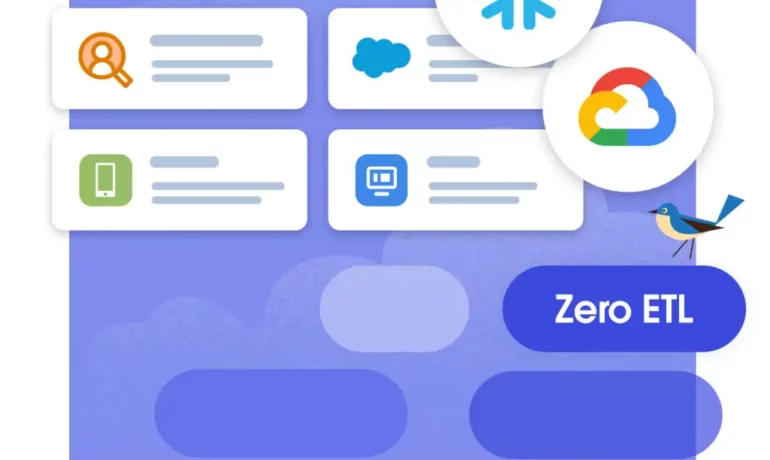
What is the data cloud in Salesforce? A hyperscale data platform built into Salesforce. Activate all your customer data across Salesforce applications with Salesforce Data Cloud, formerly known as Customer Data Platform (or CDP). Empower teams to engage customers, at every touchpoint, with relevant insights and contextual data in the flow of work. What is the benefit of Salesforce data cloud? Your company can feel confident in your customer data, and know that you’re taking the right steps to engage with your customer base across multiple channels.  The team at Tectonic can help you bring value to your wealth of customer data when you leverage Data Cloud. With Salesforce Data Cloud, automation, intelligence, real-time data, and security aren’t just goals; they make up the foundation of the platform. Data Cloud brings the power of automation, analytics, AI, data, and integration together to create a single view of the customer across any cloud. As a team of certified Salesforce experts with years working within all core and industry clouds, analytics, and customizations across all aspects of the platform, Tectonic can help you understand how Data Cloud fits into your customer experience goals, supports revenue growth, and integrates with your existing data models, data sources, and systems such as Snowflake, Tableau, Slack, and MuleSoft. By Implementing Data Cloud, we can enable you to: Are you taking advantage of SFDC Data Cloud’s customer 360 capabilities when it comes to intuitive, fast, efficient customer service? Data Cloud is the fastest growing organically built product in Salesforce’s history (Salesforce built it themselves, not via acquisitions). Data Cloud could be described as the ‘Holy Grail of CRM’, meaning that the data problem that’s existed since the infancy of CRM is now finally solvable. There are some differences between Genie and Data Cloud. Genie offers a zero-data copy architecture, meaning data can be fetched on-demand without duplicating it on the Salesforce platform. This allows for more flexibility and scalability when handling large amounts of customer data. Is Salesforce Data Cloud a data lake? Your data sitting in the data lake benefits from all of the capability of the Salesforce platform just like it does in the transactional side in Oracle. That means that Data Cloud is now not just a really good CDP, it’s now a data lake which will be used in sales and service use cases. Is Data Cloud free? At Dreamforce 2023, Salesforce announced that Data Cloud free licenses are now included for all Enterprise Edition or above customers so customers can become familiar with the new capabilities and develop use case ideas. There’s never been a better time to partner with Tectonic to explore Salesforce Data Cloud for your business. Content updated November 2023. Like2 Related Posts Tectonic’s Successful Salesforce Track Record Salesforce Technology Services Integrator – Tectonic has successfully delivered Salesforce in a variety of industries including Public Sector, Hospitality, Manufacturing, Read more Step By Step Guide to a Salesforce Quickstart Salesforce Implementation with a Tectonic Quickstart: Step-by-Step Salesforce Quickstart Guide. Step 1: Define Your Business Requirements Identify specific business processes Read more Cool Ways to Use Surveys With Salesforce Leveraging survey forms is an effective way to gather real-life insights from individuals crucial to your organization. Salesforce facilitates survey Read more Salesforce Integrations How do you make Salesforce even better? Integrate it with all the third party apps you already use. From productivity Read more

Read More
Salesforce BI

Analytics Studio Salesforce

Analytics Studio Salesforce provides the foundational tool for building CRM Analytics assets—the lenses and dashboards that make up Analytics apps. Use Analytics Studio to explore your data and build lenses and dashboards with data visualizations that give you the insights to help you run your business. Store everything in apps— the containers of assets that tell a story about an aspect of your business through data visualizations. Analytics Studio lets you do most of your work declaratively through its intuitive graphical user interface. You can also access the JSON, XMD, SaQL, and other files that control how Analytics consumes and displays data in dashboards and apps. Open those files with your editor of choice to make fine-grained changes to Analytics business user functionality. To open Analytics Studio, navigate to the Salesforce app picker and select Analytics Studio. Sometimes you must scroll or click View All to find it. From there, click Create, and start building. The Analytics Learning Map provides pointers to help get you going and master Analytics visualizations. Is Salesforce analytics Studio free? You have to be aware that Einstein Analytics is not free even if you’re using other Salesforce products such as Sales, Service, or Financial Cloud. You have to buy a separate license for Einstein Analytics Plus or Einstein Analytics Growth, depending on the components you plan to use in your workflow. What is CRM Analytics Salesforce? Salesforce CRM analytics is a powerful, accurate, and expansive CRM analytics solution, designed to provide users with a single, unified system capable of collecting and analyzing customer data to turn into valuable insights. Content updated December 2023. Like1 Related Posts Who is Salesforce? Who is Salesforce? Here is their story in their own words. From our inception, we’ve proudly embraced the identity of Read more Salesforce Marketing Cloud Transactional Emails Salesforce Marketing Cloud Transactional Emails are immediate, automated, non-promotional messages crucial to business operations and customer satisfaction, such as order Read more Salesforce Unites Einstein Analytics with Financial CRM Salesforce has unveiled a comprehensive analytics solution tailored for wealth managers, home office professionals, and retail bankers, merging its Financial Read more AI-Driven Propensity Scores AI plays a crucial role in propensity score estimation as it can discern underlying patterns between treatments and confounding variables Read more

Read More
Salesforce and Healthcare

Healthcare Technology Solutions

Healthcare institutions have the golden opportunity to enhance the technology systems implemented over the past few pandemic years, particularly in the realm of virtual rounding—where clinicians utilize collaboration technologies to interact with patients remotely. This approach gained significant traction during the pandemic and is now poised for further growth and refinement. Healthcare Technology Solutions. Healthcare technology solutions refer to the use of technology to improve both healthcare delivery and outcomes.  These solutions encompass a wide range of technologies from electronic health records to wearable devices to mobile applications.  Many believe the solution to better healthcare is data and collaboration.  The right software can help. Healthcare Technology Solutions Here are ways to maximize the impact of virtual rounding specifically in your healthcare organization: Devices: Collaboration Software: Telehealth Peripherals: Electronic Medical Records: Patient Experience APIs: Asset Tracking: Business Intelligence: Mobility Management: Whether your organization requires healthcare technology hardware, software, or cloud-based solutions, Tectonic is well-equipped to expedite the implementation process with numerous healthcare implementations under our belt. Five Exciting and emerging healthcare technology solutions coming in 2023 and beyond: Like Related Posts Who is Salesforce? Who is Salesforce? Here is their story in their own words. From our inception, we’ve proudly embraced the identity of Read more Salesforce Marketing Cloud Transactional Emails Salesforce Marketing Cloud Transactional Emails are immediate, automated, non-promotional messages crucial to business operations and customer satisfaction, such as order Read more Salesforce Unites Einstein Analytics with Financial CRM Salesforce has unveiled a comprehensive analytics solution tailored for wealth managers, home office professionals, and retail bankers, merging its Financial Read more AI-Driven Propensity Scores AI plays a crucial role in propensity score estimation as it can discern underlying patterns between treatments and confounding variables Read more

Read More
Quest to be Data-Driven

Quest to be Data-Driven

“Data-driven” is a business term that refers to the utilization of data to inform or enhance processes, decision making, and even the revenue model. The quest to be data-driven is afoot. In recent years, a data-driven business approach has gained a great deal of traction. It is true that every business deals with data — however, data-driven businesses systematically and methodically use data to power business decisions. Incorporating the notion of being a data-driven enterprise enriches the understanding of how data can profoundly impact business operations. Leveraging data not only offers valuable insights but also enhances adaptability, thereby sharpening the competitive edge of an organization. These insights serve as a foundation for making market predictions and adapting business strategies accordingly, often leading to revenue growth. While data may not provide solutions to all organizational challenges, embracing a data-driven approach lays a solid groundwork for achieving organizational goals. Data-driven contrasts with decision making that may be driven by emotions, external pressure, or instinct. So, what exactly constitutes a data-driven enterprise? It transcends mere number-crunching; it involves creating sustainable value for customers and innovating efficiently in the digital economy. Encouraging a data-driven approach across all facets of the business is paramount to success. Gaining data insights from data is invaluable. It allows organizations to reshape customer interactions, provided the data is accurate, accessible, and integrated into existing processes. However, many struggle to extract value from their data due to the complexity of transforming raw data into actionable insights. Understanding the hierarchy of data, information, and insights is crucial, as actionable insights drive data-driven success. Furthermore, adaptability emerges as a crucial factor in today’s rapidly evolving landscape. The ability to swiftly respond to changes and leverage data for informed decision-making is paramount. Data-driven insights serve as powerful tools for facilitating change and fostering agility, ensuring organizations remain competitive. Moreover, data serves as a catalyst for revenue generation through various business models such as Data as a Service (DaaS), Information as a Service (IaaS), and Answer as a Service (AaaS). By putting customer satisfaction at the forefront and leveraging data-driven insights, organizations can evolve their products proactively and drive growth. Building a data-driven enterprise involves a strategic approach encompassing nine key steps, including defining end goals, setting tangible KPIs, and fostering a data-driven culture across the organization. However, challenges such as deciding what to track, lack of tools or time for data collation, and turning data into meaningful insights may arise. Overcoming these challenges requires a cultural shift towards data-driven decision-making and the adoption of modern data architectures. Walking (or perhaps running) the data-driven journey with Tectonic involves connecting and integrating various data sources to ensure seamless data flow. By embracing a data-driven approach, organizations can unlock the full potential of their data, driving innovation, enhancing customer experiences, and achieving long-term success in today’s dynamic, rapidly evolving business landscape. Expanding upon this foundation, let’s go deeper into the transformative power of data-driven enterprises across various industry sectors. Consider, for instance, the retail industry, where data-driven insights revolutionize customer experiences and optimize operational efficiency. In the retail sector, understanding consumer behavior and preferences iscrucial to daily, quarterly, and annual success. By harnessing data analytics, retailers can analyze purchasing patterns, demographic information, and social media interactions to tailor marketing strategies and product offerings. For example, through personalized recommendations based on past purchases and browsing history, retailers can enhance customer engagement and drive sales. Moreover, data-driven insights enable retailers to optimize inventory management and supply chain operations. By analyzing historical sales data and demand forecasts, retailers can anticipate fluctuations in demand, minimize stockouts, and reduce excess inventory. This not only improves operational efficiency but also enhances customer satisfaction by ensuring products are readily available when needed. Furthermore, in the healthcare industry, data-driven approaches revolutionize patient care and treatment outcomes. Electronic health records (EHRs) and medical imaging technologies generate vast amounts of data, providing healthcare professionals with valuable insights into patient health and treatment efficacy. By leveraging predictive analytics and machine learning algorithms, healthcare providers can identify patients at risk of developing chronic conditions, enabling early intervention and preventive care. Additionally, data-driven approaches facilitate personalized treatment plans tailored to each patient’s unique medical history, genetic makeup, and lifestyle factors, improving treatment outcomes and patient satisfaction. In the manufacturing sector, data-driven strategies optimize production processes, enhance product quality, and reduce operational costs. By implementing Internet of Things (IoT) sensors and connected devices on the factory floor, manufacturers can collect real-time data on equipment performance, energy consumption, and production efficiency. Analyzing this data enables manufacturers to identify inefficiencies, minimize downtime, and proactively schedule maintenance to prevent costly equipment failures. Moreover, data-driven insights inform process improvements and product innovations, enabling manufacturers to stay competitive in an increasingly globalized market. The ultimately transformative impact of data-driven enterprises extends across various industry sectors, revolutionizing business operations, enhancing customer experiences, and driving innovation. By embracing a data-driven approach and leveraging advanced analytics technologies, organizations can unlock new opportunities for growth, efficiency, and competitive advantage in today’s data-loaded digital economy. Becoming data-driven requires harnessing the full potential of your data, transforming it into actionable insights, and iteratively refining your processes. Remember, data itself is not the ultimate goal but rather a powerful tool to drive informed decision-making and organizational growth. To establish a truly data-driven organization, consider the following nine steps: By following these steps, your organization can effectively harness the power of data to drive innovation, improve decision-making, and achieve sustainable growth in today’s data-driven landscape. Tectonic recognizes the challenges in the quest to be data-driven. We’ve launched a Data Cloud Salesforce Implementation Solution to help you. Content updated May 2024. Like Related Posts Who is Salesforce? Who is Salesforce? Here is their story in their own words. From our inception, we’ve proudly embraced the identity of Read more Salesforce Marketing Cloud Transactional Emails Salesforce Marketing Cloud Transactional Emails are immediate, automated, non-promotional messages crucial to business operations and customer satisfaction, such as order Read more Salesforce Unites Einstein Analytics with Financial CRM

Read More
Salesforce Marketing Cloud

What is the Difference in Lists and a Data Extensions in Salesforce Marketing Cloud

There are two different methods to store and segment subscriber data within Marketing Cloud: Lists and Data Extensions. Lists have limited functionality, whereas Data Extensions provide full flexibility to store and relate subscriber information. Salesforce Marketing Cloud lists and data extensions are the primary ways to manage your subscriber data. What is the difference between data extension and list in Marketing Cloud? In short, lists are best used for specific email sends lacking advanced data or segmentation, whereas data extensions can be used for basically any type of communication or data management need. If the goal is to organize data with simplicity, go for lists. What is data extension in Marketing Cloud? A data extension is a table that contains your data. With Marketing Cloud Connect, push tracking data from the Marketing Cloud back to your Sales or Service Cloud orgs using Salesforce data extensions (SFDEs). Data extensions are also filterable. What are the data extension limits for Marketing Cloud? There is currently no limit for the amount of rows that can exist within a Data Extension. This means that, without Row Based Data Retention, a Data extension can grow exponentially without any real upper limit. What is a list in Marketing Cloud? Lists are a default way of storing data in Marketing Cloud Email Studio. You can set different attributes for your customers by using lists, which represent a collection of customers and provide a simple method for audience segmentation. These attributes are used to store the position of the customer in a given list. List can be configured to send a welcome email when a subscriber opts in, and can have double opt-in. You will also hear groups mentioned. Groups are smaller segments of a list. When to Opt for Marketing Cloud Data Extensions There are two primary scenarios that distinctly indicate the need for utilizing a data extension rather than a list: Fluctuating Values Over Time: Data Relationship via a 3rd Data Point: Like Related Posts Who is Salesforce? Who is Salesforce? Here is their story in their own words. From our inception, we’ve proudly embraced the identity of Read more Salesforce Marketing Cloud Transactional Emails Salesforce Marketing Cloud Transactional Emails are immediate, automated, non-promotional messages crucial to business operations and customer satisfaction, such as order Read more Salesforce Unites Einstein Analytics with Financial CRM Salesforce has unveiled a comprehensive analytics solution tailored for wealth managers, home office professionals, and retail bankers, merging its Financial Read more AI-Driven Propensity Scores AI plays a crucial role in propensity score estimation as it can discern underlying patterns between treatments and confounding variables Read more
Read More
gettectonic.com