
Salesforce Data Cloud Archives - gettectonic.com - Page 9
The Evolution of Salesforce Data Cloud

The Evolution of Salesforce Data Cloud

The Evolution of Salesforce Data Cloud Salesforce’s journey to Data Cloud started with its acquisition of Krux in 2016, which was later rebranded as Salesforce DMP. This transformation gained momentum in 2019 when Salesforce introduced its customer data platform (CDP), incorporating Salesforce DMP. Subsequent acquisitions of Datorama, MuleSoft, Tableau, and Evergage (now Interaction Studio) enriched Salesforce CDP’s functionality, creating today’s robust Data Cloud. Understanding Customer Data Platforms (CDPs) A customer data platform (CDP) aggregates customer data from multiple channels to create a unified customer profile, enabling deeper insights and real-time personalization. A CDP serves as a centralized customer data repository, merging isolated databases from marketing, service, and ecommerce to enable easy access to customer insights. Salesforce’s “State of Marketing” report highlights the impact of CDPs, noting that 78% of high-performing businesses use CDPs, compared to 58% of underperformers. This analysis explores the evolution of CDPs and their role in transforming customer relationship management (CRM) and the broader tech ecosystem, turning customer data into real-time interactions. Key Functions of a Customer Data Platform (CDP) CDPs perform four main functions: data collection, data harmonization, data activation, and data insights. Origins of Customer Data Platforms (CDPs) CDPs evolved as the latest advancement in customer data management, driven by the need for a unified marketing data repository. Unlike earlier tools that were often limited to specific channels, CDPs enable real-time data synchronization and cross-platform engagement. Advances in AI, automation, and machine learning have made this level of segmentation and personalization attainable. The Future of Customer Data Platforms (CDPs) The next generation of CDPs, like Salesforce’s Data Cloud, supports real-time engagement across all organizational functions—sales, service, marketing, and commerce. Data Cloud continuously harmonizes and updates customer data, integrating seamlessly with Salesforce products to process over 100 billion records daily. With Data Cloud, organizations gain: Benefits of a Customer Data Platform (CDP) CDPs provide comprehensive insights into customer interactions, supporting personalization and cross-selling. Beyond segmentation, they serve as user-friendly platforms for audience analysis and data segmentation, simplifying day-to-day data management. Data Cloud allows organizations to transform customer data into personalized, seamless experiences across every customer touchpoint. Leading brands like Ford and L’Oréal utilize Data Cloud to deliver connected, real-time interactions that enhance customer engagement. The Need for Customer Data Platforms (CDPs) CDPs address critical data management challenges by unifying disjointed data sources, resolving customer identities, and enabling seamless segmentation. These capabilities empower companies to maximize the potential of their customer data. CDP vs. CRM CDPs are an evolution of traditional CRM, focusing on real-time, highly personalized interactions. While CRMs store known customer data, CDPs like Data Cloud enable real-time engagement, making it the world’s first real-time CRM by powering Salesforce’s Customer 360. Selecting the Right CDP When choosing a CDP, the focus often falls into two areas: insights and engagement. An insights-oriented CDP prioritizes data integration and management, while an engagement-focused CDP leverages data for real-time personalization. Data Cloud combines both, integrating real-time CDP capabilities to deliver unmatched insights and engagement across digital platforms. Content updated October 2024. Like Related Posts Who is Salesforce? Who is Salesforce? Here is their story in their own words. From our inception, we’ve proudly embraced the identity of Read more Salesforce Marketing Cloud Transactional Emails Salesforce Marketing Cloud Transactional Emails are immediate, automated, non-promotional messages crucial to business operations and customer satisfaction, such as order Read more Salesforce Unites Einstein Analytics with Financial CRM Salesforce has unveiled a comprehensive analytics solution tailored for wealth managers, home office professionals, and retail bankers, merging its Financial Read more AI-Driven Propensity Scores AI plays a crucial role in propensity score estimation as it can discern underlying patterns between treatments and confounding variables Read more
Read More
data cloud and marketing cloud personalization

What is the Difference in a Data Lake and a Data Warehouse

Is a Data Lake Necessary? Difference in a Data Lake and a Data Warehouse? Do I need both? Both Data Lakes and Data Warehouses play crucial roles in the data processing and reporting infrastructure. They are complementary approaches rather than substitutes. Relevance of Data Lakes: Data lakes are losing popularity compared to their previous standing. Advanced storage solutions like data warehouses are progressively taking their place. Can Data Lakes Replace Data Warehouses? Data lakes do not directly replace data warehouses; they serve as supplementary technologies catering to different use cases with some overlap. Organizations typically have both a data lake and a data warehouse. Distinguishing Between Data Lakes and Data Warehouses: Data lakes and data warehouses serve as storage systems for big data, utilized by data scientists, data engineers, and business analysts. Despite some similarities, their differences are more significant than their commonalities, and understanding these distinctions is vital for aspiring data professionals. Data Lake vs. Data Warehouse: Key Differences: Data lakes aggregate structured and unstructured data from multiple sources, resembling real lakes with diverse inflows. Data warehouses, on the other hand, are repositories for pre-structured data intended for specific queries and analyses. Exploring Data Lakes: A data lake is a storage repository designed to capture and store large amounts of raw data, whether structured, semi-structured, or unstructured. This data, once in the lake, can be utilized for machine learning or AI algorithms and later transferred to a data warehouse. Data Lake Examples: Data lakes find applications in various sectors, such as marketing, education, and transportation, addressing business problems by collecting and analyzing data from diverse sources. Understanding Data Warehouses: A data warehouse is a centralized repository and information system designed for business intelligence. It processes and organizes data into categories called data marts, allowing for structured data storage from multiple sources. Data Warehouse Examples: Data warehouses support structured systems and technology for diverse industries, including finance, banking, and food and beverage, facilitating secure and accurate report generation. Data Warehouses compared to Data Lakes: Data warehouses contain processed and sanitized structured data, focusing on business intelligence, while data lakes store vast pools of unstructured, raw data, providing flexibility for future analysis. Key Differences Between Warehouses and Lakes: Intended purpose, audience, data structure, access and update cost, access model, and storage and computing are crucial factors distinguishing data warehouses and data lakes. Choosing Between Data Warehouse and Data Lake: The decision depends on organizational needs, value extracted from data analysis, and infrastructure costs. Organizations may opt for agility with a data lake, a data warehouse for larger data quantities, or a combination for maximum flexibility. A data lake stores raw, unstructured data indefinitely, providing cost-effective storage, while a data warehouse contains cleaned, processed, and structured data, optimized for strategic analysis based on predefined business needs. Data Warehouse, Data Lake, and Data Hub Differences: Data warehouses and data lakes primarily support analytic workloads, whereas data hubs focus on data integration, sharing, and governance, serving different purposes in the data landscape. Salesforce Data Cloud is a powerful data warehouse solution that allows companies to effectively manage and analyze their data. It provides users with the ability to stream input data from Salesforce and other sources, making it a comprehensive platform for data integration. Content updated February 2024. Like1 Related Posts Who is Salesforce? Who is Salesforce? Here is their story in their own words. From our inception, we’ve proudly embraced the identity of Read more Salesforce Marketing Cloud Transactional Emails Salesforce Marketing Cloud Transactional Emails are immediate, automated, non-promotional messages crucial to business operations and customer satisfaction, such as order Read more Salesforce Unites Einstein Analytics with Financial CRM Salesforce has unveiled a comprehensive analytics solution tailored for wealth managers, home office professionals, and retail bankers, merging its Financial Read more AI-Driven Propensity Scores AI plays a crucial role in propensity score estimation as it can discern underlying patterns between treatments and confounding variables Read more

Read More
Salesforce Data Cloud

Salesforce Data Cloud Terminology

The Data Cloud remains one of Salesforce’s most enigmatic products, often touted for its seemingly ‘magical’ capabilities. Recently, Salesforce made waves by announcing complimentary Data Cloud licenses (albeit with certain restrictions), prompting numerous organizations to explore this platform’s potential. Salesforce Data Cloud Terminology. When diving into any significant facet of the Salesforce ecosystem, navigating a learning curve is par for the course. Familiarizing oneself with the terminology and its practical implications is a crucial starting point to feeling confident with the technology. Introducing Your Guide to Salesforce Safety Net 3 Within this guide, we explain essential terminology to grasp data modeling concepts and elucidate how data traverses through various stages within the Data Cloud, culminating in the activation of refined segments. Understanding these foundational concepts in data sourcing is pivotal when working with the Data Cloud. Given the diverse origins of streamed data, akin to Marketing Cloud data extensions, a grasp of these terms proves invaluable. Primary Key: A distinguishing field within a dataset, such as the Salesforce record ID. Foreign Key: Facilitates linking data across distinct tables or sources; for instance, correlating an OrderID between customer records and order details datasets from an eCommerce platform. To satiate the voracious appetite of the Data Cloud, ingestion serves as the conduit for feeding it with data. Various methods, including SDKs, Connectors, and the Ingestion API, facilitate this process. SDKs: Accelerate integration setup, with examples like the Interactions SDK and Engagement Mobile SDK from Salesforce. Connectors: Pre-built integrations simplifying connections between Salesforce products and Data Cloud. Ingestion API: Enables developers to construct integrations from scratch for data sources not covered by SDKs or connectors. Datasets from disparate sources enter the Data Cloud as data streams, with their frequency of updates dictated by operational needs and API capabilities. Real-time data streams: Immediate data updates. Batched data streams: Data updates occur at predetermined intervals, such as hourly or daily. Visualize the Salesforce data model, where objects relate to one another; these objects collaboratively manage ingested data within the Data Cloud. Data Source object: Initial repository for ingested data in its raw format. Data Lake object: Facilitates data mapping to other sources and applies transformations. Data Model object: Resembles Salesforce objects structurally, facilitating relational data management without storing data internally. The mapping canvas provides a visual interface for aligning disparate data points, crucial for rendering ingested data usable through mappings from data source to data lake objects. During this process, primary keys and match/reconciliation rules are specified. Data Cloud’s strength lies in resolving discrepancies to compile comprehensive records, essential for maintaining unified profiles across platforms without merging records. Building upon traditional Salesforce duplicate and matching rules, Data Cloud offers deterministic and probabilistic matching, catering to various data representation nuances. Similar to Salesforce deduplication concepts, reconciliation rules determine the preferred value for fields, aiding in mass deduplication. Ranking data sources according to reliability helps prioritize trustworthy data over less accurate sources within the Data Cloud. Identity resolution culminates in unified profiles, representing the ‘golden record’ of individuals, adaptable to evolving data streams. Comparable to Salesforce roll-up fields, calculated insights derive new data points from existing ones, enriching data analysis capabilities. Streaming insights offer real-time or near-real-time analysis, suited for smaller datasets requiring swift insights. Activation transpires when perfected segments are dispatched to destinations for personalized interactions, spanning Marketing Cloud, advertising platforms, and other repositories. Data actions trigger alerts or events based on streaming insights and engagement data, fostering automation and integration across Salesforce platforms. In Summary Mastering the Data Cloud entails navigating its terminologies and understanding how data evolves through its lifecycle, culminating in the activation of refined segments for personalized interactions. Like1 Related Posts Who is Salesforce? Who is Salesforce? Here is their story in their own words. From our inception, we’ve proudly embraced the identity of Read more Salesforce Marketing Cloud Transactional Emails Salesforce Marketing Cloud Transactional Emails are immediate, automated, non-promotional messages crucial to business operations and customer satisfaction, such as order Read more Salesforce Unites Einstein Analytics with Financial CRM Salesforce has unveiled a comprehensive analytics solution tailored for wealth managers, home office professionals, and retail bankers, merging its Financial Read more AI-Driven Propensity Scores AI plays a crucial role in propensity score estimation as it can discern underlying patterns between treatments and confounding variables Read more
Read More
Salesforce Data Cloud Explained

Salesforce Data Cloud Explained

Salesforce Data Cloud, previously recognized as Salesforce CDP/Genie, made its debut at Dreamforce 2022, hailed by Salesforce as one of the most significant innovations in the company’s history. A hyperscale data platform built into Salesforce. Activate all your customer data across Salesforce applications with Data Cloud. Data Cloud facilitates the intake and storage of real-time data streams on a massive scale, empowering automated tasks that result in highly personalized experiences. Data can be sourced from diverse Salesforce data outlets, including Mulesoft, Marketing Cloud, and others, along with customers’ proprietary applications and data sources. Subsequently, it can dynamically respond to this real-time data by automating actions across Salesforce CRM, Marketing Cloud, Commerce, and more, inclusive of automating actions through Salesforce Flow. What is the Salesforce data cloud? Data Cloud is the fastest growing organically built product in Salesforce’s history (i.e. Salesforce built it themselves, not via acquisitions). Data Cloud could be described as the ‘Holy Grail of CRM’, meaning that the data problem that’s existed since the infancy of CRM is now finally solvable. Data Cloud is the foundation that speeds up the connectivity between different ‘clouds’ across the platform. However, Data Cloud is also a product that can be purchased. While not all Salesforce customers have licensed Data Cloud, being at the foundation means they are still taking advantage of Data Cloud to a degree – but this all becomes even stronger with Data Cloud as a personalization and data unification platform. What is the history of Data Cloud? Salesforce has gone through several iterations with naming its CDP product: Customer 360 Audiences → Salesforce CDP → Marketing Cloud Customer Data Platform → Salesforce Genie → Salesforce Data Cloud. In some instances, changes were made because the name just didn’t stick – but what’s more important to note, is that some of the name changes were to indicate the significant developments that happened to the product. Salesforce Data Cloud Differentiators Data Cloud, in itself, is impressive. While many organizations would consider it expensive, if you were to flip the argument on its head, by buying your own data warehouse, building the star schema, and paying for ongoing compute storage, you’d be looking to spend 5 to 10 times more than what Salesforce is charging for Data Cloud. Plus, data harmonization works best when your CRM data is front and center. There are other key differentiators that helps Data Cloud to stand out from the crowd: Is data cloud a data lakehouse? That means that Data Cloud is now not just a really good CDP, it’s now a data lake which will be used in sales and service use cases. But it also means that we can start to fundamentally move some of our higher-scale consumer products like Marketing and Commerce onto the platform. Is Snowflake a data Lakehouse? Snowflake offers customers the ability to ingest data to a managed repository, in what’s commonly referred to as a data warehouse architecture, but also gives customers the ability to read and write data in cloud object storage, functioning as a data lake query engine. What is the benefit of Salesforce data cloud? Data Cloud empowers Salesforce Sales Cloud with AI capabilities and automation that quickly closes deals and boosts productivity across every channel. It drives customer data from all the touchpoints and unifies it separately in individual customer profiles. Salesforce Data Cloud is a powerful data warehouse solution that allows companies to effectively manage and analyze their data. What is the difference between Salesforce CDP and data lake? Talking abut Salesforce CDP is a little bit like a history lesson. While a CDP provides a unified, structured view of customer data, a data lake, on the other hand, is more of a raw, unstructured storage repository that holds a vast amount of data (more than just customer data) in its native format until it’s needed. Like1 Related Posts Who is Salesforce? Who is Salesforce? Here is their story in their own words. From our inception, we’ve proudly embraced the identity of Read more Salesforce Marketing Cloud Transactional Emails Salesforce Marketing Cloud Transactional Emails are immediate, automated, non-promotional messages crucial to business operations and customer satisfaction, such as order Read more Salesforce Unites Einstein Analytics with Financial CRM Salesforce has unveiled a comprehensive analytics solution tailored for wealth managers, home office professionals, and retail bankers, merging its Financial Read more AI-Driven Propensity Scores AI plays a crucial role in propensity score estimation as it can discern underlying patterns between treatments and confounding variables Read more

Read More
Einstein GPT Links to Flow and Data Cloud

Einstein GPT Links to Flow and Data Cloud

Salesforce Harnesses AI and Data Integration to Drive Autonomous, Intelligent Enterprise-Einstein GPT Links to Flow and Data Cloud Salesforce is forging ahead with innovative advancements, seamlessly integrating Einstein GPT and Data Cloud into Flow to propel the autonomous, intelligent enterprise. This article explores how these technologies collaborate to enhance customer experiences and streamline business operations. Einstein GPT Links to Flow and Data Cloud for Intelligent Enterprise Einstein GPT, Salesforce’s groundbreaking generative AI CRM technology, merges proprietary AI models with cutting-edge generative AI from diverse partners, alongside real-time data from the Salesforce Data Cloud. With Einstein GPT, users can leverage this data within their Salesforce CRM to generate adaptive content using natural-language prompts, responding dynamically to evolving customer information and preferences. The Data Cloud consolidates a company’s customer data from various channels into a unified, real-time customer profile. By empowering Flow with the Data Cloud, customers can automate intricate workflows triggered by real-time changes. Flow paired with Einstein GPT offers a conversational interface for creating and adjusting automation, significantly simplifying the process and reducing barriers for non-technical users. Einstein GPT Across Sales, Service, Marketing, and Development Salesforce introduces Einstein GPT across Sales, Service, Marketing, and Development to automate tasks such as composing emails, scheduling meetings, generating knowledge articles from case notes, and crafting personalized content across multiple platforms. Developers benefit from enhanced productivity with AI-driven code generation and assistance using Salesforce Research’s language model. By combining Einstein AI models with ChatGPT or similar models, customers can use natural-language prompts on CRM data to trigger powerful automation and generate personalized content efficiently. Generative AI Fund Salesforce Ventures launches a $250 million Generative AI Fund to invest in promising startups, bolster the startup ecosystem, and advance responsible and trusted generative AI technologies. Real-World Applications Flow, empowered by the Data Cloud, enables businesses to personalize every interaction. For instance, marketers optimize retail experiences with real-time data-driven automation for in-store discounts, while financial services automate fraud detection by flagging suspicious transactions. Manufacturing companies enhance efficiency by monitoring machine performance and automating maintenance requests based on real-time data. Einstein GPT Links to Flow and Data Cloud Real-time automation transforms energy solution commissioning. Salesforce automation streamlines energy production snapshots and system registration for incentives, enhancing operational efficiency and ensuring customer satisfaction. Salesforce is leading the charge in revolutionizing AI-driven content and real-time data integration to automate workflows and deliver personalized customer experiences. The integration of Einstein GPT and Data Cloud into Flow simplifies automation creation and fosters accessibility for all users. With the launch of Einstein GPT for diverse business functions and the Generative AI Fund, Salesforce demonstrates its commitment to responsible, trusted, and innovative AI solutions. Across industries, Salesforce is paving the way for a future powered by autonomous, intelligent enterprises. Like1 Related Posts Who is Salesforce? Who is Salesforce? Here is their story in their own words. From our inception, we’ve proudly embraced the identity of Read more Salesforce Marketing Cloud Transactional Emails Salesforce Marketing Cloud Transactional Emails are immediate, automated, non-promotional messages crucial to business operations and customer satisfaction, such as order Read more Salesforce Unites Einstein Analytics with Financial CRM Salesforce has unveiled a comprehensive analytics solution tailored for wealth managers, home office professionals, and retail bankers, merging its Financial Read more AI-Driven Propensity Scores AI plays a crucial role in propensity score estimation as it can discern underlying patterns between treatments and confounding variables Read more

Read More
Salesforce Flow

Einstein GPT Integration with Flow and Data Cloud Now Available

Salesforce has recently unveiled exciting new capabilities for Flow, Einstein GPT Integration with Flow and Data Cloud. Introducing Einstein GPT and Data Cloud features to its growing family of automation tools. This development empowers everyday administrators, eliminating the need for extensive engineering teams to harness large datasets for automation purposes. The groundbreaking aspect lies in the ability to achieve this in real-time, using a user-friendly interface without the need for coding. Introduction to Einstein GPT: Einstein GPT builds upon ChatGPT technology, combining public and private AI models with CRM data within Salesforce. This allows users to pose natural-language prompts directly within Salesforce CRM, receiving AI-generated content that adapts continuously to changing customer information and needs. The learning capability of Einstein GPT ensures ongoing improvement based on user input, aligning with best practices. Einstein GPT for Flow: When integrated with Salesforce Flow, Einstein GPT enables users to create and modify automations through a conversational interface, simplifying the flow creation process significantly. This fusion lowers barriers for non-technical users, enhancing the overall experience with Flow Builder and ensuring adherence to best practices. Key benefits of Einstein GPT for Flow include: Pricing details for Einstein GPT products are pending confirmation, and Salesforce will soon announce pilot program dates to broaden accessibility. Data Cloud for Flow: Introduced at Dreamforce 2022, Salesforce Data Cloud, formerly Genie, facilitates highly personalized customer experiences in real-time. Serving as a command center for customer data, Data Cloud integrates real-time data streams with Salesforce data, powering Flow with actionable insights. By combining Data Cloud with Flow, users can automate complex workflows and trigger actions based on real-time changes without the need for extensive IT involvement. This approach streamlines the process of designing, building, and testing custom integrations, reducing the burden on IT teams. Key advantages of Data Cloud for Flow include: These announcements bring forth transformative capabilities, making data utilization more accessible and streamlining the automation process within Salesforce. The combination of Einstein GPT and Data Cloud for Flow opens up possibilities for creating personalized and interconnected customer experiences across different sectors. Like1 Related Posts Who is Salesforce? Who is Salesforce? Here is their story in their own words. From our inception, we’ve proudly embraced the identity of Read more Salesforce Marketing Cloud Transactional Emails Salesforce Marketing Cloud Transactional Emails are immediate, automated, non-promotional messages crucial to business operations and customer satisfaction, such as order Read more Salesforce Unites Einstein Analytics with Financial CRM Salesforce has unveiled a comprehensive analytics solution tailored for wealth managers, home office professionals, and retail bankers, merging its Financial Read more AI-Driven Propensity Scores AI plays a crucial role in propensity score estimation as it can discern underlying patterns between treatments and confounding variables Read more
Read More
Salesforce Data Cloud

Salesforce Data Cloud vs Salesforce CDP

Salesforce Genie, hailed as the most significant innovation in Salesforce’s history, has morphed into Salesforce Data Cloud. Operating on a grand scale, Data Cloud seamlessly processes and stores real-time data streams, integrating them with Salesforce data to unlock highly personalized customer experiences. Salesforce Data Cloud vs Salesforce CDP – which one is for me? You might wonder if this aligns with what Data Cloud (formerly Salesforce CDP) accomplishes—unifying versions of individuals across applications and providing customer experiences based on diverse data sources. To clarify, while Data Cloud shares similar goals and benefits with CDP, it represents an evolution beyond the technology of the former Salesforce CDP. In the words of Eric Stahl, EVP Marketing at Salesforce, “With [Data Cloud], we moved the real-time data capabilities into the [Salesforce] platform so we can ingest, manage and activate data from anywhere. It’s also nested with Einstein for AI and Flow for automation.” Data Cloud vs. Salesforce CDP: Key Differences Data Cloud inherits the capabilities of Salesforce CDP but extends its benefits across the entire “Customer 360,” covering Salesforce’s product portfolio. Here are key differences: Data Cloud, the successor to Salesforce CDP, extends beyond traditional CDP definitions. With a focus on diverse use cases beyond marketing and a zero-data copy architecture, Data Cloud stands as one of Salesforce’s most promising products. While Data Cloud shares purposes and benefits with CDPs, it represents a new era in Salesforce’s commitment to customer data unification, activation, and insight generation. Salesforce CDP remains available and operational, providing users with distinct options tailored to their specific needs. If it is time to explore the power of Salesforce Data Cloud to your sales and marketing efforts, contact Tectonic today. Like2 Related Posts Salesforce Health Cloud Information Since its inception in 2016, Salesforce Health Cloud has evolved significantly, adapting to the intricacies of the sensitive and dynamic Read more Case Study: Tribal Nation Resorts and Casinos-Hospitality and Gaming-Salesforce Service/Marketing Clouds Tribal Nation with 3 Casinos, 2 Hotels and 1 Golf Course.  In total the Resorts and Casinos offer more than Read more Capture Initial Traffic Source With Google Analytics To ensure the proper sequencing of Tags, modify the Tag sequencing in the Google Analytics preview Tag settings. The custom Read more AB Split Testing A/B testing eliminates guesswork from the process of website optimization, empowering experience optimizers to make decisions grounded in data. In Read more

Read More
data cloud and marketing cloud personalization

Data Cloud and Marketing Cloud Personalization

Choosing the correct Customer Data Platform (CDP) for your organization is crucial for adapting to challenges and capitalizing on opportunities in the evolving marketing technology landscape. While AI, behavioral patterns, and infrastructure play pivotal roles in this decision-making process, it’s essential to understand the landscape. However, the same factors, including AI, behavioral habits, and infrastructure, can influence this decision. Data Cloud and Marketing Cloud Personalization together capture and utilize customer data. Selecting the right tools makes it easier to know and cater to your prospects and customers. Without them, you are firing into the darkness. You must understand the necessary infrastructure for a marketing technology team to meet challenges and leverage new opportunities. It integrates four essential AdTech (Advertising Technology) principles applicable to MarTech in the evolving landscape. The external market poses challenges, notably the discontinuation of third-party cookies by major browsers like Google. This shift impacts prospecting and underscores the significance of first-party data. The rise of AI, exemplified by technologies like ChatGPT and integrated into platforms like Salesforce’s Einstein, further complicates the landscape. The AI era raises concerns about data usage and collection, employment risks, and the ethical consideratins. Organizations rush to incorporate AI, with Salesforce introducing Einstein GPT shortly after the emergence of ChatGPT. In this dynamic environment, organizations grapple with managing diverse data sources, implementing AI/ML, and ensuring privacy. AdTech principles become imperative in MarTech for effective targeting, personalization, and measurement. The focus shifts to the role of a Customer Data Platform (CDP) within the MarTech stack. Distinguishing between Data Management Platforms (DMPs), CDPs, Data Warehouses, and Data Lakes sets the stage. The article explores three CDP types: Enterprise, Event-Based, and Real-Time Personalization. The significance of a Customer Data Platform (CDP) like Salesforce’s Data Cloud cannot be stressed enough. Bear in mind there are differences between DMPs, CDPs, Data Warehouses, and Data Lakes, each with their own use cases. And for your situation a DMP, Data Warehouse, or Data Lake might be required. Salesforce’s CDP platform undergoes scrutiny, aligning its features with AdTech principles. Read more about Tectonic’s thoughts on Data Cloud here. The CDP’s contribution to targeting, personalization, and both deterministic and probabilistic measurement is detailed. Salesforce’s Data Cloud and Marketing Cloud Personalization (Interaction Studio) emerge as solutions catering to distinct needs. In conclusion we must underscore the criticality of choosing the right CDP for organizational resilience, superior customer experiences, and addressing privacy concerns. A robust infrastructure facilitates efficient data management, collaboration, and scalability, empowering organizations to make informed decisions with AI/ML and business intelligence. #data-cloud-and-marketing-cloud-personalization Like2 Related Posts Who is Salesforce? Who is Salesforce? Here is their story in their own words. From our inception, we’ve proudly embraced the identity of Read more Salesforce Marketing Cloud Transactional Emails Salesforce Marketing Cloud Transactional Emails are immediate, automated, non-promotional messages crucial to business operations and customer satisfaction, such as order Read more Salesforce Unites Einstein Analytics with Financial CRM Salesforce has unveiled a comprehensive analytics solution tailored for wealth managers, home office professionals, and retail bankers, merging its Financial Read more AI-Driven Propensity Scores AI plays a crucial role in propensity score estimation as it can discern underlying patterns between treatments and confounding variables Read more

Read More
Salesforce Data Cloud

Salesforce Data Cloud – The Ultimate Guide to Unified Customer Intelligence

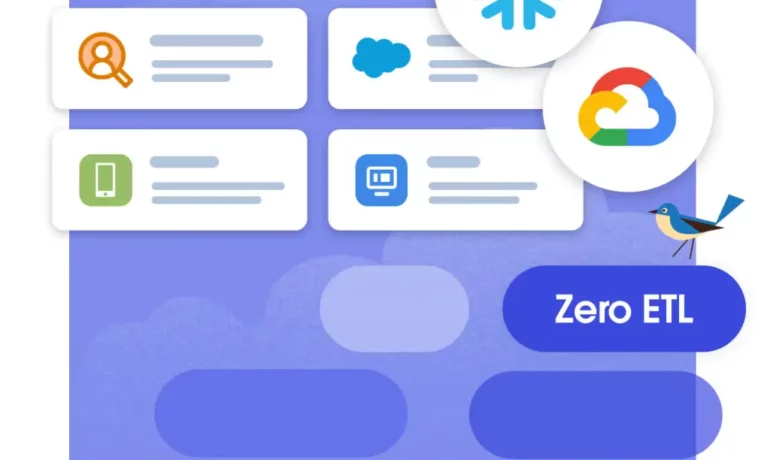
Why Salesforce Data Cloud is Transforming Business Operations In today’s digital-first economy, customer data is your most valuable asset—if you can harness it effectively. Salesforce Data Cloud revolutionizes how enterprises unify, analyze, and activate customer data across every touchpoint. 5 Key Business Transformations The Data Cloud Advantage: Beyond Traditional CDPs Unlike legacy customer data platforms, Salesforce Data Cloud delivers: Feature Traditional Solutions Salesforce Data Cloud Data Integration Manual ETL processes Real-time harmonization AI Capabilities Basic segmentation Predictive insights & recommendations Activation Limited channel support Native Salesforce app integration Scalability Fixed data models Elastic cloud infrastructure Total Cost Hidden implementation fees Transparent consumption model Proven Results Across Industries Financial Services Healthcare Retail Implementation Roadmap Phase 1: Foundation (Weeks 1-4) Phase 2: Activation (Weeks 5-8) Phase 3: Scaling (Ongoing) Overcoming Common Challenges “Our data is too messy”→ Automated data quality tools clean and standardize information during ingestion “We can’t afford another platform”→ Consumption-based pricing starts at $25K/year with proven 3-5X ROI “Our team isn’t technical enough”→ No-code tools like Flow Builder enable business user configuration The Future of Data-Driven Business As AI reshapes customer expectations, Salesforce Data Cloud provides the essential infrastructure to: Leading organizations are already achieving: Next Steps for Your Data Transformation “Companies using Data Cloud see 47% faster decision-making and 32% higher customer satisfaction scores within 6 months.” – Forrester Consulting Study Unlock your data’s full potential. Contact our specialists today to begin your assessment. Like Related Posts Who is Salesforce? Who is Salesforce? Here is their story in their own words. From our inception, we’ve proudly embraced the identity of Read more Salesforce Marketing Cloud Transactional Emails Salesforce Marketing Cloud Transactional Emails are immediate, automated, non-promotional messages crucial to business operations and customer satisfaction, such as order Read more Salesforce Unites Einstein Analytics with Financial CRM Salesforce has unveiled a comprehensive analytics solution tailored for wealth managers, home office professionals, and retail bankers, merging its Financial Read more AI-Driven Propensity Scores AI plays a crucial role in propensity score estimation as it can discern underlying patterns between treatments and confounding variables Read more
Read More
Salesforce Data Cloud

Salesforce Data Cloud

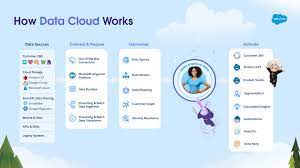
Revolutionizing Customer Engagement with the First Real-Time Platform – Salesforce Data Cloud In today’s business environment, customer expectations are soaring, with 71% anticipating personalized interactions at every touchpoint. However, the deluge of data, diverse devices, and evolving experiences poses a challenge for companies to maintain relevance. The typical business juggles an average of 1,061 form completions resulting in fragmented customer profiles and a sense of anonymity. The experience rather than giving personalized value. Leading to a sense of disconnection. Imagine a solution that consolidates all customer data, spanning channels and systems, into a unified source of truth. What if this real-time data could transform customer interactions? Empowering you to make them feel not just recognized but truly understood? Enter Salesforce Data Cloud, the inaugural real-time platform designed for customer magic. Data Cloud seamlessly integrates real-time data into Customer 360, unlocking the potential for enchanting customer experiences. Equipped with built-in connectors, Data Cloud aggregates data from diverse sources—Salesforce apps, mobile, web, connected devices, legacy systems via MuleSoft, and historical data from proprietary lakes—all in real time. However, the true power lies in distilling this vast pool of data into a cohesive customer view. Data Cloud achieves this by harmonizing and storing customer data at an extensive scale, crafting a dynamic, real-time customer graph—a singular source of truth. Real-Time Visibility The Data Cloud process involves connecting data streams, harmonizing the data into a real-time customer graph, and making it available across the Customer 360, facilitating engagement and creating magical experiences—all unfolding in real time. This real-time customer graph continually evolves as it absorbs more customer data. Activating this data across the entire Customer 360 empowers companies to create personalized, magical experiences. The real-time data from Data Cloud enhances automation with Flow and augments intelligence with Einstein, all under the reliable umbrella of Hyperforce infrastructure. The result? An automated, intelligent, and real-time Customer 360, delivering cost savings, time efficiency, and revenue growth. Data Cloud’s impact spans across the Customer 360 ecosystem: In essence, Data Cloud empowers businesses across industries to deliver real-time, intelligent, and automated experiences, fostering loyalty, cost efficiency, and increased ROI—a truly magical transformation! Like Related Posts Who is Salesforce? Who is Salesforce? Here is their story in their own words. From our inception, we’ve proudly embraced the identity of Read more Salesforce Marketing Cloud Transactional Emails Salesforce Marketing Cloud Transactional Emails are immediate, automated, non-promotional messages crucial to business operations and customer satisfaction, such as order Read more Salesforce Unites Einstein Analytics with Financial CRM Salesforce has unveiled a comprehensive analytics solution tailored for wealth managers, home office professionals, and retail bankers, merging its Financial Read more AI-Driven Propensity Scores AI plays a crucial role in propensity score estimation as it can discern underlying patterns between treatments and confounding variables Read more
Read More
Sales Cloud Einstein

Einstein GPT from Salesforce

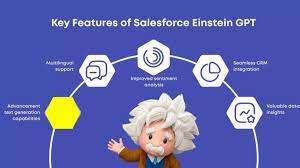
Salesforce, the leading global CRM provider, has unveiled Einstein GPT, the world’s first generative AI CRM technology. Engineered to craft personalized content across sales, service, marketing, commerce, and IT interactions, Einstein GPT aims to enhance employee productivity and elevate customer experiences. While Salesforce had previously integrated AI into its ecosystem with Einstein AI, the introduction of Einstein GPT represents a notable advancement. Leaning on OpenAI’s capabilities, Einstein GPT is an empowered iteration of existing technology, aligning with Salesforce’s commitment to artificial intelligence technology adoption. Einstein GPT from Salesforce Einstein GPT operates as an open and extensible platform, leveraging trusted, real-time data for training. It facilitates public and private AI models tailored for CRM, integrating seamlessly with OpenAI to offer generative AI capabilities. This enables users to connect data to OpenAI’s advanced models or choose external models, employing natural-language prompts within Salesforce CRM for content generation that dynamically adapts to evolving customer information and needs. The technology infusion of Einstein GPT involves combining Salesforce’s proprietary AI models with generative AI tech from an ecosystem of partners and real-time data from the Salesforce Data Cloud. This combination allows the generation of personalized content, including emails for sales, responses for customer service, targeted content for marketers, and auto-generated code for developers. The collaboration with OpenAI extends Salesforce’s capabilities by merging OpenAI’s enterprise-grade ChatGPT with Salesforce’s private AI models. Additionally, Salesforce Ventures announced the Generative AI Fund. This is a 0 million investment initiative supporting startups to foster responsible, trusted, and generative AI development. Einstein GPT introduces various applications, such as Einstein GPT for Sales, Service, Marketing, and Developers. These applications empower users to auto-generate things they used to have to write. Sales tasks, enhanced customer service interactions, dynamically created personalized content, and improved developer productivity through an AI chat assistant. To further enhance collaboration, Salesforce and OpenAI introduced the ChatGPT for Slack app. Thus offering AI-powered conversation summaries. The research tools and writing assistance within the Slack platform are aided by Einstein.. Prominent organizations like HPE, L’Oréal, RBC US Wealth Management, and S&P Global Ratings have acknowledged the value of generative AI. They are all improving customer engagement. Like1 Related Posts Who is Salesforce? Who is Salesforce? Here is their story in their own words. From our inception, we’ve proudly embraced the identity of Read more Salesforce Marketing Cloud Transactional Emails Salesforce Marketing Cloud Transactional Emails are immediate, automated, non-promotional messages crucial to business operations and customer satisfaction, such as order Read more Salesforce Unites Einstein Analytics with Financial CRM Salesforce has unveiled a comprehensive analytics solution tailored for wealth managers, home office professionals, and retail bankers, merging its Financial Read more AI-Driven Propensity Scores AI plays a crucial role in propensity score estimation as it can discern underlying patterns between treatments and confounding variables Read more
Read More
Salesforce Data Cloud

Data Cloud Salesforce

What is the data cloud in Salesforce? A hyperscale data platform built into Salesforce. Activate all your customer data across Salesforce applications with Data Cloud. Empower teams to engage customers, at every touchpoint, with relevant insights and contextual data in the flow of work. What is the benefit of data cloud? With Data Cloud, your company can feel confident in your customer information, and know that you’re taking the right steps to engage with your customer base across channels. The team at Tectonic can help you bring value to your wealth of customer data when you leverage Data Cloud. Data Cloud enables you to build a comprehensive, 360-degree view of your customers across all products, services, and interactions, ensuring all of your employees can quickly access and easily act on centralized, real-time information about their customers. Natively integrated into the Einstein1 Platform, companies can power automation, activation, analytics, and action across the world’s #1 AI CRM. Data has always been the foundation of CRM. But the connection between enterprise data and CRM is broken. Companies are collecting more data and signals about their customers than ever before, yet that data sits in siloes and is disconnected from the customer experience. And while most companies have invested in centralizing their data, it’s trapped. Over time, data strategies and customer strategies have diverged. Data Cloud isn’t just about bringing data together. It’s about unlocking your data in service of the customer. Deeply integrated into the Einstein1 Platform, Data Cloud makes all your data natively available across all Salesforce applications — Sales Cloud, Service Cloud, Marketing Cloud, Commerce Cloud, Tableau, and MuleSoft — to power automation and business processes and inform AI. Like Related Posts Demandbase Salesforce Integration The integration of Demandbase with Salesforce creates a seamless connection between Demandbase One and your Salesforce CRM, establishing a bidirectional Read more Box and Salesforce Integration What is Box and Salesforce integration? Together, Box and Salesforce integration bring you seamless solutions that make it easy for Read more Case Study: Tribal Nation Resorts and Casinos-Hospitality and Gaming-Salesforce Service/Marketing Clouds Tribal Nation with 3 Casinos, 2 Hotels and 1 Golf Course.  In total the Resorts and Casinos offer more than Read more Important Characteristics to Look for in a Salesforce Partner Consulting partners tailor Salesforce solutions to unique business needs, from initial setup to ongoing optimization. They provide comprehensive support, training, Read more

Read More
Snowflake Database

Snowflake Database

What is Snowflake Database? Snowflake Database serves as the repository for an organization’s structured and semi-structured data sets, facilitating processing and analysis. It offers automated management of various aspects of data storage, including organization, structure, metadata, file size, compression, and statistics. Snowflake: The Global Data Cloud Platform Snowflake stands as a unified global platform powering the Data Cloud, connecting businesses worldwide across diverse data types, scales, and workloads, fostering seamless data collaboration. Understanding Snowflake Database Snowflake, a relational database hosted in the cloud, serves as a data warehousing solution. Leveraging infrastructure from Google Cloud Platform, Azure, and AWS, it combines traditional database features with innovative functionalities. Snowflake: More Than Just a Data Warehouse Snowflake’s Data Cloud encompasses a pure cloud-based SQL data warehouse, uniquely engineered to handle all data and analytics aspects. It offers high performance, concurrency, simplicity, and affordability unmatched by other data warehousing solutions. Snowflake Database’s Role in ETL Processes Snowflake streamlines data loading, transformation, and storage, eliminating the need for additional ETL tools. Its unique features, scalability, and security have led many organizations worldwide to adopt it as their primary Data Warehousing solution. Snowflake’s Integration with SQL and Python Built on a new SQL database engine, Snowflake’s data warehouse architecture is tailored for the cloud. Moreover, Snowflake provides first-class Python APIs for managing core resources, enabling seamless integration without SQL queries. Challenges and Advantages of Snowflake Despite its advantages such as scalability, performance tuning, and data security, Snowflake faces challenges like higher costs and limited support for unstructured data. Snowflake’s Position in Comparison to Other Databases Snowflake offers faster, easier-to-use, and more flexible data storage and analytic solutions compared to traditional offerings. It is not built on existing database technology or big data software platforms like Hadoop. Ownership and Integration Snowflake operates on major public clouds like AWS, Azure, and GCP, offering pre-warmed virtual machines to support rapid compute. Salesforce had a stake in Snowflake but sold its holdings, making Snowflake an independent entity. Snowflake vs. Salesforce: Choosing the Right Solution Snowflake is preferable for businesses requiring a versatile data platform, whereas Salesforce Data Cloud suits organizations already using Salesforce products due to its seamless integration. Some companies utilize both platforms for diverse needs. Like Related Posts Who is Salesforce? Who is Salesforce? Here is their story in their own words. From our inception, we’ve proudly embraced the identity of Read more Salesforce Marketing Cloud Transactional Emails Salesforce Marketing Cloud Transactional Emails are immediate, automated, non-promotional messages crucial to business operations and customer satisfaction, such as order Read more Salesforce Unites Einstein Analytics with Financial CRM Salesforce has unveiled a comprehensive analytics solution tailored for wealth managers, home office professionals, and retail bankers, merging its Financial Read more AI-Driven Propensity Scores AI plays a crucial role in propensity score estimation as it can discern underlying patterns between treatments and confounding variables Read more

Read More
Salesforce Data Cloud

Key Components of Salesforce Data Cloud

Salesforce Data Cloud organizes and unifies data across Salesforce and other external data sources.  After ingestion, it can drive personalization and engagement. Components of Salesforce Data Cloud to explore. Data Cloud expands Salesforce capabilities by using the best pieces of the developer-friendly Salesforce Platform and adding a highly scalable infrastructure. Data Cloud is an evolution of Customer Data Platform—which was originally designed for marketers but now caters to broader use cases beyond marketing.  The magic of Data Cloud is in creating experiences that wow customers. Key features and components of Salesforce Data Cloud include: Like Related Posts Who is Salesforce? Who is Salesforce? Here is their story in their own words. From our inception, we’ve proudly embraced the identity of Read more Salesforce Marketing Cloud Transactional Emails Salesforce Marketing Cloud Transactional Emails are immediate, automated, non-promotional messages crucial to business operations and customer satisfaction, such as order Read more Salesforce Unites Einstein Analytics with Financial CRM Salesforce has unveiled a comprehensive analytics solution tailored for wealth managers, home office professionals, and retail bankers, merging its Financial Read more AI-Driven Propensity Scores AI plays a crucial role in propensity score estimation as it can discern underlying patterns between treatments and confounding variables Read more

Read More
ChatGPT and Einstein GPT

ChatGPT and Einstein GPT

Artificial intelligence (AI) has been rapidly advancing globally, with breakthroughs captivating professionals across various sectors. One milestone that has gained significant attention is the emergence of ChatGPT, a cutting-edge language model revolutionizing the tech landscape. This development has profoundly impacted businesses relying on Salesforce for their customer relationship management (CRM) needs. In March 2023, Salesforce unveiled its latest AI innovation, Einstein GPT, promising to transform how companies engage with their clientele. In this article, we explore what Salesforce Einstein GPT entails and how it can benefit teams across diverse industries. When OpenAI introduced ChatGPT in November 2022, they didn’t expect the overwhelming response it received. Initially positioned as a “research preview,” this AI chatbot aimed to refine existing technology while soliciting feedback from users. However, ChatGPT quickly became a viral sensation, surpassing OpenAI’s expectations and prompting them to adapt to its newfound popularity. Developed on the foundation of the GPT-3.5 language model, ChatGPT was specifically tailored to facilitate engaging and accessible conversations, distinguishing it from its predecessors. Its launch attracted a diverse user base keen to explore its capabilities, prompting OpenAI to prioritize addressing potential misuse and enhancing its safety features. As ChatGPT gained traction, it caught the attention of Salesforce, a leading CRM provider. In March 2023, Salesforce unveiled Einstein GPT, its own AI innovation, poised to transform customer engagement. Built on the GPT-3 architecture and seamlessly integrated into Salesforce Clouds, Einstein GPT promised to revolutionize how businesses interact with their clientele. Einstein GPT boasts a range of features designed to personalize customer experiences and streamline workflows. From generating natural language responses to crafting personalized content and automating tasks, Einstein GPT offers versatility and value across industries. By leveraging both Einstein AI and GPT technology, businesses can unlock unprecedented efficiency and deliver superior customer experiences. Despite its success, OpenAI acknowledges the need for ongoing refinement and vigilance, emphasizing the importance of responsible deployment and transparency in the development of AI technology. Exploring Einstein GPT Salesforce presents Einstein GPT as the premier generative AI tool for CRM worldwide. Utilizing the advanced GPT-3 architecture, Einstein GPT seamlessly integrates into all Salesforce Clouds, including Tableau, MuleSoft, and Slack. This groundbreaking technology empowers users to generate natural language responses to customer inquiries, craft personalized content, and compose entire email messages on behalf of sales personnel. With its high degree of customization, Einstein GPT can be finely tuned to meet the specific needs of various industries, use cases, and customer requirements, delivering significant value to businesses of all sizes and sectors. Objectives of Salesforce AI Einstein GPT Salesforce AI Einstein GPT is designed to achieve several key objectives: Distinguishing Einstein GPT from Einstein AI Einstein GPT represents the latest evolution of Salesforce’s Einstein artificial intelligence technology. Unlike its predecessors, Einstein GPT integrates proprietary Einstein AI models with ChatGPT and other leading large language models. This integration enables users to interact with CRM data using natural language prompts, resulting in highly personalized, AI-generated content and triggering powerful automations that enhance workflows and productivity. By leveraging both Einstein AI and GPT technology, businesses can achieve unparalleled efficiency and deliver exceptional customer experiences. Features of Einstein GPT in Salesforce CRM Key features and capabilities of Salesforce Einstein chatbot GPT include: Utilizing Einstein GPT for Business Improvement Einstein GPT can be leveraged across various domains to enhance business operations: Integration with Salesforce Data Cloud Salesforce Data Cloud, a cloud-based data management system, enables real-time data aggregation from diverse sources. Einstein GPT utilizes unified customer data profiles from the Salesforce Data Cloud to personalize interactions throughout the customer journey. OpenAI on ChatGPT Methods We trained this model using Reinforcement Learning from Human Feedback (RLHF), using the same methods as InstructGPT, but with slight differences in the data collection setup. We trained an initial model using supervised fine-tuning: human AI trainers provided conversations in which they played both sides—the user and an AI assistant. We gave the trainers access to model-written suggestions to help them compose their responses. We mixed this new dialogue dataset with the InstructGPT dataset, which we transformed into a dialogue format. To create a reward model for reinforcement learning, we needed to collect comparison data, which consisted of two or more model responses ranked by quality. To collect this data, we took conversations that AI trainers had with the chatbot. We randomly selected a model-written message, sampled several alternative completions, and had AI trainers rank them. Using these reward models, we can fine-tune the model using Proximal Policy Optimization. We performed several iterations of this process. ChatGPT is fine-tuned from a model in the GPT-3.5 series, which finished training in early 2022. You can learn more about the 3.5 series here. ChatGPT and GPT-3.5 were trained on an Azure AI supercomputing infrastructure. Limitations ChatGPT and Einstein GPT Salesforce Einstein GPT signifies a significant advancement in AI technology, empowering businesses to deliver tailored customer experiences and streamline operations. With its integration into Salesforce CRM and other platforms, Einstein GPT offers unprecedented capabilities for personalized engagement and automated insights, ensuring organizations remain competitive in today’s dynamic market landscape. When OpenAI quietly launched ChatGPT in late November 2022, the San Francisco-based AI company didn’t anticipate the viral sensation it would become. Initially viewed as a “research preview,” it was meant to showcase a refined version of existing technology while gathering feedback from the public to address its flaws. However, the overwhelming success of ChatGPT caught OpenAI off guard, leading to a scramble to capitalize on its newfound popularity. ChatGPT, based on the GPT-3.5 language model, was fine-tuned to be more conversational and accessible, setting it apart from previous iterations. Its release marked a significant milestone, attracting millions of users eager to test its capabilities. OpenAI quickly realized the need to address potential misuse and improve the model’s safety features. Since its launch, ChatGPT has undergone several updates, including the implementation of adversarial training to prevent users from exploiting it (known as “jailbreaking”). This technique involves pitting multiple chatbots against each other to identify and neutralize malicious behavior. Additionally,

Read More
gettectonic.com