Salesforce Ecosystem Archives - gettectonic.com
Machine-Augmented World

Machine-Augmented World

A machine-augmented world, in the context of Salesforce, refers to a future where technology, particularly Augmented Reality (AR) and Artificial Intelligence (AI) and Machine Learning (ML), enhances and expands human capabilities and interactions, especially within the Salesforce ecosystem.  Here’s how Salesforce is embracing the “machine-augmented world”: Essentially, Salesforce’s approach to the machine-augmented world is centered on leveraging technology to enhance human capabilities and interactions within the CRM platform, leading to: Like Related Posts Who is Salesforce? Who is Salesforce? Here is their story in their own words. From our inception, we’ve proudly embraced the identity of Read more Salesforce Marketing Cloud Transactional Emails Salesforce Marketing Cloud Transactional Emails are immediate, automated, non-promotional messages crucial to business operations and customer satisfaction, such as order Read more Salesforce Unites Einstein Analytics with Financial CRM Salesforce has unveiled a comprehensive analytics solution tailored for wealth managers, home office professionals, and retail bankers, merging its Financial Read more AI-Driven Propensity Scores AI plays a crucial role in propensity score estimation as it can discern underlying patterns between treatments and confounding variables Read more

Read More
Salesforce AI Agents and New Data Cloud Features

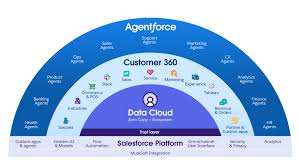
Salesforce CDP and Data Cloud

What is the difference between Salesforce CDP and data Cloud? AI Overview Salesforce Data Cloud and Salesforce CDP (Customer Data Platform) are closely related, but Data Cloud is a broader, more comprehensive platform. Data Cloud extends the core CDP functionality to encompass all business data, not just customer data, and integrates it with the broader Salesforce ecosystem according to saasguru.  Here’s a breakdown of the key differences: Salesforce CDP (Now part of Data Cloud): Salesforce Data Cloud: Key Differences Summarized: In essence, Data Cloud is a more mature and broader evolution of the original CDP functionality, extending its benefits to a wider range of business data and applications within the Salesforce ecosystem according to Salesforce Ben.  Like Related Posts Who is Salesforce? Who is Salesforce? Here is their story in their own words. From our inception, we’ve proudly embraced the identity of Read more Salesforce Marketing Cloud Transactional Emails Salesforce Marketing Cloud Transactional Emails are immediate, automated, non-promotional messages crucial to business operations and customer satisfaction, such as order Read more Salesforce Unites Einstein Analytics with Financial CRM Salesforce has unveiled a comprehensive analytics solution tailored for wealth managers, home office professionals, and retail bankers, merging its Financial Read more AI-Driven Propensity Scores AI plays a crucial role in propensity score estimation as it can discern underlying patterns between treatments and confounding variables Read more
Read More
Revenue Cloud

Salesforce Revenue Cloud Advanced

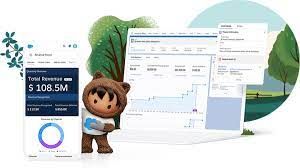
Salesforce Revenue Cloud Advanced (RCA): The Ultimate Quote-to-Cash Solution Revolutionize Your Revenue Operations Salesforce Revenue Cloud Advanced (RCA) is an end-to-end revenue management platform that transforms complex quote-to-cash processes into automated, compliant, and customer-centric experiences. Designed for mid-market and enterprise organizations, RCA empowers businesses to: ✔ Simplify CPQ, billing, and revenue recognition✔ Ensure compliance with ASC 606/IFRS 15✔ Accelerate deal velocity✔ Manage multi-channel revenue streams Ideal for: SaaS, Manufacturing, High Tech, Healthcare, and other industries with subscription models, usage-based pricing, and dynamic bundling. Key Capabilities of Revenue Cloud Advanced 1. Intelligent CPQ (Configure, Price, Quote) 2. Flexible Billing & Monetization 3. Accurate Revenue Recognition 4. Partner & Channel Management Who Benefits from RCA? Team Key Value Sales Faster quoting, guided selling, deal acceleration Finance Automated revenue compliance, reduced manual errors RevOps End-to-end process automation, scalability IT Pre-built integrations, low technical debt Why Choose Salesforce RCA? Native to the Salesforce Ecosystem Seamlessly integrates with: AI-Powered Insights Enterprise-Grade Scalability Transform Your Revenue Lifecycle ✅ Close deals faster with AI-guided selling✅ Eliminate billing errors with automation✅ Stay audit-ready with compliant revenue reporting✅ Scale effortlessly as your business grows Ready to optimize your quote-to-cash process? Contact Tectonic today. Like Related Posts Who is Salesforce? Who is Salesforce? Here is their story in their own words. From our inception, we’ve proudly embraced the identity of Read more Salesforce Marketing Cloud Transactional Emails Salesforce Marketing Cloud Transactional Emails are immediate, automated, non-promotional messages crucial to business operations and customer satisfaction, such as order Read more Salesforce Unites Einstein Analytics with Financial CRM Salesforce has unveiled a comprehensive analytics solution tailored for wealth managers, home office professionals, and retail bankers, merging its Financial Read more AI-Driven Propensity Scores AI plays a crucial role in propensity score estimation as it can discern underlying patterns between treatments and confounding variables Read more
Read More

The Future of ERP: Agile, Modular, and Built for Growth

In today’s fast-moving business landscape, agility separates industry leaders from the rest. Outdated, monolithic ERP systems can’t keep up—they lock companies into rigid workflows instead of adapting to their needs. Enter modular ERP, a modern approach that combines enterprise-grade structure with the flexibility businesses demand. And when built natively on Salesforce, it becomes a game-changer—delivering seamless integration, real-time insights, and unmatched scalability. Why Legacy ERP Systems Are Failing Businesses Traditional ERP solutions were designed as one-size-fits-all systems, promising to handle everything from finance to supply chain in a single platform. But in reality, they often create more problems than they solve: For dynamic industries like manufacturing, distribution, and retail, these limitations lead to inefficiencies, delayed decisions, and rising operational costs. What Makes Modular ERP Different? Modular ERP redefines enterprise software by allowing businesses to deploy only what they need—and scale when ready. Think of it as a customizable toolkit: start with core functions like inventory or financials, then add supply chain, procurement, or manufacturing modules as your business grows. This approach eliminates the risks of a full-scale ERP overhaul while maximizing ROI—no bloat, no unnecessary features, just what you need to run smarter. Why Salesforce Is the Ideal ERP Foundation Salesforce is the world’s #1 CRM, but its power extends far beyond sales. As an ERP platform, it offers: ✅ Real-time data sync across sales, finance, logistics, and operations✅ True cloud scalability with enterprise-grade security✅ Low-code customization for rapid deployment✅ Seamless integration with Salesforce apps and third-party tools✅ Mobile-friendly access for today’s hybrid workforce When ERP is built natively on Salesforce businesses get the best of both worlds: the depth of enterprise resource planning and the agility of the Salesforce ecosystem. 5 Key Benefits of Modular ERP on Salesforce Real-World Impact: A Manufacturer’s Success Story A mid-sized industrial parts manufacturer was struggling with siloed systems—their legacy ERP couldn’t adapt to remote work or shifting demand. By implementing Salesforce, they: ✔ Cut inventory costs by 25% with real-time tracking✔ Reduced production cycle times by 18%✔ Gained end-to-end operational visibility✔ Scaled effortlessly by adding supply chain and finance modules later The Bottom Line: ERP That Works for You The future of ERP isn’t monolithic—it’s modular, cloud-based, and built for change. With ERP on Salesforce, businesses can finally break free from rigid systems and embrace a solution that evolves with them. Ready to modernize your operations? The right ERP shouldn’t hold you back—it should propel you forward. Like Related Posts Who is Salesforce? Who is Salesforce? Here is their story in their own words. From our inception, we’ve proudly embraced the identity of Read more Salesforce Marketing Cloud Transactional Emails Salesforce Marketing Cloud Transactional Emails are immediate, automated, non-promotional messages crucial to business operations and customer satisfaction, such as order Read more Salesforce Unites Einstein Analytics with Financial CRM Salesforce has unveiled a comprehensive analytics solution tailored for wealth managers, home office professionals, and retail bankers, merging its Financial Read more AI-Driven Propensity Scores AI plays a crucial role in propensity score estimation as it can discern underlying patterns between treatments and confounding variables Read more
Read More
Mulesoft

Salesforce’s MuleSoft Paves the Way for Autonomous AI Agents in Enterprise IT

AI agents are coming to the enterprise—and MuleSoft is building the roads they’ll run on. As AI agents emerge as the next evolution of workplace automation, MuleSoft—Salesforce’s integration powerhouse—is rolling out new standards to bring order to the chaos. The company recently introduced two key protocols, Model Context Protocol (MCP) and Agent2Agent (A2A), designed to help AI agents operate autonomously across enterprise systems while maintaining security and oversight. This builds on Salesforce’s Agentforce toolkit, now in its third iteration, which provides developers with the building blocks to create AI agents within the Salesforce ecosystem. The latest update adds a centralized control hub and support for MCP and A2A—two emerging standards that could help AI agents work together seamlessly, even when built by different vendors. Why MuleSoft? The Missing Link for AI Agents MuleSoft, acquired by Salesforce in 2018, originally specialized in connecting siloed enterprise systems via APIs. Now, it’s applying that same expertise to AI agents, ensuring they can access data, execute tasks, and collaborate without requiring custom integrations for every new bot. The two new protocols serve distinct roles: But autonomy requires guardrails. MuleSoft’s Flex Gateway acts as a traffic controller, determining which agents can access what data, what actions they’re permitted to take, and when to terminate an interaction. This lets enterprises retrofit existing APIs for agent use without overhauling their infrastructure. How AI Agents Could Reshape Workflows A typical use case might look like this: This kind of multi-agent collaboration could automate complex workflows—but only if the agents play by the same rules. The Challenge: Agents Are Still Unpredictable While the vision is compelling, AI agents remain more promise than product. Unlike traditional software, agents interpret, learn, and adapt—which makes them powerful but also prone to unexpected behavior. Early adopters like AstraZeneca (testing agents for research and sales) and Cisco Meraki (using MuleSoft’s “AI Chain” to connect LLMs with partner portals) are still in experimental phases. MuleSoft COO Ahyoung An acknowledges the hesitation: many enterprises are intrigued but wary of the risks. Early implementations have revealed issues like agents stuck in infinite loops or processes that fail to terminate. To ease adoption, MuleSoft is offering training programs, entry-level pricing for SMBs, and stricter security controls. The Bigger Picture: Who Controls the Interface Controls the Market Salesforce isn’t trying to build the best AI agent—it’s building the platform that connects them all. Much like early cloud providers didn’t just sell storage but the tools to manage it, MuleSoft aims to be the orchestration layer for enterprise AI. The two protocols are set for general release in July. If successful, they could help turn today’s fragmented AI experiments into a scalable ecosystem of autonomous agents—with MuleSoft at the center. Key Takeaways: ✅ MuleSoft’s new protocols (MCP & A2A) standardize how AI agents interact with systems and each other.✅ Flex Gateway provides governance, ensuring agents operate within defined boundaries.✅ Early use cases show promise, but widespread adoption hinges on reliability and security.✅ Salesforce is positioning MuleSoft as the “operating system” for enterprise AI agents. The bottom line: AI agents are coming—and MuleSoft is laying the groundwork to make them enterprise-ready. Like Related Posts Who is Salesforce? Who is Salesforce? Here is their story in their own words. From our inception, we’ve proudly embraced the identity of Read more Salesforce Marketing Cloud Transactional Emails Salesforce Marketing Cloud Transactional Emails are immediate, automated, non-promotional messages crucial to business operations and customer satisfaction, such as order Read more Salesforce Unites Einstein Analytics with Financial CRM Salesforce has unveiled a comprehensive analytics solution tailored for wealth managers, home office professionals, and retail bankers, merging its Financial Read more AI-Driven Propensity Scores AI plays a crucial role in propensity score estimation as it can discern underlying patterns between treatments and confounding variables Read more

Read More
Salesforce prompt builder

Mastering Salesforce Prompt Builder

Mastering Salesforce Prompt Builder: The Complete Guide to AI-Powered Productivity Why Prompt Engineering Matters in the Salesforce Ecosystem As Salesforce doubles down on generative and agentic AI investments, teams across the ecosystem are racing to implement AI solutions. Yet many struggle with: Enter Prompt Builder — Salesforce’s native tool for declarative, no-code prompt engineering. This insight walks through everything from setup to advanced techniques. Understanding Prompts: The Foundation of Salesforce AI What Exactly is a Prompt? A prompt is a structured instruction that guides AI to generate relevant, consistent responses. In Salesforce, prompts can: Example Prompt Use Case: “As a sales assistant (ROLE), draft a 100-word follow-up email (TASK) for [Contact.Name] about [Opportunity.Name]. Use a professional but friendly tone and include next steps (FORMAT).” Getting Started with Prompt Builder Enablement Checklist Pro Tip: Refresh your browser after enabling to access Prompt Builder. Building Your First Prompt: A Step-by-Step Walkthrough Step 1: Configure Prompt Details Field Description Prompt Type Choose from: Sales Email, Field Generation, Record Summary, Knowledge Answers, or Flex Templates Name/API Name Unique identifiers for your prompt Related Object The Salesforce object this prompt will reference Step 2: Craft the Prompt Template Apply the Role-Task-Format framework: Advanced Techniques: Step 3: Test & Iterate Step 4: Activate & Deploy Embed prompts in: Prompt Engineering Best Practices 1. Design with Purpose 2. Implement Guardrails Risk Solution Hallucinations Add “When unsure, respond: ‘I don’t have enough context’” Tone inconsistencies Specify: “Use [brand] voice guidelines from Knowledge Article #123” Data leakage Leverage CRM data grounding and Einstein Trust Layer 3. Measure & Optimize Track key metrics via Agentforce Analytics:✅ Prompt usage frequency✅ User acceptance rates✅ Downstream KPIs (e.g., case resolution time) Scaling AI Responsibly Governance Framework DevOps Integration Beyond Prompts: The Bigger AI Picture While Prompt Builder excels at generative tasks, combine it with: Like Related Posts Who is Salesforce? Who is Salesforce? Here is their story in their own words. From our inception, we’ve proudly embraced the identity of Read more Salesforce Marketing Cloud Transactional Emails Salesforce Marketing Cloud Transactional Emails are immediate, automated, non-promotional messages crucial to business operations and customer satisfaction, such as order Read more Salesforce Unites Einstein Analytics with Financial CRM Salesforce has unveiled a comprehensive analytics solution tailored for wealth managers, home office professionals, and retail bankers, merging its Financial Read more AI-Driven Propensity Scores AI plays a crucial role in propensity score estimation as it can discern underlying patterns between treatments and confounding variables Read more

Read More
Salesforce Data Cloud

Data Cloud and Data Cloud One

Salesforce Data Cloud is a platform for building unified customer profiles by consolidating data from various sources. Data Cloud One, on the other hand, is a feature within Data Cloud that facilitates bidirectional data sharing and access across multiple Salesforce organizations.  Here’s the difference: In essence: Data Cloud is the underlying platform for unifying customer data, while Data Cloud One is a feature that simplifies the use of Data Cloud across multiple Salesforce orgs. Data Cloud One enhances the power of Data Cloud by enabling easy access to a unified customer 360 across multiple orgs, rather than requiring separate Data Cloud instances for each. Like Related Posts Who is Salesforce? Who is Salesforce? Here is their story in their own words. From our inception, we’ve proudly embraced the identity of Read more Salesforce Marketing Cloud Transactional Emails Salesforce Marketing Cloud Transactional Emails are immediate, automated, non-promotional messages crucial to business operations and customer satisfaction, such as order Read more Salesforce Unites Einstein Analytics with Financial CRM Salesforce has unveiled a comprehensive analytics solution tailored for wealth managers, home office professionals, and retail bankers, merging its Financial Read more AI-Driven Propensity Scores AI plays a crucial role in propensity score estimation as it can discern underlying patterns between treatments and confounding variables Read more

Read More
Skillsoft and Salesforce Partner

Skillsoft and Salesforce Partner

Skillsoft and Salesforce Partner to Revolutionize Customer Support Training with AI Skillsoft (NYSE: SKIL), a global leader in corporate learning, today announced a strategic partnership with Salesforce to integrate its AI-powered coaching platform, Skillsoft CAISY™, directly into the Salesforce ecosystem. This collaboration will empower customer support teams to develop critical communication, empathy, and problem-solving skills—all within their existing Salesforce workflows. The Challenge: Bridging the Customer Service Skills Gap Today’s customers demand exceptional service—80% say experience is as important as the product itself (Salesforce). Yet, 70% of service leaders report persistent challenges due to underprepared teams, while 59% cite upskilling as a top priority. Traditional training methods often fail to prepare agents for real-world, high-pressure interactions. The Solution: AI-Powered Learning in the Flow of Work Skillsoft CAISY™ brings immersive, real-time coaching to Salesforce users through two key integrations: “Exceptional service isn’t accidental—it’s built through consistent practice and feedback,” said Apratim Purakayastha, GM of Talent Development at Skillsoft. “By bringing CAISY™ into Salesforce, we’re turning support teams into competitive differentiators.” Why It Matters “This partnership unlocks the next evolution of AI-human collaboration in customer service,” added Tyler Carlson, SVP of AppExchange at Salesforce. Availability The integrations are available now for Salesforce customers. Learn more at Skillsoft.com/Salesforce. About SkillsoftSkillsoft (NYSE: SKIL) empowers 95M+ learners worldwide with AI-driven talent development solutions. Trusted by 60% of Fortune 1000 companies, Skillsoft helps organizations close skill gaps and future-proof workforces. TL;DR: Skillsoft and Salesforce are teaming up to embed AI-powered coaching (CAISY™) directly into customer service workflows. Agents now get real-time feedback on live calls and practice tough scenarios in Salesforce—no extra tools required. Goal? Turn support teams into experience heroes. Want AI to train your team? Or sticking with old-school methods? Let’s debate in the comments. Like Related Posts Who is Salesforce? Who is Salesforce? Here is their story in their own words. From our inception, we’ve proudly embraced the identity of Read more Salesforce Marketing Cloud Transactional Emails Salesforce Marketing Cloud Transactional Emails are immediate, automated, non-promotional messages crucial to business operations and customer satisfaction, such as order Read more Salesforce Unites Einstein Analytics with Financial CRM Salesforce has unveiled a comprehensive analytics solution tailored for wealth managers, home office professionals, and retail bankers, merging its Financial Read more AI-Driven Propensity Scores AI plays a crucial role in propensity score estimation as it can discern underlying patterns between treatments and confounding variables Read more
Read More
salesforce agentforce rapid deployment

Tectonic and Agentforce

Salesforce Agentforce is revolutionizing how businesses deliver personalized and always-available support through powerful, autonomous AI agents. To fully capitalize on this innovative tool, understanding both your business needs and the Salesforce ecosystem is essential. With extensive experience in Salesforce and developing customized AI solutions, Tectonic is well-positioned to help businesses and government agencies visualize a working proof of concept for adopting Agentforce. Together, Tectonic will help companies develop AI agents tailored to their industry, providing 24/7 support for both employees and customers, regardless of location. At Dreamforce 2024, Salesforce unveiled Agentforce, one of the most anticipated AI releases of the year. Built on Salesforce’s advanced AI technology, Agentforce is poised to transform business operations. While Salesforce is known for its exciting announcements, it’s often challenging to discern how these new products apply to your business. So, let’s get past the hype. What does Agentforce really offer, and how can Tectonic help your company take advantage of it today? Key Use Cases for Agentforce CX Agent (Internal Usage) The Customer Experience (CX) Agent is an AI-powered solution designed to enhance customer interactions across various channels. Tectonic’s implementation focuses on providing human agents the information they need from numerous data sources to respond to customer inquiries, resolving issues, and guiding users through processes. By ensuring seamless communication and support, businesses can elevate the overall customer experience and foster loyalty. Customer Service (External Customer Usage) Agentforce transforms customer service operations by deploying AI agents that handle common inquiries, troubleshoot issues, and provide information 24/7. Tectonic’s implementation allows organizations to reduce wait times and enhance service quality, freeing human agents to tackle more complex problems. This shift not only improves operational efficiency but also leads to higher customer satisfaction levels. How Your Business Can Leverage Agentforce Agentforce isn’t just about adding AI—it’s about improving efficiency and reducing the burden on employees. The challenge lies in integrating these AI agents effectively into existing processes. That’s where Tectonic steps in. With a focus on helping businesses quickly realize the value of Agentforce, Tectonic can help you implement a Proof of Concept (POC) to demonstrate how AI could impact operations, whether it’s improving customer service or enhancing sales. Why Start Now? Agentforce’s release has captured the attention of businesses eager to adopt cutting-edge AI technology. However, turning Agentforce into a game-changer requires a practical approach: Availability for these POCs is limited, so now is the time to act if you’re interested in testing Agentforce. This opportunity allows businesses to see firsthand how AI agents can improve efficiency, productivity, and customer experience. How to Get Started Tectonic’s team can walk you through potential use cases and demonstrate how autonomous agents can boost customer service, empower sales teams, optimize marketing, and more. If you’re ready to take the next step, reach out to one of Tectonic’s experts to see how Agentforce can transform your business. Like Related Posts Who is Salesforce? Who is Salesforce? Here is their story in their own words. From our inception, we’ve proudly embraced the identity of Read more Salesforce Marketing Cloud Transactional Emails Salesforce Marketing Cloud Transactional Emails are immediate, automated, non-promotional messages crucial to business operations and customer satisfaction, such as order Read more Salesforce Unites Einstein Analytics with Financial CRM Salesforce has unveiled a comprehensive analytics solution tailored for wealth managers, home office professionals, and retail bankers, merging its Financial Read more AI-Driven Propensity Scores AI plays a crucial role in propensity score estimation as it can discern underlying patterns between treatments and confounding variables Read more
Read More
AI Project Planning by Workflows

Salesforce Flow Explained

Salesforce Flow: The No-Code Automation Powerhouse Salesforce Flow revolutionizes business process automation by enabling visual, click-based workflow design—eliminating the need for complex coding. From simple task automation to intricate multi-system integrations, Flow empowers admins and business users to streamline operations, enhance accuracy, and boost productivity—all within the Salesforce ecosystem. Why Salesforce Flow? Key Benefits ✅ No-Code Simplicity – Build complex automations with drag-and-drop ease, reducing reliance on developers.✅ End-to-End Automation – Handle data updates, approvals, user guidance, and external integrations seamlessly.✅ Error Reduction – Minimize manual entry mistakes with automated, logic-driven workflows.✅ Flexible Triggers – Run flows on demand, on schedule, or in response to real-time record changes.✅ Enhanced User Experience – Guide employees through processes with intuitive, step-by-step screens. Types of Salesforce Flows & When to Use Them Flow Type Best For Screen Flows Interactive user interfaces (e.g., onboarding wizards, guided data entry). Record-Triggered Flows Auto-updating records on creation/modification (e.g., lead scoring, SLA tracking). Schedule-Triggered Flows Recurring tasks (e.g., nightly data syncs, batch record updates). Auto-Launched Flows API-triggered automations or sub-processes within larger workflows. Platform Event Flows Real-time integrations with external systems (e.g., ERP, payment gateways). Top Use Cases for Salesforce Flow 1. Automated Data Management 2. Smarter Approval Workflows 3. Guided User Journeys 4. Seamless Integrations 5. Advanced Business Logic Flow vs. Process Builder vs. Apex: Which to Use? Tool Complexity Best For Limitations Flow Low to High End-to-end automation, UI-guided processes. Not for ultra-high-volume transactions. Process Builder Low Simple record-triggered actions. Limited logic capabilities. Apex (Code) High Custom logic, heavy computations. Requires developer expertise. Pro Tip: Salesforce recommends migrating from Process Builder to Flow, as it offers greater flexibility and future-proofing. Getting Started with Salesforce Flow The Future of Automation Is Clicks, Not Code Salesforce Flow puts enterprise-grade automation in the hands of non-developers, accelerating digital transformation. By reducing manual work, cutting errors, and ensuring process consistency, it’s a game-changer for CRM efficiency. Ready to automate? Start with a simple Record-Triggered Flow today and scale up as your needs grow! Key Takeaways:✔ No-code automation for admins & business users.✔ Five flow types cover everything from UI guides to backend integrations.✔ Replaces Process Builder as Salesforce’s recommended automation tool.✔ Critical for CRM efficiency—saves time, reduces errors, and enforces best practices. Like Related Posts Who is Salesforce? Who is Salesforce? Here is their story in their own words. From our inception, we’ve proudly embraced the identity of Read more Salesforce Marketing Cloud Transactional Emails Salesforce Marketing Cloud Transactional Emails are immediate, automated, non-promotional messages crucial to business operations and customer satisfaction, such as order Read more Salesforce Unites Einstein Analytics with Financial CRM Salesforce has unveiled a comprehensive analytics solution tailored for wealth managers, home office professionals, and retail bankers, merging its Financial Read more AI-Driven Propensity Scores AI plays a crucial role in propensity score estimation as it can discern underlying patterns between treatments and confounding variables Read more

Read More
What is Up with Salesforce Analytics?

What is Up with Salesforce Analytics?

Tableau/CRM Analytics, Tableau Next, and Marketing Intelligence represent different facets of a unified analytics platform built on the Salesforce ecosystem. They offer various levels of integration and AI-driven capabilities for data analysis and insights, catering to diverse user needs within organizations.  Let’s break it down: Tableau/CRM Analytics (formerly Einstein Analytics): Tableau Next: Marketing Intelligence: Relationship and Integration: In essence, Tableau/CRM Analytics provides a foundational layer for CRM-specific analytics, while Tableau Next and Marketing Intelligence build upon that foundation to offer more advanced and AI-driven insights across the entire organization, according to Salesforce.  Like Related Posts Who is Salesforce? Who is Salesforce? Here is their story in their own words. From our inception, we’ve proudly embraced the identity of Read more Salesforce Marketing Cloud Transactional Emails Salesforce Marketing Cloud Transactional Emails are immediate, automated, non-promotional messages crucial to business operations and customer satisfaction, such as order Read more Salesforce Unites Einstein Analytics with Financial CRM Salesforce has unveiled a comprehensive analytics solution tailored for wealth managers, home office professionals, and retail bankers, merging its Financial Read more AI-Driven Propensity Scores AI plays a crucial role in propensity score estimation as it can discern underlying patterns between treatments and confounding variables Read more

Read More
Expanded Availability of Marketing Cloud Growth and Advanced

Expanded Availability of Marketing Cloud Growth and Advanced

What the Expanded Global Availability of Marketing Cloud Growth and Advanced Editions Means for You Salesforce is bringing more power, more reach, and more connections to marketers around the globe. Since the debut of Marketing Cloud Growth and Advanced Editions last spring, Salesforce has steadily expanded their global footprint—bringing powerful capabilities to marketers worldwide. In 2024, these editions rolled out across North America, Asia/Middle East, and Latin America, enabling organizations to unify marketing, sales, service, and commerce on a single platform. With built-in access to Agentforce, teams can now save time and unlock smarter marketing by tapping into data from across the Salesforce ecosystem. Now, in spring 2025, Salesforce is extending access even further—launching in five new regions and enabling new channels like WhatsApp. This means more businesses can take advantage of unified workflows, regional data residency, and AI-powered customer journeys at scale. 🌍 New Regions Now Supported As of early 2025, Marketing Cloud Growth and Advanced Editions (and Data Cloud) are now available in five additional regions, enhancing data residency and local compliance: Why it matters:Data residency—storing and processing data in the same region it’s collected—is critical for compliance, trust, and security. These new region-specific deployments help businesses meet local regulations and ensure a secure, performant experience for users. What’s next?Additional regions, including markets across ASEAN, are set to go live in the first half of 2025. 📲 Channel Expansion: Now with Native WhatsApp Salesforce has also expanded channel support for Marketing Cloud Growth and Advanced Editions by introducing native WhatsApp messaging. 🚀 The Big Picture With expanded regional support, native WhatsApp messaging, and seamless integration with Agentforce and Data Cloud, Marketing Cloud Growth and Advanced Editions are empowering global teams to deliver more personalized, automated, and compliant experiences—at scale. This is marketing that meets the moment—wherever your customers are. Like Related Posts Who is Salesforce? Who is Salesforce? Here is their story in their own words. From our inception, we’ve proudly embraced the identity of Read more Salesforce Marketing Cloud Transactional Emails Salesforce Marketing Cloud Transactional Emails are immediate, automated, non-promotional messages crucial to business operations and customer satisfaction, such as order Read more Salesforce Unites Einstein Analytics with Financial CRM Salesforce has unveiled a comprehensive analytics solution tailored for wealth managers, home office professionals, and retail bankers, merging its Financial Read more AI-Driven Propensity Scores AI plays a crucial role in propensity score estimation as it can discern underlying patterns between treatments and confounding variables Read more

Read More
Salesforce Foundations

Salesforce Products

Salesforce Products: A Complete Guide to Powering Your Business Growth Transform Your Business with Salesforce’s Integrated Solutions For companies focused on growth, efficiency, and exceptional customer experiences, Salesforce provides a comprehensive suite of cloud-based tools that adapt to your unique business needs. Whether you’re managing sales pipelines, marketing campaigns, customer service operations, or eCommerce platforms, Salesforce offers specialized solutions that work together seamlessly. Core Salesforce Products for Every Business Function 1. Sales Cloud: The Ultimate Sales Acceleration Platform “Since implementing Sales Cloud, our reps spend 30% more time selling and 40% less time on admin work.” – Enterprise Sales Director 2. Service Cloud: Revolutionizing Customer Support 3. Marketing Cloud: Personalized Engagement at Scale 4. Commerce Cloud: Unified Shopping Experiences Enhancing Your Salesforce Ecosystem Experience Cloud: Build Digital Communities Data & Analytics: Smarter Decision Making Customization & Integration Why Companies Choose Salesforce ✅ Proven Scalability: From startups to Fortune 500 enterprises✅ Continuous Innovation: 3 major releases per year with new features✅ Trusted Security: Enterprise-grade protection for your data✅ Global Ecosystem: 150,000+ certified consultants and developers Getting Started with Salesforce Whether you’re evaluating CRM options or planning a digital transformation, Salesforce offers: Next Steps:Explore Salesforce products in depth or speak with a solutions consultant to identify the right tools for your business needs. Like Related Posts Who is Salesforce? Who is Salesforce? Here is their story in their own words. From our inception, we’ve proudly embraced the identity of Read more Salesforce Marketing Cloud Transactional Emails Salesforce Marketing Cloud Transactional Emails are immediate, automated, non-promotional messages crucial to business operations and customer satisfaction, such as order Read more Salesforce Unites Einstein Analytics with Financial CRM Salesforce has unveiled a comprehensive analytics solution tailored for wealth managers, home office professionals, and retail bankers, merging its Financial Read more AI-Driven Propensity Scores AI plays a crucial role in propensity score estimation as it can discern underlying patterns between treatments and confounding variables Read more

Read More
Agentforce to the Team

Redefining AI-Driven Customer Service

Salesforce’s Agentforce: Redefining AI-Driven Customer Service Salesforce has made major strides in AI-powered customer service with Agentforce, its agentic AI platform. The CRM leader now resolves 85% of customer queries without human intervention—an achievement driven by three key factors: Speaking at the Agentforce World Tour, Salesforce Co-Founder & CTO Parker Harris emphasized the platform’s role in handling vast volumes of customer interactions. The remaining 15% of queries are escalated to human agents for higher-value interactions, ensuring complex issues receive the necessary expertise. “We’re all shocked by the power of these LLMs. AI has truly hit a tipping point over the past two years,” Harris said. Currently, Agentforce manages 30,000 weekly conversations for Salesforce, proving its growing impact. Yet, the journey to adoption wasn’t without its challenges. From Caution to Acceleration: Agentforce’s Evolution Initially, Salesforce approached the Agentforce rollout with caution, concerned about AI hallucinations and accuracy. However, the company ultimately embraced a learn-by-doing approach. “So, we went for it!” Harris recalled. “We put it out there and improved it every hour. Every interaction helped us refine it.” This iterative process led to significant advancements, with Agentforce now seamlessly handling a high volume of inquiries. Expanding Beyond Customer Support Agentforce’s impact extends beyond customer service—it’s also revolutionizing sales operations at Salesforce. The platform acts as a virtual sales coach for 25,000 sales representatives, offering real-time guidance without the social pressures of a human supervisor. “Salespeople aren’t embarrassed to ask an AI coach questions, which makes them more effective,” Harris noted. This AI-driven coaching has enhanced sales efficiency and confidence, allowing teams to perform at a higher level. Real-World Impact and Competitive Edge Salesforce isn’t just promoting Agentforce—it’s using it to prove its value. Harris shared success stories, including reMarkable, which automated 35% of its customer service inquiries, reducing workload by 7,350 queries per month. Salesforce CEO Marc Benioff highlighted this competitive edge during the launch of Agentforce 2.0, pointing out that while many companies talk about AI adoption, few truly implement it at scale. “When you visit their websites, you still find a lot of forms and FAQs—but not a lot of AI agents,” Benioff said. He specifically called out Microsoft, stating: “If you look for Co-Pilot on their website, or how they’re automating support, it’s the same as it was two years ago.” Microsoft pushed back on Benioff’s critique, sparking a war of words between the tech giants. What’s Next for Salesforce? Beyond AI-driven service and sales, Salesforce is making bold moves in IT Service Management (ITSM), positioning itself against competitors like ServiceNow. During a recent Motley Fool podcast, Benioff hinted at Salesforce’s ITSM ambitions, stating: “We’re building new apps, like ITSM.” At the TrailheadDX event, Salesforce teased this new product, signaling its expansion into enterprise IT management—a move that could shake up the ITSM landscape. With AI agents redefining work across industries, Salesforce’s aggressive push into automation and ITSM underscores its vision for the future of enterprise AI. Like Related Posts Who is Salesforce? Who is Salesforce? Here is their story in their own words. From our inception, we’ve proudly embraced the identity of Read more Salesforce Marketing Cloud Transactional Emails Salesforce Marketing Cloud Transactional Emails are immediate, automated, non-promotional messages crucial to business operations and customer satisfaction, such as order Read more Salesforce Unites Einstein Analytics with Financial CRM Salesforce has unveiled a comprehensive analytics solution tailored for wealth managers, home office professionals, and retail bankers, merging its Financial Read more AI-Driven Propensity Scores AI plays a crucial role in propensity score estimation as it can discern underlying patterns between treatments and confounding variables Read more
Read More
gettectonic.com