
Salesforce Ecosystem Archives - gettectonic.com - Page 4
Salesforce and Ortoo Integration

Salesforce and Ortoo Integration

Ortoo Launches Smart Actions: A Revolutionary Salesforce-Native App for AI Automation Ortoo, a leading provider of Salesforce productivity solutions, has unveiled its latest innovation, Smart Actions, now available on the Salesforce AppExchange. This groundbreaking Salesforce-native app allows businesses to seamlessly integrate AI automation into their Salesforce workflows, dramatically boosting efficiency and simplifying complex processes with a single click. Salesforce and Ortoo integration for Smart Actions. How do I sync Ortto activities to Salesforce? In your Ortto account, navigate to Data sources > Salesforce > Sync Ortto activities to Salesforce. Choose up to 5 activities. At Sync settings, select whether you wish to sync these Ortto activities as activities and/or as tasks. If you are syncing the Salesforce Task object to Ortto (selected at Salesforce fields): Smart Actions empowers companies to deploy AI and GPT-powered automations across sales, service, and support functions within Salesforce, eliminating the traditionally high costs associated with advanced AI tools. By integrating smoothly into the Salesforce ecosystem, Smart Actions enables businesses to automate manual tasks, personalize communications, and optimize workflows with unparalleled ease. Track and manage email conversations within Salesforce. AI-powered actions to streamline sales workflows. SEAMLESS SALESFORCE INTEGRATION “With Smart Actions, we’re making AI automation accessible to businesses of all sizes,” said Amy Grenham, Head of Marketing at Ortoo. “If you’ve ever built a custom GPT using OpenAI, creating a Smart Action will feel very familiar. Ortoo’s prompt builder allows you to set the context, specify the Salesforce fields to analyze, and determine where the output should go. This simplicity makes it incredibly easy to deploy AI-driven processes and transform operations within Salesforce.” Key Features and Practical Applications Real-World Applications of Smart Actions Get Started with Smart Actions Today Smart Actions is now available on the Salesforce AppExchange. Businesses can start using the app for free, with additional features available through a premium version. SmartActions is a 5 star product on the Salesforce AppExchange. Like Related Posts Who is Salesforce? Who is Salesforce? Here is their story in their own words. From our inception, we’ve proudly embraced the identity of Read more Salesforce Marketing Cloud Transactional Emails Salesforce Marketing Cloud Transactional Emails are immediate, automated, non-promotional messages crucial to business operations and customer satisfaction, such as order Read more Salesforce Unites Einstein Analytics with Financial CRM Salesforce has unveiled a comprehensive analytics solution tailored for wealth managers, home office professionals, and retail bankers, merging its Financial Read more AI-Driven Propensity Scores AI plays a crucial role in propensity score estimation as it can discern underlying patterns between treatments and confounding variables Read more


Read More
Mission Control Salesforce

Mission Control Salesforce

Like Related Posts Who is Salesforce? Who is Salesforce? Here is their story in their own words. From our inception, we’ve proudly embraced the identity of Read more Salesforce Marketing Cloud Transactional Emails Salesforce Marketing Cloud Transactional Emails are immediate, automated, non-promotional messages crucial to business operations and customer satisfaction, such as order Read more Salesforce Unites Einstein Analytics with Financial CRM Salesforce has unveiled a comprehensive analytics solution tailored for wealth managers, home office professionals, and retail bankers, merging its Financial Read more AI-Driven Propensity Scores AI plays a crucial role in propensity score estimation as it can discern underlying patterns between treatments and confounding variables Read more

Read More
360 SMS

360 SMS

360 SMS: Revolutionizing Communication on Salesforce Built natively on the Salesforce platform, 360 SMS is a powerful messaging app that enables seamless communication with customers, prospects, and business partners across the globe. Whether sending single or bulk SMS/MMS, this app empowers teams to connect effectively while leveraging Salesforce’s capabilities. Its innovative features, such as automation, SMS templates, and URL shortening, make it a top choice for businesses seeking efficient and cost-effective communication. 360 SMS stands out as the “Top-Ranked Salesforce Messaging App” due to its versatility, ease of use, and advanced features. By enabling businesses to reach more clients with concise, impactful messages rather than long emails, 360 SMS drives engagement and enhances customer interactions. Additionally, businesses can save on SMS costs by utilizing shortened URLs, maximizing the efficiency of their Salesforce messaging campaigns. Build No-Code Salesforce Chatbots with 360 SMS Creating Salesforce chatbots no longer requires coding expertise or reliance on developers. With 360 SMS, businesses can easily configure no-code chatbots to automate tasks such as lead qualification, customer support, and answering FAQs. This streamlined solution helps enhance customer engagement and optimize workflows. The Salesforce chatbot integrates seamlessly with Salesforce, ensuring that all interactions are logged and accessible within the CRM for easy tracking and follow-up. It supports consistent, efficient communication across multiple touchpoints, enabling businesses to scale their customer support and sales operations effortlessly. Beyond Salesforce: No-Code Chatbots for Any CRM or Industry 360 SMS goes beyond Salesforce, offering drag-and-drop tools to create custom texting chatbots for other CRMs and industries. These chatbots support 11 built-in communication channels, allowing businesses to centralize their interactions and automate two-way communication effectively. Easily Configure Salesforce WhatsApp Chatbots WhatsApp, one of the most widely used communication platforms, is now easier than ever to integrate with Salesforce using 360 SMS. This no-code WhatsApp chatbot solution enables businesses to automate tasks such as customer support, lead qualification, and sales inquiries—all directly within the Salesforce ecosystem. By automating routine tasks like answering FAQs or guiding customers through product inquiries, businesses can improve response times and maintain meaningful customer connections. The chatbot logs every conversation in Salesforce, ensuring full visibility for tracking and follow-up. With 360 SMS, setting up a WhatsApp chatbot becomes a hassle-free process, delivering powerful automation without the need for coding expertise. 360 SMS: Your Partner in Smarter, Scalable CommunicationWhether you’re looking to optimize customer support, drive engagement, or enhance sales, 360 SMS empowers businesses with the tools they need to succeed—all while reducing costs and boosting productivity. Like Related Posts Who is Salesforce? Who is Salesforce? Here is their story in their own words. From our inception, we’ve proudly embraced the identity of Read more Salesforce Marketing Cloud Transactional Emails Salesforce Marketing Cloud Transactional Emails are immediate, automated, non-promotional messages crucial to business operations and customer satisfaction, such as order Read more Salesforce Unites Einstein Analytics with Financial CRM Salesforce has unveiled a comprehensive analytics solution tailored for wealth managers, home office professionals, and retail bankers, merging its Financial Read more AI-Driven Propensity Scores AI plays a crucial role in propensity score estimation as it can discern underlying patterns between treatments and confounding variables Read more

Read More
Data Cloud and Genpact

Data Cloud and Genpact

Genpact (NYSE: G), a global professional services and solutions firm delivering outcomes that shape the future, announced today its integration with Salesforce Data Cloud to offer AI-driven industry-specific cloud solutions to transform operations and drive competitive advantages for enterprises. Genpact’s integration with Data Cloud will solve issues associated with disconnected and unstructured data, including poor quality, accessibility, and scalability. By combining Genpact’s deep industry knowledge in consumer goods, life sciences, manufacturing, banking, and insurance, with Data Cloud, businesses can improve decision-making, optimize operations, and drive growth. “To navigate an increasingly complex business environment, business leaders must unlock the full potential of their data assets – but they can only do so if they have a more holistic view,” said Riju Vashisht, Chief Growth Officer, Genpact. “Our partnership with Salesforce combines our data, technology, and AI expertise and a global talent pool with the Salesforce Data Cloud, helping businesses break down data silos, gain real-time insights, and deliver personalized experiences at scale.” Data Cloud offers a 360-degree view of the customer every team can act on by seamlessly connecting, unifying, and activating data that lives in silos across an organization. This allows Genpact to better enable automation, analytics, and personalized engagement. Genpact has also launched a comprehensive training program for its employees on Salesforce’s Einstein AI and Data Cloud platforms to enhance skills and boost innovation to stay ahead in the AI landscape.  “Data Cloud is the platform powering organizations’ data and AI driven engagement. Data Cloud seamlessly harmonizes and unifies structured and unstructured data to deliver integrated experiences,” said Rahul Auradkar, EVP and GM, Unified Data Services and Einstein, Salesforce. “The AI revolution is about data, Data Cloud in concert with Salesforce Einstein 1 platform drives predictive and generative AI, automation, and analytics for customer engagement.” Genpact’s collaboration with Salesforce underscores the company’s commitment to delivering high-quality solutions and achieving client satisfaction within the Salesforce ecosystem. Visit here for more information about Genpact and Salesforce. About Genpact Genpact (NYSE: G) is a global professional services and solutions firm delivering outcomes that shape the future. Our 125,000+ people across 30+ countries are driven by our innate curiosity, entrepreneurial agility, and desire to create lasting value for clients. Powered by our purpose – the relentless pursuit of a world that works better for people – we serve and transform leading enterprises, including the Fortune Global 500, with our deep business and industry knowledge, digital operations services, and expertise in data, technology, and AI. Like Related Posts Who is Salesforce? Who is Salesforce? Here is their story in their own words. From our inception, we’ve proudly embraced the identity of Read more Salesforce Marketing Cloud Transactional Emails Salesforce Marketing Cloud Transactional Emails are immediate, automated, non-promotional messages crucial to business operations and customer satisfaction, such as order Read more Salesforce Unites Einstein Analytics with Financial CRM Salesforce has unveiled a comprehensive analytics solution tailored for wealth managers, home office professionals, and retail bankers, merging its Financial Read more AI-Driven Propensity Scores AI plays a crucial role in propensity score estimation as it can discern underlying patterns between treatments and confounding variables Read more

Read More
Salesforce to Acquire PredictSpring

Salesforce to Acquire PredictSpring

Salesforce to Acquire PredictSpring, Enhancing Customer 360 Capabilities in Retail Salesforce has announced a definitive agreement to acquire cloud-based point-of-sale (PoS) software vendor PredictSpring, aiming to bolster its Customer 360 capabilities and strengthen its foothold in the retail industry. PredictSpring, headquartered in California, provides PoS systems that enable store associates to engage with shoppers and complete transactions from anywhere in the store using mobile devices. The software also supports store operations, including fulfillment, client profile management, and online ordering for items not immediately available. “The combined talent, resources, and innovation of Salesforce and PredictSpring will empower brands and retailers to drive frictionless and personalized engagement across all touchpoints,” said Jeff Amann, executive vice president of Salesforce Industries. PredictSpring, already a Salesforce ecosystem partner integrated with Commerce Cloud and Service Cloud, has been collaborating with Salesforce since 2019 when new tools were added to Commerce Cloud. Founded in 2013 by Nitin Mangtani, a former product manager at Google, PredictSpring has received investments from Salesforce Ventures, Felicis Ventures, Novel TMT Ventures, and Beanstalk Ventures. The company raised $16 million in a Series B funding round and $11.4 million in a Series A round. While Salesforce did not disclose the transaction value, it will retain the entire PredictSpring team, consisting of approximately 31 employees. The acquisition is expected to close in the third quarter of Salesforce’s fiscal year 2025, which runs from February to January. Earlier this year, Salesforce attempted to acquire enterprise data management software provider Informatica, but the talks fell through. Notable past acquisitions by Salesforce include Slack, MuleSoft, Tableau, and Troops.ai. Like Related Posts Who is Salesforce? Who is Salesforce? Here is their story in their own words. From our inception, we’ve proudly embraced the identity of Read more Salesforce Marketing Cloud Transactional Emails Salesforce Marketing Cloud Transactional Emails are immediate, automated, non-promotional messages crucial to business operations and customer satisfaction, such as order Read more Salesforce Unites Einstein Analytics with Financial CRM Salesforce has unveiled a comprehensive analytics solution tailored for wealth managers, home office professionals, and retail bankers, merging its Financial Read more AI-Driven Propensity Scores AI plays a crucial role in propensity score estimation as it can discern underlying patterns between treatments and confounding variables Read more

Read More
Salesforce and Inforge

Salesforce and Inforge

Salesforce’s Influence and the Emergence of Inforge in MiamiTech Salesforce is a cornerstone of customer relationship management (CRM) for over 150,000 businesses globally, generating billions in annual revenue and playing a vital role in streamlining operations and enhancing customer satisfaction. The Challenge with Salesforce Despite its powerful capabilities, Salesforce can be complex, and finding skilled talent to manage this robust CRM system is often challenging. However, Miami startups now have a solution thanks to Inforge, a firm founded by three prominent figures in the #MiamiTech community. Inforge’s Founding and Mission Inforge, established by Javier Ramirez in September 2020, bridges the gap by connecting Salesforce talent from Latin America with businesses in the United States. Ramirez, who began as a freelance Salesforce developer on Upwork, quickly made a name for himself by exceeding client expectations. Seeing the increasing demand for Salesforce expertise, he built a team of skilled developers from LatAm, focusing on delivering innovative solutions across various industries. Leadership and Vision Joining Ramirez are Felipe Sommer and Alan Bebchik, each bringing substantial experience and expertise. Sommer, co-founder of the Miami EdTech giant Nearpod and an investor or advisor for numerous startups, expressed his excitement for Inforge’s mission. Bebchik, with a background at tech giants like Google and Uber, highlighted Miami’s thriving tech ecosystem as a significant advantage for Inforge’s growth and access to the American market. Nurturing Talent with “La Masia” Inforge not only focuses on strategic location and client satisfaction but also on nurturing talent through its “La Masia” program, inspired by FC Barcelona’s renowned training academy. This initiative grooms young, talented individuals from LatAm into Salesforce consultants, offering them career opportunities while providing American businesses with top-tier services at competitive costs. Operational Approach and Clientele Inforge’s projects typically start with a discovery phase, followed by detailed solution design, incremental development, and rigorous testing before final deployment and training. The firm’s goal is to automate cumbersome manual processes, ensure data integrity, and streamline operations. Their diverse clientele includes tech companies, educational institutions, non-profits, and manufacturing firms. Future Prospects Looking ahead, Inforge’s leadership is enthusiastic about the firm’s growth and potential. Bebchik pointed out the extensive opportunities within the Salesforce ecosystem, emphasizing the company’s commitment to expansion while maintaining a strong sense of camaraderie and passion for innovation. Ramirez is particularly focused on providing his team with challenging projects to foster professional growth. Sommer, reflecting on his 20 years in Miami’s tech scene, envisions a bright future for Inforge. He believes the company will evolve into product development, identifying key market needs and creating impactful solutions. Like Related Posts Who is Salesforce? Who is Salesforce? Here is their story in their own words. From our inception, we’ve proudly embraced the identity of Read more Salesforce Marketing Cloud Transactional Emails Salesforce Marketing Cloud Transactional Emails are immediate, automated, non-promotional messages crucial to business operations and customer satisfaction, such as order Read more Salesforce Unites Einstein Analytics with Financial CRM Salesforce has unveiled a comprehensive analytics solution tailored for wealth managers, home office professionals, and retail bankers, merging its Financial Read more AI-Driven Propensity Scores AI plays a crucial role in propensity score estimation as it can discern underlying patterns between treatments and confounding variables Read more

Read More
Salesforce Agentforce Platform

Salesforce Agentforce Platform

Salesforce CEO Marc Benioff has hinted at the upcoming launch of a new AI and automation platform geared towards customer support. Salesforce Agentforce Platform. In anticipation of September’s Dreamforce event, Benioff used X, formerly Twitter, to offer a sneak peek into the platform, specifically highlighting its customer-facing “Einstein Service Agent.” In his post, Benioff underscores the essential features of the virtual agent, emphasizing how it will seamlessly blend digital and human-assisted support to expedite case resolutions. This blended experience appears to build upon the technology integrated into Salesforce following its acquisition of Airkit.ai in 2023. Airkit.ai provides a low- to no-code bot-building platform that empowers businesses to orchestrate AI-driven conversational experiences. Primarily used for service automation, Airkit enables firms to design and automate complex cross-platform workflows, enhancing automated customer interactions across Salesforce applications. The Einstein Service Agent, positioned within Salesforce’s broader Einstein 1 vision, leverages Data Cloud to create a unified, cross-functional data ecosystem. Benioff hints at the agent’s capability to span service, sales, marketing, and commerce functionalities, underscoring its pivotal role within the Salesforce ecosystem. Expanding on Airkit.ai’s foundational capabilities, Salesforce has integrated Mulesoft to enable insights triggering cross-platform automations, alongside real-time data harmonization within Data Cloud. Moreover, the platform now incorporates generative AI (GenAI), enhancing its ability to interpret text, images, and audio/video for diverse customer engagement scenarios. Despite these advancements, Benioff acknowledges that no virtual agent, even with GenAI augmentation, can resolve every customer query alone. Salesforce ensures omnichannel transfers and human handoffs to address more complex issues effectively. In an era where many vendors offer similar conversational AI capabilities, Salesforce distinguishes itself through ecosystem integration and orchestration. Benioff emphasizes the value of low- to no-code workflow orchestration, democratizing AI technology for non-programmers and fostering an inclusive AI revolution. Expect Benioff to elaborate further on these themes and unveil more details about the Agentforce Platform during his keynote at the 2024 Dreamforce event. Like Related Posts Who is Salesforce? Who is Salesforce? Here is their story in their own words. From our inception, we’ve proudly embraced the identity of Read more Salesforce Marketing Cloud Transactional Emails Salesforce Marketing Cloud Transactional Emails are immediate, automated, non-promotional messages crucial to business operations and customer satisfaction, such as order Read more Salesforce Unites Einstein Analytics with Financial CRM Salesforce has unveiled a comprehensive analytics solution tailored for wealth managers, home office professionals, and retail bankers, merging its Financial Read more AI-Driven Propensity Scores AI plays a crucial role in propensity score estimation as it can discern underlying patterns between treatments and confounding variables Read more
Read More
Sinch Omnichannel Connector

Sinch Omnichannel Connector

Sinch (Sinch AB (publ) – XSTO: SINCH), a pioneer in global communication through its Customer Communications Cloud, has launched the Sinch Omnichannel Connector on Salesforce AppExchange. This innovative solution enhances conversational marketing and customer experiences for Salesforce Marketing Cloud customers by offering advanced one-way and two-way messaging capabilities. The solution is now available on Salesforce AppExchange. The Sinch Omnichannel Connector seamlessly integrates with the Salesforce ecosystem, enabling businesses to elevate their marketing strategies by reaching and engaging customers across their preferred channels. This new offering expands the features of Salesforce Marketing Cloud, providing a comprehensive suite of omnichannel messaging capabilities. Businesses can now connect with customers through one-way and two-way messaging across 13 diverse channels, including RCS, Kakao Talk, Viber, and Instagram. This complements Salesforce’s native channels of SMS, MMS, Email, WhatsApp, and LINE, offering a complete communication solution. “With the Sinch Omnichannel Connector, businesses can enhance their customer communications, personalize engagements, and maximize the return on their marketing investments,” said Jonathan Campbell, Senior Director, Messaging Products at Sinch. “Salesforce Marketing Cloud users can now leverage a broader spectrum of messaging channels through Sinch, beyond those directly supported by Salesforce, to optimize their marketing strategies and elevate customer engagement.” To get started, Salesforce Marketing Cloud users need an existing account and can onboard the Conversation API through the Sinch Dashboard. From there, they can easily activate the channels of their choice, tailoring their messaging strategy to suit their unique business needs. Sinch has partnered with Salesforce since 2014, when Salesforce expanded its SMS offering into international markets. Sinch is a strategic supplier for Salesforce’s global SMS delivery, providing enterprise-grade messaging solutions that support Salesforce and its global customer base. Sinch, a pioneer in global communication through its Customer Communications Cloud, has once again been named a Leader in the 2024 Gartner® Magic Quadrant™ for Communications Platform as a Service (CPaaS). Sinch sees this recognition as validation of their robust Super Network and the extensive range of communication channels they offer, including messaging, email, and voice. These capabilities enable businesses to enhance customer experience (CX) and engagement. Sinch attributes this recognition to their innovative AI capabilities, integration with over 500 platforms, and global market reach, allowing them to serve customers of all sizes worldwide. The evaluation was based on criteria that assessed the company’s Completeness of Vision and Ability to Execute. “We believe being recognized as a Magic Quadrant™ Leader for the second consecutive year confirms our commitment to our customers and our ability to help them deliver superior customer experiences,” said Laurinda Pang, CEO of Sinch. “Effective digital, one-to-one communications are vital across marketing, operations, and customer care. Sinch simplifies customer communications throughout the entire journey. Our leading API platform and comprehensive applications enable businesses to exceed customer expectations and deliver personalized communications at scale, using both established and emerging channels.” Magic Quadrant reports are based on rigorous, fact-based research in specific markets, offering a wide-angle view of the relative positions of providers in high-growth markets with distinct provider differentiation. Providers are positioned into four quadrants: Leaders, Challengers, Visionaries, and Niche Players. This research helps businesses maximize market analysis in alignment with their unique business and technology needs. View a complimentary copy of the Magic Quadrant™ report to learn more about Sinch’s strengths and cautions, as well as the offerings of other providers: https://go.sinch.com/sinch-gartner-mq-24-pr Source: Gartner, Magic Quadrant for Communication Platforms as a Service, Lisa Unden-Farboud, Pankil Sheth, Ajit Patankar, Brian Doherty, 24 June 2024. Like1 Related Posts Who is Salesforce? Who is Salesforce? Here is their story in their own words. From our inception, we’ve proudly embraced the identity of Read more Salesforce Marketing Cloud Transactional Emails Salesforce Marketing Cloud Transactional Emails are immediate, automated, non-promotional messages crucial to business operations and customer satisfaction, such as order Read more Salesforce Unites Einstein Analytics with Financial CRM Salesforce has unveiled a comprehensive analytics solution tailored for wealth managers, home office professionals, and retail bankers, merging its Financial Read more AI-Driven Propensity Scores AI plays a crucial role in propensity score estimation as it can discern underlying patterns between treatments and confounding variables Read more

Read More
Salesforce Data and AI Prevent Food Waste

Salesforce Data and AI Prevent Food Waste

FareShare’s Tech-Driven Fight Against Food Waste and Insecurity Every year, around 10 million tons of perfectly edible surplus food goes to waste in the UK, while millions struggle to afford to have enough to eat. This waste not only exacerbates food poverty but also has a significant environmental impact, with greenhouse gases from rotten or wasted food accounting for about half of all global food system emissions. Salesforce Data and AI Prevent Food Waste. Charity FareShare is acutely aware of the severity of the situation. CEO George Wright emphasizes, “If food waste was a country, it would be the third biggest producer of global greenhouse gas emissions behind America and China.” Globally, 30% of food is wasted, and in the UK, it’s 25%, encompassing food thrown away at home, ploughed back into the ground, or wasted in the hospitality and retail industries. FareShare, which started 30 years ago, originally aimed to tackle this issue by redistributing surplus food that would otherwise go to waste. Now, FareShare operates 35 warehouses across the United Kingdom, employing around 600 people and 15,000 volunteers. They collect surplus food from 700 food companies and work with 8,500 charities to redistribute it to school clubs, community centers, and faith groups. Growth Amid Crisis Although FareShare had grown into a national organization, it was still relatively small when COVID-19 hit. Wright explains, “FareShare was about £3 million in terms of fundraising. COVID came and everything boomed.” During the pandemic, demand for FareShare’s services skyrocketed. Collaborations with high-profile figures like footballer Marcus Rashford brought more focus and support. The charity’s fundraising surged from £3 million to as high as £75 million before stabilizing at around £23 million. The amount of food distributed increased from 5,000 tons in the early days to 55,000 tons. The cost-of-living crisis has further exacerbated food insecurity, with the number of people in need more than doubling from six million to 13 million. Wright notes, “The bottom 20% of our society is economically cut adrift. Therefore, we’ve seen demand explode for more and more food. Last year, we did 55,000 tons, that’s 130 million meals. We could easily double or treble that if we had access to the food and the finance.” Salesforce Data and AI Prevent Food Waste To meet this growing demand, FareShare is ramping up its use of technology, particularly Salesforce. Over the past seven years, FareShare has utilized Salesforce’s Sales and Service Cloud to manage customer contacts and some food offers. Recently, FareShare conducted a full review of its operations and technology use, deciding to significantly increase its investment in Salesforce. FareShare is now exploring how Nonprofit Cloud and Data Cloud can benefit the organization. Wright explains, “Why reinvent the wheel? If there’s something great out there, use it and use it quickly.” Nonprofit Cloud provides FareShare with a unified view of its supporters, enabling better management of food and monetary donors. Data Cloud offers a centralized data source, replacing disparate spreadsheets, to improve data management. The aim is to have a holistic view of supporters, including donation history and preferences, to enhance their experience and demonstrate the impact of their contributions. AI components within Salesforce further boost productivity by suggesting tailored communications, drastically reducing the time required for tasks like crafting donor emails. Future Prospects FareShare is in the early stages of integrating Nonprofit Cloud and Data Cloud, aiming to establish these key systems before expanding into the full Salesforce ecosystem. Wright emphasizes the broader benefits of this partnership: “We’re not just getting the tools, we’re getting ways of working.” The primary objective for the additional Salesforce technology is improving fundraising. FareShare needs enhanced tech to scale its supporter base, generate more income, and effectively communicate the impact of donations. Wright envisions leveraging the wider Salesforce ecosystem to connect surplus food with charities in need, optimizing logistics to maximize social impact and minimize costs. The Bigger Picture FareShare sees AI playing a crucial role in tackling food waste and sustainability, potentially linking food sources and surplus across the country to charities in need. Wright concludes, “There’s more food wasted than we tackle and more charities that need more food. If we could connect those with a logistics solution, we could optimize for maximum use of food, minimum use of miles to get it to them. Maximum social impact, minimal cost. There’s a big tech opportunity there.” By harnessing the power of technology and strategic partnerships, FareShare aims to continue its mission to reduce food waste and food insecurity, creating a more sustainable and equitable future. Salesforce Data and AI Prevent Food Waste Like Related Posts Who is Salesforce? Who is Salesforce? Here is their story in their own words. From our inception, we’ve proudly embraced the identity of Read more Salesforce Marketing Cloud Transactional Emails Salesforce Marketing Cloud Transactional Emails are immediate, automated, non-promotional messages crucial to business operations and customer satisfaction, such as order Read more Salesforce Unites Einstein Analytics with Financial CRM Salesforce has unveiled a comprehensive analytics solution tailored for wealth managers, home office professionals, and retail bankers, merging its Financial Read more AI-Driven Propensity Scores AI plays a crucial role in propensity score estimation as it can discern underlying patterns between treatments and confounding variables Read more
Read More
Data Cloud - Facts and Fiction

Data Cloud – Facts and Fiction

Salesforce Data Cloud: Debunking Myths and Unveiling Facts If you’ve been active on LinkedIn, attending recent Salesforce events, or even watching a myriad of sporting events, you’ve likely noticed that Salesforce has evolved beyond just CRM. It’s now CRM + DATA + AI. Although Salesforce has always incorporated these elements, with Einstein AI and data being integral to CRM, the latest innovation lies in the Data Cloud. Data Cloud – Facts and Fiction Data Cloud, formerly known as Salesforce Genie, represents Salesforce’s latest evolution, focusing on enabling organizations to scale and grow in an era where data is the new currency. It is the fastest-growing product in Salesforce’s history, pushing new boundaries of innovation by providing better access to data and actionable insights. As Data Cloud rapidly develops, potential clients often have questions about its function and how it can address their challenges. Here are some common myths about Data Cloud and the facts that debunk them. Myth: Data Cloud Requires MuleSoft Fact: While MuleSoft Anypoint Platform can accelerate connecting commonly used data sources, it is not required for Data Cloud. Data Cloud can ingest data from multiple systems and platforms using several out-of-the-box (OOTB) connectors, including SFTPs, Snowflake, AWS, and more. Salesforce designs its solutions to work seamlessly together, but Data Cloud also offers connector options for non-Salesforce products, ensuring flexibility and integration capabilities beyond the Salesforce ecosystem. Myth: Data Cloud Will De-Duplicate Your Data Fact: Harmonizing data in Data Cloud means standardizing your data model rather than de-duplicating it. Data Cloud maps fields to a common data model and performs “Identity Resolution,” using rules to match individuals based on attributes like email, address, device ID, or phone number. This process creates a Unified Individual ID without automatically de-duplicating Salesforce records. Salesforce intentionally does not function as a Master Data Management (MDM) system. Myth: Data Cloud Will Create a Golden Record Fact: Data Cloud does not create a single, updated record synchronized across all systems (a “golden record”). Instead, it retains original source information, identifies matches across systems, and uses this data to facilitate engagements, known as the Data Cloud Key Ring. For instance, it can recognize an individual across different systems and provide personalized experiences without overwriting original data. Myth: You Can’t Ingest Custom Objects from Salesforce Fact: During the data ingestion process, you can select which objects to ingest from your Salesforce CRM Org, including custom objects. The system identifies the API names of the objects and fields from the data source. Ensuring the Data Cloud integration user has access to the necessary information (similar to assigning Permission Sets) allows you to ingest and map custom objects accordingly. Myth: Data Cloud Requires a Data Scientist and Takes a Long Time to Implement Fact: While implementing Data Cloud involves ingesting, mapping data, running identity resolution, and generating insights, it does not necessarily require a data scientist. Skilled Salesforce Admins can often manage data integration from third-party applications. Effective Data Cloud implementation requires thorough planning and preparation, akin to prepping a room before painting. Identifying use cases and understanding data sources in advance can streamline the implementation process. Myth: Data Cloud is Expensive Fact: Data Cloud operates on a consumption-based pricing model. Engaging in strategic conversations with Salesforce Account Executives can help understand the financial implications. Emphasizing the value of a comprehensive data strategy and considering the five V’s of Big Data—Volume, Variety, Veracity, Value, and Velocity—ensures that your data supports meaningful business outcomes and KPIs. In Summary Salesforce Data Cloud represents a significant evolution in managing and leveraging data within your organization. It helps break down data silos, providing actionable insights to drive organizational goals. Despite initial misconceptions, implementing Data Cloud does not require extensive coding skills or a data scientist. Instead, thorough planning and preparation can streamline the process and maximize efficiency. Understanding the value of a comprehensive data strategy is crucial, as data becomes the new currency. Addressing the five V’s of Big Data ensures that your data supports meaningful business outcomes and KPIs. At Tectonic, our team of certified professionals is ready to assist you on this journey. We offer a Salesforce Implementation Solution package to help you get hands-on with the tool and explore its capabilities. Whether you need help understanding your data sources or defining use cases, our data practice can provide the expertise you need. Talk to Tectonic about Data Cloud and discover how our tailored solutions can help you harness the full potential of your data. Like Related Posts Who is Salesforce? Who is Salesforce? Here is their story in their own words. From our inception, we’ve proudly embraced the identity of Read more Salesforce Marketing Cloud Transactional Emails Salesforce Marketing Cloud Transactional Emails are immediate, automated, non-promotional messages crucial to business operations and customer satisfaction, such as order Read more Salesforce Unites Einstein Analytics with Financial CRM Salesforce has unveiled a comprehensive analytics solution tailored for wealth managers, home office professionals, and retail bankers, merging its Financial Read more AI-Driven Propensity Scores AI plays a crucial role in propensity score estimation as it can discern underlying patterns between treatments and confounding variables Read more
Read More
Salesforce Flow Efficiency and Automation

Salesforce Flow Efficiency and Automation

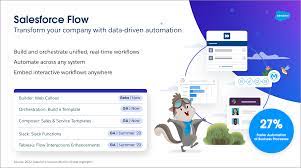
Salesforce Flow: For Efficiency with Automation Salesforce Flow enables businesses to create very sophisticated solutions without the need for extensive coding, using a simple point-and-click interface. This capability is particularly beneficial for Salesforce Admins, offering functionalities akin to those of Salesforce developers. In this insight we will explore Salesforce Flow: Understanding Developer and Admin Contributions. Salesforce Flow Efficiency and Automation. Salesforce Flow, originally known as Visual Flow, has evolved significantly with each Salesforce release, culminating in the intuitive Flow Builder interface available today. Its applications are expansive and continually expanding. Key Capabilities of Salesforce Flow Mass Updates: Easily handle batch processing to update thousands of records simultaneously based on specific criteria, significantly saving time and effort. Automated Workflows: Construct intricate workflows with multiple steps and decision points, ensuring consistency and efficiency across business processes. User-Friendly Interface: Designed to be intuitive, Flow Builder allows users of varying technical skill levels to create and manage workflows effortlessly. Integration Capabilities: Seamlessly integrates with Salesforce products and third-party applications, enabling comprehensive solutions leveraging diverse data sources. Continuous Improvement: With each Salesforce update, Flow receives new features and enhancements, continually enhancing its versatility and power. Salesforce Flow serves as a pivotal tool for enhancing productivity and streamlining complex operations, making it indispensable for Salesforce Admins striving to optimize workflows. Understanding Salesforce Flow in Detail What is Salesforce Flow? Salesforce Flow Builder is a robust tool within the Salesforce ecosystem, enabling users to automate workflows and processes. These workflows encompass tasks such as sending emails, updating records, triggering other flows, executing Apex actions, and sending notifications. Flows can be initiated by various events, including user actions, record changes, and scheduled times. Flows comprise elements such as actions, conditions, variables, and screens. The visual, drag-and-drop interface of Salesforce Flow Builder ensures accessibility for users without extensive coding knowledge while offering advanced capabilities for technical experts. Types of Salesforce Flow Screen Flows: Provide a step-by-step user interface to automate tasks, collect data, and guide users through processes. Ideal for systematically capturing and qualifying leads, Screen Flows are straightforward to set up and manage. Record-Triggered Flows: Automate actions based on changes to Salesforce records, like creating, updating, or deleting records. These flows replace older tools like Workflow Rules and Process Builder, offering flexibility and ease of management. Scheduled Flows: Run at specified times or intervals to automate routine tasks or periodic updates. Useful for scenarios such as sending reminders or performing batch operations. Platform Event-Triggered Flows: Respond to events within the Salesforce platform in real-time, enabling instant automation based on critical business events. Requires technical proficiency in integrations and platform events. Autolaunched Flows: Initiated by other processes or external systems without user interaction, making them essential for automating backend processes like updating records based on external triggers. The Role of Salesforce Administrators Salesforce Administrators play a major role in designing, implementing, and managing flows. Their responsibilities span from creating automated workflows to ensuring optimal flow performance and providing user training. Administrators leverage Flow to automate data entry, streamline approval processes, and set up notifications for critical events. Collaboration Between Admins and Developers Effective collaboration between Salesforce Administrators and Developers is important for creating efficient and robust flows. While Administrators focus on designing and implementing simpler flows, Developers enhance capabilities by integrating custom Apex code, performing advanced data manipulations, and optimizing flow performance. This collaboration ensures comprehensive solutions that meet both business requirements and technical standards. Final Thoughts Salesforce Flow closees the gap between manual operations and automated efficiency, enabling businesses to enhance accuracy, reduce operational bottlenecks, and adapt swiftly to market changes. By understanding the distinct contributions of Administrators and Developers and fostering a collaborative environment, organizations can design and implement innovative workflows that drive success and growth. Embracing Salesforce Flow not only optimizes business processes but also positions organizations to thrive in dynamic market landscapes. Staying abreast of Salesforce automation advancements and best practices ensures sustained competitiveness and growth. Like1 Related Posts Who is Salesforce? Who is Salesforce? Here is their story in their own words. From our inception, we’ve proudly embraced the identity of Read more Salesforce Marketing Cloud Transactional Emails Salesforce Marketing Cloud Transactional Emails are immediate, automated, non-promotional messages crucial to business operations and customer satisfaction, such as order Read more Salesforce Unites Einstein Analytics with Financial CRM Salesforce has unveiled a comprehensive analytics solution tailored for wealth managers, home office professionals, and retail bankers, merging its Financial Read more AI-Driven Propensity Scores AI plays a crucial role in propensity score estimation as it can discern underlying patterns between treatments and confounding variables Read more

Read More
Revenue Cloud

Salesforce Revenue Cloud

Salesforce Revenue Cloud is a comprehensive platform that manages the entire revenue lifecycle within the Salesforce ecosystem. It extends the capabilities of Sales Cloud and Service Cloud to handle all revenue-related tasks, from quoting and contracting to billing and revenue recognition.  Key Features and Functionality: Benefits of Using Revenue Cloud:  Like Related Posts Who is Salesforce? Who is Salesforce? Here is their story in their own words. From our inception, we’ve proudly embraced the identity of Read more Salesforce Marketing Cloud Transactional Emails Salesforce Marketing Cloud Transactional Emails are immediate, automated, non-promotional messages crucial to business operations and customer satisfaction, such as order Read more Salesforce Unites Einstein Analytics with Financial CRM Salesforce has unveiled a comprehensive analytics solution tailored for wealth managers, home office professionals, and retail bankers, merging its Financial Read more AI-Driven Propensity Scores AI plays a crucial role in propensity score estimation as it can discern underlying patterns between treatments and confounding variables Read more

Read More
Consumer Chatbot Technology

Consumer Chatbot Technology

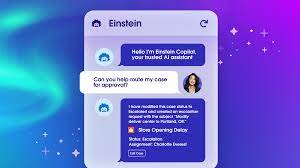
The Reality Behind AI Chatbots and the Path to Autonomous AI In the rush to adopt the latest Consumer Chatbot Technology, it’s easy to overlook a fundamental reality: consumer chatbot technology isn’t ready for enterprise use—and it likely never will be. The reason is simple: AI assistants are only as effective as the data that powers them. Most large language models (LLMs) are trained on data from public websites, which lack the specific business and customer data that enterprises need. This means consumer bots can’t adequately assist employees in selling products, marketing merchandise, or improving productivity, as they lack the necessary personalization and business context. To achieve the vision of AI that goes beyond simple chatbots performing basic tasks—like drafting emails, essays, blogs, or graphics—to a more advanced role where AI acts autonomously and addresses business-critical needs, a different approach is needed. This vision involves AI taking action with minimal human intervention, using digital agents to identify and respond to these needs. At Salesforce, we are pursuing a clear path to AI that not only takes action but also automates routine tasks, all while adhering to established business rules, permissions, and context. Instead of relying solely on LLMs, which primarily focus on generating human-like text, future AI assistants will depend on large action models (LAMs) that integrate decision-making and action-taking capabilities. The Journey Toward AI Autonomy Our journey towards this vision began with the Salesforce Data Cloud, a robust data engine built on the Einstein 1 Platform. This platform integrates data from across the enterprise and third-party repositories, enabling companies to activate their data, automate workflows, personalize customer interactions, and develop smarter AI solutions. Recognizing the shift from generative AI to autonomous AI, Salesforce introduced Einstein Copilot, the industry’s first conversational, enterprise-class AI assistant. Integrated across the Salesforce ecosystem, Einstein Copilot utilizes an organization’s data, whether it’s behind a firewall or in an external data lake, to act as a reasoning engine. It interprets user intents, interacts with the most suitable AI model, solves problems, generates relevant content, and provides decision-making support. Expanding the Role of AI in Business Since its launch in February 2024, Salesforce has been expanding Einstein Copilot’s library of actions to meet specific business needs in sales, service, marketing, data analysis, and industries like ecommerce, financial services, healthcare, and education. These “actions” are akin to LEGO blocks—discrete tasks that can be assembled to achieve desired project outcomes. For example, a sales representative might use Einstein Copilot to generate a personalized close plan, gain insights into why a deal may not close, or review whether pricing was discussed in a recent call. Einstein Copilot then orchestrates these tasks, provides recommendations, and compiles everything into a detailed report. The ultimate goal is for AI not only to gather and organize information but also to take proactive action. Imagine a sales representative instructing their digital agent to set up meetings with top prospects in a specific territory. The AI could not only identify suitable contacts but also suggest meeting times, plan travel schedules, draft emails, and even create talking points—all of which it could execute autonomously with the representative’s approval. Tectonic dreams of the day AI is smart enough to interpret our search engine typos and produce the results for what we were actually looking for! The Future of AI Autonomy The possibilities for semi-autonomous or fully autonomous AI are vast. As we continue to develop and refine these technologies, the potential for AI to transform business processes and decision-making becomes increasingly tangible. At Salesforce, they are committed to leading this charge, ensuring that our AI solutions not only meet but exceed the expectations of enterprises worldwide. Salesforce is in a strong position to deliver on all of them because of the volume and breadth of data housed in Data Cloud, the heavy workflow traffic in our Customer 360 CRM, and the fact we’ve delivered an enterprise-class copilot that is rapidly expanding its library of actions. It will not happen overnight. The technology needs to advance, organizations and people have to be able to trust AI and be trained to use it in the right ways, and more work will need to be done to ensure the right balance between human involvement and AI autonomy. But with our continued investment in CRM, data, and trusted AI, we will achieve that vision before too long. Salesforce is in a strong position to deliver on all of them because of the volume and breadth of data housed in Data Cloud, the heavy workflow traffic in our Customer 360 CRM, and the fact we’ve delivered an enterprise-class copilot that is rapidly expanding its library of actions. Jayesh Govindarajan, Senior Vice President, Salesforce AI Like Related Posts Who is Salesforce? Who is Salesforce? Here is their story in their own words. From our inception, we’ve proudly embraced the identity of Read more Salesforce Marketing Cloud Transactional Emails Salesforce Marketing Cloud Transactional Emails are immediate, automated, non-promotional messages crucial to business operations and customer satisfaction, such as order Read more Salesforce Unites Einstein Analytics with Financial CRM Salesforce has unveiled a comprehensive analytics solution tailored for wealth managers, home office professionals, and retail bankers, merging its Financial Read more AI-Driven Propensity Scores AI plays a crucial role in propensity score estimation as it can discern underlying patterns between treatments and confounding variables Read more
Read More
Salesforce Commerce Cloud and Einstein Copilot Capabilities

Salesforce Commerce Cloud and Einstein Copilot Capabilities

Salesforce Enhances Commerce Cloud and Einstein Copilot Salesforce has announced a double whammy of upgrades to its Commerce Cloud and Einstein Copilot solutions, aiming to supercharge customer service and experience offerings for merchants. And yes, they’re pulling out all the stops – think of it as giving your online store a superhero cape and a sidekick with a PhD in customer satisfaction. Salesforce Commerce Cloud and Einstein Copilot Capabilities. Enhancements to Commerce Cloud Commerce Cloud is getting three major innovations designed to help businesses create more sophisticated commerce sites, boost personalization, and drive revenue growth. Salesforce promises to tackle rising customer expectations by providing a seamless, integrated experience across all channels. In other words, they’re turning your website into a mind-reading wizard, minus the beard and wand. But probably wearing a cool purple cape with stars. According to Michael Affronti, GM and SVP of Commerce Cloud, these new features will enable Salesforce’s customers to deliver superior shopping experiences: “Commerce companies are looking to architect high-caliber ecommerce sites that can swiftly adapt to changing customer expectations and continue to foster strong customer relationships. With the combined power of data, AI, and CRM, Commerce Cloud gives brands the choice of the right tool so they can build superior shopping experiences their way.” New Commerce Cloud Capabilities Einstein Copilot Advancements Salesforce is pulling out the big AI guns, leveraging generative AI (GenAI) to enhance Einstein Copilot with new marketing and merchandising capabilities alongside its traditional sales and service functions. It’s like your old assistant got a brain transplant and now has the IQ of Einstein, the charm of James Bond, and the work ethic of a coffee-fueled startup founder. Ariel Kelman, President and CMO of Salesforce, emphasized the importance of these advancements: “Marketing and commerce leaders need a trusted advisor to help them tap into the promise of generative AI. With the Einstein 1 Platform we’re giving organizations the power to unify all of their data on one trusted platform. This is the key to getting results from generative AI that are actually useful in driving your business forward.” Key Features of Einstein 1 for Marketing and Commerce Expanding Partnerships and Enhancing AI and Data Offerings In addition to these product enhancements, Salesforce has expanded its partnership with IBM to improve AI and data offerings. The collaboration aims to merge IBM’s watsonx.ai platform with Salesforce’s Einstein 1 software, providing customers with the ability to make data-driven decisions and access actions directly within their workflows. It’s like pairing up Batman and Superman to fight the evil forces of inefficiency and bad data. The partnership includes bidirectional data integration, flexible large language models (LLMs), prebuilt CRM solutions, and a focus on responsible AI development. IBM will also join Salesforce’s Zero Copy Partner Network, ensuring that data moves as smoothly as butter on hot toast. Salesforce Commerce Cloud and Einstein Copilot Capabilities These enhancements and partnerships underline Salesforce’s commitment to providing innovative solutions that enhance customer experiences and drive business growth, all while making sure your digital commerce experience is smoother than a jazz saxophone solo. Like1 Related Posts Who is Salesforce? Who is Salesforce? Here is their story in their own words. From our inception, we’ve proudly embraced the identity of Read more Salesforce Marketing Cloud Transactional Emails Salesforce Marketing Cloud Transactional Emails are immediate, automated, non-promotional messages crucial to business operations and customer satisfaction, such as order Read more Salesforce Unites Einstein Analytics with Financial CRM Salesforce has unveiled a comprehensive analytics solution tailored for wealth managers, home office professionals, and retail bankers, merging its Financial Read more AI-Driven Propensity Scores AI plays a crucial role in propensity score estimation as it can discern underlying patterns between treatments and confounding variables Read more

Read More
gettectonic.com