Salesforce Marketing Archives - gettectonic.com - Page 4
beyond inc leverages salesforce

Salesforce Takes Beyond Inc Beyond Personalized Shopping Experiences

Beyond, Inc., the parent company of renowned e-commerce brands such as Bed Bath and Beyond, Overstock, and Zulily, has unveiled an expanded commitment to leveraging Salesforce’s cutting-edge data and marketing solutions. Beyond Inc leverages Salesforce is to foster customer loyalty and deliver deeply personalized shopping experiences across all its brand portfolios. Beyond will now utilize Salesforce Data Cloud, powered by the Einstein 1 Platform, to unify customer data across multiple brands and enterprise data systems. This unified data will provide invaluable insights into customer behavior, preferences, and engagement patterns across Beyond’s diverse brand ecosystem. Marcus Lemonis, Executive Chairman of the Beyond, Inc. Board of Directors, underscored the company’s commitment to revolutionizing its approach to customer data management, emphasizing the importance of adopting a profit-oriented mindset and investing in customers who demonstrate a propensity for repeat purchases and loyalty. Lemonis previously implemented Salesforce solutions at Camping World Holdings. Lemonis is also the host of CNBC’s The Profit. Beyond Inc Leverages Salesforce Carlisha Robinson, Chief Customer Officer at Beyond, hailed the collaboration with Salesforce as a pivotal moment ushering in a new era of growth for the company. She emphasized the pivotal role of digital technologies in driving Beyond’s growth agenda, highlighting the company’s strategic utilization of the Einstein 1 Platform to unlock the full potential of AI and data-driven insights. Through this expanded collaboration, Beyond aims to execute personalized journeys using Salesforce Marketing Cloud, thereby increasing customer loyalty and spend across its brands. Ariel Kelman, Chief Marketing Officer at Salesforce, lauded Beyond’s adoption of Salesforce’s AI, Data Cloud, and integration technologies as instrumental in fostering deeply engaging and personalized interactions with customers. Kelman emphasized that providing personalized experiences is paramount in today’s customer-connected world, and Beyond’s initiatives will help drive revenue growth and enhance customer relationships in a whole new way. Like Related Posts Who is Salesforce? Who is Salesforce? Here is their story in their own words. From our inception, we’ve proudly embraced the identity of Read more Salesforce Marketing Cloud Transactional Emails Salesforce Marketing Cloud Transactional Emails are immediate, automated, non-promotional messages crucial to business operations and customer satisfaction, such as order Read more Salesforce Unites Einstein Analytics with Financial CRM Salesforce has unveiled a comprehensive analytics solution tailored for wealth managers, home office professionals, and retail bankers, merging its Financial Read more AI-Driven Propensity Scores AI plays a crucial role in propensity score estimation as it can discern underlying patterns between treatments and confounding variables Read more

Read More
Data Cloud and Snowflake Bidrectional Data Sharing

Data Cloud and Snowflake Bidrectional Data Sharing

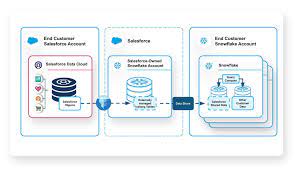
Salesforce Data Cloud and Snowflake are excited to announce that bidirectional data sharing between Snowflake, the Data Cloud company, and Salesforce Data Cloud is now generally available. In September, we introduced the ability for organizations to leverage Salesforce data directly in Snowflake via zero-ETL data sharing, enabling unified customer and business data, accelerating decision-making, and streamlining business processes. Today, we’re thrilled to share that customers can now also share Snowflake data into the Salesforce Data Cloud, using the same zero-ETL innovation to reduce friction and quickly surface powerful insights across sales, service, marketing, and commerce applications. Data Cloud and Snowflake Bidrectional Data Sharing. Data Cloud and Snowflake Bidrectional Data Sharing Enterprises generate valuable customer data within Salesforce applications, while increasingly relying on Snowflake as their preferred data platform for storing, modeling, and analyzing their full data estate. This integration between Salesforce and Snowflake minimizes friction, data latency, scale limitations, and data engineering costs associated with using these two leading platforms. The Snowflake Marketplace also offers customers the opportunity to acquire new data sets to enhance or fill gaps in their existing business data, driving innovation. By combining enterprise data and third-party data from Snowflake Marketplace with valuable customer data from Salesforce applications, organizations can unify their data and build powerful AI solutions to surface rich insights, driving superior and differentiated customer experiences. “Zero-ETL data sharing between Salesforce Data Cloud and Snowflake is game-changing. It has opened up new frontiers of data collaboration. We’re excited to see how customers are powering their customer data analytics and developing innovative AI solutions with near real-time data from Salesforce and Snowflake, generating incredible business value. Now that this integration is generally available, this kind of innovation will be broadly accessible,” says Christian Kleinerman, SVP of Product, Snowflake. Power Personalized Experiences with Salesforce and Snowflake Data sharing between Salesforce Data Cloud and Snowflake brings together holistic insights, empowering multiple customer-facing departments within any organization to create a truly robust customer 360. As Snowflake’s Chief Marketing Officer, Denise Persson, often states, a true, enterprise-wide customer 360 is the beating heart of a modern, customer-facing organization. The applicability of this integration spans various industries and unlocks new growth opportunities. For example: The bidirectional integration enables data sharing across business systems, Salesforce clouds, and operational systems, facilitating data set analysis and future action planning. This brings actionable insights and drives actions, unleashing a new level of customer experience and business productivity. Like Related Posts Who is Salesforce? Who is Salesforce? Here is their story in their own words. From our inception, we’ve proudly embraced the identity of Read more Salesforce Marketing Cloud Transactional Emails Salesforce Marketing Cloud Transactional Emails are immediate, automated, non-promotional messages crucial to business operations and customer satisfaction, such as order Read more Salesforce Unites Einstein Analytics with Financial CRM Salesforce has unveiled a comprehensive analytics solution tailored for wealth managers, home office professionals, and retail bankers, merging its Financial Read more AI-Driven Propensity Scores AI plays a crucial role in propensity score estimation as it can discern underlying patterns between treatments and confounding variables Read more

Read More
WhatsApp Integration Brings Service and Marketing Together

WhatsApp Integration Brings Service and Marketing Together

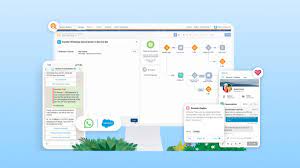
Salesforce has announced the general availability of Unified Conversations for WhatsApp, transforming one-way marketing promotions and service requests into dynamic, two-way conversations from a single WhatsApp number. WhatsApp Integration Brings Service and Marketing Together. Now, instead of managing separate threads for promotions and support, customers can receive personalized opt-in marketing promotions and individual support all within a single WhatsApp chat. This unified approach allows companies like Agibank to leverage Salesforce data from over 900 hubs within WhatsApp to deliver personalized loan proposals, resolve issues faster, and better support customers in a single conversation. Why It Matters A significant 79% of customers expect consistent interactions across departments, and 75% prefer to communicate with brands through messaging. However, businesses often fail to meet these expectations, with disconnected experiences being a top customer frustration. Salesforce Perspective “With over two billion people using WhatsApp, Salesforce’s Unified Conversations for WhatsApp enables brands to connect with customers in a unified, trusted manner,” said Steve Hammond, EVP and GM of Salesforce Marketing Cloud. “This helps brands break down internal barriers and build stronger relationships throughout the customer journey, ensuring personalized engagement at the right time and context.” Go Deeper Unified Conversations for WhatsApp is powered by Salesforce Data Cloud, allowing companies to consolidate data into Salesforce and create a unified customer profile. This shared profile provides marketers and service agents with the relevant context to deliver trusted experiences in a single chat thread. Innovation in Action Unified Conversations for WhatsApp combines marketing and service conversations, enabling: Customer Perspective Matheus Girardi, Chief Marketing and Customer Officer at Agibank, shared, “Our customers rely on WhatsApp to engage with us. Unifying our data in Salesforce for WhatsApp has improved our user experience by personalizing loan proposals, resolving concerns, and supporting customers. Salesforce’s previous integration with WhatsApp tripled our digital sales, and we are excited to do more.” Roberto Maia, Chief Information Officer at YDUQS, added, “WhatsApp is the preferred messaging app for our students across Brazil. We look forward to utilizing Unified Conversations to better engage and serve them and convert leads faster.” Availability Unified Conversations for WhatsApp is now generally available. Like Related Posts Who is Salesforce? Who is Salesforce? Here is their story in their own words. From our inception, we’ve proudly embraced the identity of Read more Salesforce Marketing Cloud Transactional Emails Salesforce Marketing Cloud Transactional Emails are immediate, automated, non-promotional messages crucial to business operations and customer satisfaction, such as order Read more Salesforce Unites Einstein Analytics with Financial CRM Salesforce has unveiled a comprehensive analytics solution tailored for wealth managers, home office professionals, and retail bankers, merging its Financial Read more AI-Driven Propensity Scores AI plays a crucial role in propensity score estimation as it can discern underlying patterns between treatments and confounding variables Read more

Read More
demand generation web use cases for personalization

Demand Generation Web Use Cases for Personalization

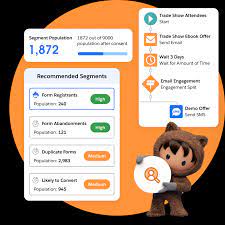
Utilize effective personalization techniques adopted by businesses in online campaigns to stimulate demand generation. The term “demand generation” has somewhat faded from the marketing lexicon due to the emphasis on analytics, AI, and metrics for lead conversion. However, where does personalization fit into the broader scope of demand generation? Demand generation web use cases for personalization. Personalization plays a pivotal role in various aspects of demand generation: In lead nurturing, personalization is equally vital: Moreover, personalization is instrumental in lead acquisition efforts by delivering relevant experiences to all of your prospects. To effectively implement personalization, real-time insights into individual behaviors and interactions are essential. A comprehensive personalization solution should unify data from various channels and systems, enabling seamless cross-channel personalization. This includes “stitching” together anonymous and known user profiles, integrating data with complementary systems like CRMs and marketing platforms, and facilitating real-time omni-channel personalization. The key to successful personalization lies in understanding and addressing each individual’s unique needs and preferences. By adopting a customer-centric approach and setting clear objectives aligned with business goals, organizations can leverage personalization to enhance customer experiences, boost conversion rates, and drive measurable business growth. To execute a successful personalization strategy, organizations must: By following these steps and continuously optimizing personalization efforts, organizations can build stronger customer relationships, drive business growth, and maximize marketing ROI. Website personalization serves as the starting point for many companies embarking on their personalization journey. This entails ensuring that returning visitors encounter pages tailored to their previous experiences or recent purchases. It can also involve presenting new customers with product recommendations based on their current browsing session. The return on this initial investment can be substantial, with many companies witnessing a significant increase in conversion rates, sometimes by as much as 50% or more. For instance, a site converting 2% of visitors might see that figure rise to 3%, a dream scenario for digital marketers. Moreover, this boost in conversion rates can have far-reaching effects across marketing programs, leading to a reduction in overall customer acquisition costs. Tectonic now offers Personalization Implementation Solutions. The next stage in personalization maturity involves integrating a customer’s web and email experiences. This seamless connection between two major channels for customer engagement brings organizations closer to achieving an omni-channel personalization experience. Timely and relevant follow-up messages after a customer’s website visit or purchase can deepen relationships and enhance lifetime value without significant additional marketing expenditure. Finally, the ultimate goal is to extend personalization across all channels, ensuring consistent and tailored experiences wherever customers interact with your brand. However, achieving this can be challenging due to fragmented customer data across multiple channels, teams, and systems. An effective personalization solution should consolidate and synthesize this cross-channel information by maintaining unified customer profiles and enabling real-time omni-channel personalization. Testing is a crucial aspect of successful personalization efforts, allowing organizations to optimize campaigns and maximize engagement, conversions, and revenue. A robust personalization solution should facilitate A/B testing, measuring lift over control, evaluating impacts against specific goals, and filtering results by segment. Effective website personalization lays the foundation for broader personalization efforts across channels. By seamlessly integrating web and email experiences and extending personalization to all touchpoints, organizations can deliver tailored experiences that drive engagement, loyalty, and ultimately, business growth. By Tectonic’s Salesforce Marketing Platform Architect Shannan Hearne Like1 Related Posts Who is Salesforce? Who is Salesforce? Here is their story in their own words. From our inception, we’ve proudly embraced the identity of Read more Salesforce Marketing Cloud Transactional Emails Salesforce Marketing Cloud Transactional Emails are immediate, automated, non-promotional messages crucial to business operations and customer satisfaction, such as order Read more Salesforce Unites Einstein Analytics with Financial CRM Salesforce has unveiled a comprehensive analytics solution tailored for wealth managers, home office professionals, and retail bankers, merging its Financial Read more AI-Driven Propensity Scores AI plays a crucial role in propensity score estimation as it can discern underlying patterns between treatments and confounding variables Read more

Read More
ai powered insights

AI Powered Insights

AI-Powered Marketing Insights: Transform Data Into Action Unlock the Full Potential of Your Data with AI In today’s fast-paced marketing world, raw data alone isn’t enough—you need AI-driven insights to uncover hidden opportunities, predict customer behavior, and optimize campaigns in real time. Why AI-Powered Insights Matter ✔ Predictive Analytics – Anticipate customer actions before they happen.✔ Real-Time Optimization – Adjust strategies on the fly for maximum impact.✔ Deeper Personalization – Tailor messaging based on AI-detected patterns. Key AI Tools in Salesforce Marketing Cloud 1. Einstein Marketing Insights (EMI) 🔍 Monitor KPIs with AI-Powered Bots 2. Einstein Copy Insights ✉ Optimize Email Subject Lines with NLP 3. Einstein Lead Scoring 🎯 Prioritize High-Value Leads 4. Einstein Messaging Insights ⚠ Detect Anomalies in Real Time How to Leverage AI for Smarter Marketing Step 1: Set Clear KPIs Step 2: Test & Optimize Continuously Step 3: Act on Real-Time Alerts Step 4: Align Sales & Marketing with AI Insights The Future of Marketing is AI-Driven Companies using AI-powered insights see:📈 Higher email open rates (up to 35% improvement)🎯 Better lead prioritization (2x more conversions)⏱ Faster decision-making (real-time adjustments vs. guesswork) Ready to supercharge your marketing? Start integrating Einstein AI today and turn data into your competitive edge. 🚀 Need help setting up AI-driven insights? Contact us today. Content updated August 2024. Like Related Posts Who is Salesforce? Who is Salesforce? Here is their story in their own words. From our inception, we’ve proudly embraced the identity of Read more Salesforce Marketing Cloud Transactional Emails Salesforce Marketing Cloud Transactional Emails are immediate, automated, non-promotional messages crucial to business operations and customer satisfaction, such as order Read more Salesforce Unites Einstein Analytics with Financial CRM Salesforce has unveiled a comprehensive analytics solution tailored for wealth managers, home office professionals, and retail bankers, merging its Financial Read more AI-Driven Propensity Scores AI plays a crucial role in propensity score estimation as it can discern underlying patterns between treatments and confounding variables Read more

Read More
Salesforce for Charities

Salesforce for Charities

Salesforce Nonprofit Cloud serves as a comprehensive solution encompassing fundraising, program management, grant management, marketing, and donor management for nonprofit organizations. Salesforce for Charities enables the measurement, tracking, and updating of data across all facets of nonprofit operations and management. Within the charity and nonprofit sector, Salesforce Nonprofit Cloud is highly favored, boasting a clientele of over 50,000 organizations in more than 80 countries—a number that continues to grow. Notably, numerous international charities prefer Salesforce, leading to the establishment of a dedicated business unit tailored specifically for the nonprofit sector. Choosing Salesforce for reporting proves to be an excellent decision for nonprofits due to its recognized accuracy and reliability. The software plays a crucial role in facilitating efficient data management and insights, allowing nonprofits to scale effectively and fulfill their missions. Charities leverage Salesforce Nonprofit Cloud for various purposes, including tracking donations and fundraising campaigns. The CRM software generates reports and analytics, offering insights into the success of these efforts and pinpointing areas for improvement. Overall, Salesforce provides a robust foundation for nonprofits to create efficiency with data, gain valuable insights, and successfully scale their operations to deliver on their mission. Ready for success now? Empower your teams to be more effective, productive, and impactful with Salesforce for Nonprofits. By Tectonic’s Salesforce Marketing Consultant, Shannan Hearne Like1 Related Posts Who is Salesforce? Who is Salesforce? Here is their story in their own words. From our inception, we’ve proudly embraced the identity of Read more Salesforce Marketing Cloud Transactional Emails Salesforce Marketing Cloud Transactional Emails are immediate, automated, non-promotional messages crucial to business operations and customer satisfaction, such as order Read more Salesforce Unites Einstein Analytics with Financial CRM Salesforce has unveiled a comprehensive analytics solution tailored for wealth managers, home office professionals, and retail bankers, merging its Financial Read more AI-Driven Propensity Scores AI plays a crucial role in propensity score estimation as it can discern underlying patterns between treatments and confounding variables Read more

Read More
b2b marketing cloud salesforce

What is B2B in Marketing Cloud?

In the context of Salesforce Marketing Cloud, “B2B” refers to the Business-to-Business aspect of marketing, meaning engaging with other businesses, rather than individual consumers, to drive sales. Salesforce Marketing Cloud B2B provides tools for businesses to manage their B2B marketing efforts, including lead generation, nurturing, and campaign management.  Key aspects of Salesforce Marketing Cloud B2B: In essence, B2B marketing within Salesforce Marketing Cloud focuses on the unique needs and behaviors of business customers, providing the tools to nurture and engage with them effectively.  Like Related Posts Who is Salesforce? Who is Salesforce? Here is their story in their own words. From our inception, we’ve proudly embraced the identity of Read more Salesforce Marketing Cloud Transactional Emails Salesforce Marketing Cloud Transactional Emails are immediate, automated, non-promotional messages crucial to business operations and customer satisfaction, such as order Read more Salesforce Unites Einstein Analytics with Financial CRM Salesforce has unveiled a comprehensive analytics solution tailored for wealth managers, home office professionals, and retail bankers, merging its Financial Read more AI-Driven Propensity Scores AI plays a crucial role in propensity score estimation as it can discern underlying patterns between treatments and confounding variables Read more

Read More
Salesforce Marketing Cloud Account Engagement

Salesforce Marketing Cloud Engagement for Industries

Customer and stakeholder expectations for communication have reached unprecedented levels in 2024. Every message now demands personalization, targeting, and relevance to foster enduring and meaningful relationships. How can you ensure that you meet these heightened expectations and cultivate lifelong connections with your customers? With Salesforce Marketing Cloud Engagement for Industries. Enter Marketing Cloud Engagement for Industries, a solution crafted by Salesforce to assist companies and organizations of any size in crafting personalized customer and stakeholder experiences through scalable email campaigns and data-driven insights. This robust offering provides a foundational framework for leveraging Marketing Cloud, offering pre-built tools, templates, and assets customized for your specific industry. The result? The ability to engage with your customers and stakeholders swiftly and effectively. This suite of outreach marketing tools helps you communicate with and engage your supporters, customers, contacts, and prospects. With Marketing Cloud Engagement for Industries, you receive a tailored package that includes: Additional tools are at your disposal to expedite the implementation of Marketing Cloud Engagement and minimize setup time. A user-friendly Get Started page walks you through the configuration process, and industry-specific assets—such as sample email templates and journeys—empower you to extract greater value from Marketing Cloud more efficiently. And Tectonic is ready to be your implementation partner. Contact Tectonic today for more information. If you are already using Marketing Cloud you can still add the Get Started page and pre-built assets. Note that to use Marketing Cloud Engagement for Industries does require the implementation of Salesforce Lightning Experience and My Domain for a more specific domain name in your Salesforce org. Connecting Marketing Cloud Engagement with Salesforce can be a complex process. Tectonic can help. Like2 Related Posts Who is Salesforce? Who is Salesforce? Here is their story in their own words. From our inception, we’ve proudly embraced the identity of Read more Salesforce Marketing Cloud Transactional Emails Salesforce Marketing Cloud Transactional Emails are immediate, automated, non-promotional messages crucial to business operations and customer satisfaction, such as order Read more Salesforce Unites Einstein Analytics with Financial CRM Salesforce has unveiled a comprehensive analytics solution tailored for wealth managers, home office professionals, and retail bankers, merging its Financial Read more AI-Driven Propensity Scores AI plays a crucial role in propensity score estimation as it can discern underlying patterns between treatments and confounding variables Read more

Read More
Salesforce Einstein Copilot

What’s Included in Einstein Copilot Studio?

Christmas came early this year with Salesforce’s announcement of Einstein Copilot Studio. Einstein Copilot Studio will encompass the following features: By Tectonic’s Salesforce Marketing Consultant, Shannan Hearne Like1 Related Posts Who is Salesforce? Who is Salesforce? Here is their story in their own words. From our inception, we’ve proudly embraced the identity of Read more Salesforce Marketing Cloud Transactional Emails Salesforce Marketing Cloud Transactional Emails are immediate, automated, non-promotional messages crucial to business operations and customer satisfaction, such as order Read more Salesforce Unites Einstein Analytics with Financial CRM Salesforce has unveiled a comprehensive analytics solution tailored for wealth managers, home office professionals, and retail bankers, merging its Financial Read more AI-Driven Propensity Scores AI plays a crucial role in propensity score estimation as it can discern underlying patterns between treatments and confounding variables Read more

Read More
Salesforce Integrated Ecommerce Storefronts

Salesforce eCommerce & Commerce Cloud

Salesforce eCommerce & Commerce Cloud: Everything You Need to Know What is Salesforce eCommerce? Salesforce eCommerce, powered by Salesforce Commerce Cloud, is a comprehensive, cloud-based solution that helps businesses scale, create intelligent shopping experiences, and drive revenue growth. A Unified Digital Commerce Platform Salesforce Commerce Cloud encompasses: With Commerce Cloud, businesses can build and manage their entire eCommerce operation—from responsive storefronts to complex logistics like shipping and inventory tracking. Key Features of Salesforce Commerce Cloud Commerce Cloud Digital Create fully responsive, omnichannel eCommerce websites with advanced search capabilities, secure mobile payments, and personalized customer journeys. Storefront Reference Architecture (SFRA) Launch professional eCommerce sites quickly using best-in-class tools, pre-built wireframes, and integrated digital technologies for easy customization and maintenance. Endless Aisle Enhance the shopping experience with pre-ordering, wishlists, back-in-stock alerts, and exclusive online promotions—reducing lost sales and improving inventory management. Commerce Portals Build account portals, loyalty programs, and customer communities to foster long-term engagement and brand loyalty. Order Management Optimize order processing with automated payments, easy returns, real-time order tracking, and a seamless purchasing experience. Intuitive Platform Leverage no-code tools, commerce APIs, and built-in templates to design eCommerce experiences without deep technical expertise. Unified Commerce Deliver a seamless shopping experience across digital and physical channels, ensuring consistency and convenience for customers. How Salesforce eCommerce Benefits Your Business AI-Powered Predictive Intelligence Commerce Cloud integrates Einstein AI, offering:✅ Personalized product recommendations✅ Automated marketing insights✅ Cart abandonment reduction✅ Smart search enhancements Personalized Customer Journeys Tailor every interaction with AI-driven recommendations, customized content, and omnichannel engagement strategies. Seamless Multi-Storefront Management Easily manage multiple brands, international storefronts, and localized experiences with multi-currency, multi-language, and cross-border commerce capabilities. Scalability Without Limits Handle high transaction volumes, traffic spikes, and expansive product catalogs with ease as your business grows. 24/7 Support & Strategic Guidance Benefit from Salesforce’s extensive support ecosystem, including advisory services, webinars, and AI-driven best practices to accelerate success. Salesforce Commerce Cloud + Marketing Cloud: The Perfect Pairing Salesforce eCommerce seamlessly integrates with Salesforce Marketing Cloud, enabling businesses to:🔹 Automate retargeting and abandoned cart recovery campaigns🔹 Personalize customer engagement at scale🔹 Track and analyze customer behaviors in real-time🔹 Enhance product recommendations with AI-powered insights By combining Commerce Cloud and Marketing Cloud, businesses can craft end-to-end, data-driven shopping experiences that drive higher conversion rates and customer satisfaction. Ready to Transform Your eCommerce Strategy? Whether launching a new online store or optimizing an established brand, Salesforce eCommerce offers limitless possibilities. Let’s explore how Commerce Cloud, AI, and automation can elevate your business. Like Related Posts Who is Salesforce? Who is Salesforce? Here is their story in their own words. From our inception, we’ve proudly embraced the identity of Read more Salesforce Marketing Cloud Transactional Emails Salesforce Marketing Cloud Transactional Emails are immediate, automated, non-promotional messages crucial to business operations and customer satisfaction, such as order Read more Salesforce Unites Einstein Analytics with Financial CRM Salesforce has unveiled a comprehensive analytics solution tailored for wealth managers, home office professionals, and retail bankers, merging its Financial Read more AI-Driven Propensity Scores AI plays a crucial role in propensity score estimation as it can discern underlying patterns between treatments and confounding variables Read more

Read More
Marketing Cloud Cloudpages

Salesforce Marketing Cloud for a Healthcare Provider

Personalized Care & Communication: Salesforce Marketing Cloud for a Healthcare Provider As the elderly become more tech-savvy, they expect modern, efficient ways to communicate with healthcare providers. A regional Medicare provider in the Northeastern United States faced challenges with their outdated communication systems. Relying solely on paper mail, postcards, and phone calls, the organization struggled to connect with members, lacked visibility into the success of their campaigns, and experienced early turnover due to minimal engagement. These inefficiencies strained the customer experience and made it clear that modernization was overdue. To address these challenges, we implemented Salesforce Marketing Cloud to engage customers through email and SMS. Goals for the Project: Tectonic’s Role in the Transformation Tectonic designed and implemented a Salesforce Marketing Cloud solution that transformed how the provider communicated with its members. The solution enabled multi-channel, multi-language communications integrated with Salesforce Health Cloud via the Marketing Cloud Connector and additional systems like MuleSoft and Snowflake. To enhance SMS capabilities, the organization also integrated with Five9. Early collaboration with the provider’s Salesforce Health Cloud team enabled Tectonic to address outdated customer data issues, create safeguards for inaccurate information, and plan future strategies for seamless customer data collection. A custom preference center was also developed and translated into multiple languages. Overcoming Data Challenges Accurate customer data was a significant obstacle—only 60% of records included valid email or mobile phone numbers, with an even smaller percentage having both. Tectonic conducted multiple working sessions to develop strategic efficiencies and establish a foundational process for gathering and cleansing member contact information. Customized journeys were created to ensure messaging aligned with available communication channels. For example: Key Outcomes Tectonic’s efforts allowed the healthcare provider to modernize their communications, better analyze engagement data, and improve member interactions. The results exceeded expectations: Impact Across Departments This project not only improved member communication but also empowered internal departments—including Marketing, Customer Experience, Sales, and Retention—with easy-to-understand metrics. It laid the foundation for future campaigns, enhanced data accuracy, and fostered stronger member relationships. By leveraging Salesforce Marketing Cloud and Tectonic’s expertise, the healthcare provider transformed its operations to deliver personalized, timely communication and ensure lifelong member satisfaction. Like Related Posts Who is Salesforce? Who is Salesforce? Here is their story in their own words. From our inception, we’ve proudly embraced the identity of Read more Salesforce Marketing Cloud Transactional Emails Salesforce Marketing Cloud Transactional Emails are immediate, automated, non-promotional messages crucial to business operations and customer satisfaction, such as order Read more Salesforce Unites Einstein Analytics with Financial CRM Salesforce has unveiled a comprehensive analytics solution tailored for wealth managers, home office professionals, and retail bankers, merging its Financial Read more AI-Driven Propensity Scores AI plays a crucial role in propensity score estimation as it can discern underlying patterns between treatments and confounding variables Read more

Read More
MC Personalization Tips and Tricks

MC Personalization Tips and Tricks

Salesforce Marketing Cloud Personalization, formerly Interaction Studio, offers incredible power for personalization. MC Personalization Tips and Tricks below will help you level up your game. Einstein Recipes: Enhancements and Challenges Multiple Dimensional Variations for Products in Einstein Recipes Einstein Recipes offer powerful and flexible tools for creating recommendations. However, the fourth step, Variations, falls short compared to other options. Currently, you can configure only a single Dimensional Variation. While multiple Item Types are available, once you select one, you cannot limit recommended products to specific numbers per category or brand. This limitation hinders control over product recommendations, especially for e-commerce sites with diverse catalogs. Unlike Dimensional Variations, multiple Boosters or Exclusions of the same type can be configured differently, which would be a valuable feature to add for Variations. Department Variation for Products in Einstein Recipes Einstein Recipes allow Dimensional Variations at the Category level, but only for primary categories. There is no option for Department (master category) level, which is limiting for e-commerce sites with broad category trees, such as: Recommendations with Category Variation set can still be dominated by similar products due to similar primary categories. Two solutions could address this: Price Reduction Ingredient in Einstein Recipes Triggered Campaigns in Journey Builder can target various events, including Catalog Triggers. Some triggers, like Product Expiring Soon, are available for Web with Einstein Recipes Ingredients. However, there is no Ingredient for the common e-commerce use case of Price Reduction. Marketing Cloud Personalization (Interaction Studio) has the required price and listPrice attributes for Triggered Campaigns. A workaround involves calculating price reductions externally and passing this information to a Related Catalog Object. More efficient solutions would be: Rating Count in Recipe’s Rating Exclusion Marketing Cloud Personalization offers Exclusions/Inclusions on Recipes to fine-tune recommendations. One option is to exclude/include items based on their rating, with an optional zero rating capture. It would be beneficial to include an option to filter based on rating count, allowing for: Currently, such filters can only be applied on the server side in the Template, which can limit recommendations. Having this feature at the recipe level would be more powerful. Abandoned Cart Retention Setting Marketing Cloud Personalization captures cart information for Einstein Recipes recommendations. However, cart content remains indefinitely unless managed proactively. A workaround involves a Web Campaign that checks cart age and pushes a clear cart action if necessary. A better solution would be a configurable option in MCP settings to automatically remove old cart data. Catalog Enhancements Full MCP Category Hierarchy Support for ETL Marketing Cloud Personalization can create a hierarchical tree of categories with automatic summing of views and revenue. However, this is currently possible only under specific conditions, such as having one Category per product and using a Sitemap format. This limitation is problematic, as ETL is often a better way to manage it. The Category ETL already provides detailed information using department and parentCategoryId attributes, but this data does not replicate the drill-down hierarchy in the Catalog UI or pass data from the bottom Category up. Ensuring feature parity between Sitemap and ETL would be beneficial. Segmentation Enhancements MCP Action Name Management Marketing Cloud Personalization captures actions from multiple sources but does not allow managing created actions. An option to view and remove unnecessary actions would improve user experience by reducing the number of options in the segmentation/targeting picklists. An even better solution would be to merge existing actions, preserving behavioral data after refactoring action names. MCP Hourly-Based Segmentation Rules Currently, segmentation rules in Marketing Cloud Personalization are based on days, limiting on-site campaign targeting. For example, to display an infobar for abandoned cart users, the current segmentation can only show users who have not performed a Cart Action today. Hourly-based segmentation rules would allow more precise targeting, showing users who have not performed a Cart Action in the last hour. Adding a picklist to choose between day or hour-based rules would enhance segmentation capabilities. Full MCP Catalog Export Marketing Cloud Personalization supports manual catalog export but only with limited data. The current export file lacks complete catalog data (e.g., promotable and archived attributes), making it unsuitable for ETL sources. An option to export the full catalog data, matching the ETL schema and including hidden items, would greatly benefit debugging and batch-modifying items for subsequent ETL import. Full MCP Catalog Metadata Visibility Marketing Cloud Personalization supports viewing custom attribute metadata in the Catalog but is limited to ETL updates. Extending this to built-in attributes and including origin and lastUpdated values for all sources (Sitemap, Mobile App, Manual update, API) would simplify debugging Catalog metadata issues, reducing admin/developer work and support tickets. ETL Enhancements External Email Campaign ETL Experience Name & ID External Email Campaign ETL allows passing behavioral data but is limited to Campaign ID and Campaign Name. To fully leverage this data in segmentation, it should also support Email ID and Email Name. Adding Experience ID and Experience Name fields to the ETL would enable targeted personalization, allowing segmentation on entire campaigns or specific emails within campaigns. External Email Campaign ETL Send Segmentation External Email Campaign ETL passes Send, Click, and Open data but does not support segmentation based on Send events. Enabling segmentation rules for Send events would unlock use cases like targeting Web or Push campaigns to users who received an email campaign but did not open it, fully leveraging cross-channel and real-time personalization. External Email Campaign ETL Unsubscription Event Type External Email Campaign ETL passes Send, Click, and Open data but cannot pass unsubscriptions. Including the Unsubscribe event would enable targeted campaigns like surveys about unsubscription reasons, win-back campaigns, or replacing email subscription prompts with other channel recommendations. By addressing these enhancements and challenges, Salesforce Marketing Cloud Personalization (Interaction Studio) can further improve its capabilities and provide more precise, effective, and user-friendly tools for personalized marketing. Reporting Enhancements: Direct Attribution at the MCP Campaign Level Current Reporting in Marketing Cloud Personalization (MCP) Marketing Cloud Personalization (Interaction Studio) offers various reports based on Activity, Results, and Visits. However, it

Read More
gettectonic.com