SSL Archives - gettectonic.com - Page 24
Best Practices for Data Management

Best Practices for Data Management

Mastering Data Management in Salesforce Effective data management is crucial for maximizing success with Salesforce. Ensuring you have high-quality, useful data empowers your team to achieve business goals and identify growth opportunities. Below are learning resources, expert articles, and video guides designed by Salesforce professionals to help you take control of your data. Build a Data Management Strategy A solid data management strategy ensures that your team is aligned on how data is collected, analyzed, and used to drive success. These resources will guide you through creating a strategy and avoiding common pitfalls: Improve Data Quality Clean data is essential for tracking, reporting, and ensuring the success of your Salesforce implementation. Explore the following resources to improve your data quality: Import Data Seamlessly bring existing data into Salesforce to ensure you have a full record for reporting and tracking. These resources will guide you through importing data: Maintain and Clean Up Data To keep your data clean and reliable over time, follow these best practices for long-term data management: Go Further with Data Management Take your data management expertise to the next level with these additional resources: These curated resources empower you to master data management within Salesforce, ensuring your organization makes the most of its CRM data to drive growth and success. Content updated September 2024. Like Related Posts Who is Salesforce? Who is Salesforce? Here is their story in their own words. From our inception, we’ve proudly embraced the identity of Read more Salesforce Marketing Cloud Transactional Emails Salesforce Marketing Cloud Transactional Emails are immediate, automated, non-promotional messages crucial to business operations and customer satisfaction, such as order Read more Salesforce Unites Einstein Analytics with Financial CRM Salesforce has unveiled a comprehensive analytics solution tailored for wealth managers, home office professionals, and retail bankers, merging its Financial Read more AI-Driven Propensity Scores AI plays a crucial role in propensity score estimation as it can discern underlying patterns between treatments and confounding variables Read more

Read More

Bridging the Gap Between Sales and Marketing

Bridging the Gap Between Sales and Marketing with Salesforce Implementation Sales and marketing teams often struggle to align their goals and strategies, leading to inefficiencies and missed revenue opportunities. A powerful way to overcome this challenge is by leveraging Salesforce implementation services, which connect these departments, enhance collaboration, and drive business success. Seamless Communication for Better Collaboration Effective communication is essential for synchronizing sales and marketing efforts. Salesforce serves as a unified platform, allowing teams to share information, access real-time data, and track progress effortlessly. This streamlined communication minimizes confusion, keeps objectives aligned, and boosts overall productivity. By working within a shared system, sales and marketing professionals can co-develop marketing initiatives, promotions, and sales plans, fostering teamwork and eliminating departmental silos. Salesforce’s collaborative tools ensure that teams stay connected and work toward common goals efficiently. Data-Driven Decision-Making In today’s business landscape, data is a critical driver of success. Salesforce equips organizations with advanced analytics tools, providing insights into customer behavior and market trends. These data-driven capabilities empower sales and marketing teams to: With Salesforce, businesses can adopt a proactive approach rather than reacting to market shifts, ensuring sustained growth and competitiveness. Enhancing Customer Experience Delivering a seamless customer journey is key to standing out in a competitive market. When sales and marketing teams align through Salesforce, they can: ✅ Customize marketing campaigns using sales-driven insights, leading to higher engagement.✅ Personalize sales interactions by leveraging marketing data to understand customer needs.✅ Consolidate customer information for a 360-degree view, ensuring consistent, tailored interactions across all touchpoints. This synchronization leads to higher customer satisfaction, improved retention, and increased revenue. Optimizing Lead Management Efficient lead handling is crucial for driving conversions. Salesforce streamlines this process by enabling: With Salesforce’s automation tools, teams can work together strategically to convert prospects into loyal customers. Performance Tracking & Accountability Measuring performance is essential for continuous improvement. Salesforce’s robust reporting tools empower teams to: 📊 Monitor KPIs, such as conversion rates and campaign performance.📊 Access real-time insights via customizable dashboards.📊 Make data-backed decisions to refine sales and marketing strategies. By fostering transparency and accountability, these insights drive teams to optimize performance and meet business objectives effectively. The Power of Salesforce for Business Growth Salesforce implementation is a game-changer for aligning sales and marketing teams, enabling: ✔ Enhanced communication and collaboration✔ Smarter, data-driven decision-making✔ Stronger customer relationships✔ Streamlined lead management✔ Comprehensive performance tracking By leveraging Salesforce’s powerful capabilities, businesses can break down silos, enhance efficiency, and drive sustained growth. Integrating Salesforce isn’t just about technology—it’s about creating a collaborative, high-performing environment that propels organizations toward success. Like Related Posts Who is Salesforce? Who is Salesforce? Here is their story in their own words. From our inception, we’ve proudly embraced the identity of Read more Salesforce Marketing Cloud Transactional Emails Salesforce Marketing Cloud Transactional Emails are immediate, automated, non-promotional messages crucial to business operations and customer satisfaction, such as order Read more Salesforce Unites Einstein Analytics with Financial CRM Salesforce has unveiled a comprehensive analytics solution tailored for wealth managers, home office professionals, and retail bankers, merging its Financial Read more AI-Driven Propensity Scores AI plays a crucial role in propensity score estimation as it can discern underlying patterns between treatments and confounding variables Read more
Read More
Shield

Salesforce Shield Explained

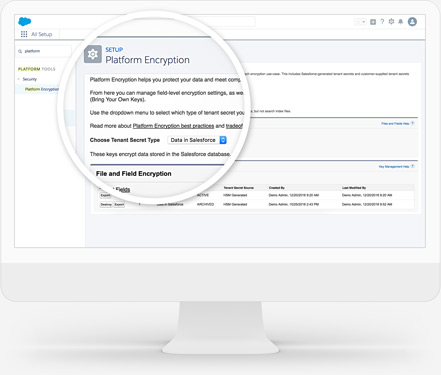
Salesforce Shield Explained: It is tailored for companies with heightened security and compliance considerations. Comprising four products that layer onto existing Salesforce products, it provides additional protection. These components include: Salesforce Shield is best explained is a encryption and event monitoring and field audit trail tool for your business. Block Unauthorized or Unlawful ActivityCreate real-time security rules in an org to prevent undesired events with Event Monitoring.Find and Classify Sensitive Data QuicklyDiscover and classify sensitive data in just a few clicks with Data Detect.Add Additional Security to Sensitive DataEncrypt sensitive data at rest and manage keys with Platform Encryption.Meet Compliance and Industry RegulationsView data as far back as a decade with Field Audit Trail. Protect critical information at scale. Identify, categorize and encrypt data to mitigate threats and avoid costs associated with data loss. Three Reasons to Use Data Detect1 Integrates Seamlessly With native Salesforce software for ease of implementation and cost savings.2 Identifies Sensitive Data regardless of what field it is in, so you can take the necessary steps to obfuscate or protect it3 Classifies Sensitive Fields Use convenient UI to update data classifications as you discover fields with sensitive data Like2 Related Posts Who is Salesforce? Who is Salesforce? Here is their story in their own words. From our inception, we’ve proudly embraced the identity of Read more Salesforce Marketing Cloud Transactional Emails Salesforce Marketing Cloud Transactional Emails are immediate, automated, non-promotional messages crucial to business operations and customer satisfaction, such as order Read more Salesforce Unites Einstein Analytics with Financial CRM Salesforce has unveiled a comprehensive analytics solution tailored for wealth managers, home office professionals, and retail bankers, merging its Financial Read more AI-Driven Propensity Scores AI plays a crucial role in propensity score estimation as it can discern underlying patterns between treatments and confounding variables Read more
Read More
Communicating With Machines

Communicating With Machines

For as long as machines have existed, humans have struggled to communicate effectively with them. The rise of large language models (LLMs) has transformed this dynamic, making “prompting” the bridge between our intentions and AI’s actions. By providing pre-trained models with clear instructions and context, we can ensure they understand and respond correctly. As UX practitioners, we now play a key role in facilitating this interaction, helping humans and machines truly connect. The UX discipline was born alongside graphical user interfaces (GUIs), offering a way for the average person to interact with computers without needing to write code. We introduced familiar concepts like desktops, trash cans, and save icons to align with users’ mental models, while complex code ran behind the scenes. Now, with the power of AI and the transformer architecture, a new form of interaction has emerged—natural language communication. This shift has changed the design landscape, moving us from pure graphical interfaces to an era where text-based interactions dominate. As designers, we must reconsider where our focus should lie in this evolving environment. A Mental Shift In the era of command-based design, we focused on breaking down complex user problems, mapping out customer journeys, and creating deterministic flows. Now, with AI at the forefront, our challenge is to provide models with the right context for optimal output and refine the responses through iteration. Shifting Complexity to the Edges Successful communication, whether with a person or a machine, hinges on context. Just as you would clearly explain your needs to a salesperson to get the right product, AI models also need clear instructions. Expecting users to input all the necessary information in their prompts won’t lead to widespread adoption of these models. Here, UX practitioners play a critical role. We can design user experiences that integrate context—some visible to users, others hidden—shaping how AI interacts with them. This ensures that users can seamlessly communicate with machines without the burden of detailed, manual prompts. The Craft of Prompting As designers, our role in crafting prompts falls into three main areas: Even if your team isn’t building custom models, there’s still plenty of work to be done. You can help select pre-trained models that align with user goals and design a seamless experience around them. Understanding the Context Window A key concept for UX designers to understand is the “context window“—the information a model can process to generate an output. Think of it as the amount of memory the model retains during a conversation. Companies can use this to include hidden prompts, helping guide AI responses to align with brand values and user intent. Context windows are measured in tokens, not time, so even if you return to a conversation weeks later, the model remembers previous interactions, provided they fit within the token limit. With innovations like Gemini’s 2-million-token context window, AI models are moving toward infinite memory, which will bring new design challenges for UX practitioners. How to Approach Prompting Prompting is an iterative process where you craft an instruction, test it with the model, and refine it based on the results. Some effective techniques include: Depending on the scenario, you’ll either use direct, simple prompts (for user-facing interactions) or broader, more structured system prompts (for behind-the-scenes guidance). Get Organized As prompting becomes more common, teams need a unified approach to avoid conflicting instructions. Proper documentation on system prompting is crucial, especially in larger teams. This helps prevent errors and hallucinations in model responses. Prompt experimentation may reveal limitations in AI models, and there are several ways to address these: Looking Ahead The UX landscape is evolving rapidly. Many organizations, particularly smaller ones, have yet to realize the importance of UX in AI prompting. Others may not allocate enough resources, underestimating the complexity and importance of UX in shaping AI interactions. As John Culkin said, “We shape our tools, and thereafter, our tools shape us.” The responsibility of integrating UX into AI development goes beyond just individual organizations—it’s shaping the future of human-computer interaction. This is a pivotal moment for UX, and how we adapt will define the next generation of design. Content updated October 2024. Like Related Posts Who is Salesforce? Who is Salesforce? Here is their story in their own words. From our inception, we’ve proudly embraced the identity of Read more Salesforce Unites Einstein Analytics with Financial CRM Salesforce has unveiled a comprehensive analytics solution tailored for wealth managers, home office professionals, and retail bankers, merging its Financial Read more AI-Driven Propensity Scores AI plays a crucial role in propensity score estimation as it can discern underlying patterns between treatments and confounding variables Read more Tectonic’s Successful Salesforce Track Record Salesforce Technology Services Integrator – Tectonic has successfully delivered Salesforce in a variety of industries including Public Sector, Hospitality, Manufacturing, Read more

Read More
Sales Enablement in an AI World

Sales Enablement in an AI World

The New Era of AI-Driven Sales Enablement The era of AI-driven sales is upon us. More than 60% of sales and service professionals believe that generative AI will enhance their ability to serve customers effectively. AI-powered tools are already transforming the sales landscape by automating routine tasks and boosting productivity, ultimately driving sales and improving customer experiences. Sales Enablement in an AI World. AI is set to completely reshape the sales function, including the way we train and educate sales teams. Traditional Sales Enablement Historically, organizations have relied on generic sales enablement programs that provided “set it and forget it” content to the entire sales force, regardless of the specific challenges individual sellers faced. While some training was tailored to specific roles, personalizing content at scale was not feasible. Organizations generally expected sellers to learn the same foundational content at the same pace and in the same manner. Enterprises invested significantly in these programs but had little ability to measure the impact of their investments. ROI was often assessed based on whether sales team members completed training courses, rather than on their ability to apply new learnings to close deals. It’s no surprise that sales reps often viewed enablement as a box to check off in the process, not a path to growth. Thanks to AI, that perspective is changing. AI-Powered Enablement in Action AI and data are revolutionizing sales enablement by delivering more personalized and effective training and helping organizations understand the true impact of their investments. Companies can now monitor and adjust enablement programs in real time, using metrics like win rates, pipeline generation, average contract value (ACV), and customer satisfaction to continually refine their programs and drive business results. AI allows sales reps to access enablement programs seamlessly within their daily workflows. It facilitates hyper-personalization by aligning training with an individual’s past performance, strengths, and areas for growth. Organizations can adopt a data-driven approach to identify the challenges individual sellers face and automatically provide personalized guidance to boost productivity and help close specific deals. The Groundwork for AI-Powered Enablement Companies are understandably eager to reap the benefits of AI, but their approach must be thoughtful, outcome-focused, and powered by a robust data strategy. Effective AI-powered sales enablement requires well-connected and organized data. A strong data strategy helps organizations understand what works and what doesn’t in their sales processes. Data enables companies to identify the most effective sales tactics and share these insights with their teams—from targeting the prospects most likely to buy, to crafting compelling offers for specific individuals, to listening for cues that help overcome objections. Companies must adopt a values-driven, human-first approach to integrating AI into their sales and enablement processes. Leaders should proactively communicate that AI is not a replacement for the human connections that drive sales. Instead, AI supports salespeople by offering real-time feedback to refine sales pitches, follow-up notes, and perform mundane tasks, thereby giving sales teams more time and resources to excel in understanding customer pain points, presenting solutions, and building trust. To thrive in this AI-powered world, organizations must invest in both AI technology and the continued development of their people, especially the teams directly impacting the bottom line. Sales Enablement in an AI World isn’t the future. It is here. Like Related Posts Who is Salesforce? Who is Salesforce? Here is their story in their own words. From our inception, we’ve proudly embraced the identity of Read more Salesforce Marketing Cloud Transactional Emails Salesforce Marketing Cloud Transactional Emails are immediate, automated, non-promotional messages crucial to business operations and customer satisfaction, such as order Read more Salesforce Unites Einstein Analytics with Financial CRM Salesforce has unveiled a comprehensive analytics solution tailored for wealth managers, home office professionals, and retail bankers, merging its Financial Read more AI-Driven Propensity Scores AI plays a crucial role in propensity score estimation as it can discern underlying patterns between treatments and confounding variables Read more

Read More
Successful Salesforce Implementation

Successful Salesforce Implementation

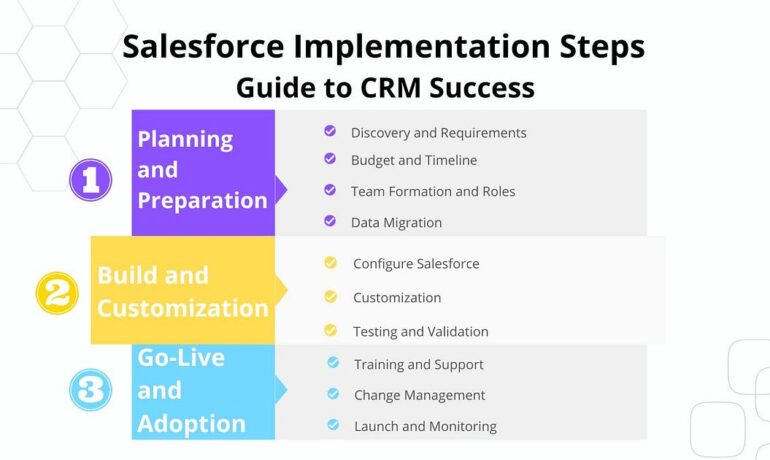
Unlocking the Potential of Salesforce: A Guide to Corporate Success Are you ready to explore the world of Successful Salesforce Implementation? In this Tectonic insight, we’ll explore how to leverage Salesforce to its fullest potential for your corporate success. Whether you’re a small startup or a large corporation, keep reading for practical advice and real-world insights to make Salesforce implementation work for you! What is Salesforce? Salesforce acts as a digital headquarters for organizations, organizing all client information, such as names, purchases, and contact methods. It’s also an Internet application that helps organizations manage customer relationships more effectively by sorting customer details, tracking sales leads, and automating tasks to ease customer interactions. Salesforce is cloudbased, so it is accessible from anywhere. Why Implement Salesforce Now? Implementing Salesforce offers numerous benefits for organizations across various industries: Overall, Salesforce improves how organizations manage customer relationships and utilize data for growth, but effective implementation requires thoughtful planning and customization. Types of Salesforce Implementation Sales Cloud Implementation Sales Cloud is Salesforce’s CRM platform designed to manage sales, leads, and customer interactions. Service Cloud Implementation Service Cloud helps companies provide excellent customer service and support. Marketing Cloud Implementation Marketing Cloud Engagement simplifies marketing efforts, helping businesses connect with customers across various channels. Each type of Salesforce implementation offers unique benefits and challenges, depending on the organization’s needs and goals. CRM Implementation Considerations Implementing a CRM system is a significant move for any business. Here are important things to remember: Step-by-Step Guide to Implement Salesforce Successfully Benefits of a Successful Salesforce Implementation Conclusion Implementing Salesforce is more than adding a powerful CRM system; it’s a journey to greater efficiency, productivity, and customer satisfaction. By thoughtfully planning and customizing Salesforce, organizations can enhance operations, deepen customer relationships, and drive sustainable growth. Embrace the possibilities of Salesforce implementation to chart a course for lasting success and innovation in the modern business landscape. Like Related Posts Who is Salesforce? Who is Salesforce? Here is their story in their own words. From our inception, we’ve proudly embraced the identity of Read more Salesforce Marketing Cloud Transactional Emails Salesforce Marketing Cloud Transactional Emails are immediate, automated, non-promotional messages crucial to business operations and customer satisfaction, such as order Read more Salesforce Unites Einstein Analytics with Financial CRM Salesforce has unveiled a comprehensive analytics solution tailored for wealth managers, home office professionals, and retail bankers, merging its Financial Read more AI-Driven Propensity Scores AI plays a crucial role in propensity score estimation as it can discern underlying patterns between treatments and confounding variables Read more

Read More
Crucial Role of Data and Integration in AI at Dreamforce

The Crucial Role of Data and Integration in AI at Dreamforce

Understanding The Crucial Role of Data and Integration in AI at Dreamforce At this year’s Dreamforce, AI is the star of the show, but two essential supporting actors are data and integration. Enterprises are increasingly recognizing the importance of unifying their diverse data sources for effective analysis and swift action, and the race to harness AI makes this integration even more critical. Integration is key not only for merging data but also for automating end-to-end processes, enabling organizations to move faster and deliver better outcomes to customers. Crucial Role of Data and Integration in AI at Dreamforce. It’s no surprise that MuleSoft, acquired by Salesforce five years ago, is now a major contributor to Salesforce’s growth. Brian Millham, President and COO at Salesforce, highlighted this during the company’s recent Q2 earnings call: “In Q2, nearly half of our greater than $1 million deals included MuleSoft. As customers integrate data from all sources to drive efficiency, growth, and insights, MuleSoft has become mission-critical and was included in half of our top 10 deals.” Breaking Down Silos Param Kahlon, EVP and General Manager for Automation and Integration at Salesforce, recently discussed the investments customers are making in data and integration. He emphasized the importance of breaking down operational silos: “We are in the business of breaking silos across systems to ensure that data can travel seamlessly through multiple systems and people for processes like order-to-cash or procure-to-pay. Our technology connects these dots.” The surge in AI interest has increased the urgency to act, as Kahlon explained: “Creating data repositories for AI algorithms requires real-time data across silos, driving significant demand for our integration solutions.” Consolidating Data Enterprises have long struggled with data consolidation due to monolithic application stacks with separate data stores. This has been a challenge even within Salesforce’s own products. Last year, Salesforce introduced a Customer Data Platform (CDP) called Data Cloud, which includes a real-time data layer named Genie. Kahlon elaborated on its significance: “Data Cloud’s strength lies in its understanding and storage of Salesforce metadata. This native integration allows for real-time actions within Salesforce, enhancing the ability to aggregate, reason over, and act on data.” For example, when a customer contacts a bank, Data Cloud can compile their ATM usage, website interactions, and recent support cases, providing the agent with a comprehensive view to better assist the customer. Leveraging Metadata for AI Salesforce’s metadata layer, which has been fine-tuned over two decades, gives it a distinct advantage. Kahlon noted: “This metadata-based architecture allows us to create meaningful AI algorithms that are natively consumed within Salesforce, enabling visualization and action based on real-time data.” This is crucial for training the underlying Large Language Model (LLM) accurately, ensuring generated content is contextually grounded and trustworthy. Kahlon emphasized: “The trust layer is essential. We need to ensure no hallucination or toxicity in the LLM’s responses, and that communications align with our company’s values.” Real-Time Data and API Management Data Cloud’s ability to connect to other data sources like Snowflake without duplicating data is a significant benefit. Kahlon commented: “Duplicating data is not desirable. Customers need real-time access to the actual source of truth.” On the integration front, APIs have simplified connecting applications and data sources. However, managing API sprawl is crucial. Kahlon explained: “Standardizing API use and publishing them in a centralized portal is essential for reusability and consistency. Low-code platforms and connectors are becoming increasingly relevant, enabling business users to access data without relying on IT.” Automation and AI The demand for automation is growing, and low-code tools are vital. Instead of integration experts being overwhelmed, organizations should establish Centers for Excellence to focus on creating reusable connectors and automations. Kahlon added: “Companies need low-code tools to involve more business users in the transformation journey without slowing down due to legacy applications.” In the future, AI may further ease the workload on integration specialists. MuleSoft recently introduced an API Experience Hub to make APIs discoverable, and AI might eventually help monitor execution logs and manage APIs more effectively. Kahlon concluded: “AI could help developers find and use APIs efficiently, enhancing security and governance while simplifying access to data across the organization.” Like Related Posts Who is Salesforce? Who is Salesforce? Here is their story in their own words. From our inception, we’ve proudly embraced the identity of Read more Salesforce Marketing Cloud Transactional Emails Salesforce Marketing Cloud Transactional Emails are immediate, automated, non-promotional messages crucial to business operations and customer satisfaction, such as order Read more Salesforce Unites Einstein Analytics with Financial CRM Salesforce has unveiled a comprehensive analytics solution tailored for wealth managers, home office professionals, and retail bankers, merging its Financial Read more AI-Driven Propensity Scores AI plays a crucial role in propensity score estimation as it can discern underlying patterns between treatments and confounding variables Read more
Read More
SaaS Data Protection from Own

Reporting With Own

In any Salesforce organization, vast amounts of data are generated constantly from sales activities, customer interactions, marketing campaigns, and more. Summarizing and digesting this information quickly is crucial, especially when presenting the big picture to leadership. This is where Salesforce reports come into play. The Salesforce Reports feature enables organizations to analyze, visualize, and summarize data in real time. By pulling data from across your Salesforce environment, reports help consolidate information into easily digestible formats, such as charts, tables, and graphs. Salesforce reports are essential for: How Historical Data Can Improve Reporting in Salesforce While real-time reports are valuable, incorporating historical data can significantly enhance reporting by offering deeper insights into your organization’s long-term performance. Here’s how: Challenges of Reporting with Historical Data in Salesforce While incorporating historical data is smart, Salesforce’s native reporting capabilities impose certain limitations: Don’t Let Salesforce Reporting Limitations Hold You Back With Own Discover, customers can effortlessly generate time-series datasets from any objects and fields over any time period in just a few clicks. These datasets can be accessed using standard query and reporting tools without requiring a data warehouse or the need to enrich existing data warehouses, overcoming Salesforce’s native limitations. Like Related Posts Who is Salesforce? Who is Salesforce? Here is their story in their own words. From our inception, we’ve proudly embraced the identity of Read more Salesforce Marketing Cloud Transactional Emails Salesforce Marketing Cloud Transactional Emails are immediate, automated, non-promotional messages crucial to business operations and customer satisfaction, such as order Read more Salesforce Unites Einstein Analytics with Financial CRM Salesforce has unveiled a comprehensive analytics solution tailored for wealth managers, home office professionals, and retail bankers, merging its Financial Read more AI-Driven Propensity Scores AI plays a crucial role in propensity score estimation as it can discern underlying patterns between treatments and confounding variables Read more

Read More
Dropbox and Salesforce Integration

Dropbox and Salesforce Integration

Collaborate in Real Time with Salesforce Essentials Dropbox and Salesforce Essentials enable small businesses to effortlessly collaborate on files of any type and size. You can review, edit, and share content both internally and with customers directly within Salesforce, allowing you to focus on growing your business. Does Dropbox Integrate with Salesforce? Yes, the Dropbox for Salesforce integration allows teams to access and share their Dropbox files within Salesforce. To use this integration, you need to be on a Dropbox team account. Third-Party Integrations The following integration services work with both Dropbox and Salesforce. Note that these services are not vetted by us, so please exercise caution when deploying them: Getting Started with Dropbox for Salesforce The Dropbox for Salesforce integration allows teams to access and share their Dropbox files within Salesforce. Here’s how team members can get started after an admin has connected their Dropbox team account to Salesforce. Connecting Dropbox to Salesforce: Notes: Adding Files from Dropbox to Salesforce There are two ways to add files using Dropbox for Salesforce: Viewing or Downloading a File in Salesforce You can view, download, and share files directly from Dropbox for Salesforce: Understanding “All of Dropbox for Object” vs. “Dropbox for Object” “All of Dropbox for Object” and “Dropbox for Object” provide different levels of visibility into a user’s Dropbox account from Salesforce: Example Folder Structures: Can You Drag and Drop Files into Salesforce? Salesforce supports drag and dropping files stored on disk. Save the file to disk first, then drag the saved file to Notes & Attachments within Salesforce. Like Related Posts Who is Salesforce? Who is Salesforce? Here is their story in their own words. From our inception, we’ve proudly embraced the identity of Read more Salesforce Marketing Cloud Transactional Emails Salesforce Marketing Cloud Transactional Emails are immediate, automated, non-promotional messages crucial to business operations and customer satisfaction, such as order Read more Salesforce Unites Einstein Analytics with Financial CRM Salesforce has unveiled a comprehensive analytics solution tailored for wealth managers, home office professionals, and retail bankers, merging its Financial Read more AI-Driven Propensity Scores AI plays a crucial role in propensity score estimation as it can discern underlying patterns between treatments and confounding variables Read more

Read More
Einstein in Salesforce

Einstein in Salesforce

Salesforce AI and CRM Evolution Salesforce has long been a leader in customer relationship management (CRM) by pioneering cloud technologies. Recently, the platform has significantly advanced with the integration of generative artificial intelligence (AI) and AI-powered features, thanks to its Einstein technology. Einstein in Salesforce is like a super smart computer overseeing and analyzing the data in your CRM. This guide explores Salesforce’s AI strategy, exploring its specific products and features to help business teams understand and benefit from this technology. Exploring Salesforce’s Advanced AI Features Einstein, Salesforce’s AI technology, powers various advanced features within the platform. This guide will cover these capabilities, provide real-life adoption examples, and discuss their benefits. Additionally, it offers best practices, solutions, and services to facilitate your Einstein implementation. Salesforce’s Comprehensive CRM Solution Salesforce remains a number one in the CRM software world, offering robust solutions for managing relationships across various departments. Specific clouds within Salesforce enable teams to handle marketing, sales, customer service, e-commerce, and more. The platform focuses on customer experience and provides robust data analytics to support decision-making. Enhancements Through Generative AI Salesforce’s generative AI has rapidly enhanced the platform’s automation, workflow management, data analytics, and assistive capabilities for customer management. A prime example is Salesforce Copilot, which aids internal users with outreach and analysis tasks while improving the external user experience. What is Salesforce Einstein? Salesforce Einstein is the first comprehensive AI for CRM, integrating AI technologies to enhance the Customer Success Platform and bring AI to users everywhere. It is seamlessly integrated into many Salesforce products, offering generative AI built specifically for CRM. Key Features of Salesforce Einstein Comprehensive AI Capabilities of Salesforce Einstein Einstein extends its capabilities across the Salesforce CRM platform under the Customer 360 umbrella, enhancing intelligence and providing personalized customer experiences. Key Benefits of Salesforce Einstein Salesforce Einstein helps close deals faster, personalize customer service, understand customer behaviors, target audience segments better, and create personalized shopping experiences. It ensures data protection and privacy through the Einstein Trust Layer, maintaining strong data governance controls. Responsible AI Principles Salesforce is committed to responsible AI principles, ensuring Einstein is trustworthy and safe for every organization. Organizations can select from various principles to ensure ethical AI use in their operations. Implementation of Salesforce Einstein Salesforce Einstein is a powerful AI solution transforming how businesses interact with customers. By leveraging machine learning and data analysis, it personalizes experiences, predicts customer behavior, and automates tasks, boosting sales, enhancing service, and driving growth. As AI evolves, its impact on CRM will continue to grow, making it an indispensable tool for businesses aiming to stay competitive in today’s data-driven landscape. Top 4 Benefits of Salesforce Einstein in an Organization Einstein Essentials Salesforce Einstein and GPT (Generative Pretrained Transformer) technologies represent significant advancements in AI, particularly in CRM and natural language processing. Here’s a brief overview of their relevance and potential intersection: Data Handling and Ethics in Salesforce Salesforce manages a vast amount of customer data, and the ethical handling of this data is crucial. Key considerations include data privacy, secure storage, access controls, compliance with regulations like GDPR and CCPA, and the ethical use of AI and machine learning. It’s important to maintain transparency, avoid biases, and ensure AI models are making ethical decisions. Newest Einstein Features for 2024 In the rapidly evolving ecosystem of Salesforce, AI offers a suite of tools to spark innovation, streamline operations, and provide richer business insights. Explore these potentials and let Einstein AI reshape your work in 2024. Content updated June 2024. Like1 Related Posts Who is Salesforce? Who is Salesforce? Here is their story in their own words. From our inception, we’ve proudly embraced the identity of Read more Salesforce Marketing Cloud Transactional Emails Salesforce Marketing Cloud Transactional Emails are immediate, automated, non-promotional messages crucial to business operations and customer satisfaction, such as order Read more Salesforce Unites Einstein Analytics with Financial CRM Salesforce has unveiled a comprehensive analytics solution tailored for wealth managers, home office professionals, and retail bankers, merging its Financial Read more AI-Driven Propensity Scores AI plays a crucial role in propensity score estimation as it can discern underlying patterns between treatments and confounding variables Read more

Read More
Salesforce Certified Healthcare Technology

Salesforce Certified Healthcare Technology

As a Salesforce Certified healthcare technology consultant, Tectonic brings extensive experience across both large and small healthcare settings, witnessing firsthand the transformative impact of Salesforce Health Cloud. Having contributed to the development of an EHR and RCM application on Salesforce, Tectonic understands the substantial benefits this platform offers when integrated with existing technologies such as Electronic Health Records (EHR), claims data sources, and Patient Population Health Management systems. Enhanced Patient Population Health Management: Salesforce Health Cloud equips healthcare providers with tools to effectively manage Patient Population Health by gathering, analyzing, and acting on health data. Providers can leverage these insights to identify at-risk populations, design targeted interventions, and improve patient outcomes. Optimized Provider Referral Patterning: By integrating Salesforce Health Cloud with claims data, Tectonic enables providers to analyze referral patterns. This helps healthcare organizations collaborate more effectively with physicians based on their specialties, insurance networks, and common CPT codes, ultimately enhancing patient care and strengthening provider networks. AI-Enabled Contact Service Centers for Better Patient Care: Integrating Generative AI with Salesforce Health Cloud allows healthcare providers to deliver personalized, responsive services. By connecting Billing, EHR, and Patient Population Health Management platforms, Tectonic reduces administrative burdens, streamlines communication, and improves patient satisfaction in contact service centers. Business Development Liaison Route Planning: Using Salesforce Maps combined with 1st and 3rd party claims data, Tectonic enables business development teams to generate optimized, daily route plans within seconds. These plans allow healthcare representatives to visit the right providers based on location, specialty, referral volumes, and other key preferences. Strategic Territory Expansion and Planning: Salesforce Health Cloud empowers healthcare organizations to strategically plan for territory expansion. Through analyzing geographic claims data and patient demographics, Tectonic helps organizations make data-driven decisions on resource allocation and service growth. Extending Functionality with Salesforce AppExchange and Salesforce Health Cloud: The Salesforce AppExchange offers a wide array of applications that expand Health Cloud’s core capabilities. These apps can boost patient engagement, care coordination, and advanced analytics. In addition, Tectonic leverages multiple health and life sciences process, which integrates Revenue Cycle Management (RCM) and EHR functionalities, enabling providers to manage billing, claims, and clinical data seamlessly within one platform, among many other features. Conclusion: Salesforce Health Cloud, when combined with Tectonic‘s expertise and solutions like payer and provider processes, becomes a powerful asset for healthcare providers. By integrating Health Cloud into existing technology stacks and utilizing AppExchange apps, healthcare organizations can improve patient care, streamline operations, and strategically plan for growth in the ever-evolving healthcare landscape. Content updated September 2024. Like Related Posts Who is Salesforce? Who is Salesforce? Here is their story in their own words. From our inception, we’ve proudly embraced the identity of Read more Salesforce Marketing Cloud Transactional Emails Salesforce Marketing Cloud Transactional Emails are immediate, automated, non-promotional messages crucial to business operations and customer satisfaction, such as order Read more Salesforce Unites Einstein Analytics with Financial CRM Salesforce has unveiled a comprehensive analytics solution tailored for wealth managers, home office professionals, and retail bankers, merging its Financial Read more AI-Driven Propensity Scores AI plays a crucial role in propensity score estimation as it can discern underlying patterns between treatments and confounding variables Read more

Read More
Salesforce Lightning and Hyperforce

Difference Between Salesforce Lightning and Hyperforce

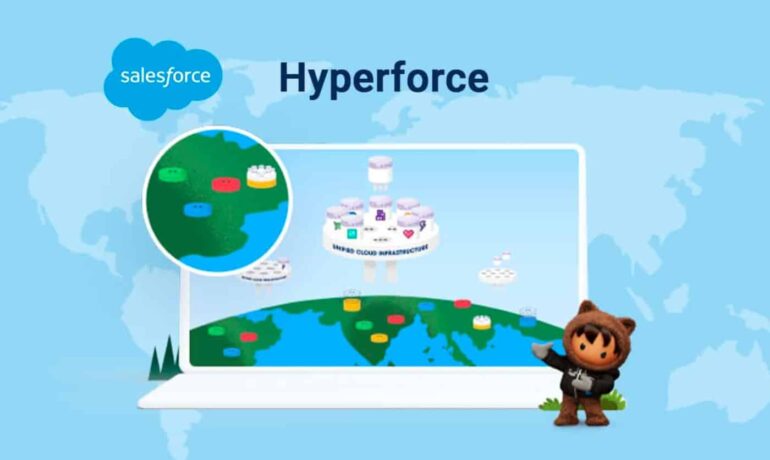
Salesforce Lightning Platform and Hyperforce: An Overview The Lightning Platform forms the core infrastructure of Salesforce, while Hyperforce is a new infrastructure model provided by the CRM platform. Salesforce Lightning Salesforce Lightning elevates customization with its modern and flexible framework. It offers a powerful drag-and-drop interface called the Lightning App Builder, enabling users to design custom homepages, record pages, and dashboards effortlessly. Salesforce Hyperforce Introduced at Dreamforce in December 2020 and recently made generally available, Hyperforce is an architectural enhancement to Salesforce’s platform designed for the public cloud. It offers several benefits, including scalability, global reach, and increased control over data residency. As part of the Salesforce Customer 360 platform, Hyperforce brings enhanced flexibility, scalability, and performance to the cloud. Key Benefits of Hyperforce: Hyperforce Migration Migrating to Hyperforce does not require additional costs. Once migrated, organizations will not experience significant changes, and non-Hyperforce services will continue to run. This code-based offering enhances speed, reliability, and global performance. Reasons to Migrate to Hyperforce: Hyperforce and Public Cloud Platforms Hyperforce can run on public cloud platforms like AWS, GCP, and Azure, representing a shift from traditional Salesforce-hosted data centers. The Data Cloud and Marketing Cloud are also built on Hyperforce, offering businesses a powerful platform for customer interactions and relationship management. Hyperforce vs. Shield Hyperforce provides volume-level encryption by default for data at rest, while Shield Platform Encryption operates in parallel, offering additional encryption features. Hyperforce Migration: Mandatory Upgrade Migrating to Hyperforce is not optional, as Salesforce has declared this architecture as its future. The migration process will occur over time, and organizations will need to prepare for it. If migration timing is not suitable, businesses should contact their Salesforce account agent. Data Residency and Migration Issues: While Hyperforce is expanding, more countries need to support data residency to have a truly international impact. Some migration issues may include Einstein loading problems, bot disruptions, and glitches with the Smartcomm managed package. Basic troubleshooting can resolve minor issues, but technical considerations like manual endpoint management may be time-consuming and costly. Hyperforce Assistant The Hyperforce Assistant provides a step-by-step guide to upgrade from Salesforce-managed physical data centers to Hyperforce, ensuring admins feel confident about the migration process. By adopting Hyperforce, businesses can enhance their customer data management with innovative solutions, ensuring robust security, scalability, and efficiency in their operations. Like Related Posts Who is Salesforce? Who is Salesforce? Here is their story in their own words. From our inception, we’ve proudly embraced the identity of Read more Salesforce Marketing Cloud Transactional Emails Salesforce Marketing Cloud Transactional Emails are immediate, automated, non-promotional messages crucial to business operations and customer satisfaction, such as order Read more Salesforce Unites Einstein Analytics with Financial CRM Salesforce has unveiled a comprehensive analytics solution tailored for wealth managers, home office professionals, and retail bankers, merging its Financial Read more AI-Driven Propensity Scores AI plays a crucial role in propensity score estimation as it can discern underlying patterns between treatments and confounding variables Read more

Read More
multi-channel campaigns

Multi-Channel Campaigns

Leveraging Salesforce for Multi-Channel Campaign Management with Tectonic In today’s dynamic marketing landscape, businesses need to connect with their audience across multiple channels—email, social media, web, and beyond. Managing these campaigns effectively can feel like juggling too many balls at once, especially when aiming to maintain consistent messaging, track performance, and maximize ROI. That’s where Salesforce, paired with expertise from Tectonic, makes all the difference. Salesforce simplifies multi-channel campaign management, helping businesses stay organized, boost engagement, and achieve measurable results. Let’s dive into how this powerful platform, supported by Tectonic’s expertise, takes campaign management to the next level. The Challenge Marketing teams often face obstacles like: The Solution: Streamlined Multi-Channel Campaign Management Salesforce, with Tectonic as your trusted partner, transforms the complexity of multi-channel campaigns into a streamlined and effective process. By integrating channels, automating workflows, and delivering real-time insights, businesses can engage their audience and achieve exceptional results. 1. Centralized Campaign Planning Salesforce Marketing Cloud provides a centralized platform for planning and managing campaigns across channels—email, SMS, social media, and paid ads—all from one dashboard. This unified view ensures messaging and branding stay consistent while fostering seamless collaboration across teams. Tectonic enhances this process by ensuring your Salesforce environment is optimized for your specific needs. 2. Personalized Messaging at Scale Salesforce’s AI-powered tools, such as Einstein AI, analyze customer data to craft personalized content for every audience segment. These tools allow businesses to create tailored emails, ads, and social media posts that resonate with specific groups. With Tectonic’s guidance, you can implement personalization strategies that drive engagement and conversions to new heights. 3. Real-Time Performance Tracking Salesforce consolidates campaign performance data into a single platform, providing real-time metrics like open rates, click-through rates, social engagement, and conversions. Customizable dashboards allow your team to monitor results at a glance, enabling quick adjustments for maximum impact. Tectonic can help design these dashboards for clarity and actionable insights. 4. Automation for Efficiency Managing multi-channel campaigns involves countless tasks, but Salesforce automates processes such as scheduling, triggering emails, and personalizing messaging based on user behavior. By streamlining these repetitive tasks, your team can focus on creativity and strategy. Tectonic’s expertise ensures these automations are tailored to fit your business workflows perfectly. 5. Seamless Integration Across Channels Salesforce integrates with platforms like Google Ads, Facebook, LinkedIn, and Instagram, consolidating data into one ecosystem. This eliminates the need for manual data collection, saving time and improving accuracy. Tectonic ensures these integrations are set up seamlessly, so you can focus on running impactful campaigns. Strategies for Success with Salesforce Why Tectonic + Salesforce? Tectonic combines deep Salesforce expertise with a keen understanding of marketing challenges to help you fully unlock the platform’s potential. Together, Salesforce and Tectonic empower businesses to achieve more efficient, impactful, and ROI-driven campaigns. Ready to revolutionize your multi-channel marketing strategy? Let Tectonic guide you to Salesforce success. Content updated December 2024. Like Related Posts Who is Salesforce? Who is Salesforce? Here is their story in their own words. From our inception, we’ve proudly embraced the identity of Read more Salesforce Marketing Cloud Transactional Emails Salesforce Marketing Cloud Transactional Emails are immediate, automated, non-promotional messages crucial to business operations and customer satisfaction, such as order Read more Salesforce Unites Einstein Analytics with Financial CRM Salesforce has unveiled a comprehensive analytics solution tailored for wealth managers, home office professionals, and retail bankers, merging its Financial Read more AI-Driven Propensity Scores AI plays a crucial role in propensity score estimation as it can discern underlying patterns between treatments and confounding variables Read more
Read More
Benefits of Salesforce Experience Cloud

Benefits of Salesforce Experience Cloud

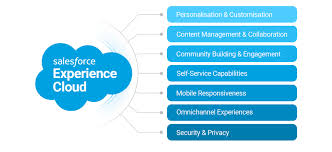
Salesforce Experience Cloud: Transforming Digital Customer Engagement To understand the Benefits of Salesforce Experience Cloud we must understand what a customer or partner portal is intended to do. Salesforce Experience Cloud, previously known as Community Cloud, is a powerful digital experience platform (DXP) designed to help organizations create and deliver exceptional, customer-centric experiences across multiple channels. This platform goes beyond community management, offering tools for building and managing websites, portals, mobile apps, and integrating social media. Benefits of Salesforce Experience Cloud explored. Built on Salesforce Customer 360, Experience Cloud gives businesses a comprehensive view of their customers by connecting data from various sources. With these insights, businesses can create personalized experiences tailored to each customer’s preferences and needs. Organizations can use Experience Cloud to design portals, websites, and communities, providing seamless access to relevant information, collaboration tools, and resources. The platform’s flexibility allows businesses to enhance customer satisfaction, improve partner collaboration, and boost employee productivity. Key Benefits of Salesforce Experience Cloud Salesforce Experience Cloud offers numerous benefits that help businesses deliver seamless experiences across the customer journey. Here are some of its key advantages: 1. Seamless Integration Experience Cloud integrates effortlessly with other Salesforce products like Sales Cloud and Service Cloud, providing a unified platform for comprehensive customer management. 2. Scalability and Customization The platform is highly scalable, allowing businesses to expand their communities as they grow. With extensive customization options, businesses can tailor the platform to meet their specific needs and branding requirements. 3. Security and Trust Salesforce is known for its robust security features, ensuring customer data is protected at all times. Businesses can confidently manage sensitive customer information within Experience Cloud. 4. Extensive AppExchange Ecosystem Salesforce’s AppExchange marketplace provides access to a wide range of pre-built integrations and apps that enhance the functionality of Experience Cloud, allowing businesses to customize and extend their platform capabilities. Real-World Uses of Salesforce Experience Cloud Salesforce Experience Cloud is used by businesses across various industries to improve customer engagement, enhance collaboration, and boost productivity. Some key use cases include: 1. Partner Portals Experience Cloud enables businesses to create dedicated partner portals where partners can collaborate with internal teams, access resources, and share leads. This accelerates partner engagement and streamlines business processes. 2. Self-Service Portals Businesses can offer 24/7 self-service portals, allowing customers to access product information, troubleshoot common issues, and track their interactions. These portals help reduce the workload on support teams and enhance customer satisfaction. 3. Customer Communities Experience Cloud allows businesses to create customer communities where users can find personalized content, engage with other users, and access self-service resources. This promotes collaboration and reduces the strain on customer support teams. 4. Employee Communities Internal employee communities serve as hubs for company-wide communication, training, and collaboration. Employees can access resources, share knowledge, and seek support, ultimately boosting engagement and productivity. 5. Branded Mobile Apps Businesses can use Experience Cloud to develop branded mobile apps that give customers, partners, and employees convenient access to services, resources, and information on the go. 6. Social Media Integration Experience Cloud integrates with popular social media platforms, allowing businesses to engage with customers directly, share content, and respond to inquiries. Top Features of Salesforce Experience Cloud Salesforce Experience Cloud is packed with features that enhance customer engagement, streamline operations, and improve overall efficiency: Companies Using Salesforce Experience Cloud Nike and PUMA leverage Experience Cloud for personalization. Nike’s loyalty program and Puma’s mobile shopping experience are enhanced by the platform’s built-in mobile UX design and technical architecture, resulting in better customer engagement and increased sales. Bank of America and Wells Fargo use Experience Cloud to offer customer support through self-service portals and community forums, improving customer satisfaction and gathering valuable feedback. IBM uses the platform to create collaborative communities for employees and customers alike. With integrated tools like Salesforce Einstein and IBM Watson, the company has enhanced internal collaboration and customer service. Hulu uses Salesforce to power its Help Center, where customers can find answers, engage with other viewers, and leave feedback that shapes Hulu’s content. OpenTable relies on Experience Cloud for its Diner Help portal, a one-stop shop for dining-related queries, enhancing the user experience and operational efficiency. Choosing the Right Salesforce Experience Cloud Partner for Implementation When implementing Salesforce Experience Cloud, choosing the right partner is crucial to ensure success. Look for a partner with: With the right partner, like Tectonic, businesses can fully grasp the power of Salesforce Experience Cloud to deliver exceptional digital experiences that foster customer loyalty, drive business growth, and improve operational efficiency. Content updated October 2024. Like Related Posts Who is Salesforce? Who is Salesforce? Here is their story in their own words. From our inception, we’ve proudly embraced the identity of Read more Salesforce Marketing Cloud Transactional Emails Salesforce Marketing Cloud Transactional Emails are immediate, automated, non-promotional messages crucial to business operations and customer satisfaction, such as order Read more Salesforce Unites Einstein Analytics with Financial CRM Salesforce has unveiled a comprehensive analytics solution tailored for wealth managers, home office professionals, and retail bankers, merging its Financial Read more AI-Driven Propensity Scores AI plays a crucial role in propensity score estimation as it can discern underlying patterns between treatments and confounding variables Read more

Read More
gettectonic.com