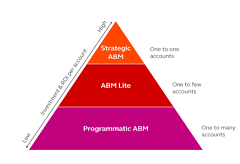
Account Based Engagement (ABE) is a B2B marketing and sales strategy that focuses on building deep, personalized relationships with high-value target accounts. Instead of broad campaigns, ABE emphasizes targeted interactions and communication tailored to the unique needs and interests of each account. The goal is to drive engagement, foster trust, and ultimately, convert these accounts into long-term customers.
Key aspects of ABE:
- Account-centric focus: ABE prioritizes understanding and addressing the needs of specific accounts over broader market segments.
- Personalized engagement: It involves tailoring marketing and sales efforts to each target account, including messaging, content, and channels.
- Multi-channel approach: ABE utilizes a variety of channels, both digital and physical, to engage with key stakeholders within the target accounts.
- Team collaboration: It requires close alignment and coordination between sales, marketing, and customer success teams to ensure a unified experience.
- Long-term relationship building: ABE aims to cultivate lasting relationships with key accounts, focusing on ongoing engagement and value delivery.
Benefits of ABE:
- Improved sales effectiveness: By focusing on high-value accounts, ABE can improve sales conversion rates and shorten sales cycles.
- Enhanced customer experience: Personalized engagement leads to a better customer experience, building trust and loyalty.
- Stronger customer relationships: ABE fosters deeper relationships with customers, leading to increased customer lifetime value and potential for referrals.
- Better alignment between sales and marketing: ABE requires collaboration between sales and marketing, leading to better alignment and shared goals.
- Higher ROI: By focusing on high-value accounts, ABE can help reduce marketing waste and increase return on investment.
Account based engagement (ABE) is an integral part of account based marketing. Unlike traditional forms of SaaS marketing, where the net is cast wide in the hopes of catching large volumes of customers, ABM is all about getting hyper-focused and granular.
It’s the new gold standard for lead generation in marketing.
Account based engagement (ABE) is a strategic marketing approach focusing on personalised experiences, tailored messaging, and targeted outreach for specific accounts. The goal is to build strong relationships between companies and customers by delivering relevant, value-driven content and experiences.
ABE is becoming increasingly popular with B2B businesses as a way to create more meaningful connections with key accounts. It allows businesses to be more intentional with their targeting and outreach efforts, providing each account with a bespoke experience.
There are two types of ABM channel engagement:
1. Digital engagement
This includes any online interactions with your B2B prospects. For example:
- Opening an email.
- Visiting your website.
- Downloading a piece of content.
- Reading a piece of content.
- Filling out a survey or form.
- Signing up for a newsletter or mailing list.
2. Physical engagement
This includes all real-world interactions with your B2B prospects. For example:
- Onsite visits or event attendance.
- Phone calls.
- Direct mail.
- SMS.
- Demo attendance.
What’s the difference between ABM and ABE?
Account based marketing (ABM) and account based engagement (ABE) are two distinct approaches to customer outreach.
Both strategies focus on building customer relationships, but ABM is more holistic. It involves developing an overarching strategy for engaging with accounts by creating personalised content based on the interests of specific accounts. ABM campaigns also target these B2B customers via multiple channels.
An account based engagement approach is more tactical and focuses on creating personalised experiences for each customer. It involves creating content specifically designed to engage customers in meaningful conversations, such as webinars or email campaigns.
While there are differences between both marketing strategies combining ABM and ABE is a good idea as B2B businesses can create comprehensive experiences for their customers that result in increased engagement and loyalty.
How to build an effective account based engagement strategy
Creating an effective ABM engagement strategy starts with understanding your target accounts. You must have a good grasp on who you’re trying to reach and their needs to tailor your approach accordingly.
Start by creating an ideal customer profile and calculating your TAM.
Then get researching!
Look at:
- Company background.
- Industry trends.
- Customer pain points.
- Where your target leads are spending their time.
Once you have identified your target accounts and done your research, it’s time to create an account based engagement plan.
Your plan should include specific ABM tactics for reaching out and engaging with each account.
For example:
If you’re using an intent data provider, you’ll be able to find potential leads searching for a product like yours. Marketers can then create a personalised plan based on that account’s specific pain point and reach out across channels where they spend most of their time.
For each account, decide which channels you’ll use to reach out, what type of content you’ll create, and how often you’ll contact them.
Lastly, every strategic B2B marketing plan needs to be measured. Create account based engagement reports to analyse the success of your campaigns and identify areas that need improvement. Be sure to measure the following metrics:
- Impressions.
- Clicks.
- Opens.
- Visits.
- Leads converted.
- Revenue generated.
By tracking these ABM metrics regularly, you can gain valuable insights into how your digital account engagement strategy is performing and make any necessary changes or improvements.
🔔🔔 Follow us on LinkedIn 🔔🔔

Who is Salesforce? Here is their story in their own words. From our inception, we've proudly embraced the identity of Read more
Salesforce Marketing Cloud Transactional Emails are immediate, automated, non-promotional messages crucial to business operations and customer satisfaction, such as order Read more

Salesforce has unveiled a comprehensive analytics solution tailored for wealth managers, home office professionals, and retail bankers, merging its Financial Read more
AI plays a crucial role in propensity score estimation as it can discern underlying patterns between treatments and confounding variables Read more