
When Will Quantum Computing Be Ready? The Answer Is More Complex Than You Think
Quantum computing doesn’t have a single “launch date”—it’s arriving in stages, with different milestones depending on how you define “availability.”
The Quantum Computing Landscape Today
Right now, hundreds of quantum computers exist worldwide, deployed by companies like IBM, D-Wave, IonQ, and Quantinuum. They’re accessible via:
- Cloud platforms (IBM Quantum, AWS Braket, Microsoft Azure Quantum)
- On-premises installations (Cleveland Clinic, Riken Center in Japan)
- Component-based systems (Q-Ctrl’s modular quantum chips)
But today’s quantum machines are mostly used for research, experimentation, and skill-building—not yet for real-world commercial advantage.
The Quantum Readiness Spectrum: 4 Key Milestones
1️⃣ Quantum Supremacy (Achieved in Niche Cases)
- Definition: A quantum computer solves a problem no classical computer can in a reasonable timeframe.
- Status:
- D-Wave claims supremacy in material science simulations (2024).
- China’s Zuchongzhi 3.0 reportedly surpassed classical supercomputers.
- Caveat: These claims are often debated—quantum “wins” are still highly specialized.
2️⃣ Quantum Economic Advantage (2025-2027)
- Definition: Quantum computing outperforms classical systems in cost, speed, or accuracy for specific tasks.
- Example: A financial firm uses quantum annealing to optimize portfolios 10x faster than classical methods.
- IBM predicts this milestone could arrive by 2025-2026.
3️⃣ Quantum Computational Advantage (2028-2030+)
- Definition: Quantum computers solve practical, large-scale problems that classical systems cannot—with fault tolerance (low error rates).
- Key hurdle: Scaling to 1,000+ logical qubits (error-corrected).
- McKinsey estimates this could happen around 2030 (±2 years).
4️⃣ Quantum Practicality (Ongoing Adoption)
- Definition: Businesses actively choose quantum over classical for real-world use cases.
- Near-term targets (2025-2027):
- Drug discovery (molecular modeling)
- Supply chain optimization
- Cryptography & cybersecurity
- Q-Ctrl believes 300-500 qubit systems (available by 2026) could unlock this phase.
What’s Accelerating (or Slowing) Quantum’s Progress?
✅ Positive Signs
- Hyperscalers are all-in (AWS Ocelot, Google’s Sycamore, Microsoft’s roadmap).
- Funding remains strong—no “quantum winter” in sight.
- Error correction is improving (IBM’s 133-qubit Heron chip, Quantinuum’s trapped-ion advances).
⚠️ Remaining Challenges
- Error rates must drop significantly for fault tolerance.
- Talent shortage—universities are racing to train quantum engineers.
- Manufacturing scalability—can chip fabs keep up with demand?
The Bottom Line: When Should Businesses Prepare?
🔹 Now: Experiment with cloud-based quantum access (IBM, AWS, Azure).
🔹 2025-2027: Watch for quantum economic advantage in optimization, chemistry, and AI.
🔹 2030+: Expect broad commercial impact in finance, logistics, and materials science.
“Quantum computing won’t arrive with a bang—it’ll seep into industries, one breakthrough at a time.”
— McKinsey Quantum Research, 2024
Want to stay ahead? Start piloting quantum use cases today—before your competitors do.


Who is Salesforce? Here is their story in their own words. From our inception, we've proudly embraced the identity of Read more

Salesforce Marketing Cloud Transactional Emails are immediate, automated, non-promotional messages crucial to business operations and customer satisfaction, such as order Read more

Salesforce has unveiled a comprehensive analytics solution tailored for wealth managers, home office professionals, and retail bankers, merging its Financial Read more
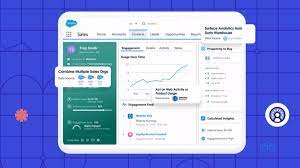
AI plays a crucial role in propensity score estimation as it can discern underlying patterns between treatments and confounding variables Read more