
- gettectonic.com - Page 5
Salesforce Feeding Post-Pandemic AI-Powered Digital Transformation

Salesforce Feeding Post-Pandemic AI-Powered Digital Transformation

The Digital Transformation Imperative: Salesforce’s AI Solutions The COVID-19 pandemic didn’t just accelerate digital transformation; it cemented it as an existential imperative for businesses across all industries. The sudden shift to remote work, digital customer engagement, and e-commerce highlighted the stark contrast between organizations that had prioritized digitization and those that hadn’t. In the post-pandemic era, digital agility has become synonymous with resilience and competitiveness. Salesforce Feeding Post-Pandemic AI-Powered Digital Transformation with unparalled innovation. However, the path to digital transformation remains challenging for many companies. Legacy systems, data silos, and manual processes continue to hinder adaptation and innovation at the pace demanded by today’s market and consumer. This has led to a certain weariness and skepticism around transformation initiatives, often perceived as an ever-receding target. Salesforce’s AI-Powered Integration Solutions Salesforce’s AI-powered integration solutions aim to revitalize the digital transformation journey. With tools like Einstein for Flow, Intelligent Document Processing (IDP), and Einstein for MuleSoft, Salesforce is embedding AI across its automation and integration portfolio to address some of the most difficult challenges in digitization. Anypoint Partner Manager: Harnessing AI for B2B Integration Salesforce’s latest MuleSoft offering, Anypoint Partner Manager, exemplifies this AI-centric approach. The cloud-native B2B integration solution leverages IDP to streamline partner onboarding and manage API and EDI-based transactions, addressing a key pain point for companies in complex supply chain ecosystems. “EDI has historically been that code-driven solution. You must really know the EDI spec,” noted Andrew Comstock, VP of Product Management at Salesforce. “Partner Manager actually brings the partner definition into a form, and you can just define that, save it, and you’re off and done. We can deploy all the applications that you need for you.” By using AI to extract and structure data from unstructured documents like invoices and purchase orders, Anypoint Partner Manager democratizes B2B integration, making it accessible to businesses beyond the traditional technology sector. The solution is now generally available. MuleSoft Accelerator for Salesforce Order Management: Bridging B2B and B2C Salesforce also introduced the MuleSoft Accelerator for Salesforce Order Management. This tool provides pre-built APIs, connectors, and templates to unify B2B and B2C orders from a centralized hub. By connecting Salesforce OMS with ERP systems in real-time, the accelerator enables end-to-end visibility across channels, a critical capability in today’s omnichannel environment. “For many companies, [order management] is super critical and vital,” emphasized Comstock. “The more that they can standardize and centralize that, the better visibility, controls, and governance they have.” The MuleSoft Accelerator for Salesforce OMS is now generally available. The AI Imperative in Digital Transformation Salesforce’s AI-powered integration solutions come at a time when businesses are grappling with the realities of the post-pandemic digital imperative. Automating complex B2B processes, unifying data flows across ecosystems, and extracting insights from unstructured data is no longer a luxury but a necessity for survival in the digital economy. Salesforce Feeding Post-Pandemic AI-Powered Digital Transformation “A lot of our successes are happening at companies that are not traditional technology companies. Using solutions like MuleSoft and Salesforce allows them to build those technologies better,” noted Comstock. In this context, AI is emerging as a key enabler of digital transformation at scale. By abstracting complexity and automating manual tasks, AI-powered integration tools like those from Salesforce are helping businesses overcome the hurdles that have long stymied digitization efforts. For companies still wrestling with the challenges of digital transformation, Salesforce’s AI-powered integration portfolio offers a glimmer of hope. By harnessing the power of large language models and other AI technologies to streamline integration and automation, Salesforce is providing a new path forward for organizations looking to thrive in the post-pandemic digital landscape. Salesforce Feeding Post-Pandemic AI-Powered Digital Transformation with Einstein, Mulesoft, Flow, and more. Like Related Posts Who is Salesforce? Who is Salesforce? Here is their story in their own words. From our inception, we’ve proudly embraced the identity of Read more Salesforce Marketing Cloud Transactional Emails Salesforce Marketing Cloud Transactional Emails are immediate, automated, non-promotional messages crucial to business operations and customer satisfaction, such as order Read more Salesforce Unites Einstein Analytics with Financial CRM Salesforce has unveiled a comprehensive analytics solution tailored for wealth managers, home office professionals, and retail bankers, merging its Financial Read more AI-Driven Propensity Scores AI plays a crucial role in propensity score estimation as it can discern underlying patterns between treatments and confounding variables Read more

Read More
HCG Providing Patient-Focused Personalized Care With Salesforce

HCG Providing Patient-Focused Personalized Care With Salesforce

HCG Delivers Personalized Patient Care with Salesforce Read more at: CXO Today HCG Providing Patient-Focused Personalized Care With Salesforce Healthcare Global Enterprises Ltd (HCG), a renowned network of 25 hospitals, is elevating patient care through Salesforce. With a 360-degree patient view, HCG connects with patients on a more personal level, delivering proactive support at every step of their journey. HCG’s commitment to value-based, precision medicine is clear, attracting over 200,000 patients annually. Unified Patient View for Personalized Care Previously, HCG faced challenges with siloed patient information and a rudimentary CRM system. “Without a single source of truth on patients, it was difficult for our medical, surgical, and support teams to collaborate,” says Vineesh Ghei, Chief Sales Officer, HCG. Today, Salesforce provides a unified patient view, capturing every case history, treatment plan, and patient preference, enabling teams to personalize patient care effectively. Enhanced Efficiency with Automation Salesforce Sales Cloud captures initial patient interactions, streamlining responses and tracking conversations. “Our response time to patient enquiries has reduced from 45 minutes to 23 minutes,” notes Ghei. Sales productivity has also improved with automated task prioritization and activity tracking. Additionally, partner management processes have been automated, enhancing engagement. Swift Service Query Resolution Patient journeys are orchestrated on Salesforce Service Cloud, integrating outpatient consultations, inpatient processes, and discharge planning. Integration with HCG’s appointment booking and cloud telephony systems ensures patient details are readily available to agents, enabling resolution of over 90% of queries in under five minutes. This comprehensive view allows service agents to provide proactive, personalized support. Contextual Communications for Long-Term Wellness Using Salesforce Marketing Cloud Engagement, HCG segments patients and delivers personalized communications relevant to their treatment stages. “Every patient’s journey is deeply personal,” says Stuti Jain, Head of Brand, Digital, and Communications, HCG. “Our communications are prioritized to add value to their journey.” HCG maintains connection with patients post-visit, supporting them through recovery. Data-Driven Decision Making By integrating data from Health Information Systems, Electronic Medical Records, and other platforms, HCG leverages operational intelligence to enhance decision-making. Insights from dashboards and reports improve patient satisfaction and care quality. Marketing Cloud Intelligence helps optimize campaigns, engagement channels, and team performance. Expanding Digital Transformation HCG plans to unlock additional Salesforce features, such as AI-driven call center operations with Einstein. Further integrations with lab and radiology systems and patient care apps will expand the Patient 360 view. “Our goal is to become an oncology knowledge company, up-to-date on treatment protocols and patient needs,” says Dey. Jain adds, “When people think of cancer care, they should think of HCG.” HCG’s integration of Salesforce is setting a new standard in personalized cancer care, ensuring patients receive the best possible support and treatment throughout their journey. Like Related Posts Who is Salesforce? Who is Salesforce? Here is their story in their own words. From our inception, we’ve proudly embraced the identity of Read more Salesforce Marketing Cloud Transactional Emails Salesforce Marketing Cloud Transactional Emails are immediate, automated, non-promotional messages crucial to business operations and customer satisfaction, such as order Read more Salesforce Unites Einstein Analytics with Financial CRM Salesforce has unveiled a comprehensive analytics solution tailored for wealth managers, home office professionals, and retail bankers, merging its Financial Read more AI-Driven Propensity Scores AI plays a crucial role in propensity score estimation as it can discern underlying patterns between treatments and confounding variables Read more
Read More

Salesforce Marketing Cloud Gamechanger

Why Choose Salesforce Marketing Cloud for Your Business? Before diving into the features, let’s explore what makes Salesforce Marketing Cloud (SFMC) a game-changer for businesses. At its core, SFMC streamlines marketing automation, handling tasks like email outreach and audience segmentation with ease. This efficiency allows you to focus on strategy instead of repetitive tasks. As marketing shifts toward personalization, understanding your customers is more important than ever. SFMC helps businesses analyze customer behaviors, purchasing patterns, and engagement trends, making it easier to deliver highly targeted campaigns. Now, let’s dive into the top five features that set Salesforce Marketing Cloud apart. 1. Journey Builder – Create Personalized Customer Journeys Every customer follows a unique path, and Journey Builder lets you design tailored experiences across multiple channels. It helps map out customer interactions, ensuring they receive the right message at the right time. For example, if you run an e-commerce store, Journey Builder can automatically trigger: Marketing Value: ✔ Enhances personalization, leading to higher engagement.✔ Automates follow-ups so no opportunity is missed. Use Case: A customer browses sneakers on your website but doesn’t purchase. With Journey Builder, you can set up an automated sequence: 2. Email Studio – Simplify Your Email Marketing Email remains one of the most effective marketing channels. With Email Studio, you can craft high-impact email campaigns using a drag-and-drop interface—no coding required. From newsletters to transactional emails, SFMC ensures your message reaches the right audience. You can also A/B test subject lines and layouts to optimize performance. Marketing Value: ✔ Personalized emails generate 6x more transactions than generic ones.✔ Built-in analytics help refine email strategies. Use Case: Instead of blasting the same email to all customers, SFMC lets you segment audiences: This targeted approach drives better results and improves ROI. 3. Audience Studio – Harness the Power of Data Keeping track of customer data across platforms can be overwhelming. Audience Studio centralizes data from multiple sources—your website, social media, and emails—into a unified customer profile. It then segments customers based on behaviors and preferences, making it easier to deliver hyper-targeted campaigns. Marketing Value: ✔ Better audience insights lead to more effective marketing.✔ Integrates data from different platforms into one dashboard. Use Case: Launching a new product? Audience Studio – now known as Data Cloud – can identify your most interested customers based on their browsing history and past purchases. This ensures your ad spend is focused on high-intent buyers instead of a general, broad, uninterested audience. 4. Mobile Studio – Reach Customers on Their Phones With over 50% of emails opened on mobile, a strong mobile strategy is crucial. Mobile Studio enables businesses to connect with customers via SMS, push notifications, and in-app messaging. Even better, messages can be personalized based on user behavior, ensuring relevance. Marketing Value: ✔ Engage customers on their most-used device.✔ Mobile marketing sees higher open and conversion rates than email. Use Case: With most users glued to their phones, Mobile Studio ensures your brand stays top of mind. 5. Analytics Builder – Measure Your Success Running campaigns is one thing, but knowing what’s working is what truly drives growth. Analytics Builder tracks campaign performance in real time, providing insights on open rates, clicks, and conversions. Its user-friendly dashboards allow businesses to quickly identify top-performing campaigns and optimize underperforming ones. Marketing Value: ✔ Data-driven decisions outperform guesswork.✔ Helps fine-tune campaigns for maximum ROI. Use Case: If email engagement is low, Analytics Builder may reveal that your CTA is too subtle. By refining the email design, click-through rates can improve almost instantly. Unlock the Full Potential of Salesforce Marketing Cloud Salesforce Marketing Cloud offers a powerful, data-driven marketing suite that elevates customer engagement and drives conversions. It is as important in B2B marketing as it is to B2C and creates amazing customer experiences. By leveraging tools like Journey Builder, Email Studio, and Audience Studio (now known as Salesforce Data Cloud), businesses can create personalized, automated campaigns that resonate with their customers. Want to maximize engagement and ROI? Salesforce Marketing Cloud is a gamechanger. Start exploring Salesforce Marketing Cloud today—because the future of marketing is all about smarter, more connected and data-driven experiences. Content updated February 2025. Like1 Related Posts Who is Salesforce? Who is Salesforce? Here is their story in their own words. From our inception, we’ve proudly embraced the identity of Read more Salesforce Marketing Cloud Transactional Emails Salesforce Marketing Cloud Transactional Emails are immediate, automated, non-promotional messages crucial to business operations and customer satisfaction, such as order Read more Salesforce Unites Einstein Analytics with Financial CRM Salesforce has unveiled a comprehensive analytics solution tailored for wealth managers, home office professionals, and retail bankers, merging its Financial Read more AI-Driven Propensity Scores AI plays a crucial role in propensity score estimation as it can discern underlying patterns between treatments and confounding variables Read more
Read More
Unity Catalog Open Sourced by Databricks

Unity Catalog Open Sourced by Databricks

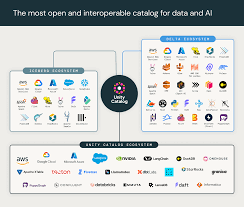
Databricks Announces Open Sourcing of Unity Catalog for Data and AI Governance Databricks, the Data and AI company, has announced the open-sourcing of Unity Catalog, the industry’s only unified solution for data and artificial intelligence (AI) governance across clouds, data formats, and data platforms. This initiative underscores Databricks’ commitment to open ecosystems, providing customers with the flexibility and control they need without vendor lock-in. The announcement marks a new era for open catalog standards for data and AI, with support from major partners such as Amazon Web Services (AWS), Google Cloud, Microsoft, NVIDIA, Salesforce, and others. Unity Catalog Open Sourced by Databricks. Key Features of Unity Catalog OSS Interoperability: Unity Catalog OSS offers a universal interface supporting any data format and compute engine. It can read tables with Delta Lake, Apache Iceberg™, and Apache Hudi™ clients via Delta Lake UniForm, and supports the Iceberg REST Catalog and Hive Metastore (HMS) interface standards. It is interoperable with all major cloud platforms, compute engines, and data and AI platforms. Unified Governance: Unity Catalog OSS enables unified governance across tabular data, non-tabular data, and AI assets such as ML models and generative AI tools, simplifying management, discovery, and development at scale. Openness: With open APIs and an Apache 2.0 licensed open source server, Unity Catalog OSS maximizes flexibility and customer choice by enabling broad interoperability across various engines, tools, and platforms. Industry and Partner Support Unity Catalog OSS is the industry’s only universal catalog for data and AI. Since its introduction in 2021, Unity Catalog has helped over 10,000 organizations break down silos created by multiple single-purpose solutions. Customer Testimonials: Supporting Cloud Partners: Supporting Data and AI Partners: The Future of Data and AI Governance With the open-sourcing of Unity Catalog, Databricks continues to lead in data and AI governance, fostering an ecosystem of interoperable tools, universal support for data and AI assets, and built-in security. Unity Catalog OSS will be available at the Data + AI Summit, furthering Databricks’ mission to empower organizations with the tools needed for modern data and AI applications. Like2 Related Posts Who is Salesforce? Who is Salesforce? Here is their story in their own words. From our inception, we’ve proudly embraced the identity of Read more Salesforce Marketing Cloud Transactional Emails Salesforce Marketing Cloud Transactional Emails are immediate, automated, non-promotional messages crucial to business operations and customer satisfaction, such as order Read more Salesforce Unites Einstein Analytics with Financial CRM Salesforce has unveiled a comprehensive analytics solution tailored for wealth managers, home office professionals, and retail bankers, merging its Financial Read more AI-Driven Propensity Scores AI plays a crucial role in propensity score estimation as it can discern underlying patterns between treatments and confounding variables Read more
Read More
Salesforce Spiff

Salesforce Spiff

Incentive Compensation Management Boost seller motivation and performance with incentive compensation management software that offers real-time commission visibility. Salesforce Spiff. Automate commission calculations, reduce administrative tasks, and improve departmental alignment with compensation plans geared for revenue growth. Automate Commissions and Motivate Sellers Enhance collaboration across departments and align go-to-market priorities with effective incentive compensation management. Customized Rep Statements Empower sellers by providing commission statements, tracking progress against goals, and estimating potential earnings. Use commission tracing functionality to eliminate confusion and align organizational priorities with seller motivations. In-App Comments and Notifications Manage questions, comments, and disputes efficiently within a single platform. Promote cross-organizational collaboration through real-time comments and notifications. Commission Estimator Allow sellers to predict future earnings by providing data-driven insights into incentive estimates early in the sales process. This helps sellers and managers focus on high-impact deals. Flexible Setup Quickly set up incentive compensation plans, adapting to changes in team structure or compensation complexity. Track all plan adjustments with an audit log. Powerful Automation and Workflows Automate complex commission structures, including accelerators, tiers, and triggers. Calculate thousands of statements in seconds to ensure accuracy and efficiency. Seamless Integrations Integrate CRM, ERP, HCM, payroll, or other systems to create a real-time, single source of truth for all commission needs. Data Accuracy Use machine learning to automatically match records, eliminating manual errors and providing a reliable single source of truth. Deep Audit Trail Add effective dates to any user, plan, or logic, and lock historical statements to maintain accuracy. Manage one-off changes without concern. Automated Expense Reporting Maintain compliance under ASC 606 and IFRS 15 with automated, audit-ready expense reports. Use an intuitive interface to manage exceptions, fringe benefits, and varied commission types. Salesforce and Spiff: A Strategic Acquisition After pausing mergers and acquisitions over the past year, Salesforce acquired Spiff at the end of 2023. Previously an AppExchange partner, Spiff provided robust incentive compensation management functionality, calculating commissions for sales based on closed-won deals. Integration into Sales Cloud Salesforce has integrated “Salesforce Spiff” into Sales Cloud, emphasizing the importance of Incentive Compensation Management (ICM) for high-performing companies. With 90% of top-performing companies using incentive programs, this acquisition enhances Salesforce’s offerings. Growth and Market Presence Before the acquisition, Spiff had 1,000 customers and was growing at 100% year-over-year. Salesforce’s market share of approximately 23% in the Sales CRM market indicates significant growth potential for ICM. The Importance of ICM ICM software addresses the complexity of commission calculations, including various percentages for new sales, renewals, bonuses for new customers, accelerators, and team incentives. Accurate calculations across large sales teams are crucial for maintaining motivation and performance. This is a huge time saver. From Excel to Cloud Technology While Excel spreadsheets have been a traditional solution for ICM, Spiff’s cloud technology offers greater functionality and user-friendliness. And it interfaces directly with Sales Cloud. How Salesforce Spiff Works Available as an add-on for Sales Cloud customers from May 2024, Salesforce Spiff offers: Enhanced User Experience The low-code builder simplifies the creation of commission plans, saving time compared to Excel. Real-time commission visibility allows sales users to see potential earnings, motivating them to pursue lucrative opportunities. Final Thoughts Sales roles are essential for driving business revenue. Tools like Spiff provide transparency into potential earnings, significantly impacting sales teams’ motivation and performance. Integrating Spiff into Sales Cloud enhances Salesforce’s value proposition, helping businesses optimize their sales processes and achieve better results. Availability Salesforce Spiff will be available as an add-on for Sales Cloud customers in May 2024. Non-Salesforce customers can also purchase the product from Salesforce.com/salesforcespiff starting May 2024. Like Related Posts Who is Salesforce? Who is Salesforce? Here is their story in their own words. From our inception, we’ve proudly embraced the identity of Read more Salesforce Marketing Cloud Transactional Emails Salesforce Marketing Cloud Transactional Emails are immediate, automated, non-promotional messages crucial to business operations and customer satisfaction, such as order Read more Salesforce Unites Einstein Analytics with Financial CRM Salesforce has unveiled a comprehensive analytics solution tailored for wealth managers, home office professionals, and retail bankers, merging its Financial Read more AI-Driven Propensity Scores AI plays a crucial role in propensity score estimation as it can discern underlying patterns between treatments and confounding variables Read more
Read More
Salesforce CDP Explained

Salesforce CDP Implementation Services

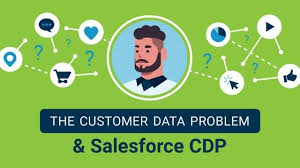
Salesforce CDP is a robust platform that transforms your customer data into actionable insights. It enables you to seamlessly track customer interactions across multiple channels, segment your audience effectively, and deliver personalized experiences through targeted messaging and offers. What is Salesforce CDP? Salesforce CDP is a cutting-edge platform designed to collect, unify, and integrate data from various sources. By centralizing your customer data, it empowers you to track customer journeys, segment audiences, and personalize interactions. Additionally, it automates processes such as sending targeted messages and tailored offers, ensuring a seamless customer experience. Key Benefits of Salesforce CDP Implementing a Salesforce CDP offers a wide range of advantages, including: How to Use Salesforce CDP for Customer Journeys Harness the power of Salesforce CDP to enhance your customer journeys with data-driven insights. Set up automated workflows to segment customers and deliver targeted offers or messages based on their preferences. Measure engagement across multiple channels to optimize communication strategies. Leverage AI and machine learning to uncover patterns in customer data, providing deep insights into individual behaviors. Automating and Personalizing Retention Strategies with Salesforce CDP Boost customer retention by automating and personalizing your strategies with Salesforce CDP. Identify behavioral patterns and set up automated triggers for timely communication. Deliver personalized messages tailored to each customer segment, ensuring relevance and engagement. Monitor engagement metrics over time to identify at-risk customers and take proactive steps to retain them. Best Practices for Leveraging Salesforce CDP To maximize the value of your data with Salesforce CDP, follow these best practices: Ready to Maximize Your CRM Potential? Are you searching for a trusted Salesforce service provider to help you implement and optimize Salesforce CDP? Partner with Tectonic to unlock the full potential of the #1 CRM platform. Schedule a call today to explore the best solutions tailored to your business needs! Like Related Posts Who is Salesforce? Who is Salesforce? Here is their story in their own words. From our inception, we’ve proudly embraced the identity of Read more Salesforce Marketing Cloud Transactional Emails Salesforce Marketing Cloud Transactional Emails are immediate, automated, non-promotional messages crucial to business operations and customer satisfaction, such as order Read more Salesforce Unites Einstein Analytics with Financial CRM Salesforce has unveiled a comprehensive analytics solution tailored for wealth managers, home office professionals, and retail bankers, merging its Financial Read more AI-Driven Propensity Scores AI plays a crucial role in propensity score estimation as it can discern underlying patterns between treatments and confounding variables Read more

Read More
Building Trust in AI-Powered CRM

Building Trust in AI-Powered CRM

Building Trust in AI-Powered CRM: The Key to Successful Adoption Why Education and Trust Matter in AI-Driven CRM To maximize the benefits of AI-powered CRM systems, organizations must focus on two critical pillars: Despite growing AI adoption, Forrester’s research reveals significant gaps: 1. The AI Knowledge Gap 2. Trust Barriers in Generative AI Top concerns delaying genAI adoption:🔒 Security risks – Fear of leaking customer PII or confidential data⚖️ Compliance risks – Potential violations of GDPR, CCPA, or copyright laws✍️ Output reliability – AI-generated content may be misleading or inaccurate “Deploying unchecked AI responses can damage brand credibility. Human oversight remains essential.” 3. AI-Powered CRM: Security as a Competitive Advantage Businesses prioritize vendors who proactively address: How to Build AI Confidence in Your Organization For Employees ✔ Role-based AI training – Tailor education to sales, service, and marketing teams✔ Hands-on sandbox environments – Let teams test AI tools risk-free✔ Clear guidelines – Define approved vs. restricted AI use cases For Customers ✔ Transparent data policies – Explain how AI improves their experience✔ Opt-in controls – Let users manage data-sharing preferences✔ Human-AI collaboration – Ensure sensitive interactions always have human review The Path Forward While AI-powered CRM adoption continues rising, trust remains the differentiator. Companies that:✅ Invest in AI education✅ Prioritize responsible data practices✅ Choose vendors with robust security …will gain a competitive edge—turning AI skepticism into customer and employee confidence. Ready to implement AI-powered CRM the right way? Let Tectonic lead the way! Like Related Posts Who is Salesforce? Who is Salesforce? Here is their story in their own words. From our inception, we’ve proudly embraced the identity of Read more Salesforce Marketing Cloud Transactional Emails Salesforce Marketing Cloud Transactional Emails are immediate, automated, non-promotional messages crucial to business operations and customer satisfaction, such as order Read more Salesforce Unites Einstein Analytics with Financial CRM Salesforce has unveiled a comprehensive analytics solution tailored for wealth managers, home office professionals, and retail bankers, merging its Financial Read more AI-Driven Propensity Scores AI plays a crucial role in propensity score estimation as it can discern underlying patterns between treatments and confounding variables Read more

Read More
Databricks LakeFlow

Databricks LakeFlow

Databricks Introduces LakeFlow: Simplifying Data Engineering Databricks, the Data and AI company, yesterday announced the launch of Databricks LakeFlow, a new solution designed to unify and simplify all aspects of data engineering, from data ingestion to transformation and orchestration. LakeFlow enables data teams to efficiently ingest data at scale from databases like MySQL, Postgres, and Oracle, as well as enterprise applications such as Salesforce, Dynamics, SharePoint, Workday, NetSuite, and Google Analytics. Additionally, Databricks is introducing Real Time Mode for Apache Spark, allowing ultra-low latency stream processing. Simplified Data Engineering with LakeFlow LakeFlow automates the deployment, operation, and monitoring of data pipelines at scale, with built-in support for CI/CD and advanced workflows that include triggering, branching, and conditional execution. It integrates data quality checks and health monitoring with alerting systems such as PagerDuty, simplifying the process of building and operating production-grade data pipelines. This efficiency enables data teams to meet the growing demand for reliable data and AI. Tackling Data Pipeline Challenges Data engineering is crucial for democratizing data and AI within businesses but remains complex and challenging. Data teams often struggle with ingesting data from siloed, proprietary systems, and managing intricate logic for data preparation. Failures and latency spikes can disrupt operations and disappoint customers. The deployment of pipelines and monitoring of data quality typically involve disparate tools, complicating the process further. Fragmented solutions lead to low data quality, reliability issues, high costs, and increasing backlogs. LakeFlow addresses these challenges by providing a unified experience on the Databricks Data Intelligence Platform, with deep integrations with Unity Catalog for end-to-end governance and serverless compute for efficient and scalable execution. Key Features of LakeFlow Availability LakeFlow represents the future of unified and intelligent data engineering. The preview phase will begin soon, starting with LakeFlow Connect. Like Related Posts Who is Salesforce? Who is Salesforce? Here is their story in their own words. From our inception, we’ve proudly embraced the identity of Read more Salesforce Marketing Cloud Transactional Emails Salesforce Marketing Cloud Transactional Emails are immediate, automated, non-promotional messages crucial to business operations and customer satisfaction, such as order Read more Salesforce Unites Einstein Analytics with Financial CRM Salesforce has unveiled a comprehensive analytics solution tailored for wealth managers, home office professionals, and retail bankers, merging its Financial Read more AI-Driven Propensity Scores AI plays a crucial role in propensity score estimation as it can discern underlying patterns between treatments and confounding variables Read more
Read More
Salesforce Summer 24 OmniStudio Release

Salesforce Summer 24 OmniStudio Release

OmniStudio In Summer ’24, OmniStudio (when the Managed Package Runtime setting is disabled) supports features from OmniStudio for Vlocity, including filling address fields in omniscripts with Google Map data, using Salesforce private connect for HTTP actions in integration procedures, and choosing whether to merge entries within a list in an integration procedure list action. Salesforce Summer 24 OmniStudio Release. Also, DataRaptor is now Omnistudio Data Mapper. For Winter ’25 upgrades, disable New Order Save Behavior. To prepare for future releases, remove organization and profile standard objects from data mappers, remove OmniStudio components with unlocked packages, and check the impact of the date change in the ADDDAY function return. Salesforce Summer 24 OmniStudio Release Like1 Related Posts Who is Salesforce? Who is Salesforce? Here is their story in their own words. From our inception, we’ve proudly embraced the identity of Read more Salesforce Marketing Cloud Transactional Emails Salesforce Marketing Cloud Transactional Emails are immediate, automated, non-promotional messages crucial to business operations and customer satisfaction, such as order Read more Salesforce Unites Einstein Analytics with Financial CRM Salesforce has unveiled a comprehensive analytics solution tailored for wealth managers, home office professionals, and retail bankers, merging its Financial Read more AI-Driven Propensity Scores AI plays a crucial role in propensity score estimation as it can discern underlying patterns between treatments and confounding variables Read more

Read More
Connect your Marketing Cloud Account to GA4

Connect your Marketing Cloud Account to GA4 by June 30, 2024

Starting on June 30, 2024, Google will no longer support its Google Universal Analytics (UA) service. As a result, after this date, Marketing Cloud Google Audiences and Journey Analytics are available only via Google Analytics 4 (GA4). Connect your Marketing Cloud Account to GA4. What you need to do If you haven’t yet migrated to GA4, complete the migration process by June 30, 2024 to maintain functionality. To learn more about the migration process and benefits of migrating to GA4, review Update to Google Analytics 4 Before July 1. If you’ve already migrated your Google Analytics account from UA to GA4, you can access the GA4 solutions available within Marketing Cloud Engagement today. By June 30, complete the following steps to ensure that your org’s journeys remain uninterrupted: Where can I get more information? For more details, see Google Analytics for Marketing Cloud Engagement. If you have questions or need help, open a case with support via Salesforce Help. Google Analytics Integration for Marketing Cloud Engagement Integrate Google Analytics with Marketing Cloud Engagement to use Google Analytics capabilities to track and analyze journey activity. You can also view the resulting metrics directly in Marketing Cloud Engagement. Google’s native authentication creates a secure link between your Marketing Cloud Engagement instance and your Google Analytics account. To use this integration, your Marketing Cloud Engagement account must have the Google Analytics Audiences SKU. You must also have at least a Marketing Cloud Engagement Enterprise 2.0 account. For more information about these requirements, contact your Salesforce account representative. This integration supports Google Analytics properties that are created using the latest version of the Google Analytics platform, known as Google Analytics 4 or GA4. It supports both the free version and the paid Google Analytics 360 enterprise version. You can revoke the integration from a Google Analytics account. For the integration, Google recommends that you designate a primary company account to track all your properties and views. For more information, see the Google Hierarchy of organizations, accounts, users, properties, and views. Before you configure the Google Analytics Integration for Marketing Cloud Engagement: Like1 Related Posts Who is Salesforce? Who is Salesforce? Here is their story in their own words. From our inception, we’ve proudly embraced the identity of Read more Salesforce Marketing Cloud Transactional Emails Salesforce Marketing Cloud Transactional Emails are immediate, automated, non-promotional messages crucial to business operations and customer satisfaction, such as order Read more Salesforce Unites Einstein Analytics with Financial CRM Salesforce has unveiled a comprehensive analytics solution tailored for wealth managers, home office professionals, and retail bankers, merging its Financial Read more AI-Driven Propensity Scores AI plays a crucial role in propensity score estimation as it can discern underlying patterns between treatments and confounding variables Read more

Read More
Zero ETL

Zero ETL

What is Zero-ETL? Zero-ETL represents a transformative approach to data integration and analytics by bypassing the traditional ETL (Extract, Transform, Load) pipeline. Unlike conventional ETL processes, which involve extracting data from various sources, transforming it to fit specific formats, and then loading it into a data repository, Zero-ETL eliminates these steps. Instead, it enables direct querying and analysis of data from its original source, facilitating real-time insights without the need for intermediate data storage or extensive preprocessing. This innovative method simplifies data management, reducing latency and operational costs while enhancing the efficiency of data pipelines. As the demand for real-time analytics and the volume of data continue to grow, ZETL offers a more agile and effective solution for modern data needs. Challenges Addressed by Zero-ETL Benefits of ZETL Use Cases for ZETL In Summary ZETL transforms data management by directly querying and leveraging data in its original format, addressing many limitations of traditional ETL processes. It enhances data quality, streamlines analytics, and boosts productivity, making it a compelling choice for modern organizations facing increasing data complexity and volume. Embracing Zero-ETL can lead to more efficient data processes and faster, more actionable insights, positioning businesses for success in a data-driven world. Components of Zero-ETL ZETL involves various components and services tailored to specific analytics needs and resources: Advantages and Disadvantages of ZETL Comparison: Z-ETL vs. Traditional ETL Feature Zero-ETL Traditional ETL Data Virtualization Seamless data duplication through virtualization May face challenges with data virtualization due to discrete stages Data Quality Monitoring Automated approach may lead to quality issues Better monitoring due to discrete ETL stages Data Type Diversity Supports diverse data types with cloud-based data lakes Requires additional engineering for diverse data types Real-Time Deployment Near real-time analysis with minimal latency Batch processing limits real-time capabilities Cost and Maintenance More cost-effective with fewer components More expensive due to higher computational and engineering needs Scale Scales faster and more economically Scaling can be slow and costly Data Movement Minimal or no data movement required Requires data movement to the loading stage Comparison: Zero-ETL vs. Other Data Integration Techniques Top Zero-ETL Tools Conclusion Transitioning to Zero-ETL represents a significant advancement in data engineering. While it offers increased speed, enhanced security, and scalability, it also introduces new challenges, such as the need for updated skills and cloud dependency. Zero-ETL addresses the limitations of traditional ETL and provides a more agile, cost-effective, and efficient solution for modern data needs, reshaping the landscape of data management and analytics. Like Related Posts Who is Salesforce? Who is Salesforce? Here is their story in their own words. From our inception, we’ve proudly embraced the identity of Read more Salesforce Unites Einstein Analytics with Financial CRM Salesforce has unveiled a comprehensive analytics solution tailored for wealth managers, home office professionals, and retail bankers, merging its Financial Read more AI-Driven Propensity Scores AI plays a crucial role in propensity score estimation as it can discern underlying patterns between treatments and confounding variables Read more Tectonic’s Successful Salesforce Track Record Salesforce Technology Services Integrator – Tectonic has successfully delivered Salesforce in a variety of industries including Public Sector, Hospitality, Manufacturing, Read more

Read More
AI Yes Gen AI No

AI Yes Gen AI No

The race in generative AI may conclude sooner than anticipated, despite it barely starting for most. Consider the role of generative AI as a supportive assistant, aiding users across dashboards, messaging platforms, and datasets by summarizing documents, chats, and answering queries in natural language. AI Yes Gen AI No. At PegaWorld, significant attention was drawn to Pega’s Knowledge Buddy, an assistant integrated with LLM, specifically OpenAI on Azure, tailored to organization-specific data. CTO Don Schuerman emphasized the practicality of Pega’s solution: “Knowledge Buddy solves many enterprise problems, but it’s not the only RAG-based product out there. Everyone’s got one.” Indeed, major companies each boast their AI assistants: Adobe with AI Assistant, Salesforce with Einstein Copilot, Microsoft with Copilot, HubSpot with various AI assistants, Oracle’s Digital Assistant, and SAP’s Joule. Possessing an AI assistant is now a necessity, not a differentiator, as it has become standard across competitors. Generative AI tools like text and image generators have garnered public interest due to their accessibility. For instance, tools like Google Gemini enable anyone to create, blurring the lines between creator roles. The prevalence of generative AI across over 14,000 martech products is notable, exemplified by MarTechBot, which leverages AI to answer queries and generate images based on MarTech’s vast archive. While text and image generation capabilities rapidly advance, offering these tools is becoming a norm rather than a novelty. Soon, lacking these capabilities will be akin to a supermarket not selling eggs. Does this signify the end of the AI arms race? While generative AI will continue to evolve, it is becoming ubiquitous as a fundamental requirement. However, it’s crucial to distinguish the generative AI arms race from the broader AI landscape. Non-generative AI, such as predictive analytics and classification AI used in digital asset management systems, plays a critical role. This statistical AI analyzes data at scale to derive insights, recommend products, or guide customers through complex journeys. Pega exemplifies this with its AI-driven decisioning and workflow automation, predicting optimal actions for specific challenges, which is distinct from the generative AI focus seen in competitors like Salesforce, Adobe, and Oracle. Looking forward, while generative AI will permeate everyday applications, the true transformative AI for enterprises might lie in refined predictive AI or fully autonomous AI capable of unsupervised business decision-making. In conclusion, while text and image generation will become commonplace, their revolutionary impact may wane compared to the potential of other AI applications poised to redefine enterprise capabilities. Like Related Posts Who is Salesforce? Who is Salesforce? Here is their story in their own words. From our inception, we’ve proudly embraced the identity of Read more Salesforce Marketing Cloud Transactional Emails Salesforce Marketing Cloud Transactional Emails are immediate, automated, non-promotional messages crucial to business operations and customer satisfaction, such as order Read more Salesforce Unites Einstein Analytics with Financial CRM Salesforce has unveiled a comprehensive analytics solution tailored for wealth managers, home office professionals, and retail bankers, merging its Financial Read more AI-Driven Propensity Scores AI plays a crucial role in propensity score estimation as it can discern underlying patterns between treatments and confounding variables Read more

Read More
gettectonic.com